True love waits … for a political match?
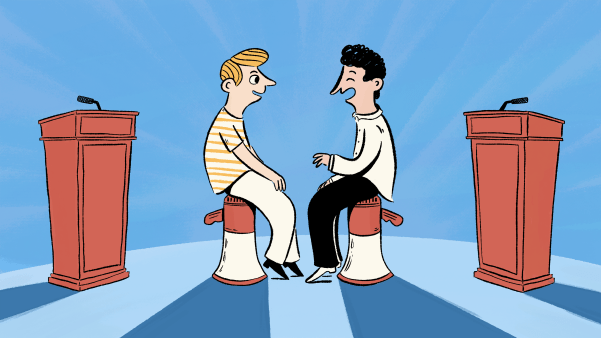
Half or more of white evangelicals say it would be impossible or very difficult to date someone with another view on abortion, religious freedom, or gun rights—their top dating deal-breakers, according to a new survey from the American Enterprise Institute (AEI).
The poll also found that most Americans—and most Christians across traditions—would be unwilling to date someone who had a different stance than them on President Donald Trump.
For decades, married couples have become increasingly united on political issues, and dating has taken a particularly partisan turn under the current administration. For believers, the instinct to make political party a prerequisite for a relationship is complicated.
“If a person prioritizes political leanings as much as faith, that’s not biblical,” said Greg Smalley, a Christian counselor and vice president of marriage at Focus on the Family. “God doesn’t prioritize politics. He prioritizes that we are equally yoked.”
Smalley advised Christian daters to determine what issues are the most important to them—starting with their basis in Scripture—and look where there might be room for compromise, realizing that the goal is not for couples to march in lockstep on every issue.
Religious freedom and abortion are the top issues for self-identified white evangelicals, with more than 6 in 10 saying it would be difficult to impossible to date someone who disagreed on either issue in the AEI’s American Perspectives Survey, conducted last month. Among other traditions, 44 percent of black Protestants and other Christians agreed that it would be difficult to impossible to date someone with another view on religious freedom.
Nearly half of white evangelicals (48%) also say conflicting views on guns would be a problem in their relationships, compared to 38 percent of Americans overall.
AEI surveyed over 2,600 adults, asking them to respond to the scenarios about a potential partner’s politics “even if you are not currently single or dating.”
While Americans of different religious traditions prioritize different political issues as deal-breakers, they all believe it’s important for partners to be on the same side when it comes to the president.
Overall, 62 percent of Americans say they wouldn’t date someone who disagreed with their view of Trump. Black Protestants are the most adamant: Nearly three-quarters (74%) say they would refuse to do so. White evangelicals are little more split, with 55 percent saying they couldn’t be with someone with a different stance on Trump, and 45 percent saying they could, according to religious breakouts of the survey provided to CT.
Though he has led a church in the nation’s capital for 15 years, Duke Kwon said he has seen few couples who dated “across the aisle,” and even fewer who marry outside their political affiliation. The Grace Meridan Hill pastor said especially for those working in politics or government, it’s hard to develop a meaningful relationship with someone who doesn’t share your political values. “If [politics] is your day job and what your mind and time are wrapped around, it’s more difficult to be devoted to causes and views that are running in the opposite direction.”
Trump may not be driving a wedge between existing couples as much as opinions about the president keep couples from forming in the first place. As adults use social media to communicate political preferences, many singles filter out people with opposing political perspectives from the pool of potential matches before a date ever happens.
The dating site OkCupid reported a 64 percent increase in political terms appearing in users’ dating profiles after the 2016 election, and eHarmony found that mentions of the president’s name in profiles rose by 50 percent after Trump’s inauguration. “People who in 2015 said, ‘Politics isn’t that big of a deal to me’–they now have an opinion. That opinion largely came to be in reaction to Donald Trump,” eHarmony CEO Grant Langston told Global Dating Insights.
Political variance within relationships has been shrinking for decades. Researchers at Stanford and the University of Houston determined that in 1973, 54 percent of newlyweds shared similar political views, but by 2014 the percent of newlyweds who shared similar political views had risen to 74 percent. (No wonder there are now niche dating sites for conservatives and Trump supporters.)
“As millennials appear to be turning to politics to fill a role that religion once did, this issue of political perspective becoming a barrier between two potential spouses will only increase and become a greater problem in the church going forward,” Kwon said.
But when people look for others who completely share their political view, they can miss some opportunities to understand others and work through conflict.
When Christians date individuals who don’t share all of their political commitments, the ensuing conversations, tense though they might be, will provide insight into how each party handles conflict, a constant in relationships regardless of political opinions, Smalley said.
Plus, no matter how much two people might align on political issues now, it’s no guarantee for how they might feel about the same issue in a few decades, or even in the next administration.
"When you get married, you start growing and change,” Smalley said. “The only constant in marriage is that we are going to change, including opinions and stances on issues.”