History

Why White Evangelicals Should Claim John Brown

We’ve forgotten what Charles Spurgeon knew: He was radical because of the Bible and his soul is marching on.

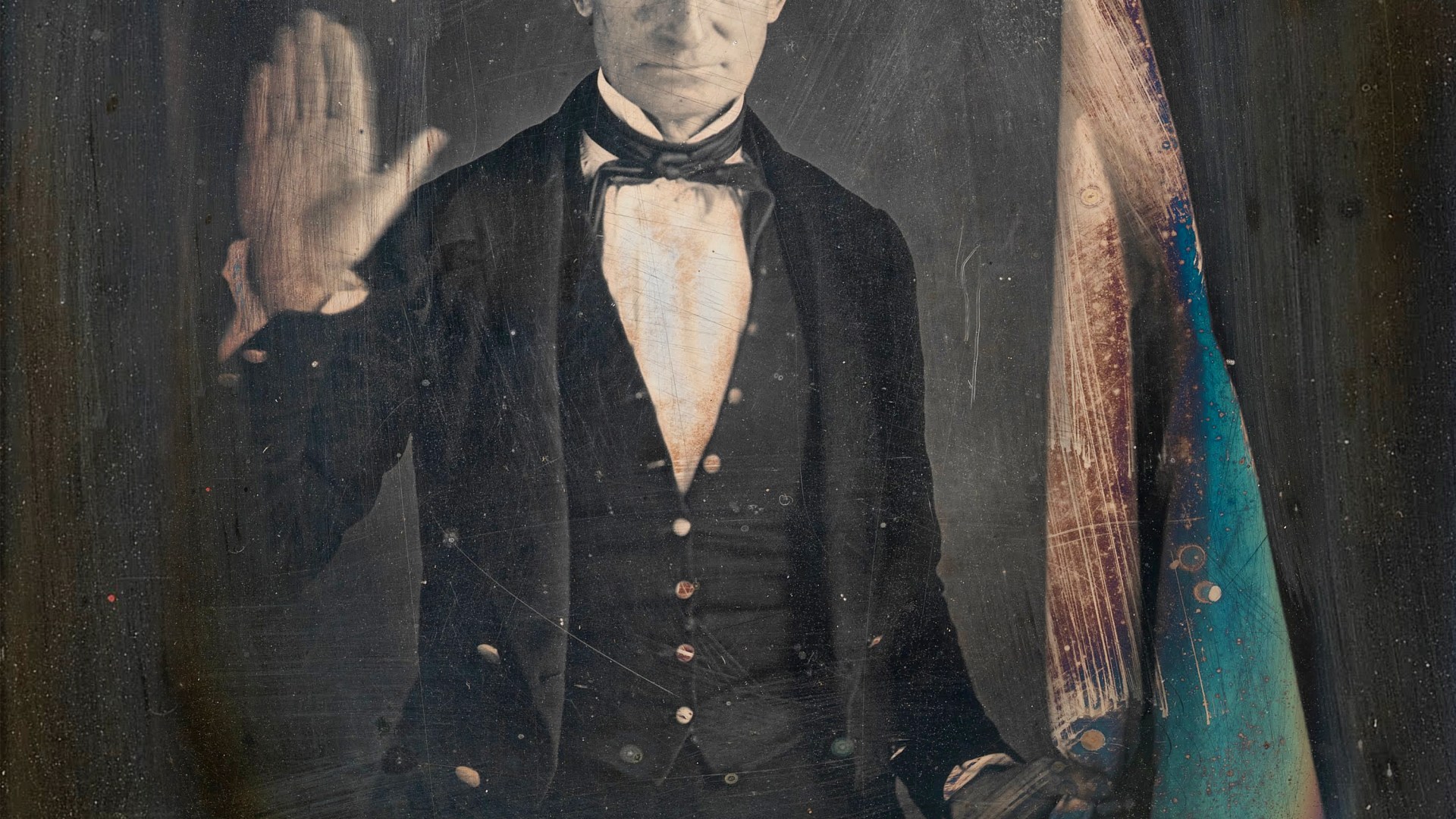
John Brown holding the flag of Subterranean Pass Way, his militant counterpart to the Underground Railroad, c. 1846–1847.

John Brown holding the flag of Subterranean Pass Way, his militant counterpart to the Underground Railroad, c. 1846–1847.

Christian History June 17, 2022
Augustus Washington / WikiMedia Commons

John Brown is one of the most controversial figures in the history of the United States. For some he’s a moral hero. For others, a monster.

The white abolitionist who turned to violence in an attempt to end chattel slavery in America has become a kind of bellwether for views on racial justice. One thing that has often been lost in the long tussle over the meaning of Brown, however, is his deeply evangelical faith.

Brown testified clearly to his own conversion, and he prayed that those around him would know “the grace of God through Jesus Christ.” He continually held up the Bible as the authoritative Word of God, the supreme written norm by which God binds the conscience. He urged people, “Be determined to know by experience as soon as may be, whether Bible instruction is of Divine origin or not,” convinced that if they tested the Scripture, they would discover the truth.

Brown remains controversial today. But as a white evangelical who has studied and written about his last days, those who were with him, and his religious life, I find myself hoping evangelicals will rediscover him. We could reclaim his legacy as a fervent believer who models a profoundly radical social ethic without ever wavering from his firm commitment to biblical authority.

That is to say, I dream that John Brown’s soul might march again.

His attempt to liberate enslaved people by violence failed, and he was hanged in Virginia in 1859. But throughout the war years, it seemed his spirit brooded over the divided nation. The playful soldier’s ditty about John Brown’s body “a moldering in the grave” was inexplicably taken up by soldiers and slaves alike—transformed into a raw but rousing song that invoked the evangelical extremist as the very spirit of liberty.

At the same time, “John Brown” became a curse in the mouths of white Southerners and his name made white liberals blush. Indeed, one of those liberals, Julia Ward Howe, was so put off by the abolitionist’s evangelical militancy that she conjured more respectable lyrics for “John Brown Song.” She “fixed it,” from her perspective, with the high-minded Unitarian anthem “The Battle Hymn of the Republic.”

Even today, there often is no middle ground when it comes to John Brown. In the more than 160 years since his death, the divide between his critics and his admirers often has fallen along lines of race, and sometimes politics too, although Brown has had admirers and detractors both Black and white, liberal and conservative.

Among white people, Brown was widely dismissed by the early 20th century. As American society backpedaled from the idea of Black people becoming full citizens, Brown’s reputation couldn’t help but decline. Whites in the North celebrated reunion with whites in the South and tacitly agreed to talk about the soldiers’ honor and bravery and set aside the actual issues that had separated patriots and traitors.

Slavery itself was sentimentalized in this era, with lots of popular rhetoric and images of “mammies” and “piccaninnies.” Those who benefited from the system of white supremacy were depicted sympathetically, while those who defended it were imagined to be noble.

Meanwhile Brown, who hated slavery more than he loved his own life, was portrayed as insane.

Black Americans, on the other hand, always kept a place for Brown at the table of honored memory. Frederick Douglass recalled how Brown was not only a friend of abolition, but he seemed shockingly free of the prevailing prejudices of the day. Many avowed white opponents of slavery, such as evangelist Charles Finney, condemned the institution while still insisting on racial segregation, even dividing revivals, as if it were wrong for Black people to respond to the same altar call as white people.

One place that Brown is not perceived as a brother, notably, is in evangelical history. I have yet to see one survey of Christianity in America that devotes space to Brown, or any account of evangelicalism that includes him.

In my old copy of The New International Dictionary of the Christian Church, the entry declares Brown’s “violent acts were glorified by the abolitionist extremists,” and in a later iteration of the book Who’s Who in Christian History, he is omitted altogether. As an evangelical biographer of Brown, I believe both are a mistake.

At the time of Brown’s failed attempt to end slavery by force, his faith was recognized. Those who opposed slavery for biblical reasons and shared Brown’s commitments to Christ and Scripture hailed him as one of their own. During his incarceration in Virginia, he received sympathetic letters from Calvinist clergy and laity, including the notable Covenanter pastor Alexander Milligan, who later served as chaplain at large to the Union troops during the Civil War. He was called “A Prisoner of Jesus Christ” in the Congregational publication the New York Independent.

After his death, Brown was hailed in many sermons across the North. One of those sermons, “Dying to the Glory of God,” was preached by the Wesleyan minister Luther Lee, who afterward addressed a large outdoor meeting at Brown’s graveside near Lake Placid, New York.
Perhaps the most remarkable recognition of the evangelical soul of John Brown comes from the world-famous preacher Charles Spurgeon. In 1860, shortly after the abolitionist was hanged, Spurgeon wrote to The Christian Watchman & Reflector to counter rumors that he was allowing US publishers to redact statements about slavery from his sermons to make them more palatable to American readers.

Spurgeon said he hadn’t addressed slavery, because he was preaching in Great Britain where it was illegal. But his position should be clear: He would not partake of Communion with a slaveholder, and were a slaveholder to come into his neighborhood, that man would receive a mark “that he would carry to his grave, if it did not carry him there.”

If that violent response reminded anyone of Brown, Spurgeon had no qualms about the comparison. Brown was “immortal in the memories of the good in England,” he wrote, adding, “In my heart he lives.”
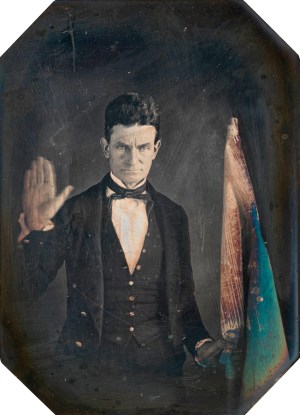
John Brown
John Brown

Brown won the admiration of some other evangelicals as well, including Russell Conwell, the Baptist clergyman who founded Temple University in Philadelphia and became the namesake of Gordon-Conwell Theological Seminary.

In the 20th century, the minister Clarence E. Macartney, one of the main leaders with J. Gresham Machen of the conservative side of the fundamentalist-modernist division in the Presbyterian church, cited Brown numerous times in his sermons. He even worked to preserve one of Brown’s jailhouse letters, giving it to Geneva College’s archival collection.

These evangelicals were right to see Brown as one of them. He was raised in a devout Congregational home in Ohio’s Western Reserve, sat under the preaching ministry of a Presbyterian pastor, and was trained in the Westminster Shorter Catechism. He professed faith in Christ at 16 years old. After conversion he became, as he later wrote, “ever after a firm believer in the divine authenticity of the Bible” and “became very familiar & possessed a most unusual memory of its entire contents.” Indeed, biblical quotations fill almost every page of his correspondence.

Despite efforts on the part of some historians to portray him as heterodox, Brown’s Calvinism was conventional, more influenced by the Puritans of yesteryear than by the novelties of New England Theology. What distinguished his Christianity from that of some in America (then and now), was a thorough dedication, as he once put it, “to better the condition of those who are always on the under hill side.” This activism was deeply evangelical and deeply shaped by his theological beliefs.

Writing of his youth, Brown recalled how he had witnessed a white man beating a Black child with an iron shovel. He said he could not help but ask himself if God was not also the father of the victim of that atrocious violence. His answer was yes, and that shaped the rest of his life.

As a teenager, Brown briefly considered studying for the ministry in New England, but an uneven primary education and chronic inflammation of his eyes discouraged these aspirations. Yet his commitment to Christian faith never wavered. This is perhaps most clearly seen in his relationships with his children, several of whom rejected Christianity as young adults.

When his namesake declared himself a spiritualist in 1853, Brown dashed off a six-page tour de force of Scriptures, from Old to New Testament, including Jeremiah’s appeal, “Turn, O backsliding children saith the Lord.” To another apostate son, Brown wrote, “I do not feel ‘estranged from my children,’ but I cannot flatter them, nor ‘cry peace when there is no peace.’”

After embarking on his antislavery campaign in 1857, he gave a Bible to his youngest daughter, Ellen. Inside he wrote, “May the Holy Spirit of God incline your heart in earliest infancy to receive the truth in the love of it and to govern your thoughts, words and actions by its wise and holy precepts.”

Another place Brown’s evangelical sentiments come through clearly is the words he wrote in his last days. After being sentenced to death, he wrote to his sisters, “Can you believe it possible that the scaffold has no terrors for your own poor, old unworthy brother? I thank God through Jesus Christ my Lord it is even so.”

Two days before he was hanged, Brown wrote a long letter to his family, declaring how he had been “travailing in birth” for them, praying that none would “fail of the grace of God through Jesus Christ, that no one of you may be blind to the truth.” Urging them to take up the Scriptures as their “daily & nightly study,” he appealed that they would not rely on their “own vague theories framed up” instead of the Word of God.

“Oh,” he appealed, “do not trust your eternal all upon the boisterous Ocean without even a Helm or Compass to aid you in steering.”

Brown was forced by his impending death to consider whether the plan to take up arms to destroy slavery had been a mistake. Had he failed? To answer, he turned again to faith.

“I believe most firmly that God reigns,” he wrote to a clergyman from death row. “I cannot believe that anything I have done, suffered or may yet suffer, will be lost to the cause of God or of humanity. … I now feel entirely reconciled to that … for God’s plan was infinitely better.”

One may, of course still question Brown’s tactics and the way he put his faith into action in “Bleeding Kansas” and the raid on Harpers Ferry. I think the evidence shows that he was not driven, as has so often been alleged, by crazed bloodlust or violent megalomania.

Indeed, Brown was actually “averse to the unnecessary shedding of blood,” according to a New York Times account from the time, and ordered his raiders to exercise great care lest innocent civilians be harmed. The only antislavery reporter to cover the abolitionist’s last days, an undercover journalist for the New York Tribune, characterized Brown’s plan as the “rescue of a great number of slaves,” arguing he had no interest in maintaining “a warlike position in Virginia for any definite period of time.”

When a jury of slaveholders found him guilty of insurrection, Brown rejected it, declaring in court that he had no such aim. One of his sons claimed that the intention with the raid was not to kill white slaveholders and spark a violent uprising, but “open the way for slaves in increasing numbers to escape from their masters.” Brown hoped that, given a chance, people in bondage would flee. If enough of them did, that would “render slavery uncertain and unprofitable.”

The first draft of history, however, was mostly written by the proslavery press. The initial interpretation of Brown’s actions was crafted by people who believed that “all men are created equal” was a lie.

I have found that much of the real story of John Brown has thus been lost to caricature and partisan interpretation, a selective reading of history that withholds the same considerations often granted to other figures in Christian history.

Perhaps we might reconsider the words of Preston Jones, who once wrote in CT: “Because Christian readers, writers, or teachers of history know that sin infects everything, they are able to exercise charity, compassion, and understanding toward historical figures who made vast errors.”

Of course, I do not believe John Brown’s “errors” were “vast” in comparison to white Christians who secured the shackles of the slave, fought to suppress native peoples, and enforced racial oppression. But I do think we could ask ourselves why Brown cannot at least receive the same charity that evangelicals have extended to others who were, as they say, “men of their time.”

In our time, white evangelicals seem to be in dire need of good examples of people who were transformed by their faith to rise above pedestrian racism—because, not in spite of, their unshakable commitment to the authority of Scripture. Why not John Brown? Why not the most esteemed white man in Black history?

“Wherever there is a right thing to be done,” Brown liked to say, “there is a ‘thus saith the Lord’ that it shall be done.”

Surely that’s a spirit that should go marching on.

Louis A. DeCaro Jr. is professor of Christian history and theology at Alliance Theological Seminary and the author of several books on John Brown. He also hosts the podcast John Brown Today.

Ideas

Evangelicals Can Agree: We’re Women, not ‘Bodies with Vaginas’

Staff Editor

To verbally dismember women is denigration, not inclusion.

Christianity Today June 17, 2022
Illustration by Mallory Rentsch / Source Images: Alexander Krivitskiy / Vika Kirillova / Pexels

When the Supreme Court’s draft decision in Dobbs v. Jackson Women’s Health Organization leaked in early May, a tweeted response from the American Civil Liberties Union had a curious omission: It listed groups the ACLU said would be disproportionately harmed by the end of Roe v. Wade (1973), but it didn’t mention women.

And this wasn’t the ACLU’s first foray into treating women as the-sex-who-must-not-be-named. The organization likewise marked the one-year anniversary of the death of Supreme Court Justice Ruth Bader Ginsburg by tweeting out a pro-choice quote painstakingly—and painfully—edited to erase all mention of women.

Nor is the ACLU alone in this new verbal habit. As a comprehensive New York Times report detailed this month, “women” has fallen into deliberate disuse by other activist groups, like Planned Parenthood and NARAL Pro-Choice America; by medical organizations, like the American Medical Association, the American Cancer Society, the Cleveland Clinic, and The Lancet (a medical journal); and by government agencies, like municipal and state health departments, the Centers for Disease Control and Prevention (CDC), and the Office of Management and Budget (OMB).

Instead, these institutions and others, including many media outlets, are using phrases like “birthing persons,” “pregnant people,” “breastfeeding people” (or even “chestfeeding people” who make “human milk”), “cervix owners,” “people with eggs,” “uterus havers,” “those without a prostate,” “menstruators,” and “bodies with vaginas.”

If you’ve not heard those phrases before, that’s because this is all very, very new. Writing in The Atlantic in defense of saying “pregnant women,” journalist Helen Lewis notes that the phrase “pregnant people” was essentially nonexistent in the English language before the 1970s. Its usage spiked in the past decade, as advocates made the case for changing our terminology for women and mothers on grounds of inclusivity for transgender and nonbinary people.

The other phrases are even newer, and unless you’ve been pregnant in the last three or four years—during which time this language has become increasingly common in medical facilities, books, online resources, and the ever more ubiquitous apps that guide women through pregnancy and the postpartum phase—you may never have encountered these terms.

If that ACLU tweet is any indication, however, the impending Dobbs decision will make the new terms impossible to miss. Some reactions to the ruling will again neglect to mention women as a key population it affects, and reactions to those reactions will be supercharged by the recent release of a provocative new documentary, What Is A Woman?, from commentator Matt Walsh. And knowing that debate is coming gives Christians the opportunity to prepare how we might respond to this confusion in our culture.

Having come of age, politically, amid culture war battles about sexuality and, theologically, amid debates over egalitarian and complementarian views of women, I sympathize with anyone wary of wading into yet another controversy on gender. Yet this is an issue on which evangelicals need not be divided. Regardless of our views on biblical gender roles, Christians can agree: We’re women, not “bodies with vaginas.”

Until quite recently, it went without saying that reducing people to their reproductive organs or function was obviously, viscerally derogatory—an insult to the basic human dignity Christians ground in passages about our creation in the image of God (Gen. 1:27), about honoring one another (1 Pet. 2:17) and caring for the vulnerable (Psa. 82:3), about the equality of all people, “male and female,” in Christ (Gal. 3:28).

Labeling women by a single body part is the stuff of lewd catcalls that make you walk a little faster and hope yelling is all he’ll do. It smacks of old-school misogyny, and it’s telling, as Lewis observes, that there’s no comparable linguistic shift for men: “[W]e don’t talk about ‘ejaculators’ or ‘testicle havers’ dominating the Texas legislature. We don’t note that only sperm-shooters have ever been president of the United States.” If those phrases sound absurd, their female analogues should, too.

To thus verbally dismember women, to call us bodies instead of people, to define us by the physical ways in which we are not men—this is denigration, not inclusion. The anatomical terms in particular set the stage for an unsettling anthropology, one in which we’re either nothing but our bodies (as in “bodies with vaginas”) or else strangely alienated from them, the “owner” or “haver” of their pieces. Both options are inadequate visions of humanity, lacking the historic Christian balance of understanding people as both body and spirit, “both creaturely and divine.”

None of that is to suggest doctors and other medical providers shouldn’t adjust their phrasing to be kind and prudent in caring for their patients, including those who don’t identify as women (or, for that matter, as men). But it is to say that using compassionate and appropriate words in a specific relationship, clinical or otherwise, does not require writing women out of our language. It does not require making awkward or even degrading terms the norm on pain of accusation of bigotry.

The same consideration that might occasionally prompt use of more neutral language should far more often lead us to simply say “woman"—in grace and truth to speak of half of humankind as fully human. For Christians, however else our thinking around women is divided, that we are women is a point on which we can agree.

Theology

For Christians, Juneteenth Is a Time of Jubilee

Observing Juneteenth as a national holiday affirms what we believe about our faith and our freedoms.

Christianity Today June 16, 2022
Go Nakamura / Stringer / Getty

I was never taught about Juneteenth growing up.

I was born and raised in Philadelphia, the “cradle of liberty,” in Pennsylvania—which was the first state to end slavery with the Gradual Abolition Act of 1780. Philly was one of the major stops on the Underground Railroad, thanks to the abolitionism of the Quakers, and the home of Richard Allen’s Free African Society.

And while slavery was abolished in Pennsylvania more than 80 years before the Civil War began, I always thought of the Emancipation Proclamation as the document that ended slavery in America.

It wasn’t until years later when I heard of a woman named Ms. Opal Lee, who walked halfway across the country at 89 years old to advocate for Juneteenth to become a national holiday, that I discovered a history I had never learned in school.

Over two and a half years passed between President Abraham Lincoln’s Emancipation Proclamation and when the first of those enslaved in Texas tasted freedom: 900 more days of being separated from family and forced to work under the threat of violence and death.

But the question remains, why does Juneteenth matter to the church?

The times set aside to celebrate and reflect reveal what matters to society then, now, and in the future. For instance, Pilgrims in early America set apart “days of thanksgiving” to express gratitude to God for his providential grace—a tradition that was formalized into the national calendar in 1863 with Abraham Lincoln’s official proclamation of Thanksgiving Day “to heal the wounds of the nation” divided by war.

But an even earlier civically inspired sacred tradition was inadvertently established less than a year prior on December 31, 1862—when congregations of Black Christians gathered for “Watch Night” services on what they called “Freedom’s Eve.”

Black churches across the country met to worship, pray, and thank God for the freedom that came to their brethren on January 1, 1863, when the Emancipation Proclamation went into effect. But it would be another two years after the first Watch Night service before this proclamation of freedom became a reality in the last holdout state of Texas.

The arrival of Union troops in Galveston, Texas, was a watershed moment in the nation’s history and included thousands of Black soldiers—some recently freed themselves—who had joined the military unit. The next day, General Gordon Granger announced General Order No. 3: an “absolute equality of personal rights and rights of property between former masters and slaves.”

The news spread like wildfire, and nicknames for the day proliferated as well: Emancipation Day, Freedom Day, Juneteenth, and so on. When I discovered that one of the first names given to the commemoration was Jubilee Day, the significance for the church was brought home like a preacher dramatically coming to the sermon’s conclusion.

Like the national healing sought through the tradition of Thanksgiving, Juneteenth would likewise provide a day of healing to millions of Americans who had much reason to give thanks: those who were set free and those allies of abolition who fought for their freedom.

Described in Leviticus 25, Jubilee was an Old Testament festival to be observed every 50 years to honor the Lord by forgiving debts, releasing fellow Israelites from bondage, and even restoring tribal lands. The name came from the exultant joy that naturally accompanies such a momentous occasion.

That these newly emancipated Americans referred to the day as Jubilee meant they understood their deliverance not only in a physical sense but also in a spiritual sense—no doubt seeing connections between their liberation and God’s deliverance of Israel from over 400 years slavery in Egypt.

They also perceived that marking time to honor Christian virtues has value even if the dates originate in secular and civic contexts. Jesus’ instruction for his disciples to pray “Your kingdom come, your will be done, on earth as it is in heaven” (Matt. 6:10) was an invitation for them to participate in God’s advancement of the kingdom of heaven’s appearance on earth.

It is always good for Christians to celebrate freedom. The end of the evil institution of slavery in our midst is valuable and valid no matter how messy and incomplete it is. There’s a renewal possible with a celebration such as Juneteenth—it’s a reminder of where we’ve been and hopefully where we’re going.

The apostle Paul instructed the church in Rome to “rejoice with those who rejoice; mourn with those who mourn” (Rom. 12:15), and Juneteenth provides a unique national moment to do both. We can “rejoice with those who rejoice” because freedom is a good gift from God that honors the image-bearing nature of humanity.

We can celebrate with those who point to that day as the beginning of their families making a life for themselves.

And yet it’s also an invitation to “mourn with those who mourn” because it provides an opportunity to reflect on the tragedy of American slavery that ensnared millions and denied the dignity and worth of untold numbers of fellow human beings who perished while under its oppression.

Expressing both jubilation and lament reminds us of Paul’s admonition in Romans 14:5–6: “One person considers one day more sacred than another; another considers every day alike. Each of them should be fully convinced in their own mind. Whoever regards one day as special does so to the Lord.”

Celebrating Juneteenth is not a mandate, but it is a meaningful moment for us to experience together, just as Thanksgiving and Watch Night aren’t mandates but opportunities.

Many African Americans like me don’t know a specific date when our ancestors were freed. Although our nation’s population includes millions of people whose descendants are just a few generations removed from those who were enslaved or enslavers, we have not previously made time in our civic calendar of traditions to collectively reflect on the history of slavery and emancipation and its importance today.

Juneteenth gives us that opportunity. It is a historical reminder that invites us to continue “to proclaim freedom for the captives” (Isa. 61:1; Luke 4:18)—just like the apostle Paul encouraged the church in Corinth to reflect on Israel’s history: “Now these things occurred as examples to keep us from setting our hearts on evil things as they did” (1 Cor. 10:6).

If we let it, Juneteenth is a time to learn from stories we don’t typically hear and seek understanding about how our past has impacted our present circumstances.

Juneteenth can also deepen our theological understanding that God cares about the soul and the body. In a moment when the church is so divided about the future, we can find common ground and understanding.

We learn from our national holidays—Watch Night, Thanksgiving, and Juneteenth—that God still gives us much to rejoice, lament, and learn as we gather year after year. And as we reflect on our journey together as Americans and followers of Jesus, we gain a heart of wisdom, understanding, and joy.

When Jesus read from Isaiah 61, he declared that he had come “to proclaim the year of the Lord’s favor” (Luke 4:19)—that in him, the Jubilee promises of holistic deliverance were fully manifest.

Jesus demonstrated this by healing the body and soul of the poor, the captives, the blind, and the oppressed—but he ultimately revealed it in his death and resurrection, promising to raise to life whoever believes in him. Jesus himself is our Jubilee.

The connection between faith and freedom is what led me recently to journey to Texas and learn more of the history of Juneteenth on a personal level. The result is a new documentary titled Juneteenth: Faith & Freedom.

Likewise, many of those emancipated in Texas in 1865 saw God as the ultimate source of their deliverance. In fact, after talking to the descendants of those emancipated on the first Juneteenth, I discovered that many of them still serve in the same churches where their forebears first celebrated their newfound freedom.

I believe Juneteenth is something for which the whole church can say “Amen!”—and I pray we continue to experience more of the freedom and faith Jesus offers us as we celebrate.

Rasool Berry is the content developer and partnership liaison at Our Daily Bread Ministries and is a teaching pastor at the Bridge Church in Brooklyn, New York. You can watch his journey in the new documentary Juneteenth: Faith & Freedom here.

Church Life

What Antisemitism Looks Like When It Is Carved into Church

Q&A with World Evangelical Alliance head Thomas Schirrmacher on the problem of offensive public sculptures and how Christians came to embrace evil conspiracy theories about the Jews.

Christianity Today June 16, 2022
Franz Rathmair

A sculpture outside of a Wittenberg church where Martin Luther once preached shows three small people in pointy hats, meant to be Jews, sucking from the teats of a large female pig. A fourth figure stands behind the sow, lifting up the pig’s tail, and looking at its butt.

The obscene and bizarre image has been there since at least 1290. Luther commented approvingly on the Judensau, or “Jews’ sow,” in the 1500s. And since 2018, a German convert to Judaism has been fighting in court to have it removed.

The government installed a plaque in the 1980s, explaining that the sculpture and similar sculptures across Germany were part of the nation’s antisemitic history and meant to insult and alienate Jews.

Michael Düllmann, 79, does not think that’s enough.

“The ‘Jewish sow’ is a call for murder and not just an insult,” Düllmann told the German broadcaster ARD. He wants it moved to a museum.

On June 14, however, the German Federal Court of Justice decided that the sculpture can stay. According to the high court, the explanatory plaque creates enough contextualization to counteract the relief’s otherwise offensive characterization of Jews.

CT spoke with Thomas Schirrmacher, secretary general of the World Evangelical Alliance (WEA), about the court case, the controversy over the sculpture, and how German evangelicals are approaching the history of antisemitism.

What is your personal opinion on the sculpture?

Nowadays, I consider it impossible to leave them just as they are. My proposal is as follows: Place the originals in museums, with replicas somewhere in the church under glass, and ensure that in both places, they are accompanied by solid educational texts.

At the original location, there should be a photo of the artwork with a short explanation and an indication of where the original can now be found. If the local state office for historic buildings does not permit the removal, then the artwork should be accompanied by a very visible statement of explanation.

Can you explain the how antisemitism came to be literally carved into German churches? What is the history of antisemitism in European Christianity?

Sadly, antisemitism—or, more precisely, racism against Jews and conspiracy theories that Jews were behind most or all evils—gradually were built into Christian theology since the second century. This included not only discrimination against and persecution of Jews, but in addition—which you will find in no other form of racism—a conspiracy element: specifically, that the Jews killed the son of God. The term that was used was Gottesmörder, murderer of God, which even Hitler used. According to this, the Jews killed the son of God and thus did the evilest thing in history and therefore are complicit in all other evils as well.

Exegetically, this claim is nonsense. The Gospels tell us that the leaders of the Jews called for the Romans to kill him, and that those leaders were split, with a majority of the Sadducees against Jesus and a majority of the Pharisees not against him, or later often even in favor of him.

How did this legacy lead to the construction of statues such as the “Judensau” and their enduring presence on German churches?

This antisemitism should have ended with the Reformation when there was a revival of Hebrew studies of the Old Testament. However, the Lutheran wing of the Reformation added to antisemitic theology by arguing that the Old Testament is “Jewish” and legalistic and seeking to prove that the Catholics were like the Jews and thus wrong.

This antisemitism in theology found its liberal expression in higher criticism’s view of the Old Testament as invented by Jewish priests who, for their own gain, gave the impression that these were old texts. It also found several evangelical expressions, such as in some forms of dispensationalism, where the Jews are imagined as the allies of the antichrist (prior to their conversion).

The Reformation often destroyed or displaced symbols that they thought were idolatrous in churches they took over. But often symbols of Jews as the source of all evils stayed, as in Wittenberg.

How have German evangelicals responded to the debate over the sculptures?

The Judensau question has rarely reached the free churches, as the sculptures can only be found on old church buildings. The majority of evangelicals probably would just want to pull those sculptures down. Responses are quite different in each context and different for each denomination. For example, the Baptists worked on reckoning with their Nazi history very early, while we have free churches who only in the last decade started to research their own bad history. Outside Germany, the situation is quite diverse.

News

Why Juneteenth Should Matter to the Church

Exploring the historical, cultural, and theological significance of Juneteenth.

Christianity Today June 15, 2022

On June 19, 1865, the Union Army arrived in Galveston, Texas, to inform enslaved Black Americans that the Civil War was over and slavery had been abolished. They were free. President Abraham Lincoln had actually announced his Emancipation Proclamation two years earlier, on January 1, 1863. But for a variety of reasons, the more than 250,000 enslaved people in Texas did not receive the news of their freedom until this June day. Their initial shock soon turned to celebration.

Juneteenth—also known as Emancipation Day—commemorates this important moment in American history. (The name is a mashup of the words “June” and “nineteenth.”) Last year, Juneteenth was officially declared a federal holiday. But it’s much more than another festive date on the calendar. For American Christians, it’s an opportunity to give thanks for our nation’s progress while also meditating on the change still necessary for us to truly act justly, love mercy, and reflect the unity and diversity of God’s heavenly kingdom.

On June 15, Our Daily Bread’s Rasool Berry, CT’s Russell Moore, and other Christian thought leaders assembled for a virtual roundtable on the enduring significance of Juneteenth and how this pivotal event in American history points to the biblical visions of freedom, restoration, and hope. Watch their thoughtful discussion above.

This webinar was co-hosted by Christianity Today and Our Daily Bread Ministries.

Mentioned in the video: Our Daily Bread also invites you to take part in Juneteenth: Our Story of Freedom, a 10-day devotional reading plan. Sign up here to access the digital plan. There’s no cost or obligation.

PANELISTS

Rasool Berry

Rasool serves as teaching pastor at The Bridge Church in Brooklyn, New York. He also is the director of partnerships and content development with Our Daily Bread Ministries and host of Where Ya From?, which is part of the CT network of podcasts. Rasool graduated from the University of Pennsylvania with a bachelor’s degree in Africana studies and sociology. His writing on the intersection of faith and culture has been featured in Christianity Today, Relevant Magazine, The Witness, The Gospel Coalition, and the book Keeping The Faith: Reflections on Politics & Christianity. He lives in Brooklyn with his wife, Tamica, and their daughter.

Lisa Fields

Lisa is a sought-after Christian apologist who combines her passion for biblical literacy with her heart for sharing God’s love to all those she meets. Based in Jacksonville, Florida, she is founder of the Jude 3 Project, an apologetics organization dedicated to helping the Black Christian community know what they believe and why. She is a graduate of the University of North Florida, where she earned a Bachelor of Science in communications and religious studies, and Liberty University, where she earned a Master of Divinity with a focus in theology.

Carey H. Latimore

Carey serves as associate professor of history, codirector of the African American studies program at Trinity University, and associate pastor of a local church. He holds a PhD from Emory University. Frequently asked to serve as a commentator and consultant on current topics such as race, land ownership, political identity, and religion for local and state media and organizations, he is the author of Unshakable Faith: African American Stories of Redemption, Hope, and Community and The Role of Southern Free Blacks During the Civil War Era. Dr. Latimore and his wife reside in San Antonio, Texas.

Michelle Ami Reyes

Michelle is the vice president of the Asian American Christian Collaborative as well as an author, speaker, and activist based in Austin, Texas. In 2014, Michelle and her husband co-planted Hope Community Church, a minority-led multicultural church that serves low-income and disadvantaged communities in East Austin. She recently won the Evangelical Christian Publishers Association’s “Best New Author” award for her 2021 book, Becoming All Things: How Small Changes Lead to Lasting Connections Across Cultures. Her latest book, with coauthor Helen Lee, is The Race-Wise Family: Ten Postures to Becoming Households of Healing and Hope.

Russell Moore (moderator)

Russell is public theologian at Christianity Today and director of Christianity Today’s Public Theology Project. Dr. Moore is the author of several books, including The Courage to Stand: Facing Your Fear Without Losing Your Soul, Onward: Engaging the Culture without Losing the Gospel, and The Storm-Tossed Family: How the Cross Reshapes the Home. A native Mississippian, he and his wife Maria are the parents of five sons.

News

Saddleback Female Pastors Debate Raises Bigger Questions for the SBC

Even without a decision on whether to disfellowship Rick Warren’s megachurch, Southern Baptists are left wondering about where a denomination of independent churches draws its boundary lines.

Pastor Rick Warren at the Southern Baptist Convention's annual meeting in Anaheim

Pastor Rick Warren at the Southern Baptist Convention's annual meeting in Anaheim

Christianity Today June 15, 2022
Jae C. Hong / AP

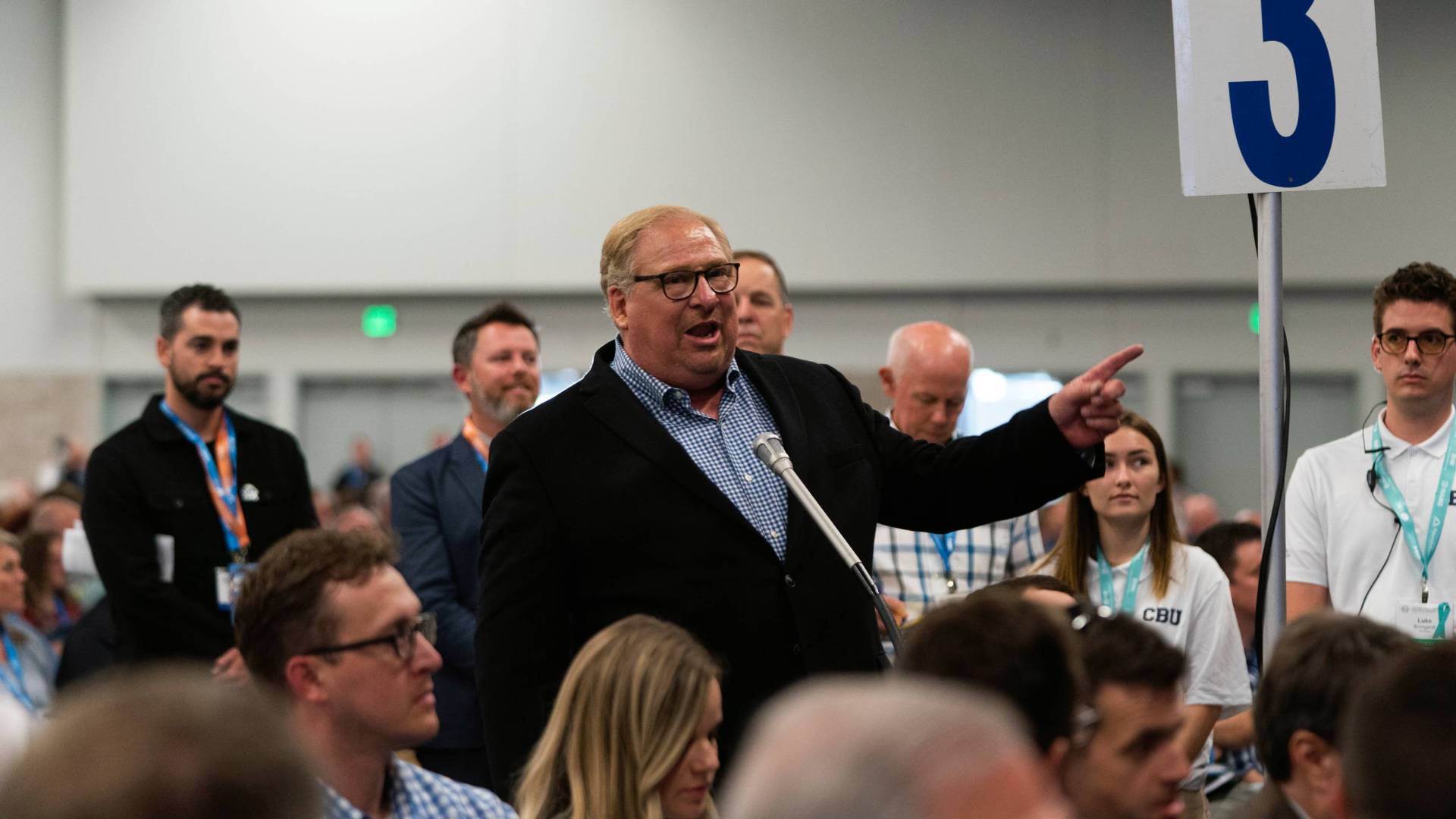
Retiring megachurch pastor Rick Warren stood up among a crowd of Southern Baptists to address the convention for what could be his last time. The 68-year-old leader referred to his remarks as both a “love letter” to the denomination and his “dying words.”

“Are we going to keep bickering over secondary issues,” Warren asked, “or are we going to keep the main thing the main thing?”

Last year, some claimed Warren’s Saddleback Church no longer belongs in the convention and proposed ousting the biggest church in the SBC for ordaining female pastors. The popular preacher and author has since named as his successor a leader whose wife holds a teaching pastor position.

The credentials committee—the Southern Baptist body tasked with recommending whether to disfellowship a particular church—ended up not making a decision about Warren’s church, whose main campus is just a 30-minute drive from where the denomination gathered in Anaheim this week.

But the discussion around Saddleback raised questions that extend beyond the California megachurch and beyond the annual meeting: What is a pastor? And what makes a church Southern Baptist?

The Baptist Faith and Message (BF&M), the statement of faith adopted by the SBC in 2000, addresses gender roles in church leadership: “While both men and women are gifted for service in the church, the office of pastor is limited to men as qualified by Scripture.”

But the credentials committee concluded that it wasn’t clear if the statement restricted women from any position doing pastoral work or holding a pastoral title, or if it just applied to the senior pastor, chair Linda Cooper told the 2022 convention.

And that wasn’t the only issue where things aren’t currently clear. Even if Saddleback violated this principle, SBC-affiliated congregations don’t have to follow everything in the BF&M. They’re only required to “closely identify” with it.

“We know our entities must align with BF&M2K. How closely must our churches align to be in friendly cooperation?” asked Virginia pastor Adam Blosser, in a Twitter thread. “To this point, churches have been given a great deal of latitude on a number of issues in the BF&M2K. Disfellowshipping Saddleback would certainly be a move away from such latitude. Maybe tightening our boundaries is needed. But if so, it's worth studying. It's not an emergency.”

The credentials committee asked if the SBC would allow them to study the “office of pastor” definition further.

The proposal was laughable to some Southern Baptists, including Southern Seminary president Albert Mohler, who came to the mic to say Baptists didn’t need another study or committee to tell them that pastors are male. Tom Ascol, head of Founders Ministries, also spoke up to emphasize the Bible’s clear position on it. Both got vocal support from the 8,000-messenger crowd. It was one of the most raucous and memorable moments in the two-day meeting.

https://twitter.com/AdamGreenway/status/1536868150054035456

Another seminary president, Adam Greenway from Southwestern, suggested that rather than studying the pastor line, the committee look at the bigger question of how much affiliating churches need to comply with the beliefs set out in the SBC statement of faith.

Greenway’s proposal failed in a ballot vote. But several Southern Baptist pastors said they wish it hadn’t.

“The smartest amendment of the day failed today. Adam Greenway pinpointed the real issue,” said Texas pastor Andrew Hébert, a messenger at the meeting.

“Even if we clarified that the BF&M indeed means anyone holding a pastoral title of any sort must be a man, Article 3 of the SBC constitution states that cooperating churches must only hold to a statement of faith that ‘closely identifies’ with the BF&M. We’ve never demanded churches to affirm every jot and tittle of the BF&M to cooperate. Until Article 3 changes, we are going to keep running into this issue.”

Hébert and Todd Benkert, an Indiana pastor who spoke in favor of Greenway’s suggestion, both brought up that a sizable minority of Southern Baptist churches do not require baptism as a prerequisite for taking communion, even though that’s what the Lord’s Supper section of the BF&M says.

When he spoke from the convention floor hours later, Warren did not defend Saddleback or debate the intricacies of the faith statement.

“I could talk to you all about what I believe about the gift of pastorate as opposed to the office of pastorate, but I’m not here to talk about that,” he said, and went on to speak of his gratitude to the convention, including for the autonomy it affords local churches.

Sociologist Gerardo Marti referenced this “hands-off autonomy” as a reason the SBC celebrated Saddleback’s massive growth and baptisms, even though the church didn’t go out of its way to identify as Southern Baptist and Warren’s positions sometimes clashed with other leaders in the denomination.

When Saddleback celebrated the ordination of three women from the stage in May 2021, those clashes seemed, to some, unbearable.

“There are a variety of people who’ve worked in Southern Baptist churches who have essentially been ordained without being called pastor, so what would be different is for them to be publicly acknowledged with the same role and title of being a pastor,” Marti told CT’s Quick to Listen. “That, I think, might be distinctive.”

On Tuesday, one messenger asked if the BF&M’s “office of pastor” only applied to senior pastors, would that also restrict the use of the title for non-senior pastor roles, such as youth pastor and music pastor. The committee wasn’t charged with studying the question further and has yet to decide a recommendation on Saddleback.

The questions around cooperation come years into the reconfigured work of the credentials committee, which took on the responsibility of hearing reports about churches whose response to abuse violated SBC convictions. The effort had a rocky and largely ineffective start, as evaluated by the recent investigative report. But it has drawn more attention to how Southern Baptists draw boundary lines while attempting to maintaining independence.

“We need clarity on what does it mean to be in cooperation with Southern Baptists,” said Benkert.

Like Warren, several Southern Baptists referenced the importance of shared mission and evangelism as the “main thing” that unites a body whose beliefs and church practices can vary—even as leaders disagree on how much leeway they get.

“You’re never going to find another Baptist that agrees with you on everything,” Warren said.

News
Wire Story

Christian Reformed Church Brings LGBT Stance Into Faith Statement

The decision has implications for Calvin University as well as CRC churches, which had previously been given some latitude on the issue.

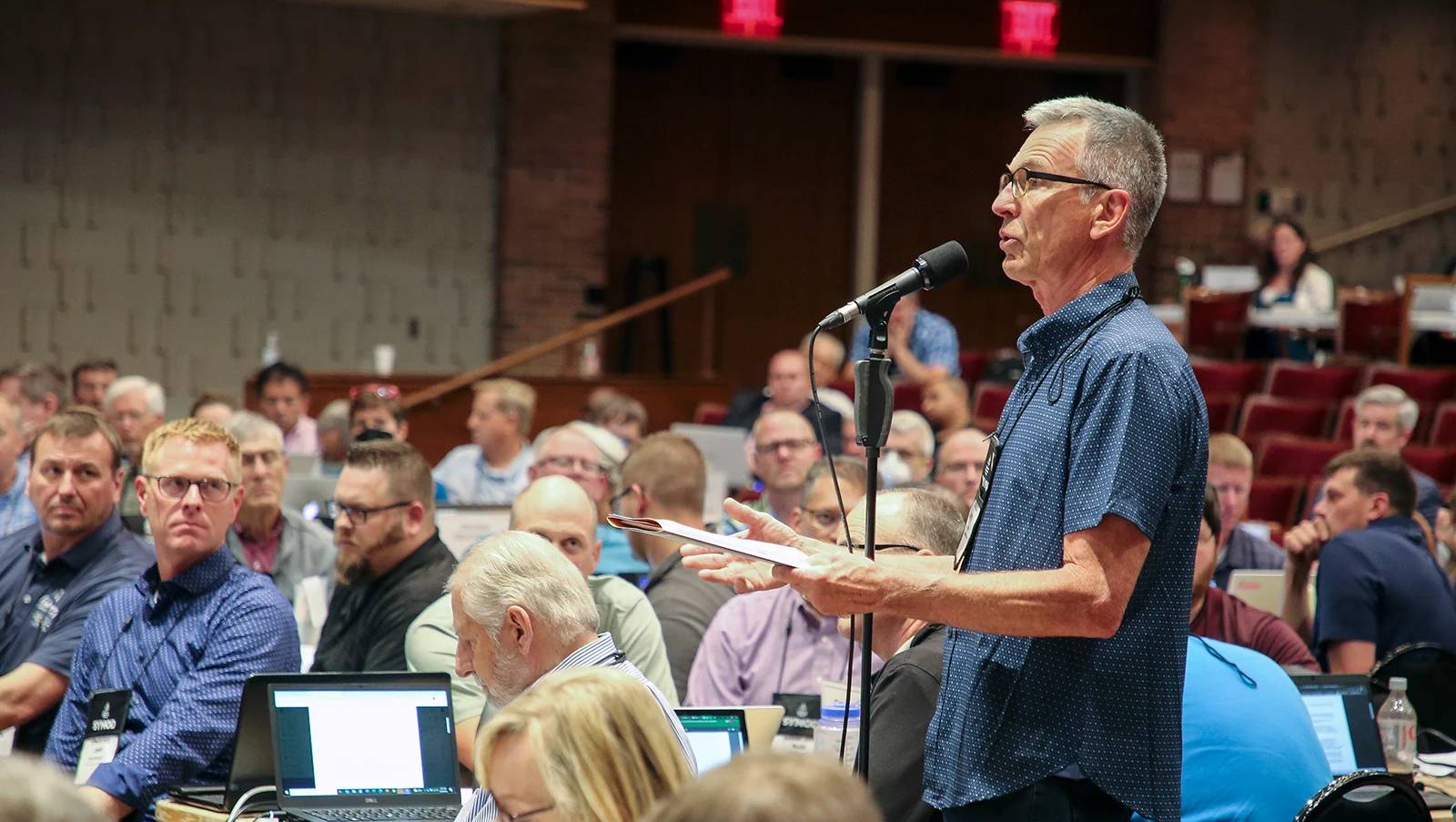
The Christian Reformed Church annual synod meets at Calvin University.

The Christian Reformed Church annual synod meets at Calvin University.

Christianity Today June 15, 2022
Steven Herppich / Copyright Christian Reformed Church in North America / RNS

The Christian Reformed Church, a small evangelical denomination of US and Canadian churches, voted Wednesday at its annual synod to codify its opposition to homosexual sex by elevating it to the status of confession, or declaration of faith.

The 123-53 vote at Calvin University in Grand Rapids, Michigan, caps a process begun in 2016 when a previous synod voted to form a study committee to bring a report on the “biblical theology” of sexuality.

The vote, after two long days of debate, approves a list of what the denomination calls sexual immorality it won’t tolerate, including “adultery, premarital sex, extra-marital sex, polyamory, pornography, and homosexual sex.”

“The church must warn its members that those who refuse to repent of these sins—as well as of idolatry, greed, and other such sins—will not inherit the kingdom of God,” the report says. “It must discipline those who refuse to repent of such sins for the sake of their souls.”

But 190 delegates to the synod spent the preponderance of time debating homosexuality, with many warning that passage of the so-called Human Sexuality Report and elevating its teachings to the status of confession would alienate LGBTQ people as well as younger generations of CRC members who have a different understanding of sexuality.

“This motion harms LGBTQ people, harms the church’s witness, and naming this as confession will have disastrous consequences for people and institutions,” said one delegate to the synod who voted against the motion.

The vote will also have profound consequences for its flagship university, Calvin. In December, one-third of Calvin faculty signed a letter expressing concerns about the Human Sexuality Report, and some are now expected to leave. Faculty at Calvin University must sign a document saying they align with the historical creeds and confessions of the Christian Reformed Church.

It was not clear what the status of the document might be moving forward.

“Many people are polishing their CVs, starting to look at what else is out there and preparing themselves to leave,” said Kristin Kobes Du Mez, a professor of history at Calvin University and one of its star faculty.

The university is known in the larger Christian higher education world for its supportive and pastoral approach to LGBTQ students. It allows a student group, the Sexuality and Gender Alliance, to function on campus and in the 2020-21 school year the university did not challenge an openly gay student body president.

But the university has less tolerance for deviation from church teachings by faculty. This year it did not renew a professor’s two-year appointment after he agreed to officiate a same-sex wedding. That wedding also led the university to cut ties with its longtime research center, The Center for Social Research, where one of the marriage partners was working.

The denomination of 204,664 members with roots in the Dutch Reformed Church of the Netherlands has always taught that sex is reserved for one man and one woman in marriage.

But over the years, it has given its churches a degree of latitude in ministering to LGBTQ people. Its 1973 report on homosexuality distinguished between homosexual activity and homosexual orientation, noting that same-sex attraction, in and of itself, was not sinful and that people don’t have a choice in who they are attracted to.

Since then, many churches have become open and affirming to LGBTQ people, with some even ordaining them to the position of deacon. A church in Toronto was one of the first, and in recent years, several churches in Grand Rapids and one in Akron, Ohio, have either welcomed LGBTQ people in same-sex marriages to membership or ordained them to deacon roles.

The synod’s move this year comes amid a growing backlash to LGBTQ gains across the nation. Florida Gov. Ron DeSantis signed legislation earlier this year that prohibited classroom discussion of gender identity and sexual orientation for some age groups in Florida schools. Dozens of bills have been introduced by Republican state lawmakers to restrict classroom discussions and access to books about the LGBTQ community and block medical care for transgender students.

While liberal Christian denominations have affirmed LGBTQ people over the past 20 years, marrying same-sex couples and ordaining LGBTQ people as clergy, centrist and conservative denominations have resisted such accommodation. The United Methodist Church, the nation’s second-largest Protestant denomination, is now fracturing over the issue.

Closer to home, at least 43 theologically conservative congregations in the Reformed Church in America, a close cousin to the Christian Reformed Church, split from the denomination this year over LGBTQ inclusion.

Some have predicted the issue of LGBTQ will also tear apart the CRC, though not in the same way as the RCA. In the CRC, it may be more liberal churches that leave.

News

Racist Incidents at General Assembly Were Mostly Misunderstandings, OPC Says

Denomination walks back assessment of “egregiously offensive behavior.”

Christianity Today June 15, 2022
Tricia Stevenson / Orthodox Presbyterian Church General Assembly

Update (June 15): The Orthodox Presbyterian Church (OPC) announced on Wednesday that the person who uttered a racial epithet during the denomination’s General Assembly was not a delegate to the annual meeting.

Eastern University staff said they did not see the man on campus after the incident, according to the OPC, and all the commissioners to the General Assembly were present and accounted for.

The three other incidents that the OPC had characterized as “racially disparaging interactions” were deemed to be misunderstandings. One commissioner—who has not been named—was reportedly trying to make a joke about the 13th Amendment, which ended slavery in America. He confessed it was “a clumsy and misguided attempt at friendly humor” and expressed a desire to reconcile with the students who were offended.

The final incident was reportedly confusion over self-serve pizza in the cafeteria. The OPC has determined that the “interaction that was misunderstood by those present.”

https://twitter.com/BringePeter/status/1536751132848144386

An Eastern University spokesperson did not respond to a request for comment.

———-

Original post (July 14): The General Assembly of the Orthodox Presbyterian Church (OPC) apologized Friday for four racist incidents at its annual gathering.

In a statement of “sorrow and regret” passed without dissent, the General Assembly said “there is no place in the church for such conduct” and “we repudiate and condemn all sins of racism, hatred, and prejudice, as transgressions against our Holy God, who calls us to love and honor all people.”

The 126 commissioners from the Reformed denomination’s 296 congregations gathered in Philadelphia at Eastern University on Wednesday. The annual meetings do not normally involve much controversy and could even be considered boring when compared to the dramatic conflicts within the Presbyterian Church in America or Southern Baptist Convention.

The OPC commissioners came prepared to hear two amendments to the Book of Discipline, receive reports on giving and Sunday school attendance, and vote on a resolution of thanks to Richard B. Gaffin Jr., a Westminster Theological Seminary professor who is retiring from the Committee on Foreign Missions after 52 years.

On Thursday afternoon, the proceedings were interrupted by a report from moderator David Nakhla, who said the General Assembly was in danger of getting kicked off the Eastern University campus for violating its contract and not respecting the Christian school’s policy on racism. One person attending the General Assembly had made multiple comments about “slave labor” to students of color who were working at the school, another had gotten into an argument with a staff member, and a third had used a racial epithet.

Peter Bringe, an OPC minister and General Assembly commissioner, told CT it was painful to hear.

“The initial announcement of the moderator left the assembly in shocked silence,” he said in an email, “and we used that time until dinner to let the situation sink in and pray.”

The Eastern staff did not identify the people who made the racist comments, and there was some confusion among the commissioners whether it was one person or multiple people. The moderator, who declined to speak to CT for this story, said in an official statement that it was “multiple people.” At the General Assembly on Thursday, he asked them to come forward, but no one did.

“There was a hush over the whole body,” said Darryl G. Hart, a religious historian and OPC elder at the General Assembly. “People were sort of frozen in place and people were praying quietly. The overwhelming response was horror, shame, and contriteness.”

The rest of the afternoon sessions were suspended, according to the General Assembly minutes posted online. The moderator “requested that the commissioners commit themselves to a season of prayer.”

The next morning, after singing the hymn “Immortal, Invisible, God Only Wise” and listening to several speakers talk about missions, the General Assembly was presented with a two-paragraph statement apologizing for the “racial disparagement reported being made by some present at our Assembly” and condemning racism more generally.

Commissioners were told that if Eastern did not accept the statement, the school was within its rights to force the General Assembly off the campus for violation of its contract. If that happened, the OPC would have to suspend the meeting three days before it was finished. The commissioners approved the statement apologizing for “egregiously offensive behavior” “without dissent,” and it was released on Facebook and Twitter.

Online, the statement received sharp criticism from conservatives who said the OPC should have stood firm and refused to apologize.

“What happened?” one wrote. “Was someone seen wearing a Machen shirt?”—referring to J. Gresham Machen, a key founder of the OPC, who once objected to a plan to treat Black people as equals at Princeton Theological Seminary.

“What a joke. OPC cucked,” wrote another man who described himself as Reformed and “100% American,” a Ku Klux Klan slogan popular in the 1920s.

Other conservatives expressed concern that the General Assembly did not investigate Eastern’s claims but just accepted that the racist incidents happened. Some speculated Eastern, a school with a tradition of encouraging evangelicals to care about social justice issues, might have made up the allegations.

One person complained the OPC had been “owned by modern culture” while another said the statement of sorrow and regret, without a full investigation, was “a good reason, if you are currently in the OPC, to consider leaving.”

Critics of the OPC, on the other hand, saw the reports of offensive comments at the General Assembly as a symptom of the deeper problem with racism in the Reformed denomination. They also argued the statement was too hazy on the details and the confession too general to count as a contrite apology.

https://twitter.com/LeonMcBrown/status/1535496465749000192

There’s a reason racism “keeps coming up” in the OPC, said David Wallace, who helped plant an OPC church in Idaho but left in a dispute with leadership when they didn’t discipline a member who called mixed-race babies “monsters” and wrote online articles arguing for the Christian basis of ethno-nationalism.

“As a large body, they’ll say ‘sorry,’” Wallace told CT. “And then they can point to those statements to say, ‘We’ve already dealt with it. We have nothing to add.’ But racists feel very comfortable going to the OPC. The elders aren’t going to correct you.”

The Generally Assembly condemned racism formally in 1974. The committee report, approved that year, said the OPC had betrayed the calling of the gospel by accepting racial segregation and elders needed to do more to discipline racists in their congregations.

“If a member of the church proves to be unrepentant for involvement in sinful racial or social practices, church discipline should be applied in the hope that repentance unto life might be forthcoming,” the report said. “The elders are responsible to Christ to be concerned with these questions as they relate to every member.”

The moderator at the 2022 General Assembly asked the people who made the statements to Eastern students and staff to come forward a second time on Monday morning.

By Tuesday, one commissioner had come forward and personally apologized for making statements about “slave labor,” which he said was meant as a joke. Another apologized for the conflict with the staff worker. No one had claimed responsibility for saying a racial slur.

Hart, for his part, said he thought the General Assemblies response was good evidence the OPC is not racist.

“There wasn’t anyone saying, ‘This person was right,’” he said. “There was no dissent. There was overwhelming condemnation of racism. And I’m pretty sensitive to concerns about being ‘woke’ and I don’t think this was woke. I think condemning these statements was standard in the church and standard in the United States.”

Officials at Eastern University did not respond to requests for comment, but told OPC commissioners the school accepted the apology and “consider the matter closed unless another incident occurs.”

The General Assembly continued its business and concluded the 88th annual meeting at noon on Tuesday.

Juneteenth is a Chance to Rethink Our Gun Culture

Christians should work together to address our nation’s hate-motivated gun violence.

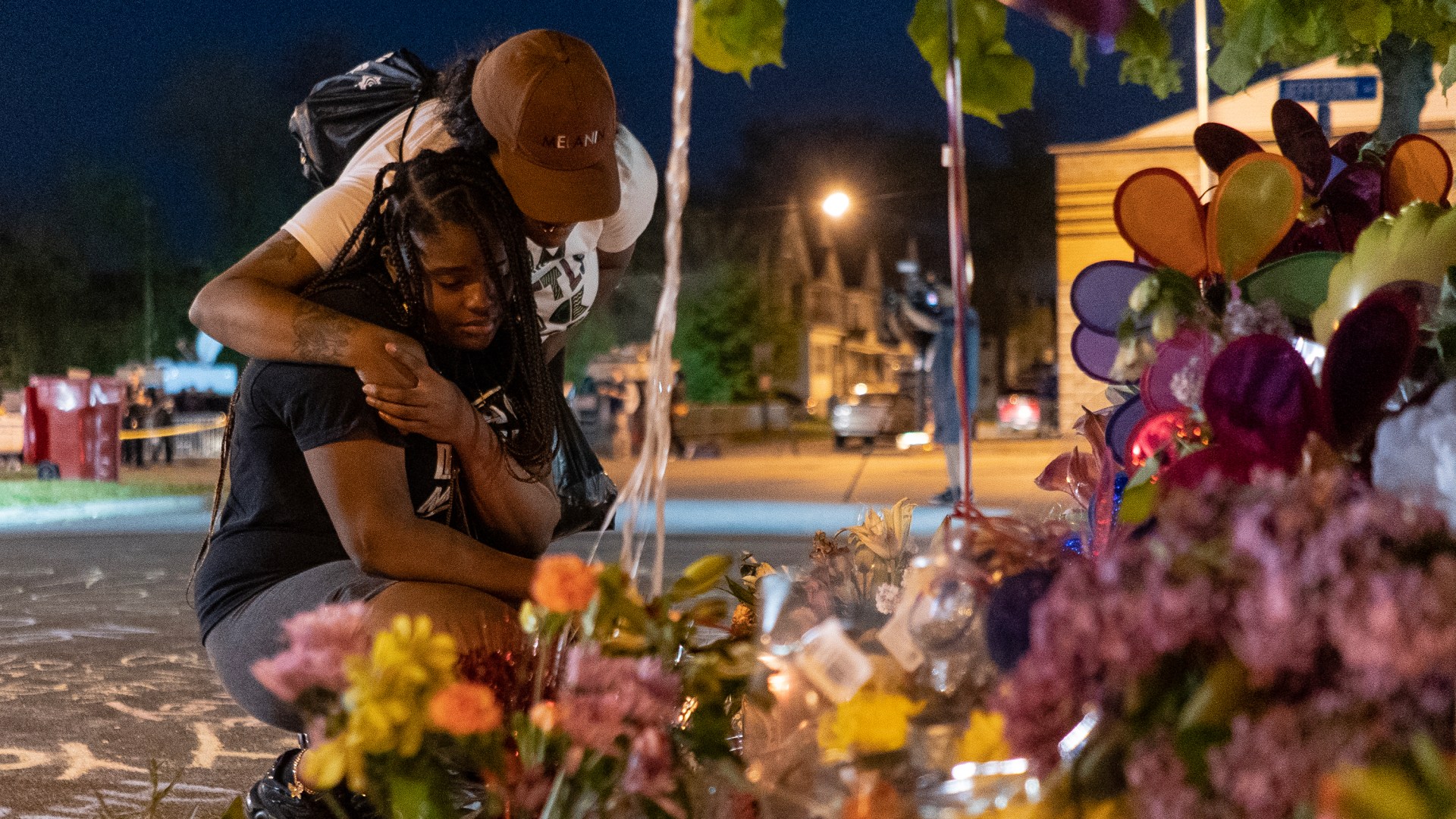
Two women at a memorial honoring the victims of the Tops shooting across the street from the store in Buffalo.

Two women at a memorial honoring the victims of the Tops shooting across the street from the store in Buffalo.

Christianity Today June 15, 2022
The Washington Post / Getty Images

On May 14, I joined a group of pastors from Brooklyn leading a march through Chinatown, Manhattan.

I’m a member of the 67th Precinct Clergy Council—also known as the “GodSquad”—which has long worked to prevent gun violence in our neighborhood of East Flatbush through street engagement, education, leadership training, neighborhood organizing, targeted interventions, victim services, and more.

That day’s march was focused on standing in solidarity against hate and racism toward Asian Americans and Pacific Islanders, while acknowledging the discrimination that flows in multiple directions through our neighborhood’s ethnic and religious communities. We wanted to make it clear that it was both un-Christian and un-American to engage in racist hatred.

While we were marching, we found out that a white nationalist had shot 13 people—10 fatally—at a supermarket in a predominantly Black neighborhood in Buffalo.

This was an act of hatred and cowardice by a man with an irrational fear of the “great replacement,” who reacted in violence against the Black community of a city 200 miles away from his own hometown. This has scarred the Black community of Buffalo and of the United States in ways that will require deep healing, accompanied with a great cry for justice.

More than that, this has scarred the churches in Buffalo. Heyward Patterson, 67, was a deacon and singer at his church. Pearl Young, 77, went to the supermarket right after a prayer breakfast that Saturday morning. Other victims had deep roots in churches and communities, and now these social havens will be in an ongoing state of grief.

After the mass murder in Buffalo, our country experienced another act of nationalistic violence against a Taiwanese church in Laguna Woods, California; a horrible massacre at Robb Elementary School in Uvalde, Texas; a deranged attack at a hospital in Tulsa, Oklahoma; and a series of other tragic shooting incidents.

Our country is increasingly drowning in gun violence—in everything including suicide, interpersonal violence, and mass shootings. As Charlie Dates noted in his recent article for CT, gun violence is now the leading cause of death for children in this country. And while not all gun violence is racially motivated, it too often is.

In recent years we witnessed the racist mass shootings against the Asian community in Atlanta, the Latino community in El Paso, and the Jewish community in Pittsburgh. A racially motivated hate crime was also at the heart of the vigilante violence perpetrated against Ahmaud Arbery in Georgia in 2020. Black Americans are killed by police at a much higher rate than white Americans, and many instances of unarmed shootings remain unaddressed by authorities.

Juneteenth is a national holiday celebrating the actual liberation of the last of our nation’s enslaved Black population from the oppression of slavery in Texas, nearly two years after the Emancipation Proclamation was passed.

As such, this day a unique opportunity to reassess our nation’s relationship with guns and the hate-motivated violence it enables—which disproportionately affects our Black population.

We should all seek to be empathetic to the needs of the Black community in Buffalo and open to hearing from our Black and brown neighbors across the country. Various geographic communities may react to shootings differently—and yet there is a nearly universal pain and cynicism in the face of this attack and others like it—based on centuries of violence against Blacks in America.

This cause is personal for me, having suffered the loss of a family member to gun violence in my native Jamaica. And given my current capacity as a youth pastor in a community wrecked by gun violence, I have been shaped for this work and my commitment to it is unwavering. My fervent hope is to see an end to gun violence.

I believe people of all faiths and races must see these horrible and senseless acts of hate and discrimination as a call to both prayer and action—to do our part to stop this pattern of death.

As Christians, we respond first with prayer. Through dialog with God, we can share our pain with our Father and manage the anger that presents itself when we are hurt and grieving. We must be consistent in prayer, day after day, so that our righteous indignation will be driven to change ourselves and our communities to advance the kingdom of heaven here on earth.

Prayer moves the hand of God, and I believe that with persistent prayer, he will give us a strong burden of the missio Dei—to share in Christ’s passion for the underprivileged, underserved and marginalized. This has many different aspects, but we must all work to hear and heed his call on our lives. As his extended hands and feet, we are called to rescue the perishing and save them from the fiery darts of evil that pervade our society.

Another aspect of our Christian responsibility is for us to take action through legislation.

The voice of the ekklesia, “the called out,” is powerful, and we can call for real change. It is obvious that Christians can disagree on the best policies, yet we must play our part in advancing the welfare and promoting life and health for all. Some of us may be called to deep engagement with local leaders and politicians at the highest levels, where we can bring a needed Christian perspective to the issues facing our communities.

To my white brothers and sisters, I take this painful opportunity to ask you to join us in a fight against racism and extremism. Guns in the hands of hateful people are destroying America.

While much gun violence is based on common crime, there are a growing number of white supremacists who are willing to use violence or threats for ethnic intimidation (in the case of the shooter in Buffalo) or for other political motives.

In addition to the previously mentioned racist mass shootings, white supremacists have rallied violently and openly in several places over the past several years. And while the violence in Charlottesville, Virginia in 2017 received the most attention, white supremacist and Christian nationalist groups carried firearms during a range of protests in 2020 and 2021, implicitly threatening their use to achieve political ends.

This is contrary to the message of the Cross, and we must confront it wherever it exists in our own communities. The voices of white allies are equally necessary in the conversation when it comes to combating white supremacy.

The gun culture in rural America and East Flatbush in Brooklyn may appear different, but they share real similarities. In both instances, angry people who feel that the system is failing them are using gun violence to lash out and try to seize power for themselves or, as in the case of the Uvalde shooter, inflict pain on others indiscriminately.

Firearm suicide and other deaths of despair are destroying rural and suburban America, while interpersonal gun violence wreaks havoc in our cities—and both cry out for our action.

The Senate is currently poised to take up a nomination for the post of director of the Bureau of Alcohol, Tobacco, Firearms, and Explosives. The ATF has been without a Senate-confirmed director for nearly a decade, with the Senate failing to act on nominees from each of the past two administrations.

This bureau plays an important role in tracing firearms used in crimes, and the present nominee’s background includes work prosecuting hate crimes—including attacks on a majority Black church in Conneaut, Ohio, and a mosque in Toledo; and of a plot to attack synagogues and Black churches in Detroit.

Some of us Christians may be called to respond to this crisis by bringing practical, personal help. The Buffalo attack highlights the fragility of service provision in Black communities: With the supermarket that was the site of the shooting now closed, the neighborhood has quickly become a food desert. While those of us who do not live near Buffalo may not be able to close that service gap, we should all examine the needs of the less fortunate in our community.

We should also examine how our communities—both in local government and houses of worship—are taking care of widows and orphans, especially those who are widowed and orphaned by senseless violence.

When it comes to gun reform, we must ask if we truly care for young people in ways that prevent the cycle from continuing. This Juneteenth, I hope to see a plurality of voices speaking out in a singularity of purpose—with one goal, one aim, one mission—to find a cure for our nation’s “gundemic” and especially to free Black communities from its terrorizing grasp.

When gun violence makes national headlines and shakes local communities, all Christians have a moral duty to respond. And I am pleased that over 800 religious leaders from across the country have signed a letter asking for action from Congress on gun violence.

Our message of justice, hope, reconciliation, and redemption can bring the peace that is missing. The Prince of Peace himself can bring peace to the hearts that are troubled enough to commit such heinous violence, and to the communities shattered by it.

The church’s messages of love, hope, salvation, and redemption must win over the world’s messages of hate, bias, discrimination, and alienation. We are the bearers of the message, and we must work to spread it.

Love always wins—we know this as believers. The Book of Revelation tells us that one day there will be an ultimate reconciliation of man to man and all of humanity unto God. But on this side of heaven, we have much work to do.

Edward-Richard Hinds is the youth pastor at The Rugby Deliverance Tabernacle in Brooklyn, New York. Hinds is a trained counselor and mentor who serves his community as president of the 67th Precinct Clergy Council (“The GodSquad”).

News

Churches Hear Call of Creation

How a congregation in Baltimore started caring for an urban forest while another in Grand Rapids started counting dragonflies, damselflies, and white heelsplitter mussels.

Christianity Today June 15, 2022
Courtesy of The Refuge

Calling is a funny thing.

When Michael Martin accepted the pastor position at Stillmeadow Community Fellowship, he expected he’d preach, pray, counsel, marry, bury, baptize, and otherwise shepherd the flock at the Evangelical Free Church in Baltimore.

He didn’t plan on becoming an urban forest keeper.

“It took a minute,” he said, laughing at the evolution of his ministry.

Gary Koning knows how that goes. What started as a pretty typical stream clean-up effort has completely altered his congregation at Trinity Christian Reformed Church in Grand Rapids, Michigan.

“From one thing it has grown to another and another,” said Koning, now an expert on watershed macroinvertebrates.

The two men don’t know each other and don’t have any common connections. But in their separate churches, and their separate callings, they both found that being faithful in ministry meant taking care of nature. Christ’s call to “feed my sheep” required tending the patch of earth where their churches were standing. While not every congregation, or every Christian, has a literal garden to tend, Martin and Koning’s ministries offer examples of what the sometimes-abstract concept of “creation care” can look like taken seriously.

Amid the pandemic, social upheaval, and generational shifts in church membership, both pastors have seen how the special relationship between God and nature, a communion reflected throughout Scripture, has given new life to their congregations.

Martin couldn’t even see the 10 acres of woods next to the Evangelical Free Church when he came to Baltimore. Well, he could see them. But in a more important way, he couldn’t.

“It was just ‘da woods,’” he said.

Once, he walked to the edge and looked in, but it was dark and foreboding and he didn’t cross that line. Besides, he had other issues.

Decades of white flight and a split over where the church should be located had left the Stillmeadow congregation with deep wounds.

“Their relationships with one another were fractured,” he said. “There was a lack of healing.”

The unhealed wounds he said, led to a “stewardship issue.” When Martin arrived in 2017, he said, no one had energy to think beyond the daily tasks inside the building. Those 10 acres were invisible to them.

The church also wanted to connect to the neighborhood. When Martin started to try to learn about the community around the church, though, a neighbor led him right back to the impenetrable edge of the woods.

“I showed up and he had a machete,” Martin recalled.

Following someone who knew the place this time, he went inside. The serenity moved him. It was quiet, laced with deer paths, water paths, and even paths where local kids tromped through. Urban planners have a name for the lines left by repeated off-road foot traffic: desire paths. They show where the landscaping design doesn’t meet people’s actual needs—which Martin hoped the church would be able to do.

He looked around the woods and saw an answer to prayer. The neighborhood needed green space. The church needed to serve the neighborhood. The woods was where those two needs met.

This is something, he thought to himself. You just can’t tell from the outside.

He coordinated with campus ministry Cru to enlist hundreds of college students to clear debris. They hauled out six tons of underbrush and trash. The church then partnered with the Baltimore mayor’s office and the US Department of Agriculture. They removed invasive species and ash trees felled by the emerald ash borer and planted more than 2,000 additional trees.

In the beginning, church members thought of the project as “Pastor Michael’s folly,” Martin said. But no one stopped him. And as he continued to work on it, recruit volunteers, and exhort the church to deepen their care for each other and their neighbors, the congregation started to think more of the woods as their woods.

They started gardening and keeping bees. A Johns Hopkins University ornithologist assessed the bird population. Martin rallied a group of teenagers to accompany him on the assessment. He watched as the scientist caught a bird and allowed the teens to get up close.

“All of the sudden a 15-year-old is 7 again. He’s got all this wonder,” he marveled. “He’s not hard.”

It’s a process he’s seen repeated over and over as people encounter the forest, which the church christened “Stillmeadow Community PeacePark and Forest.”

Research shows time spent in nature improves mental and physical health, but the same patterns of white flight that left Stillmeadow scarred and frustrated also led to a “nature gap” between white families and families of color.

Growing concern over this and other environmental issues, including urban heat islands and air quality, has increased interest in the Stillmeadow woods, Martin said. It sits at the nexus of his predominantly Black community’s concerns and the largely white-led environmental movement’s, bridging what he sees as an artificial divide between the two causes. “We should all be talking about the things that are helpful and healthy,” he said.

Rehabilitating a wooded area in a Black neighborhood was not only an environmental boon but also an investment in the well-being of that neighborhood. At the same time, those motivated by social justice for Black people required them to care about the health of these 10 acres of trees, Martin said.

Now, as he stands in the park and closes his eyes, Martin said he feels the joy and magnificence of a spring breeze, the magnitude of the rustling trees.

“These are things that point us to God,” he said.

In Michigan, Koning feels the same way. The more he attends to the Rush Creek watershed near his church, the more he is convinced that nature isn’t just an asset but rather is a critical need for people seeking God.

He’s been noticing more these days how much of Scripture takes place in an outdoor setting: from God speaking to Abraham to the psalms considering the heavens to Jesus walking around talking about the kingdom of God.

It’s a stark contrast to the book-lined, air-conditioned studies where most modern sermons are written, Koning said.

“We’ve made it an indoor religion.”

One time, he remembers asking his Christian Reformed congregation where they last felt powerfully close to God, ticking off the places Americans spend most of their time. The office? No. Home? Yes, for a few people. Church? Sure, sometimes.

When Koning said “Nature,” at least 80 percent of the people in his congregation raised their hands. He wondered if ministry should be so strictly an indoor activity.

The church dwindled a lot in the 2000s, going from about 300 members to 50 during the pandemic. Those 50, however, are mission-minded, Koning said, and committed to caring for their community. They have programs for people with special needs, people experiencing homelessness, and people struggling to get enough food.

A team also started cleaning up a small stream on the church property that flows into a nearby creek. They called it the “stream team.” It was just a small effort, at first, but then it caught the attention of state conservationists, who came in and taught the church volunteers how to monitor water quality.

Then, with the conservationists’ help, the church obtained $18,000 in grants from the Michigan Department of Environmental Quality to conduct a macroinvertebrate species survey—tracking and counting the dragonflies, mayflies, caddisflies, damselflies, and white heelsplitter mussels.

“God brought those about with purpose and design,” he said. “If they aren’t there, they can’t give glory to God.”

Getting to know the macroinvertebrates was a way to care for the environment, but for Koning it was also clear this work was about worship. He believes the degradation of habitat obscures the glory of God.

“Why are we muzzling God by sticking plastic in its mouth so that creation can’t speak?” Koning said.

The church now meets outdoors every other Sunday. They have designated one spot a “Creation Station,” where Koning teaches the children of the church from nature. They go outside, rain or shine, gathering around a fire if it’s cold—which is often in Michigan.

In 2022, the congregation decided to even change its name. The Christian Reformed Church is now The Refuge.

“We wanted to be known more for providing refuge,” Koning said, “not only for people but for pollinators, animals, and macroinvertebrates.”

Calling is funny like that. You love God and you want to serve, and soon you’re keeping careful track of creatures along a creek and proclaiming the Good News with macroinvertebrates.

addApple PodcastsDown ArrowDown ArrowDown Arrowarrow_left_altLeft ArrowLeft ArrowRight ArrowRight ArrowRight Arrowarrow_up_altUp ArrowUp ArrowAvailable at Amazoncaret-downCloseCloseellipseEmailEmailExpandExpandExternalExternalFacebookfacebook-squarefolderGiftGiftGooglegoogleGoogle KeephamburgerInstagraminstagram-squareLinkLinklinkedin-squareListenListenListenChristianity TodayCT Creative Studio Logologo_orgMegaphoneMenuMenupausePinterestPlayPlayPocketPodcastprintremoveRSSRSSSaveSavesaveSearchSearchsearchSpotifyStitcherTelegramTable of ContentsTable of Contentstwitter-squareWhatsAppXYouTubeYouTube