News

White Evangelical Pastors Hesitant to Preach Vaccines

Advocates say more subtle approaches and one-on-one engagement may actually do more to inform the unvaccinated without further dividing the faithful.

Christianity Today May 10, 2021
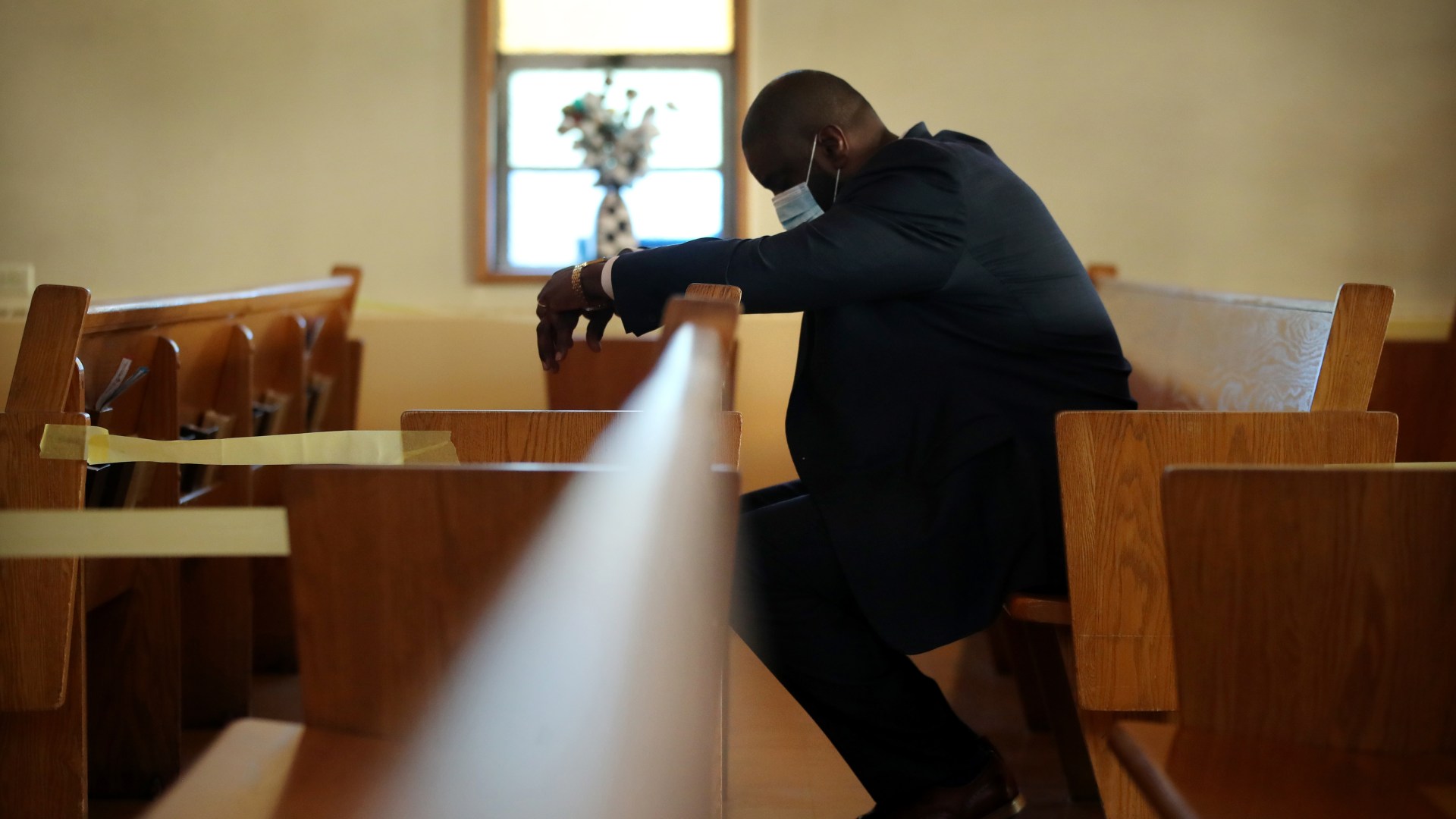
Daniel Gregory / Lightstock

As COVID-19 vaccination rates slowed this spring, Americans’ attention turned toward the groups less likely to get the shot, including white evangelicals.

Black Protestants were initially among the most skeptical toward the vaccine, but they grew significantly more open to it during the first few months of the year, while white evangelicals’ hesitancy held steady.

With African Americans, many credit robust campaigns targeting Black neighborhoods, launching vaccination clinics in Black churches, and convening discussions featuring prominent Black Christian voices for reducing rates of hesitancy. So for those eager to see higher levels of vaccination, the question became: Are white evangelical leaders doing enough to engage their own?

The latest poll from the Kaiser Family Foundation, a nonprofit research organization focused on health issues, found that as of the end of April, white evangelicals (54%) were about as likely to have received the COVID-19 vaccine as the country overall (56%).

The difference comes with the attitudes among the unvaccinated. White evangelicals are half as likely as Americans overall to say they plan to get the shot ASAP, and 20 percent say they definitely won’t be getting the shot, 7 percentage points lower than the rest of the country.

Most evangelical churches in the country span a range of perspectives on vaccination, which makes it difficult for pastors to know when or how to address the topic.

“I know pastors who won’t even mention masks because people would leave. I’d say vaccines are even more sensitive,” said Dan DeWitt, who directs the Center for Biblical Apologetics and Public Christianity at Cedarville University. “Pastors feel so constrained. They want to take care of their people, but they know one careless comment could cost them.”

The issues dividing the country in 2020 divided churches too. While pastors tried to adapt worship services and continue to provide spiritual care for the suffering and mourning, congregational disputes over politics, racial issues, and COVID-19 responses spiked. Church leaders fielded complaints for being too cautious or not cautious enough, with members threatening to leave or simply making the move over reopening plans.

After a year like that, some don’t feel comfortable publicly endorsing or rejecting the shot; maybe they would if tensions weren’t so high. Even pastors who personally trust the vaccine and would recommend it may worry that it’s not their topic to preach on or that doing so would unsettle their congregation.

Curtis Chang, the former pastor and Fuller Theological Seminary senior fellow behind ChristiansAndtheVaccine.com, says pastors are in a tough position. “They’re really stuck. They’re feeling paralyzed and muzzled,” he said. He challenges them to think beyond Sunday sermons to other ways to engage the issue.

Chang’s site and campaign offer a slate of informative videos for Christians and for pastors in particular. His message to those leading evangelical congregations: “Don’t feel like you need to preach on this from the pulpit. Look for other subtle ways to exercise your influence.”

That’s what Kentucky minister Carl Canterbury did. He told the Lexington Herald-Leader that he wouldn’t address the vaccine from the pulpit, but, knowing that vaccine misinformation is rampant in his small town in east Kentucky, he would talk to fellow members at Louellen Pentecostal Church about why he went ahead and got the Johnson & Johnson shot.

“So many people think it’s a conspiracy, and they want to know, are you getting it? The day I had my shot, I had four members in our church to stop by and ask, did I take the shot, and I told them, yes,” Canterbury said, noting that every pastor in the small town of Closplint had also been vaccinated. “Because I did, they did.”

What happened at his Pentecostal church, where people changed their mind after hearing a pastor or church member talk about why they got the shot, is a promising trend.

And it makes sense. Though many people were eager to immediately roll up their sleeves for the COVID-19 jab, having questions about the new vaccines or wanting to wait for others to get the shot is actually a common, natural response, wrote epidemiologist Gideon Meyerowitz-Katz.

“It’s also worth reiterating that most of these hesitant people do eventually get vaccinated. Sometimes they are late, sometimes they take a while to convince, but most of them are reasonable people worried about something they don’t yet fully understand,” he said. “Most can also be reassured with time and adequate information shared by medical providers.”

PRRI found in March that among churchgoers who are waiting to see if they’ll get the vaccine, nearly half of white Protestants said engagement from their faith community—either seeing others get vaccinated or hosting events like forums or clinics—would make them more likely to do so.

The poll also found that white evangelical Protestants who attend church more often are slightly less likely to want to get the vaccine (in March, 43% said they had done so or planned to ASAP) than those who attend less often (48%). Among Black Protestants, it was the opposite; church attendance was correlated with greater openness to the vaccine.

Chang suggested that the Black church tradition has primed them to see health as a community issue, and that Black churchgoers are more likely to trust the model set by their pastors—many of whom signed up for the vaccine early in public-facing vaccination campaigns.

As vaccine access expanded in March and April, many prominent pastors touted their decision to get the vaccine, such as Southern Baptist Convention president J. D. Greear, who posted a #sleeveup selfie on Twitter. Others opened their churches as vaccination sites, such as First Baptist Dallas pastor Robert Jeffress, a former evangelical adviser to President Trump.

But many white evangelicals see vaccination not as a mandate of their faith but as a matter of personal conscience. It’s between them and their families, them and their health care provider, or them and God.

There are a few who embrace conspiracy theories about the vaccine and the coronavirus, of the sort promoted by evangelical leaders such as Eric Metaxas, and some who claim the inoculation is somehow connected to the “mark of the beast.” More commonly, though, evangelicals who are hesitant to receive the vaccine were resisting what they saw as cultural pressure to take away their freedom to make an individual decision.

Chang said that for some the attitude is, “I made my decision. Don’t tell me what to do,” or “I prayed about it, God told me not to take the vaccine, therefore end of discussion.”

Christian messaging around the COVID-19 vaccine has employed a range of theological reasoning: Vaccination is a way to take advantage of the blessings and protections God gives us through science. It’s an expression of love and care for our neighbors, especially those who are medically vulnerable. It allows us to participate in God’s healing of the world.

As stances on masking and vaccination become conflated with ideological positions, evangelicals are also sensitive to how they talk about the issues in faith terms.

At Madison Baptist Church in Georgia, pastor Griffin Gulledge models wearing a mask to church and prays during services to thank God for the vaccine and for effective treatments against the coronavirus—“That sends a message,” he says—but he also believes that he’s not a public health expert, and people may have good reasons for waiting to vaccinate.

“Christ tells us to love your neighbor as yourself, then the apostle Paul tells us to maintain the unity of the Spirit and the bond of peace. I think those are two things we need to balance,” said Gulledge. “I don’t think it is reasonable for people to say in all cases, universally, to love your neighbor you must follow this or that precaution and you must get vaccinated at this time. … These things are complicated. Reasonable people are going to come to different conclusions.”

Despite assumptions about COVID-19 approaches in the rural South, 30-year-old Gulledge said the “vast majority” of his church was eager to get vaccinated, so much that they helped him find an appointment to get the shot when he moved to Madison to become the church’s pastor in March of this year.

Being a pastor and being a part of Christian community has always involved designating between matters of gospel importance and individual freedom. Lately, those issues have come up in particularly visible, fraught ways as the country takes sides on pandemic responses and vaccines.

DeWitt at Cedarville points out how much tone and perception matter when it comes to how churches address COVID-19. What some people see as an act of caring, others see as overreach.

“How do we stay committed to the gospel and committed to this message that we care for body and soul?” he asked. “If there is no good evidence that the vaccine is hurtful, and if there is evidence that the vaccine is helpful, then church leaders should be vocal—not for virtue-signaling but because it’s an actual good and leads to flourishing.”

DeWitt also sees the attitudes over coronavirus responses as tied to deeper issues in the American church, where he worries too many people are conflating “scriptural identity” and “political identity.” “We’re in a culture in which things that are superficial are seen as deeper loyalties,” he said.

The fact that American evangelicalism is so fragmented—that the big-name ministry leader who inspires one group of evangelicals may totally turn off another—makes it a challenge to engage the movement as a whole, even when calling on shared beliefs and values.

“The recipe here is information plus trust,” said Chang. “We can provide the information. The trust has to come from a person who’s sending this along and saying to their friend or their church or their family, ‘Hey, would you be willing to take a look?’”
News

Divided They Stand: Evangelicals Split Up in Politics to Keep Ukraine Conservative

Buffeted by Russia, corruption, and culture war pressures, believers surge in national elections.

A Thanksgiving Day celebration organized by evangelical churches in Ukraine.

A Thanksgiving Day celebration organized by evangelical churches in Ukraine.

Christianity Today May 10, 2021
Courtesy of Conservative Movement of Ukraine

Like many in America, evangelicals in Ukraine feel under siege.

It may be why people are starting to elect them—in record numbers.

“Ukraine has become the epicenter of a global spiritual battle,” said Pavel Unguryan, coordinator of Ukraine’s National Prayer Breakfast.

“Today, as never before, our nation needs unity, peace, and the authority of God’s Word.”

Their perceived threats are coming from all directions.

From the east, Russia recently amassed 100,000 soldiers on the border.

From the west, the European Union pushes LGBT ideology.

And from within, corruption is rampant.

On each issue, evangelicals align well with Ukrainian voters.

“The shortage of good leaders is so intense, parties are starting to recruit in the churches,” said Unguryan. “Honest and responsible politicians are easiest to find there.”

Last October, more than 500 evangelicals were elected to all levels of government. One even heads a major city—Rivne, in western Ukraine—as mayor.

With evangelicals comprising only 2 percent of Ukraine’s 40 million people, it is a significant achievement.

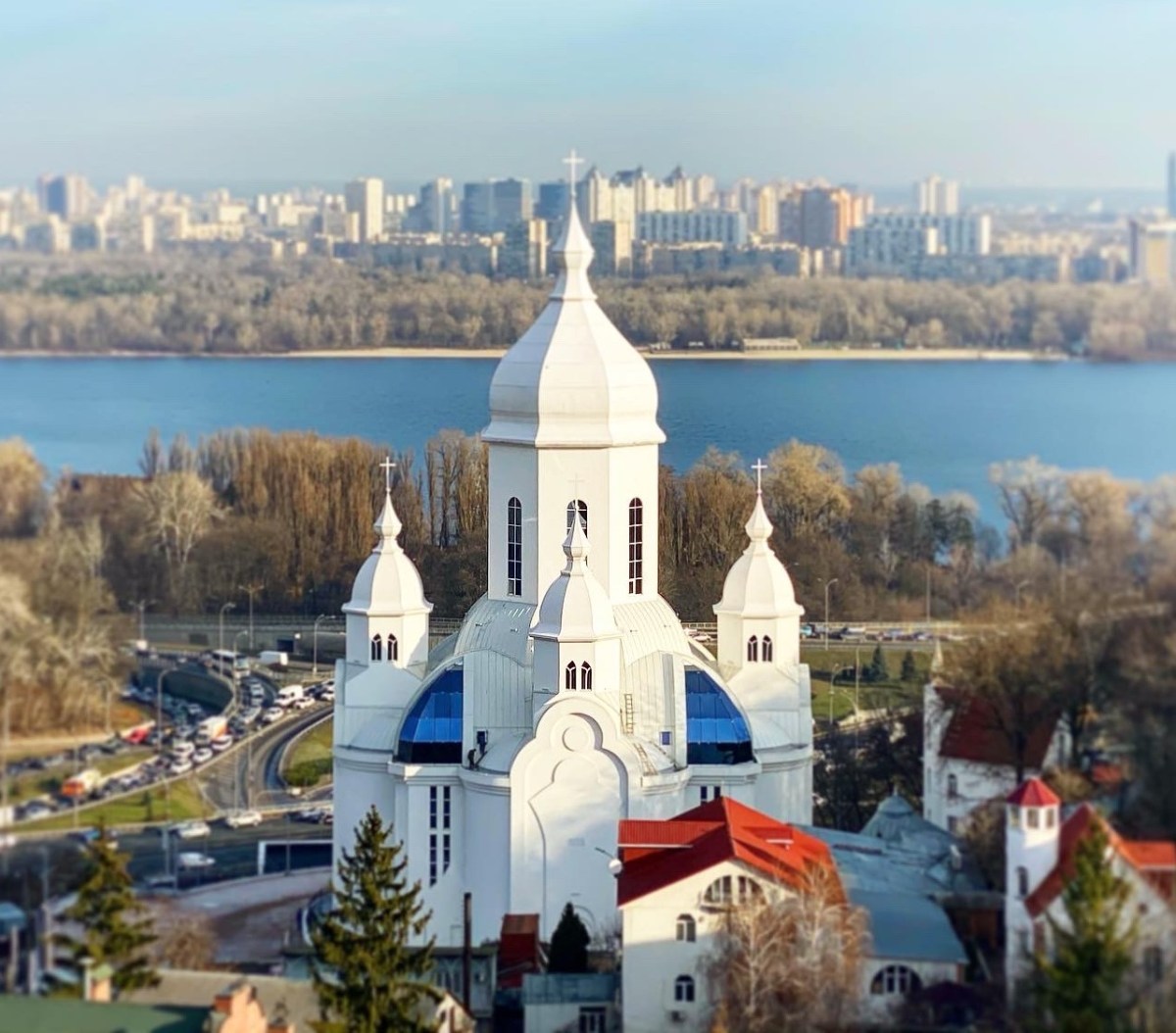
This newly completed Baptist church, Temple of Peace, in downtown Kyiv hosted the third All-Ukrainian Forum of Christian Political Leaders on January 22.

Two-thirds (65%) of the population identify as Orthodox Christians (split across three groups), 10 percent as Greek Catholic, and a further 8 percent as “simply a Christian.”

But the piety does not translate to politics. Ukraine ranks 117th out of 180 nations in Transparency International’s Corruption Perception Index—the second-lowest ranking in Europe.

As a result, 78 percent of Ukrainians distrust state officials, and 71 percent distrust politicians, according to a 2020 poll by the Razumkov Center.

But the church is trusted by 63 percent, second only to the army, trusted by 65 percent. Once reviled as a “sect,” evangelicals have benefited also from the overall social sense of refuge in the church.

“I see my career as the means to advance the values of Jesus, working for the sake of my fellow Ukrainians,” said Unguryan, elected to parliament in 2008.

“Why not go when God opens the door?”

A Baptist from Odessa on the Black Sea coast, Unguryan chairs For Spirituality, Morality and the Health of Ukraine, an inter-party parliamentary caucus that includes more than 100 of the nation’s 450 lawmakers.

It began as a simple Bible study.

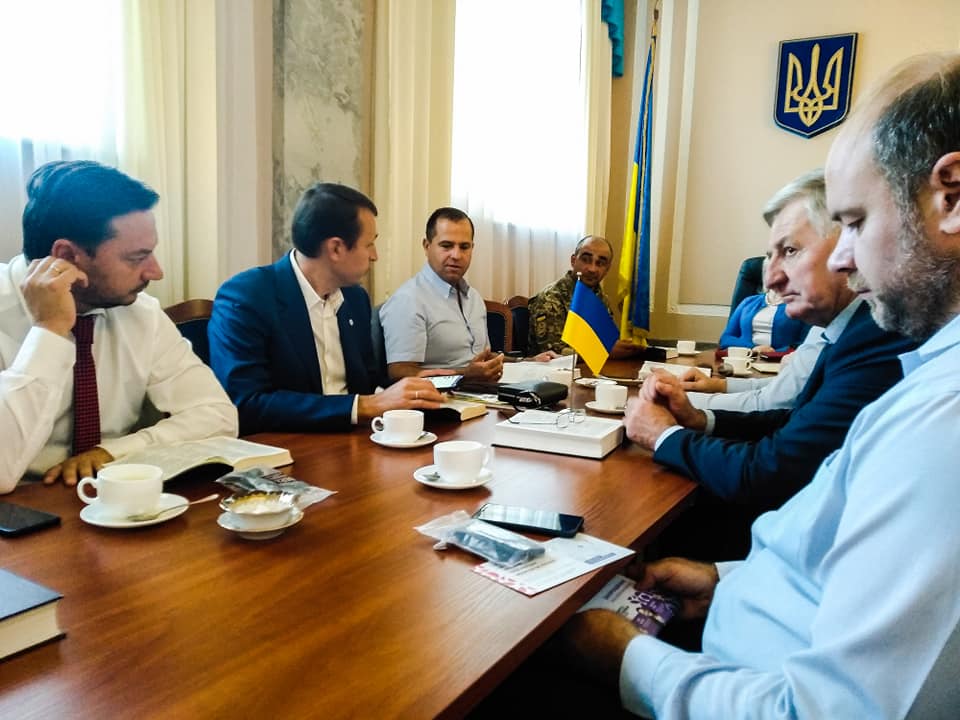
A Bible study in the Ukrainian parliament.

But if anti-corruption sentiment yielded a harvest of evangelical politicians, anti-Russian sentiment gave it birth.

First elected in 1998, Oleksandr Turchynov, a Baptist from Kiev, became a trusted lawmaker in Yulia Tymoshenko’s Fatherland party. As Tymoshenko, the former prime minister, languished in jail as a political prisoner, protests erupted in 2014 when then-President Viktor Yanukovych resisted government decisions to align with Europe.

Turchynov was elected speaker of parliament and appointed interim president when Yanukovych fled. As Russian forces occupied the Crimea and surrounding provinces that same year, he armed the Ukrainian resistance while petitioning the United Nations.

“Russian propaganda called Turchynov the ‘bloody pastor,’ but it backfired,” said Ruslan Mailuta, a Ukrainian consultant with the World Evangelical Alliance.

“Ukrainians viewed him with respect, as an evangelical who stood up for his country.”

Until that point, many evangelicals were drawn to Russian president Vladimir Putin’s rhetoric for conservative values. But currently, while the pro-Russian Opposition Bloc for Life holds 15 percent of seats in the Ukrainian parliament—concentrated in provinces on the eastern border—Mailuta said very few evangelicals support the party.

The reason is partly geographic.

Following World War I, the Bolshevik Revolution led to eastern Ukraine’s absorption into the Soviet Union. The western region, held by Poland, experienced 20 additional years of religious freedom, until Russia’s joint 1939 invasion with Nazi Germany.

In the interim, revival broke out in the west, and afterward Christians were persecuted by the Communist regime. Since then, evangelicals have drawn their strength from regions closer to Europe, with a pro-Western orientation.

A little over a year ago, Turchynov, Unguryan, and other believers launched the All-Ukrainian Council on a date to commemorate the entire nation-state, and evangelical service therein. January 22 was the 100th anniversary of the Act of Unification that briefly brought the eastern and western halves of Ukraine into political unity.

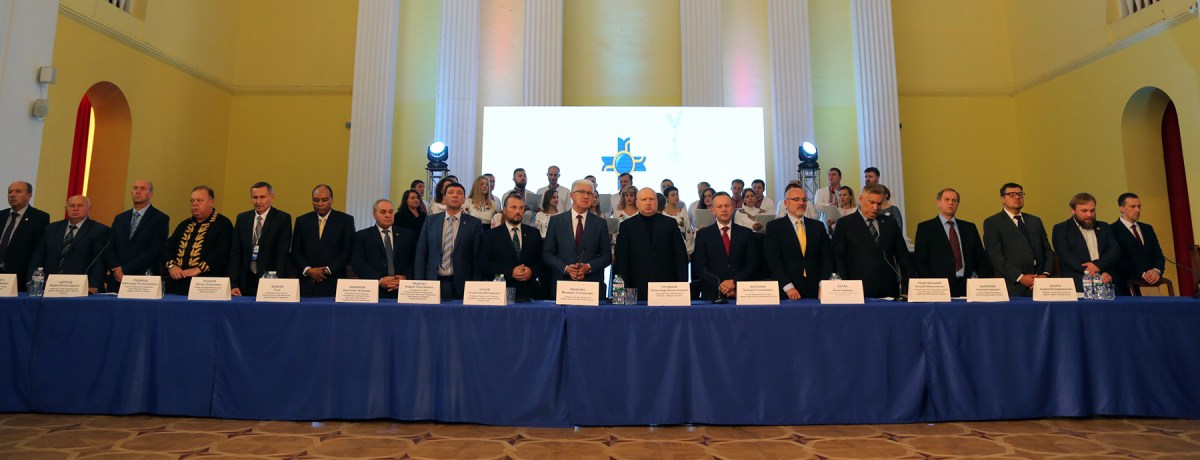
The founding of Ukraine's Conservative Movement.
The founding of Ukraine’s Conservative Movement.

Known in English as the Conservative Movement, the council brought together the older Council of Evangelical Protestant Churches, representing Baptists and Pentecostals, with the Ukrainian Inter-Church Council, representing newer denominations. Other parachurch and civic organizations also affiliated, so that practically all Ukrainian evangelicals can now speak with one voice.

The group is not a formal union, and Mailuta said that cooperation across denominations does not come easily to Ukrainian evangelicals. Neither is it a political entity, as the memory of Soviet repression discipled believers away from public engagement, especially in the older generations.

But if Russia’s aggression inadvertently legitimized evangelicals in the public eye, and popular frustrations over corruption lent them political support, there is a third feature that may divide the movement, even as it unites them.

“All evangelicals are conservative,” said Mailuta, nominated by Ukraine to serve on the UN Committee on the Rights of the Child.

“But family values can quickly become political.”

Stirrings of evangelical cooperation began about a decade ago, focusing first on prayer, and then on social service. Mailuta cofounded a network to help orphans. Unguryan worked in youth ministry.

A fourth leading evangelical figure, Nikolay Kuleba, started out in child welfare.

Today, he is the President’s Ombudsman for Children, and was the only high-level official to survive the 2019 change in administration.

Former President Petro Poroshenko hired him after defeating Tymoshenko in 2014. Current president Volodymyr Zelensky, a career comedian, kept him in his post.

Unlike in the United States, political parties in Ukraine tend to form around individual figures—not ideologies. Kuleba advises evangelicals to serve through them all.

“Believers need to be in the government,” he said.

“But it needs to be a calling, and you have to work hard to be prepared.”

After the recent elections, Kuleba gathered the winning evangelical candidates and asked them to ask God: “What is your purpose for me here?”

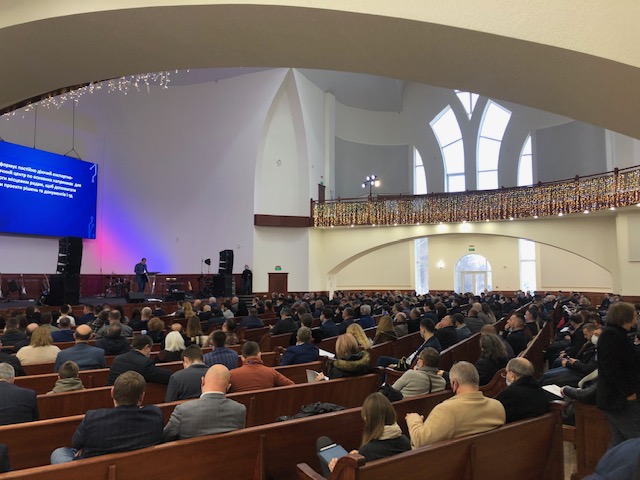
Participants at the third All-Ukrainian Forum of Christian Political Leaders, held in Kyiv on January 22.

Many are motivated to challenge the European agenda to normalize abortion and LGBT identity. But within government, Kuleba said, the Bible cannot confront these issues directly. As activists develop sexual education curricula, however, he urges the church to do the same—and design it for society as a whole.

As officials work with parents and teachers, they can promote biblical values.

“Faith must follow relationship,” Kuleba said. “I preach Christ through my actions, and faithfulness in my job.”

His current focus is on a spate of TikTok suicides that shocked Ukraine.

But unlike what is happening in neighboring Hungary and Poland, Kuleba urges Christians to not rally behind a single politician or party. Thinking also of the US, he says it is a “big mistake” to think this can change things.

“Join with many [parties], and influence them from within,” he said. “Then your values can spread across the political spectrum.”

Ukrainian evangelicals have been burned before.

In the mid-1990s, then-Prime Minister Pavlo Lazarenko tried to court the evangelical vote, winning much appreciation. By the end of the decade, he was arrested on international money laundering charges.

And in 2005, Nigerian pastor Sunday Adelaja led one of Europe’s largest megachurches in Kyiv in strong support of the Orange Revolution that confronted Ukraine’s corrupt oligarchic holdover from Soviet rule. A few years later, though he was not personally convicted, his church’s reputation was soiled by reported leadership involvement in a financial Ponzi scheme.

Might the Conservative Movement become a political party?

“I do not have such expectations,” said Unguryan.

“But with God, all things are possible.”

The grandson of a persecuted pastor, he recognizes the traditionally strong evangelical distaste for politics. But “standing aside achieves nothing,” and Unguryan has been hard at work to cement Ukraine’s public Christian heritage.

In 2011, his caucus sponsored an act to declare “the year of the Peresopnytsia Gospel” on the 450th anniversary of the first Ukrainian vernacular translation—on which presidents swear their oath of office.

In 2013, the caucus sponsored an act establishing the national celebration of the 1,025th anniversary of Ukraine’s conversion to Christianity.

In 2016, Poroshenko became the first president to attend Ukraine’s National Prayer Breakfast. That same year, the caucus sponsored the historic Orthodox nation’s act to commemorate the 500th anniversary of the Protestant Reformation.

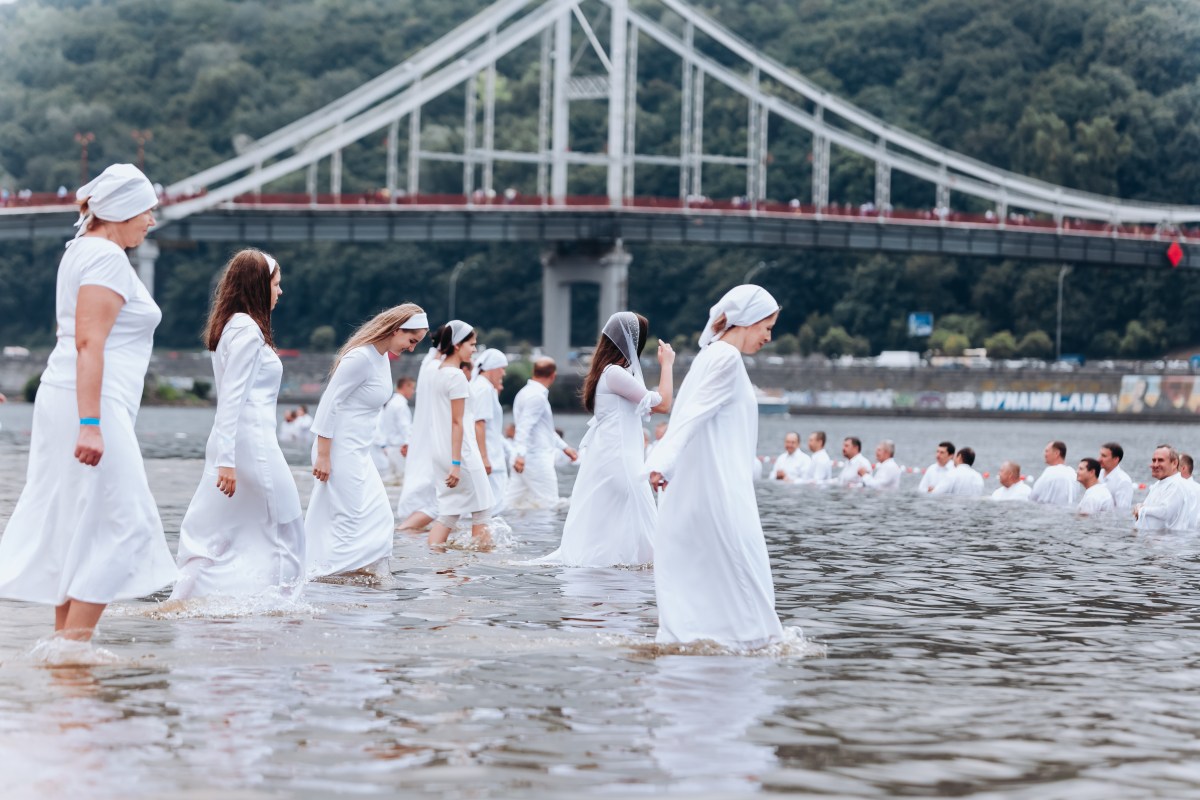
A mass baptism in Kyiv conducted by Ukrainian evangelical churches in 2018.

Evangelical efforts to organize yearlong events eventually coalesced into the Conservative Movement. With branches in every region of Ukraine, not one of its 10 committees directly addresses political involvement.

“Introducing people to the teachings of Jesus,” Unguryan said, “will change the country much faster than the activities of a party.”

Committees for family, education, business, culture, leadership, and media—with prayer and fasting—reveal an agenda far more comprehensive than politics.

But given the Russian threat, Unguryan asks for the help of the West. Not only is this politically necessary for Ukraine, Protestant churches are being shut down in the occupied regions—as once before.

And though the Conservative Movement is an evangelical initiative, he desires a broad social coalition including the Orthodox and Catholic faithful.

In 2017, he helped inaugurate National Thanksgiving Day.

“Ukraine needs to implement practical Christian values into the daily life of society,” said Unguryan. “Only on this unshakable foundation we can achieve success and build a powerful state.”

Correction: An earlier version of this article incorrectly said the Conservative Movement includes the All-Ukrainian Council of Churches and Religious Organizations. It includes the Ukrainian Inter-Church Council.

News

India’s Christians Ask for Prayer as Virus Overwhelms Crematoriums

Severe oxygen shortage one of many challenges as India suffers the world’s worst surge of COVID-19 cases and deaths.

Multiple funeral pyres of Indian victims of COVID-19 burn in a New Delhi area converted for mass cremation on April 24.

Multiple funeral pyres of Indian victims of COVID-19 burn in a New Delhi area converted for mass cremation on April 24.

Christianity Today May 7, 2021
Altaf Qadri / AP Photo

With life-saving oxygen in short supply, families are left on their own to ferry people sick with COVID-19 from hospital to hospital in search of treatment as India is engulfed in a devastating surge of infections. Too often, their efforts end in mourning.

On social media and in television footage, desperate relatives plead for oxygen outside hospitals or weep in the street for loved ones who died waiting for treatment.

India has been setting global daily records of new coronavirus infections, spurred by an insidious new variant that emerged here.

On Friday, the number of new confirmed cases breached 400,000 for the third time since the devastating surge began last month. The 414,188 new cases pushed India’s official tally to more than 21.4 million, behind only the United States.

The Health Ministry also reported 3,915 new deaths on Friday, bringing the confirmed total over 234,000 (behind only the US and Brazil). Health experts believe both figures are an undercount.

Leaders of Christian churches and ministries in India have been overwhelmed by cases and deaths among their staff and congregants amid the unavailability of treatment. In response, today was jointly declared a day of prayer and fasting by the leaders of the Evangelical Fellowship of India (EFI), the National Council of Churches in India (NCCI), and the Catholic Bishops’ Conference of India (CBCI).

The current crisis is one of the darkest times in the history of the nation, according to Prabhu Singh, principal of the South Asia Institute of Advanced Christian Studies (SAIACS), an evangelical research institution in Bengaluru.

“One of the heartbreaking results of this intense second wave in the country is the tragic loss of senior leaders of Christian organizations and seminaries as well as church pastors and lay leaders,” he told CT. “The other leaders are also experiencing severe strain as they struggle to cope with the impact of the pandemic.”

“We estimate 350 to 400 pastors, evangelists, and bishops have lost their lives—and that is a conservative figure,” said Vijayesh Lal, general secretary of EFI, citing tallies in Maharashtra, Gujarat, Delhi, and other states.

“The church has lost a lot of leadership,” he told CT. “And when you consider that it takes time and effort to build up leadership, I believe we are headed for a leadership vacuum.”

“The leadership crisis has already hit the church in India,” said Richard Howell, principal of Caleb Institute, a seminary in Haryana, and former general secretary of EFI.

“Nearly 2,000 theologically equipped workers—a conservative figure, given the news that regularly pours in through social media—are dead in cities,” he told CT. “However, in the villages where most Indians live—in poverty, without a proper health care system, and the church is experiencing both growth and persecution—the number is almost the same. And the increasing number of dead servants of God is just the beginning of the woes.”

“We have never seen something like this in the country,” said Finny Philip, an Indian board member of the Lausanne Movement, in an urgent video appeal for prayer. He explained:

Mass cremations and burials are happening. Dead bodies are lined up for the funeral pyre for hourseven on the footpaths,before they are cremated. Corpses are piled up inhumanly in hospitals, outside health centers, and in ambulances due to a shortage of space in the mortuary. Yesterday in the city of Bengaluru, the administration has assigned 265 acres of land for burial and cremations to cope with the desperate situation. Local government bodies are converting city parks, car parks, and footpaths as cremations spaces.

“We lost 11 of our key leaders, including two spouses of pastors,” Philip, a Udaipur pastor and principal of Filadelfia Bible College, told CT. “Pastors are struggling to meet the treatment expenses, and believers are going through financial challenges amid partial lockdowns” and the resulting loss of jobs and steady income—espeically in rural areas.

“We have lost many pastors and members of our congregations,” an evangelical church planter in Chhattisgarh, who requested anonymity due to religious sensitivities in his state, told CT. “Many are unable to pay even the cemetery fee to bury their loved ones.”

“A high number of pastors have been affected by COVID-19,” Naveen Thomas, senior surgeon and CEO of Bangalore Baptist Hospital, told CT. “The very nature of their work and ministry where they interact with people may be a big reason. They need much prayer.”

Christian hospitals like his as serving as best they can.

“While acknowledging we are unequal to the task ahead, we must draw upon the reserves only faith can engineer,” said Thomas. “There is a sense of defeat when one has to say ‘Sorry, there are no more beds in the ICU’ and turn away some. But at the same time, it is heartening to see faith in action—making a difference when we can.”

Ambulances carrying COVID-19 patients line up waiting for their turn to be attended to at a dedicated COVID-19 government hospital in Ahmedabad, India, on April 22.

The unfolding crisis is most visceral in India's overwhelmed graveyards and crematoriums, and in heartbreaking images of gasping patients dying on their way to hospitals due to lack of oxygen.

Burial grounds in the capital New Delhi are running out of space. Bright, glowing funeral pyres light up the night sky in other badly hit cities.

In the central city of Bhopal, some crematoriums have increased their capacity from dozens of pyres to more than 50. Yet there are still hours-long waits.

At the city’s Bhadbhada Vishram Ghat crematorium, workers said they cremated more than 110 people on Saturday, even as government figures in the entire city of 1.8 million put the total number of virus deaths at just 10.

“The virus is swallowing our city’s people like a monster,” said Mamtesh Sharma, an official at the site.

The unprecedented rush of bodies has forced the crematorium to skip individual ceremonies and exhaustive rituals that Hindus believe release the soul from the cycle of rebirth.

“We are just burning bodies as they arrive,” said Sharma. “It is as if we are in the middle of a war.”

The head gravedigger at New Delhi’s largest Muslim cemetery, where 1,000 people have been buried during the pandemic, said more bodies are arriving now than last year. “I fear we will run out of space very soon,” said Mohammad Shameem.

In Bengaluru, a multifaith group called Mercy Angels helps with burying and providing dignified funerals for deceased COVID-19 victims at no cost to bereaved families. “We work for 20–22 hours in a day. My mind has become numb,” said Anne Morris, a Christian volunteer who spoke to CT between burials. “We are all physically and mentally exhausted, but we are just pushing ourselves every day.”

“Cremations are happening everywhere. In many cases, the relatives leave their dead and run away,” Howell told CT. “Thus, the sanctity of death is lost.

“Helping people of all faiths or no faith in cremation is a Christian duty to show the love of Christ in action to all, especially in grief.”

“It’s very Christian to come forward at this time, especially in this atmosphere of fear, and to give the body a decent funeral or cremation,” Lal told CT.

“It is to love your neighbor even after your neighbor has passed away,” he said. “It is a sacrificial service, because you are putting yourself at risk, and it is a commendable thing to do.”

The situation is equally grim at unbearably full hospitals, where desperate people are dying in line, sometimes on the roads outside, waiting to see doctors.

Health officials are scrambling to expand critical care units and stock up on dwindling supplies of oxygen. Hospitals and patients alike are struggling to procure scarce medical equipment that’s being sold on the black market at an exponential markup.

The drama is in direct contrast with government claims that “nobody in the country was left without oxygen,” in a statement made last Saturday by India’s Solicitor General Tushar Mehta before Delhi High Court.

People stand in queues to refill oxygen in cylinders in New Delhi, India, on April 23. Scores have died in hospitals in India’s capital amid suggestions that low oxygen supplies were to blame.

The breakdown is a stark failure for a nation which had declared victory over COVID-19 in January and boasted of being the “world’s pharmacy,” a global producer of vaccines and a model for other developing nations.

Caught off-guard by the latest deadly spike, the federal government has asked industrialists to increase the production of oxygen and other life-saving drugs in short supply. But health experts say India had an entire year to prepare for the inevitable—and it didn’t.

Instead, the government’s premature declarations of victory encouraged people to relax when they should have continued strict adherence to physical distancing, wearing masks, and avoiding large crowds. The government is also facing mounting criticism for allowing Hindu festivals and attending mammoth election rallies that experts suspect accelerated the spread of infections.

Even with targeted blocks of such criticism on Twitter, horrific scenes of overwhelmed hospitals and cremation grounds spread and drew appeals for help.

President Joe Biden said the US was determined to help. “Just as India sent assistance to the United States as our hospitals were strained early in the pandemic, we are determined to help India in its time of need," Biden said in a tweet.

The White House said the US was “working around the clock” to deploy testing kits, ventilators, and personal protective equipment, and it would seek to provide oxygen supplies as well. It said it would also make available sources of raw material urgently needed to manufacture Covishield, the Oxford-AstraZeneca vaccine made by the Serum Institute of India.

Help and support were also offered from archrival Pakistan, with politicians and citizens in the neighboring country expressing solidarity. Pakistan’s Foreign Affairs Ministry said it offered to provide relief including ventilators, oxygen supply kits, digital X-ray machines, PPE, and related items.

Leaders at SAIACS have been busy providing groceries and cooked meals to thousands of people in several states through the seminary’s alumni network.

“The challenges we face are innumerable,” Singh told CT, noting that faculty, staff, students, and their families have been affected by the virus. “We have lost some of our dear alumni as well. … In the light of this crisis, a focused development of the next generation of Christian leaders has become all the more imperative.

“As we continue to navigate tough terrains and unchartered territories, we need the sustained prayers and support of the global church so that we can continue to be the salt and light of the nation during this grave hour.”

Indian seminaries from Nagaland in the far northeast to Kerala on the southern tip have allowed dormitories and other parts of their campuses to be converted into COVID-19 quarantine and recovery centers, Paul Cornelius, regional secretary of the Asia Theological Association, told CT.

“We’ve discovered the importance of neighborliness, a sense of responsibility to the community regardless of religion,” Ken Gnanakan, a theologian and founding president of the ACTS Group of Institutions, told CT. “This has brought us close to people in need and an opportunity to demonstrate Christ-like love.

“We’ve extended monetary help where needed. Our kitchens are being used to provide food for many in dire conditions,” he said. “We’re fighting our battles, and we’re urging our friends all over the world to pray for us as we cope with these increasing threats.”

“In Deuteronomy 31:8, we are reminded that God will never leave us nor forsake us. We are exhorted not to be afraid nor discouraged,” wrote the leaders of EFI, NCCI, and CBCI in convening Friday’s day of prayer.

“We are people of hope,” they wrote. “So let us at this time not only pray for our nation but also reach out in the love of Christ and in compassion to help our fellow citizens, even more than we are already doing. The love of God dispels all fear.”

Christina Martin reported for CT from Bengaluru. For the AP, Sheikh Saaliq reported from New Delhi and Aijaz Hussain reported from Srinagar.

These Moms Won’t Miss the Pandemic. But Their Quarantine Habits Are Keepers.

Ten writers on the discipleship practices that shaped their families this year.

Christianity Today May 7, 2021
Catherine Falls Commercial / Getty Images

“America’s Mothers Are in Crisis” blared a February New York Times headline for an article arguing that mothers are “breaking” nationwide. Expected to do it all—work, homeschool, keep house, care for their families—many women left the workforce or hit a mental breaking point during 2020. But within the chaos, many Christian mothers are figuring out how to lean on their faith in new ways. Some moms are praying in new ways for and with their children or discovering spiritual formation habits inspired by staying at home during the pandemic. We asked ten mothers about what pandemic-inspired family discipleship habits they were hoping to cultivate or leave behind in the coming months and years.

Devi Abraham, Melbourne, Australia, writer and host of Where Do We Go from Here?, a podcast about sexual ethics

For our pandemic year, our sons studied at home and my husband worked from home, so we ate most of our meals together for the first time. Dining with two boys, seven and nine, ranged from the funny chaos of fart noises to deeper conversations about faith and mortality thanks to COVID-19. We prayed for our family in Germany, Sri Lanka, and Australia. We prayed for my sisters, both pregnant. We prayed that God would take the virus away.

Today, our lives in Melbourne are back to normal, but we keep meeting each other at the meal table. It is a practice that endures even when dinner is a bowl of two-minute noodles. It is impossible to ignore the climate in which we live, one where it seems as though the powerful can get away with anything and where the sounds of survivors are all around us, longing to be heard. I pray daily that my sons will recognize their weaknesses, that God will form in them a humility that will last; I pray that they will become aware of the way they move through the world, that they would seek not to harm anyone.

Tara Edelschick, Cambridge, Massachusetts, stay-at-home mom and author

One day in 2009, Zach, Ezra, and I sat on the floor crying. We had been homeschooling for six months, and it wasn’t getting easier. They hated family Scripture memory and Bible study. They rebelled against my color-coded schedule, built on 15-minute increments. Fast-forward 11 years, and I saw the pandemic as another opportunity to fit in all of the disciplines we didn’t get right the first time we homeschooled. and I should have known better. “This is our chance to read the entire Bible before Zach leaves for college next year!” I thought. I made an insane chart with color-coded stickies for everything from service, prayer, and Bible to exercise and chores.

It didn’t go great. The boys nearly came to blows driving food to shut-ins. They complained every time I made them hang notes on our neighbors’ doors offering to do errands or bake cookies. And in spite of having a much freer schedule, we only read the Bible and prayed marginally more than we ever did.

In spite of our failures, we experienced God’s goodness deeply. Mostly, we experienced—again—that God abides in our actual lives, not the ones I dream up in color-coded charts. Eugene Peterson writes that discipleship is “a long obedience in the same direction.” As we come out of the pandemic, what I want to hang on to is the understanding that, for us, discipleship is a long obedience, in fits and starts, mostly in the same direction, toward a God who finds us wherever we are.

Courtney Ellis, Southern California, pastor and author of Almost Holy Mama: Life-Giving Spiritual Practices for Weary Parents

We’ve cultivated a family Sabbath for years—taking a day for “praying and playing,” as Eugene Peterson once put it. But when schools went digital, we rediscovered the gift of slower mornings. Now that we aren’t herding our children out the door at the crack of dawn while tossing pancakes at them like Frisbees, we gather around breakfast together at a reasonable hour and began the day with devotional readings. Afterward, we transition to the piano for a couple of worship songs—often accompanied by the two-year-old on a coffee can—and the kids close us in prayer. (The five-year-old most often thanked Jesus for poop.) Lord willing, the kids will go back to in-person school this fall, but we hope to keep the rhythm of daily mealtime devotions by shifting them to dinnertime.

The dearth of in-person connections has been achingly hard this year. I’ve learned that I can wear every hat under the sun for my kids—teacher, coach, chef, cheerleader, stuffed animal doctor—but I still fall far short of what they need, because God created us to thrive best in embodied community. With each incremental widening of our pandemic bubble—and the hope that this season is in its final throes!—we rejoice. As we transition to a new normal, I pray that the simplicity of our pandemic year has imprinted the steadfast love of Jesus on the hearts of my children. That they will always remember that when everything changed, God remained present, faithful, and good. Well, God and pancakes.

Marlena Graves, Toledo, Ohio, adjunct seminary professor and author of The Way Up Is Down: Finding Yourself by Forgetting Yourself

In March 2020, we purchased an Audible subscription. When school was canceled and then fully online, we started listening to books as a family on daily drives. We listened to the Harry Potter and Wings of Fire series. Now we are on Tolkien’s Lord of the Rings. All of the books consider aspects of good and evil. Now that school is in session, we go on weekly instead of daily drives and talk about these books, about God, and life and the myriad of implications of what we hear. We spend even more time in nature, mostly in our yard—joyously planting flowers and also contemplating our flowers, trees, birds, squirrels, and rabbits while engaging with passersby on the sidewalk.

Homeschooling was hard at first—before everyone got used to it. There were lots of sibling fights. Outside of that, we treasure our time together even more. These days have become precious. I know we will never have them again. I should add that I miss going to church as a family. I am glad for virtual church, but it’s not the same. I prefer to be there in person. I pray that my girls will know and love God deeply, be enamored with Christ, and treat others like he does.

Rachel Kang, Charlotte, North Carolina, writer and creator of Indelible Ink Writers

The pause of frequent family outings and weekly church events really forced us to slow down, embrace rhythms of rest, and truly spend time as a family gathered around the dinner table—actual television off, table set, phones away, intentional conversations, and saying grace with our Korean prayer of thanksgiving. We will hold tightly to this habit, even as the world changes and opens again.

We look forward to living life without hiding behind masks and can’t wait to be able to actually see our sons smiling as they are out and about and enjoying life. Every night, I’ve found myself praying the same prayer with and for my three-year-old son: “Dear Jesus, help me and help everyone.” It’s been the easiest utterance to whisper in a time with so much going on in the world—in a time that’s not been so easy to explain to a toddler. These seven words have been the safest and yet surest, most specific prayer we could pray, and will continue to.

Rebecca McLaughlin, Cambridge, Massachusetts, author of 10 Questions Every Teen Should Ask (And Answer) About Christianity

Before the pandemic hit, we had a routine of family Bible time at bedtime. I’d play the piano (extremely badly), or my husband would play the guitar. We’d sing one song, read a short Bible passage (working slowly through a book), ask a few questions of our eight- and ten-year-old girls, then pray. Our one-year-old would join for (and disrupt) as much as he could.

We’ve just continued with this since the world shut down, but the Friday night when we knew our kids weren’t going back to school and our church wouldn’t be in person for the foreseeable future, I remember thinking to myself, “This is our church right now.” Of course, we streamed the service in our living room that Sunday (and all the subsequent Sundays) until we could finally come back live, masked and distanced. But family Bible time—in all its messy, toddler-ransacked glory—was the one in-person thing we had. The pandemic has reminded us we don’t know what the future holds. I’m praying that my kids would hold on tight to Jesus as they reckon with this oft-forgotten truth.

Sharon Hodde Miller, Durham, North Carolina, teaching pastor at Bright City Church

When I look back on the past year and how it has changed our family, I need to be honest and admit how little of it was intentional. There were many months when we were simply doing our best to get by. My husband and I were leading our church and homeschooling our kids, all at the same time, which meant we were navigating each day like chickens with our heads cut off. We were not paragons of wisdom or spiritual discipline. Instead, I just yelled a lot.

Thankfully, the Holy Spirit was much more intentional than we were able to be. Slowly and organically, God used this year to teach us how to be present to our kids—present to their thoughts, questions, and emotions—and how to release our desire to control them. We have, quite simply, become better parents because of this year. And it is complete grace. We brought our shortcomings to God, and he faithfully met us in them. There were many times when I failed as both a mom and as a wife. But all God required of me was the humility to apologize to my husband and kids, and the obedience to bring my weakness to him.

Sasha Parker, Winfield, Illinois, cohost of Christianity Today’s Adopting Hope podcast

My husband and I have nine children, five of whom came to us through adoption. The second week into quarantine, our youngest son Jude was rushed to the hospital for emergency brain surgery after complaining of headaches. Doctors determined that he needed to replace his shunt that manages his hydrocephalus. Pandemic-related restrictions allowed only one parent to go with him to the hospital.

Our brave little seven-year-old boy choked back tears as he realized he would be forced to take the two-hour ambulance ride alone to another hospital where a pediatric neurosurgeon would be waiting to perform the surgery. My husband followed closely behind the paramedic on that dark night, praying fervently for our sweet boy. The paramedic kept reminding our son Jude to look to the light out the back of the ambulance window to see his father’s headlights. They assured him that his dad would not leave him.

Nearly 13 months after this harrowing ordeal and horrible pandemic, this is exactly the message that I want my family to hold on to. What a powerful image this is for us as children of God. Though the night is very dark, and these days are full of uncertainty, there is a light shining down. Just as Jude was instructed to keep his eyes fixed upon his father, we too are reminded in Scripture, “You keep him in perfect peace whose mind is stayed on you, because he trusts in you. Trust in the Lord forever, for the Lord God is an everlasting rock” (Isa. 26:3–4).

Courtney Reissig, Little Rock, Arkansas, writer, Bible teacher, and managing director of Risen Motherhood.

We are memorizing Scripture together as a family. We also are reading through books of the Bible at breakfast. We also started weekly dates with one kid during the pandemic, and that is something we’ve continued and hope to continue. It’s a sweet opportunity to slow down and spend time with one kid. We are praying that we would not waste this season of isolation and new normal. But also, that our kids would remember the extra time and look fondly on it. I’m praying that our kids would adjust well to change, perhaps better than their mom does! I hate change!

Chandra White-Cummings, Virginia Beach, Virginia, freelance writer and founder of CWC Media Group and the Race@Home project.

I’ve routinely said that my family had a “pandemic lifestyle” before the coronavirus hit the United States. Compromised immune systems and chronic illness plus unstable finances after becoming a full-time freelancer have frequently restricted our daily movements and made the pressure of skinny-jean-tight budgets a fact of life. But still, there’s been something about living through this period on a national scale that has reshaped us spiritually, and not every change has been a positive addition.

What I’ve most clearly noticed is that my sons and I see time differently now. The daily specter of a potentially fatal disease has shifted our thinking from seeing time as mainly the passing of minutes and hours to submission to the practical reality that whatever time we have, it’s literally given to us by God. We’ve talked often about our responsibilities as stewards of the time we have, challenging each other to be fruitful, not merely productive. Forgiveness is no longer a luxury that we dole out when we feel we can afford it. We keep very short accounts with one another because we sense the urgency of prompt obedience: What if this is our last disagreement? We’re praying for wisdom to choose wisely in how we pass our days.

Theology

How Much Does Prayer Weigh?

Why scientists struggle to put this spiritual practice under the microscope.

Christianity Today May 7, 2021
Boston Globe / Getty Images

Praying can be easy. A prayer can be a thought, a word, a heavenward plea from someone in need, a few lines said spontaneously or recited from a book, or even just a groan. Understanding what a prayer does after it leaves your lips is a little more difficult. Christian theologians have long debated how prayer works, and what it means to say it “works.” So have scientists.

Psychologist Kevin L. Ladd, a professor at Indiana University South Bend, recently examined some of the extensive recent research on prayer for the John Templeton Foundation. Looking at more than 40 psychological studies finished in the past few years on the impact of prayer on intimate relationships, Ladd found there is some evidence of positive correlations between prayer and improved relationships. “It may,” he writes, “be useful to encourage people to engage some forms of prayer as coping tools.”

But in study after study, Ladd, author of The Psychology of Prayer: A Scientific Approach, also found that researches hadn’t thought very carefully about what prayer is. In a sense, they kept pointing their telescopes in the wrong direction.

Ladd spoke to CT about the limits of prayer research.

Why is it hard to study prayer scientifically?

If you’re not familiar with the practice of prayer and why people pray, it’s very easy to look at it as though somebody is making a definitive statement or doing something over which they would claim to have full control. The twist with prayer is that you can be saying things that sound very active and assertive about what you want to happen in the world and also at the same moment you are relinquishing control. You’re saying, “I am surrendering this concern.”

The metaphysical core of prayer—what God does—is not accessible to science. That’s out of the ballpark. But what we can study effectively as scientists is how people act as a result of prayer. What drives them to prayer? What do they do when they pray? And after, how do they behave?

If I pray for my neighbor, are you saying you could study the effects of that prayer on me but not on my neighbor?

Yes. This goes right into the idea of “thoughts and prayers,” which has been attacked so much. If I direct thoughts and prayers to my neighbor, I can’t see what the prayer itself is doing, but I can see what I do.

If I’m praying for my neighbor, does that change my behavior toward that neighbor? Maybe, as the old saying goes, “My heart is to God and my hand is to work.” We can see if those two things go together. One person prays for the neighbor. Another doesn’t. Who actually goes and does something for the neighbor? Who’s contributing their time, their talents, their resources? Yeah, we can study that, and we find it does have an effect.

Not everyone prays in the same way. Not everyone means the same thing by prayer. So how do researchers define prayer?

The standard approach is to leave it open to the participant and say, “You do what you do when you say that you’re praying, and then we’ll talk about it.” You leave it wide open.

There’s so much individual variation. Having talked to thousands of people in religious communities, in churches, people who are dedicated to prayer, I’ve found there are so many—almost half—who say they’ve never been asked about prayer and what they do and why.

This line of research opens up so many conversations about the nature of spirituality. One of their biggest fears is that they’re not doing in right.

How did you get into studying prayer?

It has always been a part of my own life as a Christian. My father is a pastor in the United Methodist Church. I went to seminary and as part of my seminary training, I spent time working at an education testing service, which is a sort of atypical path in seminary. My friends were studying Greek and Hebrew and I’m talking about statistics and research design.

My first study during my PhD work was a group of breast cancer survivors, and it was focused on exercise and the things they do to take of themselves after surviving cancer, and many of them spontaneously talked about how important prayer was to them. And we thought, well, we should look at that. At the time—30 years ago now—that was pretty novel.

How long have people been studying prayer scientifically? When did that project start?

I don’t know if you remember the story of Gideon and the fleece, how he put out the fleece and said to God, “Make it wet!” and “Make it dry!” That has the hallmarks of a study.

If we look for a more modern scientific approach, we come up to the 1800s and Francis Galton. He’s in Victorian Britain thinking, if prayer is doing something, then you do a lot of it, it must be doing more things. Well, who gets the most prayer? The Church of England is praying for the health of the monarch all the time. So the king ought to be in really good health! It turns out it doesn’t really work like that, but that idea launches t he prayer-gauge debate, which rages for a long time.

The way they’re thinking about it at the time, people are praying, prayer goes from their lips or their hearts, and then a metaphysical thing happens, and it influences the monarch. People get stumped with that middle section, though. With the metaphysical question.

Eventually that approach falls out of favor. I think when it falls out it’s because you’re trying to measure a metaphysical thing, and you can’t get at that. Eventually you hit a wall. There’s a missing component.

Is part of the problem also a problem with measuring? It seems like prayer can’t be measured in the way science approaches measurement.

Yes. It’s interesting if you think about it, one of the things Galton was assuming was that more prayer is better. But if you go into any religious tradition, you dig into the text, there’s never a guarantee that more is better. It’s not like a dose of aspirin. The Bible says lots of things about excessive prayer having no effect, whether it’s the prophets of Baal trying to call down fire in a competition with Elijah, or Jonah, who wants to see Nineveh destroyed and God doesn’t do it. More prayer doesn’t necessarily have greater effect.

There’s also so many people sitting in every congregation who worry about not praying right that we should be careful. If we say that “Scientifically, prayer does these things,” and then it doesn’t work, we’re saying you didn’t do it right. That’s the insidious underbelly of a lot of science research on prayer. We’re blaming the victim.

You go back to the religious texts, and that’s not what they say about prayer. They’re much more nuanced and complicated in articulating what makes a prayer good, and that may or may not connect in any direct way to an effect that we can see.

Does studying prayer have the side effect of helping people see prayer differently?

I hope that part of what the research shows is there’s not one way that people pray. Not one way in terms of language. Not one way in how it is you use your body. Not one time that people pray. There is a plethora of ways that people pray. I hope that’s one thing that people take away.

What if your prayer is just a single fleeting thought reaching out to God? Does that count? Well, I think some theologians would say yes.

News

Christians ‘Pray the News’ in a Year of Doomscrolling

Ministries offer tips for how to give heartbreaking headlines over to God.

Christianity Today May 6, 2021
LEREXIS / Getty Images

Over the past year, the news has been enough to drive us to despair. Or prayer. Or both.

As people have been bombarded with headlines about the global pandemic, civil unrest, natural disasters, and religious persecution, Google searches for prayer rose to the highest levels on record, and Christian ministries have stepped up to offer resources to help believers pray through the news.

Prior to the COVID-19 outbreak, the UK outlet Premier Christian News had redesigned its website to include prayer prompts at the end of every news story. The site saw more than 175,000 readers click to pray in 2020.

“We wanted to inform Christians about the news going on around the world but also equip them,” said Marcus Jones, Premier’s director of news and digital.

During some grim news cycles—Brexit, terrorist attacks, and then the pandemic—journalists and audiences alike can become desensitized to the headlines. “It is healthy to take a step back and say this is a real-life situation God can intervene in,” said Jones.

The writers at Premier Christian News compose or compile relevant prayers, usually just a few lines long, to run at the end of their articles. A tracker tallies how many readers have clicked the praying hands icon to indicate they are praying.

A majority of Premier readers come from the UK, where a third of people say the pandemic has affected their prayer life, according to a Savanta ComRes survey. They’re just as likely to say it’s made them pray less (15%) as to say it’s made them pray more (16%).

Still, Jones said the team has been impressed with how much engagement they’ve gotten from the feature. The most-prayed-for stories are usually the most-read, but coverage of persecution and natural disasters also tend to bring increased prayer clicks. Readers sometimes react negatively to the prayers suggested for controversial or politically charged stories, but the journalists learn to carefully craft lines that they hope all Christians can say “amen” to.

Current articles on the site offer prayers for India and ask that other countries may be generous enough to help alleviate the suffering there; for China and “those who are being persecuted for their faith”; and for political leaders tasked with overcoming division and helping the vulnerable.

Some 10 or 11 years ago, an evangelical Chicago pastor and one of his parishioners, a lawyer, undertook a study to determine the Bible’s idea of justice. They found more than 80 passages conveying God’s concern for social justice—a concern especially directed toward the poor, whom society so easily casts underfoot. The pastor was William Leslie. The attorney was Charles Hogren. Their church, LaSalle Street Church, is on Chicago’s Near North Side. It is only blocks from Cabrini-Green, a neighborhood that is home to the poorest of Chicago’s poor.

Hogren helped out at his church’s youth center. It was there that Cabrini-Green children, hearing he was a lawyer, approached Hogren with pleas to help an older brother or neighbor who had been unfairly dumped in jail, according to the children. At first Hogren pleaded back: he was not a criminal lawyer, and had in fact avoided studying criminal law in law school.

Yet the children argued that he was the only lawyer they knew, and Hogren, in light of the biblical teaching, felt an increasing obligation. So he became the reluctant defender (the title of a book about Hogren’s work by David Claerbaut, published by Tyndale House, 1978).

The history of the Cabrini-Green Legal Aid Clinic is less a sugar-sweet American success story than a chronicle of committed endurance. Now into its ninth year of operation, the Legal Aid Clinic offers competent legal assistance to the 13,000 residents of Chicago’s most harrowing public housing project.

The cycle of poverty, illiteracy, and hopelessness that has trapped the largely black population of Cabrini-Green remains unbroken. Even residents helped by the clinic have said it is like an overwhelmed ambulance picking up bodies after an accident that should have been prevented.

But the accident keeps on happening. The Legal Aid Clinic, chronically lacking enough money, has stayed in Cabrini-Green since 1973 because it is a Christian endeavor. LaSalle Street Church still largely finances it.

Hogren learned early in his work with Cabrini-Green residents how disdained the rights of the poor actually are. Some youth were jailed merely as a harassment to scare them from loitering on the streets. Some were arrested on false warrants. Some were guilty; but Hogren believed they were as entitled to conscientious legal aid as someone who could afford it. (Though Hogren believes public defenders are competent and sincere, indigent people view them with suspicion as “part of the system.”)

Would Hogren, as a Christian lawyer, do his utmost to defend a client he thought guilty? Hogren thinks the American legal system requires sincere defense even of the guilty, so he will take such cases. But Hogren will not allow a defendant to mount the witness stand and lie. Neither will the law clinic defend hardened criminals—those with long conviction records.

The clinic now handles from 250 to 300 cases every year. The staff has expanded to include four lawyers and two law students, yet the clinic still has more work than it can handle.

Cabrini-Green is overcrowded: more than 80 buildings (3,600 apartments) are crammed into a five-by-eight-block area. The average family size is five persons, and 70 percent of the families have only one parent (usually the mother, who is often a woman younger than 25 who had her first child by age 14). Unemployment is rampant, with six of every 10 adults out of work. Violence is as commonplace as broken glass. The “three Ps” (prostitution, pimps, and pushers) are all most of the 10,000 children of Cabrini-Green know as role models for a livelihood.

Not all the cases handled by the clinic are criminal. A solid 100 this year, in fact, have involved landlord-tenant conflicts. The housing project is owned and managed by the Chicago Housing Authority (CHA), which decided to crack down on troublemaking tenants last year. Unfortunately, even victims of crimes that showed up on police reports were being evicted. Clinic lawyers believe the CHA knowingly abused the rights of tenants in its drive to clear out troublemakers. The CHA denies those allegations.

Since the average monthly rent at Cabrini-Green is only to 0, most evictees could not afford to live elsewhere. The clinic was successful in reversing every eviction brought to its attention.

Work in Cabrini-Green is hardly filled with security for clinic lawyers. White (only one of the lawyers is black) and dressed in business clothes, they are conspicuous. “I am unnerved, on guard, when I go into one of the buildings,” admits James Brackin, one of the clinic lawyers. Hogren has been at the clinic long enough to be recognized by many residents, and that makes him feel safer. Still, he has wheathered an attempted robbery (someone wanted his briefcase) and interrupted several burglaries at clinic offices. Once he ducked into an apartment to talk with a Cabrini-Green woman minutes before a man fired several shots down the corridor.

There are, of course, rewards to offset the insecurities of working in Cabrini-Green. Sincere attention from one attorney who cares sometimes turns a youth from a career of crime. Yet for every youth truly changed, there are several more the legal clinic cannot even attempt to help.

“If a person was just here to practice law, he would get discouraged,” says Brackin, who is also a Catholic priest and on weekends, chaplain at Indiana State Prison. “That’s where the theological perspective comes into play. Whether you change the system or not, as Christians we are called to be with the poor, to be there even knowing we’re not going to reap the benefits of our work. The kingdom is not here tomorrow.”

Hogren says the clinic does have dreams that, if they became reality, would lend hope of change. One is a factory to get residents back to work and teach them marketable skills. A second dream is a farm for the rehabilitation of drug addicts—staying in the drug-ridden Cabrini-Green environment makes quitting especially hard. Finally, wide-ranging social work would, in Hogren’s words, “prevent the need for later legal aid.” Such social work would help Cabrini-Green residents get jobs, schooling, and get off welfare, which Hogren calls a “psychologically damaging status.”

They are all dreams in various stages of happening, dreams that keep the staff of the clinic working even when the notorious “urban burnout” threatens. The dreams keep them going—dreams, and some simple words of Jesus Christ: “I was in prison and you visited me.”


Antiabortion Movement Broadens

For years the antiabortion movement was considered the concern of only some Roman Catholics, but in the last two or three years, evangelicals and fundamentalists have become more visible in it. Now comes a statement—signed by 200 American religious leaders—which displays a breadth of antipathy to abortion not previously evident.

The 137-word statement objects to the “growing tendency of some to value human life only if they deem it ‘meaningful,’ ” and it affirms the “sanctity of each human life regardless of intelligence level, physical appearance, stage of development, or degree of dependency.”

It is signed not only by evangelicals and Roman Catholics, but also Jews, Eastern Orthodox believers, and scholars from Protestant denominations that are often considered “liberal.” The project was organized by Norman Bendroth, director of communications for the evangelical Protestant Christian Action Council. It notes that “all human life is sacred because each human being bears the image of God” and refers to the “Judeo-Christian ethic” which “specially responds to the need of the weak and unwanted.”

Worded positively as an affirmation, the statement concludes: “We encourage all efforts to help women facing unwanted pregnancies, to aid children and others suffering physical or mental handicaps, and to protect all human life under the law.”

Well-known signers of the statement include Theodore Hesburgh, president of the University of Notre Dame, and Malcolm Muggeridge, former editor of the British magazine, Punch. Several evangelicals who have already written at length against abortion were signers: John Warwick Montgomery, Francis Schaeffer, Harold O. J. Brown, and John Jefferson Davis.

The range of the list is evident from the educators whose names appear. Robert Cooley, president of the evangelical Gordon-Conwell Theological Seminary signed. So did Paul Lazor, dean of students at the Eastern Orthodox Saint Vladimir’s Seminary, and Roman Catholic Michael Novak, a professor at Syracuse University.

Editors who signed cover a similarly broad spectrum. Eileen Egan, associate editor of the Catholic Worker signed, as did Moody Monthly’s Eric Fellman, and Francis X. Maier, editor of the National Catholic Register.

Jewish signers included Rabbi Seymour Siegal, a professor of ethics at the Jewish Theological Seminary of America, and David Novak, rabbi of a congregation in Far Rockaway, New York. (Interestingly, several other ethicists besides Siegal also signed. They included Max Stackhouse, a professor at Andover Newton Theological School, and Paul Ramsey of Princeton University).

The statement was drafted by the Christian Action Council, then edited to its final form by evangelical theologian Carl F. H. Henry. Bendroth said it demonstrates that the opposition to abortion is “much wider than right or left, conservative or liberal.” For that reason, he said, it is a “significant statement.”


North American Scene

A Reformed seminary, considered a conservative alternative to Calvin Seminary (Grand Rapids, Mich.), will open September 1 in Orange City, Iowa. The new seminary, to be called Mid America Reformed Seminary (MARS), arises from last year’s controversy at Calvin about the historicity of Adam and Eve. Some of the Calvin faculty were said to support a ministerial candidate who expressed doubt about the actual existence of Adam and Eve. In February, the board of Calvin College and Seminary stated publicly that all members of the faculty believe Adam and Eve did exist in history. Calvin is a seminary of the Christian Reformed Church (CRC). Four CRC ministers have been appointed to teach at MARS.

Chariots of Fire, Heartland, and Gallipoli were announced winners of the National Council of Churches Film Awards for 1981. The NCC film committee lauded Heartland for its evocation of “elemental human dignity” and the “heroic role of pioneer women.” Chariots of Fire, the Academy Award winner as “film of the year,” was praised for the “poetically uplifting way” it affirmed basic values and “integrity of conscience.” Gallipoli, the NCC commission said, was exceptional because of its “moving depiction, in terms almost biblical, of the cost of true friendship.”

A bevy of Hollywood films about homosexuality is losing at the box office. Making Love, the story of a supposedly happily married man who leaves his wife for a man, started well then plummeted. Personal Best, the story of two women athletes who develop a sexual relationship, died at the box office after two weeks. Neither is it expected to do well in Canada. The Toronto Star concludes that only films treating homosexuality as comedy succeed with viewers. Such movies as Victor Victoria and Deathtrap “are so polite and determinedly nonexploitative of homosexuality that one wonders why anyone would have ever objected to the practice,” writes film critic Ron Base.

Cult deprogrammer Ted Patrick, at age 52, says he is quitting. “We need at least 10,000 deprogrammers,” the granddaddy of deprogrammers insists, but he is giving up the practice because of legal tangles. “It’s just so much my family can take,” said Patrick, who has been jailed for alleged kidnapping. “Paying all this money for attorney fees, in jail all the time.…” But he promises to be writing and teaching about deprogramming and the cults, “educating a nation before it’s too late, if it’s not already.”

There are now more conservative than liberal religious political action groups, according to a new conservative journal, This World. Paul J. Weber, a social scientist at the University of Louisville, writes that in 1970 there were 19 religiously liberal and 8 religiously conservative interest groups trying to influence national politics. By 1980, 30 were liberal and 34 conservative. Most of the 26 conservative groups that began in the 1970s were Protestants lobbying for the New Christian Right.

The membership application of a largely homosexual denomination has been deferred one year by the National Council of Churches’ governing board. The Universal Fellowship of Metropolitan Community Churches, begun in 1968, s about 80 percent homosexual. The denomination’s application for membership in the NCC will now be considered again in May 1983. “This is not a delaying action but a responsible attempt to approach a very significant and delicate subject,” said Bishop James Armstrong, president of the NCC. An NCC news release stated that “although many of the member communions support civil rights for homosexuals, none affirms homosexuality as a Christian lifestyle.” Eastern Orthodox members of the NCC’s governing board were said to be “prepared to vote against eligibility” of the denomination.

President Reagan has proposed a constitutional amendment to reinstate prayer in public schools. Speaking against the 1962 Supreme Court ruling that barred audible prayer, Reagan told a White House audience, “How can we hope to retain our freedom through the generations if we fail to teach our young that our liberty springs from an abiding faith in our Creator?” A New York Times/CBS news poll conducted in March showed 69 percent of Americans in favor of “organized prayer” in public schools. Reagan has emphasized that his amendment would sanction voluntary prayer. Many religious denominations—including the Southern Baptist Convention, the nation’s largest—are against the return of school prayer. Religious supporters include Moral Majority’s Jerry Falwell, Ed McAteer of the Religious Roundtable, and evangelist Cecil Todd.

A government study has concluded that violence on television can lead to aggressive behavior by children and teen-aged viewers. “Television and Behavior,” a recent report by the Department of Health and Human Services, concludes that the “consensus” among scientists is that there is a “causal relationship” between televised violence and real-life aggression. The report cautions that not every child viewer becomes aggressive, emphasizing that various studies have compared large groups rather than individuals. The report also said television is most popular among the very young and the very old; that television does a “rather poor job” of helping viewers foster better health practices; and that television heavily influences the attitudes of viewers.

Campus Life, a nondenominational youth magazine, was chosen as the “periodical of the year” at last month’s Evangelical Press Association meeting. The judging committee praised Campus Life for its “strong editorial activism” and called the “overall product carefully designed and innovatively crafted.” The magazine also won an award of excellence in the youth category. An award of excellence in the general category went to Leadership, published by Christianity Today, Inc. The College of Communications at the University of Illinois at Urbana-Champaign evaluated the magazines.


World Scene

American missionaries in Argentina have reported some tension but no anti-American incidents. They were continuing routinely with their duties last month, but attempting to keep a low profile. Britain’s South American Missionary Society, however, evacuated its 35 missionaries late in April, while the London-based Evangelical Union of South America advised its personnel to leave, but left the decision to them.

The British Council of Churches (BCC) has passed a resolution encouraging member churches to appoint more evangelicals to its boards and agencies. Interestingly, major support for the resolution, passed at the BCC assembly in Leeds in April, came from the archbishop of the Russian Orthodox church, Anthony Bloom. He said his church felt closeness to evangelicals with their concerns for theological themes, and was disturbed by the penchant in the BCC for exclusive concern with political and social themes.

A newly built mosque in southeastern France was destroyed by a bomb last month. Police estimated the damage to the mosque in Romans-sur Isère, one of the first in the country outside Paris, at 0,000. A series of bombings destroyed Protestant churches in and around Lyon last year.

The Pope’s latest trip was more controversial than most. John Paul’s trip last month to the Marian shrine at Fatima, Portugal, was seen as unnecessarily provocative, coming as it did just two weeks before his scheduled visit to England and talks with leaders of the Anglican church. It also followed a March pastoral letter by the Portuguese bishops condemning “politically motivated strikes”—in sharp contrast to the position of the church with regard to John Paul’s native Poland. The Pope stressed that “Catholic social doctrine does not think of unions as a reflection of a ‘class’ structure of society.” Ironically, the visit, a thanksgiving pilgrimage for surviving the attempt on his life a year earlier, was also marked by an assassination attempt by a reactionary priest who had been affiliated with the traditionalist group led by French archbishop Marcel Lefebvre.

Greece’s socialist government is moving to separate church and state, and to expropriate the church’s unused land. The Greek constitution recognizes the Orthodox church as the state church, finances it, and provides for its involvement in many of its legal and administrative functions. Prime Minister Andreas Papandreou, however, intends to end the church’s “improper” involvement in state affairs. It views expropriation as a means to aid underprivileged farmers. Other moves include the introduction of a bill to provide for automatic divorce after several years of separation, and pending legislation to allow abortion on demand. The government’s ultimate objective is to confine the church to a “spiritual” role.

Controversy over infant baptism has again emerged in West Germany. Comments in the press and radio over the recent dismissal of Gottfried Kirschner, 38, of Schonstadt, near Marburg, sparked off the debate. Kirschner was rebaptized in a Pentecostal church. He was dismissed by the regional Protestant church because the church still advocated infant baptism. It said his rebaptism separated him from the church and its ministry. Earlier this year, several young people were excommunicated by the Lutheran regional church in Saxony over their rebaptism. Ironically, they were rebaptized because they wanted to take the matter of being a Christian seriously.

Christian radio and TV broadcasting in France should benefit under laws enacted by the government of François Mitterand. Until recently, strict government control barred evangelistic broadcasting; no evangelistic TV broadcasting was permitted over the past 30 years. Now, nonprofit, nonpolitical groups may apply for a license to broadcast on FM radio frequencies. But commerical advertising is prohibited. Two independent TV stations have since started in the Paris region.

Plainclothes police seized a Russianfamily shortly after their departure from the British embassy in Moscow on April 27. Alexander and Raisa Balak, together with their three sons and her sister, were seeking help in emigrating from the Soviet Union. Two years ago the family of believers went to Moscow because of threats and actual assaults on their children in the town of Zhdanov. Unable to get a hearing or protection, they have since—following threats of imprisonment and assault—moved twice.


Some Surprising Words From A Catholic Historian

Single-issue voting is wrong. Morality cannot be legislated. The government’s secular rule of society is neutral. Moral Majority is the first religious group to be involved in politics, and the first to try to impose its absolute values on others.

All these beliefs are self-evidently true. Right? Not according to prominent historian James Hitchcock, a St. Louis University professor and practicing Roman Catholic.

Although Hitchcock is known as a religious and political conservative, he delivered a lecture at Wheaton College recently that was an iconoclastic machine-gun, firing at dogma after ill-considered dogma of contemporary American society. He finished by proclaiming the start of the “true” ecumenical movement. “The ecumenical movement,” Hitchcock said, “is only beginning because Catholic-evangelical dialogue is only beginning.”

Hitchcock, a past president of the Fellowship of Catholic Scholars, said “pluralism” has become “one of the buzz words that has now taken the place of thinking in our society.” To appeal to “pluralism” ends all discussion, yet Hitchcock believes many Americans don’t understand what pluralism is.

American pluralism does not mean government can be religiously or philosophically neutral. That, said Hitchcock, is “the myth of neutrality.” “It is in the nature of the pluralistic experiment that no single group is going to get everything it wants,” he added. Instead, pluralism “requires that each group be aggressive. You must fight for something. Our whole political system is built on this.”

To Hitchcock, then, the activities of Moral Majority are neither new nor unconstitutional. “It is an illusion that no group imposes values on another,” he noted. All legislation that is not approved unanimously imposes the will of the majority on the minority. And court decisions settle a clash of values. “Every time a judgment is handed down, someone’s values are being imposed on someone else,” he said.

Hitchcock defended the activity of religious groups or individuals in politics: “The involvement of religious groups in politics is hardly a new thing.” The antislavery and civil rights movements were each “heavily supported by religious groups.”

He also disagreed with the frequently stated contention that Moral Majority is the first to introduce absolutes to politics. “To charge Moral Majority with having introduced absolutes into politics is to overlook a lot of history. Abolitionists considered slavery absolutely wrong,” he noted. Civil rights and the last decade’s antiwar movement were also motivated by the beliefs that discrimination and the Vietnam war were absolutely wrong.

Again, said the historian, “what is new are the kinds of absolutes being asserted and the people who are asserting them.” Even the “governing liberal mind of our time is not simply relativistic,” he claimed. Busing is defended on the grounds that racial integration is an absolute good, so that even a kind of “coercion” (forced busing) may be used.

The uproar about Moral Majority and similar groups stems from an anti-religious bias present in America since its birth, said Hitchcock “The men of the eighteenth century had a vivid recollection of religious wars and persecutions. They saw religion as dangerous. To insure peace and security in society, organized religion should be kept weak,” some founding fathers believed. But theirs were “very definitely minority positions,” he added.

The antireligious bias has perhaps been strongest in the judiciary, Hitchcock said. Generally, the courts have gone out of their way to protect religious liberty in cases involving some small and politically impotent religious groups like Jehovah’s Witnesses or the Amish. The judiciary has leaned the other way—citing the separation of church and state—more often with large religious groups.

It is the “secularist agenda” that relegates religion purely to a personal and private realm. On that agenda, religion must “in no sense influence public and social conduct,” Hitchcock said. Thus, public schools will not allow 10 seconds of prayer each morning but require three hours of sex education each week.

A final area of concern to Hitchcock was the legislation of morality. “It’s clear we always do legislate morality and we can’t avoid doing it,” he said, again citing the example of the civil-rights movement and resulting laws.

Hitchcock concluded with an exhortation to recognize the broad body of Americans loyal to the Judeo-Christian tradition—Jews, Catholics, Protestants, even orthodox Muslims—and to politically involve those citizens. “Nobody’s values are taken care of in politics unless you fight for them,” he said. It is necessary to get religiously and morally committed people active.”

Specialized groups need to be formed, then linked together, though single-issue politics are not shameful, said Hitchcock. “Civil rights, antiwar, abortion—all these are single issues. What it comes down to is whether the [single] issue is important enough.”

It was in the context of molding this broad alliance that Hitchcock hailed the beginning of “true” ecumenism, the meeting of Catholics and evangelicals. “The real ecumenical test is what to do when people who take their beliefs very seriously get together,” the historian said.

Hitchcock has written several books and contributed to many magazines, including the New York Times magazine. He is a contributing editor of the New Oxford Review, an Anglo-Catholic periodical, which includes former CHRISTIANITY TODAY editor Carl F. H. Henry on its masthead.

After seeing record engagement from churches during the pandemic, Facebook is now testing a new feature that would allow group members to share prayer requests and click a prayer button to let others know they’re praying for them.

Jones at Premier has mixed feelings about the prayer option on Facebook. “Anything that is going to engage people in prayer is going to be a good thing, but I worry on social media, prayer has lost its meaning,” he said. “… I worry about it being a novelty feature.” Premier deliberately wanted to engage its readers with more than a click and actually offer them a prayer to read through.

Even outside the news media, several ministries have also noticed how people—isolated by lockdowns and desperate to keep up—felt overwhelmed by the news and offered their own guidelines for how to respond in prayer.

“With access to so much news, we might be tempted to shut out the world’s brokenness and hurt to protect ourselves. But 2 Timothy 1:7 says, ‘For God has not given us a spirit of fear and timidity, but of power, love, and self-discipline’ (NLT),’” read a post last year from Wycliffe Bible Translators, which offered tips for how to pray for victims, communities, and local believers affected by troubling news events. “Praying through the news is one easy habit that we can all benefit from. It allows us to surrender our worries to God while also intentionally lifting up communities that need to experience his healing and love in tangible ways.”

https://twitter.com/wdavidotaylor/status/1239900782843113472

In some ways, by pushing more activity and attention online, the lockdown has made believers more aware of the crises beyond their borders. Top news stories have focused on the plight of the Uighers in China, the coup in Myanmar, and vaccine distribution in poorer countries.

Christian organizations like World Vision and the Family Research Council have also urged followers to respond to the news of pandemic suffering with prayer, asking that God would be with the vulnerable and be glorified.

And when Americans gather in sanctuaries and over screens for the 70th annual National Day of Prayer on Thursday, they will also lift up the current events and challenges Americans face.

“These prayers have not stopped through wars, peace, political shifts, celebrations, and now a global pandemic,” organizers said. “In all circumstances we prioritize prayer as a first response and not a last resort.”

For a recent project, The Gospel Coalition (TGC) brought together 40 stories of Christian activity around the world, each paired with three ways to pray and a corresponding Bible verse. The 40 Days of Prayer campaign was pegged to the pandemic—a time when “Christians spent more time online than ever before.”

Several years ago, TGC’s Joe Carter shared his pointers for how to pray the news, including suggesting Christians find a “beat” to focus on and pray for those active in the media and social media, concluding with a warning against paying too much attention to the news.

“Watch and pray the news, but don’t be consumed by it. And don’t let the news become an idol,” he wrote. “Never let the bad news brought by the media supplant your focus on the good news of Jesus.”

Every Moment Holy, a book of daily liturgies published by the Rabbit Room, posted and shared free PDFs of prayers relevant to the pandemic, including “A Liturgy for Those Flooded by Too Much Information.”

“In a world so wired and interconnected, our anxious hearts are pummeled by an endless barrage of troubling news. We are daily aware of more grief, O Lord, than we can rightly consider, of more suffering and scandal than we can respond to, of more hostility, hatred, horror, and injustice than we can engage with compassion,” it reads. “But you, O Jesus, are not disquieted by such news of cruelty and terror and war. You are neither anxious nor overwhelmed. You carried the full weight of the suffering of a broken world when you hung upon the cross, and you carry it still.”

Ideas

Proof That Political Privilege Is Harmful for Christianity

Our analysis of 166 nations suggests the biggest threat to Christian vitality is not persecution, affluence, education, or pluralism. It’s state support.

Christianity Today May 6, 2021
Illustration by Rick Szuecs / Source Images: NurPhoto / Contributor / Getty / Ross Sokolovski / Eva Dang / Unsplash / Artdesigner Geno / Luis Quintero / Pexels

Why is Christianity growing in some countries but declining in others?

For much of the 20th century, social scientists answered this question by appealing to the so-called secularization thesis: the theory that science, technology, and education would result in Christianity’s declining social influence.

More recently, some scholars have suggested the cause is rather the accumulation of wealth. Increasing prosperity, it is believed, frees people from having to look to a higher power to provide for their daily needs. In other words, there is a direct link from affluence to atheism.

In a peer-reviewed study published this month in the journal Sociology of Religion, my coauthor and I challenge the perceived wisdom that education and affluence spell Christianity’s demise.

In our statistical analysis of a global sample of 166 countries from 2010 to 2020, we find that the most important determinant of Christian vitality is the extent to which governments give official support to Christianity through their laws and policies. However, it is not in the way devout believers might expect.

As governmental support for Christianity increases, the number of Christians declines significantly. This relationship holds even when accounting for other factors that might be driving Christian growth rates, such as overall demographic trends.

Nilay Saiya

We acknowledge that our methodology and datasets cannot account for a factor of great importance to Christians: the movement of the Holy Spirit. However, our numerous statistical tests of the available data reveal that the relationship between state privilege of Christianity and Christian decline is a causal one, as opposed to only correlation.

Our study notes three different paradoxes of the vibrancy of Christianity: the paradox of pluralism, the paradox of privilege, and the paradox of persecution.

1. The paradox of pluralism

Many Christians believe that the best way for Christianity to thrive is to shut out all other religions. Ironically, though, Christianity is often the strongest in countries where it has to compete with other faith traditions on an equal playing field.

Perhaps the best explanation for this is derived from The Wealth of Nations, the most important work of Adam Smith. The famous economist argued that just as a market economy spurs competition, innovation, and vigor among firms by forcing them to compete for market share, an unregulated religious marketplace would have the same effect on institutions of faith.

Just as iron sharpens iron, competition hones religion. Contexts of pluralism force Christians to present the best arguments possible for their beliefs, even as other faith traditions are forced to do the same. This requires Christians to have a deep knowledge of their beliefs and to defend them in the marketplace of ideas.

Our study finds that as a country’s commitment to pluralism rises, so too does its number of Christian adherents. Seven of the 10 countries with the fastest-growing Christian populations offer low or no official support for Christianity. Paradoxically, Christianity does best when it has to fend for itself.

Top 10 Fastest-Growing
Christian Populations


(Low/no official support for
Christianity in bold)

1) Tanzania

2) Malawi


3) Zambia

4) Uganda


5) Rwanda


6) Madagascar


7) Liberia


8) Kenya

9) DR Congo
10) Angola

The paradox of pluralism can be seen in the two world regions where Christianity is growing the fastest: Asia and Africa.

The strongest increase of Christianity over the past century has been in Asia, where the faith has grown at twice the rate of the population. Christianity’s explosive growth in this part of the world is even more remarkable when one considers that the region contains only one Christian-majority country: the Philippines.

How do we explain this paradox? In contrast to Europe, Christianity in Asian countries has not been in a position to receive preferential treatment from the state, and this reality has resulted in stunning Christian growth rates. The Christian faith has actually benefited by not being institutionally attached to the state, feeding its growth and vitality.

Consider the case of South Korea, which in the course of a century has gone from being a country devoid of Christianity to one of its biggest exporters. It currently ranks as the second-largest sender of missionaries, trailing only the United States.

This example illustrates well the paradox of pluralism. Because South Korea is not a Christian country, Christianity enjoys no special relationship to the state. In fact, Christianity in Korea endured the brutal persecution of Japanese colonial rule, during which churches were forcibly closed down and their properties confiscated. Indeed, the church persisted through poverty, war, dictatorship, and national crises throughout Korean history.

Since World War II, Korean Christianity has grown exponentially, with tens of thousands of churches being built and seminaries producing thousands of graduates every year. Today, about a third of the country is Christian.

Africa is the other world region where Christianity has seen breathtaking growth, particularly in recent decades. Today, there are nearly 700 million Christians in Africa, making it the world’s most Christian continent in terms of population. Indeed, the 10 countries noted above with the fastest-growing Christian populations in the world from 2010 to 2020 are all located in sub-Saharan Africa.

Christianity has made inroads into Africa not because it enjoys a privileged position with the state, but because it has to compete with other faith traditions on an even playing field. Of the countries where Christianity has seen remarkable growth, only one, Tanzania, has a level of official support for the religion that is at the global average. In the rest of the cases (including moderately ranked Kenya and Zambia), support for Christianity was below—and usually well below—the global average.

In short, Christianity in Africa, as in Asia, is thriving not because it is supported by the state but because it is not supported.

2. The paradox of privilege

Nine of the 10 countries with the fastest-declining Christian populations in the world offer moderate to high levels of official support for Christianity. While competition among religions stimulates Christian vitality, state favoritism of religion inadvertently suppresses it.

Top 10 Fastest-Declining
Christian Populations


(Moderate/high support for
Christianity in bold)

1) Czech Republic
2) Bulgaria
3) Latvia
4) Estonia


5) Albania

6) Moldova
7) Serbia
8) Germany
9) Lithuania
10) Hungary

When Christians perceive a threat stemming from religious minorities, they may look to the state to give them a leg up on the competition. Such privilege can include funding from the state for religious purposes, special access to state institutions, and exemptions from regulations imposed on minority religious groups. Paradoxically, though, the state’s privileging of Christianity in this manner does not end up helping the church, according to our data.

Christians attempting to curry the favor of the state become distracted from their missions as they become engrossed in the things of Caesar rather than in the things of God to maintain their privileged stations.

Yes, favored churches may use their privileged positions to exert influence over the rest of society; however, this is accomplished primarily through rituals and symbols—civil religion—rather than spiritual fervor. For this reason, state-supported churches often become bereft of the spiritual substance that people who practice the faith find valuable, leading laypeople to leave.

Interestingly, some research even suggests that missionaries from state-supported churches are less effective than missionaries whose commissioning churches are independent of the state.

Scholars of religion have long noted that trends toward secularization appear strongest in the countries of the West, particularly in Europe, where the church for centuries played a major role in peoples’ lives. Numerous polls have documented the comparatively weak levels of creedal belief and attendance at religious services in this part of the world.

That Europe is the most secular region of the world—and also the richest—has led many to posit a causal relationship between affluence and the decline of Christianity.

Our study argues instead that the secularization of Europe stems centrally from the widespread support given to Christianity by the state.

In the United Kingdom, for example, the law established the Church of England as the state church and Christianity as the state religion, granting privileges not afforded to minority religious groups. Christian decline has also occurred in the Protestant nations of Scandinavia, where church-state relations have been marked by privilege (including past public subsidies). For example, the Church of Sweden long enjoyed a close relationship with the state (the two separated in 2000), with the Swedish king serving as the head of the church and the government appointing bishops to their positions.

A similar pattern can be seen in Catholic-majority states. For much of the 20th century, countries such as Portugal, Spain, Belgium, and Italy offered strong support to the Roman Catholic Church and actively discriminated against non-Catholics in the areas of family law, religious broadcasting, tax policy, and education. While Catholic privilege in these countries has weakened in many parts of Europe, the religious playing field remains unbalanced in important ways, especially with respect to the barriers to entry for new religious movements.

The relationship between political privilege and Christian decline is strongest in countries dominated by Eastern Orthodox forms of Christianity. For example, Russia has extended numerous privileges to the Russian Orthodox Church—such as funding for sacred sites, access to state institutions, and autonomy over its own affairs—even as it imposes restrictions on the Orthodox church’s competitors, including the denial of visas to foreign clergy, deportations of missionaries, and the withholding of land rights. Orthodox Christian countries like Russia are the most likely to integrate church and state.

The upshot is that churches in Europe do not have to worry about competing with religious competitors on an equal playing field. As a result, these churches have become lethargic, as they depend on the state for their sustenance.

Church attendance in these countries remains the lowest in the Christian world, despite the fact that the vast majority of citizens in these states retain their official church memberships. European churches have taken on a largely ceremonial function but play little role in peoples’ everyday lives. Resplendent cathedrals designed to cater to hundreds of people typically welcome only a handful of worshipers in their normal Sunday services.

In short, Christianity in Europe has been waning not despite state support but because of it.

3. The paradox of persecution

In the second century, Tertullian, an early church father, reached the astounding conclusion that “the blood of the martyrs is the seed of the church.” Stunningly, our study finds that contexts of anti-Christian discrimination do not generally have the effect of weakening Christianity; in some cases, persecution even strengthens the church.

Like healthy religious competition, religious persecution—for entirely different reasons—does not allow Christians to become complacent. To be sure, in some cases, anti-Christian persecution has greatly damaged Christianity, such as in 7th-century North Africa, 17th-century Japan, 20th-century Albania, and modern-day Iraq. Yet in many other contexts of discrimination and persecution (short of genocidal violence), the church has defied the odds—not only continuing to exist but also, in some cases, even thriving.

In these environments, believers turn to their faith as a source of strength, and this devotion attracts those outside their faith.

Around the world, hundreds of millions of Christians live in countries where they experience high levels of persecution. Even so, Christianity continues to prove extraordinarily resilient, just as the early church under the sword of Caesar.

Today Christianity is growing rapidly in certain Muslim countries such as Iran and Afghanistan, where the faith experiences a high level of persecution. Open Doors ranks Iran as the eighth worst place in the world to be a Christian, with an “extreme” level of persecution. In the Islamic Republic, the government bans conversion from Islam, imprisons those who proselytize, and arrests those who attend underground house churches or print and distribute Christian literature.

Nevertheless, despite the government threatening, pressuring, and coercing Christians, the church in Iran has become one of the fastest growing in the world in terms of conversion. While it is difficult to determine exactly how many Christians live in Iran, given that most keep their faith secret for fear of persecution, it is estimated—backed by survey data—that there could be as many as a million Iranian believers. The faith’s startling growth in Iran has led to widespread concern among Iranian policymakers that Christianity threatens the foundation of the Islamic Republic.

A similar story has been playing out in Iran’s neighbor to the east, Afghanistan. Open Doors ranks the country as the second-worst place to be a Christian, behind only North Korea. As in Iran, it is illegal in Afghanistan to convert from Islam, and those who do so face imprisonment, violence, and even death. Christians confront persecution not only from the Islamist government but also from Islamist militants who target religious minorities. Afghan Christian communities have been battered by decades of war.

It is impossible to assign a precise figure for the number of Christians in Afghanistan. Nevertheless, the available evidence indicates that Christianity continues to grow, sustained by the existence of an underground church, despite the widespread and intense repression faced by Christians. Some reports indicate that Christianity has even spread among Afghan elites and members of the country’s parliament. One open example: Rula Ghani, the country’s First Lady, is a Maronite Christian from Lebanon.

Outside the Muslim world, the experience of the world’s largest persecuted church—the Chinese church—mirrors that of the early church under the sword of Caesar when it too experienced exponential growth.

During the first three decades of communist rule in China, the church was subjected to severe persecution, especially during the era known as the Cultural Revolution from 1966 to 1976. Launched by Mao Zedong, the campaign sought to preserve communism in China by waging war against its perceived enemies, including religion. Hundreds of thousands of Christians, both Catholics and Protestants, perished during this time.

Yet Christianity persisted by going underground. Remarkably, Protestants even witnessed sizable growth by the end of the Cultural Revolution. Sociologist of religion Fenggang Yang notes that since 1950, Protestant Christianity has grown by a factor of 23. At least 5 percent of China’s population of nearly 1.5 billion people now subscribes to Christianity.

Yang predicts the percentage will grow exponentially over the next several years so that by 2030 China will have more Christians than any other country. By 2050, half of China could be Christian.

It is possible that future years may prove these projections to be too sanguine, as the Chinese Communist Party continues its massive crackdown on religious groups. But it is unlikely that repression in China will be able to curtail Christian growth altogether.

In short, the temptation of political privilege and not the threat of persecution appears to be the greater impediment to the Christian faith.

Lessons for Christendom

These paradoxes hold important ramifications for Christian communities around the world.

In Europe, politicians and political parties in Hungary, Italy, Poland, Slovenia, France, Austria, Italy, Germany, the Netherlands, and Switzerland have called for deepening the relationship between Christianity and their governments. Some successful politicians have positioned themselves as defenders of Christianity against an alien Islamic faith that threatens the Christian integrity of their respective countries.

In many cases, right-wing populist parties have proven capable of increasing their share of the vote, in part owing to their defense of the “Christian nation.” If such trends continue, we can expect to see the further corrosion and decline of Christianity in this part of the world for the reasons described above.

A similar story can be seen across the Atlantic. Christianity in the United States, and in particular the evangelical movement, stands today at a very precarious crossroads.

While the US, unlike its European counterparts, does not have official state support for religion, this does not mean that Christianity has not become entangled with the state. As Christianity has become increasingly intertwined with partisan politics, the US has been undergoing a simultaneous decades-long decline in religiosity—a trend confirmed in a number of scholarly studies.

Over the past 30 years, the US has witnessed a sharp increase in the number of religiously unaffiliated Americans, from 6 percent in 1991 to 23 percent today, even though the American population as a whole has experienced significant growth during this time. Our argument suggests that this rise in the religiously unaffiliated owes, in part, to attempts by Christians to curry the favor of the state (and sometimes receiving it).

Conservative Christians initially became involved in politics in the 1970s as a way to fight against the erosion of “Christian values” in society and to “take America back for God.” To this end, they became embroiled in partisan politics.

The intertwining of religion and politics in this way, however, has repelled people from Christianity who see the Christian faith as supporting a certain kind of politics they personally disagree with. As a result, politicized Christianity is able to appeal to an increasingly narrow group of individuals, even as it drives liberals and moderates away from the church.

The sacralization of politics suggests that the US may be headed down the same path as its European counterparts. The good news for concerned Christians is that, if our research and analysis are correct, it may be possible to reverse trends toward secularization.

This would require institutions of faith to shun the temptation of privilege and to not see religious competition as threatening and something to be shut out. Such an approach would not require Christians to segregate themselves from public life or to abandon politics altogether; however, it would strongly caution Christians against equating any political party, political ideology, or nation with God’s plans.

Our research suggests the best way for Christian communities to recover their gospel witness is to reject the quest for political privilege as inconsistent with the teachings of Jesus. In doing so, they would show that they take seriously Christ’s promise that no force will be able to prevail against his church. And rejecting privilege will make believers more reliant on the Holy Spirit to open hearts to the gospel message.

Nilay Saiya is assistant professor of public policy and global affairs at Nanyang Technological University in Singapore. He is author of Weapon of Peace: How Religious Liberty Combats Terrorism (Cambridge University Press, 2018).

Speaking Out is Christianity Today’s guest opinion column and (unlike an editorial) does not necessarily represent the opinion of the publication.

Correction: A previous version of this article misstated that the Swedish king remains the head of the Church of Sweden and appoints bishops. The church and the state separated in 2000.

Methodology: Our measure of Christian growth rate was sourced from the Pew-Templeton Global Religious Futures Project, while our measure of state favoritism or discrimination against Christianity was sourced from the Religion and State Project. Economic and population data was sourced from the World Bank’s World Development Indicators.

Church Life

Remembering Marva Dawn, a Saint of Modern Worship

Her teachings pushed us beyond worship wars and individualism with keen observations, a generous spirit, and an otherworldly devotion to Jesus.

Christianity Today May 6, 2021
Courtesy of Christians Equipped for Ministry (CEM) / Edits by Christianity Today

When a mentor saw me struggling with worship in our fledging church plant, he handed me a copy of Marva Dawn’s Reaching Out Without Dumbing Down: A Theology of Worship in this Urgent Time. I wondered what a Lutheran and a lover of historic worship practices would have to say to a congregation whose traditions came more from indie rock shows than any church.

It turns out that the work of Marva Dawn—who died last month at age 72—was life-giving. Like many in my generation, I began ministry with a sense that there was something unsatisfying about the experiences I’d grown up with, and Dawn invited us to reconsider much that had been laid aside in the decades before.

I have no doubt that some of the credit for the renewed interest in hymnody and liturgy of the past two decades is owed to Dawn’s response to the church trends of the 1980s and 1990s, including the praise and worship movement coming out of places like The Vineyard and the “seeker-sensitive” movement led by Willow Creek.

Dawn wrote in Reaching Out that many of the changes the church was adopting—aesthetically, stylistically, and technologically—were being made uncritically. She could see that these shifts in the culture of the church were also shifts in the nature of the church, as congregations turned into “mega-businesses instead of Christian communities.”

At the height of the worship wars, churches were battling out the transition from choirs, organs, and hymnals to praise bands and overhead projectors. Advocates of contemporary worship beat the drum of evangelistic opportunity, while traditionalists fought for the church’s connection to church history and the riches of the hymnal.

But Dawn sought to cut through to the purpose of worship itself: an encounter with a transcendent and living God. Traditionalists could miss this point by idolizing their traditions. Advocates for contemporary worship could miss the point by centering the individual. It was on this last point that her voice was most prophetic and even acerbic. She saw the roots of much of contemporary worship in the broader cultural movements of the 20th century, particularly in the dominance of technology, consumerism, and narcissism.

The relocation of the narcissistic individual as the center of worship experiences charged pastors and worship leaders with entertaining their congregations. The message of the gospel and God himself became instrumental in stoking the good feelings of congregants. Lost was a sense that the church participated together in a transcendent encounter with God.

“The difficulty for churches is to find worship practices that invite boomers to experience the truth of God without the self-absorption that distorts it,” Dawn wrote. “How can we convey God’s revelation to those who regard their own self-discovered experiences as superior to truths handed down by the creeds of the Church?”

In Reaching Out and its follow-up, A Royal “Waste” of Time: The Splendor of Worshiping God and Being Church for the World, she called pastors and churches to stop thinking about worship in terms of what it could do for the church and return to seeing it as a sacred invitation to honor God with our words and lives. A story she told in a talk summed up her attitude well. A congregant came up to her after a service to complain about one of the hymns the church sang. “It’s okay,” she told them. “It wasn’t really about you anyway.”

Songwriter Sandra McCracken told me, “Marva Dawn was the first writer who taught me that the songs we sing together actually help us practice unity in diversity. She writes about how if we each love every third song in a worship service, that is about how it should be. When we know one another’s story, it stirs our affections to see past our own preferences.”

It was after many years for me of reading Dawn’s writing that she would provide another significant revelation. It came at a symposium at Calvin University, when I met her for the first time. I confess that, having read her as such a powerful and prophetic voice, I expected a John the Baptist sort of presence: wild-eyed, fierce. Instead, I met one of the most meek and joyful people I’ve ever met. She had a wide smile, a deep attentiveness to any person she spoke to, and a soft-spoken tenderness. I once heard Dallas Willard talk about meeting older saints who “lived in another world among us.” That description fit Marva Dawn beautifully.

Dawn’s joy came amid a lifetime of struggles with pain and illness. She faced battles with cancer, chronic pain, blindness in one eye, a kidney transplant, and problems with a foot that made walking difficult or impossible. She often wrote about her suffering, most notably in her book Being Well When We’re Ill: Wholeness and Hope In Spite of Infirmity. Wellness, as she defined it, is found not in the recovery of our bodies from illness but in finding a different kind of wellness in the pursuit of God and the promise of resurrection.

That pursuit led her to a prolific life of writing and teaching. Dawn held a ThM from Pacific Lutheran Seminary, an MDiv from Western Evangelical Seminary, an MA in English from the University of Idaho, and both an MA and a PhD in Christian ethics from the University of Notre Dame. She served as a teaching fellow at Regent College in Vancouver, and through the nonprofit Christians Equipped for Ministry, she taught Christians around the globe.

She authored more than 20 books in her lifetime, covering topics like Sabbath-keeping, the vocation of ministry, suffering well, and sexuality. Her book Powers, Weakness, and the Tabernacling of God won a 2002 Christianity Today Book Award.

“Marva was a prophet for our times and a saint in our days. She wrote passionately about the worship of God and the rest of God. She never minced her words nor did she impose herself on others. She was feisty, wink-and-you-miss-it funny, and joy-filled in a wonderfully infectious way,” said David Taylor, a professor of theology at Fuller Theological Seminary. “She was our own Protestant ‘little flower,’ frail of body but beautiful of soul, now royally wasting her time in God’s presence. Those of us in the field of liturgical studies and in the position of leading the worship of the church owe her a great debt.”

In an interview with her publisher, she was asked what would she like to be remembered for as an author. “I’m simply trying to relay what I learn from God,” she said. “I pray that in my books people encounter God and grow in wisdom for living a genuine Christian life.”

Dawn passed away on April 18, 2021, in Vancouver, Washington, with her husband of 32 years, Myron Sandberg, and her brother Glen Gersmehl at her side. A memorial is being planned for this summer, COVID-19 restrictions permitting.

Ideas

Vaccine Skeptics Need a Dose of Creation Theology

Medicine has limits. But as John Calvin knew, it can be an extraordinary gift from God.

Christianity Today May 6, 2021
Illustration by Mallory Rentsch / Source Images: Macau Photo Agency / Unsplash / Anastasia Shuraeva / Pexels

As the COVID-19 vaccine becomes widely available to Americans, a high proportion of white evangelicals have stated they “probably” or “definitely” will not get the vaccine. Media outlets such as The New York Times and CNN have expressed fear that vaccine hesitancy could be a roadblock to America attaining herd immunity and endanger the unvaccinated and their communities.

In the midst of this alarm, the large (and varied) demographic of white evangelicals has been labeled “anti-science,” further entrenching the suspicion of those who are vaccine-hesitant that a pro-vaccine message is tied to a “hostile media” and government overreach. As deepening chasms of distrust separate followers of Jesus from all backgrounds into self-sorted ideological tribes, we face the question: Can we find a way to display love to one another and our neighbors, as a witness to the Good News of Jesus Christ?

The reality is that people are more complex than demographics. The “anti-science” label often generates more heat than light. As a cancer patient, I’ve learned it’s not anti-science to thoughtfully consider a medical intervention. There’s a difference between accepting a newly approved treatment and asking doctors to set a broken arm. As I explored in my recent book, exercising discernment with modern medicine is part of our vocation as mortals who are followers of Jesus. God alone can deliver us from sin and death. But the Lord can also offer medicine as an extraordinary gift on this short mortal journey.

For evangelicals, the crux of the vaccine question does not hinge upon trust in a particular political party or agenda, but upon our response to God’s workmanship in creation. With trust in God as the creator of the complex harmony we observe in the creation, we can receive the vaccine as a divine gift.

Like many evangelicals, I was raised to be deeply responsive to the Psalmist’s declaration: “O Lord, how manifold are your works! In wisdom have you made them all; the earth is full of your creatures” (104:24, NRSV). The connection was clear: As Christians, we worshiped the Lord and delighted in the order, complexity, and sublime harmony of his creation.

Only later did I discover that this evangelical piety about creation aligns with an older biblical tradition of creational theology. From Augustine in the West to Gregory of Nyssa in the East, and from early Christianity through the Reformation and into the Enlightenment, many Christians shared this theology. Drawing upon Scripture, creational theology rejoices in the “manifold works” of God in the order and complexity of creation and enjoins humans to grow in their understanding of creation’s wonders. As scholarship on the history of science has shown, through the centuries it has encouraged many to pursue serious scientific inquiry and exploration.

Sixteenth-century Reformer John Calvin taught this creational theology with particular verve. “Wherever you cast your eyes,” he wrote in Institutes, “there is no spot in the universe wherein you cannot discern at least some sparks of God’s glory.” What many today call the “natural world” was, for Calvin, a “dazzling theater” of God’s glory. He lamented that “scarcely one man in a hundred is a true spectator of it!”

How does all of this relate to our discernment about vaccines in our contemporary moment? Many of my fellow evangelicals hesitate about the COVID-19 vaccine because they worry about government overreach. They note the painful economic consequences of the government-imposed shutdowns and worry that the government “messaging” has been inconsistent during different points in the pandemic. If one disapproves of the government response to the pandemic, why trust the vaccine?

While these concerns can arise from genuine hardship, if we believe a biblical “creational theology,” they are actually beside the point. Yes, the development, testing, and distribution of the various vaccines have involved government support and coordination—first from a Republican president, and then a Democratic one, as well as from other governments around the globe that don’t fit American partisan categories. But no president or governor or mayor did the hard work of investigation—the thousands of hours of inquiry and observation and testing carried out by scientists around the world.

In a truly astonishing way, leading scientists from across the globe, from numerous political contexts, worked together to amass a huge body of knowledge about COVID-19. This took place in a relatively short amount of time, but they shared their hypotheses, insights, data, and conundrums with one another in an unprecedented manner.

As The Atlantic showed, the year 2020 was like the Apollo project in energizing a huge number of scientists and studies, with online archives to share the results of studies immediately with scientists elsewhere bypassing the processes of print publishing and expensive paywalls. At the beginning of 2020, one archive for biomedical research had 1,000 papers giving data from the results of investigations. By October, because of COVID-19, it had over 12,000 papers.

Christians can rejoice in the fact that a solution to a widespread disease was so deeply investigated by these scientists in 2020. The scientists need not have been Christian for their work to share some key convictions with creational theology: that order and symmetry characterize the natural world in deep ways, and that the human mind can understand aspects of this complex cosmos. As non-Christian scientists like Albert Einstein have observed, there is a deep harmony and “marvellous order” in the universe, without which scientific investigation and progress would not be possible.

As evangelicals who affirm that this order and complexity are part of God’s design, that humans are created in God’s image to rejoice in and discover creation, we have all the more reason to cherish the past year’s scientific progress. The decision about whether to get the vaccines based on this research is not a question about whether we approve of the president, governor, or mayor. For followers of Jesus, it’s a question of whether we trust in the order and design of creation that makes scientific understanding possible, as scientists from around the globe have paid deep and close attention to the “theater of God’s glory” in creation.

At this point, some readers will object: Am I assuming that our current knowledge of COVID-19 is perfect? And am I guaranteeing that there are no possible risks to taking these vaccines which the CDC says are “safe and effective”?

I’m not assuming a positive answer to either question. Science is a fallible human enterprise seeking to understand the extraordinary order and complexity of God’s creation, and our understanding is always progressing. And although the vaccines are safe and effective in relative terms, I think it’s wise to recognize that absolute certainty is simply not possible. For mortals like us, there is simply no way through this pandemic that is guaranteed to be “safe.” Opting out of the vaccine is far from risk-free. With the psalmist, it’s time to bring our fears before God and ask the Lord to help us to “number our days,” for we are mere mortals (Ps. 90:12).

In December, a pastor friend of mine shared that he was invited to be among the earliest to receive the vaccine in his state because a significant part of his work was in the hospital. He was honest with me and others: He had that gut feeling of fear about putting it in his body. He talked to his doctor, trusted Christian friends, and sought to prayerfully discern. In the end, he received the vaccine in faith that in life and in death, he belongs to Jesus Christ. He had the right to decline. But more important was his recognition that he is a mortal who belongs to Jesus—the one who laid down his own rights to show us his love. For the love of his God and of others, he refused to let his fear have the final word.

Our understanding of COVID-19 is not perfect, and we need not assume that science is infallible to receive the vaccine as a gift. But perfect medicines have never been an option. Consider Calvin, who applied his theology of creation to insist that medicine, as “a knowledge of carefully using the gifts of creation,” is in fact a divine gift.

Would Calvin assume that these medicines are devoid of risk? Certainly not. Calvin encouraged his hearers to take medicine based upon the best available (yet provisional) understanding of the world. Imagine what he might say about the extensive safety testing for treatments like the COVID-19 vaccine. But even without large-scale testing, Calvin insisted that through medicine God “provides us with the capacity to attend to our illnesses.” Indeed, he exclaims, “whoever does not take account of the means [medicine] which God has ordained does not have confidence in God but is puffed up with false pride and temerity.”

We can give thanks for the marvelous theater of God’s glory in creation and the gifts that come from exploring it. As our congregations learn about the vaccine in this tumultuous time, we can remember Paul’s admonishment to “be patient, bearing with one another in love” (Eph. 4:2–3). Our bodies are not our own but belong to Jesus, the one through whom “all things were created” (Col. 1:16).

Even as we recognize our own rights and fears, we are called to consider the body we steward, the bodies of those in our spiritual family, and the bodies of our neighbors whom Jesus calls us to love. May we seek to display the love and trust that comes from God so that with love that seems strange to our divided age we can join together singing, “they will know we are Christians by our love.”

J. Todd Billings is the Gordon H. Girod Research Professor of Reformed Theology at Western Theological Seminary in Holland, Michigan. His latest book is The End of the Christian Life: How Embracing Our Mortality Frees Us to Truly Live.

Speaking Out is Christianity Today’s guest opinion column and (unlike an editorial) does not necessarily represent the opinion of the publication.

News

Christian and Missionary Alliance Considers Calling Women ‘Pastors’

Denomination survey finds 61 percent want to change titles, allow for ordination.

Christianity Today May 5, 2021
Prixel Creative / Lightstock

Jennifer Ashby preaches and teaches regularly at Neighborhood Church in Rockville, Maryland. She baptizes people, disciples them, marries them, buries them, and counsels them in times of crisis.

But one thing she won’t do, as executive director of ministries at the Christian and Missionary Alliance (CMA) congregation, is call herself “pastor.”

The CMA consecrates and licenses women for ministry but does not permit them to use the title “pastor.” The term is restricted to men who can be elders, even though not all pastors are elders in CMA churches and not all elders are ordained pastors.

The title is just a title, admits Ashby, who is also one of three women on the CMA board of directors, but not having a title can complicate pastoral ministry.

“Because certain words are off-limits, you end up doing verbal gymnastics,” she said. “Without the commonly understood language around what I do, people don’t understand how I can help them. That’s one of the big functional implications of this policy. People come to the church and say ‘I would like to speak to a pastor,’ and it’s not clear to them that an executive director of ministries can help them.”

The CMA is considering changing the title restrictions at the denomination’s annual General Council meeting, scheduled for both Nashville and online at the end of May. Though no decision will be made this year, the Alliance will talk about allowing women to be called pastors in the future.

“It’s become clear to me that some of our policies unnecessarily restrict otherwise called and qualified ministers,” CMA president John Stumbo said in an official announcement. “This grieves me. … I believe we’ve been inconsistent in our documents and inappropriate in some of our policies. Any place we find that our policies limit people from ministry beyond any limit given by the Scriptures, are we not in error?”

The proposed policy change would still restrict eldership in Alliance churches to men. Senior pastors, who are always elders, would also be men. The elders in individual congregations are responsible for deciding who serves in the church, and could decide to prevent women from preaching, presiding over Lord’s Table, or leading the church in other ways. However, official CMA policy would allow women to hold “key places of leadership in the Alliance at the local church, district, and national levels” and call themselves pastors at the same time.

The proposed change would also allow women to be ordained. Currently, the two-year training and vetting process for men and women is identical, but the men are ordained while the women are consecrated—a distinction in name, not in practice.

CMA leadership has surveyed more than 3,000 people in the Alliance and spoken to people in all the district conferences since 2019 about the topic. Their surveys found that 61 percent believe women should be called pastors and consecration and ordination should not be distinct.

A majority in the church support restricting eldership to men (58%), but only 1 of out 10 say the CMA currently gives women too much leadership.

Vice president Terry Smith said the denomination tries to focus on what’s important and prioritize the Great Commission over secondary theological issues and differing interpretations of Scripture.

“What really makes our heart pound fast is mobilizing more people to ministry,” he said. “That’s kind of the heart of who we are.”

Smith said the Alliance has never been neatly categorized as “complementarian” or “egalitarian.” Mostly, the churches have been led by men, but there are also many prominent women in the denomination’s history, including missionaries, evangelists, church planters, and solo pastors. They are seen as “humble servants of God who were doing what God called them to do,” Smith said.

The Alliance, formed in 1887, brought together some Christians from Wesleyan and Pentecostal traditions with people from Calvinist and Reformed traditions. They have often disagreed on women in leadership, along with other theological issues, including predestination and the end times. The Alliance believes that even people who completely rely on the authority of Scripture can legitimately differ on important issues.

“Anyone who totally understands 1 Corinthians 11 perfectly can come talk to me,” Smith said. “But even Peter said Paul is sometimes hard to understand in one of his epistles, so can we not admit that maybe my brother or sister who loves Jesus and Scripture and reads faithfully might come out with a different understanding of 1 Corinthians 11 than me?”

Not everyone is happy with the proposed change. Andrew S. Ballitch, the associate pastor at an Alliance church in Mansfield, Ohio, wrote an article for the Council of Biblical Manhood and Womanhood describing the proposed change as a betrayal of the denomination's history and its understanding of the Bible. The CMA has to risk losing some people, he said, or abandon its historic identity as a church committed to the authority of Scripture.

“The line should be drawn where Scripture is clear,” Ballitch wrote. “A pastor is an elder is an overseer. Pastors-elders-overseers are biblically qualified men. And only those qualified to be pastors-elders-overseers preach during corporate worship of local churches.”

According to Alliance Theological Seminary professor of spiritual formation Wanda Walborn, however, the church’s tradition of encouraging women in ministry is deep in the denomination’s DNA.

“I grew up in a little church in Maine with my dad saying, ‘If God calls you to serve him, don’t stoop to being president of the United States,’” Walborn said. “When God calls you, he gives you a place to serve. The rule and reign of God has come and we’re going to advance his kingdom and all hands are needed on deck, because we’re in a broken world that desperately needs the love of Jesus.”

Walborn planted and pastored an Alliance church in Northern California and now directs Empower, a program that trains, equips, and releases women into ministry. The nine-year-old program, which runs in partnership with a CMA district and Alliance Theological Seminary has graduated thousands of women, Walborn said, from a variety of denominations, with a variety of positions on women in leadership. The program doesn’t focus on external limits, though, but on helping women understand who they are in Christ and what God is calling them to do.

“The issue is, who are you? What has God made you to do? Let’s equip you to do it,” she said.

Walborn tells women that as followers of Christ, they have the same mandate as the disciples in Matthew 10:7–8: “As you go, proclaim this message: ‘The kingdom of heaven has come near.’ Heal the sick, raise the dead, cleanse those who have leprosy, drive out demons. Freely you have received; freely give.”

Walborn doesn’t think the current CMA policy stops women from proclaiming the gospel, but she does appreciate the denominational leadership’s commitment to providing clarity. Sometimes, when ministering outside a church, like in a hospital or a prison, licensed CMA women do have to stop and explain why their clergy cards do not say they are pastors.

“The truth is, language matters,” Ashby said. “Language can telegraph equality and the possibility of calling to young women in Alliance churches. Right now, there are these weird mixed messages.”

CMA leadership has decided not to hold a vote on the potential changes in 2021, since many may be participating online and not in person. The General Council will consider the changes and plan for a vote in 2022.

Apple PodcastsDown ArrowDown ArrowDown Arrowarrow_left_altLeft ArrowLeft ArrowRight ArrowRight ArrowRight Arrowarrow_up_altUp ArrowUp ArrowAvailable at Amazoncaret-downCloseCloseEmailEmailExpandExpandExternalExternalFacebookfacebook-squareGiftGiftGooglegoogleGoogle KeephamburgerInstagraminstagram-squareLinkLinklinkedin-squareListenListenListenChristianity TodayCT Creative Studio Logologo_orgMegaphoneMenuMenupausePinterestPlayPlayPocketPodcastRSSRSSSaveSaveSaveSearchSearchsearchSpotifyStitcherTelegramTable of ContentsTable of Contentstwitter-squareWhatsAppXYouTubeYouTube