Can Christianity Today’s Podcasts Fill an ‘Empty Space in Christian Media’?

Mike Cosper hopes audio can meet folks where they’re at.

Can Christianity Today’s Podcasts Fill an ‘Empty Space in Christian Media’?
Photo Courtesy of Mike Cosper

Mike Cosper grew up in a home of music and radio. He remembers his parents playing NPR “non-stop,” listening to hours of “Prairie Home Companion.” He toured with musicians thanks to his guitar, pedal steel, and dobro skills and was part of a worship band that put out an album in 2006 that sold 100,000 records.

But it wasn’t until 2016 that he put out his first podcast, “The Devil and Deep Blue Sea.” The show sought to discuss the fraught issues of religious liberty through narrative journalism. The podcast profiled Cosper’s art gallery in Louisville that ran into hostility from neighbors who didn’t agree with their convictions.

“At the time I was making this, I was trying to think how you connect with and serve with Christians who aren’t necessarily engaged in other kinds of media,” said Cosper.

In conversations he had with people at his church, he learned they didn’t necessarily read news media or Christian publications. They listened to the radio, watched cable TV, and listened to “tons of and tons of podcasts.”

“Podcasting seemed like a way to help to help people who were underserved by existing Christian media resources,” he said.

Ultimately, “The Devil and Deep Blue Sea” didn’t raise enough funds for it to expand past the pilot. But five years later, Cosper says he still hears from people who ask him when he’s launching the entire series.

“The response shows there’s a hunger for that kind of storytelling and in-depth production,” said Cosper. “It felt like an empty space in Christian media. Most Christian podcasting is kind of newsy or conversational or sermon audio. Being able to do longform storytelling and documentary storytelling seems like a huge opportunity in the Christian media space.”

That vision landed Cosper a job in 2020 as Christianity Today’s director of podcasting. In a little over a year, he and his team have launched six podcasts and have two more on the way.

Including Quick to Listen—CT’s weekly current events’ podcast and first foray into the medium in 2016—podcasts across the ministry received more than one million listens in 2020.

“At CT, we are after something that is winsome and constructive as opposed to reactive, realistic as opposed to triumphalistic,” he said. “In this year there has been an emphasis in dealing with stuff that’s weighty in terms of pandemics and deaths and suffering and loss. That’s been somewhat purposeful. That’s the season we are in as a culture. That’s reflective of CT in terms of understanding what time it is and how we want to respond. My hope is that we tell stories that are beautiful and compelling and move hearts and stir emotions in ways that are really formative.”

For one British listener, Cosper and his team are already succeeding. At the end of the first season of “Adopting Hope,” an interview podcast hosted by two adoptive moms, Rachel Reay wrote in to say that she had listened to each episode of the podcast and “found it so encouraging and uplifting.”

“I am blessed with having Christian friends who have adopted and who foster but we don’t have so many Christian adoption resources in the UK and I think there are stricter privacy recommendations around protecting your family and child’s identity so people can’t or don’t necessarily share their personal stories so much online,” wrote Reay. “My husband and I have two birth children and we are in the introductions process to adopt a little girl who is nearly two. …The podcast has carried me through the highs and lows and fears and impatience over the last few months.”

Want to learn more Cosper’s additions to Christianity Today’s podcast collection? Here’s what he says about them in his own words:

Prayer amid Pandemic: In response to the outbreak of the pandemic, I worked with Morgan Lee to develop this podcast, which explores how Christians have responded to disease outbreaks across the centuries. I think everyone should listen to it. I’m really proud of what we did with that show. We kind of dived in with both feet.

Adopting Hope: For folks that are experiencing life as an adoptive or foster parent, “Adopting Hope” has covered an incredible variety of families and circumstances. You’ll find a lot of common experience and encouragement there.

Surprised by Grief: Good pastoral work is always about preparing people for their encounters with death. It’s a topic we typically don’t want to face straight on but it’s something that every Christian is going to face in one form or another. The show will be especially profound for people who are experiencing loss.

Art of Pastoring: What’s been great about that show is that you have two guys hosting the show who are seasoned without being disillusioned or embittered. I think it’s a constructive show where pastors who are weary are going to find a lot of empathy.

Cultivated: This podcast explores themes of meaningful work and faithful presence through the stories of a variety of individuals. Episodes have featured writers, politicians, scientists, artists, and theologians from many corners of evangelicalism. It’s framed as a show about faith and work. In reality, it’s about faith and presence and how we show up in the world and contribute in ways that are constructive and that advance the kingdom and loving our neighbors well.

Steadfast: Singer/Songwriter Sandra McCracken’s podcast is great for people on the other side of the pandemic. What have we learned through this experience? How can we move forward with an understanding of God working through suffering and difficult circumstances in ways that are still full of loving and tender care?

The Rise and Fall of Mars Hill (Coming May 2021): It’s narrowly about Mars Hill Church but more broadly it’s about the culture, power, and celebrity in North American evangelicalism. The hope is that we tell this story in such a way as to invite the church to something better and more beautiful moving forward. Something remarkable and powerful happened at Mars Hill, and the tragedy of it only makes sense if you understand the transformative beauty of what it was.

Beautiful/Terrible (Coming May 2021): The name comes from the Frederick Buechner quote, “Here is the world. Beautiful and terrible things will happen. Don’t be afraid.” It is hosted by Bob Crawford from the Avett Brothers, singer/songwriter Liz Vice, and North Carolina pastor Chris Breslan and asks how God redeems the difficult circumstances of our life. Similar to “Mars Hill”, this is a high production show.

Morgan Lee is global media manager at CT.

News

Black Millennials and Gen Z Becoming More Cynical Toward Christian Identity

A generational gap in affiliation is growing among America’s most devout demographic.

Christianity Today April 15, 2021
Jon Cherry / Getty Images

Black Americans of all ages are more Christian than the rest of the country, but leaders say it’s getting harder for younger generations—who are frustrated with racial injustice in the church and are increasingly influenced by secular voices—to keep the faith.

The gap between the beliefs of parents and grandparents and their kids is wider in the black community than the country as a whole, according to new data released today by Barna Group.

Around two-thirds of black millennials and Gen Z identify as Christian, 10 percentage points fewer than black Gen Xers and 20 percentage points fewer than black Boomers—about double the difference in faith found between younger and older Americans overall.

“Black young adults have become cynical about the gospel’s credibility because of the persistence of racial injustice and white supremacy,” said Shaylen Hardy, national director of black campus ministries for InterVarsity Christian Fellowship. “They reject the silence (and complicity) they find in some church communities. As a result, they may be likely to view the church’s entire belief system as uncredible and untrustworthy.”

Hardy sees students begin to deconstruct their faith when grappling with the apparent contradiction between biblical teachings and Christian systems that have contributed toward black oppression. These tough questions can lead them to leave the church altogether.

“Without someone to walk alongside them, they cannot isolate the problematic parts while retaining the core,” she said.

https://datawrapper.dwcdn.net/yJlju

Black millennials and Gen Z are still more likely to identify as Christian (65% and 67%) than millennials and Gen Z overall (63% and 61%), Barna found in its Trends in the Black Church survey, conducted early last year.

Leaders fear, though, that younger generations of black Americans now have more secular voices backing their doubts and frustrations over the church.

“There’s a new power and influence of secular media content in the mainstream that has greater impact on younger Black people than on older generations,” said Jeffrey Wright, CEO of Urban Ministries, which develops Christian resources for black believers and other of people of color and partnered with Barna on the survey.

Black Christian perseverance has also been tested and put on display in mainstream media over the past several years, as the Black Lives Matter movement swelled. In the past year in particular, the deaths of Ahmaud Arbery, Breonna Taylor, George Floyd, Daunte Wright, and others compounded black Americans’ grief and drew more attention to black Christian voices. Titles like Jemar Tisby’s The Color of Compromise and Latasha Morrison’s Be the Bridge made the bestseller lists.

Hardy believes these young believers need opportunities to worship and opportunities to lead—which aren’t always open to them in the traditional hierarchies of the black church. “Black young adults have more ways and places to invest their leadership energies than prior generations,” she said. “If we don’t make space for them, other people will welcome their time and attention.”

Younger generations of black churchgoers have become less likely to attend historically black churches—only about half do—Pew Research found in its 2020 survey. Some leaders have seen the recent unrest prompt believers in multiethnic and white church contexts to return to majority-black congregations.

Other findings in the Barna study point to the continued role of the black church as a refuge as black Americans report feeling increasingly powerless in the political system.

“Black emerging generations still have faith in the core of the black church. Because of this, authenticity and inclusion are both necessary,” said Brianna K. Parker, CEO of Black Millennial Café, also a Barna partner. “Don’t make the assumption that you are ‘winning young souls to Christ.’ Instead, show emerging generations what followers of a risen Christ look like in the midst of the turmoil that exists today.”

Theology

Five Ways Biblical Geography Shapes Our View of God’s Mission

Tracing the terrain of Scripture’s stories shows us how God works in our physical world.

Christianity Today April 15, 2021
Illustration by Mallory Rentsch / Source Images: THEPALMER / Getty Images / Priscilla du Preez / Unsplash / WikiArt

How can we read Scripture as embodied people who will live with an embodied Savior for all eternity? One unexpected answer to this question is to study biblical geography. If the word geography causes you to doze off, I can relate. I failed the map reading section in social studies in second grade, which spurred my dislike of Bible maps for the next 15 years. Only when I began teaching at a Christian school that included maps in its Bible curriculum did I realize how illuminating geography can be.

I now know that it’s not only possible to learn the geography of Scripture; it’s spiritually and missionally formative. Tracing God’s work in the physical world prepares us to participate in his work of resurrection in our lives and communities. Here are five reasons why.

1. Geography reminds us that God has always been at work in the physical world.

When we read Genesis 25–33 with a map beside our Bibles, we notice that God shows up at crucial thresholds in Jacob’s life: at Bethel before he flees the promised land and at Peniel before he reenters it, as David W. Cotter has noted. Jacob names these locations “house of God” and “face of God” to commemorate his encounters with God’s gracious presence and power during these moments of vulnerability. God’s revelation isn’t abstract or purely spiritual. It is rooted in significant geographical locations.

Since Genesis, God has been weaving himself into the terrain of history, seeking us out and calling us home. The study of biblical geography shatters the false dichotomy between the physical and the spiritual by highlighting specific places where God stepped into our world. Tracing God’s mission on a map reminds us that God has always been at work to meet us in the physical world, now and in eternity (Rev. 21:1–5).

2. Geography helps us meet biblical characters as embodied humans—and take seriously our own embodiment.

Trace Ruth and Naomi’s journey from famine in Moab to the barley harvest in Bethlehem, which literally means “the house of bread.” We will be more likely to empathize with the bitterness and hunger these two women experienced when we meditate on their travels instead of passing over the brief note that they “went on until they came to Bethlehem” (Ruth 1:19). This context deepens our awareness of God’s provision for Ruth and Naomi’s bodies, and not just their souls.

Taking seriously the embodiment of Bible characters allows us to take seriously our own embodiment as well. Geography is one way to remind ourselves that our bodies and their circumstances matter to the Redeemer who will have a body for all eternity.

3. Reading geographically helps us engage with the text’s setting in active ways.

Geography invites us to immerse ourselves in the world of the Bible, asking questions as we read. What is Bethlehem’s location relative to major trade routes and borders, its elevation, natural resources, and way of life? What other biblical events unfolded there? How does its geographical context contribute to our understanding of a specific Bible passage? These questions become guardrails that ground our Bible study in the physical world, deterring us from over-spiritualizing or allegorizing the text.

We can engage geography in embodied ways by sketching maps in the margins of our Bibles, using a Bible atlas or dictionary, tracking the mileage of Bible characters’ journeys, referring to a photo or video collection, and visiting the Bible’s setting ourselves. When we teach, we can include geography-based projects and visuals in our messages, remembering that the visual organization of information significantly increases the engagement and retention of our listeners. These active strategies honor the way God has created us and will one day resurrect us.

4. Learning geography shows us the scope of God’s mission.

Have you ever considered why Mark includes two stories about Jesus feeding large crowds (Mark 6:30–44; Mark 8:1–10)? When I sailed across the Sea of Galilee, a Jerusalem University College instructor pointed out that at the time of Jesus the western side was the Jewish side, and the eastern side was the gentile side. A lightbulb went off as I realized that Jesus fed crowds on both the Jewish and gentile sides to demonstrate that he is the Bread of Life for all people.

Tracking the first-century political borders around the Sea of Galilee illuminates the multiethnic people of God. This Jewish Messiah crossed the lake into the gentile district, bringing God’s kingdom to more people. References to “the other side of the Sea of Galilee” or “the far shore” do more than develop the plot—they showcase Jesus’ heart for the nations.

Geographical awareness also equips us to think missionally. Jesus told a former demoniac to stay on the gentile side of the lake and share the good news of the kingdom in his own community (Mark 5:19–20). Jesus commissioned Paul to leave his community and invite Gentiles into the kingdom, leading him westward to establish Christian communities in strategic port cities (Acts 9:15). Tracing on a map God’s call to specific individuals reminds us that there is biblical precedent for both staying and going. It also inspires us to intentionally engage the landscapes where we’re placed.

5. Geography shapes our view of the crucified and resurrected God.

Reading the Old Testament with a map in hand highlights God’s longstanding commitment to meet his people in the physical world. Jesus’ ministry continues this trajectory, bringing us face to face with the God who so loved the world that he died to restore it (John 3:16). “The Word became flesh and made his dwelling among us” rings more authentically when we study the places where he lived, died, and rose from the dead (John 1:14).

Standing near Nazareth, Jesus’ childhood home, I learned that he had grown up in a small, conservative Jewish village. Considering the setting of his childhood, whether through a tour or book such as In the Steps of Jesus by Peter Walker, introduces us to Jesus the first-century Jewish rabbi. Geography is the vehicle that transports us to his cultural world so that we can understand his life and ministry more authentically.

Jesus’ crucifixion outside Jerusalem concurrent with the tearing of the temple veil emphasizes his intent to welcome his people to dwell with him for eternity (Matt. 27:51). As Barry Beitzel’s research notes, his resurrection appearances expand outward from Jerusalem to the ends of the earth, highlighting Jesus’ global mission (Acts 1:8).

During one of these appearances on the road to Emmaus, Jesus guides two of his disciples through a discussion on the suffering Messiah (Luke 24:13–27). Unbeknownst to them, the crucified and risen Savior journeys with them, illuminating his own identity through Scripture.

On the road they make sense of his mission and around the table they recognize the Messiah. As we join them on the roads and landscapes of Scripture, we, too, make greater sense of God’s mission.

Reading the Bible geographically is a spiritual discipline that influences our theology of God, the coming kingdom, and our role in it. Christ has died and is risen. We will die and rise. We will dwell with God in physical bodies in physical places. As the stories and sermons of Scripture root themselves in global landscapes, we will understand God’s mission in the physical world in new and tangible ways.

Kelsa Graybill has an MA in Bible Exposition from Talbot School of Theology and writes about the intersection of Scripture and spiritual formation at kelsagraybill.com.

News

Giving Down by Half in Church of God in Christ

New presiding bishop says budget is top priority for the black Pentecostal denomination.

Christianity Today April 15, 2021
Brendan Smialowski / Getty Images

Giving to the Church of God in Christ (COGIC) fell by nearly 50 percent during the COVID-19 pandemic. The church’s new presiding bishop, who took office on March 20, said he will have to make finances a top priority his first year.

J. Drew Sheard Sr. has a full agenda for the 8.8-million member global church, which is the fifth largest denomination in the US. He has to fill vacant leadership roles, wants to develop programs to strengthen marriages and families, and hopes to unify COGIC after an unusually competitive election, with several bishops vying to lead.

But because of the coronavirus, Sheard will have to focus on the budget first.

Sheard, 62, is nonetheless confident that God chose him for this moment of leadership. Among other things, the seasoned minister—who is the son of ministers and grandson of a man ordained by COGIC founder Charles H. Mason—is good at math. Sheard is a former math teacher, with a master’s of education in mathematics.

“I believe the favor of God has been on my life since I was a younger preacher, and he has blessed me in every facet of my life as far as my ministerial career was concerned,” Sheard told the Commercial Appeal in Memphis, where the historic black Pentecostal denomination is headquartered. “I believe over the years, and I say this very humbly, I believe God has taken note of me that he could trust me.”

According to the Evangelical Council for Financial Accountability, about 42 percent of churches have seen giving decline during the pandemic. While the majority of evangelical churches in the US saw tithes remain steady or even increase, one out of five churches had to tap into cash reserves and reduce staff to make it through.

Pentecostal churches, where worship is often understood to be very physical, and African American churches, where the gathering of a community can be seen as testimony to God’s goodness, have been especially hard hit by the safety precautions limiting or prohibiting congregations from coming together.

While some churches have resisted health department recommendations and local government restrictions, COGIC called for strict adherence after numerous denomination leaders got sick with the coronavirus and at least a dozen bishops died.

In Michigan, where Sheard pastors at Greater Emmanuel Institutional Church of God in Christ in Detroit, three COGIC bishops and five superintendents were killed by COVID-19.

Sheard felt the tragedy at home, as well. His father and mother both contracted COVID-19, and his mother, Willie Mae Sheard, died in the hospital April 2020, about a year before she could see her son rise to lead COGIC.

“My mother was an encourager who encouraged everyone to be the best they could be,” Sheard told the Detroit News. “She believed in doing the right thing and being true to God.”

Black and Hispanic people have been disproportionately impacted, according to the Centers for Disease Control and Prevention. One study showed that 34 percent of people who die from the coronavirus are black, even though black people only make up about 12 percent of the US population.

The crisis led outgoing leader Charles E. Blake Sr., COGIC’s presiding bishop since 2007, to take a strong stance on public health rules. He called for a day of prayer and fasting to summon “heaven’s help in mitigating this dreaded disease,” and said that “all Church of God in Christ local, district, state and international gatherings should absolutely cease” until the pandemic is past.

The policy led to the decline in giving and the budget crisis that greeted Sheard on his first day. It’s a plight Blake can certainly sympathize with, since he inherited an $800,000 budget deficit when he took charge of COGIC 14 years ago.

In a 2016 speech, Blake said he knew a job promotion would bring new challenges, but leading COGIC was more challenging than he expected.

“The devil has some tricks that you’ve never seen before,” he said. “New level, new devil.”

Blake borrowed money to meet the church’s budget obligations but paid off the debt the following year and balanced the COGIC budget. He campaigned to increase giving $10 million by 2016 and instituted COGIC’s first-ever financial audit. The audit found an additional $10 million that had not been accounted for, as the denomination’s departments and ministries operated with increasing financial independence. Blake consolidated COGIC control of the departments and oversight of the budget.

Some of those COGIC ministries have rushed to meet the needs of the pandemic. The Department of Evangelism sent out 1,000 prayer cloths to replace the church’s practice of laying on hands to pray for healing, and hosted regular weekly prayer gatherings online.

“They pray the old fashioned way, calling on the name of Jesus,” Bishop Elijah Hankerson III said in a recent report. “The flame of evangelism has never gone out. And it won’t ever go out until Jesus comes back.”

Ministers in the department typically receive honorariums for their committee work, but everything in 2020 was done on a volunteer basis. So far, Hankerson said, they have also not been paid in 2021.

Sheard will have to look for other ways to save money as he sets the budget for the coming fiscal year. Top leaders in COGIC have expressed confidence, however, that he is the man for the job.

Bishop David Hall, pastor of Temple Church of God in Christ in Memphis, called the new presiding bishop a “visionary.”

“He can see beyond those things that are immediate,” Hall said, “and he puts a long plan to them.”

News

As French Senate Tightens Church Controls, Christian Advocates Avoid Fear

Protestants strongly disagree with separatism law’s anti-terrorism approach, but eschew a victim mentality in defending religious freedom.

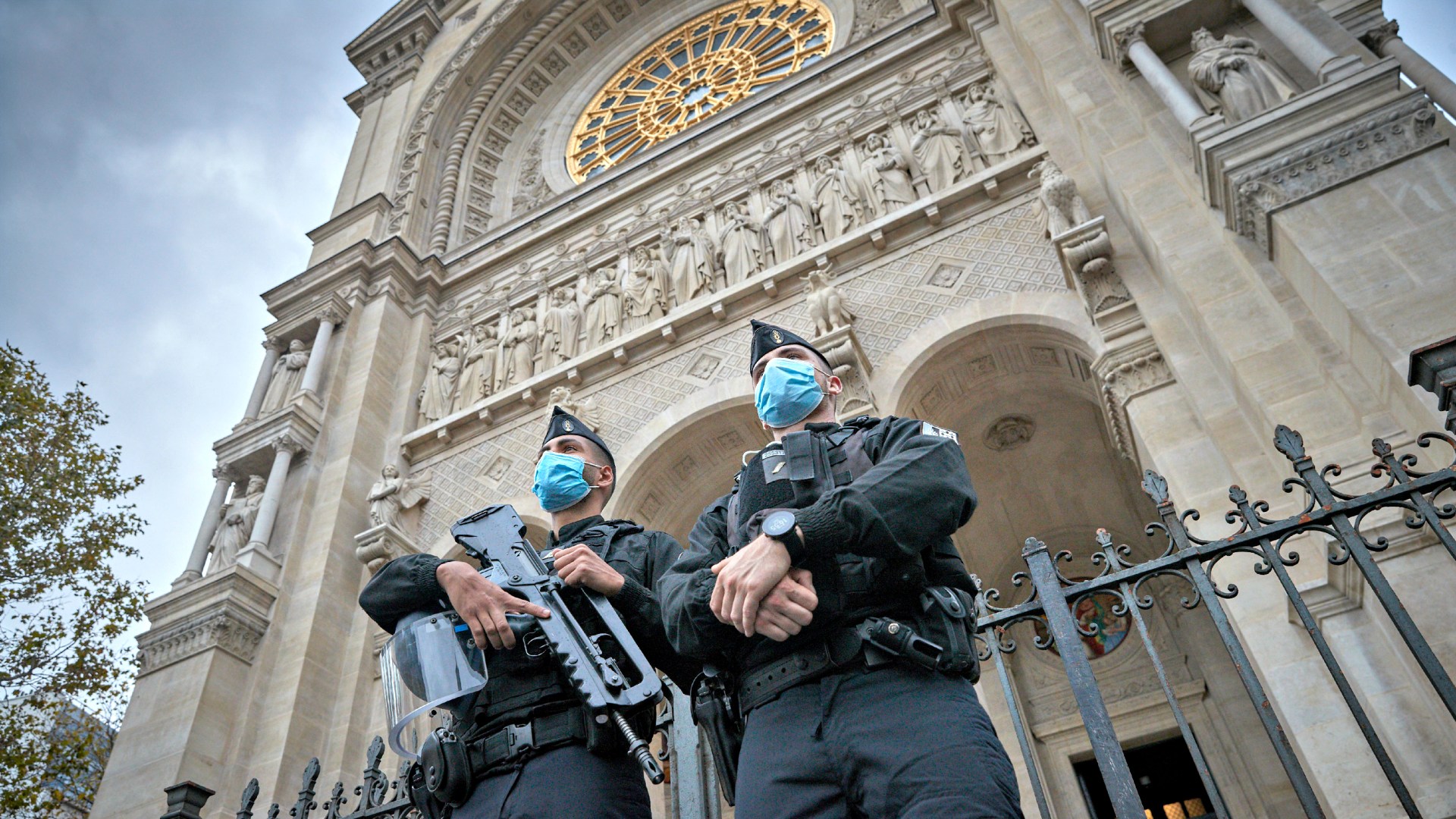
Armed French police stand guard in front of Saint Augustin Church in Paris on October 31, 2020, in the wake of terror attacks in France.

Armed French police stand guard in front of Saint Augustin Church in Paris on October 31, 2020, in the wake of terror attacks in France.

Christianity Today April 15, 2021
Kiran Ridley / Getty Images

On Monday night, the French Senate passed an anti-terrorism law that has greatly concerned church leaders.

Now called the Law to Uphold Republican Principles and the Fight Against Separatism, the bill—approved by a 208–109 vote, with 27 abstentions—intends to combat the Islamist radicalism that has incited numerous attacks on French soil in recent years.

However, the Macron administration’s desire to make France safer has put the nation’s deeply rooted freedom of religion in the crosshairs.

“The wind has changed in France,” said Clément Diedrichs, general director of the National Council of Evangelicals in France (CNEF), which according to new research represents half of French Protestants. The government has “clearly indicated that we’re no longer in a Christian society.”

“Religion has become expendable,” he observed, saying that the country’s leadership no longer has any desire to protect space for any faith.

In February, as reported by Christianity Today, the National Assembly, the French parliament’s lower house, passed a first version of the bill. The net result of the Senate’s debates is a version with even tighter oversight measures, despite the inclusion of a few modifications seen by Christians leaders as positive.

The Protestant Federation of France (FPF), which includes both evangelicals and Lutheran or historic Reformed groups, highlighted the Senate bill’s guarantee of the rights of chaplaincies—in particular in educational establishments, though the bill forbids any type of religious service in these establishments. The bill also provides for churches’ ownership of buildings given to them for free as well as access to public subsidies for making buildings accessible for people with reduced mobility.

CNEF appreciates the Senate’s reinstatement of homeschooling as an educational option, though with increased forms of oversight. The National Assembly’s version of the bill had taken away authorization for home instruction for children.

Next the bill goes to a joint committee of deputies and senators, who are expected in May to begin ironing out differences between the bill’s two forms before a final vote by the National Assembly in July. Soon after, the government will issue the decrees that cover the fine details of applying the law.

While its final form remains in flux and Christian groups such as FPF and CNEF will continue their advocacy efforts, pushing for the law’s impact to be made less onerous, French churches are beginning to prepare for how to comply with the anticipated new rules.

In particular, churches face increased requirements for declaring themselves to the government and stringent new rules related to finances, including tracking and limiting funding from outside France and the financing of building projects. The law would also increase government surveillance of pastors’ teaching and increase religious leaders’ legal liability, proposing steep sanctions for speech deemed to encourage disrespect of laws.

“We’re shifting from a separation of church and state based on liberty to a separation based on control,” said François Clavairoly, president of FPF. “Laïcité is no longer really a laïcité of trust and intelligence but is now a laïcité of distrust, suspicion, and control.”

France’s famous principle of laïcité, often misrepresented in English simply as “secularism,” was enshrined in a 1905 law that created a distinctly French form of separation of church and state, one that defends and guarantees freedom of religion and ensures government neutrality on religious matters.

Evangelical Christians were among those who advocated strongly for the birth of laïcité. But the principle is now in danger.

While French Christians are supportive of their government’s efforts to address the threat of radical Islam, they are troubled by constraints that don’t actually address the fight against terrorism and that conflate other religions with Islamist extremism’s threat.

“Our Western societies—I think it’s also true for American society—have more and more difficulty understanding religious belief and the way it guides the faithful in their lives in society,” said Clavairoly. “Terrorism’s extreme Islamist ideology that misrepresents Islam has further clouded understanding of religious life.

“Religious practice has become something menacing for many political leaders. … So our advocacy explains that religion isn’t a threat, but on the contrary, it’s a resource for intelligence and citizenship.”

Among the new constraints would be a threshold over which foreign funding of religious groups in France would require complicated, time-consuming processes of reporting and approval. The current proposed threshold is 10,000 euros (about $12,000 US) per year.

“We exist as a young church plant, thanks to the generosity of individuals and churches here in France, but still for the most part [donors] from abroad,” said Etienne Koning, pastor of Saint-Lazare Church, a Paris church affiliated with the Acts 29 network. If the limit holds, “it will have a big impact on our daily life. It will not make it impossible to do church, but it will make it far more difficult.”

He said authorities don’t seem to recognize that unlike the extremists they say they’re targeting, churches like Koning’s have a clear financial plan for generosity from abroad to be replaced by generosity from the local church as the congregation grows. His church’s foreign funding comes from generous individuals with normal jobs, not from private societies or oil-industry wealth as is often the case for the radicalized mosques whose ideology the government wants to protect French society from.

Koning noted the second main impact his church foresees relates to freedom of speech, expression of convictions, and increased control by the state over messaging. “I know that sounds like in China,” he said, acknowledging that what’s proposed in France isn’t at all at such levels. Still, it concerns him to see the government’s desire to “control what is thought—thus, what is said and what is taught.”

Yet, despite the new law’s dire evolution away from intelligent laïcité as they see it, French Protestant leaders’ strategy—toward both the government and the pews—has been notably free of fear-mongering. Instead, they have called for their sisters and brothers to avoid taking on a posture of victimization even as they recognize the seriousness of the moment.

“It is not the apocalypse,” said Clavairoly. “We are absolutely not in an atmosphere of fear.” Rather, he said, they are engaged in a very French debate that is a continuation of the hard conversations that took place at the end of the 19th century and beginning of the 20th between the church and the republic.

“Without fearing at all for our faith, we can legitimately express our concerns and the fact that we will remain attentive to the preservation of our legitimate freedoms, in defense of a well-understood laïcité,” said Erwan Cloarec, director of formation of the Federation of Evangelical Baptist Churches of France (FEEBF) and a pastor in Lyon.

For him, this means promoting the freedom to believe and not believe and being able to live this freedom without being worried or hindered in any way by the government. “It seems important to me to continue this fight, without fear or weakness,” said Cloarec. “The Lord is with us, and he invites us to faith, trust, and prayer.”

“Should we be afraid? No,” said CNEF’s Diedrichs. “In Jeremiah, it is said that we must look for the good of the city where we are, and this town isn’t Jerusalem. It’s Babylon. I think a lot of Christians would prefer that we were in Jerusalem instead of Babylon. Many evangelicals would like to still be in a Christian society that protects us.”

But since they are no longer in a Christian society, he said, French evangelicals have to be witnesses to the gospel like the first Christians were in their non-Christian society.

“They didn’t expect the government to protect them. They simply had an eternal hope and witnessed to this hope in their society,” he said. “This is why I say that we have no reason to be afraid, but do have all the good reasons to proclaim the gospel.”

While Koning, the Paris pastor, gives “four stars” to CNEF leaders’ “seriousness and professionalism” in tackling the issue as well as their desire to be peaceful, obedient citizens, he said he and other colleagues think the posture has been “too kind and a little naïve.” He acknowledges that the government’s desire for control and the potential repercussions for freedom of speech and freedom of conviction give legitimate reason for French evangelicals to feel concerned.

On the other hand, he said, there are plenty of reasons not to feel afraid: In a democratic country like France, elections can change things, and there are French who think clearly and can parse through the political discourse.

Whatever the outcome, Koning said, “We’ll find a way to carry on serving the Lord … taking good care of our people by faithfully proclaiming to them the unaltered and life-changing gospel, serving and loving our neighbors just as they are, … never giving in to bitterness or hatred, always building bridges and relationships, in order to bring Christ to our nation.”

How can Christian brothers and sisters outside France care for the French church? In separate interviews, Clavairoly and Diedrichs said the same thing: “Don’t be afraid for us.”

But there’s also a call for prayer.

Recognizing the spiritual stakes, CNEF leaders sensed committing to prayer would bring a greater return on investment than some of their meetings with government leaders. A thousand people receive the group’s weekly updates and prayer requests regarding the separatism bill’s progression.

“Pray for us,” Diedrichs invites those outside France, “that we will be courageous in advancing the gospel.”

Gerard Kelly, a British expat observer who has ministered in France for three decades and pastors a Normandy church plant alongside his wife, agrees. “We should be praying for revival, for the growth of the church,” he said. “We need to pray for vibrant churches so that when laws like this come up, people don’t see the evangelicals as a sort of weird, fringe cult thing.

“Instead, they see people they know as neighbors.”

For Christians in other cultures, especially the United States, seeing what’s happening in “post-Christian Europe” can be cause for alarm over what may be coming their way. But Kelly, who codirects with his wife the UK-birthed Bless Network, says such Christians can learn from Europe right now, specifically what living in a post-Christian culture looks like.

“Post-Christian means it’s a form of exile. We live in Babylon,” he said, unwittingly echoing Diedrichs. “We don’t live in Jerusalem.” Because of this, Kelly says as a European Christian, he doesn’t expect his government to make laws that particularly suit his worldview, though he does think it should protect freedom.

He acknowledges that moving into exile brings real losses and pain, not least of which is pastors’ and parents’ fear of living in a world in which their children are less likely to remain in the faith community they are raised in.

But he says exile is actually very good for mission: a post-Christendom missions model is much more inspiring and creative. “Your dialogue with the culture is not ‘You should join our enclave.’ It’s ‘You should find Jesus.’”

“When the church is strong and rich and powerful, it forgets missional engagement because it doesn’t need to. It stops engaging creatively with its neighbors and becomes complacent,” said Kelly. “God solves complacency by allowing exile to happen—because we were never meant to be separatist.”

News
Wire Story

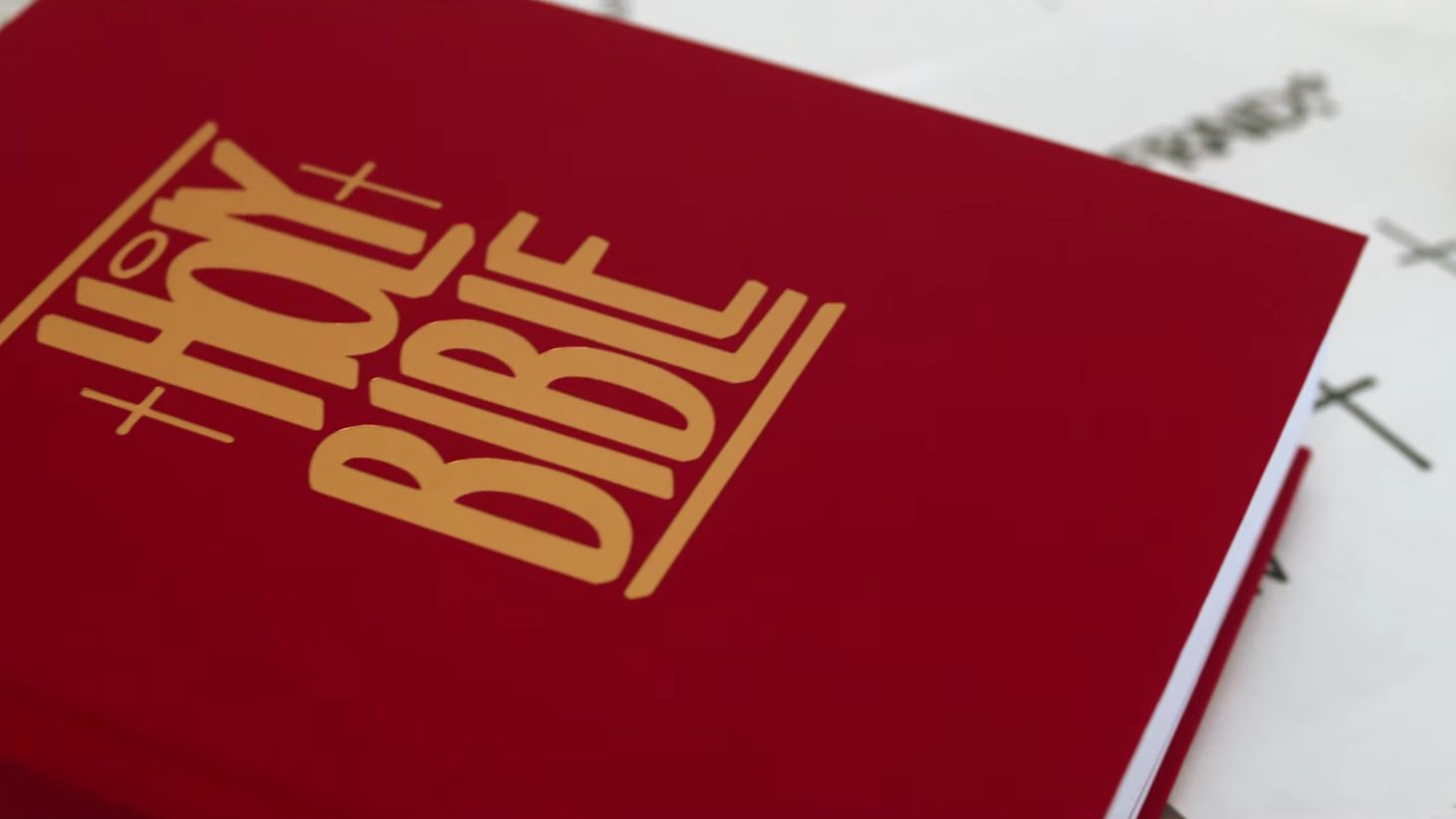
Hype Meets Holy in Modern Bible Design

The latest “premium” text has a bright red cover, street art-inspired calligraphy, and a $300 price tag.

The new Bible incorporates calligraphy from artist Eric Haze. The company says 10 percent of gross sales will benefit Compassion International.

The new Bible incorporates calligraphy from artist Eric Haze. The company says 10 percent of gross sales will benefit Compassion International.

Christianity Today April 13, 2021
The Good Publishing Company

At first, social media users weren’t sure if it was an elaborate April Fool’s joke. It was, after all, April 1 when the billboard appeared above New York City’s Canal Street advertising a Bible with a $300 price tag.

The limited edition, art-inspired Good Publishing NIV Bible is described on its website as a “modern version of God’s Holy Word” and an “ambitious project, elevating the aesthetic to God’s Holy Word with artisan qualities.”

Those qualities include gold foiling on its “striking crimson red Soft Touch cover” and sustainably sourced paper. The title of each book was lettered by New York City artist Eric Haze.

“Rooted in humility with an ambitious mission, we set out to build a fresh, relevant brand around the best selling book in history–the Holy Bible,” says the Good Publishing Co. website.

Relevant magazine called it “Hypebeast-inspired content.” Commenters on Instagram asked if the Bibles had been autographed by God and quoted Jesus’ own admonition: “Do not make my Father’s house a house of trade.”

But so-called “premium” Bibles aren’t new. And while they may not carry the same steep price tag, a number of new and traditional Bible publishers are stressing the beauty of an old-fashioned book and the experience of slowing down to read at a time when so much of life is lived online.

“There’s a long tradition of Bibles being published, even hundreds of years ago, that were trying to use the finest materials to honor the legacy of the text,” said Tim Wildsmith, the pastor and blogger behind the Bible Review Blog.

Wildsmith, who reviews all kinds of Bibles on his blog, said he hasn’t seen a copy of the GPC NIV Bible in person to know if it’s worth several hundred dollars, but it’s not that much more expensive than some other premium Bibles. The most expensive by publishers like Schuyler or R. L. Allan are around $200 to $250, he said.

“I think that having a beautiful version of the Word of God is actually a way to honor the sacredness of the text and the high value we place on it in our lives,” Wildsmith said.

Plus, he said, millennials—the generation that popularized Instagram—care about the way things look and feel.

In the last decade, independent projects like Bibliotheca have brought that same reverence and an eye for design to Bibles at a more modest price tag—and shown big Bible publishers there’s a market for it.

Bibliotheca’s Kickstarter, launched in 2014 by book designer Adam Lewis Greene, envisioned a “design-conscious alternative” to traditional Bibles, according to its website. That meant splitting the Bible from one giant tome into four volumes (plus the Apocrypha), each with proportions based on the measurements for the Ark of the Covenant. Inside, a typeface designed exclusively for the project presents the sacred text without chapter and verse numbers, subheadings, and other notes that usually appear in Bibles.

“It’s geared toward an enjoyable reading experience,” Greene said in the video introducing the Kickstarter.

The project became Kickstarter’s most-funded first-edition book project to date, far exceeding the crowd-funding goal the designer had set.

Traditional Bible publishers took note.

In 2017, Zondervan published the NIV Sola Scriptura Bible Project, which, like Bibliotheca, breaks the Bible into four volumes without chapter and verse numbers or other notes.

That same year, Holman Bible Publishers partnered with Bible study community She Reads Truth to publish the She Reads Truth Bible, described on its website as “inherently beautiful” and “intentionally designed.”

The She Reads Truth Bible includes reading plans, devotions, and maps and charts for each book of the Bible similar to those shared on the She Reads Truth app, website and study books. It also is available with several different covers, including a bright poppy linen, and features hand-lettered key verses at the introduction of each book and typefaces designed for readability.

“At She Reads Truth, we believe in pairing the inherently beautiful Word of God with the aesthetic beauty it deserves. Each of our resources is thoughtfully and artfully designed to highlight the beauty, goodness, and truth of Scripture,” Amanda Bible Williams, co-founder of She Reads Truth, said in an email to Religion News Service.

“Simply put, beauty in our work matters to us because we believe it honors God, the beautiful one and source of beauty.”

Another recent project is Alabaster’s The Bible Beautiful, which is reimagining each book of the Bible as a single volume, printed on thick paper with original photography and attention to typography and negative space. So far, it has released 16 books.

For Alabaster co-founder Brian Chung, it was a matter of making the text accessible.

When Chung became a Christian in college, he said he was excited and also intimidated by his first Bible. It was leather-bound with extremely thin pages. Some of the words were printed in black. Others were red.

“I was just not like any book that I had experienced,” he said.

Sitting next to it on his desk was his marketing textbook, designed to look like a magazine. It was the first time he said he felt excited to read a textbook—and it gave him the idea that eventually became Alabaster, co-founded with Bryan Ye-Chung.

“I think as someone that was studying both business and design, I just thought, ‘Could the Bible be done differently?’” Chung said.

Culture

When Do the Latest Hillsong and Bethel Hits Belong in Your Sunday Lineups?

How worship pastors decide whether to sing to the Lord a new song.

Christianity Today April 13, 2021
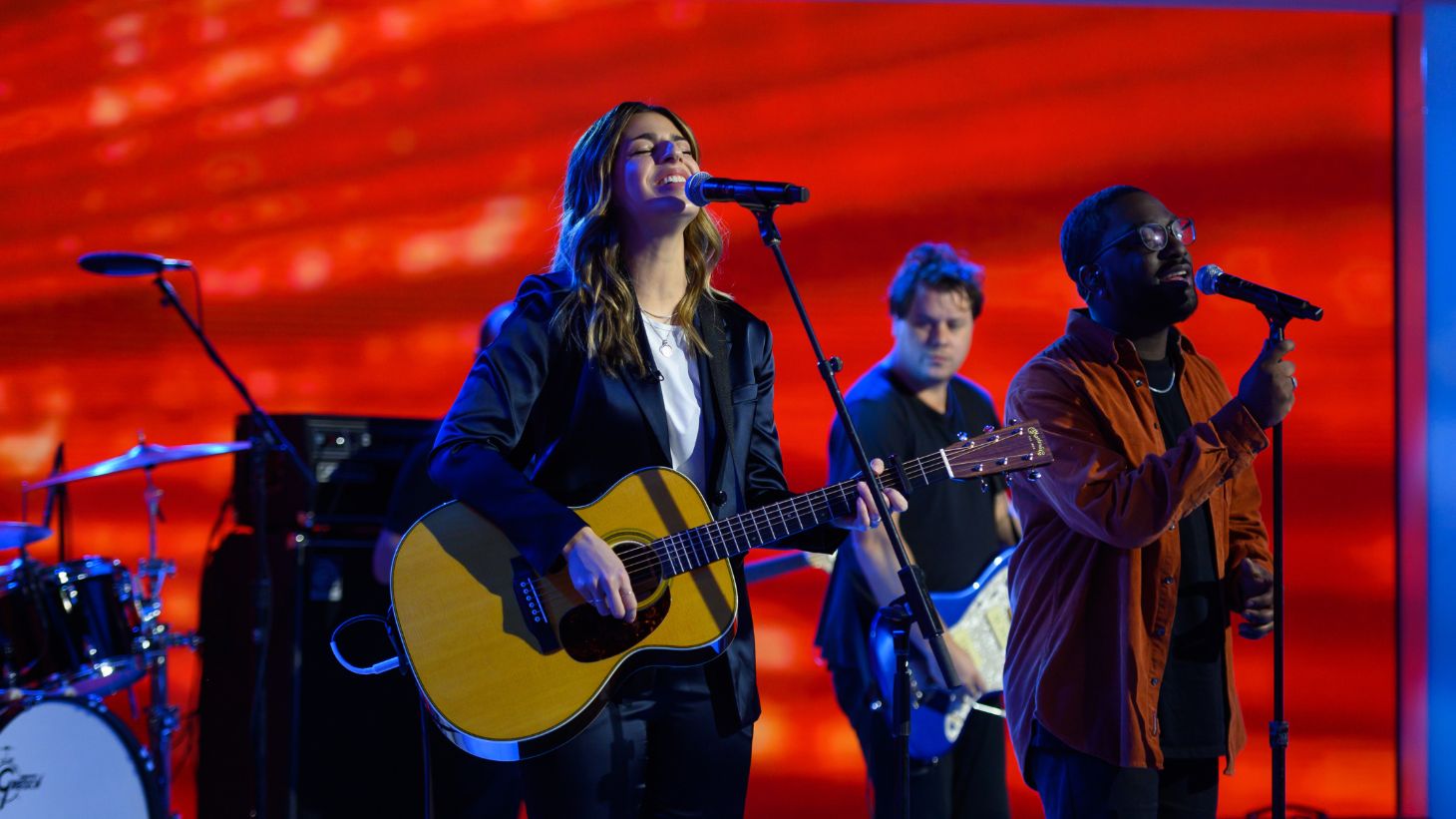
Nathan Congleton / NBC / NBCU Photo Bank via Getty Images

“Learn these tunes before you learn any others,” John Wesley wrote in his Directions for Singing. “Afterwards, learn as many as you please.”

The specified “tunes” were those included in the 1761 publication of the early Methodist hymnal, Selected Hymns. Wesley’s seven directions for singing have long been included in the opening pages of the United Methodist Hymnal. They include exhortations like “Sing lustily and with good courage,” “Sing all. See that you join with the congregation as frequently as you can,” and “Attend strictly to the sense of what you sing, and see that your heart is not carried away with the sound, but offered to God continually.”

Wesley wrote his Directions for Singing for a different time, for a church usually selecting congregational music from a confined set of songs in printed hymnbooks. But this centuries-old guide helps establish a theological framework for a new project designed to help worship leaders evaluate a growing catalog of contemporary worship music.

The United Methodist Church’s (UMC) Discipleship Ministries recently released CCLI Top 100+ Beyond, the latest iteration of a project begun in 2015, aiming to help leaders curate worship songs. CCLI stands for Christian Copyright Licensing International, which provides copyright licenses to use music from a vast library of artists; it ranks its most popular songs twice a year in the CCLI Top 100.

The UMC project offers a recommended song list, with a description of each song’s lyrics, theological underpinnings, musical difficulty, and a list of recording artists and alternate arrangements.

The list includes seven titles by Hillsong Worship and Hillsong United, seven by Bethel Music, and five by Elevation Worship; the top-ranking CCLI song at the time was Pat Barrett’s “Build My Life,” and the team said it appreciated “that this song petitions Jesus to lead us ‘in Your love to those around’ us, which ties in to Wesleyan notions of cooperation with God in Christ Jesus.”

Another resource developed by the UMC suggests issues worship pastors should consider, such as finding music from underrepresented regions, engaging global worship traditions with cultural competence, and shifting to more inclusive language without violating copyright law.

CCLI Top 100+ Beyond project is not prescriptive but a set of guidelines to help disciple congregations and leaders in a theology of worship consistent with Wesleyan thought. In the Methodist tradition, “singing in worship should not exist for its own sake,” writes Matthew Sigler, “Congregational music for Methodists is understood to be catechetical.”

But singing tenets of the faith is about both understanding and feeling. The Rev. Nelson Cowan, who manages the CCLI vetting project, says, “This isn’t just doctrine we’re reciting through song; it’s doctrine we are learning and inhabiting and feeling and processing through song.”

Every congregation has a hymnal

The UMC’s CCLI vetting project does in a more uniform, explicit way the work worship pastors and music directors are already doing across denominations.

“Every congregation has a hymnal,” says Jake Ferrell, worship director at Valley Church, an Evangelical Free congregation in West Des Moines, Iowa, “whether they realize it or not.”

As the worship music industry has grown, churches have had to evaluate the flood of contemporary worship music popularized on Christian radio, through Christian conferences, and now streaming online. The triumph of contemporary worship music in the worship wars of the 1990s brought an ever-widening music selection; the church “hymnal” became more fluid.

Worship pastors say that evaluating and selecting new music is a central part of their job. They essentially revise the hymnal for their congregations every time they update Planning Center or whichever church management software they use.

“It’s a trusted position,” says Elizabeth Jackson, worship pastor at Antioch Community Church in Raleigh, North Carolina, noting the authority and influence that comes with having the final say over which songs are sung by the congregation.

Worship leaders pay attention to “singability”—whether a new song has too many words, big vocal leaps, or an irregular rhythm. Personal taste also plays a factor. “You hate to say it,” says Ferrell, “but a lot of it is just preference.” Ideally, pastors’ tastes are shaped by musical training and the needs of their congregations in addition to the contents of their personal Spotify playlists.

The expansive worship music industry makes it easy to find new music but nearly impossible to avoid the influence of a few prominent artists and producers. Most worship pastors try to choose music thoughtfully, but they may not be aware of how much influence the industry has over those choices.

Adam Perez, a worship scholar at Duke Divinity School, finds that, in general, worship pastors are “conscious of the theology.” But he points out, “Big brands [i.e. Hillsong, Bethel, Jesus Culture] have more power over congregational song choices than denominational identity.”

In pulling from the CCLI Top 100, the UMC recognizes that most artists and churches in the ranking are “charismatic, Pentecostal, Calvinist, or neo-Calvinist” and therefore “have not fully shared and sometimes have taken positions opposite to our core commitments.”

Worship pastors in evangelical and nondenominational churches likewise look out for theological red flags as they select new songs, but as the selection process is almost completely internal, each church is left to articulate its own theology of worship or trust that the producers of the music they encounter share their core values and beliefs.

A generous theology of worship

Despite the unofficial affiliation between the network of producers and artists creating the music that lands on the CCLI Top 100, there is indeed a common theology of worship undergirding much of our popular worship music. Perez suggests that the underlying (often unspoken) belief is that “through praise music we experience God’s presence.” The foremost purpose of musical worship is to facilitate a felt encounter with God.

The Methodist emphasis on the balance of singing with feeling and understanding fights against a theology of worship that too often prioritizes congregants’ emotional response. Cowan suggests that emotionally resonant but lyrically minimal songs not be excluded from services but supplemented by Scripture readings or by a pairing with traditional hymns that have related, richer textual content: “We recommend a principle of addition, not subtraction.”

Elevation Worship’s “Do It Again” is described as a song that “resoundingly articulates the faithfulness of God,” though “perhaps overly personal,” and is best paired with other music or art that encourages a more corporate mindset.

The narrative accompanying Kerri Meyer’s “Another World” notes that although there is no “explicit Christian language in this song, the flexibility of the song presents an opportunity to teach about the inbreaking reign of God.”

This inclusive, generous strategy allows for music that is poetic, personal, or lyrically minimal. It pushes against the exclusive use of such music, but it does not belittle or condemn it. This approach also discourages the exclusive use of obscure hymns to sing as much doctrine as possible. It welcomes the meditative and devotional as well as the intellectually engaging.

Worship pastors from across denominations may find that the Methodist resource helps them define and articulate the theology of worship that they want to practice and impart. It’s a reflective guide—there’s no list of rejected songs, nor any diatribes about the loss of the traditional hymnals or the dangers of contemporary music.

The first time I was put in charge of music selection for a worship team, I was a junior in high school. As a high school student, being allowed to help choose music for weekly worship felt like having real authority. And it was real authority. Even in my immaturity and selfish enthusiasm, I believed that music had an important role in spiritual formation, even if that idea was primarily formed by emotional experiences at conferences or concerts.

Music selection and worship leadership is teaching. To treat it with less weight than that is to miss the opportunity to use a powerful medium to teach, learn, and deepen faith. Through the music we sing together, we teach ourselves over and over what we as a congregation affirm about God’s identity, our identities, and our relationship with God personally and corporately.

Unlike the sermon preached each week during a service, the words we sing in congregational worship are words we all proclaim in agreement, in unison. It is a serious task to choose words that we all can sing in agreement, together.

A resource like the UMC’s CCLI Top 100+ Beyond can help those looking for a way to evaluate their own worship practices to ask, “Are we striving to sing together with both feeling and understanding? In both spirit and in truth?”

Kelsey Kramer McGinnis is a musicologist, educator, and writer. She holds a PhD from the University of Iowa and researches music in Christian communities.

News

Asking God to Reduce Carbon Emissions

Christians organize prayer campaign ahead of climate change conference in Glasgow.

Christianity Today April 12, 2021
Picture Alliance / Contributor / Getty Images

Christians in Asia, Europe, and North America will gather monthly from spring to fall to offer intercessory prayers ahead of the United Nations climate change conference scheduled for Glasgow, Scotland, in November.

The prayer campaign is organized by former Baptist missionary Lowell Bliss and includes leaders from the Lausanne/World Evangelical Alliance Creation Care Network, A Rocha International, Youth With A Mission England, Christian Missionary Fellowship International, Tearfund, and Young Evangelicals for Climate Action.

“A group of us are feeling called into a type of prayer commensurate to the urgency of the climate crisis,” Bliss said, “to appeal to the Creator, Sustainer, and Redeemer of all creation that God might intervene in this hour of great threat and profound injustice.”

Bliss is hoping thousands—evangelicals and charismatics as well as mainline Protestant and Catholics—will come together in intercessory prayer, “praying authentically while stepping outside our comfort zone … in a united appeal to God, ‘Lord, have mercy.’”

The Glasgow conference, known as COP26, will hear reports from the 190 nations that signed the Paris Agreement to reduce the carbon emissions that scientific consensus says are causing global climate change. The Paris Agreement, signed in 2015, included a “ratchet mechanism,” with nations agreeing to accelerate the reduction of carbon emissions every five years. The fifth-year meeting was delayed by COVID-19.

The meeting is considered crucial because some scientists say that the window to make a change to avoid the worst global impacts of climate change—rising sea levels, deadly heat waves, and increased natural disasters—is rapidly closing.

NASA’s measurements of the earth’s baseline temperature show rapid warming in the last few decades, as do the measurements of the National Oceanic and Atmospheric Administration (which runs the National Weather Service), and the Met Office Hadley Centre’s Climate Research Unit in the UK. According to NASA, 2003–2020 were the warmest years since people started tracking global temperatures in the 1880s, and “climate-warming trends over the past century are extremely likely due to human activities.”

Bliss, author of Environmental Missions: Planting Churches and Trees, said he is praying that God “grant that the nations may cut their carbon emissions by half by 2030 and achieve net zero by 2050.” He and the group are also praying that God would “be moving in each government of the world so that the revised emission-reduction targets that they bring to Glasgow finally match up to the Paris temperature targets.”

Twenty-eight percent of white evangelicals in the United States share Bliss’s concern, according to the most recent Pew Research poll on religious views of climate change. About 37 percent, on the other hand, say that there is no solid evidence of climate change. Another third say that climate change is happening but think it’s part of natural cycles and not impacted by human behavior.

While the issue has divided American evangelicals, that’s not true internationally, said Chris Elisara, executive director of the World Evangelical Alliance’s Creation Care Task Force. European evangelicals “are, for the most part, not skeptical,” he said, but “striving to have a Christian response to climate change that involves both mitigating against the changes and adapting to the changes as best they can.”

In other parts of the world, moreover, evangelicals see the direct impact of floods, droughts, and the extreme weather that indicate a climate crisis, according to Elisara.

“North Americans can have a debate on the matter because they’re not feeling the effects yet,” he said. “But in the Philippines? It’s not a debate. It’s their daily experience.”

It was the daily experience with pollution in India that convinced Bliss of the importance of caring for the environment. He went to the country as a missionary in 1993 and stayed until 2007.

“Over my years in the field, I was told that missionaries should feed souls and bodies. But what about the ecosystems in which those souls and bodies live and die?” Bliss said. “My best Indian friend in Varanasi was a Brahmin man named Munnu-ji. He died of cerebral malaria, which means that one infected mosquito, feeding on the fetid, polluted waters of the Gangetic plain, bit him.”

In 2009, Bliss started Eden’s Vigil, a nonprofit dedicated to training missionaries to integrate environmental concerns with the Great Commission to make disciples of all nations. He has partnered with the Lausanne Movement and the World Evangelical Association to create resources and encourage climate advocacy. And now he’s forging a partnership with six international organizations for an intercessory prayer campaign.

“It’s not a new organization, but a network of believers gathering to help each other pray,” Bliss said in an email to CT. “For COP26, we are trying to mobilize God's mighty right arm (Ps. 118:16) and Scripture is replete with stories of single individuals or small groups who did just that.”

According to New York City pastor John Starke, author of The Possibility of Prayer, the act of intercessory prayer asks God to intervene in our lives and transform the world. The practice goes back to the Levite tradition of Old Testament priests who acted as mediators for God’s grace.

“The New Testament calls us ‘priests,’” Starke said, citing 1 Peter 2:5, “and we participate in Christ’s ministry of ‘interceding for us’ when we intercede for others. We have a voice in the presence of God. We are called to intercede.”

Intercessory prayer doesn’t preclude getting involved and trying to help in other ways, but for many Christians, it is the critical starting place for activism—crying out to God on behalf of a broken world.

“Historically when Christians have been confronted with an event like COP26, we turn that desperation into intercessory prayer,” Bliss said. “John Knox”—who brought the Reformation to Scotland in the 1500s—“reportedly once pleaded with God, ‘Give me Scotland, or I die.’” We kind of feel the same way about Glasgow in November 2021.”

Bliss and the Climate Intercessors are not the only ones who are praying this way about the climate either. Activist Peter Fargo recently launched the “Million Prayer Mission,” encouraging Christians from different traditions to join in weekly vigils for the environment.

Just starting in 2021, the group has connected with evangelical and mainline churches in California, New York, and Virginia, as well as a variety of independent Christian musicians, and missionaries with Pioneer Bible Translators who are raising funds to produce Scripture for a church plant in North Africa. They gather for weekly prayer online.

“A Christian response to our climate crisis begins and ends with prayer,” Fargo said. “We turn to God to help us through the impossible because we know ‘nothing will be impossible with God.’”

The next prayer meeting is scheduled for April 27.

Books
Review

An Altar Call for Backsliding Book People

Two authors encourage Christians to rededicate themselves to attentive, artful reading.

Christianity Today April 12, 2021
Illustration by Mallory Rentsch / Source Images: Sincerely Media / Kari Shea / Unsplash

Among many evangelical literature-lovers (and likely many CT readers), Leland Ryken is a familiar name. Longtime (now emeritus) professor of English at Wheaton College, he is the author of numerous books, including The Christian Imagination and How to Read the Bible as Literature. In his latest offering, Recovering the Lost Art of Reading, he teams up with professional writer Glenda Faye Mathes to take on one of the ecclesial crises of our time (though not one that tends to make the headlines): By and large, Christians aren’t engaged in serious reading.

Recovering the Lost Art of Reading: A Quest for the True, the Good, and the Beautiful

Recovering the Lost Art of Reading: A Quest for the True, the Good, and the Beautiful

Crossway

304 pages

$14.36

Ryken and Mathes set out to provide Christians with the reasons and tools they need to start reading again. Their overriding hope is that readers will find it easier to pick up a book and responsibly—indeed, artfully—lose themselves in it. (In this, their intentions overlap somewhat with those of Karen Swallow Prior in her 2018 work On Reading Well, although Recovering the Lost Art of Reading is a very different book.)

Ryken and Mathes describe their project as addressing “first the concept of reading as a lost art, then distinctive features of various types of literature and tips for reading them, and finally, ideas for ways to recover reading.” To put it more plainly, the book asks and responds to three questions: What is literature? Why should Christians read it? And what do they need to know (either about literature or about why they’re not reading it) before they can read it well?

While Recovering the Lost Art of Reading isn’t exactly literary criticism, it brings aspects of a literary-critical engagement to would-be readers and provides insight into things like the difference between literary and nonliterary uses of language, the relationship of form and content, and what exactly to pay attention to when reading, say, a novel. All the while, Ryken and Mathes share with readers how becoming an attentive, artful reader is one of God’s desires for us, not just because it helps us think and feel beyond ourselves, but because it brings delight.

It’s an ambitious project, but Ryken and Mathes are committed evangelists, and they bring the good news as all evangelists do, which is to say, they begin with sin and its consequences! We hear, for example, that “smartphones, computers, game consoles, and other devices for streaming information” have “fractur[ed] our focus” and that, as a result, “we’re losing depth of wisdom, perhaps even a part of ourselves that jeopardizes our very souls.” The authors then highlight the free gift offered by reading: “The best literary fiction reflects God’s … creativity,” and in it, if we have ears to hear and eyes to see, we can find “truth, goodness, and beauty.” Finally, they hold an altar call: “All it takes to accept the invitation is to read a book or poem.” Or, if you prefer, “the joy is before you. Open a book and enter.”

Repeated themes

One thing to observe about Recovering the Lost Art of Reading is that even though it is divided into three parts, each conceptually distinct from the others, there is a fair amount of repetition in the book. This is not entirely surprising, for to talk about “reading as an art” (part 1) necessarily entails saying things about “what literature is,” even if that topic doesn’t come up formally until later in the book (part 2). While the authors note that certain chapters build upon others, it’s helpful to think of the book not as a single, overarching argument but as a series of chapters that lend themselves to being taken up on their own.

Indeed, the authors invite readers to treat Recovering the Lost Art of Reading as a “guidebook,” implying that reading it straight from start to finish isn’t necessarily the intention. (Approached in this way, repetition becomes a virtue.) We might imagine, for instance, a hesitant reader of poetry lacking the confidence to pick up that edition of Emily Dickinson’s poems. Ryken and Mathes’s chapter “Reading Poems: Songs of the Soul” might be just what she needs to get herself over the hump. The fact that several chapters offer a mixture of theoretical exploration and practical tips suggests the usefulness of reading the book in this way. Chapters themselves are divided into short one- or two-page sections, and each concludes with a summary of the points made.

One of the downsides of writing the book in this way is, unfortunately, that that some parts are more engaging than others. The authors are at their best in the chapter “Reading the Bible as Literature: Words of Delight.” This is, of course, Ryken’s wheelhouse, and readers will have no trouble discerning the authors’ animating concern: If Christians aren’t reading artfully, then there’s a sense in which they can’t actually read the Bible. They write:

People who are oblivious to … literary aspects of biblical texts may think they are getting by without literary analysis, but either they are performing literary analysis intuitively and unconsciously, or they are not really interacting with the Bible but with a substitute.

In another notable moment, the authors take issue with what passes for “Christian fiction” these days: “Too many of these novels are bland romances with flat characters and pat endings. … No wonder some believers view reading novels as a waste of time!”

The chapters discussing “Truth in Literature” and “The Moral Vision in Literature” are also very good. In the former, Ryken and Mathes helpfully distinguish between representational and ideational truth in literature. Representational truth is something that can be taken at face value: Either what’s depicted in a novel is true to life or it isn’t. Ideational truth, though, requires the work of interpretation before one can assess its “truth claims.”

But even here the authors are careful, writing, “An additional reason why we should be unapologetic about disagreeing with some truth claims in a work is that there are almost certainly other elements that we can affirm. We can appreciate skill of composition, artistic beauty, an accurate and clarifying portrayal of life, and maybe even some of the author’s ideas.”

A mixed bag

Despite there being much to appreciate in Recovering the Lost Art of Reading, the book has some problems. In addition to the unevenness of the text mentioned above (perhaps inevitable when a book has more than one author), there is the ubiquitous, at times overwhelming enlistment of quotations. Hardly a page goes by without some tidbit, some piece of quotable wisdom, from a social scientist, a literary critic, or a famous author or text.

Multiple references to the Bible are, of course, to be expected, but C. S. Lewis is cited something like 40 times in the book, which means he makes an appearance every five or six pages on average. Now I like the creator of Narnia as much as the next guy, but after a certain point, one has to wonder whether it’d be better to put Ryken and Mathes down and just read Lewis instead. I understand the reason for appealing to authorities, and charitably, one might read the authors’ use of quotations as evidence of their lifetime curation of “the best that has been thought and said,” to quote Matthew Arnold (which the authors do). Nevertheless, it seems to me the relentless use of other people’s ideas actually stands in the way of Ryken and Mathes fully developing their own.

Another problem I saw repeatedly while reading was a certain ambiguity about the book’s intended audience. Given the authors’ evangelistic ambitions, one might safely assume it’s written for Christians—for “children of the Book” who have forgotten books. But I’m skeptical that all Christians, younger ones especially, will be engaged. The problem isn’t so much the subject matter as the way it’s presented. Even though I’m largely sympathetic to the claims made by the authors, their repeated references to the dangers of technology, the internet, social media, and video games strike me as caricatured and even tired, just as their objection to “stories about vampires or aliens” seems likely to be met with “OK, Boomer” or some such response.

Ryken and Mathes apparently also expect their readers to have a working knowledge of the current state of literary studies in the university. References to “deconstructionist” approaches to literature or “reader response” criticism will likely fly right over many people’s heads. Indeed, it’s possible that appeals to such half-understood and barely explained concepts might serve merely to reinforce certain preexisting and uninformed reader biases about academia.

Ultimately, Recovering the Lost Art of Reading is a mixed bag, like most chapters of the book: It contains a little bit of everything. I’d still recommend it, however, if only to prompt readers to ask themselves the questions Ryken and Mathes suggest good literature invites: How is it true? How is it good? And how is it beautiful? Only artful reading can provide the answers.

Darren Dyck is an assistant professor of English at Ambrose University in Calgary, Alberta, where he teaches courses on, among other things, medieval literature and the writings of the Inklings.

News

Died: Ashur Eskrya, Champion of Iraq’s Displaced Christians

President of the Assyrian Aid Society–Iraq (AASI) passes away from COVID-19 complications.

Ashur Eskrya, president of Assyrian Aid Society–Iraq

Ashur Eskrya, president of Assyrian Aid Society–Iraq

Christianity Today April 9, 2021
Zowaa / ADM

Ashur Sargon Eskrya, president of the Assyrian Aid Society–Iraq (AASI), passed away today from COVID-19 complications.

A champion of the Assyrian Christian minority, he was also a central figure in US efforts to shelter refugees from ISIS and later rebuild the Nineveh Plains.

AASI was honored for its work with a Nobel Peace Prize nomination in 2016.

“Ashur has played a prominent role in being a voice for our people in international forums, speaking on behalf of us all especially on the subject of indigenous rights,” stated the official account of the Assyrian Democratic Movement (ADM), of which Eskrya was a senior member.

“He will always be remembered for his leadership.”

Fellow ADM member Jessi Arabou called him one of the Assyrian nation’s “biggest assets.”

Born in 1974, Eskrya was a civil engineer and graduate of Baghdad University. He became a member in AASI in 2003, and assumed the presidency in 2010. Founded in 1991 to respond to the humanitarian crisis following the first Gulf War, the nonprofit is funded through branches of the Assyrian diaspora in the United States, United Kingdom, Australia, Canada, and Sweden.

“Ashur did much to make [AAS] what it is today. His energy and passion fueled and propelled the work on a daily basis,” stated the Assyrian Aid Society of America.

“[His] tireless efforts in bringing international attention to the plight and struggle of Assyrians is commendable and will be remembered and honored for generations to come.”

Under Eskrya’s leadership, AASI administered projects for refugee relief, reconstruction, irrigation, and medical clinics. Over 2,600 students in 27 schools were provided with K-12 education, including in the Assyrian language.

It also provided specialized care during the COVID-19 pandemic.

Eskrya was a member of the ancient Assyrian Church of the East. Born in Ainone, Iraq, one mile from the Turkish border, he fought for the rights of the original Christian inhabitants of Mesopotamia. He recognized their historical sufferings under Arabs, Turks, and Kurds, and lamented the divisions within Iraq’s Christian denominations.

He told CT of his hope that the recent visit of Pope Francis would help unite them.

Eskrya’s family home was in Mosul until its sale in 2011. He lived in Dohuk near the AASI headquarters in Iraqi Kurdistan, where many Christians fled during the advance of ISIS.

Pastor Ashty Bahro, vice president of Dohuk’s evangelical alliance and president of the Zalal Life Christian Foundation, counted Eskrya as a close friend.

“News of his death was tragic for me and for all the people here,” he told CT, “because Ashur was known in the region and he used to provide a helping hand to many, including the displaced and refugees.

“He will always be remembered by us.”

Many other Protestants expressed their grief at his passing.

“Ashur was one of those real-life heroes who spent a lifetime defending his faith, his people, and his country in some of the most difficult circumstances imaginable,” Robert Nicholson, president of the Philos Project, told CT.

“In war after war, tragedy after tragedy, Ashur was there on the ground, often under fire, helping those in need, both Assyrians and non-Assyrians alike.

“Strong, selfless, and wise, Ashur was truly one of a kind.”

Chris Seiple, former senior adviser for the Center for Faith Opportunities and Initiatives at the US Agency for International Development (USAID), agreed.

“I cannot imagine the Assyrian nation, the Iraqi people, and the body of Christ without him,” he stated. “A man of peace who loved all of his neighbors, he was my friend, and always will be.”

“Ashur was the guiding light for one of USAID’s most important Iraqi partners [AAS],” Ambassador Mark Green, former administrator of USAID and now president, director, and CEO of The Wilson Center, told CT. “He devoted himself to the recovery of his people and his land from the unspeakable horrors of genocide, and it is a great sadness that he did not live to see his good work completed.”

“He was a tireless advocate for Christians and religious minorities in Iraq,” stated Knox Thames, the US State Department’s former special advisor for religious minorities. “I often sought his insights about conditions on the ground.”

And Wissam al-Saliby, advocacy director for the World Evangelical Alliance, recalled encounters with Eskrya at the United Nations in Geneva.

“He was steadfast in his advocacy for the rights of Assyrians,” he stated. “I pray for more leaders like him.”

Eskrya is survived by his wife, son, and two daughters. Many on social media mourned the loss through the traditional Assyrian words of condolence:

Alaha Manikhleh. May God rest his soul.

Apple PodcastsDown ArrowDown ArrowDown Arrowarrow_left_altLeft ArrowLeft ArrowRight ArrowRight ArrowRight Arrowarrow_up_altUp ArrowUp ArrowAvailable at Amazoncaret-downCloseCloseEmailEmailExpandExpandExternalExternalFacebookfacebook-squareGiftGiftGooglegoogleGoogle KeephamburgerInstagraminstagram-squareLinkLinklinkedin-squareListenListenListenChristianity TodayCT Creative Studio Logologo_orgMegaphoneMenuMenupausePinterestPlayPlayPocketPodcastRSSRSSSaveSaveSaveSearchSearchsearchSpotifyStitcherTelegramTable of ContentsTable of Contentstwitter-squareWhatsAppXYouTubeYouTube