News

Women’s Conference Funds $1 Million Bible Translation in 5 Hours

IF: Gathering kicks off crowdfunding campaign where donors sponsor a verse a month toward global Scripture access by 2033.

The IF: Gathering campaign is on its way to funding a second full translation.

The IF: Gathering campaign is on its way to funding a second full translation.

Christianity Today March 12, 2021
12VC

The Bible translation alliance IllumiNations has a goal of making God’s Word accessible to all people by 2033, and it’s inviting partners to support its work one verse at a time.

Through IllumiNations’ 12 Verse Challenge (12VC), donors can cover translation costs for 12 verses of Scripture at $35 a month for a year. The challenge kicked off at this month’s virtual women’s conference IF: Gathering, where attendees pledged over $1.5 million toward the effort— enough to sponsor translating the entire Bible for an unreached people group and make significant progress on a second one.

As thousands of women tuned into the March 6 event, the display on the 12VC site scrolled through the chapters and verses their pledges had sponsored. More than 750 views signed up for the challenge within the first five minutes.

“We’re going to be Christians that know this book, love this book, believe this book, and give this book away,” said IF: Gathering founder Jennie Allen.

Allen watched alongside pastor David Platt, a speaker at the event, as the campaign met the cost of its first full Bible translation—just over $1 million—in a span of five hours, and the donations kept rolling in. “This is our most important work to date,” she said.

Translators estimate that nearly 1 billion people have little or no access to Scripture in a language they can understand (they call it “Bible poverty”).

IllumiNations, a collaboration among 10 top translating ministries, has been able to accelerate the timeline for all people to have access to the Bible from 2150 to 2033—as long as the funding comes through to back the translators already in the field. IllumiNations currently tallies 307 current projects on their website, each with a bar indicating how much more money is needed to complete the translation.

The translation funded by IF through the 12 Verse Challenge will go to people in western Ethiopia. “Because of you, we're able to help the Konta, Oyda, and Melo people groups of Ethiopia have the Bible in their language,” IllumiNations wrote in an Instagram post.

According to the Joshua Project, a combined 235,000 people speak Oyda, Melo, and Konta. Though Christianity is considered their primary religion, and they all have portions of the New Testament, none of these groups has a full Old Testament translation.

Allen said the funds raised will also help a translation project in a restricted country where churches must meet in secret. As of March 12, more than 6,300 women had pledged.

IllumiNations has a goal that by 2033:


95% of the global population would have access to a full Bible

99.9% would have access to a New Testament

100% would have access to at least some portion of Scripture

2 viable Bible translations would be available in the world’s largest 100 languages, including key revisions completed in 26 major languages of the world

The IF fundraising campaign is the launch of the new 12 Verse Challenge model, and churches can now sign up to host a challenge themselves. IllumiNations says, “If just one percent of the Christians in America alone would fund the translation of 12 verses at $35 per verse, this task would be completed.”

This isn’t the first time IF: Gathering has highlighted Bible translation. The 2017 the event featured a Seed Company translator, and 650 women committed to monthly sponsorships to fund verse-by-verse translation.

Framing unreached people groups as living in Bible poverty makes the broad challenge of Bible access seem tangible and personal, like sponsoring a child in poverty. And during a time when many ministry connections have gone digital, it allows women participate in global missions without having to leave their ZIP codes.

https://www.instagram.com/p/CMDv0mHL1Lz/

Incremental faithfulness leading to global impact is baked into the DNA of IF: Gathering, founded in 2014. Its website says that if 4,000 women each disciple two women each year, and those two women then disciple two more each year, the chain reaction will lead to 4 million women discipled in a decade.

Historically, Christian women have been a driving force in Bible translation work. “If it hadn’t been for single women over the 70-year history of Wycliffe, half of the translations wouldn’t have been completed,” Russ Hersman, Wycliff Bible Translators’ former chief operations officer, told Christianity Today in 2017. At the time, women made up 85 percent of Wycliffe’s translation force.

“I cannot imagine a more powerful force on earth than these women in their places coming together to change things,” Allen said. “They are a tremendous force for good and change.”
News

Aftershocks: What the Japanese Church Has Learned 10 Years After Fukushima

The 2011 triple disaster devastated the Tohoku region of northeast Japan and dramatically disrupted Christian ministry—for the better.

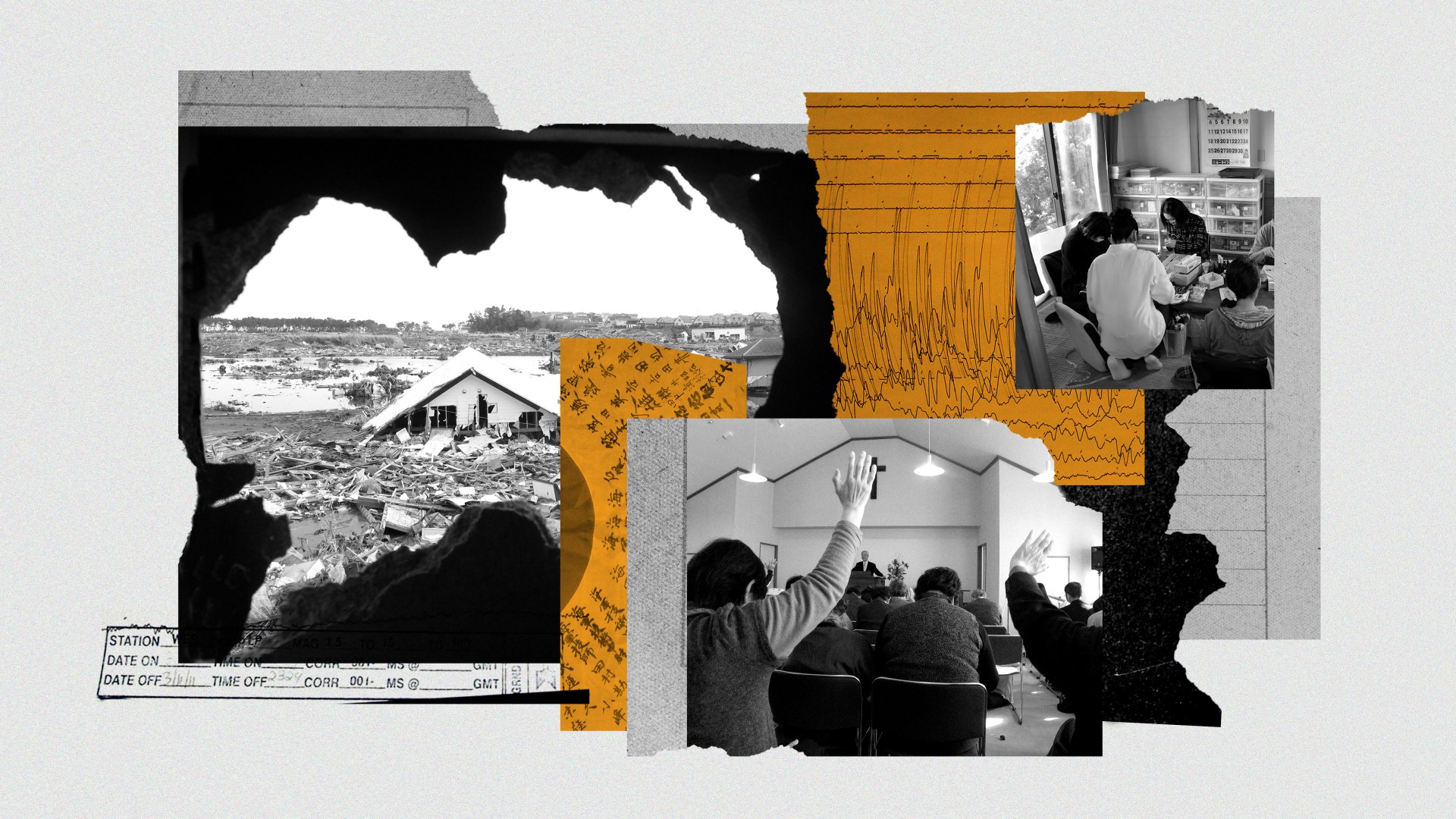
Japanese Christians in Tohoku and other areas affected by the 2011 triple disaster in Fukushima.

Japanese Christians in Tohoku and other areas affected by the 2011 triple disaster in Fukushima.

Christianity Today March 12, 2021
Illustration by Mallory Rentsch / Source Images: Courtesy of Asian Access / WikiMedia Commons

On February 13, almost 10 years to the date after the infamous March 11 triple disaster that struck northeast Japan, a 7.3-magnitude earthquake shook the same region.

Like a strobe light, memories and emotions that had been dimming for a decade returned. However, the aftershock was not just a reminder of the devastation and 20,000 deaths from 2011’s 9.0-magnitude earthquake in the Tohoku region and resulting 45-foot tsunami and nuclear disaster in Fukushima. It also prompted the Japanese church to call to mind all that God has done since.

Pastors and ministry leaders in Japan told CT of how the disaster has shaped the Japanese church and where they are headed next, providing a perspective of hope and urgency for churches worldwide amid the trials of the pandemic and current conflicts.

Shaken and Stirred into Action

For Yoshiya Hari, the triple disaster marked an almost immediate career and life change. Within days, the pastor of Saikyo Nozomi Chapel was assigned to help run CRASH (Christian Relief Assistance Support and Hope), organizing and allocating the masses of donated material and volunteers that were suddenly flooding into Tohoku from Taiwan, Singapore, the Philippines, the United States, and other nations.

“I was so overwhelmed. I was just a local church pastor and suddenly I was here,” said Hari, also Asian Access’s national director for Japan since 2011. “The news was broadcasting shocking scenes: the tsunami, the nuclear reactor explosion in Fukushima. There was so much fear and it felt like trials were hitting us like waves that keep coming and coming. Japan seemed almost at its end.

“But we realized that people all over the world were praying and sending support and we were encouraged,” he told CT. Organizations like CRASH helped mobilize relief efforts in Tohoku and, more importantly, established support networks of pastors and ministers across Japan that have continued for the past decade.

“Relief has its time limits,” said Hari. “But the local church has an eternal commitment.”

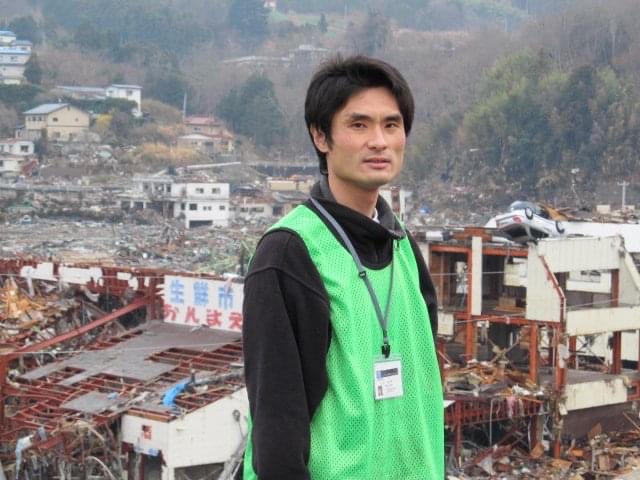
Pastor Yoshiya Hari in Onagawa, Miyagi, after the 2011 Tohoku triple disaster.

Japanese pastors agree that in many ways the disaster in Japan has been a catalyst for positive change.

“The spiritual atmosphere has changed and people are more open to the gospel,” said Nobuyoshi Nagai, lead pastor of Tohoku Central Church and Japan’s national director for Alpha. “Churches from all over Japan and the world now have a desire to come to Tohoku to evangelize and plant churches. Many people have accepted Christ and many churches have been planted since the disaster.”

“Small communities in the northeastern disaster area that had been notorious for limited receptivity to the gospel before 2011 have now recognized the presence and importance of the church,” said Takeshi Takazawa, a church planting veteran who currently serves as Asian Access’s vice president for innovative initiatives.

“We’ve also seen more connections within Asia,” he said. “For example, the Love Singapore movement has embraced Love Japan, and the Filipino church has a strong relationship with Japanese churches.”

Churches in Japan also now feel better prepared to address new disasters and social issues. When a large earthquake struck Kumamoto in 2016, Christians from Tohoku immediately connected with leaders there to share about their experiences and advise the response.

Prepared for Pandemic

COVID-19 has brought about challenges for the recovery effort in Japan, including drawing government and media attention away from any tsunami recovery efforts in the northeast. But the church has been able to use wisdom gained after the disaster to offer help during this new crisis.

Support methods such as pastor networks and crisis management plans that were created in relief efforts have been reactivated nationwide this year to support those in need. Establishing networks and building local community trust were necessary in addressing both the 2011 disaster and the 2021 pandemic.

“Networks we had set up in 2011 allowed us to share ideas and wisdom in the midst of the pandemic, and since we had built trust with the community and local government after the tsunami, people sought help from churches during the pandemic,” said Yukimasa Otomo, pastor of Shiogama Bible Baptist church in a small fishing town between the large cities of Sendai and Matsushima. For example, his church provides food for those who have lost their jobs or working hours amid public health measures.

Destruction in Sendai

“All Japanese were impacted in some way by the disasters in 2011. For some, it may be just a superficial change, but for others, including pastors and churches, it has caused deep and significant changes,” said Hari. “I pray that the pandemic causes similar deep changes in us—including myself.”

“Japanese Christians are once again re-examining what it is to be a disciple of Jesus Christ because of the pandemic,” said Takazawa. “The church has moved out of the ‘come in’ mindset to be more missional.”

The increased sensitivity to outsiders and commitment to holistic care prompted several churches to reach out to internationals who came to Ishinomaki for fishing jobs and were stranded with limited options or made to work harder to make up for factories losing workers because of COVID-19.

Let the Walls Fall Down

Many people came into contact with Christians for the first time through their presence after the 2011 disaster. The Japanese church consequently learned to go beyond its walls and to serve people physically and emotionally as well as spiritually.

“They learned that its task is not only to proclaim and persuade, but to communicate the gospel through acts and to meet the social needs in front of them,” said Takazawa.

This holistic approach to the gospel in Japan is an exciting development growing from the seeds of disaster, sources told CT.

“We’re starting to sense a greater awareness of the needs of those ‘on the outside’ who often remain invisible or do not have as much of a voice at the table, like women, those with disabilities, foster and adopted children, and immigrants,” said Sue Takamoto. She and her husband Eric serve with Asian Access on a team in Ishinomaki, one of the worst-hit areas, and have created a community with other international Christian workers from a variety of organizations. They moved into a rural area where there was no local church to try to live out the gospel there, and ended up helping to plant a new church.

At the very least, pastors agree that the massive disaster brought issues to light and challenged the church in Japan.

“Some people realized how out of touch their churches were with their communities, others that they did not have the proper vocabulary to explain the gospel to rural Japanese people with no Christian background,” said Makito Matsuda. Born in Miyagi Prefecture, where more than 10,000 people lost their lives in the 2011 earthquake, the pastor hosted 15,000 volunteers from all over the world at Oasis Chapel Rifu, providing much-needed relief in the tsunami-affected areas around his church.

“Some, like myself, realized that serving in unity with Christians from other parts of the world with different languages and cultures can have a great impact on the community,” said Matsuda. “Prompted by these realizations, we gradually began to change.”

A common opinion among pastors is that the post-disaster networking has caused the Japanese church to be more unified than ever.

“I have seen churches across denominations coming together for training, but it was not until after 2011 that I saw such a unified effort for the sake of the suffering and those in need,” Takamoto said. “While the immediacy has lessened in recent years, I don’t think this desire for unity has dissipated.”

Denominational divides were a huge issue prior to the disaster, and although the walls between churches and communities have been torn down, there is still much work to be done in bridging the gaps.

“Networks are beautiful, but hard to maintain,” said Otomo.

“We need to cultivate a better kingdom mindset and develop appreciation for diversity within the body of Christ for the mission to accelerate,” said Nagai.

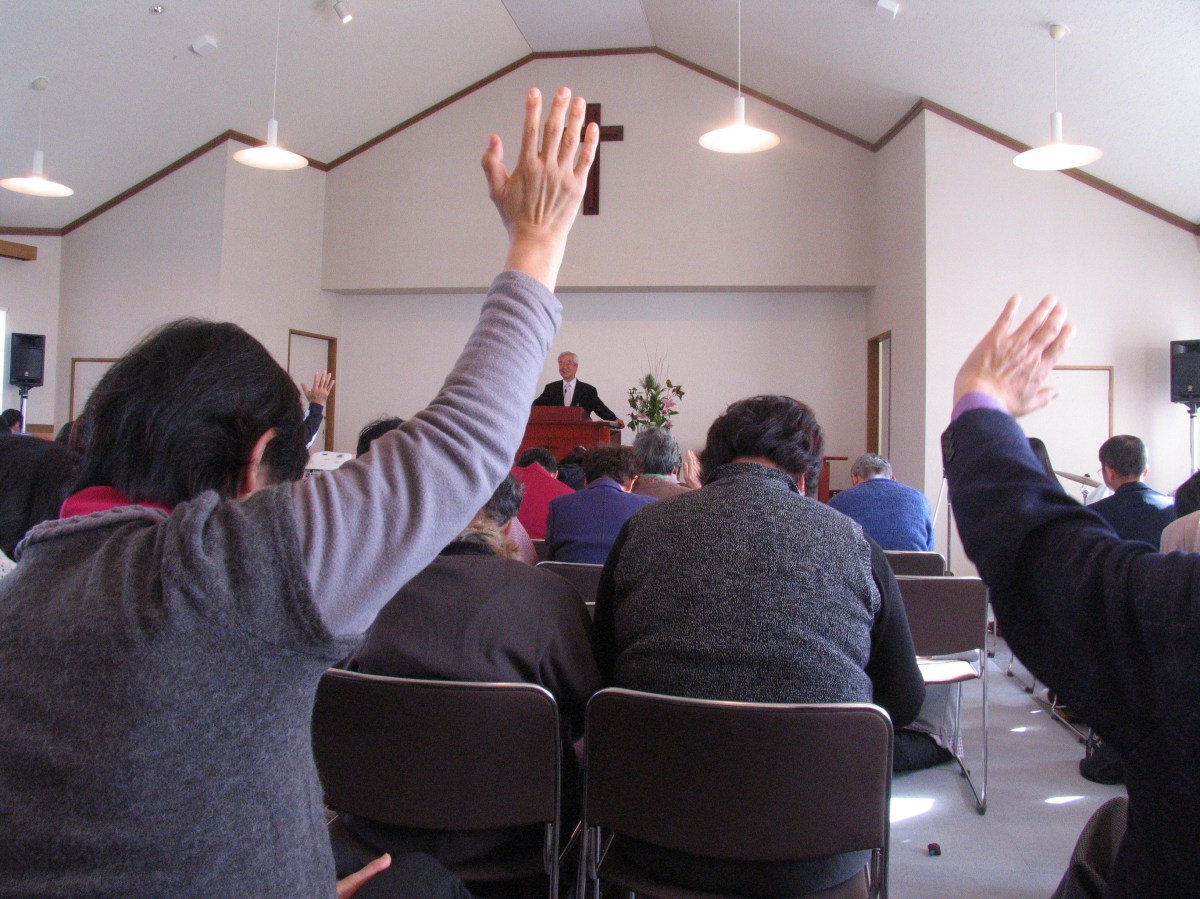
A church service at Shiogama Bible Baptist Church in Sendai in 2012.

Hope Beyond Relief

Neighborhoods remain lost, scattered, or neglected even 10 years after the tsunami, so current ministry has shifted from immediate relief to building relationships and community. Many leaders have taken to creative, entrepreneurial community-building solutions.

For example, The Nozomi Project emerged from the disaster to provide a space for women to find dignity, employment, and hope as they created beautiful jewelry out of broken shards of pottery. “Amid setbacks and challenges of keeping a business afloat, I have realized that when God breathes into projects, they can become much bigger than ourselves,” said Takamoto, who directs the project which has now sent more than 60,000 “pieces of hope” to more than 45 countries.

For the past two years, Nozomi has also been serving a group of vulnerable women in Cambodia. “It’s been one of the most amazing experiences of my life to see former tsunami victims reaching beyond themselves to bring hope to women in Cambodia with needs greater than their own,” said Takamoto. “Whether they recognize it yet or not, this is the gospel, and it is beautiful.”

Beyond survival and recovery, church networks discovered a need to refocus on reaching the unreached. The tsunami destroyed five Tohoku churches, which was a small statistic in comparison to the $250–$500 billion worth of damage wreaked on Japan. But it was a wake-up call for Japanese pastors. It proved how few churches had been planted along the coast.

“We had to repent once we realized it,” said Hari. “It was not intentional, but those people were abandoned. These were, for the most part, unchurched areas that had slid out of our sight.”

Today, Asian Access estimates that 75 congregations, including 33 house churches started by a single pastor in Miyagi, have been planted in the area since the disaster.

There is social division between Fukushima and the rest of Japan, and even within Fukushima due to the radiation and the scattering of communities caused by the power plant meltdown. The government may take more than 50 years to fully decommission the reactor, and although radiation levels are much safer, hardship and stigma linger.

“I’m really concerned about Fukushima, especially the next generation that has to deal with the same issues,” said Hari. “After the disaster, hundreds of missionaries flocked to Miyagi and other areas affected by the tsunami, but very few to Fukushima. We know there was risk, but we hope people can overcome the fear and the stigma and come. That is where there is a huge need.”

From Tohoku to the World

In addition to reflecting on their post-disaster church, the network of Japanese pastors provided advice for their brothers and sisters around the world on preparing for and responding to disasters as leaders.

Matsuda admitted that his team felt overwhelmed, overworked, and anxious at first. “What gave me life again was to return to a rhythm of sitting at the Lord’s feet, listening to his word, and obeying it. I now believe that a steady commitment to this way of life is the only way to prepare for unexpected disasters and survive in the midst of chaos.”

Nagai urged leaders to “be open to being changed. Whether COVID-19 or a tsunami, no one is exempt from change in a crisis. God is constantly looking for his ‘new wine skin’ to work with, and he sometimes uses a disaster or trial to form us into that vessel.”

“Church leaders should all consider responding to a disaster now,” said Otomo. “It is too late to think about it after the disaster. If your church has a clear vision on this matter, you will be ready to respond. If not, it will be difficult to maintain good works when times like this come. Once you’ve decided it is important, building your local church network is the first step.”

“We must see disaster and crisis as normal and not as something that catches us by surprise,” Takazawa said. “Leaders tend to see the period of time without crisis or disaster as normal, so crisis becomes something to just get through or something outside of God’s control. But God is always working in the crisis and Jesus warned that they will even intensify.

“It is also important to listen to the people who were there from before the crisis and who will still be there when it has gone,” he said. “God has already placed leadership within that community, so if you are going to help as an outsider, listen to, support, and serve local leadership.”

The Next 10 Years

On the 10th anniversary of the triple disaster, Japanese churches continue allowing themselves to be shaken into action rather than growing complacent. They are able to look back with thankfulness at God’s transformational work this decade, but maintain a holy discontent with the state of the church even after such recovery and change.

“I hope to see more churches standing up for their own communities and serving in the name of Jesus Christ with wisdom and skills born out of the experience of disaster,” said Otomo.

“God saw even before the disaster that there were sheep without a shepherd on the coast. The country has recovered but is still in spiritual poverty in these areas,” said Hari, noting that a third of municipal areas in Japan are unchurched. Today he works with hundreds of leaders across Japan to grow networks and inspire a church multiplication movement.

“I dream of mobilizing the Japanese church to those areas and having a church with the heart to respond to physical disaster but also spiritual disaster,” he said. “Two or three people gathered in Christ’s name is the beginning of a church. I dream of seeing a local church in every municipality in Japan.”

“Even—especially—in a time that seemed hopeless, we were reminded that our help was on the way,” said Nagai. “So today we have confidence that God has prepared a better and brighter future for us.”

News

Died: Larry Walker, NIV Translator Who Loved Bible Details

Commitment to accuracy and inerrancy carried him through controversy.

Christianity Today March 12, 2021
Courtesy of the Walker family / Edits by Mallory Rentsch

Larry Walker, the last living translator of the original team of scholars who produced the New International Version of the Bible, died on March 8 at age 88.

Walker was a Hebrew scholar and a Semitic languages specialist who used his skills in the extinct Amorite language of Ugaritic to shed light on the Old Testament, illuminating the details of everything from the “trading ships” of Isaiah 2:16 to the “darkest valley” of Psalm 23:4. He cared deeply about accuracy and specifics and believed a commitment to the doctrine of inerrancy could serve as the basis for the highest quality of scholarship.

Walker served on the International Council of Biblical Inerrancy and was one of the original signers of the “Chicago Statement on Biblical Inerrancy” in 1978. When he and other translators were accused of turning the NIV into a “unisex Bible” and subverting the Scripture with a secret feminist agenda in the late 1990s, Walker reiterated that his commitment was to inerrancy, accuracy, and the hard work of translation.

“Accuracy. That’s what mattered. The accuracy,” Walker’s son Daniel Walker told CT. “He could just drill down, drill down, drill down into the Word. He said unless you were a scholar, you just wouldn’t understand all the reasons they have done what they’ve done because there was so much behind a specific word.”

Walker taught Hebrew and Old Testament to an estimated 4,000 seminary students over his career. He was a professor at Southwestern Baptist Theological Seminary in Fort Worth from 1965 to 1980; Criswell Bible Institute in Dallas from 1970 to 1980; and Mid-America Baptist Theological Seminary in Memphis from 1980 to 1997. After 1997, he held visiting positions at Golden Gate Baptist Theological Seminary, Beeson Divinity School, Southern Baptist Theological Seminary, Southeastern Baptist Theological Seminary, Trinity Evangelical Divinity School, and Tyndale Theological Seminary in the Netherlands.

One of his students at Southwestern, Al Jackson, now a Baptist pastor in Auburn, Alabama, recalled Walker as a “valiant defender of the veracity and trustworthiness of the Old Testament.”

John D. Massey, dean of the Roy J. Fish School of Evangelism and Missions at Southwestern, said Walker “had a profound influence on my life as a young seminarian in his Hebrew classes at Mid-American Seminary in the early 1990s. He had a deep love for God’s Word and passed that along to his students.”

Walker was born to Gilbert and Eleanora Walker in Fort Wayne, Indiana, in July 1932, in the home his Norwegian grandfather built when he immigrated to the US. Walker was raised a Mennonite, according to his son, and committed his life to Christ at a young age. As a teenager, he rededicated his life during a Baptist revival and became passionate about Scripture.

He went to Bob Jones University to study the Bible in 1955 and met a nursing student named Becky Brown who played saxophone in the university band. They married two years later. Walker went on to earn another degree at Northern Baptist Theological Seminary in 1958, a master’s from Wheaton College in 1959, and a doctorate from Dropsie College for Hebrew and Cognate Learning in Philadelphia in 1967.

As he studied Hebrew and other Semitic languages—Aramaic, Akkadian, and Ugaritic—Walker became more convinced of the doctrine of biblical inerrancy. He strongly rejected the dominant scholarly approach of higher criticism, noting it was held up as “scientific” but hadn’t changed since the 18th century, despite the discoveries of massive amounts of new linguistic and archaeological information.

“Armchair speculation of higher criticism has been repeatedly overturned by continuing discoveries from the lands of the Bible,” Walker wrote. “The founders of higher criticism were totally ignorant of such important ancient cognate languages as Ugaritic and Akkadian—not to mention such non-Semitic languages as Egyptian, Hittite, Hurrian, [and] Sumerian. … Words once claimed to be ‘late’ (and therefore betraying a ‘late’ document) are now attested in the early Canaanite source materials from Ugarit; syntactical features of Hebrew poetry once labeled incorrect are now attested in the poetry of Ugaritic.”

The year he earned his PhD, Walker was recruited to join the core committee of 15 scholars who would oversee the translation of a new, evangelical version of the Bible. The committee was started in 1965, but one of the members, E. Leslie Carlson of Southwestern Baptist Theological Seminary, died before the work began. Walker was brought on as his replacement.

He spent the next decade working on the first edition of the NIV while simultaneously teaching at Southwestern.

“He had a full-time job at the seminary, as a seminary professor,” Daniel Walker recalled. “And then he’d come home at night and he’d work all night on the NIV. He spent his whole life in the Word. This is just what he did.”

The NIV was published by Zondervan in November 1978. The initial press run of 1.2 million copies sold in advance. According to historian Peter Thuesen, “the NIV lived up to its billing as a more ‘evangelical’ Bible” than the Revised Standard Version, but also drew on recent scholarship and received “generally positive” reviews from academics.

One point of academic contention was an area Walker worked on: The NIV’s use of capital letters for Christological terms in the Old Testament. In Psalm 2, for example, the NIV capitalized Anointed One, One, King, and Son, since Christians have traditionally understood those as proper nouns referring prophetically to Jesus. Since Hebrew doesn’t have capital letters and English does, capitalization is an interpretive choice based on theological commitments and style preferences. Thuesen describes the fight as “more symbolic than substantive,” writing that the disagreement may “have been more about Protestant party politics than about Hebrew and Greek philology.”

Walker faced a bigger controversy while working on NIV revisions in the 1990s. Hodder and Stoughton published an NIV update branded as an “inclusive language” version in the United Kingdom in 1995 and there were reports of plans for a similar update in the US in the early 2000s.

World magazine published an exposé in March of 1997, claiming this would be a “unisex” Bible, and a “feminist seduction” that was “likely to transform understandings of how God views the sexes he created.” The piece said Zondervan was forcing the Bible translators to make the changes for financial reasons and prominently quoted Walker, making him the face of the reluctant scholar pressured into “evolving” views.

“When it first came up, no one was for [unisex language]. Now at the present time, almost everyone is for it,” World quoted Walker. “The language is shifting underneath our feet.”

World was later criticized by the Evangelical Publishers Association, which deemed the reporting distorted, incomplete, and inflammatory. Walker, for his part, insisted there were scholarly reasons for the changes. He didn’t have a political agenda and certainly wasn’t part of a subversive feminist effort to undermine Scripture. He was committed to accurately translating the text, based on the best scholarly understanding, into a contemporary idiom that could be widely understood by modern English speakers.

“There’s so much behind the translation and what’s behind the words,” Daniel Walker said. “He could tell you the history of the English word, and the Hebrew word behind it, the other languages that were used in biblical times, how they were all different, and then talk about gender in the German translation too.”

After the World report, however, Mid-America asked Walker to disassociate himself from the NIV. When he refused, he was pressed into retirement, according to CT reporting at the time.

Walker went on to teach at six other seminaries and harbored no resentment over the controversy, according to his son.

“He just took as it what it was,” Daniel Walker said. “He knew he was right and it was done.”

The lifelong Bible scholar also continued to work on revisions to the NIV, and was involved with the “gender inclusive” Today’s New International Version in 2002. Bible scholars at Wheaton and Dallas Theological Seminary told CT that the changes in it were not particularly radical and were faithful to the original biblical texts.

Walker was personally less interested in the debate over the gender questions than details like the best translation for the “valley of the shadow of death” in Psalm 23—an odd and debated word found only once in the Bible—and tracking down the correct identities of animals in the Old Testament. Based on his linguistic sleuthing, Walker argued that the greyhound found in the King James Version of Proverbs 30:31 is actually a rooster, the turtle in Song of Songs 2:12 is actually a turtle dove, and the unicorn in Deuteronomy 33:17 is actually a wild ox.

Walker spent the last years of his life in Gray, Tennessee, regaling his neighbors with Bible knowledge and working on a book about his work on the NIV, his scholarship, and his philosophy of translation. It was near completion at the time of his death, his son said.

Walker was proceeded in death by his wife, Rebecca Elizabeth, in 2018 and their son Craig in 2010. He is survived by children David, Daniel, Linda Enzor, and Melissa, as well as ten grandchildren. A small memorial service will be held at Mid-America Baptist Theological Seminary on Saturday.

Pastors

Visitation Is Still Our Vocation

We may face new challenges, but the heart of our calling remains the same.

Illustration by Rick Szuecs | Source images: Klaus Vedfelt | Getty | Envato Elements

So much has changed in this world since COVID-19 reared its ugly head at the beginning of last year. The lasting and unintended consequences of quarantine have resulted in a sharp decrease in church attendance. Some parishioners who’ve stepped away from church involvement may never return. We fear that Sunday morning will forever be negatively affected.

That’s not the only matter of grave concern. The challenge of separation has made it very difficult for pastors to carry out the care of souls. Pastoral visitation—a core part of providing individual soul care—may very well continue to challenge pastors for a long while or may even be forever changed.

But one thing is certain: Even when visitation becomes more difficult, pastors are still called to deliver God’s gifts to sin-sick souls, wherever they may be. Pastoral visitation must be part of the pastor’s primary work for the care of souls. The reason: By definition, pastors are visitors.

In 1 Timothy 3:1, Paul writes to pastor Timothy, “If anyone aspires to the office of overseer, he desires a noble task” (ESV). The office of overseer to which Paul refers is the pastoral office (episkopos); pastors are overseers according to the Bible. However, when the verb form of this noun is used, the activity of the pastor is defined. The verb episkopeo actually means “to visit.”

Visiting is more than just one of the many tasks the pastor does. Visitation is essential pastoral work. The pastoral office embodies the activity of visitation; they are one and the same in function and essence. Simply put, pastors are visitors.

But how can pastors be faithful to their calling as visitors when so much stands in the way of meeting members face to face? While this challenge is magnified by the pandemic, it existed before the current crisis and will continue afterward. Consider the challenges to individual soul care posed by the busy schedules of church members, today’s attitude of screening calls, and the overall mindset that people no longer need to interact one on one. In fact, in my experience, many go the extra mile to avoid close encounters with others—even sometimes with their pastor.

As visitors, we often have to take what we can get. And today, that’s no exception. Amid the difficulties and even downright inability to visit my people, at times I’ve allowed the sting of guilt to fill my heart. I know these challenges are real, but sometimes I can’t shake the feeling that I’m not doing the job God has called me to do. The opportunity to come near to those I serve has been stripped away. As time goes on, many feelings come over me. I’ve been angry. I’ve been sad. Sometimes I even begin to feel complacent about it all. I fear this distance and isolation are the new normal. I fear things will never be the same again.

As a pastor, I’ve had to learn to not feel guilty for what I am unable to control. In these extraordinary circumstances, I must simply carry out my vocation as visitor the best I can—and leave the rest to God. After all, the church and my ministry do not belong to me. God is in control, and he remains Lord of the church in good times and in bad. Though there are times I cannot be present with others in the way I desire, God still takes care of those he loves.

Regardless of the circumstances, God is at work through visitors during challenging times and long periods of separation. God is still making use of his valued instruments to bring the gospel of Jesus to the lives of his precious ones. Pastoral visitation still has purpose and meaning even though, in our current circumstances, it may need to be carried out in different or creative ways. Some of these methods may not feel as comfortable or satisfying as under normal circumstances, but these visits are nonetheless critical aspects of ministry. Even when visitation takes on a different form or feels limited, pastors can still carry forth the privilege of engaging in individual soul care in their vocation as visitors.

In-Person Visitation

Even amid today’s challenges, we can aim to keep visiting our people in person—it just may look differently and require greater forethought and caution. Whether it’s wearing masks inside the home or hospital room; talking on the patio, deck, or front porch; or visiting in a park, pastors can still engage with members by actively listening to their stories and needs. In today’s world, time with a church member may be limited. Perhaps we cannot stand as close in proximity. But as visitors, we can take advantage of whatever opportunities we have to be near and, as John Chrysostom described, rely on God’s help to serve as physicians of souls, diagnose each soul’s condition, and apply a remedy based on individual needs and founded upon God’s Word.

No matter where you must stand or how physically distanced you must be, the end of a visit always presents an opportunity to share a blessing before departure. Don’t let the challenges of in-person visitation deter you. Be safe and considerate, but for the sakes of those you serve, continue to be physically present for them as much as you can and deliver God’s life-sustaining gifts. In-person visitation powerfully helps isolated members of the body of Christ feel connected to the greater church community.

Virtual Visitation

Technology has afforded the opportunity for pastors to use video platforms like Zoom or FaceTime to connect with members when in-person contact may not be possible. As we all know well, this doesn’t feel the same as an in-person visit, but God can also use this medium for his purposes. In fact, the video features of these platforms provide a unique opportunity to communicate “face to face” without the covering of masks. Seeing another’s face is an important aspect of providing and receiving individual soul care. Parishioners’ facial expressions can tell the story of fear, concern, or illness. Through our facial expressions, we can, in turn, show how much we care and understand the hardships they face.

I’m learning that, as much as possible, it’s important to make a virtual visit the same as an in-person visit. In other words, if you’d normally use a liturgical formula when you visit in person, keep that the same for the virtual visit. Use Scripture, prayers, and a blessing the same as you otherwise would. Those in our care will draw comfort from the the familiar.

Today’s Challenges Must Not Deter Us

It’s quite an understatement to say that our world’s current condition makes it difficult to carry out effective pastoral visitation. At this time when the church is most in need of pastoral care, the most effective ways to carry out that care are stymied. This can bring despair to the hearts of church members and pastors alike. The church is the embodiment of Christ; Christians are meant to be together in worship and community. When the body of Christ becomes disembodied, the very identity of the church feels compromised.

For me, visitation is more of a challenge today than I have ever experienced in my 21 years of pastoral ministry. However, we pastors must not let pastoral visitation fall by the wayside as an optional or outdated way to provide care to God’s people. We must not let today’s challenges deter us. Pastors are visitors who are called to care for God’s beloved sheep, no matter where they happen to be. This means we go out into the fields to find them. This is difficult work, but we are in this together. And, more importantly, the Lord is at our side.

Tyler C. Arnold is senior pastor of Christ Lutheran Church in Platte Woods, Missouri. Portions of this article are adapted from his forthcoming book Pastoral Visitation: For the Care of Souls (2022), which is part of Lexham Press’s Lexham Ministry Guides, edited by Harold L. Senkbeil. Used by permission.

Pastors

7 Books for Your Pastoral Care Library

Must-have resources for multifaceted ministry.

Pastoral care has many expressions, from joyful visits with an elderly parishioner to painful conversations with an adolescent having suicidal thoughts. From the tough work of addressing division and disunity to the tender work of shepherding over the long haul. Here are seven new and recent books that engage and equip pastors for the deep and multifaceted ministry of pastoral care.

Aging: Growing Old in Church by Will Willimon (Baker Academic)

Will Willimon invites pastors to think intentionally about their own aging and the vocation of their elderly parishioners in this comprehensive and engaging text. While old age brings with it a certain loss of control for many, it also provides a new set of freedoms that Christians should view as an opportunity to invest more fully in their walk with God and in the lives of those they are called to serve in this new stage of life. Pastors in turn should consider how they can help their aging parishioners transition well by providing both practical opportunities to prepare for financial and health care challenges and opportunities for continued ministry within the life of the church. Willimon offers fantastic illustrations from his own experience as a septuagenarian pastor and vivid anecdotes from a lifetime of faithful service within various intergenerational congregations.

—Michael Niebauer is rector of Incarnation Church in State College, Pennsylvania, and a teaching fellow at Trinity School for Ministry.

The Beautiful Community: Unity, Diversity, and the Church at Its Best by Irwyn L. Ince Jr. (InterVarsity Press)

Irwyn Ince Jr. is convinced that diverse local churches are a natural outworking of a ministry of reconciliation—but diversity isn’t where he chooses to begin. Ince starts with theological explorations of beauty and relationality. This sets the tone for the entire book, which cites historic Reformed confessions far more frequently than any social-scientific concepts. Ince doesn’t ignore racial theorists as he considers how to care for people’s souls while cultivating a multiethnic church. He shows how patterns such as white normativity and white structural advantage impede authentic diversity. His solutions, however, remain steadfastly biblical and theological.

This book is unlikely to find a hearing with those who refuse to admit the ongoing impact of systemic racism on American churches. But, for those who see these problems and yearn to shape people’s souls in diverse contexts, Ince has given the gift of a practical guide for building more beautiful communities.

—Timothy Paul Jones is chair of the department of apologetics, ethics, and philosophy at The Southern Baptist Theological Seminary and serves as a teaching pastor at Sojourn Church Midtown in Louisville, Kentucky.

A Burning in My Bones: The Authorized Biography of Eugene H. Peterson by Winn Collier (WaterBrook)

Pastoral care can be achingly lonely work, making faithful companions essential on the journey. Winn Collier’s biography—A Burning in My Bones—portrays Presbyterian minister Eugene Peterson as a thoughtful, kind, fiery, and whimsical man of God and a consummate storyteller whose love of Scripture deepened his commitment to practical care, the pursuit of wisdom, and the common good. Peterson’s deep knowledge of the Bible, open heart for wounded and wandering souls, and wise boundaries around his family life and Sabbath rest are an encouragement to all who seek to love God and neighbor well while caring for a community of faith. This biography is a love letter to those who pastor locally, reminding them that “honoring the presence of God made visible in one place” is perhaps the hardest, holiest, and best work of all.

—Courtney Ellis is associate pastor at Presbyterian Church of the Master in Mission Viejo, California, and the author of Uncluttered and Happy Now: Let Playfulness Lift Your Load and Renew Your Spirit.

The Care of Souls: Cultivating a Pastor’s Heart by Harold L. Senkbeil (Lexham Press)

“I’d like you to be as infatuated with soul care as I’ve become. . . . [T]here’s great joy in this work—if we just have the eyes to see it.” These words frame well the way of seeing that Harold Senkbeil heartfully lays out for his reader. My own early days as a pastor were filled with excitement, and then the reality set in that I did not have the habitus needed to offer the cure for souls. Joy eluded me for a long time. Had I known the tenets Senkbeil proposes, I might have recovered earlier and been able to see the joy.

Senkbeil offers the “sheepdogs” of God an even-tempered way of being present in ministry: keeping one eye on the sheep and one eye on the Shepherd. Senkbeil’s writing helps us care for our souls while offering guidance in the habitus needed to care for the souls of others. Rich in scripture and story, The Care of Souls has staying power. Would that I had it 30 years ago! Fortunately, now I can share it with those who share in this work.

—Juanita Campbell Rasmus is co-pastor of St. John’s United Methodist Church in Houston, Texas, and the author of Learning to Be: Finding Your Center When the Bottom Falls Out.

Not Uninformed: Sure and Certain Hope for Death and Dying by D. Eryl Davies (Christian Focus)

People are uncomfortable with the idea of death. This prevalent discomfort with death can stunt the spiritual growth of aging believers and keep families from mourning departing saints in a healthy way. As a pastor, preparing a saint to step into eternity can even be seen as unwelcome by families who won’t entertain the idea of death until all life-saving options have been exhausted and the dying person’s body moves into its last hours.

In Not Uninformed, D. Eryl Davies addresses the misinformed ways in which many believers today approach death. He shares from his own experience how pastors can care for, counsel, and prepare saints for death. Davies finds the balance of building a theologically astute case while also offering practical application for daily ministry. Not Uninformed would be beneficial to any pastor as it helps to correct nonbiblical modern views of death and equips one to minister to the dying and their families.

—Wes Faulk is senior pastor of First Baptist Church of Vidalia, Louisiana.

Preaching Hope in Darkness: Help for Pastors in Addressing Suicide from the Pulpit by Scott M. Gibson and Karen Mason (Lexham Press)

There are at least two myths about suicide. One, don’t talk about it. Two, leave it to the experts. This book corrects both of these. Cowritten by a preacher and a suicide preventionist, it is especially for pastors and is eminently practical. It will give you words to say along with much more. It includes case studies, sermon ideas, liturgies, plans to equip the church in order to prevent suicide and help those who have lost a loved one to suicide, and a curriculum for high school students. Given that suicidal thoughts and acts are increasing, pastors will want to read at least one book on this critical matter. This book does not try to make you an expert. Instead, it reminds you that the preaching of the gospel of hope and ordinary expressions of wise love, when refined with a basic understanding of suicide, can have a profound effect on our church communities.

—Ed Welch is a counselor and faculty member of Christian Counseling & Education Foundation as well as an author of several books, including Created to Draw Near.

Soul Care in African American Practice by Barbara L. Peacock (InterVarsity Press)

Christianity is more than an academic venture; God should be the chief object of our affections and the source of our joy. Believers run the risk of seeking only facts about God at the expense of knowing God, which does not lend itself to effectual spiritual formation. In Soul Care in African American Practice, Dr. Barbara Peacock stresses spiritual disciplines that orient our lives toward God. She underlines habits that nourish the soul and sustain us during trying times. Admirably, she approaches the subject by highlighting the spiritual practices of African American men and women who, by God’s grace, left a lasting mark on American history. Her use of biographies makes the subject relevant; her words have real-world viability. I commend this book to all who desire a surrendered walk with the incomparable King.

—Brandon Washington is a church planter and the pastor of preaching and vision at The Embassy Church in Denver, Colorado.

Pastors

Jesus’ Miracles Showcase More Than His Power. They Reveal His Pastoral Nature.

Learning from the Good Shepherd’s gentle care.

Illustration by Rick Szuecs | Source image: Karri Terra / Pixy / CCO

Mark 5 describes several of Jesus’ miracles that drew large crowds and left onlookers amazed. But beyond showcasing Jesus’ divine authority, these accounts also reveal something else.

When confronted by a demon-possessed man, Jesus not only freed the man from torment, but he also spoke to the man about God’s mercy and commissioned him for local ministry.

When an anguished father pleaded with Jesus to help his dying daughter, Scripture tells us something both simple and profound: “Jesus went with him” (v. 24).

As he was on his way, another need interrupted Jesus. A woman who’d suffered years of illness and isolation reached out in desperation. Jesus’ touch healed her physically, but he also spoke healing words: He called her daughter, assuring her of her identity as a child of God. He spoke to her of freedom and peace.

And when Jesus finally arrived at Jairus’s house to raise his daughter, we read this tender detail: “He took her by the hand” (v. 41).

In these scenes, we see not only Jesus’ power but also his pastoral nature. In his words, his spiritual care, his willingness to be interrupted and to walk with a suffering person, we see what ministry looked like for Jesus. We glimpse the gentle care of the Good Shepherd.

In As Kingfishers Catch Fire, the late Eugene Peterson describes a crisis early in his ministry. He found himself preoccupied by “the numbers game,” employing consumer models to try to grow his church. This focus felt at odds with his “deepest convictions on what it meant to be a pastor.” The crisis eventually led to significant change. Peterson’s focus shifted to “congruence”—to living “the Christ life in the Christ way. … Not just the preaching but prayers at a hospital bed, conversations with the elderly, small talk on a street corner—all the circumstances and relationships that make up the pastor’s life,” Peterson writes. “I still had a long way to go, but at least now I was being a pastor and not staying awake at night laying out a strategy or ‘casting a vision.’ ”

Being a pastor. Some of the most important work of ministry happens not behind the pulpit but in the foyer, the counseling office, or the coffee shop. Or over Zoom, email, or text message. It isn’t flashy or fine-tuned, but it reflects the way of Christ. It is the essential work of pastoral care.

Our Spring CT Pastors issue examines this core calling, exploring how pastors are providing care in the pandemic as well as other topics like racial reconciliation, the work of the Holy Spirit, and the impact providing care has on pastors themselves. As you shepherd your flock, may you ever rely on the Good Shepherd whose care for you will never fail.

Pastors

What Aquinas Can Teach Us About Shepherding Sufferers

Theological insights on the nature of human emotion and how to interpret it.

Illustration by Rick Szuecs / Source images: Lucas Sankey / Unsplash / Wikimedia commons

When I was ten, I remember my dad offering his hand to a man who resolutely put his hands behind his back. The man was a former member of our church who was angry at my father.

This uncomfortable scene taught me about what it means to be a pastor. I remember my dad explaining to us without bitterness why the man was angry. He did it in such a way that helped us see this man’s pain.

There is a common saying in psychology that behind anger there is fear, and we might add, behind fear there is pain. I observed in my dad a healthy capacity to reevaluate someone’s anger as pain. My dad didn’t take the man’s emotion as clearheaded judgment against himself. Instead, he chose a perspective that opened up the possibility of empathy.

In this cultural moment, we are engulfed by anger, fear, and pain—and pastors are no exception. Our calendars are filled with a steady stream of angry people. This is exhausting. It is all too easy for us to internalize their anger or to view them as deliberately fractious. But this is a mistake. When charged with negligence over the illness of Lazarus, Jesus replied to Martha, “Your brother will rise again” (John 11:21–23). He saw the pain underneath the rebuke.

We all need some help understanding the jumbled emotions of our people and of our own hearts. How can we shepherd angry, anxious, or hurting people? One theologian has taught me more about how to shepherd sufferers than any other: Thomas Aquinas.

Aquinas is perhaps a surprising source because he is primarily known for his fine theological distinctions rather than for his pastoral heart (although G. K. Chesterton attributed both to him, writing that Aquinas “inhabited a large heart and a large head”). What Aquinas chiefly offers us is clarity about the nature of emotion and about how to interpret it.

Aquinas had several insights about human emotion that can help us in our pastoral work. To begin, he emphasized that human emotion is always embodied. He insisted that we cannot truly understand the internal dynamics of anger, fear, or inner pain without understanding the body. Further, Aquinas emphasized that emotion does not operate on a deliberate, conscious level like thinking and choosing do. Emotion involves unconscious reactions and ways of seeing.

Emotions Are Embodied

What does it mean to be anxious? My heart is racing; my stomach is upset. My mind is whirling with negative possibilities. Are the feelings anxiety? Or are the thoughts? Does my body determine whether I am anxious, or does my mind?

Thomas Aquinas says that both are a part of my anxiety. He argues in his Summa Theologica that our souls are responsible not merely for thinking but for life itself and all its capacities. The soul is the “first principle of life” in all living things. All our powers flow from a body-soul union, from our digestive or healing powers to our emotional and perceiving powers to our thinking and choosing capabilities. We are holistic beings.

So anxiety, for example, is a movement of the soul that comes “through a bodily change.” In Aquinas’s view, we must not separate the body and soul—and neither alone makes an emotion.

For this reason, poor health of the body affects emotions like a leaky carburetor affects how a snowblower runs. But unlike a snowblower, the body is continually remaking itself. Our thoughts, actions, and experiences form habits that contribute to future emotional states. Further, our bodies form habits through our neurological pathways and our hormonal climates.

As a pastor, I need to remember that emotion is not the same as deliberate action. When we confuse the two, we assume that people have more immediate control over their feelings than they actually do. Emotional habits are the accumulated embodied responses to what a person has been thinking, hearing, seeing, and experiencing over time. They arise from the mysterious interplay of nature, nurture, and agency. This full-body reaction of emotion can affect how someone experiences all of life. Neurological chemicals also color a person's perspective, for good or for ill. Acknowledging the role the body plays in emotion can help a pastor respond with compassion to someone who is overwhelmed.

Emotions Have Their Own Logic

My palms are sweating, but I am firmly locked into the roller coaster by a sturdy, over-the-shoulder harness. I know that I am fine, but does my body know it? How is it possible for me to disagree with my body about my danger? The body must have its own logic.

Thomas Aquinas helps us understand our internal conflict—how we can feel something while at the same time rejecting that feeling. In Summa Theologica, he distinguishes between two forms of judgments we make: the “quick judgment” of the body and our rational judgment. We might call these perceiving and thinking. This is similar to his distinction between emotions and choice. The truth is that most of our emotional reactions come from unconscious perceptions.

This is why emotions often seem to happen to us. For example, when we see an angry and aggressive face, we do not think, This person might be a danger to me. We simply feel afraid. When traumatized people are triggered by an experience, they do not think, Is it rational for me to have a panic attack right now? They simply experience it.

As a pastor, I need to remember that perception also is not deliberate action. It helps to distinguish between automatic, unconscious thoughts people may have and their reflective, conscious thoughts.

Emotions Respond to Experience

Human beings are both like and unlike Pavlov’s dogs. Yes, sweet or savory food can make us salivate. But we also can react to complex stimuli like the prospect of going to the gym. How do we come to feel positively about the gym? It is not merely by talking to ourselves about it. It is also by experiencing the gym—perhaps through personal fitness or being part of the gym community. Experience can form our desires.

In Summa Theologica, Aquinas emphasizes that our emotions respond directly to concrete objects and that we learn experientially from these objects. For example, we learn fear of burns by touching a hot stove. As a result, our emotional formation depends partly on our actions and partly on our thinking.

Our words frame our experiences, and our experiences give our words emotional content. Telling myself The spider is not dangerous is not enough to change my emotion about it. My emotion changes when I act on that belief by picking the spider up without harm. Experiences teach us.

As a pastor, I need to remember that the lessons people learn by experience may be wounding or healing. For example, experience may have taught a church member that men or fathers or pastors are not to be trusted. This member may react to your shepherding in ways that are consistent with her past experience and have little to do with you. Understanding the wounds of experience can open up a pastor’s compassionate curiosity toward the sufferer.

But a sufferer may also find healing through the experience of spiritual life in the body of Christ. A church community has a role to play in sanctification and healing. The body of Christ ministers the nourishment of its Head by the gifts his Spirit supplies (Rom. 12:3–8; Eph. 4:11–16; Col. 2:19). The liturgy also teaches the body about death and resurrection in Christ and about constant dependence on spiritual nourishment from Christ.

God’s Healing Presence

There is a final way that Aquinas can teach us to help sufferers. I have learned from Aquinas that real healing and joy comes primarily through communion with God. Communication is for communion. As helpful as it may be to understand ourselves and our pain, ultimately joy comes through the presence of the Beloved.

All humanity is estranged from God and hungers for the source of all goodness and joy. Aquinas puts it this way in a commentary on Paul’s letter to the Galatians: “The ultimate perfection, by which a person is made perfect inwardly, is joy, which stems from the presence of what is loved. Whoever has the love of God, however, already has what he loves, as is said in 1 John 4:16: ‘whoever abides in the love of God abides in God, and God abides in him.’ And joy wells up in this.”

For Aquinas, humanity’s great hope is that Jesus brings us into the triune fellowship. Jesus’ incarnation, life, suffering, death, and resurrection restore us to our Beloved. By taking on flesh, “the impassible God suffers and dies,” uniting us with himself in his death and resurrection, Aquinas writes in his commentary on 1 Corinthians. And in Christ, we also have the Holy Spirit. The Spirit heals our emotions by his presence and by his gifts. Aquinas says, “The Holy Spirit dwells in us through love.” This love heals and orients our emotions.

Good pastoring models and ministers God’s presence. We meet the sheep where they are, often lost, angry, and afraid. And we lead the sheep to the Shepherd who is gentle and humble in heart (Matt. 11:29). This Shepherd gives a Comforter who groans with us, interceding for us (Rom. 8:23, 26–27).

God is, we might say, a non-anxious presence for us in our need. Aquinas teaches us that God enters into fellowship with us not to fill some deficiency in himself but to strengthen us. We are meant to experience goodness and wholeness in him. Aquinas writes in Summa Theologica, “God intends only to communicate his own perfection [to us], which is his goodness.”

As we minister Christ’s gifts to his flock, we need to embody his gentle and humble wisdom that is “pure; then peace-loving, considerate, submissive, full of mercy and good fruit, impartial and sincere” (James 3:17). We can do this through nondefensive, compassionate, and curious listening even in the face of emotions like anxiety and anger. We comfort the afflicted “with the comfort we ourselves receive from God” (2 Cor. 1:4).

Aquinas helps us comfort others well by teaching us wise questions: How is the body involved in this emotion? What judgments are being made automatically? How has experience taught this person to make these judgments? Ultimately these questions enable us to lead sufferers gently into God’s presence, both now and for eternity. For one day, God “will dwell with them. … ‘He will wipe every tear from their eyes. There will be no more death’ or mourning or crying or pain” (Rev. 21:3–4).

Matthew LaPine is the author of The Logic of the Body: Retrieving Theological Psychology. He’s pastor of theological development at Cornerstone Church and lecturer at Salt Network School of Theology in Ames, Iowa.

Pastors

Pastoral Care Doesn’t Require Capes

Four practitioners discuss how to minister well without resorting to heroics.

Lindsay Rich: courtesy of Lindsay Rich | Ronnie Martin: Photo by Adrienne Gerber | Toni Kim: Photo by Laura Merricks | Derek McNeil: Photo by Talitha Bullock

Pastoral care sits at the center of our vocation as ministers. In addition to preaching and leading worship, celebrating the sacraments, and shepherding souls, we care for the sick, and we counsel the anxious, the fearful, and the grieving. But as pastors, to honor and revere and care for others is to be affected by the care that we give. We gathered four practitioners of pastoral care to reflect on the inherent challenges of this aspect of ministry.

Lindsay Rich is pastor of congregational care and faith development at SouthPark Church in Charlotte, North Carolina.

Ronnie Martin is lead pastor of Substance Church in Ashland, Ohio, and cohost of CT’s The Art of Pastoring podcast with Jared Wilson.

Toni Kim is a former pastor who now serves as a spiritual director, nonprofit administrator, and board member. She lives in Charlottesville, Virginia.

Derek McNeil is a psychologist and president of The Seattle School of Theology and Psychology.

CT's editor in chief Daniel Harrell, a former pastor, moderated this discussion.

This article has been edited for clarity and length. You can listen to the full conversation at this link.

I’ve always held that the best pastoral care does not aim to fix a crisis so much as to frame a crisis within the cross of Jesus. In your experience, how can we help the people we are caring for see God in what is happening in their lives?

Martin: If you’re somebody who preaches the Cross, it confronts some of the complexities of our comforts. And it confronts those complexities with the sobriety of our suffering Savior. We all face fragility. “In this world you will have trouble,” Jesus said. The Cross frames our crises by adjusting our expectations. How will I face the inevitable without blaming God, without seeing him as unkind, or without just believing I deserve better and I’m entitled to something beyond what Jesus even experienced?

Kim: We serve a God who suffered. I do frame crises within the cross of Jesus, but I also frame the cross of Jesus within the larger story of redemption and resurrection. Isaiah 53 says of the prophesied suffering servant, “He will see the light of life and be satisfied.” Tragedy and trauma are part of Jesus’ story, but just as his suffering would redeem, so also our suffering can be redeeming.

So one of the things I try to do is to dignify the depth of a crisis but also to frame it as only one part of who that person is. Trauma or tragedy is an important part of a person’s story, but not the defining part. We are defined, ultimately, as beloved by God and, specifically, beloved by a God whose own suffering was just a part of his story.

One of the strangest aspects of the gospel is the Cross as the supreme expression of God’s love. It’s rare that we see suffering in that vein, but this is exactly what the gospel calls us into.

Rich: Yes. The churches where I’ve served have predominantly been white, evangelical, and younger where many have not had significant experiences of suffering. Their theology tends toward a triumphant Jesus, one formed by some of the popular songs like Elevation Worship’s “See a Victory”—as if God knows only how to triumph. But where does that leave you when you have a child with a chronic illness or your business is going under and your marriage is struggling? For me, pastoral care often means helping people develop a more robust theology of suffering. Platitudes don’t cut it when life is falling apart. We need something with grit. We need to know our hope doesn’t wash out with the rain. Pastoral care is giving people permission and encouraging them to wrestle with some of life’s bigger questions, sometimes for the first time as they deal with a major trauma or loss.

On that point, sometimes this sort of pastoral care needs to happen when life is too good or too easy, because we will all suffer loss at some point.

Martin: I think we do our people a disservice if we wait for suffering to happen before we address it. We live in a culture where we want to keep things positive—a “best life now” theology. But we have to prepare people for the trouble Jesus said is going to come. There’s a tendency to want to back away from that because it makes us vulnerable. We’re unsure of what people are going to think about us if we talk about suffering not as an if but as a when.

We have a good precedent for this in the life of Christ. If we constantly point people to Jesus and his suffering, then it gives us an incredible and hopeful way of talking to them about their suffering without cynicism or hopelessness. Jesus’ suffering creates an incredible culture of hope, so that when suffering does eventually come, it’s not anything they’ll be incredibly surprised by or shocked to the point of disillusionment and questioning God’s goodness or their own faith.

McNeil: Sometimes we think of suffering as an individual commodity. Maybe we need to think about the collective nature of suffering—that there are people suffering all around us. In other words, if I’m doing okay, if my things are going well, if those things that matter to me are functioning, then I tend not to look and see that I’m linked to other people.

But how might we begin to perceive Christ through the suffering of others? It is not just on the cross where we see suffering. We also see suffering around us that might actually help us to engage with what the Cross means, not in the abstract, but in a profound, feel-it-in-our-body sort of way—that sort of knot in your chest or that pit of your stomach. Ours is a wonderful story of redemption in Christ. From death can come life. How do we actually invite people into relationships with others who are struggling and suffering?

From my own experience, I know that we pastors are often subject to messiah complexes. We want to help; we want to be a hero. But, as John the Baptist reminds us, we are not the Christ. In this vein, what are some of the pitfalls of pastoral care? Or the boundaries to which pastors should most critically attend?

Kim: The pitfalls are many. One broad category for these pitfalls is the pride that leads to isolation. When you’re the one consistently dispensing advice, it becomes easy to think that you know all the right answers. But pastors need humility. Eugene Peterson wrote an article called “Teach Us to Care and Not to Care” that formed how I approach pastoral care. The phrase is from a T. S. Eliot poem called Ash Wednesday. Peterson contrasts two other poems that Eliot wrote, The Waste Land and then, after his conversion, the Four Quartets. In The Waste Land, God is dead. There’s nothing good. There’s not even sin. There’s just dead. Need is sovereign there. But in the Four Quartets, the world is a rose garden, and no need is sovereign because God is sovereign. God is an active, loving gardener, and he’s at work.

In The Waste Land, there are no limits because there’s a desperation to your work. You have to take care of this and go take care of that because there’s nothing there except for you and your ability to meet needs. But in a rose garden, you have to be careful because you don’t want to trample on the roses and interfere in what the gardener is doing. Christ is the gardener, and we must be careful to listen and recognize what he is already doing and further his work and not our own.

Rich: Our desire to be heroes creeps up on us. It starts out with well-intentioned desires to help, but then we slip into thinking of ourselves as the hope of the world rather than Jesus. Sometimes our congregations want us to be Jesus for them too. Our souls aren’t really created for fame and don’t always thrive in that situation, but people push us up onto pedestals—as with Old Testament Israel’s desire for a king. Sometimes we just have too much influence.

McNeil: For each parishioner, there’s a different set of expectations, along with our own challenge of How do I boundary myself? How do I mange my own needs to be important and feel important and significant and helpful? It’s kind of a cumulative effect. I don’t think people start off feeling overwhelmed, but increasingly, the pulls from parishioners and life’s challenges and conflicts well up and wear out those of us who want to show care and give care to people.

Martin: We sometimes believe people won’t be able to function without us. I think that’s insidious and directly related to the sin in the Garden—wanting to be the ones in control, wanting to be God, believing that God has no other means of help and healing than what we provide.

Limitations are a gracious thing. They allow us to rest physically, emotionally, spiritually. Limitations guard against narcissism, which is a huge issue in pastoral ministry. Boundaries remind people that they shouldn’t look to us as their functional saviors. We can do little things to create good boundaries. We can book appointments out—everything doesn’t have to be that day or the next day. We don’t need to attend every church function. We can let our people know that there are others who are able and available to minister to them. We can delegate better, equip other leaders, relax our death grip on the pulpit. We were never meant to be all things to all people, but we’re meant to repent for trying.

Rich: We talk about boundaries as a means to protect ourselves, but boundaries protect other people as well.

Martin: I think the tendency in all of us is we want to elevate ourselves and be seen as pastors worthy of our paychecks. We feel pressure to say, “Look how valuable I am, at what I contribute.” I don’t want you to think I might not add up to your vision of me. We’re too concerned about people’s perceptions rather than just doing the good work God has given us.

Kim: Too many of us feel the need to be needed, and we feed upon the crises people bring. John the Baptist said, “I must decrease, and he must increase.” We have to decrease ourselves and then increase Jesus by teaching others to pray and trust our Lord, who knows everything and can direct your path. By doing so, we help people see our limits but then see the limitlessness of God.

McNeil: We have to be more self-aware. Some of this desire to be a rescuer or savior often comes from people’s families of origin—much earlier than even our vocation or other choices. Our conversations with God and our calling and our sense of “Who am I?” need to occur in community. There are going to be blind spots if we attempt to be self-aware by ourselves. We need to seek out mentors and peers who might hold us accountable. I have important friends who can challenge me and say, “Is that really true?” When I start to feel like I’m responsible to be in charge and tell other people what to do, I have peers outside my institution say, “That may not be the best way to approach that. That may not be the most helpful way to think about that.”

Martin: There’s a lot of misplaced guilt in our calling. We don’t allow ourselves to be human beings and model the pastoral schedule we see from Jesus in the Gospels. Jesus took a nap. Jesus would pause for an afternoon break for a drink served to him from a Samaritan woman. It’s all these little things that we have to allow ourselves. Prayer against misplaced guilt can keep us from burnout, from frustration, and from be- ing embroiled in some dangerous, disqualifying sins.

In ministry, we must ask ourselves, Can I trust God to care for individuals and communities better than I can? I remember pastoral care situations when I’d offer a prayer and say “Amen,” and I felt like, That’s all I’ve got—as if that somehow was not enough. I like the picture of Jesus taking a nap in the boat during that most tumultuous moment, as the boat is capsizing on the sea and the disciples are freaking out about drowning. It’s as if Jesus seems to wonder, Can you wake me up for something serious? His restful trust—that’s really something significant for us to ponder in terms of our own care of others.

Is there anything else you feel is critical for pastors to think and pray about in terms of the impact providing pastoral care has on pastors themselves?

Martin: We must remember to have compassion on ourselves. God is not upset with us, disillusioned and angry at our lack of productivity. I know how much compassion the Father has on me. My people need to know that too.

Rich: Many of us got into pastoring because we recognize the goodness of God and his compassion for people. But we have a hard time applying that compassion to ourselves.

McNeil: How do we care for ourselves and have grace for ourselves? We need community to do this well. I don’t have to be an ideal self in a way that presumes others’ disappointment if I’m not what I have internally decided I must be for them. We need to train our congregations too. With all the external, stressful things we bring into church, how do we have grace for each other? How do we have grace for our pastors?

Pastors

What Sanctification Looks Like

The Bible’s diverse narratives help us disciple those entrusted to our care.

Illustration by Rick Szuecs | Source imags: Lach Ford / Unsplash / Envato

As I led a Bible study on sanctification, I shared three scriptural narratives of the Christian life. The first: a renewal, death-and-resurrection narrative about repentance and each new day being filled with God’s forgiveness. The second: a story of God’s people journeying through the perilous wilderness where they face struggles and spiritual attacks. And third: an image of a life of service—becoming living sacrifices pleasing to God, engaging with neighbors, and sharing joys and burdens in community.

“Which one of these images describes your life right now?” I asked. Unsurprisingly, the participants picked different ones. One woman felt she wasn’t good enough for God because she felt guilty about past sin. “How can God ever forgive me? I need to return again and again to the cross.” Another parishioner said, “I feel like life is a struggle and I’m constantly under attack, tempted to doubt God’s promises of provision.” This brother had been unemployed for some time, and after being turned down repeatedly by potential employers, he felt the need to hope in God again. A third person said, “I just want to know what people need in this community and do something about it!” This young man was ready to act, eager to serve his neighbors.

Does every Christian experience the spiritual life in the same way? Of course not. Yet we often teach sanctification as if they do. We argue about whether sanctification should be seen as a cycle or a process, whether holiness is about struggle or perfection, and so on. We make sanctification into a concept that seeks a unifying solution. We lose the sense that sanctification is about a story—about the Holy Spirit’s work in and through (and yes, in cooperation with) broken vessels, best told in the rich, visual language of biblical narratives. There is no single, homogeneous way of thinking about sanctification; everyone is in a different place when it comes to describing the Christian life. I’m grateful for the variety of rich narratives in Scripture at our disposal to help us as we walk with those entrusted to our spiritual care.

The experiences and spiritual needs of the participants in my Bible study that day aligned with narratives of sanctification we find in Scripture. The renewal narrative spoke to the first woman’s need for restoration. The second man was facing doubt, and the image of life in the desert—of standing firm against the attacks of the Evil One by holding hope in God’s promises—addressed his need for security amid life's struggles. The last person was really asking about purpose in life; he resonated with the biblical image of service and the call to community.

Is the Christian life about dying and being raised to new life, about standing firm in the wilderness, or about making room for others whose needs shape what it means to serve? The answer is yes! Holiness has many faces. Scripture gives us not one but many ways to describe and invite hearers of the Word into life in the Spirit. The Spirit is like a Sculptor who shapes us in the likeness of Christ in the way we most need it.

What are our people primarily struggling with? Identity? Security? Purpose? We can shepherd them best as they discern the spiritual life when we allow many different narratives to shape our understanding of sanctification.

The Bible’s stories and images provide us with a visual grammar to articulate what life in the Spirit looks like at various times in one’s spiritual journey. This grammar for expressing one’s spiritual state, need, and hope prompts prayer as we ask the Holy Spirit to enter in and provide what is needed: Come, Holy Spirit!

Along with the renewal, wilderness, and service narratives, Scripture conveys many other images and stories of the Christian life. Narratives of hospitality to strangers, of outcasts welcomed into God’s kingdom through faith in Christ, of the Holy Spirit leading the church out of Jerusalem into the margins where Samaritans and Gentiles dwell. Or narratives of life devoted to God in labor and prayer, of tending to the garden but not without making time for Sabbath rest, of Jesus doing the mission of the Father without giving up his time with the Father in prayer.

As we shepherd those in our care in their Christlike growth, we can look to the many narratives of the sanctified life in Scripture that may align with what our parishioners are dealing with in their spiritual journeys. Of course, in real life, these stories often intersect. God’s people may be experiencing guilt, shame, struggle, and the need for service all at once! Life is complex.

But the Spirit leads us as we enter the complex lives of our neighbors. As we do so, we acknowledge that we too need the Holy Spirit to give us the same forgiveness, security, purpose, welcome, and rest others in our care thirst for. So we too pray, Come, Sculptor Spirit!

Leopoldo Sánchez is professor of systematic theology at Concordia Seminary in St. Louis. He’s the author of Sculptor Spirit: Models of Sanctification from Spirit Christology.

Pastors

Your Presence Is a Living Sermon

Showing up makes God’s love tangible when people need it most.

Illustration by Rick Szuecs | Source images: View Stock / Getty | Ryan Klintworth / Lightstock

My first deathbed visit as a pastor was with a person I’d never met. On the drive over, I wondered what I would say and if I’d be able to keep my emotions in check. But, primarily, I felt grateful that I would not be ministering on my own. I was apprenticing an older priest at the time; she was an experienced pastor and I a self-conscious twenty-something. She’d planned to visit a dying woman in a nursing home that afternoon, and she invited me to join her.

At the woman’s bedside, we prayed a short liturgy for the time of death from The Book of Common Prayer. My mentor graciously delegated a few of the prayers and readings to me, but my main job in being there was to watch and learn. Neither of us knew the woman who was approaching her last breaths—we came at the request of her daughters—but my mentor greeted her warmly and confidently. I saw how she gently held and anointed the frail, failing hands. I noticed her fight back tears.

It was a fairly unsensational visit. The woman and her family were our only congregation. But I left deeply humbled that we were invited into such a sacred space.

Competencies of the Call

Pastors, for better or worse, have a backstage pass to others’ most profound experiences. We do not trade in worldly power or influence, but we are given the holy privilege of shepherding people through the thresholds of life. In the musical Hamilton, a young politician dreams of being “in the room where it happens.” Ours is a different room: the room where birth, death, marriage, divorce, crisis, illness, and bereavement happen.

This calling necessarily shapes our competencies. Pastors, especially young pastors like me, need to learn much more than how to preach a sermon or manage volunteers. This is part of what makes apprenticeship so precious; watching my mentor care for a dying woman gave me a reference for my own future. Some of my most formative experiences in ministry have been with older priests who allowed me to tag along with them.

But the power of pastoral ministry lies beyond any skill set. Specifically, the ministry of presence—of being in the room where it happens—is more about being there than about doing anything. The pastor’s presence speaks its own word. Our willingness to show up is a living sermon, the love of God made tangible in the places people most need it and often least expect it—the hospital room, the courtroom, the morgue. In the language of my Anglican tradition, pastoral presence could be described as sacramental: something that signifies a greater reality.

Showing Up

When I was in seminary, my mom battled cancer. We had already lost our dad, and we were struggling to process the threat of another loss. Our hospital stays with her were marked by pain and fear. After one of her surgeries, I arrived at the hospital to find two pastors from her church already there, praying with her. Seeing their faces beside the hospital bed along with my traumatized siblings reminded me: We are not alone in this experience. The church is with us. God is with us. A card or a phone call would not have conveyed this to me as powerfully as their presence did.

In my own ministry, I sometimes worry about presuming upon people. For millennials like me, even a phone call can feel intrusive—Why not a text instead?—and the decreasing significance culture places on pastoral ministry can lead us to assume we are not wanted in moments of crisis. So, I’ve often erred on the side of caution, offering to come to the hospital or suggesting, “Let me know if you need anything.”

But I’m realizing that the courage and clarity of mind required to follow up such an offer—“Yes, Pastor, please come to the hospital right now,” or “We’d like some meals delivered to our home”—are usually not fair to ask of a traumatized person. Part of our ministry is in taking the initiative: “I’d like to come pray with you. Is now a good time?” Even without such a conversation, sometimes it’s appropriate to just show up. My mom has no idea how those two pastors knew to come to the hospital after her surgery. She did not request their presence; they simply gave it. And that is part of what made their coming so meaningful.

When We Can’t Be There

There are times when physical presence is impossible, as we’ve all experienced during this pandemic. Many have suffered alone in their hospital rooms. People have grieved deaths without funerals. New Testament pastors faced similar separations from their people, albeit for different reasons. Like us, they sought creative solutions. Paul wrote pastoral letters to the churches in his care while he was traveling or imprisoned—letters that have become our Scriptures. But as Paul reiterated, nothing replaces face-to-face ministry. Separation did not dull Paul’s longing for reunion; it increased it (Rom. 1:11; 1 Thess. 2:17–20; 2 Tim. 1:4).

Jesus, too, experienced separation from people he loved. Though he waited to visit Lazarus’ family in their time of crisis (John 11:5–7), he still risked his own life to go to them in Judea (vv. 8, 16). And though he intended to raise Lazarus from the dead, he still wept at the tomb with Lazarus’s sisters (vv. 34–35). Jesus’ ministry to this bereaved family culminated in his raising Lazarus, but it did not begin there.

The Light of the Church

Two years ago, I also became a bereaved sister. My husband and I serve in ministry together; at that time, we were working at a large church under a team of experienced clergy. Our ordination was three weeks away when, on Thanksgiving morning, I learned that my youngest brother had committed suicide the night before.

The next six weeks were a sleepless blur as I struggled to process this loss. My mind was muddled, and my nerves were raw. I couldn’t sleep, and when I did sleep, I had nightmares. I began to experience inordinate fear for my children, worrying that something terrible would happen to them. Grief compromised me in every way.

Now that I’ve had some time to heal, I occasionally revisit the season following my brother’s death. Prayerfully remembering helps me process my memories from that time. And every time I recall the grief, I also recall the presence of my pastor. I remember his voice over the phone minutes after we heard the news; his prayers over every room of our house when I was troubled by nightmares; his offer to keep my brother’s ashes in his office until the time came for me to drive them across the country to my mother’s house; the small wooden cross he gave me, which still sits on my desk.

After my brother’s memorial service in South Carolina, my mom gave me a small portion of his ashes to bury at my church in Virginia. It was a strange and private experience, burying a part of my brother’s body in a memorial garden outside the building where I served. But we invited our pastor and his wife to join us. Minutes after we arrived, I realized, I have no idea how to bury ashes. How are we supposed to do this? Then, I turned to see my pastor walking down the drive with a shovel in his hand.

My pastor was present in ways I did not know how to ask him to be. And now my darkest memories are marked by the light of the church. The ministry of presence makes the church present. It integrates our faith by weaving together the events of our lives with a common memory: The man who baptized my children is also the man who preached at my ordination and who buried my brother. These disparate experiences of joy and sorrow belong to the same story—the story of God with us.

Hannah King is an Anglican priest and serves as associate rector at Village Church in Greenville, South Carolina.

Apple PodcastsDown ArrowDown ArrowDown Arrowarrow_left_altLeft ArrowLeft ArrowRight ArrowRight ArrowRight Arrowarrow_up_altUp ArrowUp ArrowAvailable at Amazoncaret-downCloseCloseEmailEmailExpandExpandExternalExternalFacebookfacebook-squareGiftGiftGooglegoogleGoogle KeephamburgerInstagraminstagram-squareLinkLinklinkedin-squareListenListenListenChristianity TodayCT Creative Studio Logologo_orgMegaphoneMenuMenupausePinterestPlayPlayPocketPodcastRSSRSSSaveSaveSaveSearchSearchsearchSpotifyStitcherTelegramTable of ContentsTable of Contentstwitter-squareWhatsAppXYouTubeYouTube