News
Wire Story

Swiss Missionary Executed, Fellow Hostages Freed

Beatrice Stöckli was kidnapped by Islamist extremists in Timbuktu, Mali, in January 2016.

Christianity Today October 16, 2020
Gonzalo Fuentes / Pool Photo via AP

A Swiss missionary Beatrice Stöckli—kidnapped from Timbuktu, Mali, in January 2016—was killed only weeks before other hostages were freed by Islamist extremists, in an apparent prisoner-hostage swap negotiated by the new transitional government in Mali.

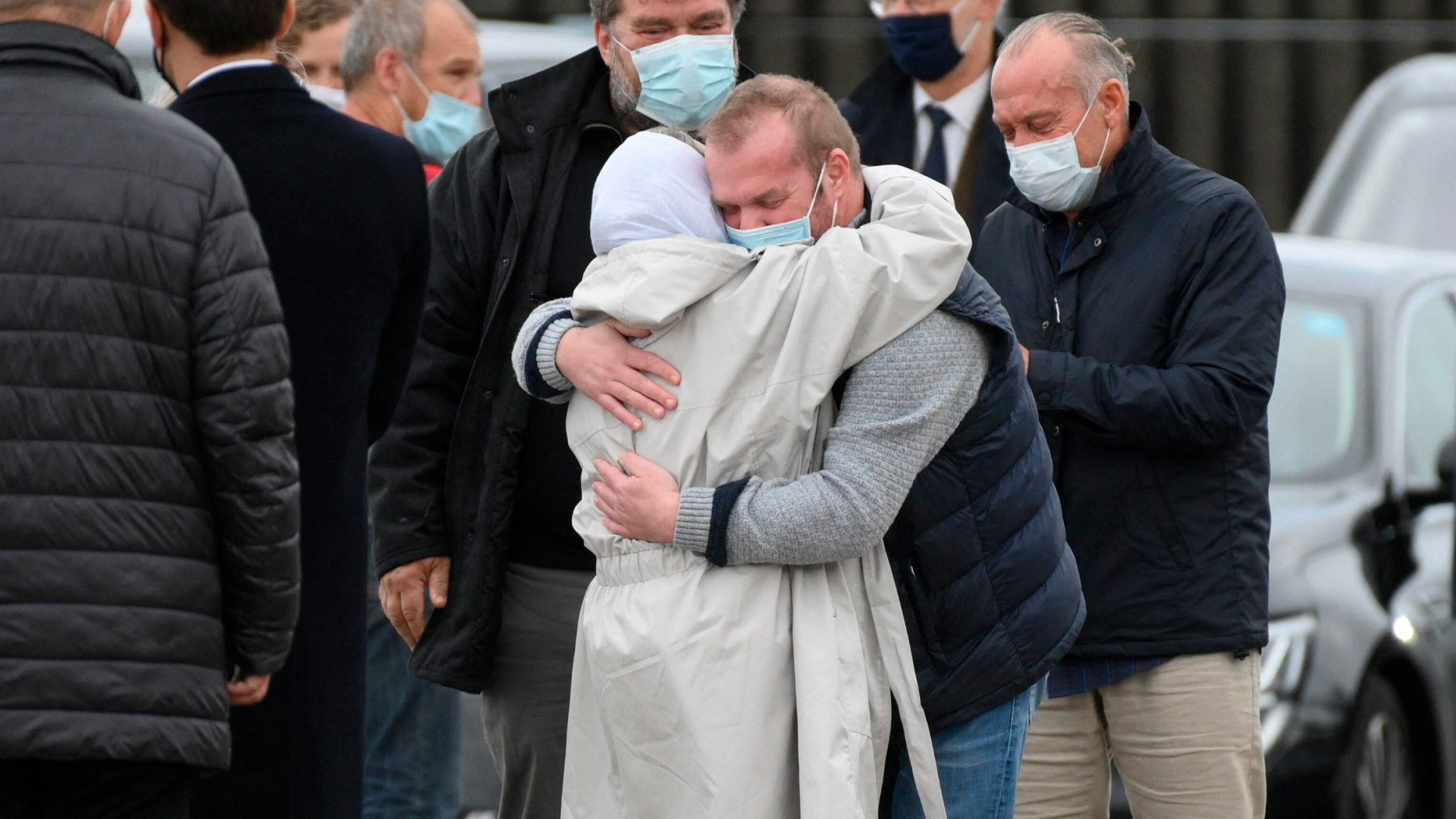
News of her execution came from Sophie Petronin, a 75-year-old French aid worker, freed on October 8, who had apparently been held by the same, or a linked Islamist militia group. (Petronin has converted to Islam and now calls herself Mariam.)

The Swiss Foreign Ministry expressed its sorrow that Stöckli, a single woman in her late 40s, was “apparently killed by kidnappers of the Islamist terrorist organization Jama’at Nasr al-Islam wal Muslim (JNIM) about a month ago.” It said the exact circumstances of the killing are currently still unclear.

“It was with great sadness that I learned of the death of our fellow citizen,” said Swiss Federal Councilor Ignazio Cassis. “I condemn this cruel act and express my deepest sympathy to the relatives.”

The Swiss authorities said they “worked over the past four years, together with the relevant Malian authorities and with international partners, to ensure that the Swiss citizen was released and can return to her family. Members of the Federal Council have personally and repeatedly lobbied the relevant Malian authorities for her release. An interdepartmental task force under the leadership of the Foreign Affairs Ministry was deployed. The task force also included representatives of … [the police, the intelligence services] … and the Federal Prosecutor’s Office. In addition, the authorities were in constant contact with the victim’s family.”

Now, they say they will do all they can to find out details of exactly how she died, and to return her body, or her remains, to her family.

Who was Beatrice Stöckli?

A Malian church leader, who said he’d worked with Beatrice Stöckli, told World Watch Monitor in 2012 that the missionary settled in Timbuktu in 2000, working for a Swiss church, before starting work alone, unaffiliated with any church. According to Evangelical Focus, Stöckli first served with Germany-based missionary group Neues Leben Ghana, (New Life Ghana).

The church leader reported that Stöckli had led a quiet life in Abaradjou, a popular district of Timbuktu, but known to have been frequented by armed jihadist groups. She was described as sociable, particularly among women and children, and she used to sell flowers and hand out Christian material.

Stöckli was taken from her home before dawn on January 8, 2016, by armed men in four pickup trucks, according to confidential sources.

This was the second time she’d been kidnapped from Timbuktu; the first time in 2012 was when northern Mali was occupied by armed Islamist groups. She was released 10 days later, following mediation led by neighboring Burkina Faso. At her mother and brother’s urging, she had returned to Switzerland in 2012, but she soon returned to Mali, saying, ”It’s Timbuktu or nothing”.

The Swiss government had apparently also warned her against return.

Stöckli appears in several videos appealing to her government

In late January 2016, a masked speaker with a British accent claimed responsibility for Stöckli’s kidnap on behalf of Al-Qaeda in the Islamic Maghreb (AQIM): “Beatrice Stöckli is a Swiss nun (sic) who declared war against Islam in her attempt to Christianise Muslims.”

The conditions of her release included setting free AQIM fighters jailed in Mali, and one of the group’s leaders detained at the International Criminal Court at The Hague. The most important condition, the speaker said, was that Stöckli did not return to any Muslim land preaching Christianity.

But Switzerland apparently demanded her release without conditions.

AQIM released a second similar video in mid-June 2016.

A year after her capture, in Jan 2017, AQIM released a third video of a woman—head covered by a black veil—who is identified as Stöckli. It was allegedly recorded on New Year’s Eve 2017.

Speaking in French, with a weary, barely audible voice and her face blurred, she greeted her family and thanked the Swiss government “for all the efforts they have made”.

On July 1, 2017, a coalition of jihadist groups affiliated to Al-Qaeda released a video showing six foreign hostages, including three missionaries, hours before France’s President Macron’s visit to Mali, when France agreed to help support anti-terrorist efforts in the Sahel.

According to the US-based monitoring group SITE, the undated footage was posted by Nusrat al-Islam wal Muslimeen (also known as the Group to Support Islam and Muslims).

The jihadist network had formed in March 2017, when leaders of Ansar Dine, the Macina Liberation Front, Al-Mourabitoun and Al-Qaeda in the Islamic Maghreb (AQIM) announced their commitment to form a common platform and pledged allegiance to Al-Qaeda.

Stöckli was one of three missionaries shown; the other two were Colombian nun Gloria Argoti, in her sixties and an 80-something Australian, Ken Elliott. This video was the first proof of life for Argoti, who was kidnapped in Mali a year after Stöckli.

The other three in the July 2017 video were Stephen McGowan (since freed), a Romanian mining engineer; Iulian Ghergut, kidnapped in Burkina Faso in 2015; and Sophie Pétronin—proof that the French and Swiss women were held together, at least at that time.

Undeterred by a previous kidnapping

Armed members of the militant Islamist group Ansar Dine handed over Stöckli to Swiss diplomats in April 24, 2012, after a private militia kidnapped her on April 15, 2012, Reuters reported.

Before Tuareg rebels and Islamist extremists had captured Timbuktu, on April 1, 2012, most Westerners had left for fear of being kidnapped and passed on to Al-Qaeda cells. But Stöckli had refused to leave.

AQIM has been holding Westerners for millions of dollars in ransom payments from kidnaps in recent years.

Ansar Dine militants took custody of Stöckli after a shoot-out with a private militia that had seized her and wanted to sell her to AQIM. Ansar Dine, which had imposed sharia in areas under its control in the north, then handed Stöckli to the Swiss government without demanding a ransom, according to Agence France-Presse.

The International Criminal Court said in April 2012 it might launch investigations into crimes against humanity and war crimes committed in Mali, including killings, abductions, rapes, and conscription of children.

Christians, a minority in Mali, have paid a heavy price for the insecurity in the region. For most of 2012, armed Islamist groups ruled the north, banning the practice of other religions and desecrating and looting churches and other places of worship. Among those who fled were about 300 Christians, most of whom found shelter in Bamako in southern Mali where local churches worked together to care for them.

Mali is No. 29 on the 2020 World Watch List published by Open Doors International, which monitors the persecution of Christians globally.


News

Harvest Settles Multimillion-Dollar Agreement with James MacDonald

In Christian arbitration, the preacher was granted $1.45 million and the rights to Walk in the Word.

Harvest Bible Chapel's Elgin campus

Harvest Bible Chapel's Elgin campus

Christianity Today October 16, 2020
*hajee / Flickr

Harvest Bible Chapel has reached a multimillion-dollar agreement to transfer some of its assets to former pastor James MacDonald, who plans to continue in ministry outside the Chicago-area megachurch.

Harvest and MacDonald had a contentious separation last year, when he lost the position he held for 30 years over “inappropriate” comments and “harmful” conduct stemming from his legal battle with people investigating the church.

Though MacDonald has been granted the rights to his Walk in the Word ministry, he and Harvest remain at odds. The two entities released separate statements detailing the results of the process, which went through the Institute for Christian Conciliation. Over the summer, they agreed to try to make a joint statement and start the process of “relational reconciliation,” the Harvest elders said, but the efforts didn’t pan out.

In the arbitration, MacDonald retained the rights to Walk in the Word, a part of the church that had put on his teaching ministry and popular radio broadcast. It is now operating at James MacDonald Ministries.

The pastor also gets $1.2 million and a parcel of property in Crystal Lake, Illinois, as well the ministry’s equipment, books, and digital resources, the church announced this week.

In 2019, Harvest initially did not release these assets, assuring the congregation, “none of Harvest Bible Chapel’s or Walk in the Word’s donations or assets have gone to James, and we will not be giving him anything in the future” since his termination was “with cause.” The year prior, Walk in the Word brought in close to $8.5 million, with 2,000 stations airing the show.

Harvest will also reimburse MacDonald another quarter-million dollars related to selling his former home and transfer compensation related to his retirement benefits.

In a statement, the elders apologized to MacDonald and the congregation for the ways they had failed to “live at peace with all men, as far is it depends on you” (Rom. 12:18) as while working through this year-and-half-long process of transition.

“Now that these differences with MacDonald have come to resolution, our focus and full attention are on the future of Harvest Bible Chapel,” they said.

In his statement released this week, MacDonald continues to criticize the church for its treatment of him and cites the “successful arbitration” as confirmation that the truth has been on his side all along.

The 60-year-old pastor called on his former church to confess its wrongs and correct the record. He lists grievances against Harvest including a “false narrative in financial matters,” a “hostile takeover,” “shunning our family,” the “wrongful seizure” of the ministry assets returned to him in the recent arbitration, and a “vicious but unsuccessful strategy” “to end our ministry permanently.”

In the wake of his departure, the Evangelical Council for Financial Accountability acknowledged “serious concerns” around spending and financial stewardship under MacDonald that resulted in the church losing its membership status.

Last November, Harvest’s new elders (all those who served under MacDonald stepped down) declared that their former pastor failed to meet the elder qualifications laid out in Scripture and could not return to their church.

Within days of their statement, MacDonald offered a public apology, admitting to “careless and hurtful words” and “a regression into sinful patterns of fleshly anger and self-pity that wounded co-workers and others.”

In his remarks this week, he says he confessed his relational failings multiple times, but still lost longtime friends and ministry partners to Harvest’s narrative. “Soon we must bring those truths to light, but for now we continue under the weight of so much falsehood in hope that the church will themselves initiate the needed steps of public confession,” he wrote.

According to Harvest, their agreement “resolves all claims and issues” and releases them from future legal matters over the arbitration terms.

Ideas

Amy Coney Barrett’s Message: The Maternal Hero Is a Myth

Guest Columnist

The trope of mother as superparent is a resounding rejection of grace.

Christianity Today October 16, 2020
Abaca Press / AP Images

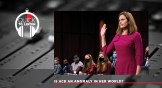
Every nominee to the Supreme Court faces intense scrutiny, and Amy Coney Barrett is no exception. Nominated to fill the seat of feminist icon Ruth Bader Ginsburg, Barrett, a mother of seven, seems to represent a new kind of “possible.” It’s not simply that she has managed a career alongside a family. She’s managed what Mike Pence called a “sizable American family” alongside large-scale professional ambition. During her confirmation hearings, senators expressed admiration for her “tireless,” “remarkable,” even “superstar” example.

If Barrett’s nomination succeeds, she’ll become the first woman on the Court who’s a mother to school-age children. Predictably, there have been a spate of articles touting the gains Barrett represents for conservative women. As one woman put it, Barrett looks both like the women in her church and the professors in her graduate school: “She seem[s] to be the whole package.”

It’s a public ovation that’s well deserved. Still, I worry about this: What myths do we perpetuate by assuming that Barrett (and women like her) are doing it all and doing it all by themselves?

One of the first articles I read about Barrett cited the early morning hour (between 4 and 5 a.m.) at which she rises to exercise before ferrying some of her children to and from swimming practice. To see her maternal form against the dark sky, the sun cradled beneath the horizon, reads like epic poetry—or even biblical verse. As Proverbs 31 details, the virtuous woman is one who “gets up while it is still night; she provides food for her family and portions for her female servants.” As the story takes shape in our Western, modern, individualist mind, the solitary heroine rises before the house rouses.

This is a picture of virtue performed alone—one requiring a cape, not the cadre of “friends and fearless babysitters” whom Barrett thanked in her 2017 confirmation hearing for her appointment to the US Court of Appeals for the Seventh Circuit. Indeed, when her name was suggested as a potential replacement for Justice Anthony Kennedy when he retired in 2018, Pat Robertson named misgivings that other conservatives surely shared: “That’s going to be tough, to be a judge and take care of all those kids, won’t it?”

The default assumption in Robertson’s words is that family is not a shared project: It’s women’s work and work that is single-handed and done in seclusion.

However, we know that this picture of motherhood is far more recent than historical (and hardly biblical). Furthermore, Barrett herself has debunked this myth. She has always been clear to say that hers is more than a one-woman band. In addition to crediting her flexible work arrangements, she’s thanked her husband, Jesse, a private practice attorney, whom she’s described as a “selfless and wonderful partner.” Friends attest that he’s the one responsible for carpool and cooking.

Barrett is managing it all, at least in part, because someone else is making the dentist appointments. She’s living less like a superhero and more like a human being. She isn’t to be admired for performing tightrope acts of courage all by herself, as if she can defy time as one might try defying gravity. Instead, she is dependent on a larger social body, something she was clear to acknowledge in her opening statement at this week’s confirmation hearing and which bears out in her participation in the faith group People of Praise.

In other words, if there is heroism in Barrett’s story, it’s the heroism of teamwork.

Help is something I wish that I had asked for more often in the days when my children were young. As I have written about here and in other publications, ours was a very traditional domestic arrangement. At 27, when my husband and I welcomed our first child, I off-ramped my career while my husband continued working full-time, finishing exams for a professional designation, and then finally returning to graduate school.

Even as I began to take on occasional writing projects, I nursed the idea that work was merely a distraction from marriage and motherhood. I felt responsible to absorb work into my days in ways that were nearly imperceptible to my family, which meant that I did a lot of frantic paddling below the surface and always tried to make sure the water hardly rippled. (I saw a lot of dark mornings.)

I nurture some regrets for that season. I don’t regret the choices we made—only our profoundly malnourished imagination. I had little grasp of the collective responsibilities that mothers and fathers, children, and even churches have for the family and for the flourishing of its individual members. I didn’t see, as I do now, that the trope of mother as hero is a resounding rejection of grace and a story that reads far less like good news and more like punishing, lonely work.

What’s more, I had no framework for naming desires and ambitions beyond my family as good and holy, and I could have benefited from more creative models (like Barrett’s) to see beyond my confined and limited perspective.

As Katelyn Beaty put it in The New York Times, “If a generation of girls is to follow in Judge Barrett’s footsteps, they will need explicit support from religious leaders. As such, evangelical and traditional Catholic communities must find ways to honor and affirm the ambitions of half their members.”

But perhaps even more than permission is needed. So long as women are admired for doing it all, as if all by themselves, we miss the invitation of the gospel: that we get to be a needy people. As the creation narratives in Genesis 1 and 2 make clear, we’re made for relationship with God and with one another. Our work, whether domestic or professional, is always a co-labor. Mothers—like fathers, like children, like every human being—aren’t made for autonomy, even the autonomy that parades like courage and selflessness.

Heroism is not required for making life work. Dependence is.

Jen Pollock Michel is the author of Teach Us to Want, Keeping Place, and Surprised by Paradox. She lives with her husband and their five children in Toronto.

Speaking Out is Christianity Today’s guest opinion column and (unlike an editorial) does not necessarily represent the opinion of the publication.

Might From the Margins

People of color don’t need white permission to use their power in Christ.

Christianity Today October 16, 2020
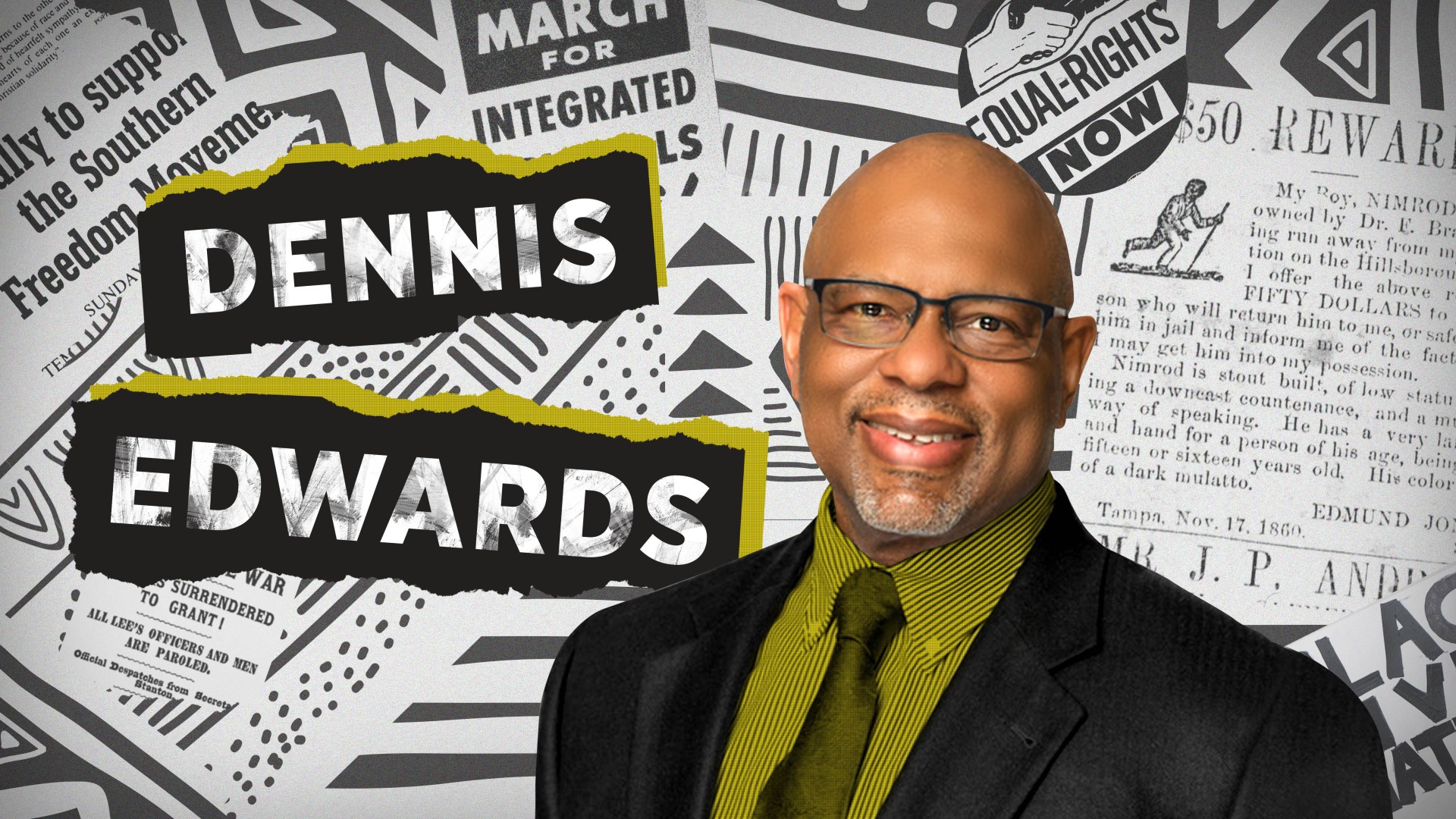
Illustration by Mallory Rentsch / Portrait: Courtesy of Dennis Edwards / Background Images: WikiMedia / Unsplash / New York Public Library

One of my favorite movie scenes comes from the blockbuster Black Panther. The fictional nation of Wakanda exists as a simple agricultural society but is secretly home to advanced minerals and technology. Wakanda, mixing its scientific knowledge with spiritual traditions under its leader, King T’Challa, manages to thwart a threat to the world’s safety.

At one point in the movie King T’Challa is presumed dead, so an entourage from his tribe, including a white CIA agent, seeks assistance from Chief M’Baku and his Jabari tribe. As the entourage approaches M’Baku, the white CIA agent begins to explain the predicament. Right away M’Baku pounds his staff repeatedly and barks loudly. Others of the Jabari tribe join in barking so persistently that Agent Ross is forced to close his mouth. Watching that scene in the theater, I could barely contain myself! On countless occasions I have had white people—accustomed to being the central focus of practically all conversations—presume to speak for me.

Well-meaning white people, Christians included, regularly marginalize nonwhite people. Consequently, I wrote a book, Might from the Margins, specifically for marginalized people to encourage us to exercise the power we already possess. We do not have to wait to be empowered by white people, nor do we need permission from white people to speak, write, or act as we dismantle systems of injustice and demonstrate genuine faith in Jesus.

Marginalization is not the same as being outnumbered. A white person once challenged me that since African Americans make up about 13 percent of our nation’s population, we should expect to be marginalized. But it is not superior numbers that marginalize; it is the sense of superior virtues, the misuse of power and privilege. Look at South Africa’s apartheid regime to see how marginalization is not about greater numbers.

Three streams of my life experiences related to race, power, and privilege came together in writing Might from the Margins. The first stream was my commentary on 1 Peter, the second was my decades of pastoral ministry, and the third was an awareness that many books on race and privilege center white people. By centering white people, I mean that white people serve as the target audience even for books written by nonwhite authors. The goal seems always to get white people to do and think differently. It’s exhausting.

Stream One: 1 Peter and the Power of Diaspora People

A main question addressed in 1 Peter is “How should Christians think and act within a culture hostile toward them?” Peter writes to an alienated people who do not enjoy the luxury of prominence or high status in their society. Under scrutiny, their lives are in a precarious position. Peter’s readers suffer hassles, slander, judgment, and social isolation because of their faith.

The initial readers of 1 Peter carried a diaspora status as aliens and strangers in their own land. They could not be at home in the world because the world had grown hostile toward them. Suffering the fate of the marginalized, diaspora people of faith can exhibit what the New Testament refers to as hypomonē: endurance, or faithful perseverance. Marginalized believers—including the enslaved and women—who first heard Peter’s letter and followed his instructions exemplified Christian obedience. In 1 Peter, the oppressed and apparently powerless demonstrate the way of Christ.

Stream Two: Power, Not Just Proximity

In my three decades of pastoral ministry—in Brooklyn, DC, and Minneapolis—I served churches that were intentional about their ethnic and racial diversity. For the white members of these churches, racial reconciliation—the popular term in evangelical circles—meant proximity when it was really a matter of power. The idea was to get people together for a potluck meal or exchange choirs or have pastors of different races or ethnic groups preach at each other’s churches, then say we’re all one now in Jesus.

I’ve heard white pastors boast about their churches being “like the United Nations” just because they weren’t totally white. As a native New Yorker, I have a different view of the UN. The UN is not a white institution with white leadership with a sprinkling of other ethnic groups in attendance. The UN works as a collaboration of different peoples all sharing power. When I planted Peace Fellowship Church in DC, the power issue was front and center. One African American founding member cautioned, “White people always take over.” Our church had to negotiate ethnic and racial diversity as it related to power, not just proximity.

Stream Three: Whose Concerns Are Centered?

Contemporary Christian expressions of power, popularity, and prestige are overwhelmingly white. It is hard for white people to understand how their practice of Christianity oppresses those on the margins. As the theologian, poet, and mystic Howard Thurman described in Jesus and the Disinherited, the marginalized “live with their backs against the wall” and struggle to flourish in a society that was not constructed for them. To make matters worse, some of the most zealous Christians in America are reluctant to recognize the injustices marginalized people deal with on a regular basis. Author Charles W. Mills, appealing to standpoint theory, notes, “In understanding the workings of a system of oppression, a perspective from the bottom up is more likely to be accurate than one from the top down.” Those who occupy society’s lowest caste position are best situated to diagnose society’s injustices and discern a more righteous path.

Books on justice and reconciliation often discuss the need for love. Love is necessary, provided we understand love as more than sappy sentimentality. Love does not cancel justice. When whiteness is centered, people want to hear and see black people be quick to forgive injustice. There have been plenty of examples, even in recent years, of black families and communities forgiving white killers of black victims. But this has too often occurred at the expense of justice. White friends praise the black community’s capacity for forgiveness and its beauty, but I wish our main lessons didn’t derive from our oppression. We have so much else to teach.

Of course forgiveness is biblical and Christlike. But so is justice. Forgiveness releases our souls from the burden of hatred, and released from hatred, a demand for justice becomes clear-eyed and righteous. Loving ourselves as Christ loves us helps us love others too. But oppressive systems make it difficult for marginalized people to love ourselves. I’m old enough to remember James Brown singing “Say It Loud—‘I’m Black and I’m Proud.’” We needed that anthem. African Americans internalized some of the negative messaging we’d received over centuries. We needed to convince ourselves of our own worth in the eyes of God and others. We needed to embrace our beauty, intelligence, ingenuity, and creativity. We needed to love ourselves.

When a simple slogan such as “Black Lives Matter” is denied, scrutinized, and even vilified by vocal white Christians, it becomes increasingly necessary to assert that God loves marginalized people and that we must grow in love of ourselves. Love is power. It emboldens us, motivates us, and sustains us to fight against injustice. Jesus embodies love and power and stands in solidarity with the marginalized. In him we find might from the margins.

Rev. Dr. Dennis R. Edwards is associate professor of New Testament at North Park Theological Seminary. You can find him on Twitter at @revdrdre.

Books
Review

The Antidote to Spiritual Shallowness Isn’t ‘Believing Harder’ but Going Deeper

Rich Villodas’s book takes us further into our faith traditions, our relationships, and our very selves.

Christianity Today October 15, 2020
Ali Hamid / Unsplash / Edits by Rick Szuecs

When I was a kid, I had a recurring nightmare that a loved one in my life was possessed by a demon. Immersed in this dream world, I often thought of Jesus’ words from Matthew 17: “Truly I tell you, if you have faith as small as a mustard seed,” then “nothing will be impossible for you” (v. 20). This spurred me on to fresh efforts at casting out the demon, but nothing ever worked. In response, I tried conjuring up even more faith from somewhere within myself.

The Deeply Formed Life: Five Transformative Values to Root Us in the Way of Jesus

The Deeply Formed Life: Five Transformative Values to Root Us in the Way of Jesus

Waterbrook

272 pages

$28.40

A similar impulse remained throughout my adolescence and early adulthood. Whenever I came to a spiritual or religious difficulty—whether it was trying to break a sinful habit, discerning God’s will, or growing in intimacy in my relationships—my impulse was the same: If I could just believe harder (whatever that meant, I was never sure), then I’d be able to move whatever mountain lay before me.

I’ve learned over time that deepening faith is not just a mental exercise. It requires action. This lesson was recently reinforced by Rich Villodas’s The Deeply Formed Life: Five Transformative Values to Root Us in the Way of Jesus, which invites Christians to penetrate further into the mysteries of our faith, the history and traditions of our global church, our relationships with others, and the reality of our own inner lives.

In the midst of a national pandemic that forces us to cover our faces and mediate our social engagements (including worshiping God) through computer screens, Villodas’s book could not come at a more opportune moment.

As the lead pastor of New Life Fellowship in Queens for seven years, Villodas guides the reader from experience. He leads a flock that is one of the most multiracial Protestant churches in the United States. And with New York City as their home, the members of New Life Fellowship fight against the tide in what is perhaps the cultural capital of shallowness (which I say from experience and out of great love for that godforsaken place).

Cultivating Faith

Americans in 2020 live in a milieu of shallow social interactions. Many of us uproot from our homes for college or work and live among people with whom we have no deep connection. Social media platforms grant us fragmented views into our peers’ lives, and algorithms herd us into polarized tribes. Screen addiction pulls us along cursory binges of information. These mediums encourage us to define our worth based on our appearance, professional accomplishments, or material possessions.

To put it another way, as Villodas does in The Deeply Formed Life, “we are always at risk of being shallowly formed.” But the book offers more than a theory or theological argument for spiritual deepness. It provides a practical guide for taking the deep dive—for rejecting a culture of shallowness in the context of everyday life.

Villodas urges Christians to incorporate more monasticism, or “contemplative rhythms,” into their daily habits. In contrast to megachurches that blast music, lights, and smoke at their parishioners, his own church incorporates stillness and silence into worship services, teaching congregants that in uneventful moments “God purifies us of the false god of good feelings.”

If you want to deepen your spiritual life, Villodas says, learn how to “normalize boredom” and sit in silence with God. Keep a sabbath. Put yourself close to the poor and vulnerable. And lean on the rich monastic practices of the church (like lectio divina, for example) to help you create consistent religious habits. “We are called,” he writes, “to be active contemplatives or contemplative activists, holding together the invitation to be and to do.”

Deepening Relationships

I remember sitting in my first Christian racial-reconciliation group in Brooklyn back in 2015—we had just read a smattering of Bryan Stevenson, Martin Luther King Jr., Ta-Nehisi Coates, and more—and posing an earnest question to my fellow church members: “Okay, but what do we do now?”

Because of the shallow nature of most of our social relationships, we have little opportunity to engage, even superficially, with people who might be different from ourselves. From the selective wiring of social media platforms to trends of self-segregation (both racial and religious), Christians need instruction on how to deepen our relationships with others.

The Deeply Formed Life is generous with the practical here. The disciplines that Villodas puts forth encourage Christians to be deeper in the world, sharing our faith and fighting for justice for the vulnerable, while keeping our roots firm in Christ. “What makes genuine Christian engagement with the world different,” he writes, “is that we don’t hate the people we are trying to change.”

If we want to have “deeply formed practices of racial reconciliation,” we must remember injustice done in the past, lament with and listen to those who suffer, and keep rigorous habits of prayer and self-examination. In order to show people the light of our faith, we should become masters of hospitality, service to the poor, and purposeful work. Villodas shows how these disciplines train our hearts to point toward others, allowing our actions to be motivated by compassion instead of catharsis.

Penetrating Our Interior Lives

In the same way we are groomed to maintain shallow relationships, the world encourages us to float atop the surface when it comes to knowing our own selves. We’re praised for being willing to follow our impulses. We shed the teachings of our parents and grandparents. We avoid painful memories and treat emotional problems with medication. We glorify a busyness that keeps us from knowing ourselves well.

By examining ourselves, however, we can have freedom from shallowness and confront with confidence any anger, anxiety, unhealthy relational habits, or cycles of sin we may experience.

As Villodas writes, “Interior examination is a way of life that considers the realities of our inner worlds for the sake of our own flourishing and the call to love well.” In other words, it’s not just about knowing ourselves for glorified personal growth. Interior examination is about being healthy so we can love God and love others. And, I would add, though Villodas doesn’t address it himself, a consistent examination of conscience gives God permission to sanctify us in ever-newer ways.

Villodas never stops at a convicting call. He also allows the reader a crash course in the “emotionally healthy spirituality” that is practiced in his own life and at his church. In an effort to disturb our apathy, he encourages readers toward practices that are unfamiliar in many evangelical churches, like examining behavior patterns, confronting painful family history or trauma, and naming and confessing sin. These may be uncomfortable or unpopular in some cases, but we cannot grow without them.

The Only Way Forward

Living out the deeply formed life is doubtlessly difficult, a fact Villodas doesn’t necessarily stress as much as he could. His book is encouraging, making deeper faith look possible and attractive (to its credit). But let us not be shy about the fact that this deeper way is also the way of the Cross.

The experiences of the saints and martyrs that Villodas cites as encouragement reveal that the way will be painful. The disciplines he stresses—being purified by silence, confessing our sins, fighting against injustice, and more—are all encompassed in Christ’s call to “take up [your] cross and follow me” (Matt. 16:24).

I’m writing this at three days overdue to have my second child. As I think about the forthcoming pain of childbirth, the pain Christ suffered on the cross, and the pain of being “deeply formed,” I’m tempted by my flesh to respond with a firm “no, thank you.”

Yet Villodas gently reminds us that this way, this cross, this labor, is the way of Jesus. And it is the only way forward. The cross is not pretty or popular or easy to carry. But it, in turn, will carry us through, deeper and deeper, straight on to heaven.

Rebecca Toscano is a project manager at Behold, an app for daily Christian prayer and meditation. She writes from Charlottesville, Virginia.

Pastors

We Need to Reset the Rules of Cultural Engagement

The old, tried-and-true strategies don’t reflect the new world we live in. It’s time for an update.

CT Pastors October 15, 2020
Illustration by Mallory Rentsch / Source Images: Prixel Creative / Lightstock / Bart Dunweg / Unsplash / Matt Hardy / Pexels

Editor’s Note: This article is the start of a new monthly series on CT Pastors, called “Places and Spaces,” by New Testament Scholar and thought leader Darrell Bock that addresses the rapidly changing contexts—the places and spaces—in which the church, especially in the West, finds itself in the 21st century. The series is inspired by his most recent book Cultural Intelligence: Living for God in a Diverse, Pluralistic World.

If your life is like mine, then you have been in conversations where something you take for granted because of your faith is not a given at all for the person you are talking to. Walk into almost any space or place and we can see it: race, sexuality, public health, freedom of expression, gender, even aspects of Christian teaching. In many cases, that difference is something that ten years ago would not have been an issue. Now that shared common ground is gone and we are being asked to take a few steps back to get to a place we used to just assume existed. We all know our culture has changed. We feel it and see it. Social media shows it.

My friends often ask me “Why are people so angry?” and they are talking about almost everybody, including even fellow believers. What are thoughtful believers to do? How should we then engage?

One of the great challenges for the church today, not to mention our country at large, is the loss of a culturally shared backdrop. This change has been going on for quite some time, but it has escalated more recently. This challenge has become even more obvious and intense with the unprecedented combination of events in the last few months. The foment is palpable. In the last half century, the Judeo-Christian net that surrounded much of our Western culture has disappeared.

Nothing has made this more transparent than recent Supreme Court decisions and the constant rumblings on social media on almost any topic you can pick. Even the wearing of masks to protect one another has been politicized. The battle between liberty and life has broken up what used to be said about the joint pursuit of life and liberty, not even to mention happiness. How did we get here? More importantly, given this stark new reality, how does the church need to adjust to functioning in a far more pluralistic environment than many churches in the West have been accustomed to?

We lack a theology of engagement in the church, and we desperately need it. This monthly series introduces a discussion about how the church should function in a not-so-brave, yet hostile, new world. We will look back at how the earliest church functioned in an era when it had neither social nor political power but simply relied on the gospel. Such gospel living (not just talking) opened up a way of life that led many outside the church to consider an alternative existence, one that belongs to one who walks with God.

Redefining the Battle

It is a misnomer to speak of cultural engagement in the singular. What we face today are cultures, subcultures if you will, that rub up against each other much like plate tectonics, and sometimes the pressure that rubbing creates is immense. In short, things have changed. So how have they changed, at least in the West?

In days gone by, even many of those who did not go to church in our country shared some cultural values that were informed by core Judeo-Christian principles. That is no longer the case. Now, one can read headlines like “Why ‘Judeo-Christian values’ are a dog-whistle myth peddled by the far right.” Debates argue that “citizens who belong to a particular (majority) culture remain the ‘cultural owners’ of the core values underpinning a state,” and whether that should be allowed to continue.

Many may lament this shift, many others see it as a very good thing. Others say all that has happened is the church has become more like the rest of the world, for better or for worse. In the process, we have returned to the reality Jesus taught the disciples about, that the world would always be there to push back on faith (Acts 4:5-31; Luke 9:23). There actually should be no surprises here, cross-bearing was to come with the territory of faith (just ask Christians in other parts of our world). Many contend “the good old days” were never as good as we thought. Those debates about the past, or going back to it, will not help us with our present either. Things have changed that much.

This shift in cultural values does mean that believers often find themselves in confrontation with the core beliefs of others, both outside and inside the faith. We are on opposite sides of truly significant issues. The challenge is how do we follow the great commandment to love our neighbor as ourselves when our neighbor thinks so differently than we do? How do we love our “enemies,” or even now in many cases our own brothers and sisters in Christ? Loving those who oppose you certainly is a distinctive challenge given to us by Jesus. Maybe a place to start is not to see those on the “other side” as enemies at all.

So how can we not see people as opposing forces that we need to defeat? Choices dealing with things like when life begins, sexuality, or the uniqueness of Christ meet with different, even hostile, views from many of our neighbors. This confrontation of ideas has led to the idea that we are in a ‘cultural war’ and military metaphors abound. Let there be no doubt, there is a battle for what it means to experience well-being and quality of life. However, military metaphors put us in a battle mode and that usually means a fight. But how does a fight help us to draw people into this distinctive way of life so foreign to those we pray might come to know God?

I contend that we have missed a central point of the biblical metaphor of the battle and in doing so have erroneously defined our mission in ways that have damaged the church as well as those neighbors, especially those neighbors outside of our faith. Here are some core questions for healthy cultural engagement: How should I see the contentious space? What exactly is the battle? How does Scripture tell us to engage it? Some popular Christian images depict ideas of conquest, of taking over, of transforming culture or defeating the enemy. Is that really the battle and the goal that the bible defines? To get a better handle on this at the outset, let’s look briefly at the core biblical text on this battle from Eph. 6:10-18.

Three Principles of Engagement

For now, I wish to focus on how to see people outside of our faith (later in this series, I will take up “in house” differences). First, Eph 6:12 makes clear that our enemy is not people. Our battle is not against blood and flesh (the actual word order in Greek). Rather, recalling the Great Commission (Matt 28:18-20), people are not our opponent but are rather our goal. To be sure, these principalities and powers often work through people, and we are called to be wary of them and resist their evil (Jude 1:2-23; Rom. 1:18-32). But, it is clear that judgment against such people is reserved for God alone (James 4:12; 2 Cor. 5:10; Acts 17:31).

Jesus calls us to reach people outside of the church, people who often think quite differently than us. That outside audience actually is a given of the mission. We are called to seek those outside of our usual circles who are different from us. To view people as the enemy is to misdirect our energy and risk undermining our core calling to make disciples. Battle metaphors aimed at the wrong target undermine our ability to care about those we are called to invite.

Second, while we do not battle people, we do fight against spiritual forces. There are real dire enemies out there we best not underestimate. They are called rulers and authorities (v. 12), cosmocrats of evil in the heavens. These dark forces are unseen and deceive. Many people, especially those of a secular bent, do not even realize they exist. This is where we find the deepest challenge and the greatest irony of engagement. The real enemy is missing in action for most people, even though those enemies are still quite active. The fact that they are unseen is actually part of the deception. They work incognito.

Third, there is successful protection against these forces. That protection is not found in things the world sees as protective, such as power, ideology, or politics. Our armor is spiritual because the battle is spiritual. Ephesians calls it “the full armor of God” (v.13). Look at the list: the belt of truth, the breastplate of righteousness, feet shod with the gospel of peace, the shield of faith, the helmet of salvation, the sword of the Spirit equaling the Word of God and prayer in the Spirit. These things enable us to stand our ground and live in ways that reflect sacred presence. These armor elements involve not only what we believe but how we live it out.

This description of spiritual armor tells us that what matters most is how we live out and draw on our faith, not just how we talk about it or contend for it. Part of the reason we do not seek to take over ground is that we know the world will not be transformed unless Jesus and the Spirit perform that transformative process. This involves a life of being reshaped that will not be complete until we are with him and/or he returns. That cannot start unless and until people come to see and know God’s presence. This is why inviting people into the gospel is so important, even necessary. We invite them into a new place and a new spiritual, indwelt space. That is where enablement to live a full life resides. The power the Scripture knows and embraces is that of the transforming work of God’s Spirit through Christ (Romans 1:16 with an eye to Romans 6–8). Every other solution falls short and the church has been as guilty of offering such false alternatives—such “fake news”—as anyone in our ongoing cultural battles.

Effective Engagement

What does this mean for effective engagement with culture? It means seeing people as humans made in God’s image to be embraced and persuaded and with the potential to be drawn toward God. It means the person sitting across from me with whom I disagree is not someone to defeat or humiliate. At the same time, I am to recognize an unseen battle, a conflict the person I am engaged with is probably unaware is even present. Our fight is not as part of an invading, conquering army but more like a rescue mission to those who don’t even know they are in danger and need a new home and refuge. That is how the deception of spiritual forces works. It can deceive us too, causing us to act in ways that look more like the world than like our Lord. If, in our own efforts at rescue, we fail to appreciate the spiritual forces at work, we will do battle with merely human means, seeking merely human answers, making humans our opponents, not the goal—and we will lose.

Seeing someone this way instead of as an enemy, will change how we engage with them. It will alter our tone, even when we might have to challenge them.

When we engage as the world engages—with distance, withdrawal, barrages of insults, no empathy, or demeaning charges—we become just another special interest group guarding our territory or insisting on gaining new ground only on our terms. On the contrary, Jesus calls us to make disciples of all people and to invite them into a new, different kind of space. We are called to love those who hate us, even as we challenge them and ourselves with truth. The truth we extend is shown to be a truth that exemplifies the service and humility of the cross. What matters is not only what we believe, but how our belief interacts with the world and positively impacts relationships. Tone matters. Humility, grace, and love reflect the Most High One who also is unseen (Luke 6:35-36). The result is a spiritually rooted engagement with the world for the sake of the kingdom of God.

This series hopes to flesh out how this can be done and make important observations about culture and difficult conversations in the process. What I want to communicate in this first article though is that how we see the people who disagree with us makes all the difference in the world for how we engage them. There are three basic approaches: We can 1) fight them as an enemy, 2) rule them out as already excluded and beyond reach, or 3) we can reach out and move toward people with the love of God while praying to God to work in their lives in the hope that they might find their place in God’s family. We can pray they will see in us a different way to love that draws them to the same God who drew us, even as that love may challenge them. If it were you in need, which of those three approaches would you prefer? Which approach did Jesus take, even as the world sent him to the cross?

Darrell Bock is Senior Research Professor of New Testament at Dallas Theological Seminary, Executive Director of Cultural Engagement at the Hendricks Center at the Seminary and a host of the Seminary’s Table Podcast. This series is inspired by his latest book Cultural Intelligence: Living for God in a Diverse, Pluralistic World.

News

White Evangelicals Are Actually for Trump in 2020, Not Just Against His Opponent

Polls show faithful supporters no longer see the Republican incumbent as the “lesser of two evils.”

Christianity Today October 14, 2020
Joe Raedle / Getty Images

While white evangelicals’ support for President Donald Trump is close to the strong backing he enjoyed in 2016, voters’ motivations have shifted during his first term at the White House.

This year, a majority are excited to get behind Trump, rather than being primarily motivated by a distaste for his opponent. Among white evangelical Trump supporters, most characterize their vote in 2020 as “for Trump” (57%) and not “against Joe Biden” (20%), according to new Pew Research Center survey breakouts provided to CT.

Last presidential election, the numbers told a different story. White evangelicals voting for the Republican were more likely to say their vote was “against Clinton” (45%) than “for Trump” (30%) in Pew’s 2016 survey—which researchers caution isn’t directly comparable to the recent numbers because it was done by phone, while this year’s was done online.

Tony Suarez, executive vice president of the National Hispanic Christian Leadership Conference, says four years will change your perspective. He served on Trump’s faith advisory panel leading up to the 2016 election. This time, he’s actively campaigning for reelection.

“Now I’m more than an adviser,” said Suarez, who has spoken at Evangelicals for Trump events around the country. “It’s my call because of what I’ve seen in the last four years. … He respects prayer, receives prayer, and respects the faith community, but he gets a bad rap.”

Trump’s reputation is also an animating factor on the Left, where more Biden voters overall say they are voting “against Trump” than “for Biden.”

The only religious group that considers itself “for Biden” is black Protestants; 90 percent back the former vice president and over half say they are voting for him and not against the current president, Pew found. In comparison, among the 17 percent of white evangelicals who lean toward Biden, three-quarters say they are motivated to vote “against Trump.”

https://datawrapper.dwcdn.net/

Nathan Hoag, an evangelical pastor in Colorado, says his choice to vote Democrat “has little to do with my approval of Biden and almost everything to do with my disapproval of Trump.” He said the decision was easier this year after seeing four years of the administration’s policies.

Though it’s still a minority position among white evangelicals, faith-based opposition to Trump has grown far more organized in 2020 and is focusing on the concerns shared by voters like Hoag.

Not Our Faith, a bipartisan Christian super PAC whose advisers include former Obama staffer Michael Wear, is the latest effort to launch. The organization will join a burgeoning number—Republican Voters Against Trump, Christians Against Trumpism, Evangelicals for Biden, and Pro-Life Evangelicals for Biden—formed to rally believers to vote the current president out of office.

The increasingly vocal opposition cites Christian convictions around issues like racism, health care, poverty, and climate science, as well as concerns with Trump’s tone.

“We believe Christians who use, excuse and embrace toxic rhetoric to achieve specific policy ‘wins’ are short-sighted and wrong,” stated Christians Against Trumpism.

Pro-Life Evangelicals for Biden said that beyond abortion, “Joe Biden’s policies are more consistent with the biblically shaped ethic of life than those of Donald Trump.”

Suarez and other evangelicals siding with the president have pushed back against the evangelical minority speaking up for Biden.

The president still feels the love from his evangelical base. On a prayer call on Sunday evening, he said, “Whether it’s evangelical, whether it’s Christian evangelical, call it whatever you want, people of religion, this is the most important election of our lives. We have got to get out and we have to vote.”

Joined by his daughter-in-law Lara Trump, pastor Paula White-Cain, and other evangelical leaders who have joined campaign efforts, the president—less than a week after being discharged from his coronavirus hospitalization—offered up his prayers.

“I want to thank God for working miracles, and I want to ask God for the wisdom and grace to lead our country and to lead it on the top level,” Trump said to more than 100,000 supporters tuning in. “We’re going to make America greater than ever before.”

For white evangelicals who have stood by Trump, this is what they see from the president: a leader who prays and welcomes their prayers and who has kept his promises to improve the economy, uphold pro-life stances, and appoint conservative justices.

Like white evangelicals overall, evangelical pastors have grown more confident in the president. At this point in 2016, they were more likely to say they didn’t know whom they’d vote for than to side with candidate Trump, according to a LifeWay Research survey.

This year’s survey found that more than two-thirds of evangelical pastors plan to vote for Trump (68%). LifeWay found that Pentecostal (70%) and Baptist pastors (67%) are more likely to vote for Trump than pastors in the Restorationist movement (49%), Lutherans (43%), Presbyterian/Reformed (24%), or Methodists (22%).

The racial divide among evangelical voters holds for pastors too. Only 6 percent of African American pastors say they support Trump, while a majority (61%) will be voting for Biden.

News

Fewer Southern Baptists Call Themselves ‘Southern Baptist’

SBC president J. D. Greear explains the uptick in an alternative name: Great Commission Baptists.

Christianity Today October 14, 2020
Mark Humphrey / AP

Several prominent Southern Baptist Convention (SBC) leaders have embraced a moniker that identifies it with the denomination’s mission rather than its regional (and at times racist) past: Great Commission Baptists.

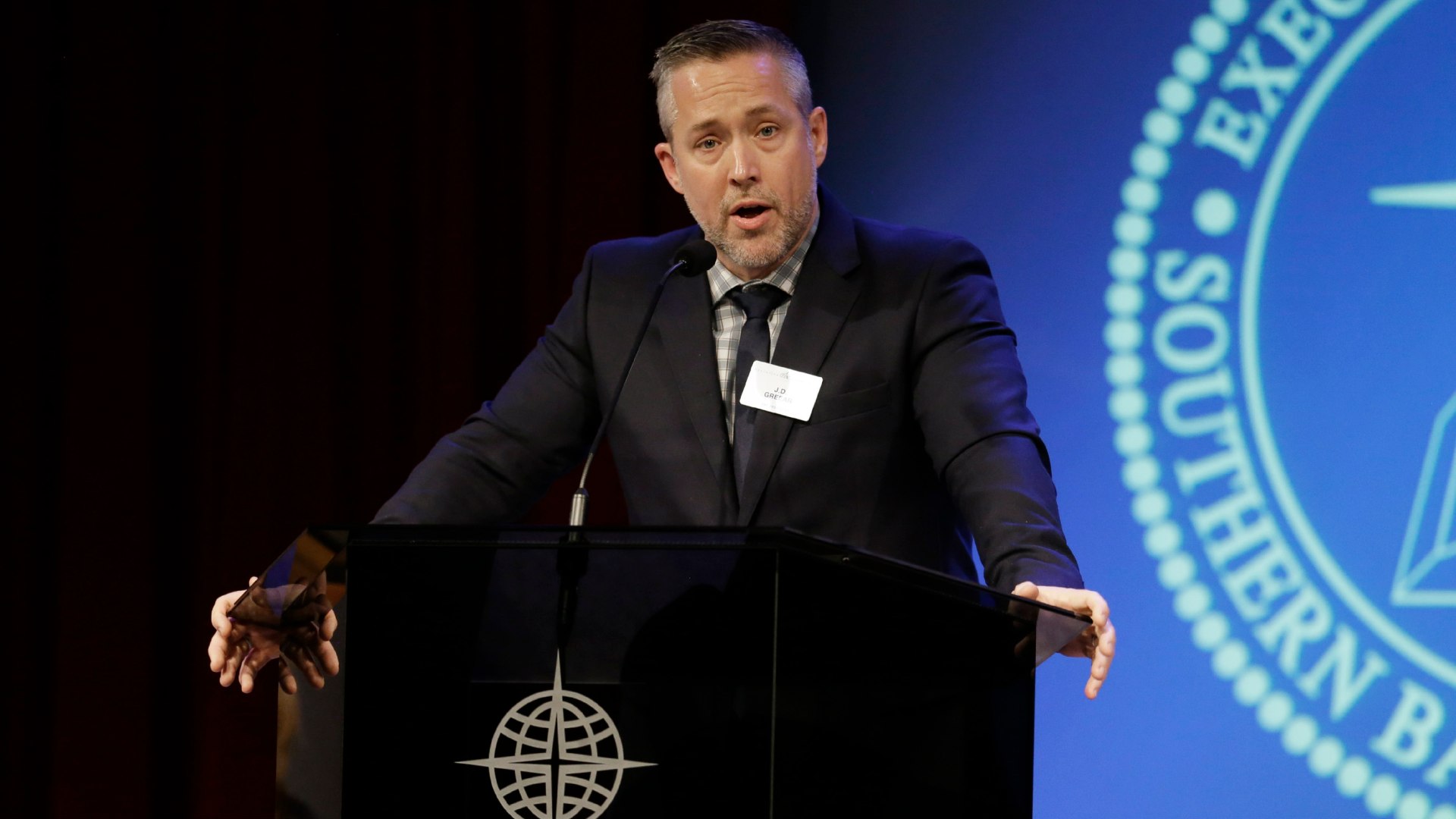
Last month, SBC president J. D. Greear announced “We Are Great Commission Baptists” as the theme for next year’s SBC annual meeting and said the Durham, North Carolina, church he pastors will employ the descriptor in lieu of identifying as Southern Baptist.

Great Commission Baptists has been an authorized descriptor of America’s largest Protestant denomination since 2012, when SBC messengers adopted the nickname by a 53 percent–46 percent vote. Though the idea has been floated and rejected over the years, it was not an official name change for the SBC, which took on the name Southern when separating from Northern Baptists over slavery prior to the Civil War.

Seminary president Danny Akin and SBC Executive Committee president Ronnie Floyd have also embraced the moniker. But others have given it a lukewarm reception. The newly formed Conservative Baptist Network within the SBC said its members support the 2021 annual meeting theme but reject “the idea that the name ‘Southern’ is racist” and oppose “any effort to change the name of the SBC that is simply a desire to pander to advocates of Critical Race Theory, Intersectionality, and similar ideas.”

In an email interview with Christianity Today, Greear discussed the theme and its implications for the SBC.

Why did you select the theme “We Are Great Commission Baptists” for the 2021 SBC annual meeting?

The Great Commission is what unites Southern Baptists, the reason we come together. We are more excited about going forward into 2025 than looking back to 1845. What unites us now is not a shared Southern heritage but a desire to see the gospel get to the ends of the earth. Our mission fields and, increasingly, our membership are outside the South. By every metric, Great Commission better captures the spirit of our convention than does Southern.

The convention officially voted on using this term in 2012 primarily to help churches and planters outside the Southeast. Today we are seeing a movement of churches and leaders in the Southeast putting this into practice at the grassroots level. Churches are free to use whichever term best serves their membership and the people they are trying to reach.

As our IMB [International Mission Board] president often says, “When the Great Commission isn’t the lead topic of conversation in our convention, the other topics divide us.” … Utilizing Great Commission Baptists is simply one more step to make clear we serve a risen Savior who died for all peoples, whose mission is not limited to one people living in one time at one place. Our Lord Jesus was not a white Southerner but a brown-skinned Middle Eastern refugee. Every week we gather to worship a Savior who died for the whole world, not one part of it. What we call ourselves should make that clear.

What do you hope will be the result of an annual meeting with this theme?

I would love to see our convention defined by the gospel and the Great Commission. The early church saw an influx of Jews and Gentiles, and much of the Epistles was written to help unite them around the things that mattered, those things of “first importance.” The church’s unity is not based in shared ethnic heritage, shared stylistic preferences, or shared political perspective. It’s found in the gospel. That’s also where our power is.

By God’s grace, nearly 20 percent of our churches are led by pastors of color. NAMB [the North American Mission Board] announced that leaders of color planted 63 percent of our new churches last year. For all three years of my presidency, one of my two vice presidents has been African American and the other Hispanic. By God’s grace, we are diverse and becoming increasingly more so.

Our Lord Jesus was not a white Southerner but a brown-skinned Middle Eastern refugee.

Did you have any reticence to use this theme because of potential criticism? If so, why did you decide to proceed with it?

Well, as noted, this is not a new action but rather embracing what the convention officially adopted in 2012. Its recovery has been a grassroots movement. President Bryant Wright championed it in 2012, and President Jack Graham before him in 2004. Recently, I saw First Baptist Church, Charleston’s pastor, Marshall Blalock, and their church’s announcement that they wanted to use the term. This is significant because of its history as the earliest Baptist church in the South, the very definition of a Southern Baptist church. Since then we have seen that many prominent South Carolina pastors are doing it as well. I know of many churches in North Carolina, Georgia, Alabama, Texas, and other southern states. Danny Akin, president of Southeastern Baptist Theological Seminary, has publicly announced that the school will use the descriptor as well.

Furthermore, I can’t see how any Baptist would be against saying “We are Great Commission Baptists.” Some have asked whether in doing this we are seeking to minimize our past sins—attempting to hide our past or avoid doing the hard work of changing our culture. That is not the intent. We are committed to being a convention defined by the gospel and the Great Commission—not a shared ethnic heritage, stylistic preference, or political perspective.

You mentioned in Baptist Press that you had received emails from around the country asking about using the descriptor Great Commission Baptists. How many such emails have you received, and why do the senders feel now is the time to begin employing the moniker Great Commission Baptists?

We did not count the number, but we did notice that starting in July, seemingly out of nowhere, people began writing to us and reaching out about this subject. Most mentioned what the convention voted on in 2012, that their church was doing it, and had questions about if our associations, state conventions, and national entities were using the name.

At your church, what does it mean practically that you will start to use the descriptor Great Commission Baptists?

It means how we refer to the churches and entities we partner with as calling them Great Commission Baptists. This fits the heartbeat of our church, a sending church, and we believe the heartbeat of every Christian. Jesus’ final command must be our first priority. Legally, the convention still bears the name Southern Baptist Convention.

Do you think the SBC should reconsider an official name change, or is employing the already-approved moniker sufficient for now?

I don’t know enough of the context surrounding the task force’s 2012 decision, so I can’t speak to the official name change challenges. Our church’s official name, for instance, is still legally Homestead Heights Baptist Church, even though we’ve been “doing business as” The Summit Church since 2003. If churches still want to refer to themselves as SBC, that’s fine. Whether in our name or only in our aspirations, we are all Great Commission Baptists. It’s why we come together.

David Roach is a writer in Nashville.

Ideas

The Courts Alone Can’t Protect Christian Colleges

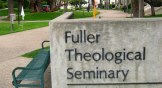
Fuller Seminary’s recent win is worth celebrating. But the legal rights of faith-based schools are still at risk.

Christianity Today October 14, 2020
WikiMedia Commons / Edits by Christianity Today

Last week brought good news for Christians and faith groups across the country.

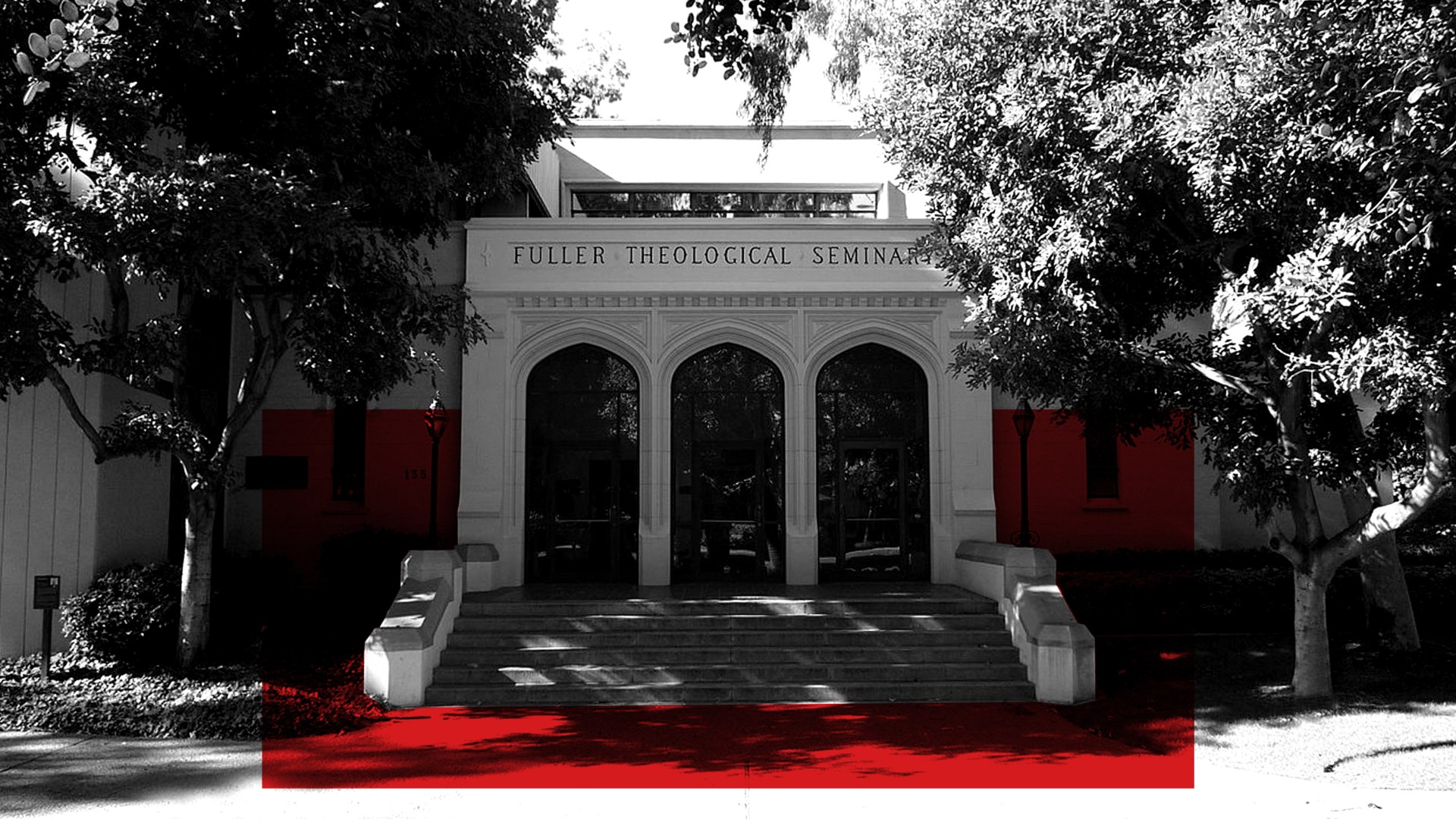
In Maxon v. Fuller Theological Seminary, a federal court ruled in favor of religious liberty and in so doing enabled the school’s unique Christ-centered mission. The case involved the ability of religious institutions to set admissions standards according to their sincere beliefs. While this historic decision is cause for celebration, it’s also a reminder that Americans cannot rely solely on the courts to defend their right to exercise faith in the public square. That’s because religious liberty is under continuous pressure, not only in the courts but in Congress and state legislatures as well.

As Christians, we must be vigilant and proactive as segments of society seek to dilute or eliminate the fundamental American principles that have shaped this nation, not only for our faith but also for all other faiths. That’s why we need a robust, multipronged, and nonpartisan strategy for defending religious liberty.

The Maxon v. Fuller case helps illustrate what’s at stake if we fail to act. As the president of the Council for Christian Colleges & Universities (CCCU), I took great interest in this case, knowing the outcome would directly affect the more than 140 colleges and universities that my organization serves. Maxon was just the latest in a string of lawsuits intended to force Christian schools to compromise their religious standards or be stripped of their accreditation, their tax-exempt status, and other government benefits widely available to other institutions.

In Maxon, the plaintiffs alleged that Fuller had discriminated against them for entering into same-sex marriages. This, they argued, was in violation of their rights under Title IX. But the court ruled in favor of Fuller because the Constitution, statutory law, and a long history of precedent altogether provide protections for religious organizations. In fact, both Title VII and Title IX include exemptions for faith-based institutions. Those exemptions allow them to set their own standards for hiring, firing, and admissions based on deeply held religious beliefs.

It’s worth noting that the codes of conduct at a religious institution are not just negative restrictions but instead set out mutual promises based on the school’s sincere biblical views. The standards are there to help faculty and students bring out the best in each other. The covenants are well publicized and agreed to voluntarily. Moreover, CCCU schools like Fuller strive to uphold their codes in ways that treats students with respect and understanding—as people who are made in the image of God and who often face real pain when they violate the agreed-to standards.

If the California court had not upheld the right to have these codes, the implications for religious higher education would have been disastrous. Hundreds of church-sponsored colleges and universities could have faced a Faustian bargain: either resist the law and lose federal benefits, or amend their student codes of conduct to conform to secular values and in so doing weaken the character and autonomy of religious institutions everywhere.

Fortunately, the Maxon ruling saves the integrity of religious education and keeps judges out of the uncomfortable—and unconstitutional—role of controlling how a faith group trains its own religious leadership. But this will not be the last attempt to eliminate the unique character of religious-based education. And while court cases are important, they are also unpredictable.

That’s why we should celebrate the Maxon victory but not be carried away by it. We should also keep in mind that Maxon will likely be appealed to a circuit court that could reach a different conclusion.

If we’ve learned anything from the past few decades of jurisprudence, it’s that we cannot depend on the courts to rule favorably on religious liberty issues when legislation doesn’t stand alongside to clarify the people’s intent. Consider the Supreme Court’s record under both Chief Justices Rehnquist and Roberts: For all cases that involved only First Amendment claims and not an accompanying statute, the Court has protected religious freedom only about 50 percent of the time—and that’s going all the way back to 1987.

Given the Court’s inconsistent record on these issues over the years, we must broaden our strategy to advance the cause of religious freedom across all three branches of government. This strategy entails a continued focus on the courts, yes. But it also entails devoting more time and resources to shoring up religious liberty in two areas where it often matters most: regulations and legislation.

On the regulatory front, executive agencies play a critical role. For example, the Department of Education recently issued a rule to clarify policies related to Title IX exemptions, including what it means to be “controlled by a religious organization.” This rule provides additional clarity for judges who will be asked to weigh in on questions regarding religious organization exemptions, making it more likely that courts will rule in favor of religious protections in the future. This regulation will also provide additional guidance to businesses and educational institutions to help them better comply with the law as it relates to religious liberty.

On the legislative front, there’s a lot of work to do—and it’s time we go on the offensive. For too long, we have been playing defense against opponents of religious liberty. The House of Representatives, for example, has introduced two bills that pose a direct threat to Christian organizations: the Equality Act and the Do No Harm Act (also introduced in the Senate).

As currently written, the Equality Act, which passed the House last year, would essentially gut the Title VII exemptions that protect religious employers and would impose undue burdens on religious schools. Meanwhile, the Do No Harm Act would all but neuter the Religious Freedom Restoration Act (RFRA).

RFRA passed Congress under the leadership of President Clinton with near-unanimous bipartisan support. It is arguably the most important religious freedom law of the last three decades—so important that Justice Gorsuch recently referred to it as a “super statute.” This statute is broader in nature than the First Amendment and therefore gives substantive protection to religious entities. Losing RFRA would be the biggest blow to religious freedom in years.

It’s not enough, then, to speak out against the Equality Act and the Do No Harm Act. We need viable alternatives. One such alternative is the Fairness for All Act, a bill introduced by Representative Chris Stewart that seeks to protect LGBTQ rights in employment, housing, and public accommodations while also guarding religious liberty protections in specific ways. This bill would preserve RFRA and protect religious schools’ tax-exempt status, student conduct codes, research funding, and right to hire.

In addition to advancing Fairness for All, lawmakers should pass legislation to ensure the continuation of Title VII and Title IX protections. This is one of the only ways to protect all religious institutions when they face legal challenges in court.

As Christians, it’s imperative that we move the push for religious liberty beyond the courtroom and into Congress and the executive branch. How do we do this?

It starts at the ballot box.

By electing officials—both Republicans and Democrats—who will push for religious liberty legislation and stronger regulations in federal agencies, we can protect the right to live our faith in the public square. To be sure, the challenge in front of us is daunting. We are swimming against a tide of growing secularism. But by taking a more proactive approach in the legal, legislative, and regulatory spheres, we can preserve religious freedom—and Christian education—for future generations.

Shirley V. Hoogstra is the president of the Council for Christian Colleges and Universities.

Speaking Out is Christianity Today’s guest opinion column and (unlike an editorial) does not necessarily represent the opinion of the publication.

Ideas

The Supreme Court Isn’t All Powerful

Staff Editor

When it comes to religious liberty, culture matters more than judicial rulings.

Christianity Today October 13, 2020
Pool / Getty Images

President Donald Trump’s nomination of Amy Coney Barrett to the Supreme Court was welcome news for many American evangelicals and social conservatives. Her confirmation looks likely.

In the hopes of Barrett’s supporters—and the fears of her critics—her addition to the court will dramatically alter its jurisprudence on social issues, particularly abortion. However, the reality of a 6-3 conservative court will probably be more mundane for a number of reasons, including that the most common SCOTUS voting pattern is 9-0, that Chief Justice John Roberts has adopted a strategic balancing role, and that a GOP-appointed court majority is no guarantee of conservative triumphs.

Moreover, if the rulings of the past five years are any indication, religious liberty far more than abortion is the social issue for which SCOTUS composition presently matters. But religious liberty advocates are deluding ourselves if we think the court is what matters most. Far more important is the fact that a chasm of incomprehension is widening between practicing Christians and other devoutly religious Americans on the one hand and the nominally religious and irreligious on the other. This cultural misunderstanding is politically dangerous, and adding Barrett to the Supreme Court will do nothing to halt its expansion.

Writing in his email newsletter about Christianity and masculinity in 2017, CT contributor Aaron Renn posited a three-part framework for thinking about the place of Christianity in American society. Before around 1994, he argued, we lived in a “Positive World,” where Christianity enhanced a person’s social status and breaking traditional Christian behavioral norms harmed it. Between 1994 and 2014, Renn said, we had a “Neutral World,” in which Christianity was no longer culturally dominant but religiosity was not a social disadvantage. Since 2014, however, Renn believes we’ve moved into a “Negative World,” where “being a Christian is a social negative, especially in high-status positions.”

I think this framework is too tidy in its history and too narrow in its consideration of American Christian experiences. (As another CT contributor, Matthew Loftus, has queried, “If you asked African-American Christians to assign dates for a Negative World, a Neutral World, and a Positive World, where do you think they’d put 1965?”) But I also think Renn’s scheme communicates something more substantive than the now-familiar statistics on the rapid decline of American Christianity and concurrent rise of the religiously unaffiliated .

The political result of the shift we’re experiencing can’t be grasped through a simple numbers game, where we check which demographics support which party and anticipate policy accordingly. It’s about a fundamentally different view of what religion is, and its area of greatest policy import is religious liberty.

For Christians, our faith is (or should be) the core determinant of our lives—in Christ “we live and move and have our being,” as Paul said in Athens (Acts 17:28). We ask God to “fill [us] with the knowledge of his will through all the wisdom and understanding that the Spirit gives, so that [we] may live a life worthy of the Lord and please him in every way: bearing fruit in every good work, growing in the knowledge of God” (Col. 1:9–10). Following Jesus is supposed to be all-consuming.

For many Americans, faith is a hobby and church a social club. And, given that view, a robust version of religious liberty doesn’t make sense.

But for many Americans, faith is a hobby and church a social club. And, given that view, a robust version of religious liberty doesn’t make sense. We don’t have “chess club liberty” or “soccer team liberty” or “wine mom liberty.” To elevate your hobby to competition with others’ human rights is indefensible and immoral, and doing so in the name of adherence to a religion centered on an act of self-sacrificial love comes off as hypocrisy, a selfish refusal to play by your hobby’s own rules.

A side effect of the COVID-19 pandemic is its revelation of exactly how far these two understandings of faith have diverged. In June, when debate over some cities’ suspension of pandemic assembly bans for the George Floyd protests reached a fever pitch, The Washington Post published an article quoting a Harvard epidemiologist named Ranu S. Dhillon. “Protesting against systemic injustice that is contributing directly to this pandemic is essential,” Dhillon told the Post. “The right to live, the right to breathe, the right to walk down the street without police coming at you for no reason … that’s different than me wanting to go to my place of worship on the weekend, me wanting to take my kid on a roller coaster, me wanting to go to brunch with my friends.”

For Christians, one of those three activities is very unlike the others. That’s not to say churches shouldn’t take pandemic precautions—I’ve written at CT that they should—but that’s not because church is merely a hobbyists’ meeting. The “striking point here is the blasé assumption that the decision to worship on the weekend is simply a consumeristic choice among a menu of options including theme parks and brunch dates,” wrote Brad Littlejohn at Breaking Ground. “[I]f the blood of Christ and a brunch mimosa are on par, then why shouldn’t we stop these particular consumers from engaging in pandemic-prone practices?”

I doubt most Americans would consciously equate church and brunch, but that’s no longer an outlier perspective (and service attendance habits may contravene stated opinions). New York City Mayor Bill de Blasio made similar remarks to a reporter from an ultra-Orthodox Jewish publication who asked why protests were permitted when gathering more than 10 people to worship was not. Dhillon’s comment is where the median of public opinion is heading, whether the “Negative World” label is fair or not.

The Supreme Court’s task is interpreting the Constitution, not culture, but for both good and ill, culture obviously influences its rulings. This past summer’s decision in Bostock v. Clayton County is a timely example: The textualist ruling said a 1964 employment law bans discrimination against LGBTQ workers, though no one imagines the legislation’s authors had that in mind. The cultural consensus has moved, and SCOTUS moved with it.

If the cultural shift away from faith in America continues, it will do so with or without a Justice Barrett. The Supreme Court can only do so much—and will only be willing to do so much—if the public conception of religion withers, because the value our society places on religious liberty meaningfully depends on that conception. If Christians and other religious people—Barrett during her hearings included—cannot better communicate to our fellow citizens the significance of faith in our lives, our governance will increasingly reflect the assumption that it is not very significant at all.

Bonnie Kristian is a columnist at Christianity Today.

Apple PodcastsDown ArrowDown ArrowDown Arrowarrow_left_altLeft ArrowLeft ArrowRight ArrowRight ArrowRight Arrowarrow_up_altUp ArrowUp ArrowAvailable at Amazoncaret-downCloseCloseEmailEmailExpandExpandExternalExternalFacebookfacebook-squareGiftGiftGooglegoogleGoogle KeephamburgerInstagraminstagram-squareLinkLinklinkedin-squareListenListenListenChristianity TodayCT Creative Studio Logologo_orgMegaphoneMenuMenupausePinterestPlayPlayPocketPodcastRSSRSSSaveSaveSaveSearchSearchsearchSpotifyStitcherTelegramTable of ContentsTable of Contentstwitter-squareWhatsAppXYouTubeYouTube