Ideas

That the World May Know: How I Pray for Armenia, Azerbaijan, and Other Wars

As my Armenian family grieves for Artsakh, John 17 offers a guide for all Christians to intercede for all conflicts.

We Are Our Mountains

We Are Our Mountains

Christianity Today October 13, 2020
WikiMedia Commons / Edits by Christianity Today

Editor’s note: CT’s complete coverage of Armenian Christians is here.

“The doves will fly again.”

These words, accompanied by a reference to Genesis 8:4, were superimposed on a photo of We Are Our Mountains, a monument made of volcanic rock depicting a tatik (grandmother) and papik (grandfather). This 1967 statue near Stepanakert is easily recognized as the symbol of the Armenian heritage of Artsakh, better known as the Republic of Nagorno-Karabakh—a region most Americans probably could not point out on a map. Today it is a bloody battlefield as Azerbaijan and Armenia fight over the land.

The conflict over which country has claim to Karabakh began a century ago, after the fall of the Russian Empire, and resurfaced after the fall of the Soviet Union. The history and politics embroiled in this battle are far more complex than I can explain or even comprehend. However, I understand the pain, grief, and discouragement of my people.

I am a Canadian-born Armenian who lost great-grandfathers in the genocide of 1.5 million Armenians living in Turkey between 1915 and 1923. Historically, Armenia has lost not only a great number of people, but much of the land that once belonged to it. An ancient nation that was once a great empire has been reduced to a fraction of its original territory—which once included Mount Ararat, the resting place of Noah’s ark.

The long caption accompanying the meme I saw on Facebook said that “defenders are holding firm to the land of Noah.” In 2013, I stood a few miles from the Armenia-Turkey border, gazing at Mount Ararat in the distance with tears in my eyes. What a loss to the country that was the first to adopt Christianity as its state religion, and one of the first to translate the Bible.

My family has been doing missions work in Armenia since my father’s first trip there in 2008. We have many loved ones there who have been checking in with us, almost daily, during the current crisis. Most of our friends and family members in Armenia have been living in dire straits for years. COVID-19 made things worse. Not being able to work means no rent money, no groceries, no medicine, no bus tickets. Could things get worse? Yes. Much worse.

One of my father’s cousins already had a son in the army and now her son-in-law, with a newborn at home, just got drafted. We have already heard from a few friends about the deaths of family and church members, as young as 19 years old, who were sent to Karabakh to fight. This is the world we live in—where people in power play political games while civilians lose their lives.

I’ve observed four reactions to this war:

Apathy: Information and entertainment overload, combined with the illusion of importance and busyness, makes me want to remain in my safe bubble, living in denial that other people are suffering. When I pay attention and learn of their plight, I need to do something, which disrupts my comfortable existence. Having connections outside of my safe space keeps me from slipping into apathy.

Despair: Whenever we get a new report from Armenia, my mother’s eyes fill with tears and her posture gives away her worry. Sensitivity toward others should rouse our emotions, but a soft heart should never give way to panic and fear. My mother turns to prayer and asks how she can help, but we’ve seen others break down emotionally or make rash decisions that could endanger lives or result in the mismanagement of resources. Trusting God to intervene and guide keeps fear at bay.

Bitterness: As Christians, we must forgive our enemies. But even among Armenians who know this, there is residual bitterness toward Turks for past and present injustices. I see it all the time in social media posts and comments: anger that goes beyond loyalty to our land and culture. Given our painful history, this is understandable; however, there should be no room in a Christian’s heart for hatred.

Compassion: My friend Emma, who can barely make ends meet in Yerevan, especially when her paychecks are delayed for months, lost her mother a few months ago. She has difficulty walking because of a botched surgery and is visually impaired. Yet Emma is taking in refugees from Artsakh—mothers with small children who have no place to go—or finding other host families for them. Emma has been following Christ for only about seven years and has no church family to disciple or encourage her, yet she serves each person she meets as if he or she were Jesus Himself.
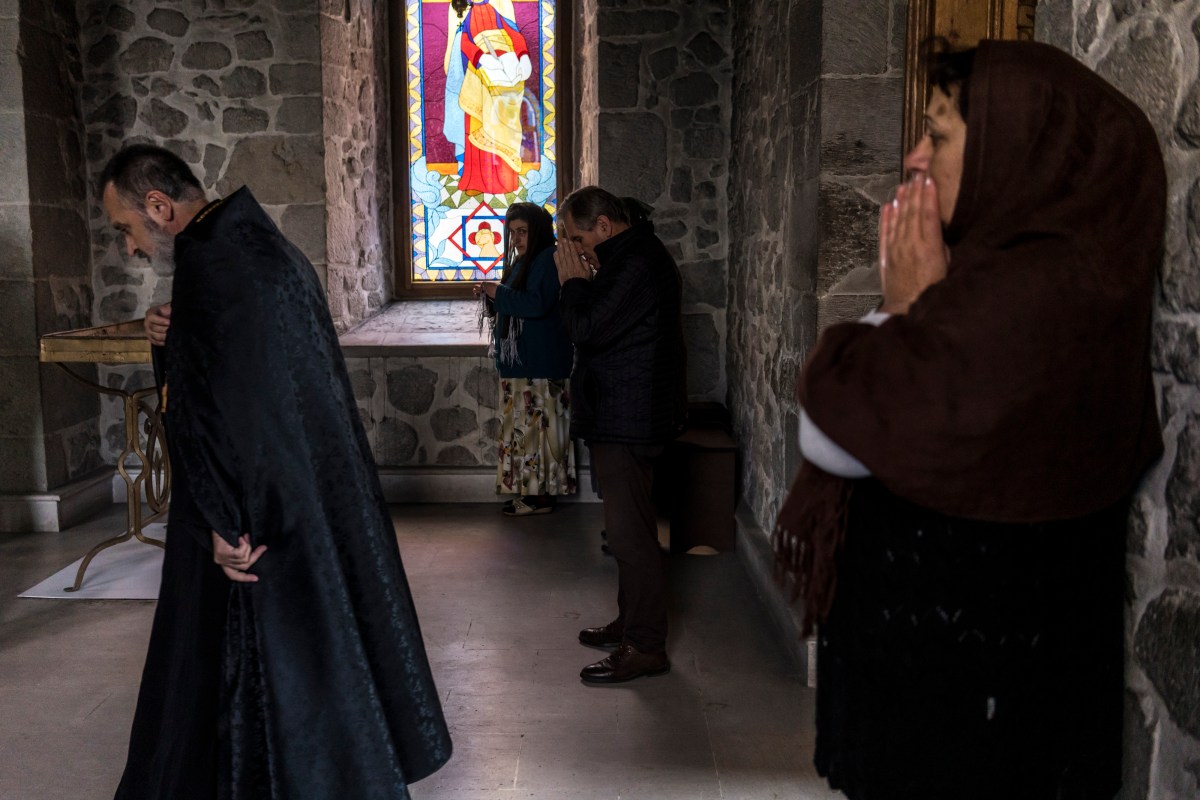
People gather for an evening service at the Kanach Zham church on October 2 in Shushi, Nagorno-Karabakh.Brendan Hoffman / Getty Images
People gather for an evening service at the Kanach Zham church on October 2 in Shushi, Nagorno-Karabakh.

More than a Hashtag

Whenever there are natural disasters, terrorist attacks, or gross injustices, the immediate response around the world seems to be reduced to a hashtag, some variation of either #prayfor[country] or #[group]livesmatter. At first glance, these seem like appropriate responses; however, I wonder how helpful they are, ultimately.

Pray for what? Pray how? Why? Do we see God as a cosmic genie who will grant our wishes on call? Do we expect God to bring about world peace or to free us from problems and pain? Do our prayers make us feel better about ourselves because we’re not as bad as those evil oppressors? (I can’t help but think of the Pharisee who thanked God he wasn’t like the tax collector mumbling a prayer a few feet away from him.) Does the Bible even tell us to pray for peace? What do our prayers say about the state of our hearts?

I’ve been asking myself these questions because I need to know how to pray about this war, which hits so close to home. As an Armenian Christian, do I expect God to protect Armenia because it is a Christian nation? Do I believe Armenians, as individuals, are more innocent than Azeris—more loved by God, more deserving of His protection? Do I pray for God to bring harm to the Azeris and Turks? Do I pray for God to end the fighting? Do I pray that Armenia wins the war? Do I pray for God to protect all the soldiers? Do I pray for God to save all the Armenians in Karabakh? Do I pray for world peace?

These conundrums drive me to John 17, the perfect example of intercessory prayer.

Before his arrest and crucifixion, Jesus prayed for himself, for his disciples, and for all believers. His prayer addressed specific needs and his requests were aligned with God’s Word and will, not with his own desires or those of the people and culture around him. He did not pray for the whole world (v. 9) but for his followers, for their unity (vv. 11, 21–23), for their joy (v. 13), for their protection from the evil one (vv. 11, 15), for their sanctification (v. 17), and for their witness (vv. 21, 23). He prayed for Christians to be united—not so that their lives would be comfortable and problem-free, not so that they could resist persecution, not so that they would agree on political and social issues, but for one purpose alone: that the world may know God’s love and that he sent Jesus (John 17:23).

This purpose should be central to every prayer, every action, and every word of every believer. Nothing more and nothing less. Whatever we do must be in the name of Jesus, not in the name of our country, race, religion, or political party. Jesus never asked his followers to pray for or promote world peace. He said, “Do not suppose that I have come to bring peace to the earth. I did not come to bring peace, but a sword” (Matthew 10:34), and “Do you think I came to bring peace on earth? No, I tell you, but division” (Luke 12:51). In Matthew 24:6–7, he told his disciples not to be alarmed by the reality, even the necessity, of war. We may not be called to pray for world peace, but we are called to live peaceably (Hebrews 12:14), to have peace in the Lord (John 16:33; Romans 5:1), and to point others to the Prince of Peace (2 Corinthians 5:20).

I need to first pray that my heart is right with God and that I am ready to love my neighbor and my enemy, no matter the cost to me. I need to pray thoughtfully and sincerely for specific people I know who are affected by this situation. I need to pray for believers in Armenia, Azerbaijan, and Turkey to remain faithful and courageous, and for believers in the West to wake up and recognize the spiritual warfare going on every day, right in their own homes and communities.

Wars like this one have been happening for millennia. We can’t stop them. But we can be salt and light to the world around us and respond to such situations with a Christlike manner: with wisdom, compassion, love, and mercy.

Ann-Margret Hovsepian is a freelance writer, author, and illustrator in Montreal, Canada. She serves at Temple Baptist Church and Joseph Hovsepian Ministries.

Speaking Out is Christianity Today’s guest opinion column and (unlike an editorial) does not necessarily represent the opinion of the magazine.
News

Former Liberty Athletics Official Wrestles for Virginia Congressional Seat

Bob Good rallies pastors and fellow Trump supporters with what he calls “biblical conservatism.”

Christianity Today October 13, 2020
Caroline Brehman / CQ Roll Call via AP Images

Update (November 4): Bob Good won his congressional race and is now the representative-elect for Virginia’s 5th congressional district.

Editor’s note: This profile is the first in a CT series featuring evangelical candidates from both parties who are running for Congress in November.

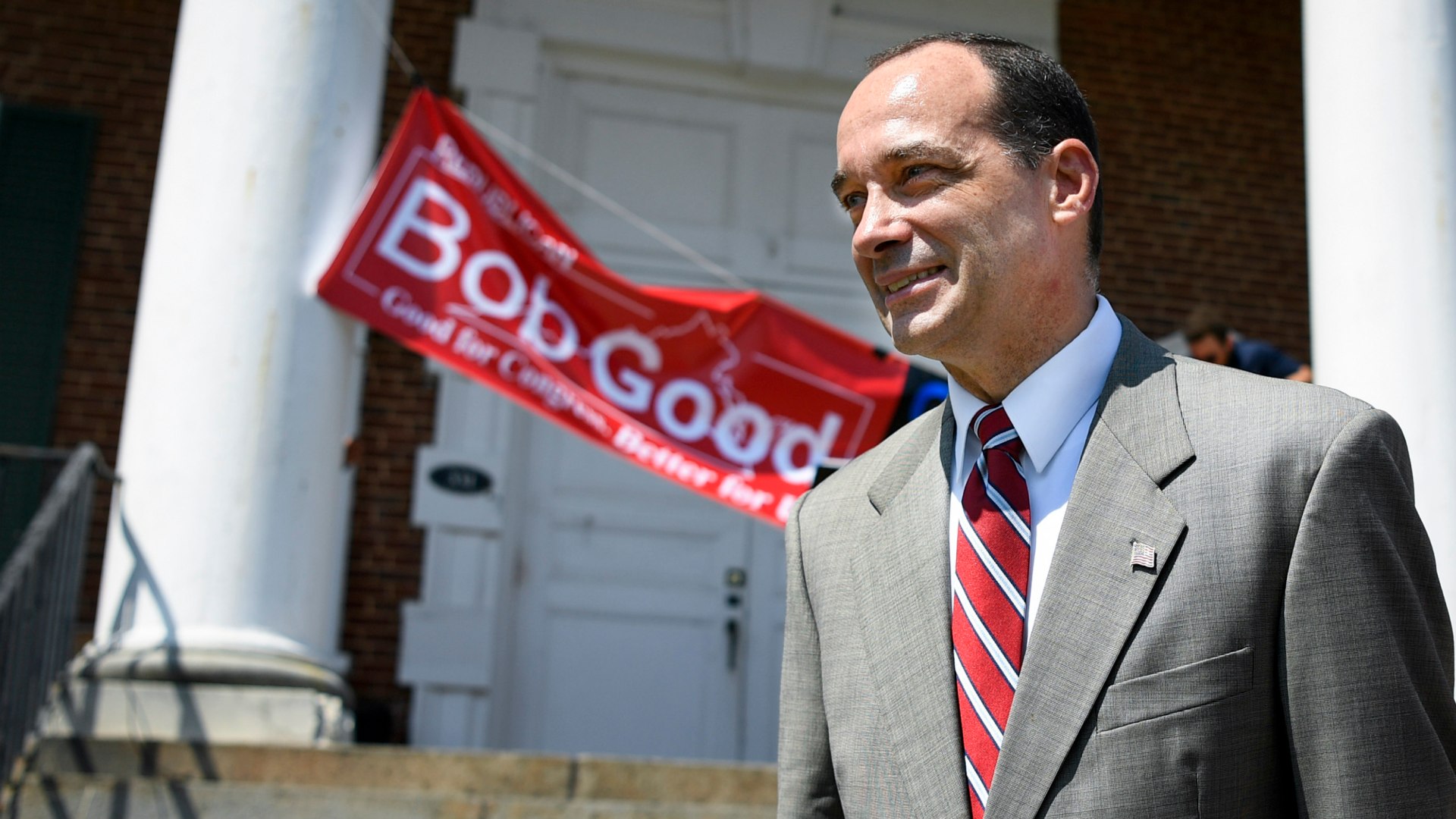
Bob Good has the kind of name begging to be on a political sign. He’s “Good for Congress,” after all (and even “better for us” according to his slogan).

Good, who calls himself a “biblical constitutional conservative,” is the Republican nominee for Virginia’s 5th Congressional District this November. The district went big for President Donald Trump in 2016. Most analysts project Good, a first-time Congressional candidate and endorsed by Trump, will defeat Democrat candidate Cameron Webb.

Neither Good nor Webb are VA 5’s incumbent, however. Before last summer, first-term Republican Representative Denver Riggleman was expected to keep his seat. But in July 2019, Riggleman officiated the same-sex wedding of two of his former campaign volunteers. When word got out, the local county Republican Committee passed a unanimous vote of “no confidence” in Riggleman. Two months later, Good launched his own campaign.

“I challenged a sitting Republican incumbent to give conservative Republicans in our district a choice … between a more moderate Republican, who was brand new, in his first term, versus a true conservative,” Good said.

Trump originally backed Riggleman (in fact, Trump gave his “Total Endorsement” on Twitter). Throughout the primary battle, Riggleman and Good sparred publicly over which was the most enthusiastic Trump supporter. Ultimately, in a pandemic-era drive-by district convention last June, Good beat Riggleman with nearly 60 percent of the vote.

VA’s District 5 is the state’s largest geographical district. It also may be one of the most socially diverse. It includes the campuses of both the University of Virginia in Charlottesville and Liberty University, Good’s alma mater (and former employer), in Lynchburg.

Good spent 15 years working for Liberty as a senior associate athletic director and executive director of the athletics’ booster club, which means he was the chief fundraiser for the Christian university’s sports program. It’s a particular skill, fundraising—and in today’s political world a necessary one for anyone seeking office.

But more than his role as the Liberty Flames Club president, Good credits the sport of wrestling with preparing him for this job. He wrestled at Liberty on a partial scholarship and met his wife, Tracey, a cheerleader, there. “There’s a saying in the sport that once you’ve wrestled, everything else in life is easy,” Good said.

Good grew up in Lynchburg and has spent much of his life orbiting Liberty, founded by the late Jerry Falwell Sr. Good said when his parents moved to Lynchburg decades ago so that his father could attend seminary, the Falwell family helped support them financially.

“My family was like thousands of other families in the Lynchburg area who felt uniquely special to Dr. Jerry Falwell,” Good said. He became a born-again Christian at nine years old in the pews of Thomas Road Baptist Church, where Falwell Sr. was the pastor. Those years were difficult, he said, because his family struggled for money while his dad attended school and his mom raised four boys close in age.

Controversy has swirled around Falwell’s son and successor, Jerry Falwell Jr. The university’s board of trustees ultimately asked for Falwell Jr.’s resignation in August after news broke that Falwell’s wife had an affair with a young business associate, who said Falwell knew about the sexual relationship over several years. Good wouldn’t comment on Falwell’s behavior but said Liberty’s “best days are ahead.” “I look forward to the board of trustees selecting a new president who will fully embrace the mission of the school in their personal life,” Good said.

The Falwell family has long been political. Falwell Sr. was cofounder of the Moral Majority movement, which mobilized conservative Christians to political action in the 1980s. Falwell Jr. has been an outspoken supporter of President Trump.

Another Falwell son, Jonathan, now serves as pastor of Thomas Road Baptist Church where Good and his family remain members. In a tweet last March, Pastor Falwell called Good his “good friend” and said he’d do “an amazing job supporting and protecting conservative values” for Virginians.

Still, Good said the Falwell family had no influence on his decision to run for political office—at least outside of his role as a Liberty University wrestler.

In a campaign ad, a gym-clothes-clad Good wrestles his son repeatedly to a gym-floor mat. “In Congress, I’ll take down the bad ideas from Pelosi and the liberals,” Good promises the camera. Every “bad idea” gets a “pin”: government-run healthcare. Defunding the police. The Green New Deal. “I’ll put liberal ideas in a headlock,” Good said, with just a hint of a smile.

Good said his childhood, marked as it was by financial need, helped shape his belief in the essential role of the American government: “It should be limited, and it should be a facilitator of our freedoms and our rights to life, liberty, and the pursuit of happiness,” Good said. “Pursuit being a key word there, by the way.”

Good calls the Bible his “guiding personal true north,” a designation he gives “on a political level” to the US Constitution. He says whenever he’s asked how he will honestly “represent everybody” given his strong Christian faith, he points to America’s founders.

But it’s a quote from one founder in particular—John Adams—that Good has memorized: “Our Constitution was intended for a moral and religious people and is wholly inadequate to the governance of any other,” said Adams, circa 1798, as quoted by Bob Good, 2020.

“All of the principles outlined in the Declaration of Independence and our founding documents were spoken first in the pulpits,” he said. “It’s the pastors and the churches that led the Revolution.”

Good organized a handful of campaign events specifically for pastors, discussing his positions and emphasizing religious liberty issues for churches. He gained endorsements from fellow Christian Carol Swain, the retired Vanderbilt University political scientist who serves as an adviser for Black Voices for Trump, and Travis Witt, a Virginia pastor and Tea Party leader.

Good’s policy positions—both the “for” and the “against”—strike at most major Republican buzzwords: As a Christian, he calls the “sanctity of life from conception” a “personal priority.” He wants to put “American workers” first.

He sees these stances as a way to live out the biblical teachings he believes in and “the Judeo-Christian values on which our nation was founded.” He said his faith also motivates him to challenge what he sees as socialist priorities on the Left.

“This belief that America is illegitimate … that America is an evil, racist nation … and then an attack on faith and the traditional family, an attack on religious freedom … this is what’s at stake in this election,” Good said.

Good has high praise for Trump’s nominee to the Supreme Court, Amy Coney Barrett, and high praise for Trump in general. “I judge those in office by what they do, and the president has done what he said he would do,” he said.

He applauded Trump’s decision to attend the March for Life, the country’s largest pro-life gathering, held in Washington, DC. He says Trump is a champion for religious freedom, for the southern border, and for Israel.

“I believe while the president isn’t perfect, as I am imperfect … I do believe the president has been the best friend to people of faith certainly in my lifetime,” Good said. He thinks the president will win in November.

Though the two have never met in person, Trump attended a “tele-rally” for Good a few weeks ago and has officially endorsed him now that he’s his district’s Republican nominee.

Good’s blue-checkmark Twitter feed includes niceties from a pre-Trump political era (“I was grateful today to meet … I’d like to thank … Today we visited …”), but you can also see echoes of the president’s trademark brashness in Good’s campaigning. When Good defeated Riggleman in the Republican primary and Riggleman questioned the legitimacy of the drive-by vote, Good said, “That’s what losers say.”

Nevertheless, Good says his political bid hasn’t changed anything about him personally. “We kind of live our lives just like we did before the race,” he said of his family. “Our desire … is to make him known, to glorify him, and to influence others for eternity. … It’s been a great journey. We’ve enjoyed most of it.”

News

Amid COVID-19, Pro-Lifers Push to Avoid Abortive Fetal Cells in Medicine

Despite the ethical challenges, most still concede to using old cell lines in life-saving drugs.

Christianity Today October 13, 2020
Alex Brandon / AP Images

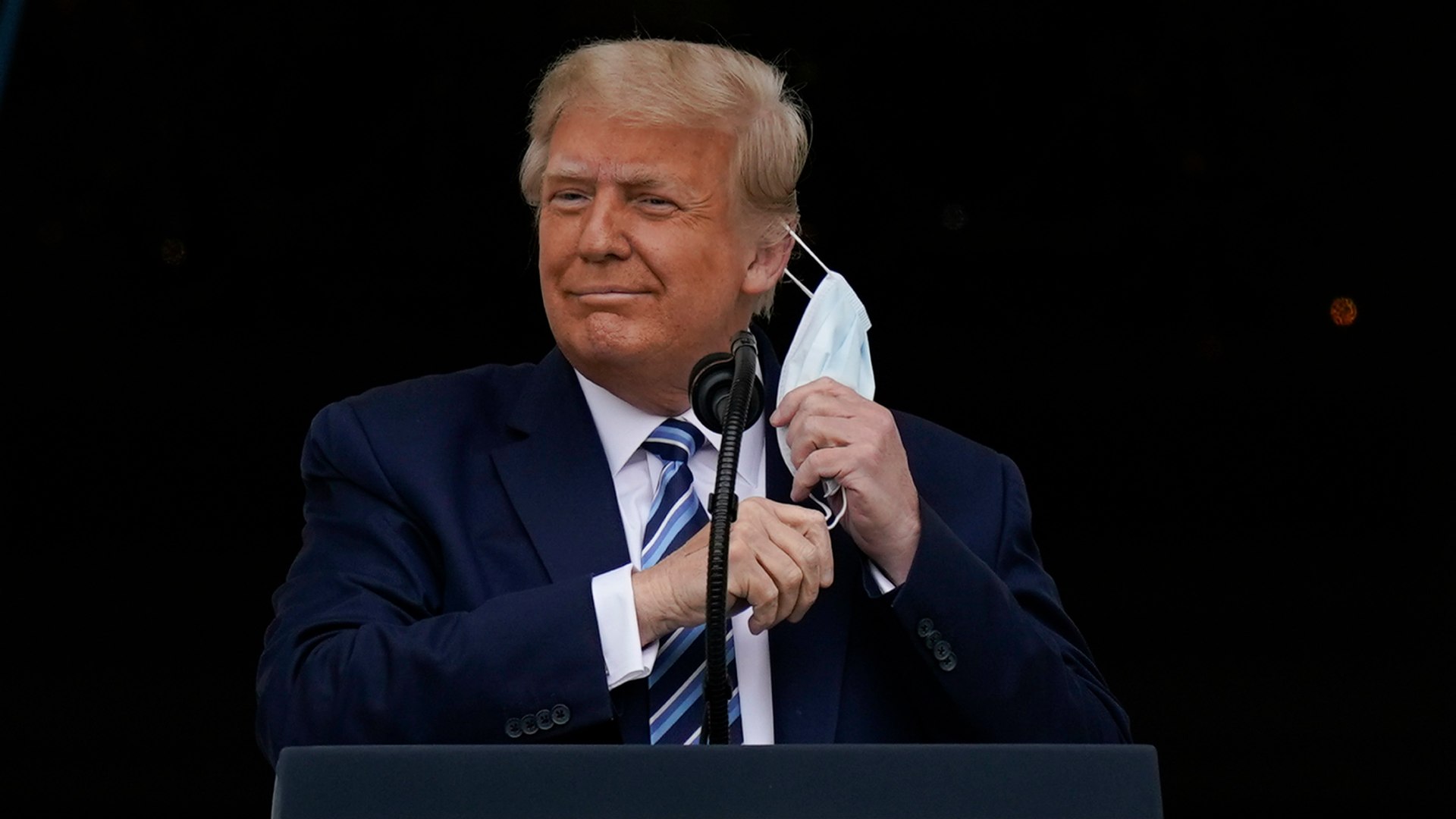
President Donald Trump has praised the treatments he received for the coronavirus, including an experimental COVID-19 drug cocktail, as “miracles coming down from God.” But in the week after his hospitalization, some questioned the president’s endorsement of the medication—which he says he wants to make more widely available for free—since it was tested using aborted fetal tissue and his administration promotes a pro-life platform.

This is an ethical dilemma that pro-life Christians have wrestled through long before the coronavirus. Given the role of old fetal cell lines in more than half a century of vaccine development—including options for a COVID-19 vaccine—many have been able to reconcile the use of fetal tissue from decades-old abortions while opposing the use of fetal tissue from new abortions for further testing.

That’s actually the current position of the Trump administration as well. Last year, the US Department of Health and Human Services (HHS) announced plans to discontinue research “that requires new acquisition of fetal tissue from elective abortions,” though it will still allow the use of abortive fetal tissue through older cell lines, of which there is plenty in supply.

Trump’s treatment included an antibody developed by Regeneron Pharmaceuticals, which used a fetal tissue cell line from an abortion in the 1970s to test the efficacy of the drug. Several COVID-19 vaccine candidates also use this cell line.

The actual drug cocktail contains two antibodies. The first uses embryonic mouse stem cell lines—not human ones—genetically altered to contain human antibodies from previously recovered patients, a research technique often termed “humanized mice.” The second antibody is produced in hamster cells.

The Charlotte Lozier Institute, affiliated with the pro-life Susan B. Anthony List, deemed it an “ethical treatment” because of the composition of the drug. The institute has not advocated against the use of animal stem cells.

As far as the testing, “there are ethically derived cell lines that could be used instead,” said David Prentice, the institute’s vice president and research director. “It’s disappointing that they chose to do the tests with the old fetal cell line.”

But Lozier, like other religious groups that oppose abortion, sees a distinction between testing a treatment using the old cell lines and using abortions to obtain further fetal tissue for research.

Researchers sought fetal tissue from elective abortions dating back to the 1960s, creating cell lines that are still used today, after having been multiplied in a lab and frozen. Two of these older fetal cell lines are used mainly to manufacture vaccines, including those for rubella (in the MMR) and chickenpox. The other two are immortalized cell lines, meaning they will grow continuously. Some of these are used in current COVID-19 vaccine candidates.

The Lozier Institute tracks pharmaceutical companies’ use of these abortive cell lines in the development, production, and testing of COVID-19 vaccine options; some use them throughout the development process, and others only in testing.

Prentice felt that the same reasoning for the moral good of vaccines holds true for the Regeneron treatment the president received.

Though a growing number of individual Christians refuse vaccines on moral grounds, many institutions, such as the Southern Baptist Ethics & Religious Liberty Commission and the Catholic church, support immunizations while acknowledging their dismaying history. They make the case that the use of older fetal cell lines, while not ideal, is not creating additional harm. As the Catholic church concluded for vaccines: Beneficiaries of the drug are not culpable in the original sin of the abortion.

In a previous CT interview, Francis Collins, the director of the NIH and a committed Christian, suggested comparing it to an organ donation after a tragic shooting, saying that the giving of tissue would still be considered “a noble and honorable action” even though we acknowledge an evil was done.

An evangelical Protestant, Prentice weighs other ethical questions against arguments to refuse vaccines: “Is there a grave reason to use it (such as preventing death or serious illness)? If yes, is there any alternative?” If not, he says, people should feel free to ethically receive the vaccine or drug in question.

The Catholic church wrote that doctors and families may determine it necessary to use vaccines developed using the fetal cell lines to prevent illness and death. It suggested that they also have a duty to oppose the use of the fetal cells and pressure the medical industry to use alternative methods.

Prentice offers a similar support. “Future directions for use of fetal tissue from ongoing abortion will hopefully be to move swiftly to better, modern techniques that do not use fetal tissue from elective abortion,” he said.

While most pro-life groups remain unenthused about the use of the abortive tissue in the COVID-19 vaccine candidates, as with other vaccines, they have not suggested people to refuse treatments or immunizations that are developed with the cell lines.

Prentice, who joined the first fetal tissue ethics board formed by a presidential administration, said those who feel the use of abortive fetuses is morally repugnant “should also feel a duty to advocate for a licitly-produced alternative.” That board includes many others who have publicly expressed pro-life views.

Per the new direction of the HHS, the board met in July to review present-day research proposals requiring acquisition of fetal tissue. It recommended only one proposal out of 14, though final decisions lie with the HHS. The recommended proposal—approved by two-thirds of the board—planned to use existing tissue, and if successful, wouldn’t require its future use.

The criteria the board used included review of the procedures for informed consent, which were not satisfying to some members in a number of cases. Though there are National Institutes of Health procedures in place today, to some, lack of consent tainted the process of obtaining the original fetal cell lines.

Some also raised issue with an NIH call for research proposals that originally required scientists to use fetal tissue to compare their treatment with alternatives. “This was an unfortunate specification, as there is neither ethical nor scientific justification for a specific fetal tissue comparator,” said Prentice, suggesting there are other possibilities.

Kathleen Schmainda, a Catholic and a biophysicist at the Medical College of Wisconsin who also served on the ethics board, said that alternatives “are proven to be scientifically viable and often scientifically preferable.”

She pointed to the list of COVID-19 vaccine candidates in trials that do not use fetal tissue cells as evidence that scientists are preferring not to use them in some cases. For example, several Chinese vaccine candidates use vero monkey cells. The Moderna and Pfizer candidates use no cells in the design or production instead creating the vaccine with a genetic sequencing on computers, though they use fetal cell lines in lab testing.

One avenue for ethically obtaining fetal tissue could be the use of banks that maintain fetal tissue from miscarriages, said Schmainda. While some scientists will say they prefer abortive fetal tissue because it is healthier, Schmainda maintains that most miscarriages are due to pregnancy complications, not genetic abnormalities.

Board chair Paige Comstock Cunningham, who is also the interim president at Taylor University, could not be reached for comment. The ethics board is dissolved each year. If President Trump is reelected, a new ethics board will assess proposals in coming years.

News

Gambia’s New Sharia-Friendly Constitution Fails. But Christians Are Still Concerned.

Though pleased with the draft’s overall democratic reforms, leaders are frustrated that “Christian rights do not matter” in the West African nation.

Former Gambian President Yahya Jammeh

Former Gambian President Yahya Jammeh

Christianity Today October 12, 2020
Andrew Burton / Getty

The Gambia almost had a new constitution.

Instead, the English-speaking, sliver-shaped West African river nation—known for Muslim-Christian coexistence—will return to the 1997 constitution instituted by former dictator Yahya Jammeh and amended by him more than 50 times to entrench his power.

One year before being deposed in 2016 by popular protests, Jammeh declared Gambia to be an Islamic state.

The new draft constitution would have imposed term limits on the president, guaranteed religious freedom, and forbidden any future declaration of a state religion.

Muslims comprise more than 9 in 10 Gambians, totaling 2 million. Lamin Sanneh, the Muslim-born Gambian theologian who died last year, praised his nation’s participation in a tradition of “pacifist Islam.”

Yet many of the nation’s Christians, who comprise only about 5 percent of the population, still feel like they dodged a bullet.

“Truly important positive changes were made in this [draft] constitution,” said Begay Jabang, a member of the Gambia Christian Council (GCC) campaign team, naming the separation of powers and the strengthening of the legislature. “This would have been a significant step forward given the history of our nation.

“But at the same time,” she said, “provisions were introduced in the judiciary that would have changed the face of our nation, moving it down the path of an Islamic state as Jammeh did before.”

The official GCC statement outlined the changes in detail, and was blunt in its assessment.

“The deafening silence of [political leaders] to the concerns we have repeatedly raised,” it stated, “has been read as a message that ‘CHRISTIAN RIGHTS DO NOT MATTER [sic].’”

Current head of state Adama Barrow was elected as an interim president as a consensus choice between the coalitions that deposed Jammeh, and he pledged to serve no more than a three-year term.

In 2017, the National Assembly created the 11-member Constitutional Review Commission (CRC), and over the three years that followed conducted 106 meetings throughout the country.

The government also conducted an extensive transitional justice process, where Muslims and Christians alike testified to human rights abuses.

Christians lamented specifically the Islamic turn under Jammeh’s administration.

Their cemetery in the capital of Banjul was threatened with closure. The veil was made mandatory, even in Christian schools. Arabic inscriptions were written on public institutions. Mosques were constructed within government buildings. And some official figures—including the former president—publicly disparaged the Christian religion.

But despite his promise, Barrow reneged and declared himself a candidate for president in upcoming elections. And lawmakers from his party and allied coalitions voted against the new constitutional draft, ensuring it did not reach the required threshold of 75 percent. Not only did the draft place term limits on the presidency, it retroactively counted Barrow’s now four years in office.

Scheduled for referendum in 2021, the new constitution would likely have passed. According to AfroBarometer, 87 percent of Gambians agreed with term limits, and 86 percent favored legislative approval of cabinet appointments.

But concerning to many Christians were religious modifications that may have run against the grain of widespread political support.

Asked to choose whether they preferred their nation be primarily governed by religious or civil law, 60 percent of Gambians signaled “strong” support for civil law, and 70 percent overall.

But in the draft constitution, historic Muslim family law courts were renamed “sharia courts” and given jurisdiction over Christians in interfaith marriages and families. They were also established at a Supreme Court level, parallel with the common law system.

Christians also noticed that the constitution did not “entrench” a section related to the Laws of the Gambia which includes common law, customary law, and sharia. Currently, sharia is limited to family law, but it could be amended in the future to include banking and criminal law.

Altogether, they counted the word sharia 44 times in the draft.

In contrast, the word secular was removed altogether.

“I want Gambia to live in peace, which is a religious peace,” said Omar Jah, the Gambian pro-vice chancellor of the Islamic University of Technology in Dhaka, Bangladesh. “[Peace] was natural, and we developed it in the absence of the word secular.”

Jah, who previously served 14 years in the University of Gambia, was a member of Concerned Citizens, a group that advocated keeping the term secular out of the draft constitution. It was one of Jammeh’s illegal amendments—prior to his Islamic state turn—and to them represented a foreign secular agenda meant to transform Gambia’s traditional religious nature.

Christians agreed it was an illegal insertion. But the CRC’s initial mandate was to “safeguard and promote Gambia’s continued existence as a secular state.”

After initial protests, and the intervention of Thomas Schirrmacher, the World Evangelical Alliance general secretary for interfaith religious freedom, the GCC decided to focus on the content of “secular,” rather than the term itself.

Gambia is in the middle of two global agendas, secular and Islamic, said the German theologian. For the former, his foreign minister pressured politicians to tie German aid to Gambia on its support for same-sex marriage, before relenting.

Schirrmacher’s visit was providential. He arrived in Gambia on the last flight to leave Germany before COVID-19 restrictions shut the airports.

“We convinced them they will not win if they insist on secular and no sharia,” said the WEA leader, whose connections to Gambia trace back to childhood when his parents supervised missionary outreach.

“If they drop this, they can win the moderate Muslims.”

Convinced, the GCC entered into partnership with leading Muslim figures in Gambia, providing a joint statement to the review commission in March. They suggested alternative wording for the concept of “secular,” and clarification on the version of “sharia.”

This led to the joint creation of their interfaith platform “Sunu Reew,” which means “Our Country” in Wolof, the national language.

Up until the last minute, they petitioned the CRC, Barrow, government officials, and the National Assembly to take up their concerns. Muslims also wanted to retain the freedom to access the civil courts for personal status, if they so desired.

Some consideration was given, but the expanded sharia language remained.

“Where are we headed as a country, when one particular religion is being entrenched in the constitution, dividing rather than uniting us?” said Lawrence Gomez, the Gambian associate regional secretary for the International Fellowship of Evangelical Students.

“But God, in his way, paused the process to allow us as a nation to reflect on this national document, from our conscience and not our fear.”

And now, after three years and $2.2 million, Gambia returns to square one.

Disappointed religiously, Jah is glad that at least the term secular is now off the table.

Disappointed politically, Gomez is glad that at least the Muslim-Christian issues are now being discussed.

Jabang is disappointed about how the constitutional process divided what was once a more united people. But even in failure, it has finally brought Christians and Muslims to the table of dialogue to have mature conversations about religion, politics, and the future direction of the nation. Each had stayed in its separate world for too long, she said.

Politicians are divided about what to do next. Suggestions include piecemeal amendment of Jammeh’s constitution, another effort at rewriting, and reviving this draft effort before parliament.

The GCC has recommended that the government form a team of “competent, objective, unbiased professionals” to resolve disputed passages.

The European Union, meanwhile, urged Gambia to form a “new social contract” with a “new constitution at its core” before the 2021 presidential elections. Calling the vote a “setback,” the bloc urged completing the reforms necessary to entrench democracy, human rights, and the rule of law.

The EU made no mention of sharia, but did emphasize “national consensus.”

So with their nation in political limbo amid both domestic and international pressure, Gambian Christians remain concerned.

“We should all take a pause, think deeply, and come back to the table of dialogue,” said Jabang, “in order to find a win-win solution for our people.”

Correction: An earlier image showed Nigerian president Muhammadu Buhari arriving for a meeting with Gambian president Yahya Jammeh, instead of Jammeh himself. CT regrets the error.

Theology

Justo González: Seminaries Need More Latinos

The theological education crisis is not financial. It’s demographic.

Christianity Today October 12, 2020
Portrait Courtesy of InterVarsity Press / Edits by Mallory Rentsch

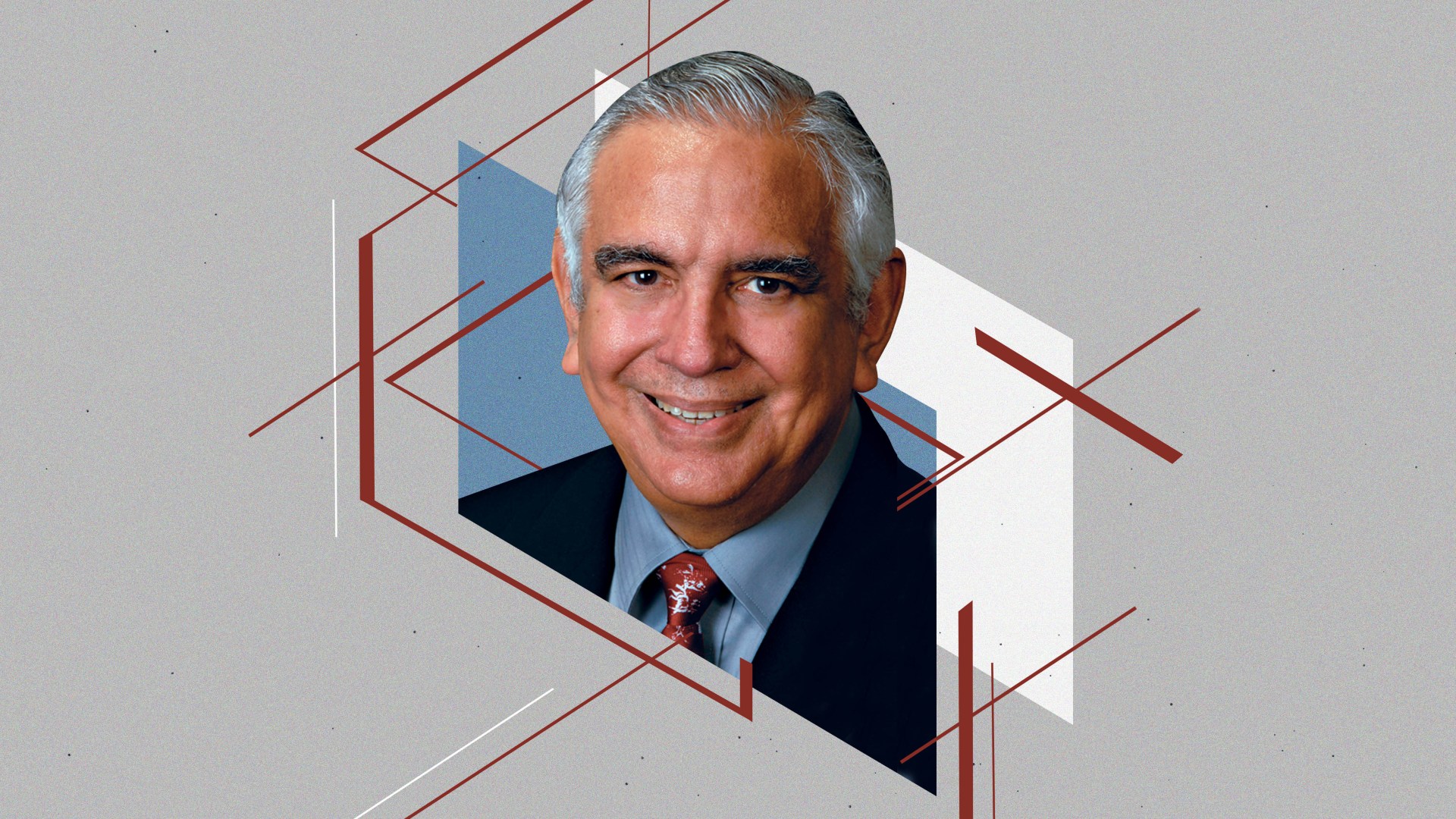
Over Cuban coffee and a meal, theology professor Benjamin Wayman discussed recent developments in theological education—particularly among Latino pastors—with church historian Justo González at his home in Decatur, Georgia. Acknowledging past and present failings of theological education in the North Atlantic, González identified promising paths for reaching more pastors on a demographic and global scale.

Could you describe the nature of your work for the church here in Decatur, Georgia, and abroad?

I consider myself first of all a pastor, even though I don’t pastor a church. I try to write as a pastor, pastoring both the church and other pastors. I quit teaching full time in 1977; I taught 16 years before that. My main occupation since that time has been twofold. One has been to write; the other has been to try to develop agencies and systems to support the theological education of Hispanics and Latinos.

What is the main focus of the Hispanic Theological Initiative?

The Hispanic Theological Initiative is mostly concerned with producing people who are capable of teaching and reading at the highest level of theological education (PhDs or similar degrees). It has been very, very successful. When I went to [American Academy of Religion conferences] back in the ’70s and the early ’80s, it would be a great joy to see friends I didn’t see frequently. We were a handful. When I resigned from teaching, I was the only Latino faculty member at any Protestant seminary in the country. When I go now, the joy is to see so many people I don’t know, Latinos I don’t know, mostly the result of the HTI. The HTI has made a tremendous impact.

There’s still a lot to do. I think the statistic is that approximately 4 percent of the faculty of seminaries in the US, including Puerto Rico, are Latinos and Latinas. Now, the Latino population is between 16 and 17 percent in the country. The representation is about one-quarter what it ought to be. Christianity is probably more central to the identity of Latinos, and so it should be even more, but 16 percent should be the goal. So, the HTI is very important.

How has your vocation as a writer shaped your work?

Most of the things that I write are addressed to people in the church, or at least leaders in the church, but not peers. Sometimes I’ve been surprised by some of the things I did. Some years ago, a retired United Methodist missionary went to Peru and asked them, What is it that you really need here? Oddly enough, somebody there said, “We need the works of Wesley in Spanish.” What surprised me was I thought we were doing this for libraries and a few seminaries, and so I expected them to purchase a few hundred copies or so. The first edition was exhausted in a few months. It’s a sign of the thirst of the people. Wesley is not easy reading. And somehow people wanted this sort of material.

The book of mine that has sold most is called in English The Story of Christianity. That was originally written in Spanish in ten little books. My goal was, there are all these pastors and leaders in Latin America who do not have to read church history, who ought to know something about church history, but they’re not going to read any big book or anything that somebody tells them, “you have to read this.” So, I wanted to write a history for these people that they’ll start reading and get interested, and people read it.

Your Story of Christianity is great, and it does history from the margins too, from “above and below,” as you put it.

Part of what I wanted to do was bring the history of world Christianity together—that’s the history of Christianity. It’s not the history of what happened in Europe. There were several agendas in that book written for Latin America. One was what you just mentioned: from the margins—a gospel that invites change. That calls for action in society and so on. Another was an ecumenical agenda—I wanted all these Protestant pastors to admire and learn about the martyrs, about Augustine, about Chrysostom, and about the bad things too—about their whole inheritance. Basically, what I have tried to do in most of those things is to make things as popular as possible without oversimplifying them.

What do you make of the current challenges facing theological education in the United States?

There is a tremendous crisis in a number of Association of Theological Schools accredited seminaries. They tend to think the crisis is financial, but I don’t think so. Especially with denominational seminaries, I think the crisis is demographic. What’s happening is that the churches that have traditionally required seminary for ordination are not growing. The only such church that’s growing is the Catholic church, and that has nothing to do with educational processes; it has to do with immigration. But demographically, the historic Protestant churches in this country are not growing. You have all these institutions that were built in the ’50s. For a time, they were growing, and now they’re competing with one another. That’s a crisis.

They’re doing some things to try to deal with the demographic issue. They have Hispanic programs and Korean programs, and some have African American studies. Obviously, we have a couple of very important seminaries that are mostly African American, but in general, the seminaries that belong to the white traditional denominations are having to subsist and to find ways of serving a population that is no longer of that denomination, or to reduce their services and classes enormously.

The problem I see in all this is that most seminaries are doing this on the cheap. What they’re doing is putting together these students [who have decades of pastoral experience] with the MDiv students whose setting or place in life is very different. That’s the next crisis I see coming for seminaries that are following that pattern.

You have written that very few mainline Christian universities and seminaries are embracing Latinos into their communities of education. Why do you think that’s the case?

That’s beginning to change. The last three or four years, Latino enrollment in colleges has skyrocketed in the sense of percentage. It’s still very small, but compared with what it was a few years before, there’s been a big difference.

For a number of reasons, the vast majority of Latinos in the country do not have the exact academic requirements that colleges, universities, and seminaries require. First of all, a BA is a very expensive proposition. Secondly, if you’re from a Latino family and you get a BA, you’re probably the very first one in your family who gets it. And probably in order to do that, there have been many people that have made great sacrifices. At that point you cannot tell [your family], “Well, you know, you’ve made all these sacrifices but I’m going to go to seminary for three more years and then I’m going to be a pastor and I’m going to make such and such a salary, [so] I’m not going to be able to help my sister go through college.” There’s a certain [family] obligation, and seminaries do not want to accommodate that kind of situation, and very often they can’t.

We want to give people the opportunity to come to seminary who, for a number of reasons, can’t get a BA—they don’t have one and can’t get one. And the church needs trained pastors. The best way to provide these pastors with training is to develop this juncture.

What role does elitism play in these institutions in refusing the gift of Latino students?

What you see mostly is in the lines of admissions and recruitment. If you’re going to recruit students for seminary, you go to colleges. With Latinos, you will have to recruit in churches. That’s where the people really are. You have to be able to work with their issues: “Okay, I’m working, I have a job, I cannot move.”

Obviously, there’s a question of what do we (the seminary) have to offer? In other words, you bring Latino students, [but] you have no Latino professors. The other side of that is if you do have a Latino professor then there’s a question of any issue that has to do with Latinos at all ends up at your desk. I’ve had that experience myself. Any minority, in my case, who had any question, ended up on my desk and I had to get involved. Mostly because you are more believable to the people who are feeling diminished or excluded or treated unjustly. And also, because if there’s something harsh that has to be done and you do it, then they cannot say racism. But that professor does not have the time to really do what other professors need to do at the school.

What’s the current shape of theological education?

The church is doing more in other countries than it’s doing here—or in Europe, even less. And yet so many of the academic and educational resources are still in the North Atlantic: the big libraries, the big publishing houses, the big networks of communication. All that is basically still in the North Atlantic. If you are a person in Congo who has finished all of the theological education that is there and you really want to learn more theology, you need to go to Europe or the US. It’s beginning to change, but you have to do that. And there’s a sense in which that does make sense still, but the question is how is that asymmetry going to affect each of the two sides? What happens when Yale, Harvard, and so on have the good libraries, but don’t have the students?

Do you have any final remarks about theological education from the perspective of a professor of the church?

I think that theological education is becoming less standard. All kinds of options are open. And that’s scary, dangerous, and wonderful. It used to be that all seminaries had were all three-year programs, and they all came after the BA, and then you had to do all the things to get in there. Now you have all kinds of diverse things popping up everywhere. I say scary because some of the things I find on the internet are horrible. And people can take horrible courses. But it’s also tremendous. I think in some ways what is happening is part of what happened in Europe around the Reformation. This machine has just been invented that can produce thousands of books and now people can have books and people can read them on their own and you can no longer control them. A lot of junk was published too; the cheaper the press became, the more junk was published. Well, the same thing is happening with the internet. And how do we react to it? You cannot suppress it; you cannot make a list of forbidden books. The only option we have is the other option: to offer a better use of the internet. To be able to develop a serious, acknowledged, recognized, and at the same time creative, enjoyable, and applicable theological education by distance is fantastic.

Benjamin Wayman is the James F. and Leona N. Andrews Chair in Christian Unity and associate professor of theology at Greenville University, as well as lead pastor of St. Paul’s Free Methodist Church in Greenville, Illinois.

News

Died: José María Silvestri, Pastor Whose Small-Group Ministry Discipled Argentina

Founder of Iglesia Evangélica Misionera Argentina died of COVID-19.

Christianity Today October 12, 2020
Portrait Courtesy of Iglesia Evangélica Misionera Argentina

José María Silvestri, who founded the Iglesia Evangélica Misionera Argentina (IEMA) and promoted a small-group model for Christian growth in Latin America, died on September 23. The 73-year-old church leader had contracted the new coronavirus.

Silvestri and his wife, Mabel, founded IEMA (the Argentine Evangelical Missionary Church) in 1984. The church put an emphasis on grupos de crecimiento (“growth groups”): intimate weekly gatherings of about five people, which allowed for intense and sometimes transformative discipleship.

“It is in the growth group where people affirm their identity as children of God,” Silvestri wrote, “where they have a closer authority figure, the teacher whose authority was delegated by the pastors, and who can truly evaluate their spiritual growth.”

Today, the denomination has more than 2,000 ministers inside and outside Argentina. IEMA also has a radio station, a TV channel, several schools, and a medical clinic.

“He loved everything God allowed him to do,” said Andres Christian Scott, a childhood friend who became his right-hand man in church leadership. “Everything was special to him and required his full attention and effort. Pastor Silvestri had an outstanding work ethic and didn’t have a conversation topic that was not related to spreading the gospel by any means possible.”

Silvestri was born in 1947 in Rosario, the third-most populous city in the country. He began attending a Protestant church at age 12 and went into ministry in the Salvation Army. He was passionate about meeting not only the spiritual needs but the social and physical needs of his community.

IEMA’s first service was humble: A group of 25 met in Silvestri’s parents’ house. But the intimate gathering soon became a key part of IEMA’s ministry model. The growth groups provided extensive support for members who wanted to grow in their faith. Many people struggling with alcohol or drug addiction found the groups empowered them to change their lives.

Individual spiritual growth led to church growth, too.

“Back in the ’80s, the growth of the congregation was exponential. Entire families were reached through small home groups, and this had an impact on the city,” wrote Rubén Proietti, president of Alianza Cristiana de Iglesias Evangélicas de la República Argentina (The Alliance of Evangelical Churches of the Republic of Argentina). “The work with youth groups was remarkable. Lots of ‘metalheads’ quit drug addiction and later became church leaders.”

Silvestri’s small-group ministry never gained the same popularity as those of some of his contemporaries, such as Korean pastor David Yonggi Cho and Colombian pastor César Castellanos. But he was one of the main proponents of small-group discipleship in Argentina and the growth groups had a lasting impact on the thousands of people who joined them, said Juan Hector Herrera, a fellow pastor and frequent collaborator.

“He had like a little over 3,000 groups in the country [and] those groups continue to work in other countries as well,” said Herrera. “If you are a member of his congregation here in Argentina, in El Rosario, and you move to the United States, you don’t leave Pastor Silvestri’s church. In the new home that you have in the United States, you continue there with the ‘growth group’ and you start new ministries there.”

Despite the growth of the church and the success of the TV station—expanding to reach 10.5 million homes in 17 countries—Silvestri still seemed, in some ways, like any other minister. His greatest joy, according to his friend Scott, was to walk down the aisle in a church auditorium and greet as many people as possible. Silvestri leaves behind Mabel, whom he married at age 19, as well as 4 children, 17 grandchildren, and a number of great-grandchildren.

News

Court Dismisses LGBT Anti-Discrimination Lawsuit Against Fuller Seminary

The California school can uphold its sexual standards policy under a religious exemption to Title IX regulations.

Christianity Today October 9, 2020
Kristen Harvey / Flickr

A US district court has sided with Fuller Theological Seminary against two students who claimed the school violated anti-discrimination laws when it expelled them for being in same-sex marriages.

This week, the Central District of California blocked a lawsuit from Joanna Maxon and Nathan Brittsan, who were each dismissed from Fuller for failing to comply with the seminary’s sexual standards policy, which holds that marriage is between one man and one woman and bars homosexual conduct.

The Becket Fund for Religious Liberty, which represented Fuller, says the court’s decision—the first of its kind for a seminary—strengthens constitutional protections for faith-based institutions that want to apply religious standards to their community.

Becket senior attorney Daniel Blomberg called it a “huge win” for religious higher education, ensuring religious institutions rather than the government will be “deciding how to teach the next generation of religious leaders.”

Maxon and Brittsan sought Title IX protections, claiming they were dismissed in 2018 and 2017 based on sex and sexual identity and each requesting $1 million. The court ruled that Fuller, as a religious organization enforcing its beliefs on marriage, fell under a religious exemption to the federal anti-discrimination law.

“The Sexual Standards Policy limits its definition of marriage to a heterosexual union and prohibits extramarital sex. [Fuller] interpreted this policy to mean that same-sex marriages violate the religious tenets of the school,” Judge Consuelo Marshall wrote on Wednesday. “The Court is not permitted to scrutinize the interpretation [Fuller] gives to its religious beliefs.”

Maxon had completed three years of coursework online before the school saw her wife listed on tax returns. Brittsan, an American Baptist Churches USA minister, had requested a name change after getting married the summer before he began course work.

Paul Southwick, the attorney representing Maxon and Brittsan, previously told CT their case “could set an important legal precedent that if an educational institution receives federal funding, even if it’s religiously affiliated, even if it’s a seminary, that it’s required to comply with Title IX prohibitions on sex discrimination as applied to LGBT individuals.”

Fuller officials referred to Becket to comment on the case. A release from the firm said:

As a religious educational institution, the seminary has the First Amendment right to uphold specific standards of faith and morality for the members of its Christian community. Federal civil rights law has affirmatively protected this fundamental constitutional right for decades. Until now, no court had ever been required to apply those laws to protect a seminary. Fuller’s win helps protect religious schools nationwide.

Fuller is the largest interdenominational seminary in the country, with 3,500 students enrolled at its headquarters in Pasadena, its campus in Texas, and online.

News

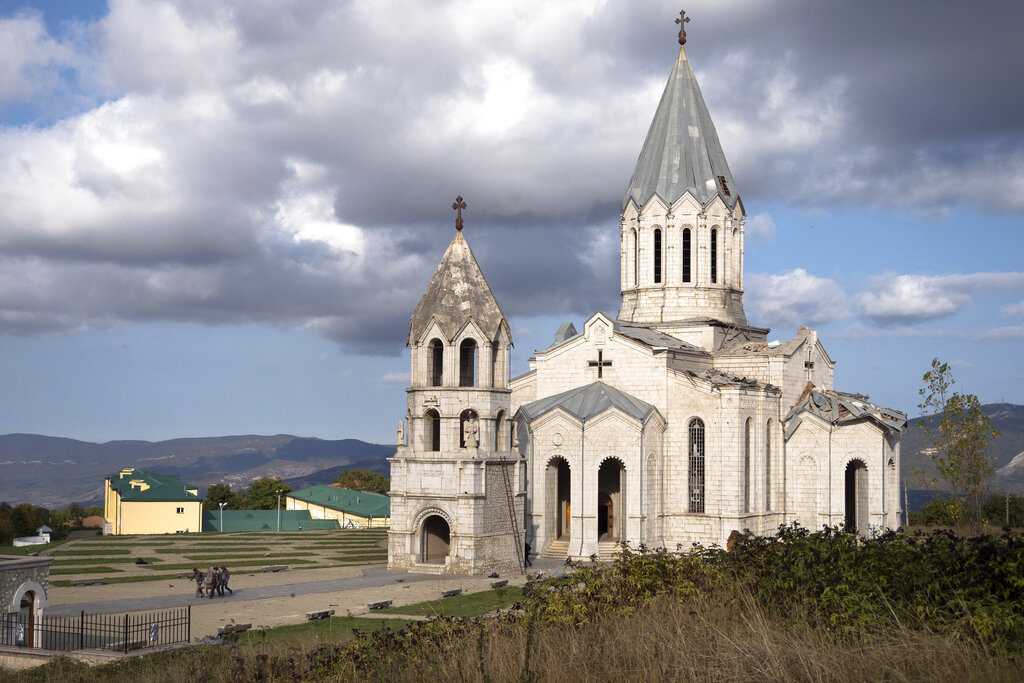
Symbolic Armenian Church Shelled in Clashes with Azerbaijan

Dome and interior of Ghazanchetsots (Holy Savior) Cathedral in Nagorno-Karabakh suffer damage.

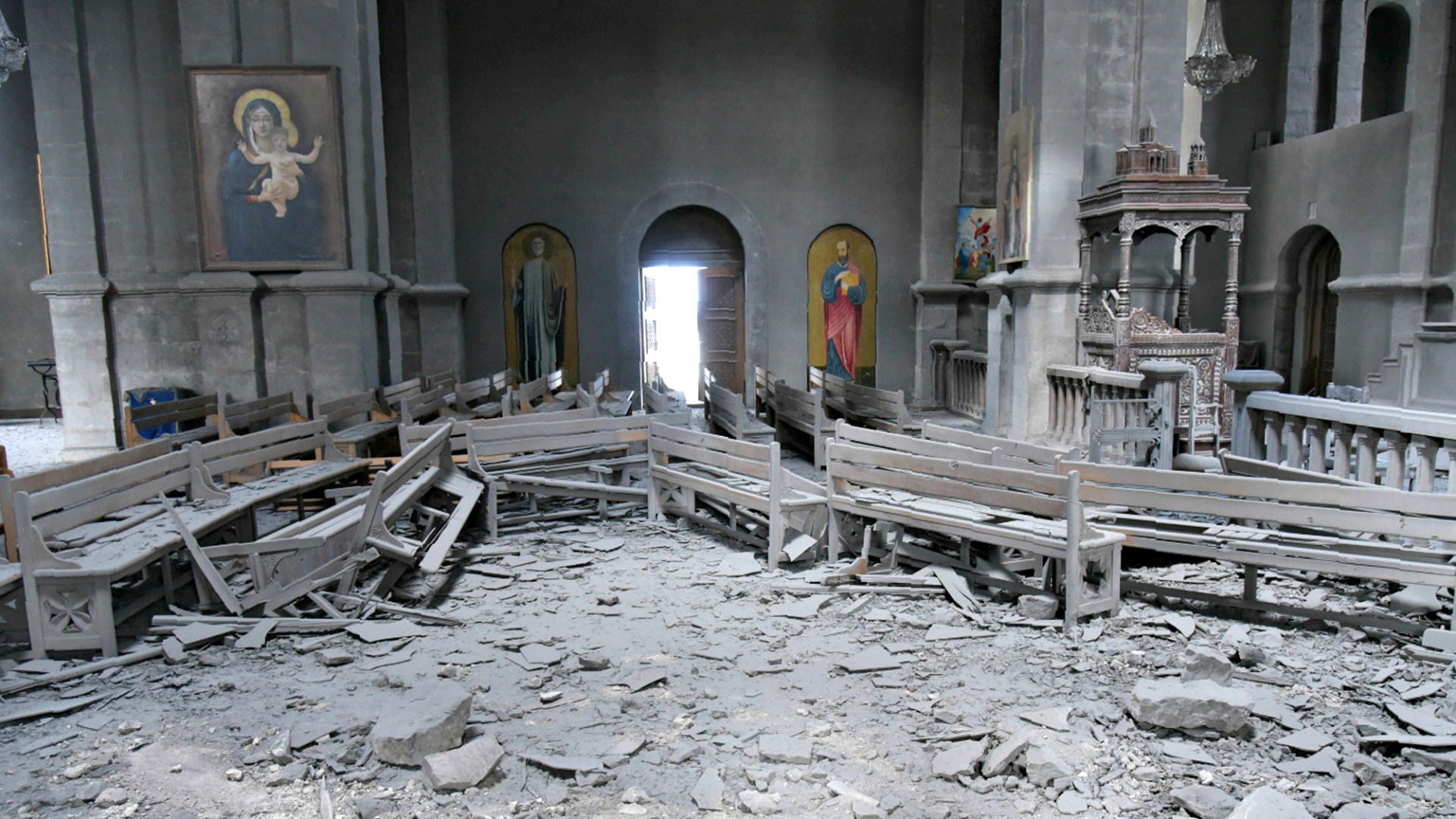
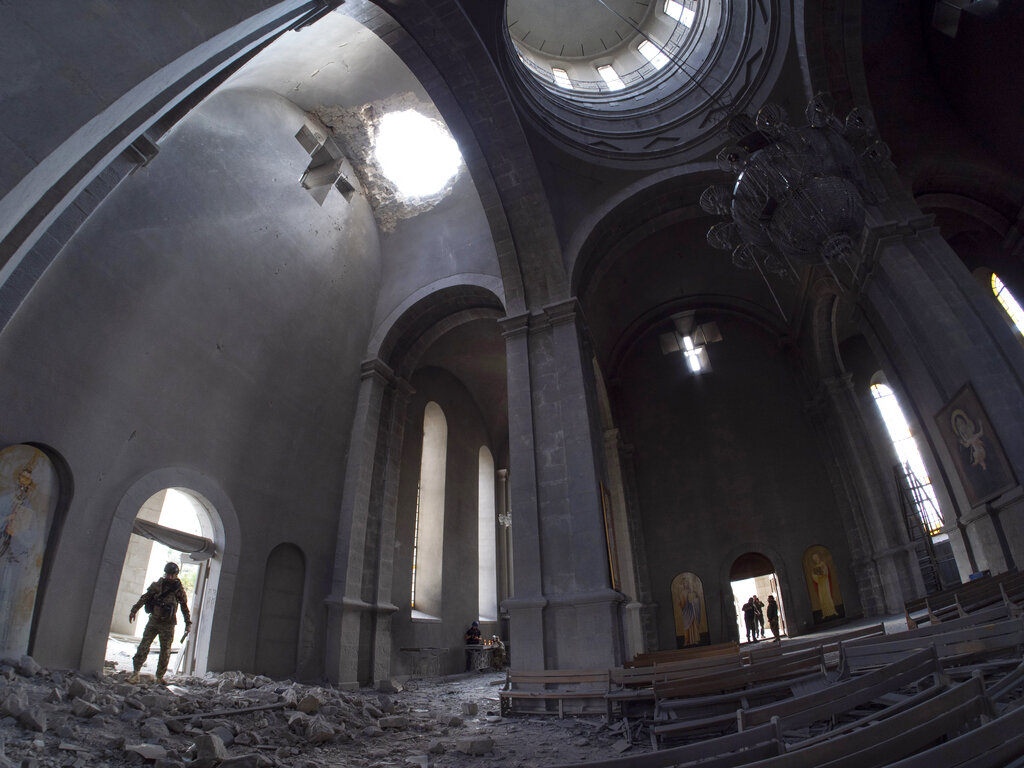
An interior view of the damaged Ghazanchetsots (Holy Savior) Cathedral in the city of Shusha, some 15 kilometers from the Nagorno-Karabakh province's capital Stepanakert, on October 8.

An interior view of the damaged Ghazanchetsots (Holy Savior) Cathedral in the city of Shusha, some 15 kilometers from the Nagorno-Karabakh province's capital Stepanakert, on October 8.

Christianity Today October 9, 2020
David Ghahramanyan / NKR InfoCenter PAN Photo via AP

Editor’s note: CT’s complete coverage of Armenian Christians is here.

YEREVAN, Armenia (AP) — Armenia accused Azerbaijan on Thursday of shelling a historic cathedral in the separatist territory of Nagorno-Karabakh, where nearly two weeks of heavy fighting has killed hundreds of people.

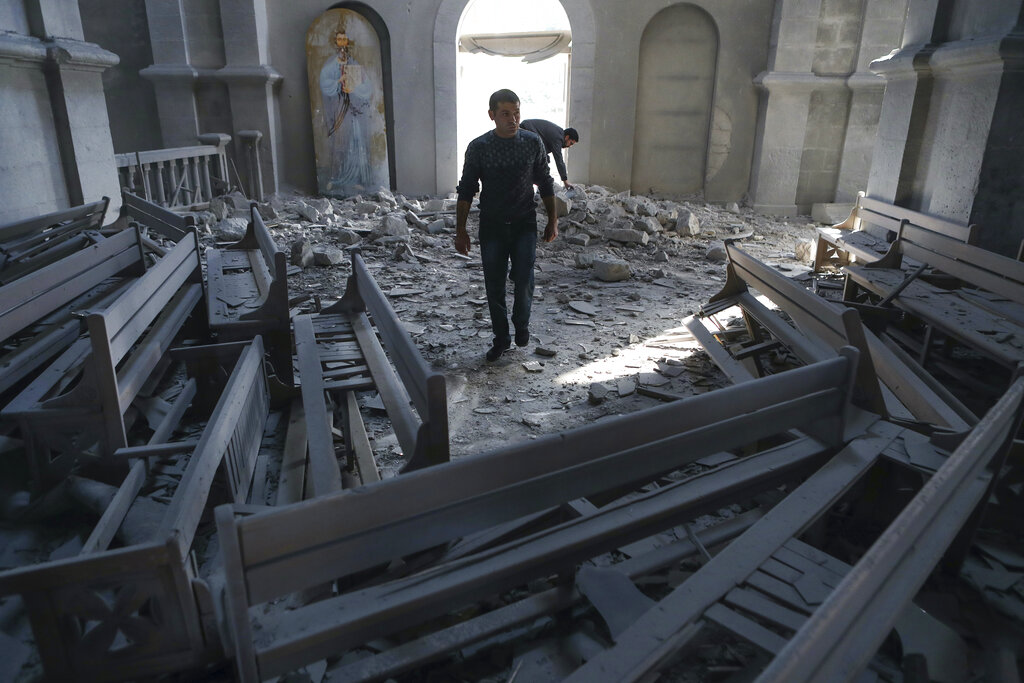
The Holy Savior Cathedral, also known as the Ghazanchetsots Cathedral, had its dome pierced by a shell that also damaged the interior.

Media reports said some children were inside the cathedral in the town of Shusha at the time of the shelling, and although they were not wounded, they suffered from stress after the attack.

Hours later, the cathedral came under more shelling that wounded two Russian journalists, one of whom was hospitalized in grave condition, according to Armenian officials.

The Armenian Foreign Ministry denounced the shelling as a “monstrous crime and a challenge to the civilized humankind,” warning Azerbaijan that targeting religious sites amounts to a war crime.

Azerbaijan’s Defense Ministry denied attacking the cathedral, saying its army “doesn’t target historical, cultural and, especially, religious buildings and monuments.”

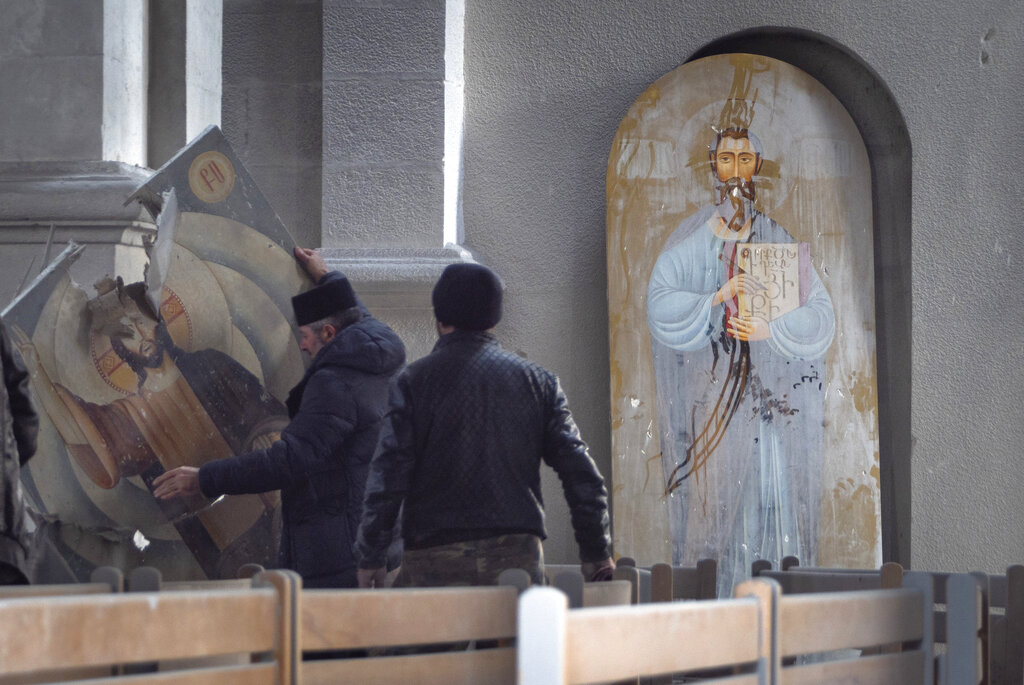
Men carry out furniture from the Holy Savior Cathedral damaged by shelling during a military conflict, in Shushi, outside Stepanakert, self-proclaimed Republic of Nagorno-Karabakh on October 8.AP Photo
Men carry out furniture from the Holy Savior Cathedral damaged by shelling during a military conflict, in Shushi, outside Stepanakert, self-proclaimed Republic of Nagorno-Karabakh on October 8.

A priest at the cathedral, who identified himself only as Father Andreas, expressed anguish over the attack.

“I feel the pain that the walls of our beautiful cathedral are destroyed,” he said. “I feel the pain that today the world does not react to what’s happening here and that our boys are dying defending our Motherland.”

Built in 1888, the cathedral suffered significant damage during ethnic violence in 1920. It was restored after fighting between Armenian and Azerbaijani forces in the 1990s and is the Armenian Apostolic Church’s diocesan headquarters in Nagorno-Karabakh, which it calls the Republic of Artsakh.

Standing 115 feet tall, it is understood to be one of the largest Armenian churches in the world.

“They are bombarding our spiritual values,” Artsakh Archbishop Pargev Martirosyan told ArmenPress, equating the incident with ISIS terrorism, “when we are restoring and preserving mosques.”

Men lift an icon in the Holy Savior Cathedral damaged by shelling during a military conflict, in Shushi, outside Stepanakert, self-proclaimed Republic of Nagorno-Karabakh on October 8.AP Photo
Men lift an icon in the Holy Savior Cathedral damaged by shelling during a military conflict, in Shushi, outside Stepanakert, self-proclaimed Republic of Nagorno-Karabakh on October 8.

The Shusha cathedral is located far from the “line of contact” [about 25 miles] separating the two militaries.

It is also the site of Armenian-rebuilt mosques, with a special place in Azerbaijani history.

“Religion is an important element, but not the only element,” said Mark Movsesian, co-director of the Center for Law and Religion at St. John’s University Law School, during a Philos Project webinar briefing today.

“But [this shelling] is hard to interpret except as a statement to say, “You are not wanted here.’”

The latest outburst of fighting between Azerbaijani and Armenian forces began Sept. 27 and mark the biggest escalation of the decades-old conflict over the disputed territory. The region lies in Azerbaijan but has been under control of ethnic Armenian forces backed by Armenia since the end of a separatist war in 1994.

A man walks in rubbles of the Ghazanchetsots (Holy Saviour) Cathedral in the city of Shusha, some 15 kilometers from the Nagorno-Karabakh province's capital Stepanakert on October 8.Vahram Baghdasaryan / Photolure via AP
A man walks in rubbles of the Ghazanchetsots (Holy Saviour) Cathedral in the city of Shusha, some 15 kilometers from the Nagorno-Karabakh province’s capital Stepanakert on October 8.

Following a series of calls with the leaders of Armenia and Azerbaijan, Russian President Vladimir Putin late Thursday proposed a cease-fire to allow the parties to exchange prisoners and collect the dead bodies.

The Kremlin said that foreign ministers of Armenia and Azerbaijan were invited to Moscow on Friday for consultations to discuss the truce. Armenian and Azerbaijan officials had no immediate comment on the Russian proposal.

Fighting with heavy artillery, warplanes and drones has continued despite numerous international calls for a cease-fire. Both sides accuse each other of expanding the hostilities beyond Nagorno-Karabakh and of targeting civilians.

According to the Nagorno-Karabakh military, 350 of its servicemen have been killed since Sept. 27. Azerbaijan hasn’t provided details on its military losses. Scores of civilians on both sides also have been killed.

Also on Thursday, Azerbaijani officials accused Armenian forces of attacking several of its villages and towns, and Nagorno-Karabakh forces said they were “suppressing the activity” of Azerbaijani forces along the line of contact.

Stepanakert, the capital of Nagorno-Karabakh, has been under intense shelling. Residents are staying in shelters, some of which are in the basements of apartment buildings.

A hole made by shell in the roof of the Holy Savior Cathedral during a military conflict, in Shushi, outside Stepanakert, self-proclaimed Republic of Nagorno-Karabakh on October 8.AP Photo
A hole made by shell in the roof of the Holy Savior Cathedral during a military conflict, in Shushi, outside Stepanakert, self-proclaimed Republic of Nagorno-Karabakh on October 8.

A woman who is sheltering with her neighbors in Stepanakert said the fighting killed her two sons in 1992 and now her grandchildren are involved in it.

The woman, who identified herself only by her first name, Zoya, told The Associated Press that “if it is necessary, I am also ready to fight with a weapon in my hands because it is our land, the land of our ancestors.”

“Armenia is important for us not just because it is a Christian country,” said Philos president Robert Nicholson, “but because it can have ripple effects throughout the region.”

Facing international calls for a cease-fire, Azerbaijan made its condition on Armenia’s withdrawal from the region. Armenian officials allege Turkey is involved in the conflict and is sending Syrian mercenaries to fight on Azerbaijan’s side. Turkey has publicly backed Azerbaijan in the conflict but denied sending fighters to the region.

Philos research fellow Van Der Megerdichian pointed out that Armenia ranks No. 68 in the 2020 World Press Freedom Index. Turkey ranks No. 154, while Azerbaijan ranks No. 168.

“Why would Armenia fire on Azerbaijan?” he said, about the initiation of hostilities. “It wants to maintain the status quo.”

An icon covered with dust in the Holy Savior Cathedral damaged by shelling during a military conflict, in Shushi, outside Stepanakert, self-proclaimed Republic of Nagorno-Karabakh on October 8.AP Photo
An icon covered with dust in the Holy Savior Cathedral damaged by shelling during a military conflict, in Shushi, outside Stepanakert, self-proclaimed Republic of Nagorno-Karabakh on October 8.

Russia, the United States and France co-chair the so-called Minsk Group, which was set up in the 1990s under the auspices of the Organization for Security and Cooperation in Europe to mediate the conflict. They have called repeatedly for stopping hostilities and starting peace talks.

Turkish President Recep Tayyip Erdogan criticized the Minsk group for failing to resolve the issue. He reiterated his country’s full support for Azerbaijan, which he said was determined to reclaim its territory.

“The Minsk group until now has not shown any will to solve this problem. The solution to the issue—which has turned into gangrene, so to speak, because of Armenia’s uncompromising and spoiled attitude for nearly years — is for the occupation to end,” Erdogan said in remarks via video at an economic cooperation forum in Istanbul.

“We see that Azerbaijan is extremely determined in liberating its territory. As Turkey, we support with all our heart Azerbaijan’s righteous struggle to reclaim its territory. We invite all countries who defend justice and fairness to support Azerbaijan,” he added.

Armenians, however, view Turkey’s role through the lens of a century-old history.

“Azerbaijan reaffirmed its insidious plan to evict Armenians from Artsakh,” Karekin II, Supreme Patriarch and Catholicos of All Armenians, told ArmenPress, “and destroy the Armenian cultural presence, with the support of genocidal Turkey.”

Editor’s Note: This week, CT surveyed the history of the conflict via interviews with Armenian evangelicals in the region and other experts.

Associated Press writers Daria Litvinova and Vladimir Isachenkov in Moscow, Aida Sultanova in Baku, Azerbaijan, and Ayse Wieting in Istanbul, Turkey, contributed. Additional reporting by CT’s Jayson Casper.

Theology

The Shocking Necessity of Racist Violence

It takes cruelty and brute force for human subjugation to work.

Christianity Today October 9, 2020
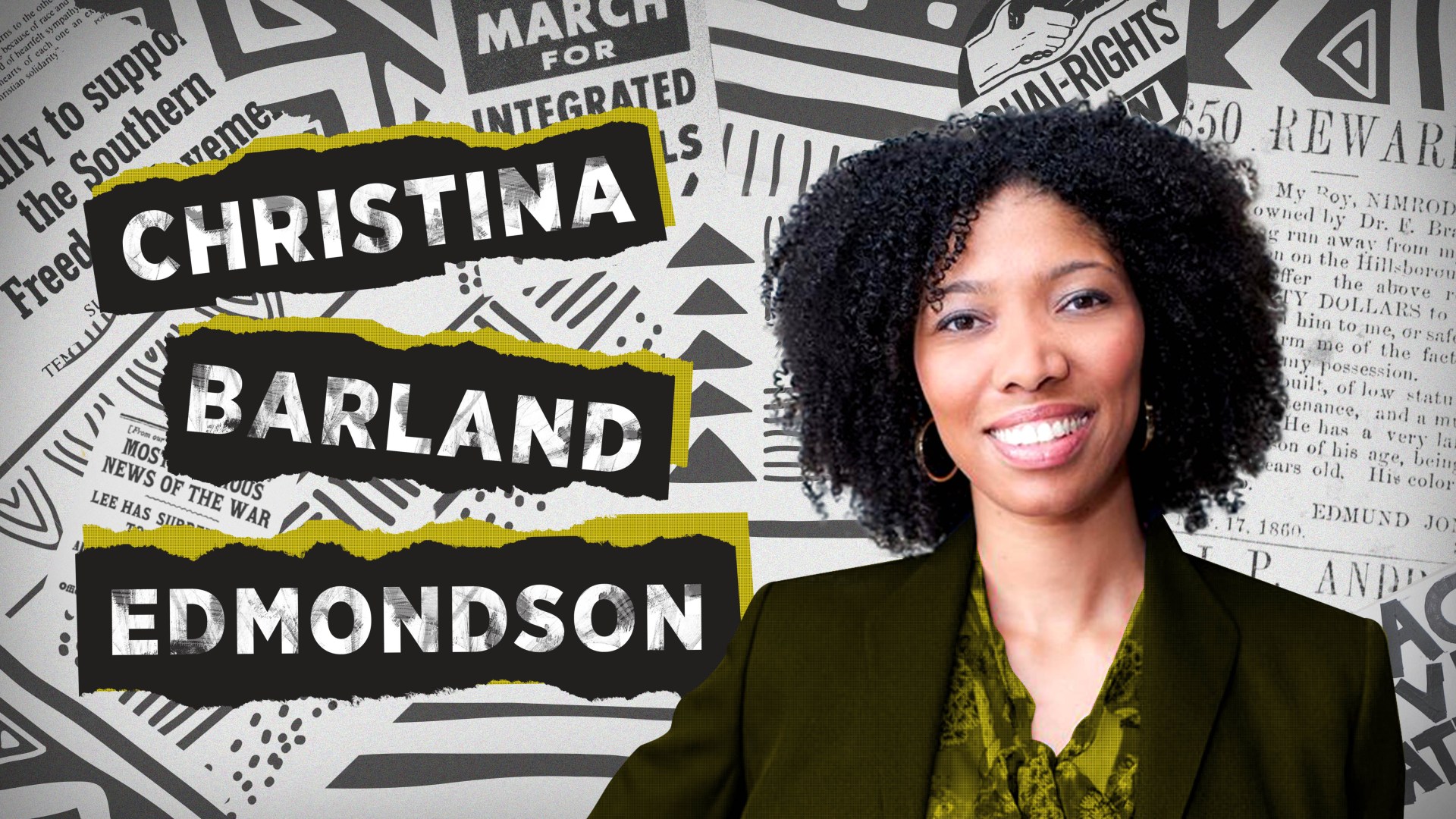
Illustration by Mallory Rentsch / Portrait: Courtesy of Christina Barland Edmondson / Background Images: WikiMedia / Unsplash / New York Public Library

Stony the road we trod Bitter the chastening rod Felt in the days when hope unborn had died…

God of our weary years God of our silent tears…

(excerpts from “Lift Every Voice and Sing”)

Humans were created by love, for love, to love. As such, we hold a number of love-directed freedoms that persist despite sin and distortion of our loves. Sin, while grievous and comprehensive, does not recreate our humanity nor destroy our first-ordained purposes. When our love- and freedom-empowered design is restricted or oppressed by sin, we are compelled to resist. We cry out. We push back or seek shelter. We strategize and plan. We protest and legislate. We prophesy and lament. We are human. Consequently, unrelenting violence and all of its forms—physical, psychological, and theological—is necessary to maintaining human subjugation. Racism requires violence. Throughout the history of what is now the United States of America, violence, the generational scars of it, and the threat of more to come, has been an inexorable part of the race story.

The “race riots” of Oklahoma, Chicago, St. Petersburg, and Atlanta, and the history before them, seeded the Great Migration that forced families like mine to journey from Mississippi to Maryland. Some followed the call of our escaped enslaved ancestors even past the borders of the United States.

An acclaimed psychologist, the late Olivia Hooker, tells of being a small girl during the massacre on Tulsa’s Black Wall Street district in the early 1920s. The slaughter destroyed over 30 city blocks, leveled more than 1,200 homes, and killed 300 people. The Oklahoma governor declared martial law and mobilized the National Guard to imprison every black person not yet in jail.

A group of white men stormed the home of Hooker as her mother and siblings stood in fear. In a fit of anger and covetousness, the intruders smashed the family’s beloved piano. That senseless act tightly followed a peculiar expression of civil religion. Before smashing the piano, the intruders gently removed the closed Bible that was positioned atop the piano. This perverse version of Christianity, bound to white supremacy, effectively shoved aside the faith held by blacks before destroying property and personhood to maintain temporal and carnal power. The so-called shared faith of white Christians and black Christians does not guard against violence toward the Emmett Tills, Tamir Rices, or George Floyds of society.

White supremacy’s sinful dance, swaying back and forth between Klansmen’s sheets and clergy robes, pains and plagues Christian of color and lies to white Christians. Violence is not neutered or challenged. White Christianity’s very design exists to maintain false piety and sear the consciences of white people against the oppression and exploitation of blacks.

Isabel Wilkerson, in her new book, Caste: The Origins of Our Discontents, writes how America’s racism works within the broader and older idea of a caste system. Caste systems rely on dominance and inferiority and must be enforced and reinforced by violence: gun-toting militias, vigilante neighbors, under-policing, and corrupt over-policing to protect select neighborhoods from crime. This violence is even wielded, or conveniently ignored, by those who claim to follow the Prince of Peace.

This necessary violence of racism is not only physical, but deeply psychological and spiritual. Spiritual violence abusively castes people within our systems but also in our imaginations and social media feeds with name-calling such as “heretic” or “unbeliever.” Social power further amplifies and legitimizes these accusations. How we think about our neighbor and enemy, resources and rights, duties and governance is both theological and political. Moreover, our theologies are political because how we live in light of who God is is necessarily public, civic, and embodied.

Spiritual violence against black Americans in the political sphere means disparaging and minimizing the faith of black Christians. Appealing to the notion of a singular Christian worldview, Southern Baptist Seminary president Al Mohler stated in a room filled with white men that a vote for Trump in 2020 would be most in line with “Christian worldview.” Mohler’s statement went beyond the partisan and political. His statement was theological with significant implications for the unity of the church in America. As president of the flagship seminary for the largest Christian denomination in the United States, his religious endorsement of a highly controversial president known for racist and sexist rhetoric and actions mattered significantly.

Christians debate the appropriateness of religious leaders speaking so openly about their personal support of candidates and the necessity of other Christians to fall in line. My concern, while subtle, knocks at the door of spiritual violence. By saying one’s “Christian worldview” leads to reelecting Donald Trump in 2020, Mohler asserts that faithful Christian theology applied to politics must draw the same political conclusions as most white conservative Christian men in this country. This is the group that has voted and will likely vote for Trump in large numbers again.

This same assertion, proclaimed from pulpits, tweets, and faux confessional statements, put on trial the Christian integrity and witness of black Christians who have overwhelmingly voted against Donald Trump. Black women report some of the highest levels of Bible study, charitable giving, authoritative views on Scripture, amount of time praying, and church attendance. But because of their political and theological misalignment with Trump and Republican agendas, they are deemed by default biblically ignorant, and at worse, heretics, cultural Marxists, and whatever new term works to caricature and discredit those holding a differing view. Welcome to politically motivated spiritual violence.

Despite claiming loyalty to the same Jesus, divergent “Christian worldviews” historically produce people like George Whitefield, Johnathan Edwards, John Gresham Machens, and even Al Mohlers on the one hand, and the Harriet Tubmans, Ida B Wells, Vashti McKenzies, and Stacey Abrams on the other.

Most people, I imagine, watched in horror the recent footage of the unarmed black men killed in 2020 and wept through the details of Breonna Taylor’s death. Even those who deny systemic racism likely oppose the in-your-face violence of public lynchings. However, the horrors of 2020, coupled with the trauma-cementing psychological and spiritual violence of news networks popular to white “conservative Christians,” discredit each victim. Prominent white church leaders and their political candidate pile on by publicly minimizing or justifying their deaths.

The year 2020 has been a perfect storm of violence for black Christians—physical, psychological, and spiritual. A global pandemic prejudiced against black, brown, and indigenous people; further unemployment and underemployment; a politically polarizing president during an election year; and the deaths of several public and beloved African American figures—John Lewis, Chadwick Boseman, Lou Brock, C.T. Vivian, and Barbara Harris—is exhausting, grueling, and traumatizing. Yet the very existence of black Christians in America past and present testifies to the calling and keeping power of God alone.

The humanity and its intrinsic resistance to oppression is so evident in the black believer in America, pushing, pressing, praying, and protesting against the violence of racism. Through humor, scholarship, and art, they mock the foolishness of the caste system that places the beloved of God on the bottom. The necessary violence of racism is combated by the nonviolent and steadfast resistance of black Christians, which reminds all of us who we are designed to be. White Christians, will your shared humanity and Christianity move you from violence and violence-denying to the nonviolence of empathy, solidarity, and repair?

Christina Edmondson is a collaborating partner with Calvin Institute of Christian Worship, author, public speaker, former mental health therapist, and co-host of the Truth's Table podcast. To learn more about her work, go to ChristinaEdmondson.com.

Ideas

The DC Mayor Doesn’t Get to Define Church

Why Capitol Hill Baptist is standing by the physical gathering as a biblical requirement.

Christianity Today October 9, 2020
Edits by Mallory Rentsch / Source Image: WikiMedia Commons

Since the spring, Christian commentary on COVID-19 restrictions and church closures has focused on the authority of government. Do we as Christians believe the Bible gives Caesar the authority to ask churches to cease gathering in times of emergency?

That’s a conversation worth having. Yet an equally important theological question has quietly lurked in the shadows, which many Christians have missed: What is a church? More specifically, must the members of a church gather on a weekly basis to be a church?

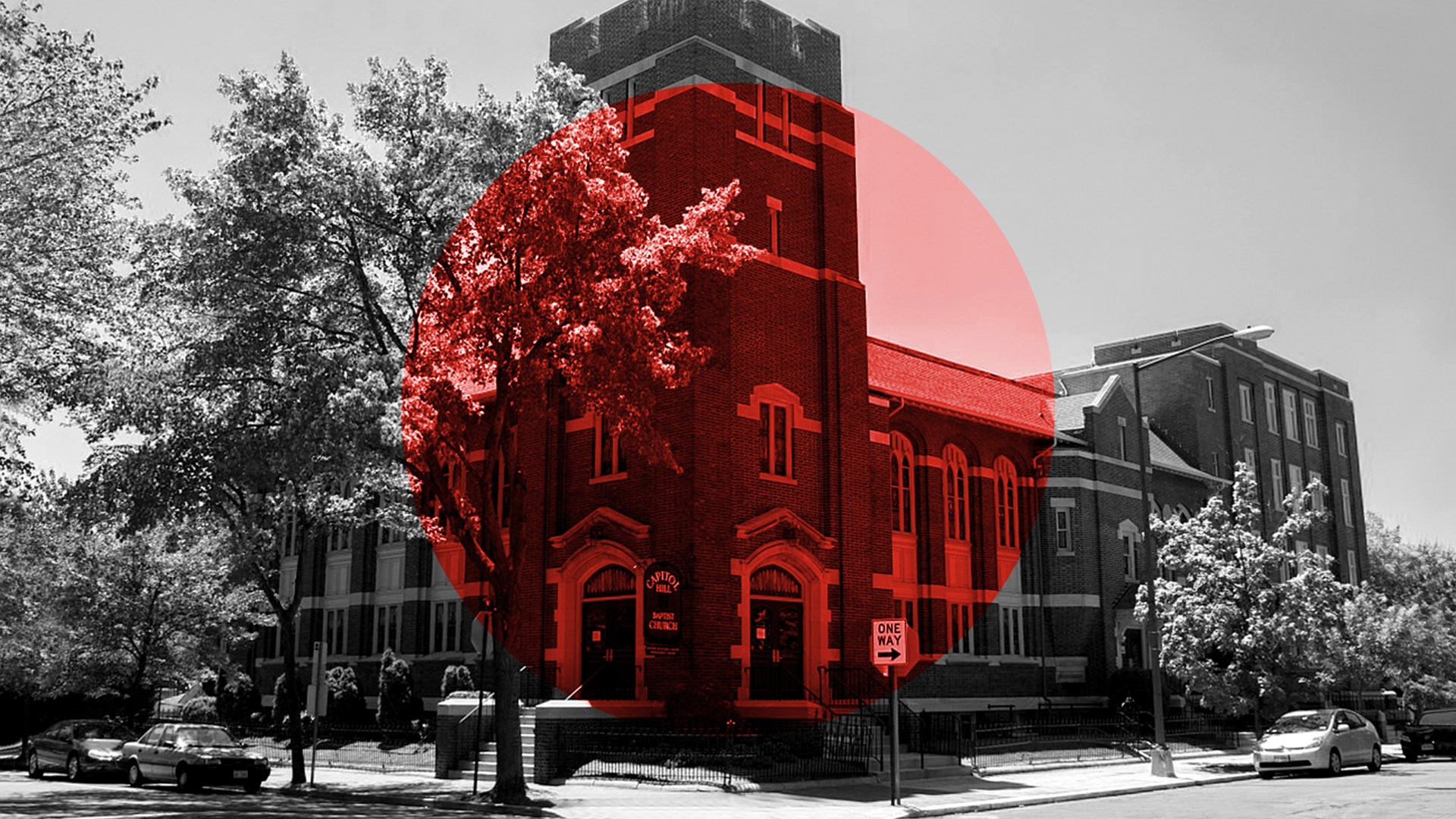
A recent lawsuit has brought this theological claim into the light. Capitol Hill Baptist Church (CHBC) in Washington, DC, served DC Mayor Muriel Bowser with a complaint and restraining order in federal court. It argues Bowser’s limits on public gatherings violate the church’s first and fifth amendment rights to gather as a church.

Since June CHBC has been meeting across the Potomac River in Virginia in another church’s field. The church first requested a waiver from the mayor’s office in June to be able to gather outdoors with social distancing. In September it was denied. Now it is taking legal action by pointing to the mayor’s own participation in recent mass protests and by asking for the same opportunity as protesters to gather.

CHBC does not contest the government’s right to require churches to refrain from gathering temporarily for reasons of public health. It is, however, asking the government to recognize that the gathering is essential to a church being a church.

Quoting pastor Mark Dever, the motion observes, “A ‘biblically ordered church regularly gathers the whole congregation’ because ‘without regularly meeting together, it ceases to be a biblically ordered church.’” You might summarize the lawsuit like this: Ms. Mayor, by denying our ability to gather all together, you’re effectively disbanding the church.

This case becomes interesting because it raises questions about the government officials playing theologian, as CHBC has one definition of a church and the mayor has asked them to adopt another. But it also reveals how the American church itself has evolved away from an understanding of church as a single gathered assembly.

Gathering Makes Us a Church

CHBC believes that the New Testament defines a church as a single gathering, as did most churches for 1,900 years—between Pentecost and the 1960s. The Greek word that our English Bibles translate as “church” (ekklesia) literally means “assembly.”

A church is more than an assembly, of course. You also need biblical preaching and the mutual recognition of heavenly citizenship believers provide one another through the ordinances (e.g., Matt. 18:19; 1 Cor. 10:17). Further, we should expect the members of a healthy local church to meet “house to house” throughout the week, like the original church in Jerusalem did (Acts 2:46; 5:42; 8:3; 12:12).

Yet a church is not a church if its members do not all regularly meet together, minus those who are providentially hindered such as the sick, the traveling, the childcare workers, or even the quarantined.

We learn this pattern from the church in Jerusalem, which all met together weekly if not daily in Solomon’s Colonnade (Acts 2:46; 5:12; 6:2). We also learn it from the church in Corinth, which all met together in Gaius’ house (Rom. 16:23; 1 Cor. 5:4; 11:17, 18, 20, 33, 34; 14:23). There’s no example of a New Testament church that didn’t regularly meet together. Again, this makes sense if the Greek word for church means “assembly.”

Like millennia of Christians before them, CHBC believes (as do I) that something that never assembles, such as separate services or sites, is not actually a church.

Instead, we believe that each site or service, where Christians regularly assemble for biblical preaching and the ordinances, is itself a church by the biblical standard—not by the fact that the sites or services happen to be united by one vision, budget, board, and legal papers. The 9:30 a.m. service is a church, and the 11 a.m. service is a church, and so with the north campus and the south campus.

Under Dever’s leadership, CHBC has refused to expand to multiple services or sites, even though their building, which is landlocked on Capitol Hill, has been stuffed to the gills for years. Instead it has planted and helped to revitalize nearby churches.

Now, like many evangelicals, you might not agree with CHBC that a church must regularly gather together to be a church. But all of us have a vested interest in not letting government officials set the definition for what a church is.

Washington DC’s mayor—probably like many mayors and governors across the country—expressed her own theological view of church when she stated that churches wouldn’t be closed but wouldn’t be able to “hold services” in person. For those who believe that churches must gather, that’s like saying, “They can play basketball; they just can’t use the baskets” (which actually happened in the District too!). You must have a different definition of basketball than I do.

In place of those gatherings, the mayor’s office pushed virtual options. “Places of worship are encouraged to continue providing virtual services,” say DC’s phase two requirements. The mayor said the same in a June press conference: “We encourage virtual services to continue.”

Again, she’s playing the theologian. She has separated the word church from the idea of an assembly or gathering. She’s offering virtual presence as a substitute for actual presence as a sufficient condition for a church to be a church.

It’s true that the technology of Zoom or Google Chat gives us some of the benefits of actual presence. Praise God. Yet one can also understand why many Christians at CHBC and around the world sympathize more than ever with the Marine general’s quip, “Virtual presence is actual absence,” a point heartily affirmed by anyone standing on a beach awaiting a Marine rescue.

How many of us, too, are discovering as never before the difference between virtual and actual presence, as we continue to have difficulty physically gathering with our fellow saints?

You struggle with hidden hatred toward a brother all week. But then his presence at the Lord’s Table draws you to conviction and confession. You struggle with suspicion toward a sister. But then you see her singing the same songs of praise as you, and your heart warms. You struggle with anxiety over the upcoming election. But then the preacher declares Christ’s coming victory and vindication, you hear shouts of “Amen!” all around you, and you recall that you belong to a heavenly citizenry allied in hope. You’re tempted to keep your struggle in the dark. But then the older couple’s tender but pressing question over lunch, “How are you really?” draws you into the light.

Christian, you and I can “download” biblical truths virtually. Wonderful. Yet we cannot feel and experience and witness those truths becoming enfleshed in the family of God, which both fortifies our faith and creates cords of love between brothers and sisters.

No, Ms. Mayor, I don’t want your theology. My discipleship to Christ needs my fellow saints, and they need me. We’re one body. Gathering doesn’t make us the church, but it does make us a church.

Changes in the Multisite and Multiservice Era

But the DC mayor didn’t conjure this conception of church on her own. We as Christians share some of the blame as our own churches evolved over the decades.

In the 1960s, churches began offering multiple services. In the 1980s, the first multisite churches appeared. And in the early 2000s, the internet church followed. At that very first step—the moment the words appeared on the signs in front of our church buildings, “Services on Sunday at 9:30 and 11”—a theological Rubicon was crossed. We began to use the word church for something that wouldn’t ever assemble all together: service A and service B or site X and site Y or computer screens 1, 2, and 3.

For all the differences between the multiservice, multisite, and internet church, they have this in common: The members of the church do not have to gather together as a single body, yet we still call them, in the singular, a church.

To be sure, the goal is typically evangelistic. Adding services, sites, or even screens seems like a good way to reach more people fast—and good financial stewardship to boot. I’m not denying the pragmatic advantages and the good goals of our multisite and multiservice structures.

But it might be worth doubling back and doing a little biblical investigation of the matter because these structural changes bring not only pragmatic benefits but pragmatic costs too. (My book One Assembly focuses on such investigation.)

And one of those costs might be that our basic intuitions about what a church is have subtly changed. We view church less as a family dinner table, where everyone is expected unless providentially hindered, and more as a performance on stage that we watch and that can easily be reduplicated across multiplex screens.

If it’s true that our basic intuitions have changed, the course of events in the last few months should come as no surprise. Our state governments ask us to temporarily stop gathering, which I think they have the authority to do, and many of us say, “That’s okay. We’ll just livestream or hop onto a Zoom call.”

After decades of retraining our basic intuitions about what a church is, the virtual church doesn’t offend our ecclesial sensibilities like it should at least not at a principled, theological level.

I am not prescribing one course of action for all churches in this moment. I’m not saying a lawsuit is the right course of action for every church or that Zoom “gatherings” are inherently sinful. My church used them when the quarantines first hit in the spring. I am simply asking the question, Could it be that the gathering rests too lightly on our Christian consciences?

Dever thinks so. “We’ve cooked our own pot,” he told me. For decades, we have trained ourselves and the world around us to think that the church could exist without an in-person gathering.

A Family Meal, an Embassy of Heaven, and the Geography of the Kingdom

Whether or not you agree that New Testament church is a single assembly, I hope you understand why the Bible makes such a big deal of the church gathering.

The gathering is a family meal, an embassy of heaven, and the geography of Christ’s kingdom, all wrapped into one. Of course the governments of this world will look askance at gatherings of believers, says the Bible. They represent something that is stronger than blood and that challenges their absolute rule.

“I possess all authority in heaven and on earth,” says Jesus to the mayor of Washington, DC, and every city. “And those gatherings of two or three or two or three thousand represent me. They fly my flag and declare my law” (see Matt. 18:20; 28:18–20).

The gathering is where Christ’s citizens are formed together. It’s where we work through our own trust-straining, relationship-challenging disagreements. (Have you ever tried to work through racial and political differences on social media?) It’s where we see brothers and sisters exercising faith by worshipping God in times we’re all tempted to give in to fear.

And it’s where the residents of DC and your city can come and literally—in the flesh—see and hear and smell and even rub shoulders (in a socially distant sort of way) with the body of Christ, the temple of the Spirit, and the family of God. Sometimes our non-Christian friends will even conclude, “God is really among you” (1 Cor. 14:25).

Jesus called the church an assembly. Perhaps we’ve moved too quickly past the wisdom of his plan. Paul offers a practical solution: “When you come together to eat, wait for one another” (1 Cor. 11:33, ESV).

Jonathan Leeman, an elder at Cheverly Baptist Church, is the editorial director at 9Marks and is the author of One Assembly: Rethinking the Multisite & Multiservice Church Models.

Speaking Out is Christianity Today’s guest opinion column and (unlike an editorial) does not necessarily represent the opinion of the magazine.
Apple PodcastsDown ArrowDown ArrowDown Arrowarrow_left_altLeft ArrowLeft ArrowRight ArrowRight ArrowRight Arrowarrow_up_altUp ArrowUp ArrowAvailable at Amazoncaret-downCloseCloseEmailEmailExpandExpandExternalExternalFacebookfacebook-squareGiftGiftGooglegoogleGoogle KeephamburgerInstagraminstagram-squareLinkLinklinkedin-squareListenListenListenChristianity TodayCT Creative Studio Logologo_orgMegaphoneMenuMenupausePinterestPlayPlayPocketPodcastRSSRSSSaveSaveSaveSearchSearchsearchSpotifyStitcherTelegramTable of ContentsTable of Contentstwitter-squareWhatsAppXYouTubeYouTube