Pastors

Stumbling on the Path of the Apostles

Is there room for amazing grace in our call to uncompromising faithfulness?

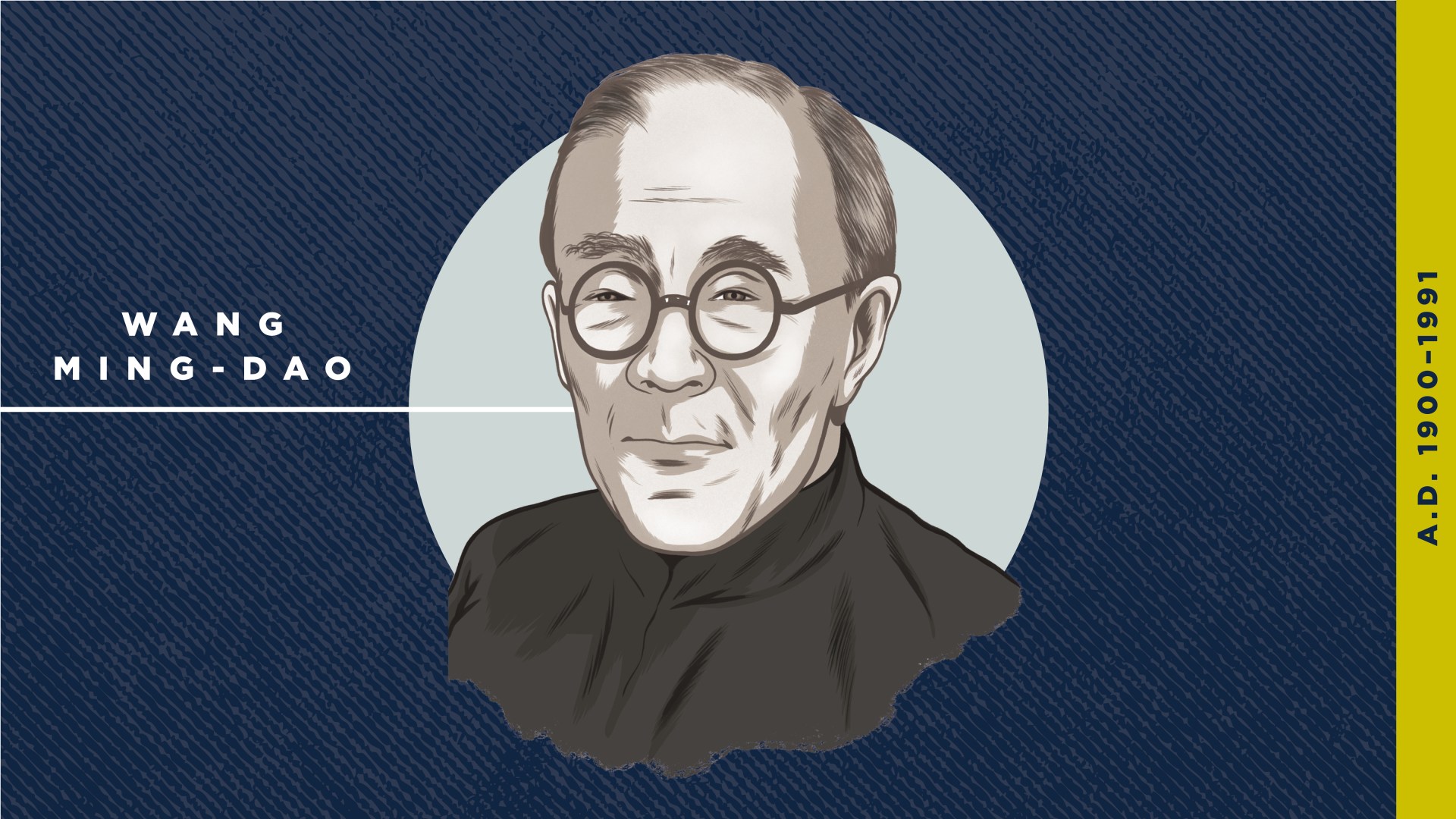
Wang Ming-Dao

Wang Ming-Dao

Portrait by Joel Kimmel

Some have asked me what path the church should take today. I answer: Unquestionably, the path of the apostles. That is, follow the footsteps of the apostles by imitating their courageous and firm stand, not being afraid of any threatenings, not holding life dear, being faithful unto death, not pleasing men. Even while meeting resistance, we should still preach the gospel and teach God’s words to people. The one who can do this will be blessed by God and used by God. He may indeed meet what the apostles met in persecution, but he will also accomplish what the apostles accomplished. Without doubt, God’s glory and great power will be manifested through him just as it was manifested in that day through the apostles.— Wang Ming-Dao, from A Call to the Church from Wang Ming-Dao

Persecution often has an effect opposite of what is planned by the persecutors. The church father Tertullian wrote that the martyrdom of faithful Christians actually spurred the growth of the early church: “The oftener we are mown down by you, the more in number we grow; the blood of Christians is seed” (The Apology). Stories of martyrs can be a great encouragement in the darkest points of ministry, when pastors feel attacked from all sides.

But some martyrdom accounts from Christian history give readers the sense that those who suffered faithfully for Christ experienced very little struggle with fear or temptation. According to Irenaeus, for example, when guards prepared to nail Polycarp to the stake, he said, “Leave me as I am, for the one who gives me strength to endure the fire will also give me strength to remain at the stake unmoved without being secured by nails.” While stories like Polycarp’s can be encouraging, they may also give pastors pangs of guilt when something as simple as a tense budget meeting leaves them questioning their calling.

When I’m tempted to believe that true faithfulness requires nothing less than a perfect resolve, it helps to remember the life of Chinese pastor Wang Ming-Dao. Though his faith endured through intense hardship, he also experienced moments of fear that resulted in compromise. Wang’s life and teachings remind me that Christ’s proclamation to “repent and believe in the gospel” (Mark 1:15, ESV) is for all people, pastors and laity alike.

Faithfulness, Compromise, and Restoration

Wang was raised attending a Christian church and school in Beijing, but he didn’t become a Christian until he was 14. During a serious illness, he promised God that, if he survived, he would abandon his intended career path in politics to go into full-time ministry.

Wang changed his name from Tie-Zi (“Iron Son”) to Ming-Dao (“Understanding the Word”) and started teaching at a Presbyterian academy before age 20. In 1923 he began a Bible study in his home that became the Beijing Christian Tabernacle in 1937.

His faithfulness to Christ was challenged by political forces during both the Japanese occupation of Beijing (beginning in 1937) and the establishment of the People’s Republic of China in 1949. In both seasons, the government sought to harness the local churches for the promotion of political goals, and under both governments Wang witnessed Christians capitulate to political pressure.

During the Japanese occupation, Wang refused to allow his Christian publication, Spiritual Food Quarterly, to be used as a propaganda tool by the Japanese government. Wang also refused to associate his church with the North China Christian Federation Promotion Committee—established in 1942—out of concern that the Japanese government was using it to influence Chinese churches. He received so many threats from the Japanese authorities that he purchased a coffin and kept it in his home.

The rise of communism in China was accompanied by the Three-Self Patriotic Movement, a state-sanctioned, interdenominational Protestant body seeking to tie Chinese Christians to Chinese nationalism. As pressure to join the Movement mounted for Christian leaders and churches, Wang refused to capitulate. His rationale was not so much political as it was doctrinal. Many who had joined the Movement denied core doctrines such as the inspiration of Scripture, the Virgin Birth, the Atonement, and Christ’s bodily resurrection, and Wang did not believe they were true Christians. How could he, with a good conscience, associate with them as if they were?

The leaders of the Three-Self Movement were incensed, and requests for Wang’s enrollment turned into threats and persecution. Wang’s opponents worked to isolate him by having those closest to him arrested.

On August 7, 1955, Wang delivered a sermon on Matthew 26:45 titled “The Son of Man is delivered into the hands of sinners.” He preached, “We shall make whatever sacrifice is required of us in being faithful to God. Regardless of how others may twist the truth and slander us, we because of our faith shall remain steadfast.” That same day he was arrested for being “counter-revolutionary,” along with his wife and 18 church associates. They were bound with ropes and led to prison, where for months cellmates—prompted by the authorities—shared horror stories of tortures Wang would endure if he refused to cooperate.

This strategy had its intended effect. Years of pressure and persecution took their toll on Wang, and he admitted to false charges. Wang was released on September 29, 1956, and the next day he read a confession of his “wrongdoings” at a gathering of the Three-Self Movement. Wang’s fall was neither minor nor private.

But Wang’s release from prison did not end his torture; it merely shifted it from external to internal. He came to realize what he had sacrificed for his apparent freedom, and, according to David Aikman, many people reported seeing Wang wander the streets of Beijing repeating, “I am Peter, I am Peter.”

Upon release, Wang was supposed to join the Three-Self church and preach its government-sanctioned messages, but he couldn’t bring himself to do so. Eventually, with the encouragement of his wife, he recanted his signed confession. Wang was imprisoned once again, where he remained for 22 years. Due to growing international pressure, he was released in 1979. He had lost all of his teeth and most of his hearing and eyesight, but his faith remained intact. He and his wife taught groups of Christians in their apartment until Wang’s death in 1991.

‘I Am Peter’

In 1983, only four years after his release from prison, Wang wrote,

Some have asked me what path the church should take today. I answer: Unquestionably, the path of the apostles. That is, follow the footsteps of the apostles by imitating their courageous and firm stand, not being afraid of any threatenings, not holding life dear, being faithful unto death, not pleasing men.

After experiencing such a notable moment of compromise, Wang called others to unyielding faithfulness. How could he ask others to persevere through suffering when he hadn’t done so? A lesson can be learned from his refrain: “I am Peter, I am Peter.”

Wang called followers of Christ to faithfulness in “the footsteps of the apostles.” His long years of faithful endurance resembled the apostles’ courageous proclamation of Christ’s message in Acts, and his compromise to avoid persecution reflected the disciples’ abandonment of Christ before his crucifixion. Any call to walk the path of the apostles must make room for the reality of human weakness. The need to seek forgiveness and experience redemption is part of the call to uncompromising faith.

Even before his imprisonment, Wang showed sensitivity to believers who might surrender to temptation. He preached,

There are many saints like Peter. In a moment of weakness they stumble and fall; they are guilty of giving offence to their Lord. … At such a time their greatest need is to be aware of the Lord’s forgiveness and pardon; to become conscious of the Lord’s compassion and love.

Wang likely didn’t realize these words would eventually apply to him, but his example in seeking forgiveness and eventually returning to prison reveals the full implications of his earlier teaching.

Ironically for Wang, his compromise placed him in a position of potential prominence in society, while his subsequent repentance returned him to prison. In contrast, when we see Christian ministers caught in some serious, public sin today, it is not uncommon to witness those same pastors attempt to regain their public platforms after only a short time away from ministry.

Wang’s example shows us that a lifelong calling to ministry is not the same as a lifelong calling to platform. He was restored by God’s forgiveness, not to freedom or fame but to 22 more years of captivity and torture. Though imprisoned—and perhaps because of it—he was still able to reveal “God’s glory and great power.”

The apostle Peter’s life serves as a template for faithful restoration. Though he denied Christ three times before the Crucifixion, his Lord later reinstated him to ministry. Three times Christ asked him,

“Simon son of John, do you love me?”

Peter was hurt because Jesus asked him the third time, “Do you love me?” He said, “Lord, you know all things; you know that I love you.”

Jesus said, “Feed my sheep. Very truly I tell you, when you were younger you dressed yourself and went where you wanted; but when you are old you will stretch out your hands, and someone else will dress you and lead you where you do not want to go.” Jesus said this to indicate the kind of death by which Peter would glorify God. Then he said to him, “Follow me!” (John 21:17–19)

Peter went on to do great things in the early church, but he did so under regular threat, and, as Jesus predicted, his faithful ministry resulted in martyrdom. True restoration of a Christian leader is not measured by reclaiming celebrity or the pastoral office but by reclaiming a life marked by repentance and faith.

Ministry as an Imperfect Human

Shepherding the church has led me to face my own limitations in ways no other responsibility has done. Personal sins, shortcomings, and inabilities have a way of floating to the surface. If ever I have felt the need for personal humility and God’s grace, it has been in pastoral ministry.

No Christian, not even a pastor, is a stranger to sin. To regularly recognize, confess, and turn away from sin in repentance is a necessary part of faithful pastoral work. As discouraging as a pastor’s public failure may be, Jesus Christ is no less a shepherd to the pastor than to the layperson. He is the Chief Shepherd, and all true believers are a part of his flock. I find it helpful to remind myself regularly that, though God has called me to be a shepherd, I also will never cease being a sheep.

Navigating pastoral ministry as an imperfect person in the midst of temptation and suffering is a challenging endeavor. I find Wang’s story to be especially clear in conveying both the necessity of radical faithfulness to Christ in the face of hardship and the reality of our human frailty. As a pastor called to uncompromising faith, I will never outgrow my need for the Lord’s grace.

John Gill is associate professor of Christian Studies at California Baptist University and pastor of discipleship at Redeemer Baptist Church in Riverside, California.


Like this article? There’s more in our special issue on 9 Time-Tested Mantras for Ministry: Sage Advice for Pastors, from the Early Church to the Modern Age.

Want to read or share in Portuguese or Simplified Chinese? Now you can!

You can now follow CT’s latest content on WhatsApp and Telegram.

Pastors

Who Am I That I Should Lead?

Some people need warnings to avoid the spotlight. Others need encouragement to step up.

Portrait by Joel Kimmel

O weak person, you who are both ashes of ashes and decaying of decaying, speak and write what you see and hear. But you are shy about speaking and simple in explaining and unskilled in writing those things. So speak and write those things not according to human speech or human inventiveness but according to the extent that you see and hear those things in the heavens above in the marvelousness of God. … O woman, speak those things which you see and hear. Write those things not according to yourself or by the standards of another person, but according to the will of the one knowing, the one who sees and arranges all things in the secrets of His own mysteries.— Hildegard of Bingen, from Scivias

From Gregory the Great in The Book of Pastoral Rule to Henri Nouwen in In the Name of Jesus, many writers and thinkers have cautioned Christian leaders about the dangers of ambition and the allure of the limelight. Pastor and author Dan White Jr. shared his story of battling this temptation while stepping into ministry in Subterranean: Why the Future of the Church Is Rootedness: “The pastors of my youth were superstars to me. Listening to a booming voice, elevated on a stage … made it nearly impossible to resist this powerful dynamic.”

He alludes to Alain de Botton’s concept of status anxiety, defined by de Botton as “an anxiety about what others think of us; about whether we’re judged a success or a failure, a winner or a loser.” Yet to me, the term status anxiety struck a note de Botton may not have intended. Some, as White confesses, are anxious at the thought of being denied status. Others, like me, are anxious at the thought of being given it.

Many leaders are naturally ambitious and confident. We need their leadership. I’m glad resources are available that discuss the dark side of those personality traits. But because I am an introverted woman and artist and “gifted” at seeing my own inadequacies, warnings for status-seeking pastors to humble themselves and listen before speaking gave me good reason to stay comfortable and quiet. Cautions against seeking the limelight actually discouraged me from pursuing my calling.

I’m from Australia, where individuals are discouraged from standing out from the crowd. I also come from a denominational background that discourages women from leadership. I’m naturally a helper and peacemaker, a deep feeler and thinker, and I’m particularly susceptible to being overwhelmed by the opinions of others and by my own emotions and instincts. All of these aspects of my personality, culture, and experience make me want to keep to myself, serve in the background, and avoid risk. But God still called me to lead.

When I was an associate pastor, my job felt doable. I coordinated volunteers, planned events, and led prayer groups—I had seen people like me do these things before. But when I was invited to fill the lead pastor role, panic set in. I’d never seen someone like me preach, lead an elder’s meeting, or set church vision. I feared I would fail and take the whole church down with me.

Despite my reservations, I accepted the role at God’s prompting. I decided it would be easiest to keep doing everything the way my former lead pastor had done things. I can pretend to be an extroverted, apostolic leader, I thought. I can just maintain his vision for the church.

But I felt conflicted. I wasn’t leading as myself—and I needed to, even if that came at the risk of being misunderstood and unsuccessful. Still, my holdups persisted. Would my congregation know what to do with a leader like me?

‘O Weak Person …’

Around that time, I read Scivias by the 12th-century abbess, artist, and visionary Hildegard of Bingen. Hildegard was born to a noble family in Mainz, Germany, in 1098. At 8 years old, she became a maid and apprentice to an anchoress. Hildegard began experiencing visions of light as a child, but it wasn’t until she was middle-aged that she came to understand their significance. She detailed that revelation in Scivias, illuminating the manuscript with a self-portrait in which she is seated, writing, and “inflamed by a fiery light” reminiscent of the tongues of fire from Pentecost. She describes the revelation in this way:

Behold, in the forty-third year of my temporal journey … [I heard] a voice from heaven was saying to me: ‘O weak person, you who are both ashes of ashes and decaying of decaying, speak and write what you see and hear. But you are shy about speaking and simple in explaining and unskilled in writing those things. So speak and write those things … according to the extent that you see and hear those things in the heavens above in the marvelousness of God.

I had already come to respect Hildegard for her place among the saints and her prolificacy as a polymath. She founded abbeys for men and women and was a gifted painter, composer, writer of theology, doctor of natural medicine, and advisor to bishops and kings. But I didn’t know about this great leader’s hesitations, fears, and insecurities. Later in this same passage, she shares that her concerns for how she would be received had made her physically ill for many years.

Her fears were not unfounded. Her visions were controversial. She claimed that not only were they from God, but her interpretations of them were from God as well. When she finally obeyed God’s call to write and speak, she called it her “awakening.”

Miniature fro the Ruperts Berger Codex Des Liber SciviasRobert Lechner / Wikimedia Commons
Miniature fro the Ruperts Berger Codex Des Liber Scivias

I had often wondered if my doubt and fear meant I was not supposed to lead. It caused a crisis in me because, on the one hand, I felt the call of God into leadership, and on the other hand, I knew I was not adequate. This had stopped me from fully embracing my calling.

But Hildegard’s example reminded me of the possibility that I could feel desperately weak and still press in. God didn’t motivate Hildegard by telling her that she was stronger and more capable than she realized. According to Hildegard’s description of her awakening, God got her attention by beginning, “O weak person.”

‘I Will Help You Speak’

God’s calling of the reluctant Hildegard mirrors those experienced by biblical figures like Esther, Jeremiah, and Moses. Each of those leaders hesitated when called. When Jeremiah was called to be God’s prophet, he shrank back, saying, “I do not know how to speak; I am too young” (Jer. 1:6). I imagine he hoped God would respond with “No, you’re old enough. You’re competent. You have many gifts. You can do this!” Instead, God took Jeremiah’s eyes off himself.

Christopher J. H. Wright writes in his commentary on Jeremiah, “God does not rebuke Jeremiah (7), but simply dismisses his point as true but irrelevant. What mattered was not Jeremiah’s confidence (or lack of it), but God’s command.” God’s statements don’t begin, as Jeremiah might have preferred, with “you,” but with “I”: “I am with you” (v. 8), “I have put my words in your mouth” (v. 9), “I appoint you over nations and kingdoms” (v. 10).

Hildegard’s awakening to God’s call is similar to Jeremiah’s. She undoubtedly had great intellect and gifts, but that insight made her acutely aware of her own inadequacy. Perhaps her humility was God’s reason for calling her. Instead of telling her to set aside that intuition, he agreed with her self-assessment: Her own strengths were not enough.

The words God spoke to Moses from the burning bush were also true of Hildegard, and they are certainly true of me and anyone he calls to leadership:

Who gave human beings their mouths? Who makes them deaf or mute? Who gives them sight or makes them blind? Is it not I, the Lord? Now go; I will help you speak and will teach you what to say. (Ex. 4:11–12)

For those of us like Jeremiah and Hildegard, who know our limitations and feel risks intensely, the Lord’s call is an opportunity to give our energies and gifts to him, small as they may seem, and to trust he will give us whatever we need to do the things he wants us to do.

One final pattern in these stories of reluctant leaders is worth pointing out: God’s call and provision did not silence adversarial voices. Moses butted heads with the hard-hearted Pharaoh; Jeremiah faced a lifetime of rejection and was exiled from God’s people; and, in the final year of her life, Hildegard’s superiors placed her under interdict, during which she was denied the Eucharist and music. But each persisted.

As I say yes to God’s calling, even when it leads to discomfort, I’m becoming accustomed to the discomfort. And each time I follow him into a place where there is pushback (direct or indirect, internal or external), he invites me to ask, “Who do you say I am? Remind me of your call once more.” Each challenge teaches me anew to trust that God knows me better than I know myself and has called me to lead as the introverted woman and artist that I am.

Hildegard’s legacy outlived the words and work of many of her contemporaries. Her music is still sung, her words are still read, and her illuminations are still studied. Church leaders of all sorts can find encouragement in the fact that someone so fruitful for God’s kingdom was, at one point, unable to imagine how God could use her.

Mandy Smith is lead pastor of University Christian Church in Cincinnati and author of The Vulnerable Pastor: How Human Limitations Empower Our Ministry (IVP Books).

Like this article? There’s more in our special issue on 9 Time-Tested Mantras for Ministry: Sage Advice for Pastors, from the Early Church to the Modern Age.

Pastors

The Noonday Demon in Our Distracted Age

What to do when a Netflix binge brings you more joy than God’s calling.

Portrait by Joel Kimmell

The spirit of acedia drives the monk out of his cell, but the monk who possesses perseverance will ever cultivate stillness. A person afflicted with acedia proposes visiting the sick, but is fulfilling his own purpose. A monk given to acedia is quick to undertake a service, but considers his own satisfaction to be a precept. — Evagrius Ponticus, from On the Eight Thoughts

In the first year of my PhD program, I was 21, lonely, disoriented, utterly out of my depth, and unwilling to admit it. Instead of running to my professors for help or diving in at the library, I found myself avoiding homework altogether. I told myself I wasn’t working because I didn’t care about my classes, but the truth was, the fear of failure was too much to bear. I knew God had called me to this task, but as the difficulty of the work set in, my call became a source of sadness instead of joy.

I first heard the term acedia—what Thomas Aquinas defines as “sadness at an interior or spiritual good”—as a graduate student working as a teacher’s assistant for an intro to ethics course. I didn’t think much of it at first, but over time I realized this ancient Christian concept was at the center of my daily experience.

When my PhD program ended, my fight with acedia didn’t. Instead, it shifted to a realm I never expected: my relationship with my kids. It’s impossible to describe the joy of being a parent or the love you suddenly feel toward the tiny human who has been put into your care. However, in the daily grind of early mornings, diapers, cleaning, and endless negotiations, parenthood can seem onerous instead of joyful. Even now I occasionally find myself looking for escapes from the life that’s meant to be my calling and God’s gift.

The term acedia has faded from popular use, but if you’ve been in ministry for long, there’s a good chance you recognize the feeling of dread when faced with certain tasks or the desire to distract yourself with easier or more pleasant work. Instead of feeling joy at the ministry you’ve been called to, you avoid it. And nowadays, the rivals for our attention seem endless: Podcasts fill the silence of our daily commutes, and push notifications break our concentration and keep us reaching for our phones. When God’s calling to ministry loses its luster, apps like Zillow and Indeed remind us of the homes and jobs we could have instead.

Still, the fight against acedia isn’t hopeless. Just as a physician diagnosing a disease can pave the way for treatment, naming this malady and examining its origins may help afflicted pastors tune out the distractions and return with full vigor to their ministry work.

A Failure to Care

The concept of acedia began its life in Greece. Its meaning, “a failure to care,” was applied specifically to the context of a deceased body. Acedia was at stake in Antigone, for instance, when the brave sister defied the king in order to give her brother a proper burial; and in the Iliad, when the Greeks, led by Achilles, fought fiercely to recapture and honorably bury the body of Patroclus.

Evagrius Ponticus, a fourth-century ascetic and scholar well versed in Greek philosophy and literature, chose this term to describe the distraction experienced by Egyptian monks seeking holiness and divine contemplation in the desert. The temptation of a monk to abandon his spiritual vocation was, for Evagrius, like failing to care for a deceased family member. He tied the term to the “Noonday Demon,” a personification of the pestilence described in Psalm 91:5–6: “You will not fear the terror of night … nor the plague that destroys at midday.” Acedia, according to Evagrius, described a particular demonic attack aimed at disrupting the attention and inner quietness of a devout Christian.

In Evagrius’s day (A.D. 345–399), many Christians chose a monastic life modeled on Christ’s 40 days in the wilderness. They moved to the desert to free themselves from distractions so they could do battle against the sinful tendencies of their flesh. Yet monks were sometimes drawn away by recurring thoughts of food and bodily comforts, sexual desires, anger toward others in their community, and sadness at their own failures. Evagrius systematized these thoughts into a list of eight, and, with a few changes, these became the seven deadly sins we know today.

Acedia is unusual in this list because it doesn’t appear to have a consistent focal point like the other sins. Gluttony is always about bodily pleasure, vainglory is always about how a person is perceived by others, but acedia can manifest as almost anything. Evagrius describes it as a general in an army, dispatching temptations strategically to drive its victim from the spiritual battle.

When I describe acedia in my classes, I often use the example of a student who has a major paper to write by morning. The student sits down to write but soon finds herself drifting down the hallway for a snack “to help her concentrate,” checking her email, cleaning her desk, or looking up the lyrics to that great song she just heard on Spotify.

The diverse experiences of acedia described by Evagrius are easy to recognize in contemporary settings. Acedia can begin as boredom—a long, slow day that makes the sufferer think ahead to all the long, slow days stretching endlessly in front of him. It may arise as a grass-is-greener fantasy about a different town, job, or marriage. It can also come as a one-two punch: After an experience of spiritual failure, the sufferer doubts that any of his efforts have made a difference in his spiritual life. Maybe it isn’t worth the work, he thinks. Acedia hurls thoughts like these at its victims in a strategic effort to get them to stop pursuing their spiritual vocations.

Activism Grown Weary

Acedia can be especially dangerous for those in vocational ministry because it attacks the thing that likely drew them to ministry in the first place: caring—about people, personal growth and health, and their very calling. “When life becomes too challenging and engagement with others too demanding, acedia offers a kind of spiritual morphine: you know the pain is there, yet can’t rouse yourself to [care],” writes Kathleen Norris in Acedia & Me.

That it hurts to care is borne out in etymology, for care derives from an Indo-European word meaning “to cry out,” as in a lament. Caring is not passive, but an assertion that no matter how strained and messy our relationships can be, it is worth something to be present, with others, doing our small part. Care is also required for the daily routines that acedia would have us suppress or deny as meaningless repetition or too much bother.

Acedia’s manifestations may seem innocuous next to sins like wrath or lust, but it is no less deadly, because it draws ministers away from the noble mission of communion with Christ. Evagrius wrote about monks who went to visit the sick not because they felt true compassion, but as a way of escaping their rooms and the rigors of prayer and study. “The main issue is not television or Netflix per se,” writes Adrian Boykin, lead pastor of Kearney eFree Church in Nebraska, in an article for Leadership Journal. “It’s about a stage of life in which I, as a pastor, have been tempted to exchange my calling for a paycheck.”

In most English translations of the deadly sins, acedia is translated as sloth, but the two words don’t mean the same thing. Acedia can manifest as a lack of productivity, but it can also become hyperactivity. “Hyperactivity and sloth are twin sins,” writes Richard John Neuhaus in Freedom for Ministry. “They are both escapes from the daily renegotiation of our ambassadorship, from the daily resumption of the pursuit of holiness. Acedia is activism grown weary.”

I recently spoke with a veteran pastor of an Anglican congregation in Los Angeles about his experience with acedia. He told me, “For years I have thought that the sin I am most prone to is acedia, which sounds odd to most people since I tend to be so ‘productive.’ But I tend to get distracted, sometimes by social media, but often by other commitments.”

The pastor continued: “What often triggers acedia for me is a sense that those whom I pastor continue to make decisions that seem contrary to what I think would be best for them (for example, to only attend church irregularly). This causes me to feel like a failure while it also sometimes infuriates me and causes me to be judgmental about others. In either case, it tends to lead to acedia, a kind of ‘Well, if they don’t care all that much then neither do I’ attitude.”

Seminary graduate Chad Glazener, in search of his first full-time pastorate, described to me the temptation to fantasize about a future in which he is the senior pastor of a congregation—what his schedule would look like, how he would spend his salary, and more. He feels tempted to avoid the difficult call to wait patiently and actively in the Lord (Ps. 27:14), and he struggles to trust that God will make use of the discipline he develops during this season. Active waiting requires a belief that God is teaching him how to hope without falling into presumption or despair. But it can be exhausting, and it is easy to slip into a posture of forgetfulness or discontentedness in the present season.

Don’t ‘Flee the Stadium’

The ancient temptation of acedia has renewed relevance for us today because the habits it seeks to undermine—sustained attention and interior quiet—are severely challenged in our contemporary context. While a monk may have strained at his window in hopes that someone might visit him, I have a whole internet’s worth of distractions available to me whenever I choose. Not only that, but many of us work in ministry spaces that glorify busyness, rewarding the acedious person and quietly disparaging someone who “wastes” too much time in prayerful meditation. How can we respond to these temptations to be busy without reason and to escape the difficult call of God for something easier?

The desert fathers offer sage advice. Their first recommendation was that the monk suffering from acedia stay put. “Eat all the food you want,” they counseled. “Don’t worry about studying or memorizing Scripture or working. Just don’t leave.” As Gabriel Bunge observes in Despondency: The Spiritual Teaching of Evagrius of Pontus, “The first and most powerful remedy is therefore sheer endurance.” Because acedia tries to move a Christian to “flee the stadium,” or walk away from spiritual effort, the simplest way to respond is simply not to leave.

The sufferer can say, “It may be that this work is accomplishing nothing or that, in another context, my work would be effective and appreciated. Nevertheless, I’m going to stay here and keep doing it.” This method of addressing these attacks through the use of Scripture and short phrases is another strategy Evagrius recommended, and he devoted an entire book of short responses to the eight thoughts (translated by David Brakke as Talking Back). For example, to combat “the soul’s thoughts that have been set in motion by listlessness and want to abandon the holy path of the illustrious ones and its dwelling place,” Evagrius recommends saying Hebrews 10:36–38.

Finally, Evagrius reminds us that this temptation, oddly enough, can be a friend. Acedia, he says, searches out our weaknesses. Yet as Paul wrote in Romans 8:28, God can co-opt even this temptation for our benefit and his glory. When we have learned to resist acedia, we enter into a new kind of spiritual stability. It is like a rigorous training ground that breeds in us greater discipline and devotion if we can learn to not succumb to it.

Fighting acedia reminds us to hope in God, who brings fruit from our labor, even if we struggle to see it. Trusting in his providence helps us hold the course, and after the struggle, Evagrius says, comes “a state of peace and ineffable joy.”

J. L. Aijian is an associate professor of the Torrey Honors Institute at Biola University in La Mirada, California.

This article is from our special issue on 9 Time-Tested Mantras for Ministry: Sage Advice for Pastors, from the Early Church to the Modern Age.

Pastors

Don’t Give Away What’s Meant for You

Can we find oxygen for exhausted souls in Song of Songs, of all books?

Portrait by Joel Kimmel

The man who is wise, therefore, will see his life as more like a reservoir than a canal. The canal simultaneously pours out what it receives; the reservoir retains the water till it is filled, then discharges the overflow without loss to itself. … You too must learn to await this fullness before pouring out your gifts, do not try to be more generous than God.— Bernard of Clairvaux, from “The Two Operations of the Holy Spirit”

I was exhausted. I poured myself out all week, every week: preaching on Sunday, meetings on Monday, ministry groups on Tuesday, teaching Bible study on Wednesday, visiting the sick on Thursday, and sermon prep on Friday. By Saturday I had nothing left to give.

As a staff member at a large church, I knew what I had signed up for. I had degrees that prepared me for the rigor of a vocational life dedicated to Christ. I had friends in ministry, a supportive community, and books galore, and I knew enough to take retreats every few months. I loved ministry and wore my busyness as a badge. Jesus, I believed, would give me strength to do all I had set out to do.

But deep down, I could not fight the persistent pang of emptiness. More than tired after a busy week, I was soul-weary. A few days of vacation could not relieve this exhaustion. As a mom of two young children with a working husband writing his doctoral dissertation, I felt like a walking miracle. Now I realize I was more of a walking mess, slowly unraveling from the inside out.

The Breaking Point

This chaotic cycle culminated during a conference in 2015. Pete and Geri Scazzero, co-founders of the global ministry Emotionally Healthy Discipleship, were helping church leaders like me think about discipleship within our churches. But I heard very little. During a session on slowing down to spend time with God, I had an outdoor worship service to plan and noise permits to submit within 24 hours. I had hoped to hear a panel discussion on the value of Sabbath, but I was already three days behind on responding to a leader who had recently lost a loved one. When Pete and Geri explained what it means to live out of your marriage or singleness, I started thinking about churchwide implementation of these principles instead of processing them for myself.

During a session of partner work, I stepped out to take a conference call I felt I could not reschedule. When I came back into the room, Geri invited me to join her for lunch. I was honored and welcomed the opportunity to meet one on one with someone I’d admired from a distance. Over a lunch of Cuban sandwiches, Geri looked me in the eyes and asked, “Do you believe what you preach about God's love?”

I was shocked and appalled. Does she even know me? I thought. I had met her briefly during a few casual interactions, but nothing had prepared me for this.

She continued the conversation by asking simple questions like “Do you believe God loves you?” and “Do you believe God cares about you as a person?” At first, I defended myself in the strongest terms. I was at a large church with significant ministry concerns and serious demands. I was doing what anyone in my position would do.

Then Geri told me her story. When she started out in ministry, she too had surrendered to rules she believed were from God but were driven by society and ego. But eventually she decided to start living by God’s truth that told her she had nothing to prove, nothing to lose, and nothing of which to be afraid. I listened patiently, but I could not get over the pain that surfaced within me from what was, in retrospect, a confrontation from God.

I left that conference fuming and restless, shocked by her audacity. I could not sleep for a full week. Then one morning, around 3 a.m., I stopped resisting and began to wonder if what she had said was true. What if I was constantly busy because, deep down, I needed to prove that I was worthy of my calling? What if I really was a hypocrite, preaching a love to others that I had not fully received for myself?

I could no longer tell the difference between what God had given me for my own edification and what I had been given to pass on to others. That morning, I chose to surrender to the voice of God because I could deny it no longer.

Clarity from Clairvaux

Bernard of Clairvaux expounded on this tension in a sermon on the Song of Songs titled “The Two Operations of the Holy Spirit.” In this proclamation, the 12th-century French monk reflected on the infusive and effusive gifts of God—those gifts meant for a person’s own development and those meant to be passed along to others—through an analysis of Song of Songs 1:3, “Your name is oil poured out” (ESV).

That’s a big idea from such a short portion of Scripture. Following in the tradition of the third-century church father Origen, Bernard interpreted much of Scripture—including this verse—allegorically, extracting deeper symbolic meaning from passages that appear straightforward. According to historical theologian Tony Lane, “His use of this technique earned him the title ‘mellifluous’ (sweetly flowing, as with honey), meaning that he was able to draw the honey of the spiritual meaning out of the letter of Scripture.”

While most biblical scholars have moved away from the allegorical approach to Scripture interpretation, the “honey” Bernard extracted from this short verse lines up with truth we find elsewhere in the Bible, and I am committed to wrestling with it for the rest of my life.

In this verse, a woman describes the overwhelming, seemingly multisensory experience of hearing the name of her beloved. Bernard saw in this description an allegory for the Holy Spirit’s generous outpouring of gifts upon God’s people. The Spirit is lavish in his blessings, both for those receiving the gifts and for their neighbors. “Any man who perceives that he is endowed with an exterior grace enabling him to influence others,” writes Bernard, “can also say to the Lord: ‘Your name is oil poured out.’”

But Bernard includes a caution here, too. “You squander and lose what is meant to be your own if, before you are totally permeated by the infusion of the Holy Spirit, you rashly proceed to pour out your unfulfilled self upon others.” Without first finding satisfaction in the Lord, any good we do will drain us or, worse, reveal itself to be nothing more than worldly ambition.

How can hard-working followers of Christ pour into others without draining themselves? Here Bernard employs a simple metaphor that is healing my approach to ministry: “The man who is wise, therefore, will see his life as more like a reservoir than a canal. The canal simultaneously pours out what it receives; the reservoir retains the water till it is filled, then discharges the overflow without loss to itself.”

Like the words spoken by the lovers in Song of Songs, this sense of waiting on God to pour in before we pour out is strikingly intimate. From one of the least-preached books of Scripture, Bernard draws an undeniable link between God’s heart and our souls.

Dwelling with God for nearly 40 years as a Cistercian monk, Bernard embraced rigorous—and what some might consider selfish—practices of isolated meditation and prayer away from the concerns of the world. But Bernard was not your average brother. Lane writes, “Bernard went to Cîteaux [the abbey where he began his monastic life] to flee the world, but here we encounter one of the profound contradictions in his life.” He couldn’t seem to detach himself from the major concerns of his day, and he became one of the most active leaders and recognized names of the 12th-century church.

In 1115, he was sent out from Cîteaux to start a monastic community in the French wilderness. He was called upon regularly to prevent schisms, amassed support behind one of two rival popes to secure the papacy of Innocent II, and publicly combatted proponents of medieval scholasticism such as Peter Abelard.

How did he live so productively without constant weariness? In grappling with this question, I recognized that my penchant for outpouring left little room for God’s inpouring. I was indeed living like a canal, and my soul felt empty as a result.

Worthy to Receive

After my encounter with Geri, I had to face facts: My doing for God left little room to actually be with God. Regardless of my good intentions, my constant doing for others stemmed from an unspoken belief that the people I served were more worthy to receive than I was. Contrary to the words of Jesus, I was trying to love my neighbors in ways I did not even love myself.

In The Emotionally Healthy Leader, Pete Scazzero describes something all leaders need: “slowing down for loving union with God,” as reflected in John 15. While the pace of ministry often demands a greater emphasis on doing, Scazzero writes in a blog post, “Your being with God (or lack of being with God) will trump, eventually, you’re [sic] doing for God every time.” Similarly, Bernard writes, “God himself is love, and nothing created can satisfy the man who is made to the image of God, except the God who is love, who alone is above all created natures.”

Still, the practice of abiding in God’s presence and resting in his love was quite hard for me. At times, being with God and receiving from God felt like acts of divine hoarding. Yet giving to others what I had not adequately received injured my soul.

In order to believe that I am worthy of God’s love, I must choose intentional relationship with him before I engage in relationships with others. This requires a countercultural belief that I come first with God—at least on my to-do list—which feels selfish and wrong. Bernard says, “If I have but a little oil, sufficient for my own anointing, do you suppose I should give it to you and be left with nothing? I am keeping it for myself.” In the wisdom of airline flight attendants, what good would it do to help those around us before first securing our own oxygen masks? Reservoir living requires believing that I, too, am worthy to receive sustenance from God.

Not How Much, But How

In wrestling with Bernard’s metaphor and example, I also wrestle with every kind person looking at my life with righteous indignation and declaring, “You are doing too much!” In some aspects, this is true. Ambition and pride often lead me to take on more than I can handle. At the same time, some seasons of ministry and life are simply more cumbersome than others. How then can we do what is necessary without emptying out?

Bernard suggests that it is not necessarily how much we do but how we do it: filled to overflowing. Again, Bernard wasn’t exactly the type of contemplative leader whose legacy is little more than silent reflection. He moved within his calling and served in ways that shaped history. When I operate as a canal, I give out immediately what I receive, leaving me just as exhausted as I began. These are the days when I convert my morning devotional into the evening Bible study without taking time to soak it in.

I’m not the only one who had to learn this lesson from Bernard. In his treatise On Consideration, addressed to Pope Eugenius III (a former monk of Clairvaux), Bernard wrote,

If thou desirest to put thyself unreservedly at the disposal of all, after the example of him who “became all things to all men” [1 Cor. 9:22], I certainly applaud thy charity—provided only that it be full. But how can thy charity be full unless thou thyself also art comprehended in its embrace? … Simple and wise, slaves and freemen, rich and poor, men and women, old and young, priests and laics, good and bad … all drink from the public fountain of thy heart: and wilt thou, though thirsty, stand aloof?

Notice that Bernard didn’t tell Eugenius to drop any of his papal duties. He simply reminded his former monk that outpouring for others can’t happen without God’s inpouring.

A petulant toddler sometimes lives in the back of our minds, declaring to God at regular intervals, “I can do it by myself!” Bernard has a suggestion to help cultivate dependence: “Food causes thirst, therefore one must drink, so let the food of good works be moistened with the beverage of prayer.”

The simplicity of prayer, even ritual prayer, keeps us dependent on God and keeps the fountain of the Spirit flowing until what is given comes from the overflow of what is received. In Listening for God, Renita Weems writes, “Rituals are routines that force us to move faithfully even when we no longer feel like being faithful. Until our heart has the time to arouse itself and find its way back to those we love, rituals make us show up for duty.”

For me, this is the small and powerful refrain of “I need you” that accompanies good work. Over time, this prayer shapes a more devoted dependence on God. Dependence may lead us to decline some opportunities that don’t build our faith, or it might cause us to embrace what looks like a full schedule at the prompting of the Lord. In all of these things, our commitment to rest in God allows great works to flow from him and not from us.

An Ongoing Struggle

My story is still being written. Even now I sometimes question why I’ve taken on so much. I struggle to balance family life and ministry in ways that strengthen my soul and please God. It helps to remember that even Bernard struggled with reservoir living in his early years. According to Lane,

His high standards proved to be too severe for the frail humanity of his monks. After a time they were unable to cope and Bernard had to slacken the reins. Furthermore, Bernard was stricter with himself than with others, with the result that his health was permanently damaged.

But Bernard eventually discovered an approach to Christian service that allowed him to accomplish more for the church than nearly anyone else during his time, despite his health issues. If there’s hope for him, there’s hope for me.

As pastors and ministry leaders, we are too-often pummeled by the pressure to perform, laden with endless demands of consumer-driven disciples and swept up by worldly ambition that drives us to take on more than necessary. How can we wait to be filled by the Holy Spirit in a world that waits for no one?

Bernard suggests that ministry leaders will always be tempted to “canal” our way through life for one simple reason: It’s easier. Being a canal does not require that I process or think through my decisions. It does not ask for my assessment, nor does it call for my conviction. As temporarily gratifying as it feels, the emptiness of canal living will catch up with us. If we’re not careful, we will find ourselves leading empty ministries that will not stand the test of time. For these reasons, I am committed to boldly and gracefully wrestling with reservoir living, regularly assessing my fullness, stubbornly retaining what God pours in, and releasing only what God wants to pour out.

Nicole Massie Martin is director of US ministry at the American Bible Society and assistant professor of ministry and leadership development at Gordon-Conwell Theological Seminary.

Like this article? There’s more in our special issue on 9 Time-Tested Mantras for Ministry: Sage Advice for Pastors, from the Early Church to the Modern Age.

Pastors
Excerpt

How to Diagnose an Ailing Soul

Pastors who rush in with the wrong treatment court spiritual disaster.

Portrait by Joel Kimmell

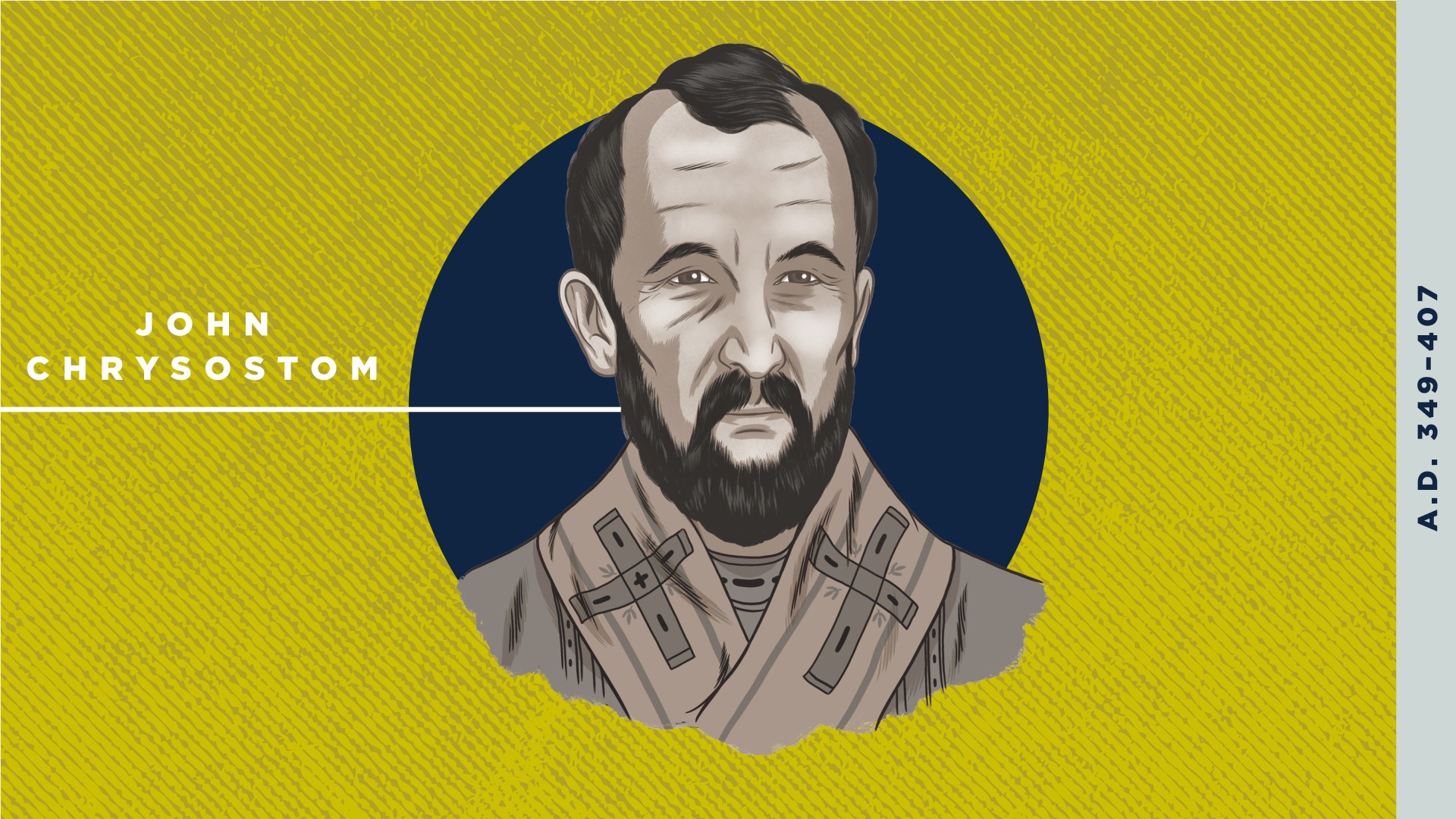
The shepherd needs great wisdom and a thousand eyes, to examine the soul’s condition from every angle. As there are plenty of people who are puffed up into arrogance and then fall into heedlessness of their own salvation because they cannot stand bitter medicines; so there are others who, because they do not pay a proportionate penalty for their sins, are misled into negligence and become far worse, and are led on to commit greater sins. The priest, therefore, must not overlook any of these considerations, but examine them all with care and apply all his remedies appropriately, for fear his care should be in vain.— John Chrysostom, from On the Priesthood

The Care of Souls: Cultivating a Pastor's Heart

The Care of Souls: Cultivating a Pastor's Heart

Lexham Press

312 pages

$24.99

Good diagnosis leads to accurate treatment. Like any competent physician, pastors don’t know what interventions to provide for a distressed soul until they first listen to that soul. When I was teaching this classical model of the cure of souls to seminarians, I had an excellent physician whom I saw on a regular basis. At one of my visits I commented on the parallels between physical care and spiritual care, lamenting that we pastors didn’t have at our disposal technological tools to analyze spiritual complexities that remain hidden to our human senses. Internally I was jealous; wouldn’t it be wonderful if there were x-ray or imaging machines to tell us what was impeding the soul’s spiritual health?

“It’s a common fallacy that we doctors rely on tests like that for our diagnosis,” my physician replied. “They’re wonderful to give you an accurate picture of exactly what’s going on physically right now, but they don’t reveal the actual cause of the body’s distress or disease.” He went on to explain that such scans provide only about 10 or 15 percent of the information he needed for a diagnosis. “For that I rely mostly on a patient’s oral history.”

It amazes me that the medical profession depends on something that we pastors in recent generations have tended to dismiss: quiet, probing conversation accompanied by a great deal of attentive listening. In my experience, the listening itself provides an immensely therapeutic benefit. Most people in our time are frenetically occupied with so many things that they don’t take the time to sit down and unburden their hearts. And if ever they are inclined to do so, there’s no one to listen. So simply by giving someone your undivided attention for 60 or so clock ticks, you’ve given them an immense gift.

John Chrysostom, in his treatise On the Priesthood, warns every would-be shepherd against haste or dictatorial methods in dealing with God’s sheep. “The decision to receive treatment does not lie with the man who administers the medicine but actually with the patient.” He calls for tact and patience among pastors, lest in rushing ahead with uninvited spiritual care they jeopardize the health and life of the soul. “The shepherd needs great wisdom and a thousand eyes, to examine the soul’s condition from every angle,” he writes. Proper diagnosis is of the utmost importance for faithful physicians of the soul. To rush in uninvited or with the wrong medication courts spiritual disaster.

What makes for good public preaching makes for effective individual teaching. Pastors must first listen to the soul before they can minister to the soul. Since the condition of the soul is disclosed primarily by the heart, effective physicians of the soul need to polish their listening skills, opening up not merely their ears but their hearts to the suffering of the soul as well.

Spiritual Truths for Spiritual People

Pastoral care is not purely an emotional or relational transaction. Ultimately, this is a spiritual exchange. And so at one and the same time as I give my undivided cognitive and sensory attention to what a person is telling me, I simultaneously intercede silently for the Spirit’s help and guidance. Specifically, I pray that this soul may speak the truth of what lies heavy on their heart and also that I might accurately discern how best to provide the help and healing that God intends by means of his Word and sacraments.

While faithful pastoral care demands the highest standards of excellence in training in every discipline of theology (dogmatic, historical, exegetical, pastoral) and the very best skills we can muster intellectually and emotionally, the essential core of what we do as shepherds of souls is always spiritual. By definition, that means our work has to do with the Holy Spirit.

The whole process of the care of souls revolves around the operation of the Holy Spirit. You and I as spiritual physicians are not interested in generic “spirituality.” According to Scripture, what is truly “spiritual” flows from the person and work of the Holy Spirit. Our insight into a person’s condition—an accurate diagnosis—and our treatment of that condition both hinge on the revelation of God’s Spirit in his Word. To properly grasp the whole circumstance, we need more than a perceptive mind or emotional intelligence; we need accurate discernment by means of that Word. And when we speak, we need more than human wisdom; we need instruction from God’s own Spirit by means of his Word.

Likewise what we bring to people by the power of God’s Spirit they are able to receive only because they are “spiritual,” meaning they themselves have received the Spirit by baptism into Christ. Just as a transmitter and receiver must be on the same frequency so signals can accurately connect, so the entire process of spiritual care occurs on the “wavelength” of the Holy Spirit (see 1 Cor. 2:12–13).

Though pastoral work is detective work, it’s not an inquisition. Never interrogate your parishioners or other distressed souls. You are not an inquisitor; you’re a shepherd tenderly caring for Christ’s sheep and lambs. You are interested in the manifold dimensions of their relationship with him. Yet you’re not a spiritual voyeur; you never pry into private matters or go digging for deep, dark secrets. In the course of your spiritual care, people may disclose rather personal and intimate aspects of their lives. But your interest in these things is never personal; you are there on errand and commission. You’re an ambassador and minister of Christ; Jesus intends to do his work through you.

Sometimes situations long hidden are revealed in the course of your pastoral care. Whenever they arise, you deal with those things appropriately with the tools entrusted to you, but you never go digging for dirt. That’s Satan’s work; he is the accuser. Christ on the other hand is the Redeemer; he has appeared in time to undo Satan’s work, to abolish sin and death and bring “life and immortality to light through the gospel” (2 Tim. 1:10). Now you’ve been sent to do Christ’s work, you’ve been made a minister of his gospel, to set free people long held captive to sin and give them a good conscience before God.

Treat the Disease, Not the Symptoms

Physicians really can’t proceed with treatment unless they know the ailment they’re trying to cure. It simply won’t do to treat the symptoms; you only prolong the morbidity in that case. Rather, physicians of integrity know how best to examine the patient, carefully considering all symptoms to be sure, but using those symptoms to lead them to a more accurate diagnosis of the underlying disease.

This brings to mind a congregant; let’s call him Dan. He was a middle-aged father of two sons in their late 20s. One, a very troubled young man named Robert, had given his mom and dad much cause for frustration and worry ever since adolescence. Taking up a position in the family business, Robert was putting out a good-faith effort to clean up his checkered past and seemed to be making good progress overcoming some poor life choices.

Dan and his wife, Nancy, were beginning to hope that Robert had turned his life around, although his steady girlfriend had recently broken up with him. Robert came in to see me about all of this, and I was able to point him to the promise of healing in Christ; he left my study in apparent peace.

But that night around two in the morning, the shrill ring of my phone shocked me out of deep slumber to instant alert mode. Even in my stupor, I recognized Nancy’s voice immediately. “It’s Robert,” she blurted out woodenly. “We’ve found him in our backyard. He’s shot himself.”

The rest of the night was of course a blur; I threw on some clothes and dashed to their home. Flashing squad car and emergency vehicle lights lit up the driveway and façade of the house in eerie red and blue. Dan and Nancy were in shock; I was in shock too as I prayed and ministered to them, internally going through my own “could have/should have/would have” list about my visit with this young man not 12 hours before he took his own life.

You go on autopilot in situations like that; you comfort those who mourn and you weep with those who weep. But mostly you listen in order to try to comprehend the incomprehensible so you can pray God’s consoling healing for the inconsolable, empty black hole of such a violent, horrific tragedy when everyone is left searching their hearts and finding no answers. Some days after the funeral, Dan called me late one night. “Can I see you tonight, Pastor?” he asked. “Of course,” I replied. “I’ll meet you in my study in 30 minutes.”

The agony was palpable as Dan joined me at my conference table and began. We talked and talked well into the wee hours while Dan relived the misery, pouring out his anguished heart. I heard loss and grief, of course, but I sensed there was more in there. Silently I prayed that the Spirit would give him words to speak and me ears to hear so this abscess could be lanced.

Slowly the picture emerged; Dan was fixated on the argument that he and Robert had the night he took his life. Harsh words had been exchanged between them— bitter words and hateful. Dan’s remorse was almost too much to bear. Finally, he reached the horrid, ugly core of the matter. “It was my hunting rifle he used,” Dan told me through wrenching sobs. “Why didn’t I lock it up?”

There’s no arguing with regret. There’s no use explaining the hard, cruel facts: that suicide has many victims besides the one who pulls the trigger, that irrational thoughts lead to irrational actions, that those intent on taking their own lives will find a way no matter what. Being attentive in mind and heart, I diagnosed Dan’s core hurt as guilt. Now it was time to be intentional in cure.

“Let’s take this mess to Jesus where it can be resolved,” I said. And so we knelt together, Dan and I, at the prie-dieu in my study. There in the quiet of that night before the image of the Crucified One, Dan gave voice to his remorse and guilt—not just to me but to the Lord who by his blood had blotted out every sin. And there that night, Dan heard with his own ears not just me but the Savior who commissioned me to forgive all sins in his name and stead. Dan stood forgiven before God himself in heaven.

Not only does a physician of souls need a thousand eyes in terms of spiritual discernment, as John Chrysostom put it, but he needs to be well practiced in the art of faithful and effective cure, applying the word and sacrament to the underlying ailments of the soul in a manner intentionally tailored to bring optimal health and healing in Jesus. He bled and died to purchase people as his own, and he has placed them into your care and keeping to tend them in his name and stead. He knows full well you have no resources whatsoever to give them; that’s why he puts his own Word into your mouth to speak and gives you his sacraments to administer to make the wounded whole, to bring hope and healing to despairing and broken souls.

Harold L. Senkbeil is an executive director of DOXOLOGY: The Lutheran Center for Spiritual Care. This article is adapted from his book The Care of Souls: Cultivating a Pastor’s Heart (Lexham Press).

This article is from our special issue on 9 Time-Tested Mantras for Ministry: Sage Advice for Pastors, from the Early Church to the Modern Age.

Pastors

Pastors, Printers, and the Priesthood of Believers

Without the ministry of skilled printers, Reformers may never have found their voice.

Portrait by Joel Kimmel

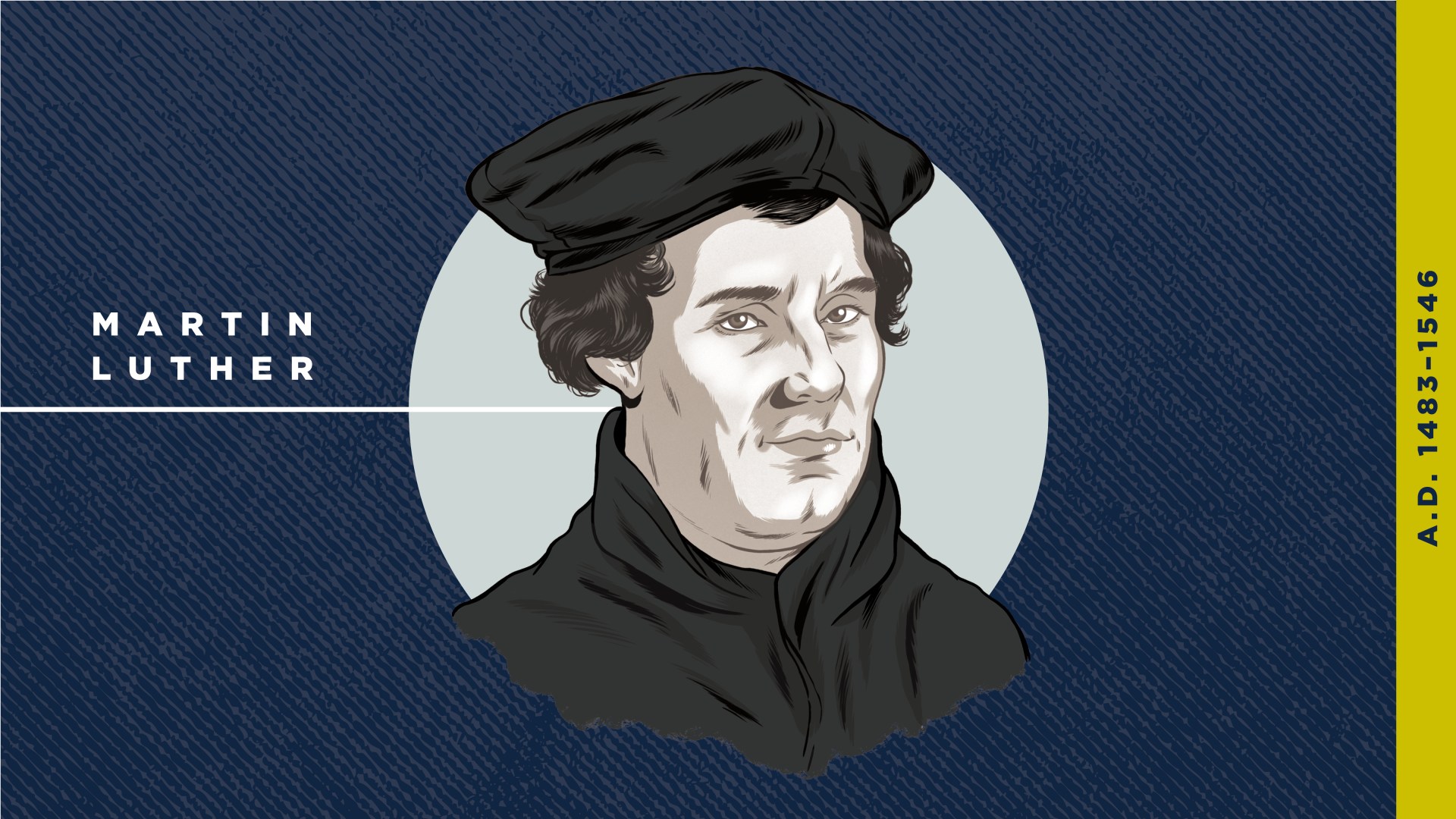
All Christians whatsoever really and truly belong to the religious class, and there is no difference among them except in so far as they do different work. … A shoemaker, a smith, a farmer, each has his manual occupation and work; and yet, at the same time, all are eligible to act as priests and bishops. Every one of them in his occupation or handicraft ought to be useful to his fellows, and serve them in such a way that the various trades are all directed to the best advantage of the community, and promote the well-being of body and soul, just as the organs of the body serve each other.— Martin Luther, from An Appeal to the Ruling Class

In 1517, no one expected a little-known monk at a brand-new university in an out-of-the-way town to transform the world. But the printing press afforded Martin Luther a reach throughout Europe he could not have known otherwise. According to Andrew Pettegree, over the course of the 16th century, printers issued nearly 5,000 editions of Luther’s works, and Luther was the most published author ever by the end of the century. In the 1566 edition of his Table Talk, Luther was recorded by Johannes Aurifaber as saying, “The printing press is the greatest and ultimate gift through which God continues to spread the word of the gospel. It is the last flame before the end of the world.”

But don’t imagine that Luther’s success was a result of his lone pastoral efforts and his prescient recognition of a budding technology. Much of what he achieved depended on close partnerships with printers, editors, and craftsmen of his day. Richard Cole wrote in “Reformation Printers,” “Individual authors and their specific works are only half of the story of the printing dimensions of Reformation times. The people who cast the type and rolled the ink are frequently overlooked by scholars because they are regarded as mere cogs in the wheel of the printing revolution.” Luther saw them as co-ministers whose skill and courage could expand the Reformation’s cause and whose mistakes could damage the gospel itself.

When Luther’s writing first took Europe by storm, Johann Rhau-Grunenberg was the only printer in Wittenberg, and evidently he was not up to the task. Grunenberg’s inability to meet the rapid and frenzied turnover of Luther’s writings proved a liability. In 1521, Luther wrote to Georg Spalatin about his frustrations with Grunenberg’s printing:

I cannot say how sorry and disgusted I am with the printing. I wish I had sent nothing in German, because they print it so poorly, carelessly and confusedly, to say nothing of bad types and paper. John [Grunenberg], the printer, is always the same old Johnny.

Although it was clear they were unequally yoked, a remote printer was out of the question because of the risk of lost or stolen pages. Luther visited the printing house daily, and, despite his exasperation over the slow pace of Grunenberg’s work and his lack of style or skill, Luther expressed appreciation for the printer’s honesty and loyalty.

Luther fretted over the piracy of his work as he navigated a newly developing industry. Unauthorized printing driven by greed led to sloppy work and, from Luther’s vantage point, the misrepresentation of the gospel message. His 1521 letter to Spalatin continued,

What is the use of my working so hard if the errors in the printed books give occasion to other publishers to make them still worse? I would not sin so against the Gospels and Epistles: better let them remain hidden than bring them out in such form.

Eventually Luther recruited to Wittenberg more skilled printers dedicated to the cause of Reformation. The Lotter family established a branch of their publishing house in Wittenberg after connecting with Luther at the Leipzig Disputation of 1519. Their support lasted decades. Then Hans Lufft began printing in Wittenberg in 1523, producing thousands of copies of Luther’s Bible with highly regarded skill.

Luther also benefited greatly from his close friendship and collaboration with Lucas Cranach the Elder, the godfather of his children, whose artistry became an identifiable mark of Luther’s works.

Meanwhile, Caspar Cruciger proved indispensable for editing, proofreading, translating, and publishing Luther’s works. As Luther was completing the Church Postil, a contemporary observed, “Luther was amazed at how he had spoken and praised the skill of … Caspar Cruciger who was so adept at catching his words and understanding his way of speaking, saying, ‘I think he made it a better sermon than the one I preached.’”

A Multi-Vocational Priesthood

Luther’s many partnerships stand in contrast to ministry efforts in some churches today. In these contexts, the burden of pastoral work falls solely on the office of the pastorate with little or no safety net. We see symptoms of this in the growing awareness of mental health concerns within the pastorate as well as the proliferation of destructive behavior, corruption, and abuse in ministry.

Yet church history reveals that pastors often functioned in clerical networks and, in the Protestant traditions, heavily emphasized contributions from the priesthood of all believers. This meant partnership, fellowship, support, and accountability from people in vocations other than traditional ministry.

On this topic, Luther wrote,

A shoemaker, a smith, a farmer, each has his manual occupation and work; and yet, at the same time, all are eligible to act as priests and bishops. Every one of them in his occupation or handicraft ought to … promote the well-being of body and soul, just as the organs of the body serve each other.

Echoing Paul from 1 Corinthians 12, Luther believed all vocations could—and should—contribute to the church’s ministry work.

The success of print was hardly a foregone conclusion when it first emerged. Economic risks were substantial, and there is no better example of this than Johannes Gutenberg himself, who died penniless. Although the financial stability of the industry would improve with time, economic risks continued to plague printers who chose to produce controversial Reformation publications in contexts enforcing censorship laws. These printers were driven to partner with pastors not by a transactional incentive but by a missional one.

Consider the Swiss Reformation, which—it has been joked—began “with an empty stomach.” Zurich Reformer Ulrich Zwingli was visiting the home of printer Christoph Froschauer to encourage him as he worked furiously to complete a new edition of the epistles of Paul in time for the Frankfurt book fair. Froschauer decided to serve sausages to the workers despite Lenten restrictions, and he was imprisoned. Zwingli’s first Reformation treatise, published by Froschauer’s press, proclaimed the freedom of food and opened the door for Froschauer’s freedom from jail. His commitment to Reformation printing grew, and it was known by all that he was no mere cog in the Reformation machine but a printer with evangelical convictions dedicated to advancing the reform of the church. There is surely no better metaphor for the Reformation than sausages freely served at a printer’s house during Lent.

The French Reformation, too, is filled with stories of printers navigating the ever-fluctuating censorship laws issued from Paris. When Calvin’s Institutes of the Christian Religion became the focus of prohibition, printers were threatened with hanging if they did not surrender the Institutes, as well as any other books prohibited by the court. Facing financial ruin, printers in Paris requested that an errata page—normally a list of printing errors, but in this case a list of “errors” in thinking—be included for those books advancing “Lutheran” views so they could still sell their product. This option worked only for a time.

During the ebb and flow of Protestant persecution, prohibited books were often burned along with the heretic, their trial records, and sometimes even the printer. These printers would be added to the martyrologies of their day, such as Jean Crespin’s Le livre des martyrs (1554), as exemplars of what it meant to advance the true church.

As my husband and I prepare to launch a new ministry, we are trying to learn from the example of these Reformation partnerships. We have relied heavily on a photographer, web designer, and videographer who value our convictions and believe in our callings to serve the church. Their gifts have been a key part of the formation of our ministry and its future. Here is the priesthood of all believers at its best: each person using their gifts, training, and expertise to advance the work of the church.

Partnerships and Undervalued Voices

Many unlikely voices were elevated during the early Reformation thanks to the printing press and courageous printers. Argula von Grumbach was the first female Protestant lay theologian to publish in her time. At age 31, she became a public advocate for Luther after publishing an open letter to the faculty at the University of Ingolstadt in 1523. She challenged the faculty to debate her on matters of Scripture and theology in the German language, which was an audacious move for any layperson, and especially for a woman, at the time. In only two months, her first pamphlet was reprinted in 14 editions, which rivaled only Luther’s writings in propagation. Here was an underestimated voice that suffered abuse, threats, and loss of status for her boldness. But she played an important role in advancing the ministry of reform.

Printers, too, sometimes defied vocational expectations. Margarethe Prüss was a daughter, wife, and mother-in-law of printers living in Strasbourg. Print was in her blood. Although Prüss lived during a time when guild regulations had tightened to exclude women from apprenticeships, she inherited the family business after her father died and could pass it on to her husband as long as she married a printer. So she did—three different times.

Because widows were given special privileges for managing a printing house independently after the death of their husbands, Prüss was able to take her family’s press in a very different direction than her father had, directing publications in support of Reformers like Luther and other, more radical voices of the Reformation such as Strasbourg’s “Church Mother,” Katharina Schütz Zell.

During a time of social and economic unrest among the peasants of Germany, Prüss published the prophetic visions of Ursula Jost, a follower of Melchior Hoffman who experienced 77 apocalyptic visions between 1525 and 1532. The risks were considerable when Prüss printed Jost’s Prophetic Visions (1530) because the Radical Reformation had gained powerful enemies. Threats of arrest befell Prüss’s third husband, Balthasar Back, followed by censorship and confiscation causing significant financial loss. Weathering these storms and more, the Prüsses’ publishing house continued to print Radical Reformation writings.

Because Reformers believed the anointing to the priesthood of all believers was rooted in baptism, children and women were explicitly included in this affirmation. Additionally, women during the Reformation frequently pointed to Jesus’ own words in Matthew 10:32 to stress the “whoever”—both men and women—commanded to proclaim his name.

Everyone has a part to play in God’s ministry. I still remember the confidence I felt the first time I was given the opportunity to proclaim God’s Word among the assembly of believers. I wore a pink suit with gold buttons, and I felt the Holy Spirit with me as I spoke. To empower the body of Christ, pastors would do well to develop sensitivity to the skills, interests, and callings of others in their congregations.

The pastors of the Reformation could not have achieved what they did without fostering partnerships with gifted people who believed in the mission behind what they published and took great risks to advance that message. Their story is a reminder that pastors need more than interchangeable volunteers and support staff who prop up our own ministries. We need true ministry partnerships with other vocations to advance the work of the church.

Jennifer Powell McNutt is the Franklin S. Dyrness Associate Professor of Biblical and Theological Studies at Wheaton College; parish associate at First Presbyterian Church of Glen Ellyn, Illinois; and co-president of McNuttshell Ministries Inc

This article was adapted from a paper delivered in October 2019 at the Center for Pastor Theologians Conference. The full article will appear in its Bulletin of Ecclesial Theology, exploring how the pastorate should relate to technology. And if you like the historical approach here, there’s more in our special issue on 9 Time-Tested Mantras for Ministry: Sage Advice for Pastors, from the Early Church to the Modern Age.

Ideas

No Job, No Friends, No Faith

Staff Editor

The coming wave of “deaths of despair.”

Christianity Today April 24, 2020
Illustration by Mallory Rentsch / Source Images: Skynesher / RubberBall Productions / Getty / Priscilla Du Preez / Matthew T Rader / Jack Ward / Unsplash / WikiMedia Commmons

The average lifespan of American men declined in 2017. It declined in 2016 and in 2015, too. This loss isn’t equally distributed across the male population. Life expectancy in the US has long reflected inequality—the wealthy outlive the poor, and black Americans die younger than whites—but it has generally risen across demographics for a century. This recent decline, by contrast, is strongly tied to a specific group: less-educated white people, particularly working-class white men. And many of the deaths they’re dying early are of a specific type: suicide, drug overdoses, and diseases linked to alcohol abuse. Estimated to number around 600,000 in the past two decades, they’re called “deaths of despair.”

Our response to the new coronavirus will almost certainly multiply such deaths. Stay-at-home orders and social distancing more broadly exacerbate the conditions that foster deaths of despair.

This isn’t an argument for letting COVID-19 run wild—that would be deeply harmful too, as a grimly mounting death toll even with mitigation shows. Yet it’s much easier for someone like me to accept a stay-at-home order as the needful, ethical choice to save lives than it is for someone vulnerable to a death of despair . It’s easy for me, with a job I already did from home and a tech-savvy church and circle of friends, to opine about the necessity of fighting this pandemic. But if you live in a dying coal town in western Pennsylvania where what little work was available has been prohibited for weeks, and your internet connection is too slow to stream Mass, and you haven’t talked to your elderly mother in days because she can’t pay her phone bill, and your kid’s getting into drugs while the high school is closed—well, the value of drastic public health measures isn’t so clear.

There’s no single reason for deaths of despair , but three significant causes reflect both what we observe in communities where these deaths are rising and what Scripture tells us about human nature. All three causes will be intensified by this pandemic.

No Job

The first is economic hopelessness from lack of work. Unlike poverty or income inequality, a “consistently strong economic correlate [to deaths of despair] is the percentage of a local population that is employed,” reports the New Yorker. Research published there from Angus Deaton and Anne Case, a pair of Nobel Prize–winning economists, found “that the places with a smaller fraction of the working-age population in jobs are places with higher rates of deaths of despair, and that this holds true even when you look at rates of suicide, drug overdoses, and alcohol-related liver disease separately. They all go up where joblessness does.”

Of course they do! Loss of work has ramifications far beyond lower income. It affects our conception of ourselves, our worth, and our relationships. God’s design for humanity always has—and always will—include a balance of good work and good rest. God himself modeled this in the creation story of Genesis 1, and immediately thereafter tasked Adam with tending the Garden of Eden (Gen. 2:15). Jesus promised his followers abundant rest and an “easy” yoke (Matt. 11:28–29), not no yoke. And even the transporting vision of the new Earth in Isaiah 65:17–25 describes a humanity that still finds purpose in meaningful labor: “My chosen ones will long enjoy the work of their hands,” God says. “They will not labor in vain … for they will be a people blessed by the Lord.” When there is no good work to do, it is no surprise to find people in despair.

No Friends

The second cause is breakdown of local community. Our country (and indeed much of the Western world) has a crisis of loneliness. We don’t spend time with each other as we are made to do. We have dangerously declining levels of social trust and disintegrating institutions of civil society, as Robert D. Putnam detailed in his seminal book on the subject, Bowling Alone. “Without at first noticing,” Putnam writes, “we have been pulled apart from each other”—only now, the isolation of pandemic forces this reality before us every day, most vividly for those without the emotional insulation afforded by financial stability.

No Faith

Community dissolution is closely related to the third cause of deaths of despair: a decline in religiosity, by which I mean the institutions and shared life rhythms of an active and sustaining faith. “The woes of the white working class are best understood not by looking at the idled factories but by looking at the empty churches,” Timothy Carney argued in his 2019 book, Alienated America. Economics obviously matters, but Carney presents compelling statistical evidence that loss of church life is the most overlooked, important driver of despair.

This too is precisely what Christians should expect. When God declares in Genesis 2:18 that it is “not good for man to be alone,” he speaks of much more than the companionship of marriage. Scripture consistently calls us to a life together—not that there is never occasion for isolation, but that normal human life should be spent in community ordered around following Jesus. Part of the horror of the Crucifixion is Christ’s isolation (John 16:32), and the Epistles bristle with exhortations to be together (Heb. 10:24–25), eat together (1 Cor. 11:33), worship together (1 Cor. 14:26–27), and together “grow up in every way into him who is the head, into Christ” (Eph. 4:15–16, ESV). When church community dissolves, despair will crystallize.

All three causes of deaths of despair feed each other—“white Americans are less likely to attend religious services when they are unemployed,” Carney notes, and a church with less attendance is more likely to close, removing one more source of healthy community. All three causes are fed by this pandemic, too, and deaths of despairwill rise accordingly. For Christians, the challenge will be to work within the constraints of pandemic response to offer whatever relief, hope, and solace we can; to speak out for the despairing (Prov. 31:8–9); and to fight the evil of loneliness for every inch it tries to claim.

Bonnie Kristian is a columnist at Christianity Today, a contributing editor at The Week, a fellow at Defense Priorities, and the author of A Flexible Faith: Rethinking What It Means to Follow Jesus Today (Hachette).

Christianity Today Awarded By Evangelical Press Association

FOR IMMEDIATE RELEASE

Contact: Cory Whitehead, Executive Director of Mission Advancement
E-mail: cwhitehead@christianitytoday.com

Carol Stream, IL April 24, 2020 – In its annual publishing awards livestreamed on April 21, the Evangelical Press Association (EPA) honored Christianity Today with 29 publishing awards chosen by journalism peers across the country.

These annual awards honor member publications through two contests: the Awards of Excellence for publications as a whole and the Higher Goals for individual pieces that were produced during the 2019 calendar year.

For the sixth straight year, ChristianityToday.com won the top Award of Excellence for General Publication (Digital). Additionally, Christianity Today magazine won an Award of Merit in the General (Print) category.

Of the 27 Higher Goals awards the ministry received, Christianity Today had six first-place winners, including:

Cause of the Year Article – Biblical Literacy
The Greatest Story Ever Animated — Paul Pastor.

Cause of the Year Illustration/Photo – Biblical Literacy
Your Bible Translation is Imperfect. It’s Also a Miracle. — Casey Fritz, Sarah Gordon.

Editorial
Who Owns a Woman’s Body? Not Who You Think — Andrea Palpant Dilley.

Personality Article
The Forgotten Female Preacher — Grant Wacker.

Reporting
Amazon Sold $240K of ‘Liturgy of the Ordinary’ Fakes, Publisher Says — Kate Shellnutt.

Standing Column
Beginnings of Wisdom — Jen Wilkin.

“We are so proud of the journalistic and artistic excellence recognized by these awards, and the ongoing commitment by our editorial talent,” said CT editor in chief Daniel Harrell. “The passion and conviction exhibited in our work will continually have as its aim informing our readers with thoughtful, engaging and beautiful content to encourage our faith and strengthen the church.”

A full list of EPA 2020 awards, including the other Christianity Today awards, can be found at the association’s website: Awards of Excellence and Higher Goals.

Christianity Today is a nonprofit, global media ministry centered on Beautiful Orthodoxy—strengthening the church by richly communicating the breadth of the true, good, and beautiful gospel. Reaching over 4.5 million people monthly with various digital and print resources, the ministry equips Christians to renew their minds, serve the church, and create culture to the glory of God.

Ideas

To Those Who’ve Lost Loved Ones

Faith is the gravity of grief, the ground of ultimate reality.

Christianity Today April 24, 2020
Illustration by Mallory Rentsch / Source Images: saemilee / Getty Images

The following is the latest in a series of daily meditations amid the pandemic. Today’s installment comes from Daniel Harrell, our editor in chief. For our musical pairing, we introduce you to Scottish fiddler Hanneke Cassel and her compilation of joy from fellow fiddlers worldwide, “Pure Dead Brilliant Livestream Finale.” All songs for this series have been gathered into a Spotify playlist.

“Brothers and sisters, we do not want you to be uninformed about those who sleep in death, so that you do not grieve like the rest of mankind, who have no hope. For we believe that Jesus died and rose again, and so we believe that God will bring with Jesus those who have fallen asleep in him.”1 Thess. 4:13–14

Meditation 22. 2,761,121 confirmed cases, 193,671 deaths globally.

When you’ve lost someone you love, the grief books say to make plans for holidays and birthdays and other important dates. Be ready to be overwhelmed by emotion and memories and the throbbing pain of loss.

When it came to my first wedding anniversary after my beloved wife, Dawn, died of pancreas cancer, I wanted to mark it well. Dawn and I differed on how to do this when she was alive. I was always a “celebrate the actual date” person while she was more of a proximity celebrator: Wait for the weekend and the babysitter to do it right. At the same time, right did not necessarily mean extravagant. Dawn was both Scottish and the daughter of missionaries. Doing it right usually included doing it cheap. Not me. I liked to splurge. Fancy dinner out. A show, a trip, something new, flowers and earrings, rent a convertible, dress up, make it memorable.

Dawn was usually game and always a good sport—but deep down she longed for more than any singular moment would provide. She craved continuity, integration, connection, emotion, and internality. As I read through her journals after she died, I saw she wrote and wrote about her passions and core loves, her spiritual crests and crashes—but not one single sentence about our “memorable moments,” no mention of an anniversary, birthday, or holiday. The deeper places were where the significance lay.

I remember a sermon on the Israelites crossing the Jordan in the Book of Joshua—a moment in time with potential for either transformation or tragedy. Bewildering is how much the Promised Land on the other side of the river can look just like the desert side left behind. (This is true, I’ve seen it while in Israel. It’s desert on both sides of the Jordan.) The sermon went on about our need to move forward despite the lure to turn and go back. With death and loss, there is no going back, no matter how much you'd give for just one minute more of the way life was.

Søren Kierkegaard wrote, “Our life can only be understood backwards, but it has to be lived forwards.” In contrast to dreams and ideals, Kierkegaard (as an existentialist) emphasized existence: What is real and painful is more important than any ideal.

Though disposed toward despair, Kierkegaard nevertheless saw life’s hard reality as an invitation to faith. Not faith in the positive thinking or even the doctrinally coherent, but faith as that passionate commitment to Christ in the face of uncertainty, a risk of belief that demands loss of self for love’s sake. True love aims at the actual people in your life, not imaginary conceptualizations of how you believe or might wish these people should be. True love earnestly absorbs disappointments and overcomes faults as Christ has done in his love for us.

This requires a constant discipline of forgiveness. My wife wrote, “Forgiveness is agreeing to live with the consequences of another person’s sin. You are going to live with those consequences anyway whether you like it or not, so the only choice you have is whether you will do so in the bondage of bitterness or in the freedom of forgiveness. No one truly forgives without accepting and suffering the pain of another person’s sin. That can seem unfair and you may wonder where the justice is in it, but justice is found at the foot of the cross, which makes forgiveness legally and morally right.”

On what would have been our 16th anniversary, I kept it cheap and quiet and as reflective as I can manage, being me. I rode my bike to our favorite spot, drank in the sunlight and silence on the shore, and wrote her a letter about being the different person I’ll now have to be without her here. I know she forgave me and loved me and there is strength in that knowledge. Courage to step further in.

An old Puritan Prayer says: “Break the Dagon of pride in pieces before the ark of thy presence; Demolish the Babel of self-opinion, and scatter it to the wind; Level to the ground my Jericho walls of a rebel heart; Then grace, grace, will be my experience and cry.”

Sign up for CT Direct and receive these daily meditations—written specifically for those struggling through the coronavirus pandemic—delivered to your inbox daily.

Church Life

When I Was Forbidden to Attend Church, I Learned to Cultivate a ‘Remote’ Faith

5 lessons for doing church together while we live apart.

Christianity Today April 24, 2020
Illustration by Mallory Rentsch / Source Images: Nicole Wolf / Unsplash / Didier Descouens / WikiMedia Commons

When I was 15, I’d listen to the conservative evangelical teaching of Back to The Bible on the radio, then watch the 700 Club on TV. I’d read a book by faith healers Frances and Charles Hunter, followed by a book about persecution by Romanian pastor Richard Wurmbrand. I read Scripture devotionally from a J. B. Phillips translation of the New Testament and studied my New American Standard Bible.

It was a spiritual hash and a highly unconventional approach to discipleship for a teenaged follower of Jesus. But when my Jewish parents told me, “As long as you live under our roof, you will not be permitted to attend church,” they were clear that they hoped this ban would starve out my new faith in Jesus the Messiah.

For the first three years as a believer, I worshiped alone in my room, sustained by radio preaching and Christian books I became adept at sneaking into the house. I could not attend church on a regular basis until I turned 18. Until then, I grabbed snatches of fellowship where I could with friends at school and occasional visits to their churches when I spent the night at their homes.

During the past few weeks, COVID-19 shelter-in-place rules have moved most (though not all) believers out of pews and into their homes. America’s churchgoers are now participating in corporate worship, prayer meetings, and Bible studies via Zoom, Facebook Live, or YouTube. While some are hopeful this will be a temporary hiccup in church life, others who are elderly, immunocompromised, or chronically ill—or live with those who are—may not be able to physically attend a church service for the foreseeable future because of the ongoing pandemic.

My experience as a new believer in a home hostile to my faith was a profoundly formational experience. It not only shaped my expectations and hopes about being a part of a local body, but it also prepared me for a chronic illness in adulthood that kept me from church for weeks, even months, at a time. Even after a couple of toxic church experiences during which it was tempting to revert to do-it-myself Lone Ranger faith foundations to protect myself from hurt, I’ve never have been able to do so—in large part because of what I learned worshiping alone in my room as a teen. Here are five truths that isolation taught me of what the church is and isn’t.

1. We do not gather for busywork.

I was once on staff at a church that hosted an annual community Easter egg hunt. The church devoted significant financial resources to this event, and it was treated as an all-hands-on-deck commitment for church members because the day included a short evangelistic skit and an invitation to church. This continued even after an analysis revealed that not one person who’d ever attended this event had come to faith in Christ or had begun attending services regularly. The mantra of “but we’ve always done it this way” kept the egg hunt on the church calendar year after year.

The Bible reading I’d done alone in my room gave me the idea that gathering was focused on the risen Christ, that it was counter-cultural and could be risky business. When I first started attending church, I was shocked by the amount of religious busywork in most congregations. I still am. Activities like softball leagues or spa-themed events are well-intentioned and usually have a Christian veneer to justify their presence on the church calendar. Certainly these things can help cultivate friendships. But the current pause on church activity is an invitation for leaders and members alike to ask how the events packing our pre-COVID ministry calendars relate to our mission.

2. Christian fellowship is more than good church attendance.

Some believers have always had difficulty attending Sunday services, including public servants, medical workers, caregivers, and those in fragile health. I noted in my book Becoming Sage that many well-meaning believers quote Hebrews 10:24–25 as a way to encourage others to show up at church. However, the passage is not about shaming people into attending a church service on Sunday mornings.

Rather, these verses emphasize everyday mutuality in our relationships as we urge one another in community toward lives characterized by love and good works, in light of the fact that the end of days grows ever nearer. This passage reminds us that it is our job to pursue meaningful expressions of fellowship whenever we gather with other believers. Commitment to a local body of believers is the primary way in which these relationships are formed, as well as the means by which we share together in corporate worship, learning, Communion, and service.

There is a greater commitment than church attendance, and it enfolds even those who can’t regularly attend. Hebrews 10 describes the nature of our lives together, whether we meet at church or run into another believer in the frozen food aisle at the grocery store.

3. We are not meant to be religious consumers.

In recent years, I’ve watched the rise in popularity of multisite churches that stream their services to satellite locations and online broadcasting. Friends burned out on congregational life would tell me they were staying connected to a church, often from a distant city, by watching a livestream of a service. They could shop for the master Christian communicator of their choice from the comfort of their own living rooms without having to deal with any of the uncomfortable or difficult bits of sharing life with people in their own hometowns.

While I am the first to acknowledge being on the other side of a screen is better than nothing, it is not meant to be a way to escape from the “iron sharpens iron” nature of embodied community. When we are forced into physical distancing, we may discover in new ways that we were never meant to be consumers in the body of Christ. My experiences of isolation both during my youth and throughout my adulthood have confirmed to me that there is a deeply incarnational reality in Jesus’ words about two or three gathering in his name. We cannot share spiritual gifts if we are a congregation of one (1 Cor. 12).

Before I understood much about my new Christian faith, I understood I connected to the body through the Head (Col. 1:18). The kingdom of God did not have just one member—me. We belong to one another (Rom. 12:5–6). We may not be free to meet in person, but we are still free to connect in meaningful ways through our screens, our phones, and snail mail.

4. Trials clarify and purify.

The past few years have seen a torrent of bad news stories about the church. Abuses of power by leaders, coverups by those surrounding them, and shrinking numbers of attenders in many streams of the church point to a widespread spiritual unhealthiness.

Author and former CT executive editor Andy Crouch recently tweeted that pastors should prepare for a major decline in giving and the likelihood of bans on large gatherings for at least the next year. In the short term, an economy in recession and ongoing serious public health concerns are going to prevent us from “going back to normal.” But God isn’t calling us back to normal. He is calling us forward—following him as pilgrims into what’s next. As others have pointed out, we might use this time to reevaluate the health of our church ministries and our own spiritual walk.

When I was a teen, I assumed that an ideal discipleship setting would include church involvement and mentoring partnerships at a vibrant congregation, a supportive family, and a carefully curated reading and media list that would weed out fringe faith teachers. Ironically, my early discipleship included the opposite. However, the trials I experienced required me to learn to seek God first. The difficulties and discomfort left little room for nonessentials in my young faith.

5. Gospel proclamation requires lament.

Through the years, I’ve been stunned by the number of people I’ve known who have muted the confused, mournful sections of Scripture because they claim those passages make them uncomfortable. As a person with a chronic illness, I have learned that my diagnosis also makes these same people uncomfortable. Well-meaning church members come at us with “sure-fire” cures like dietary fixes, nutritional supplements, or essential oils. They want to cure our pain but also make their own discomfort disappear.

But those kinds of expressions of concern tend to mute the thing we need the most—someone who can be present and stick with us for the long haul. K. J. Ramsey noted in a recent CT piece:

All too often in our bodies, and in the body of Christ, we’d rather pretend health is the absence of pain rather than the willing care of it. … When the church does not make space for lament, the church is not whole.

The practice of lament in a congregation cultivates an environment where this is possible in ways that quick-fix practices and happy talk faith never can. Lament is the language of empathy.

The mirror of God’s Word is meant to show us not only who God is but also who we are. By minimizing the grief, pain, and loss of our human condition, we substitute an airbrushed, truncated version of faith for the real thing. The losses we’re all experiencing in this pandemic call for lament and not for the peppy sloganeering of therapeutic moral deism that has passed for the good news in some circles.

Dietrich Bonhoeffer’s anti-Nazi convictions led him to an underground expression of church before and during World War II, eventually landing him in prison, then concentration camps as he was implicated in a plot to kill Hitler. He was executed by the Nazis in 1945. His words from his book Life Together formed me as a young believer. May they shape us now—together—in this era when we’re doing life apart:

It is easily forgotten that the fellowship of Christian brethren is a gift of grace, a gift of the Kingdom of God that any day may be taken from us, that the time that still separates us from utter loneliness may be brief indeed. Therefore, let him who until now has had the privilege of living a common Christian life with other Christians praise God’s grace from the bottom of his heart. Let him thank God on his knees and declare: It is grace, nothing but grace, that we are allowed to live in community with Christian brethren.

Michelle Van Loon is the author of six books, including Becoming Sage: Cultivating Meaning, Purpose, and Spirituality at Midlife (Moody Publishers), which released April 7.

Editor’s note: Want to read or share in Portuguese, Indonesian or Korean? Now you can!

For translations of other select CT coronavirus articles, click here and look for the yellow links.

Apple PodcastsDown ArrowDown ArrowDown Arrowarrow_left_altLeft ArrowLeft ArrowRight ArrowRight ArrowRight Arrowarrow_up_altUp ArrowUp ArrowAvailable at Amazoncaret-downCloseCloseEmailEmailExpandExpandExternalExternalFacebookfacebook-squareGiftGiftGooglegoogleGoogle KeephamburgerInstagraminstagram-squareLinkLinklinkedin-squareListenListenListenChristianity TodayCT Creative Studio Logologo_orgMegaphoneMenuMenupausePinterestPlayPlayPocketPodcastRSSRSSSaveSaveSaveSearchSearchsearchSpotifyStitcherTelegramTable of ContentsTable of Contentstwitter-squareWhatsAppXYouTubeYouTube