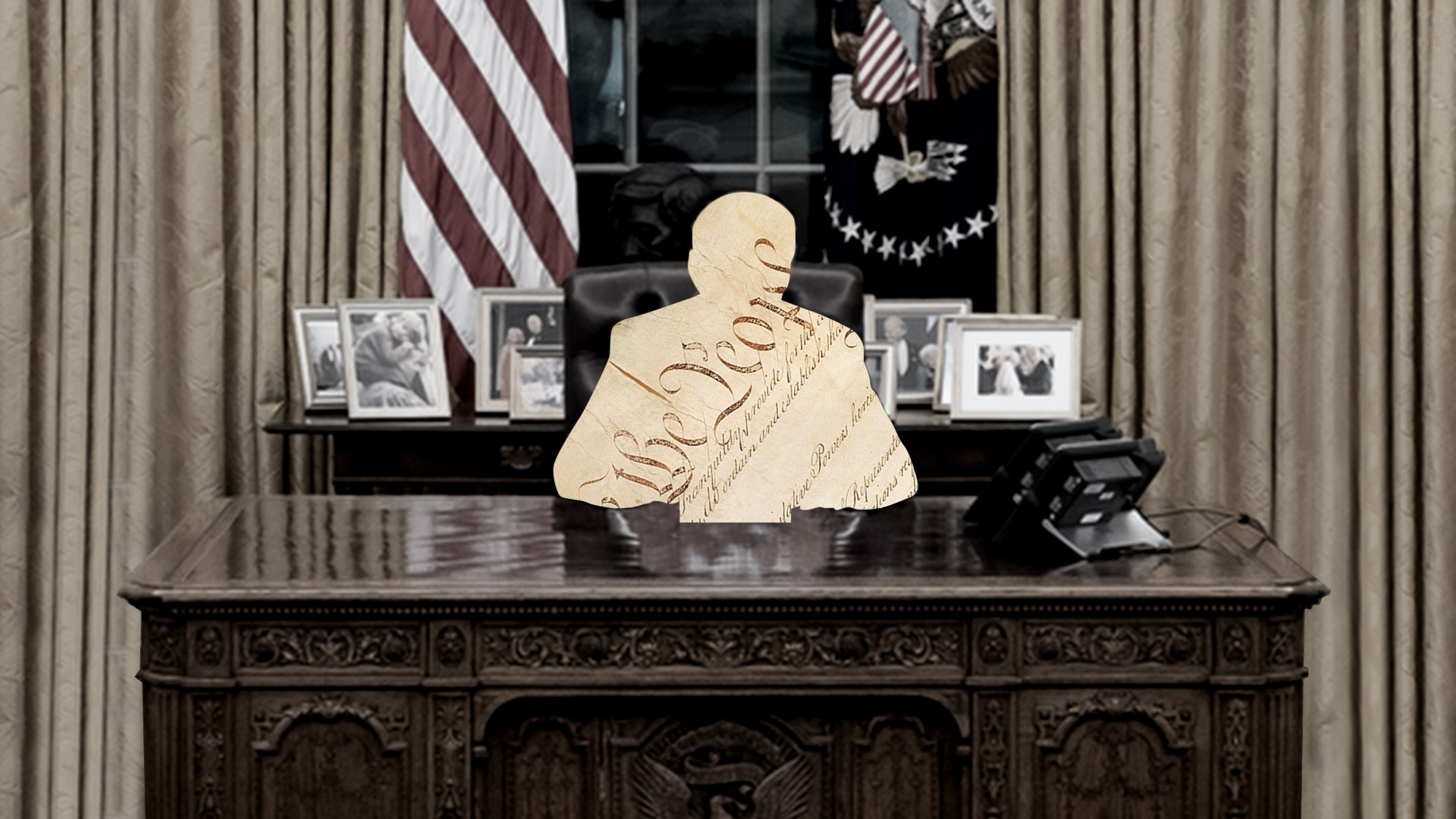
This month, the United States Senate is considering a bill to protect same-sex couples’ right to marry. Seven years have passed since the historic Obergefell decision, so these initiatives might look like grandstanding or redundant efforts. But in late June, the Supreme Court overturned the 1973 Roe v. Wade ruling, hinting at the possibility of revisiting other cases.
The Dobbs ruling unleashed a flurry of legislation, as lawmakers rush to codify questions that had previously been settled through the courts. While Democrats at the federal level are working to enshrine same-sex marriage, Republicans in conservative states are working to restrict and prohibit elective abortion.
A political environment that didn’t seem like it could get any more polarized suddenly has.
The swell of policy initiatives has also highlighted the need for discerning leaders—those who know not just how to win elections and judicial seats but how best to rule. Leaders like King Solomon.
Solomon assumes the throne of Israel after a season of political instability that included an attempted coup, a contested transfer of power, a political rival refusing to concede defeat, family drama, and hefty doses of palace intrigue. According to 2 Chronicles 1:1, Solomon eventually “strengthen[s] his hold on his kingdom” (CSB).
But once in power, he faces a new dilemma and asks himself: Once I secure the ability to reign, how should I reign? Once I gain power, what do I do with it?
Rather than lean on his own understanding, Solomon seeks the face of God, offering burnt sacrifices to inquire before the Lord. In response, God promises to grant him whatever he wants. Solomon famously asks for wisdom and knowledge:
Now, Lord God, let your promise to my father David be confirmed. … Give me wisdom and knowledge, that I may lead this people, for who is able to govern this great people of yours? (2 Chron. 1:9–10)
Solomon’s request is striking in part because he seems to understand that ruling is not simply a matter of implementing your own agenda or creating laws that enshrine certain positions. As king, Solomon is responsible to govern, and to do so, he needs a different set of skills than the ones that got him into power.

He knows that wisdom is more than holding the right positions. It involves knowing how to wield power for the good of the nation. It means applying policy in a lived context that has hundreds of variables and complications. And it means shepherding a group of people through the unknown.
Consider the most famous example of Solomon’s wisdom. First Kings 3 tells the story of two mothers who bring a case before him. Both had recently given birth, but one of the babies had died in the night. Both are now claiming to be the mother of the living child.
As the women stand arguing before him, Solomon calls for a sword. “Cut the living child in two,” he orders, “and give half to one and half to the other” (v. 25). Hearing this, one woman begs the king to stop and relinquishes her claim, preferring the child be alive in her rival’s arms than massacred. The other woman is unfazed by the gruesomeness of Solomon’s solution.
Suddenly, the real mother is revealed. And Solomon’s wisdom is also exposed. He understands not just the law but human nature; he reaches a just ruling by going beyond the law to the truth not fully captured by the law.
In our polarized age, part of the reason we don’t have wise leaders is because we often settle for law when we need something more. While enacting and adjudicating just laws is necessary work, it’s also limited work and not sufficient on its own.
Even more startling, a society so deeply convinced of the sufficiency of lawmaking will soon find itself content with a legalistic approach to other areas of life, counting on law to accomplish what only wisdom can.
Unfortunately, that method can neither establish goodness nor adequately punish evil. After all, if law is our hope, those who keep themselves within its letter cannot be condemned even if their actions harm others.
While our legislative systems play an essential, irreplaceable role, we need something beyond law. We need something beyond ourselves. We need what only God can give.
In James 1, the apostle writes, “If any of you lacks wisdom, you should ask God, who gives generously to all without finding fault, and it will be given to you” (v. 5).
Echoing the request of Solomon, we would do well to fall on our faces before God and humbly beg him for the wisdom we need as a nation in this moment. This is especially true for those of us who follow Jesus Christ, the wisdom of God made flesh.
Hannah Anderson is the author of Made for More, All That’s Good, and Humble Roots: How Humility Grounds and Nourishes Your Soul.