If the great numbers of converted people flooding into the churches had been the only result of the Second Awakening, that would have been satisfactory. But this Awakening is notable for more than that, for it had a greater impact on secular society than any other in American history through its vast social concern. For this reason it is worthwhile for Christians today to know about its influence, for they can be very pleased with what it accomplished.
The Benevolent Empire
There were many things wrong with the United States then, and Charles Finney, among others, became convinced that the gospel was meant by God to do more than just get people saved. It was also to clean up society, and one instrument for doing this in the 19th century was called the Benevolent Empire. This was a great network of volunteer societies organized to attack social problems.
Since the late 1820s, Finney had been moving to include social reform in his program for awakening, and he felt very seriously that converts should immediately be put to urgent work in the battle against sin. “Every member must work or quit. No honorary members” in the Kingdom of God, he wrote. During the first three decades of the 1800s, Lewis Tappan and many other influential Christian laypeople organized thousands of societies that touched every phase of American life. Slavery, temperance, vice, world peace, women’s rights, Sabbath observance, prison reform, profanity, education—all these and more had specific societies devoted to their betterment.
In the Rochester Revival of 1830–1831, Finney had first become concerned with the temperance crusade, and from then on he lent his influence to the entire spectrum of causes. By 1834 the total annual income of the “Benevolent Empire” was about today’s equivalent of one hundred thirty million dollars, which rivaled the entire budget of the federal government in those days!
Among the dozens of organizations in the Empire, the most important were the “Great Eight” benevolent societies, which included the American Bible Society, founded in 1816; the American Board of Commissioners for Foreign Missions, founded in 1810; the American Sunday School Union, founded 1817; the American Tract Society, founded in 1826; the American Temperance Society, founded in 1826; and the Americans Home Missionary Society, founded in 1826.
Heritage of Freedom
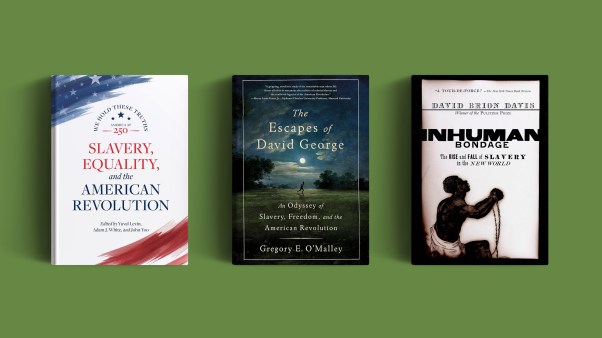
A distortion made by some historians, similar to their misrepresentations of the character of awakenings in general, is their version of the story of the anti-slavery movement. According to them, Christians had little or nothing to do with it. William Lloyd Garrison is given most of the praise for the abolitionist movement, and Garrison was harshly anti-Christian. However, through his fanaticism Garrison had alienated almost everyone by 1836, while the abolitionist associates of Charles Finney gathered more support each year. Gilbert H. Barnes in his book, The Anti-slavery Impulse 1830–1844, has accurately shown how Christians worked to free the slaves, stating:
The conjunction of so many elements of the Great Revival [1831] in the anti-slavery agitation was more than coincidence.… In leadership, in method, and in objective, the Great Revival and the American AntiSlavery Society now were one. It is not too much to say that for the moment the antislavery agitation as a whole was what it had long been in larger part, an aspect of the Great Revival in benevolent reform.
Charles Finney’s vision of a truly Christian America, which he promoted constantly, seemed actually attainable in 1835. It would be a nation ruled by the moral government of God. The obligation of each Christian is inescapable: every child of God is to “aim at being useful in the highest degree possible,” preferring the interest of God’s Kingdom above all other interests.
It was a grand vision. And to a remarkable degree the Benevolent Empire achieved its goals in the first half of the nineteenth century, making lasting contributions to national life, eliminating much evil, and bringing Christian values into the mainstream of American society.
Copyright © 1989 by the author or Christianity Today/Christian History magazine. Click here for reprint information on Christian History.