News

Study: Regular Bible Readers Experienced More Stress in 2020, But Also More Hope

In times of trials, Scripture strengthened and encouraged.

Christianity Today July 14, 2021
David Sacks / Getty Images

Ainslee Moss felt the full weight of 2020.

For her, the year included juggling the responsibilities of running several nonprofit thrift stores in York County, South Carolina, directing a women’s shelter ministry, coordinating drop-offs for new mothers and seniors unable to leave their home in the pandemic, and traveling back and forth to the hospital with her elderly father who was fighting heart problems and esophageal cancer.

Her father, David Gentry, died at the end of the year, on December 27.

“Definitely one of the most challenging years I think I’ve ever been through,” Moss said. “I had my days that I had my good cries, but I think one of the things that kept me sane in those times was knowing that God has our days numbered.”

At the worst moments in 2020, she said, she turned to Psalm 34:1: “I will bless the Lord at all times” (ESV).

According to data from the State of the Bible survey by the American Bible Society (ABS), Moss’s experiences over the past year are in line with many Christians in America.

People who are “Bible engaged”—which the society defines as people who read Scripture multiple times per week and cite its impact on their daily lives as a key way they relate to God—struggled in 2020. They reported stress and anxiety at slightly higher rates than the rest of the population. But they also had more hope.

“Jesus said, ‘In this world you will have trouble, but take heart I have overcome the world,’” John Farquhar Plake, lead researcher at ABS, told CT. “We see that played out in the lives of real people in the data.”

The survey found that one-quarter of Americans are experiencing moderate levels of stress and 10 percent are experiencing extremely high levels.

Nearly half of respondents said they had trouble sleeping, 44 percent reported feeling tense, 44 percent said they were lonely and cut off from others, and 37 percent said they felt numb or detached.

Every measure of anxiety increased a bit between June 2020 and January 2021 in the study.

Christians who regularly turn to the Bible were not immune. In fact, the opposite was true.

“We actually found that more Scripture-engaged people experience more stress and often higher levels of trauma,” Plake said.

According to the study, “A strong relationship to the Bible often coexists with—and could even be compelled by—the hardships of life.”

Plake said the correlation could be explained by the fact that people turn to the Bible more when they’re in trouble than when everything in their lives is going well. From what the data shows, the Scripture gives people hope. Bible-engaged people scored 71 out of 100 on a hope agency test, rating the truth of statements such as “If I were in trouble, I know I could get out,” and “I can think of many ways to reach my goals.” Bible-disengaged respondents in the ABS study scored about 14 points lower.

Plake says the findings should encourage churches and ministries as they respond to the needs of people such as Moss, who have been through a lot in the past 12 months. The study affirms the Bible is a source of hope and encouragement.

Marlaina Centeno, a pastor and church partnership associate with the American Bible Society’s Trauma Healing Institute, said that women and minorities are statistically more likely to experience trauma—in general and perhaps even more in the difficulties of the pandemic.

“There are so many stresses that have happened in the past year on top of COVID, it compounded,” she said.

While trauma can create a barrier for some people when it comes to forming a relationship with God, Centeno said the data indicates that people in times of pain and suffering are strengthened by reading the Bible.

She suspects the impact is even greater when the Bible is read in groups, as relationships are also a source of comfort and encouragement. When people come together and form relationships and study the Bible together, they come away strengthened.

Centeno said while she’s seen a lot of hurt over the past year, she’s also seen a lot of healing.
“I’ve done in-person groups. I’ve done online groups throughout this entire year with COVID and it’s amazing what happens,” she said, “from the first session of people coming in so incredibly heavy and having a lot of stress and a lot of pain and then six weeks later or six sessions later seeing some bring their pain to the cross and being able to see that light.”

Plake said church leaders should take away two lessons from the State of the Bible report: First, people are hurting, whether they show it or not. And second, the Bible offers hope.

“It’s wild to realize that what was true 2,000 years ago is still true in the 21st century,” he said. “Just as God changed people’s lives, as it’s recorded in the Book of Acts and the Pauline Epistles, we see those same kinds of things in the data of 21st century Americans. The Bible is not out of date. It’s still relevant and God’s still at work.”

For Moss, it was in the pages of Scripture that she found the hope and strength to return to work at Tender Hearts Ministries soon after her dad died.

“I’m going to see him again one day because that’s what Scripture promises,” she said.

She also knows her dad would want her to continue doing what God called her to. As she counsels those who are at rock bottom, she points them to the same source of stability she goes to—the Bible.

“We are giving them hope,” she said.
Theology

Why We Love ‘The Chosen’ So Much

The show isn’t just about the transformation of the disciples, it’s about our spiritual transformation, too.

Christianity Today July 14, 2021
Angel Studios

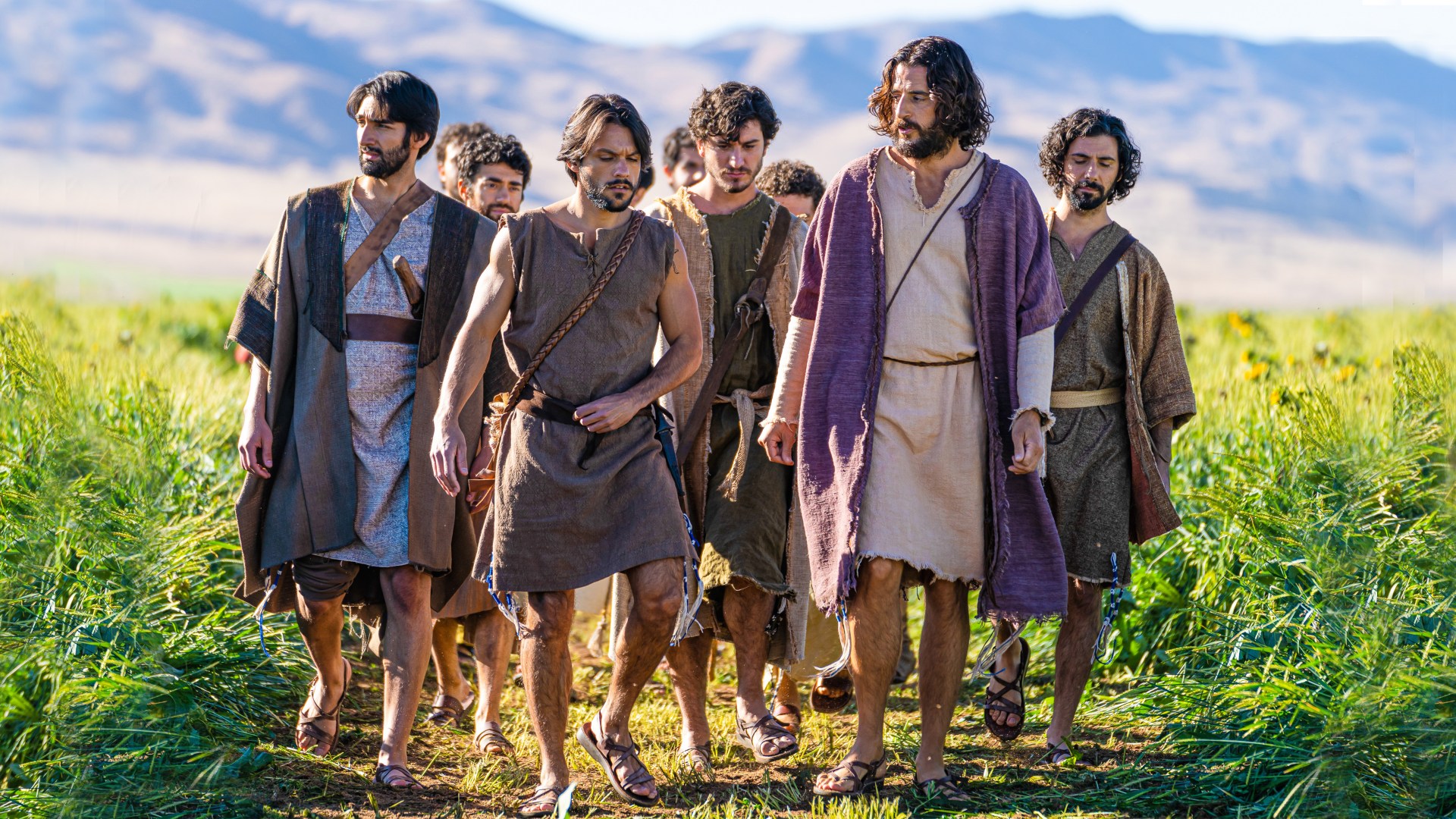
The Chosen , a multiseason look at the life of Christ through the eyes of his disciples, has garnered more than 50 million fans in 180 countries with its engaging and affecting storytelling, according to producers. Even viewers initially skeptical that anything good could come out of the Nazareth of Christian entertainment have found themselves hooked by The Chosen’s imaginative scripts and high production value.

Director Dallas Jenkins has raised the bar for the quality of religious-themed entertainment. The show has broken crowdfunding records, raking in $10 million for the first season and attracting $12 million from 125,000 people for the second season, which wrapped up with the season finale on July 11.

But it’s not merely higher-quality filming techniques or the relatability of actor Jonathan Roumie’s portrayal of Jesus that accounts for The Chosen’s power. It comes from its convincing portrayal of each disciple’s transformation of desire. Characters who have small hopes at the beginning of the show evolve into people who want great things. As we watch the disciples change, we are drawn into the mystery of their transformation in Christ.

The French historian and philosopher René Girard experienced a profound Christian conversion when he realized that the greatest novels in history—like Dostoevsky’s The Brothers Karamazov, or Cervantes’s Don Quixote—emerged out of a conversion experience that pierced the author’s vanity and pride. This experience allowed them to create deeply complex characters truer to life.

From his deep study of history, human behavior, and great literature, Girard observed that we learn to desire by imitation, through a process he called mimesis (which comes from the Greek, meaning “to imitate”). We come to want the things that are modeled to us as desirable and valuable. Girard was not referring primarily to our basic needs—food, shelter, safety—but to the kind of metaphysical desires that people develop to be a certain kind of person.

Girard thought of this as an inherently good thing—a form of radical openness and receptiveness to others—but one fraught with obvious dangers. All of us are more susceptible to manipulation of our desires than we fully understand. We are also in danger of frittering our lives away chasing “thin” mimetic desires that don’t ultimately satisfy, as opposed to the “thick” desires implanted by God that bring happiness and fulfillment.

Christian conversion involves the reordering of a person’s desires through a continual encounter with Christ. The model of divine love that Christ reveals begins to permeate a person’s entire life. Old desires give way to new ones. This reordering of desires—as demonstrated by a divine model—is impossible if a person’s only models of desire are of the world. People consumed by worldly models are condemned to remain stuck in a hamster wheel of sorts—never able to break loose from the tyranny of the age. Only one model in human history had the power to desire differently: Christ, whose greatest desire is to do the will of his Father, shows us the way out.

When Jesus says in the Gospels, “Follow me,” he is not talking about a physical following only, but a following of desire. In other words: “Don’t just go where I go or adopt my habits of speech and dress but want what I want.” What he wants is each person’s salvation. When he interacts with Mary Magdalene and Peter, or any of the other disciples whom he calls, Jesus clearly desires them to be fully alive, free to love wholeheartedly.

To imitate Christ’s desires is to re-order our own—to pattern them on his, where there is a hierarchy. When the Pharisees ask Jesus which is the greatest commandment, he answers clearly: “‘Love the Lord your God with all your heart and with all your soul and with all your mind.’ This is the first and greatest commandment. And the second is like it: ‘Love your neighbor as yourself.’” In other words: learn to desire these two things above all, and the rest of your desires will fall into place.

When Paul writes, “Imitate me as I imitate Christ” (1 Cor 11:1), he is also referring to the imitation of desire. When he writes, “Do not conform to the pattern of this world but be transformed by the renewing of your mind” (Rom. 12:2), he is talking about the same thing: This world has no models that are worth patterning your life after. If you wish to be saved from this world of sin and death, you need an otherworldly model, and you must find it in Christ, who is able to transform you within through grace.

We become like the things we imitate. And that’s why Christ not only saves us—he also transforms us.

In the imaginative telling of the “backstory” of the first disciples, The Chosen shows the profound tension between worldly and transcendent desires. The ancient Roman world had shaped the disciples’ desires in certain ways, just as the modern world shapes ours. As Jesus becomes their new and primary model of desire, their thin desires begin to fade away in favor of the transcendent purpose he models.

Three minutes into the first episode of season 1, we meet Mary Magdalene in a time where she is unable to imagine an existence for herself outside of the reality of demonic possession with brief periods of lucidity. What does she desire? Anything that will for a moment relieve her intense suffering: alcohol, even death. After Jesus calls her by name, however, we see Mary gradually come to want other things: to live the Sabbath properly, to be generous and serve others, to learn the Scriptures. She says of herself, “I was one way and now I am completely different. And the thing that happened in between was him.” Jesus has become her new model, and she has begun to want for herself what he wants. We see Peter’s desires change before our eyes in a similar fashion. What does Peter want when we first meet him? The things his culture has modeled: the overthrow of Roman oppression, the relief of his tax burden, to be a successful fisherman. He’s closed to anything else. When his brother Andrew tries to interest him in Jesus, Peter is initially dismissive, but his encounter with Jesus on the Sea of Galilee changes everything. He has a new model placed before him, and thus the trappings of his old life—his thin desires—start to have less hold on him.

In episode 5, Peter tells his wife, Eden, how excited he is to go where Christ goes and learn from him. Like a child, he exclaims, “He said I wouldn’t be a fisherman anymore but would catch men! I don’t even know what that means, but … I want to quit fishing and leave the sea behind.”

These are but two moments. The show (so far) does an excellent job of illustrating the gradual changes that happen as the disciples begin to desire differently after they choose to follow Christ.

Yet to be shown in the series is the ominous ending we all know is coming: the Passion. The Passion is the ultimate moment of hope for a Christian because it is the moment when death is conquered and the doors to a new way of living and loving are opened to us. Taking hold of that new possibility is only possible for the disciples though—as it is for us—after a period of divine preparation in which our desires are transformed enough to see the love of God that was poured out on the cross.

Yes, Peter will betray Christ; he will even try to get Christ to imitate his own desires (which earns him the strongest rebuke in the Gospels when Jesus says, “Get behind me, Satan!”). But the transformation will have been sufficient to bring Peter and the rest of the disciples (except Judas) to repentance. They finally desire to live the rest of their lives in service to a higher truth—to the point that nearly all of them will go willingly to their deaths in imitation of Christ, when their transformation was at last complete.

Luke Burgis is entrepreneur-in-residence at the Ciocca Center for Principled Entrepreneurship and author of Wanting: The Power of Mimetic Desire in Everyday Life.

News

Mainline Protestants Are Still Declining, But That’s Not Good News for Evangelicals

Both traditions are losing out to the unaffiliated.

Christianity Today July 13, 2021
Gregory Shamus / Getty Images

If there’s one overarching conclusion that comes from studying survey data of American religion over the last several decades, it is that fewer people identify with an established religious tradition every year. The ranks of religiously unaffiliated, also called the nones, have grown from just about 5 percent in the early 1970s to at least 30 percent in 2020.

Religious demography is a zero-sum game. If one group grows larger that means that other groups must be shrinking in size. So that rise in the nones is bad news for churches, pretty much across traditions. When you sort Christians by denomination, mainline Protestants are continuing to show significant decline.

By their own membership tallies, mainline denominations are showing drops of 15 percent, 25 percent, and even 40 percent over the span of the last decade. There is little room for triumph on the evangelical side; their numbers are slipping too.

Examining these two traditions, though, shows us two different stories about how their churches are losing members and could offer a trajectory for what the American religious landscape will look like in the future.

First, it’s important to point out that mainline Protestants—the grouping scholars use for denominations like the United Methodist Church, the Evangelical Lutheran Church in America, and the Presbyterian Church (USA)—used to outnumber evangelicals by a significant margin in the 1970s. In 1975, just over 30 percent of Americans were mainline, while about 21 percent were evangelicals. However, those lines began to converge quickly, and by 1983 there were more evangelicals in the United States than mainliners.

https://datawrapper.dwcdn.net/TYgUi

This rapid shift in American religion was driven primarily by evangelicals becoming more prominent in American culture. The rise of televangelists like Jerry Falwell and Pat Robertson coincided with the Religious Right beginning to assert itself in electoral politics. Because the nones were relatively small at this point, there’s ample reason to believe that significant numbers of mainline Protestants became evangelicals through the 1980s.

By the late 1980s, evangelicals had become 25–27 percent of the population, and the mainline population was stuck around 20 percent. In 1993, evangelicals hit their peak in the data at just under 30 percent and have since gone into a slow and steady decline over time.

Between 2000 and 2018, the decline among evangelicals has been relatively modest—just about two percentage points. The mainline also declined three times as fast during this same time period, dropping from 16 percent in 2000 to just over 10 percent in 2018.

When you look at where both traditions started in 1972, evangelicals are slightly up, while the mainline is significantly smaller.

It’s clear that both the mainline and evangelical traditions have gotten smaller over the past few years, but how did that happen? There are two primary ways for religions to shrink. The first is through death without replacement. When older members die, the tradition gets smaller unless young people are raised up in the church to offset those losses. The other way a tradition decreases in size is through defection. That means people leave the religion in which they were raised for another faith group.

The General Social Survey asks respondents about the denomination in which they were raised as well as their current denomination. Using this data, it’s possible to get a sense of just how the decline in these two traditions can be chalked up to defection and where those defectors ended up.

https://datawrapper.dwcdn.net/MXuBA
https://datawrapper.dwcdn.net/2PsSE

For instance, if everyone who was raised evangelical stayed in that tradition, how large would it be? In 1973, about 20 percent of Americans were currently evangelicals, while another 4 percent were former evangelicals. In 2018, those numbers aren’t that much different: 22 percent are currently evangelicals, while another 4 percent were former evangelicals. In essence, defection was basically the same.

For mainliners in 1973, 28 percent were current adherents while another 7 percent had left the tradition. In 2018, only 11 percent were currently mainline Protestants but another 6 percent had grown up mainline and left. In the most recent data, for every two mainline Protestants, there was another that had left.

https://datawrapper.dwcdn.net/RgWuJ

In the most recent waves of the GSS data, there’s clearly a bigger retention problem for people who were raised mainline—just over half (55%) stayed mainline as adults. Nearly half the people left the mainline ended up being religiously unaffiliated, while another significant portion became evangelical.

For evangelicals, retention is much higher at 70 percent, but the same basic pattern of religious switching exists. A significant portion of evangelical defectors go on to claim no religious affiliation. The second most likely landing spot for people leaving the evangelical tradition is the mainline.

But it’s twice as likely for a mainline Protestant to become an evangelical these days than for an evangelical to leave for a mainline tradition. In raw numbers, for every two evangelicals who became a mainline Protestant, about three mainline Protestants became evangelical.

It’s fair to say that both the mainline and evangelical traditions in the United States are losing members. But that seems to be happening a bit asymmetrically. Evangelicalism is undoubtedly down from its peak in the early 1990s. But it’s reached a bit of a stasis in recent years, being buoyed by some inflows from the mainline tradition and enough younger families to offset some of the losses through death.

The decline of the mainline has also slowed somewhat recently. However, there are plenty of reasons to conclude that their numbers will dip again. As they continue to fight defections from the tradition, the average age of the membership increases, and traditional denominations hemorrhage members, it seems apparent that there are more causes for concern among mainline Protestants than evangelicals.

Thus, evangelicalism is still making gains by taking in former mainline Protestants, but that stream of new members is going to continue to diminish as the overall numbers of mainline Protestants gets even smaller over time.

As the middle of American religion continues to hollow out, evangelicals will only have two strategies going forward: Keep the young people raised in the church or try to evangelize the growing number of unaffiliated Americans. Recently, both have been a challenge for evangelical churches. For example, only half of kids raised in the Southern Baptist tradition—the biggest Protestant denomination in the US—stay Southern Baptist as adults.

The entire nature of church growth will need to shift in the future, and churches needed to be ready to face a religious landscape they have never seen before.

Ryan P. Burge is an assistant professor of political science at Eastern Illinois University. His research appears on the site Religion in Public, and he tweets at @ryanburge.

News
Wire Story

Church of England Considers Evangelical-Inspired Proposal for Lay-Led Churches

Facing decline, Anglicans debate whether the suggestion represents a fresh missional strategy or a radical departure from their theological convictions.

The Church of England’s annual General Synod takes place in London.

The Church of England’s annual General Synod takes place in London.

Christianity Today July 13, 2021
Carl Court / Getty Images

Petertide—the days around the feast of St. Peter on June 29—is traditionally one of the most joyful seasons for the Church of England, a time for ordination of new priests and deacons. But this year’s Petertide has been marred by what many have interpreted as an attack on the future of Anglican priesthood itself.

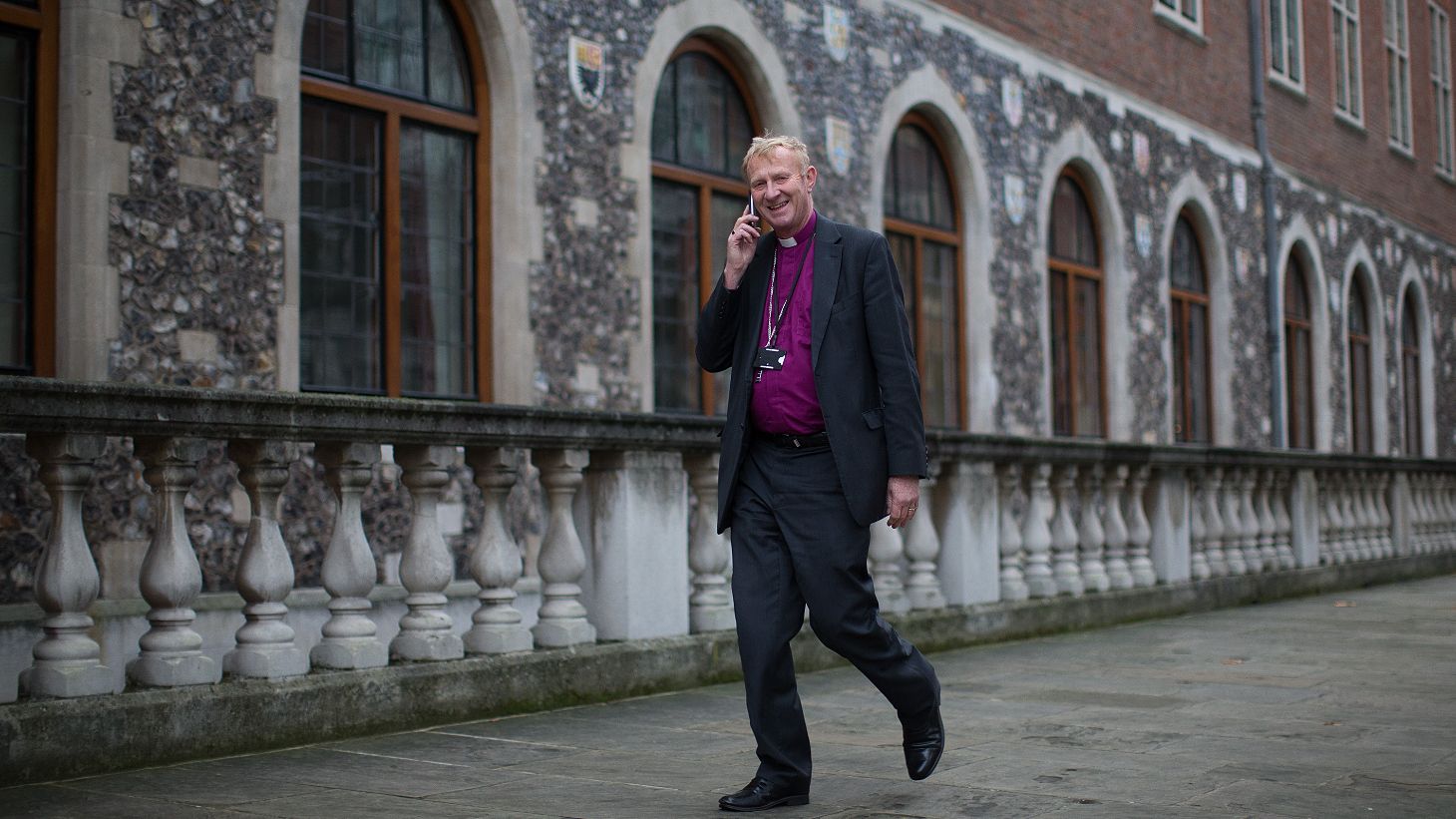
As Britain’s national church prepared to gather for its General Synod, which began last Friday and runs through Tuesday, one of its most senior clerics submitted a paper for discussion arguing that the future lies not with clergy in the pulpit, but with worshiping communities led by lay people.

Archbishop of York Stephen Cottrell—second only in the hierarchy to the archbishop of Canterbury—first floated his ideas last year in a report from a “Vision and Strategy” committee that Cottrell heads. But its publication last month, just before the laity, bishops and other clergy attended the Synod sessions online, has caused an outcry.

Cottrell’s latest reflections include not only a proposal for 10,000 lay-led communities within the next decade but a focus on young people: It urges a doubling of the number of children attending church and what he calls “active young disciples” by 2030.

The Church of England, he maintains, has to become a “church of missionary disciples,” to “become younger and more diverse,” and to become a church “where a mixed ecology is the norm”—referring to a mix of digital and lay-led services.

Cottrell’s plan does not include dismantling the ancient parish system, but his criticism of it—calling it ineffective “in the networks of contemporary life”—has caused fear that this will signal a major change in the way the church is structured, leading to church closures and cuts to clergy numbers. It also points to the growing influence of American-style evangelism in historically more staid Anglicanism.

The parish system is part of the warp and weft of England, especially in rural life. England’s more than 16,000 Anglican churches still dominate the country’s landscape, and the vicar and his role in village life pepper English culture and art, from the works of Jane Austen to the crime novels of Agatha Christie.

But attendance at those churches has been in decline for many years. Despite being the established church to which every citizen theoretically belongs, only an estimated 750,000 people out of an English population of 56 million attend regularly.

An internal church report, Perspectives on People, Money and Buildings, published earlier this year, showed that church attendance has declined 40 percent in 30 years and warned that stipendiary clergy positions—filled by priests and deacons supported by the church—would have to be pruned. In Chelmsford—Cottrell’s diocese before moving to York—61 stipendiary posts are being cut by the end of this year.

The biggest financial issue for the Church of England, however, may be its buildings. Three-quarters of its churches are officially listed as historic and demand costly maintenance. Some of those costs are covered by tourism and charitable grants, but the greatest burden falls on the church and each parish’s membership. If lay-led communities meeting in people’s houses are the future, many fear that more of these treasures will be closed.

The COVID-19 pandemic, which led to churches being locked, collections not taken and services moved online, caused an 8.1 percent fall in the church’s income as of November 2020.

But one of the most vocal Anglican priests, the Rev. Marcus Walker, vicar of London’s oldest parish church, the 900-year-old St. Bartholomew the Great, has warned that the bishop’s plan envisages the death of the parish and argues that “this must be fought.”

In Walker’s view, the parish system has survived hundreds of years precisely because it works so well. “The parish system works because the parish is local. It responds to local needs,” he says.

What has particularly alarmed Walker and his fellow priests is that publication of Cottrell’s paper coincided with another given at a conference on church planting supported by Cottrell and the Archbishop of Canterbury, Justin Welby, which goes much further in its critique of parishes. Critics believe this second paper lifts the lid on the thinking of an increasingly influential evangelical strand of Anglicanism.

Canon John McGinley, a priest in the Diocese of Leicester and a leader in New Wine, a church planting and renewal organization that is part of an evangelical surge in the Church of England, argued at a recent conference that lay-led communities release the church “from key limiting factors,” such as buildings and clergy pay and training. He envisages a new Anglican lay structure based on groups of 20–30 people meeting in people’s homes.

Archbishop Welby told the same audience at Multiply X 2021 that church planting would be a new discipline for Anglicans: “We are not meant to leave Jesus inside the church when we go out, and pick him up again when we come back in the following Sunday but to go with him,” said Welby.

Anglicanism has always performed a balancing act between a sacramental approach that puts the Eucharist at the center of the life of a worshiping community, requiring a priest to celebrate the sacrament—and an evangelical idea of church focused more on Scripture and lay leadership. Influenced by American evangelism, the latter has gained momentum in recent years.

The Rev. Andrew Lightbown, rector of Winslow, Buckinghamshire, said: “Within the reformed Catholic tradition of the Church of England we are a sacramental church. And it is also incredibly important that at the end of every service people are blessed and sent out to do God’s work. You don’t do that with a lay-led church. This plan could be rolling back hundreds of years of theology and changing the Church of England.”

Lightbown also pointed out that a lay-led group of 20 would not have the same inclusiveness and sense of service to the whole community. “The parish church is not limited to the worshiping community. It is there for everyone. Will these new lay-led groups carry out baptisms, weddings and funerals?”

The Rev. Barnaby Perkins, of St. Peter and Paul in West Clandon, southwest of London, offers another difficult question in Cottrell’s proposal: Will lay people be diligent keepers of the faith? “There has been a change in the way the hierarchy views the clergy, but there is a need for them to teach the faith and order the life of the church,” he said.

How Josh Duggar Shifted Homeschoolers’ Sense of Security

After recognizing that sin and evil aren’t outside threats, families are doing more to promote abuse awareness.

Christianity Today July 12, 2021
D Dipasupil / Getty Images / Edits by CT

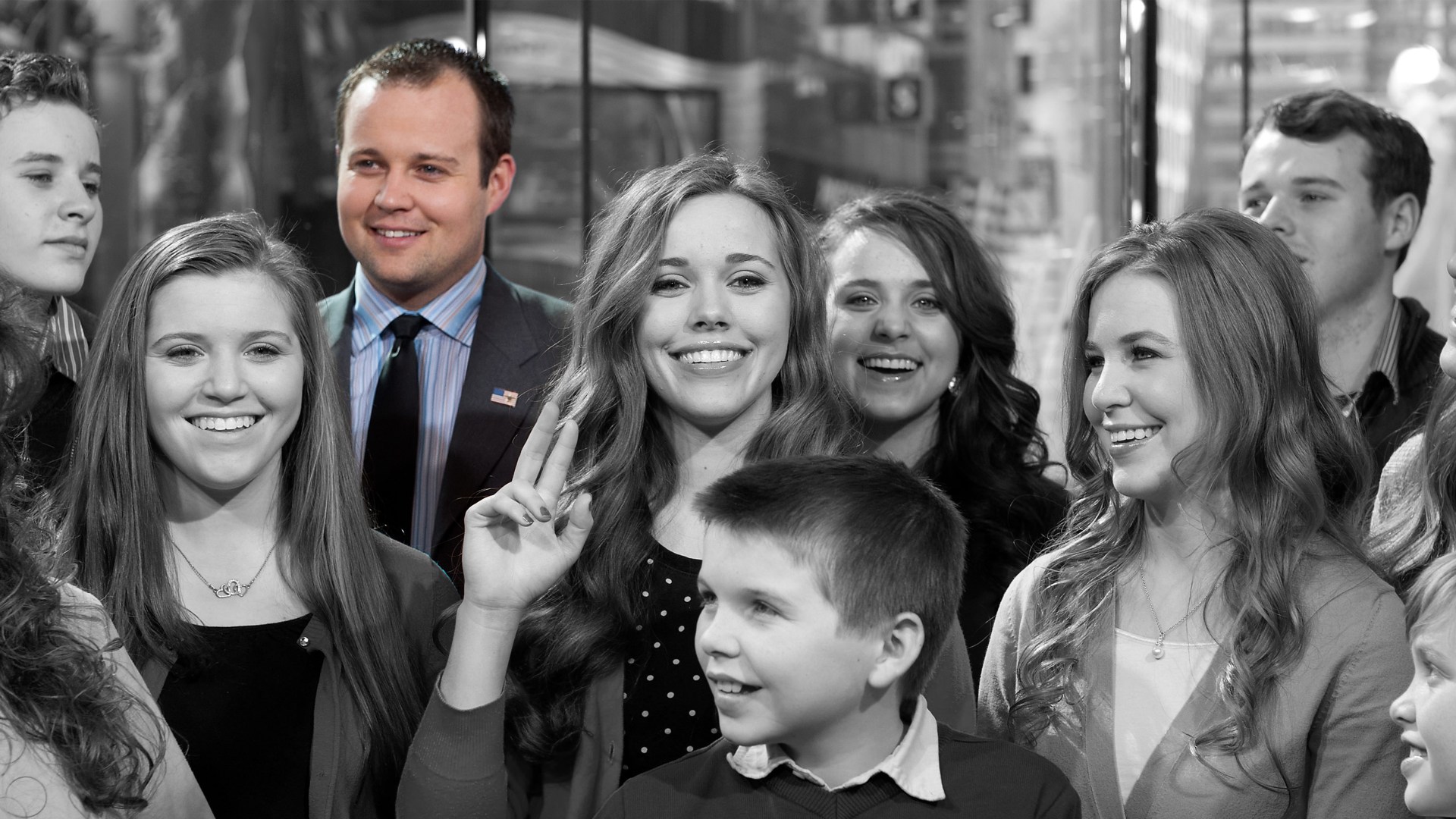
Josh Duggar was slated to stand trial this month on charges of downloading and possessing material that depicted the sexual abuse of minors. Instead, his court date has been delayed until the fall. His family’s series Counting On has been cancelled by TLC.

In the months to come, Duggar’s case will be covered as the saga of a former reality TV star, making headlines in celebrity magazines as did every courtship, wedding, pregnancy, and birth announcement from the famously fruitful Duggar brood.

But for some who come from Christian circles like the Duggars’—conservative Christian churches, tight-knit homeschool networks, big-family “quiverfull” movements—this case isn’t just about Josh Duggar. It represents a larger concern over how their communities teach about sexual abuse and, sadly, have missed opportunities to respond to it.

“Josh Duggar is in the position he is in because he was enabled and protected from consequences at every step by his revolting parents and their patriarchal, dehumanizing theology,” said Jacob Denhollander in a series of tweets posted after Duggar’s arrest in April of this year. Denhollander advocates for victims along with his wife, Rachael, herself an abuse survivor. But he also grew up one of 13 siblings in “the same homeschooled circles as the Duggars.”

Duggar has confessed and apologized for sex offenses he committed as a teen back in 2002–2003, and for infidelity in his marriage. He has pleaded not guilty to the charges that in 2019 he downloaded material depicting the sexual abuse of children.

His pattern of sexual abuse and misconduct has been reported on for years, but the recent case comes at a time of more attention around abuse in church. Christians are learning more about the risks of abuse, including how predators target the trusting environments they find among people of faith.

“Let’s start with the bad news. There’s too many churches in that type of [homeschooling] movement that don’t have safeguarding policies and known-sex-offender policies,” said Justin Holcomb, a theologian who studies sexual abuse. “The good news is that in more and more churches, because of the #MeToo #ChurchToo movement years ago, the conversation about sexual abuse and domestic abuse has increased.”

When news broke that the oldest 19 Kids and Counting sibling molested young girls in his home as a teen and had been unfaithful to his wife as a member of the affair site Ashley Madison, it was 2015.

It would be another year before Bill Gothard, whose Institute in Basic Life Principles shaped the Duggar family, would be sued over allegations of sexual assault and cover-up. That’s two years before the #MeToo movement took off. Three years before a major investigation uncovered hundreds of abuse allegations in independent Baptist churches, the tradition in which Duggar was raised.

While some fans and fellow church members have defended Josh Duggar—hundreds of commenters on the Duggar family website disbelieved the charges or extended their support—leaders in the homeschool community said scandals like his have been a wakeup call. They’ve drawn more attention around abuse awareness and prevention.

Holcomb, an Episcopal priest who serves on the board of GRACE (Godly Response to Abuse in the Christian Environment), said he was shocked at the uptick in attention around abuse. Last spring, a Christian children’s book he and his wife wrote in 2015 to help kids protect their bodies, God Made All of Me, hit a milestone: 100,000 sold. Part of the popularity came from the book being promoted among homeschooling moms.

“In the past, the popular, dangerous idea was widely accepted that homeschooling, following a certain set of rules/regulations, and withdrawing from the world would save and preserve our children and families. As homeschool hero after hero has fallen over the decades, as hidden evil after hidden evil has been brought to the light, that assumption has been proved false,” said Amy Sloan, a second-generation homeschooler who blogs on the site Humility and Doxology.

Among fellow homeschooling families, Sloan has noticed abuse being discussed more openly. Not only that, but she said there’s a desire to correct the false beliefs they held by placing their faith in popular figures or a Christian lifestyle choice—none of which can be “a magic bullet to guard us from evil or abuse.”

“I see it as a theology problem. I see it as poor hermeneutics,” said Kendra Fletcher, a homeschooling mom of eight in California, who has written two books about leaving a legalistic faith community.

Fletcher also recalled how that Christian community trained parents to see the outside world as a threat that could corrupt her children—that’s why they were eager to Sharpie-out references to sex or evolution in books and install porn-blocking software on their computers. But that mindset, she realized, discouraged parents from recognizing that their own children were indeed born in sin and could be the ones responsible for corrupting—or abusing—others.

Texas pastor Bart Barber made a similar point in 2015. “Josh Duggar’s public fall confronts homeschooling parents not only with someone’s bad behavior but also with some good theology that we should all take to heart,” he wrote for SBC Voices. “If your purpose for homeschooling is to protect your child from the sinful environment of the world, you’ve missed something important. Sin is not an ‘out there’ problem; it’s an ‘in here’ problem.”

The sense of security within tight-knit communities and their fear of threats from the outside can lead adults to overlook the risk of abuse. When children are sexually abused, 34 percent of the time the perpetrator is a family member, according to US Bureau of Justice statistics. Another 58 percent of the time, it’s an adult known and trusted by their families.

When abuse cases do arise among Christians, a constellation of theological attitudes can complicate the response—instinct to blame the victim, lack of understanding of consent, assumptions about masculinity and femininity, suspicions around psychology, and a desire to forgive and trust in God’s transforming work.

In The Great Sex Rescue: The Lies You’ve Been Taught and How to Recover What God Intended, Sheila Gregoire, Rebecca Gregoire Lindenbach, and Joanna Sawatsky analyze beliefs about sex from tens of thousands of Christian survey respondents. They lament the expectations taught by some Christians that boys will push girls’ sexual boundaries and that all men will struggle with lust and porn.

“Sexual-sin red flags are not just ‘maleness,’” said Lindenbach. In the case of Josh Duggar, who molested four of his sisters and one other young victim while he was 14 and 15 years old, “That was chalked up to, ‘He was a teenager. He was curious.’ A lot of cases like this start out with clear warning signs.”

One study found that the majority of adult sex offenders began molesting children when they were juveniles. But most young offenders can be reformed. Experts have identified early interventions that can help youth with abusive and problematic sexual behavior.

Holcomb has seen evangelical Christians go easy on abusive behavior, taking a “shallow understanding of sin” and believing accountability in biblical community will be enough to address the perpetrator’s problem. Such responses not only put more potential victims at risk but also keep perpetrators from fully reforming their sexual thoughts and behavior.

“If you don’t get a young sex offender holistic, therapeutic care before he’s an adult—because there’s significant psychological development taking place—it almost solidifies the recidivism,” said Holcomb, describing how sexual abuse and pornography establish pleasure pathways in the brain. “The chances that he will repeat again are through the roof. It’s nearly hopeless.”

As a teenager, Josh Duggar attended an Arkansas training program through Gothard’s Institute for Basic Life Principles after confessing to multiple instances of sexual abuse. Its approach focuses on biblical teaching and character development. His father later spoke of the abuse to a law enforcement officer, who did not report it.

After Duggar’s 2015 scandal, he lost his job at the Family Research Council and attended a faith-based treatment center called Reformers Unanimous, which views addiction as stemming from sin. The ministry does not list any professional psychologists among its staff or board members, but says it partners with local doctors.

Investigators said that Duggar had the Christian accountability software Covenant Eyes on his computer, but used a password-protected network at the car dealership where he worked to bypass the program and download the illegal material in 2019.

Experts say that online material depicting child sex abuse, so-called child pornography, is far more common than people realize or want to acknowledge. A New York Times investigation found the internet is “overrun” with such material, which multiplies with the expanding access to smartphone technology. In 2018, tech companies reported over 45 million photos and videos of children being sexually abused, double that of the year before.

A father of six with a seventh child on the way, Duggar is staying with family friends ahead of his trial. He is currently barred from being around other children and must be supervised when around his own. If convicted, he faces up to 40 years in prison and will likely be kept from being alone with children again.

As with other cases of abuse, some Christians push back on the idea of holding someone’s past sins against them, since “we’re all sinners.”

“We’re very quick to talk about the heart being deceitful and depravity and sin, and yet when these situations come up, we talk about impropriety or a lapse in judgement or moral failure, which seem to take away that these are acts perpetrated on someone else,” said Palmer Williams, a legal and policy advisor for the Southern Baptist Ethics and Religious Liberty Commission (ERLC). “It’s like we completely remove the victim from the situation.”

Williams and ERLC editor Catherine Parks see implications in the Duggar case for churches at large. They advise churches to address abuse as a crime, not just as sin, and to acknowledge the victims. They warn against trusting perpetrators like Duggar who say “right things” but still pose a risk to the vulnerable.

According to research cited in the ERLC’s Caring Well report, “sex offenders who were most committed to church throughout their lives accumulated the most and the youngest victims of all sex offenders, their involvement providing access to more victims.”

“Josh Duggar is certainly not the first and won’t be the last,” said Fletcher, the homeschooling mom in California. “Abusers can hide behind homeschooling, but abusers can slip through the cracks anywhere.”

She is hopeful about change in the Christian homeschooling movement. She said that 20 years ago, the conventions she attended were full of moms and daughters in matching matronly dresses. At the height of 19 Kids and Counting fame, her neighbors asked her if she knew the Duggars. But now the conventions are full of moms with tattoos, who defy the stereotypes and want to teach differently.

Even her oldest kids, now 28 and 26, are flagging issues in the way they were taught about sex and helping her adapt as she addresses the topic with the youngest ones. “We have an opportunity to change the thinking,” she said.

Sloan, who homeschools her five children “by grace alone,” is grateful for more conversations and resources around abuse. But she still worries that people still are overconfident in the protection afforded by homeschooling.

“Like Peter, so often we essentially assert, Even if everyone should forsake you, we won’t,” she said, referring to the disciple’s words in Matthew 26:33. “It’s only when we reject the ‘it could never happen here’ blindness that we can truly guard our children and families from abuse.”

News

DC Settles $220K Capitol Hill Baptist Lawsuit

UPDATE: Mark Dever’s church has its legal fees covered in the latest legal victory among congregations who sued over worship service limits during lockdown.

Christianity Today July 11, 2021
Google Maps

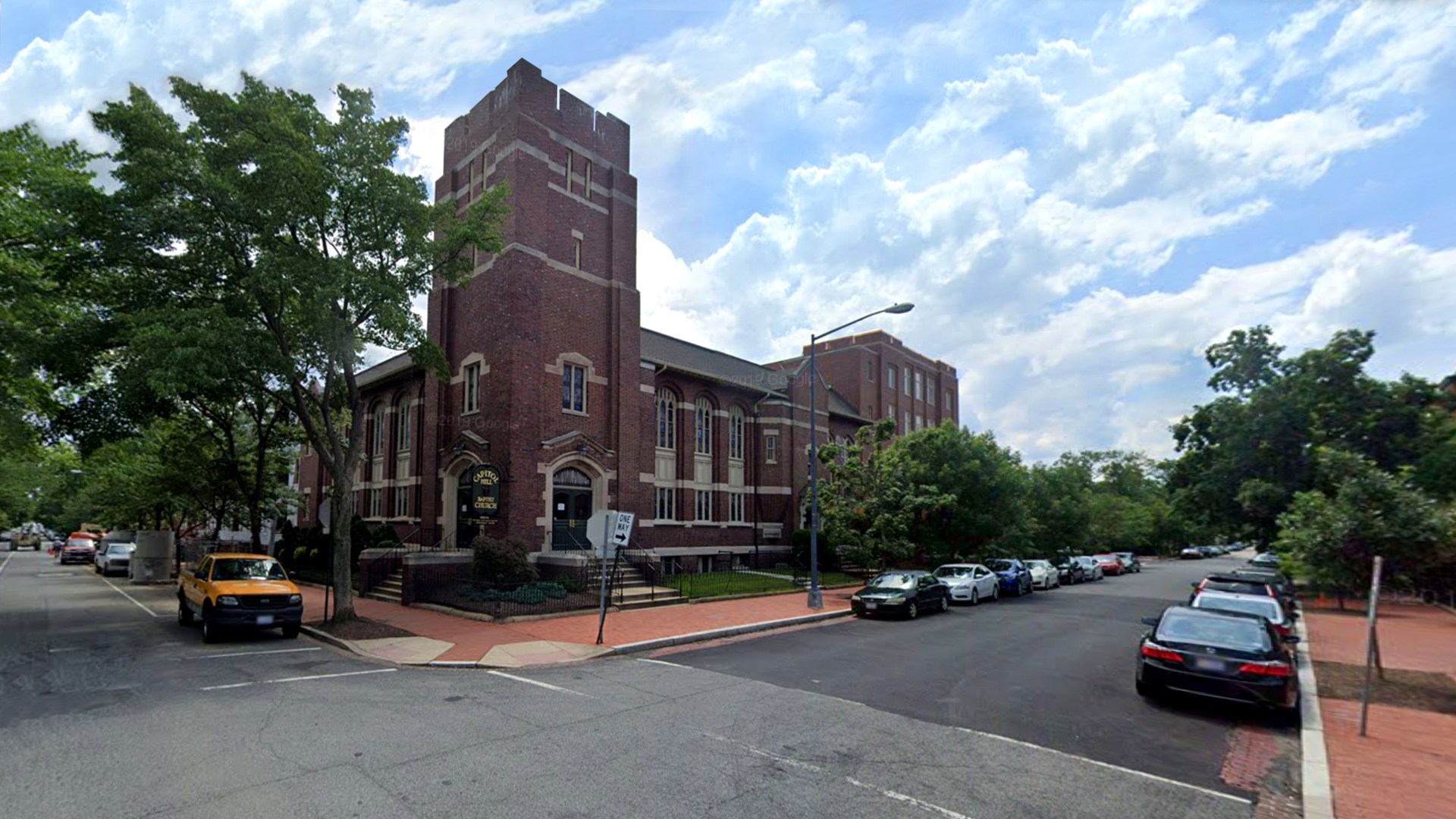
Capitol Hill Baptist Church has settled a lawsuit with the District of Columbia over claims that its coronavirus restrictions violated the First Amendment by barring outdoor worship but permitting other outdoor activities.

According to The Washington Post, DC agreed last week to pay $220,000 to Capitol Hill Baptist to cover its legal fees and stated that officials “will not enforce any current or future covid-19 restrictions to prohibit CHBC from gathering as one congregation.” The settlement said it was not an admission of wrongdoing by the city.

Capitol Hill Baptist, led by 9Marks founder Mark Dever, was the first to sue over the District’s restrictions, following multiple attempts to secure a waiver from citywide restrictions, which didn’t permit church services of over 100 people, even if outside, masked, and socially distanced.

Dever’s church based its request on its belief that the Bible calls churches to gather as one assembly—not in multiple services, multiple sites, or online. During the restrictions, it crossed state lines to gather outdoors in Virginia.

“Ultimately, the church is not something we want to be in as a building,” said Dever in a clip from spring 2020. “It’s a people we want to be with. That’s why we Christians always gather, so that we can be with the people of God and do the things that Jesus has called us to do.”

The church’s legal case initially resulted an injunction allowing congregants to return to worship in October 2020, months before all capacity limits were lifted in DC in spring 2021.

Churches in other states have also won settlements over similar First Amendment claims. California will pay $2 million to cover legal fees for a San Diego–area Pentecostal church and a Catholic priest who sued after the state allowed businesses but not churches to reopen.

—-

Update (October 10): Capitol Hill Baptist Church can return to gathering in Washington, DC, for the first time since coronavirus restrictions were put in place, thanks to a recent court decision.

On Friday, the US Court for the District of Columbia granted the church a preliminary injunction, allowing it to resume meeting—outdoors, socially distanced, and in crowds over 100—during the pandemic.

Capitol Hill Baptist had filed a lawsuit last month after the DC mayor’s office declined to offer the congregation an exemption to public health restrictions. The church argued that city policy violated its First Amendment rights.

The court decided that online alternatives to corporate worship were not sufficient to ensure free exercise of religion in a case where the church upheld a sincere belief in gathering together.

Led by 9Marks founder Mark Dever, Capitol Hill Baptist upholds a belief in the church as a single assembly and has deliberately avoided multisite, multiservice, or online worship as a result. The mayor of DC has repeatedly told churches that they could continue to meet virtually.

“The ‘substantial burden inquiry asks whether the government has substantially burdened religious exercise … not whether [the Church] is able to engage in other forms of religious exercise,’” wrote Judge Trevor M. McFadden.

“The District may think that its proposed alternatives are sensible substitutes. And for many churches they may be. But ‘it is not for [the District] to say that [the Church’s] religious belief’ about the need to meet together as one corporal body ‘are mistaken or insubstantial.’”

Since June, Capitol Hill Baptist has met in a field adjacent to a fellow Baptist church in Virginia. As a result of the injunction, the church is making plans to move to outdoor venues in the District, where a majority of its members live.

Pastor Justin Sok reiterated the church’s beliefs in a statement released Saturday. “A church is not a building that can be opened or closed. A church is not an event to be watched,” he said. “A church is a community that gathers regularly, and we are thankful that such communities are once again being treated fairly by our government.”

Department of Justice officials and dozens of US Senators had backed Capitol Hill Baptist in the suit.

Jonathan Leeman, author of the book One Assembly, wrote for CT about how officials like the DC mayor should not be able to impose their definition of church on communities who believe otherwise.

The judge made a similar point when he referenced Hebrews 10:25 in his decision on Capitol Hill Baptist’s behalf, stating, “It is for the Church, not the District or this Court, to define for itself the meaning of ‘not forsaking the assembling of ourselves together.’”

The injunction applies to Capitol Hill Baptist in particular, but the church hopes it will “be a blessing not only to our congregation but to the rest of our neighbors in DC.”

The court decision suggests that Capitol Hill Baptist has a strong case for a future ruling under the Religious Freedom Restoration Act.

“The Church has shown that it is likely to succeed in proving that the District’s actions impose a substantial burden on its exercise of religion,” the judge said. “For its part, the District has not shown that it is likely to prove a compelling interest in prohibiting the Church from holding outdoor worship services with appropriate precautions, or that its restrictions are the least restrictive means available to achieve its public health objectives.”

—-

Original post (Sept. 24: “Mark Dever’s Capitol Hill Baptist Sues to Not Forsake the Assembly”): Capitol Hill Baptist Church this week became the first house of worship to file suit against Washington, DC, for its ongoing restrictions on religious gatherings meeting indoors or outdoors during the coronavirus pandemic, the Washington Post reported.

The move by Capitol Hill Baptist—a 1,000-person congregation led by Mark Dever, the founder of the 9Marks church network—resembles arguments for equal treatment and First Amendment rights launched by churches in Nevada and California amid COVID-19 shutdowns. However, the DC congregation’s legal fight is uniquely tied to its theological beliefs around how a church should gather.

Dever has long resisted multi-site, multi-service models of church, though they are very popular among fellow Southern Baptists. The DC Baptist church does not stream services online, and hasn’t made an exception to that rule during the pandemic.

As noted in the lawsuit filed Tuesday, “Gathering as one church in a single worship service is an essential component of [Capitol Hill Baptist]’s exercise of religion.”

In the current phase, the District’s coronavirus precautions limit socially distanced indoor or outdoor gatherings to 100 people or half of a building’s capacity, whichever is fewer.

The city has, however, let non-religious groups gather far beyond the COVID-19 limits. The suit points out that the mayor allowed outdoor rallies that numbered in the thousands over the summer and even attended some of these events.

The church supports the mayor’s participation, but argues that religious gatherings should not be treated differently. According to the lawsuit, “the First Amendment protects both mass protests and religious worship.”

Capitol Hill Baptist canceled services from mid-March through early June. At that point it began meeting in a field beside a fellow Baptist congregation in Virginia.

“I might not be feeling as compliant as I am if Virginia weren’t just across the river with all their freedoms,” Dever said in late June, discussing the decision by John MacArthur to defy California’s restrictions. “We’ve been able to have hundreds of our members gather legally, and we’ve done it with social distancing—which I think the governor of Virginia is requesting—and with masks—which I don’t think is in the rules but we’re doing it anyway for an abundance of caution.”

Now the church wants the option to meet in outdoor venues in DC, the Post reported. The mayor’s office has not yet responded to a request sent by CT for comment on the lawsuit.

On Tuesday, Capitol Hill Baptist, which has not publicly addressed the suit, posted a clip about the importance of church gatherings.

“Ultimately, the church is not something we want to be in as a building,” said Dever, speaking from the empty sanctuary back in the spring. “It’s a people we want to be with. That’s why we Christians always gather, so that we can be with the people of God and do the things that Jesus has called us to do.”

Located just blocks from the US Capitol and Supreme Court in DC, Capitol Hill Baptist submitted a request for a waiver to the requirements in June and again in September, citing its theological convictions requiring in-person assembly, but the mayor’s office didn’t respond.

As legal scholars Thomas Berg and Shawna Kosel wrote for CT earlier in the pandemic:

… cities nationwide permitted large, crowded protests, complete with chanting and singing, exceeding the limits that COVID orders generally place on “mass gatherings,” The protests’ message challenging racism and police brutality is crucial—and often religious. But regulation must rest on the activity’s riskiness, not on the content of its message.

Admittedly, the protests were outside, and their grassroots nature would’ve made stopping them impossible. But congregations have already begun to argue that declining to enforce health rules strictly to stop protests means you cannot invoke them strictly to stop worship.

Besides guidance for socially distanced gatherings with fewer than 100 people, DC encourages churches to “continue providing virtual services as everyone is safer at home.”

On top of 9 Marks of a Healthy Church, the book from which the ministry gets its name, Dever is the author of a stack of books about church life: The Deliberate Church, The Compelling Community, What Is a Healthy Church?, and The Church: The Gospel Made Visible, where he writes that a “biblically ordered church regularly gathers the whole congregation” because “without regularly meeting together, it ceases to be a biblically ordered church.”

News
Wire Story

The Latest Biblical Attraction: The Tower of Babel

Answers in Genesis plans a three-year expansion at its Ark Encounter site in Kentucky.

Ark Encounter park in Northern Kentucky

Ark Encounter park in Northern Kentucky

Christianity Today July 11, 2021
Aaron P. Bernstein / Getty Image

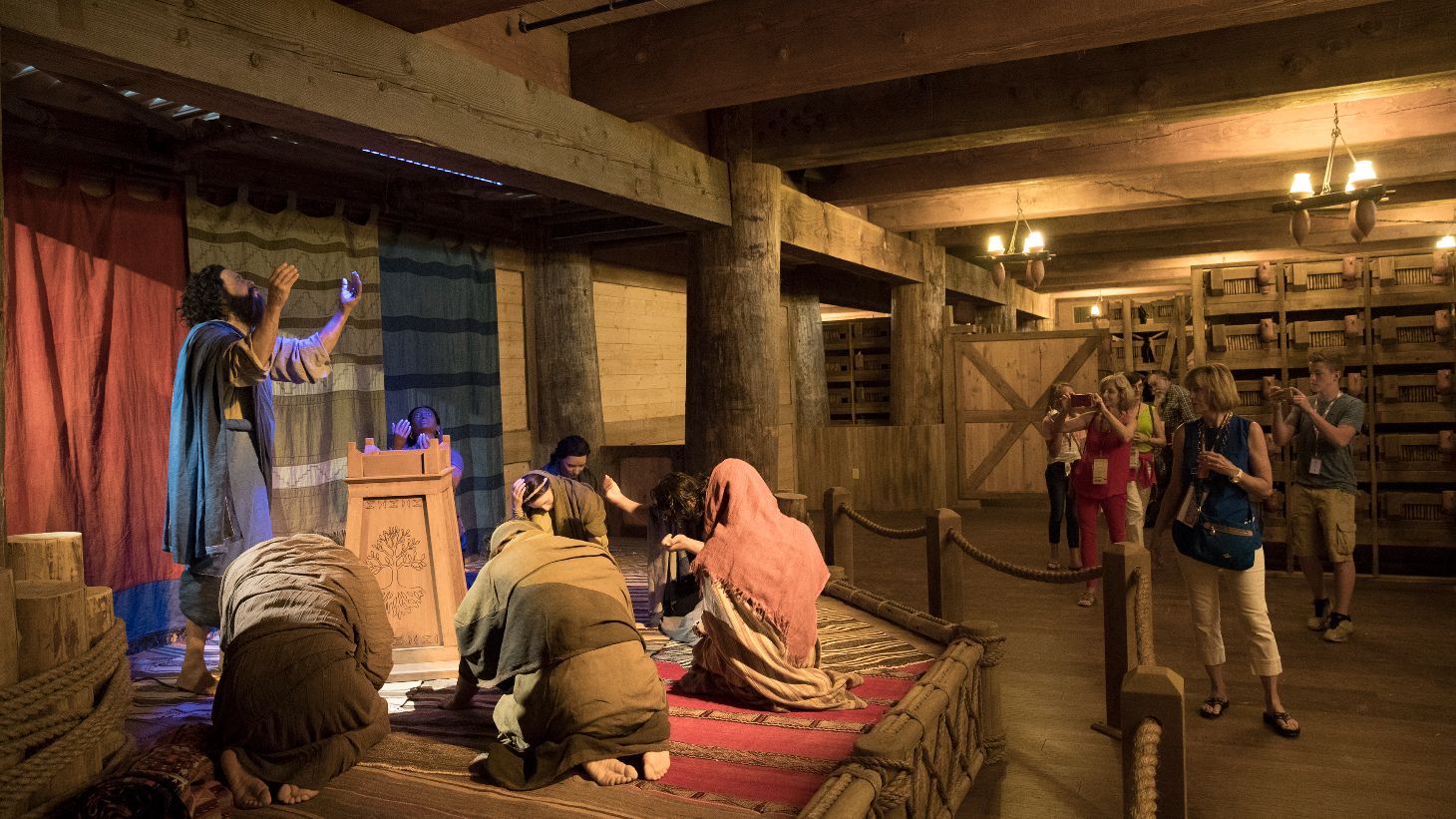
The Ark Encounter, a Bible-themed attraction in Kentucky that features a 510-foot-long wooden Noah’s ark, is planning to begin fundraising for an expansion.

The Ark Encounter said Wednesday that it would take about three years to research, plan and build a “Tower of Babel” attraction on the park’s grounds in northern Kentucky.

A release from the Ark Encounter said the new attraction will “tackle the racism issue” by helping visitors “understand how genetics research and the Bible confirm the origin of all people groups around the world.”

No other details were given on the Babel attraction or what it might look like. “I can assure you: it will be a fascinating, eye-opening attraction,” said Ken Ham, CEO of Answers in Genesis.

The Tower of Babel has been on the list of planned expansions since the park opened. Answers in Genesis, the ministry behind the ark and the Creation Museum, raised private funds to construct and open the massive wooden attraction in 2016.

Unlike Noah’s giant vessel, there is no biblical template or physical description for the dimensions of the Tower of Babel from Genesis 11, but according to Answers in Genesis, “Studying the oldest buildings from the area, archaeologists assume the Tower at Babel looked like a ziggurat.”

In the biblical account, people unite to build a brick tower as high as the heavens to “make a name for ourselves” (11:4). The Lord responds by confusing their language and scattering the people across the world. Prior to this, the Bible says, everyone on earth had been “of one language and of one speech” (Gen. 11:1).

A depiction at the Creation Museum shows a squat, unfinished structure since God interrupted plans to build it.

The Ark Encounter’s expansion plans also include an indoor model of “what Jerusalem may have looked like in the time of Christ.”

The Ark Encounter said attendance is picking up after the pandemic lull in 2020, with up to 7,000 visitors on Saturdays, according to the news release.

Additional reporting by CT.

Good Stories Can Change The World

Shirin Taber helps expand religious freedom worldwide by helping women tell their stories.

Good Stories Can Change The World
Photo Courtesy of Visual Story Network

“Research shows that storytelling is one of the fastest ways to impart knowledge and change attitudes,” says Shirin Taber. “You can convey a subject matter that may be uncomfortable, but it becomes easier to digest when in the format of a story.”

Christianity Today and Shirin Taber share the belief that good storytelling can change the world. It’s the central focus of both the work that Christianity Today does, and the work Shirin does with her organization Empower Women Media.

“Christianity Today brings awareness that the church around the world is very fragile right now, especially after Covid,” said Taber while reflecting on CT’s global storytelling impact. “In America it is easy to live an insular life and assume everything is okay because you’re okay. CT gives people in the west an exposure to the reality of how people are suffering in the world and how we can make an impact. They tell the stories of people who are doing great things and those stories compel people to get involved and make a difference.”

Shirin’s own life story has had an impact on thousands of people.

Shirin grew up the daughter of an Iranian Muslim father and an American Christian mother. Her childhood included a diverse array of cultural interactions, which she enjoyed. Growing up bi-culturally, Shirin felt at home and accepted in both her mother’s Catholic community and with her father’s Iranian friends and family.

When it came to her faith Shirin claims, “My father gave me the greatest gift I’ve ever received—the ability to choose for myself which faith to follow.” This decision laid the groundwork for Shirin’s future where she would work to further religious freedom among Muslims, especially Muslim women.

For most people middle school is a formative and tumultuous time, but for Shirin it was even more so. The Iranian revolution started around this time, and with it a shift in the United States perception of Iran and its people. And then, in an even more tragic turn of events Shirin’s mother passed away.

During this time Shirin’s neighbor cared for her grieving family. Through their growing relationship this neighbor was also able to share her faith. “She led me to consider my relationship with God,” retells Shirin. “I made the decision to follow Christ for myself, rather than just take the faith my mother had passed on to me.”

Shirin attributes her diverse upbringing and personal struggles as the catalysts for founding Empower Women Media (EWM) in 2015, which works to help women become world-class leaders by creating media for their mission. They focus on issues such as gender equity, freedom of religion and belief, peace building, trauma healing, and business as mission. Empower Women Media equips women to tell stories by providing media training, networking opportunities, mentoring, and more.

“Our media strategies, film festival and eCourses help educate people of the benefits of religious freedom,” says Shirin. “The right to have or change or adopt a different religion is absolute.”

Portionsa recent Empower Women Media film, is making a strategic impact in the world right now. The short film follows a young woman named Talia who is out to eat at a fancy restaurant with two peers. Talia appears uncomfortable and out of place at the restaurant. When she sees another woman, who clearly looks out of place, led out a back door Talia begins to wonder what more fruitful options might be available to her.

Portions was the recent focus of a CT article about how to further religious freedom among Muslims. In the article, Shirin shares how she believes storytelling, and especially film, can make an incredible difference in advancing religious freedom in the Muslim world.

“Short films can shift hearts, and after only a few minutes, rigid opinions begin to thaw,” says Shirin in the CT article. “Sharing our personal story is the best way to hook an audience.”

Shirin’s story has hooked an audience. After Christianity Today shared her story, Empower Women Media and Shirin’s work saw a large increase in visibility worldwide.

“Within a few hours a representative with the Religious Freedom Institute who focuses on the Middle East wanted to translate one of our courses into Arabic,” proclaimed Shirin. “It was amazing to get that offer. They also asked us to train their media producers. We conducted an online media production webinar and trained several media producers to create a film. The following month they submitted that film to our annual film competition.”

EWM co-hosts an annual International Film Competition with the Religious Freedom & Business Foundation. The film contest focuses on women who explore the impact of freedom of religion and belief through films. Last year’s winner was Mariya Goodbrake for her film Long Road to Freedom which shares about her nonprofit Global FC and the work they do mentoring children who came to the United States as refugees.

This year the focus of the film competition will be on “Live What You Believe”. Before entering the competition, women are required to take the Live What You Believe: Human Rights & Religious Freedom Training with EWM to help viewers gain a better understanding of religious freedom and why it is important.

“It’s important to follow the religious freedom trends and events, and keep reporting on them, and this is something I believe Christianity Today does well,” said Shirin. “Americans need to realize that restrictions are growing, and people are trying to take away more freedoms. If religious freedom is taken away, that is the cornerstone for many other human rights and the work we do.”

As Shirin continues to share with Christians around the world she is thankful for the way Christianity Today has supported her work and given her opportunities to share with an even wider audience.

“Christianity Today is a source you can trust. I feel good about the reporting and can share it with others, even non-Christians. I can share CT articles with my Muslim friends and people who live in the Arab world.”

Caitlin Edwards is marketing and communications strategist at Christianity Today.

News

New Museum Stakes Claim for the Bible in US History—Right Next to the Liberty Bell

Faith and Liberty Discovery Center traces Scripture’s presence at America’s founding and reminds visitors that “faith guides liberty toward justice.”

Christianity Today July 9, 2021
Douglas Nottage / American Bible Society

America’s “most historic square mile” got a new resident on the Fourth of July weekend. Joining the Liberty Bell and Independence Hall in Philadelphia, the American Bible Society has opened a $60 million museum to highlight the role of Scripture in the founding of the United States.

“We are leveraging history to advocate for the Bible,” said Alan Crippen, chief of exhibits at the Faith and Liberty Discovery Center (FLDC). “The American story of liberty is unintelligible without knowledge of the Bible, and how it impacted our leaders.”

The new museum gives special space to William Penn and his “holy experiment” of Pennsylvania.

Alongside his Bible, the museum displays an original copy of Penn’s 1683 pamphlet, The Great Case of Liberty of Conscience Once More Briefly Debated and Defended. Informing Penn’s vision for governance, the charter of Pennsylvania guaranteed religious freedom and sought peace with the local Lenni-Lenape Native American tribe.

The FLDC’s six exhibits are more than a storehouse of artifacts, though. Interactive exhibits present six foundational American values: faith, liberty, justice, hope, unity, and love. An electronic “lamp” allows visitors to activate additional material, and store memories for retrieval at home.

The exhibits pose additional questions for contemplation or group discussion. The First Amendment section prompts: Do you agree that a just society requires freedom of religion and dissent? Another follows George Whitefield and asks: Do you agree that people can have a direct and personal relationship with God?

“Exhibits are meant to be immersive, but not to proselytize,” said Crippen. “This question is meant to pull the viewer into the logic of the Great Awakening.”

The museum makes it clear, though, that the Bible played a pivotal role in the development of democratic ideals. After the faith section of the museum, the liberty section starts with a pillar of scripture verses and expands concentrically with the stories of 21 “change makers.”

One is Jeremiah Evarts, a 19th century missionary and advocate for Native American rights. Others featured in the exhibit are abolitionist Sojourner Truth and the Catholic labor leader Cesar Chavez.

But it is the “Justice” exhibit that fully draws out the biblical tension in American history. A burnt wood display and jagged edges communicate disorientation and point to the fact the Bible has been claimed and appropriated by all sides in the unfinished task of liberty.

Slavery, women’s emancipation, and American exceptionalism are featured examples, though current social and political controversies are not addressed.

As videos of historical figures weigh in on biblical themes, however, they are interspersed with visitor contributions. All are invited to record their reflections in a private booth, which will later vetted and included in the display—no matter the political opinion.

“We did not build this center for Christian people,” said Crippen. “But we want people to appreciate the Bible and its role in cultivating the virtues necessary to sustain US democracy.”

For too many Americans, he said, liberty is libertarianism. And for many justice has lost its biblical clarity, replaced by anger, violence, and ideology.

The Bible used to be called “the Good Book,” he explained, but today it is frequently seen as a text full of fanciful stories and outdated morals—even hate. The ABS, founded in 1816, says there are 10 million more skeptics than Bible-engaged people in the US.

The issue has been a major focus of ABS since they moved to Philadelphia in 2015. The museum is massive investment to address the Bible’s “branding problem.”

It was designed by the same firm that spearheaded New York City’s 9/11 Memorial and Museum and exhibits aim to appeal to people who are more comfortable scrolling TikTok than reading a book.

Throughout the museum, a key phrase is repeated. It was coined by Crippen’s team: “Faith guides liberty toward justice.”

It is not simply a spiritual message.

The center is informed by 30 historians, religious experts, and legal scholars representing a range of ideological positions, to ensure accuracy of the exhibits.

“One would expect they tend to think that the Bible has had a valuable, if contested, role in American history,” said Thomas Kidd of Baylor University, one of the endorsing scholars. “But unlike some scholarly groups, this one seeks to be diverse.”

Many of their writings are for sale alongside typical mementos in the gift shop. The shop also sells Faith and Liberty Bible, an ABS study guide with 810 articles and quotations to illustrate 400 years of American connection to Scripture.

“There are many ways to read the Bible,” it states. The Bible can be seen as a civic text, ancient history, literature, and moral science. But the ABS study guide also includes an invitation: “Discover how the Bible can transform your own life.”

The “Hope” exhibit in the museum provides examples.

Moving from history to sociology, individual screens tell the stories of struggling marriages, wounded veterans, and Sudanese refugees. Artifacts in this section include Helen Keller’s Braille Bible, a child’s crutch from CURE International, and Shabbat candlesticks brought to the US by Jewish immigrants from Ukraine in 1913.

As visitors complete the tour, they exit with a highlighted view of Mikveh Israel, the oldest synagogue in the United States, dating to 1740. Albert Gabbai, a rabbi at the synagogue, called the FDLC a “wonderful, non-judgmental, and enriching” way to explore the Bible.

Other neighbors agreed.

“We don’t have to shy away from discussing the biblical influences on the Founding Fathers,” said Jeffrey Rosen, president of the National Constitution Center. “Starting with Thomas Jefferson, all the framers believed people were born with certain inherent rights that came from God or nature, rather than government.”

The president of the Independence Visitor Center is similarly positive.

“The compelling story of the Bible’s influence shows its integral relation with the birth of American democracy,” Jim Cuorato said. “It is an added value to the Philadelphia experience.”

A five minute walk west of the museum, visitors can see the engraved words on the Liberty Bell, taken from Leviticus: “Proclaim liberty throughout all the land, unto all the inhabitants thereof.” Without biblical literacy, many are unaware of the verse’s connection to the Year of Jubilee and its radical vision of freed slaves and economic liberation.

But the FLDC is clear: Copious scriptural references have fallen short, and have been misused throughout American history.

“Why did oppressors use the Bible? Because it was culturally useful,” said Crippen. “But who stood up to them? The ones who were using it rightly.”

The final exhibit—"Liberty’s Light”—returns to William Penn. Its circular theater tells his story, with visitors’ lamps opening eight chapters to delve more deeply into Philadelphia’s moral struggle, including women’s rights, racial emancipation, and religious liberty for all.

“We hope that as you step into this journey of exploration,” said Patrick Murdock, FLDC executive director, “you will discover that these stories of great Americans—and the values they embraced—remain the values that unite us today.

“And we hope these values are an inseparable part of your story, too.”

News

The 9 Nations Where It’s Hardest to Be a Baptist

New index finds 1 in 4 worshipers and 1 in 5 churches in Baptist World Alliance are very vulnerable to persecution and poverty.

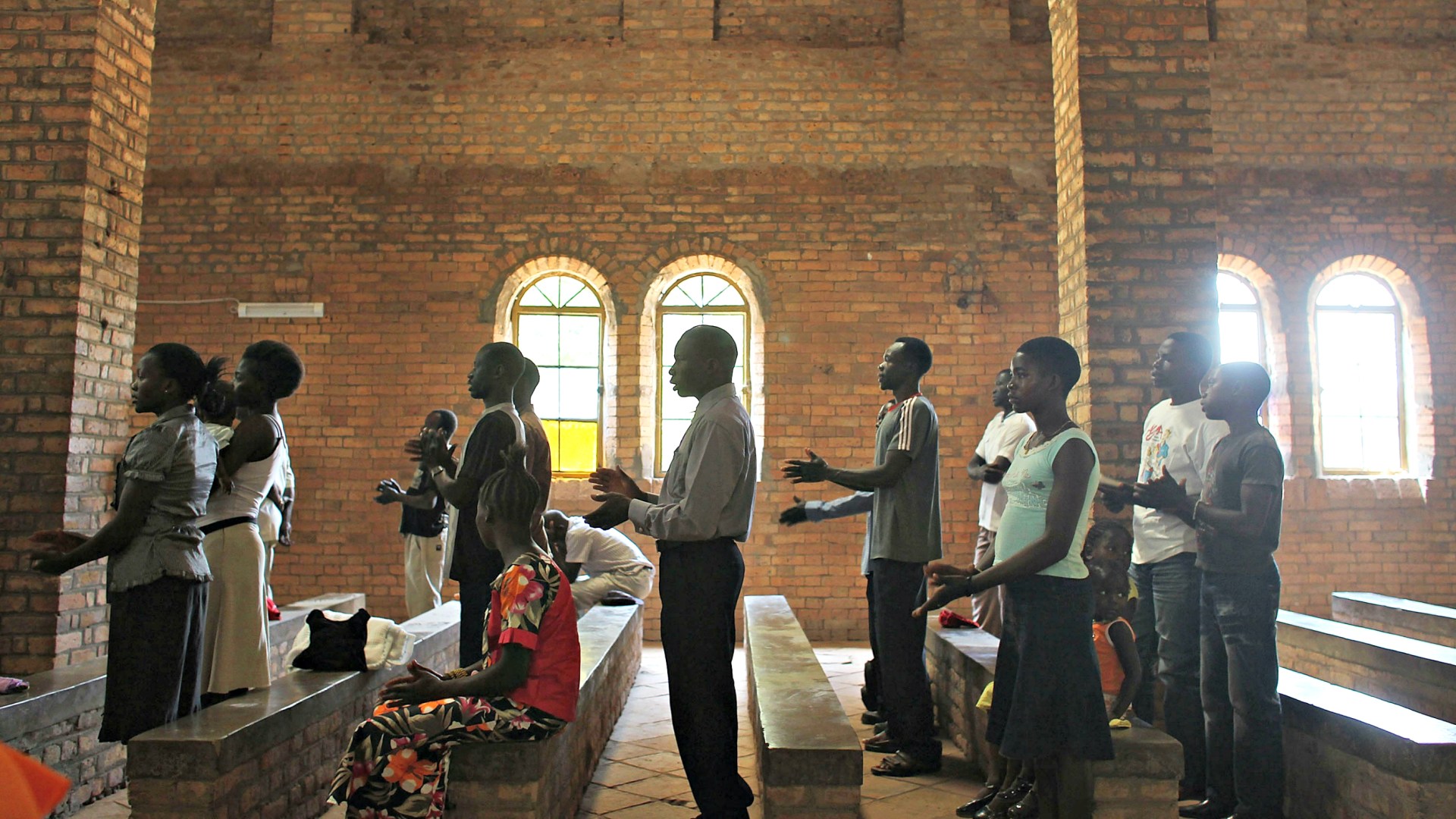
A Sunday church service near the borders of South Sudan, DR Congo, and the Central African Republic. A study ranks all three among the nine nations where Baptists are most vulnerable.

A Sunday church service near the borders of South Sudan, DR Congo, and the Central African Republic. A study ranks all three among the nine nations where Baptists are most vulnerable.

Christianity Today July 8, 2021
Spencer Platt / Getty Images

As thousands of Baptists from almost 150 countries gather online this week to celebrate their global family, a recent study finds 36,000 Baptist churches and 13 million Baptists in nine countries face significant challenges related to their faith and their daily lives.

This represents 1 in 5 churches and 1 in 4 worshipers affiliated with the Baptist World Alliance (BWA), which has member bodies in 126 countries and territories.

Thus it was fitting that the 22nd Baptist World Congress, held every five years and originally scheduled for 2020 in Brazil, opened yesterday with a pre-conference focused on the persecuted church. The event was made all the more poignant by Monday’s mass kidnapping at a Baptist high school in Kaduna, Nigeria, where 121 students remain missing.

The inaugural Baptist Vulnerability Index is an effort by BWA leaders to “bring attention” to the “challenging realities” of its members and to help Baptists “stand together in intentional solidarity.” More than 4,000 people from 146 nations registered for the congress, the largest and most diverse attendance in the 115-year history of the gathering. (Billy Graham spoke at many.)

The report identifies the top nine countries where it is now hardest to be a Baptist:

  1. Central African Republic (CAR)
  2. Nigeria
  3. Sudan
  4. Syria
  5. Ethiopia
  6. India
  7. Chad
  8. Democratic Republic of Congo (DRC)
  9. South Sudan

All scored between 6 and 9 on the index’s 10-point scale [see chart below].

“Our concern is for the Baptists, but not only for the Baptists,” Elijah Brown, BWA general secretary and CEO, told CT. “We share concern for all of the citizens in the country who may be struggling.”

The most Baptists at risk reside in No. 2 Nigeria with about 7 million Baptists across more than 13,300 BWA churches. Next is No. 8 DRC with about 3.3 million Baptists across more than 6,200 churches, followed by No. 6 India with more than 2.5 million Baptists across more than 14,300 churches.

By comparison, No. 4 Syria has only 800 Baptists across 11 BWA churches, and No. 7 Chad has only 121 Baptists across 5 churches.

https://datawrapper.dwcdn.net/053aY

The BWA index measures four factors:

  1. Hunger (based on the Global Hunger Index)
  2. Livelihood (based on the UN Human Development Index)
  3. Violent conflict (based on the Global Peace Index)
  4. Religious freedom (based on the Pew Research Center)

Then BWA regional leaders assess “the degree to which Baptists directly experience these challenges.”

Beyond its focus on Baptists, the report’s inclusion of hunger and livelihood challenges make its rankings stand out from the country rankings produced by longstanding assessments of Christian persecution, such as the Open Doors (OD) annual World Watch List, or of religious freedom violations in general, such as the Pew Research Center’s annual indexes of government restrictions and social hostilities.

André Simão, a senior fellow with 21Wilberforce and vice chair of BWA’s religious freedom commission, told CT this is due to “the BWA approach, which also encompasses aid (through BWAid), and because many of those problems may intersect and demand an integrated response.”

Only two of the countries on OD’s top 10 persecutors list—No. 9 Nigeria and No. 10 India—also appear on BWA’s list. The reason is simple, according to Simão: the BWA does not have any affiliates in the worst eight nations. Then, among OD’s fuller list of the top 50 countries where Christians face the most persecution, another five nations—No. 12 Syria, No. 13 Sudan, No. 35 CAR, No. 36 Ethiopia, and No. 40 DRC—also appear on the Baptist index.

Overall, BWA has affiliates in only 23 of the 50 countries on OD’s watch list. Chad and South Sudan appear on BWA’s list but not on OD’s list.

The United States resettled 34,580 Baptist refugees from 42 countries between 2002 and October 2020 (the US State Department removed such data from public view on October 9 last year).

Only 1,759 of these Baptists fled from the nine nations on the BWA index, including 1,563 from DRC, 127 from CAR, 60 from Ethiopia, and 9 from Sudan.

Meanwhile, the largest share of Baptist refugees in the US have come from Ukraine, with 11,610 resettled, followed by 6,883 from Myanmar (Burma), 5,367 from Moldova, and 3,893 from Russia.

Brown said the index is being used to focus Baptist advocacy at the UN and to encourage more direct aid and partnerships between member bodies. The BWA counts 241 member bodies in 126 countries, representing 47 million Baptists across 169,000 churches.

“Our concern is not just about protecting or strengthening the local Baptist community—though we are certainly working toward that end—but also recognizing that they are ministering in very vulnerable contexts and have a heart and passion for living out the gospel well in their community,” said Brown. “We also want to stand with them and help empower them as they engage in sharing the gospel, serving with compassion, and standing for justice.”

Apple PodcastsDown ArrowDown ArrowDown Arrowarrow_left_altLeft ArrowLeft ArrowRight ArrowRight ArrowRight Arrowarrow_up_altUp ArrowUp ArrowAvailable at Amazoncaret-downCloseCloseEmailEmailExpandExpandExternalExternalFacebookfacebook-squareGiftGiftGooglegoogleGoogle KeephamburgerInstagraminstagram-squareLinkLinklinkedin-squareListenListenListenChristianity TodayCT Creative Studio Logologo_orgMegaphoneMenuMenupausePinterestPlayPlayPocketPodcastRSSRSSSaveSaveSaveSearchSearchsearchSpotifyStitcherTelegramTable of ContentsTable of Contentstwitter-squareWhatsAppXYouTubeYouTube