News

After Three Lockdowns, Irish Churches Can Finally Meet Again

Pastors gear up to welcome evangelicals back to the “greater glory” of church life following 14 months of isolation.

Christianity Today May 14, 2021
Allan Baxter / The Image Bank / Getty Images

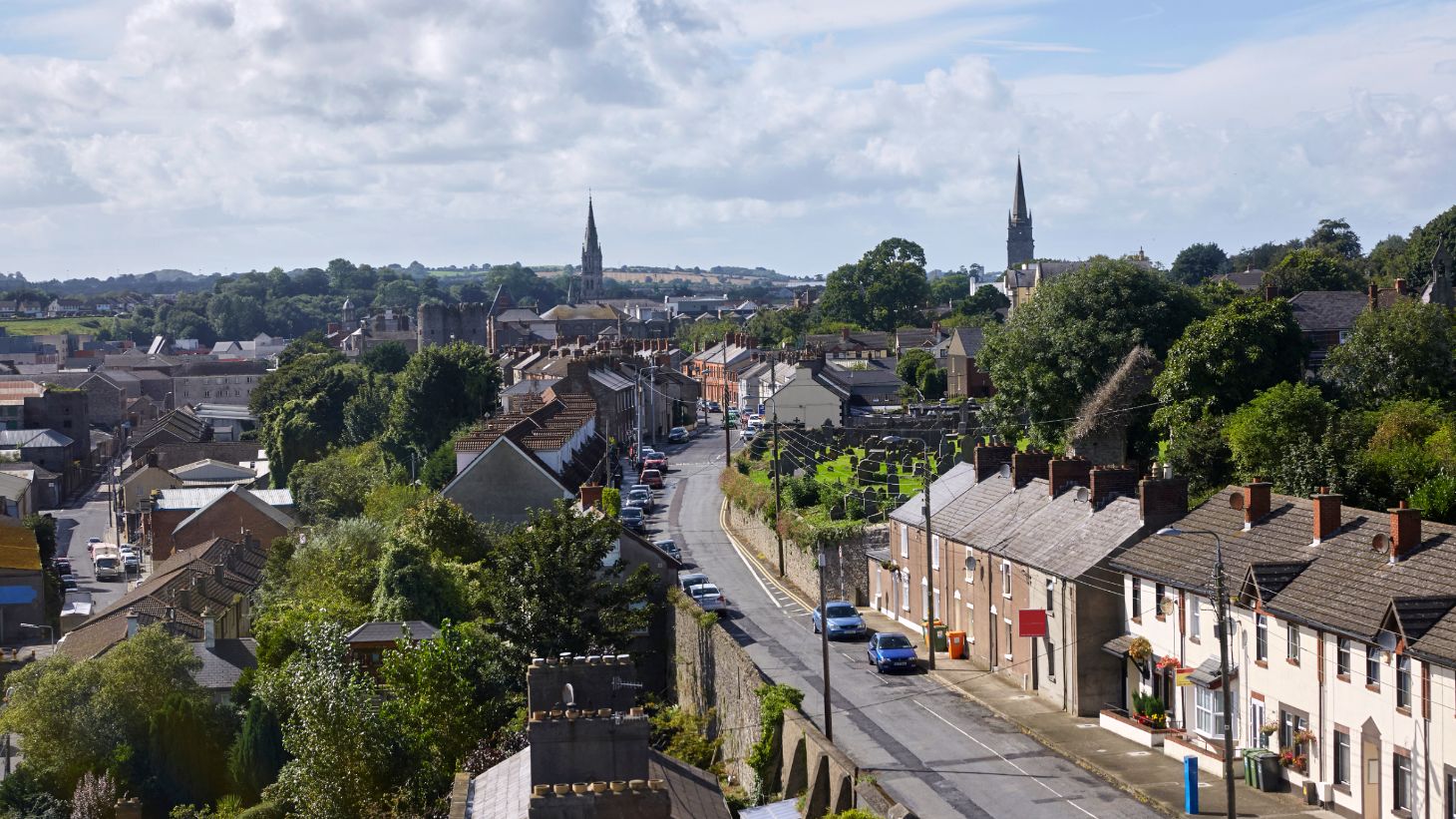
On Monday, Ireland emerged from one of Europe’s strictest lockdowns, allowing Christians to return to in-person church services for the first time since December. Members of Solid Rock Drogheda couldn’t wait until Sunday and met to worship together as soon as the restrictions lifted.

The church, located in a town north of Dublin, started praying for Ireland and the end of the pandemic on St. Patrick’s Day 2020 when lockdown kept revelers at home. What started as a 24-hour prayer vigil has continued ever since, and the church has used an online booking system to schedule members to pray continuously, according to Nick Park, Solid Rock’s pastor and the executive director of Evangelical Alliance Ireland.

While the church prayed, the Irish government instituted three separate lockdowns. In the 14 months since the pandemic began, the government has permitted worship on only 14 Sundays and only three times in the past six months. As of May 10, churches can hold services—along with weddings and funerals—with a maximum of 50 people in attendance.

This is a long-awaited relief for churchgoers who have spent so much of the pandemic apart. Pastors could leave their homes to conduct an online service or to minister to the sick during the earlier lockdowns, but residents were not permitted to get together socially or for worship, indoors or out.

While many businesses and restaurants are still under phased reopening, the Irish are also finally free to travel between counties and meet up with friends and family, per the latest directives from government officials.

At times Ireland’s restrictions were considered among the toughest in the world. Authorities issued fines and threatened to arrest pastors conducting services in violation of the restrictions. Irish legal scholars started to speak up on behalf of churches, and pastors wrote the government last month concerned about the continued ban on worship gatherings.

“We appeal to the government to understand that Christian worship is intrinsically corporate—an act of the gathered church. This lies at the very heart of how Christianity is practiced,” the statement says.

The isolation over the past year-plus has taken its toll on pastors and congregations alike. Congregants longed to see family members who were isolated in other communities. Families with young children struggled with adjusting to at-home schooling and the time away from friends.

Pastors worry who will return after months apart and who has disappeared for good. Park said evangelical congregations usually depend on the weekly offering to make ends meet, and the transition to online giving has been difficult, though he said churches have made it work. In the majority-Catholic country of 5 million, around 1.6 percent is evangelical, the lowest in the English-speaking world, according to Operation Mobilization.

Mark Smith, lead pastor of City Church Dublin, was one of the 16 pastors to sign the statement in April pleading to lift the restrictions. He said when COVID-19 first appeared in March 2020, churches voluntarily closed as a way to love their neighbors. When gathering limits eased over the summer, worshipers started to meet together again in small numbers. In September the government imposed another ban.

If the first lockdown was motivated by love of neighbor, Smith said churches approached the second lockdown with a desire to follow Titus 3:1 and “be subject to rulers and authorities.” No one wanted to stop meeting together, but the gathering bans didn’t feel targeted at churches. “We wanted to be good citizens and a good witness to the community, so we submitted,” he said.

But a third lockdown in January 2021 seemed too much, though cases were spiking in Ireland. Other European Union countries permitted churches to remain open, and Smith said churches had proven that they could meet safely when they gathered during the summer and around Christmas. And while the government tried to contain COVID-19, it took a deep spiritual and mental toll on believers.

Eoghan Heaslip, pastor of St. Catherine’s Church in Dublin, understands that after everything people went through over the past year, this isn’t a time to carry on with business as usual.

Instead, the church must “go slowly, work hard to make safe spaces for listening, lamenting, and allowing all we’ve lost, feared, and grieved to come out in all the different rhythms of church life,” he said.

At City Church Dublin, international families have lost loved ones without being able to travel for funerals. Pastoring families through grief when they cannot benefit from the closure of time with family and final goodbyes has been one of the hardest parts of the pandemic for Smith.

Now that they are returning to worship, pastors are excited but subdued. Size limits mean churches might need to conduct multiple services each Sunday. Solid Rock Drogheda has contracted with a maitre d’ to handle reservations and seating for worship.

Smith said when City Church Dublin first returned to in-person worship last summer, the mood was celebratory. Now members are still grateful but more restrained.

Rather than preaching a special sermon, Smith will keep on with his sermon series from 2 Corinthians. When he selected the book at the beginning of the year, he hoped it would “help us to heal emotionally and re-center ourselves on Christ, finding his strength in our weakness.”

Heaslip is letting another pastor fill his pulpit this Sunday, though he is excited for preaching to real people again rather than a camera lens. In the weeks leading up to Pentecost, his church will study the Holy Spirit’s identity and work in the believer’s life. Heaslip made the four-hour drive this week to visit his mother, whom he hasn’t seen in months. He said it was nice to not worry about the police pulling him over and issuing a fine for leaving his county.

With limited capacity, mask mandates, and one-hour limits, church will be far from prepandemic levels. But as spring sets upon the Emerald Isle, the fruits of lockdown will also emerge: worn, weary souls coming together to lift their hearts to God.

Park’s May 10 sermon drew from Ezra 3:12. As the foundation was laid for Jerusalem ’s second temple, the older generation wept because it did not compare to the glory of Solomon ’s temple.

“But actually the second temple would be more glorious than Solomon’s, according to Haggai, because the Desire of the Nations (Jesus) would come to it,” Park said. “In the same way, church post-COVID initially feels different with masks and distancing. But God is taking us to greater glory.”

News

Just a Bill: Religious Freedom Consensus Rarely Voted into Law

Latest IRF scorecard grades each member of US Congress, as State Department releases annual report on 200 countries and territories.

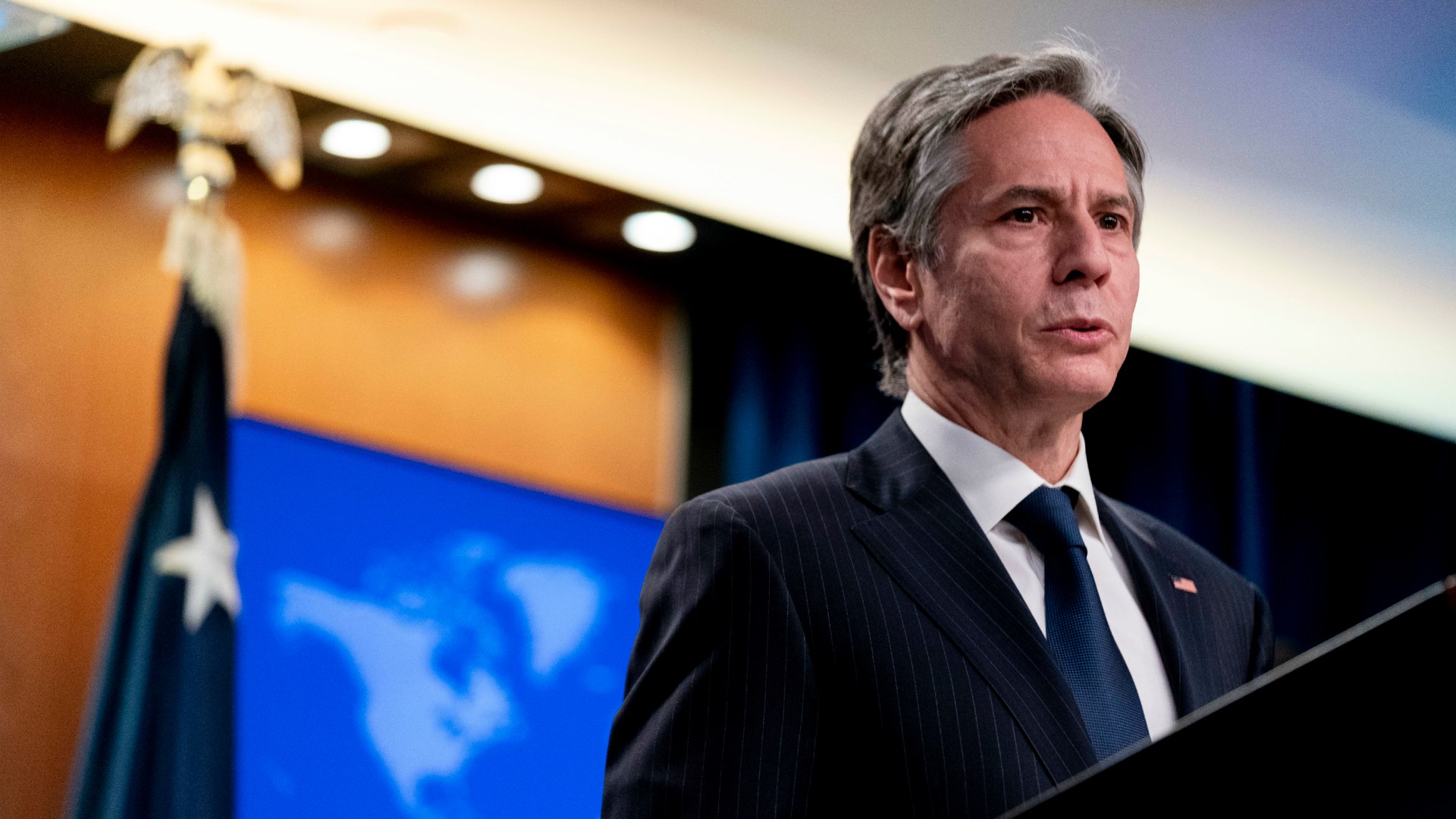
Secretary of State Antony Blinken speaks at a news conference to announce the annual International Religious Freedom Report at the State Department in Washington, Wednesday, May 12, 2021.

Secretary of State Antony Blinken speaks at a news conference to announce the annual International Religious Freedom Report at the State Department in Washington, Wednesday, May 12, 2021.

Christianity Today May 13, 2021
Andrew Harnik / Pool / AP

Secretary of State Antony Blinken called out Saudi Arabia.

The Gulf kingdom “remains the only country in the world without a Christian church, though there are more than a million Christians living [there],” he stated yesterday.

Such high-level criticism of the key US ally is a departure from the foreign policy of the Trump administration, though the State Department has listed the oil-rich nation as a Country of Particular Concern on international religious freedom (IRF) since 2004.

Blinken also highlighted recent violations in Iran, Burma, Russia, Nigeria, and China. Positive developments were noted in Sudan, Uzbekistan, and Turkmenistan.

“Our promise to the world is that the Biden-Harris administration will protect and defend religious freedom around the world,” stated Blinken, releasing the 23rd annual International Religious Freedom Report, assessing the records of nearly 200 countries and territories.

“We will maintain America’s longstanding leadership on this issue, [and] we’re grateful for our partners.”

He named several entities, but one is glaring in its absence:

The US Congress.

Six years ago, 21Wilberforce, a Christian human rights organization, launched the International Religious Freedom Scorecard to hold America’s lawmakers to account.

“There is much room for improvement,” Lou Ann Sabatier, director of communication, told CT. “It is a long and arduous process for an IRF bill to become a law, and many do not make it out of committee.”

The latest scorecard, released this week and grading the two-year term of the 116th Congress, lists 91 legislative efforts in both the Senate and the House of Representatives.

Only two became law.

The daughter of one of Congress’s chief IRF champions is not happy.

“As religious freedom abuses have proliferated around the world, America’s efforts to advocate for this bedrock human right have not kept pace,” stated Katrina Lantos Swett, whose late father cofounded the Tom Lantos Human Rights Commission, a bipartisan caucus in the House.

“This vital tool tells us who in our Congress is leaning forward in defense of the First Freedom, and who is leaning back.”

The scorecard is endorsed by Sam Brownback and Suzan Johnson Cook, former ambassadors at large for IRF under presidents Donald Trump and Barack Obama, respectively. Bob Fu, founder of ChinaAid, and Farahnaz Ispahani, a former member of Pakistan’s parliament, also support the 21Wilberforce effort.

English author Os Guinness joins them, blunt in his assessment.

“My concern is not only religious freedom around the world,” he stated, “but the lack of leadership on this issue—which has been America’s birthright.”

Rand Paul, a Republican from Kentucky, was 1 of 9 senators to receive an F score. Colleen Hanabusa, a Democrat from Hawaii, was 1 of 8 representatives in the lowest tier.

But 62 legislators were recognized as “notable leaders.” Brad Sherman, a Democrat from California, ranks first in the House. Marco Rubio, a Republican from Florida, ranks first in the Senate.

Rubio was the primary sponsor of the two bills that became law. The Hong Kong Human Rights and Democracy Act and the Uyghur Human Rights Policy Act were both passed unanimously.

“The freedom to practice or live out one’s faith according to one’s conscience is a sacred right that no government has the authority to take away,” Rubio stated.

“Tragically, this fundamental human right remains under constant assault around the world.”

More than half of legislative items addressed issues in Asia. China led congressional attention, with 16 proposed bills. Iran was second with 6, while Burma, Sri Lanka, and Saudi Arabia all had 5 each.

Grading on a curve, one-third of US lawmakers scored “above average.”

21Wilberforce tallies one point for voting Yes on a bill, co-sponsoring a bill, or joining an IRF-focused caucus. An additional point is given to the primary sponsor and to the chair of the caucus.

Throughout the Trump administration, Democrats led the IRF charge in Congress. With 38 designations by 21Wilberforce, they represented 61 percent of “notable leaders.” And in the 115th Congress, the 28 Democrat designations were 58 percent of the scorecard’s total.

Meanwhile in the last two years of the Obama administration, Republicans took the lead. Their 22 notable leaders were 56 percent of the 114th Congress scorecard total.

Rankings are not meant as endorsements, nor does the designation of a bill as an IRF item imply 21Wilberforce support.

What the group does appreciate is the consensus.

“Even during this highly partisan age, bipartisan support for international religious freedom is visible,” Sabatier told CT. “This cause has united Democrats and Republicans, in protecting this human right internationally.”

This was celebrated by Richard Ghazal, executive director of In Defense of Christians.

“The question of religious freedom should not create partisan fault lines,” he said. “It should serve as a common ground in American foreign policy.”

During the State Department’s IRF report launch, Daniel Nadel, a senior official in the Office of International Religious Freedom, emphasized that this year’s document “changed virtually not at all” in structure and content, compared to previous administrations.

But Blinken and President Joe Biden do “depart from” the “hierarchy of rights” conversation under the previous secretary of state, Mike Pompeo.

“Religious freedom is co-equal with other human rights,” Blinken stated, “because human rights are indivisible.”

To some, this sounds like a downgrade.

Paul Marshall, professor of religious freedom at Baylor University, appreciated the “major push” Trump gave to IRF as president. With Brownback’s energetic support as ambassador, it achieved wide international support, with many countries making it more of a priority.

Founded during the Trump administration, the International Religious Freedom or Belief Alliance has grown to 32 member nations. Poland hosted the third annual ministerial meetings, with Brazil slated for the fourth. IRF roundtables now exist for 26 countries and regions around the world.

Unfortunately, Trump also indulged authoritarian leaders, Marshall said. He also used religious freedom to rally his base.

Perhaps Biden is doing the same, differently?

“Religious freedom has been identified with Trump, so that the Biden administration has downplayed it and reemphasized gay rights,” Marshall told CT. “But the continuing bipartisan support in Congress reassures that the issue will remain central in America’s international stance.”

Continued polarization, however, risks erosion of the international consensus.

“We can’t assume it will last without a commitment to be nonpartisan in our global efforts,” warned Knox Thames, former Special Advisor for Religious Minorities at the State Department.

“Our domestic debates are important,” he told CT. “But they pale in comparison to the life and death situations confronting Christians around the world, as well as members of other persecuted religious communities.”

Accordingly, 21Wilberforce focuses on individual accountability. IRF is not a partisan issue, the group insists, and should not be framed as such.

“It is our hope that Congress will continue to practice the art of political transcendence in defense of international religious freedom,” said Sabatier.

“No worthy cause is ever won in a corner.”

News

CCCU Says LGBT Lawsuit Is Frivolous

Evangelical association names itself as co-defendant to defend religious exemptions.

Christianity Today May 13, 2021
Google Maps

The Council for Christian Colleges and Universities (CCCU) jumped into the legal fray over LGBT rights and religious liberties on Wednesday when it filed a motion to join a lawsuit against the US Department of Education (DOE) as a codefendant.

Thirty-three current and former students from 20-plus religiously affiliated colleges filed the suit against the DOE in March to prevent the agency from granting religious exemptions from federal antidiscrimination laws. Eighteen of the schools are CCCU members, including Dordt Univeristy, Lipscomb Univeristy, Messiah Univeristy, Nyack College, and Toccoa Falls College. The schools all have policies prohibiting student sexual activity and statements about Christian sexual ethics.

A newly founded LGBT advocacy group, the Religious Exemption Accountability Project (REAP), says these policies are discriminatory and create abusive and unsafe conditions for LGBT students. REAP is arguing that the religious exemptions to civil rights and federal education laws should be abolished.

If the exemption to Title IX is eliminated, religious schools with policies deemed discriminatory would not be eligible for federal funds.

CCCU president Shirley Hoogstra said the lawsuit is frivolous and the Christian colleges and universities are clearly eligible for religious exemptions.

“CCCU institutions subscribe to sincerely held biblical beliefs,” she said in a statement, “which include specific religious convictions around human sexuality and gender, and are transparent about their policies and behavior guidelines, which students voluntarily agree to when they choose to attend the institution.”

The CCCU has filed a motion to dismiss the lawsuit. The motion cites multiple US Supreme Court rulings that protect religious schools from being deprived of indirect financial aid on the basis of an institution’s religious identity. In 2002, the court ruled 5-4 in Zelman v. Simmons-Harris that a state school-voucher program allowing parents to send their children to religious schools if they wanted, did not violate First Amendment prohibitions against “respecting an establishment of religion.”

In 2020, the court ruled 5-4 in Espinoza v. Montana Department of Revenue, the Court ruled 5-4 that religious schools cannot be excluded from a state scholarship program that provides aid to students attending private schools.

The new advocacy group has said it hopes the lawsuit will call attention to the issue of religious exemptions in the Equality Act, the antidiscrimination legislation currently under consideration in the US Senate. One of the major points of disagreement over the bill is how it will balance religious liberty with concerns that LGBT people are not protected by current law. The fate of the Equality Act is uncertain, but legislators could attempt to win more votes for the bill by including exemptions, which REAP opposes.

“When taxpayer-funded religious institutions require sexual and gender minority students to hide their identity out of fear, or to behave contrary to their fundamental sexual or gender identity, the unsurprising consequences are intense pain, loneliness and self-harm,” the suit says.

Multiple plaintiffs say they experienced mental distress from bullying at Christian colleges and some claim they were subjected to conversion therapy.

The CCCU lawyers dispute the evidence that sexual ethics policies cause students harm.

According to the court filings, the association “denies that any of its Christian College or University members abuse or provide unsafe conditions to thousands of LGBTQ+ students, or injure them mind, body, or soul, but rather seek to minister, support, and care for them physically, emotionally, socially, and spiritually. Plaintiffs cite no evidence to support their allegations of abuse and harm.”

Hoogstra said in her statement that the CCCU takes reports of student experience seriously and said the schools are “committed to learning, growing, and deepening our understanding of how we can provide and strengthen support for all students,” including those who disagree with the colleges’ stated beliefs and those who identify as LGBT.

“CCCU institutions should be places where all students feel safe, supported, and welcome,” Hoogstra said.

Read God’s Words. Then Write Your Own.

The spiritual discipline of recording our prayers and Bible reading reflections is a practice rooted in Christian tradition.

Christianity Today May 13, 2021
Kelly Sikkema / Unsplash

Three crows bickering on a rooftop against the sunrise, reads my journal entry from July 22, 2019. Lord, how obnoxious I am!

Aside from a list of prayer requests, that is the entirety of the entry for that day. Out of context, it makes no sense. But reading those two sentences now whisks me back to that sticky summer morning. The trio of argumentative crows on my neighbor’s roof are cawing and fighting, oblivious to the sky painted in lavender and gold behind them. Observing them, I see myself in their behavior, my complaints and natterings stark against the backdrop of God’s extravagant love. I jog home, unsettled, to write about the experience.

The practice of writing down my spiritual observations puts me in good company. Christians have been compelled to write about God and to God since the earliest days of the church. Although much of the church’s writing over the years has been to reflect God to the wider world, Christians have also long written to and about God privately.

Prayer journaling transcends denomination and background. Throughout history, both ordinary and prominent believers have approached private journaling to God as a matter of great spiritual import. Fiery Puritans Cotton Mather and Jonathan Edwards used their diaries to chronicle their sins and halting progress in holiness. John Wesley inherited his journaling practice from his devout mother, Susanna. C.S. Lewis’ A Grief Observed emerged from personal reflections he kept after the loss of his wife.

The motivations for this practice varied. Puritans often journaled as an attempt to grow in holiness. John Beadle, an English clergyman in the 1600s, believed that diary-keeping was a way Christians might practice for the account they must ultimately give to God of “all of our wayes, and all of his wayes toward us.” Trappist monk Thomas Merton believed that the act of writing without witness or audience permitted the honesty and transparency required to come before God.

Journaling remains popular today. In the secular world, it has flourished as a therapeutic tool and a path to wellness-based self-empowerment. In our digital age, many young professionals have found that paper planners and journals help them avoid getting “sucked into their devices.” And Christians still write, too. Bible journaling, which emphasizes process as much as product and invites believers to encounter Scripture through annotation, illustration, and embellishment, persists in popularity among believers. In 2020, many Christian book publishers saw journal sales rise significantly during the pandemic.

But such practices should not be confused with the process that compelled Jonathan Edwards to lament in his journal, “how soon do I decay! O how weak, how infirm, unable to do any thing of myself!” The rich and complex tradition of Christian private writing not only chronicles an individual’s relationship with God, but also challenges the writer to reflect on that chronicle and grow in holiness.

As a record of relationship, writing as a spiritual practice is more than a list of annotations or a purely self-reflective practice. Rather, it serves as a recollection of God’s presence in an individual life at a particular time in a particular place, and of the writer’s presence or absence in relation to God.

When Christians write about God’s unique presence in their lives, they are obeying God’s command to record what they have seen (Rev. 1:19) and engaging in an embodied act of remembrance that mirrors others in Scripture: the stack of stone on stone, the sip from a cup, the bite into bread. Throughout the Old Testament, God constantly commands his prophets to write down his words that they may remember them (Is. 30:8, Jer. 30:2, Hab. 2:2).

Writing about three crows on a roof, in other words, records my unique and personal encounter with God in a world where my constant consumption of information and entertainment would otherwise lead me to forget it or blind me to what it meant.

Importantly, that record then challenges me—and all who write—to transformation. Writing about three crows is not about me. It isn’t about the crows, either. It is about creating space, in my writing about crows, for God to change me.

The purpose of Christian private writing is not to empower or deify the self or its desires, a characteristic that places it in sharp contrast to secular wellness writing that claims to “expel negative energy” or “heal [the writer] from the inside out.” Rather, the Christian diarist writes to practice seeing differently, to rehearse meeting with God in the every day and, reflecting on that encounter, to grow holier in aspect and behavior.

Of course, the lighter practice of Bible journaling or wellness-based secular writing practices might seem more immediately gratifying and accessible to the everyday writer than a return to the more rigorous practice of writing as a spiritual discipline. But such writing can be both rewarding and attainable. Here are three entry points.

1. Reflective Writing on Scripture

Believers can begin their journey into reflective writing with a deeper dive into Bible journaling. The trick is to move beyond a simple focus on a particular passage of Scripture to questions that link the Scripture to lived experience: what does this Scripture ask of me? How does this Scripture challenge me? What must I consider when I examine my life through the lens of this verse?

Like Bible journaling, this exercise brings the writer to Scripture, while also asking the writer to engage Scripture as early diarists did by using it to rigorously examine daily life and growth in holiness.

2. Prayer Writing

Writing prayers can be an accessible entry point into writing as a spiritual practice. Almost all Christian diarists pray on paper, either by writing directly to God, penning petitions, or meditating at length on God’s character and works. Writers can pray in all these ways, or they can deliberately compose prayers to address a particular need, desire, or thought.

This practice particularly benefits those who prefer to pray “in their own words” but who, at times of high stress or anxiety, find it difficult to compose a prayer. Writing prayers not only provide words for future use, but also serves as a memorial of God’s presence and support. Looking back on answered prayers and God’s work in our lives months or years later can deepen our faith.

3. Christ-Focused Journaling

Daily unguided writing has its place in Christian spiritual practice. Distinct from secular writing that serves merely to unload negative emotion or affirm and empower the self, Christ-focused journaling brings the thoughts and events of the day before God as a way of inviting God into a dialogue about daily life—and a way of inviting God into daily life.

As it turns out, the diaries of even prominent Christians are at times surprisingly mundane, with discourses on daily errands and concerns interspersed with attempts at prayer and meditations on Scripture. Such framing is not coincidental: writing God into our normal world helps us, when we enter it, to center him there.

At its best, writing as a Christian practice takes us deeper than Bible journaling and, in contrast to secular practices, pulls us out of ourselves and back into the presence of the Lamb to reorient our perception of the world. And when that happens, as Thomas Merton writes, “the whole world and all the incidents of life tend to be sacraments—signs of God, signs of His love working in the world.”

Three crows on a rooftop, after all, are not an invitation to holiness. But writing out that encounter and bringing it to God can be.

Brandy Bagar-Fraley lives and writes in Columbus, Ohio. She received her Ph.D. in English from Ohio University and currently works for Franklin University.

Books

Nominate a Book for the 2022 Christianity Today Book Awards

Instructions for publishers.

Christianity Today May 12, 2021
wackystuff / Flickr

Dear Publisher,

Each year, Christianity Today honors a set of outstanding books encompassing a variety of subjects and genres. The CT Book Awards, along with our Beautiful Orthodoxy Book of the Year, will be announced in December at christianitytoday.com. They also will be featured prominently in the January/February 2022 issue of CT and promoted in several CT newsletters. (In addition, publishers will have the opportunity to participate in a marketing promotion organized by CT’s marketing team, complete with site banners and paid Facebook promotion.)

Awards Categories:

1. Apologetics/Evangelism

2. Biblical Studies

3. Children and Youth

4. Christian Living/Discipleship

5. The Church/Pastoral Leadership

6. Culture and the Arts

7. Fiction

8. History/Biography

9. Marriage and Family

10. Missions/Global Church

11. Politics and Public Life

12. Spiritual Formation

13. Theology/Ethics

14. The Beautiful Orthodoxy Book of the Year*

*Beautiful Orthodoxy is the core philosophy guiding CT’s ministry. It describes a mission, across all our publications, to proclaim the truth, beauty, and goodness of the gospel in a gracious, non-antagonistic tone. Learn more about our cause of Beautiful Orthodoxy here and here.

Nominations:

To be eligible for nomination, a book must be published between November 1, 2020 and October 31, 2021. We are looking for scholarly and popular-level works, and everything in between. A diverse panel of scholars, pastors, and other informed readers will evaluate the books.

Publishers can nominate as many books as they wish, and each nominee can be submitted in multiple categories. To enter your nominations, you will fill out and submit a nomination form, listing each book you are nominating and the categories for whey they are nominated. You will also find information on entry fees and how to pay them, either by check or credit card. There is a $40 entry fee for each title submitted in each category. There are no refunds, so please make sure your nominations were published between November 1, 2020 and October 31, 2021.

(Note: Beautiful Orthodoxy is a special add-on category. Books nominated here must have first been nominated in one of the main categories. They will be eligible to win more than once. The add-on fee for Beautiful Orthodoxy nominations is $20.)

To submit the nomination form, please download it to your computer. After filling it out in Adobe Reader, hit the “Submit” button or save the file and email it as an attachment to bookawards@christianitytoday.com. If paying by check, please include a copy of your nomination form with the check.

As for the books themselves: We are asking that publishers email PDF versions of books they wish to nominate, rather than mailing physical copies to Christianity Today. These PDFs should also be sent to bookawards@christianitytoday.com.

Finalist Books:

If your book is chosen as one of the four finalists in any category, we will contact you and ask that you send a copy of the book directly to the four (or five) judges assigned to that category. Depending on certain pandemic-related factors, we might ask you to send physical copies or PDF versions. In either case, we will provide the pertinent email or mailing addresses for each judge.

Deadline:

The deadline for submitting nominations is Friday, August 6, 2021.

Thank you!

Christianity Today editors

Books
Review

John Piper Goes Further Up and Further Into the Doctrine of God’s Providence

His latest book leans on the Reformed tradition while speaking to 21st-century questions.

Christianity Today May 12, 2021
Illustration by Mallory Rentsch / Source Images: WikiMedia Commons / Chris Nguyen / Zachary Ferguson / Unsplash

As a pastor and author, John Piper has long been known for singing the song of God’s glory with uncommon passion. His newest book, the massive Providence—written more than three decades after his signature volume Desiring God—confirms that Piper has even more Scripture-soaked verses to belt out.

Providence

Providence

Crossway

752 pages

$21.32

At this stage of his ministry, it might be helpful to imagine Piper playing the role of C. S. Lewis’s character Digory Kirke from The Chronicles of Narnia. Piper, though, is Kirke at the age of his greatest influence, when he has grown from the boy Digory to the aged professor who welcomes the Pevensie children to stay at his estate to find in his wardrobe a portal to a new world.

Professor Kirke, the reader discovers in later volumes, has been to Narnia before and knows of the other world the children discover. Upon their return, he is eager to hear about their travels and point them “further up and further in,” so they can better see and understand that world and its maker. Piper, like Kirke, shows today’s reader just how much he has seen of God’s glory—and how much comfort and transforming truth there is to be had in the doctrine of providence.

A divine “seeing to it”

In the introduction, Piper opens the door to see God and his world anew, offering four invitations to study God’s providence. These are invitations to worship and know the God who “did not spare his own Son, but gave him up for us all,” and to find assurance that through his providence he will “graciously give us all things,” very much including Christ himself (Rom. 8:32). What follows are 700 pages divided into 45 chapters, grouped in three parts.

The first part gives definition to Piper’s understanding of providence. This doctrine conveys the idea of purposeful action as God “upholds, directs, disposes, and governs ‘all creatures, actions, and things.’” Piper arrives at this definition not wanting to develop anything new. He works from the classical Reformed articulation of providence, citing key confessions of faith, including the Westminster Catechism and Confession (documents familiar to students of Piper given his famous edit of “and” to “by” in the catechism’s answer to the first question regarding the chief end of man—we are to glorify God by enjoying him forever).

Further, Piper’s definition is consistent with how the later Reformed tradition organized the doctrine in terms of preservation (God sustaining the world), government (ruling it according to his will), and concurrence (using the ordinary workings of nature to accomplish his purposes). Piper cites Charles Spurgeon to show how his definition distinguishes between providence and fate, and in fact he sounds a lot like Calvin (who cites Paul, Augustine, and Basil) in the Institutes: “We make God the ruler and governor of all things. … The plans and intentions of men, are so governed by his providence that they are borne by it straight to their appointed end.” That Piper means to write from within the Reformed tradition is significant, for the Reformers saw the doctrine of providence as a means of comfort and assurance in response both to the teachings of Rome in their day and to attacks on their well-being.

The second part of Providence explores the ultimate goal of God’s providential rule. In other words, it reveals Piper’s answer to the question, “Where is God taking the world?” Here the reader is treated to a full biblical theology of providence working from creation to the New Covenant and concluding with the glorification of God’s people. Piper underscores that this plan of God for Israel and for “the saving, global impact of Jesus on all nations” is “one plan,” not something that evolves or changes over time or under different circumstances.

Piper shows that while his understanding of providence draws upon classical Christianity, the Reformed tradition, and Jonathan Edwards, he does emphasize aspects of the doctrine that provide unique and needed answers to 21st-century questions. God, he assures us, is taking the world to a day when he will exalt himself, not to distract humanity from “what is ultimately satisfying,” but for the sake of “displaying it and inviting us into the enjoyment of it.” In short, there is no conflict between glorifying God, our joy through Jesus Christ, and God’s delight in our enjoyment of him. Bringing these things together is the ultimate goal of providence.

The third, and longest, part of Providence examines the nature and extent of the doctrine. By nature, Piper is referring to the question of how God influences what he governs. By extent, he has in mind the scope of God’s governance. Following the Bible and Edwards, Piper asserts that the world is God-entranced and that “nothing in nature happens without God’s wise and just and gracious providence.” In these chapters, marked by poetic language and an inspirational use of story, there are wide-ranging reflections on bears, the wind, and the thought of a day’s worth of un-thanked providences. Providence considers the nature and extent of God’s relationship to Satan, kings and nations, and life and death, concluding that “there is no sphere of life … where providence is suspended or limited in its ultimate or decisive dominion.”

Part Three’s largest section deals with God’s providence over sin and sinful human choices. Rather than seeing this as a topic to avoid, Piper labors to show why God’s actions are the ultimate hope for sinners and their victims. He explains, “Whatever verb I use to describe God’s relation to human choices, I always mean a kind of divine ‘seeing to it’ (providence) that never means God sins, or that man is not accountable for his choices. To be specific, God can see to it that sin happens without himself sinning or taking away the responsibility of the sinner.” In this section, like much of the volume, Piper engages the biblical text as his primary source and ultimate authority; he aims to stop where Scripture stops and acknowledges the limits of finite human minds to comprehend the mysteries still kept hidden of “how” God acts.

Yet this is not to say he operates without theological influence. The idea that God’s providence permits evil without willing it is consistent with the tradition of the early church in the works of Tertullian for one and Augustine for another, with Anselm and Aquinas carrying it forward to the Reformation era. Aquinas, leaning on Augustine, states, “God therefore neither wills evil to be done, nor wills it not to be done, but wills to permit evil to be done; and this is good.” Piper’s views of the compatibility of human freedom and God’s sovereignty follow Calvin, the Reformed confessions, and Jonathan Edwards’s Freedom of the Will.

The remaining sections address the nature and extent of providence in conversion, Christian living, and the future. While not addressing much of the modern era’s drifting theology by name, Piper’s arguments stand up well to refute the claims of deism, process theology, Protestant Liberalism, and open theism, not to mention other worldviews and world religions. Further, his admonitions toward joy- and love-filled Christian living in response to the nature and character of God serve well to address many of the questions evangelicals are asking or need to be asking. And his ten examples of the effects of knowing and loving God’s providence are a recipe for renewal among those who call themselves born-again and Bible-believing followers of Christ.

A pivotal doctrine

Piper closes with a full chapter on the hope shared by all who long for the return of Jesus Christ. This should move the reader to praise, much like the Puritan poet George Herbert at the end of his poem “Providence”:

All things that are, though they have sev’ral ways,
Yet in their being join with one advise
To honor thee: and so I give thee praise
In all my other hymns, but in this twice.

Throughout church history, the recovery and defense of the doctrine of providence has proved pivotal. From early church stability in response to heresy, to medieval certainty in response to philosophical quandaries, to Reformation comfort in response to a lack of assurance, to theological refutation in response to modern innovation and deconstruction, the doctrine of providence has served and preserved God’s people.

In our age of conflict, doubt, pessimism, and confusion, a recovery of the doctrine of providence is needed. Piper’s Providence allows readers to see God at work bringing hope and a grounding to weather the waves of cultural tumult. As Calvin wrote in the Institutes, providence provides comfort by reminding that “when the world appears to be aimlessly tumbled about, the Lord is everywhere at work.”

For decades, Piper has pointed to a big God of beauty and mystery, and in this big volume, he points yet again, extolling both beauty and mystery in providence for the present and future. Professor Piper, here in the Shadowlands, writes with joy of a real “other world” where God is known in full—and welcomes us all to go further up and further in.

Jason G. Duesing serves as provost and professor of historical theology at Midwestern Baptist Theological Seminary. He is a coeditor of Historical Theology for the Church and the author of a new children’s book, The Moon Speaks.

Ideas

I Got Ordained So I Can Talk About Jesus. Not the Female Pastor Debate.

Contributor

As a priest, I’m tired of a political battle that distracts from the gospel.

Christianity Today May 11, 2021
Illustration by Rick Szuecs / Source Images: Pearl / Lightstock / Nathan Dumlao / Taylor Hernandez / Alexis Brown / Unsplash / Wikimedia Commons

Rick Warren’s Saddleback church recently made headlines by ordaining three female leaders. I was grateful to see these women recognized and lent both the public authority and institutional accountability that comes from ordination. But when I read the news, I also thought with a heavy sigh, “Oh, here we go again.” I knew the debate about women’s roles in the church would dominate conversation all week, and I could already predict the rutted arguments I’d hear recited over and over. Here’s an open secret: You know who hates talking about women’s ordination? Female pastors. Not all of us, of course. Some women have a special unction to debate this topic, and honestly, more power to them. But the reality is that few of us become pastors in order to talk about women’s ordination. We get ordained because the gospel has captured our imaginations. We get ordained to witness to the beauty and truth of Jesus. We get ordained to serve the church in the ministry of Word and sacrament. (And, for the record, don’t get ordained for any “cause” other than the ministry of Word and sacrament. Nothing else is worth it.)

I wasn’t always in favor of women’s ordination. Until my 30s, I was a so-called soft complementarian. But I was also a woman in ministry. People in my church assumed that I’d eventually marry a pastor (as an unofficial way “in” to vocational ministry for laywomen). I interned at a Southern Baptist church in its youth group and a PCA church in “mercy ministries,” working among immigrants, the homeless, and the poor. Then I went to seminary, discovered I loved and had a knack for theological study, and eventually worked for years as a campus minister.

I spent time carefully studying the ordination debate and, over the years, changed my views. But once this long theological work was done, my decision to get ordained was a rather organic and practical one. I didn’t get ordained because I wanted to prove that women should be pastors or to make some statement about justice. I didn’t get ordained because I think women (or men) have an inalienable right to ordination. I got ordained because I was already serving as a lay minister and had a high enough view of the church and a high enough view of the sacraments that I could no longer understand my ministry as separate from the life and authority of the church. I was already doing the work. I was already teaching people and forming disciples. I wanted to do it under the gaze and in the name of the body of Christ.

Now, when I preach, when I put my hand gently on the shoulder of a weeping woman and take her confession, when I write an essay, when I go on a walk with a student asking questions about the Bible, when I hold up the body of Christ before weary men and women and proclaim in the clearest, loudest voice I can that these are “the gifts of God for the people of God,” I’m not thinking about women’s ordination. I’m not thinking about Greek verbs or biblical womanhood. I’m silently praying that the Spirit draw us to himself in order to make his people whole and teach us to believe again.

Of course, women’s ordination is an important issue. I am very grateful for biblical scholars and theologians who are doing the work of looking closely at biblical arguments (most recently Beth Allison Barr and William Witt, who both have great new books out on the topic). We need to have these arguments. And I will keep having them.

But online and in the church, this issue is often bandied about, mostly in abstraction. For those of us in ministry, the work we do is rooted in the concrete—the lives of real men and women we love and serve. Although this topic rarely comes up among parishioners who just need to be cared for, too many people on the planet want to talk about ordination too much of the time. I don’t know a female pastor or priest who hasn’t sat by someone on a plane, train, or bus who, upon finding out she’s a lady preacher, feels a trill of righteous zeal and launches into a long lecture on how women’s ordination is wrong.

But while half of the church is trying to convince us to quit our jobs, the other half wants to cheerlead for us as gladiatorial smashers of the patriarchy. Early on after my ordination, when I was in between meetings and still in my clerical collar, I’d pop into my local, hip coffee shop and get thumbs-up and enthusiastic smile-nods from customers cheering me on. I appreciated the response. I really did. But I knew they were seeing me as a symbol of feminist triumph, not as a preacher of the gospel. Plus, sometimes a gal just wants to be able to get coffee and read a book without being a walking theological “take.” I am a Rorschach test. I represent something to people, whether I want to or not. (Precisely for this reason, I don’t often wear my collar in public anymore.)

My very existence is troublesome to some or encouraging to others. And almost everyone assumes a lot about what I do or do not believe about the Bible and gender and Jesus.

There is an added complexity for those of us who are willing to collaborate with and even learn from complementarians. We love the church and the Scriptures and don’t want to “burn it all down.” Progressives see us as “fraternizing with the enemy,” and yet we never fit into complementarian circles. So we end up feeling like misfits in the conversation—buffeted by both sides of an immensely polarized church, which often regards the gospel of Jesus as second fiddle to the debates of the day.

In my own denomination, my sisters who are clergy are lightning rods in ways they never asked to be. They serve their churches. They each submit to their bishop. And they often have to navigate criticism about everything from their voice to their theology in ways that men do not. And yet, they continue to be pastors. Because that is what they are: pastors, shepherds, mothers, servants. Yesterday, a younger woman in ministry sat on my couch and said, “I’m doing this to see people set free.” Because what draws us into ministry is Jesus and his mission. We aren’t motivated by second wave feminism or by “the impulses unleashed by liberation theology,” as Al Mohler put in his recent response to the Saddleback news. We want to serve the church with the gifts God has given.

As a female priest, I often feel like an unwilling pundit in a culture war that I frankly find boring. What’s interesting to me about ministry isn’t convincing anyone that I’m worthy of a particular office. What’s interesting about ministry is participating in Jesus’ work in the church.

In the end, the work of Christ himself is the only thing that makes women’s ordination remotely compelling. The harvest is plentiful. The workers are few. Yes, we need to seek to be faithful to Scripture. Yes, we need to have these arguments about women’s ordination. But we don’t need to spend most of our time or energy arguing about how women labor in the field. Our eyes need to be set on the gospel. We will continue to do the hard work of ministry because we are seeking to follow the Lord of the harvest himself.

News

Burkina Faso’s 7 Army Chaplains Struggle Amid Jihadist Attacks

Once considered a beacon of peaceful coexistence between Christians and Muslims, the West African nation has been embroiled in unprecedented extremist violence.

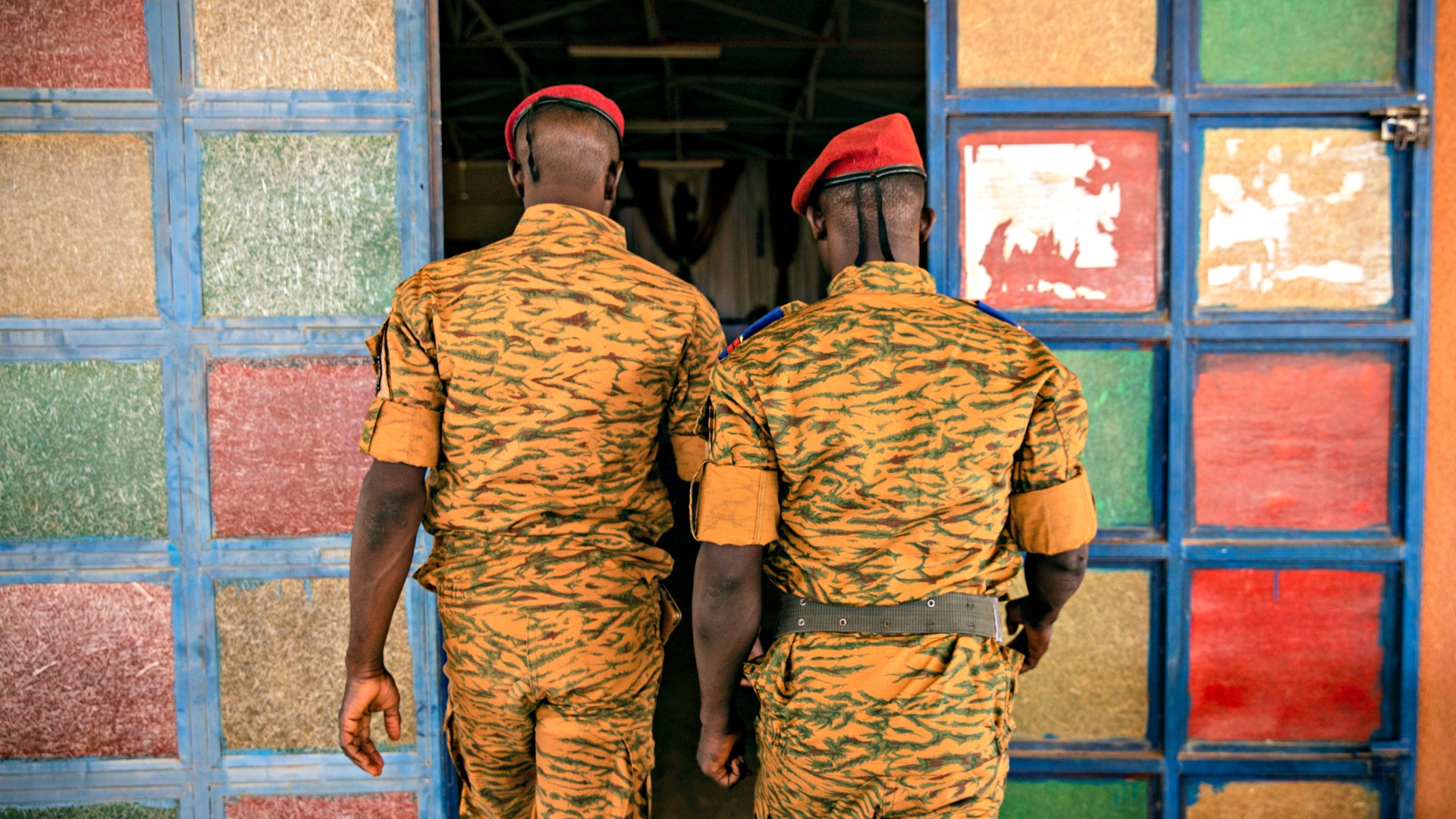
Two soldiers enter the Catholic church at the 10th RCAS army barracks in Kaya, Burkina Faso on April 10.

Two soldiers enter the Catholic church at the 10th RCAS army barracks in Kaya, Burkina Faso on April 10.

Christianity Today May 11, 2021
Sophie Garcia / AP

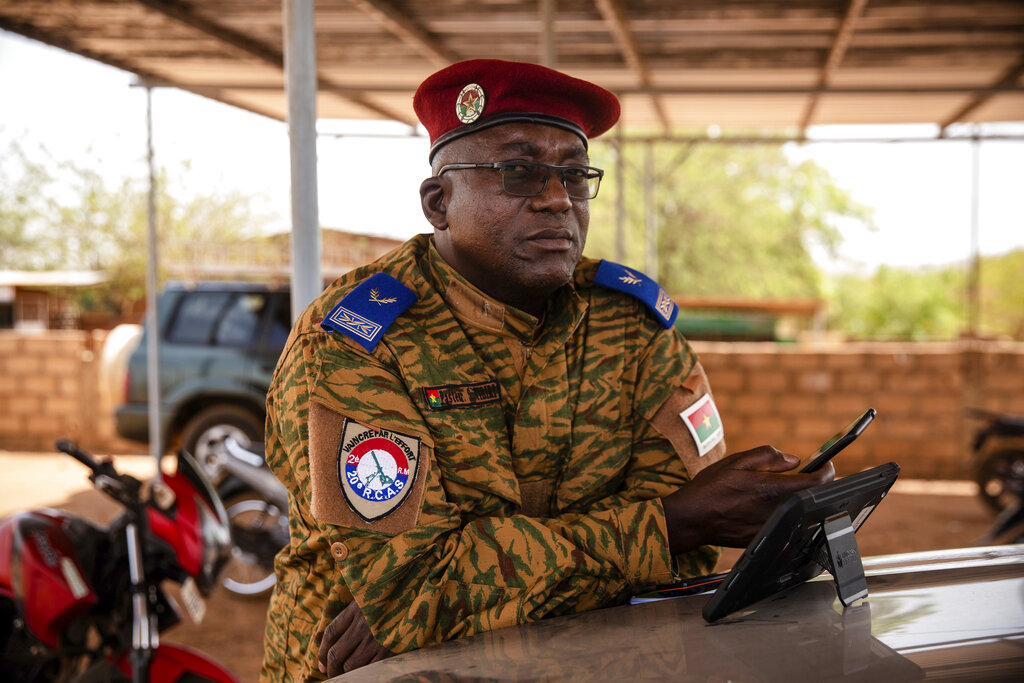
In the more than 15 years Salomon Tibiri has been offering spiritual succor as a military pastor in Burkina Faso, he’s never fielded so many calls from anxious soldiers and their relatives as in recent years, when the army found itself under attack by Islamic extremist fighters.

“Before the crisis there was more stability,” Tibiri said, seated in a military camp church in the city of Kaya, in the hard-hit Center-North region. “Now (the soldiers) are busier, and when you approach them you feel their stress—much more stress.”

Once considered a beacon of peace and religious coexistence in the region, the West African nation has been embroiled in unprecedented violence linked to al-Qaeda and the Islamic State since 2016.

[Editor’s note: A series of terrorist attacks on churches led Open Doors to add Burkina Faso to its persecution watch list in 2020 for the first time, and to rank it No. 32 out of the 50 countries where it’s hardest to be a Christian in 2021. Meanwhile, Burkinabe Christians have debated whether or not to join civilian militias in response.]

The attacks have thrown an ill-equipped and undertrained army into disarray—and overwhelming the chaplains tasked with supporting them.

In interviews in the Center-North and in Ouagadougou, the capital, military chaplains told The Associated Press that they are stretched thin by the unprecedented conflict and what assistance they are able to provide through phone calls and prayer services is insufficient.

Salomon Tibiri, a pastor and military chaplain in Burkina Faso for 15 years, has never fielded as many calls from anxious soldiers as in recent years amid attacks by Islamic extremist fighters.

Just seven chaplains, hailing from Protestant, Catholic, and Muslim faiths, are charged with spiritually advising some 11,000 soldiers and helping maintain their morale. The army has not devoted what little resources it has for them to embed with units, and they say the distance only makes it harder to keep soldiers motivated.

The troops “face death every day. … At this moment they also need to have much more spiritual help,” said Noel Henri Zongo, a chaplain and Catholic priest.

It’s crucial work as experts say the psychological effects of conflict like what’s occurring in Burkina Faso can be particularly tough on soldiers who are experiencing it in their country for the first time. It can put them at greater risk for post-traumatic stress disorder and also increase the likelihood of them acting in ways contrary to their moral values.

Last year, 524 civilians were killed by soldiers and local defense militias fighting alongside them, according to the Armed Conflict Location and Event Data Project (ACLED), more than the 432 killed by the extremists. At least 180 bodies were found in mass graves near the government-controlled town of Djibo, with evidence of army involvement in large-scale executions, according to Human Rights Watch.

Etienne Bonkoungou, another of the chaplains, said he regularly counsels troops grappling with the question of whether their participation in the fight makes them defenders or killers.

“The Bible says not to kill, so as a soldier these questions often arise,” Bonkoungou said. “To kill another, to watch a colleague die (or kill someone yourself), should you kill? Should you not kill?”

To help them reconcile that dilemma, he uses biblical examples of devout people fighting in wars, and advises that “even sometimes God himself orders killing.”

Soldier Luc Yelkouni acknowledged that the conflict “impacts our morale.”

A 29-year-old veteran of nearly a decade with the military, he had never before suffered the kind of trauma as in recent years, with one colleague after another killed by the extremists. After a stint in the Sahel, he turned to a military priest for help dealing with an experience from his deployment that was so traumatic he said he didn’t want to go into details, even three years later.

Speaking to the priest was reassuring, Yelkouni said.

The chaplains “play a key role for us,” he said, “and the collaboration is really good.”

While the chaplains did not say what they think the army should do, one said it would be helpful if there were four or five more of them. And they wish they could be physically closer to those deployed for dangerous duty.

“The role of a chaplain is to be present where the men are,” Zongo said, “and what he needs to bring is the necessary capacity to face danger and to get up after failure.”

The army, whose communications team facilitated the chaplain interviews and sat in on them, did not respond to a request for comment.

But last year, in an acknowledgment that its clergy needed help, it brought in US military chaplains to train their counterparts.

Maj. Mike Smith, lead chaplain with US Special Operations Command Africa, said the Burkina Faso chaplains had never been trained in tasks like caring for the wounded, counseling families, mourning the dead, and motivating fighters.

“(The army was) seeing casualties on a regular basis, whether soldiers were being killed in attacks or wounded in attacks,” Smith said. “And … it was tearing at the resiliency of their force, just as a whole, and it even impacted their retention.”

With the coronavirus pandemic also affecting operations, the US supplied the Burkina Faso chaplains with iPads that they used to record sermons and broadcast them to the front lines through messaging apps.

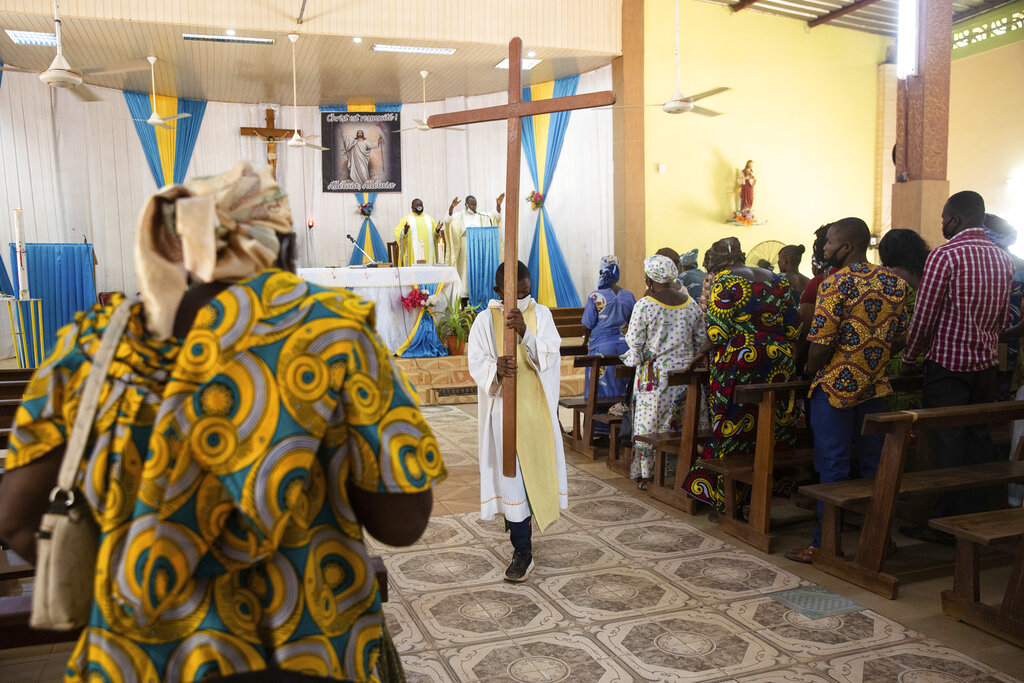
An altar boy carries a cross as Noel Henri Zongo, priest at the Church of the Sangoulé Lamizana military camp in Ouagadougou, Burkina Faso, celebrates Mass on April 11. Just seven chaplains are charged with spiritually advising some 11,000 soldiers and helping maintain their morale.

How much they are able to lift spirits can have real consequences, with experts saying low morale in the ranks is impacting Burkina Faso’s counter-terrorism strategy.

Héni Nsaibia, an ACLED analyst who specializes in the Sahel region that has been the epicenter of the violence, said it appears that volunteer militias have essentially “replaced” the army on the front lines as soldiers prefer to stay in their barracks.

A decision last month to conduct airstrikes and use special forces rather than launch a ground offensive after a deadly ambush in the eastern part of the country is also a likely indication of greater reluctance among regular troops, he added.

Despite the limited resources, soldiers said the chaplains have been a lifeline.

Yempabou Kobori, 30, said one thing that keeps him going is a Bible verse his pastor shared from him from the Book of Psalms, about staying safe even as thousands around you fall. He recites it before battle.

“It reminds me that I am not alone.”

News

Genocide in Tigray? Ethiopian Christians Debate Orthodox Patriarch’s Claim

US ambassador meets with Abune Mathias in Addis Ababa after provocative video released.

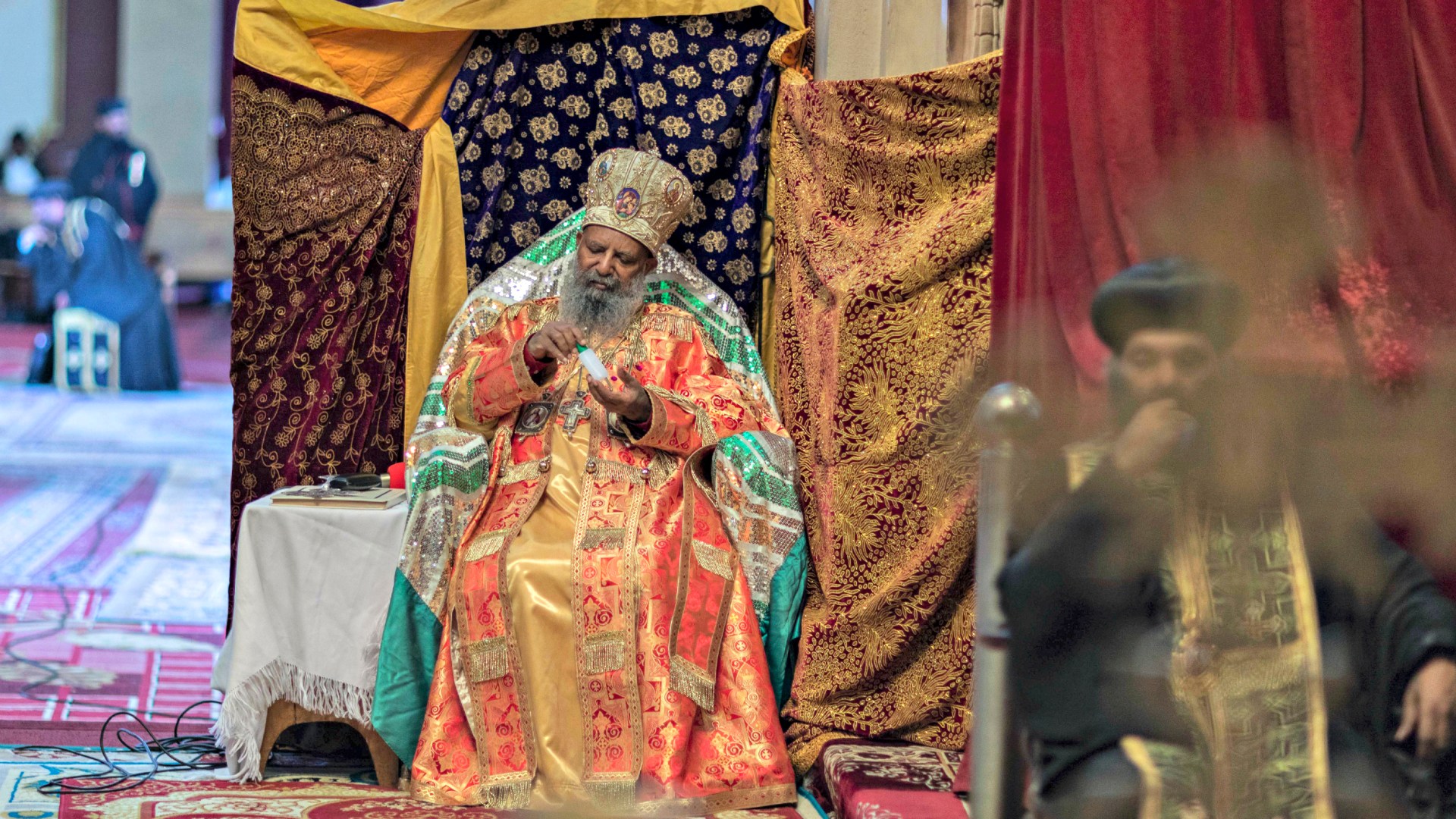
Abune Mathias, the sixth patriarch of the Ethiopian Orthodox Church, during the 2020 Good Friday service at the Holy Trinity Cathedral in Addis Ababa, Ethiopia.

Abune Mathias, the sixth patriarch of the Ethiopian Orthodox Church, during the 2020 Good Friday service at the Holy Trinity Cathedral in Addis Ababa, Ethiopia.

Christianity Today May 10, 2021
Mulugeta Ayene / AP

The head of the Ethiopian Orthodox Church in his first public comments on the war in his country’s Tigray region is sharply criticizing Ethiopia’s federal government, saying he believes its actions constitute genocide: “They want to destroy the people of Tigray.”

The United States ambassador hosted him today to learn more.

In a video shot last month on a mobile phone and carried out of Ethiopia, the elderly Patriarch Abune Mathias addresses the church’s scores of millions of followers and the international community, saying his previous attempts to speak out were blocked. He is ethnic Tigrayan.

The video comes as the conflict in Tigray marks six months. Thousands of people have been killed in the fighting between Ethiopian and allied forces and Tigray ones, the result of a political struggle that turned deadly in November. Dozens of witnesses have told the AP that civilians are targeted.

“I am not clear why they want to declare genocide on the people of Tigray,” Mathias says, speaking in Amharic and listing alleged atrocities including the destruction of churches, massacres, forced starvation, and looting.

“It is not the fault of the Tigray people. The whole world should know it.”

He calls for strength, adding that “this bad season might pass away.” And he urges the world to act.

The comments are a striking denunciation from someone so senior inside Ethiopia, where state media reflect the government’s narrative and both independent journalists and Tigrayans have been intimidated and harassed. The video also comes as Ethiopia, facing multiple crises of sometimes deadly ethnic tensions, faces a national election on June 5.

Dennis Wadley, who runs the US-based Bridges of Hope ministry and has been a friend of the church leader for several years, told the AP he shot the video in an impulsive moment while visiting him last month in Ethiopia’s capital, Addis Ababa.

“I just pulled out my iPhone and said if you want to get the word out, let’s do it,” Wadley said on Friday after arriving in the US. “He just poured out his heart. … It’s so sad. I actually hugged him; I never did that before.”

A church official reached on Friday confirmed the video and the interest of Mathias in making it public. The church patriarch serves alongside a recently returned exile, Abune Merkorios.

“I have said a lot of things, but no one allows the message to be shared. Rather, it is being stifled and censored,” Mathias says in the video.

“Many barbarisms have been conducted” these days all over Ethiopia, he says, but “what is happening in Tigray is of the highest brutality and cruelty.”

God will judge everything, he adds.

Ethiopia’s government says it is “deeply dismayed” by the deaths of civilians, blames the former Tigray leaders and claims normality is returning in the region of some 6 million people. It has denied widespread profiling and targeting of Tigrayans.

Ethiopian Protestants largely agree with the government, Sofanit Abebe told CT.

Currently in the United Kingdom pursuing PhD studies in New Testament, next year she will return to the Ethiopian Graduate School of Theology (EGST). Founded in 1997 by three prominent denominations, the seminary represents nearly all of Ethiopia’s evangelicals, approximately 20–25 percent of the national population of 112 million.

Without naming the offending parties, the Ethiopian Gospel Believers’ Churches Council (EGBCC) has made clear statements in favor of the peace process, she said, and against the “destructive forces intent on destroying Ethiopia.”

Earlier, the EGBCC organized two separate weeks of prayer and fasting for the Tigray region, mobilizing resources on its behalf.

But Abebe noted that the conflict started when the Tigrayan People’s Liberation Front (TPLF) first attacked the national army. While lamenting with the patriarch the sexual violence against women and other atrocities in Tigray, Abebe wonders why he has not spoken out against ethnic violence in other regions.

Perhaps he is a victim of a TPLF misinformation campaign?

“The patriarch’s statements were irresponsible,” Abebe told CT. “To throw around a term like genocide is a massive mistake that might embolden rebels across the country, when a critical election is just one month away.”

Witnesses have told the AP about seeing bodies strewn on the ground on communities, Tigrayans rounded up and expelled, and women raped by Ethiopian and allied forces including those from neighboring Eritrea. Others have described family members and colleagues including priests being swept up and detained, often without charge.

Churches have been the scenes of alleged massacres—one deacon in Axum has told the AP he believes some 800 people were killed in a November weekend at the church and around the city—and of mass graves.

“I struggle to find a word other than genocide to describe what is going on,” Meron Gebreananaye, a Tigrayan Baptist in the UK pursuing her PhD in religious studies, told CT.

“I am alarmed and ashamed that so many Ethiopians are willing to engage in denial and political explanations, for what is clearly an issue of basic humanity.”

Estimating about 5 percent of Tigrayans are evangelicals, she stated that the patriarch’s homeland is the heart of the Ethiopian Orthodox faith and the entry point of Christianity into all of Ethiopia.

Gebreananaye is also a writer with the Tghat initiative, chronicling the war in Tigray. She referenced confirmation by the United Nations Office of Human Rights of violations by the Ethiopian army that could amount to crimes against humanity. It has agreed to carry out a joint investigation with the Ethiopian Human Rights Commission.

She is also concerned about reports depicting orchestration of a deliberate famine. The AP has also reported that thousands of Tigrayans across Ethiopia have been detained on suspicion of treason, far beyond suspected military personnel.

“His Holiness has spoken out with great courage,” Gebreananaye said, “and at considerable personal danger to himself.”

Mathias, born in 1942, has been outspoken in the past. In 1980, he became the first leader of the church to denounce the rule of Ethiopia’s communist regime “and was forced to live abroad for more than thirty years,” according to the United Nations refugee agency.

Yoseph Mengistu, a former instructor at EGST, calls for deliberation.

“Sadly, at the moment, many are siding with either TPLF or the Ethiopian government without knowing the intricacies of the situation,” the senior teaching fellow at the School of Oriental and African Studies at the University of London told CT.

“I don’t believe the patriarch is lying or trying to misinform.”

But there is a war going on—and beyond conventional means. While rebel forces were routed quickly, they have rebounded with a war of propaganda. Too many Western media outlets and governments have been taken in, he said.

Not present in Ethiopia, Mengistu is hesitant to comment on the details. But as it is, the people suffer.

“The innocent and poverty-stricken peoples of Tigray are a bargaining chip,” Mengisto said, “and are caught up in the middle.”

So also are the churches.

“Religious leaders are influenced by their ethnic roots,” Ermias Mamo, deputy secretary-general of the Kale Heywet church, told CT. “We are divided more than any time before.”

The previous TPLF government is partly the cause, he said, as to stay in power it destroyed the national vision. President Abiy Ahmed—a fellow evangelical—is doing his best to unify the nation, encouraging change and democracy. But given the nature of the country, regional leadership defers to its ethnic majority.

As a result, churches, mosques, and evangelicals are all divided.

“We are in a mess, hoping for the Lord to intervene,” said Mamo.

“It is confusing and complicated. Please pray for us.”

Cara Anna reported for the AP from Nairobi, and writer Haleluya Hadero contributed. Jayson Casper reported for CT from Beirut.

News

Christian Street Artist Honors Beirut Explosion Victims with 204 Illegal Portraits

Inspired by Makoto Fujimura, an American evangelical partners with Lebanese art institute to equally dignify every death.

More than 200 #TheyMatter portraits honor Beirut explosion victims via an illegal street art gallery by an American Christian in Lebanon.

More than 200 #TheyMatter portraits honor Beirut explosion victims via an illegal street art gallery by an American Christian in Lebanon.

Christianity Today May 10, 2021
Jayson Casper

Nine months later, Brady Black was fed up—and inspired.

Last August, one of the largest non-nuclear explosions in human history leveled Lebanon’s main port and thousands of homes.

Charities and churches scrambled to help, as 204 people were killed.

The government has done next to nothing.

But now, each victim has a portrait across from Beirut’s famed Martyrs Square.

“Families were protesting, holding up pictures of their relatives as they demanded justice,” said Black.

“They wanted them to be seen. So we made it loud.”

An American street artist resident in Lebanon since 2015, Black teamed up with Art of Change to illegally create the capital city’s largest informal portrait gallery. Run by a secular British artist and a Lebanese Muslim from the heterodox Druze sect, the art institute co-founders sponsored Black’s evangelical idea for “good mischief.”

Scouring the internet for every name and image that could be found, Black digitally drew each face with the utmost care—with one caveat. No matter the importance of the victim or the degree of fame achieved in their death, each was limited to one hour of his creativity.

An hour he bathed in prayer for the surviving family.

“People come up to me, frantically asking, ‘Where is my son?’” said Black of his installation.

“‘Come with me,’ I tell them. ‘I know exactly where he is.’”

Brady Black stands in front of his #TheyMatter street art gallery in Beirut.

Each victim’s portrait is about 10 square feet in size. Arranged side-by-side, the images span the equivalent of three football fields, covering three-quarters of a city block on one of Beirut’s busiest downtown intersections.

Black was especially keen on the eyes.

Mona Lisa-like, each face stares directly ahead. Standing in front of one, viewers are confronted with the victim’s singular humanity. But when viewers turn their heads 90 degrees, the sidewalk gallery is designed to overwhelm with the scope of collective tragedy.

But also its equality.

Entitled #TheyMatter, all are listed only by first name.

Yvonne Sursock is perhaps the most famous victim of the blast. Known as Lady Cochrane, the 98-year-old high-society philanthropist and elegant patron of the arts was posthumously honored with Lebanon’s Order of the Cedar.

Black put her between Kassim and Youssef, unknown to all but their families.

Lebanese victims are interspersed with Syrians, Palestinians, Bangladeshis, Filipinos, and Ethiopians. Others are in silhouette, if images were unavailable or families did not want to participate. But with portraits drawn in black and white, ethnic differences are dimmed, challenging an often-stratified social hierarchy.

“It is extremely non-Lebanese, but part of the message,” said Black.

“All are exactly the same in death.”

The project began as one family insisted that all be the same in memory.

An early idea was to highlight 3-year-old Alexandra Najjar, whose innocence transfixed the public after the explosion. But her family refused, said Imane Assaf, the Druze collaborator.

“It will hurt too much to see her image alone,” she recalled the father saying.

“If you want to honor her, honor them all.”

One of 204 portraits in the #TheyMatter street art gallery honoring Beirut explosion victims.

Sahar, a vibrant bride-to-be, was a paramedic first responder.

Chadi, an unemployed man who was unable to speak, hung around the nearby hospital.

Ali and Malak, a married couple out having dinner, had their portraits moved next to each other once Black discovered their relation.

The dignity of each is conveyed, however, through materials meant to symbolize utter brokenness. Cheap glue plasters the portraits onto construction boards, hiding one of Beirut’s stalled development projects.

Sahar, one of the most beautiful young women in the series, had her portrait land on a broken board. A tear now rips right under her nose. Black felt terrible, but he let the randomness stay.

This also is part of the message—including his own.

One of 204 portraits in the #TheyMatter street art gallery honoring Beirut explosion victims.

The 43-year-old Texan originally came to Lebanon to assist with Home of Hope, an evangelical ministry working with abused street children. He opened a school, won legal custody of a now 18-year-old boy, and dedicated himself to loving each one.

Six years later, it put him in therapy.

Akram, his son, has no legal existence. Abandoned by his birth parents, he lacks the necessary documents to facilitate official adoption. Black said he has spent years battling a Lebanese judicial system that could easily solve the problem by issuing a piece of paper.

In October 2019, he joined an uprising with hundreds of thousands of Lebanese similarly frustrated by their sectarian government. It was there he discovered the power of street art—and a new ministry.

“I avoided art my whole life, trying to be a good Christian,” said Black.

“But I pretty much sucked at everything, until this.”

Discovering the example of Makoto Fujimura, Black bordered each portrait with gold paint. It was a deliberate imitation of the Japanese style of Kintsugi, in which broken pottery is re-formed using precious metals.

“The American idea is to fix things,” he said. “But here, that which is broken is made whole through contemplation, and then enriched in transformation.”

Art of Change has similar hopes.

Assaf said its mission through art is to help Lebanese “see” a different future, and then to open doors so that others can make it happen. She and Jason Camp, the British managing director, served as Black’s mentors. The pair encourage him in his efforts, delighted to see a committed Christian in the art scene.

Everyone has a right to bring their message to the streets.

“It was his connection with God that fulfilled this project,” said Assaf, a 56-year-old mother of three who spent every day on the streets during the uprising.

“Faith is what we do on the ground.”

The #TheyMatter street art gallery in Beirut honors 204 explosion victims.

Many of Lebanon’s activist youth, however, have given up on God altogether. Angry at how religion is manipulated by politicians in a corrupt government, many desire a secular state.

They nevertheless pray when they are troubled or fearful.

“Many are confused,” she said.

“They are not so much anti-God, as anti- a political system tied to religion.”

And Black is winning their respect, by offering dignity.

Prior to the gallery wall of explosion victims, he was active drawing portraits of beggars and street children, placing his artwork at the very spot they occupied. Another series quoted the exasperated cries of revolutionaries. And a third put phrases from the Bible juxtaposed with socially conscious pictures of poverty.

He also digs through the garbage with abandoned children, pointing out material they can use as he trains them to be creative alongside him.

“I’ve talked more about Jesus [while] doing illegal street art,” Black said, “than I ever did being an evangelical church guy.”

The “illegal” part still troubles him, somewhat.

When he put out the call for volunteers to help glue the images, he warned them there was risk involved. But he also assembled community leaders—and especially older women—who could placate the army and police.

This was especially important, as the project is meant, Black said, “to poke a finger in the eye of the government.”

Lebanon’s prime minister and cabinet resigned six days after the explosion. But they still serve in a caretaker capacity, as politicians have been unable to form a new ruling coalition.

A law was passed authorizing compensation to the families of victims, but as of April, only 14 had begun receiving the monthly aid. And some had their checks refused by banks, as the economic collapse has paralyzed the financial sector.

Meanwhile, a new investigating judge was appointed in February, after his predecessor leveled charges against the caretaker prime minister. Of the 25 officials initially detained—no senior politicians among them—6 have since been released.

Black is not sure what will happen to him due to his “offensively large” tribute, but he is willing to accept the consequences.

“Our role as Christians is to stand up for the least of these, and love them in an irrational way,” he said.

“Just as Jesus did for me.”

Apple PodcastsDown ArrowDown ArrowDown Arrowarrow_left_altLeft ArrowLeft ArrowRight ArrowRight ArrowRight Arrowarrow_up_altUp ArrowUp ArrowAvailable at Amazoncaret-downCloseCloseEmailEmailExpandExpandExternalExternalFacebookfacebook-squareGiftGiftGooglegoogleGoogle KeephamburgerInstagraminstagram-squareLinkLinklinkedin-squareListenListenListenChristianity TodayCT Creative Studio Logologo_orgMegaphoneMenuMenupausePinterestPlayPlayPocketPodcastRSSRSSSaveSaveSaveSearchSearchsearchSpotifyStitcherTelegramTable of ContentsTable of Contentstwitter-squareWhatsAppXYouTubeYouTube