Pastors

The State of Preaching

A look inside our fall special issue.

Arthur Senra / Ponto 618

Scripture contains several funny-not-funny accounts. There’s the young disciple fleeing naked from the Garden of Gethsemane (Mark 14:51–52). There’s Elisha cursing the kids who called him “Baldy”—which led to their grisly end (2 Kings 2:23–25). And, of course, there’s Paul’s deadly sermon. Acts 20 describes Eutychus, a young man “seated at a window … who was sinking into a deep sleep as Paul talked on and on” (v. 9). Paul’s lengthy preaching (and also the “many lamps” lit in the room) had such a soporific effect that Eutychus fell out of the window to his death three stories below.

Many parishioners feel a bit like Eutychus now—viewing a sermon through a screen is arguably as draining as listening to one in a hot and crowded first-century room. And for preachers (who can’t perform a miracle like Paul did!), the task of delivering a lively and powerful sermon through a screen can at times feel futile if not impossible. Zoom and YouTube church services are just not the same as preaching to one’s congregation, face to face.

CT is constantly trying to help pastors preach Scripture faithfully, whatever the circumstance. Our colleagues at Preaching Today have a wide array of tools to help build your sermon skills. And in our special issue on the state of preaching, we look closely at our current cultural moment. Our cover story examines how preaching during the pandemic has generated new insights and lasting change for pastors. And pastor Brandon Washington discusses preaching during this time of protests for racial justice.

Beyond these two immediate and pressing issues for pastors, this special issue also looks at important trends, questions, and topics in biblical exposition that speak to the here and now and also look beyond 2020. For example, how can preachers effectively reach an increasingly post-Christian culture? What does it look like to preach Scripture’s moral imperatives when people are already outraged about some issues and overlook biblical truth on others? How does ethnic and cultural identity shape preaching, particularly in a multiethnic ministry context? And what are the pros and cons of preaching with a very local, congregational focus versus a focus on a broad, online audience?

At some point in the future, the pandemic will be over. We’ll be able to look back and laugh at the funny-not-funny aspects of Zoom exposition and YouTube church. Facebook Live services will be replaced by live faces, young and old, gathered together and listening attentively. And, thanks be to God, the lessons learned during this season will last.


Theology

Preach What You Practice

Decades ago, theologian Paul Jewett modeled moves white Christians must make toward racial solidarity.

Christianity Today September 18, 2020
Illustration by Mallory Rentsch / Portrait: Courtesy of Jamal-Dominique Hopkins / Background Images: WikiMedia / Unsplash / New York Public Library

While researching my upcoming book, I discovered, to my surprise, a white evangelical theologian who attended, and later pastored, a predominantly African American church in Pasadena, California. Paul King Jewett belonged to Scott United Methodist Church while a theology professor at Fuller Theological Seminary from 1955 to 1991. Learning about Jewett, I wondered, why don’t more white Christians attend predominantly black churches?

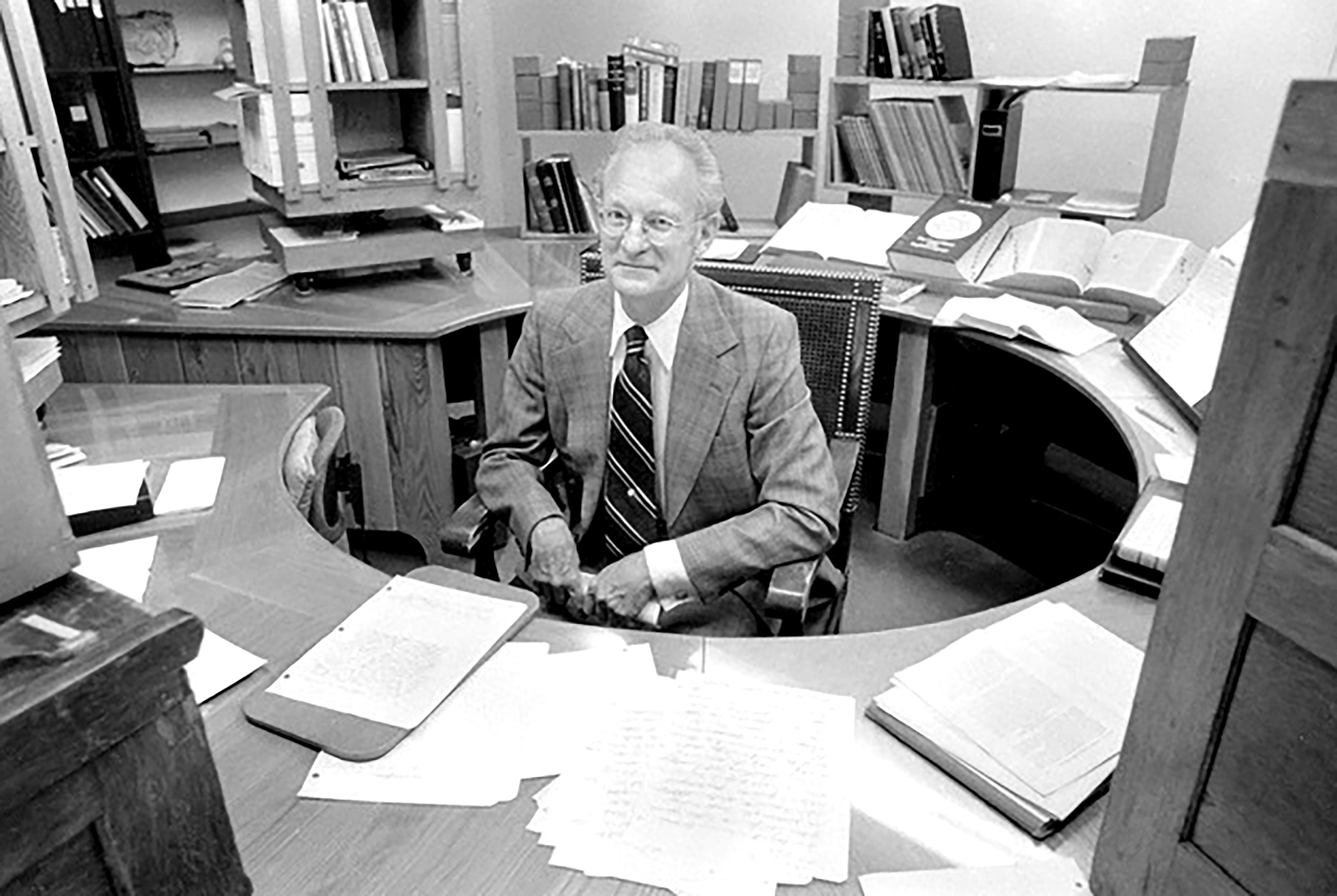
Paul Jewett at the infamous round table he had built for his office.Courtesy of Fuller Theological Seminary
Paul Jewett at the infamous round table he had built for his office.

Jewett, a renowned moral theologian, possessed a passion for promoting racial solidarity. He attended a predominantly black church, mentored black students at Fuller, became the first white board member of the National Negro Evangelical Association (currently known as the National Black Evangelical Association). He also attended the March on Washington in 1963 and the funeral of Martin Luther King Jr. in 1968. Jewett was the epitome of a Christian bridge-builder. In a conversation with Ruth Lewis Bentley, widow of former National Black Evangelical Association president William H. Bentley, she recalled Jewett’s personal friendship with her husband and his interest and active involvement with African American social justice efforts. Bentley even reflected upon Jewett’s extended stay in their home on a visit to Chicago’s west side.

Jewett recognized the biblical devotion that informed King’s efforts to lift up the poor and socially disenfranchised. Jewett’s commitment to racial equality was contrary to the racial barriers prevalent within his own evangelical tradition. As evangelical theologian Carl F. H. Henry expressed in his 1947 work, The Uneasy Conscience of Modern Fundamentalism, “If the Bible-believing Christian is on the wrong side of the social problems such as war, race, class, labor, liquor, imperialism, etc., it is time to get over the fence to the right side. The church needs a progressive Fundamentalism with a social message.”

Many white Christians bought into the wrong-headed idea of segregated worship as sanctioned by God. Antebellum white Christian enslavers regulated the preaching content over the enslaved. Messages like “Slaves, obey your masters,” “Love your enemies,” and “Do not steal” served as biblical pretexts along with conflated readings related to the so-called Hamitic curse in Genesis 9 and the runaway slave narrative in the letter to Philemon. Such readings promoted the enslavement of dark-skinned peoples. From post–Civil War through the Jim Crow era, legal mandates dictated worship divided by race.

Speaking about white American Christians regularly attending church, Daniel Schultz notes that, “. . . as white American Christianity contracts, the people left behind in the pews are indeed those most committed to preserving the social order.” Keeping their churches alive requires preserving outdated traditions that promote social rigidity and racial resentment conditioned from the past. Many white churches situate residentially in white communities and draw their membership from there. Passé social attitudes go unchecked and unrecognized. Evangelicals have long sidestepped responsibility for advancing racial equality and solidarity. Edward J. Carnell, the second president of Fuller, confessed his personal difficulty in choosing “to do the Christian thing” over “personal interest.” Decades since, many white Christians still choose personal interest (such as social privilege) over “the Christian thing” to do.

For some white Christians, resistance to changing harmful traditional attitudes is viewed as giving in to worldly secularism and political correctness. But it’s possible to adapt to growing social changes without dethroning the God of Scripture.

For some white Christians, resistance to changing harmful traditional attitudes is viewed as giving in to worldly secularism and political correctness. But it’s possible to adapt to growing social changes without dethroning the God of Scripture. For white Christians to align with black congregations necessitates their leaving largely homogenous residential churches, neighborhoods, and attitudes. Misperceptions creating roadblocks to racial solidarity include white Christians’ views of African Americans as less educated, hence socially and culturally inferior to whites, compelling most white Christians to reject the idea of submitting to African American spiritual leadership.

The small cadre of black leadership in white Christian fellowships ironically raises further suspicion about commitments to racial and social justice, what Cornel West characterizes as race-effacing leaders or race-distancing elitists. In an attempt to appeal to a large white constituency, West contends “this type of [Black] leader tends to stunt progressive development and silence the prophetic voice in the Black community.” West argues that despite these individuals being the only black representatives in exclusive white circles, they are not necessarily the best ones to espouse black America’s concerns.

Multiracial churches, congregations where no single racial or ethnic group constitutes more than 80 percent of the membership, are typically headed by white leaders. These churches have been reeling due to protests and racial unrest in response to the deaths of George Floyd, Breonna Taylor, and other young African Americans at the hands of police officers. Multiracial and predominantly white churches promoting “race neutral” positions or “post-racial” climates get singled out as creating ironic roadblocks to racial solidarity.

The racial and ethnic divide within Christianity is akin to the first-century rift between Jews and Samaritans. Jesus’ encounter with a Samaritan woman at Jacob’s well, considered scandalous by his disciples and other Jews (John 4) exposed this division. Jesus engaged with the Samaritan woman at a deeper level beyond her gender and ethnicity, resulting in a spiritual liberation that brings forth reconciliation. Jesus confronted the status quo of Jewish-Samaritan ethnic division with his own privilege as a Jewish male teacher of the law. He aligned with this woman, serving as a bridge-builder of solidarity, reconciliation, and healing.

There are hopefully many white Christians who attend and align organically in solidarity with black Christian fellowships. Yet reconciliation must go beyond attendance and alignment. A majority of white Christians resist attending black churches or multiracial fellowships headed by African American leadership. Failure to cultivate racial solidarity misrepresents Christianity’s role in genuine reconciliation and healing. The life of Jesus, exuded by Paul Jewett, presses for deeper engagement, tapping into Christianity’s capacity as a bridge toward solidarity we all must be willing to travel.

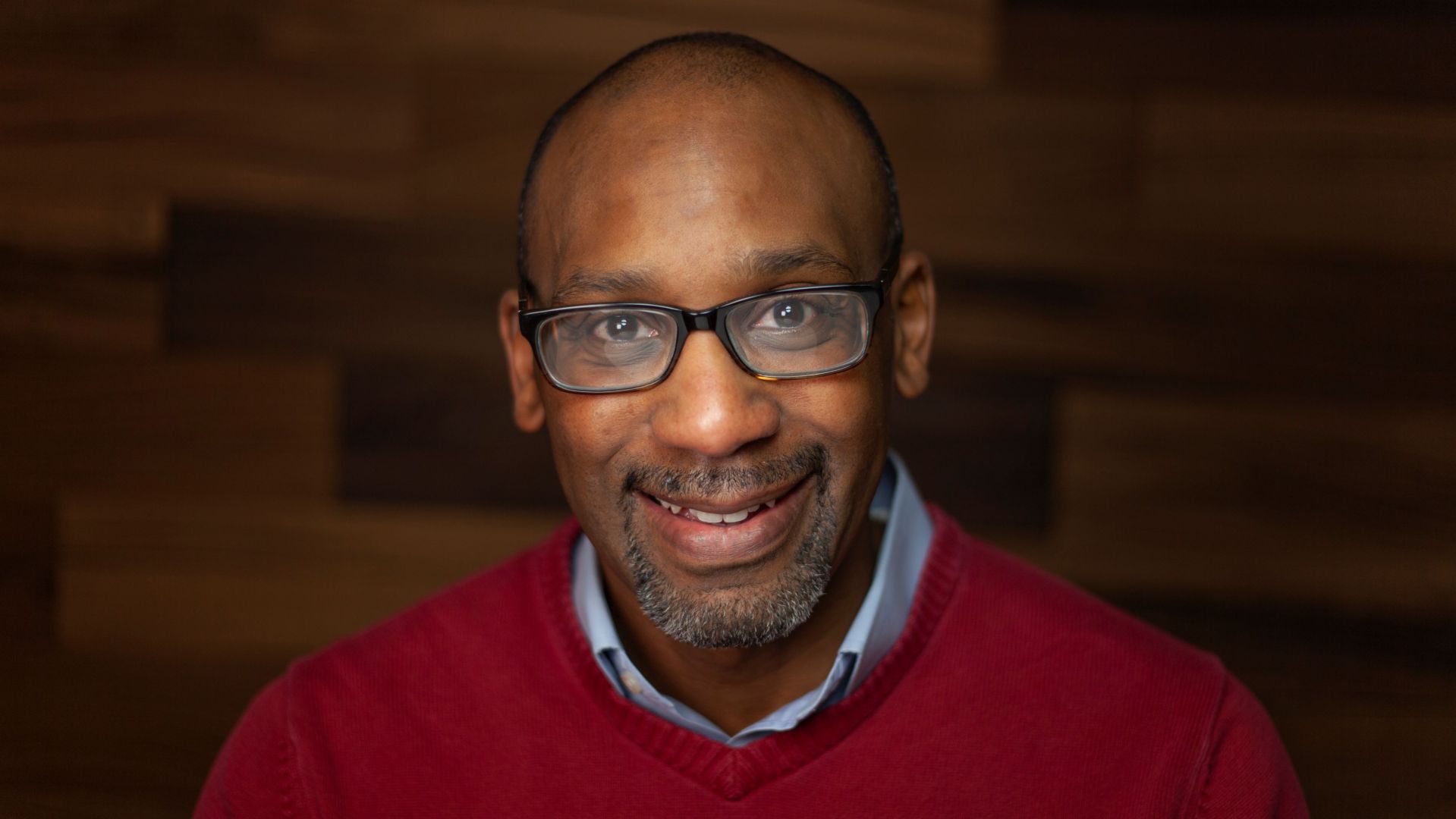
Jamal-Dominique Hopkins is dean and associate professor of religion and theology at Allen University’s Dickerson-Green Theological Seminary. An ordained minister, he also is a Christ and Being Human Pedagogy Fellow at Yale University’s Center for Faith and Culture.

News

This Election, Evangelical Supporters Have More Faith in Trump

The campaign emphasizes another side of the president at “prayer, praise, and patriotism” rallies.

Eric Trump speaks at an Evangelicals for Trump event on September 15.

Eric Trump speaks at an Evangelicals for Trump event on September 15.

Christianity Today September 18, 2020
Kate Shellnutt / CT

Joann Roberts had never been to a political rally before.

She prays for President Donald Trump every day and watches messages from his faith advisers online, including televangelists Paula White-Cain and Jentezen Franklin. When Roberts heard they would be speaking at a campaign event in Georgia, the Southern Baptist mom of three took off from her job as a hospital administrator and made the hour-long drive to a field in the far-flung Atlanta suburbs.

Wearing a neon pink shirt printed with the slogan “God, Family, Guns, and Trump,” she fit right in.

The 500-plus crowd at this week’s Evangelicals for Trump rally included local politicians, GOP organizers, and even an unannounced visit by Georgia Gov. Brian Kemp, but most were people like Roberts. They were veterans, retired couples, bikers, college students, and homeschool moms, all Christians who felt like this year they needed to do something more to show their support.

Several volunteers distributing hand sanitizer and masks (not required, but around a quarter wore them) said this was their first time working with a political campaign. They traded stories about going door to door for Trump and turning their guest rooms into makeshift call centers. They compared churches and voting districts. They offered compliments over their MAGA gear. “I got it at Ace Hardware,” one woman beamed when asked about her Trump 2020 mask. “They can’t keep them in stock!”

More than anything, these Georgia Christians gushed over what they had seen during Trump’s presidency: a leader who came through on his pledge to appoint conservative justices, defend religious freedom, and oppose abortion. “He really just kept his promises,” said Fred Engel, wearing a red plaid shirt and a volunteer lanyard around his neck. “I don’t remember a single politician in my 68 years who did that.”

While detractors critique the president as divisive, arrogant, and cruel, voters like Engel instead view Trump as a family man, with the devoted support of Ivanka, Don Jr., and Eric, who came out to stump for his father at the Cumming, Georgia, rally. The crowd offered up a collective “amen” when Eric suggested that “in the Bible, it’s always an imperfect person” used by God.

“I believe my father was put here for a reason,” the younger Trump son said. “It was because of a higher deity and entity, and that’s why the evangelical community has rallied around him.”

Despite the white evangelical turnout for Trump before, it wasn’t quite like this last time.

“I believe most evangelicals—most pastors for certain—four years ago probably voted against Hillary Clinton. Four years later, many if not most are voting for Donald Trump,” said Chuck Allen, a local pastor who prayed to open the event. “That’s a significant difference.”

Polls back him up on the first part. A majority of white evangelicals who planned to vote for Trump in 2016 were driven more by their opposition to Clinton than by the appeal of Trump as a candidate, Pew Research showed.

But now, while Trump’s evangelical opponents are more vocal against the president’s polarizing rhetoric and America First policies, supporters instead say they have reason for more enthusiasm. They cite Trump’s conservative stances in office and the spiritual backing of several evangelical leaders who have had an open door to pray with him at the White House throughout his first term.

As sociologist Gerardo Martí wrote, Trump has made inroads with evangelicals “because he engages in actions in support of religiously defined group interests rather than as a result of statements of belief or piety of behavior.” Even with some slips over the first half of the year, more than half of white evangelicals (59%) still “very strongly” approved of the president as of this summer, compared to 29 percent of Americans overall.

The Trump campaign has set out to maximize that support. It amped up its evangelical outreach, beginning with a kickoff event in Miami at the start of the year featuring No. 45 himself and continuing with hundreds of local MAGA meetups and dozens of “prayer, praise, and patriotism” events ahead of the November election.

Leading the charge is the president’s pastor and top prayer partner White-Cain, who recounts how she has served as a spiritual adviser for the businessman-turned-politician for nearly 20 years and took on an official White House role in 2019. She brings along husband Jonathan Cain from the band Journey, leading to requisite references to “Don’t Stop Believin’” and “Faithfully.” At the event, he performed to an audio track of a worship song he wrote called “Freedom in Your Grace.”

The campaign has also enlisted fellow evangelical advisers and pastors like Franklin, whose son now works for the campaign; National Hispanic Christian Leadership Conference executive vice president Tony Suarez, who has joined four Evangelicals for Trump events so far this year; and Allen, who was enlisted to join an upcoming event in Phoenix after helping with the one in his area.

Kate Shellnutt / CT

Evangelicals for Trump events are set up differently than the larger rallies for a broader Trump crowd, starting off with an invocation and familiar praise music. In a divisive and defensive election year, the gathering in Georgia this week, held outside a local barn event space, hummed with the calm relief of shared faith and shared politics. No rowdy factions. No snarky signs. No hollering or boos.

Attendees, seated in folding chairs spaced a couple feet apart, slowly swayed as they sang along to “This Is Amazing Grace” and “Way Maker,” performed by a stripped-down worship band from Allen’s church, a nearby nondenominational congregation with 4,500 attendees.

While the faith leaders focused mostly on the administration’s victories, Eric Trump criticized the “radical” protesters taking the streets in cities across the US and the decision for some states to allow businesses to reopen before churches.

There were four standing ovations for law enforcement, who were present at the event as security. The only reference to violence faced by black Americans—the inciting incidents leading to the recent protests—came from Franklin, who expressed frustration at false divisions: “It’s like if you’re for President Trump … that means you’re automatically not upset if you see a black man being beaten or choked to death in the streets. I stand for both. I stand for justice and righteousness.”

Perhaps the weather helped things feel particularly peaceful too. It was the coolest day all summer in the area—overcast, breezy, and 70 degrees. The invocation prayer referenced a “God-ordained” forecast.

Even when it began to drizzle, attendees stayed seated, applauding and waving when they noticed Eric Trump sneak out the side of the barn to jet off to his next campaign appearance and mm-hmming in agreement during closing prayers for Americans to vote for “life, faith, and freedom.”

The Evangelicals for Trump events emphasize a softer side of the notoriously combative president, with stories about the president’s faith and family alongside lists of political wins. White-Cain said “it was his idea” to call for prayer against the “evil” of coronavirus. Eric admitted that the Trumps went into the 2016 campaign “not knowing a damn thing about politics,” but they worked together as a family and “God got us here.”

Though he is a vocal Trump supporter, as a pastor, Allen recognizes the tension between the draw of the president’s conservative political priorities and the turnoff of his reputation as a bully.

“President Trump doesn’t make it easy for evangelicals,” said Allen, who built a rapport with Trump’s team during visits to the Mexican border two years ago and to the Bahamas after Hurricane Dorian last summer. “I wish you could see a more compassionate Trump that I believe sincerely exists, but there’s just so much bluster around him.”

Allen estimates that his nondenominational, blue-collar congregation, Sugar Hill Church, is about “60 percent Trump and 40 percent anyone-but-Trump,” but the Trump faction has become more eager to take a stand.

Sugar Hill, he said, has benefited from a Trump economy, its members boasting more jobs and more sales, even in recent months. (The statewide unemployment rate has fallen back down to 5.6 percent, better than the national average.) As a result, the church has been able to expand its ministry reach, launching new worship sites and supporting hundreds of families with rent assistance and meal distribution during the pandemic.

The coronavirus pandemic, of course, has become a top issue for voters, and it’s also shaping the way campaigns and elections are being held in 2020. While the Trump campaign has continued to put on in-person events to rally Republican Party faithful, the Believers for Biden outreach has focused on virtual events and discussions.

“I don’t think in-person events will affect mobilization per se, but these events seem to serve a purpose in reinforcing certain aspects of political identity,” said Daniel Bennett, chair of the political science department at John Brown University. “Specifically, those attending events like the Evangelicals for Trump event are telling the world they’re not afraid of COVID and won’t let a pandemic dampen their enthusiasm for the election. Biden faith events, being virtual, align with the Democratic narrative that the pandemic should be treated seriously.”

Evangelicals attending the Georgia event may have had their minds made up about Trump, but the rally urged them to become more involved in getting others to vote for him. “I felt like this was the last ‘charge’ I needed before the election,” said Roberts.

Kemp, the Republican governor who narrowly beat out Democrat Stacey Abrams in 2018, emphasized how individuals could make a big difference for Trump. He suggested attendees think of “10 people you know, from your church, your neighborhood” whom they might register to vote in Georgia. (“In person!” someone yelled from the audience.)

Kate Shellnutt / CT

Two tables offered voter registration information, and another had voter guides from the Faith & Freedom Coalition. Like other voter mobilization efforts targeting Christians, the Faith & Freedom Coalition has had fewer opportunities to reach voters in-person now that many churches and community events remain on hold during the pandemic.

The coalition, which typically urges pastors to host a “Registration Sunday” with a voter registration booth in their church lobby, now also offers a video announcement with instructions for registering from home.

“Based on my research, activities in church like voter registration and get-out-the-vote drives are akin to small group activities run by a few for the benefit of many,” said Paul Djupe, a Denison University political scientist who has researched political activity by churches. “I suspect that such activities have collapsed during the pandemic, defaulting to online worship and little else.”

Djupe found that distributing voter guides—like the ones from the Faith & Freedom Coalition—was the most common get-out-the-vote effort by evangelical churches, whereas black Protestant congregations were more than twice as likely to hold voter registration events.

With 49 days to go before the election, Trump backers at Tuesday’s event disagreed over whether the president stands to win in a landslide or another close race, but many repeated the refrain that this was the most important election of their lifetimes. Eric Trump and Allen referenced the potential for additional Supreme Court appointments in the next term. Others expressed broader concerns about freedom of speech, freedom of religion, and the economy being threatened under a Democratic administration.

“I did not get into this to be a politician. I’m a preacher … But I knew if I remained on the sideline and silent, and if all the preachers remained on the sideline and were silent, something was going to happen in the direction of this nation that could not ever be changed back again,” said Franklin, who leads Free Chapel in Gainesville, Georgia.

Speaking to rows dotted with telltale red baseball caps, with “Great Is Thy Faithfulness” playing in the background like an altar call, the pastor offered a closing charge.

“In every election, we have a responsibility to vote our faith. I don’t go in the booth and leave Jesus on the other side,” he said. “If we vote, we win. If we don’t vote, we lose.”

Christianity Today Adds Veteran Publishing Leader to Executive Team

Christianity Today Adds Veteran Publishing Leader to Executive Team

Carol Stream, IL September 17, 2020 – Christianity Today hired Edward Gilbreath to serve on the ministry’s executive team as Vice President of Strategic Partnerships, starting October 1.

Gilbreath brings with him over twenty-five years of leadership in publishing, editorial, and marketing. He has served in various capacities with Strang Communications (now Charisma Media), Urban Ministries Inc, the Evangelical Covenant Church, and most recently as Executive Editor at InterVarsity Press. This will be his third stint at CT, having previously served in editorial roles with a variety of publications, including Christianity Today and Leadership Journal.

In this new role on the executive team, Gilbreath will help to shape the strategic plan for the organization. He will identify and cultivate editorial, distribution, funding, and project partnerships that ultimately elevate storytellers and thought leaders to bring their stories and ideas forward for the encouragement and edification of the Church.

President and CEO Timothy Dalrymple adds, “Christianity Today is entering a season in which it is evolving its strategy and reaching new audiences domestically and globally. Ed is the perfect person to help us refine our strategic thinking and build significant partnerships. Among his many other responsibilities, Ed will lead what we call internally our Big Tent Initiative, which is an effort to better represent the diversity of the North American Church across our content, contributors, and audience. We could not be more thrilled to work with Ed again.”

Gilbreath shares, “I started my career at Christianity Today as a college intern, and it’s where I spent many of my most formative professional years. I’ve continued to be a big fan of CT’s ministry, so I’m thrilled to have the opportunity to return in this strategic role. It’s vital to CT’s future that its content and audience reflect the church’s rich diversity, so I look forward to serving with CT’s amazing team to help advance the mission of telling the full array of eye-opening, inspiring, and empowering stories of God at work in the world.”

As an award-winning author, Gilbreath is also a frequent speaker at churches, conferences, and universities across the country. He wrote “Birmingham Revolution: Martin Luther King Jr.’s Epic Challenge to the Church” (IVP, 2013) and “Reconciliation Blues: A Black Evangelical’s Inside View of White Christianity” (IVP, 2006), an Award of Merit in Christianity Today’s annual Book Awards.

For more information, contact Cory Whitehead, CT’s executive director of mission advancement at cwhitehead@christianitytoday.com or 630.260.6200 ext. 4220.


Christianity Today is an acclaimed and award-winning media ministry that elevates the storytellers and sages of the global Church. Each month, across a variety of digital and print media, the ministry carries the most important stories and ideas of the kingdom of God to over 4.5 million people all around the planet.

Books
Review

Middle-Age Couples: Your Marriage Doesn’t Have to Be Stuck in Survival Mode

How the stresses and strains of aging can strengthen the bonds of love.

Christianity Today September 17, 2020
Yagi Studio / Getty Images

During the coronavirus pandemic, my husband and I celebrated the 23rd anniversary of our first date, our 18th wedding anniversary, and our 40th birthdays. We’re plenty familiar to one another, not to mention the disruptions wrought by moves, career changes, and children.

Marriage in the Middle: Embracing Midlife Surprises, Challenges, and Joys

Marriage in the Middle: Embracing Midlife Surprises, Challenges, and Joys

IVP

200 pages

$10.87

But as we begin midlife and navigate marriage in this moment of time, we realize it’s easy to simply survive instead of thrive. Marriage in the middle of a pandemic feels a bit like steering around shipwrecks. Recently, we heard that another couple we knew was filing for divorce. While we’ve all seen high-profile couples announce their split on social media, it’s the marriages closer to home that remind us we’re not immune to the pressures that force their way between two people.

Amid months of unprecedented circumstances, as husbands and wives negotiate working from home and schooling their children, marriages are withstanding even greater pressures than before. When there is too much pressure on something delicate—like a wine glass—it shatters. Yet with harder, denser objects—think of exercises that break down muscles to help them grow back stronger—added pressure can have the opposite effect.

In a pandemic—and in midlife generally—marriages seem to go one of two ways: The added pressures cause the marriage to crack, or they can make it stronger. When I asked my friends on social media to describe the state of their marriages in one word, the most common responses were “improved,” “refined,” “closer,” and “tested.” Just about everyone I polled sensed an urgent need to band together, lest the stresses and uncertainties of 2020 overwhelm them.

How might our marriages become more resilient in the face of enormous pressures? And how, in particular, do we navigate marriage in the middle of life, when the romance may have faded? Writer Dorothy Littell Greco tackles questions like these in Marriage in the Middle: Embracing Midlife Surprises, Challenges, and Joys. In her book, Greco draws wisdom from her own marriage, shares insights from vulnerable, practical interviews with couples, and offers thoughtful theological reflections about how marriage in midlife can be more opportunity than crisis—a message we need more than ever in the midst of an actual global crisis. She writes candidly of changing hormones, midlife sex, being sandwiched between caring for children and caring for aging parents, and navigating trauma, infidelity, and loss.

Marriage in the Middle highlights three themes at the heart of building resilient marriages during pressure-packed times: embracing our limits, remembering the importance of community, and keeping the ultimate goal in view.

Vehicles of Grace

Greco helpfully reminds us that the “universal lesson of midlife is that we are limited people.” While being human at any age involves acknowledging that we are finite rather than infinite, contingent rather than independent, midlife underscores our limitations. We wake up with back pain, aware that our bodies aren’t what they used to be. We lose out on a promotion to someone younger. We realize we cannot control our adult children or the trajectory of our lives. And we find ourselves looking backwards, more concerned with questions of regret or legacy than thoughts of what lies ahead. Limits of time and declines in mental and physical ability seem to shout that we’re past our prime, and so we might as well make our peace with the new, diminished reality—or perhaps splurge on a sports car in one last bid to stop youth from slipping away.

We can certainly mourn the limitations common to middle age. We can acknowledge, for instance, that we can’t keep the house running while working from home and schooling children. We may find ourselves exhausted, burnt out, and burdened with anxiety about retirement or other aspects of the future. We may find ourselves less interested in sex. But these limitations need not be crises. On the contrary, as Greco suggests, we can welcome them as potential vehicles of grace.

In middle age, there is an inevitable disconnect between what we long for—peace, stability, connection, a meaningful legacy—and what we’re actually able to achieve. When we acknowledge this disconnect, we create opportunities for our spouses to show grace. As Greco helpfully reminds us, carefully stewarding our longings (sexual or otherwise) is essential for fidelity.

Our limitations invite us to empathize with our spouses and to create boundaries ensuring, in Greco’s words, that “we can be available to do what God is asking of us.” In other words, acknowledging our limitations leaves us free to be ourselves, to love sacrificially, and to ask for help when we need it. We trade off doing the cooking, we bring each other coffee, we watch the show the other prefers, and we dream again about what God is up to instead of feeling boxed in by the decades. In all these ways, we’re drawn into deeper union with God and our spouses.

Communal Building Blocks

Marriage and community go hand in hand. Just as healthy marriages are essential to sustaining strong communities, strong communities are essential to sustaining healthy marriages. As sociologist Mark Regnerus observed in a recent CT cover story, “we’ve lost sight of the fact that marriage is in many ways a corporeal (and spiritual) act of mercy not just to our own spouse and children but to the world beyond our household.”

For marriages to flourish amid the trials of midlife, community is indispensable. Over the course of her interviews with various couples, Greco highlights how the soulmate version of marriage—where two lovers ride off alone into the sunset—is not a helpful model. Christian marriages are covenants that require community to flourish while also forming the basis for wider communal flourishing. As Greco explains, “There’s only so much healing you can do on your own.”

While many marriages are enduring an enormous amount of pressure right now, perhaps they would encourage more grace and healing if we thought of them as building blocks of community. If, as Greco argues, the purpose of marriage is more than attraction, pleasure, or self-actualization, then we should welcome the presence of others who can offer accountability, suffer alongside us, and enrich our lives in various ways.

Married couples can strengthen bonds of community by inviting friends to speak into their own marriages, mentoring younger couples, or opening their homes to give singles and vulnerable people a safe place to land. The more we treat our marriages as vital building blocks of flourishing communities rather than vehicles of self-fulfillment, the more resilient they’re likely to prove over the long haul.

More Than Maintenance

Bookending Greco’s discussion of the unique opportunities for marriage in the middle years is a discussion of marriage’s telos—its direction and ultimate goal. She emphasizes how telos refers more to a “guiding purpose” than a particular destination: The how matters as much as the what. Within a marriage, this involves a couple imagining together where they are headed in light of the grand arc of the gospel story. For me, having a telos in view means that I can let go of my ideals about keeping a perfect garden or maintaining a spotless home, because I know my husband and I see more value in having people over for meaningful conversation about ideas and the life of faith.

A marital telos can be as unique as each partner, and the journey toward each couple’s guiding purpose is its own dance. Greco offers some practical starting questions like “Where are the two of us at our best?” and “Where do we have the most conflict or stress?” These help couples identify and confront the challenges of midlife head-on, all while persevering in seeing the marriage partnership as more than maintenance.

As my husband and I enter our middle years, we’re aware that our dreams may be a bit less shiny than they were decades ago. But we’re confident that this season holds out forms of rootedness and acceptance that allow for real growth. Marriage in the Middle affirms that the best is yet to come—not by stubbornly clinging to a wide-eyed, youthful naivete about one’s spouse, but by choosing to open oneself to the transforming work of grace. And especially in this moment of global crisis, we need guides to help our marriages flourish. Greco is an excellent one to trust.

Ashley Hales is a writer living in Southern California. She is the author of Finding Holy in the Suburbs: Living Faithfully in the Land of Too Much.

Books

Reagan, Clinton, Bush, and Obama All Cited One Puritan Sermon to Explain America

How did a forgotten colonial text become a national origin story?

Christianity Today September 17, 2020
Wally McNamee / Contributor

What is America? Is it a land mass, a nation, or a set of ideals established in founding documents like the Declaration of Independence and the Constitution? The way we answer this question is closely tied to our origin stories, which often begin with the Pilgrims and Puritans.

City on a Hill: A History of American Exceptionalism

City on a Hill: A History of American Exceptionalism

Yale University Press

392 pages

$21.99

Many have looked to one Puritan sermon in particular to identify the source of Americas identity and mission: John Winthrops “A Model of Christian Charity.” Winthrop’s famous phrase,we shall be set as a city upon a hill,” has seemed to many to perfectly capture Americas exceptional destiny as a model and light to the world.

Abram C. Van Engen, an English professor at Washington University in St. Louis, thinks the sermon has been misused and misunderstood. His new book, City on a Hill: A History of American Exceptionalism, tells the story of how the sermon became a founding” national text and continues to shape America today

Why is John Winthrop’s sermon “A Model of Christian Charity” important in United States history and to Americans today?

The extraordinary story of Winthrop’s “city on a hill” sermon cannot be understood without telling a second, equally fascinating tale about the shifting roles Pilgrims and Puritans have played in American culture.

In 1630, John Winthrop, the first Puritan governor of Massachusetts Bay, declared that “we shall be as a city upon a hill.” When President Ronald Reagan used Winthrop’s words to describe America, he helped transform “A Model of Christian Charity” into a foundational text of American culture. In its own day, Winthrop’s sermon went unrecorded, unpublished, and almost entirely unnoticed. It was found and first published in 1838—at which point it continued to be ignored for another century.

A text cannot become famous without the right conditions in place. Only a great deal of prior cultural work could make a Puritan sermon relevant to Cold War America. That is largely what my book is about. Reagan and others were able to make Winthrop’s “city on a hill” sermon a classic during the Cold War because a host of Americans had already turned Pilgrims and Puritans into the origin and explanation of all things American. My book tells how and why that happened. It follows the Pilgrims and Puritans into and through American culture, showing the way they were remembered and remade from one generation to the next.

What was “A Model of Christian Charity” about? What did Winthrop mean by the phrase city on a hill”?

Winthrop’s sermon is a communal statement of love—a “model of Christian charity,” exactly as it is called. The question behind his sermon is simple: What do we owe each other? And Winthrop’s answer is the same as Paul’s: whatever redemptive love requires.

To make his case, Winthrop drew a good deal on the Bible, of course. But not just any Bible. One of my favorite chapters to write tells the story of the Geneva Bible, the translation he used. The Geneva Bible preceded the KJV. It was wildly popular, widely used (the Bible of Shakespeare), and loaded with explanatory notes in the margins. Today, those notes help make sense both of Puritan culture more broadly and of Winthrop’s sermon in particular.

The phrase “city on a hill” also has a fascinating and largely unknown 17th century context. The phrase comes from Jesus’ Sermon on the Mount (specifically Matthew 5:14), and in the 1600s, it was Roman Catholics, not Puritans, who loved it most. They used Matthew 5:14 to prove Protestantism false and Catholicism true. The Catholic Church, they said, was the only one visible church since the time of Christ (Jesus “set it on a hill”). Protestants, in contrast, described the true church as small or hidden, turning to Luke 12:32 and Revelation 12. When it came to Matthew 5:14, they had to reinterpret this verse to pry it from Catholic hands. Instead of the universal church being a “city on a hill,” Protestants like Winthrop claimed that “city on a hill” applied locally, to this place or that, wherever the true light of the gospel shone. Because the phrase did not refer to one universal church, it could be reapplied to individual congregations, towns, cities, and eventually—as we have come to see—a nation.

How did later generations come to use Winthrops sermon—and especially the phrase city on a hill”—as a founding text for Americas national story?

My book moves from the 1600s through the American Revolution and the making of the first national history textbooks in the 1800s to the claims and impact of the influential German sociologist Max Weber in the early 1900s. But for me, the most enjoyable chapters to write were on Perry Miller, a Harvard scholar who had a giant influence on the way we understand the Pilgrims and Puritans today. It was Perry Miller, an atheist, who above all made John Winthrop’s “city on a hill” sermon central to the American story. He did so not just to set the US apart from the USSR, but also to challenge American society, which he saw as having fallen from its Puritan origins. Just a few years before Miller died, the Harvard-educated John F. Kennedy became the first president to use Winthrop’s “city on a hill” sermon in a speech. When Reagan picked it up, it became famous—a linchpin in larger narratives of American exceptionalism.

How does your research challenge us to rethink some of Americas origin story?

Most broadly, my book tries to show how consequential and influential origin stories have been to the histories we tell of this nation.

The Pilgrim story, for example, enabled early Americans to downplay the role of slavery in our national history. Jamestown came before Plymouth. Enslaved Africans landed before the Pilgrims. Yet if the Pilgrims came for freedom, then these other beginnings could be ignored. To make the story stick, Pilgrims and Puritans—who had slaves themselves and participated in the slave trade—were washed clean of the sin altogether.

Just as importantly, American exceptionalism has never had a place for Native Americans. Early Anglo-American historians often reimagined Native Americans as the setting against which the “true history” of America takes place. They were part and parcel of the wilderness, the stage for the story that began when Europeans first set foot on a savage and silent shore. For American exceptionalism to cohere, Native Americans had to be removed.

American exceptionalism is the belief that the United States has been singled out from all other nations and granted a special purpose in human history. We are to be a model of freedom and democracy, endowed with the mission to bring liberty to all. Such a view depends above all on origin stories—which is why it so often intersects with the Pilgrims.

Any origin story used to explain American history will be insufficient. All of them are flawed. But each of them entails significant consequences for America today.

You end your book by talking about American exceptionalism and “America First.” Are these terms related?

The rhetoric of “America First” can sometimes sound like American exceptionalism, but it offers a radically different vision of the nation.

America First largely dispenses with origin stories. Donald Trump is the first president since JFK to not use the phrase “city on a hill,” for example. In fact, in the 2016 election, the vast majority of the time this phrase appeared, it was used against Trump—including by the right.

Instead of a history of the nation, America First offers a philosophy. It claims that all countries, including the US, share basically the same goal: to win. “Greatness” is not about values; it is primarily about sovereignty, power, and wealth. The hazards of America First, therefore, come not from a misguided sense of national election, but from the absence of any higher moral good. As I show at the end of my book, America First urges self-interest in a world seen as a survival of the fittest.

Whether it is American exceptionalism or America First, these ways of thinking about our nation have long histories with large consequences still today.

Ryan Hoselton is a postdoctoral instructor and research associate in church history at the Univeristy of Heidelberg, in Heidelberg, Germany.

Culture

Why ‘Cuties’ Isn’t Just Netflix’s Problem

The sexual exploitation of children is a symptom of a larger disease—one that we’re complicit in.

Christianity Today September 16, 2020
©MIGNONNES de Maïmouna Doucouré par Jean-Michel Papazian pour BIEN OU BIEN PRODUCTIONS 2018

On September 9, independent French film Les Mignonnes made its American debut on Netflix under the title Cuties. While director Maïmouna Doucouré intends the film as a critique of the sexual exploitation of children, she quickly found her work facing condemnation for participating in that very thing. Within days, #CancelNetflix was trending and the film had received an astounding 1.06/10 audience rating on Rotten Tomatoes (as of publishing date). Part of the public outcry targeted Netflix’s problematic marketing of Cuties earlier in August. If design is communication, the chosen images, description, and subtext did not critique a culture that sexually exploits young girls. It actively played into it, issuing an invitation to come gaze on the actors as they engage in “free-spirited” dance. The film itself also faces difficult questions about the ethics of using child actors to portray the process of sexualization. Abuse survivor and advocate Rachael Denhollander tweeted: “One can’t protest sexualizing children by … sexualizing them.” And Vox movie critic and former Christianity Today columnist Alissa Wilkinson pointed out that “trying to depict something in the context of critiquing it isn’t always successful.” The ambiguous nature of sexual exploitation within Western culture explains both the controversy surrounding Cuties and the thesis of the film itself. While public condemnation has been sure and swift, it sometimes misses the pressing questions about whether our society is safe for children: What if the sexualization of young girls is not a bug but a feature? What if Netflix knows something about us that we don’t about ourselves?

Why did Netflix think that their marketing would work?

The central character of Cuties is Amy, an 11-year-old Senegalese immigrant living in France with her mother and two younger brothers. The story echoes Doucouré’s own childhood, caught between a permissive Western culture that exploited girls one way and a traditional culture that exploited them in other ways. Longing for love and connection, Amy quickly intuits what Western culture values and begins to adapt. She recognizes that this new land of smartphones, social media, and hyper-sexualization rewards her for objectifying herself. But limited by both age and her outsider experience, Amy does not know where suggestive pop culture ends and pornography begins. As she discovers increasingly explicit material online, she mimics it adding erotic behavior, dress, and mannerisms to her dance repertoire—all while oblivious to Western culture’s tacit agreements about which sexual behaviors are socially acceptable and which are not. The challenge of the film is that there are no obvious villains. No basement-dwelling perverts luring Amy over the internet. No trusted family friend grooming her for abuse. Instead, the film presents the banality of evil and how easily a young girl dropped into Western culture might be exploited by subtle cues and behaviors that exist in the light of day. There are no pedophiles hiding behind every corner on whom we can neatly blame the sexualization of girlhood. One could undoubtedly argue that the exploitation of young girls overflows from a decadent society, one where sex sells. It’s true: Sex does sell. And at some point, the most hardened don’t care who is being sold. Child trafficking is real, and Netflix did market the film in a provocative way. Yet the hyper-sexualization of our society doesn’t answer why children are sexualized. What kind of culture exploits their young this way? What kind of culture both condemns pedophilia and sells padded bras to pre-pubescent girls? Why did Netflix think that their marketing would work? To answer this question, we must understand the degree to which our society does not value childhood in the first place. Denhollander’s memoir exposing the serial predator Larry Nassar asks the question in her title: What Is a Girl Worth? She presses into the structures and value systems that allowed Nassar to continue abusing young girls for years. Ultimately, children are threatened by both predators and a culture that does not hear them when they cry out for help.

Protecting children at the risk of destabilizing powerful organizations or indicting beloved adults means asking ourselves not just "What is a girl worth?" but “What are we willing to pay?” This question ultimately exposes our larger cultural value systems. We prize efficiency. Children are inefficient. We value wealth creation. Children are costly and can’t pay their own way. We honor independence and radical autonomy. Children are dependent and hamper our freedom. We drive toward what Wendell Berry calls “the objective.” Children like to take the long, meandering route home. It’s no wonder, then, that such a society, would increasingly find ways to truncate childhood. Instead of making space for children to be children, we under-support and undervalue those who care for them, whether in the home or the classroom. We ask fifth-graders to map out their career goals. We hire private coaches to improve their pitching, not so they can enjoy baseball with their friends, but to prepare them for the “future.” And thus by rushing our kids through childhood, we ensure that prolonged adolescence extends in both directions. With a smaller window of childhood, children naturally begin to adopt postures and traits associated with burgeoning adulthood. In a society that worships unchecked sexual expression, these attitudes necessarily include overt sexuality. The more children are led this way, the more likely they are to be abused by those who manipulate their intellectual and emotional naiveté—proffering “she looked older” as an excuse. While pedophilia certainly exists, the objectification and sexualization of young girls in Western culture has as much do with our complicity in viewing them as women before they truly are. If you are outraged by the sexual exploitation of young girls, you’re in good company. In Matthew 18, Jesus warns that those who would harm children will face his wrath, and it would be better for them to have a millstone hung around their neck and be thrown into the sea than cause a little one to stumble. But Jesus’ strong words do not stem from a selective focus on child trafficking or pedophilia. Instead, they are rooted in a holistic understanding of the goodness of childhood and the unique role that children play in God’s kingdom. Just before he warns us that we must not harm children, he commands us to actively welcome them. And he said:

“Truly I tell you, unless you change and become like little children, you will never enter the kingdom of heaven. Therefore, whoever takes the lowly position of this child is the greatest in the kingdom of heaven. And whoever welcomes one such child in my name welcomes me.” (Matt. 18:2–5)

Part of the goodness of childhood is that children remind us of our own dependence on God. Vulnerable, limited, and wholly reliant on others to protect them, children show us how we must come to the kingdom. They show us the only way we can come. The very things that our culture disdains about childhood are the very things that God honors. If we are to truly protect children in such a culture, it will require more than boycotts, political posturing, or public stances. It will require a willingness to disturb our own organizations and question the value systems that tell us that children are not worthy of our time, resources, and care. It will require aligning our hearts with the heart of God who delights to care for children in their weakness, who celebrates them despite their inefficiencies, and who honors them as image-bearers, even now.

Hannah Anderson is the author of Made for More, All That’s Good, and Humble Roots: How Humility Grounds and Nourishes Your Soul.

Theology

10 Bible Passages That Help Us Persevere

Study leaders, authors, and scholars share how Scripture has sustained them during difficult times.

Illustration by Sarah Gordon / Source Image: Hitforsa / iStock / Getty

When life feels dark or the way ahead is unclear, God’s Word remains a lamp unto our feet and a light unto our path. Here, ten women reflect on Scripture passages that have strengthened and encouraged them during difficult times.

Jo SaxtonMelissa Zaldivar / Courtesy of Jo Saxton
Jo Saxton

Jo Saxton on Matthew 14:22-36

“Then Peter got down out of the boat, walked on the water and came toward Jesus” (Matt. 14:29).

As a child, I loved this passage. It resonated strongly with me when I realized COVID-19 would change our lives. The rise of the pandemic was like watching a storm brewing: Relatives around the world shared their stories, school was canceled, and my work was canceled or postponed. I read this passage multiple times a day for over a week.

When Peter stepped out of the boat before the storm was still, he walked on the words Jesus said to him. I am challenged to walk on Jesus’ words to me amid life’s storms, even if they don’t make sense. God not only speaks to us through the storms of life, but he also meets with us and speaks to us in the heart of the storm, when we’re at the end of ourselves and all hope is gone.

As a child, I was stunned by the power of God. Now, this passage reminds me of God’s tender kindness, the extraordinary lengths he went to for his friends in need, and how he transformed their lives. Jesus takes time to heal the crowd (vv. 35–36) even though initially he’d avoided the crowd to get some rest. Would I go to extraordinary lengths so my friends could encounter peace, hope, and love?

Saxton is a speaker, leadership coach, and co-host of the podcast Lead Stories. Her books include The Dream of You and Ready to Rise.

Jen WilkinShaun Menary Photography / Courtesy of Jen Wilkin
Jen Wilkin

Jen Wilkin on Psalm 139

“Search me, God, and know my heart; test me and know my anxious thoughts” (Ps. 139:23).

As a young, overwhelmed mom, growing in my awareness of my own limits, I needed a vision of a transcendent God to reorient me. Psalm 139 delivers. “Search me, God,” David wrote. "See if there is any offensive way in me” (vv. 23–24). His worshipful response to meditating on the limitlessness of God is a desire to slay what opposes God. I want to be the same: “Put to death, therefore, whatever belongs to your earthly nature” (Col. 3:5). I want my adoration of God to result in an abhorrence of sin.

In times of difficulty, we tend to look inward or to another person or a created thing for help. Initially, I viewed Psalm 139 as God showing interest in all that made me special. But I was surprised to connect the end of the psalm to the beginning, which asks that God continue searching and knowing, testing me, regarding my anxious thoughts and offensive ways. God reads my sins and weaknesses perfectly, and I should ask him to keep doing that. Healthy human relationships are predicated on honoring one another as image-bearers rather than worshiping or demanding worship from one another. When I put my sin to death, my neighbor benefits. Right love of God leads to right love of self and neighbor.

Wilkin is an author and Bible teacher from Dallas. Her books include Women of the Word and None Like Him.

Jeannine K. BrownTim Brown / Courtesy of Jeannine K. Brown
Jeannine K. Brown

Jeannine K. Brown on Hebrews 12:1-3

“Let us run with perseverance the race marked out for us, fixing our eyes on Jesus” (Heb. 12:1–2).

I love the image of my journey with Christ as a race. We “press on toward the goal” (Phil. 3:14) with passion and with perseverance. It brings to mind Eugene Peterson’s phrase “a long obedience in the same direction.” The author of Hebrews challenges me to shed whatever hinders me in the race (12:1). Moreover, in this race of faith, I have someone on my side who’s fully invested in that same race. In Jesus, God is on our side, and God is by our side.

Recently, I was struck by the language of joy when meditating on this passage. “For the joy set before him,” Jesus endured the suffering and shame of the cross. Jesus, who reveals God to us, is characterized by joy. Additionally, the first line points us back to Hebrews 11. While meditating on this image of a “cloud of witnesses,” I think of my grandmother, whose faith was enlivened at a revival meeting a century ago and who taught me one of her favorite hymns, “Children of the Heavenly Father,” in Swedish. I am not alone in my journey of faith. We are surrounded by faithful others, both past and present. And Jesus, at the center of our faith, is our guide.

Brown is a professor of New Testament at Bethel Seminary and a member of the NIV Committee on Bible Translation. Her most recent book is The Gospels as Stories.

Anjuli Paschall on Mark 10:46-52

“‘What do you want me to do for you?’ Jesus asked him. The blind man said, ‘Rabbi, I want to see’” (Mark 10:51).

Anjuli PaschallJacob Bell / Courtesy of Anjuli Paschall
Anjuli Paschall

I have five kids. When I was struggling, drowning in diapers, a dear friend asked me, “What do you want?” I could tell people what I needed, but I didn’t know what I wanted. I would have a desire—like wanting time alone—and stuff it or suffocate it and then get so angry. I finally grew to understand that for me to love others well, I need to be vulnerable by expressing what I want.

When Bartimaeus gropes his way over to Jesus, they stand face to face. Jesus wants to hear Bartimaeus tell him what he wants. This passage reminds me: God loves me and says, Come over here, get face to face, tell me what you want. It’s vulnerable to tell Jesus what you really, really want. But expressing our wants and longings shows the movement of our hearts, our formation, part of what makes us whole. Speak your greatest heart’s desire to God, whether people tease you, or it’s embarrassing, or it doesn’t make sense. That’s Bartimaeus, right? Even important people told him to be quiet, but he spoke up. May we speak louder like Bartimaeus!

Paschall is a spiritual director and the author of Stay: Discovering Grace, Freedom, and Wholeness Where You Never Imagined Looking.

Carmen Joy ImesCrystal Gillespie / Courtesy of Prairie College
Carmen Joy Imes

Carmen Joy Imes on Psalm 10

“You, God, see the trouble of the afflicted” (Ps. 10:14).

Years ago, I was under a gag order during an investigation. I felt powerless and alone, with no one to advocate for me. Psalm 10:14 was balm to my soul: “You, God, see the trouble of the afflicted; you consider their grief and take it in hand.” I discovered how powerfully the Psalms address the powerless. They gave me words when I did not know how to pray.

Some people struggle with the apparent violence of the Psalms. In my crisis, I discovered that these psalms align with God’s justice. Yes, God is merciful and compassionate, but he also does not leave the guilty unpunished (Ex. 34:6–7). He not only comforts us but is the kind of God who stops the wicked in their tracks before they can do more harm (Ps. 10:15). The Psalms bolstered my trust in a God who fights on my behalf. They also chasten and challenge me not to participate in the oppression of others. Now, when friends feel powerless or abandoned or attacked, I pray the Psalms on their behalf. God does not ask us to put on a happy face; violent psalms like Psalm 10 invite us to come to God with our most desperate prayers.

Imes is professor of Old Testament at Prairie College. She is the author of Bearing God’s Name: Why Sinai Still Matters.

M. Sydney Park on 1 Corinthians 2:1-5

“For I resolved to know nothing while I was with you except Jesus Christ and him crucified” (1 Cor. 2:2).

M. Sydney ParkCourtesy of Beeson Divinity school
M. Sydney Park

This passage is always meaningful, especially in the past two decades as we face a pervasive culture of self-promotion in the evangelical church. Believers seem to have lost sight of the necessary mindset of the church as outlined in Philippians 2:5–11: “Have the same mindset as Christ Jesus: Who … made himself nothing … becoming obedient to death.”

First Corinthians 2:1–5 reminds me of the palpable testimony given to the world by the apostles. Conformity to the world is not inevitable, but true proclamation of the gospel message must come by means other than worldly wisdom. This requires cruciformity not only in ethics and identity (being) but also in our method. Paul reminds us that such complete conformity to Christ crucified necessarily results in the mighty work of the Holy Spirit and the power of God. The only way to love our neighbors as Christ loved us is through self-sacrifice.

Park is a professor at Beeson Divinity School with a focus on New Testament theology, biblical interpretation, and Greek.

Kristie AnyabwileEden Anyabwile / Courtesy of Kristie Anyabwile
Kristie Anyabwile

Kristie Anyabwile on Psalm 18:30

“As for God, his way is perfect: The Lord’s word is flawless; he shields all who take refuge in him” (Ps. 18:30).

Nothing is beyond the reach or the knowledge of God; his way is perfect. Even though this pandemic and its effects are painful and hard for so many people, God doesn’t change. That helps me to put this season in perspective. It ain’t gonna last; it’s not the end. All we see and experience in this life is but a vapor. Nothing and no one can thwart the outworking of God’s providence. He proves true and will effect what he intends to accomplish in our lives and in the world.

The implied imperative in Psalm 18:30 is to seek God for safety and security—but that’s not always easy because we have our own ideas about what we think we need to have a sense of security. Particularly during these coronavirus times, a verse like this exposes our rugged independence and makes us aware of how out of control we really are. This verse challenges me to be fully dependent on the Lord, to seek him for refuge, and to not seek security in the conveniences of this life.

Anyabwile is a Bible teacher and the editor of His Testimonies, My Heritage: Women of Color on the Word of God.

Vaneetha Rendall Risner on Isaiah 43:1-2

Vaneetha RisnerMelanie Wasko Photography / Courtesy of Vaneetha Risner
Vaneetha Risner

“When you pass through the waters, I will be with you” (Isa. 43:2).

When my ex-husband left our family, I was terrified. How would I manage with my disability? Would my daughters walk away from their faith? How would I manage my household on my own? I felt betrayed and alone, my self-image shattered.

I love how Isaiah 43:1–2 tells me that God calls me by name. He tells me not to fear. He redeems me—which gives me worth. This passage reassures me that whatever I go through, God will be with me and my trials won’t overwhelm me: “When you pass through the waters, I will be with you.”

I’ve sensed God’s presence most closely in suffering—a gift he offers to comfort us in pain. That doesn’t mean we won’t struggle, suffer loss, or even die. I have a close friend with ALS who knows all three will happen. What God promises here is that we won’t be overcome with despair. No matter what’s going on around us, we can be sure God will never leave us. He will walk through every fiery trial with us. He will make sure the rivers do not overwhelm us. And with God beside us, we know there is nothing to fear.

Risner writes and speaks on suffering. Her books include The Scars That Have Shaped Me and Walking Through Fire (Thomas Nelson, January 2021).

Chrystal Evans Hurst Pharris Photos / Courtesy of Zondervan
Chrystal Evans Hurst

Chrystal Evans Hurst on Philippians 4:6-7

“Do not be anxious about anything, but in every situation, by prayer and petition, with thanksgiving, present your requests to God” (Phil. 4:6).

My 15-year-old son had a traumatic birth, resulting in nerve damage that led to difficulty in using his right arm his first few months. I was especially anxious and worried during that time—I so badly wanted him to be healed. Peace came over time as I turned to prayer and focused on thinking profitable thoughts—dwelling on what was good and right despite what I couldn’t change.

This passage challenges me to maintain peace by continually coming to God instead of only reactively coming to God when I feel anxiety. If we only focus on the source of anxiety or pain, then we miss the other wonderful things God is doing. Prayer is a weapon, a tool, a source of strength and power.

We don’t have to handle it, or figure everything out on our own, or move mountains in our own strength. We can bring our concerns to God with thanksgiving, ask him for what we want, and then yield to what he wants for us and for those we’re praying for. Prayer will keep our hearts and minds from racing and ease our physical bodies from the havoc stress can wreak on them.

Hurst is a speaker, worship leader, and author. Her books include The 28-Day Prayer Journey and She’s Still There.

Ann Voskamp on Romans 8:31-32

“He who did not spare his own Son, but gave him up for us all—how will he not also, along with him, graciously give us all things?” (Rom. 8:32).

Ann VoskampLevi Voskamp / Courtesy of Ann Voskamp
Ann Voskamp

As farmers, we have been living on the edge for 25 years. Our life requires that we trust God at a really deep level—we have droughts, we have bad weather, and so on. Romans 8:32 is our life verse: “He who did not spare his own Son, but gave him up for us all—how will he not also, along with him, graciously give us all things?” This verse has given us Jesus. He will not necessarily give us what we want, but he will give us what we need. If he gave himself up for us all, gave me everything, then he will give me what I need each moment. It is safe to trust.

Trust is the bridge from yesterday to tomorrow, built with what God has done in the past. In trust, we can walk from the known to the unknown. Today, with what we see happening in terms of many of our livelihoods, it looks like the bridge underneath us is going to give way. But when it seems to give way, we are falling into Christ’s safe arms.

So, in trust, I can live generously toward others, thereby destroying the myth of scarcity. We get to live life given away—a cruciform life—and show the world what it means to live in Christ. Stepping into trust is actually what faith means. If I keep thanking him, it builds all those planks of trust for me to step from the known into the unknown.

Voskamp is a speaker, blogger, and author of several books, including The Broken Way and One Thousand Gifts.

Compiled by Marlena Graves, author of The Way Up Is Down and Beautiful Disaster.

This article is part of “Why Women Love the Bible,” CT’s special issue spotlighting women’s voices on the topic of Scripture engagement. You can download a free pdf of the issue or order print copies for yourself at MoreCT.com/special-issue.

Ideas

Seven Deadly Sins, One Presidential Election

Staff Editor

Pride, envy, greed, and the rest all rear their heads for 2020.

Christianity Today September 16, 2020
Illustration by Rick Szuecs / Source images: Sesame / Getty / Sukmaraga / Angelbi88 / Envato

Sin always seeks an opportunity to push into our lives. Don’t “make room for the devil,” the apostle Paul warns (Eph. 4:27, NRSV throughout). But election season offers Satan sprawling acreage on which to trap and tempt.

One tool Paul and other biblical writers employed to help Christians fend off temptation was the simple act of listing sins we might commit. There are more than a dozen “vice lists” in the New Testament, modeled on the ancient Greco-Roman “ethical catalogue” and covering everything from murder in 1 Timothy 1:9 to Ephesians 5:4’s “obscene, silly, and vulgar talk.”

The best-known vice list arrived later in the Christian tradition. The seven deadly sins—wrath, sloth, pride, envy, greed, gluttony, and lust—as we now list them came to us in the Western church through Thomas Aquinas in the 13th century, Pope Gregory the Great seven centuries prior, and a mystic named Evagrius two centuries before that. These aren’t the “‘deadliest’ sins or the worst crimes against humanity,” explained Calvin College philosophy professor Rebecca DeYoung, who researches virtues and vices, in a brief history of the list. They’re rather “the most familiar, recurring pitfalls everybody deals with sooner or later.” The 2020 election gives occasion to deal with them all.

Wrath is the most obvious, perhaps. Anger itself isn’t a sin, but this wrath is not plain anger. It’s bitterness indulged and accommodated (Eph. 4:26), made into a habit of mind that colors our encounters with those frustrating people on the other side who can’t or won’t see what seems to us the clear moral choice at the ballot box this year. It is equally the tense, twitchy fury I’ve noticed in myself, far too easily summoned over far too little when I’m far too immersed in the political controversy of the day. Wrath is particularly at home on social media, where disguised as righteous anger it “cannot be sated,” as Dorothy L. Sayers wrote, until the offending party is verbally “hounded down, beaten, and trampled on … without restraint and without magnanimity.”

Social media is an election season home to sloth, too, inviting us to spend attention we rightly owe elsewhere on the never-ending stream of campaign news—meaningless horse race snapshots, gaffes we’ll forget in a week, predictions the pundits who made them will forget in a month, and policy promises the candidates who gave them will forget in a year. There’s another sort of election-time sloth, too, a sloth, Sayers said, that is “the sin that believes in nothing, cares for nothing, seeks to know nothing, interferes with nothing.” It doesn’t vote or votes without understanding, abstaining not out of conviction that kingdom work lies elsewhere but out of apathy and insensibility.

The vice opposite that latter sloth is pride, rearing up in certainty of one’s own unassailable political righteousness. This is the pattern of sin that keeps us from seriously entertaining any political perspective other than our own, that assures us we are “not like other people: thieves, rogues,” Democrats, Republicans (Luke 18:11). This temptation is often strongest for those who have recently adopted a new political perspective and retain the convert’s zeal. The Latin word ancient Christians used for “pride” is the discomforting superbia; it is a clever demon, always trying to twist our excellences and virtues into vice.

Envy takes a diagonal spot from pride, popping up in this election as anti-elitism and epistemological crisis. When we are proud, we think ourselves superior. When we are envious, we want no one to be deemed superior to us. Envy accordingly loves debunking and destroying, as Sayers explained; it denies pure motives, cannot fathom true public service, and loves to cry “fake news!” It rejects expertise—“Who are you to say you know better than me?”—over any unwanted advice. At its extremes, in this moment, envy is at work in the pernicious nonsense of QAnon and the callous, indiscriminate destruction of looting.

If envy is a temptation of the have-nots, greed comes for those who have and want more—and certainly I need not tell you every election involves greed. There’s the large-scale greed of PACs, lobbyists, and campaign surrogates, jockeying for favors from the next administration. Among us little people is the greed of a politics grounded solely in self-interest. Greed asks, “How will this help me?” but not “How will it help my neighbor?” The virtue opposed to greed, Aquinas taught, is liberality, the generousness that comes of trusting God (and therefore not a politician, party, or policy) will provide for our needs (Luke 12:22–34).

Many of us could make an adequately well-informed decision on whether or how to vote from a single day of research, deliberation, and prayer in late October. There are legitimate, even virtuous, reasons for greater engagement.

Gluttony may seem an odd sin to find in politics, but it is here as well, even in its most vulgar form. What else, after all, are the drinking games we craft for presidential debates? Excess consumption of political news and commentary is gluttony, too: Consider that many of us could make an adequately well-informed decision on whether or how to vote for president from a single day of research, deliberation, and prayer in late October. There are legitimate, even virtuous, reasons for greater engagement, just as our eating habits necessarily vary. In either case, however, we’ve crossed into gluttony if we’re controlled by our consumption more than it’s controlled by us.

Last is lust, the sexual version of which primarily appears in presidential politics via allegations about candidates’ behavior. In ourselves we are more likely to find lust in its broader sense of inordinate, self-gratifying desire. Power is its favorite political object, and what we have is never enough. A larger majority in Congress, a bigger margin on the Supreme Court, four more years—lust never reaches fulfilment. It feels “[s]harper from each promised staying,” C. S. Lewis wrote in a poem on the seven sins, less satisfied the more it gets. This lust’s seductive whisper tells us every election is the most important in our lifetimes, a thrilling conquest we must get into our grasp.

These vices won’t leave us once the last vote is counted. They’re less discrete acts than habits of being that shape our words and deeds, and they’ll find new expressions after Election Day, both political and private. There never is a respite from sin’s intrusive attempts in this life, but in Christ, all deadliness gets swallowed up in victory (1 Cor. 15:54).

Bonnie Kristian is a columnist at Christianity Today.

News

Evangelicals for Social Action Leaves Behind ‘Evangelical’ Label

The 47-year-old organization sticks with the broader movement’s mission but not its name.

Christianity Today September 15, 2020
Courtesy of Christians for Social Action

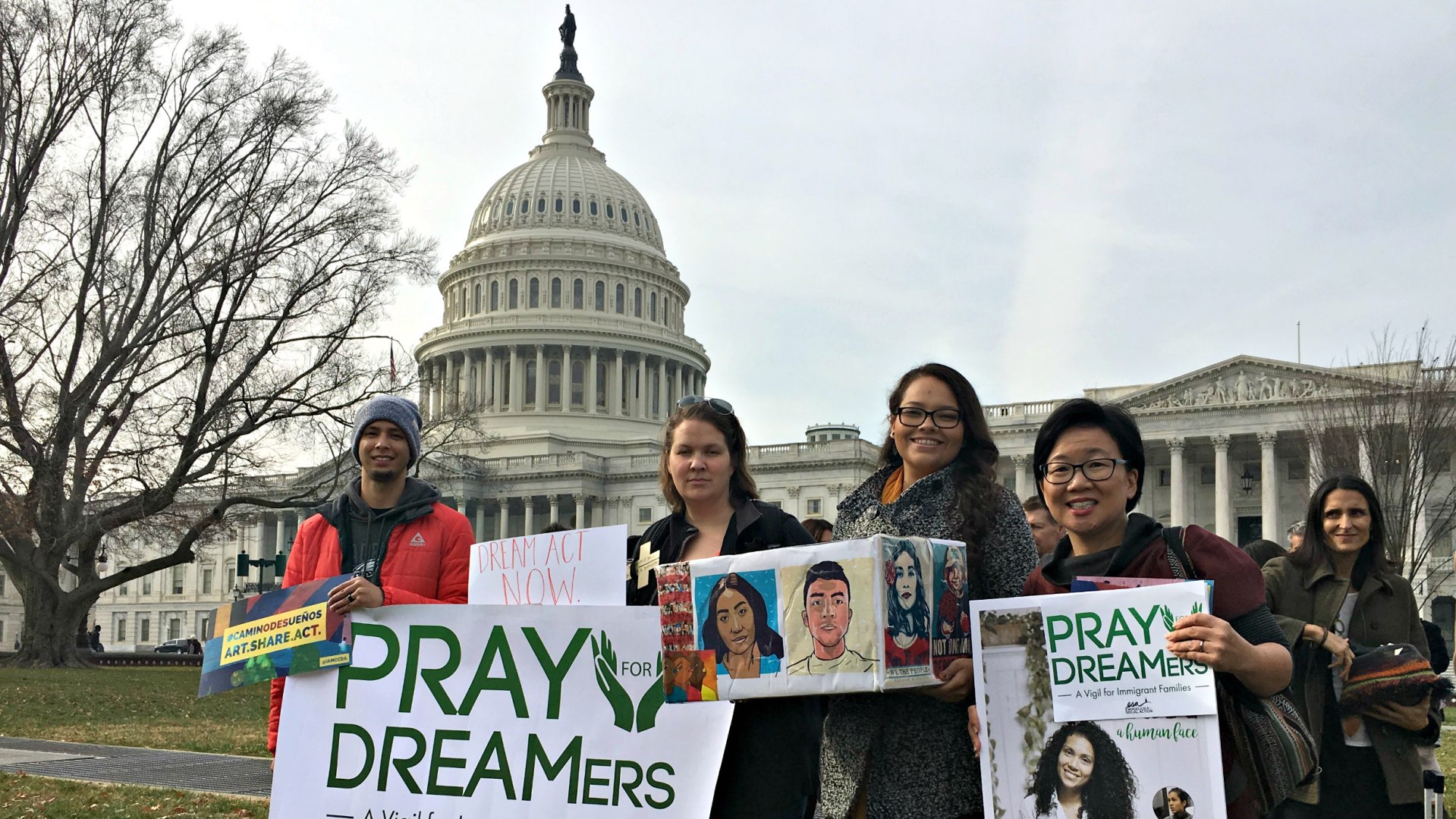
Evangelicals for Social Action, the justice-focused group founded by Ron Sider, has called itself “a different kind of evangelical.” As of today, it’s the kind that doesn’t call itself evangelical.

After nearly 50 years, the organization has changed its name to Christians for Social Action, becoming the latest and most prominent example of a move away from the “evangelical” label in the US.

Executive director Nikki Toyama-Szeto cited the shift in identity among the younger, more racially diverse generation of leaders as well as examples of how the historic name had begun to distract from its work.

“Honestly, the name change is an act in hospitality. In some ways, it reflects a change in our audience of what they’re calling themselves. Our audience is still evangelical, it’s post-evangelical, and it’s evangelical-adjacent,” said Toyama-Szeto, who has led the ministry since 2017. “When you have a name like ‘Evangelicals for Social Action,’ you’re limiting yourself to those who self-describe.”

Because of growing political baggage around the name, that pool has become narrower. Plenty of people believe in the core convictions of the faith—and are motivated by them to pursue justice—without calling themselves evangelical anymore.

The election of President Donald Trump, who embraced his white evangelical backing, represents an inflection point for evangelical identity in the US. Fifteen percent of those who considered themselves “evangelical” or “born again” in 2016 had stopped using either label by the following year, according to one voter survey, even though the overall number of evangelicals had held steady.

Princeton University’s longstanding evangelical student ministry dropped the name in 2017, saying it’s “increasingly either confusing, or unknown, or misunderstood to students,” and a growing number of Christian colleges, churches, and charities have been forced to think strategically about when and how to employ their evangelical identity.

“With the current roiling semantics over the world ‘evangelical,’ [Evangelicals for Social Action’s former name] can lead to confusion over what this organization is or isn’t affirming,” said Mark Labberton.

The Fuller Theological Seminary president edited the 2018 book Still Evangelical? and wrote about how the term evolved into a “theo-political brand.” In a statement, he said the group’s name change made sense and offered more clarity.

“Evangelical” carried a political connotation beyond the work of the organization, which focuses on issues like racial justice, poverty, immigration, political engagement, LGBT dialogue, and the environment.

“Having the name has been distracting in our partnership conversations and in our bridge-building within the Christian realm,” said Toyama-Szeto.

What was once a provocative label drawing attention to the fact that evangelicals indeed stood up for justice causes has in recent years become a complicating factor. She recalled how a black church leader got pushback for supporting a group with evangelical in its name.

And living in the Washington, DC, area, Toyama-Szeto said acquaintances would conflate Evangelicals for Social Action with other causes deemed “evangelical,” asking her about its involvement in Israel, even though Evangelicals for Social Action had no work there.

For Toyama-Szeto, the decision to change the name to Christians for Social Action—made after months of prayer, discernment, and discussion—does not represent a rejection of evangelicalism or its evangelical partners. The organization remains committed to a high view of Scripture and bearing witness to the gospel, she said.

Instead, the new name offers a chance for the group to focus and work more effectively on their cause and calling around faith-fueled justice work.

She brought up a question that came up in their discussion, one that others might consider as they wrestle with their own evangelical names or identity statements: What was the invitation from God to their organization?

“I think for some it will be to stand and bear witness to a rich history of church tradition and to stir the imagination” to show what evangelical really means, said Toyama-Szeto. “For us, we felt like if we did that, it would be the one conversation we had with everyone. We were wrestling with, ‘Is that the justice conversation God has for us?’ It felt like overwhelmingly, that was not our invitation.”

Evangelicals for Social Action grew out of the 1973 Chicago Declaration of Evangelical Social Concern, which “challenged evangelicals to emphasize social sins and institutionalized evils as vigorously as they do personal sins.”

For the past 30 years, Evangelicals for Social Action has been headquartered at Eastern University, which is affiliated with the mainline American Baptist Churches USA and the Council for Christian Colleges & Universities.

Ron SiderCourtesy of Christians for Social Action
Ron Sider

Even Sider, the organization’s founder and president emeritus, stood by the evangelical label in the weeks after Trump’s election.

In a piece for CT, he argued that the history of the term overcame any modern qualms and was worth clinging to.

“Popular media learned … that evangelical has often meant unjust and unbiblical,” said the author of Rich Christians in an Age of Hunger. “Over time, we can help the larger society come to a better understanding of what an evangelical is.”

But he also wrote then that Christians must focus first on “faithfulness to Jesus and the Scriptures, not some label,” and has come around in the past four years to believe it’s time for a change. “It was the right name—for a time. But the social environment is so different,” Sider says now.

The question, “Can you be evangelical without calling yourself evangelical?” isn’t uncommon these days. Fellow Christians, organizations, and churches have also had to grapple with the changing social environment where “evangelical,” in some circles, has lost its reputation as a robust, wide-reaching missional movement.

About a quarter of Americans are evangelical Protestants, according to Pew Research. People of color and young people in particular have increasingly grown uncomfortable identifying with a movement some assume is exclusively white, Republican, and fundamentalist. Questions continued to stir around how to define evangelicals and, if evangelicals were not going to use that term, how else they might signal their belief.

From sociologists and historians to ministry leaders, plenty of Christians are discussing those questions in public and working hard to bring evangelicals together—perhaps none as much as the National Association of Evangelicals (NAE), which represents more than 40 denominations and is now led by an Asian American president and African American board chair.

“Some who hold evangelical beliefs may distance themselves from the name due to cultural misunderstanding and confusion. Others may find the term provides an opportunity to explain what ‘evangelical’ means and to share the good news with others,” said Walter Kim, NAE president. “How people identify themselves or their organizations is not theimportant thing. What is important is believing in Jesus Christ as Savior and Lord, taking the Bible seriously and serving him in word and deed.”

Toyama-Szeto said she continues to support the work of the NAE and others working diligently to reclaim the evangelical label.

Through Christians for Social Action, she will let her work define what kind of Christian she is. “In this day and age,” she said, “justice is one of the ways you testify to the character of God.”

Apple PodcastsDown ArrowDown ArrowDown Arrowarrow_left_altLeft ArrowLeft ArrowRight ArrowRight ArrowRight Arrowarrow_up_altUp ArrowUp ArrowAvailable at Amazoncaret-downCloseCloseEmailEmailExpandExpandExternalExternalFacebookfacebook-squareGiftGiftGooglegoogleGoogle KeephamburgerInstagraminstagram-squareLinkLinklinkedin-squareListenListenListenChristianity TodayCT Creative Studio Logologo_orgMegaphoneMenuMenupausePinterestPlayPlayPocketPodcastRSSRSSSaveSaveSaveSearchSearchsearchSpotifyStitcherTelegramTable of ContentsTable of Contentstwitter-squareWhatsAppXYouTubeYouTube