News

Died: Phillip E. Johnson, Lawyer Who Put Darwin on Trial

With landmark book, he became “chief architect and guiding light” of the intelligent design movement.

Christianity Today November 5, 2019
Berkley Law

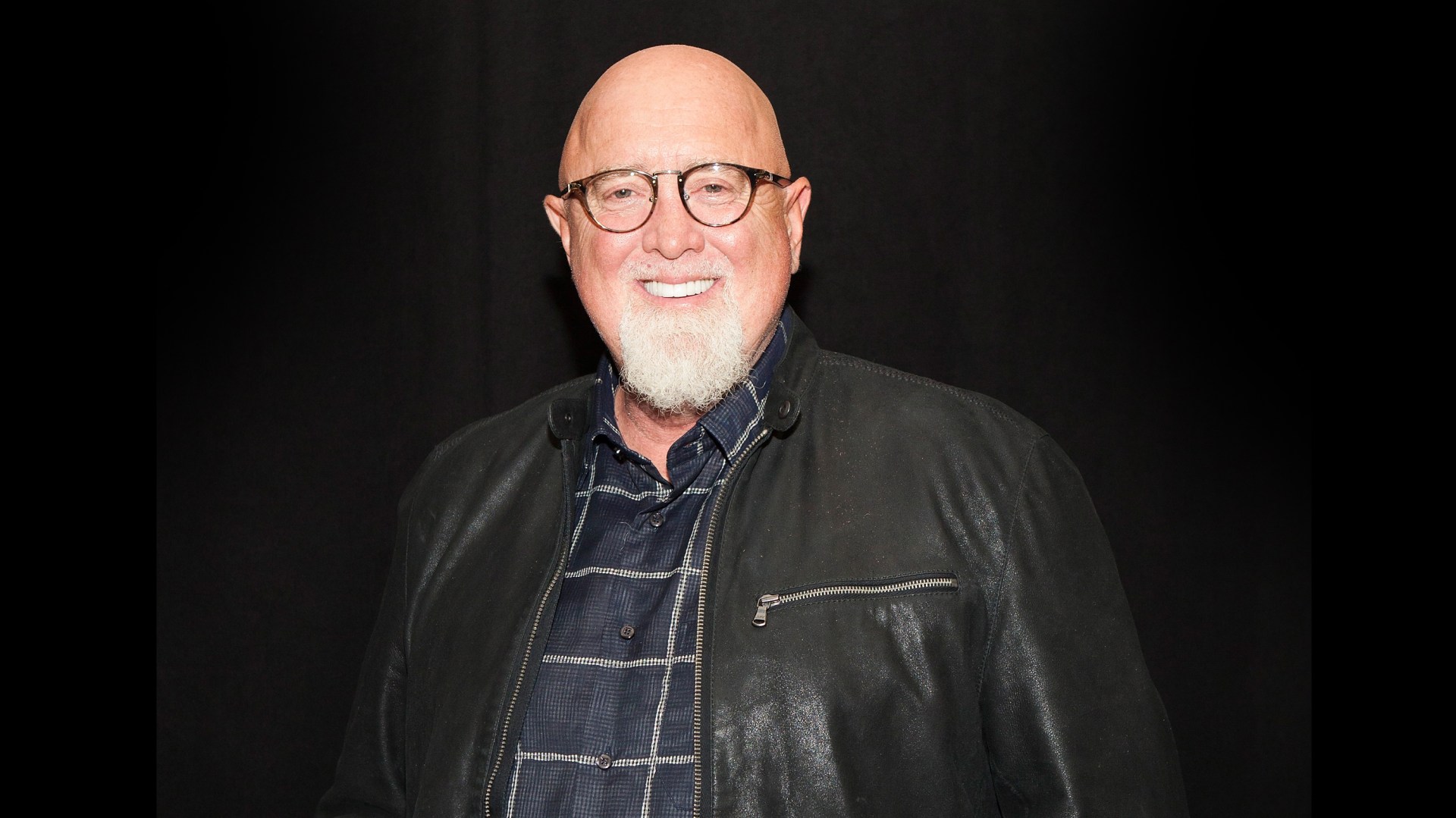
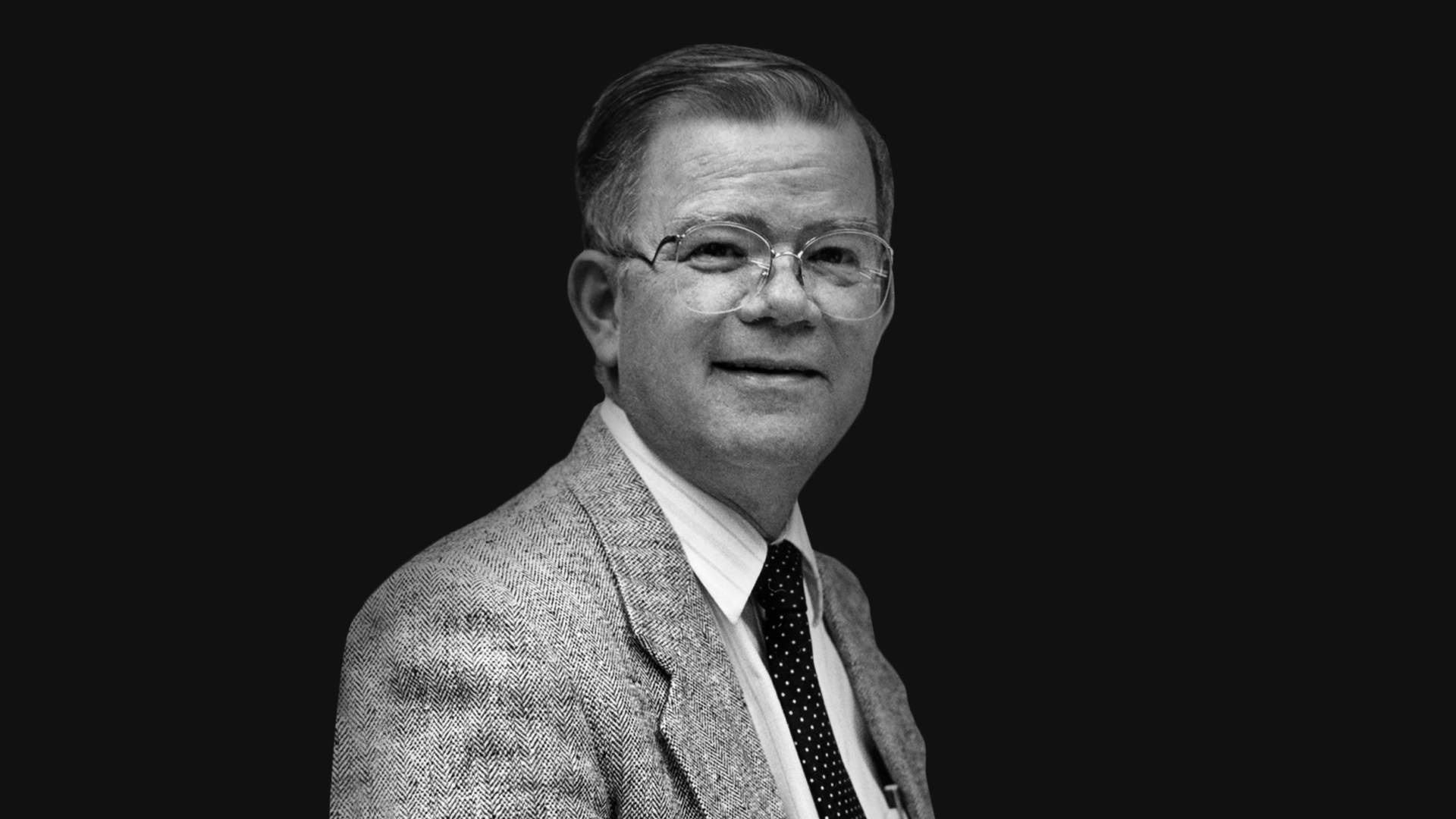
Phillip E. Johnson, a law professor who helped launch the modern intelligent design movement, has died at home in Berkeley, California. He was age 79.

Johnson’s landmark book, Darwin on Trial, argued that Darwinian evolution didn’t have real evidence or good arguments, but was instead “another kind of fundamentalism.” When it was published in 1991, Darwin on Trial galvanized a group of Christians who opposed the theory of evolution, but also wanted to distance themselves from Bible-based creationism, which could not be taught in public schools.

“It was necessary to put aside all questions of biblical interpretation or veracity and to concentrate entirely on the claims of Darwinism,” Johnson wrote for Christianity Today in 1994. “What was needed was to press questions that are legitimated within the context of mainstream academic thinking, questions about what has been proved about evolution and what has merely been assumed.”

The focus on debating the evidence for Darwinism made Johnson the “chief architect and guiding light” of the intelligent design movement, according to William A. Dembski, who was a senior fellow at the Discovery Institute until 2016.

“Phil helped us focus on the right questions,” said John Bloom, professor of physics and the director of the science and religion program at Biola University. “Whatever the details, was God involved in creation or did mindless particles come together to make us? What conclusion does the actual evidence support? Sometimes we don’t see the forest for the trees: Phil reminded me to focus on the big picture.”

Johnson wasn’t always interested in the “big picture,” though. He grew up in Aurora, Illinois, and was, by his own account, a bit obnoxious and too smart for his own good. He went to Harvard University at 17, but was disengaged and mostly aimless.

After Harvard he went to law school at the University of Chicago, but only because his father submitted his application, and he didn’t have a better idea. When he graduated, he got a coveted position as a clerk for Roger Traynor, chief justice of the California Supreme Court, and then as clerk for Earl Warren, chief justice at the US Supreme Court. From there, he went to the University of California Berkeley School of Law in 1967.

Johnson was an agnostic who admired the faith of C. S. Lewis, J. R. R. Tolkien, and Fyodor Dostoyevsky. Johnson was introduced to a contemporary Christian faith, however, when his daughter attended a Vacation Bible School. He was moved by what he saw her learn and started attending and eventually joined the First Presbyterian Church of Berkeley at 38.

Johnson didn’t start thinking about the question of evolution until he was on sabbatical in England in 1987. At 47, he was starting to feel like he was wasting his life teaching law. "I'd like to have an insight that is worthwhile,” he told his wife, “and not just be an academic who writes papers and spins words.”

Then he came across a new book in a London bookshop: The Blind Watchmaker, by the atheist Richard Dawkins. As he started to read, Johnson felt a stab of recognition. Dawkins was using the same rhetorical tricks that clever lawyers use when they have to defend a flawed case in court.

“What first drew my attention to the question,” Johnson wrote, “was the way the rules of argument seemed to be structured to make it impossible to question whether what we are being told about evolution is really true.”

Johnson started researching the arguments for evolution, and writing what would become Darwin on Trial. The first draft was 88 single-spaced pages and didn’t immediately impress anyone. Dembski only glanced at it, because he assumed a lawyer wouldn’t have anything interesting to say about evolution. Historian Edward Larson thought it was fairly pedestrian, though it articulated some old arguments with a new clarity.

Johnson took those criticisms, made revisions, and pushed forward, publishing the book in 1991. It quickly became a bestseller among evangelicals and also grabbed the attention of conservative Protestants and Catholics and renewed interested in the arguments for intelligent design. After Johnson organized a conference on the subject in 1992 and established an online listserv to continue the conversation, he was firmly established at the center of this new movement.

The book was popular enough to receive serious criticism. One evolutionary biologist said Darwin on Trial was “worse than most of the garden variety creationist tracts.” Stephen Jay Gould, a paleontologist and popular science writer, called it “a very bad book … full of errors, badly argued, based on false criteria, and abysmally written.”

Johnson was also criticized by Christian academics. Calvin College physicist Howard Van Till said intelligent design was a scientific “dead end.” Fuller Seminary philosophy professor Nancy Murphy said Johnson’s arguments were unconvincing. “The main reason,” she explained, “is that he does not adequately understand scientific reasoning.”

A few states started requiring schools to teach the intelligent design in the late 1990s and early 2000s, until a federal court ruled it was unconstitutional. In 2001, Johnson helped Republican Senator Rick Santorum craft an amendment to an education funding bill that would instruct all public schools to “teach the controversy.” The languge did not make it into the final version of the bill.

Johnson continued making arguments and writing books raising questions about the evidence for evolution, though.

In 2011, celebrating the 20th anniversary of the publication of Darwin on Trial, Johnson said he remained hopeful that intelligent design would eventually win the day.

“If we keep explaining the truth,” he said, “and adopting ever more creative ways of getting that truth across, as we are doing constantly, eventually more and more people come to see it and to understand it.”

News

When You Are Persecuted in One Place, Flee to Another. But Not to America.

Both US policy and Middle East wisdom discourage suffering Christians from resettling in the West.

Christianity Today November 5, 2019
Burak Kara / Stringer / Getty

Zero.

The United States did not resettle a single refugee in October.

According to 30 years of records from World Relief, last month was the first time a calendar month went empty. For the past five years, the October average was 4,945 refugees resettled.

Among those impacted: persecuted Christians.

The humanitarian arm of the National Association of Evangelicals tracked the number of arrivals from the 10 countries identified by the US State Department as Countries of Particular Concern for violating religious freedom. The 5,024 Christians whose cases were accepted in fiscal year 2019 is a decrease of two-thirds from the 15,341 who were accepted in fiscal 2015. A maximum of 5,000 is allotted for victims of religious persecution in fiscal 2020—for all religions and countries.

Resettlements of non-Christians are also declining. For the same time period, Yazidi refugees from Syria and Iraq have declined 91 percent. Jewish refugees from Iran have declined 97 percent. And Muslim refugees from Burma have declined 76 percent.

“This isn’t just heartbreaking—it’s unjust,” stated Scott Arbeiter, president of World Relief, noting the State Department announced a limit of 18,000 refugees for fiscal 2020.

“I urge the administration to reconsider its approach and set a cap that better represents the compassion and hospitality of the American people.”

But Secretary of State Mike Pompeo defended the policy.

“Addressing the core problems that drive refugees away from their homes helps more people more rapidly than resettling them in the United States,” he stated, pointing out an estimated backlog of one million asylum cases.

“Helping displaced people as close to their homes as possible,” stated Pompeo, noting the $9.3 million the US has spent to alleviate humanitarian crises, “better facilitates their eventual safe and voluntary return.”

The Religious Liberty Partnership, birthed at a Lausanne Movement gathering and now numbering Christian organizations from 20 countries, has highlighted three biblical responses to persecution: accept and endure (2 Tim. 3:10–13); challenge and resist (Acts 22:25–29); or flee (Acts 9:23–25).

Jesus says the same in Matthew 10:23 (NIV): “When you are persecuted in one place, flee to another. Truly I tell you, you will not finish going through the towns of Israel before the Son of Man comes.”

But with Christian attention focused this past weekend on the International Day of Prayer for the Persecuted Church, the RLP document—reaffirmed with the Refugee Highway Partnership (RHP), a partner of the World Evangelical Alliance, in 2017—suggests that the clear choice of the local leaders who shepherd the displaced echoes Pompeo.

“Amongst church leaders across the Middle East, there is a strong consensus that indigenous Christians should stay in their countries wherever possible,” the RLP stated. “We advise and assist Christians under persecution to relocate out of their country/region only as a matter of last resort.”

Daniel Hoffman, executive director of Middle East Concern, which helped craft the RLP document, described the exceptions as threats to life, liberty, and the custody of children, which can be a factor in cases of conversion from Islam. He also said that staying in the region leaves open the door to potential reconciliation and return, which he has witnessed.

But Toufic Baaklini, president of In Defense of Christians, said that at the time of ISIS, Beltway advocates wanted to relocate the entire community to the US.

“This was well meaning but very misguided,” he said. “In a way, it would have completed the work of ISIS by eradicating Christians from the region.”

Keeping them local is essential, said Imad Shehadeh, president of the Jordan Evangelical Theological Seminary (JETS). His institution requires every student receiving a scholarship to sign a document pledging to stay.

“Too many Christians are leaving,” he said.

“While it is easy to understand, having a Christian witness in difficult places is indispensable—precisely because they are difficult places.”

Family harmony is crucial, so JETS also trains the wives of students to share this vision.

Shehadeh’s Arab world colleague, Martin Accad, can speak from experience. Now the chief academic officer at Arab Baptist Theological Seminary (ABTS) in Lebanon, Accad’s father had the family stubbornly endure a 15-year civil war. He is committed to the same with his own family.

Growing up, Accad heard the message: “If we leave, who will support those who cannot? Who will witness to the love of Christ?”

“Following Jesus is not about arriving to a more comfortable situation,” he said. “But today, I am a bit more lenient.”

Like JETS, ABTS has many Arab world students, and asks them to express a sincere desire to stay and serve their people. Faculty try to help by mentoring students through issues of grief, fear, and bitterness carried from their war-torn nations.

But those who lack the courage or strength must not be judged.

“There are many who leave and become stronger as God works with them in their host country, and a few years later they return with a new passion to serve in their country of birth,” Accad said. “God in his grace has a place for such people.”

One example is Camille Melky, who left Lebanon during the civil war at age 17. After sound mentorship at a Christian liberal arts college in America, he returned home, thinking he could change the world. Instead, he ran headlong into the despair of others.

Gathering 25 young believers in a Bible study, he found 20 of them anticipated moving abroad in the next five years, if possible. The five who didn’t saw no path out.

“Unless the church can give the youth hope in Christ,” Melky said, “then we will have a much smaller Christian community, and it will not impact society.”

To address the problem, he founded Heart for Lebanon. His 56 staff members in three locations now give hope to the Lebanese and non-Lebanese alike.

The first wave was Iraqi, 85 percent Christian, in 2008. The next wave was Syrian, mostly Muslim, in 2011. Christians followed with the rise of ISIS, and are now 35 percent of his total.

What happened next feeds into Pompeo’s narrative.

Of the 120,000 Iraqis who came to Lebanon, only 30,000 remain, Melky said. They have gone to America, Canada, Europe, and Australia. Very few have returned to Iraq.

It is too early to judge what will happen with the Syrians. Like Accad, Melky has hope that many will deepen their faith abroad and return. But while he frequently receives requests from churches in the West to send him an Iraqi or Syrian pastor to serve with refugees there, no one has offered to support that same pastor in Lebanon.

“For the one family you relocate, you can provide for 10 to stay here,” Melky said. “Of course, that depends on if they want to stay.”

Many don’t.

But there are also advantages when people leave, said Maged Atiya, a Coptic American physicist. A broader social prospective, greater political and cultural influence, and financial assistance provided from the West would actually help the church back home, he said—with a caveat.

“It is high time that Eastern churches detach ethnic identification from religious confession,” he said, as the Coptic Orthodox Church—growing significantly in the diaspora—still views itself as an Egyptian institution.

“A more global church would not be weaker, and the new members in countries other than Egypt could do a lot for Egyptians of all religions.” Atiya advocates more visas for those who want to leave.

In Palestine, the Philos Project is actively helping; its “Gaza Exodus” provides funds and legal facilitation for Christians to relocate to the West Bank.

Before Hamas took control in 2007, there were 4,000 Christians living in the coastal strip, said Khalil Sayegh, advocacy fellow for Philos who heads the project. Today, there are less than 1,000—including his own mother and father, who do not plan to leave.

One family does, because they despair that with so few Christians, they will be unable to find a husband to marry their daughter. Another said their children are frequently harassed by Muslims.

“The Christians of Gaza can no longer endure the situation there, and many of them are looking for opportunities to leave,” said Sayegh.

“Better for us to keep them in another part of Palestine, instead of having them leave to the West.”

Philos founder Robert Nicholson fears the similar lack of a critical mass in Mesopotamia means Christians there can no longer maintain a stable homeland. He is floating ideas of relocation to Armenia.

And he is frustrated that his warnings have gone unheeded.

“Human rights and religious freedom advocates almost always focus on the short-term needs of humanitarian relief,” he said. “But three things are needed for a viable future: a robust population base, real influence in politics, and access to—or even better—control of the organs of physical security.”

Advocates should have pushed the US government to secure a self-administrative region for Christians in Iraq’s Nineveh Plain, he said.

“Some Christians will want to stay where they are; others will want to flee to the West,” Nicholson said. “Both groups should be free to act as they please.

“But they cannot consider more proximate alternatives because we have not created them.”

The West is guilty in another direction, said Accad. Its governments have colonized, abused resources, and propped up dictators. And contra Pompeo, they “lack true humanity” if they do not bear their share of responsibility for those Christians who cannot remain. They must open their doors to refugees.

But deeper than this must be government commitment to address root causes. Here he calls the church also to action.

“Step down into the sweat and mud of conflict, as agents of divine peace and reconciliation,” Accad said, particularly to those to see evangelism as their only responsibility. “Otherwise, you are responding to a different gospel than the one I see inaugurated by Jesus of Nazareth, the Christ of God.”

News

Harvest Elders Say James MacDonald Is ‘Biblically Disqualified’ From Ministry

Statement comes nine months after his firing and weeks after he appeared at another Chicago-area church.

Christianity Today November 5, 2019
Gabriel Grams / Getty

Update (Nov. 8): On Friday, James MacDonald posted his first public apology since his termination and confirmed his involvement at New Life Covenant.

He owned up to “careless and hurtful words” and “a regression into sinful patterns of fleshly anger and self-pity that wounded co-workers and others.” He said he regretted decisions made out of desperation during his final year at Harvest Bible Chapel.

“Decisions by the current Elder/staff, along with inaccurate announcements and recent public condemnation, signaled clearly the timing to communicate our message directly,” noting that he is still working with Christian arbitration to resolve issues with Harvest.

MacDonald said he and wife Kathy have been “welcomed into” New Life Covenant, which offered them “a place to serve and the beginnings of healing community.”

Though MacDonald mentioned he “sent written apologies where appropriate,” Julie Roys—one of the defendants in a lawsuit he initiated—said she had not received an apology.

——–

The elders of Harvest Bible Chapel have concluded that their former pastor James MacDonald is biblically disqualified from ministry and can never return to leadership at their congregation.

A church investigation into charges against MacDonald—who was fired in February— found he failed to meet the elder qualifications laid out in Scripture. They attested he instead “had a pattern of being disruptive,” “insulting, belittling, and verbally bullying others,” “improperly exercising positional and spiritual authority,” and “extravagant spending utilizing church resources resulting in personal benefit,” according to a statement released Sunday.

The announcement said while the Bible doesn’t teach that disqualification from ministry is permanent, his damage to Harvest would prevent him from serving again as an elder or pastor there.

“We believe James could be restored to ministry someday, but in order for that day to come, the fruits of repentance must be evident. Based on Harvest Bible Chapel’s interpretation of the Scripture, we have not yet seen evidence of this,” wrote the eight-member elder board (all of whom assumed their positions earlier this year, when the elders who served during MacDonald’s leadership stepped down).

MacDonald was dismissed from the church he founded after a string of controversies over his leadership and Harvest finances, concluding with an October 2018 defamation suit against his critics, an exposé by Julie Roys in World magazine, and a leaked recording of inappropriate remarks.

He did not respond to an email from CT requesting comment. In a statement announcing his sabbatical back in January, MacDonald acknowledged “I have battled cycles of injustice, hurt, anger, and fear which have wounded others without cause … I blame only myself for this and want to devote my entire energy to understanding and addressing these recurring patterns.”

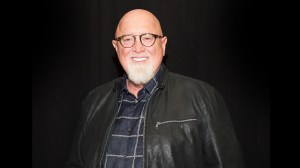
He has mostly stayed off social media and out of the public eye since being fired, but appeared at two recent events held by New Life Covenant Church, an Assemblies of God megachurch in Chicago: a men’s retreat on October 12 and a Sunday service on October 20, according to reports by Roys on her blog. Pictures show MacDonald on stage, with his signature goatee replaced by a bushy white beard.

CT contacted New Life Covenant on Monday to confirm MacDonald’s involvement, but did not receive a response. The church did not post anything about MacDonald’s appearances at their recent gatherings.

Harvest elders said it was their biblical responsibility to issue a public rebuke of MacDonald, citing 1 Timothy 5, which reads, “But those elders who are sinning you are to reprove before everyone, so that the others may take warning” (5:20).

“We have communicated to James that he needs to find a small group of godly brothers to restore him biblically in the spirit of gentleness,” the statement said. “He needs an extended period of time away from ministry in order to focus on repentance and to seek relational reconciliation and restitution where it is possible. We are all in need of God’s grace. And we have implored James to humble himself and fully surrender to the Lord.”

The church is currently in arbitration with MacDonald through the Institute for Christian Conciliation over his termination and the ownership of the teaching ministry and former radio show Walk in the Word.

Over the years, several cases involving high-profile pastors being removed from their pulpits have prompted debate over whether, or when, pastors can be restored to ministry after scandal.

Ed Stetzer previously named “public and thorough repentance” as a prerequisite for restoration in ministry. “Unless we pastors engage in public repentance, our ‘bold’ preaching about sin and grace often appears to be little more than window dressing,” he wrote. “In other words, what we believe about God, sin and grace is proven true when we treat our own sin as seriously as we say others should.”

Earlier this year, pastor Darrin Patrick spoke out about returning to ministry, three years after being fired for sinful issues related to pride and celebrity (“a history of building his identity through ministry and media platforms”) at the church he planted in St. Louis in 2002. His church required him to step down from all internal and external leadership positions in 2016, but elders said because he was willing to undergo a plan for personal restoration, “we are extremely hopeful in our God who is powerful to bring redemption and grace from the midst of brokenness.” At the time, they did not reference future ministry potential.

“The focus was on being healed as Christian first,” said Patrick, who spent more than two years in counseling, including 14 months with no ministry involvement and 12 months in a supervised role—mostly sharing his story with fellow pastors—under an adviser. Now under Greg Surratt at Seacoast Church, he told Stetzer he is still “leading with a limp” and plans to keep a personal accountability board to continue checking in.

Tullian Tchividjian also returned to the pastorate recently. He launched a new church in September, four years after an affair lost him his job at Coral Ridge Presbyterian. Tchividjian initially took an administrative role at another church within a year of his resignation, only to be fired when the church learned of further allegations of abuse against a congregant.

After that, the church’s pastor stated “we do not believe that Mr. Tchividjian should be in any form of public or vocational ministry” and friends and former board members of his ministry agreed, “we believe that he has disqualified himself from any form of public vocational ministry.”

Mark Driscoll resigned from Mars Hill in 2014, despite the elders and Driscoll himself agreeing that concerns over his temper and arrogance do not disqualify him from ministry. He launched a new church in Arizona in 2016.

Pastors

This Church Model Thrives in Post-Christian Contexts

Missional communities seek to broaden our understanding of what it means to be a local church.

CT Pastors November 5, 2019
Chris Mainland / Lightstock

After four years of seminary and a brief stint as a campus pastor at one of the largest churches in Raleigh, North Carolina, Charlie Dunn found himself working in retail. He quickly discovered his standard approach to evangelism wouldn’t work in this new environment. “Early on, I would try to get my coworkers to come to church because that’s how I understood my role in evangelism,” Dunn said. “They never came.”

But when he invited them to his house, they started showing up. In the beginning, Dunn and his wife, Abby, invited neighbors and coworkers to join them for a cookout, for their daughter’s first birthday party, and for an indoor soccer match. “They were willing to study the Bible for five hours at a time, grill out, have a drink, and be a family together,” Dunn said.

At the same time, Dunn felt a call to plant a church. But something held him back. “I felt like planters were guys who captivated massive crowds, planted huge churches right off the bat, and were front and center on the speaking and book-writing circuits,” he said. “I wasn’t sure I could achieve that.”

After researching different church plant models, he came to a realization: The small community he was already cultivating could be the seed of a church—albeit, one that broke the church mold to which he was accustomed. In September of 2015, he launch Hub Church, a missional community in South Boston, Massachusetts. About 30 people gathered to share their stories, partake in the Lord’s Supper, and hear Scripture preached.

Today Hub Church has expanded into three separate missional communities. One is plugging in at a neighborhood elementary school, another is building relationships at a government-owned senior living facility, and the third is dedicated to serving an addiction recovery home. While these communities meet together three Sundays a month, they spend the fourth serving their chosen context.

Hub Church and others like it represent a movement of missional communities that has proven especially resilient in post-Christian contexts. Proponents of this model believe it offers a long-overdue expansion of what we mean when we talk about “the local church.”

The History of Missional Communities

The missional movement, of which Hub Church is a part, emerged in the 1990s in several different contexts. In inner city London, Mike Breen began experimenting with smaller church communities. “We saw that these communities were small enough to care for people but not big enough to dare to do mission,” Breen recalled. “We began gathering the small groups into a large Victorian flat. We had dinner and worship going all the time. Then we started going out and doing mission. That was the beginning of the movement.”

Breen was appointed rector of St. Thomas in Sheffield, England, in 1994, where he put his earlier experiments into practice on a larger scale. That initial push of small groups banding together to minister to their community “turned into thousands upon thousands of people in missional communities in a city where less than one percent of people attend church.” In six years, his church became one of the largest in England and one of the fastest-growing in Europe. Each of St. Thomas’s communities serves a different group of people, including artists, gang members, and former Muslims.

Meanwhile a similar movement was building in Australia under the direction of Alan and Deb Hirsch. For these pioneers, missional approaches offered an alternative to the traditional models of church prevalent throughout the West. According to Alan Hirsch, “Because of our radically post-Christian situation, church growth and church planting models formulated for the more churched setting of America did not work in Australia.” In 1997 Alan, Deb, and Michael Frost launched the Forge Mission Training Network in Victoria, Australia, to “train people to live as missionaries in the places they are sent,” according to their website.

Though a few forerunners appeared in the US in the 1990s, the missional community movement did not gain strong traction in North America until the early 2000s. In 2004 Breen moved to the United States to bring the 3DM method across the pond. In Denver, Colorado, Hugh Halter started a missional family in 2002, which became a series of “Tangible Network” communities. He now works with Alan and Deb Hirsch as the national director of Forge America, which launched in 2010.

Jeff Vanderstelt, pastor of Doxa Church in Bellevue, Washington, started thinking about the advantages of missional communities when he was the director of Student Ministries at Willow Creek Community Church in the Chicago area. “We decentralized a very large youth ministry into localized home groups for contextualized mission,” he said. In 2003 Vanderstelt launched Soma Tacoma, a missional community with 23 members, through the Acts 29 Network. “When I started Soma Church,” he said, “I wanted to ensure that everyone believed they were called to be the church and learned to live this out everywhere, every day.”

By 2011 the church had grown to more than 400 members. “As we multiplied, we became a network of missional communities,” said Vanderstelt. In recent years, that network has united with other missional community networks to form the Soma Family of Churches. Nearly 1,000 church planters have learned the ins and outs of missional communities through Soma’s training program, and the family now includes more than 50 churches.

More Than a Small Group

At first blush, missional communities appear to be little more than highly developed small groups. But according to Vanderstelt, there’s a big difference. Traditionally, small groups are optional additions to Sunday morning gatherings, which remain the primary venue of worship and community. But in missional communities, Sunday gatherings supplement “the equipping of the saints for the works of ministry all week long.”

Ben Connelly—who planted The City Church in Fort Worth, Texas, and leads Soma’s church planting residencies—agrees. “From the outside, we may look like a church of small groups. We come together on Sundays and then leave to meet in different forms throughout the week. But the priority of those things is actually flipped on its head,” he said.

Todd Engstrom, pastor of Austin Stone Community Church, believes the difference between small groups and missional communities lies in how each defines success. For small groups, “success is still defined as attendance at an event,” he wrote. But missional communities are successful if they are “redeeming everyday life with gospel intentionality. … A missional community sees itself as a network of relationships with a common mission, rather than being defined by attending an event.”

Breen sees an external focus as the movement’s key distinctive. “It’s about having an outward perspective versus gathering people in,” he said. “It’s always been about sending people out. It requires leaders to have a passion and a vision for mission.”

Many in the US have come to think of their homes as a refuge from the difficulties of the world, but Dhati Lewis, pastor of Blueprint Church in Atlanta, Georgia, encourages people in his church to open up their homes for the sake of mission. “We define life-on-life discipleship as a once-a-week meeting at Starbucks. I don’t understand that,” he said in a panel discussion. “We must reclaim the art of hospitality by using our houses as weapons for the gospel.”

Since missional communities are embedded in neighborhood homes and gathering spots, practitioners are better able to engage others throughout the week. “The non-Christian culture despises the evangelical church right now,” Hugh Halter said. “They’re going to have to run into us in their neighborhoods to like and respect us.”

For Halter, the idea of starting a community emerged from his son Ryan’s severe epilepsy. “Because of his disability, we couldn’t leave the house much,” he said. “Our home became the front line of mission. We had to create simple, reproducible rhythms people could come do with us.”

Twice a month, the Halter family’s community would gather to read Scripture. Once a week, they would throw a party, and every week or two they would serve the neighborhood together.

“We didn’t know we were planting a church,” he said.

In two years, without an official name or any advertising, their meetings grew to four groups—about 45 people total. Many were Starbucks employees, since Halter’s wife worked at one nearby. “We had three natural contexts: the place we had coffee every day, our neighborhood, and our kids’ hockey program,” Halter said. “I always tell people, don’t add anything to your life. See everywhere you are as a mission field.”

Challenges of the Future

Although it may have been trendy at the turn of the century, the missional movement seems to be in a second phase, said Halter. “It’s a way of doing church we will all have to do someday.”

“This is an all-in way of winning your neighborhood. It’s a hard sell. But if the church keeps declining like it is in the US, there won’t be many options left,” he said. “It may be the only way that works 20 to 30 years from now.”

“If you look at post-Christian societies, this is the church model that is sticking,” said Ben Connelly. “In the UK, which has been dominated by the Church of England and Roman Catholicism, missional communities are one of the primary ways in which churches are starting to thrive again. Their example is a strong argument for this type of model in post-Christian America.”

Many people are trading face-to-face relationships for digital connections, and Jeff Vanderstelt sees an opportunity for missional communities to meet neglected relational needs. “As the world becomes virtually networked, people are feeling more isolated. Their online friends may be in the thousands, but they feel alone,” he said. “Because they are made in the image of a Triune God, they long for close, deep community. Millennials especially want the life that a missional community offers.”

Breen believes a family dynamic will play a big role in the days ahead. “The future of missional communities is family on mission,” he said. But he’s not just talking about blood relations. “What the old generation called ‘failure to launch,’ this generation calls extended family. Millennials have a strong desire for an extended family, one that includes both blood and non-blood relationships.” Breen sees a biblical precedent for this paradigm. “I love the idea that when Jesus chooses disciples, he calls them his family. He created his own family on mission. That’s an amazing image to carry into the 21st century.”

But that doesn’t mean missional communities will be an easy sell to church leaders used to different strategies, according to pastor and 3DM board member Jo Saxton. “When you’ve lived in a particular way, you get used to it,” she said in a video interview for Verge. “How do you assess what success looks like [in a missional community]? In a more conventional environment … high attendance is a sign that you’re doing well. Giving is a sign that you’re doing well.” But success in a missional community is harder to measure.

Another difficulty many practitioners fail to take into account is what to do with the kids. “It’s really nice on Sunday morning to take your kids to a meeting where you know they will be taken care of for the next hour and a half, and you can sit and have an adult moment in your week,” said Saxton. “We’ve found that, although people have to let go of these comforts, they discover how to raise their children as a community.”

While missional communities are not expensive financially, they cost tremendous time and energy. Halter estimates commitment to a community can easily take 10 hours a week, even for those outside of leadership. Many people start eagerly in the model, he said, but aren’t willing to reorient their lives. For example, introverts must be willing to stretch out of their comfort zones to build relationships.

Charlie Dunn says the key to survival is to focus on the mission.

“When people lead out of pragmatism rather than the gospel, they burn out,” Dunn said. “If anything but the gospel is at the center of your practice and theology, it’s worthless.”

He warns that the missional community model is so appealing to many church planters, himself included, it can become an idol of sorts. “We want to call people to the message of the gospel—freedom in Christ, through the medium of family—which works in every context,” he said. “Not to a model.”

Kara Bettis is associate features editor at Christianity Today and lives in Boston. Some reporting for this article was conducted by Paul Pastor, author and deacon of spiritual formation at Theophilus Church in Portland, Oregon.

Snapshot of a Missional Community Network

An interview with missional community practitioner and trainer Ben Connelly.

How would you describe The City Church’s structure?

We are a network of missional communities, almost like a group of house churches under one elder team. We don’t look at each of our city groups as its own church, but in many ways they function as house churches. We come together regularly for equipping in the faith, celebration, hearing the story, and sharing life.

How often do you meet as a united group?

Right now we’re in a rhythm of meeting three Sundays a month.

What does The City Church’s leadership structure look like?

God gives to every person different gifts, and if you have only one person who is preaching and one person who is directing worship, you may be blocking out other people from using the gifts God gave them. Because of that question—what do you do with all of these people God has gifted?—we don’t have a single, buck-stops-here pastor. We have a team of six elders with equal authority, so if we have a big vision decision, a budget approval, a theological wrestle, it comes to a vote. We each have one vote—even me, the guy who planted the church.

City Groups, our missional communities, don’t have their own elder or set of elders. That’s one way in which we’re different from house churches. But within each group, we place someone qualified to lead Bible conversations, prayer, and teaching. We also want to have someone who is leading in the relational focus: having fun, taking care of each other. And we have someone leading the mission, service, outward focus of the group.

By replicating our shared elder leadership in the group setting, we guard against groups becoming any one thing. It’s not just a Bible study, a support group, or something else.

How do you make sure each group has a well-rounded leadership structure?

It’s tough! We try to replicate in each group what we see on our elder team. So our soul-care, shepherding elder manages the person in each group who shares his gifting. I touch base with the teaching leaders from each group. We want to know at any given time that at least two people (who are not related to each other) are leading in the group. We don’t want a husband-wife team to share the entire burden for a group, which is so common for senior pastor couples. The load of the entire church is on them.

After doing this for eight years now, what has surprised you?

By sharing leadership—which is a good thing, and our church is well rounded because of it—everything takes longer. We aren’t as efficient as if one person had primary responsibility. At times I’ve thought, I wish we could just move on!

What are some of the greatest blessings you’ve seen from this model?

It breaks down the image of church as a building or event that Christians walk into once a week and transforms it into the church as the people of God. In the missional community model, the church is primarily a people who exist together, love each other well, and pursue mission together. There’s no way for you to feel like just a number.

You’re not inviting folks with no—or a really bad—history with the church to a traditional Sunday-morning service. It’s less intimidating to invite them into your house and into your community. Neighbors get to know neighbors at dinners with Christians and non-Christians. It’s a short jump from that to saying, “Hey, come hang out with us on Thursday nights for a worship service.” They know half of the group because they’re already involved in your community.

Ben Connelly is elder of vision, city groups, and leader development at The City Church in Fort Worth, Texas.

This article originally appeared in CT Pastors’ Guide to New Church Models, originally published in 2017, which offers an overview of the model-rich landscape of church ministry. It can be found at BuildingChurchLeaders.com.

News

Ethiopians Protest Church Burnings as Ethnic Tensions Rise

After a dramatic October, some say Prime Minister Abiy Ahmed must earn his Nobel Peace Prize.

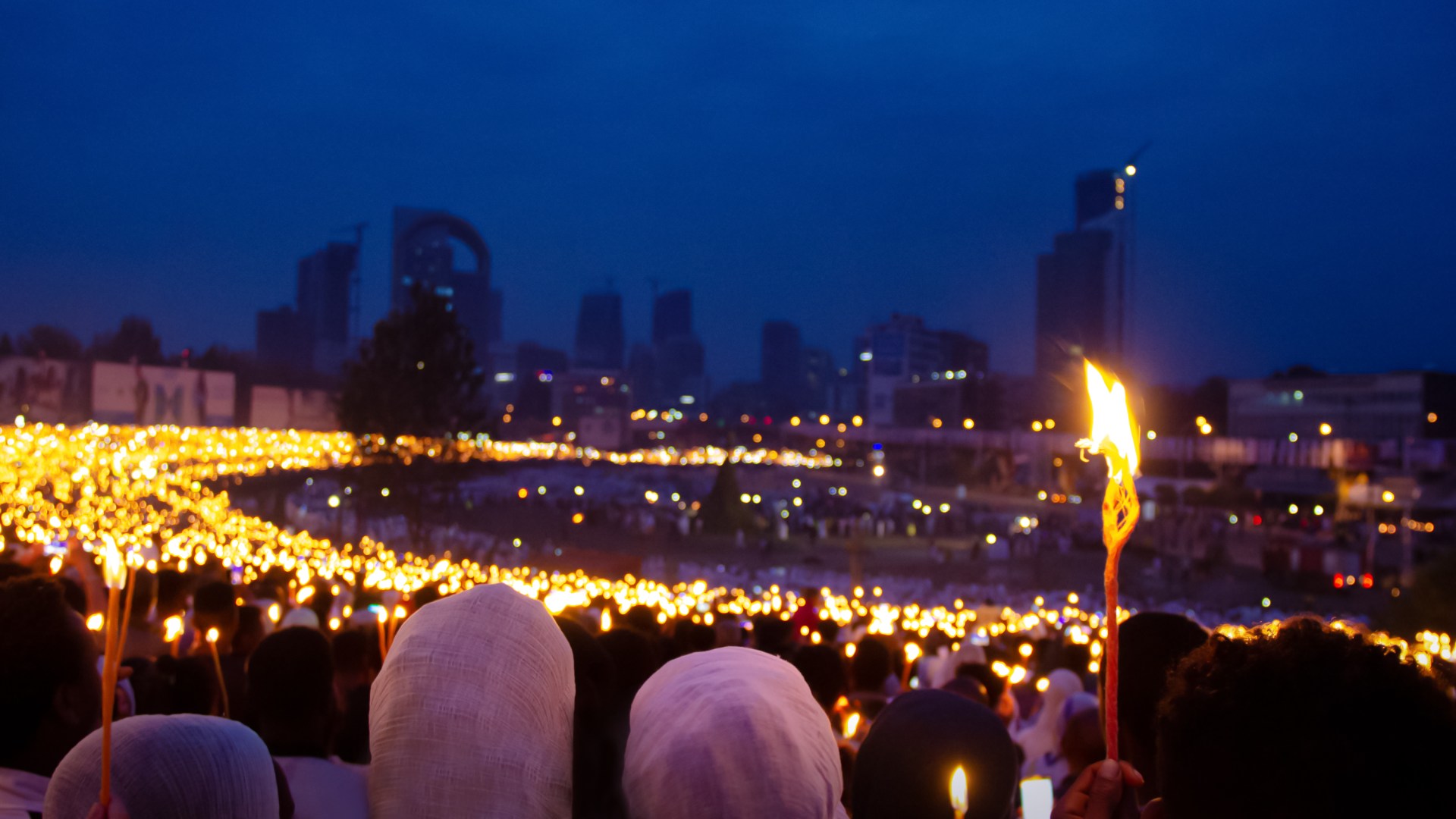
Chants for peace interrupted last month's Ethiopian Orthodox celebration of Meskel in Addis Ababa.

Chants for peace interrupted last month's Ethiopian Orthodox celebration of Meskel in Addis Ababa.

Christianity Today November 4, 2019
Jack Bryan

Last month, Abiy Ahmed won the Nobel Peace Prize for his “efforts to achieve peace and reconciliation” as prime minister of Ethiopia. Today, he announced that the unusual unrest and ethnic violence which also marked last month had killed nearly 90 of his citizens.

A reformer and a reconciler, the 43-year-old head of state has made unprecedented changes in just 18 months in office, including: ending a longstanding border war with neighboring Eritrea; appointing women to half his cabinet posts; releasing thousands of political prisoners; and diffusing a tense situation with insubordinate military officers by doing push-ups.

“I see Abiy as an answer to prayer,” said Frew Tamrat, principal of Evangelical Theological College in Addis Ababa, the capital city. “He tries to live by biblical values. He is a preacher of peace, reconciliation, and forgiveness.”

Though he has a Muslim father and an Ethiopian Orthodox mother, Abiy [Ethiopians go by their given names] attends a “Pente” church whose denomination—Mulu Wongel (Full Gospel Believers)—belongs to the Evangelical Churches Fellowship of Ethiopia.

“His style of leadership relies a lot on a kind of positive mindset, word-of-faith-type Pentecostal charismatic religion,” said Meron Tekleberhan, a graduate of the Ethiopian Graduate School of Theology currently finishing her PhD at the University of Durham. “He considers that to be the source of his political philosophy.”

Abiy’s peacemaking has not been limited to the political sphere. In August 2018, he successfully reconciled two factions of the Ethiopian Orthodox Tewahedo Church, the largest religious group in Ethiopia.

The Tewahedo church comprises 40 percent of Ethiopia’s population and has more than 45 million followers, according to the World Christian Database. In 1991, Patriarch Abune Merkorios was exiled to the United States in the power transition between the Derg communist regime and the current state, leading to the creation of a so-called “exiled synod.”

Reconciliation between the two factions was unforeseen. According to Tewahedo tradition, a patriarch is only appointed once the previous patriarch has passed away, so there was no scenario for cooperation. Thanks to Abiy’s input, the estranged leaders of the two synods now work side by side, with believers able to worship together.

Similar to Nelson Mandela’s concept of ubuntu, Abiy often invokes the unity of medemer as his political motivation. The literal meaning in Amharic, Ethiopia’s official langugage, is “addition,” but the word can also be translated as “synergy” or ”togetherness.” A million-copy manifesto outlining his political philosophy and published under the same title was released in October.

Yet there are many who fear that the peace prize was premature. The Nobel committee itself acknowledged that “many challenges remain unresolved,” noting especially the vast amounts of people forced to flee their homes amid rising ethnic tensions. According to the Internal Displacement Monitoring Center, Ethiopia currently leads the world with 2.9 million people displaced by violence.

That number continues to rise as conflict grows. Today, Abiy announced that 86 people were killed last month and thousands more displaced in widespread civil unrest across the Oromia region.

“He may [eventually] deserve a Nobel prize, but not now,” said Meron. “It seems premature, overenthusiastic on the part of the committee, and a bit superficial.”

Tedla Woldeyohannes, an Ethiopian professor of philosophy at Harris-Stowe State University in St. Louis, Missouri, credits current political turmoil to Abiy’s “pastoral prime ministership.” In his view, the current deterioration in law and order is enabled by Abiy’s focus on an agenda of love, peace, and reconciliation.

“Expecting people to love one another and to live in peace with one another just because a leader of a country speaks about these topics is not practicable,” he argued in an op-ed for ECAD Forum. “A leader’s commitment to a country is to protect the safety and security of citizens, not to exercise patience toward criminals.”

Recent political conflicts have had religious consequences. Last month’s celebrations of Meskel—a festival commemorating the fourth-century finding of the true cross, according to Tewahedo tradition—reflected an urgent longing for elusive peace. This year, the proceedings in Addis Ababa were noticeably political. Half a million people chanted: “May there be peace, peace, peace for Ethiopia.”

Just a week before Meskel, tens of millions of people marched across the nation. It was the latest in a series of peaceful protests condemning rising violence towards Tewahedo churches throughout the country. Since Abiy’s ascension, more than 30 churches have been violently attacked, and more than half were razed to the ground. Approximately 45 clergy and church members have also been killed while defending their churches against mob attacks from ethno-nationalist groups.

The largest of these demonstrations took place in the city of Bahir Dar, 200 miles north of the capital. Wearing traditional white religious garments, protesters thronged the palm tree-lined avenues of the nation’s fifth-largest city carrying Ethiopian flags, the colorful umbrellas used in Tewahedo religious ceremonies, and signs and banners denouncing violence and expressing solidarity.

“Members of the Ethiopian Orthodox Church have been slaughtered,” said Seifu Alemayehu, a demonstration organizer, at a press conference in September, noting also the displacement of thousands more. “The government has been neglectful while this is happening.”

Recent violence appears to be politically motivated. In July, three churches were torched and three people killed in the southern region of Sidama amid protests demanding regional autonomy and ethnic self-administration.

With the coffee-growing region a focal point of an ongoing saga of widespread ethno-nationalism, Abiy authorized a referendum in Sidama this November to determine its status.

“The hostility towards Ethiopian Orthodox churches is deeply tied to ethnic identity politics in the country,” Tedla told CT.

The Tewahedo church is mostly concentrated in the northern ethnic regions of Amhara and Tigray, where it comprises 84 percent and 96 percent of the population, respectively. In contrast, in the Southern Nations, Nationalities, and Peoples’ Region (SNNPR) where Sidama is located, only 20 percent are Orthodox while the rest are overwhelmingly Protestants. [The July/August 2019 issue of CT reported how Sidama is the center of a missions movement among Ethiopian evangelicals.]

Thus, some see the protests as possessing an ethnic dimension. Some of the signs carried by protesters bore slogans such as “church and politics are not the same,” as well as messages accusing the government of inaction, demanding that those responsible be held accountable.

“Abiy is just one man,” said Meron. “As much as he tries to wring change by the force of his personality, a lot of what is happening is longstanding. These ruptures have existed for generations.”

Protesters also denounced efforts to divide the Tewahedo church along ethnic lines. Rising tensions within Ethiopia have not only brought challenges from mobs outside the church, but from within as well.

Recently, an Oromo nationalist faction within the Tewahedo church began agitating for the Orthodox to split along ethnic lines in a manner similar to the structure of the federal government, which is divided into nine zones delineated predominantly by ethnic group. Oromia is the largest of these zones, and the Oromo people are the largest ethnolinguistic group in Ethiopia, comprising approximately 34 percent of the population. The Holy Synod, the Ethiopian Orthodox Church’s highest council, condemned this divisiveness during emergency meetings.

Abiy’s medemer philosophy and vision for religious pluralism is visible among the protesters. Many Ethiopian Muslims and Protestants marched alongside Orthodox believers to condemn the violence. One banner, borne by members of a local mosque in Bahir Dar, showed a cross and crescent moon side by side above the message: “We are one.” Other signs bore messages of solidarity: “We stand together.”

“Sometimes people try to separate us by tribe, language, ethnicity, religion,” said Ephrem Samuel of the SIM-affiliated Kale Heywet church, who attended the protest in Bahir Dar. “But when we come together like this … it shows that we are one.”

But for many Ethiopians, vital unity is not the same as good policy. To justify his Nobel, Abiy must successfully address the nation’s many deeply rooted challenges.

“He has made a few good starts, but until the elections we are expecting in May, we will not know how well he has done,” said Meron.

“He may be the right leader at the wrong time.”

Jack Bryan is a freelance journalist based in Addis Ababa, Ethiopia.

Church Life

Cyborg Church: One Body, Many People

Science offers insight on how the church can be more than just loosely associated individuals.

Christianity Today November 4, 2019
Illustration by Rick Szuecs / Source image: Pearl / Lightstock

Recently I posted this on Facebook, “Answer with the first thing that comes to your mind, why do you go to church?” The vast majority of the answers were related to obtaining some kind of experience: closeness with God, worship, to be fed, to obtain knowledge. The far and away number one answer was “for community/fellowship.”

Yet I wonder whether what these experiences have in common, even the desire for community, is the focus on what the church gives me. Can that thing be relational yet ironically still individual?

While this Facebook post is not a scientific study, it made me wonder. Is the evangelical church in North America today truly the Body of Christ, or is it more a “loose association of the independently spiritual persons?” Do we ultimately attend as individuals searching for experiences to shore up our individual selves?

Of course, God works through the Holy Spirit to do amazing things in individual lives, but for some reason, as the New Testament writers remind us, he works through the church, the Body of Christ.

We come to church for many reasons, but we come to be formed as a congregation into the image and likeness of Christ—his Body on earth. The New Testament describes Christ’s representation as one but composed of many individuals (1 Cor. 12). How does God, through the Holy Spirit, enact this communal process, not for individuals, of being formed into Christ’s body?

We’re all cyborgs

We live in a world of new digital tools that are reshaping our lives. We carry around “smart phones” with all sorts of applications that enhance our daily lives in important ways. Apps remember phone numbers, access online information, guide us around town, inform us about the world, politics, stock markets, and sports events, provide the status of our bank accounts and credit cards, etc. Our mental capacities (intelligence) have been enhanced by the smart phones we tote around.

Philosophers of mind and cognitive psychologists call this cognitive extension. The concept posits that humans are able to enhance their normal human limitations by coupling themselves to tools, human artifacts and even other people. Another way to say this is we learn better, think better, and perform beyond ourselves when we incorporate items outside of ourselves. The processes of thinking are thought of as extending outside the person to include tools and interactions with others.

This might bring to mind the idea of Robocop or some other human cyborg that has mechanized items implanted into or attached to their body allowing them to do superhuman feats. It turns out humans are naturally wired to incorporate items outside their bodies and brains. This tendency to incorporate has led cognitive philosopher Andy Clark to refer to humans as natural-born cyborgs.

In fMRI studies, brain scans reveal that when an experienced carpenter uses a hammer, the brain maps the end of the hammer as if it is the end of the hand. The hammer is incorporated into the body allowing the carpenter to do something (drive a nail) as if doing it with the hand. For amputees who use prosthetics, similar studies show that the brain maps the prosthetic as the missing limb. In both examples, the brain has incorporated something extra-body into its functioning systems, and subsequently enhanced the person’s ability.

Back to our digital tools. Think how debilitating it is for us if our computer crashes or the battery dies on our phone. We have cognitively extended our memories and problem-solving capabilities into these devices. This ultimately means we don’t think and learn solely with our brains or bodies. We literally think (in better and more powerful ways) in connection with elements outside our bodies. We supersize our human capacities!

The fact that non-body tools and artifacts can become totally incorporated into our neural-cognitive systems is illustrated by Stelarc, a performance artist. He doesn’t paint pictures or sculpt, he performs something unusual and surprising. Stelarc created a mechanized robotic arm which he attached to one of his shoulders. The robotic arm was controlled by a series of sensors connected to muscles in his abdomen and thigh. By contracting these muscles in certain ways, Stelarc could move the arm, pick up things, and even write and draw. What was most astounding, however, was that after a significant amount of time using the robotic arm, Stelarc discovered that he didn’t have to “think” about moving it. He moved his robotic arm just like we do our natural arms. Stelarc is a dramatic illustration of how easily humans become cyborgs.

Extending into the thinking of one another

Cognitive extension has moved from research on how humans incorporate tools to how they incorporate the capacities of other persons through social interactions to extend their limitations. Have you ever known a couple where one partner has a poor memory for names while the other’s memory is really sharp? If so, maybe you’ve noticed the one with the better memory enhancing the memory of the other by quietly slipping the names of people to them at a party. Or consider a brainstorming session where a group of people come together to solve a problem. Over time, a solution emerges and yet no one can be certain where it came from. In the first scenario, memory is enhanced, in the second problem-solving is enhanced.

One really remarkable example of this was observed in deaf children in Nicaragua. Michael Siegal, in a landmark study, reported that, over the course of three decades, deaf children developed their own sign language. Linguistic experts examined this spontaneously created communication system and determined that this “made up” form of sign language contained all the important elements of a genuine language. This is an example of social extension because the sign language would not have developed had it not been for students interacting with one another in ways that extended their system of communication.

Culture also passes on the products of thinking and the creativity of persons not currently present. Thus, systems of thought like the law may be considered to be another form of social extension. No lawyer can know all the laws, but lawyers know where to go to look up past cases, verdicts, precedents and exceptions. The law is the aggregate of the cognitive contributions of countless others put into written form. By using, or incorporating the law, any lawyer can enhance his/her natural limits of knowledge allowing him or her to practice more efficiently. Philosophers of mind call this form of cognitive extension a “mental institution.”

Supersizing the Christian life

We can begin to understand how we might engage with the church in such a way that our normal human limitations are enhanced, forming us into a true Body of Christ, and in the process “supersize” our Christian life.

Take prayer for example. There is something powerful about praying as a group or congregation, perhaps because when we do our spirituality is enhanced. When we hear others pray we may be alerted to concerns which might not have occurred to us, sensitizing us to issues outside of ourselves. Or we may experience others praying with great faith when our faith is somewhat shaky, and it buoys us up to pray in faith as well. As a form of social cognitive extension, group prayer enhances the praying by creating a larger mental network from which prayers emerge.

Or think about the practice of reciting liturgy together. The liturgy is not our words, but that is exactly what makes it most powerful. We are enhanced as over time we make these ancient or contemporary words our own. Once again, we are moved beyond ourselves to larger concerns. Our thinking is momentarily incorporated into the thoughts of other Christians.

Think also of doctrine and theology. While many Christians downplay these in favor of experiential spirituality, doctrine and theology are “mental institutions” similar to the law. When we face an issue that perplexes us, we can certainly pray and search Scripture, but we will also be greatly enhanced if we consult what tradition has had to say to us through doctrine and theology. Just like a lawyer can’t know all the law, we can’t know all of Christian theology, and our Christian life is enhanced as we consult it.

Maximizing extension

It is important to note that we don’t necessarily automatically incorporate. A skilled carpenter’s brain maps the hammer differently than a novice because she is regularly using it. By interactive frequent use (involving feedback), the hammer becomes incorporated into her action systems. For humans to experience the enhancement of extension with others means a) we have to be readily available to one another, b) we need to spend considerable time together, and c) we need to be able to receive feedback from one another. This is hard to make happen in an individualistic understanding of church where a “regular attender” is someone who reports coming to church one hour per month.

Secondly, we should note that not all cognitive extension is healthy. Coupling with the Body of Christ is good but coupling with a crime syndicate is problematic. What makes the extension of the Body of Christ virtuous is its embeddedness in the narrative of Christ and the Kingdom of God (Matt 5-7). This takes time as individuals couple to one another over word, sacrament and service.

Cognitive extension then changes our understanding of community from a thing we get to who we are as a people—a network of extension, not a loosely associated group of individuals. This enhancement of our Christian lives through extension to what is outside of ourselves has been going on for a long time.

But it is not guaranteed. We must continue to resist the cultural value of individualism and strive to be the true Body of Christ, where all parts are respected, needed and valued (1 Cor. 12:12-31). The church can be a means of grace made possible through the Holy Spirit. This is the same Spirit that creates humans as natural-born cyborgs, inhabits the Body into which we extend ourselves, redeems us from our rebellious ways, and sanctifies us. We were not designed to do Christian life as individuals in a community. When we try, we are limited. But when we couple to one another, extending Christian life beyond our individuality, we become the true Body of Christ. Thanks be to God.

Warren S. Brown is a psychology professor at Fuller Seminary and director of the Lee Travis Research Institute. Brad D. Strawn is a psychology professor at Fuller Seminary and a licensed psychologist. Together they authored The Physical Nature of Christian Life: Neuroscience, Psychology, & the Church. Brad and Warren are the authors of a forthcoming book from IVP on extended cognition and the church.

Books

Want to Expand Your Global Vision? Read These Books.

8 reading recommendations for a ministry-focused life.

Christianity Today November 4, 2019

Leaders in missions, missiology, evangelism, and global ministry reveal the titles that shaped their vision and equipped them to better proclaim the gospel.

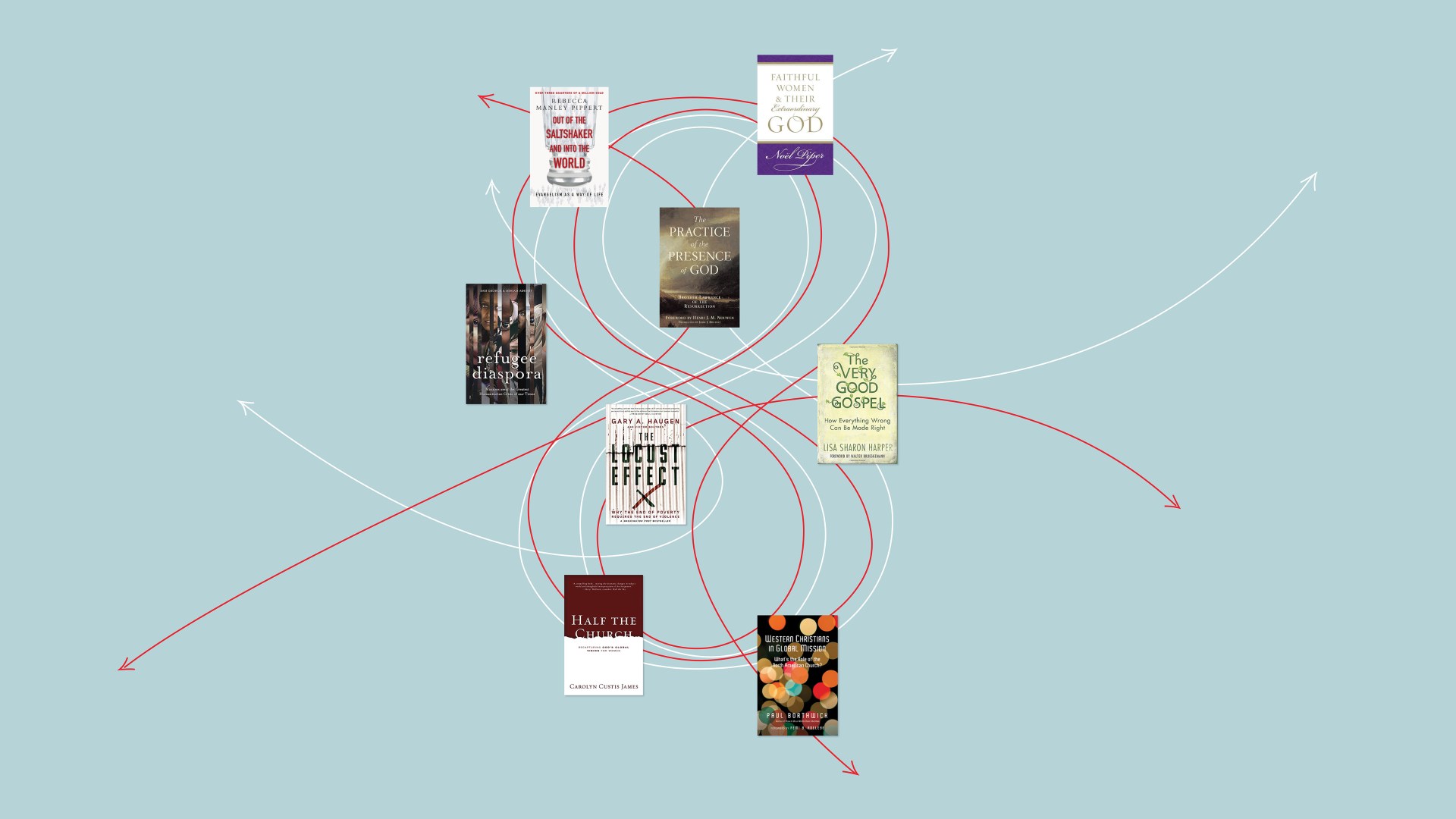
Out of the Salt Shaker & Into the World: Evangelism as a Way of Life by Rebecca Manley Pippert (InterVarsity Press)

Sarah Breuel
Sarah Breuel

I first came across Out of the Salt Shaker & Into the World as a student in Brazil. It had a huge impact on me because it addressed my biggest obstacle when sharing Jesus with my friends: fear of rejection. Pippert encourages us to be authentic with our friends and dependent on Jesus. Little did I know how this was going to be crucial to the calling God had for my life. As I now travel across Europe training students in evangelism, fear of rejection is still the number one obstacle for students, just as it had been for me. This book is a must-read for any Christian who desires to be salt and light in their context. It teaches us how to partner with God in what he is doing in the lives around us, equips readers with communication skills to have natural conversations, and calls us to depend on the Holy Spirit in his work of salvation.

—Sarah Breuel serves as director of Revive Europe, evangelism training coordinator for IFES Europe, and as a member of the Lausanne Movement’s board of directors.

Faithful Women and Their Extraordinary God by Noël Piper (Crossway)

Michelle Atwell
Michelle Atwell

Faithful Women and Their Extraordinary God offers the church two needed narratives. The first is a theology of suffering and risk. Christians are a called and sent people. This book helps us understand that suffering is part of our story. The second narrative is the gifting and calling of women in God’s mission. The women featured in this book were powerfully used by God to spread his gospel and build his church. They taught, they shepherded, they led, they served, and they blazed new and difficult trails.

This book challenged me to consider what sacrifice, risk, and suffering look like when making a bold stand for Jesus. Each of these women made huge sacrifices in being obedient to God’s call. They persevered despite unimaginable suffering and trauma. They did not lose their faith; rather, they clung all the more tightly to their Lord. This book teaches us what it means to be wholly dependent on God and to remain faithful to him, no matter the circumstances.

—Michelle Atwell is the U.S. director of SEND International.

The Locust Effect: Why the End of Poverty Requires the End of Violence by Gary Haugen and Victor Boutros (Oxford University Press)

Elizabeth Uriyo
Elizabeth Uriyo

When I started reading The Locust Effect, I was immediately heartbroken. It begins with the story of “Yuri,” an 8-year-old Peruvian girl who was raped and murdered. Yuri’s family had no financial means to bring her killer, the son of a wealthy family, to justice. The police were bought off. There was never even a trial. Like Yuri, millions of the world’s poor are the silent victims of rape, murder, forced labor, and broken justice systems. This book challenged me to see the ugly underside of poverty, especially as my colleagues and I at Compassion International pursue our mission of releasing children from poverty in Jesus’ name.

The church and many other organizations are behind life-changing efforts to alleviate poverty by addressing physical, social, educational, and spiritual needs. Countless lives are being saved and improved through these efforts, but much of this work is undermined when the global poor are subjected to such violence. For me, it’s all about urgency. This book is a wake-up call for the church to rise up and take a more prominent role in protecting the vulnerable poor.

—Elizabeth Uriyo serves as the senior vice president of Compassion International’s Global Leadership Office.

Refugee Diaspora: Missions amid the Greatest Humanitarian Crisis of our Times by Sam George and Miriam Adeney (William Carey Publishing)

Jamie N. Sanchez
Jamie N. Sanchez

This book features real-life accounts of refugees who encountered Jesus through the intentional hospitality and care of the global church. It challenged me to consider how a well-developed theology of hospitality can transform lives.

Refugee Diaspora looks at the current refugee crisis through the lens of opportunity; namely, opportunities to be involved in caring for displaced persons in one’s community. It introduces us to real people, not just “refugees (which has become a broad category devoid of any personal characteristics). The stories transport the reader to different regions of the world where harrowing journeys are met with miraculous moments that transform lives.

“Learning the art of biblical hospitality is a lifelong discipleship matter,” write the authors. “It requires a longing to reflect God’s heart for the marginalized in our world.” This book helps readers understand how God is moving in the midst of the current refugee crisis and how we can be involved in that movement.

—Jamie N. Sanchez is assistant professor and director of the PhD program in Intercultural Studies at Biola University.

The Very Good Gospel: How Everything Wrong Can Be Made Right by Lisa Sharon Harper (WaterBrook)

Chi Chi Owku
Chi Chi Owku

This quote in The Very Good Gospel stopped me in my tracks: “If one’s gospel falls mute when facing people who need good news the most—the impoverished, the oppressed and the broken—then it’s no gospel at all.” It caused me to take a deep, hard look at my life and ask myself: Is the Good News of the gospel evident in my life and to those around me, specifically the poor, broken, and oppressed?

The book’s central theme of shalom has changed the way I engage in the work of justice. Shalom calls us beyond just fixing the immediate situation; shalom invites us to ask ourselves, What would it take for everyone to flourish? It’s easy to get caught up in a savior complex when you’re engaged in missions or justice work, but shalom requires us to remember that we are all connected—that when my sister is suffering, I too am suffering. The Very Good Gospel invites us into the redemptive work of God seeking to restore our broken relationship with God, humanity, and the earth.

—Chi Chi Okwu is a senior church advisor for World Vision.

Half the Church: Recapturing God’s Global Vision for Women by Carolyn Custis James (Zondervan)

Wendy Wilson
Wendy Wilson

As I have equipped women in the U.S. and abroad over 30 years, I felt concern about how our theological conversations didn’t seem to adequately address how Creation and redemption engaged women in their full dignity as kingdom servants, nor how the Fall and human brokenness contributed to women’s extensive suffering in many cultures around the world. Half the Church was an answer to prayer for me. Through exploration rather than debate, James offers thoughtful biblical work and fresh language that lends breadth and depth to our understanding and practice regarding women and men as God’s “blessed alliance” in the world.

As I’ve led peer-learning discussions with men and women from across the evangelical spectrum, this book has been a launching point for productive, respectful, transforming conversation. We can process together—agreeing and disagreeing as we go—and all move closer to being the people God desires us to be. Redeemed men and women are both freed to be the kingdom-people God intends, bringing that Good News into the cultures we serve so that his will is done “on earth as it is in heaven.” Half the Church gives women a greater sense of our identity as God’s daughters, and our calling as with the men in our lives, so that we all live out Jesus’ call to follow him.

—Wendy Wilson is Missio Nexus’s mission advisor for the development of women and founder of Women’s Development Track.

The Practice of the Presence of God by Brother Lawrence

Emelita Goddard
Emelita Goddard

When I got this little book as a postgraduate student in Thailand in 1986, I was inspired by the life of Brother Lawrence and how he practiced the presence of God. It made me realize that I could talk to Jesus in simple ways, in heart-to-heart conversation with him. This book remains my key inspiration. When I spend time with the people I work with, Jesus is with me. He is always my companion.

At World Hope, we work among the most discriminated against sections of society. I work closely among the rural poor communities of Cambodia, Laos, Myanmar, Thailand, Vietnam, Indonesia, Nepal, and Bangladesh. When I go to the mountains among an ethnic-minority community, Jesus is with me. When I listen to the hurts and pain of people discriminated against by society, Jesus is with me. I can sense the love and compassion of God when I spend time in these communities, meeting survivors of human trafficking, gender-based violence and sexual exploitation, and other marginalized populations. Brother Lawrence's prayer, “Lord, I cannot do this unless Thou enablest me” has also been true for me.

I recommend this book to all Christians, and especially to those who’ve been in ministry for many years and feel tired or burnt out. This little book is like a match to light the candle we need to carry in our journey with Jesus.

—Emelita Goddard is director of community development and agriculture for World Hope International.

Western Christians in Global Mission by Paul Borthwick (InterVarsity Press)

Ruth Hubbard
Ruth Hubbard

I was introduced to Western Christians in Global Mission as a student in the School of Intercultural Studies at Fuller Seminary and while serving as an executive with Wycliffe Bible Translators (USA). One theme throughout the text is Borthwick’s love for the church—both the North American church and the majority world church—a love that is too great to let either get a free pass when it comes to the issues and challenges each brings. Borthwick helps realign our Western thinking about ministry partnerships to a more helpful and accurate model.

Today, I lead Urbana, a conference with the vision of seeing this and every student generation give their whole lives to God’s global mission. One question I’ve been asking with renewed passion is how we can more effectively model and call people to humility in serving cross-culturally. Borthwick shines a glaring light on a reality that makes me uncomfortable in a good way. He states that, too often, we who serve on cross-cultural short-term missions practice self-congratulatory servanthood. Ouch! Borthwick’s litmus test for true servanthood is serving people in a way that they interpret as servanthood.

—Ruth Hubbard serves as director of Urbana and as a vice president of InterVarsity Christian Fellowship.

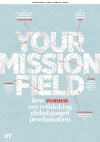
This article is part of CT’s special issue on how women are rethinking global gospel proclamation. Download a free pdf of the issue at moreCT.com/YourMissionField.

Armenian Orthodox Leader: ‘We May Forgive One Day … But We Will Never Forget.’

Aram I, Catholicos of the Great House of Cilicia, on what comes next after US House recognizes Armenians’ “legitimate claim” of genocide.

Christianity Today November 1, 2019
Associated Press

The Armenian Orthodox Church is one of the oldest Christian churches in the world. According to tradition, Armenia was evangelized by Jesus’ disciples Bartholomew and Thaddeus. In 301 A.D., it became the first nation to adopt Christianity as its official religion.

An Oriental Orthodox church, the Armenians are in communion with the Coptic, Syriac, Ethiopian, and Malankara (India) churches. They differ with Catholics and Protestants over the 451 A.D. Council of Chalcedon decision to recognize Christ as one person with two natures: human and divine. Oriental Orthodox Christians declare Christ has one nature, both human and divine.

The Armenian Church is governed by two patriarchs, entitled Catholicos. One, Karekin II, is Supreme Patriarch for all Armenians and sits in Armenia.

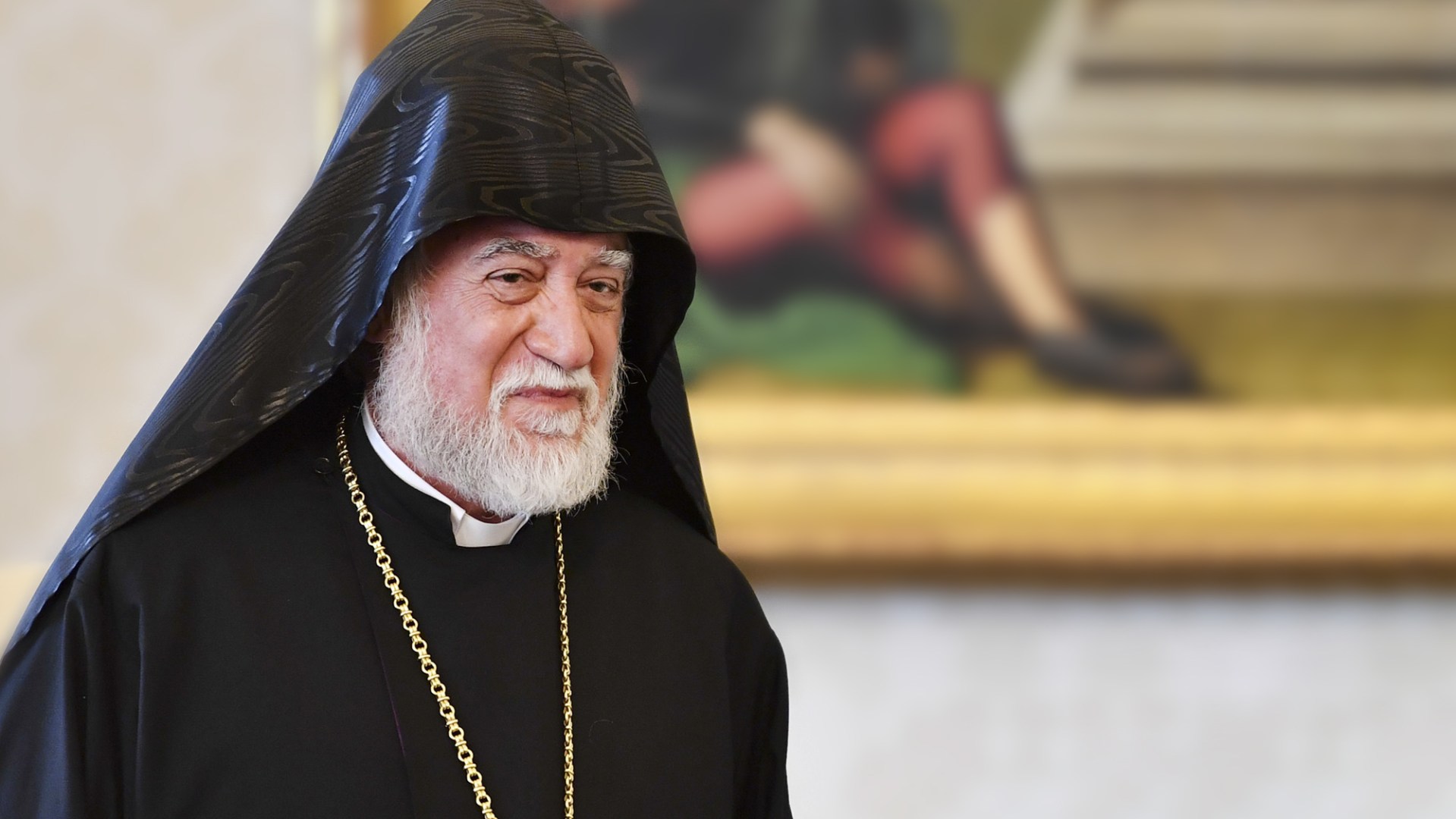
CT interviewed Aram I, Catholicos of the Great House of Cilicia, which was once located in modern-day Turkey but since the Armenian Genocide relocated to Antelias, Lebanon, five miles north of Beirut. His jurisdiction includes the Armenians of the Middle East, Europe, and North and South America.

Aram I discussed the genocide, the US House of Representatives resolution this week to finally recognize it, and Armenians’ desired response from Turkey.

How do you respond to the US resolution recognizing the Armenian Genocide?

Yesterday I made a statement welcoming warmly this action taken. I believe it is very much in line with the firm commitment of the United States of America in respect to human rights. The rights of the Armenian people are being violated. After more than 100 years, we tried to bring the attention of the international community that the Armenian Genocide is a fact of history.

Whether we call it genocide or massacre or deportation, the intention is important. The intention of the Ottoman Turkish government at the time was to destroy [and] eliminate the Armenian people for political reasons. The presence of Armenian people in the western part of present-day Turkey and [historic] Cilicia was an obstacle to their project of pan-Turanism.

This is our legitimate claim: that the international community make a visible, tangible manifestation of their concern in respect to human rights, and recognize the Armenian Genocide. It was carefully planned and systematically executed by the government at the time.

Our people all around the world warmly greeted this action of the House of Representatives. It is our firm expectation that the Senate will reaffirm their decision.

To what degree are you responsible for the Armenian genocide file in your church?

I am not the only person, but I am on the forefront—a dedicated spiritual soldier of this combat, for the restoration of our human rights. This center is a victim of the genocide. My predecessor was in Cilicia, in Sis, present-day Kozan [in Turkey’s Adana province]. The Holy See of Cilicia [now in Lebanon] was there for centuries. With his bishops, he was forced to leave.

The very existence of the diaspora is due to the genocide. It is an imposed reality. You saw the chapel, the relics of the genocide: Did they come from heaven? We didn’t decide to come here; the circumstances forced us.

The pursuit of our rights has been one of the top priorities in our agenda. The human rights issues are part of the mission of any church. We want to help our people continue this struggle.

For the first time, we took a legal action against Turkey. We filed a case demanding the return of our Holy See in Cilicia. Let’s see what will happen. What we are doing is the restoration of historical truth. Turkey has through illegal ways questioned our claim, but the historical reality and evidence is there. No one can deny that.

If Turkey really wants to establish contacts with the Armenian people and open a narrow window of opportunity to turn that page, if they have a good will, this case is their chance. So far, their reaction is negative.

What would the restoration of your legitimate rights include? How is the injustice of 100 years made correct today?

We may get different answers to that question. We must make a distinction between rhetoric and concrete reality. We should not be emotional.

The first step could be the return of the Holy See of Cilicia and the churches, monasteries, and community properties. We can limit our expectations to within the church. In politics, we have to be down to earth. Any package deal might not lead us in the right direction. We have to move step by step.

If Turkey shows “a good will,” what are the different visions of a second step?

I don’t want to anticipate anything. Nobody knows what will happen. Some of these churches have been converted into restaurants or mosques. In the last 100 years, some have been totally destroyed, some partially destroyed. But the Holy See of Cilicia can be a first step, as it has a profound symbolism—spiritual, national, and to a certain extent political. But it should not be mixed up with politics. For us, the church is the people. It is not just a piece of land.

The creation of good will is very important in international relations. But the American resolution comes at a moment of profound “bad will” between the US and Turkey. Does the resolution threaten to damage the good will necessary to restore Armenian rights, since only Turkey can grant them?

Let me answer your question in a different way. America acts according to two principles: geopolitical interests, and human rights values. Sometimes—very often—you see contradiction between the two. I understand that reconciling them is not easy.

The United States has established relations with Turkey. This is reality. But the role of the church is always to remind and challenge the state authority to give serious consideration to human rights values—to go beyond the narrow geopolitical interests of a country.

How does the church’s spiritual role for forgiveness and reconciliation apply in the issue between Armenians and the Turks?

Forgiveness is an essential element of our Christian faith. But forgiveness comes when there is confession. The Armenian church said, ‘We may forgive one day when justice is done, but we will never forget.’

The church has a prophetic role to play. It must take a clear stand. I don’t believe in easy forgiveness, or easy reconciliation. Easy forgiveness may lead us in a wrong direction. The church must have the guts to say “no”; not always “yes” [and] not always “we forgive.”

The church’s role is one of reconciliation, but it is the result of a long process that implies accepting the truth and practicing justice. There is no real, lasting, permanent peace without justice—without accepting the truth.

The Turkish denial for 100 years of the genocide committed by their forefathers created an image of “enemy” with the Armenian people. We have a problem, and that problem is solved by the people and state accepting there was a crime committed. This is our legitimate claim.

In every “battle,” there are often others working behind the scenes to facilitate an eventual peace, even while the fight is going on. Is the Armenian church also involved in spiritual outreach to soften the hearts of the Turkish people or government, as the legal battle for rights is being waged?

The atmosphere in Turkey needs to be changed, and I see certain emerging positive signs. Some intellectuals have started referring to the genocides, using that word. And more than a million Turks have started saying openly that they have Armenian origins, and were forcefully converted to Islam. This is a new reality. They are born as Turks, but have identified their roots as Armenians. We have not yet discussed this issue: Muslim Armenians? This is a new phenomenon.

I hope these signs increase day-by-day, and the people will come to realize that something very bad has happened against the Armenians. Erdogan, from time to time, refers to that. I hope he goes further, and says it was a crime, carefully planned and executed by the government at the time.

On the level of states, reconciliation is easier. They tried to open borders and start diplomatic and economic relations without mentioning genocide. But on the level of nations [peoples], I think it is very difficult.

The genocide is deeply rooted in our common consciousness. You cannot uproot it. You cannot solve this problem around the table, by coming to dialogue. The atmosphere must change.

Five years ago, I invited the first Turkish intellectual who had written a book recognizing the Armenian Genocide to come here. I told him, “My predecessors will anathematize me if they see from heaven that a Turk has come here. But they will see you in a different way.”

My telephone rang: It was my father, who heard I had invited a Turk to come here. When he gets angry, he starts talking in Turkish, because he was born in Turkey. He started criticizing Turkey with harsh words, and the author was sitting next to me.

“How have you accepted a Turk here in our church?” he said.

I said to the author, “I’m sorry for this embarrassing situation.”

He said, “No, this is the old generation, how they react.”

I told the author, “The new generation in Turkey should change this atmosphere of animosity, by taking certain concrete steps. And one of these steps could be the return of Armenian churches and monasteries.”

This does not have to be a political action. It can be an act of good will in accordance with international law and human rights.

The European Court of Human Rights has said that churches and monasteries need to be returned to their legitimate owners. We’re expecting this. Let’s see.

News

Trump Appoints Paula White to Oversee Faith Office

Trump’s longtime prayer partner is back as a White House senior advisor.

Christianity Today Updated February 10, 2025
Joe Raedle / Getty Images

Key Updates

February 10, 2025

During his second term, President Donald Trump again appointed his longtime personal spiritual advisor and friend Paula White-Cain to oversee faith partnerships.

Trump on Friday launched his White House Faith Office, resembling the White House Faith and Opportunity Initiative he established in 2018. Like similar initiatives from George W. Bush, Barack Obama, and Joe Biden, the office aims to help churches and faith-based nonprofits compete for federal funding and work together for community building.

On Thursday, following the National Prayer Breakfast, Trump had signed another executive order on eradicating anti-Christian bias, tapping Attorney General Pam Bondi to prosecute “anti-Christian violence and vandalism” in the US. The new White House Faith Office lists a broad range of issues for faith leaders to coordinate with the administration on, including issues of religious liberty and “anti-Semitic, anti-Christian, and additional forms of anti-religious bias.”

While some have taken issue with White-Cain’s involvement—opposing her prosperity preaching or her position as a female pastor—several of the president’s evangelical faith advisors have happily accepted invitations to pray alongside her or even endorse her work. She had continued to rally faith leaders for Trump in between his two terms in office, forming the National Faith Advisory Board in 2021 to reconvene his faith advisors.

Jennifer S. Korn, who worked alongside White-Cain on the board, returns as deputy assistant to the president and faith director of the new faith office. Jackson Lane, who worked on faith outreach for the Trump campaign, has also been named deputy director of faith engagement.

November 1, 2019

President Donald Trump’s go-to spiritual adviser and longtime prayer partner, Paula White, has been named to an official White House position in the Office of Public Liaison, the New York Times reported Thursday and Religion News Service confirmed on Friday.

White, a Florida televangelist often associated with the prosperity gospel, joins the administration’s outreach efforts through the Faith and Opportunity Initiative, the Times wrote. Formed last year through an executive order, the initiative set out to deepen faith-based partnerships, particularly around poverty relief, and to protect religious liberty on the federal level.

White, who met Trump 17 years ago through her televised sermons, was among the 25 evangelical advisers who joined his campaign in 2016. She visits with the president regularly to pray and discuss faith and politics. This year, she appeared with the president during several official events, including his religious liberty address to the UN and a White House gathering of persecuted religious minorities from around the world.

White has not made an announcement or confirmed the appointment on social media. She stepped down from her church in Orlando in May.

Before praying at Trump’s inauguration in 2017, she told CT there was a “possibility” she would assume an official White House role. After more than two years of prayer breakfasts, National Day of Prayer ceremonies, and Oval Office prayer meetings, the controversial but popular preacher has reportedly done just that.

The Faith and Opportunity Initiative was announced in May 2018, the first move to formalizing the Trump administration’s faith efforts. President George W. Bush established the first faith-based initiatives office in 2001, and Barack Obama renamed and reconfigured it as the White House Office of Faith-Based and Neighborhood Partnerships in 2009. In his first month as president, Obama appointed Pentecostal minister Joshua DuBois, then 26, to oversee relationships with clergy and faith groups.

Melissa Rogers, with Obama’s faith outreach office, shared her advice for White with RNS: “Form partnerships with faith-based and humanitarian organizations to serve people in need. Do so by partnering with organizations that reflect diverse faiths and beliefs. And do this work in a way that is consistent with the Constitution.”

In contrast to the formal faith advisory council established by his predecessor, Trump’s religious ties have remained unofficial and ad hoc. Evangelicals like Johnnie Moore have said there is an “open door” for them at the White House.

As of Friday morning, none of the pastors who gathered with White to pray for the president earlier this week had publicly acknowledged the New York Times report naming her to an official White House post.

White considers herself the bridge-builder introducing Trump to evangelical leaders, as she described her unofficial role in a 2017 interview with CT. Her relationship with the president has also been controversial among evangelicals who theologically oppose what they deem the “name it and claim it” approach of with the Word of Faith movement.

Moore commended the role White has played so far. “She has also been a very effective liaison to many types of Christians and deserves a great deal of credit for her role in advancing a bi-partisan policy agenda,” he said in an email to CT Friday afternoon, listing her involvement in efforts for religious liberty protections, pro-life policies, criminal justice reform, and more.

He noted, “Total theological congruence is not a prerequisite for cooperation in advancing the common good.”

Just last week, prior to the news of her official role, professors Leah Payne and Aaron Griffith wrote for CT, “For those who do not share her theological disposition, it is wishful thinking to pretend that she is not a major force within American evangelicalism. It is now Paula White-Cain’s world. The question is how we should live in it.”

White’s most recent book drew endorsements from several fellow Trump advisers, including Southern Baptist like Robert Jeffress, Jack Graham, and Jerry Falwell Jr., which came as a surprise to some Christians who see White as doctrinally divergent from mainstream evangelicalism.

“You’d be hard-pressed to see someone like Jerry Falwell and Billy Graham cozying up to Paula White. The lines are being blurred with their sons,” Michael Horton, theology professor at Westminster Seminary, told CT in 2017. “I think that people like White and [Joel] Osteen are able to tone down the heretical aspects of the Word of Faith teaching, but make no mistake: the toxic doctrines are there.”
Critics also raise concerns over White’s financial background since she was among the televangelists investigated by Senator Chuck Grassley over a decade ago. The inquiry into possible misuse of ministry donations, White has repeatedly stated, never found any wrongdoing. But officials also never obtained sufficient documentation to complete their probe and instead handed over the accountability effort to the Evangelical Council for Financial Accountability.

White left her pulpit, a mostly African American congregation in Orlando, in May—stepping back to assume an oversight role while she continues to grow Paula White Ministries, with talk of plans to plant churches and establish a university. Some had reported that her Trump ties had hurt her reputation among the black community.

White has a daily program on the Christian television network Daystar, Paula Today, where she appears alongside her husband, Journey singer Jonathan Cain. (Cain is the 53-year-old’s third husband; her 2007 divorce from pastor Randy White has become a part of her testimony.)

As the news of her new role broke, White tweeted, “Keep your dream away from the doubters, haters & complainers! Don’t let anything destroy what you can do!” and then, “God will put you at the right place on the right day to meet the right person!,” the latest in a string of exclamation-filled affirmations that fill her feed almost hourly.

News

Will US Genocide Resolution Satisfy Armenian Christians?

The Middle East diaspora appreciates the House’s recognition at last. But what they really want is repentance.

The Armenian Genocide memorial complex in Yerevan, Armenia.

The Armenian Genocide memorial complex in Yerevan, Armenia.

Christianity Today November 1, 2019
Maja Hitij / Staff / Getty

Armenian Americans breathed a sigh of relief this week when the US House of Representatives overwhelmingly approved Resolution 296 to recognize the Armenian Genocide.

Around 1.5 million Armenians were killed between 1915 and 1923, as the defeated Ottoman Empire transitioned into the modern Republic of Turkey. Less than half a million survived.

The resolution also mentions the Greek, Assyrian, Chaldean, Syriac, Aramean, Maronite, and other Christian victims who lived in Asia Minor and other Ottoman provinces at the time.

If the House legislation is passed in the Senate and signed by President Donald Trump, the United States will be committed to commemorate the genocide, to reject its denial, and to educate people about it in order to prevent similar atrocities in the future.

But if Armenian Americans are finally pleased, the diaspora in the Middle East—much closer to the Turks and the lands taken from their ancestors—demurs.

“It certainly heals some small aspect of our century-long national wound,” said Paul Haidostian, president of the evangelical Haigazian University—the only Armenian university in the diaspora—in Beirut, Lebanon.

“There is some sense of relief. But it should not be exaggerated.”

Nor should it be underestimated, he told CT. All Armenians will welcome the “historic” resolution, though it comes “very late.” But few expect the US Senate will act similarly, as the term genocide has long been rejected by the Turks. “Because it involves Turkey, there is politics involved,” said Haidostian.

“But it is important to call things by name.”

The 405–11 tally reversed what had long been an uphill battle in American politics to even present recognition of the Armenian genocide for a vote.

Representative Adam Schiff, a Democrat from California and co-sponsor of the bill, worked 19 years on its behalf. Pressure against the resolution from Turkey, a NATO ally of the US, quashed previous efforts in 2000 under Bill Clinton, in 2007 under George W. Bush, and in 2010 under Barack Obama.

During the Bush administration, nearly 70 percent of air supplies to the US military in Iraq went through Turkey’s Incerlik airbase.

According to Open Secrets, Turkey spent $13.4 million to lobby against the bill in 2017–18.

“We cannot pick and choose which crimes against humanity are convenient to speak about,” said Schiff, as reported by Reuters. “We cannot be cowed into silence by a foreign power.”

If pro-Turkey politics played a role in preventing a US resolution on the Armenian Genocide in past decades, a new wave of anti-Turkey politics paved the way this past week.

Turkey’s incursion into Syria offended much of the US Congress. Following the genocide vote, the House also passed a sanctions bill against Turkey.

“While emotions run high,” the Turkish American National Steering Committee wrote in an email, House leaders are “manipulating the circumstances to introduce H.Res.296 for a floor vote soon.”

But parallels between the Armenians and present-day Kurds were obvious to many.

“Thank you, Congress, for voting overwhelmingly to officially recognize and reprimand the genocide of the Ottoman Empire,” tweeted Bassam Ishak, president of the Syriac National Council. “Let’s try to stop the new demographic change underway by Turkey in northern Syria.”

Similar was Toufic Baaklini, president of In Defense of Christians (IDC), who stated his own family had to flee when 250,000 Maronites were starved to death in Lebanon. IDC lobbied on behalf of the resolution, and in an op-ed before the vote panned the “massive misguided investment of American moral capital” in the US relationship with Turkey.

“By passing this resolution today, America has said clearly that we side with the victims of atrocities and will no longer ignore the Turk’s history of ethnic cleansing,” stated Baaklini.

Representative Anna Eschoo, a Democrat from California of Armenian descent, highlighted the religious aspect of the genocide.

“What all of the persecuted had in common was that they were Christians,” she tweeted. “This resolution not only honors and commemorates my ancestors who perished but all those who were lost in the first genocide of the 20th century.”

But another Christian, Representative Paul Gosar, interpreted the resolution differently. The Republican from Arizona voted “present” at the roll call, labeling it an attack on President Donald Trump.

He stated it was “war propaganda” to compare atrocities against the Armenians with what is happening with the Turks and Kurds today.

“As a Christian I stand with the Armenians, but I will not vote for a lie,” he stated.

The pattern of such discourse is upsetting to fellow Armenians, said Hrayr Jebejian, general secretary of the Bible Society in the Gulf. About 5,000 Armenians currently work in the United Arab Emirates, where they have two churches. Another 3,000 are in Kuwait, where they have a church and a school.

“The genocide is sacred for us,” he told CT. “But knowing American politics, it always looks to the Armenian issue as a bargaining chip.”

Jebejian still has pictures of the two dozen members of his family who were killed in Turkey. He also wonders if the House initiative will go any further. But he is grateful for the international attention it brings.

“It is better late than never,” he said. “But if it was condemned in those days, it would have prevented the many genocides that followed since.”

The Jewish Anti-Defamation League (ADL) endorsed the US resolution.

“Remembering and educating about any genocide—Armenian, the Holocaust, Bosnia, Rwanda, and others—is a necessary tool to prevent future tragedies,” stated ADL president Jonathan Greenblatt, “and [it] begins with recognition.”

But recognition alone leaves much unaddressed.

“I am happy to see our massacre recognized,” Michel Kassarji, the Chaldean Catholic bishop of Lebanon, told CT. “But what can we do now? Will they give us our land and churches back?”

Kassarji’s bishopric doubled in size when 3,000 Chaldean families fled to Lebanon from Iraq and Syria. World Vision helps support his humanitarian efforts, providing a school for 175 children and aid to 125 widows.

But 200,000 Chaldeans were killed along with Armenians in the genocide, including his great-grandfather. Kassarji went back to Turkey a few years ago to his ancestral home of Diyarbakir. Not one Chaldean family remains. Nearby Mardin has one family, with a sole deacon caring for the historic church there.

But Kassarji’s question resonates with many Armenians in the diaspora.

“The map of the world is always subject to change,” said Megrditch Karagoezian, president of the Union of Armenian Evangelical Churches in the Near East, speaking about “Western Armenia.”

“The dream is still there,” he told CT. “But how can it happen with no Armenians there? I don’t know.”

Karagoezian said that many Armenians still hold title deed to their real estate in Turkey. He mentioned the maps of Woodrow Wilson that would have more than doubled the size of modern-day Armenia, on Turkey’s eastern border.

Subsequent treaties following World War I drew different boundaries, however. A briefly independent Armenia became part of the Soviet Union, and the modern republic was created in 1991.

Armenia was the first nation to officially adopt Christianity, in 301 A.D. The faith first arrived as early as 40 A.D., traditionally attributed to the preaching of Jesus’ disciples Bartholomew and Thaddeus.

The Evangelical Church of Armenia was formed in 1846 in Istanbul, and declared an official Protestant millet (a sect allowed to use its own family laws) by the Ottoman sultan in 1850.

But today, Turkey wants to avoid the genocide label at all costs, Karagoezian said.

“It would imply restitution,” he said, “and could eventually translate into some sort of compensation or other political steps.”

The Armenian Orthodox Church has filed a lawsuit against Turkey to return its ancient See of Cilicia. The case is currently working its way through the lower levels of the Turkish legal system.

But for Haidostian, if there is politics involved today, there were politics back during the genocide also. The university president’s people were crushed as the Turks tried to create a national Turkish state out of the ruins of the Ottoman Empire and its panoply of religious communities.

So while the US House resolution is important, he told CT, it should not be overstated. Healing is paramount.

“The wound will remain open until full repentance for past wrongs is accomplished,” Haidostian said. “That is when new life starts.”

Apple PodcastsDown ArrowDown ArrowDown Arrowarrow_left_altLeft ArrowLeft ArrowRight ArrowRight ArrowRight Arrowarrow_up_altUp ArrowUp ArrowAvailable at Amazoncaret-downCloseCloseEmailEmailExpandExpandExternalExternalFacebookfacebook-squareGiftGiftGooglegoogleGoogle KeephamburgerInstagraminstagram-squareLinkLinklinkedin-squareListenListenListenChristianity TodayCT Creative Studio Logologo_orgMegaphoneMenuMenupausePinterestPlayPlayPocketPodcastRSSRSSSaveSaveSaveSearchSearchsearchSpotifyStitcherTelegramTable of ContentsTable of Contentstwitter-squareWhatsAppXYouTubeYouTube