News

Report: Support for Religious Freedom Rebounds in America

The fifth annual index by a leading law firm finds that friendship is key to maintaining gains amid polarization and the shifting emphasis of Gen Z.

Christianity Today January 19, 2024
azulox / Getty / Edits by CT

American support for religious freedom is trending in the right direction.

Rebounding from COVID-19 lows in 2020, the Becket Religious Freedom Index registered a new high in 2023 in its annual monitoring of “first freedom” resilience in the United States. Amid widespread political polarization, core support for the right of individuals to live according to their faith remains strong.

“Despite some efforts to turn religion into a scapegoat for our nation’s problems, most Americans believe that religion—and religious freedom—are key to solving them,” said Mark Rienzi, president and CEO of Becket. “As we celebrate Religious Freedom Day, we should remember that religious liberty remains the cornerstone of our effort to form a more perfect union.”

Results were released on January 16, marking Virginia’s 1786 passage of the statute for religious freedom which became the basis for the establishment clause of the First Amendment. Initially led by Thomas Jefferson and James Madison, the day has been commemorated in the United States ever since a presidential proclamation in 1993.

Either three centuries or 30 years later, there should be no “sky-is-falling narratives about American culture,” summarized the report.

Featuring 21 questions across six categories, the annual index measures perspectives on the First Amendment. Now in the report’s fifth year, Becket polled a nationwide sample of 1,000 Americans in October, scoring their opinions from 0 (complete opposition) to 100 (robust support).

The composite score is 69, one point higher than last year and up three points from 2019.

Becket’s report asserts the religious impulse is natural to human beings, and therefore, religious expression is natural to human culture. Through its law firm, the group defends religious rights. Through its index, Becket discovers if Americans agree.

Questions are repeated each year to measure consistency across detailed application:

  • Support for “religious pluralism” measured 84 on a 100-point scale. Experiencing a 7-point increase since 2020, this category gauges popular support for holding beliefs about God, adhering to a religion, and living out the basic tenets of religion in daily life.
  • Support for “religious sharing” measured 72. This second-highest category explores the extent to which people should be free to share their religious beliefs with others, but shows sharp divides between the religious and non-religious.
  • Support for “religion in action” measured 68. With statistically significant half-point gains since 2019, this category studies the freedom to practice beliefs beyond the walls of the home or place of worship.
  • Support for “religion and policy” measured 66. The only category not to score an all-time high, it probes the proper place of religion in crafting law and public policy.
  • Support for “religion and society” measured 65. Up 3 points from last year, this category reviews the contributions of religion and people of faith to the creation of healthy communities.
  • Support for “church and state” measured 59. Also up 3 points from last year, this most controversial category examines the boundaries of interactions between government and religion.

Beyond the questions that populate these categories, the index also gauged religious liberty opinions on three additional topics that test the levels of overall support. Two suggest pushback against a liberal ethos.

First, the Religious Freedom Restoration Act, 30 years after its passage in 1993, still commands respect. About two-thirds of Americans agree that its level of protections are “just about right” (63%). Amid some claims that state-level versions of the law are used to undermine LGBT rights, this community is even more likely (65%) to agree. Only 12 percent of survey respondents believe the act goes too far, while 26 percent believe it does not protect religious freedom rights enough.

Second, Americans support faith-driven parental rights to opt-out children from curriculum on gender and sexuality. Nearly three-quarters (74%) agree, with strong agreement (42%) four times higher than strong disagreement. Meanwhile, 58 percent of Americans oppose school policies mandating preferred pronoun usage in schools, a 12-point increase from 2021.

“The American people sent a clear message in this year’s Index: Parents don’t take a back seat to anyone when it comes to raising their children,” said Renzi. “Parents want schools to teach their children math and science, not force them to embrace controversial gender ideology.”

Third, Americans support religious freedom over economic interests. In light of last year’s findings of 90 percent support for Native American sacred land rights, Becket asked specifically about a pending Supreme Court case over a disputed copper mine. Though told that excavation would create jobs and power electric vehicles, 73 percent still sided with the protection of indigenous sanctities.

Furthermore, 59 percent of Americans believe that religion is “part of the solution” to national problems, up 9 points from last year.

But even though support for religious freedom is widespread, many Americans decreasingly feel it. People of faith registered only 50 percent agreement that they are accepted in society, a 5-point drop from last year—largely driven by non-Catholic Christians. Non-Christians feel even less acceptance at 38 percent.

Polarization may drive the perception. Democrats scored 57 in the religion and policy section, while Republicans scored 76. Racial breakdowns, however, do not accord with conventional political associations. White Americans score 66, in line with the national average. But Black Americans display even stronger support for religious liberty at 72.

Not all of the survey results are encouraging to people of faith. Respondents supporting the “absolutely essential” right to preach one’s religious doctrine dropped 5 points to 35 percent. And the right of religious sharing in general drops precipitously among the nonreligious, with a 12-point gap at age 65+ increasing to a 22-point gap for ages 35–44.

This comes as religious attachment is also declining. Two-thirds of Americans (67%) describe themselves as at least somewhat religious, down 3 points since 2019. Two-in-five (41%) describe themselves as very religious, down 6 points since 2021.

And Gen Z is less protective of religious freedom than anyone else.

Its index score of 59 compares unfavorably to all other generations, at or above the national average of 66. But rather than expressing a dismissal of religiosity, Gen Z’s focus is simply shifting, Becket suggests.

While only 36 percent support the right to preach, 48 percent support the right to share one’s religion. And while 66 percent of Gen Z support the right to choose a religion—8 points less than the national average—63 percent support the right to religious practices different than the majority, 12 points higher than the national average.

Becket said Gen Z shows the least support for businesses to employ and craft policies according to the religious values of the owner. But they outpace all generations in support of religious clothing at work (58%) and of opting out of work participation when it violates religious belief (49%).

Yet even if society continues moving away from a consensus of faith, 87 percent of the nonreligious accept tolerance and respect of a broad array of ideas and beliefs about God.

How should Christians steward these positive numbers? Friendship.

While 53 percent of society expresses a high appreciation for people of faith, nonbelievers drop 39 points if they have no believers within their social circle. For those who do, the percentage bounces back 21 points. And while nonbelievers with religious friends equal the overall religious pluralism score of 84, it falls 11 points for those without.

Overall, Becket is optimistic.

“Americans have a better appreciation of what religious people need when they are taken together as a nation, instead of split apart,” states the report’s conclusion. “Our nation values religion and people of faith, approves of strong protections for religious liberty, and supports a healthy, diverse, and pluralistic society where Americans of all faiths (or none at all) can live together in harmony.”


Heather Thompson Day Made a Podcast for the ‘Loneliest Generation’

The communications professor’s heart for reaching young people starts in the classroom and continues through the airwaves.

Heather Thompson Day Made a Podcast for the ‘Loneliest Generation’
Alfield Reeves

Heather Thompson Day had heard it before: Someone thought she should start a podcast. In fact, people kept reaching out to the communications professor. An article she had written, a tweet she had posted—it resonated with them and they wanted to hear more.

The thing was, she just didn’t have the time.

“I said to the Lord,” she recalled, “‘If you want me to have a podcast, you will send me somebody who will do all of the back-end work, the ads, the editing.’”

A year went by. And then Ed Gilbreath, Christianity Today’s vice president of strategic partnerships, reached out. Gilbreath had read a recent article by Heather in Newsweek and messaged her.

“Ed said, ‘If you were to have the support of CT, what would you do?’” she recounted. “I knew it was God saying, ‘This is the time and this is the place and Ed is your person.’ And he has just been such a wonderful mentor to me.”

Heather already had the name of her show picked out: Viral Jesus. Now, with nearly 100 episodes since it launched in 2021, the podcast features long-form interviews with a diverse array of evangelical thought leaders, theologians, and journalists, as well as a more recent “Monday Mediation” series where Heather riffs on spiritual topics close to her heart. Enthusiastic Apple Podcast reviews suggest it has deeply resonated with her audience.

“She is exactly the kind of Christian I want to be when I grow up and she meets wherever I am spiritually in her books and her podcast,” one reviewer wrote in a blurb titled “Spiritually Seen.”

“This is the podcast you need when you [are] trying to get to the root of how you feel and what you think…These are the Christian friends I wish I had growing up,” said another reviewer.

Creating these types of spaces, whether in her classroom, on her social media accounts, or during Viral Jesus, has long been important to Heather, whose childhood was defined by her expulsion from her Christian junior high school.

“My principal said, ‘Heather, sometimes one bad peach will spoil the whole crate. So we have to remove the bad peach,’” she said. “That was me.”

“Because I was a part of Christian education, it didn’t just feel like my school didn’t want me—it felt like God didn’t want me,” she said. “[That was] probably the core wound that also became the core motivator for my entire life.”

Heather has a strong affinity for Gen Z, a community that she has characterized as having a sense of hopelessness.

“When I first got into college ministry, 12 years ago or so, what I loved about it is it was like this imaginary land of pixie dust, and ‘You can be anything’ and ‘I can change the world’ and ‘Who’s going to stop us?’” she said. “It’s not like that anymore.”

The antidote to this sense of despair, Heather believes, is mentors.

“I don’t think the church is struggling in its theology,” she said. “I really think it’s struggling with relationships. I am committed to creating space, even if it’s just in my classroom, where somebody has an experience—I hope with the Holy Spirit—where they feel like they belong.”

This was the opposite of what Heather herself felt from the classrooms she sat in as she worked her way through the education system, all the way up to her PhD.

“This is the loneliest generation in history. Studies show they score, I think, 10 points lonelier than even senior citizens,” she said.

Given these challenging realities, Heather says she is “genuinely encouraged” that CT is trying to build bridges with the next generation.

“I see our podcast as part of that effort,” she said. “Not a week goes by that I don’t receive an email or a DM [direct message] from a college student who has been encouraged by the podcast.”

One recent listener reached out to Heather after she shared a story of one of her best friends praying about finding a husband.

“A woman reached out who was under 35, which is not part of CT’s typical audience, and she was sharing how much that testimony on the podcast meant to her as a single Christian woman,” she said. “She said she often feels ignored in church conversations and was grateful that Viral Jesus took the time to encourage women like her.”

Last season, Heather interviewed two of her students about struggles they had had in their faith and what they had learned from a recent mentorship course.

“CT has given me a space to challenge, encourage, and also promote voices of people who are often left unheard in Christian spaces,” she said. “I received letters from parents saying they played that episode with their kids. It was a moment for parents to better understand the frustrations of their children, and Gen Z to feel heard and be given a seat at the table. I am very grateful to CT for supporting this ministry.”

For Thompson Day, training and equipping the next generation is about making sure the entire body of Christ is functioning correctly.

“The biggest thing CT has done for me personally is allowed me to be aligned with such a credible and impactful organization. I feel good about my partnership with CT because I think their reputation is one marked by sincere discipleship,” she said. “I am also personally grateful for their Big Tent Initiative. Young people don’t care about denominational lines like older generations did. I am more interested in what people have in common than in where they differ. So that forward-thinking aspect of CT is one that I hope is also visible in how I do ministry.”
Books

Grace in the Age of Guilt

Rules and moral codes won’t save us in an era of judgment, hate, and superego. What will save us is mercy.

Christianity Today January 19, 2024
Illustration by Mallory Rentsch Tlapek / Source Images: Unsplash

This piece was adapted from Russell Moore’s newsletter. Subscribe here.

Years ago, I talked with someone who told me how hard it was to keep a moral grounding in the sex-fueled drinking atmosphere of his college. That’s not unusual, but then he told me more about his college.

Turns out it wasn’t a party school but a fundamentalist separatist Christian college, where holding the hand of a date would get a student suspended and dancing would get a student a ticket back home. It’s the kind of place where the student conduct manual is longer than the federal code for maintaining nuclear reactors.

I said, “So in spite of all that strictness, the people there were wild?” He said, “The people there were wild because of all the strictness.”

He went on to talk about getting in trouble for listening to a contemporary Christian music artist (the beat is too worldly) or for his hair being too long or for breaking some other regulation.

“After a while, you start to lose the sense of what’s really bad and what’s not,” he said. “Your conscience gets broken when you know you’re going to be a rule breaker no matter what you do. Once that happens, it’s—well, it’s party time.”

I thought of that man as I read Mark Edmundson’s book The Age of Guilt: The Super-Ego in the Online World. Like in that conversation, my first thought when seeing this book was, What age of guilt? This is an age of shamelessness. His argument, though, was different than what I expected, and it’s one that those of us who are Christians should take seriously.

Politico’s Michael Schaffer sums up the fractured nature of American life right now this way: Conservative elites are scared of their audience, and liberal elites are scared of their employees. Even beyond the political circus, we see some people with resentment and rage breaking through any previous norms, and, with others, skyrocketing rates of anxiety and depression. Why?

Like many others, Edmundson, a professor at the University of Virginia, sees a big part of the problem as our online lives. He builds his argument around Sigmund Freud’s concepts of the ego (what most of us think of first when we think of the word I), the id (the wild and “wanting” self of our unruly desires), and the superego (that aspect that judges the other parts with moral evaluation). He doesn’t accept Freud’s theories on their own literal terms, necessarily, but suggests that—whatever their deficiencies—they are a mythology, one with lots of problems but that does tell a story that’s at least partly true.

Edmondson simplifies Freud’s framework by saying the superego’s moral code, left on its own, is “the code a tyrannical father might inflict on a dependent child” getting unrelenting punishment. On the other hand, our ego, he argues, is made “out of love, out of being loved.” When that judging faculty in a person is implacable, “the ego becomes anxious and depressed; it loses confidence.” Such a person is weighed down by guilt, anxiety, and self-hatred, and so is fighting a battle all the time just to survive.

Sometimes a person “projects” that judgment onto some other person or group—just to get some relief. Other people—like the fundamentalist student with whom I talked—try to shut the “judging” faculty off altogether. Giving up, they surrender themselves to the unleashing of their id—often in cruelty or chaos.

Edmundson argues that, like many other things, the superego is a kind of “corrupted ghost” of something that was seen as necessary in a previous—more religious—age. Without some form of cultural or religious authority, we lose stability. “When legitimate forms of authority disappear, the way is open for rogue authority to assert itself,” he writes. “When there is nothing reliable outside you to help you organize your life, internal forces enter the empty space, and those forces may be anything but benevolent. In the outside world, on comes the dictator; on comes the religious huckster.”

And internally, there often comes a kind of authority—a really judgmental inner authority—that tends to “expand and expand and never be cultivated or displaced.” Sometimes this inner self-judgmentalism, which, no matter how many times projected, always boomerangs, leads a person to try to shut it off with alcohol or opioids.

In a culture such as ours, Edmundson concludes, the internet has become our collective superego. We then end up with hate—either of the “hot” kind or the “cold” kind. Both are frequently self-hatred turned outward.

Often, Edmundson notes, the idea between online mobs is to join the collective superego with institutional power in order to fire, discipline, or humiliate whoever is the target. If the boss or the HR department won’t do that, he writes, the fury is directed toward them. This doesn’t assuage the anger; it just moves on elsewhere.

By no means do I agree with all of Edmundson’s diagnoses or recommendations, but his metaphor of the superego is onto something true. If we don’t pay attention to this as Christians, we have no way to bear witness to the gospel. What Edmundson means by the superego metaphor is a moralism without mercy, a law without gospel, a judgment seat without a John 3:16.

This is significant because for so long, so many have assumed that sin and guilt are outdated categories, suited for a medieval era but not for this one. The prophets and apostles, though, told us that sin and guilt—along with the search for a meaning to life, the fear of death, and an answer to shame—might be culturally amplified realities, but they are not culturally created.

Guilt and shame are fallen human conditions, not ancient or premodern or modern or postmodern ones. The question is not whether the world around is grappling with guilty consciences but how.

We could also caricature the Old Testament Scriptures as “superego”—the intimidating judgment-filled God of Sinai over and against the merciful God of Jesus—but we could only maintain that with a willful ignorance of both Testaments.

Even in the giving of the Law itself, with God on the mountain with Moses, there is the communication that the Law itself is not enough. The tablets from Sinai were not all that God delivered to the prophet. Most of the rest of Exodus includes the details of God’s showing Moses the specifications for constructing a tent in which God would meet with his people over the mercy seat (Ex. 25:22).

The people could see the priests as they went behind the veil to the Most Holy Place, to atone for their own sins and for the sins of the people. They could then hear the word of forgiveness; they could start over again. The Book of Hebrews argues that the blueprint of the tabernacle itself and the directions for the sacrifices make clear that this movable tent was temporary—pointing to the sacrificial offering of the one High Priest who need not be replaced because he’s human like us. But unlike the priests of Levi, the resurrected Jesus wasn’t a sinner and he won’t die.

The Israelites listened to the bells of their priests moving into the mysterious place behind the veil, approaching the ark of the covenant before the face of a holy God, hoping that they wouldn’t be struck dead, that their sacrifice would be accepted. They also knew that this could never totally purify the conscience, because they would have to be here, again, doing the same thing all over again.

“We have this hope as an anchor for the soul, firm and secure. It enters the inner sanctuary behind the curtain, where our forerunner, Jesus, has entered on our behalf,” the writer of Hebrews tells us (6:19–20). The mixed metaphors here are mind-bending if we actually pay attention to them.

The imagery is of a pioneer—a “forerunner”—going before us to where we will follow him—and it’s to the place we could never before approach: behind that curtain. The imagery is also, though, of an anchor. This “new and living way” (Heb. 10:20) into mercy and forgiveness and the cleansing of conscience is stable and steadfast, unmoving and immoveable.

That’s why we often—when confronted with our own sin—do the exact opposite of what we should. We get ashamed and withdraw from God. Prayer gets harder. We assume that we should get our failures under control and then come into the presence of God. We want to rely on the superego to fix us until we’re good enough to face the God who loves us.

The presence of God with us in Christ, though, isn’t a reward for good performance; it’s the way that we are transformed.

We don’t give up, then. We don’t wallow in self-loathing or project that loathing onto other people. You might not feel okay. You might not be okay. But behind the veil of what you can see, the anchor holds.

That frees us to pursue righteousness and holiness in the only way that can actually give it, not by achieving it for fear of God rejecting us but by receiving it—because we know that, no matter what our conscience tells us, there’s an offering of blood. There’s a mercy seat. There’s a God who is actively moving toward us, not with condemnation but with mercy.

In a time of diminished expectations—and of an eclipsed gospel witness—what would really make the church countercultural is if the people around us were to have a very different conversation. One might say, “These are people of moral integrity, even though they think that God is merciful to them for their sin.” And another might say, “Yes, but they say their morality isn’t in spite of the mercy; it’s because of it.”

If this is, in fact, “the age of guilt,” if it’s true that the collective superego and the collective id are destroying what it means for us to live as people, then surely there ought to be a people who remember what it is to be amazed by grace.

Russell Moore is the editor in chief at Christianity Today and leads its Public Theology Project.

Church Life

He Fact-Checks Christians Who Have Experienced the Worst

He’s an East African researcher for Open Doors. The work has counterintuitively affected his faith.

Christianity Today January 18, 2024
Illustration by Christianity Today / Source Images: Pexels

Nearly two decades ago, Fikiru joined a prayer and Bible study group in his hometown in East Africa, an experience that led him to accept Christ as his personal savior. But Fikiru soon found that other Christians in the area vehemently opposed his and the rest of his community’s conversions. Over a period of months, these Christians accused the others of blasphemy, forced their spouses to divorce them and their families to cut them off, and in some cases beat and killed them.

One Sunday, in the aftermath of this persecution, several staff members of the global Christian persecution advocacy group Open Doors stopped by.

“We’d never met them,” said Fikiru. “We’d never heard of them.”

But Open Doors had heard of his church and how it was suffering. They had a simple message for Fikiru: You are not alone.

Within a couple of years, Fikiru (CT is using his pseudonym for security reasons) took a job at Open Doors.

“I’m trying to pay back for the love and concern that was shown to me while I was a persecuted believer,” said the research analyst for East Africa, an area that runs from Eritrea to Mozambique. “I do this role with passion and spirit.”

Fikiru recently spoke with global managing editor Morgan Lee about how he fact-checks persecution claims, the surprising impact this work has had on his faith, and how he cares for staff members who are worn down from this work.

How do you help staff who get burned out or secondarily traumatized hearing so many stories of devastation, destruction, and violence?

Prayer. One of our core values emphasizes that we are people of prayer. We know that we are serving the Lord, and these people are suffering for their faith. They are not walking alone, and our Lord will always be with them. Knowing this truth will always encourage us to keep walking. We give all our burdens and challenges for His interventions.

We also offer debriefing sessions for staff and help staff put in place self-care plans. Our frontline staff who directly interact with persecuted believers are encouraged on a daily basis to find community within the ministry and our offices. It’s important to have people around you that understand and share in the burdens we carry on behalf of the persecuted church, because not many people do understand or share these burdens.

Regular devotions in the offices and departments and regular prayer also support staff that may be struggling with a persecution event or incident. You can not do this work and not have some difficult questions for God, but thankfully, he is patient and gracious towards us and as he reveals how is working all things for his good, our faith and relationship with God grows stronger.

What about your work has shaken your faith?

Because we hear the endless suffering of our fellow brothers and sisters, we may have times when we are emotionally bruised. (Among the worst are cases of sexual violence against young women and the mistreatment of vulnerable elderly people.) But this is not about us. It’s about the suffering church. We might sometimes feel the unfair treatment of fellow Christians is too much. But we know that they are strong and faithful. Their show of resilience encourages us to keep walking with them.

How does your work contribute to Open Doors’ World Watch List?

On an annual basis, we gather data on persecution in all countries in our region and analyze it, bringing together this reporting with the perspectives of different leaders and experts from around the country. We score each country on a number of categories and then send it to the global center where they will use our analysis to give each country a final score. [Editor’s note: You can read more about Open Door’s methodology here.]

When we are collecting data, we try to have diversified information. We want our contributors to give us perspectives from specific contexts from all over the country when it comes to persecution and not just rely on one or two individuals. Of course, the number of contributors will vary depending on if it’s Ethiopia with 120 million people or Djibouti (976,000) or Comoros (888,000). Many are church leaders, professionals, as well as people who have experience on a wide range of issues in the country.

After we collect the data and gather information, we don’t disappear. We go to those affected by persecution and tell them, “This is what the Bible tells us, and this is how we are going to respond to it. And you are not alone.” We don’t want the enemy to discourage them into recanting their faith.

How do you verify your data?

Two things are important for us at Open Doors: First, we want to show our love, commitment, and concern for the suffering believers. Second, we want to make sure that our information is accurate and timely.

When it comes to specific incidents, we have to determine, were these really done with the purpose of attacking or denying the rights of Christians to live equally with their fellow citizens?

So, as I said earlier, we’ll try to crosscheck and diversify our sources. We review existing research on a country, including primary and secondary sources. We go to our contributors. There are times when they might introduce us to new information or context in a given country. We don’t rush. We try to really understand what has happened and why.

This is a challenge because governments and other perpetrators of persecution try to cast doubt on information by saying we don’t know the context. Of course, most of the persecutors will not say they’re persecuting Christians because of their faith. That’s why we look at a situation from so many angles. We want to be accurate, and we want to make sure that this is something that has happened because of faith in Christ. We can’t say that the country is treating its Christian citizens this or that way if we haven’t done a thorough assessment.

While we emphasize accuracy and quality, we also try to be ministers of these people who are really suffering with persecution, and we try to show them love as well.

What is the hardest part of your job when it comes to gathering and verifying research?

The safety and security of our sources is a challenge. We want to have as much information as possible, and we want it to be corroborated by diverse sources. But these goals also come with the risk of exposing people.

Ultimately, most of the data is available to assist in analyzing the situation in a country but making details of the incident available publicly is too dangerous. In some of the contexts, you might see us tightlipped and not go into further details because we are concerned for our sources.

We want to tell testimonies of those believers who told us a story in tears and who are sharing something that will move you to tell the rest of the world. But when you do that, it may cause additional pain for them.

What I do want readers to understand when they read this report is that all these numbers are people who are Christians—mothers, brothers, fathers, and children facing everyday life with uncertainty. The numbers and figures are telling you about the tears of your brother or sister in a part of the world who is not allowed to simply exercise his or her own faith. I would encourage people to think about them, speak about them, and pray for them.

What type of impact has your job had on your faith?

Encouragement. People often ask me and my colleagues this question because we study and hear stories of sad stories of our fellow brothers and sisters.

When you meet these brave men and women of God who are persecuted just for the faith, just because they identified themselves with another form of faith apart from the mainstream faith group, when they share with you story after story, and when they finish and say to you, despite all this, “We are happy to know Christ and will keep worshiping him, even if we are denied our rights, physically attacked or killed, our properties are confiscated or destroyed, and all will make us stronger. We are not denying our faith,” we get courage and motivation in our personal lives and in our ministry.

Sometimes we think we are in a better place, but these people in that context are very strong. We have a lot to learn from them.

What instances of Christian persecution in your region of East Africa would you like to bring to our attention?

Let me just start with Mozambique, where Christians are facing daily threats from Islamic extremism. The group wanted to establish Islamic State in the northern part of the country and have targeted the government, soldiers, and moderate Muslims themselves.

Christians are targets, because when they attack, the Islamic State first checks your faith. When they know you are Christian, then you will be attacked severely. This situation has made it difficult for Christians to live their normal lives, and many of them have been displaced. Because they know the insurgency will attack them, many have left en masse. Thousands and thousands of Christians have fled, together with moderate Muslims.

In Eritrea, for more than 20 years Christians have been facing severe persecution. Eritrean Christians cannot come together and pray; they cannot openly confess about their decision to follow Christ. If they are thrown in jail, they cannot get proper trials. Jail may mean living in a container or a small cell for many years without justice.

Just a few days ago, the Eritrean government again arrested Christians. Whenever they find them praying together, they will just round them up and send them to jail. But for the family of the person arrested, no one will tell you what happened and why.

Finally, Sudan. Last year in April, war broke in Sudan. Before that war, there was enthusiasm and hope among observers and some citizens that the country would one day become a better place for exercise of freedom of religion and rights.

Since the war started, many churches have been attacked, bombed, and burned. Just last week, on January 12, a church in the major city of Wad Madani was bombed. The suspected armed group confiscated everything in the compound, and then they just set it on fire.

Of course, the fighting between the two forces is not openly religious. Both sides are Islamic militants. On the one side is the military, and on the other side are the Rapid Support Forces, the people who worked under Bashir, the former regime.

Christians who are already suffering as a result of their faith are further disadvantaged because their relatives who are not Christians may have ostracized them, and finding food and protection in a country at war is difficult. Many people have been displaced and displaced pastors are no longer able to look after their congregations, and they are running for their life and safety as well.

Is there a conversation you had with a Christian who had been persecuted that inspired you?

I spoke to one of the Sudanese pastors who narrowly survived the bombing of his church in Khartoum, the capital. He’s been in ministry for many years and he paid many price for his decision to publicly declare his faith and then ministry. But when that attack took place, he was really sad. He felt helpless; he was not able to help his congregation or protect his family and then his life.

I’ve known him for many years, and we are in regular contact regarding prayer. He told me, “Fikiru, I can only ask you to pray for me and for the people I serve. I cannot tell for how long I will stay alive or be safe. The situation is worsening.” What moved me was that in all the years that I was in communication with him, he hardly mentioned praying for himself; it was always praying for the people he’s serving. This tells me how much pressure is on the shoulders of pastors and leaders.

Another story is from Tanzania, where Islamic influence is growing in certain parts of the country. Right now, every time a person from Islamic background decides to become a believer, their parents and family persecute them. One lady told us that she was one of the preferred members of the family, her father really loved her, and she was supported by her mother and relatives—up until she decided to follow Christ.

The moment they learned of her decision, they started to beat and attack her. By the time I visited her, there were wounds on her arms from machete attacks. Their intention was to kill her.

“Fikiru,” she told me, “they did it to stop me. But even though I’ll lose their support and I'm going to lose my life, I will still worship and serve the Lord.”

This was a deeply moving story for me—that even though there are many sad stories about persecuted believers and Christians in our region, there is also an encouraging side of it, that these people have determined that they will pay this price.

We as Christians should pray for these people, tell them that they are not alone, and then speak on their behalf to any place that could influence the persecutors, be they the government or non-state actors, and ask them to leave them alone and let them lead a decent life.

News

Why 100,000 Pro-Lifers Still March in DC

Even after the reversal of Roe v. Wade, evangelical activists see a bigger fight to change Americans’ minds on abortion.

March for Life 2023

March for Life 2023

Christianity Today January 18, 2024
Anna Moneymaker / Getty Images

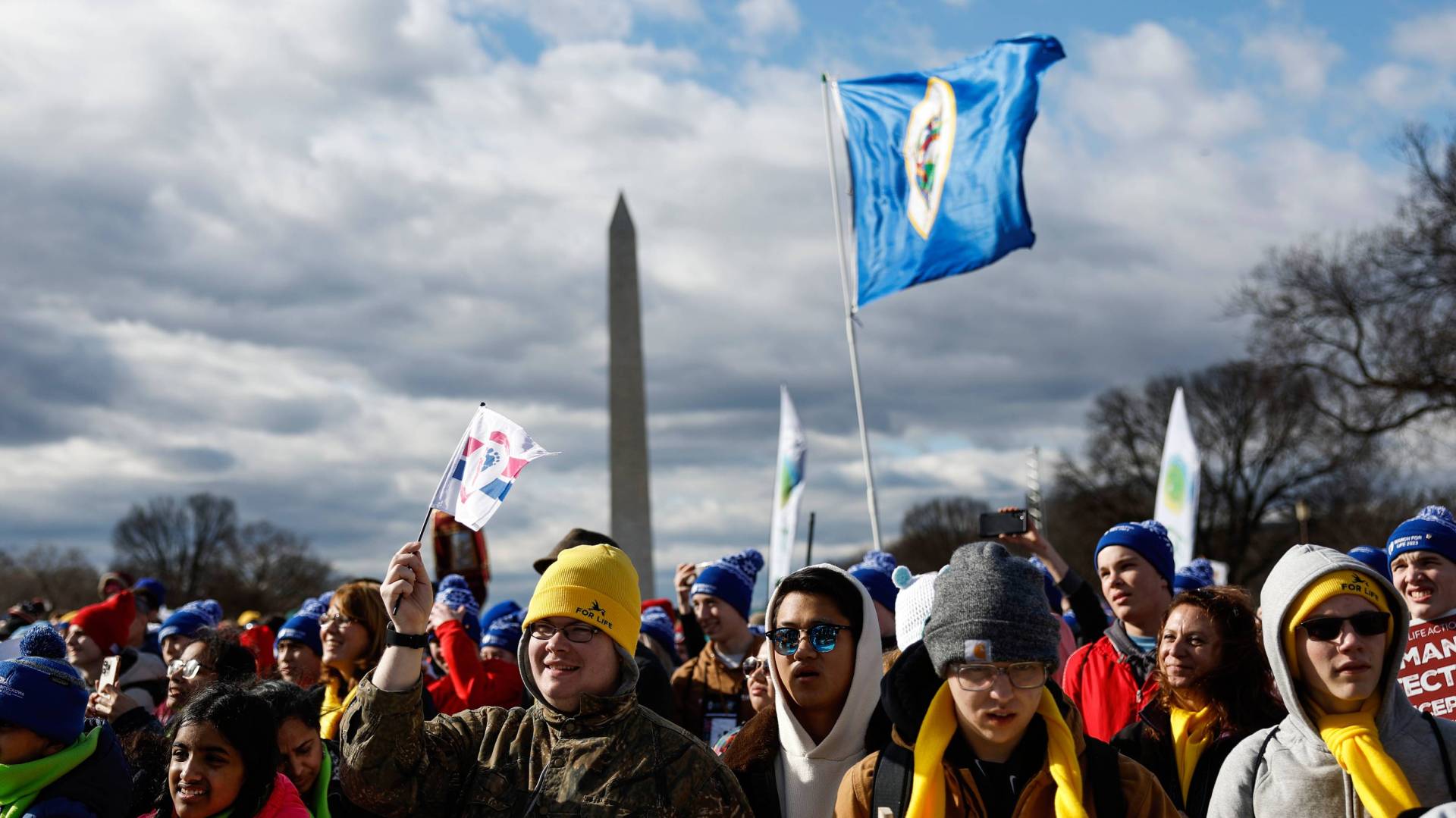
Catholic activist Nellie Gray organized the first March for Life in 1974 to mark the anniversary of the Supreme Court ruling that legalized abortion nationwide. Fifty years later, even after the 2022 decision overturning Roe v. Wade, pro-life activists don’t feel like their work is done.

After Dobbs v. Jackson Women’s Health Organization, the organizers of the national march, which is considered the largest annual pro-life gathering in the world, “thought that it was possible last year that we’d have a little bit less of a crowd,” Jeanne Mancini, president of March for Life, told Christianity Today.

“And much to my delight, that was wrong. We had a really big crowd last year, a very energized crowd, and we anticipate nothing less this year.”

Days before the 2024 event, an arctic blast sweeping much of the US blanketed Washington, DC, closing area schools and delaying flights for the thousands of participants traveling to the capital. Friday’s forecast projects another dusting of snow.

But pro-life organizers don’t expect the inclement weather to deter turnout: They estimate the crowd could be 100,000 people. The crowd will draw from student campus activists, worshipers from evangelical and Catholic churches, staff from pro-life nonprofits, and volunteers from all over the country.

“We’re proud to be there every year en masse, you know, showing the nation that this generation rejects abortion and that we’re moving forward in our mission in this post-Roe world,” Kristan Hawkins, founder and president of Students for Life of America, told CT.

Hawkins anticipates more conversations this year about the pro-life movement’s goals moving forward, particularly in an election year.

While pro-lifers always had a focus on overturning the constitutional protections of abortion, the movement has also been about far more. “Our goal is to see an end of abortion. To make abortion unthinkable and unavailable in our country. And that’s a two-fold goal,” she said, “that requires cultural change, that requires practical and tangible support, that requires political change. And so you have to have all of those kind of cylinders firing at any given moment.”

The pre-march rally features former NFL tight end Benjamin Watson, House Speaker Mike Johnson, and Focus on the Family president Jim Daly. The lineup also includes a pastor, a pregnancy resource center director, and a college student who is the president of a Students for Life Club at Penn State University.

Since Dobbs, pro-life leaders say their focus has become much more trained on the legislature and pro-life policy, though that is not a new direction. The group also plans to expand its presence in states through a state march program. That program began in 2018, and this year, there will be marches in 24 state capitals.

“We want to be in all 50 states over the next six, seven years,” Mancini said.

The new route of the march also reflects that focus: Organizers slightly altered the original route, which used to end in front of the Supreme Court. Now it still starts at the National Mall, heads down Constitution Avenue NW, takes a couple turns to wind past the Capitol, and ends with marchers having the Supreme Court on the right and the Capitol building on the left.

This year, the theme of the march is “With Every Woman, For Every Child,” which is meant to highlight the work that pregnancy resource centers offer women and families.

“I think that the topic of the march says what the pro-life movement has always done, but shows that we recognize that now in a post-Roe world, we need to do it even more, which is be with every woman and support every child,” said Dr. Christina Francis, CEO of the American Association of Pro-Life Obstetricians and Gynecologists, which includes over 7,000 physicians.

Francis and fellow pro-life doctors will be marching together in their white coats, as they do each year. She says she often gets thanked by people at the march, who are encouraged to see pro-life medical professionals.

This year, as debates play out around state ballot initiatives, there’s confusion around how or whether abortion restrictions affect pregnant women in other circumstances. Francis, a practicing ob-gyn in Fort Wayne, Indiana, said that physicians know the difference between treating a miscarriage and performing an abortion.

“So many of the American public are being made to feel like they need to support abortion so that women can receive life-saving care, so that women can receive treatment for their miscarriages. And that’s simply not the case,” Francis said. “We can still take good care of women and their children, we can still intervene when we need to when a mom’s life is in danger.”

The march itself is only one part of a flurry of events and activities that pro-life organizations, church leaders, and activists host and attend.

On Friday morning, there is the March for Life Expo at a hotel in DC, where organizers host a training on how people can engage with elected officials about the pro-life cause. Friday caps off with the annual Rose Dinner Gala.

There are also other events, including the all-night National Prayer Vigil for Life, which begins Thursday evening and extends to the morning of the march. It is hosted by the United States Conference of Catholic Bishops. Two other prominent Catholic groups, the Sisters of Life and the Knights of Columbus, are hosting a Life Fest event aimed at reaching youth.

Students for Life is co-hosting the National Pro-Life Summit held on Saturday. The sold-out event is expected to have 1,800 in attendance.

“We all agree that we’re in a new season, a post-Roe season, and that changing hearts and minds is the end goal here,” Mancini said. “There’s a necessity not only to change the laws, but to change hearts and minds and to speak truth into a culture of confusion about this issue.”

Books
Review

Tim Alberta Is More Sad Than Angry at His American Evangelical Family

The Atlantic journalist’s portrait of a fractured movement chooses lament over axe-grinding.

Christianity Today January 18, 2024
Illustration by Christianity Today / Source Images: Getty

Donald Trump might pose problems for established political norms, but he has been a godsend for book publishers. In the years encompassing Trump’s first campaign, election, inauguration, tumultuous term as president, second campaign, and unprecedented response to defeat in 2020, dozens of books have been written about the relationship between white evangelical Christians and Donald Trump’s populist politics.

The Kingdom, the Power, and the Glory: American Evangelicals in an Age of Extremism

The latest of these is Tim Alberta’s The Kingdom, the Power, and the Glory: American Evangelicals in an Age of Extremism. A journalist for The Atlantic, Alberta combines memoir and research, drawing on his upbringing in and familiarity with the evangelical tradition to interrogate what historian Thomas Kidd describes as “a movement in crisis.”

This crisis is both political and personal. It is political in that white evangelicals have been the steadiest base of support for the least outwardly faithful president in half a century, at the alleged expense of their prior platitudes about morality and ethics being central to public service. But, as Alberta explains, it is also deeply personal, leading to rifts in families, communities, and congregations.

As the title hints, The Kingdom, the Power, and the Glory is organized into three sections, each focusing on a different element of the evangelical movement and its evolution over the last decade in response to changing political tides. Alberta crisscrosses the country visiting churches and political rallies, interviewing pastors and activists, and trying to make sense of what he sees as too many evangelicals sacrificing a Christian approach to the political world at the altar of power. The result is a book that is well resourced and eminently readable, providing a perceptive and sympathetic critique of American evangelicalism. Alberta does not have an axe to grind, but rather a community to better understand.

Displeasure, not disdain

Alberta is not an outsider to the world of evangelical Christianity. He was raised and reared in this space, with his father serving as a pastor at an Evangelical Presbyterian Church for decades. He also speaks the language well, not as someone citing Scripture at Christians in order to point out supposed hypocrisy, but as someone attempting to correct what he sees as misapplication or misunderstanding of the right relationship between political engagement and the Christian faith.

Throughout his book, Alberta does not hide his displeasure at his evangelical brothers and sisters captured by Trump’s distinct brand of politics. But displeasure is not disdain, nor is it disgust; instead, he writes with a sense of bewilderment and even sadness, lamenting the marriage of the church to a kind of political engagement he sees as fundamentally incompatible with the words of Jesus.

That said, certain evangelical celebrities are met with what Alberta might identify as righteous anger. Men like David Barton, Eric Metaxas, and Jerry Falwell Jr. bear the brunt of this criticism. Barton is chastised as a huckster and conman, slickly presenting a flawed reading of American history to an audience predisposed to see America as a distinctly Christian nation—and lining his pockets in the process. Metaxas, meanwhile, is described as evolving from a thoughtful cultural commentator to either a grifter or a conspiracy theorist or maybe both. “Corruption and psychosis,” Alberta admits, “are not mutually exclusive.”

But no other figure is pilloried like Falwell. The son of a fundamentalist heavyweight who turned his father’s struggling Liberty University into one of the country’s largest and richest Christian colleges, Falwell’s rise and fall is documented with precision. He is described in megalomaniacal terms, with Alberta speaking to former students, staff, and faculty who paint a picture of a man driven by ego and ambition to the point of moral and political bankruptcy. On his downfall, Alberta pulls no punches: “For Falwell to be embarrassed would have required a capacity for embarrassment.”

While these men are likely recognizable to attentive readers, Alberta also spends time with pastors who have increased their platforms and congregations by preaching a MAGA-centered gospel, fusing Christian civil religion with populist conservative politics. Michigan’s Bill Bolin is emblematic of this trend, fashioning church services that include both Bible teaching and what congregants affectionately call “headline news”—screeds against COVID-era restrictions and mandates, the Internal Revenue Service, and, of course, Democrats.

So too are better known pastors like Tennessee’s Greg Locke and Texas’s Robert Jeffress. Locke, whose viral videos in opposition to pandemic regulations made him a star in evangelical right-wing circles, is described as on “the furthest fringes” of this community. Jeffress, on the other hand, is painted as media savvy and deeply connected to Donald Trump. Not coincidently, the populations of these pastors’ churches are booming, along with their budgets.

Meanwhile, activists like Ralph Reed and Chad Connelly are characterized as justifying damaging rhetoric and behaviors in the name of Republican policy priorities while rejecting Alberta’s narrative of a Christian community in crisis. Reed, who has been involved in turning out conservative Christians to vote since the 1990s, sees the political fervor and engagement among evangelicals today as undeniably good—and if it benefits Republican politics, even better. Connelly, meanwhile, dismisses fringe pastors like Bolin as unrepresentative of evangelical pastors concerned about America’s political decline. He also tells Alberta that divisions among Christians and churches are nothing new, and certainly not a result of increased political engagement. “I’ve had people leave our church,” he says, “over the color of the carpet.”

These sections are among the book’s most insightful. These pastors and activists do not regret combining partisan politics with Christianity or stoking people’s fears as a call to political action. Alberta does, however, capture moments of self-reflection. Locke told him that he sometimes worries people are attending his services “for the wrong reasons.” Jeffress admitted that some in his church had wrong ideas about the “synthesizing of the Constitution and the Bible,” and called evangelicals who stormed the US Capitol “nutcases.” Even if these moments do not lead to wholesale changes in behavior, they are at least evidence of internal tensions.

Rays of hope

If the book’s first two sections offer a pessimistic portrayal of the state of evangelical political engagement, then the book’s final section takes on a more hopeful tone. Alberta profiles individuals and groups dissatisfied with the prevailing status quo and who seek to offer alternatives to fellow evangelicals also disappointed by their community’s recent political behavior.

Some of these figures are pastors, people who refuse to let recent divisions and congregational breakups drive them to despair. Consider Brian Zahnd, a Missouri pastor whose “gigantic” church parking lot now houses “a fraction” of the vehicles it once had. Alberta writes of Zahnd’s slow but steady conviction to disentangle partisan proclivities from the pulpit, eventually leading to an exodus of parishioners who found this new posture unsuitable for the crises of the moment. Those who remained, though, made for a healthier church overall, protecting it “from the turmoil of the Trump era.”

Alberta also profiles figures in “Big Eva,” evangelical leaders with large platforms who have recently gone through very messy—and very public—breaks with their communities. Christianity Today’s Russell Moore is one such leader, whose tenure as head of the Southern Baptist Convention’s Ethics and Religious Liberty Commission sputtered amid controversies over Moore’s criticism of Donald Trump and outspokenness against alleged abuse cover-ups in the denomination. Another such leader is Daniel Darling, who was fired from his position at the National Religious Broadcasters after a media appearance where he defended the COVID-19 vaccine.

Moore, Darling, and others are portrayed simultaneously as casualties of evangelical infighting and as hopeful voices for healthier political engagement. Alberta points to the work of organizations like Redeeming Babel and its new curriculum, “The After Party,” as intentional efforts to inoculate Christians against the dangers of toxic polarization. He highlights writers and speakers like David French as modeling a better sort of political engagement for evangelicals, even while acknowledging that French himself is persona non grata to many pro-Trump evangelicals because of his early “never Trump” status.

Importantly, Alberta cites a major source of Moore’s newfound optimism in the future of evangelical politics: “the resilience of the young generation of believers.” Moore is encouraged, Alberta writes, by younger Christians and their concern for politics that goes beyond partisanship, trading the noisy brashness of carnival barkers for the deeper and richer humility of Jesus. Alberta agrees with this assessment, claiming that the loudest voices preaching MAGA to evangelical masses are not doing so in confidence, but in desperation. Eric Metaxas and Charlie Kirk, he writes, are “not men beholding a great victory that was within reach,” but rather are “bracing for further losses.”

Accountability without self-righteousness

“What the hell is wrong with these people?”

This question comes from Alberta’s wife in the book’s first few pages, directed toward churchgoers who sought out and chastised Alberta during his father’s memorial service (they were upset with Alberta’s reporting critically of Donald Trump). But Alberta directs the question at far too many American evangelicals who have seemingly disregarded multiple aspects of the fruit of the Spirit—such as kindness, gentleness, and peace—in exchange for political power to better meet our difficult moment.

Alberta’s sadness and frustration are evident. Notably, he does not present rank-and-file evangelicals as simpletons or would-be authoritarians. These are the people with whom he once worshipped, only to have a polarized political environment and an unprecedented pandemic tear Christian communities asunder. But he also does not let them off the hook, believing that these Christians, shepherded by misguided or misleading voices, have shed essential elements of their convictions before donning harmful political attire.

And yet, there is a danger in asking, “What the hell is wrong with these people?” It risks downplaying or ignoring our own faults, making ourselves the heroes of the story instead of trying to comprehend the posture and motivations of those with whom we disagree. There is a tendency, a temptation, to believe that any Christian with whom we have political differences must be mired in faithlessness, error, or even sin. “Woe to you, partisans, because you do not vote like me,” is a sneakily enticing posture to adopt.

To be clear, I do not believe The Kingdom, the Power, and the Glory does this. I do think Alberta’s words come from a place of lament, not judgment. But these kinds of reflections do open the door for readers to impose their prejudices onto believers unlike them, just as related books in this same spirit might do. Christians should read Alberta’s book in a right mindset, seeking to better understand our political moment and the motivations of our neighbors, not to justify looking down on political opponents with whom we also might share a pew.

Christians must be able to criticize and correct our brothers and sisters in the spirit of charity and love. Accountability is essential to sanctification. But this cannot come from a posture of superiority or self-righteousness, believing we have the right way of doing politics in our complex, fallen society. The latter is certainly easier in this day and age, but it isn’t what Jesus asks of us.

Daniel Bennett is an associate professor of political science at John Brown University and assistant director at the Center for Faith and Flourishing. His forthcoming book is Uneasy Citizenship: Embracing the Tension in Faith and Politics.

Theology

Why Singaporean Churches Don’t Talk About Abortion

As young people become more accepting of abortion, pro-life ministries encourage pastors to talk about sex and unplanned pregnancies.

Christianity Today January 18, 2024
Edits by Christianity Today / Source Images: Getty

When Eliora found out she was pregnant in 2021, she didn’t tell her church community as she felt ashamed about getting pregnant outside of marriage. Instead, she started researching abortion on the internet. When she told her partner, whom she was not in a committed relationship with, he gave her a list of abortion clinics in the area.

Eliora, 29, was also unsure about her church’s stance on abortion, as she had never heard the topic talked about from the pulpit or in small group. Two weeks later, she terminated the pregnancy, thinking it was the most logical choice. (CT agreed to use only her first name due to the sensitivity around abortion in Singapore.)

However, what she thought was a one-off decision soon plunged her into overwhelming guilt. “Deep down, I just had this sense that if it is a life, then I have killed something. It just felt wrong,” Eliora said. “I wish that my [church] community was a space [where] I felt safe to reach out for help.”

Stories like Eliora’s are not uncommon in Singapore, where abortion is a largely taboo topic in the church. At the same time, Singapore has one of the most liberal abortion laws in the world due to the country’s former family planning policies in the ’70s. Abortion is legal up to 24 weeks of pregnancy and not restricted by age. Minors do not need to obtain parental consent to get an abortion.

While the number of abortions in Singapore has halved in the past decade—likely due to the increased use of contraceptives and the growing acceptance of single mothers—approval of abortion has increased in the younger generations, including among Christians. A third of Christians between the ages of 18 to 35 believe abortion is “not wrong at all” if the family has very low income and cannot afford any more children, according to a 2019 Institute of Policy Studies (IPS) paper.

Yet many churches in Singapore are still not addressing the issue proactively. Ministries like Safe Place and Heartbeat Project are trying to change that by encouraging the church to speak up about abortion and the sanctity of life, to support women with unplanned pregnancies, and to become a sanctuary for women like Eliora who are seeking help and healing.

A taboo topic

Singapore became one of the first countries in Asia to legalize abortion in 1969. Since then, more than 660,000 babies have been aborted, based on data from the Institute of Southeast Asian Studies and Singapore’s Ministry of Health.

The Singapore government encouraged abortions as it implemented a two-child policy due to fears that population growth would lead to overcrowding and a lack of resources on the island. The campaign heralded the benefits of small families and introduced measures to discourage couples from having more than two children, including reductions in tax relief, lower priority for housing, and lower priority for schools for larger families. Meanwhile, parents who underwent sterilization could get their children into top primary schools.

At the same time, the government eased access to abortion. In 1974, it abolished the need for women to obtain approval from authorities before getting an abortion, along with age requirements.

In the ’80s, Singapore scrambled to reverse the policy as it saw its population plummeting. The government began incentivizing families to have three or more children, including offering parents “Baby Bonus” cash gifts and paid paternity leave. Still, the effects are lasting: the fertility rate in Singapore is still one of the lowest in the world, at 1.05 in 2022.

Today, the top reasons married women in Singapore give for seeking an abortion are that they have enough children and that they are unable to afford another child, according to a 2023 study published in the Singapore Medical Journal. The same study found that single women abort because they are unmarried and not ready to start a family.

Since the 1980s, Christianity has grown in the country from 10 percent to 19 percent today. Yet in churches, abortion remains a largely taboo topic. That’s because it is regarded as a “secretive, personal choice” and because Christians often find discussions on it complicated or irrelevant, said Jennifer Heng, the founder and director of Safe Place, which provides shelter and support for women with unplanned pregnancies.

According to traditional Asian cultural norms, sex before marriage is considered immoral, so families look down on and are ashamed of getting pregnant out of wedlock. Sex is typically not discussed, so as modernization and Western influences spread, the countering value systems have led Singaporeans to view abortion as a logical solution to unwanted pregnancies.

“The large majority of the women come to us for help primarily because the men in their lives have abdicated their responsibility [to parent],” Heng said. “So the woman is left on her own and she’s thinking, How on earth am I going to do this? We see this over and over again.”

Safe Place is taking steps toward preparing churches to minister to these women. In July, the group held a workshop to train pastors to provide practical help to women with unplanned pregnancies who lack a support system. Through case studies based on real-life scenarios, experienced pastors taught fellow leaders how to counsel women to explore alternatives to abortion, such as adoption.

Heng geared her workshop toward pastors “because if even our shepherds are not clear [about their stance on abortion], where on earth are they leading the sheep? What kind of grass are they feeding the sheep?” she asked. “Awareness about the issues surrounding abortion and unsupported pregnancies needs to start with the shepherds first.”

Sixteen of the 20 pastors invited showed up to the workshop. The small number of attendees demonstrated to Heng that abortion is still a low-priority issue for the Singaporean church, yet it’s a start.

Discipling the youth

Singaporean Christian denominations, groups, and media have made statements on abortion and written articles on the topic, but often, that doesn’t translate to discussion within churches. Norman Ng, senior pastor of 3:16 Church and co-founder of the online platform Heartbeat Project, believes that the church’s silence makes young Christians vulnerable to the influence of the world.

“In an oversexualized culture, sexual exploration can be very real for youths today, even for those within the church,” Ng said. “However, it may not be uncommon for churches to avoid having honest conversations with youths on this subject.”

The IPS study reveals that younger generations are more accepting of abortion for economic reasons. While 64 percent of Christians older than 56 said abortion is always wrong in cases when the family has low income and can’t afford any more children, that percentage plummets to 22 for Christians between ages 18 and 35. Two in three young Christians responded that it is “not wrong at all” or “wrong only sometimes” to have an abortion in that situation.

Disturbed by these findings, Ng penned an impassioned open letter to pastors in Singapore in 2020 calling for them to teach young Christians about what Scripture says about life and abortion. “When left unsaid, questions tend to emerge,” Ng wrote. “Questions like: If abortion is legal and so accessible, why is it wrong? If it’s so serious, then why isn’t the church saying anything about it?”

Four years later, Ng still believes that the church can do more in shaping young people, whose values are heavily influenced not by the church but by the culture.

“If we don’t disciple our children, the world will,” Ng said. “And they are actively doing so to cultivate values that abortion is acceptable and it is part of women’s rights. [Yet] there still isn’t an urgency to instill a biblical worldview on the sanctity of life.”

At 3:16 Church, where Ng pastors with his wife, Debbie, discussion on the sanctity of life takes place not just from the pulpit but also through age-appropriate conversations.

For the youth, the church held a session to answer questions about dating, sex, and abortion. The church also brought in a mother who shared her journey of becoming pregnant when she was a teenager and her and the father’s choice to keep their baby.

For young adults, the church hosted a panel that included a pastor, a doctor, and a Christian woman who had an abortion in her early 20s. The young adults asked questions, including whether abortion is acceptable in cases when the unborn baby is diagnosed with special needs, when the mother’s life is in danger, or when the mother is raped.

For parents, the church asked them to evaluate the conversations they are having with their children about sex and purity while also considering how they would respond if their children were to get pregnant before marriage. “These discussions helped parents realize how critical their encouragement and support is in such a situation,” Debbie said. “What they say to their child could literally be a matter of life and death.”

Having such conversations in more intimate settings helps believers feel more comfortable to ask questions and to share their personal experiences about abortion, Debbie said.

Unpacking shame and stigma

For women who have already had an abortion, stigma and shame often cause them to keep it a secret from other Christians or to avoid church altogether.

A recent study by the Journal of Religion and Health asked 11 Protestant women in Singapore about who they would turn to if they were considering an abortion. The study found that while most of the women desired support from their faith communities, they also feared being judged by other Christians.

“Participants also reported a culture of silence within their churches regarding abortion, making it harder for them to identify safe sources of support and to comfortably seek it,” the researchers wrote.

Eliora, who similarly dealt with deep guilt and shame about her abortion, approached the pro-life group Buttons Project Singapore to help her process her emotional turmoil. Started in 2017 by June Bai, Buttons Project offers support services such as inner healing sessions for Christians who have had abortions.

In most cases, “I’m the first person to hear their stories,” Bai said. “They feel ashamed. They don’t dare to tell people [because] they are afraid of being judged.”

Bai was terrified when she first opened up to her church friends about the abortion she had had in her 20s. One of them later sent her a text message: “No matter what you did, I still love you as a sister.” The loving acceptance she experienced moved her to tears. She realized she had a safe place to share her pain.

Eliora attended several sessions with Bai that addressed the root issues from her childhood and family that led to her decision to abort.

“I was very grateful for [Bai’s] platform, because you see someone who has gone through [abortion], who is able to empathize and is able to provide something in a safe space.”

Eliora left her previous church and worships at 3:16 Church today. She is thankful that the latter creates spaces for people to have honest conversations about difficult topics. Taking part in these conversations has reshaped her thinking not just about abortion but also about life itself: “The value of life is not determined by me; it’s determined by God.”

A vast mission field

Heng of Safe Place sees the hundreds of thousands of women who have had abortions in Singapore since the 1970s as a vast mission field. After having two abortions as a teen before encountering God in her 20s, Heng started Life Network, which brings together Protestant and Catholic organizations, doctors, and students to build a “culture of life” in Singapore. Since its inception in 2012, the network has held conferences, published books, and helped start organizations like the Heartbeat Project.

In 2018, she launched Safe Place to offer practical help to women with unplanned pregnancies. “Many of us can say abortion is not a good thing, but how many of us can tangibly provide an alternative?” Heng said. “We need to be moving from talk to action. Our faith has to be accompanied by deeds.”

The group has helped more than 400 women with counseling, providing temporary accommodations, and equipping them with life skills such as financial management and career guidance. Heng and her team at Safe Place journey with the pregnant women in need, even when they choose to terminate their pregnancies.

“Our only hope is that for those who have chosen abortion, if they ever get pregnant again, they can choose differently,” Heng said. “I’ve had a woman who had four abortions before she realized, ‘The fifth one, I’ll keep [the child].’ I walked with her until it sank into her [that abortion is not the solution].”

While some churches are not ready for a sermon on abortion, a small number of churches have made recent strides in opening up discussions about abortion. One church invited the Heartbeat Project to speak to its leaders and revised its leadership ethics to include a biblical position on sexuality, life, and abortion. A pastor from another church mobilized 20 to 30 church members to care for a new believer with an unplanned pregnancy. The new believer was contemplating abortion because of pressure from her family.

“The issue of abortion is tough and messy and requires sacrifices from us,” Heng said. “But we cannot look the other way. The church should see the many needs that arise from unsupported pregnancies and abortion and take every opportunity to serve those who are hurting and afraid.”

Church Life

Adoption Was Beautiful, Precious, and God-Ordained. Then I Adopted.

Facile expectations hurt everyone in the process, including my new son.

Christianity Today January 18, 2024
Illustration by Elizabeth Kaye / Source Images: Getty / Unsplash

A few months into the COVID-19 pandemic, after putting my three kids to bed one night, I streamed a National Theatre production of Jane Eyre while squeezing in some exercise on our stationary bike. A chill crept through me as I found myself identifying not with Jane but with her vindictive aunt, who unwillingly becomes Jane’s adoptive mother.

I was horrified to share Mrs. Reed’s resentment toward Jane for being an outsider, an intruder, a bringer-of-problems. This was the same sentiment I found myself fighting daily toward our five-year-old adopted son, whom we’d welcomed into our family over a year prior. Watching my own feelings manifested on screen in Mrs. Reed—a villain—brought home to me how defective my moral compass had become.

As a child who always wanted to make the world a better place, I’d taken to heart the value that Christians, from the early church to modern American evangelicals, have placed on care for orphans. And the way adoption was portrayed in sermons and the Christian books I read was universally positive: Adoption was a metaphor for God grafting us into God’s family (Rom. 8:14–17, Eph. 1:5); adoption met a crucial need; adoption was a beautiful act of love. Being a gregarious evangelist or an on-my-knees prayer warrior might not be my strength, but welcoming a child I could do.

When I started dating my future husband, I had just returned from a summer volunteering with disabled children in a Chinese orphanage. Adoption was always part of how we envisioned we would build our family and extend God’s capacious love to kids in need.

After getting married and having two biological children, with my medical training finally complete and our lives relatively settled, we thought we were prepared. We had read books on adoptive parenting. I’d joined online adoption forums. We knew other families who had adopted.

At the time, critiques of adoption were becoming more prominent. Adult adoptees and their advocates rightfully highlighted systemic flaws in both domestic and international adoptions. From corruption to coercion, transracial family dynamics to legal battles, adopting a child was more fraught than the simple picture I’d been sold in church.

Yet I remained convinced that the need for families was still present, especially among older children with stigmatized medical conditions, so we continued to pursue adoption through a reputable overseas program and agency. We were, we thought, big-hearted people and caring parents. Surely it would be simple to love any child as our own, especially one who shared the same racial and cultural background.

Yet the actual experience of introducing our third child, adopted from Taiwan, into our family felt like a bomb going off in our previously peaceful home.

We hadn’t anticipated how difficult it would be to extend to our new four-year-old the same easy affection that we naturally shared with our older two, especially as he seemed determined to reject our overtures of love and tenderness—and to make everyone else feel as terrible as he felt, ripped from his caretakers, country, and familiar environment. While that’s common in adoption, the emotional rollercoaster left us exhausted and frayed. I reminded myself constantly that we chose this, while our son lacked all agency in the situation.

Even more challenging was how difficult it was for our older kids, then five and seven, to adjust. They hadn’t asked for this, and suddenly they had a younger brother who was breaking their toys, stealing their Halloween candy, and deliberately needling them to get a reaction. There had been no sweet infant phase for them to grow attached. There was a flash of lightning, then, suddenly, their lives, family, and home were irrevocably altered.

My protective instincts were pitted against each other: My youngest, newest, and most vulnerable child needed unconditional love, boatloads of positive affirmation, and one-on-one attention. Meanwhile, my previously calm and happy eldest child was banging his head repeatedly on the floor, taking out his anguish on himself because he knew he wasn’t supposed to hit his brother (though that happened too, and yes, we tried therapy in many forms).

These dynamics lasted well past the initial months-long adjustment phase we’d been told to expect. Four years in, I still often despaired.

We were fortunate to have an understanding church community; our senior pastor and his wife have adopted 11 children. They started a monthly adoption small group where vulnerability and honesty were modeled. Hearing the stories of other parents who were further along on their journeys—yet still dealing with overwhelming challenges—was simultaneously daunting and comforting.

But even with that valuable space and other supportive friendships, the deep shame of struggling with adoptive parenting felt crushing. Since childhood I’d been taught that adoption was beautiful, precious, and God-ordained. Why didn’t it feel that way for me?

I needed to unpack the theology that had led me to this place. Often in church spaces, adopting children is compared to God’s “adoption” of us into his spiritual family. But this metaphor, frequently employed without regard for how adoption has changed in the last 2,000 years, sets up the unfortunate parallel of the adoptive parents “saving” the child.

It also abrogates the abandonment at the root of the adoptee journey. Our adopted children, especially older kids, experience so much loss and grief in their lives, which can manifest as attachment disorders, blocked trust, and trauma responses. We are not God, and we cannot miraculously heal those fissures.

When churches oversimplify adoption—treating it as a glorious reflection of God’s plan, as an answer to abortion, or as a form of missions—we distort a complex relationship and set adoptive parents up for failure by putting us in a role that was never ours. Adoption is not a panacea; rather, it’s the beginning of a long journey.

Churches would do well to present a more nuanced and realistic portrait of adoption. While some adoptive families thrive from the start, others feel beleaguered for years.

By reframing how we speak about adoption, recognizing that it originates in brokenness and presenting a range of adoption stories rather than only the easy or resolved ones, we better prepare prospective parents and normalize the difficulties that adoptive families may face. The goal is not to discourage or discredit adoption but to ensure it is undertaken with realistic expectations.

And instead of elevating adoption as the only or even best way to care for vulnerable children, churches should also get serious about family preservation efforts. We can work to counteract systemic inequalities that compel birth families to surrender their children and support single parents. When a pregnant woman is anxious about how she will provide for a desired child, our first response shouldn’t be to offer to adopt but to band together as a church to share resources so that she can pay for housing, child care, clothes, and food, and to commit to being a supportive social network—an extended family of sorts.

For adoptive families too, practical relief is essential. I’d be fed for life if I had a home-cooked dinner for every person who’s said to me, “Oh, I’ve always wanted to adopt!”

Respite care—when trusted adults look after the adopted child for a few hours or days to give adoptive parents a chance to recharge—can be a lifeline for overwhelmed parents. And trauma-informed pastoral care both pre- and post-adoption can help shift expectations. It should become the norm, just as premarital counseling is expected or even required.

What has pained me most on this journey has been the deep shame I’ve felt at not being the mother my children deserve. I didn’t want to acknowledge that this screaming, raging, crying, bitter person I saw in the mirror was me. I didn’t want to admit that I had become Mrs. Reed.

And the verb “become” belies the truth. My wells of selfishness have always been there; it simply took adopting a child to reveal them. Perhaps this is the greatest reckoning adoption has forced: that of looking into the mirror after my veneer as a patient, selfless parent had been shattered. Once the surface cracked, the self-condemnation became relentless, amplified by the imagined commentary of acquaintances and internet denizens: I shouldn’t be a parent. A better person would handle this with grace.

Indeed, it is grace that I’ve been missing—for myself and for my children. But God has not missed it. His response to my feeling of free fall has been a boundless reach of grace catching me over and over again.

We’re all ordinary, broken-up humans doing our best. As my friend and fellow adoptive mom says, adoptive parents shouldn’t be treated as saints when adoption goes well, nor should we be marginalized as deviants when we’re honest about our struggles. God is in the dissonance as well as in the harmony, and our family may never fully arrive at the tonic chord.

Into our sixth year of adoptive parenting, we’ve glimpsed joy, developed genuine bonds, and started healing, but there may always be unresolved grief and hurt—not just from my youngest son’s painful origins but now also from the imperfect ways I’ve parented him and his siblings.

As I’ve found other adoptive parents like me, I’ve felt less alone and less engulfed by shame, and I want to offer that consolation and wisdom to other parents earlier in their adoption journey and exhort fellow Christians to do likewise. When churches paint a too-simple picture of adoption—failing to acknowledge the grief and loss undergone by the child and birth family and the serious challenges that adoptive parents can face—we unwittingly encourage prospective parents to enter into adoption unprepared. We may even effectively silence those who are struggling.

God calls us to care for orphans, but God doesn’t promise that it will be easy. We shouldn’t either.

Kristin T. Lee writes at the intersection of faith, belonging, and solidarity at The Embers and contributes lively thoughts about diverse books on Instagram. She lives in Cambridge, Massachusetts, and is working on her first book on Asian American Christianity.

News

How Colombia Became South America’s Hardest Country to Be a Christian

Officially, the country protects religious liberties better than most in the region. On the ground, it’s more complicated.

Rebels of the National Liberation Army patrol near the Baudo river in Colombia.

Rebels of the National Liberation Army patrol near the Baudo river in Colombia.

Christianity Today January 17, 2024
Daniel Munoz / Contributor / Getty

Rodrigo is a Christian fisherman who lives with his wife in the department of Chocó, a jungle region near the border Colombia shares with Panama and one of the wettest regions on earth.

Due to its remoteness, the town does not have paved streets, and the presence of police and other Colombian authorities is scarce. Residents primarily travel the mighty Atrato, Baudó, and San Juan Rivers by motor boat, and Rodrigo supports his family by selling gas, as reported by Open Doors, which first told his story.

Despite the seeming necessity of his business, Rodrigo and his family are isolated. The majority indigenous community in the area where the family lives has rejected them because of their faith and have socially and economically excluded them due to their refusal to participate in the animistic rituals that are common among the natives. This isolation has also made Rodrigo vulnerable to the regionally dominant guerrilla and paramilitary groups, who periodically threaten to shut down his business if he doesn’t pay extortion fees—a crime present in the whole country but that affects Christian in a special way.

Rodrigo’s story encapsulates two of the biggest reasons Colombia has been the most dangerous country in South America in which to be a Christian over the last five years, according to Open Doors’ World Watch List (WWL). On this year’s list of the most difficult places to be a Christian, the country ranks No. 34 globally. So how did a nation with a long democratic tradition and a Catholic majority become one of the most precarious places for believers in the Western Hemisphere?

Much of Colombia’s notorious violence dates back to 1948, when the liberal presidential candidate Jorge Eliécer Gaitán was assassinated, triggering a national tragedy known as “El Bogotazo” and an upsurge in political violence. In the aftermath of Eliécer Gaitán’s death, liberal guerrilla groups emerged, fueled by the Communist ideology of the Cuban Revolution and spreading terror in rural areas.

In the 1980s, with the rise of drug trafficking, the guerrilla groups became allies of the drug traffickers. But after the fall of drug lords like Pablo Escobar in the 1990s, these groups and their opponents, paramilitary groups, both took over the drug trafficking business. As Christianity Today reported back in 1998, not infrequently, Christian leaders became victims of kidnapping, murder, and displacement.

“Colombia is a country where there are two realities. On the one hand, there is a lot of freedom in the big cities, and the Christians there are not even aware of the persecution that occurs in the rural areas of the country,” said Ted Blake, the director of Open Doors in Spain. “[But] in those rural areas, there are armed groups—guerrillas or paramilitaries—who don’t allow anything to be done without their approval, which you obtain by paying them [extortion money].”

The second form of persecution in rural Colombia, says Open Doors, is carried out by indigenous groups that have autonomy to establish their own rules in the territories that have been given to them. Frequently, these norms prohibit conversion to the Christian faith, which is punishable by expulsion from the community, expropriation of land, or economic exclusion.

The persecution of Christians in indigenous communities is most evident in the department of Cauca, in the south of the country near Ecuador. The majority indigenous population in that region exceeds 200,000 people. Those who dare to embrace the Christian faith, an estimated 14,000, have suffered dismissal from their jobs, displacement, and other types of social exclusion. “As we do not chew the coca leaf, nor do we participate in the road blockades organized to protest against the Colombian government, nor do we cast spells with herbs, they displace us,” Rogelio Yonda Trochez, an evangelical pastor, explained to the BBC in 2012.

But the violence carried out by drug trafficking groups and the oppression of indigenous communities are not the only reasons for the toxic environment that Colombian Christians experience. According to Open Doors, secular intolerance has increased and has kept some Christians from sharing their convictions on abortion, marriage, and religious liberty.

In 2021, thousands of Colombians across the country took to the streets to protest tax hikes and a delay in COVID-19 vaccine distribution. When Christian leaders declined to protest or spoke out against them, some protesters vandalized churches, including Bogotá megachurch El Lugar de Su Presencia.

‘Inconsistencies in the methodology’?

Colombia has been one of the most advanced countries in the region since 1991, when the Constitution first recognized the freedoms of religion, conscience, and worship as fundamental rights in this historically Catholic country.

Consequently, Colombian authorities have viewed Open Doors’ more recent reports with skepticism.

“The violence in Colombia has affected multiple churches and believers,” Lorena Ríos, the former director of the Office of religious Affairs of the Ministry of the Interior (and now senator for the Christian party Colombia Justa Libres), told CT. “However, the cause of violence has not always been due to issues of faith but rather due to surrounding situations, whether political (participation or support for a candidate), social leadership (pastors who denounce corruption or threats from groups), or issues personal (business and debts). But it is not exclusively due to an issue of persecution for being Christians.”

In fact, in 2021 under Ríos, the Office of Religious Affairs published a formal rebuttal of Open Doors’ claims, expressing its concerns about what it described as “inconsistencies in the methodology” of Open Doors in evaluating the levels of religious persecution in Colombia. In that report, the Colombian government challenged why the country had jumped from No. 41 to No. 30 on the 2021 WWL.

“This abrupt variation did not make sense, because 2020, due to the pandemic, was a year in which there were fewer attacks against Christians in the country,” says Ríos, adding that “even [Open Doors] admitted that due to the restrictions imposed by COVID-19, 2020 had not been a typical year in data collection.”

Open Doors’ method has evolved since 1993, when the survey began. It is currently based on a series of questionnaires that are applied to both the Christian and non-Christian populations in each country, and then the information is scored on a 100-point scale based on levels of persecution and is independently audited by the International Institute for Religious Freedom (IIRF).

“We measure the levels of oppression of Christians in five areas: private life, family sphere, social sphere, national sphere, and ecclesiastical sphere. We also take into account the bodily or material violence experienced by Christians,” Blake said.

Colombia is not on the list because of its laws. It’s on the list because Christians have been murdered for their faith and churches have been attacked, he says.

Persecution in Latin America

After entering the top 50 in 2019 (at No. 47), Colombia has been ranked as high as No. 22 on the 2023 WWL, a distinction which made it the most dangerous nation for Christians in all of Latin America last year. Though the country’s ranking was No. 34 this year, its score only shifted from 71 in 2023 to 68 in 2024.

The 2024 WWL’s top Latin American country is Cuba (No. 22, score of 73) followed by Nicaragua (No. 30, score of 70) due to dictator Daniel Ortega’s obsession with the Catholic church, whose leaders he describes as opponents of his regime. After Colombia sits Mexico (No. 37, score of 68).

“The forms of persecution in Colombia and Mexico are very similar,” said Blake. “Drug trafficking groups extort, kidnap, and murder Christian leaders in both countries, while indigenous groups exert pressure by economically and socially excluding Christians.”

Venezuela (No. 67, score of 53) is no longer in the top 50, despite the assumptions outsiders might have about its authoritarian and socialist government making it more difficult to freely profess the Christian faith.

As persecution flourishes, even in historically Christian countries, what can the global church do?

Speak up, says Blake.

“Jesus taught us that whoever follows him will be persecuted. It’s something we should expect to happen,” he said. “Rather, raise your voice in two senses: Ask God to strengthen Christians in such a way that they remain firm in the midst of adversity. Also, raise your voice before the rulers, so that they intervene to defend the rights of Christians who suffer so many injustices.”

Hernán Restrepo is a Colombian journalist based in Bogotá. Since 2021 he has managed Christianity Today's Spanish-language social media accounts.

News

The 50 Countries Where It’s Hardest to Follow Jesus in 2024

Latest report on Christian persecution chronicles the rising danger of Islamic militants and autocratic regimes, from Nigeria to Nicaragua.

Christianity Today January 17, 2024
Illustration by Kumé Pather

Almost 5,000 Christians were killed for their faith last year. Almost 4,000 were abducted.

Nearly 15,000 churches were attacked or closed.

And more than 295,000 Christians were forcibly displaced from their homes because of their faith.

Sub-Saharan Africa—the epicenter of global Christianity—remains the epicenter of violence against followers of Jesus, according to the 2024 World Watch List (WWL). The latest annual accounting from Open Doors ranks the top 50 countries where it is most dangerous and difficult to be a Christian.

The concerning tallies of martyrdoms and abductions are actually lower than in last year’s report. But Open Doors emphasizes they are “absolute minimum” figures. It attributed both declines to a period of calm in advance of Nigeria’s last presidential election. Yet Nigeria joined China, India, Nicaragua, and Ethiopia as the countries driving the significant increase in attacks on churches.

Overall, 365 million Christians live in nations with high levels of persecution or discrimination. That’s 1 in 7 Christians worldwide, including 1 in 5 believers in Africa, 2 in 5 in Asia, and 1 in 16 in Latin America.

And for only the fourth time in three decades of tracking, all 50 nations scored high enough to register “very high” persecution levels on Open Doors’ matrix of more than 80 questions. So did 7 more nations that fell just outside the cutoff. Syria and Saudi Arabia, meanwhile, entered the tier of “extreme” persecution, raising its count to 13 nations.

The purpose of the annual WWL rankings is to guide prayers and to aim for more effective anger while showing persecuted believers that they are not forgotten.

The 2024 version tracks the time period from October 1, 2022, to September 30, 2023, and is compiled from grassroots reports by teams of Open Doors workers and partners across more than 60 countries. The methodology is audited by the International Institute for Religious Freedom.

When the list was first issued in 1993, only 40 countries scored sufficiently high to warrant tracking. This year, 78 countries qualified.

Where are Christians most persecuted today?

North Korea ranked No. 1, as it has every year except for 2022 when Afghanistan briefly displaced it. The rest of the top 10 reshuffled but remained the same: Somalia (No. 2), Libya (No. 3), Eritrea (No. 4), Yemen (No. 5), Nigeria (No. 6), Pakistan (No. 7), Sudan (No. 8), Iran (No. 9), and Afghanistan (No. 10).

The deadliest country for Christians was Nigeria, with more than 4,100 Christians killed for their faith—82 percent of the global tally. Overall, 15 sub-Saharan countries scored “extremely high” on Open Doors' violence metric. In Mali (No. 14) and Burkina Faso, jihadists exploited breakdowns in government security, while attacks on churches grew sharply in Ethiopia (No. 32).

Open Doors scores each nation on a 100-point scale. Increases of more than 4 points were recorded in Oman (4.2), Burkina Faso (4.8), Nicaragua (5.3), Algeria (6.1), and Laos (6.6). Oman rose from No. 47 to No. 31, though the specifics of its violence statistics are kept hidden for security reasons. In its second year on the list, Nicaragua rose from No. 50 to No. 30, due to open government hostility against the church. Algeria rose from No. 19 to No. 15, as authorities stepped up a campaign against the Protestant church, of which only 4 of 46 churches remain open.


1. North Korea
2. Somalia
3. Libya
4. Eritrea
5. Yemen
6. Nigeria
7. Pakistan
8. Sudan
9. Iran
10. Afghanistan
11. India

Laos, however, which rose from No. 31 to No. 21, was cited as a good news story.

“I never saw a clearer connection of a growing church with growing opposition, resulting in higher scores,” said an Open Doors researcher “I find it comforting that the biblical verses predicting this connection are still true.”

Colombia was the only nation in the top 50 to record a decrease of at least 2 points (2.5), dropping from No. 22 to No. 34. Significant improvement was seen also in Vietnam (dropping from No. 25 to No. 35), Indonesia (from No. 33 to No. 42), and Turkey (from No. 41 to No. 50).

Other signs of hope were noted in Mali, where citizens approved a new constitution that clearly recognizes its Christian minority and could lead to a return to civilian rule. And in India’s Karnataka state, an opposition party dislodged the Hindu-nationalist BJP with a pledge to reverse local anti-conversion laws.


1. Nigeria
2. Pakistan
3. India
4. Name withheld
5. Eritrea
6. Mali
7. Myanmar
8. Bangladesh
9. Central African Republic
10. Democratic Republic of Congo

Open Doors reporting period: Oct. 2022 to Sept. 2023

But overall, India maintained its No. 11 ranking, as attacks on Christian homes doubled to 180, Christian fatalities increased ninefold to 160, and attacks on churches and Christian schools rose from 67 to 2,228. Combined with the estimated 10,000 church closures in China (No. 19), these two nations accounted for nearly 83 percent of all violent church incidents in 2023.

Yet it was Nicaragua’s overall 8.3 percent rise in overall score that represented the fastest increase of all WWL nations. Rather than setting a new trend, Open Doors stated the Central American nation’s “tailor-made” legislative restrictions on religious freedom, seizure of Christian properties, and arrest or exile of religious leaders is evidence that Nicaragua is more “falling into step” with communist Cuba (No. 22, up from No. 27).

Authoritarian impulses are imported elsewhere, as China and Russia (unranked, but monitored by Open Doors) spread their influence especially in Africa. The largest among many buyers of Beijing’s surveillance technology is Nigeria, while Moscow’s Wagner Group has made inroads with security assistance in Burkina Faso, Mali, Central African Republic (No. 28), and Mozambique (No. 39).

There are no new countries in this year’s top 50.

How are Christians persecuted in these countries?

Open Doors tracks persecution across six categories—including both social and governmental pressure on individuals, families, and congregations—and has a special focus on women.

When violence is isolated as a category, the top 10 persecutors shift dramatically—only Nigeria remains [see sidebar].

https://datawrapper.dwcdn.net/PyKKz

Martyrdoms dropped by more than 600 from the prior year, as Open Doors tallied 4,998 Christians killed for their faith during the reporting period. Representing a decrease of 11 percent, the toll remains the third highest since the 2016 record of 7,106 deaths. Nigeria accounted for 82 percent of the total. The Democratic Republic of Congo is No. 2 with 261 Christians killed, with India at No. 3 with 160 Christians killed.


1. Nigeria: 4,118
2. Democratic Republic of Congo: 261
3. India: 160
4. Name withheld: 100*
5. Uganda: 55
6. Myanmar: 34
7. Burkina Faso: 31
8. Cameroon: 24
9. Central African Republic: 23
10. Colombia: 16

*Estimate | Open Doors reporting period: Oct. 2022 to Sept. 2023

Open Doors is known for favoring a more conservative estimate than other advocacy groups, which often tally martyrdoms at 100,000 a year.

Where numbers cannot be verified, estimates are given in round numbers of 10, 100, 1,000, or 10,000, assumed to be higher in reality. And some national tabulations may not be provided due to security reasons, resulting in an “NN” designation for Afghanistan, Bhutan, Malaysia, Maldives, North Korea, Oman, Somalia, and Yemen.

Under this rubric, an unnamed nation ranks No. 4, followed by Uganda with 55 recorded killings, Myanmar with 34, Burkina Faso with 31, Cameroon with 24, the Central African Republic with 23, and Colombia with 16.

A second category tracks attacks on churches and other Christian buildings such as hospitals, schools, and cemeteries, whether destroyed, shut down, or confiscated. The seven-fold increase to 14,766 incidents—surpassing the 2020 report’s high of 9,488—was led by China and India, followed by Nigeria (750), Nicaragua (347), Ethiopia (284), and Rwanda (12), with Sudan, Burkina Faso, Niger, and Angola recording a symbolic 100 total.

The category of Christians detained without trial, arrested, sentenced, and imprisoned decreased to 4,125, down from a record high of 6,175 in the 2022 report but still the third-highest total since the category has been tracked.

Open Doors divides this into two subcategories, with 3,329 detained believers representing an increase of 6 percent. India led with 2,085 cases, followed by Eritrea with 322 cases and Iran with 122. An unnamed nation, Pakistan, and China recorded a symbolic 100 each, while Laos with 65, Cuba with 45, Nicaragua with 38, and Libya with 31 rounded out the top 10.


1. China: 10,000*
2. India: 2,228
3. Nigeria: 750
4. Nicaragua: 347
5. Ethiopia: 284
6. Rwanda: 120
7. Sudan: 100*
8. Burkina Faso: 100*
9. Niger: 100*
10. Angola: 100*
11. Myanmar: 100*

*Estimate | Open Doors reporting period: Oct. 2022 to Sept. 2023

The tally of 796 believers imprisoned, however, represented a 43 percent decrease from the 1,388 reported in the prior period. India led with 247, while an unnamed nation, Eritrea, Pakistan, and China each recorded a symbolic total of 100.

The number of Christians abducted decreased to 3,906 from 5,259, but still represented the second-highest total since the category was tracked. Nigeria accounted for 83 percent of the total, or 3,300 cases, while Pakistan, the Central African Republic, and Congo recorded a symbolic total of 100.

By far the largest category total was displacement, with 278,716 Christians forced to leave their homes or go into hiding for faith-related reasons, more than doubling last year’s total of 124,310. An additional 16,404 Christians were forced to leave their countries, up from 14,997 last year. Myanmar and Nigeria led with a symbolic 100,000 internal displacements, followed by India with 62,119. Myanmar also led with a symbolic 10,000 refugees tallied, followed by Nigeria, Iran, an unnamed nation, Bangladesh, and Congo with a symbolic 1,000.

Open Doors has stated that several categories were particularly difficult to count accurately, highest of which were the 42,849 cases of physical and mental abuse, including beatings and death threats. (Last year’s tally was 29,411 incidents.) Of the 75 nations assessed, 48 were assigned symbolic numbers. Nigeria, Pakistan, and India each recorded a symbolic total of 10,000, with an unnamed nation, Eritrea, Mali, Myanmar, Bangladesh, Central African Republic, and Congo rounding out the top 10 with symbolic total of 1,000 each.

An estimated total of 21,431 Christian homes and properties were attacked in 2023, along with 5,740 shops and businesses. Of the latter, only 17 of 42 countries recorded specific numbers, with India’s 1,572 cases followed by a symbolic number of 1,000 for Nigeria, Burkina Faso, and Central African Republic. Of Christian homes, Nigeria’s symbolic number of 10,000 was followed by India’s specific 5,878, and the symbolic number of 1,000 given to Pakistan, Myanmar, Central African Republic, and Congo.

Categories specific to women were also difficult for Open Doors researchers to count accurately. Cases of rape and sexual harassment increased from 2,126 to 2,622 tallied, led by Nigeria with a symbolic 1,000, followed by Syria’s symbolic 500. Forced marriages to non-Christians decreased from 717 to 609 tallied, led by Pakistan, Iran, and an unnamed nation with symbolic numbers of 100 each.

Why are Christians persecuted in these countries?

The main motivation varies by country, and better understanding the differences can help Christians in other nations pray and advocate more effectively for their beleaguered brothers and sisters in Christ.

Open Doors categorizes the primary sources of Christian persecution into nine groups:

Islamic oppression (30 countries): This is the main source of persecution that Christians face in more than half of the watch list countries, including 7 of the top 10 overall. Most of the 30 are officially Muslim nations or have Muslim majorities; however, 6 actually have Christian majorities: Nigeria (No. 6), CAR (No. 28), Ethiopia (No. 32), Mozambique (No. 39), DRC (No. 41), and Cameroon (No. 43).

Dictatorial paranoia (11 countries): This is the main source of persecution that Christians face in 11 countries, mostly in nations with Muslim majorities—Syria (No. 12), Uzbekistan (No. 25), Bangladesh (No. 26), Turkmenistan (No. 29), Tajikistan (No. 46), and Kazakhstan (No. 47)—but also in North Korea (No. 1), Eritrea (No. 4), Myanmar (No. 17), Cuba (No. 22), and Nicaragua (No. 30).

Communist and post-communist oppression (3 countries): This is the main source of persecution that Christians face in three countries, all in Asia: China (No. 19), Laos (No. 21), and Vietnam (No. 35).

Religious nationalism (2 countries): This is the main source of persecution that Christians face in two nations, all in Asia. Christians are primarily targeted by Hindu nationalists in India (No. 11) and by Buddhist nationalists in Bhutan (No. 36).

Organized crime and corruption (2 countries): This is the main source of persecution that Christians face in Colombia (No. 34) and Mexico (No. 37).

Clan oppression (2 countries): This is the main source of persecution that Christians face in Yemen (No. 5) and Jordan (No. 48).

Secular intolerance (0 countries), Christian denominational protectionism (0 countries), and Ethno-religious hostility (0 countries): Open Doors tracks these sources of persecution, but none are the main source in any of the 50 countries on the 2024 list.

How does the World Watch List compare to other reports on religious persecution?

Open Doors believes it is reasonable to call Christianity the world’s most severely persecuted religion. At the same time, it has noted there is no comparable documentation for the world’s Muslim population.

Other assessments of religious freedom worldwide corroborate many of Open Doors’ findings. For example, the latest Pew Research Center analysis of governmental and societal hostilities toward religion found that Christians were harassed in 155 countries in 2020, more than any other religious group. Muslims were harassed in 145 countries, followed by Jews in 94 countries.

The breakdown corresponds to Open Doors’ data. China, Eritrea, and Iran ranked in Pew’s top 10 nations implementing government harassment, while India, Nigeria, and Pakistan rank in the top 10 experiencing social hostility. Afghanistan and Egypt ranked in both.

Most of the nations on Open Doors’ list also appear on the US State Department’s annual list that names and shames governments that have “engaged in or tolerated systematic, ongoing, and egregious violations of religious freedom.”

Its top-tier Countries of Particular Concern (CPC) list includes Myanmar (No. 17 on the 2024 WWL), China (No. 19), Cuba (No. 22), Eritrea (No. 4), Iran (No. 9), North Korea (No. 1), Nicaragua (No. 30), Pakistan (No. 7), Russia (which exited the WWL in 2022), Saudi Arabia (No. 13), Tajikistan (No. 46), and Turkmenistan (No. 29). Its second-tier Special Watch List includes Algeria (No. 15), Azerbaijan (unranked but monitored by Open Doors), the Central African Republic (No. 28), Comoros (No. 45), and Vietnam (No. 35).

The State Department also lists Entities of Particular Concern, or nongovernmental actors producing persecution, which are all active in countries on Open Doors’ list. These include Boko Haram and ISWAP in Nigeria (No. 6 on the WWL), the Taliban in Afghanistan (No. 10), Al-Shabaab in Somalia (No. 2), Hayat Tahrir al-Sham in Syria (No. 12), the Houthis in Yemen (No. 5), the Wagner Group for its activities in the Central Africa Republic (No. 28), and ISIS-Greater Sahara and Jamaat Nasr al-Islam wal Muslimin in the Sahel.

Meanwhile, the US Commission on International Religious Freedom (USCIRF) in its 2023 report recommended the same nations for the CPC list, with the addition of Nigeria (No. 6), India (No. 11), Syria (No. 12), and Vietnam (No. 35). For the State Department’s watch list, USCIRF recommended the same nations except for Comoros, with the addition of Egypt (No. 38), Indonesia (No. 42), Iraq (No. 16), Kazakhstan (No. 47), Malaysia (No. 49), Sri Lanka (unranked but monitored by Open Doors), Turkey (No. 50), and Uzbekistan (No. 25).

All nations of the world are monitored by Open Doors researchers and field staff, but in-depth attention is given to 100 nations and special focus on the 78 which record “high” levels of persecution (scores of more than 40 on Open Doors’ 100-point scale).

CT previously reported the WWL rankings for 2023, 2022, 2021, 2020, 2019, 2018, 2017, 2016, 2015, 2014, 2013, and 2012, including a spotlight on where it's hardest to believe. CT also asked experts whether the United States belongs on persecution lists, and compiled the most-read stories of the persecuted church in 2019, 2018, 2017, 2016, and 2015.

Read Open Doors’ full report on the 2024 World Watch List here.

Editor’s note: CT offers this report in Spanish, Portuguese, French, Chinese (Simplified and Traditional), Indonesian, Russian, and Arabic—with more languages coming soon—as part of CT Global’s 3,800 translations.

The 2023 report is available in Spanish, Portuguese, French, Chinese (Simplified and Traditional), Korean, Indonesian, Italian, Russian, Arabic, and Japanese.

We welcome your feedback here. Get involved here.

Apple PodcastsDown ArrowDown ArrowDown Arrowarrow_left_altLeft ArrowLeft ArrowRight ArrowRight ArrowRight Arrowarrow_up_altUp ArrowUp ArrowAvailable at Amazoncaret-downCloseCloseEmailEmailExpandExpandExternalExternalFacebookfacebook-squareGiftGiftGooglegoogleGoogle KeephamburgerInstagraminstagram-squareLinkLinklinkedin-squareListenListenListenChristianity TodayCT Creative Studio Logologo_orgMegaphoneMenuMenupausePinterestPlayPlayPocketPodcastRSSRSSSaveSaveSaveSearchSearchsearchSpotifyStitcherTelegramTable of ContentsTable of Contentstwitter-squareWhatsAppXYouTubeYouTube