Theology

Lent Lifts Us Up Where We Belong

These 40 days of self-denial might seem painful during a pandemic. But the habits of “tedious love” are just what we need right now.

Christianity Today March 3, 2021
Illustration by Rick Szuecs / Source images: Samson Katt / Errin Casano / Pexels / Envato

After the world shuttered last March, I turned to my kitchen. I made cinnamon rolls and blueberry muffins. I fried doughnuts and braided Finnish coffee bread. For many, bread-baking was our collective, cloistered privilege. We had time to watch something rise.

But those days, dusted in flour, now seem remote. Hundreds of thousands have since died. Businesses have closed, never to reopen. Many children have never returned to school. Many churches, including my own, have never re-opened for corporate worship. Our pandemic year, while experienced differently, has whittled all of us down and apprenticed us in losses of many forms.

It begs the question: How can we rouse the will to practice Lent—its deprivations, its renunciations—after a long Lenten year?

On the surface, these 40 days of self-denial might seem like the very last thing we need. And yet I would argue the opposite. Our pandemic lives have brought us face to face with the same temptation that plagued the monks centuries ago—the sin of acedia. It’s the inability to “rouse yourself to give a damn” as Kathleen Norris writes in Acedia & Me. In that context, the structure of Lent offers us not a millstone but a lifeline. It provides a way out of the dark waters of acedia.

During the fourth century, Evagrius of Pontus identified the first formal list of eight deadly vices that were common to the desert hermetic. Among that list of recognizable sins—gluttony, lust, greed, pride—Evagrius also included sadness and sloth, which centuries later came to be understood together as acedia.

Rebecca DeYoung explains in Glittering Vices that acedia is not laziness as we might traditionally conceive of it. It comes in twin forms. It’s the restless spirit that calls the monk away from his cell and the work of prayer and study. It’s also the indolent spirit, which produces spiritual and vocational listlessness.

Acedia can be an act of motion, or it can be an act of inertia, but in DeYoung’s formulation, it is always “resistance to the demands of love.” In other words, its sloth is less a failure of work and more a failure of love.

In one form, the monk will want to flee his cell. He’ll invent good reasons for evading his work. Surely there is a widow to visit, a deathbed to attend! In another form, acedia produces languor—an unwillingness to engage the work God has given the monk to do. Acedia’s only cure, writes Evagrius, is to stay put and keep at it. In Norris’s words, “endurance cures listlessness.”

Acedia provides a helpful lens for seeing our pandemic year. The enforced restrictions on movement have mortified the kind of acedia we might previously have indulged. It used to be that when life got boring (and we got bored with ourselves), we planned vacations, went out to dinner, and busied ourselves with errands and children’s activities, even church events—anything to keep us from the dangerous quiet where God might speak. We fled the cell and its call to caretake the turbulence within.

But while the pandemic has curtailed our ability to “flee the scene,” so to speak, it has magnified the very conditions of acedia’s other form—inertia and sloth. There are simply so many things we can no longer be bothered to do. After months of carrying life in its most tedious and banal forms, we feel exhausted. I know people who are giving up on church, giving up on marriages, or giving up on faith because it all feels like a lot of work and very little fun. “I have this intense craving for something new,” a friend recently said to me.

So what’s the cure for acedia?

During this past year, most of us have involuntarily renounced cherished forms of life together and likely experienced little sense of spiritual progress. Must we keep at this self-denying work? The answer is “yes.” As Benedict of Nursia writes, the Christian life is a “continuous Lent.” It is our daily business “to hate the urgings of self-will.”

As I think of my own struggle with acedia in this pandemic year, it seems there is yet more sin to mortify, even the sin of feeling entitled to something more than banality. I have even more reasons to turn to God for these 40 days and recommit myself to confession and repentance.

Perhaps most importantly, Lent reminds me not simply to turn inward but to turn toward Christ. This Christ-ward gaze is the thrust of the book of Hebrews, addressed to Christians suffering not from a pandemic but from the trials of persecution, imprisonment, the loss of property, and much more.

Look to Christ, the writer of Hebrews pleads, who ran his own race with endurance (Heb. 12:1–2). Look to Christ, your brother and faithful high priest, who readies himself to help (2:14–17). Look to Christ, Son of God, who “learned obedience through what he suffered” (5:8, ESV).

“Therefore do not throw away your confidence which has a great reward. For you have need of endurance, so that when you have done the will of God you may receive what is promised” (Heb. 10:35–36, ESV).

If endurance is the cure for acedia, we must ask Christ to give it to us. Why? Because most of us are good at evading the work that grace makes possible, whether or not we’re confined at home. Wherever we find ourselves, we want life at its most cosmic and extraordinary—not the dishes, not the homework, not the next small group Zoom meeting. We are frequently tempted to think, “Maybe it isn’t worth the work ,writes J. L. Aijian. “Acedia hurls thoughts like these at its victims in a strategic effort to get them to stop pursuing their spiritual vocations.”

By contrast, Lent and its habits ask us simply to stay put—and keep keeping on with the everyday tedium of love.

Jen Pollock Michel is the author of Teach Us to Want, Keeping Place, Surprised by Paradox, and most recently A Habit Called Faith. She lives with her husband and their five children in Toronto.
News

Tanzania’s President Focused on Prayer as Coronavirus Cases Climbed

East African nation has no plans in place to accept COVID-19 vaccines.

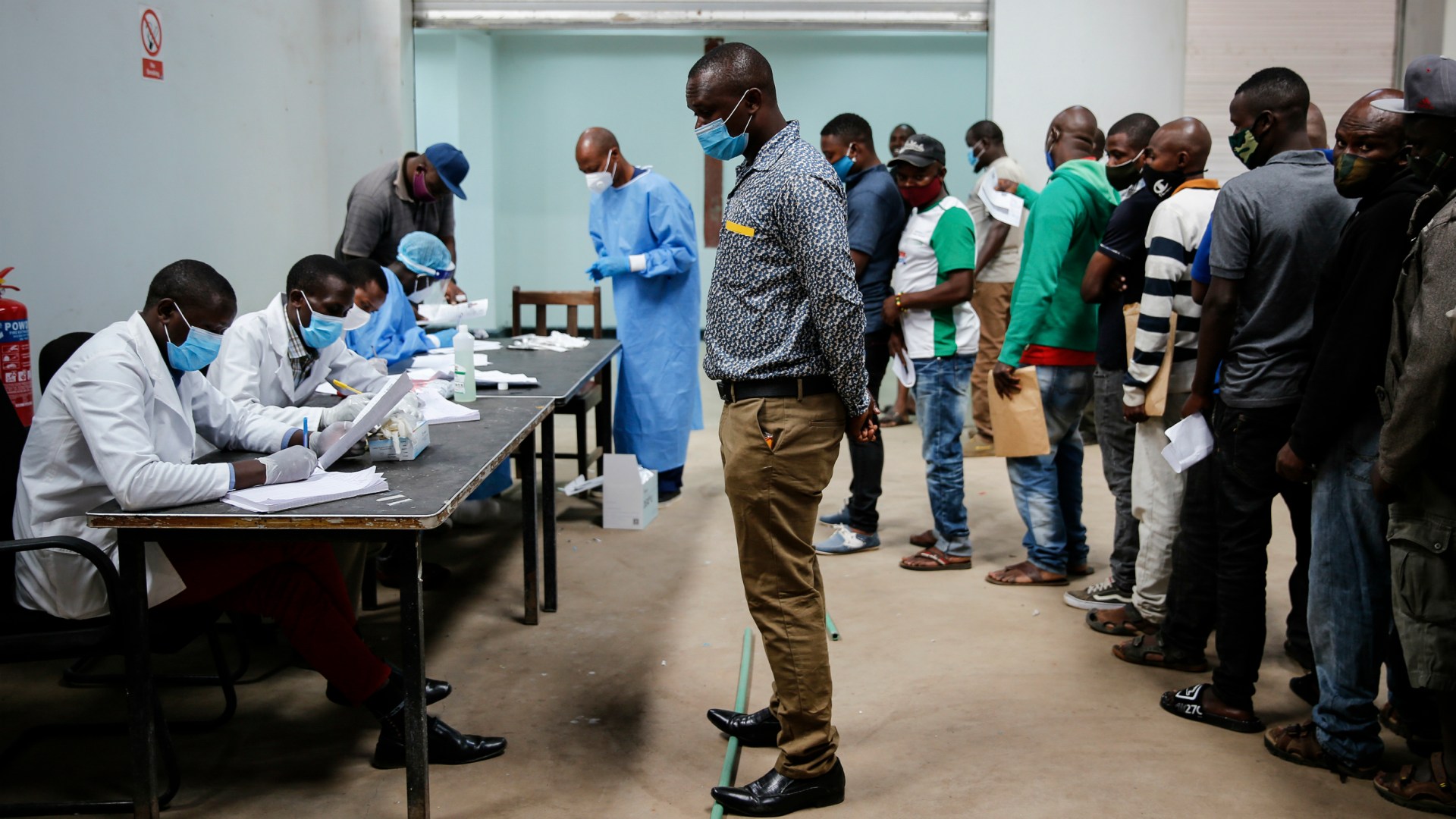
Truck drivers get screened for COVID-19 at Tanzania's border with Kenya.

Truck drivers get screened for COVID-19 at Tanzania's border with Kenya.

Christianity Today March 3, 2021
Associated Press

Tanzania’s leader is finally acknowledging that his country has a coronavirus problem after claiming for months that the disease had been defeated by prayer.

Populist President John Magufuli on February 21 urged citizens of the East African country to take precautions and even wear face masks—but only locally made ones. Over the course of the pandemic he has expressed wariness about foreign-made goods, including COVID-19 vaccines.

Last month, the president called on his 60 million citizens for three days of prayer to defeat unnamed “respiratory diseases” amid warnings that the country is seeing a deadly resurgence in infections.

“Maybe we have wronged God somewhere,” Magufuli told mourners at a funeral for his chief secretary, John Kijazi, on February 19. “Let us all repent.”

Though officials in late February announced public health rules similar to other nation’s COVID-19 measures, Magufuli has repeatedly claimed that Tanzania defeated COVID-19 with God’s help. The government has not updated its official number of coronavirus cases since last spring, and the health ministry has promoted unproven herbal remedies.

But the local Catholic church, the US Embassy, and others have openly warned of a resurgence in cases. On February 20, the director general of the World Health Organization (WHO), Tedros Adhanom Ghebreyesus, added his voice to growing calls for Tanzania to acknowledge COVID-19 for the good of its citizens, neighboring countries, and the world, especially after a number of countries reported that visitors arriving from Tanzania tested positive for the virus.

And the death last month of the vice president of the semi-autonomous island region of Zanzibar, Seif Sharif Hamad, brought widespread attention after his opposition political party said he had COVID-19.

Hamad’s death is “a clear symbol this pandemic is raging,“ the director of the Africa Centers for Disease Control and Prevention, John Nkengasong, told reporters on February 18.

Speaking about the deaths of Hamad and Kijazi, Magufuli asked the country to remain calm.

“We managed to defeat these respiratory diseases through prayer last year. I am sure we will do so this year,” he said in the nationally televised event.

Earlier last month, Tanzania’s health ministry said it had no plans in place to accept COVID-19 vaccines, just days after Magufuli expressed doubt about the vaccines without offering evidence.

Health Minister Dorothy Gwajima told a press conference in the capital, Dodoma, on February 1 that “the ministry has no plans to receive vaccines for COVID-19.” Any vaccines must receive ministry approval. It is not clear when any vaccines might arrive, though Tanzania is eligible for the COVAX global effort aimed at delivering doses to low- and middle-income countries.

The health minister insisted Tanzania is safe. During a presentation in which she and others didn’t wear face masks, she encouraged the public to improve hygiene practices including the use of sanitizers but also steam inhalation—which has been dismissed by health experts elsewhere as a way to kill the coronavirus.

Chief government chemist Fidelice Mafumiko also suggested the use of herbal medicine to cure COVID-19, without offering evidence.

Tanzania’s government has been widely criticized for its approach to the pandemic. It has not updated its official number of coronavirus infections—509—since April.

Magufuli asserted in January that vaccines for it are “inappropriate” even as the first significant vaccine deliveries begin to arrive on the African continent.

But authorities in Tanzania, from the Catholic church to government institutions, are pushing back and telling the public and employees that COVID-19 exists in the country and precautions must be taken.

The US Centers for Disease Control and Prevention in a recent travel warning on Tanzania said the country’s level of COVID-19 is “very high.” It gave no details but urged against all travel to the East African nation.

Magufuli previously said God had eliminated COVID-19 in his country.

“Now we have corona. They said bodies will be lying on streets in Africa. But they did not know God loves Tanzania,” the president said at a teacher’s conference last June. “We prayed for three days and the coronavirus is finished.”

His own church begs to differ.

From the local Catholic authority warning in late January of a new wave of coronavirus infections, to government institutions now requiring staffers to take precautions, Magufuli is being openly questioned as the African continent fights a strong resurgence in cases and deaths.

“We are not an island,” the secretariat of the Tanzania Episcopal Conference said in a widely shared statement. It urged followers, which include the president, to pray but also to adopt measures long practiced in the rest of the world, including avoiding public gatherings and close personal contact. The church's newspaper on January 29 stressed in a large front-page headline: “There is corona.”

Tanzania has tried to be an island since April, when it stopped updating its number of virus infections. Some health officials who questioned Magufuli’s stance that COVID-19 had been defeated were fired. The government promoted international tourism, eager to avoid the economic pain of neighbors who imposed lockdowns and curfews.

The president even praised Chinese Foreign Minister Wang Yi for not wearing a face mask during a visit in January, calling it another sign that Tanzania was free of the virus.

But pandemic concerns have returned to the spotlight in Tanzania as the world focuses on the arrival of COVID-19 vaccines.

While other African countries seek millions of doses, Magufuli accused people who had been vaccinated overseas of bringing the virus back into Tanzania. He also questioned whether the vaccines work.

“If the white man was able to come up with vaccinations, then vaccinations for AIDS would have been brought, tuberculosis would be a thing of the past, vaccines for malaria and cancer would have been found,“ he said on January 27.

“Be firm,” he added. “Vaccines are inappropriate.” He urged the health ministry not to rush into vaccinations without being satisfied about their safety. He offered no evidence for his claims.

African health officials were already worried about misinformation campaigns around COVID-19 vaccines as the first doses begin arriving on the continent of 1.3 billion people. Magufuli’s stance contrasts sharply with other African heads of state like President Wavel Ramkalawan of the Seychelles, who publicly received his first vaccine shot in January and urged citizens to do the same.

Asked about Tanzania, Nkengasong told reporters on January 28 that “if we do not fight this as a collective on the continent, we will be doomed.“

The WHO’s Africa chief, Matshidiso Moeti, told reporters that “we are re-initiating communication at the highest level of leadership” in Tanzania and seeking the government’s collaboration “for the sake of the people of the country and neighboring countries, as well as for the sake of the world.”

She urged Tanzania to prepare for COVID-19 vaccines, and to share its virus data with the WHO.

Some Tanzanians, from longtime critics of the president to civil society leaders, have issued a new round of exasperated warnings against trying to ignore a global pandemic.

“Tanzanians have the right to vaccination against COVID,” opposition leader Zitto Kabwe tweeted after the president’s comments, saying a government that doesn’t protect its citizens lacks legitimacy. He and others had watched as people took few to no virus precautions during a deeply flawed election that returned Magufuli to power last year.

Others worry that Tanzania is hurting itself and its economy, warning of travel bans against its citizens, the loss of tourism revenue, and dangerous health implications for years.

“By denying the pandemic, Tanzania may well have put itself at the back of a very long waiting list” for vaccines, Aidan Eyakuze, who leads the Twaweza East Africa initiative promoting government transparency, wrote in January for The Citizen local newspaper.

Reporting by AP journalist Cara Anna in Nairobi, Kenya. Additional reporting by AP journalist Tom Odula in Nairobi.

News

Race and the Church

A discussion on identity, faith, and the pursuit of justice.

Christianity Today March 2, 2021

Last year, CT’s “Race Set Before Us” series helped challenge and inform Christians during a season of reckoning, lament, and heightened interest around issues of racial justice. Join moderator Vincent E. Bacote, along with guest speakers from the original series Walter Kim, Michelle Reyes, Jamal-Dominique Hopkins, and Sheila Caldwell as they discuss how we can pursue racial justice within our theology, churches, and society.

Our Speakers:

Vincent E. Bacote

Vincent E. Bacote, PhD, is associate professor of theology and director of the Center for Applied Christian Ethics at Wheaton College. A theology adviser for CT, his books include The Political Disciple: A Theology of Public Life and his latest, Reckoning with Race and Performing the Good News: In Search of a Better Evangelical Theology.

Want to learn more? Download our free resource with thought-provoking essays by CT writers of color exploring themes of racial identity, faith, and the future of evangelicalism.

Walter Kim

Walter Kim became the president of the National Association of Evangelicals in January 2020. He also serves pastor for leadership at Trinity Presbyterian Church in Charlottesville, Virginia, after ministering for 15 years at Boston’s historic Park Street Church. Kim received his PhD from Harvard University in Near Eastern languages and civilizations, his MDiv from Regent College in Vancouver, and his BA from Northwestern University. He regularly speaks at college campuses, churches, retreats, and symposia, particularly in the areas of biblical theology and cultural issues.

Jamal-Dominique Hopkins

Jamal-Dominique Hopkins is currently dean and associate professor of Religion and Theology at Dickerson-Green Theological Seminary at Allen University. He also is a Senior Fellow at the Seymour Institute for Black Church and Policy Studies and a Pedagogy Fellow at Yale University’s Center for Faith and Culture, where he is part of the Christ and Being Human project focused on revitalizing Christian higher education.

Hopkins can be followed at www.jamalhopkins.com and on Twitter and Instagram @phdhopkins.

Sheila Caldwell

Shelia Caldwell is the chief intercultural engagement officer for Wheaton College, a position she has held since 2018. She previously served as the advisor to the president on diversity, director for Complete College Georgia, and principal investigator for an Upward Bound grant at the University of North Georgia. She is a diversity and student success champion with nearly two decades of experience in higher education.

Caldwell earned a BS from Northern Illinois University, a MA from Argosy University, and a doctorate in education from the University of Georgia. She completed the Harvard Kennedy School Strategies for Building and Leading Diverse Organizations Executive Education program.

Michelle Reyes

Michelle Reyes, PhD, is the vice president of the Asian American Christian Collaborative and the co-executive director of Pax. She is also the scholar in residence at Hope Community Church, a minority-led multicultural church in East Austin, Texas, where her husband, Aaron, serves as lead pastor. Michelle’s work on faith and culture has been featured in Christianity Today, The Gospel Coalition, Missio Alliance, Faithfully Magazine and more. Her forthcoming book on cross-cultural relationships is called Becoming All Things: How Small Changes Lead to Lasting Connections Across Cultures (Zondervan, April 2021). Follow Michell on Twitter and Instagram.

News

Conservative United Methodists Plan Breakaway Denomination

The new Global Methodist Church will leave the UMC regardless of the General Conference decision, which has been delayed until 2022.

Rev. Keith Boyette, a Virginia pastor and attorney, is part of the council preparing to launch the Global Methodist Church.

Rev. Keith Boyette, a Virginia pastor and attorney, is part of the council preparing to launch the Global Methodist Church.

Christianity Today March 2, 2021
Kathleen Barry / United Methodist News Service (UMNS)

Conservative United Methodists have chosen a name for the denomination they plan to form if a proposal to split the United Methodist Church is successful: The Global Methodist Church.

The Global Methodist Church unveiled its new name, logo, and website on Monday, days after the United Methodist Church announced it was once again postponing the May 2020 meeting that was set to consider the proposal to split.

That puts the likely launch of the planned denomination at least a year and a half away.

“Over the past year the council members, and hundreds of people who have informed their work, have faithfully and thoughtfully arrived at this point,” the Rev. Keith Boyette, president of the Wesleyan Covenant Association and chair of the Transitional Leadership Council that is guiding the creation of the Global Methodist Church, said in a post on the WCA website.

“They are happy to share with others a wealth of information about a church they believe will be steeped in the lifegiving confessions of the Christian faith.”

The United Methodist Church’s General Conference, its global decision-making body, is now scheduled to meet August 29 to September 6, 2022, at the Minneapolis Convention Center in Minneapolis.

Delegates are expected to take up a proposal to split the denomination called the Protocol of Reconciliation and Grace Through Separation.

The proposal, negotiated by 16 United Methodist bishops and advocacy group leaders from across theological divides, would create a new conservative “traditionalist” Methodist denomination—that’s the Global Methodist Church—that would receive $25 million over the next four years. Individual churches and annual conferences could choose to join the new entity; otherwise, they’ll remain in the existing denomination by default.

Calls to split one of the largest denominations in the United States have grown since a 2019 special session of the General Conference approved the so-called Traditional Plan strengthening its bans on the ordination and marriage of LGBTQ United Methodists.

At the time of the 2019 special session, Boyette’s WCA made clear it planned to split from the United Methodist Church if delegates to the special session had not approved Traditional Plan.

On its website, the Global Methodist Church says it similarly would move forward with a split if delegates to the General Conference meeting in 2022 do not approve the proposed protocol — or if support for the protocol wanes in the intervening year and a half.

The website describes the planned denomination as a “new church rooted in Scripture and the historic and life giving teachings of the Christian faith” and emphasizes its desire to be a global church.

The logo for the new denomination was unveiled this week.

It also includes downloadable versions of a proposed Transitional Book of Doctrines and Discipline in multiple languages.

“True to our roots, we’re a patient and methodical people,” Boyette said on the WCA website.

“We want to do our very best to help theologically conservative local churches, laity, and pastors navigate the transitional period as smoothly as possible. And then we look forward to the Global Methodist Church’s convening General Conference where we hope the duly elected delegates will find what we have done to be helpful. It will be their great task and responsibility to discern God’s will and so help all its local churches and people live fully into the body of Christ.”

Already, one group of progressive United Methodists has announced it isn’t waiting for a vote to form its own denomination.

The Liberation Methodist Connexion launched last November with a virtual worship service and introductory presentation. The LMX—which doesn’t expect members to leave their current denominations or faiths to join—stresses action over doctrine and emphasizes the full inclusion of people of all gender expressions and sexual identities, races and ethnicities, mental and physical abilities, sizes and ages.

News

Bethany Christian Will Allow LGBT Parents to Foster and Adopt

The largest Christian adoption agency is now calling on “Christians with diverse beliefs” as it aims to serve more children under a new inclusion policy.

Christianity Today March 1, 2021
iStock / Getty Images

Bethany Christian Services, the largest Christian adoption agency in the United States, has changed a longstanding policy and will now place children with LGBT parents for foster care and adoption across its operations in 32 states.

The news was announced today in a ministry-wide email and first reported in The New York Times. President Chris Pulasky told employees that “Bethany remains steadfast in its Christian faith,” and that the new practices will allow the organization to further its mission “to provide safe, loving, and stable homes to as many vulnerable children as possible.”

The change comes two years after Bethany opted to allow LGBT placements in its home state of Michigan. Pulasky was “disappointed” with the outcome of a lawsuit there, but at the time said if Bethany didn’t comply with state requirements it would miss out on serving thousands of children in foster care.

As legal fights over religious convictions on family and LGBT rights have continued to make their way through the courts and Congress, Bethany Christian decided to incorporate the move toward LGBT inclusion across the organization.

“We will now offer services with the love and compassion of Jesus to the many types of families who exist in our world today,” Palusky said. “We’re taking an all hands on deck’ approach where all are welcome.”

Robin Fretwell Wilson, a legal expert and an adoptee, applauded the move as an example of a Christian organization finding a way forward in the culture wars.

“I was pleased to see them talk about this as ‘all hands on deck’,” said Wilson, who directs University of Illinois’s Institute of Government and Public Affairs and is known for her role in advocating for Fairness for All legislation to safeguard religious liberty. “We need Bethany—and all the Bethanys of this world—to continue their work … They have recentered on their mission, on helping children, and they found in their theology a way to do it.”

The decision came as a disappointment, though, to some religious liberty advocates who wish to see greater legal accommodations for ministries to operate based on their convictions.

“The need is great for distinctively Christian adoption and foster care services, including that children need both mothers and fathers. Moreover, this move will harm already existing efforts to enable faith-based orphan care ministries to serve the vulnerable without capitulating on core Christian convictions,” said Russell Moore, president of the Ethics and Religious Liberty Commission and author of Adopted for Life: The Priority of Adoption for Christian Families and Churches.

“The better way to serve is to hold the line when Caesar wants to be Messiah too. The state has no right to serve as lord over the conscience. Nonetheless, many evangelical orphan care ministries are working, and will continue to work, for vulnerable children in need of families, while still holding to the faith.”

The Supreme Court is currently weighing a case involving a Catholic foster care agency in Philadelphia that had its contract with the city terminated because it wouldn’t work with LGBT couples. Since Bethany began accepting LGBT placements, it has become an option for Catholic Charities in Philadelphia to refer couples to if necessary.

“This illustrates what Catholic Social Services has said from the beginning: that there are many options available for LGBTQ families, and there is no need to take options away from children and families by shutting down agencies with different religious beliefs,” said Lori Windham, senior counsel at religious liberty nonprofit Becket Fund.

Bethany no longer includes in its position statement a line about upholding God’s design for marriage as between one man and one woman, but it doesn’t come out and affirm same-sex marriage either.

“Faith in Jesus is at the core of our mission. But we are not claiming a position on the various doctrinal issues about which Christians of mutual good faith may disagree,” said Nate Bult, Bethany’s vice president.

The organization continues to have staff sign a statment of faith based on the popular evangelical Lausanne Covenant, according to Bult, but has not required employees to adhere to a code of conduct or other restrictions around sexuality.

The move toward LGBT inclusion was endorsed by three former executive directors of the 75-year-old Christian organization.

Barna Group research found that three-quarters of self-identified Christians agree that Christian agencies should comply with LGBT requirements from the government rather than shutting down.

“At Bethany, we believe the Bible is the living Word of God, and we still believe in God’s plan for marriage and family as it is outlined in the Scriptures,” Palusky wrote for CT in 2019. “At the same time, it is clear to us that Bethany cannot cede the foster care space completely to the secular world and leave children without the opportunity to experience Jesus through our loving care.”

Bethany names spreading the love of Jesus as its primary motivation and holds regular prayer gatherings for staff. (During the pandemic, employees from across the US and six countries have been able to worship together online.)

“We acknowledge that discussions about doctrine are important, but our sole job is to determine if a family can provide a safe, stable environment for children,” Bult said. “Unlike many other child and family welfare organizations, Bethany is committed to partnering with churches to find as many families for vulnerable children as possible, and we seek to place children with families that share our mission.”

Protestant and Catholic organizations, motivated by their faith’s teachings on caring for children and orphans, play a significant role in state-run foster care systems and have increasingly found themselves in conflict with anti-discrimination regulations over the past few years. The future of Christian-run adoption and foster agencies is also a core concern in the debate around the proposed Equality Act.

In Texas, major Christian foster care providers such as Buckner International lobbied for a law passed in 2017 granting agencies the right to use faith-based requirements in placements, and in South Carolina, Miracle Hill Ministries was given a waiver in 2019 to refer non-Protestant applicants to other organizations.

Approaches to adoption and foster care among Christians are also changing, with family unification and domestic adoption now bigger priorities. A year ago, Bethany also announced its plans to phase out international adoptions.

Ideas

Why Christians Who Speak Jesus’ Language Can’t Agree on Their Name

It took Aramaic speakers 1,500 years to agree on Christology, now their main debate is over Assyrian identity. Could Pope Francis’ visit to Iraq encourage unity?

Christianity Today March 1, 2021
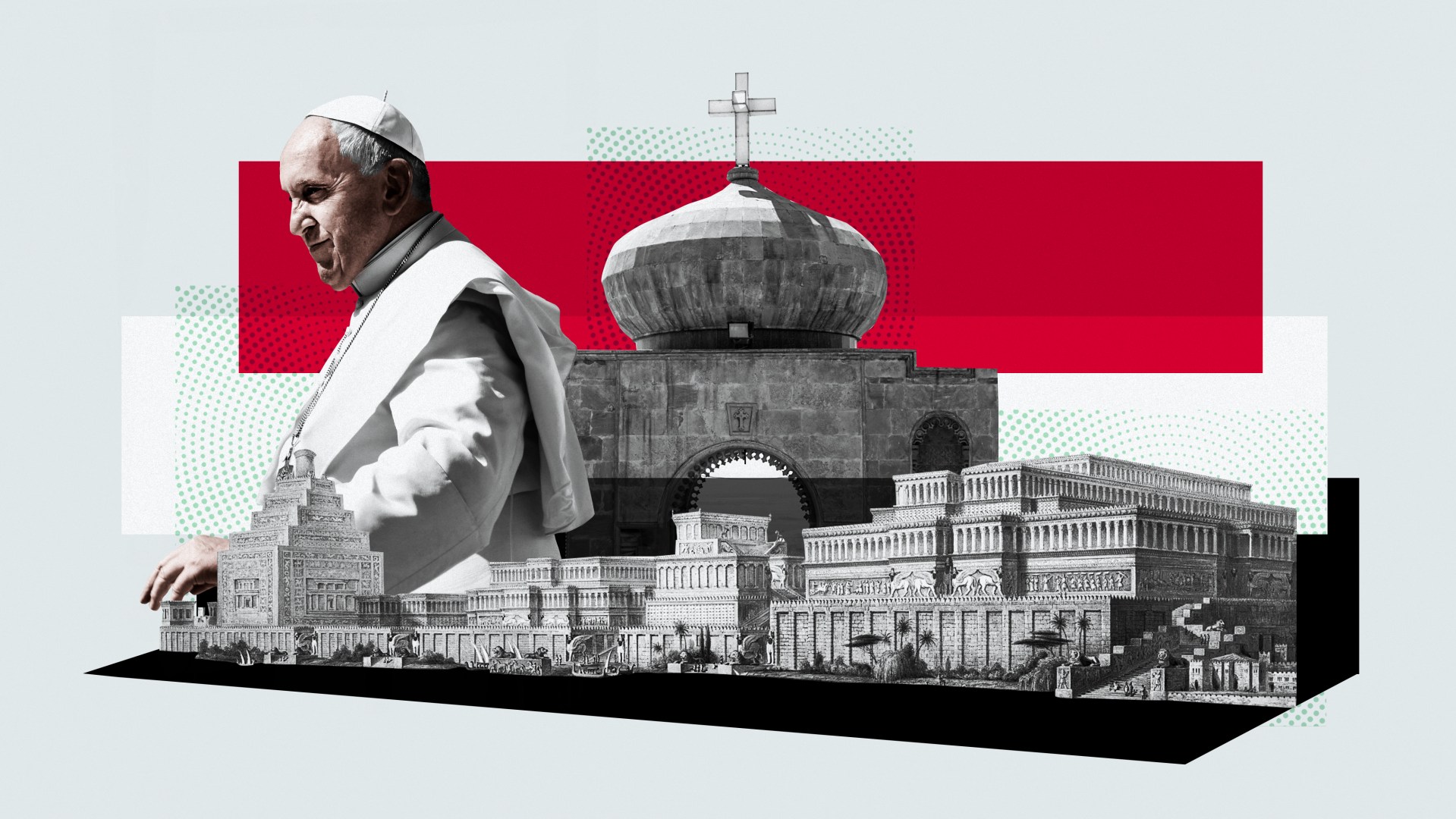
Illustration by Rick Szuecs / Source images: Annett Klingner / Pixabay / Wikimedia Commons

Pope Francis’ upcoming visit to Iraq in March is bound to attract attention to the nation’s peculiar Christian minorities. These fascinating groups have a uniquely Middle Eastern history that is far too little known and appreciated in the West, even though they are now present in sizable diaspora communities in North America, Europe, and Australia.

When over 20,000 Iraqi asylum seekers came to my home country, Finland, in 2015, I realized that as a half-Iraqi theologian it was finally time for me to find out about my roots. I knew they went deep and had something to do with Arameans, Assyrians, Chaldeans, and Syriacs—but who was who, and what was the difference?

Welcome to the heated debate over the identity of the Christians who still speak the language of Jesus.

Assyrian continuity and churches

Who are the Assyrians? There is no country called Assyria on today’s map, but from Old Testament history we remember the Assyrian Empire. Its capital city, Nineveh, was destroyed in 612 B.C., and its ruins lie in modern-day Mosul, in northern Iraq.

Could it really be the case that Assyrians have existed since then and converted to Christianity?

Indeed, average Assyrian Christians see themselves as belonging to the people that once ruled one of the greatest empires of the Middle East, which repented at the preaching of Jonah. According to this narrative, the Assyrians survived under the Babylonians, Persians, and Greeks, as well as in small kingdoms of their own like Osrhoene in northern Mesopotamia.

According to tradition, Osrhoene’s king, Abgar V, exchanged letters with Jesus and converted to the new faith following a later visit from one of the 70 disciples. Assyrians therefore consider themselves to be the first Gentile Christian nation.

In the following centuries, Assyrian Christianity developed independently of Rome, with a profoundly biblical and poetic form of theology. But there was contact with the West, and the Nicene Creed was accepted.

Further Christological developments divided the Assyrians, however, as did geographic realities. East Assyrians of Persia (in modern-day Iraq) were labeled Nestorians for rejecting the “mother of God” moniker for Mary. This name held until the 19th century, as did the Jacobite name for the Monophysite West Assyrians from Byzantine Syria. They got the label in reference to their relentless underground organizer, bishop Jacob Baradaeus (d. A.D. 578).

Today, these traditions are represented by the Assyrian Church of the East and the Syrian Orthodox Church, respectively. But both churches also have their Uniate branches, formed when certain patriarchs united with Rome in the 18th and 19th centuries to create the Chaldean Catholic Church and the Syrian Catholic Church.

The old Christological disagreements, however, were settled with joint declarations in the 1980s and 1990s, following important ecumenical meetings organized by the Pro Oriente Foundation in Vienna, Austria. After 1,500 years of separation, all parties could see that the others, too, accept Jesus Christ as fully divine and fully human, perfect God and perfect man.

In all the above-mentioned churches, the liturgical language is a form of Aramaic (Syriac), best known as the language of Jesus. Aramaic was widely spoken in the Assyrian Empire in the first millennium B.C., and by the time of Christ it was the lingua franca of the Middle East.

Less known is that it is still the mother tongue of many Iraqi Christians, who call it Sureth. Translating it is tricky: Some prefer Modern Syriac, others prefer Assyrian, and a third group prefer Chaldean. Linguists speak of North-Eastern Neo-Aramaic, which includes as many as 150 dialects. The largest Aramaic-speaking Christian town is Qaraqosh, near Mosul, which the pope is scheduled to visit on March 7.

Assyrian identity and nationalism

But at this point, we begin to enter the heart of the whole controversy. Not all the members of the aforementioned churches see themselves as Assyrians. This is especially the case in the Uniate branches, where people might prefer identities such as Iraqi, Christian, Syriac, Aramean, Chaldean, or even Arab. For example, my own Iraqi roots are in the Syrian and Chaldean Catholic churches, and I was never taught an Assyrian identity.

Am I an Assyrian Christian? It depends on whom you ask.

The debate today is no longer about Christology; it is now about politics and identity. Some dream of an autonomous Assyria or a safe haven for religious minorities in northern Iraq, while others argue that we should try to construct a safe and stable Iraq for all.

Some Chaldean Catholics consider themselves ethnically Assyrian, others think that Chaldean represents a separate ethnic identity stretching back to the ancient Babylonians, while yet others see Chaldeans as Eastern Syriacs or Arameans.

A war of citations has consumed academic articles of historians, Assyriologists, and Syriac scholars, as well as Assyrian, Chaldean, and Syriac/Aramean social media channels. In Sweden, one can even watch the Assyrians and the Syriacs battle it out on the soccer field.

Critical questions for Iraqi Christians

What is wrong with the Assyrian identity, then, according to the critics? David Wilmshurst, a leading historian of the Church of the East, says the moniker is “false” and has “little or no historical basis.” Rather, the Jacobite and Nestorian churches were multiethnic: They included descendants of Arameans, Jews, Persians, Greeks, and Arabs, even the so-called Saint Thomas Christians of India. Are they all Assyrian, too?

According to this narrative, modern Assyrian identity is a product of the 19th century, during which archaeologists excavated the ruins of the ancient empire, causing worldwide enthusiasm. Syriac Christian minorities were filled with a sense of pride and continuity: They were heirs to a great and ancient culture. Assyrian sounded much better than Nestorian, and so Western sympathies were won.

Assyrian nationalism gained momentum in the 20th century, especially after the trauma of World War I, of which some countries have recognized an “Assyrian genocide” alongside the Armenian one. Children were given ancient Assyrian names. An Assyrian calendar and flag were created. Several magazines and associations were founded.

And in some cases, the admiration also extended to Assyrian pagan and polytheistic religion, which provided critics with another strong reason to resist the newfound identity.

In sum, Assyrian Christianity is a complex issue covering historical questions spanning almost 3,000 years. Personally, I’ve changed my mind more than once in the past few years, and I am still open to new evidence.

But although I find the debate about ethnic continuity interesting, for me the richest and most inspiring heritage of the Christians of Iraq is found in the forgotten history of Syriac Christianity. This ancient expression of the faith includes martyrs and mystics, monks and missionaries, patriarchs and poets, and a whole new world of church fathers and biblical commentary.

On the official logo of Pope Francis’ upcoming apostolic journey to Iraq, the Syriac script used is the classical Estrangela, which predates the ecclesial divides and thus underlines the common heritage of the various Aramaic-speaking churches. And although the motto, chosen from Matthew 23:8, is certainly meant for Iraqis more widely, it is also fully appropriate within the Syriac-Assyrian-Chaldean identity dispute:

“You are all brothers.”

Emil Anton, PhD, is a Finnish-Iraqi theologian and author who recently published a book in Finnish about Mesopotamian and Iraqi Christian history (an English summary is available on academia.edu). He is also the Finnish language contributor to Vatican News.

"Speaking Out" is Christianity Today's guest opinion column and (unlike an editorial) does not necessarily represent the views of the magazine.

Ideas

‘I’m Following the Cross’: Why Shahbaz Bhatti Died Defending Asia Bibi

Ten years after Pakistan’s highest Christian official was martyred, religious freedom advocates apply his life’s lessons.

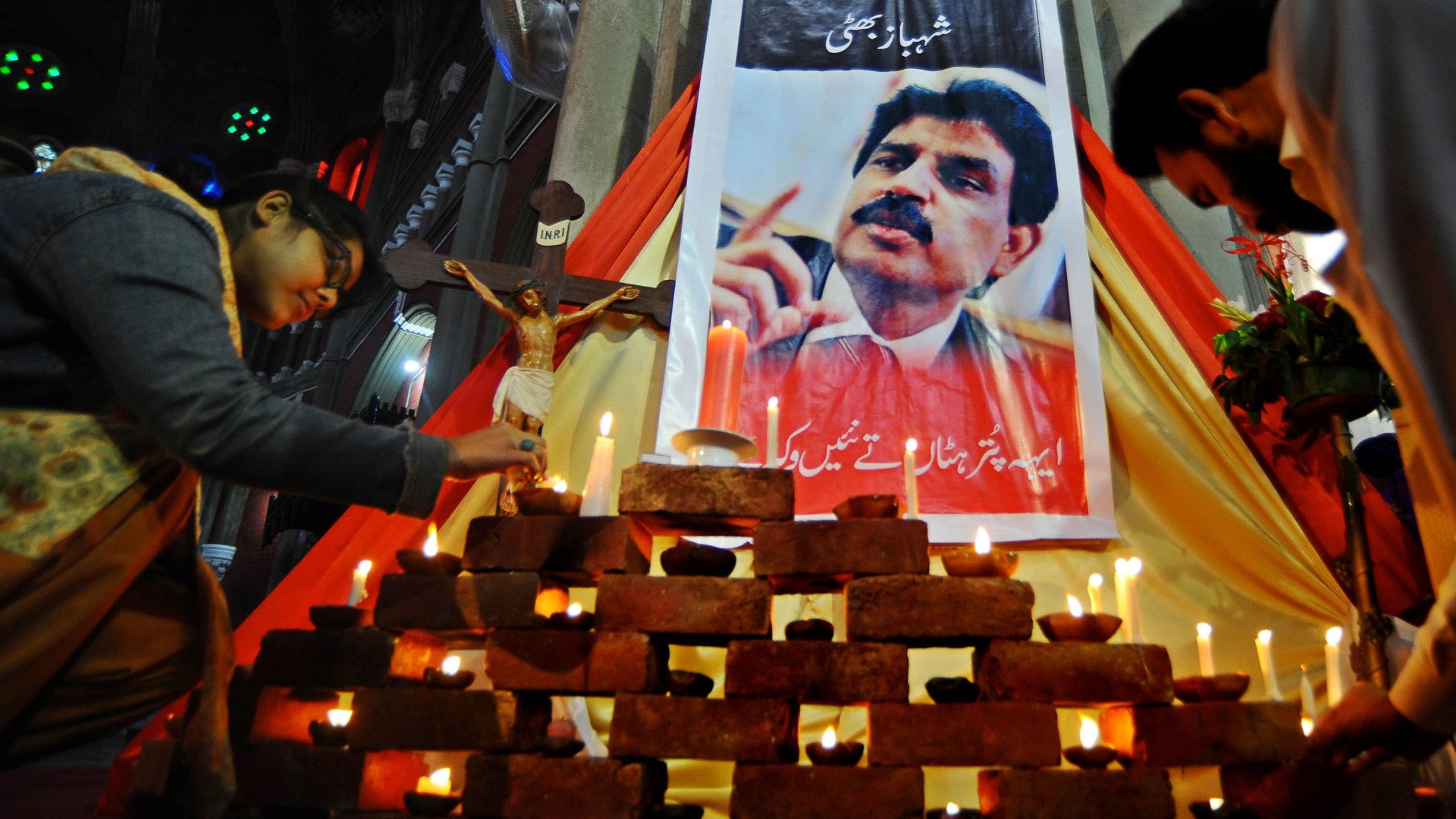
Pakistani Christians light candles in front of a picture of slain Christian minister Shahbaz Bhatti at The Heart Cathedral Church in Lahore on March 6, 2011.

Pakistani Christians light candles in front of a picture of slain Christian minister Shahbaz Bhatti at The Heart Cathedral Church in Lahore on March 6, 2011.

Christianity Today March 1, 2021
Arif Ali / Getty Images

“Shahbaz is dead.” I received the shocking news 10 years ago this week, as I stared out my kitchen window into a cold March morning. Shahbaz Bhatti was known worldwide as a courageous Christian voice for religious freedom in Pakistan. And I knew him as my friend.

Shahbaz lived an exemplary life, daily demonstrating heroic love of neighbor, speaking out for victimized religious groups in his home country. The only Christian in the Pakistani prime minister’s cabinet, he did not shy away from denouncing persecution. For this, the forces of darkness assassinated him on March 2, 2011, hoping to silence him and terrify others.

The question for those of us who remain: “How do we carry on his legacy?”

Pakistan was and is a dangerous country for Christians and other religious minorities. Government laws victimize, and violent religious extremists strike with impunity. Open Doors ranks it the fifth worst country in the world for Christians. Ten years ago, it was equally dismal.

Yet Shahbaz tirelessly advocated for the persecuted, be they his fellow Christians or members of other communities such as Hindus, Ahmadi Muslims, Shia Muslims, atheists, or Sunni Muslims standing up to extremists. He was fearless, speaking out on their behalf, carrying his small candle into dark places to shine a light.

Politically savvy, Shahbaz was appointed by then-President Ali Zardari to his cabinet, making him the only Christian federal official at the time. When Asia Bibi was sentenced to death in November 2010 over bogus blasphemy charges, Shahbaz threw himself into her cause. Advocating at every level for her release, he also worked with officials from around the world. I and others like Rep. Frank Wolf connected him with key people in Washington a month before his assassination. Shahbaz met with Secretary of State Hillary Clinton and Samantha Power at the National Security Council, as well as with members of Congress.

Shahbaz was making a difference. The forces of intolerance also noticed his effectiveness. He told me about increasing death threats.

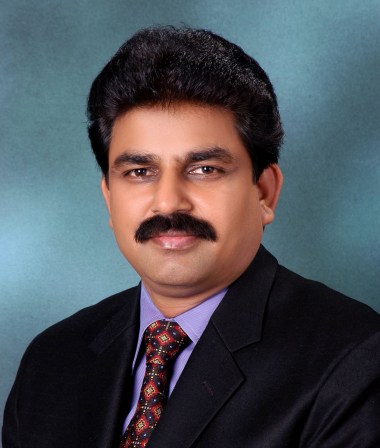
Shahbaz BhattiCourtesy of Peter Bhatti
Shahbaz Bhatti

The gravity of the situation became evident after Salman Taseer, the chief minister of the Punjab province and an ally in advocating for Asia Bibi, was murdered by his bodyguard in January 2011. Shahbaz was increasingly alone. When we spoke, his voice betrayed his fear. If radicals could knock off a high-profile Muslim governor, then they could murder him as well.

Yet the last time Shahbaz called in late February, he was upbeat, hopeful for reform. Zardari had reappointed him to the cabinet, something he called a “miracle.” Shahbaz had new ideas for amending the notorious blasphemy law. It was the Shahbaz I loved and respected. Bold, optimistic, fearless. All just before the unthinkable.

Days later, the Pakistani Taliban would ambush him outside his mother’s home, killing him in a barrage of bullets under a cold drizzle of rain. As the shockwave traveled around the world, President Barack Obama issued a statement, as did other world leaders, condemning the assassination. However, accountability for the killers would never come.

Shahbaz knew this was likely. In a recorded statement before his death, he explained what he confronted: “The forces of violence, militant banned organizations, the Taliban and pro-al Qaeda, they want to impose their radical philosophy in Pakistan. And whoever stands against their radical philosophy, they threaten them.”

He continued, “When I’m leading this campaign against sharia law, and for the abolishment of the blasphemy law, and speaking for the oppressed and marginalized persecuted Christians and other minorities, these Taliban threaten me.”

Yet knowing these risks, Shahbaz held an eternal perspective. He declared, “I want to share that I believe in Jesus Christ, who has given his own life for us. I know what is the meaning of the Cross, and I’m following the Cross.”

In hauntingly prescient words, he concluded, “I’m ready to die for the cause. I’m living for my community of suffering people, and I will die to defend their rights. So, these threats and these warnings cannot change my opinion and principles. I prefer to die for my principles and for the justice of my community rather than to compromise on these threats.”

Braver words were never spoken.

I learned much from Shahbaz about effective advocacy:

  1. Be smart. Understand the situation. Don’t fire off half-baked statements or exaggerate by calling every problem “persecution.”
  2. Keep the well-being of the victim in mind. The Hippocratic oath applies to human rights work: Do no harm.
  3. Work in coalition. Shahbaz brought together Christians of all denominations and members of other faiths in a joint effort. He also reached across political and geographical boundaries to find allies.
  4. Be bold and speak out for all. Proverbs 31:8 declares, “Speak up for those who cannot speak for themselves, for the rights of all who are destitute.” Shahbaz lived this admonition, bravely fighting for persecuted Christians and members of other religions.
  5. Ground every effort in unshakable faith in God.

So, what now, a decade after his murder? Pakistan continues its slide toward radicalization. It took almost a decade to see Asia Bibi set free. Blasphemy cases continue to pile up, with other unknown souls—both Christian and Muslim—experiencing a similar hell. Pakistan has the dubious distinction of jailing more people for blasphemy than the rest of the world combined. The forced conversion and marriage of Hindu and Christian girls is routine, a euphemism for physical and spiritual rape. The government does little to stop these abuses.

Seeing progress in Pakistan will require sustained engagement and dedication. Intolerant forces are pulling the country further toward extremism and radicalization, which will increase human rights abuses for Muslims and Christians and other non-Muslims alike. Coordinated and continuous efforts by governments, civil society, and religious leaders can begin to move the needle. Sometimes, speaking out publicly will best help. At other moments, working behind the scenes will be the wise route. Reform will take years. Yet we cannot ignore these trends because it is hard; we must press ahead because at stake are millions of lives.

In response, the United States, along with Canada, Europe, and the United Nations, must press reforms, incorporating human rights into interconnected concerns regarding terrorism, security, and violent extremism. Bilateral consequences like sanctions should follow inaction and increased persecution.

And how should the church respond? We best honor Shahbaz’s sacrifice by following his example of advocating for the persecuted, both Christians and those from other faiths.

The Bible overflows with calls to help our fellow man. Micah 6:8 declares, “He has shown you, O mortal, what is good. And what does the Lord require of you? To act justly and to love mercy and to walk humbly with your God.” The call to seek justice is universal, not time bound or limited by geography.

Jesus built on this foundation in his parable of the Good Samaritan in Luke 10. As we remember, the hero was the third person who came along, the Samaritan, who rescued the injured traveler. Jesus naming a Samaritan as the hero was an astonishing twist for the listeners of the day. Jews and Samaritans hated each other. Samaritans were the ultimate “other,” considered religiously and ethnically different. The hero ignored these barriers to help another suffering human being.

Jesus concluded by stating, “Go and do likewise” (v. 37). This heroic love of neighbor calls on Christians to fight for human rights and assist the suffering. We must follow the Samaritan’s example and the example Shahbaz modeled.

While most of us cannot go to Pakistan, we can support involved groups financially and through prayer. Shahbaz’s brother Peter runs an NGO in Canada assisting persecuted Pakistani Christians. Other organizations such as CSW (formally Christian Solidarity Worldwide), the Stefanus Alliance International, and the Institute for Global Engagement (where I work) fight for religious freedom for all, out of Christian conviction. You can educate yourself on this human right and how to advocate effectively for it. You can learn more about Shahbaz during the virtual commemoration service on March 2.

It is rare to meet someone willing to sacrifice everything for a cause, a person who knowingly faces death out of obedience to God’s call to help others. With Shahbaz’s martyrdom 10 years ago, we lost a hero in the cause of religious freedom. Compared to his saintly efforts, the work of mere mortals like myself feels inadequate and inconsequential.

Yet what we do matters. Our humble contributions can make a difference. During Lent, we should ask God to reveal where we can act, either locally or supporting groups abroad, so we can begin a journey toward positive impact. Through our own advocacy, we best honor Shahbaz’s legacy by shining a light into the dark.

Knox Thames served as the State Department Special Advisor for Religious Minorities under both the Obama and Trump administrations. He is currently a senior fellow at the Institute for Global Engagement and is writing a book on 21st-century strategies to combat religious persecution. You can follow him on Twitter @KnoxThames.

Ideas

Read Your Bible Through a Kaleidoscope

Columnist

Multicolored scholarship expands biblical interpretation beyond traditional Eurocentric perspectives.

Christianity Today March 1, 2021
Illustration by Mallory Rentsch / Source Images: Duy Hoang / Armando Arauz / Luis Quintero / Unsplash

Are evangelical theology and practice of biblical interpretation captive to overly Eurocentric traditions? Increasing numbers of female and nonwhite biblical interpreters continue to reject what they see as patriarchal and sexist understandings of Scripture that reinforce historically white cultural assumptions.

“Objective” biblical interpretation?

In my essay on hermeneutics and exegesis, I point to the development of approaches to Scripture that complement and sometimes contradict historical-critical methods that gained prominence through European scholars of the 19th and early 20th centuries. The historical-critical approach emphasizes the study of language, cultural setting, and literary form. Scholars trained with such an approach sometimes conclude that there is only one way to understand a passage and that their understanding is what the original author intended. Yet the pursuit of a pure, objective, unbiased understanding of biblical authors can itself be a reflection of the interpreter’s own presuppositions.

Greg Carey observes that white male scholars have enjoyed the privilege of their questions, assumptions, and perspectives on a biblical passage being received as the right (and perhaps only) viewpoints. The privilege that accompanies whiteness relates intimately with the traditional norm of biblical scholarship. Carey writes,

‘exegesis.’ … The classic notion of exegesis assumes a fixed, rational, and universal process of interpretation. It also promotes a certain kind of detachment, as if the interpreter were a disembodied mind, free from the constraints of context and daily life.

Everyone brings their biases to the Bible. While we might strive to discern how the first listeners of Scripture understood what they heard, we do well to remember that our reading is influenced by who we are, along with where we’re from and how we experience life.

“Colonized” Biblical Interpretation

In his book, Twelve Lies That Hold America Captive: And the Truth That Sets Us Free, Pastor Jonathan Walton describes a kind of Christianity distorted by colonialism. Walton asserts,

Colonialism created a counter-faith I call White American Folk Religion (WAFR). It’s a set of beliefs and practices grounded in a race, class, gender, and ideological hierarchy that segregates and ranks all people under a light-skinned, thin-lipped, blond-haired Christ.

Issues of “colonized” Christianity run deeper than popular faith practices. As an African American man, seminary professor, and pastor, I’ve experienced firsthand the way colonized Christianity can affect misunderstandings about God, humanity, salvation, and countless other theological convictions. Colonized Christianity has fueled oppression, slavery, racism, sexism and other egregious evils throughout history.

Consider the example of Jesus’ encounter at a well with a Samaritan woman (John 4:1–42). On the one hand are interpreters who see the woman as promiscuous and evasive. She’d had five husbands and was currently “shacking up” (a term many preachers used throughout my lifetime) with a man to whom she wasn’t married. She fetched her water at midday (vv. 6–7) to avoid respectable women who drew water during cooler times. When Jesus acknowledged her many husbands, she changed the subject to the division between Jews and Samaritans over worship (vv. 17–20). During my seminary years, I was taught that the woman was changing the subject because her shameful lifestyle had been exposed. Traditional interpretations, especially since the Protestant Reformation, typically view the woman as more vixen than victim, sexually immoral rather than trapped in circumstances of society.

Female scholars view the encounter in a different light. Frances Gench observes the Samaritan woman as “the first character in John to engage Jesus in serious theological conversation.” Jesus engages the Samaritan woman over an offer of eternal life (v. 14) in the context of the feud between Jews and Samaritans. He follows with the inquiry of her worldly situation, inviting her to recognize him as a prophet and eventually the Messiah (v. 26). The woman enters into serious theological conversation with Jesus over true worship, the Spirit and truth, which then leads to effective witness about Jesus to her people.

As for drawing water at midday, there are countless reasons why a woman may have needed to draw water at noon without assuming anything negative about her character or motives. Mitzi Smith notes that noon “may have been an unusual time of day to draw water … but people do what they have to do and when they have to do it.” Scholars go on to point out the woman’s relatively powerless position in society, particularly with regard to marriage given that marriage was a main source of security for women.

Having learned the traditional view in seminary, I would assume while sharing the gospel that people were hiding their sin, as I was taught the Samaritan woman had been. I expected people to be evasive in conversation with me, so I minimized their theological questions. Over time, however, I became increasingly comfortable questioning what I had been taught about the Samaritan woman, as well as interpretations of other Scripture passages. I began listening better to those I engaged in conversation about Jesus, striving to know them and hear their circumstances rather than assume the worst.

Kaleidoscopic reading

Biblical interpretation happens best in multifaceted community: ancient as well as modern, global, and increasingly diverse. Interpretation should be kaleidoscopic, acknowledging and even celebrating the many colors and cultures that play a part to influence interpretation. Kaleidoscopic interpretation sometimes challenges more conservative and traditional scholarship for the sake of decolonization, but it does so only by mostly using the same hermeneutical tools of study, mining history, language, and culture in search of greater understanding.

Our lenses—our perspectives born from our place in the world—influence our interpretation.

Nevertheless, our lenses—our perspectives born from our place in the world—influence our interpretation. These lenses impact the questions we ask of the text and affect the theological perspectives we glean from Scripture. Increasing numbers of women and nonwhite authors are helping all of us to read the Bible with greater awareness of the world behind the text, which can only broaden and deepen our theological understanding.

Kaleidoscopic reading invites us to be humble, charitable, and patient, as well as inquisitive. We aren’t reading to discern who is “in” and who is “out” or prove who is “right” and who is “wrong.” Instead, we are reading to grow increasingly aware of who God is, who we are, and what it means to be more like Christ. Remember: The point is transformation more than merely information. We must learn to be more collaborative in our study, finding increasing numbers of ways to read and heed the voices of Christians outside the United States as well as from marginalized people within our country.

Kaleidoscopes yield a multicolored view, but they can feel disorienting. Images shift and become complex. Rather than rejecting the disorientation, we do well to embrace it and, as with a kaleidoscope, discover the beauty of light shining though the many reflections of color. Any potential discomfort serves to remind us that we are not the first or only people to read the Bible. Discomfort is part of the journey toward maturity. As we read Scripture as part of a global community of Christ followers, we learn to love God and our neighbors more wholeheartedly.

Dennis R. Edwards is a columnist at Christianity Today.

News

And Campaign to Add 13 New Chapters During Pandemic

Political tensions and growing racial awareness have fueled interest in its message of social justice and biblical morality.

Christianity Today February 26, 2021
Brett Tighe / Courtesy of And Campaign Charleston

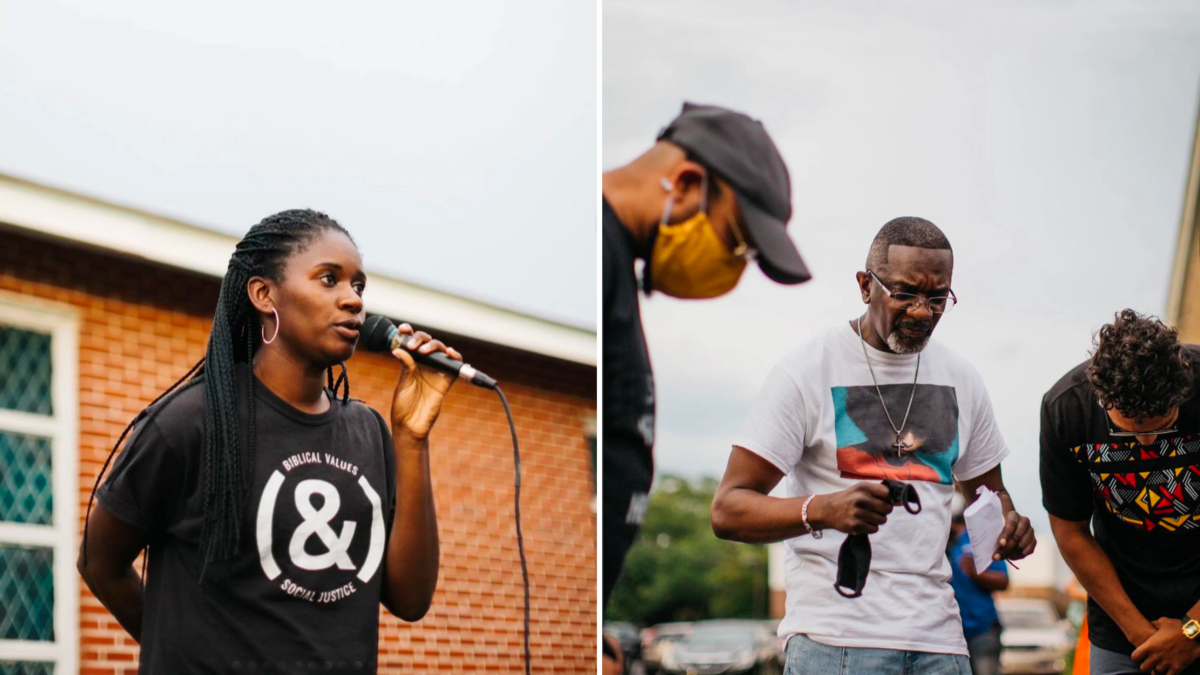
The And Campaign—the organization rallying urban Christians to “faithful civic engagement”—is on track to quadruple its size in the span of a year, with chapters launching in three Southern cities in 2020 and scheduled to launch in another 10 cities in the first half of 2021.

Last year’s convergence of the COVID-19 pandemic and political and racial unrest in the United States catapulted organizations like the And Campaign, which were already addressing these complex issues, to a new level of prominence.

“The pandemic had a huge impact on our growth,” said attorney and political strategist Justin Giboney, who cofounded the And Campaign with pastor Angel Maldonado and hip-hop artist Sho Baraka in Atlanta in 2015.

In May, the group’s Statement on Racialized Violence went viral after the death of George Floyd, tripling its social media following.

“When that racialized violence happened, and everyone had their full attention on it because there was nothing else to pay attention to, our executive committee got together and said, ‘Hey, we need to speak into this,’” said Giboney, referencing the killings of Floyd, Breonna Taylor, and Ahmaud Arbery.

“So many Christians are trying to find a way to process exactly what is going on in biblical terms. Some are ignoring it because their ideology is too far right. Some are getting too caught up in the moment and kind of changing their convictions because they have gotten too caught up on the left. I said we need to speak into this in a real way, and so we created a biblical statement on racialized violence.”

The statement addressed racism and criminal justice reform—one of the core political issues for the And Campaign, which promotes both social justice and moral order as priorities for Christians.

With established chapters in Atlanta, Dallas, Brooklyn, and Chicago, the And Campaign added chapters in Charleston, South Carolina; Raleigh, North Carolina; and Birmingham, Alabama, last summer and fall.

“There was so much conversation about racial reconciliation and injustice, but there were very few on-ramps for Christian action in Charleston,” said Philip Pinckney, pastor of Radiant Church in Charleston, who founded its chapter after connecting with Giboney at a local multiethnic ministry conference called 1Charleston. “In the city where the Civil War was started, that is still reeling from the murder at Emanuel and that probably has more churches per square mile than any other place in the country, we had to mobilize.”

The Charleston chapter held its first event, a Prayer & Action Rally, at Pinckney’s church on Juneteenth. Though the event received local news coverage and drew attention online, Pinckney suspects the pandemic hurt turnout. The chapter continued to engage in issues leading up to the 2020 election. It created its own 17-page guide to local races and interviewed some of the candidates.

The founder of the Birmingham chapter, Danny Brister Jr., also heard Giboney speak at a conference—Just Gospel, put on in Atlanta by The Front Porch. Brister, a former pastor and church planter, said he was “bothered by politicking around the pandemic” and looking for a way to be politically engaged from a Christian perspective following the death of George Floyd.

He established the chapter in October 2020. Its six leaders are split between black and white, men and women, and span progressive and conservative political perspectives. Pandemic permitting, Brister hopes to host a public launch event in the spring. In Birmingham, 2021 is an important election year, with seats for school board, city council, and mayor up for election.

Brister, a community liaison for a local charter school and former employee of the City of Birmingham Mayor’s Office, has engaged Christians who plan to run for local offices in the near future with And Campaign materials. “They really want to talk about how they do this faithfully and if they win, how can they honor God and not capitulate their Christianity,” he said.


Sometimes privacy is sin against the body.


“Pastor, I want to tell you something. But keep it confidential—we don’t want anyone else to know this.”


“Sure, Pete, you know I’ll keep whatever you tell me strictly between us.”


“Well, Pastor, our son is an alcoholic. And he’s only 18. He’s getting treatment and is dried out right now, but you would not believe the agony we’ve been through.”


“Keep it confidential!” That pastor just agreed to keep secret something his entire congregation should know about. He allowed himself to be cornered into keeping private a matter that belongs not to a few individuals, but to the whole body of which they are part.
This is no isolated experience. It is more common than rare. Church members withhold from their fellow members the hurts, fears, burdens—and also the joys and victories—of their private lives.
It may jar some to have this privacy challenged. Since it is such a typical part of parish life, the practice goes on like other sacred traditions. But closer reflection should lead us to question seriously the appropriateness of many confidences in the Christian church.
A body has no privacy from its various parts. The toe cannot keep its pain confidential, secret, from the rest of the body. In fact, the toe’s pain is not its own. It belongs to and is felt by the whole organism. The communication system is very effective. The news gets around very fast in the otherwise healthy body.
Pete’s pain over his son is not his private property if he holds membership in the body of Christ. While Pete is the father, the alcoholic son belongs to the whole congregation, the entire covenant community. At his baptism, Pete’s son was incorporated into that community with promises spoken or implied that he was now the object of their concern. They pledged to take care of him. He was their son, too. But communication to the rest of the body is being thwarted. Both Pete and his pastor are preventing the necessary transfer of information to the other parts.
In the physical body, if the infected toe is not felt by the rest of the body it is likely to go untreated and get worse. Leprosy is like that, for if the diseased part, dead and unfeeling, goes untreated, serious complications usually result. But if the pain is felt through the whole system, all resources can be martialed to help heal it.
Every day pastors and parishioners are innocently conspiring to prevent the body from taking care of its ailing parts. They do it by requesting and agreeing to keeping secret the hurts, concerns, worries, ills, and tragedies that are occurring in various parts of Christ’s body.
John is having conflict with his employer.
Mary is pregnant but unmarried.
Harry left his wife.
Frank and Betty’s baby seems retarded, but too young to tell for sure.
Ann is in the hospital for a hysterectomy.
Jerry is in a psychiatric hospital.
Earl and Kay’s son has run away again.
Gordon may have cancer.
The list could be lengthened with further instances of the kind of information kept secret from the other members of the church. Often the pastor joins in to keep it secret. Sometimes even he is left out.
Privacy of this sort violates the very essence of the church. At the heart of Christian living is membership in a body, a caring community exhorted and pledged to bear each other’s burdens, to weep with those who weep, and to rejoice with those who rejoice. Keeping one’s pain secret short-circuits this spirit and prevents healthy body life. How can others support, challenge, pray for, weep with, give help to, advise, and confront with an aim toward healing if they do not know what is happening?
Fear of the effects of gossip fuels the fires of privacy. It works as a powerful inhibitor to openness. But nothing can take the punch out of gossip like being open about one’s troubles. Gossip feeds on secrecy and dies when the news is published. Secrecy thrives on fear of gossip, but actually produces gossip because people are more likely to spread secrets than common knowledge.
There may be other, even valid, reasons for not wanting everyone to know something. But most are born of fear, habit, tradition, and middle-class independence. Pete’s thinking went something like this: “I do want the help of other people, but I don’t want to bother them with everything that happens. When I really need help, I’m able to ask for it and I will.”
The point against too much privacy is not that Pete cannot handle his load by himself. He can and he will. But if he spread it around to others, he would find it not quite as heavy.
But beyond what Pete himself would get out of it, there is another value: the body is reassured by being in on Pete’s problem. Like white blood cells congregating to fight an infection, members of the church body draw together in caring for a troubled part. Seeing this communicates to each member a new awareness of this caring community as an encouraging bulwark in their lives. They, too, are strengthened while focusing on Pete’s pain. So we also distribute our personal problems because the whole body is built up by knowing about it and helping with it.
The fact remains, however, that Pete will be helped if others know. One man told me how he shared with his fellow church members some problems he was having with his employer. While asking for prayer and support, and receiving it, he also was given valuable advice from experienced business men of the congregation. A group of people have a wide array of additional resources that can also help others in crises.
In one church, a special time is set aside in the worship service for “joys and concerns.” People are given an opportunity and sometimes coaxed to say aloud what is going on in their lives. Right now it is only scratching the surface; but it’s a start. Strangely, it is not easy for people or pastor to accept this use of time as being as important as singing a hymn, taking the offering, or reciting a creed.
For the most part, only the socially acceptable common illnesses receive publicity in church. Anything with the slightest stigma is hushed up or only alluded to in vague generalities like “those struggling with marriage problems, the unemployed, those in prison, those with emotional problems.” Seldom is a problem more specific—unless it’s gall bladder or open heart surgery. Announcements, spoken or in the bulletin, veil most problems with a cryptic note that so-and-so is in such-and-such hospital. They leave the congregation guessing about what it’s all about. The covenant community deserves and needs to know details in order for them to respond appropriately.
JIM KOKMr. Kok is chairman of the Department of Pastoral Services at Pine Rest Christian Hospital, Grand Rapids, Michigan.

Even before national attention turned to racial justice issues, the And Campaign took the lead helping churches in low-income locations during the pandemic. Together with ministry partners, the Churches Helping Churches Challenge raised over $1.3 million and will continue to offer $5,000 grants to continue projects in their communities.

The And Campaign also saw growing interest around its political philosophy ahead of the 2020 presidential election, connecting with believers who felt “politically homeless” in the major parties.

“We articulated that there is this false dichotomy that politics forces you to go all the way to the left or forces you to go all the way to the right,” Giboney said. “A lot of Christians say, ‘That’s me. I care about poverty, I care about voter rights, and I care about the pro-life cause.’”

At a recent Zoom meeting for the And Campaign’s Atlanta chapter, they discussed the Georgia Senate runoffs, which put their city in the spotlight of American politics, as well as the Capitol insurrection, President Joe Biden’s COVID-19 response plan, and Senator Mitt Romney’s Family Security Act.

On a local level, the chapter is planning on advocating for juvenile probation reform—which leaders believe can be a bipartisan issue for Atlanta Christians—and reaching out to Christian state legislators, urging them to apply their principles to their work.

“There’s this idea that in order to be educated in politics, you have to be educated by the world first and then be educated by your faith, but that is backward,” said Abrm McQuarters, an Atlanta chapter leader.

Leaders across the country are looking forward to resuming in-person meetings and events once COVID-19 risks have died down, especially to build on the momentum in the new chapters preparing to launch in 10 cities this year: Akron, Ohio; Houston; Asheville, North Carolina; Richmond, Virginia; Detroit; Denver; Kansas City, Missouri; Austin, Texas; Pittsburgh; and San Diego.

Books
Excerpt

Charles Spurgeon Knew It Was Possible to Be Faithful and Depressed

How his example can encourage believers who “walk in darkness, and see no light.”

Christianity Today February 26, 2021
Ilbusca / Getty Images / Edits by Mallory Rentsch

For Charles Spurgeon, the celebrated 19th-century preacher, depression was more than just circumstantial. When he spoke of it in his sermons and lectures, his examples, which were often rooted in his own experience, included a significant form of depression: the kind that comes without cause. In one sermon, he said,

Companions in the Darkness: Seven Saints Who Struggled with Depression and Doubt

Companions in the Darkness: Seven Saints Who Struggled with Depression and Doubt

IVP

192 pages

$10.44

You may be surrounded with all the comforts of life and yet be in wretchedness more gloomy than death if the spirits are depressed. You may have no outward cause whatever for sorrow and yet if the mind is dejected, the brightest sunshine will not relieve your gloom. … There are times when all our evidences get clouded and all our joys are fled. Though we may still cling to the Cross, yet it is with a desperate grasp.

Spurgeon understood that depression isn’t always logical and its cause is not always clear. There are times, he said, when our spirits betray us, and we sink into darkness. We slip into the “bottomless pits” where our souls “can bleed in ten thousand ways, and die over and over again each hour.” There is no reasoning, and a remedy is hard to find. As he put it once in a lecture to students:

As well fight with the mist as with this shapeless, undefinable, yet, all-beclouding hopelessness. One affords himself no pity when in this case, because it seems to be unreasonable, and even sinful to be troubled without manifest cause; and yet troubled the man is, even in the very depths of his spirit … [it] needs a heavenly hand to push it back … but nothing short of this will chase away the nightmare of the soul.

I am so thankful for quotes like this from Spurgeon because you can hear his understanding. I remember how helpless I have felt in my own depression, how it seemed I was powerless to do anything to escape from it. Some people expected there to be a quick fix, a logical solution, or some sort of spiritual willpower that could defeat it, but light and joy were evasive.

Spurgeon clearly knew this helplessness and how poorly people can react to it. He spoke directly to harsh and insensitive “helpers” from the pulpit—those who were quick to cast blame, quick to tell depressed people to just pull themselves out of it, and slow to show compassion. He also would not tolerate the accusation that “good Christians” do not get depressed. “God’s people,” he preached, “sometimes walk in darkness, and see no light. There are times when the best and brightest of saints have no joy.”

He was clear that depression isn’t a guaranteed sign of whether or not someone is a Christian; nor is it a sign you aren’t growing in your faith. It is possible to be faithful and depressed: “Depression of spirit is no index of declining Grace—the very loss of joy and the absence of assurance may be accompanied by the greatest advancement in the spiritual life.” Oh for more pastors to preach this way!

Your Usefulness Is Not Over

Perhaps you know the feeling of your spirits being so low that you can do nothing, contribute nothing. You are overwhelmed and paralyzed by sadness. Your brain is foggy, your temper sharp. All is dark. Then the questions come: What if this endures? What if I can never do anything of lasting value again?

Spurgeon knew this feeling. Perhaps this is why, in a lecture to his students on depression, he told them, “Think not that all is over with your usefulness.” He was laid low many times both physically and emotionally, but it didn’t stop his ministry. He wrote thousands of sermons and countless letters, read prolifically, met with people, prayed with people, organized ministries, and taught at the Pastor’s College. His suffering did not exclude him from usefulness. If anything, the fruit of it made him more useful. His experience with depression enabled him to encourage and support others who suffered from it as well.

For example, Spurgeon warned his students to be aware of situations in which they may be more susceptible to depression. The list he gave them runs like an autobiographical catalog:

  • when you have prolonged illness or physical problems
  • when you do intense mental or “heart” work
  • when you’re lonely or isolated
  • when your lifestyle is sedentary and you overwork your brain
  • after success
  • before success
  • after one heavy blow
  • through the slow pile of trouble and discouragement
  • in exhaustion and overworking

Or it could simply come without cause, without reason, without justification, which he considered the most painful circumstance of all.

Spurgeon offered compassionate and practical advice to his parishioners as well, preaching to them about such things as the need for rest: “The spirit needs to be fed and the body needs feeding also. Do not forget these matters! It may seem to some people that I ought not to mention such small things as food and rest, but these may be the very first elements in really helping a poor depressed servant of God.” Self-care is not merely a modern notion. Spurgeon understood from his own experience that taking proper care of our bodies is an important part of fighting depression, and he freely shared his hard-earned wisdom.

Because of his own suffering, he could also better sympathize with and comfort others. People would come from miles around to seek his advice and consolation, and those who couldn’t come physically would write letters. He was a “wounded healer”—someone who used his own sorrow to bring others comfort:

It is a great gift to have learned by experience how to sympathize. “Ah!” I say to them, “I have been where you are!” They look at me and their eyes say, “No, surely you never felt as we do.” I therefore go further, and say, “If you feel worse than I did, I pity you, indeed, for I could say with Job, ‘My soul chooses strangling rather than life.’ I could readily enough have laid violent hands upon myself to escape from my misery of spirit.”

There is a profound comfort in realizing someone else understands— at least in part—your suffering. They can offer comfort in a way others cannot. Surviving painful experiences like depression puts us in a unique position and bestows on us a unique responsibility to offer this comfort and camaraderie to others. Spurgeon encourages us not to forget this: “He who has been in the dark dungeon knows the way to the bread and the water. If you have passed through depression, and the Lord has appeared to your comfort, lay yourself out to help others who are where you used to be.”

Your usefulness is not over, Spurgeon tells us. You, too, can be a companion to one in the dark.

Sing in the Darkness

When I think of the word Spurgeon speaks to us from the inheritance of his own struggles, it brings to mind a boisterous hymn I remember singing in my childhood church:

Standing on the promises that cannot fail,

When the howling storms of doubt and fear assail,

By the living Word of God I shall prevail,

Standing on the promises of God.

In the lowest points of Spurgeon’s life, it was the promises of God in Scripture that lifted him from despair. In the early years, when he was depressed and distraught over the harsh criticism flung at him, he took comfort from looking at a Bible verse written in his wife Susannah’s script: “Blessed are ye, when men shall revile you” (Matt. 5:11, KJV). As the years went by, another verse replaced it, again in his wife’s hand: “I have chosen thee in the furnace of affliction” (Isa. 48:10, KJV). After the Surrey Gardens Music Hall disaster, when seven were trampled to death and many others injured after a false alarm during Spurgeon’s prayer at a crowded service, consolation from Scripture pulled him from the brink of collapse.

And repeatedly in his sermons, the words of Scripture and the lives of biblical characters encouraged him. They reminded him of truth. They kept him singing. They kept him alive. It was here, where the promises of God collided with his own sorrow, that he found hope.

In his introduction of the Chequebook of the Bank of Faith, a devotional book he wrote in the midst of the Downgrade Controversy (when he was embroiled in a dispute over compromised doctrine within the pastorate), Spurgeon says this: “I believe all the promises of God, but many of them I have personally tried and proved. … I would say to [fellow Christians] in their trials—My brethren, God is good. He will not forsake you: He will bear you through. … Everything else will fail, but His word never will.”

“Ah, yes, Spurgeon,” we might say, “but this is so difficult.” He knew this. He felt this struggle, the struggle for belief, for faith, the struggle to hold on to the hope of the promises. He knew the temptations of doubt. He knew how depression made them even more difficult to withstand, how much easier it was to question God’s goodness, his faithfulness, his abiding presence: “That perpetual assaulting, that perpetual stabbing, and cutting, and hacking at one’s faith, is not so easy to endure.” But endure we must. And it is precisely “by enduring that we learn to endure.” Our trials make these promises richer and make our faith in them even stronger as we see again and again that they are robust enough to sustain us. They teach us humble dependence on a faithful God.

Spurgeon was not saying that the solution to suffering and depression lies in the mantra many depressed Christians have repeatedly heard: Just read the Bible, just pray more, just have faith. There is no depression cure-all, no quick spiritual fix. But when we are in the darkness, the promises of Scripture are strong enough to keep us tethered. Knowing that we belong to Christ is an anchor. When we are flailing about, when we don’t know if we can go on, when we feel lost, when the darkness consumes us, we cling to God’s promises, even when we hardly have the strength to believe them. They are sure, regardless of our feelings, regardless of our outward state.

When we see people from the Bible like Elijah, who wanted to die, and the psalmists, who wrestled with depression and feelings of abandonment by God, and “we find ourselves in similar places,” Spurgeon preached, “we are relieved by discovering that we are walking along a path which others have traversed before us.” We see these saints cast into darkness. We see God’s faithfulness. We see his promises that are strong enough to hold them—and us as well. Don’t be dismayed, their stories remind us. This is a trial many have had to endure. You are still his. The Christ who bought you will not abandon you in the dark.

Spurgeon once said, “In the night of sorrow … believers [are] like nightingales, and they sing in the darkness. There is no real night to a man of a nightingale spirit.” It reminds me of a note I received once from a friend: “You are brave. You stand in the darkness, whispering Truth back to yourself.” I felt anything but brave at the time. It had been a hard year. It had been a year of tears and questions and fitful nights. And here was my closest friend calling me brave. I couldn’t believe it. I wasn’t brave—I was desperate. What else could I do in that dark place but keep whispering Truth? It was all I could do to keep the darkness at bay, to keep it from suffocating me.

This is what Spurgeon offers to us. A reminder to sing God’s promises. Sing of his faithfulness. Even if you can’t see it yet, even if you don’t feel it—whisper the Truth to yourself. Sing in the darkness.

Adapted from Companions in the Darkness by Diana Gruver. Copyright (c) 2020 by Diana Janelle Gruver. Published by InterVarsity Press, Downers Grove, IL. www.ivpress.com

Apple PodcastsDown ArrowDown ArrowDown Arrowarrow_left_altLeft ArrowLeft ArrowRight ArrowRight ArrowRight Arrowarrow_up_altUp ArrowUp ArrowAvailable at Amazoncaret-downCloseCloseEmailEmailExpandExpandExternalExternalFacebookfacebook-squareGiftGiftGooglegoogleGoogle KeephamburgerInstagraminstagram-squareLinkLinklinkedin-squareListenListenListenChristianity TodayCT Creative Studio Logologo_orgMegaphoneMenuMenupausePinterestPlayPlayPocketPodcastRSSRSSSaveSaveSaveSearchSearchsearchSpotifyStitcherTelegramTable of ContentsTable of Contentstwitter-squareWhatsAppXYouTubeYouTube