









Joanna Ng

Jonathan Bartlett

In this series

Computer scientist, Toronto, Ontario, Canada

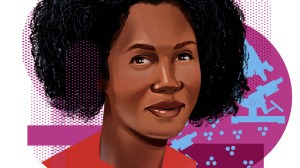
When Joanna Ng told her boss of her father’s death, he said, “Your dad must be proud.”

But Ng had tried to keep her work and her family life separate. “At that moment,” she said, “it dawned on me that I never told my dad what I was working on, because I knew that it was not a way to earn a brownie point from him.”

Jonathan Bartlett

In the view of her traditional Chinese family, she wasn’t supposed to find a career. Ng’s parents sent her to university to find a well-educated husband. She only took computer science courses as electives, not thinking she’d be good at them. Then she realized “God wired me for this field.”

Ng finds commonality with other women from similar cultural backgrounds. “I had to reject the female role that my family put upon me and willfully accept the role that God had for me in his divine destiny. That took a lot of years until I was comfortable in my own skin.”

Ng spent 35 years working for IBM and has been granted 44 patents under her name—notable because in the last 10 years, only 4 percent of patents list a woman as the sole inventor. “I am proud of my patent portfolio because it is my testimony of my journey of co-creating with God through the Spirit,” she said, referencing Jeremiah 33:3.

In 2018, Ng left IBM to start her own company. Using artificial intelligence, she hopes to create technology that takes virtual assistants, like the Alexas and Siris of today, beyond their passive functionality of today (you still have to ask them a question for them to work). She sees a world where Alexa helps health care workers with large caseloads monitor patients’ vitals and prioritize tasks.

To her, AI is nothing to be feared but should be used wisely—a message she shared at a Lausanne Network meeting last year in Manila.


Also in this series

Also in this issue

This month’s cover story examines the power of communal confession to heal the church’s—and society’s—deepest divisions. But pastor and writer Jeff Peabody doesn’t point to the early church or to liturgical traditions as the model for how we should pray; he turns to the famous ancient prayer of Daniel at the end of Israel’s long Babylonian exile. The prayer upends our typical notions of what it means to “speak prophetically,” and the implications for our fractious cultural and political moment are striking.

Cover Story

Forgive Us Our Sins (And Theirs, Too)

Jeff Peabody

Set Free by the Cross, Why Do We Live in Bondage?

Anthony J. Carter

New Editor, Old Roots

The Motherly Love of a Wrathful God

Robert L. Foster

Reply All

Democratic Christians Weigh Their Primary Concerns

Real Love Requires a Command

Daniel Harrell

News

Have You Noticed Church Is Farther Away Than it Used to Be?

María de los Ángeles La Torre Cuadros

Rebecca Randall

Why Do Fewer Christian Women Work in Science?

Elaine Howard Ecklund and Robert A. Thomson Jr.

Twelve Christian Women in Science You Should Know

Rebecca Randall

Erica Carlson

Rebecca Randall

Mary Schweitzer

Rebecca Randall

Audrey Bowden

Rebecca Randall

Margaret Miller

Rebecca Randall

Lydia Manikonda

Rebecca Randall

Jessica Moerman

Rebecca Randall

Keila Natilde Lopez

Rebecca Randall

Georgia Dunston

Rebecca Randall

Mercy Akinyi

Rebecca Randall

Alynne MacLean

Rebecca Randall

Testimony

I Assumed Science Had All the Answers. Then I Started Asking Inconvenient Questions.

Sy Garte

The Old Testament Twins We’ve Forgotten

Our March Issue: Us vs. Us

Andy Olsen

News

Christian Martyr Numbers Down by Half in a Decade. Or Are They?

News

Despite a Murder and Visa Denials, Christians Persevere in Turkey

The Many Faces of Narcissism in the Church

Interview by Benjamin Vrbicek

Review

Religious Parents Are Remarkably Similar, Even When They Belong to Different Religions

Thomas E. Bergler

Review

Be Careful About Reading the Bible as a Political Guide

Jonathan Leeman

New & Noteworthy Books

Matt Reynolds

Excerpt

My Generation Prized ‘Authenticity.’ Why I’ve Come to Love Wearing a Mask.

Amy Peterson

News

Why German Evangelicals Are Praising God in English

View issue

Our Latest

Review

An Able Reply to the Toughest Challenges to Reformed Theology

A new book on the Reformed tradition commends it as a “generous” home combining firm foundations and open doors.

Review

MercyMe Holds On to a Hit in ‘I Can Only Imagine 2’

The contemporary Christian film sequel explores life after writing a megahit, asking whether hardship can bear good fruit.

‘Theo of Golden’ Offers Winsome Witness

Interview by Isaac Wood

Novelist Allen Levi talks faith, writing, and hope.

The Just Life with Benjamin Watson

Dr. Boyce Watkins: Building Family Freedom Through Ownership

Moving from civil rights to economic rights.

Public Theology Project

Your Understanding of Calling Is About to Change Radically

You can do little about what artificial intelligence is doing around you, but you can do something about you.

Late to a 1,400-Year-Old Church Tradition? Me Too.

My nondenominational church is having its first Ash Wednesday service today. But why start now?

Christian Doctrine in 70 Hebrew Words

Martin Luther called Psalm 110 the core of Scripture for its 7 short verses of foundational doctrine.

The Russell Moore Show

Jen Wilkin on Recovering Bible Literacy

What if the church’s biggest discipleship problem isn’t disbelief—but disinterest in learning?

Apple PodcastsDown ArrowDown ArrowDown Arrowarrow_left_altLeft ArrowLeft ArrowRight ArrowRight ArrowRight Arrowarrow_up_altUp ArrowUp ArrowAvailable at Amazoncaret-downCloseCloseEmailEmailExpandExpandExternalExternalFacebookfacebook-squareGiftGiftGooglegoogleGoogle KeephamburgerInstagraminstagram-squareLinkLinklinkedin-squareListenListenListenChristianity TodayCT Creative Studio Logologo_orgMegaphoneMenuMenupausePinterestPlayPlayPocketPodcastprintRSSRSSSaveSaveSaveSearchSearchsearchSpotifyStitcherTelegramTable of ContentsTable of Contentstwitter-squareWhatsAppXYouTubeYouTube