Don’t Let Religious Liberty Claims Mask Bad Faith Arguments

Inconsistent and insincere appeals for exemptions to public health rules are undermining important freedoms.

Christianity Today October 8, 2021
Illustration by Mallory Rentsch / Source Images: R. D. Smith / Atoms / Unsplash / Pixabay / Pexels / Jordan Parks Photography / Joci03 / Getty Images

If you believe in religious liberty only when it’s good for society, then you really don’t believe in it. A sincere commitment to religious liberty requires support for exemptions that allow people to do things you might disagree with, whether that’s Mennonites refusing to serve in the military, Catholics declining to work with same-sex foster parents, or Native Americans doing drugs.

So supporters of religious liberty and robust religious exemptions might feel conflicted about a court ruling in Pennsylvania that rejected religious exemptions to mask mandates in schools. On the one hand, the best information from public health experts says masks are a good, simple way to reduce the spread of the coronavirus. On the other, shouldn’t we support the rights of people we think are wrong?

Religious liberty is too important to let it get misused. It’s not a waiver to avoid all inconveniences in life or, worse, a tool to make political statements. For religious liberty to survive political and legal scrutiny in the future, we must safeguard exemptions against abuse. We can’t let appeals to shared faith or shared “enemies” mask bad faith arguments that undermine our religious liberty.

At the height of World War II, West Virginia schools required students to begin their day by saluting the flag and reciting the Pledge of Allegiance. For Jehovah’s Witnesses these requirements amounted to idolatry, violating their deeply held convictions. They refused, at significant personal cost.

Eventually, the US Supreme Court ruled that these students should not be coerced to participate, famously declaring, “If there is any fixed star in our constitutional constellation, it is that no official, high or petty, can prescribe what shall be orthodox in matters of politics, nationalism, religion, or other matters of opinion, or force citizens to confess by word or act their faith therein.”

In the earliest days of the pandemic, state and local governments scrambled to find ways to slow the spread of COVID-19 and limit its impact on society. They enacted various regulations, including mask mandates and limitations on group gatherings. These usually applied to both public and private spaces, including government buildings, concert halls, businesses, and, yes, churches.

Some of these rules violated constitutional protections of religious liberty because they were not applied consistently across different contexts. Officials in the nation’s capital ignored limits on outdoor gatherings for protests but not for church services, and Nevada’s policies treated churches and casinos markedly differently in setting indoor attendance limits.

In these instances, some churches pushed back—and rightly so. They took their cases to court and won. But they were not asking for a special accommodation because the public health mandates were inconvenient. They demanded the policies be consistently applied.

Other objections, however, had the effect of seeking exemptions from generally applicable policies, where the government had a “compelling interest” in mandating safety measures.

In Colorado, Resurrection Christian School said it would not abide by local health ordinances mandating mask wearing and social distancing in the midst of ongoing outbreaks. And in Pennsylvania, a group of Christian parents with children enrolled in a public school said covering their children’s faces was a violation of their deeply held convictions.

There are problems with these claims, though. Resurrection Christian required students to wear masks last year in accordance with health rules. It was only over the summer that it changed course and adopted an opposing position, citing deference to parental authority. Likewise, the Pennsylvania court pointed out that parents had no objection to their children wearing masks when participating in sports and other activities. Halloween masks are fine, apparently, while masks to prevent the spread of COVID-19 are not.

As the Pennsylvania court found, that’s a little hard to believe.

Being fed up with government policies, while certainly common, is not the same thing as sincere religious opposition. It’s not too much to ask for consistency. Those who want exemptions to do things that the majority of the country think are bad need to be able to demonstrate their sincerity.

Consider Christians claiming their faith should exempt them from new government mandates requiring vaccines for everything from eating in restaurants to working in certain industries. These requests can be difficult to assess. But one thing we can ask is whether people have been consistent. It’s sometimes hard to reconcile cases of people receiving other vaccines or taking common medicines who then argue the COVID-19 vaccine poses an unacceptable burden on their religious convictions.

In Vermont, children are required to get vaccines before they attend public school. Before 2016, just one out of every 200 kindergartners received a religious exemption. That year, the state decided that exemptions for personal, nonreligious reasons would no longer be allowed. Then one out of every 25 students’ parents claimed a religious objection to vaccinations.

It’s possible that Vermonters suddenly found religion, but the more likely explanation is that some parents’ religious opposition to vaccines was not entirely sincere. There’s no way to know what role Christians played in this instance, of course. Nevertheless, we must guard against the temptation to use our faith as a kind of hall pass to avoid the burdens of dealing with new and emerging cultural challenges.

Religious exemptions are important—to the United States and to Christians who believe that their faith will sometimes put them at odds with the dominant culture and require them to do things that the rest of society thinks are bad. If we want to preserve that right, we need to be careful not to claim exemptions whenever we don’t like a new rule.

This does not mean never claiming religious exemptions. It means that we should do so only after necessary prayer and discernment, not out of fear or a knee-jerk reaction to “own” our opponents.

As the first freedom listed in the First Amendment, religion is a privileged concept in America. Government must tread carefully when its actions burden people’s sincerely held beliefs. At the same time, Christians should be judicious about claiming religious exemptions to generally applicable rules. Romans 13:1 tells Christians to “be subject to the governing authorities,” and 1 Peter commands, “Submit yourselves for the Lord’s sake to every human authority” (2:13). And while this does not require blind obedience in the face of clear injustices, it’s surely not license to make an exception for ourselves every time we disagree with something the government does.

How Christians claim religious liberty will matter in the years ahead. We may find that we need more exemptions than we used to, as the country goes through a major shift in religious culture and demographics. The “rise of the nones” is well documented, as is the declining share of Americans who identify as Christians. For exemption claims to be seen as legitimate in the future, we must be consistent and honest when we make them today.

Daniel Bennett is associate professor of political science at John Brown University, where he is assistant director of the Center for Faith and Flourishing. He also serves as president of Christians in Political Science.

Speaking Out is Christianity Today’s guest opinion column and (unlike an editorial) does not necessarily represent the opinion of the publication.

News
Wire Story

Archaeologists Uncover One of America’s Oldest Black Church Buildings

The Virginia congregation, began by free and enslaved Blacks, dates back to 1776.

Christianity Today October 7, 2021
Courtesy of Colonial Williamsburg Foundation / Religion News Service

Archaeologists believe they have discovered the foundation of the original building of the First Baptist Church in Williamsburg, Virginia, one of the nation’s oldest Black churches.

The announcement, shared first with descendants of First Baptist Church members, was officially made on Thursday by Colonial Williamsburg Foundation, which runs the well-known outdoor living museum and historic district in Williamsburg.

“The early history of our congregation, beginning with enslaved and free Blacks gathering outdoors in secret in 1776, has always been a part of who we are as a community,” said the Rev. Reginald F. Davis, pastor of First Baptist Church, in a statement.

“To see it unearthed—to see the actual bricks of that original foundation and the outline of the place our ancestors worshipped—brings that history to life and makes that piece of our identity tangible.”

The discovery of the first permanent structure of the church—which is set to celebrate its 245th anniversary on the weekend of October 9-10—comes after a year of excavation at the site.

Archaeologists located a 16 X 20-foot brick foundation atop a layer of soil that has been dated to the early 1800s. It sits beside brick paving under which was found an 1817 coin.

Tax records have indicated that the congregation was worshipping on the site by 1818 in a building called the Baptist Meeting House, which was likely the congregation’s first permanent home.

Jack Gary, Colonial Williamsburg’s director of archaeology, said he considers these finds to be just the start of continuing research.

“We always hoped this is what we’d find,” he said in a statement. “Now we can move forward to better understand the footprint of the building. Is it the only structure on the site? What else was around it? What did it look like? How was it being used?”

During their search, which started in September 2020, archaeologists also have found evidence of at least 25 human burials at the location.

What remained of the church’s original structure had been covered up by the foundation of a brick church built in 1856 after the first structure was felled by a tornado. Later, it was paved over in the construction of a parking lot. Negotiations between the church and Colonial Williamsburg have brought the church’s history into the open in the last five years.

First Baptist relocated to Scotland Street in 1956. The excavation work at the former site near Nassau and Francis streets will continue as archaeologists seek to learn more about the first permanent structure, pinpoint burial sites and learn more about the spiritual practices of the early worshippers.

The church was started in 1776 by enslaved and free Blacks, defying laws forbidding African Americans to congregate. They started in a brush arbor—a clearing in the woods surrounded by posts and covered with branches—where they met secretly to pray and sing on a Williamsburg plantation. They relocated to a rural area outside Williamsburg before moving to the site where the recent discoveries were made.
Colonial Williamsburg acquired the land on South Nassau Street in 1956 from what became known as First Baptist Church. The foundation razed the building and paid for the construction and land costs for the congregation’s current building, which opened the next year.

“Colonial Williamsburg is committed to telling a more complete and inclusive story of the men and women who lived, worked and worshipped here during our country’s formative years,” said Cliff Fleet, president and CEO of the Colonial Williamsburg Foundation, in a statement.

Ideas

Why Church Shouldn’t Just Be on Facebook

Staff Editor

The reasons worship services should be offline are all too human.

Christianity Today October 6, 2021
Illustration by Mallory Rentsch / Source Images: Dear / Unsplash / Thomas Miller / EyeEm / Getty Images

Every week, in the front lobby, the secretary of the church I attended in kindergarten updated the archive of sermon recordings. This was in the early 1990s, so the archive was a spice rack of cassette tapes, with maybe two or three copies for each sermon, in case multiple homebound church members wanted to listen simultaneously.

That sort of care for those who can’t make it to church on Sunday—whether occasionally or long-term, due to old age, chronic illness, or disability—is uncontroversial. Most churches have long since moved past cassettes to a podcast format or YouTube or CDs, but the basic idea of using technology to bring at least the sermon to those who can’t worship in person is here to stay, and so it should be. Though not a sufficient fulfilment of our duties on its own, it’s easily defensible as an outworking of the Christian responsibility to care for the sick (Matt. 25:36), “preach the word” (2 Tim. 4:2), and “look after orphans and widows in their distress” (James 1:27).

But what about conducting church—or, at least, its group worship and teaching—on Facebook? Many congregations tried this or something similar for the first time during the COVID-19 pandemic.

Facebook reported that the week of Easter 2020, when pandemic shutdowns were just becoming widespread was, “the biggest for group video calls on Messenger and the most popular week of Facebook Live broadcasts from spiritual Pages, ever.” People seemed to take quickly to its ways of connecting when separated by COVID-19.

On Facebook, churches can form “groups” or “pages.” They can host chats and post memes that members and followers will see and respond to. With a good enough internet connection and small enough congregations, they can do Facebook Live sessions, which are like video calls. They can plan events and recommend books, videos, and media.

And Facebook, more than other major social networks, is deliberately courting religious use. The site is testing a prayer request feature, which seems only to differ from regular posts in groups in that you can respond by clicking an “I prayed” button instead of “liking” it. Facebook is also working directly with some denominations and megachurches, hoping to make faith a steady new source of traffic and ad revenue.

Reading up on Facebook’s religious outreach, I was surprised by how positive pastors and other faith leaders were when interviewed about this integration of worship, congregational community, and social media. Some added caveats about misuse of technology or privacy concerns, but they largely welcomed it as a valuable tool for everyday church life. Some even seem to think, as televangelist Pat Robertson once said of television, that it “would be folly for the church not to get involved with the most formative force in America,” that “the message is the same, [and] the delivery can change.”

That thinking is misguided. For all its practical uses in extraordinary circumstances like the pandemic or as a means of including and ministering to those who physically cannot come to services, social media as a space for ordinary group worship will do us more harm than good.

Facebook—and other social media sites—are not simply the next evolution of the cassette ministry or a convenient online centralization of logistics and worship. Their formative power isn’t neutral.

The medium will meaningfully reframe or outright change the message—chiefly, I suspect, by trivializing it and pulling our attention away.

Culture critic Neil Postman wrote Amusing Ourselves to Death in 1985, when TV was the medium under scrutiny. Postman wasn’t a Christian, nor could he know about social media. Still, his chapter on televised church (containing the above quote from Pat Robertson) offers three prescient warnings Christians need as we consider a new medium for worship.

The first is the simplest: It is “gross technological naivete,” Postman wrote, to imagine the message of the church will be unchanged by television, because “not all forms of discourse can be converted from one medium to another.” We realize this in other contexts, recognizing, for example, that singing in your car alone is not the same as singing with a congregation.
This is also true of social media. The exact same worship service, if presented as a Facebook Live video, is substantively different than it would be if experienced in person. The words may be identical, but the message is transformed by its context. That brings me to the second warning:

Putting church services on social media is inherently disorienting, and we may forget that true worship of the triune God, maker of the universe, shouldn’t have to compete for our attention with the inane memes, political screeds, and endless scroll of frivolity we encounter at the same time and place on Facebook. We’d never decorate our sanctuaries with Amazon ads and crude cartoons, but that’s what worship services are surrounded with on Facebook.

If we proclaim “Jesus is Lord” on Facebook, rather than in person, the words won’t change, but the meaning will. The medium puts that declaration of faith on a level with “Vote for this candidate” and “Buy this shirt” and “Get likes for sharing this meme.”

None of that changes Jesus, of course. The difference has to do with us and how we process messages. Maintaining focus on Christ is already an enormous challenge of our time, both in the big sense of having undivided, ultimate loyalty to Jesus and also in the smaller sense of keeping our hands off our phones for two seconds to do something—anything—pertaining to God.

It’s not impossible, of course, for God to call people to himself through a deeply flawed medium, but neither is it wise to deliberately surround worship with distraction when we have more than enough distraction as it is.

“People will eat, talk, go to the bathroom, do push-ups or any of the things they are accustomed to doing in the presence of [a] screen,” Postman wrote of TV worship services. This rings embarrassingly true from my experience of pandemic-time Zoom church, which was better than nothing. But it was no substitute for meeting “face to face, so that our joy may be complete” (2 John 1:12).

Social media is designed for triviality and distraction, to help advertisers and platforms profit in the “attention economy,” and our behavior while consuming it reflects that fact.

My third warning is closely related to the freedom from good constraints that screen-bound worship brings: “The viewer is at all times aware that a flick of the switch will produce a different and secular event on the screen,” Postman noted. That constant choice is a powerful incentive for church to become less about what we need than what we want—whatever will keep us actively listening, whatever will prevent our scrolling onward.

I can slip away any time I like, unconstrained by even the mild awkwardness of walking out of the sanctuary while the preacher’s still speaking. The constraints we feel in person don’t negate our ability to choose what we do. But others’ presence can be a powerful pressure for our good. We need the peer pressure, frankly, to keep us engaged in worship.

I’m not saying that I think online church would be a perfect substitute for in-person church if someone were sitting quietly in a beautiful setting with the church service maximized and ad-free. Undoubtedly, we’ve all realized by now that a church service without face-to-face time or group singing isn’t enough. But we also need to hear about the medium of Facebook itself as a problem.

The temptations aren’t only for those watching, though. An online service tempts teachers to back off from take up your cross (Luke 9:23) and lean into “Please just keep Facebook open, and please don’t browse Twitter or email on your phone.” It makes Christianity less “demanding and serious,” Postman thought, and more “easy and amusing … another kind of religion altogether.”

News
Wire Story

Hillsong Founder to Plead Not Guilty to Abuse Coverup

Brian Houston will go to court in Sydney over alleged child abuse by his late father.

Christianity Today October 6, 2021
Mick Tsikas / AAP Image via AP

In this series

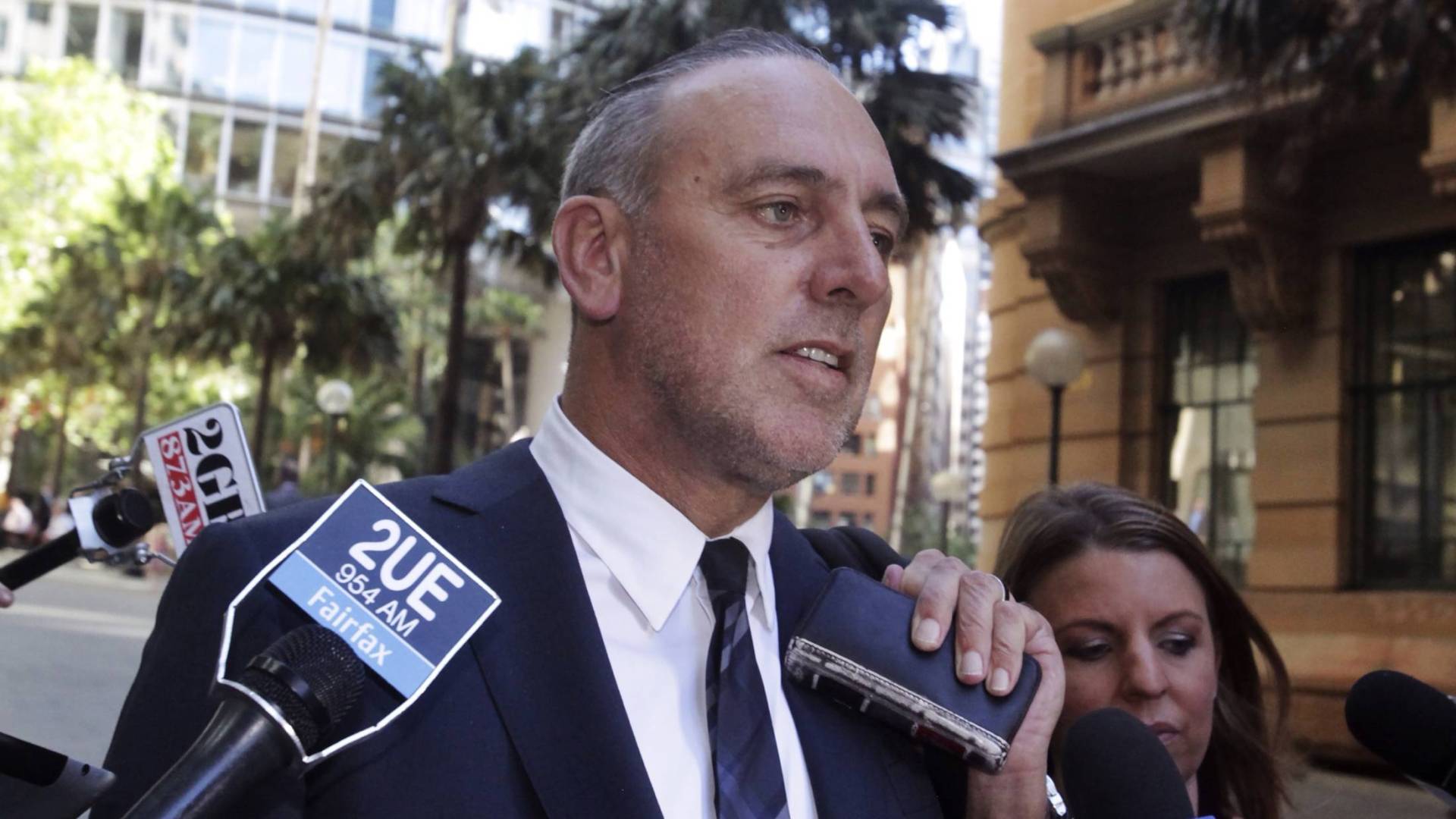
Hillsong Church founder Brian Houston will plead not guilty to illegally concealing alleged child abuse by his father, his lawyer told a court on Tuesday.

Houston did not appear at Sydney’s Downing Center Local Court when his charge was mentioned before a registrar for the first time. His lawyer told the court Houston would be pleading not guilty to the charge of concealing a serious indictable offense of another person, his late preacher father Frank Houston.

The case will next be before the court on November 23.

Police will allege that Frank Houston indecently assaulted a young male in 1970.

Court documents allege that Brian Houston believed his father had committed the crime. Police will allege that the younger Houston failed to disclose information to police that could help secure the prosecution of his father.

Since being charged, Houston has stepped down from the board of Hillsong, the church he founded with wife Bobbie in Sydney in 1983. Now a global empire, the church says 150,000 people in 30 countries attend its services and 50 million people sing its songs each week.

Houston, 64, was in the United States in August when detectives served his Sydney lawyers with a notice for him to appear in court.

He said in a statement at the time he welcomed the “opportunity to set the record straight.”

Houston returned to Sydney last month and was released from 14 days’ hotel quarantine last week.

An Australian government inquiry into institutional responses to allegations of child sex abuse found in 2015 that Houston did not tell police that his father was a child sex abuser.

The inquiry found that Houston became aware of allegations against his father in 1999 and allowed him to retire quietly rather report him to police. His father confessed to the abuse before he died in 2004 at age 82.

Hillsong Church has said repeatedly that it has not been involved in this matter, as Frank Houston never worked for the church, and has defended Brian Houston’s response.

“Upon being told of his father’s actions, Brian Houston confronted his father, reported the matter to the National Executive Assemblies of God in Australia, relayed the matter to the governing board of Sydney Christian Life Centre, and subsequently made a public announcement to the church. Brian sought to honor the victim’s multiple requests not to inform the police,” the church said in a statement in July.

“As a recent development, charges have officially been filed against Brian Houston,” the church said at the time. “We are disappointed that Pastor Brian has been charged, and ask that he be afforded the presumption of innocence and due process as is his right. He has advised us that he will defend this and looks forward to clearing his name.”

Hillsong, known for chart-topping worship music and megachurches across the globe, became its own denomination in 2018. Last year, Brian Houston announced an investigation of its New York City campus, where pastor Carl Lentz had stepped down over infidelity.

Additional reporting by CT.

News

Southern Baptists Agree to Open Up to Abuse Investigation

Executive Committee decision comes after weeks of heated debate and division.

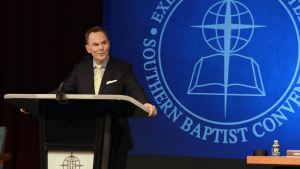
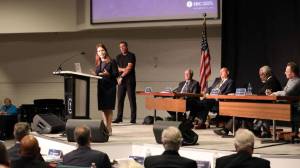
Jared Wellman at the Executive Committee's September 21 meeting in Nashville.

Jared Wellman at the Executive Committee's September 21 meeting in Nashville.

Christianity Today October 5, 2021
Brandon Porter / Baptist Press

It took three weeks of scheduled meetings, at least three law firms, dozens of statements, hours of closed-door briefings, and extensive back-and-forth debates across boardrooms, social media, and Zoom calls for the Southern Baptist Convention’s Executive Committee (EC) to agree to the terms of a third-party investigation into its response to abuse. But on Tuesday, it did.

The EC voted 44–31 in favor of waiving attorney-client privilege in the investigation, after a half dozen members resigned and several switched their position in favor of the waiver. For a moment, it felt like the conclusion of a long and heated process, though the decision is only the start of a long investigative process.

EC chairman Rolland Slade, who oversaw the proceedings, expressed his relief after the tally was announced. Then he remarked, “I want to express sorrow over the conduct we have displayed as Southern Baptists.”

For the EC—the denominational body tasked with Southern Baptist business outside the annual meeting—the debate pitted the desire to open fully to the investigation against concerns that such transparency would threaten its financial solvency, insurance coverage, and other fiduciary duties to protect the entity.

As the clash played out, Southern Baptist voices including seminary presidents, state convention leaders, and thousands of pastors spoke out to put pressure on the EC to comply with the requirement to waive attorney-client privilege, which had been approved when the denomination called for the investigation at its annual meeting in June.

“Taking steps towards honesty, transparency, repentance, those are great things. Those are worthy of celebration,” said Georgia pastor Griffin Gulledge, who hosted hundreds of SBC leaders and onlookers in Twitter discussions around the EC proceedings.

“It is huge to see this vote go from losing by a large margin … to ultimately passing by a large margin. But let’s recognize that the result of this is that the Southern Baptist Convention will never be the same.”

The recent vote authorizes a contract with Guidepost Solutions, an independent firm tasked with reviewing how EC staff and members responded to abuse allegations and victims over a 20-year span. Guidepost is slated to make its report public prior to the annual meeting in June 2022.

“It’s a baby step. There’s a long road ahead,” said Jules Woodson, who shared her story of clergy sexual abuse in the start of the #MeToo era and has rallied groups of SBC survivors. “I’m so glad people are finally paying attention. Nobody has listened for years.”

But survivors like Woodson also see how much work it took for the EC to agree to the terms of the investigation and worry the SBC is still divided over its responsibility to respond to the abused and vulnerable.

The motion to comply with the Guidepost investigation, which is being overseen by a sexual abuse task force appointed by SBC president Ed Litton, came from Texas pastor and EC member Jared Wellman, who has led the charge for the EC to open up and adopt the terms set by the messengers.

“The messengers have spoken very clearly that this is what they want, and we’ve exhausted every avenue trying not to do this,” said Wellman, whose motions failed in two previous meetings.

Outspoken Southern Baptist leaders believed that the EC’s refusal to comply with the terms of the investigation could disrupt denominational polity, where messengers at the annual meeting direct the actions of the committee, rather than it holding top-down governance.

Sarah E. Merkle, an attorney and professional parliamentarian, said the EC’s discussion over how or whether to follow the messengers’ directive offers a lesson for organizations in how “governing documents and motions matter.”

“An Executive Committee vote contrary to the will of the Messengers would have been a drastic reversal of the longstanding position that local churches and their messengers control the SBC, and that the Executive Committee’s powers are limited,” said Merkle, who serves as an advisor with CT’s ChurchLawAndTax.com. “Today’s vote communicates that a majority of the Executive Committee is willing to follow the established governance structure even when doing so may come at a cost.”

Opponents to waiving attorney-client privilege repeated their concerns in Tuesday’s gathering, which was held over Zoom. Joe Knott, EC member and former EC secretary, suggested the decision would “create chaos” rather than following God-given law and order. Mark Elliott said he’d be forced to resign if the EC waived privilege, since it’d be “the opposite of what our attorneys advised us to do.”

At Tuesday’s meeting, the EC brought in insurance recovery attorney Jim Murray of Blank Rome LLP to discuss possible insurance ramifications to waiving privilege in executive session. The EC also hired a pair of Dallas attorneys from Locke Lord, which came on in addition to the EC’s counsel.

Much of the previous debate had focused on finding a compromise option that would allow the EC to reduce liability and maintain some oversight while the investigation moved forward. But as EC member Dave Bryan stated, there wasn’t a good third option to be found.

“It’s hard to make a right decision when you don’t feel like you have good options,” the Oklahoma pastor told the group, announcing that he had switched to support the waiver. “As 1 Peter says, if we’re going to suffer, let’s suffer for doing the right thing.”

Both victims and advocates see the move to waive privilege as promising but also only a small step, especially as the SBC’s divides over the investigation and the denomination’s role in responding to abuse are put on full display. The investigation will require participation from current and former EC members and staff as well as victims in order to generate a substantial report.

https://twitter.com/ThigpenTiffany/status/1445486884839297024

EC president Ronnie Floyd, who had opposed the waiver of privilege, said in a statement, “I appreciate the statement of our Chairman Rolland Slade at the end of the meeting including his call to come together now to serve Southern Baptists. Now that the Executive Committee’s Board of Trustees have made their decision, the leadership and staff of the Executive Committee will provide support to Guidepost on implementing next steps to facilitate their investigation. We thank all of the Trustees for their diligence in addressing complex questions brought to bear by this process.”

Task force chairman Bruce Frank said, “the task force is pleased with the strong vote today by the Executive Committee to abide by the moral imperative as directed by the messengers, seminary presidents, state leaders, and many, many more” and that Guidepost will begin its work immediately. (In a previous vote, the EC had authorized the funding for the inquiry.)

Both sides in the debate over privilege claimed to have legal backing for their positions. Some EC members said they feared, based on their own expertise or legal counsel, that waiving privilege for the investigation could increase the EC’s liability and put the entity at risk; the sexual abuse task force’s attorneys said that declining to waive privilege could actually increase individual liability.

The privileged information sought for the investigation is limited to EC decisions related to abuse and victims during the 2000-2021 time period.

“Decisions like this one aren’t uncommon,” said Adam Plant, a Birmingham attorney who was not involved in the EC process but has represented clients in cases involving outside investigations. “Limited-scope privilege waivers can ensure individual wrongdoers are held responsible for their own misconduct, rather than the corporate entity being prosecuted for the misconduct of individual bad actors.”

The investigation follows years of concerns over the Southern Baptist Convention’s response to abuse brought up by victims, the media, and leaders within the denomination. The EC became the subject of the investigation following documents leaked earlier this year that suggested that its leaders downplayed abuse response efforts and intimidated victims.

Litton, who beat out former EC chairman Mike Stone to become president of the SBC, said he was grateful that a “full, transparent, and unimpeded investigation” could now begin.

He prayed to conclude Tuesday’s meeting. “We have all faced a very difficult and challenging time. May it not continue to divide and separate brothers and sisters,” he said. “We pray for your will to do be done, what needs to be exposed exposed, and healing begin for many.”

News

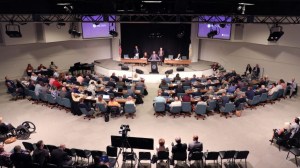
How Prayer and Science Prepared Palm Beach Atlantic’s New President for the Pandemic

After months of leading the school and holding Zoom calls with isolated students, Debra Schwinn will finally celebrate her inauguration.

Christianity Today October 5, 2021
Courtesy of Palm Beach Atlantic University

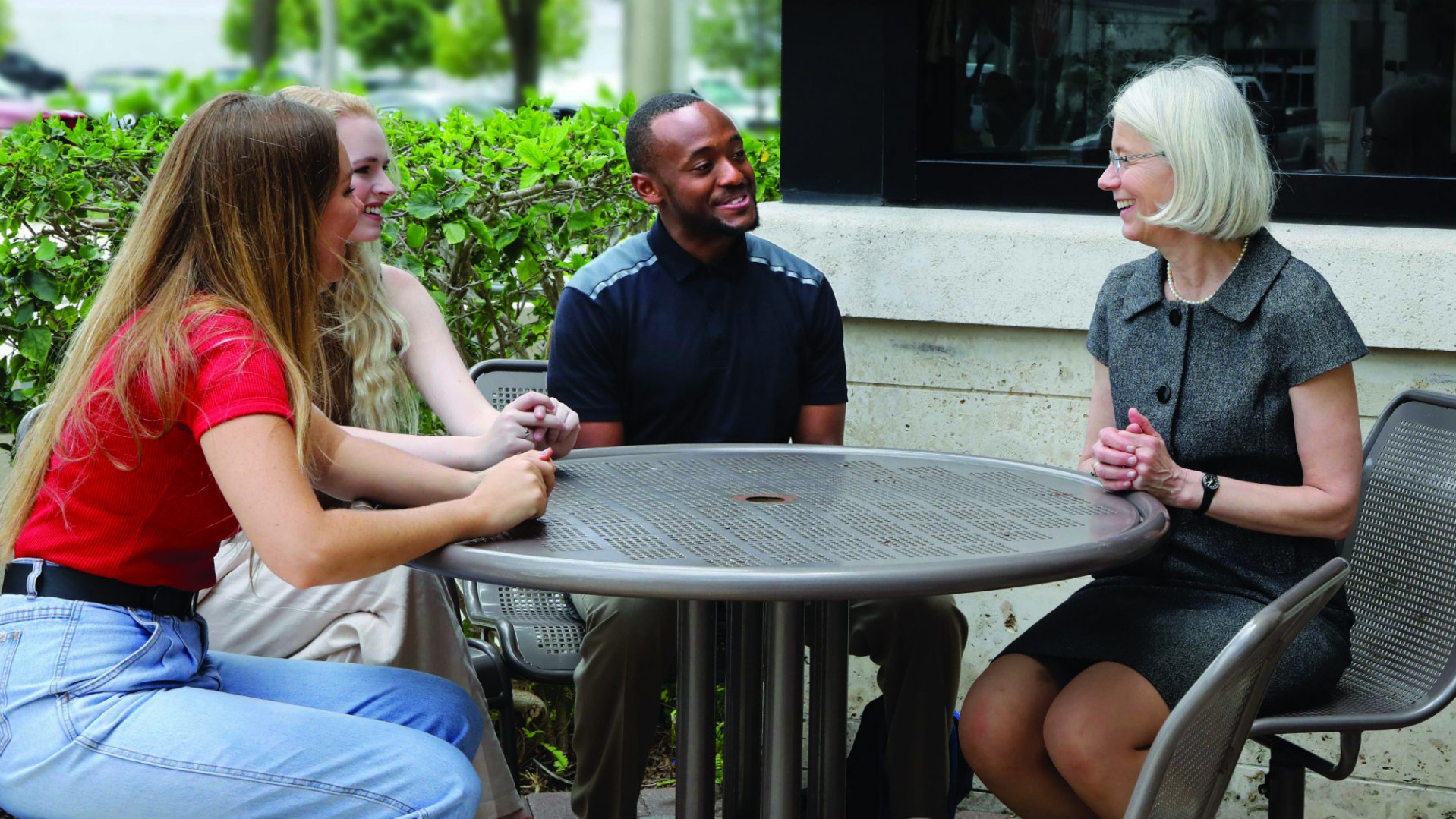
At 5 p.m. every day, students in quarantine at Palm Beach Atlantic (PBA) University get a Zoom call.

The face that pops up on the screen is their school’s new president, Debra Schwinn, checking in on them.

The calls, which ran the entire 2020–2021 school year and have continued this fall, last about 20 minutes. Schwinn chats with the students about how they are doing, prays with them, and offers bits of motherly advice.

For Tom St. Antoine, the faculty representative on the committee that chose Schwinn to be the new leader of the university back in January 2020, it’s a perfect example of the personal approach she has taken since becoming president at the start of the pandemic.

“That just sends such a statement for the president to take time to build relationships and to get to know those students one by one,” he said.

Schwinn’s inauguration was delayed by COVID-19. The ceremony will be held on October 8, but she’s already spent more than a year and a half demonstrating her leadership in trying times at the Florida university with about 2,100 traditional undergraduates, 400 masters students, 350 professional students, and 200 adult students who take evening classes.

Schwinn was not planning to be a pandemic president, but when she thinks about how everything happened, she can’t help but see God’s hand in bringing her to the school: “I think God’s timing was perfect.”

The call to Palm Beach came before COVID-19 was even being talked about.

Schwinn was working as the associate vice president for medical affairs and professor of anesthesiology, pharmacology and biochemistry at the University of Iowa when she got the job offer. She and her husband, Bob, went to a retreat center and isolated themselves in separate rooms and listened for how God would lead them. At the end of it, they came back together with the same answer: Go.

Schwinn accepted the offer and became the first female president of the Christian school founded in a Baptist church in 1968. Between the time she accepted the offer in January and the time she arrived at the Palm Beach campus in May, COVID-19 had become the single dominating question for the university.

When Schwinn showed up, she brought not only her faith and her pastoral commitment to care for students but also a long history in academic medicine.

“What better, in a time of pandemic, than to have someone of that background,” said St. Antoine. “There’s no way we could have known that, obviously, when we were making our selection. But it’s one of those things that’s let PBA stand out, and I think it’s helped parents, students, and faculty to be confident in our leadership.”

Schwinn’s first challenge, in May, was to put in place a plan to test and trace the spread of the coronavirus. Her medical background proved invaluable in weighing options and evaluating different plans.

In July, she faced another critical issue. Schwinn had to help the university decide whether to open in-person classes in the fall or move everything online, as so many schools and workplaces were choosing to do.

“The COVID rates were ticking so dramatically high in West Palm Beach and West Palm Beach County that we called a day of prayer, and for an entire day we listened,” she said.

In addition, she and other administrators at the school asked for the advice and prayers of alumni, students, families, churches, staff, and others. When they heard back, they felt like they had a clear answer.

“What we heard God say was that ‘there has never been a more important time in the history of this country than today for the kind of transformative education that you have at Palm Beach Atlantic University. Open. I’m not going to give you all the answers today, but open, have courage, and keep asking the questions,’” Schwinn said.

But Schwinn said she knew that God would want the school to be responsible too, so she and the staff developed an extensive safety plan, including masking requirements for large events and encouragement to follow Centers for Disease Control and Prevention guidelines at smaller gatherings. Desks were spread apart for social distancing, and professors’ podiums were equipped with Plexiglas shields.

Perhaps most importantly, the school instituted a testing regimen, checking all students for COVID-19 when they arrived in the fall, transparently reporting cases online, running contact traces to quickly catch exposure, and developing careful plans for quarantining students who became infected or were potentially exposed and waiting for test results in an old residence building.

“We opened with prayer, and we followed science,” Schwinn said. “It was definitely a combination.”

As a result, the percentage of cases on campus was lower than the surrounding community, Schwinn said.

This year, the percentage of tests that came back positive for COVID-19 at the start of the semester was a bit under 9 percent, and then dropped steadily from the end of August to September. Currently, Florida’s positivity rate is at about 9 percent. The university’s is just under 3 percent.

The isolated students were able to keep up with classes through a “HyFlex” system, which put almost every in-person class on Zoom simultaneously. Students in the old dorm—dubbed “COVID Camp”—were cared for by a health team.

Schwinn also started checking in on them every day.

Initially, the idea was to make sure the systems in place were working properly. Were they being cared for? Could they really participate in their classes? But Schwinn soon found her medical and mothering backgrounds kicking in.

“I found that I loved it, so I continued it after I knew our systems were working well,” she said. “I have a chance to kind of be a surrogate mother.”

She would also encourage them to take the time to draw closer to God. Prayer was a daily part of the 5 p.m. calls.

“Many students feel touched by God during their time alone,” Schwinn said.

Umberto Rosi, who came to PBA from Italy, contracted COVID last spring. Being thousands of miles away from family, he said it was a challenging time, so he was thankful for Schwinn’s caring calls. The mix of empathy and knowledge she brought to the conversations meant a lot to him and the other students.

“She doesn’t just see you as a student. She sees you as a person, and we love that,” he said.

While she never had to personally quarantine, PBA student body president Abbi Michaeli heard from many who loved the personal role Schwinn took.

“Students that are isolating can get lonely at times, so the fact that she does that means the world to them,” she said.

In general, Michaeli said Schwinn’s experience gave the entire student body confidence.

“Her background has made me and other students feel better about her decisions for the campus because she makes Christian and medical decisions that have the students’ best interest at heart.”

COVID-19 aside, St. Antoine is excited about the direction Schwinn is leading the university.

“I always think of PBA as the Christian college for the next century,” St. Antoine said. “We‘re urban. We’re young. We’re innovative. We have programs in health care and other areas that Christian colleges don’t always have. But, at the same time, we haven’t forgotten our emphasis in the liberal arts, character formation, spiritual formation, those kinds of things. In a lot of ways Dr. Schwinn embodies that.”

Schwinn, for her part, is excited to one day lead the university without having to deal with a pandemic, though she will miss the 5 p.m. Zoom calls.

News

Christians and Critical Race Theory

A webinar about the facts, falsehoods, and theological implications of critical race theory—and the way forward for the church.

Christianity Today October 4, 2021

With hysteria and misinformation swirling all around it, critical race theory has become nearly impossible to discuss without stirring up ideological fears and partisan divisions. Yet many believe its ideas must be responded to if the church is ever going to take seriously issues of diversity, justice, and racial reconciliation.

Join Christianity Today’s Russell Moore and a diverse panel of evangelical leaders as they explore the facts, falsehoods, and theological implications of critical race theory.

Our Panelists

Nathan Cartagena

Nathan is an assistant professor of philosophy at Wheaton College, where he teaches courses on race, justice, and political philosophy. Nathan also serves as scholar-in-residence for World Outspoken, an organization committed to equipping Latin@ churches for godly living. He is currently writing a book about critical race theory with IVP Academic. Read his writings at nathancartagena.com, and follow him on Twitter @ProfeNLC.

Oneya Fennell Okuwobi

Oneya is a sociologist and junior fellow at Rice University’s Religion and Public Life Program. Her research interrogates how diverse organizations impact racial inequality. She is an ordained Assemblies of God minister and serves as teaching pastor at 21st Century Church, a church plant in Cincinnati, Ohio. She is also coauthor of Multiethnic Conversations: An Eight-Week Journey Toward Unity in Your Church. Oneya is a graduate of the University of Virginia (BA, Economics), Regent University (MDiv, Practical Theology), and The Ohio State University (PhD Sociology). She and her husband, Dele Okuwobi, have one daughter, Cadence. Find Oneya on Twitter @Ookuwobi or at Oneyaokuwobi.com.

Jeff Liou

Jeff serves on staff with InterVarsity Christian Fellowship as director of theological formation. Jeff has also worked as a pastor, university chaplain, and adjunct professor. He earned his PhD from Fuller Theological Seminary, where he studied the intersection of race and theology. Jeff has contributed chapters to books on Asian American Christianity, public theology, and ethics in pastoral ministry. He lives in Southern California with his wife, Lisa, and their two children. Follow him on Twitter @Jeff_Liou.

Russ Whitfield

Russ serves as pastor of Grace Mosaic, a cross-cultural church that he helped plant in Northeast Washington, DC. A minister of the Presbyterian Church in America (PCA), Russ is also the director of Cross-Cultural Advancement for Reformed University Fellowship and a guest lecturer in practical theology at Reformed Theological Seminary’s Washington, DC, campus. He has made written contributions to Heal Us, Emmanuel: A Call for Racial Reconciliation, Representation, and Unity in the Church; All Are Welcome: Toward a Multi-Everything Church; and 9Marks Journal. Russ and his wife, Vanessa, have four children. Follow him on Twitter @whitness7.

Russell Moore

Russell is public theologian at Christianity Today and director of CT’s Public Theology Project. Russell was president of the Ethics & Religious Liberty Commission of the Southern Baptist Convention from 2013 to 2021. Prior to that role, he served as provost and dean of the Southern Baptist Theological Seminary, where he also taught theology and ethics. He is the author of several books, including The Courage to Stand: Facing Your Fear Without Losing Your Soul and Onward: Engaging the Culture without Losing the Gospel. He and his wife, Maria, have five sons. Find him at russellmoore.com and on Twitter @drmoore.

News

Churches Threaten to Withhold Funds Over Southern Baptist Response to Abuse Inquiry

More leaders and state conventions are putting pressure on the Executive Committee ahead of this week’s meeting.

Christianity Today October 4, 2021
Brandon Porter / Baptist Press

As controversy escalates surrounding an investigation into mishandlings of sexual abuse by the Southern Baptist Convention’s Executive Committee (EC), pastors and state conventions are calling on the committee to finally vote to waive attorney-client privilege at its upcoming meeting.

In official statements and social media threads, Southern Baptists condemned trustees’ failure to heed the directive of the messengers in the EC’s two previous meetings, and many threatened to withdraw giving or redirect monies.

“Should the Executive Committee fail to comply, we will lead our churches to consider how to reallocate funds away from the Executive Committee while continuing to fund the cooperative mission and education endeavors that have always made Southern Baptists great,” read a statement from South Carolina pastors. Among its signatories were two Executive Committee trustees and a member of the task force overseeing the investigation.

David Sons, one of the trustees who signed the statement, told CT that it was born out of a concern for the “egregious nature of the accusations” and worries that Southern Baptist polity is being violated.

“The EC has a responsibility to carry out, to the best of our ability, the will of the messengers,” Sons said. “Not to tell the messengers why we can’t, or won’t, comply.”

Withholding or reallocating funds “shouldn’t be used as a threat,” he added, “but [it] can be done as a last resort to express to an entity that they have violated the trust of the messengers.”

In June, 15,000 convention messengers overwhelmingly approved a motion to launch the investigation, conducted by a third-party and overseen by a task force appointed by the new SBC president. The motion instructed the EC to abide by the investigator’s best practices, including waiving attorney-client privilege—which so far, the group has refused to do, citing fiduciary commitments and fear of legal liability.

The EC is scheduled to meet on Tuesday for the third time in as many weeks. As of Sunday night, over 25 statements had been released on behalf of state conventions, local associations, or groups of concerned pastors, though not all of them directly threatened withholding or reallocating money.

Louisiana pastor Jay Adkins wrote a blog post last week detailing how pastors can allocate funds so that they continue to support Southern Baptist causes without giving to the Executive Committee.

“I was concerned about my pastor friends who were talking about leaving the convention altogether or escrowing funds,” Adkins said. “I’m not suggesting people give away from the EC, although I’m for that. I’m just saying please don’t leave.”

Adam Blosser is the pastor of Goshen Baptist Church in Virginia, which forwards 10 percent of its undesignated giving to the SBC’s denominational funding mechanism known as the Cooperative Program. Blosser told CT he is concerned about the Executive Committee’s actions and is watching the situation closely.

“We aren’t ruling out the possibility of making a change in the future, but at this time we intend to continue giving as we have been doing,” he said.

At the heart of the crisis is the question of how Southern Baptists will respond to sexual abuse. There are also concerns about safeguarding the convention’s polity—wherein churches make decisions on behalf of the convention rather than central leadership—and whether waiving privilege would expose the Executive Committee to liability or void their insurance.

Scott Colter, a leader with the Conservative Baptist Network, recently wrote the EC to praise the body for so far refusing to waive privilege and not putting the entity at risk. He described his position in contrast to the “rising pressure of the mob-mentality” and those who say “you must either choose to follow Jesus or follow lawyers.” (Colter worked for years alongside Paige Patterson, the SBC leader who was fired and remains under litigation for his handling of abuse cases at Southwestern Seminary.)

Much of the pressure on the Executive Committee is from pastors concerned that the entity’s reluctance to waive privilege upends the convention’s bottom-up structure.

“Southern Baptists are no strangers to denominational crisis, but this one represents a perfect storm because of the intersection of power dynamics, polity concerns, and pleas for justice to be done,” said Southern Baptist historian Nathan Finn. “If the EC remains recalcitrant, it is almost certain that hundreds and maybe thousands of churches will direct their giving around the EC.”

Executive Committee chairman Rolland Slade, who has twice voted in favor of waiving privilege, told CT that he shares those polity concerns.

“The messengers made clear in June what they wanted us to do,” Slade said. “To me, that’s what we have to do, the way I understand Southern Baptist polity. We are bottom-up, and the messengers spoke clearly.”

Slade also told CT that three EC trustees have resigned in the past week and that he is expecting more resignations before tomorrow’s vote.

One Executive Committee trustee told CT that he planned to call for a vote of no confidence in CEO Ronnie Floyd and Vice President Greg Addison at last week’s meeting and that he shared his intent with Floyd, who requested he not do so. The trustee said that Floyd and Addison “had not led or supported the efforts of this trustee body to abide by the will of the messengers of our convention” and that their removal would be the best thing for the convention’s ability to move forward.

Based on the events of the last week and the grassroots uprising from Southern Baptists, however, he expects the board to waive privilege tomorrow and is no longer planning to move forward with the no-confidence vote.

Executive Committee lawyers have continued to balk at a blanket waiver of privilege, instead offering solutions that fall short of what the messengers mandated in June. Among these options is the “Michigan Model,” in which a law firm serves as an intermediary between the task force and Executive Committee but privilege is not waived.

“Southern Baptists of all stripes have spoken resoundingly that when it comes to the sexual abuse investigation of our Executive Committee, we will not settle for an agreement unless it includes the EC waiving their attorney-client privilege” said Tennessee pastor Grant Gaines, who offered the motion that instigated the investigation.

“We don’t want the ‘Michigan Model.’ We insist on the ‘Messenger Model’—the one approved by an overwhelming majority of thousands of SBC messengers at our annual meeting this past June.”

Culture

‘The Jesus Music’ Is a Love Letter to Fans

But like the CCM industry, it speaks an insider language.

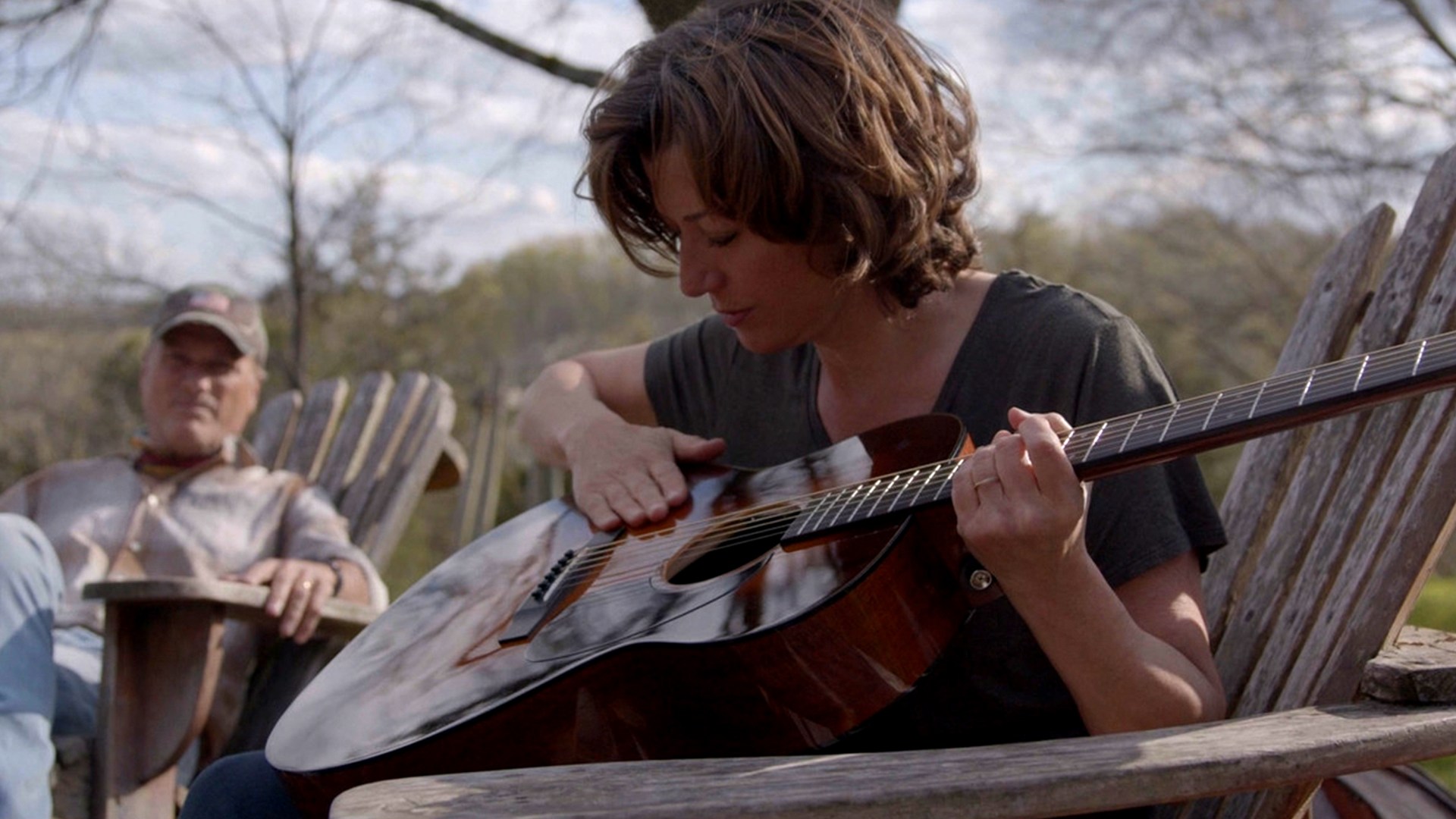
Michael W. Smith and Amy Grant in “The Jesus Music.”

Michael W. Smith and Amy Grant in “The Jesus Music.”

Christianity Today October 1, 2021
Courtesy of Lionsgate

I have a memory of being five or six years old and helping my mom prepare for a party with Amy Grant’s album Heart in Motion playing in the background. I knew (and still know) all the words to “Baby, Baby” and “Good for Me.” When I got married, my three sisters sang a parody of her song, “Lucky One” at the reception.

I know every song on Steven Curtis Chapman’s Speechless by heart. I saw DC Talk in concert at eight, tagging along with a friend whose parents led youth group. In high school, I worked in the music department of a Christian book store.

In other words, I grew up on Christian Contemporary Music (CCM).

The Jesus Music, a new film directed by Jon and Andrew Erwin about the rise of the genre, was made for me and for people like me—whose musical and spiritual worlds were formed and influenced by the music, musicians, and subculture of CCM. I enjoyed revisiting the music my parents and I played on repeat during the ’80s and ’90s, and I suspect that many viewers like me will as well. Viewers like me.

“This music,” musician Joel Smallbone (of the band For King & Country) says in the opening line of the trailer, “offers people a sense of hope and a sense of togetherness and a sense of joy, maybe that they’ve not experienced.”

That’s a sweeping claim, one echoed on the film’s website, which refers to the “universal power of music from these artists.”

Is this music really for anyone and everyone? Can everyone find in it a sense of hope, joy, or togetherness? No. Music isn’t a universal language, and the music featured in The Jesus Music comes from a brief fifty-year window and a small group of artists in a very niche music market.

For many American evangelicals, this music has been an important part of our lives. It is a mistake, however, to think that our tastes, preferences, and the music we have loved and worshiped with are somehow universal.

Evangelicals (particularly white evangelicals) and our subcultures are more insular than we like to admit. This is one reason why we so quickly attach ourselves to “crossover” celebrities like Amy Grant or Lauren Daigle. We tell ourselves that the music produced by our darlings is appreciated outside of our Christian spheres. But the reality is that most of the music produced by the Christian music industry in the US thrives within its own silo.

Ethnomusicologist Andrew Mall observes that the Christian music industry has always been a niche market that grew in part to “offer a Christian alternative” to mainstream popular music.

“Christian music remained marginal to the general market,” writes Mall, “its artists’ explicit identities endeared them to the Christian market but segregated them from the general market, establishing boundaries more clearly than did their music.”

The film makes much of moments when a Christian band like Stryper showed up on MTV and topped charts, beating out hits by bands like Mötley Crüe. But those anecdotes are exceptions to the general rule that Christian popular music has its own fandom and its own subculture.

Despite references to CCM’s “power” and broad appeal among Christians, the directors acknowledge that they made The Jesus Music for a specific population. “It’s a love letter to the fans,” says director Jon Erwin, who also directed I Can Only Imagine (2018) and I Still Believe (2020). “It’s a love letter to the artists. And if you love the music, I think it’s going to be a very nostalgic soundtrack to your faith journey.”

If you are expecting a documentary that plumbs the complexities of the Christian music industry, this isn’t it. It isn’t a project that seeks to critique the world of CCM and the subcultures that spawned and have grown out of it. It certainly isn’t a documentary that seeks to expose secrets or salacious biographical details of the lives of CCM artists. It isn’t a documentary at all.

The goal of the film is to tell a curated, entertaining story about the rise of CCM. “Our job is to entertain,” says Erwin. “We’re entertainers, and I love to entertain an audience.”

And the story the Erwins tell is entertaining. Like this year’s Netflix movie, A Week Away (a High School Musical- inspired teen drama featuring CCM hits), The Jesus Music is a sugary, light-hearted package of American contemporary Christian nostalgia. Those of us who are cultural insiders can bask in the pleasure of rehearing old favorites and watching artists reminisce about the glory days of CCM and their paths to success in the industry.

The film briefly acknowledges some of the “scandals” and personal trials of CCM stars, like Amy Grant’s divorce or the relational drama within DC Talk, but these reflective moments are short and vague. There is no attempt to dig deeply into the reasons why the industry and its fandom would turn so quickly on artists.

I watched The Jesus Music with my husband, who did not grow up with any exposure to CCM, and there were some important differences in our viewing experiences. He didn’t have parents who purchased CDs from Christian bookstores; he didn’t listen to Christian radio. For him, there is nothing nostalgic about the music of Amy Grant, Michael W. Smith, DC Talk, or Steven Curtis Chapman, aside from the general aesthetic of the ’80s and ’90s.

For people like my husband, “outsiders,” the reverent footage of CCM royalty Amy Grant and Michael W. Smith may be confusing. The film presents these two artists (also executive producers of the film) as CCM’s two figureheads, icons of the industry whose careers become the frame for the entire film. The storytellers assume a certain amount of knowledge of the CCM canon and its major players that, to those on the outside, may be exclusionary.

The Jesus Music does try to acknowledge one troubling aspect of CCM’s exclusivity: its whiteness and the barriers that have long existed for people of color, specifically black artists, in the Christian music industry. Through interviews with Kirk Franklin, Lecrae, and Michael Tait, the film gives a passing nod to the role of black artists (also briefly discussing Andraé Crouch) in the growth of CCM.

Among the photos and footage used in the film are images of Kirk Franklin with Kanye West and footage of CeCe Winans singing with Whitney Houston. These CCM powerhouses have been bridge-builders between Christian music and the mainstream for decades, but are pushed to the periphery of the documentary, much like the place of gospel music in the industry.

Mall notes the segregation in both the general markets and the Christian markets, “with separate record labels to distribute and promote gospel artists.”

While the film is truly entertaining for CCM fans, the stories we tell ourselves about ourselves matter. Stories that entertain us and simply make us feel good about our cultural silo let us avoid grappling with the failures of our icons, leaders, institutions, and industries. The stories we tell about our music matter too.

White evangelicals in particular need to be circumspect in how we talk about the power, appeal, and reach of our music. Our music is not a universal language; what we perceive as a “universal” appeal is not universal at all. If CCM and the contemporary worship music produced seems universally appealing, maybe our circles are not as reflective of the diverse body of Christ as we think.

Kelsey Kramer McGinnis is a musicologist, educator, and writer. She holds a PhD from the University of Iowa and researches music in Christian communities and music as propaganda.

News

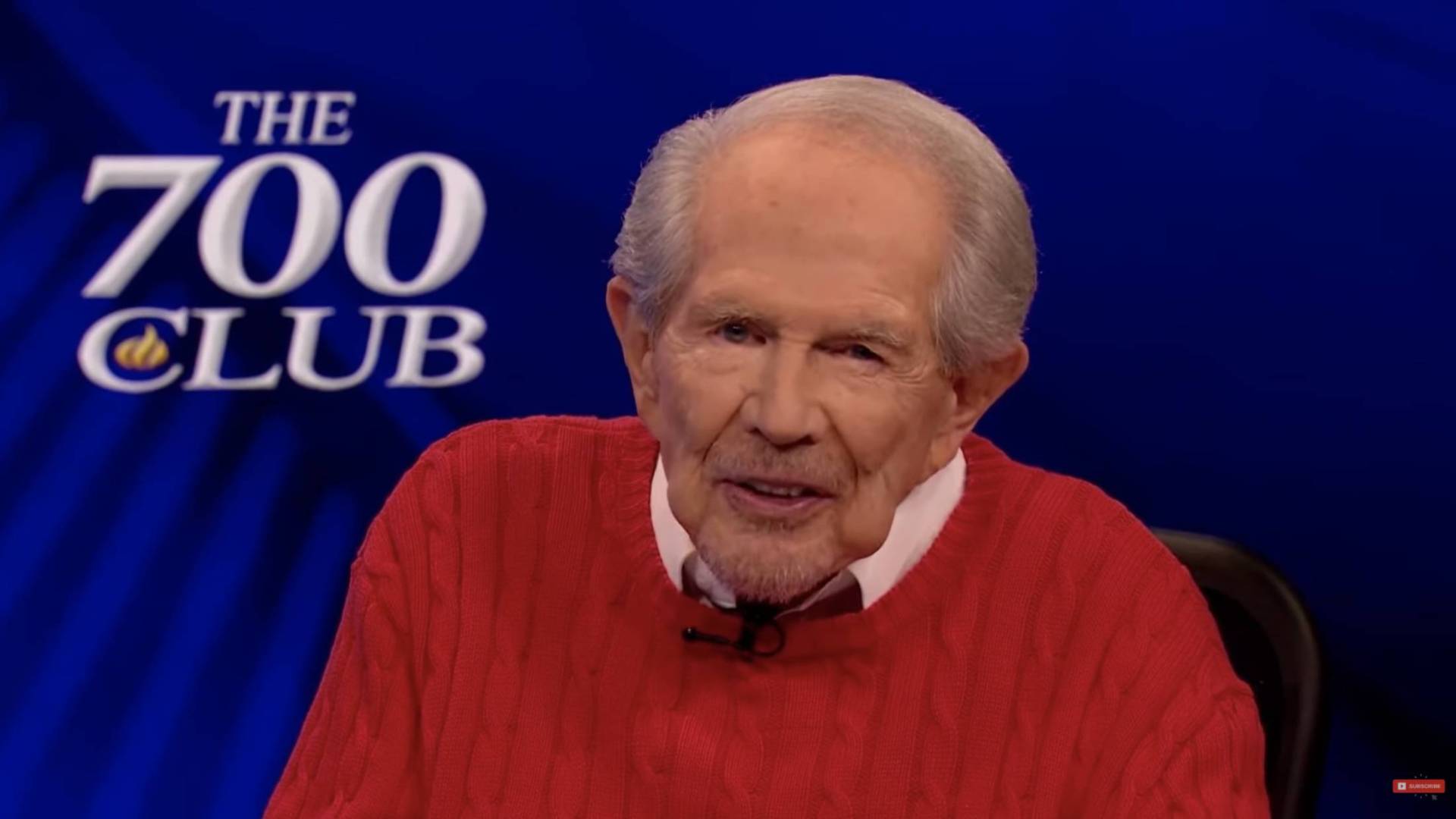
Pat Robertson Retires from The 700 Club at 91

The outspoken host and pioneering Christian broadcaster has been the face of CBN since its founding 60 years ago.

Christianity Today October 1, 2021
YouTube screenshot / The 700 Club / CBN

After decades of offering Christian viewers his commentary on natural disasters, 9/11, AIDS, pot, divorce, diplomacy, plastic surgery, homosexuality, Islam, secular colleges, the end of the world, critical race theory, and a range of other moral issues, Pat Robertson has signed off as host of The 700 Club.

On the 60th anniversary of the Christian Broadcasting Network (CBN), its 91-year-old founder announced that he would be stepping down and that his son, Gordon Robertson, would take over as full-time host of its flagship talk show.

Robertson, also the founder of Regent University and the Christian Coalition, has been a pioneer in evangelical broadcasting. He launched CBN as the country’s first Christian network in 1960, and CBN has grown to air in 174 countries and 70 languages. It added a 24-7 news channel in 2018.

At the helm of the Virginia-based network, Robertson was ambitious and creative, believing that CBN could grow to a place alongside major channels and thus have a greater impact for the kingdom.

As CT reported in 1982, “CBN began replacing pulpits and King James English with Johnny Carson-style sofas and soap-opera vernacular. Its anchor show, The 700 Club, assumed an upbeat, magazine format, complete with news spots from Washington, D.C. Other programs resemble familiar TV Guide lineups, with a top-quality soap opera, early morning news and chatter, a miniseries on pornography, Wall Street analyses, and entertainment for children.”

But particularly in the past couple decades, the long-running host became known for controversial declarations on politics and prophesy, which stirred even fellow evangelicals.

When Robertson called on the US to assassinate Venezuelan president Hugo Chavez 15 years ago, for example, top evangelical leaders called it an “embarrassment” and “in complete contradiction to the teachings of Jesus Christ.” Over the years, he’s had to backtrack and apologize for certain comments.

During his career in front of the camera, Robertson—a Southern Baptist minister who campaigned for the Republican Party presidential nomination in 1988—interviewed five US presidents and dozens of global leaders. He was among the Christian leaders who prophesied Donald Trump would be reelected in 2020.

Robertson responded to questions from viewers and spent a portion of each show praying for his audience.

He saw his role at CBN as his form of evangelism, previously telling CT, “I believe that Jesus Christ is part of everything that we do in our lives. We want to show the full-orbed life through the perspective of Jesus Christ. You have to deal with people as they are and not as you would like them to be, because the world is not a giant church service.”

Robertson suffered a stroke in 2018, but continued appearing regularly on the show. The network said that after his retirement from hosting he will continue to teach at Regent and appear occasionally on CBN broadcasts, including a monthly Q&A episode.

Apple PodcastsDown ArrowDown ArrowDown Arrowarrow_left_altLeft ArrowLeft ArrowRight ArrowRight ArrowRight Arrowarrow_up_altUp ArrowUp ArrowAvailable at Amazoncaret-downCloseCloseEmailEmailExpandExpandExternalExternalFacebookfacebook-squareGiftGiftGooglegoogleGoogle KeephamburgerInstagraminstagram-squareLinkLinklinkedin-squareListenListenListenChristianity TodayCT Creative Studio Logologo_orgMegaphoneMenuMenupausePinterestPlayPlayPocketPodcastRSSRSSSaveSaveSaveSearchSearchsearchSpotifyStitcherTelegramTable of ContentsTable of Contentstwitter-squareWhatsAppXYouTubeYouTube