Pastors

Little Easters Get Us Through a Long Lent

Setting Sundays aside for joy infuses our grief with some glory.

CT Pastors February 26, 2021
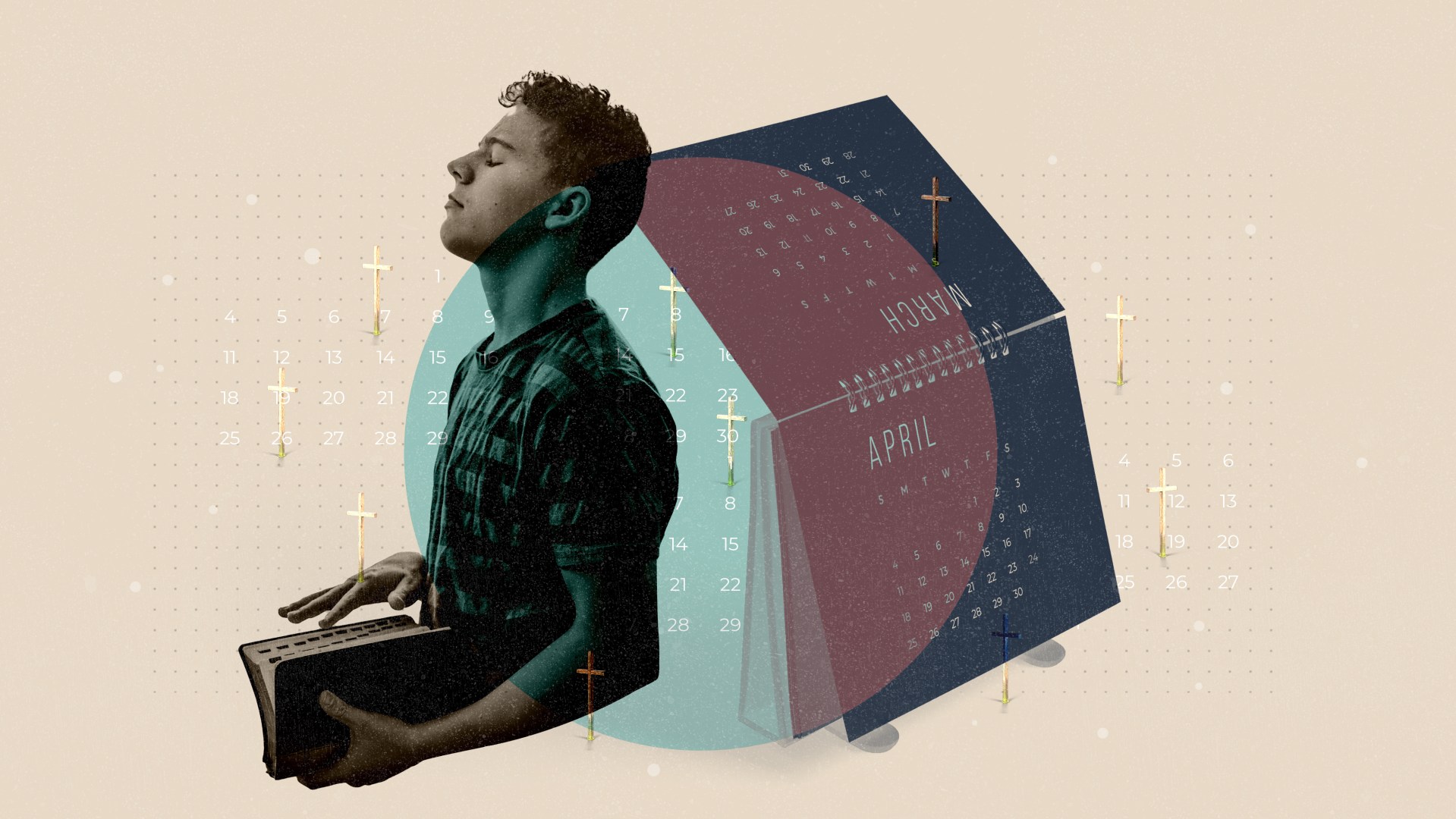
Illustration by Rick Szuecs / Source images: Timothy Eberly / Unsplash / Envato Elements

The season of Lent provides a rich time of confession and prayer and is often accompanied by fasting from food or other indulgences. I didn’t grow up observing Lent, but as I’ve learned more about the church calendar, I’ve grown to appreciate the practices that bring meaning and depth to the journey toward Easter.

Lent is modeled after the 40 days Jesus spent fasting in the desert before being tempted by the devil (Matt. 4:2). In actuality, however, Lent lasts longer than 40 days because Sundays are not included. Sunday is always the day of Resurrection, calling for feasting rather than fasting. Sundays during Lent are thus often referred to as “little Easters,” interruptions of sheer joy on the longer and more sober 40-day journey. Little Easters provide small but glorious fueling stations on our way to Resurrection Day.

As Saint Augustine said of these Sundays in Lent, “fasting is set aside and prayers are said standing, as a sign of the Resurrection, which is also why the Alleluia is sung on every Sunday.”

As I have learned about these small, celebratory interludes during the typical pattern of Lent, I’ve wondered if they could be a model for other long-enduring times of sacrifice. Claiming small, joyous moments, even when living in the serious reality of the present, keeps in our minds the whole story of God. Little Easters along the way provide for us strength to press on.

The reality of suffering

Not all who observe Lent break their fast on Sundays. Even small moments of feasting during such a serious season can feel scandalous. Similarly, in other serious times of life, small moments of joy can seem inappropriate. Any celebration risks dismissing the gravity of hardship at hand.

This was the case for a young minister in South Africa in 1985 named Trevor Hudson. South Africa was suffering its long, oppressive history of apartheid, and most believed God did not regard their suffering.

Trevor was relieved to read Jurgen Moltmann’s The Crucified God,which emphasized our communion with God in suffering. Far from abandoning us, God was shown to suffer alongside his people. Hudson began to assert to his congregation that Christ crucified was the foundation for all Christian theology.

The young pastor, realizing the inevitability of hardship, found comfort in God being with us there. What happened in the Crucifixion did make for a robust theology of suffering. However, reducing his theology to Jesus’ death proved insufficient for the whole of human experience.

“Is your God gloomy?”

One of Trevor’s friends in ministry began writing a book, and he invited Trevor to read through the manuscript. His friend, Dallas Willard, author of The Divine Conspiracy, wrote that God “is the most joyous being in the universe.”

Trevor knew Dallas’s words to be honest. When visiting the South Africans, Dallas was joyfully present to everyone he met. But Trevor was nevertheless resistant. How could God be seen as joyful amid such obvious hardship?

Dallas responded by asking, “Trevor, is your God gloomy?” Trevor had been noticeably pessimistic for some time. Honoring the hardship surrounding him had prevented him from looking for resurrection joy. He realized he needed to remember the whole story.

God suffers with us, but God also exudes joy. Trevor reread the Gospels and was struck by Jesus’ delight in shared meals, good wine, and playful children. He embraced moments even in the midst of the hardship of his own life and the serious needs he saw around him. Jesus showed that simple joys can happen even in serious times.

Hard times and the necessity of joy

Knowing his death was imminent, Jesus assured his disciples of their connection, like a vine and branches, and of their eventual reunion. He said, “I have told you this so that my joy may be in you and that your joy may be complete” (John 15:11). They would need deposits of the joy to come, given all that transpired over Good Friday and Saturday. Horror and sorrow, disappointment and doubt disturbed his disciples to the extent that they abandoned him.

Lent invites me to reflect on my own sin. The sign of the cross, ash-traced on my forehead, indicts me every Ash Wednesday and presses upon me the depth of Christ’s sacrifice. But Jesus also shows my heart mercy, as he did his disciples, in tracing reminders of the rest of the story on my heart. I grasp both the grief and the glory.

The little Easters in all of life

As Sundays during Lent override the somberness of the other days, so the joy of my life in Christ removes the sting of death, brokenness, and suffering. I’m tempted to wait until the pandemic subsides before engaging in a moment of celebration. I’ve been storing celebrations in my mind, waiting for lifted restrictions and herd immunity before saying any alleluias. I’m starting to wonder, though, if Jesus’ life frees me to imbibe now from the always-available joy that is already mine in him. As theologian N. T. Wright reminds, as believers, we are “bringing fragments and flashes of new creation to birth in the midst of the still-darkened and sorrowing world.” I want the darkened and sorrowing world around me to see glimpses of that kind of hope.

The opportunities are all around us. What little Easters can we celebrate now? What words could we speak to showcase joy and new birth?

Kathryn Maack is the cofounder of Dwell, a worship and discipleship movement helping men and women fully experience life with God.

The Common Values That Increase Trust Between Science and Faith

Elaine Howard Ecklund examines curiosity, shalom and other virtues that scientists and Christians share.

Christianity Today February 26, 2021
Illustration by Mallory Rentsch / Source Images: WikiMedia Commons / Alex Kondratiev / James PT / Unsplash

In the midst of a global pandemic, some Christian approaches to science have received attention for their mistrust of COVID-19 vaccines or opposition to mask wearing. The struggle isn’t new. Over the years, national surveys have tracked a more pronounced mistrust of science among Christians on human-caused global warming, evolution, and other issues, often leading to public attention on conflict areas. Yet many Christians have not only found a harmony of faith and science but also followed a calling that lives in that tension.

Seeking to address the need for more cooperation and collaboration between scientific and faith communities, Rice University sociologist Elaine Howard Ecklund wants to highlight the commonalities, instead of the conflicts, as a way forward.

Ecklund has spent more than a decade reporting on what scientists believe about religion and what religious people—especially Christians—believe about science. Despite the fact that nearly 50 percent of scientists consider themselves religious, much distrust remains between Christians and scientists, with each side often viewing the other as a threat.

In her most recent book, Why Science and Faith Need Each Other: Eight Shared Values That Move Us Beyond Fear, Ecklund proposes that Christians and scientists can find common ground around eight virtues that play a vital role in both faith and the practice of science: curiosity, doubt, humility, creativity, healing, awe, shalom, and gratitude.

Christopher Reese spoke with Ecklund about the book and some of the challenging issues surrounding the relationship between Christianity and science.

Why is it important for Christianity and science to find common ground?

Research shows that the views people hold about the relationship between religion and science have important implications. As we found in my book, they can influence whom people vote for and, by extension, public financial support for scientific research. Views on the relationship between religion and science can also influence whether an individual goes to church and whether young people stay in church. Research finds that many youth are leaving the church because they perceive irreconcilable conflict between Christianity and science.

Why does mistrust continue to persist between Christians and scientists?

There are lots of reasons that fears and mistrust continue. In the churches I have visited, I have met Christians who keep their children out of certain science classes, afraid that scientific education will lead them to doubt and ultimately reject their faith. There are Christian parents who worry about what scientists will say about faith when helping their children choose colleges and universities.

Christians from minority communities, in particular black and Hispanic Christians, worry about being a part of science and technology fields where not only their race or ethnicity is underrepresented but also their faith. Christian women and girls who want to pursue scientific careers wonder if they will be marginalized in their Christian communities for their scientific aspirations and marginalized in the scientific community for both their gender and faith.

Some Christians worry about certain medical technologies and research, whether they are ethical and whether they take into account the uniqueness of the human being and what it means to be made in the image of God. I have met many Christians who are afraid of how science will impact their faith and how scientists will influence religion and its place in society.
Should churches encourage the pursuit of science? If so, what are some ways they can do this?

Absolutely! Churches often—if they address science at all—tend to address the hot-button issues like evolution, climate change, and human reproductive genetic technologies, to name a few. But to encourage the pursuit of science, youth—and everyone in congregations really—need to hear scientists who are Christians (and even those who are not) talking about their scientific work and the joy they find in doing science, the beauty in science. Churches could spend more time talking about what the scientific and faith communities have in common.

When I started writing this book, I searched my house for a notebook from a class I took more than 20 years ago as an undergraduate at Cornell University. In that class, taught by Norman Kretzmann on the philosopher Thomas Aquinas, I began to think deeply about the Christian virtues and values, which Aquinas saw as practices or habits that tend toward the good.

In studying, interviewing, and working with both Christians and scientists, it struck me that they seemed to share many of the same virtues. I found the core virtues that guide the practice and habits of science and religion are more similar than we thought, yet there are also some key differences. I have a new approach to discussing the relationship between science and faith. I see science and faith not just as sets of ideas but as groups of people, and I am convinced that scientists and Christians share common virtues that if brought to light will lead to common ground. I am also convinced that by recognizing the common virtues between our faith and science, and where our values differ, we Christians can begin to develop a more effective and meaningful relationship with science and scientists.

You mentioned some key differences between the practice and habits of science and religion. Can you elaborate on those?

Obviously scientists—whether or not they are people of faith—are asking questions about the natural and biological world, things that we can test and see. Most scientists say their work provides less insight into things outside the natural world.

What would your advice be to young Christians who believe they have to choose between science and their Christian faith?

In short, they don’t have to choose. There are wonderful examples of scientists who are Christians and find ways of not only integrating faith and science identities but actually find these identities to be generative of one another. What we need is even more numerous examples, Christians from different backgrounds, ethnic groups, genders, to help us see that a variety of Christians can be scientists.

Of the eight virtues that you describe that Christianity shares in common with science, which do you find the most compelling?

Shalom. In my interviews with Christian scientists, I have found that many of them draw on the concepts of shalom and stewardship. Shalom is a Hebrew word that comes from a root that means “completeness” and “perfection,” and it is the peace, harmony, well-being, and prosperity that result from the flourishing of all creation. Shalom can mean to get involved in the messiness of the world, to try to mix it up with structures that are not just, to make them more just.

Stewardship, or caring for the world, in the form of environmental protection, is often thought of as a scientific virtue, but it is a deeply Christian virtue as well, a practice that brings us closer to shalom. Christian stewardship encompasses the idea of unique humanness, that we were created by God and thus have a responsibility to care for and look after the rest of God’s creation.

And some of the Christian scientists I interviewed explicitly discussed increasing representation and equality in science as one of their goals and one of the ways they enter into shalom through their work as scientists. Some of these scientists specifically connect their faith to their efforts to increase opportunities for those who are underrepresented in science.

Studying and increasing diversity in science is an area about which I am particularly passionate as a sociologist who is a Christian. Some of those I have interviewed for my studies join me in this. One biologist, for example, spoke about being on the committee within her guild that works to promote and represent diversity in her scientific field and how fighting for diversity in science is very much a piece of one’s faith, not only for her but for some of the others on the committee.

If a nonbelieving scientist expresses to her Christian friend her awe at the complexity of the universe and the Christian expresses his awe at God’s creative power, can that kind of interaction lead to common ground?

I do think it can at times, if done so thoughtfully. Many scientists (both those who have faith and those who do not) talk about how seeing the beauty of the natural world through their work fills them with a sense of wonder and awe, which they hold in high value. Dissecting, examining, and understanding the natural world—even its smallest, most intricate parts—only increases their feelings of astonishment, amazement, and appreciation.

Are there organizations or institutions today where you see Christians and scientists engaging in fruitful dialogue?

There are some fantastic organizations out there. BioLogos, founded by Francis Collins, is one of the most prominent programs working to help Christians “see the harmony between science and biblical faith.” And Science for the Church I think is also very strong. There are also organizations that are not specifically aimed at Christians but where Christians can find helpful tools, such as the American Association for the Advancement of Science’s Dialogue on Science, Ethics, and Religion. And I think of the programs run through Science for Seminaries, like the one at Howard University. There is a lot to be encouraged about in the science and faith space right now.

Christopher Reese is the managing editor of The Worldview Bulletin, cofounder of the Christian Apologetics Alliance, and a general editor of Three Views on Christianity and Science (Zondervan, 2021).

News

Black Church Group Offers Its Best Shot at Closing Vaccine Gap

To reach the most vulnerable, leaders say vaccine sites have to set up in hard-hit neighborhoods and let churches spread the word.

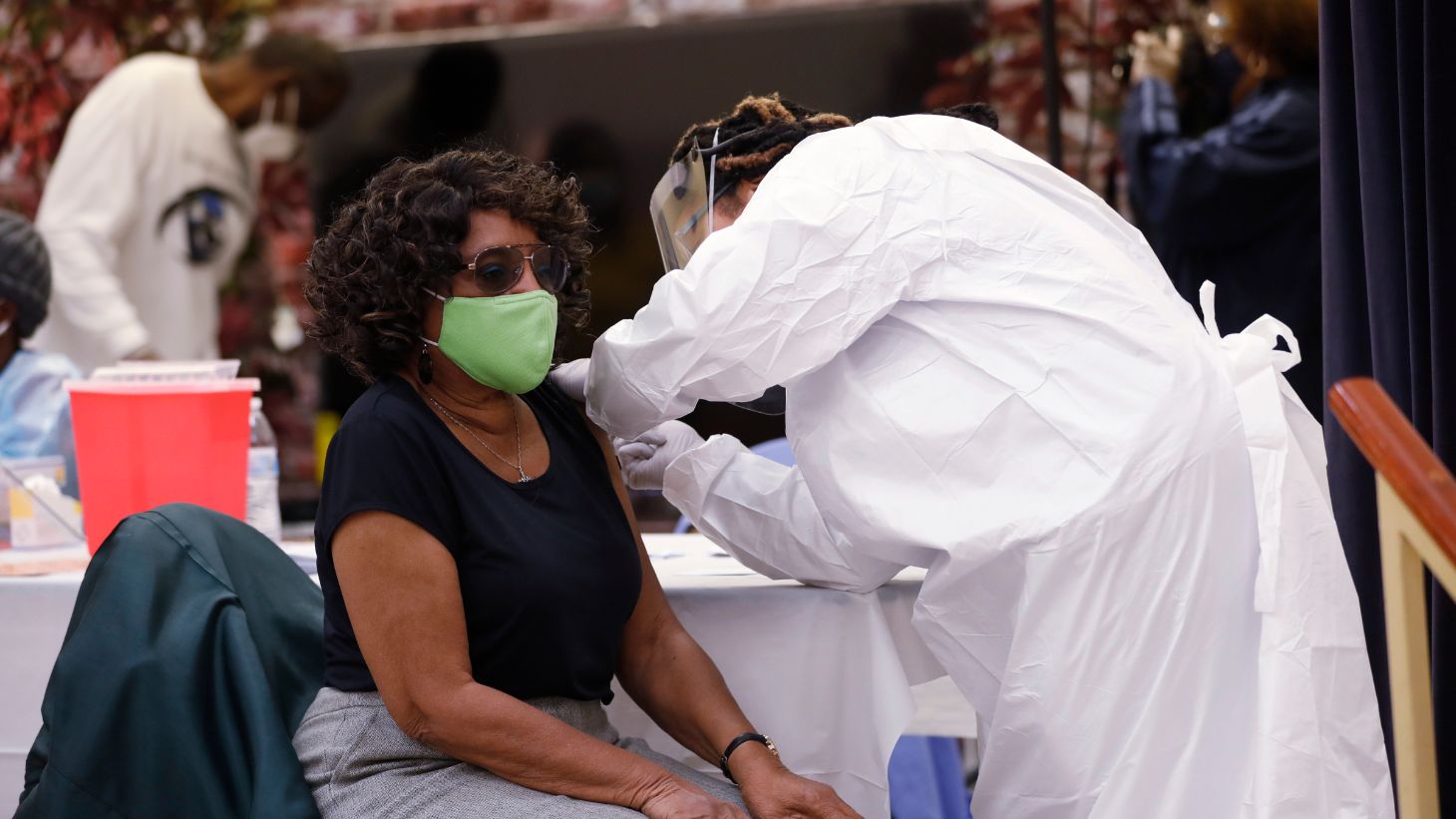
St. Johns Missionary Baptist Church in Tampa hosts a vaccine clinic as part of Florida Department of Health efforts to reach African American and Latino residents.

St. Johns Missionary Baptist Church in Tampa hosts a vaccine clinic as part of Florida Department of Health efforts to reach African American and Latino residents.

Christianity Today February 25, 2021
Octavio Jones / Getty Images

As the nation passed 500,000 coronavirus deaths this week, government data revealed that the life expectancy for African American men dropped three years—triple the decline among Americans overall during the first half of 2020.

In an effort to help reach minority communities that have been disproportionately affected by COVID-19 but less likely to get the shot, a coalition of 150,000 churches recently announced its plan for vaccinating over 100 million black and Latino churchgoers.

The National Black Church Initiative (NBCI), which represents historic black denominations and partners with Latino leaders, has been lobbying the federal government for a more comprehensive plan to address disparities in COVID-19 vaccine uptake. NBCI president Anthony Evans wants to see the government more deliberately use churches’ built-in trust and familiarity to make the vaccine more accessible for minority populations.

Evans said at a press conference at Mount Zion Baptist Church in Washington, DC, last week that he supports Centers for Disease Control and Prevention (CDC) recommendations for who should become vaccinated first but worries that African Americans and Latinos who qualify because of their age or underlying medical conditions aren’t getting the vaccine.

A representative from Health and Human Services (HHS) has not responded for comment on the NBCI plan, though the CDC distribution plan intends to address health inequities and “remove unfair, unjust, and avoidable barriers to COVID-19 vaccination.”

While black churches across the country have already opened their doors to help states and hospitals distribute the vaccine, Evans’s large network could add 300 church-based vaccination sites in the hardest-hit neighborhoods nationwide—a more coordinated, larger-scale effort to vaccinate minority groups than has been attempted so far.

The NCBI plan aspires to be “the largest, faith-based mobilization of African American and Latino Protestant denominations in the country to achieve a single health goal.”

In partnership with the National Hispanic Medical Association, the National Medical Association (the professional organization for black doctors founded amid the Jim Crow era), and corresponding nursing groups, the network organized response teams by zip code.

“We will send the response teams out to every single neighborhood that looks like them and speaks like them, both on the black and Latino side,” said Evans. In many cases, these areas lack robust medical systems to begin with, a result of Jim Crow segregation and decades of inequality.

So far, vaccine distribution sites are more likely to be located in white neighborhoods and require online registration, even though black and Hispanic families and the elderly—the groups most vulnerable to COVID-19—are less likely to have broadband internet access.

In some cities, white Americans have even traveled to receive vaccines in predominantly minority communities, such as a Latino neighborhood in New York and a private health center in an African American neighborhood in Los Angeles.

“When you went to the site, most of the people there were whites, and barely any African Americans were there,” said Peter Watts, pastor of The Rock Church in Los Angeles. He explained that it wasn’t well advertised in the community but was listed online.

Co-op City Baptist Church in the Bronx is already serving as a vaccine site, but the community is still underserved due to the state’s appointment system, said Carrie Mobley, a retired church member who advocates for seniors. She receives calls from residents struggling to navigate the website or waiting on hold for a long time to get through. “The governor’s office has made this process hard for a normal senior citizen to work through,” she said.

Barbara Felker, an associate pastor at Highbridge Community Church in the Bronx, also serves as a healthcare executive and arranges pop-up clinics at churches. Her company, Northwell Health, adjusted the process for distributing vaccines among minority communities by shifting from advertising on public websites about vaccination events to emailing pastors a private link to share in their neighborhood.

“The faith-based partnership is critical to access to care and distribution,” said Felker, Northwell’s vice president of strategic community partnerships. “Pastors are in the community, and they know how to do outreach to the community.”

The private link still requires some demographic information for patients to fill in to schedule the appointment, but churches can include their phone numbers to call and provide volunteers to step into the digital divide, answering phones and filing electronic forms.

The targeted approach seems to be increasing the vaccination numbers not only of church members but also of the minority populations whose numbers have been lagging, said Felker.

California tried a similar approach with special access codes meant for hard-hit communities of color, but the wealthier are still snagging vaccine appointments instead.

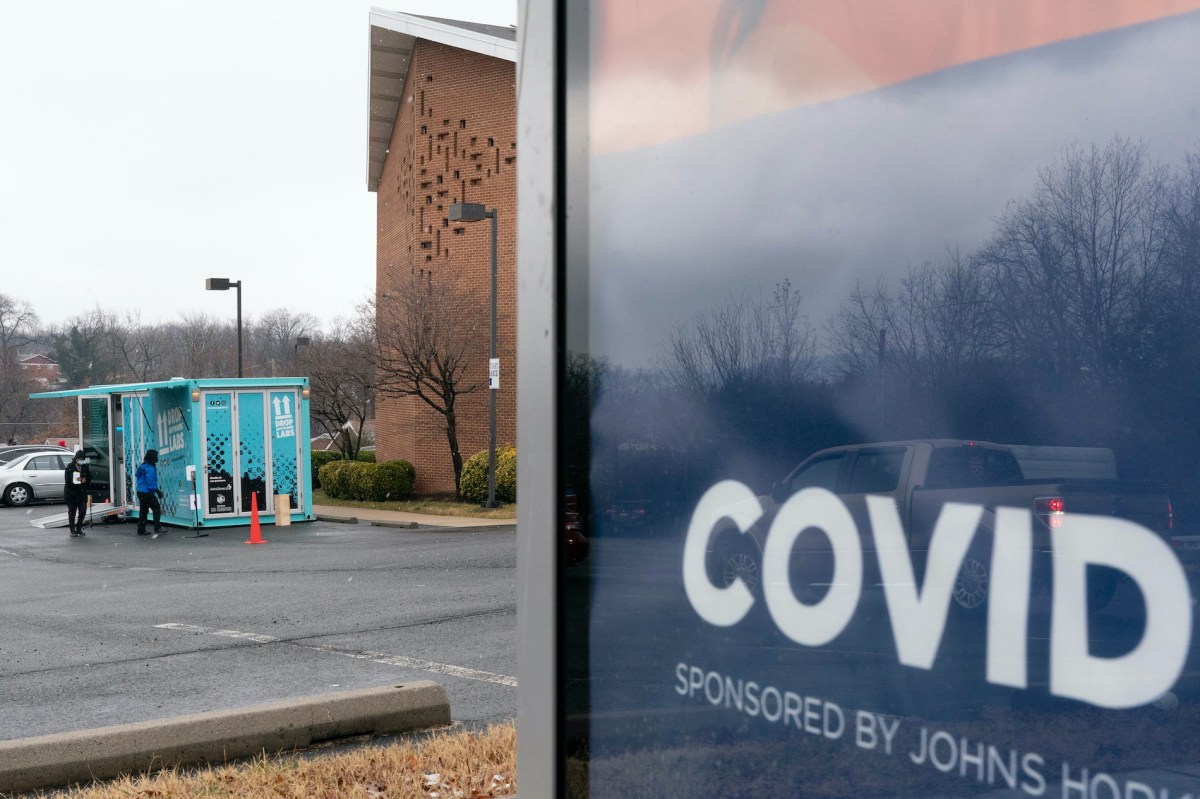
DC’s Pennsylvania Avenue Baptist Church hosts a COVID-19 vaccine clinic outside its sanctuary.

So far, the CDC has demographic data from only 34 states on about 55 percent of the vaccinations given nationally. Kaiser Family Foundation, looking at data through February 16, reported how blacks and Latinos are receiving fewer doses but carrying a bigger burden of COVID-19 cases. In Florida, where Governor Ron DeSantis already committed to distributing vaccines through seven black churches in January, 6 percent of those who received a shot were blacks, though they make up 16 percent of the population and 16 percent of COVID-19 deaths.

In Mississippi, only 22 percent of vaccine recipients were blacks, while they make up 40 percent of coronavirus deaths. In Texas, data on Hispanics is similar: 20 percent of vaccinations and 47 percent of deaths from the virus.

Evans feels confident that black churches also have the trust needed to educate communities where there is hesitation to take the shot. To further persuade the undecided, the NBCI’s committee of five African American and four Latino doctors independently reviewed the Moderna and Pfizer vaccines and confirmed their safety last week.

Watts, who leads The Rock Church, a Reformed Church in America congregation in Los Angeles, noticed historically black churches holding educational events to “dispel the myths that are out there,” he said. “People in the community trust the church and whatever information the church is putting out in regards to safety.”

His church sent out a list of neighborhood vaccination sites, which he used to find a location to take his mother to get her first dose.

Ideas

Are Christian Schools Training Christians or Americans?

Staff Editor

Jesus made clear that we pledge allegiance only to God. But some Christian education pledges allegiance to the world too.
Christianity Today February 25, 2021
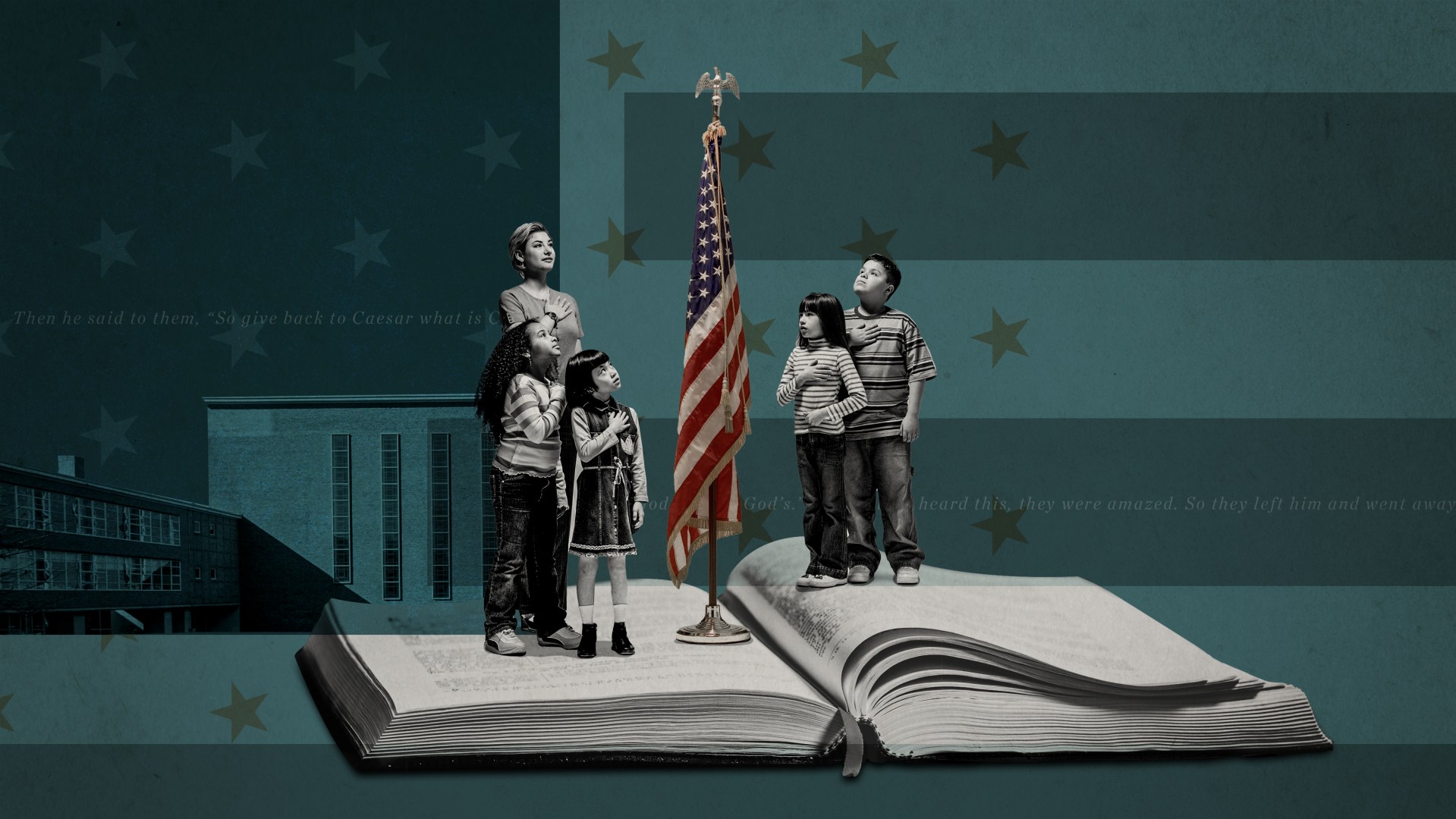
Illustration by Rick Szuecs / Source images: Darryl Estrine / Getty / RawF8 / Envato / Library of Congress

How do we rightly understand the people who stormed the Capitol last month? MSNBC analyst Mehdi Hasan, soon after the riot, wrote that we must ask, Where were they radicalized?

Hasan’s answer was right-wing news and social media, a frantic feed of Fox and Facebook. But in a column for Religion Dispatches, Chrissy Stroop pointed to Christian education as well. Citing a Huffington Post report that connects rhetoric from former President Donald Trump with lessons in widely used Christian textbooks produced by Abeka Publishing and Bob Jones University Press, Stroop argued “conservative Christian” schools are “sources of radicalization” with a “toxic influence” that contributed to the seditious violence in Washington on January 6.

On the one hand, if Stroop’s broad verdict is right, I should have joined the Capitol mob. I am a product of Christian primary education—even used Abeka books. Still, I can’t argue with Stroop’s basic contention that the mushrooming visibility of Christian nationalism in American evangelical circles requires new scrutiny of Christian schooling. The question I keep returning to is this: Are our schools training Christians or Americans?

If education is the chief project of childhood, then it should be a project infused with Jesus Christ.

Our reflexive answer would be “Christians, of course.” After all, this is why parents like my mom seek Christian education, sometimes despite great financial strain. If education is the chief project of childhood, then it should be a project infused with Jesus Christ. Three hours a week at church can’t compete with 35 hours a week in the classroom. Education shapes what sociologists call the “imaginary”—an expansive, all-encompassing, and intuitively held perspective on life. Christian schools offer parents the tantalizing prospect of children educated into a thoroughly Christian imaginary, a way to “bring them up in the training and instruction of the Lord” (Eph. 6:4). And research shows Christian education has measurable, lifelong effects.

But thinking back on my own Christian education, mere Christianity was not all I learned. I moved around a lot growing up, attending four Christian schools and spending one year in American public school, one year in Chinese public school, and one year homeschooled. The four Christian schools I attended varied theologically and culturally: One was affiliated with a fundamentalist Baptist church; another hired a Democrat to teach civics the year former President George W. Bush was reelected with overwhelming evangelical support. At all of them we said our pledges, sometimes daily or as a standard feature of a weekly chapel. The order of pledging allegiance, to my recollection, started with the American flag, then the Christian flag, and, lastly, the Bible.

That routine—placing national loyalty first—implies a devotion to nation before Jesus, the very essence of Christian nationalism, not faith in Christ. To pledge ourselves to any state is not appropriate for Christians. Martyrs of the early church died for this conviction. Their declaration that “Jesus is Lord” carried an implicit repudiation of the Caesars’ claim to be their lord.

“When the early Christians chose to say, ‘Jesus is Lord,’” explains CT contributing editor Ed Stetzer, “they were literally choosing to align everything with Jesus, even their own lives. Their words were not trite statements. They were downright treasonous. They echoed a subversive rebellion against the establishment that clearly resonated their allegiances and alliances.” Yet 19 or so centuries later, my Christian schools had me pledging—whether I understood it or not—first to the flag of Caesar and only secondarily to Jesus by way of a flag with colors deliberately suggesting a link between Christianity and American patriotism. (This flag, by the way, was carried by a rioter on the Senate floor last month.) That portion of my schooling wasn’t Christian discipleship. It was good American training—or, more bluntly, it was Christian nationalism.

My twins are still a few years out from kindergarten, but as my husband and I consider our school options, this weighs heavily on my mind. My inclination after my unusually broad educational experience is to send my kids to Christian school, ideally a large one with elements of classical education and de-emphasized technology use.

But the possibility that the flow of their education will have an undercurrent of Christian nationalism troubles me. I don’t want my children to be expected to pledge themselves to the United States of America, because I believe saying the Pledge of Allegiance is a direct violation of Jesus’ instruction to give ourselves only to God (Matt. 22:15–22). Nor do I want them, especially while they’re too young to be able to explain their parents’ theological reasoning, to be the “weird” ones opting out of a school-wide ritual. I want them to be trained in our faith, not in idolatrous American civil religion.

But public schools also lean toward nationalism, only without the “Christian.”

“Ah,” I can imagine some readers saying, “so send them to public schools instead.” But public schools also lean toward nationalism, only without the “Christian.” Not that public school teachers and administrators can’t be Christians or conscientious public servants; plenty are. Yet at an institutional level, American public education as we know it was built on models developed in 18th- and 19th-century Europe (chiefly Prussia), models designed to turn out loyal citizens with a strong sense of “national spirit.”

This design was well intended. One immediate impetus was to overcome deep (and sometimes violent) religious and ethnic divisions by teaching children to think of themselves as Prussians or Americans first and Catholics or Protestants second. The idea, in the words of philosopher Johann Gottlieb Fichte, was to “establish deeply and indelibly in the hearts of all, by means of education, the true and all-powerful love of fatherland, the conception of our people as an eternal people and as the security for our own eternity.”

However good the intent, that’s a clear usurpation of roles that, for Christians, belong to Christ and his church. While this theory of education is certainly not the only influence in the American public school system, it’s indefensible enough for my family to decide we’ll steer clear. Opting for public school wouldn’t free my kids of an expectation to say the Pledge of Allegiance, for example—in fact, they might be asked say it even more often in a public setting, depending on the district.

So that brings me back to Christian schools. They played a powerful and positive formative role in my life and now stand accused, not entirely without basis, of inculcating the Christian nationalism on display at the Capitol insurrection. The best I can do is plead with Christian educators: If it is lurking in your school, root out the nationalist weed. Burn it away like the dross it is (Isa. 1:25–26). Train Christians, not Americans. Graduate students who have never pledged to a flag but know they belong to Christ. I hope my children will be among them.

Bonnie Kristian is a columnist at Christianity Today.

News

Iraq’s Struggling Christians Hope for Boost from Pope Francis Visit

Landmark trip will include Qaraqosh, where most families fled ISIS yet some are now trying to restore the Christian heartland of the Nineveh Plains.

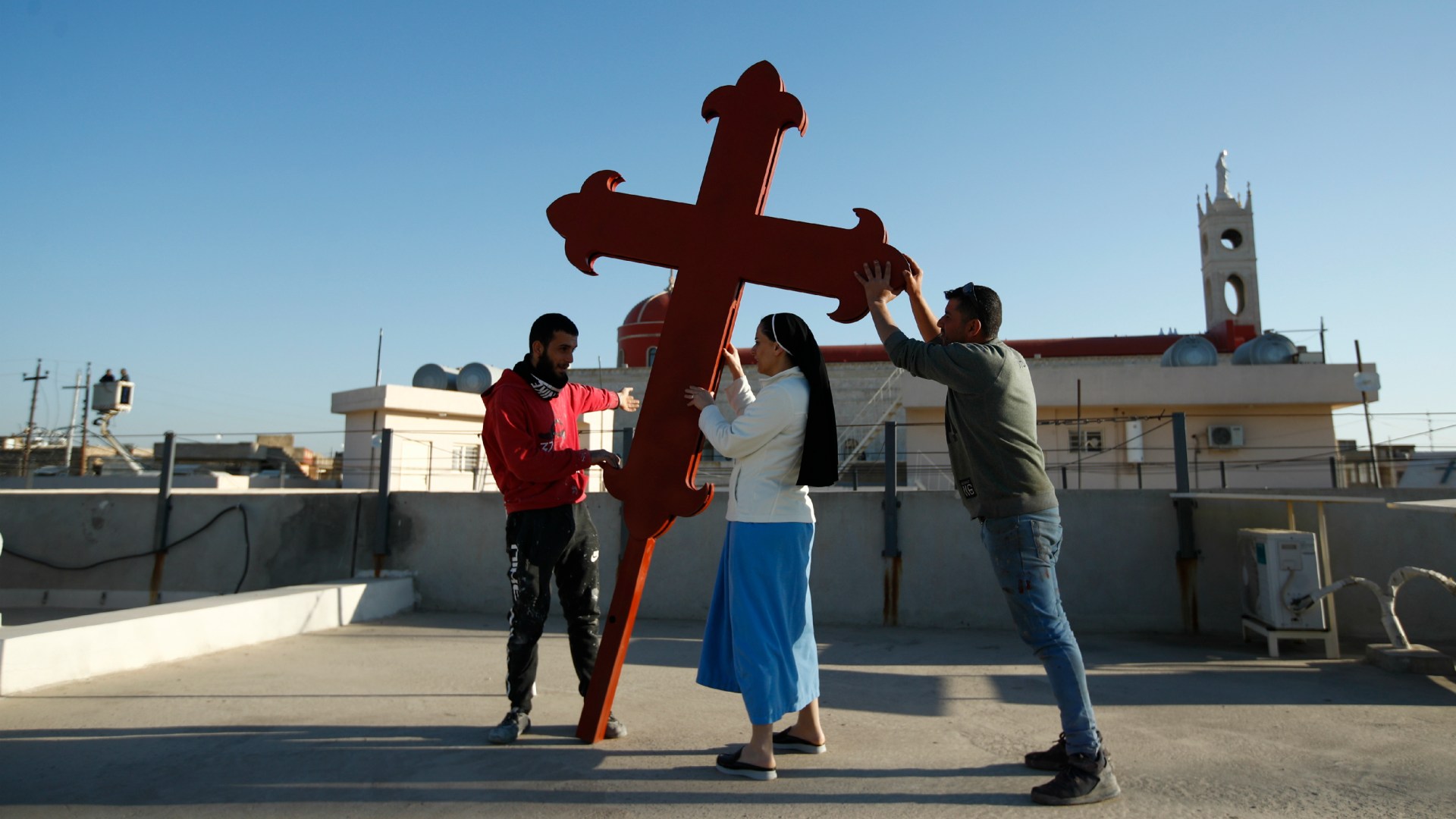
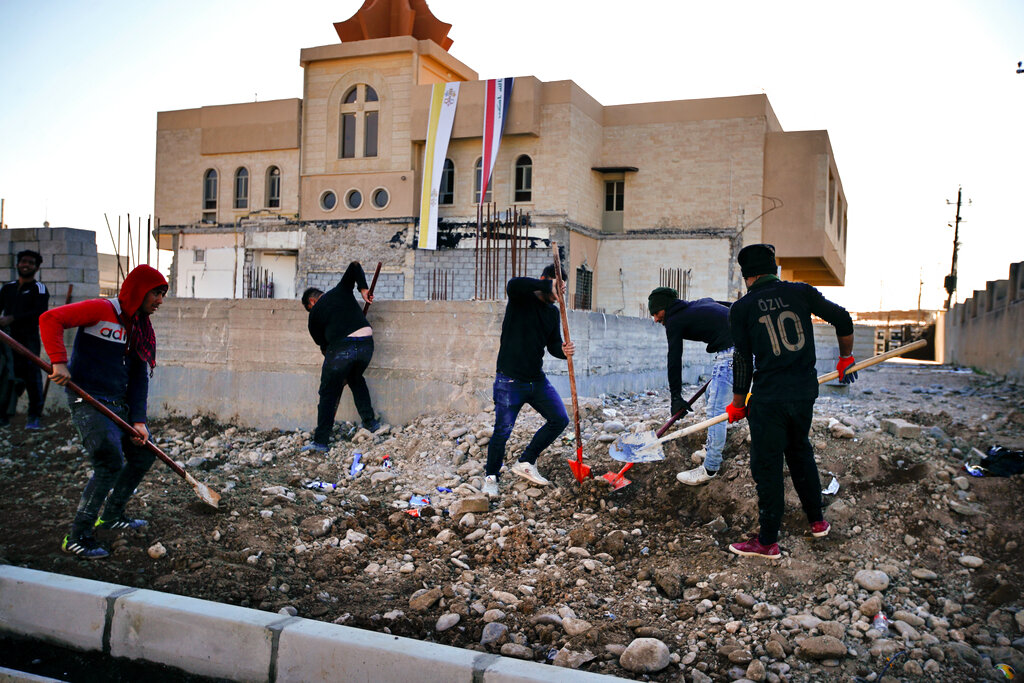
Iraqi Christians place a cross on a church in Qaraqosh on February 22 in advance of Pope Francis' visit to Iraq next month.

Iraqi Christians place a cross on a church in Qaraqosh on February 22 in advance of Pope Francis' visit to Iraq next month.

Christianity Today February 24, 2021
Hadi Mizban / AP Photo

Nasser Banyameen speaks about his hometown of Qaraqosh in the historical heartland of Iraqi Christianity with nostalgia. Before Islamic State group fighters swept through the Nineveh Plains in northern Iraq. Before the militants shattered his sense of peace. Before panicked relatives and neighbors fled, some never to return.

Iraq’s Christian communities in the area were dealt a severe blow when they were scattered by the ISIS onslaught in 2014, further shrinking the country’s already dwindling Christian population. Many hope their struggle to endure will get a boost from a historic visit by Pope Francis planned in March.

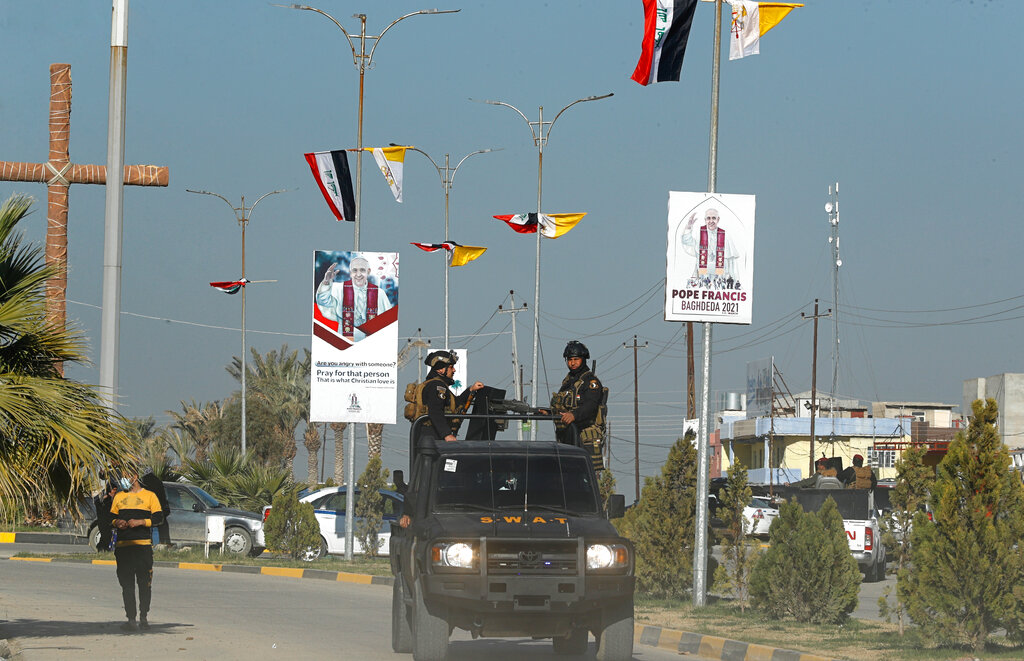
Among the places on his itinerary is Qaraqosh, where this week Vatican and Iraqi flags fluttered from light poles, some adorned with the pope’s image.

Francis’ visit, his first foreign trip since the coronavirus pandemic and the first ever by a pope to Iraq, is a sign that “You’re not alone,” said Monsignor Segundo Tejado Muñoz, the undersecretary of the Vatican’s development office. “There’s someone who is thinking of you, who is with you. And these signs are so important. So important.”

The ISIS juggernaut and the long war to drive the militants out left ransacked homes and charred or pulverized buildings around the north. But the biggest loss perhaps has been the people. Traditionally Christian towns across the Nineveh Plains virtually emptied out and, by some of the widely varying estimates, fewer than half of the Christians who fled have returned.

The Vatican and the pope have frequently insisted on the need to preserve Iraq’s ancient Christian communities and create the security, economic, and social conditions for those who have left to return.

Iraqi security forces in Qaraqosh pass by the flags of Iraq and the Vatican and posters announcing the upcoming visit of Pope Francis on February 22.

To do that, the Vatican for years has helped coordinate a network of Catholic non-governmental organizations providing help in the field in Iraq and other countries, including in education, health care, and reconstruction. The aid is non-denominational—Muslims are helped as well as Christians—and the overall hope is that the delicate interfaith balance can be preserved and strengthened. The pope’s March 5–8 visit will also have a strong interfaith component.

“People want to look for a better future for their families, so you can’t stop them if they have the intention of going somewhere else,” Tejado said. “But at least we try to create the conditions they might return.”

That could be difficult.

Many Christians who fled the ISIS advance have either stayed in Iraq’s Kurdistan region or started new lives abroad. While those who have returned have been rebuilding fractured but vibrant communities with resolve, some still feel vulnerable and eye better lives elsewhere.

Banyameen returned in 2019 from the Kurdish region to his house in Qaraqosh, also known as Bakhdida. But many family members who fled like him ended up in Australia and Germany. ISIS sleeper cells still carry out attacks in parts of Iraq, so he worries about the specter of a militant resurgence, the future of his three children, and Iraq’s economic and security woes.

“The homeland is the family, not the house … I feel very homesick,” he said. “When something is broken, it doesn’t go back to the way it used to be.”

Their home has been repaired, but the sight of empty or damaged ones on their street reminds his wife, Ban Saeed, of the ISIS reign of terror. After she gave birth to the couple’s third child in December, she wondered if it would have been better for their daughter to have been born abroad.

“If we left, I am sure their future would be better abroad, not like here,” she said. “There would be safety and I wouldn’t be scared for them when they come and go.”

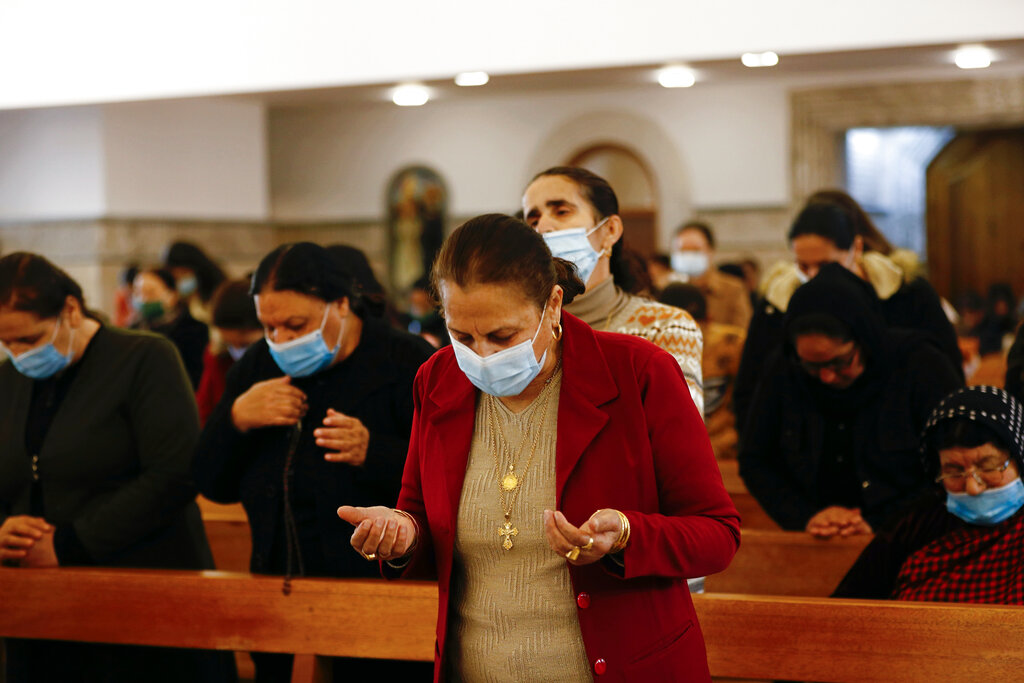
Iraqi Christians attend a mass in a church in Qaraqosh, Iraq, on February 22.

In nearby Bartella, Sargon Issa said he felt the town’s spirit dim with so many familiar faces gone.

“Walking down a street, I used to salute so many people, friends, and neighbors. Now, there’s hardly any of that,” said Issa. “Life is not like before. There’s no flavor to it. … Even those Christians who have returned to Bartella say they want to leave to find stability.”

He, too, would like to leave if he could; his mother tells him she wants to die in Iraq.

“I try to change her mind and tell her, ‘Let’s travel and live without worry or fear … somewhere where we wouldn’t be driven out of our homes,’” he said. “She tells me we should stay, and that God is with us.”

The numerical decline and waning clout of Iraqi Christians started before the Islamic State’s persecution of religious minorities like theirs. Christians were among groups targeted by militants amid the breakdown in security after the 2003 US-led invasion that overthrew Saddam Hussein.

The Chaldean Catholic Patriarch, Cardinal Louis Raphael Sako, estimated that 1 million Christians have left Iraq since 2003 and about 500,000 remained. But there are no official figures, and estimates vary: Some put the number left at fewer than 250,000.

Without faith the government can provide security from potential violence, legal protections, and economic opportunities, many Christians are wary of returning.

William Warda, co-founder of Hammurabi Human Rights Organization in Baghdad, said the Christian presence is under threat. “To this day, they don’t feel safe and secure … because the state is weak, and the rule of law is weak.”

Some Christians lament broken trust with some Muslims in neighboring villages who they believe sympathized with ISIS or helped pillage their homes. They are also wary of the ascension of largely Shiite militias and fearful of what they say are unfavorable demographic changes in some traditionally Christian areas.

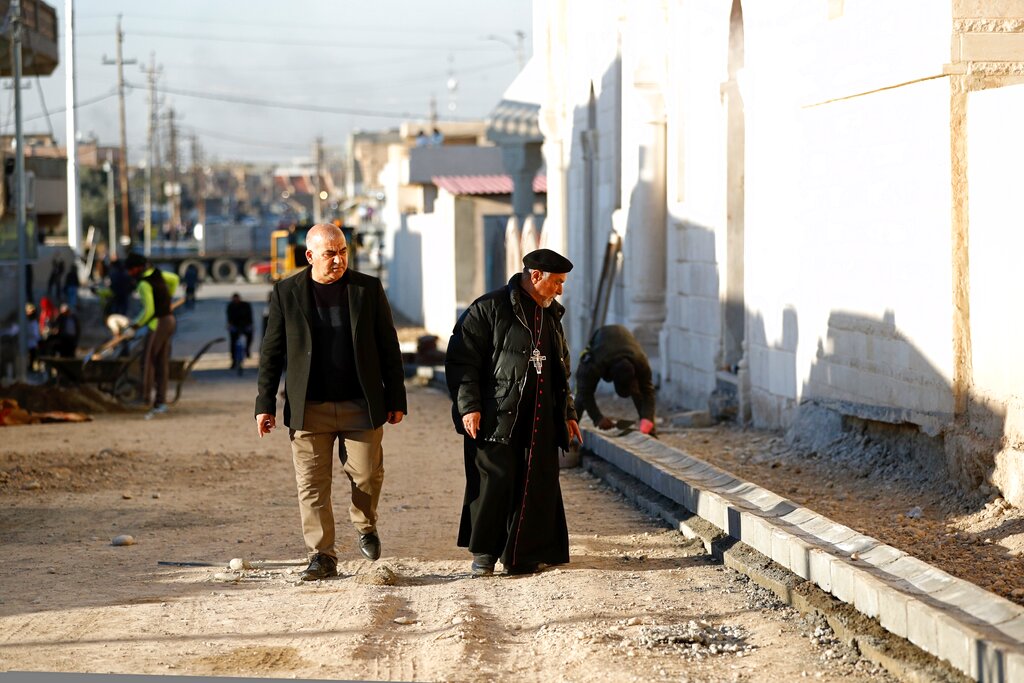
A priest watches workers fix a street destroyed during clashes against Islamic State militants in Qaraqosh, Iraq, on February 23.

Etched in the minds of many are the memories of the flight to escape ISIS, the indignities of displacement, and the scenes of devastation that awaited those who returned, including burnt out churches and desecrated tombs.

As he left under cover of darkness shortly before the militants entered his town of Karamlis in 2014, Thabet Habeb felt pain for all that he was leaving behind. The priest took little besides some manuscripts, including a Bible.

“It was as if we had been expelled forever from the lands of our grandfathers.”

More than two years would pass before Habeb could set foot in the town. The smell of smoke from burnt out structures still hung in the air. In November 2016, he held prayers at the St. Adday church, the sound of broken glass crunching beneath the feet of worshipers stunned by the damage around them. Decapitated statues of Jesus and Virgin Mary stood in the scarred church that day; one woman wept bitterly.

Much reconstruction has taken place since. But so far, only about 345 of about 820 Christian families in pre-2014 Karamlis have returned, Habeb said.

“We need to restore our numbers to support the Christian presence and identity in the town,” he said.

People fix a street destroyed during clashes against Islamic State militants in Qaraqosh, Iraq, on February 23.

Those who did come back make sure an ancient heritage and a way of life endure.

At St. Paul’s House for Church Services in Qaraqosh, religious paintings and musical instruments were burned and a statue of Jesus hurled to the ground, said Duraid Barber, the former manager.

But the house’s activities, which include religious classes and teaching the Syriac language, have been revived and even expanded.

“We decided to return and serve this wounded and pained country to the last drop of our blood,” said the priest. “As Christians, we believe that we are like the salt that adds flavor to food.”

Associated Press writers Nicole Winfield in Rome, Hadi Mizban in Qaraqosh, and Samya Kullab in Baghdad contributed.

News

Died: Celebrate Recovery Founder John Baker, Who Shifted Evangelicals’ Approach to Addiction

The Saddleback Church pastor developed the popular Christ-centered 12-step program for “hurts, habits, and hang-ups.”

Christianity Today February 24, 2021
Courtesy of Saddleback Church / Edits by Christianity Today

Celebrate Recovery founder John Baker, who turned his testimony recovering from alcoholism into a biblical 12-step program used by more than 7 million people, died unexpectedly on Tuesday at age 72.

Baker’s ministry began in 1991 at Saddleback Church in California and has spread to 35,000 churches nationwide over the decades. Celebrate Recovery is credited with helping destigmatize addiction among evangelicals and opening the church up as a safer place for recovery.

“Thirty years ago John Baker turned the ruins of his life over to Jesus Christ and God transformed him from a driven businessman with an addiction to alcohol, a failing marriage, and alienated children to a Christ-follower with a passion to help others with their ‘hurts, habits, and hang-ups’ through the principles of recovery,” wrote Kay Warren, cofounder of Saddleback Church and a mental health advocate. “There is simply no way to put into words how I love John and will miss this kind, creative, brilliant and faithful man.”

Evangelical leader Johnnie Moore, whose family previously belonged to Saddleback Church when living in California, remembered Baker’s commitment to “saving the lives of the people whom God loves.”

“He became a doctor of hope for those whose lives were caught in vicious cycles of guilt, shame, and failure. With God’s help, he showed again and again that those cycles can be broken,” he said. “Pastor John was never content just to save souls. He wanted to also save lives, now. It isn’t just the impact he had on individual lives but on all of those who loved those who decided to walk into a Celebrate Recovery meeting.”

Baker was raised in Collinsville, Illinois. He shares in his testimony that he grew up a believer in a Baptist church but struggled with feelings of unworthiness. He partied in college at the University of Missouri and as an officer in the air force, and his drinking habit grew as his career in business took off in his 30s.

Eventually Baker considered himself a “functioning alcoholic,” turning his back on God and separating from his wife. When he hit his bottom, he began attending daily AA meetings, working through the steps, and finding hope in a God who loved him unconditionally.

His efforts to make amends to his wife, Cheryl, as part of the 12 steps led to him attending Saddleback Church with her, hearing Rick Warren preach, and renewing their marriage vows in a span of months.

Baker immediately saw the need to connect the gospel with the recovery program he had gone through. “In my men’s small group I couldn’t talk about my struggle, and at AA, I couldn’t talk about my Savior,” since the program speaks in more secular terms about a Higher Power, he told CT in 2016.

He wrote out a vision for what would become Celebrate Recovery’s own version of the 12 steps, each one paired with a teaching from Scripture, and shared it with Rick Warren back in 1991. As the story goes, Warren replied, “Great, John—go do it!” and the program soon launched at Saddleback.

Baker went on to study at Golden Gate Baptist Seminary and serve at Saddleback as volunteer, staff member, pastor, and elder as Celebrate Recovery grew across denominations and ministry networks.

At Saddleback, it became the top outreach ministry, with 70 percent of participants coming from outside the church.

“John touched more people with the healing power and grace of Jesus Christ than anyone else that I have ever known personally and one of those lives was mine,” wrote Celebrate Recovery’s national director and national training coach Mac and Mary Owen.

Celebrate Recovery roots the 12 steps in biblical principles, and its final step charges participants to use their recovery to spread the good news.

“This program is not something that you complete and then all of sudden, ‘Hey, I’m better. See ya,’” Baker said. “They’re always there to help somebody if they’re struggling. They know that it worked for them, and that’s the greatest story they have.”

The ministry has also expanded to serve the incarcerated, as the program became adopted by state prison systems in New Mexico, California, and beyond. Prison Fellowship president James J. Ackerman collaborated with Baker to add Celebrate Recovery Inside to its curricula.

“John was a great leader, and he will be greatly missed, but the impact of his faithful obedience will go on for generations,” Ackerman wrote in tribute. “I take comfort in the thought that as John enters the presence of his Lord, he will hear the words, ‘Great, John—you did it!’”

Baker is survived by his wife and Celebrate Recovery cofounder, Cheryl; children Johnny and Jeni Baker and Laura and Brian Gibney; and their grandchildren.

News

Most ‘Nones’ Still Keep the Faith

When research looks beyond affiliation, the move away from religious institutions becomes more nuanced.

Christianity Today February 24, 2021
Prixel Creative / Lightstock

I pastor an American Baptist church in a small town in rural Illinois. When the current building was dedicated in 1968, there were more than 300 members. By the last 1990s, there were about a hundred. When I became the pastor in 2006, just 50. Now, on a good Sunday I can look out from the pulpit and see 20 souls in the seats.

Where did they all go? I became a social scientist, in part, to try to figure that out. In my forthcoming book, The Nones: Where They Came From, Who They Are, And Where They Are Going, I document in detail how and why so many Americans are now counted among the ranks of religiously unaffiliated in the United States.

What I discovered was that while many people have walked away from a religious affiliation, they haven’t left all aspects of religion and spirituality behind. So, while growing numbers of Americans may not readily identify as Christian any longer, they still show up to a worship service a few times a year or maintain their belief in God.
The reality is that many of the nones are really “somes.”

Nones by Belonging

Religious disaffiliation is at an all-time high—claimed by nearly a quarter of the population—when measured through surveys on religious belonging. The General Social Survey, for example, asks a common version of the question: “What is your religious preference?” Respondents can choose from a long list of options, including “no religion.”

https://datawrapper.dwcdn.net/eCHv9

In 1972, just 1 in 20 Americans had no religious affiliation. That share inched up only marginally for the next two decades, before beginning its climb in the 1990s. The unaffiliated jumped about 4 percentage points between 1993 and 1996, up to nearly 1 in 6 (nearly 15%) by the new millennium.

The number of respondents indicating they had “no religion” continued to grow, reaching 1 in 5 in 2012 (19.6%) and close to 1 in 4 (23.7%) in the most recent wave of the survey available.

There’s ample evidence emerging that the GSS undercounts the share of Americans who have no religious belonging because some survey respondents may be more reluctant to indicate to a live interviewer that they are religiously unaffiliated. Still, all surveys agree on this point—those without a religious tradition are growing every year, the so-called rise of the nones.
In my book, I note how the only other religious tradition to change in size in a significant way are mainline Protestants (such as United Methodists and Episcopalians). The data indicates that many nones are people who were raised in one of these traditions, but walked away from it as adults.

Nones by Behavior

While belonging is the most popular way to measure religiosity, there are other dimensions of religious life. If we believe “actions speak louder than words,” we may look to whether religious behavior has shifted as dramatically.

A good place to look is church attendance. Social science knows that communal worship gatherings are crucial for generating social capital, providing theological education, and encouraging the faithful to remain devoted to the tenets of their faith tradition.

Like religious affiliation, religious attendance in the US has been declining since the 1970s, but incrementally.

https://datawrapper.dwcdn.net/9umpF

In the 1970s, about 3 in 10 Americans indicated that they attended worship services at least once a week. At the other end of the spectrum, about 2 in 10 said that they never or rarely attended church services. The percentage of Americans who fell into this lowest category of church attendance stayed stable through the 1980s then incrementally increased from that point forward. By the 2010s, nearly a third of all Americans said that they never attended church or attended less than once a year.

At the same time, the share of Americans who were weekly attenders has decreased slowly. Between the 1990s and the 2010s, the share in this top category dropped about 2.5 percentage points. Currently, about a quarter attend weekly or more, and two-thirds attend a worship service at least once a year.

What is driving this drop in attendance? For decades, social scientists believed that young people would drift away from religion in early adulthood, but then come back to church when they got married, had children, and settled down. That was true for Baby Boomers, but now the data indicates that among younger age cohorts, that’s not occurring as much. More young people stop attending church in their 20s and never return.

Nones by Belief

The final dimension of religiosity is religious belief. These questions are notoriously difficult to ask on surveys, but the GSS began to explore the topic in 1988.

Respondents can select among six options to the question “Which statement comes the closest to expressing what you believe about God?” They range from “I know God really exists and I have no doubts about it,” to an atheist option, “I don’t believe in God,” and one that would describe an agnostic belief, “I don’t know whether there is a God, and I don’t believe there is any way to find out.” It’s reasonable to assume that those who chose either the atheist or agnostic options would be counted as a “none” when it comes to religious belief.

https://datawrapper.dwcdn.net/qJoRv

In 1988, just 5.1 percent of Americans chose the atheist or agnostic option on the survey. Twenty years later, that had increased to 8 percent, with 3 percent choosing the atheist option. From that point forward, the share who held to these beliefs has drifted up to about 11 percent in the last two waves of the survey.

Combining the Three Bs

A majority of Americans across faiths (60%) can’t be classified as a none by any measure—belonging, behavior, or belief. But among 40 percent who have disaffiliated in at least one of the three, few can be categorized as nones across the board.

The Venn diagram illustrates how the remaining 40 percent of the population is situated around these three dimensions of religion. Note that behavior—not attending church—is the most common reason why someone would fall into the notes.

Forty percent of the nones overall don’t attend church but still identify with a religious affiliation and believe in God at some level. Another quarter of the nones neither go to church nor indicate an affiliation with any religious group (the intersection of the green and yellow circles), but still have a belief in God. Those two groups represent two-thirds of the nones.

No wonder research has shown that the unaffiliated in America are just as likely to return to church and reclaim a Christian identity as they are to become self-identified atheists and agnostics. In my book I write that nearly 20 percent of people who identified as “nothing in particular” had changed their affiliation to Christian just four years later. And this “nothing in particular” category represents nearly 1 in 5 Americans. The harvest is plentiful!

For the remaining two factors, it’s clear that belonging is the next to fall by the wayside, followed by religious belief. Only a quarter of all nones indicate an atheist or agnostic view of God (all those represented by the red circle).

The center of the Venn diagram indicates that just 15.3 percent of the population that are nones on one dimension are nones on all dimensions. That amounts to just about 6 percent of the general public who don’t belong to a religious tradition and don’t attend church and hold to an atheist or agnostic worldview.

As Ed Stetzer wrote last year, “It would be a mistake to dismiss 25 percent of the population as unreachable or act as though they were all atheists. It would also be a mistake to think church as usual will appeal to the nones.”

He told church leaders: “The unaffiliated aren’t the unreachable.” But for leaders to engage this growing segment of the population, in their communities and hopefully in their churches, they must get an accurate picture of the range of religious unaffiliation in the US.

Understanding the composition and trajectory of this group is crucial, but it’s incredibly easy to overgeneralize about a group based on what it is not rather than what it holds in common. I wish I could give churches a simple checklist of things pastors can do to bring the nones back into their congregations, but there are at least 60 million adult nones in the United States and 60 million reasons why they left organized religion.

Trying to understand this group from a sociological perspective is a good start, but Christians need to be willing to listen to the nones themselves. Conversing with the nones—in a non-judgmental way that seeks to understand their concerns and baggage—is the best approach that the church can take to address this significant shift in the American religious landscape.

Ryan P. Burge is an assistant professor of political science at Eastern Illinois University. His research appears on the site Religion in Public, and he tweets at @ryanburge.

News

Southern Baptists Expel Two More Churches Over Abuse

Top leaders address divides in the denomination at the first in-person Executive Committee meeting in a year.

Christianity Today February 23, 2021
Mark Humphrey / AP

At its first in-person meeting since the pandemic took off a year ago, the Southern Baptist Convention (SBC) Executive Committee decided to cut ties with two churches whose pastors had been convicted of sexual offenses as well as two LGBT-affirming churches. But it was leaders’ concerns over ongoing tensions within the denomination that stirred Southern Baptists during the two-day gathering at its Nashville headquarters.

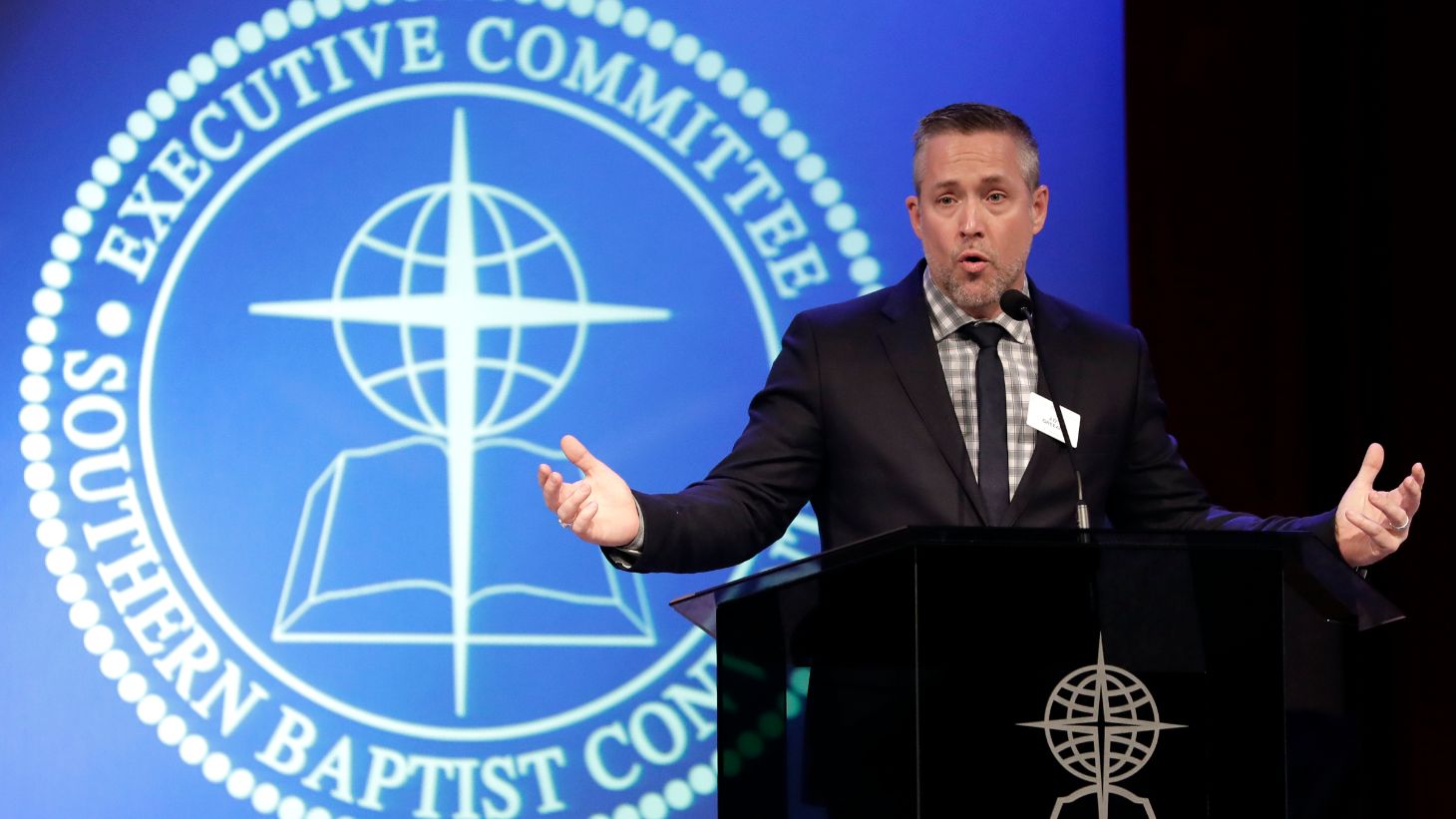
“Southern Baptists in large part are ready to walk into the future. But we are spending a lot of time tolerating those who would rip us apart,” said SBC president and Executive Committee member J. D. Greear during remarks Monday night. “Brothers, let’s just call it: These things are demonic.”

During his presidency, Greear led the charge to stand by abuse victims in the wake of a watershed 2019 Houston Chronicle investigation, but some advocates are still disappointed that the denomination has not been more proactive in disaffiliating with pastors who mishandle abuse allegations or compiling a database of abusive leaders.

Though the disfellowshipped congregations represent a tiny proportion of a denomination with over 47,000 churches, it’s the biggest batch to be considered “no longer in friendly cooperation” with the SBC since it launched new efforts to improve its response to abuse.

This is the second year that the denomination’s repurposed credentials committee has been tasked with making recommendations about churches’ status in the SBC. In 2020, the committee recommended one church lose its place in the convention due to past abuse by its pastor. This year, the committee recommended four. The SBC does not make public how many churches were reported to the committee for inquiry.

Antioch Baptist Church in Sevierville, Tennessee, “knowingly employs as pastor a man convicted of statutory rape,” and West Side Baptist Church in Sharpsville, Pennsylvania, “knowingly employs as pastor a registered sex offender,” the committee found. Both were disfellowshipped for violating SBC beliefs on sexual abuse.

West Side Baptist’s website, which identifies the congregation as an “independent Baptist Church,” hints at its pastor’s past.

“Over 29 years ago Pastor David lived as a great sinner and rebel,” the site says. “But Christ Jesus is a great Savior! Today Pastor David has gone from disgrace to amazing grace and now has served the Lord Jesus Christ at West Side for 18 years.”

David Pearson is listed on Florida’s sex-offender registry as having been convicted of sexual assault of a child in Texas in 1993.

Towne View Baptist Church in Kennesaw, Georgia, and St. Matthews Baptist Church in Louisville, Kentucky, were disfellowshipped for holding “membership and leadership standards [that] affirm homosexual behavior.”

Because SBC churches are autonomous, the move to disfellowship means they lose their place in the convention—they can no longer send messengers to the annual meeting to participate in denominational business—but churches can continue to operate, maintain their leadership, and keep their buildings either independently or under other denominational networks. Towne View Baptist plans to affiliate with the Cooperative Baptist Fellowship.

Over the past year, in the midst of the pandemic and the political tension around the presidential election, SBC divides around racial and cultural issues have been put on display and overshadowed ongoing efforts to improve abuse responses.

The denomination publicly debated whether critical race theory (CRT) is taking hold at its seminaries and entities, with a robust condemnation of the theory by top leaders resulting in some black pastors’ exit. A network of conservative leaders is gaining momentum and calling out what they see as a liberal shift among certain entity heads.

A recent report called out the work of the Ethics and Religious Liberty Commission and its president, Russell Moore, a critic of President Trump, as “a significant distraction.” The Executive Committee heard the report on Tuesday but opted not to take any action on the recommendations for further ERLC oversight.

Outgoing president Greear, speaking to the 86-member group Monday night, offered a full-throated sermon suggesting their fighting over secondary issues and their failure to adequately address racism were hurting their gospel mission.

“The reality is that if we in the SBC had shown as much sorrow for the painful legacy that racism and discrimination has left in our country as we have passion to decry CRT, we probably wouldn’t be in this mess,” said Greear, who is completing a third year as president after the 2020 elections weren’t held due to COVID-19.

“Every lie weakens our resolve in getting the gospel to the nations,” he said, “and every moment I engage in a silly argument or spend time debunking untruths is a moment I am not focused on the Great Commission.”

Executive Committee president Ronnie Floyd likewise referenced concerns over “this sound of war in the camp of Southern Baptists,” saying, “While we hear and see how the American culture is so out of control, my friends, our own culture within the Southern Baptist family is also out of control.”

After the two speeches, the Executive Committee unanimously adopted an expansion plan called Vision 2025. It would increase full-time Southern Baptist international missionaries from 3,700 to 4,200, boost the number of congregations by 5,000, and seek to reverse the decline in baptisms among teens.

While the denomination has seen growth outside its Bible Belt strongholds, including new church plants led by non-Anglo pastors, its membership decline continues to accelerate.

The SBC is slated to hold its annual meeting in June in Nashville.

With reporting by the Associated Press.

Books

Reading While Not Black

How a group of white church planters learned to listen to African Americans and build a better Christian community.

Christianity Today February 23, 2021
Illustration by Mallory Rentsch / Source Images: WikiMedia Commons / Kelly Sikkima / Unsplash

We didn’t know anything about critical race theory. Or implicit bias. There was no elaborate argument for centering minority voices. But as a group of 20-somethings from an almost-all-white suburb about to plant a church in the former capital of the Confederacy, we were thinking a lot of racism, reading the Scripture, and praying.

And something happened. On the basis of simple Christian beliefs—the sort every follower of Jesus would affirm—our new church saw the benefit of hearing black voices and learning from black sources.

To begin with, the Scriptures are clear that while truth is objective, every knower is inescapably subjective. We are warned that our inherent limitations are fraught with self-deception (Jer. 17:9; Ps. 19:12–13)—a deception so deep that it often manifests long after we have received the restorative gift of the Holy Spirit (Gal. 2:11–14). In other words, one of the fundamental problems we face isn’t simply that we are ignorant of important subjects that we ought to know but that we have sinfully misguided assumptions and prejudices that we aren’t even aware of. This is particularly concerning for those who have been called to preach the truth!

Yet C. S. Lewis would remind us that, while we all have blind spots, we do not all have the same blind spots. So diversity helps us correct our self-deception. All the more reason to obey the command we received through the apostle James: “My dear brothers and sisters, take note of this: Everyone should be quick to listen, slow to speak and slow to become angry” (James 1:19).

At the start of Remnant Church, my fellow pastors and I were thinking about that old truth that those who are called are not necessarily equipped. We realized that to plant this church, we needed an education in the firsthand experience and self-understanding of African Americans, who are the largest racial minority in our context. They are also a people group whose history is disproportionately filled with suffering injustices while still embracing the Christian faith at the highest rates.

For all these reasons, we decided at the beginning that we needed to hear black voices.

Learning from others

The sheer number of resources to choose from is overwhelming (and it has only grown since we began). In God’s providence, however, we stumbled upon the writings of Carl Ellis Jr.

Ellis is a conservative black theologian who was active during the civil rights movement—a tragically rare but exceedingly beautiful combination. Not long after reading his book Free at Last?: The Gospel in the African American Experience, a few of us traveled to Mississippi for a seminar with him on race and the gospel.

We left Ellis’s course with a massive list of recommended reading and a lifetime of ministerial insights, including one that has proven helpful many times over: You have to know something about the past if you want to understand problems of the present.

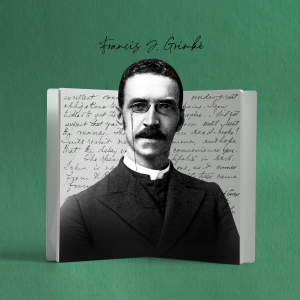
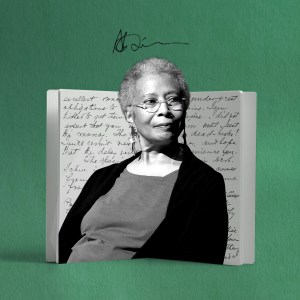
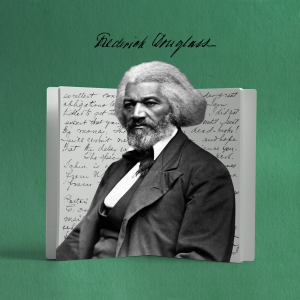
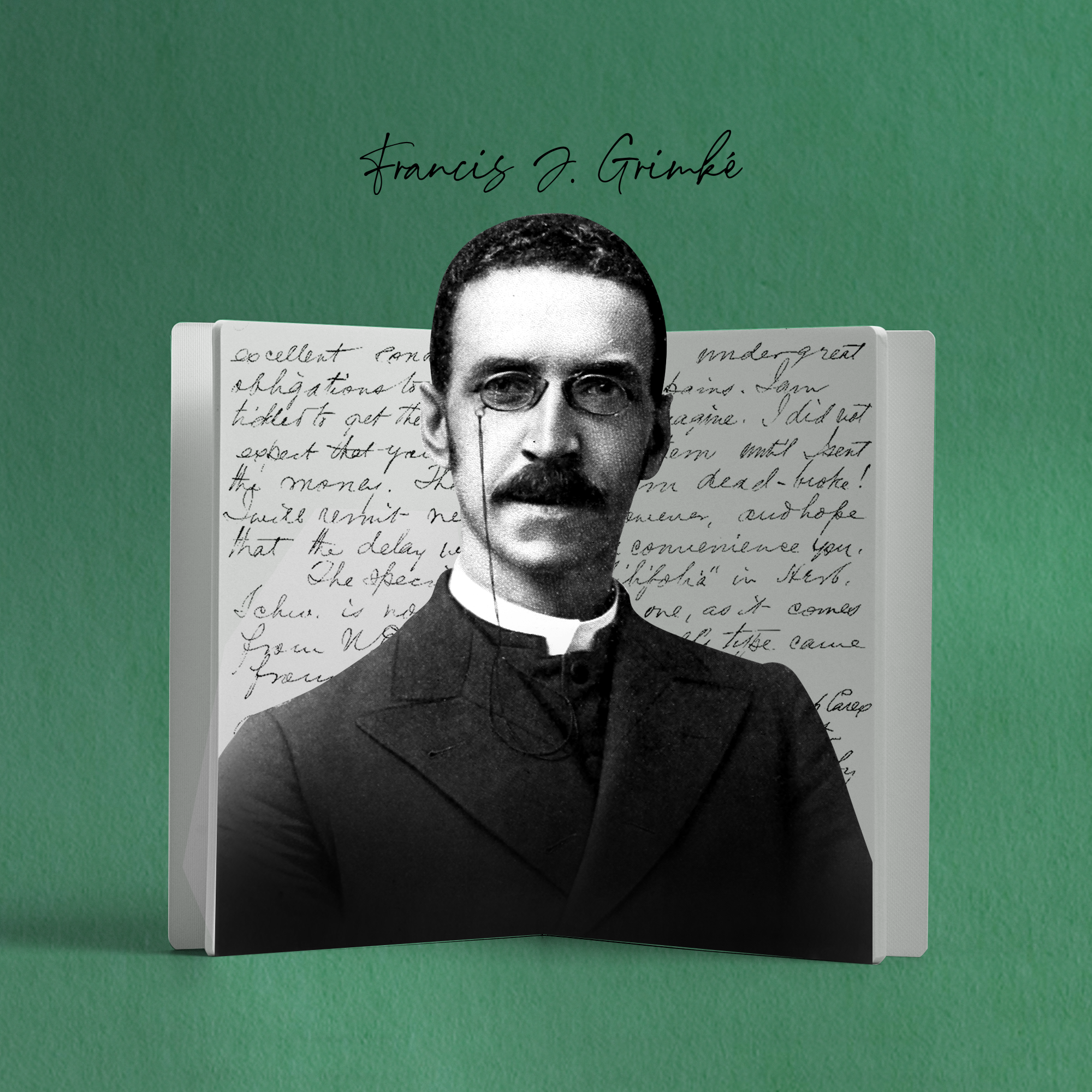
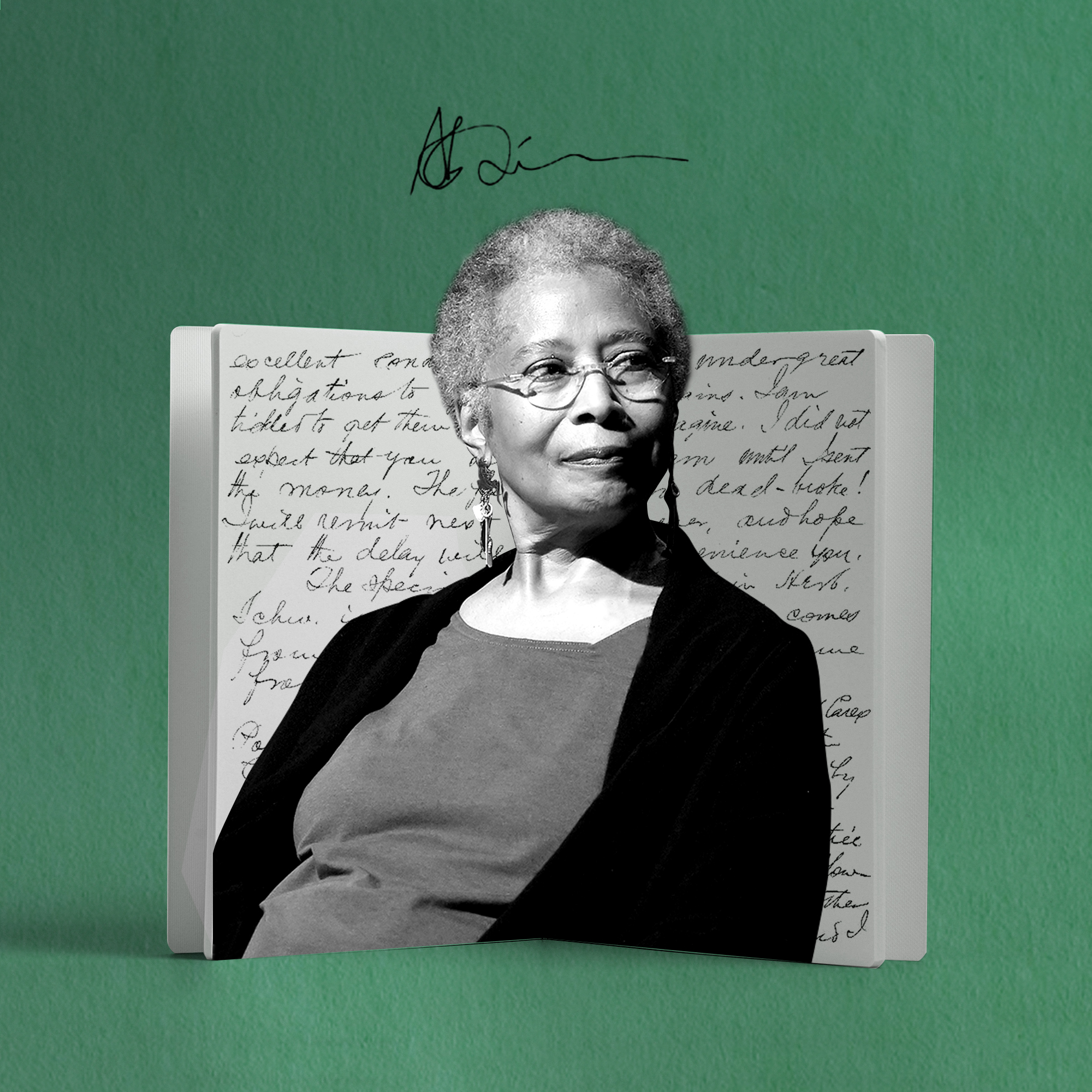
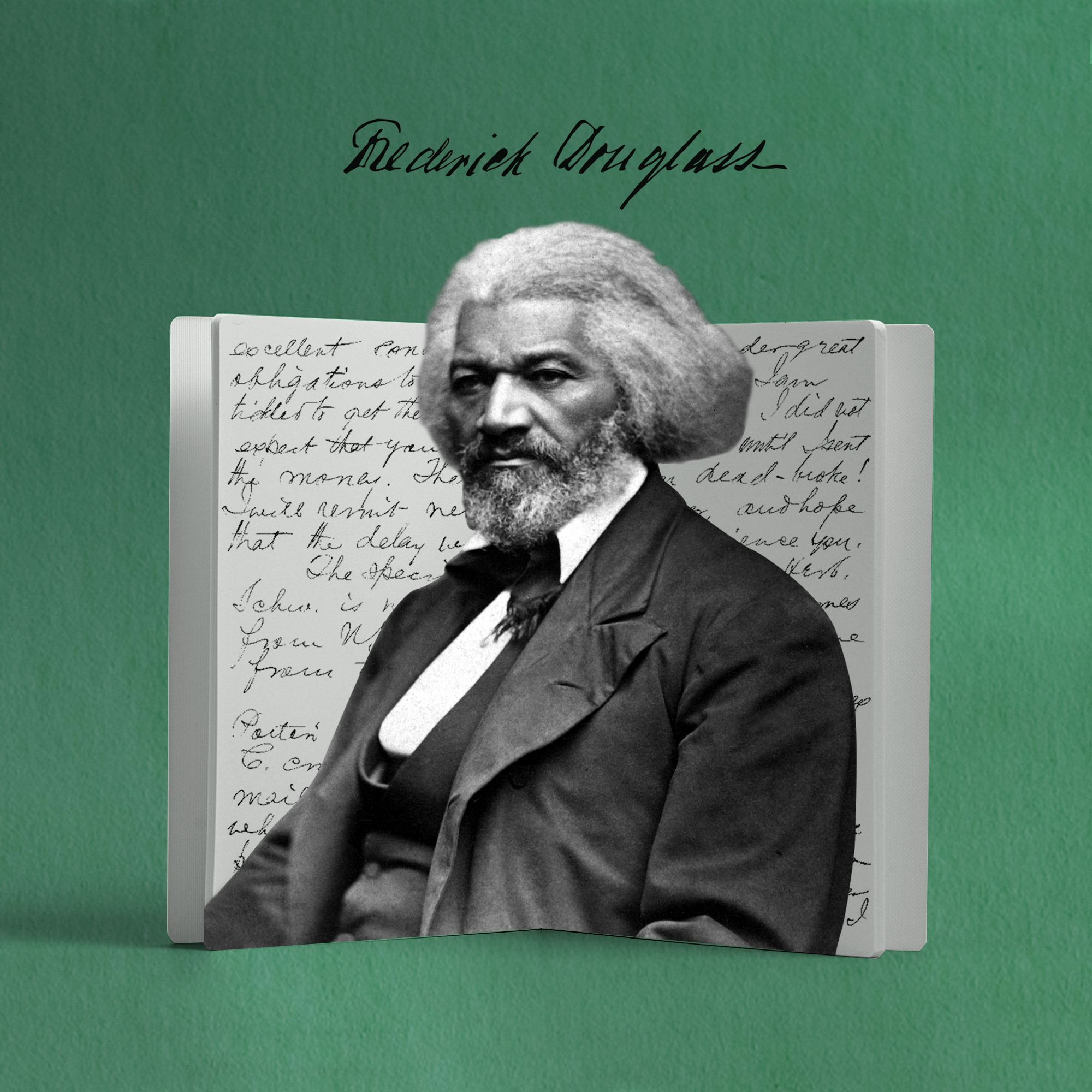
We started reading early black activists like Frederick Douglass, W. E. B. Du Bois, and Francis Grimké; black historian Isabel Wilkerson and religious sociologist C. Eric Lincoln; the poet Langston Hughes and novelist Alice Walker; and the biographies of civil rights activists like Malcolm X, Fannie Lou Hamer, and Martin Luther King Jr., whose sermons and essays we read with great interest.

Francis J. GrimkéWikiMedia Commons / Illustration by Mallory Rentsch
Francis J. Grimké

Similarly, we started reading and listening to sermons from black preachers like Francis Grimké, Gardner C. Taylor, E. K. Bailey, and Tom Skinner, who provided invaluable examples of how the one Word of God can be applied in many different ways. On top of all this, we attended black-led conferences and had many conversations with brothers and sisters who graciously shared their stories and patiently answered our questions.

Then we turned to some especially more controversial voices. Indeed, this seemed essential after reading Eugene Robinson’s book Disintegration, which argues that it’s increasingly impossible to speak of a monolithic “black experience” in America today. For this reason, we read works by socialist philosopher Cornel West and black liberation theologian James Cone. We read younger black thinkers, like Coleman Hughes and Thomas Chatterton Williams, who call for postracial societies. We read black conservatives like Thomas Sowell and Shelby Steele, who challenge prevailing assumptions about race and class. And we read critical works like Anthony Bradley’s Liberating Black Theology and Thabiti Anyabwile’s The Decline of African American Theology, which offer important reminders that no faith tradition is free from error or above critique.

Alice WalkerJamie McCarthy / Getty / Illustration by Mallory Rentsch
Alice Walker

Maybe it goes without saying, but the people we read and listened to didn’t all agree on everything. On vital points, their diagnoses differed and their prescriptions conflicted. Some of the people we sought to learn from even espoused ideas that directly conflict with our understanding of the essential truths of “the faith that was once for all entrusted to God’s holy people” (Jude 3). Nevertheless, for the same reasons the apostle Paul made himself familiar with pagan authors (Acts 17:28), we found it helpful to be aware of multiple voices in the conversation so that we might obtain a more accurate, nuanced, and sympathetic understanding.

Start with charity

As we continued to read, a thorny challenge emerged: How could we be “quick to listen” without becoming uncritically accepting of every new idea? Or again, how could we judge between the claims of those who led similar lives but landed in contradictory places without simply scratching an itch to discover what we biasedly wanted to hear (2 Tim. 4:3)?

As we continued reading, we discovered two guiding principles for majority-culture people engaging minority-culture perspectives. First, when it comes to someone’s personal narrative or lived experience, the starting point should be a charitable benefit of the doubt, not a critical posture of skepticism. That goes double for minority authors who profess our common Lord. Second, the consensus of the Christian tradition is deep and trustworthy.

Frederick DouglassWikiMedia Commons / Illustration by Mallory Rentsch
Frederick Douglass

It is important to remember that Christianity long predates injustices like the Atlantic slave trade and its system of self-serving justifications and institution-reinforcing prejudices. Moreover, early Christian theologians like Augustine, Athanasius, and Mark the Evangelist remind us that Africa shaped the Christian mind. In other words, Christianity has never been an exclusively European faith. We can confidently reject the “colonizer’s religion” and still cling to “the faith that was once for all entrusted to God’ holy people” (Jude 3). It includes, after all, many saints who were enslaved (1 Cor. 7:21) when they received the same faith in which we stand (1 Cor. 15:1–4).

We didn’t announce to the congregation that we were studying materials to address our blind spots and broaden our perspectives. Nor did we immediately start a group study or sermon series on race (though we did, of course, address the subject many times).

We didn’t want to do the work to win credit. We trusted, instead, that the broadening of our perspectives (and correction of our biases) would show, and that would lead naturally to the church’s spiritual growth.

Which is what happened. When we really changed by all of our reading and listening, we had new ways of seeing the needs in our community, new ways of seeing the same Scriptures, and new ways of speaking about what we saw. The more we studied and listened, the more natural it became to talk about race without feeling self-conscious or defensive. As pastors, we became more adept at applying the biblical texts to our context. Isn’t that what every pastor hopes to do?

The only lasting solution

With apologies to the apostle, it is not that we have already arrived at our goal or attained perfection in this area. We’re still learning. We’re still growing. And we’re still making mistakes. Yet perhaps that’s why, immediately after Paul declares, “There is no Gentile or Jew, circumcised or uncircumcised, barbarian, Scythian, slave or free, but Christ is … in all” (Col. 3:11), he tells us to put on “compassion, kindness, humility, gentleness and patience. Bear with each other and forgive one another if any of you has a grievance against someone. Forgive as the Lord forgave you” (vv. 12–13).

It would seem that Paul knew then what the American church is just slowly and painfully discovering now. Practicing the unity that we have in principle (Eph. 2:11–21; Rom. 15:1–7) is a difficult endeavor for sinful people. It takes effort to embrace and embody this gift (1 Cor. 15:10). But as civil rights activist and evangelical icon John M. Perkins said, the only lasting solution to ethnic strife is the gospel proclaimed by “intentionally multiethnic and multicultural churches [that] bust through the chaos and confusion of the present moment and redirect our gaze to the revolutionary gospel of reconciliation.”

These words are no longer theoretical for us. And we thank God for how he has blessed our church’s endeavors toward this end, with people of color serving at every level of leadership in our once-homogenous church. We have sought to be the kind of community who so deeply believes the good news that God has united us in principle that we are committed to embodying that unity in practice.

Lord, may it ever be so.

Doug Ponder is a teaching pastor at Remnant Church in Richmond, VA, where he lives with his wife, Jessica, and their four sons. He also serves as the Professor of Biblical Studies at Grimké Seminary and its School of Urban Ministry.

News

Palestinian Christians Promised an Outsized Voice in New Legislature

President Mahmoud Abbas sets their quota at 7 seats in first elections in West Bank and Gaza since 2006.

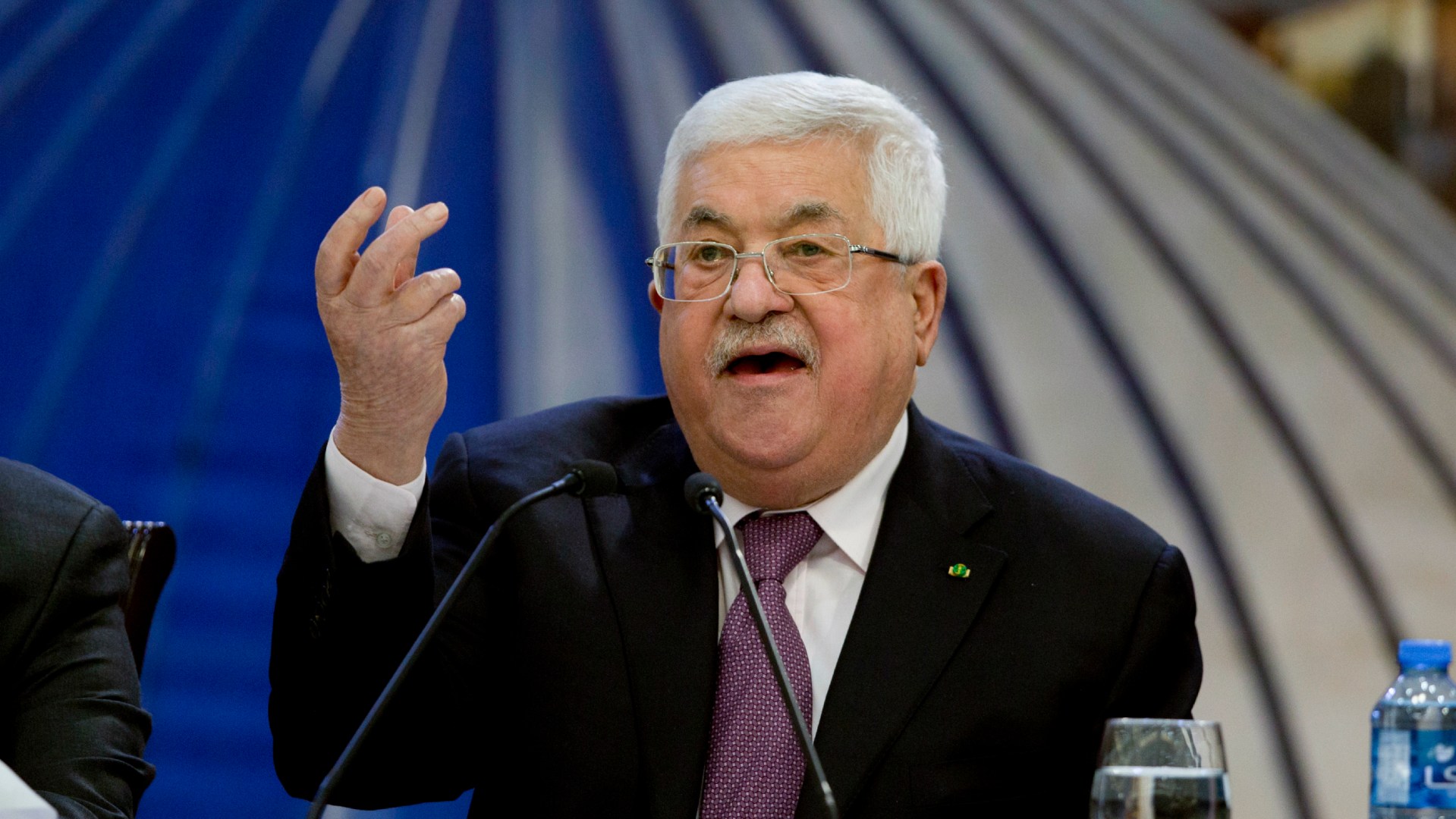
Palestinian President Mahmoud Abbas speaks after a meeting of the Palestinian leadership in the West Bank city of Ramallah oon January 22, 2020.

Palestinian President Mahmoud Abbas speaks after a meeting of the Palestinian leadership in the West Bank city of Ramallah oon January 22, 2020.

Christianity Today February 22, 2021
Majdi Mohammed / AP

President Mahmoud Abbas has guaranteed that at least seven seats of a new legislative council will go to Christians in the next elections in the Palestinian territories.

Planned for May 22, the elections are hoped to be the first since the militant Hamas movement won the last vote over Abbas’s Fatah party in 2006.

The measure would give Christians, who make up about 1 percent of the population in the West Bank and the Gaza Strip, an outsized representation on the Palestinian Legislative Council (PLC).

Palestinian Christians are ambivalent about the quota, which would allow the seven Christians with the most votes to sit on the 132-member council.

Hanan Ashrawi, a Christian who recently resigned her position on the Palestine Liberation Organization (PLO) executive committee, told Religion News Service that she is uneasy about reserving seats for specific communities.

"When it comes to Christians, I don’t see that they are excluded or marginalized,” she said. “They have been extremely active in political, social, cultural, and economic life, and many of them would be able to gain seats on merit without the quota.”

She added that a quota for women members on the council made sense, “because they were discriminated against and they have historically faced a huge challenge.”

Bernard Sabella, another former member of the PLC, said the Palestinian electorate should vote on the basis of geography. “We need to have a new vision and a holistic plan that addresses our needs. We need our representatives to represent their nation and not a religion,” he said.

But Bassem Khoury, a former minister, said there would likely be no Christian representation on the council without a quota.

“It is hard to win unless there is a serious effort by the factions to put a Christian Palestinian in a safe spot, and therefore the quota is important and necessary,” he told RNS.

Indeed, Hazem Kawasmi, a Jerusalem resident and head of the Arab World Observatory on Democracy and Elections, told RNS that he would like to see higher representation on the council.

“I would have preferred that the number was nine seats, because Palestinian Christians have had important contributions in Palestinian life and their presence is important,” said Kawasmi. He noted that in the 1996 elections, when the total parliamentary membership was 88, Palestinian Christians had a quota of six members, or 7 percent of the seats.

Allam Al Ahmad, a Palestinian lawyer, agreed, saying the percentage on the council historically has been as high as 31 percent.

But emigration due to violence amid the Israeli occupation has produced a huge drop in the Palestinian Christian population.

The call for elections came in response to a series of crises that Fatah and Hamas face that weakened the standing of the Palestinian cause in the turbulent regional and international spectrum.

In the West Bank, the Palestinian Authority (PA) is struggling with financial crisis and failure to reach a peace deal with Israel to create Palestinian statehood. In Gaza, Hamas has held power under a crippling Israeli-Egyptian blockade meant to isolate it and weaken its weaponry, rendering it unable to deliver the minimum of basic services.

On Saturday, Abbas issued a decree ordering the respect of freedom of expression ahead of the May elections. The decree, which bans all police pursuits and detentions for “reasons related to freedom of expression and political affiliation,” dispels some of the doubts overshadowing what would be the first Palestinian national elections in 15 years, as both the PA and Hamas have a long history of oppressing their critics.

Palestinian factions are heading to Cairo next month for another round of talks in a bid to settle thorny issues that have blocked them from mending their rift, including security, employees, judiciary, and expanding the PLO.

Jack Sara, president of Bethlehem Bible College, told RNS that elections will provide an important chance for Palestinians of all backgrounds and ages to bring new blood in elected institutions. “This is an important and long-awaited opportunity for young Palestinian Christians to participate in this public process, whether as candidates or as voters,” he said.

Ashrawi said the way to fight emigration is not through political representation but to give them reasons to stay. “We need a system that protects people and provides for their rights,” Ashrawi told RNS. “If we don’t want our churches to become museums, our country should ensure that it allows for a vibrantly rich and inclusive pluralistic society.”

Additional reporting by Fares Akram of The Associated Press

Apple PodcastsDown ArrowDown ArrowDown Arrowarrow_left_altLeft ArrowLeft ArrowRight ArrowRight ArrowRight Arrowarrow_up_altUp ArrowUp ArrowAvailable at Amazoncaret-downCloseCloseEmailEmailExpandExpandExternalExternalFacebookfacebook-squareGiftGiftGooglegoogleGoogle KeephamburgerInstagraminstagram-squareLinkLinklinkedin-squareListenListenListenChristianity TodayCT Creative Studio Logologo_orgMegaphoneMenuMenupausePinterestPlayPlayPocketPodcastRSSRSSSaveSaveSaveSearchSearchsearchSpotifyStitcherTelegramTable of ContentsTable of Contentstwitter-squareWhatsAppXYouTubeYouTube