





News

The Top 50 Countries Where It’s Hardest to Be a Christian (2020)

Martyrdoms drop in Nigeria but soar in Burkina Faso, while China brings 16 million more Christians onto Open Doors’s 2020 World Watch List of Christian persecution.

Christianity Today January 15, 2020
Illustration by Mallory Rentsch / Source Image: Benne Ochs / Getty Images

Editor’s note: The 2022 World Watch List has been released, and CT offers results and analysis in 10 languages.

Every day, 8 Christians worldwide are killed because of their faith.

Every week, 182 churches or Christian buildings are attacked.

And every month, 309 Christians are imprisoned unjustly.

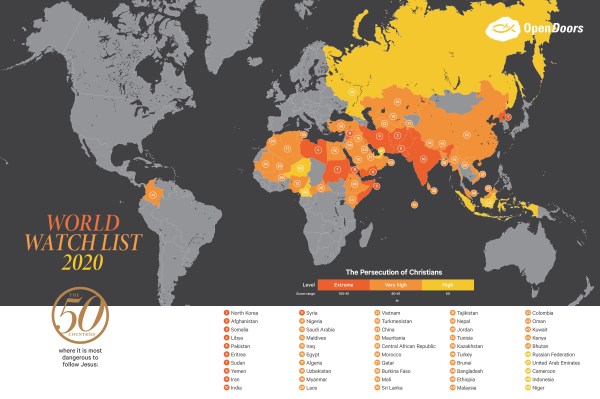
So reports the 2020 World Watch List (WWL), the latest annual accounting from Open Doors of the top 50 countries where Christians are the most persecuted for their faith.

“We cannot let this stand,” said David Curry, president and CEO of Open Doors USA, during the 2020 list’s unveiling in Washington, DC, this morning. “People are speaking out and we have an obligation to hear their cry.”

The listed nations comprise 260 million Christians suffering high to severe levels of persecution, up from 245 million in last year’s list.

Where It’s Hardest to Follow Jesus:
1. North Korea
2. Afghanistan
3. Somalia
4. Libya
5. Pakistan
6. Eritrea
7. Sudan
8. Yemen
9. Iran
10. India

Another 50 million could be added from the 23 nations that fall just outside the top 50—such as Mexico, Chad, and the Democratic Republic of the Congo—for a ratio of 1 in 8 Christians worldwide facing persecution.

Last year, 40 nations scored high enough to register “very high” persecution levels. This year, it reached 45.

Open Doors has monitored Christian persecution worldwide since 1992. North Korea has ranked No. 1 since 2002, when the watch list began.

The 2020 version tracks the time period from November 1, 2018 to October 31, 2019, and is compiled from reports by Open Doors workers in more than 60 countries. The list “provides the most comprehensive grassroots data on Christian persecution,” said Curry. “But it is much more than that. It is sounding an alarm.”

Last year, CT noted “Asia Rising” as India entered the top 10 for the first time while China rose from No. 43 to No. 27.

That trend continues, as 2 in 5 Asian Christians now face high levels of persecution, up from 1 in 3 the previous reporting period. China’s crackdown on both state-sanctioned and underground churches and its growing surveillance network added 16 million to Open Doors’s tally of Christians facing persecution.

“The Chinese government is committing unparalleled human rights crimes against Christian citizens and seeking to wipe religious sentiment from its country,” stated Curry in a press release ahead of today’s event. “Yet, as the Chinese Christians who will join me will testify, the persecution Christians face—including extensive surveillance, raids on churches, and imprisonment—have not succeeded in eliminating Christianity.

“Instead, the underground Christian community has banded together and is actively working to call the world’s attention to the plight of the Chinese people. We will join them in that call.”

At the DC rollout, Curry was joined by Chinese pastor Jian Zhu. “The persecution of Christians is the worst I have seen since 1979,” he said. “Christians have a worldwide brotherhood, and the government sees this as a threat.”

“It is time for religious persecution to stop once and for all,” said Robert Destro, Assistant Secretary of State in the US State Department’s Bureau of Democracy, Human Rights, and Labor, at today’s rollout. “But as we all know, that is a long-term proposition.”

The point of the annual WWL rankings—which have chronicled how North Korea now has competition as persecution only gets worse and worse, is to aim for more effective anger while showing persecuted believers that they are not forgotten.

This year the top 10 is relatively unchanged. After North Korea is Afghanistan (No. 2), followed by Somalia (No. 3), Libya (No. 4), Pakistan (No. 5), Eritrea (No. 6), Sudan (No. 7), Yemen (No. 8), Iran (No. 9), and India (No. 10).
Open Door USA

Open Doors tracks persecution across six categories—including both social and governmental pressure on individuals, families, and congregations—and has a special focus on women.

But when violence is isolated as a category, the top 10 persecutors shifts dramatically—only Pakistan and India remain.

Top 10 Countries Where Christians Face the Most Violence:
1. Pakistan
2. Nigeria
3. Egypt
4. Central African Republic
5. Burkina Faso
6. Colombia
7. Cameroon
8. India
9. Mali
10. Sri Lanka

Open Doors reporting period: November 2018 to October 2019

Five of the most violent countries for Christians are located in the Sahel, a horizontal belt of semi-arid grazing areas and farmland located between the Sahara Desert and the African savannah.

Militant Islamist rebel groups and terrorists have proliferated in the Sahel in recent years. Conflict between Muslim herders and Christian farmers has also resulted in violence. And weakened government structures leave the population vulnerable.

Nigeria, where Africa’s largest Christian population has no cheeks left to turn, ranked No. 12 overall but is second behind only Pakistan in terms of violence, and ranks No. 1 in the number of Christians killed for reasons related to their faith. Open Doors tallied 1,350 Nigerian martyrs in its 2020 list.

Where the Most Christians Were Martyred:
1. Nigeria: 1,350
2. Central African Republic: 924
3. Sri Lanka: 200
4. Democratic Republic of Congo: 152
5. South Sudan: 100
6. Burkina Faso: 50
7. Egypt: 23
8. Pakistan: 20
9. [name withheld]: 20
10. Colombia: 16

Open Doors reporting period: November 2018 to October 2019

The Central African Republic (ranked No. 25 overall) ranks fourth in violence against Christians. Burkina Faso (No. 28) ranks fifth. Cameroon (No. 48, its first time on the list) and Mali (No. 29) join Egypt (No. 16), Colombia (No. 41), and Sri Lanka (No. 30) in rounding out the top 10. (Another Sahel country, Niger (No. 50), rejoined the list for the first time in five years.)

Sri Lanka rose 16 spots from No. 46 last year, primarily due to the Easter suicide bombings which killed over 250 people at Catholic and Protestant churches, and hotels.

But the year’s largest and most dramatic jump was in Burkina Faso, which jumped 33 slots after not even qualifying for the top 50 last year (it would have been No. 61).

Dozens of Burkinabe priests and pastors have been kidnapped or killed. Over 200 churches have been forced to close. The United Nations estimates 500,000 people have been displaced from their homes. The African Center for Strategic Studies calculates that extremist attacks have quadrupled since 2017, and deaths from violence increased 60 percent in 2019. Open Doors counted 50 Christians among that number.

Meanwhile, a transition in Nigeria from village raids to kidnapping by militant Muslim Fulani herdsmen—whose attacks were six times as deadly as Boko Haram’s, according to the International Crisis Group—resulted in an overall decrease in Christians killed in the Sahel, as well as worldwide.

Due to this shift in tactics, worldwide martyrdoms fell to 2,983 in the 2020 report, down from 4,305 the year before. (Open Doors is known for favoring a more conservative estimate than other groups, who often tally martyrdoms at 100,000 a year.)

Abduction of Christians is a new category tracked by Open Doors in this year’s report, with 1,052 tallied worldwide. Nigeria tops the list, with 224.

Nigeria also leads the newly tracked categories of forced marriages (accounting for 130 out of 630 worldwide), attacked Christian homes (1,500 out of 3,315), and looted Christian shops (1,000 out of 1,979).

Other new categories return the focus to Asia.

Of the top 7 nations where Christians are raped or sexually harassed, 4 are recipients of migrant workers in the Arabian Peninsula: Saudi Arabia (No. 13), Qatar (No. 27), Kuwait (No. 43), and the United Arab Emirates (No. 47). Nigeria is eighth. Worldwide there were 8,537 recorded cases, but Open Doors warns this tally is just the tip of the iceberg, as many assaults occur in private and are not reported.

India ranks first in the new category of physical or mental abuse, which includes beatings and death threats. The continuing rise in the subcontinent of a militant Hindu nationalism contributed to 1,445 of the reported 14,645 cases worldwide.

China is the chief violator in Open Doors’s other two previously tracked categories.

Beijing has jailed or detained without charge 1,147 Christians for faith-related reasons, out of a total of 3,711 worldwide. This number rose from 3,150 last year.

Where the Most Churches Were Attacked or Closed:
1. China: 5,576
2. Angola: 2,000
3. Rwanda: 700
4. Myanmar: 204
5. Nigeria: 150
6. Ethiopia: 124
7. Burundi: 100
8. Mali: 100
9. Pakistan: 58
10. Burkina Faso: 50

Open Doors reporting period: November 2018 to October 2019

But attacks and forced closures of churches have skyrocketed from 1,847 to 9,488, with China accounting for 5,576.

Angola was second with 2,000 and Rwanda was third with 700. (Neither ranks among the top 50 persecution countries; Angola would be No. 68, Rwanda No. 71.)

Open Doors cautioned that in several nations, the above violations are very difficult to document precisely. In these cases, round numbers are presented, always leaning towards conservative estimates.

Its research is certified and audited by the International Institute for Religious Freedom, a World Evangelical Alliance-backed network based in Germany.

In the Middle East, Open Doors noted little change, with 4 of 5 Christians experiencing “high” levels of persecution. The main and continuing trend is the dwindling number of Christians from Syria (No. 11) and Iraq (No. 15).

Syria has lost 75 percent of its Christian population since the outbreak of civil war in 2011, down to 744,000 last year from an estimated 2.2 million. Iraq has lost 87 percent of its Christian population since the Gulf war in 2003, down to 202,000 last year from an estimated 1.5 million.

Open Doors believes it is reasonable to call Christianity the world’s most severely persecuted religion. At the same time, it notes there is no comparable documentation for the world’s Muslim population.

All nations of the world are monitored by its researchers and field staff, but in-depth attention is given to 100 nations and special focus on the 73 which record “high” levels of persecution (scores of more than 40 on Open Doors’s 100-point scale).

The only good news in the 2020 watch list comes from Ethiopia (No. 39), where recent reforms removed 2.5 million from Open Doors’s global total of Christians facing high levels of persecution. Despite increasing sectarian strife as its Nobel Prize-winning evangelical president makes peace and attempts reforms, the Horn of Africa nation declined in rank from No. 28 to No. 39.

Open Doors also noted the positive case of Pakistan’s Asia Bibi. In May 2019, the Christian mother of five was allowed to emigrate to Canada after the Supreme Court of Pakistan overturned her death penalty conviction for blasphemy. She had been in prison for nine years.

“The suffering of persecuted Christians cannot be recorded in statistics,” stated Open Doors. “Millions of people are found behind the numbers. Each one of them has their own story.

“This often includes deep suffering, but also courage and strong faith.”

News

Evangelicals Support Prison Reform in Theory, But Less in Practice

Survey shows optimism for the potential for redemption and restoration, though most churches aren’t involved in criminal justice efforts.

Christianity Today January 15, 2020
Giles Clarke / Getty Images

Evangelicals believe in second chances—and that extends to the millions of people who have been or are incarcerated in the US.

But new research shows that though evangelicals are more likely than Americans overall to support certain aspects of restorative justice and prison reform, few churches have made the issue a priority.

As legislative efforts to address mass incarceration advance at federal and state levels, a 2019 survey by the Barna Group and the ministry Prison Fellowship found that practicing evangelicals were passionate about redemption and restoration in criminal justice. (“Practicing evangelicals” refers to Christians with evangelical beliefs who have attended church in the past month.)

More than half (52%) “agree strongly” that the goal of the system should be “restoration for all parties,” compared to 46 percent of practicing Christians and 35 percent of all American adults who say the same.

Practicing evangelicals also showed the strongest support for safe, humane prison conditions (52% strongly agree compared to 33% of US adults); were most hopeful about the potential for formerly incarcerated citizens to contribute to society (61% strongly agree compared to 42% of US adults); and were most likely to say caring for prisoners is important to them (50% strongly agree compared to 26% of US adults).

Prison Fellowship

But less than one in four (22%) evangelicals report that their churches have engaged in raising awareness about criminal justice in the past six months. By comparison, 65 percent of evangelicals say their churches have raised awareness of the sanctity of life, and 46 percent homelessness.

Prison Fellowship

Practicing evangelicals are also slightly less likely than fellow Christians to say an elected official’s stance on criminal justice reform would influence their vote, the survey found. (Political leanings are a factor; conservative Christians are half as likely as liberal Christians to “strongly agree” that a favorable position on the issue would influence their vote.)

“Most people want [former inmates] to have second chances, as long as it doesn’t involve me,” said Jon Kelly, the founding pastor of Chicago West Bible Church. Kelly became a Christian during a six-year prison sentence for third-degree murder.

He said he sees a trust barrier between churches and former prisoners that makes them feel unwelcome.

Kelly—who spent years on parole for the murder and additional robbery charges and still has a few years left on his probation term—knows the scope and stigma of the problem firsthand.

“When I preach, I will share my testimony, no matter the size of the church or the setting, and there are always people who come up and tell me that they have a loved one who is incarcerated,” he said. “People in the congregation don’t feel free to tell someone they have gone through that because it brings people great shame. A lot of pastors just don’t know how much their churches are impacted by it.”

More than 70 million Americans, one in three, have arrest records. The country incarcerates 698 out of every 100,000 people; even after slight drops in recent years, it’s still the highest known prison population in the world. With 600,000 prisoners released annually, churches have ample opportunities to help.

“We tend to look at issues in a conservative or liberal bucket, but there are some important issues, including criminal justice, where practicing Christians and evangelicals really do care about these issues that haven’t traditionally been thought of as evangelical issues,” said Heather Rice-Minus, vice president of government affairs and church mobilization at Prison Fellowship.

Prison Fellowship has advocated for criminal justice reforms like the First Step Act, which was enacted in December 2018. The legislation won bipartisan support by reducing the federal inmate population and saving money. It resulted in 3,100 inmates being released based on new calculations of time earned for good behavior.

But the legislative victory only applies to a narrow portion of inmates: the 10 percent of the prison population in federal penitentiaries. Of the nearly 2.2 million people incarcerated in the US, 57 percent are in state prisons. The drop in the overall incarceration rate is largely due to state prison reforms. Over a decade, 31 states revamped their corrections and sentencing policies, with many major changes taking effect in the past year.

Oklahoma locks up more of its citizens than any other state in the country, recently unseating Louisiana, which held the record for years. According to 2018 data, Oklahoma incarcerates 1,079 people per 100,000.

Oklahoma Gov. Kevin Stitt signed legislation in May 2019 that reduced the sentences of more than 450 inmates convicted for low-level and nonviolent drug and property offenses. The bill came after Oklahomans approved a 2016 public ballot initiative to change the punishment for these types of crimes.

More than 900 inmates applied for early release as part of the new law. The state expected to empty around 2,000 prison beds by the end of the year and save $11.9 million annually through the early release program.

Florida is also working to restore voting rights to convicted felons returning to society, a position long advocated for by Prison Fellowship’s late founder Charles Colson. (Colson served time in prison for his role in the Watergate scandal, and expressed a desire to see felons receive back the right to vote as part of their restoration to society. Florida Governor Jeb Bush restored Colson’s rights to vote, practice law, and serve on a jury in 2000.)

With such a high incarceration rate, it’s easy to assume criminal activity is growing in America. Though the US crime rate has been declining steadily over the past 25 years, Barna found that 81 percent of practicing evangelicals (and 60% of US adults) believe the crime rate is increasing. Evangelicals are also less likely to see keeping youth out of adult prisons as a priority for criminal justice reform (23% compared to 32% of Americans overall).

Rice-Minus said accurate information is important for Christians working on policy solutions. Prison Fellowship has identified thousands of collateral consequences for criminal convictions—legal barriers that can hinder key elements of reintegration like employment, occupational licensing, and housing.

Kelly, the Chicago pastor, would like to see Christians be willing to do the work of building relationships with people after they are released, rather than just visiting them in the “controlled environment” of the prison.

“The best ministry is not a program but fully integrating people into the life of the church,” he said.

CT reported last year about how multisite churches opening in prisons have eased the transition into a church community on the outside, and other churches have been expanding their approach to “prison ministry.”

“I am seeing more congregations prepare themselves to receive returning citizens, and doing the legwork of educating themselves around what returning citizen’s need as they reenter society,” said Dominique DuBois Gilliard, director of racial righteousness and reconciliation for the Evangelical Covenant Church.

In an email to CT, he said they are “doing the internal work of ridding themselves of the biases they hold concerning incarcerated people, establishing networks of care (connecting with local mental health providers), and support (finding companies that will hire returning citizens, particularly those with felony convictions, and who will offer long term housing to individuals with a criminal record) for returning citizens.”

Gilliard, author of Rethinking Incarceration, recently interviewed Bryan Stevenson, the lawyer and justice activist whose story is at the center of the new movie Just Mercy, which released last week.

“I don’t want to see anybody burdened with the lie that their life doesn’t matter, that they’re beyond hope and beyond redemption or beyond any purpose. I don’t believe that for anyone,” said Stevenson, who founded the Equal Justice Initiative. “Part of what my work is about is trying to illuminate that path so that we can both see it.”

News
Wire Story

Most Pastors Say Middle East Politics Won’t Speed Up the Second Coming

A new LifeWay Research survey shows that only 1 in 8 pastors link geo-political events with Christ’s return.

Christianity Today January 14, 2020
Mazyar Asadi/Pacific Press/Sipa USA via AP Images

Like everyone else, US Protestant pastors may have been closely watching the recent events related to Iran, but probably not because they thought it had anything to do with the return of Christ.

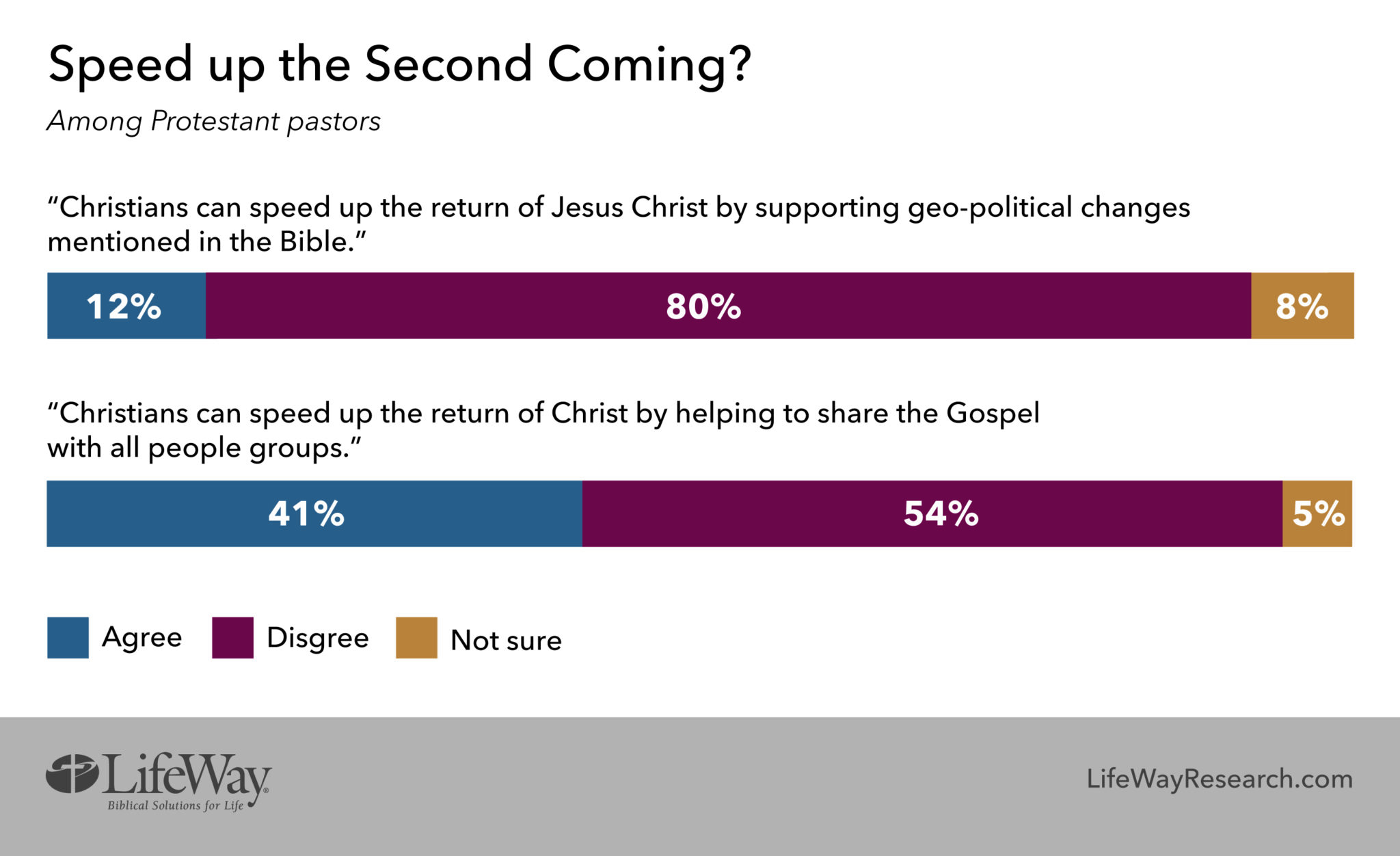
Pastors are more than three times as likely to believe Christians can speed up the return of Christ by the spread of their faith than by backing certain geo-political changes, according to a new study from Nashville-based LifeWay Research.

“While Scripture specifically says we cannot know the day or the hour of Jesus Christ’s return, we were interested in pastors’ views on whether Christians can play a role in bringing about that return any sooner,” explained Scott McConnell, executive director of LifeWay Research.

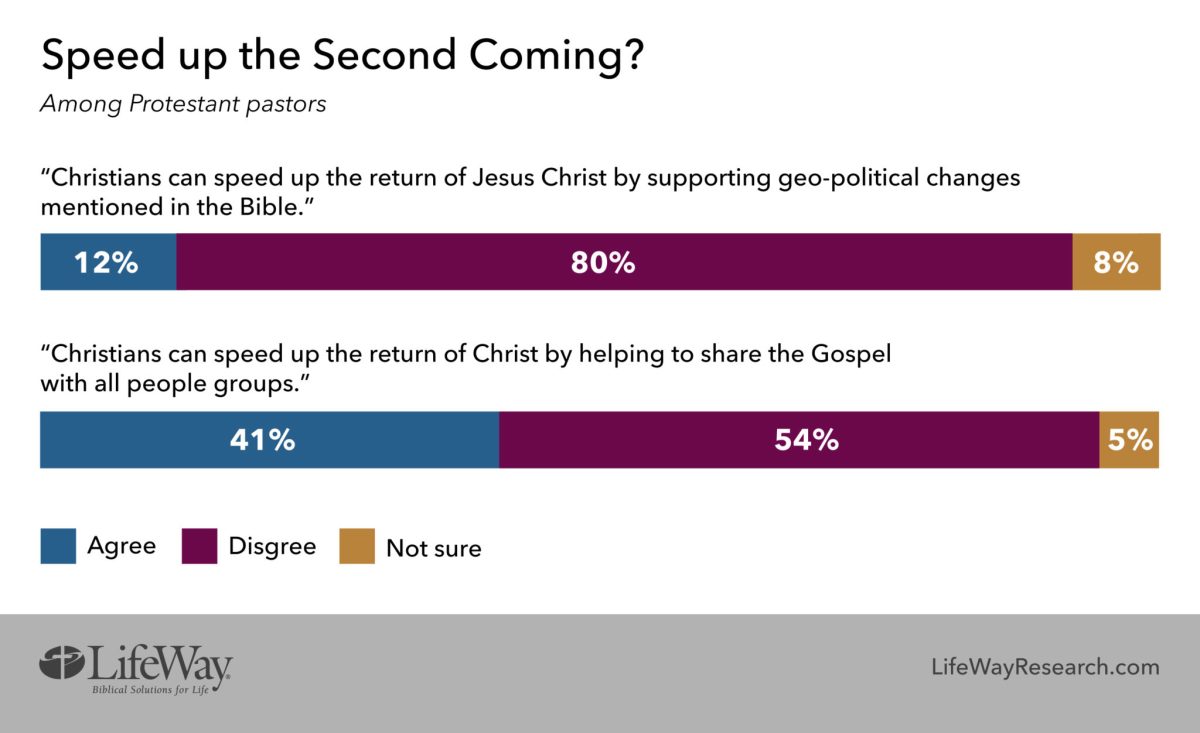
Around 1 in 8 Protestant pastors (12%) believe Christians can speed up the second coming of Jesus by supporting geo-political changes mentioned in the Bible, with 5 percent strongly agreeing.

Eight in 10 pastors don’t believe their support will have an impact on the timetable of Christ’s return, including 61 percent who strongly disagree.

During heighted conflicts with Syria, a 2013 LifeWay Research study found many Americans were likely to link global conflict with end times.

Almost 1 in 3 saw the conflict as part of the Bible’s plan for the end times. One in 4 thought a US military strike in Syria could lead to Armageddon. And 1 in 5 believed the world would end in their lifetime, including 32% of evangelicals.

“A large majority of pastors do not see biblical prophecies about future changes among nations as a roadmap for advocating specific international engagement,” said McConnell.

In the most recent study of Protestant pastors, there is no significant difference between mainline and evangelical pastors regarding their views about international political affairs speeding up the return of Christ. There are, however, differences among ethnicities.

White pastors (11%) are less likely to believe backing geo-political events will hasten Jesus’ second coming than African American pastors (20%) or pastors of other ethnicities (22%).

Pastors 65 and older (16%) are more likely to agree than younger pastors, those 18 to 44 (9%).

Additional education decreases the likelihood a pastor agrees that support from Christians of geo-political events will speed up the return of Christ. Pastors without a college degree are more than twice as likely to agree than those with a bachelor’s or master’s degree—22 percent to 10 percent.

Evangelism to end times

In the Great Commission (Matt. 28:19-20), Jesus tells his followers to “make disciples of all nations,” which is often understood as a command to spread the faith to all distinct people groups.

Previously in Matthew’s Gospel, Jesus connects this occurring to his second coming. “This good news of the kingdom will be proclaimed in all the world as a testimony to all nations, and then the end will come” (Matt. 24:14 CSB).

Protestant pastors are split, however, on whether Christians can actually speed up the return of Christ by helping to share the gospel with all people groups.

Close to 2 in 5 (41%) believe Christians can hasten Jesus’ second coming through world evangelism, while around half (54%) disagree.

“The Great Commission was a task Jesus gave his followers to be doing while he is gone,” said McConnell. “Four in 10 pastors believe the pace of sharing the message of what Jesus has done will impact the timing of Christ’s return. Presumably many of those who disagree would assert exclusively divine control over Christ’s return.”

Denominationally, Pentecostal pastors (66%) are the most likely to agree Christians can speed up Jesus’ return by sharing the gospel with all people groups.

Those with no college degree (56%) are more likely to agree than those with additional degrees.

Pastors 65 and older are the age group most likely to agree (52%).

White pastors are more likely than African American pastors to disagree that the second coming of Christ can be sped up by global evangelism—55% to 43%.

Immoral until the end?

Whenever the second coming of Christ may be, most Protestant pastors believe immorality will be more common until Jesus returns.

Almost 7 in 10 (68%) agree “culture will increasingly get less moral until Jesus Christ returns.” Around a quarter (26%) disagree.

Evangelical pastors (80%) are far more likely to agree than mainline pastors (51%). Pastors 45 and older (71%) are more likely to agree than younger pastors (62%).

Again, education plays a role in pastors’ likelihood to agree. Those with no college degree (90%) or a bachelor’s degree (81%) are more likely to believe immorality will increase until the return of Jesus than those with a master’s degree (61%) or a doctoral degree (63%).

Baptist (86%) and Pentecostal (84%) pastors are more likely to agree than Church of Christ (67%), Lutheran (59%), Methodist (48%), or Presbyterian and Reformed pastors (45%).

“On the surface, the responses of most pastors could be described as feeling helpless regarding these specific aspects of the future,” said McConnell. “Yet the persistence of their faith amidst a lack of control points to an even greater level of hope.”

Aaron Earls is online editor of Facts & Trends and a writer for LifeWay Christian Resources.

Methodology: The phone survey of 1,000 Protestant pastors was conducted from Aug. 30 to Sept. 24, 2019. The calling list was a stratified random sample drawn from a list of all Protestant churches. Quotas were used for church size. Each interview was conducted with the senior pastor, minister, or priest of the church called. Responses were weighted by region to more accurately reflect the population. The completed sample is 1,000 surveys. The sample provides 95% confidence that the sampling error does not exceed plus or minus 3.3%. Margins of error are higher in sub-groups.

Books

Kristie Anyabwile: When Women of Color Write, the Whole Church Gains

A conversation with the editor of “His Testimonies, My Heritage.”

Christianity Today January 14, 2020
Source Image: Courtesy of Kristie Anyabwile / Photo by Daniel Jemibewon

Over the years, Kristie Anyabwile has found herself returning to Psalm 119 during her daily devotions. “The psalm itself is full of reminders of the beauty and the benefits of God’s Word,” she says. “It has always drawn me in. It not only encourages me, but it helps to whet my appetite more for God’s Word.”

His Testimonies, My Heritage

His Testimonies, My Heritage

Good Book Co

240 pages

$14.05

It was during one of these times of personal study that she birthed the idea for His Testimonies, My Heritage: Women of Color on the Word of God. The multiauthor book—which received an Award of Merit in this year’s CT Book Awards—explores the 22 stanzas of Psalm 119 through exposition, essays, and poetry.

Anyabwile, who served as both general editor and contributor, spoke to CT about the vision behind the project.

The title of the book is derived from Psalm 119:111, which says, “Your testimonies are my heritage forever, for they are the joy of my heart” (ESV). Tell us more about the title and how this verse captures its focus.

There are three aspects to this. First is the idea of ethnic and cultural heritage. Psalm 119:111 tells us that God’s Word is our spiritual heritage. But I think oftentimes we don’t consider that God’s Word is for me, as an individual, in all the ways that God has made me.Once, a while back, I tweeted that all the women of the Bible are women of color. That statement had a lot of resonance with people. So part of the vision for His Testimonies, My Heritage is that God’s Word is for me as a person of color, and I need to embrace the Scriptures knowing that.

The second part is the idea of faith and spiritual heritage. We worship a God who has gathered to himself a people from every tribe and language and nation, and his Word testifies to his goodness, his steadfast love, and his faithfulness. I want people who read the book to know that the testimonies of God—found in the Word of God—are our heritage.

The third aspect is the subtitle: “Women of Color on the Word of God.” I have gotten so much pushback on that. It brings to mind one of my favorite interviews of all time, when Charlie Rose interviewed Toni Morrison. He asked her, “Can you imagine writing a novel that’s not centered on race?” Morrison said, “You see, the person who asked that question doesn’t understand that he or she is also raced.” With His Testimonies, I’ve gotten a similar question: “Why did you have to write that it was ‘women of color on the Word of God?’”

Oftentimes you don’t see women of color represented in books. I want women of color to see that there is a resource out there that connects with their life experiences, their stories, and their histories and that exalts God and reverences Christ and his gospel. I want not only women of color to see that —I also want the church to see that and be encouraged to grow from it.

The Psalms, like the rest of Scripture, are brutally honest about difficult human experiences and emotions. His Testimonies, My Heritage is also raw and honest, including reflections on the trauma of racism, the experiences of refugees and asylum seekers, the killing of black men and boys, and the history of indigenous peoples in the US. Why did you and the other writers feel it was important to include such candid reflections on tough experiences?

I love what Elissa Weichbrodt wrote about this topic in her chapter. She said, “Psalm 119 challenges me toward a fuller understanding of how God’s Word operates as a refuge. It is a psalm that encourages delight in all parts of God’s Word, not just his promises of deliverance from suffering. It is a psalm replete with physical language, insistent in its embodiment. And it is a psalm that equips us to face the most rigorous challenges by submitting ourselves to that Word.”

We live in a fallen world with all kinds of pain and suffering. We know that God’s Word is our refuge, so we go to it in the middle of suffering—in the middle of whatever the current issues are in our society that challenge us as believers—and it is there that we find comfort. We find the ability to persevere another day. We find assurance that God will one day right all the wrongs in this world.

In the foreword to His Testimonies, Kim Cash Tate draws attention to the fact that African Americans have higher levels of Bible engagement than other segments of American society but that people of color often experience a disconnect with popular Bible study and devotional resources, which are primarily written by white authors. She writes: “We’re eager to learn and be encouraged by the exposition of the Word … But it’s often hard to see ourselves.” What’s your experience with this issue?

Let’s say we’re in a multiethnic church context and we pick up our favorite white Christian author’s Bible study to work through with the women in the congregation. In doing that, we might inadvertently overlook segments of women in our Bible studies and small groups.

For example, when we study the story of Ruth, most often we hear a wonderful story of connection between Ruth and Naomi. We get all the important messages of God at work providing a kinsman-redeemer that extends the line of David and points forward to Christ. All of that is right and good. But in this story, we also see God’s grace extended to an immigrant. We see his provision and protection. We see him provide a way for her to live and work as an expatriate in a foreign land.

In my church, Anacostia River Church, there are many first-generation immigrants in our small congregation, so this is an important element of the story of Ruth that I don’t want to ignore or overlook. If it’s not reflected in the Bible study that I choose, as a good Bible study teacher and as someone who cares for the members of my church, I have to include it. I have to talk about that. It gives me a point of connection—a way to let my sisters of color know that I see them and that their stories are important.

While the pieces are all written by individuals, there’s a strong sense of community—even family—that comes across in this book. In fact, the word “sister” is frequently used to directly address the reader. How was creating this book a valuable experience of sisterhood for the writers?

When the idea for this book came about, the word that kept coming up from people was “historic.” At first I was like, Why are people saying it’s historic? It’s because, honestly, I can’t think of another book quite like it, with so many women of color represented and writing about the Word of God.

Hannah Anderson gave the book such a beautiful endorsement. She said, “At certain times and in certain places this book would have been illegal for its authors to write. But today, between these pages, they triumph … Listen.” A part of connectedness and sisterhood is understanding that this book is sitting on the backs of women (and men) over hundreds of years who weren’t allowed to read, who weren’t allowed to write. If they did learn to read and write, it was clandestine. And now we have a whole volume of these women who are writing about the Word of God? It’s historic in that sense, and it’s amazing that God would grace us with this particular privilege.

As a reader, there’s a sense of not just observing but of being invited in to the sisterhood you’re describing. Why was this important to you and the other contributors?

Yes, we as writers are inviting others in. There is a door of opportunity to smash stereotypes, to encourage the body of Christ, to let the world know that we are here and we have a message. That message is the same message that we all want to share—the good news of Jesus Christ, who he is, and why he came. How his life, death, resurrection, and presence—right now at the right hand of God—is impacting our lives every day. The message is the same for all believers: We want people to fall more deeply in love with God and his Word and be more committed to obeying him joyfully.

Ideas

Megxit and the Church: Harry and Meghan Reflect Our Lost Youth

Contributor

Britain’s royal family isn’t the only institution struggling to retain and empower the next generation.

Prince Harry and Meghan, the Duke and Duchess of Sussex, in London on January 7.

Prince Harry and Meghan, the Duke and Duchess of Sussex, in London on January 7.

Christianity Today January 10, 2020
Chris Jackson / Getty Images

You know things are serious when “Senior Royals” in Buckingham Palace let it be known that they are “hurt” and “disappointed” over a decision made by one of their own. The revelation this week that the Duke and Duchess of Sussex, Prince Harry and Meghan Markle, intend to step back as senior royals and instead seek a way to become financially independent has received not only public challenge from the royal family but also a high degree of criticism from pundits and the press.

The tone of reporting in the United Kingdom has felt very judgmental, with one of the main critiques being the couple’s lack of consultation with the wider royal family. However, over the past few months, the Sussexes have made no secret about their personal and professional struggles. In October, they issued an official statement in which the prince said he could no longer be a “silent witness” to his wife’s “private suffering.”

Markle continues to bear the brunt of the angry reaction, which some see as both misogynistic and racist. Despite the scandal over Prince Andrew’s relationship with convicted sex offender Jeffrey Epstein, the tabloids have nevertheless focused on her surprising choices: to wear jeans to Wimbledon; to ride on a jet with Elton John; or to guest edit Vogue magazine. The media’s obvious problems in dealing with Markle as a progressive American woman of color with ideas and opinions is born out in the stinging criticism that has been directed at her over the step-down, in what some are calling “Megxit.”

Prince Harry has been the first to compare the hounding of his wife to that of his mother, Princess Diana. He has made it clear that he cannot stand by and watch history repeat itself. This has led him to break protocol before, when he helped lead a campaign on mental health issues and opened up to his own need for counseling two decades after he lost his mother at the age of 12. Unsurprisingly, the general public has always had a great deal of sympathy for the prince.

While there are some who are very critical of the couple for abandoning tradition—accusing them of dereliction of their taxpayer-funded duties—others like myself are more supportive of the Sussexes’ progressive stance. Their desire to prioritize one another, be financially independent, and champion causes close to their heart despite great sacrifice is praiseworthy. Many are hopeful that this will catalyze the modernization of the monarchy and facilitate it to further its positive contribution to the UK’s and the Commonwealth’s public life.

Christians should consider carefully our response to this latest episode with “Harry and Meghan.” The church and the royal family have more in common than we might at first imagine. Both are ancient institutions struggling with recent scandals of high-profile members failing to deal adequately with accusations of sexual abuse; accused of being biased against women and non-inclusive of people of color; and now apparently losing the allegiance of a new generation.

For many years, the Barna Group has been analyzing generational engagement with churches. In his book, Faith for Exiles, David Kinnaman states that in 2011, 59 percent of young Americans who grew up Christian had stopped attending their churches. Less than a decade later, the number has now increased to 64 percent. Despite numerous initiatives to try and reverse the trend, we have not managed to sufficiently engage young adults with Christianity.

This speaks to a major challenge to the mission of the church: for all the evangelistic initiatives, for all the church planting, for all the populist fears of immigration diluting the Christian population’s majority, the biggest challenge to the Christian church is our inability to disciple our own children and help them transition from childhood faith to adult belief.

Harry and Meghan’s story highlights that transitioning tradition is not just a problem for the institution of the church. And like the royal family, the church needs to renegotiate how it holds on to the past and contextualizes for the present. For Christians, this necessarily involves working out the relationship between the unchanging gospel and our current culture—a conversation that has been on the church’s agenda since the time of the New Testament, when the topics ranged from the eating of meat offered to idols to the question of circumcising Gentile believers.

At the crux of these debates, Christians have had to wrestle with their own traditions and look behind and beyond them to discover what is essential to the gospel and what is culturally contingent. Too often we have been caught in the nexus that the great historian of Christianity, Jarislav Pelikan, expounded: “Tradition is the living faith of the dead, traditionalism is the dead faith of the living.”

As Buckingham Palace has to ask the same questions—regarding what is essential to its identity, heritage, and mission in the world—I wonder if there is a living tradition that brings the best of what the royal family has to offer to serve our world today?

One proposal may be the Queen’s Speech on Christmas Day. Millions of people across the UK have an annual tradition to tune in to the BBC broadcast at 3 p.m. on December 25th. And over the last few years, Queen Elizabeth II has been the most reliable of witnesses—never failing to point the British population to consider who Christ is and what he has done for us. (As viewers of The Crown on Netflix will understand, the queen has played a pivotal role in the UK’s public life and her Christian faith has been enormously influential on her personally and professionally.)

Although I believe there is still a place for the royal family and some of the values and traditions its members espouse, I also believe there should be room for a younger generation to forge its own path and bring its own strengths—and indeed weaknesses—to a new form of leadership. Will it be possible for this new generation to use its talents to bring change, without having to face a crippling barrage of cruel criticism? Can that change hold onto the essence of the traditions, but recontextualize them for our day?

I for one am cheering Harry and Meghan on. This young couple with a baby are facing a media storm of criticism and invasion of privacy, as well as public disapproval from their family, and need refuge and all the support they can get. I sincerely hope they can find this in the church.

And I look forward to seeing how their decisions might help the royal family progress, and perhaps how it might even encourage the church as we Christians wrestle with important questions, champion new causes, inspire racial inclusion, and engage the new generation to lead our ancient institution into the future.

Krish Kandiah is a UK-based speaker and author and founder of Home for Good, a fostering and adoption charity.

Speaking Out is Christianity Today’s guest opinion column and (unlike an editorial) does not necessarily represent the opinion of the magazine.

Church Life

Bryan Stevenson Wants to Liberate People from the Lie That Their Life Doesn’t Matter

The author of the book behind the new film ‘Just Mercy’ shows the church a way forward.

Christianity Today January 10, 2020
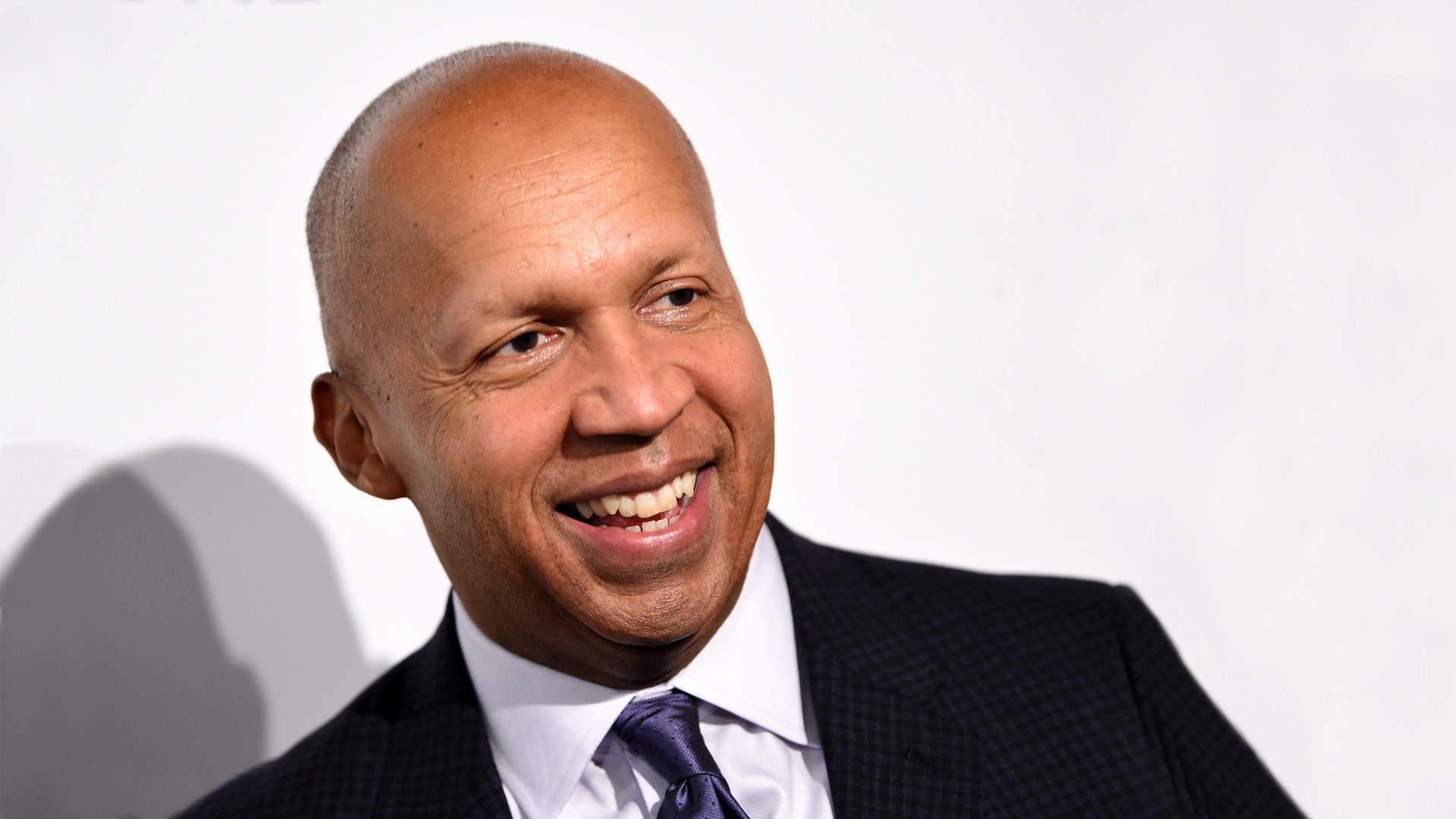
Dimitrios Kambouris / Staff / Getty Images

Since 1973, 166 people in the US have been exonerated from death row. In 2018 alone, wrongly convicted people lost more than 1,600 years of their lives behind bars. Many exonerated individuals never received any form of reparations. One man, Anthony Ray Hinton, spent 30 years on death row for a crime he did not commit. Though he was exonerated with the help of the Equal Justice Initiative in 2015, Hinton has not received an apology from the state, or from anyone involved in his prosecution, for the years stolen from him.

The film Just Mercy, which releases January 10, provocatively beckons all—especially the US church—to confront the unjust nature of our nation’s criminal justice system. The film provides a sobering glimpse into how race, class, and systemic sin inform culpability and judicial verdicts. Revolving around the faith-rooted activism of Bryan Stevenson (played by Michael B. Jordan) and the creation of the Equal Justice Initiative (EJI), Just Mercy recounts the tragic story of Walter McMillian (Jamie Foxx). McMillian, or Johnny D., was an African American who owned a lumber company in a small Alabama town and was framed for the murder of Ronda Morrison—an 18-year-old white girl.

The film chronicles Stevenson’s graduation from Harvard Law School and move to Montgomery, Alabama, where he opens a law firm that provides legal defense for those awaiting execution on death row. McMillian’s case was one of the first, and most difficult, cases of Stevenson’s career. Just Mercy illuminates Stevenson’s relentless pursuit of truth and justice, commitments that led Archbishop Desmond Tutu to knight Stevenson as “America’s Nelson Mandela” and enabled EJI to successfully challenge more than 125 death row convictions since 1989.

The US not only has the highest rate of incarceration in the world, we also have more people locked up than any other country in the history of the world. We also have more jails and prisons than degree-granting colleges and universities. In some areas of the country, there are more people living behind bars than on college campuses. Native Americans, Africans, Hispanics, and Southeast Asians are all grossly overrepresented within our justice system. EJI found that for every nine people executed on death row, one is found innocent and released.

US Christians must lament how the politics of fear and anger have tamed our witness in the world. Stevenson points out in his documentary True Justice that everybody imagines that, if they were in Alabama in the 1960s, they would have been marching with Martin Luther King Jr. “And, the truth of it is,” he says, “I don’t think you can claim that if today you are watching these systems be created that are incarcerating millions of people throwing away the lives of millions of people, destroying communities, and you’re doing nothing.”

Amid these lamentations, Stevenson remains a man of hope, love, and conviction. The true measure of our character, he is convinced, is proved through how we treat the poor, disfavored, incarcerated, and condemned.

Christianity Today asked Dominique DuBois Gilliard, director of racial righteousness and reconciliation for the Evangelical Covenant Church and author of Rethinking Incarceration, to talk to Bryan Stevenson about his work and hopes for the film. This interview has been edited for length and clarity.

What is the significance of the timing of the film’s release?

This is a critical time in our nation’s history. We’ve been so divided by the politics of fear and anger that it’s easy to stop caring about things we should care about. It’s easy to tolerate things we shouldn’t tolerate. And the way you combat that is to get people closer to inequality, to injustice, to things that are unfair. And that’s what story-making can do. That’s what films can do.

I’ve always loved the power of cinema to draw you into someone else’s life, someone else’s experience, and open your eyes and your heart to things that you need to see and feel. And that’s what I’m hoping to happen with this movie.

We have the highest rate of incarceration in the world. We have an incredibly extreme and harsh carceral system that treats a lot of people unfairly. A lot of people are vulnerable or exploited and abused. And I’d love to see that change, but it won’t change until people understand the cost of that. I’m hoping that the film will create an opportunity for them to feel the pain of inequality and injustice, but also the triumph of what can happen when we fight and we work. I am really thrilled that it’s happening at this moment when I think we are desperately in need of increasing the justice quotient in our nation.

There were two quotes that were really jarring for me in the film. One is when the other lawyer says, “If you go digging into those wounds, you’re going to make a lot of people very angry.” And, “When people care about a thing that much, they’re willing to do anything to get what they want.” What does it take to have the courage to pursue truth in a climate of fear, especially when you understand the cost of your choice?

The good news is that it’s not a new struggle. People of faith and people of conviction have always had to stand up when other people say sit down and to speak when other people say to be quiet. And you get oriented to live like that, to think like that, to believe like that.

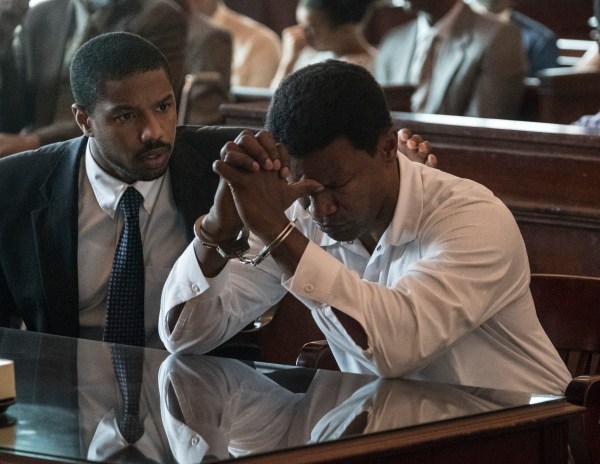
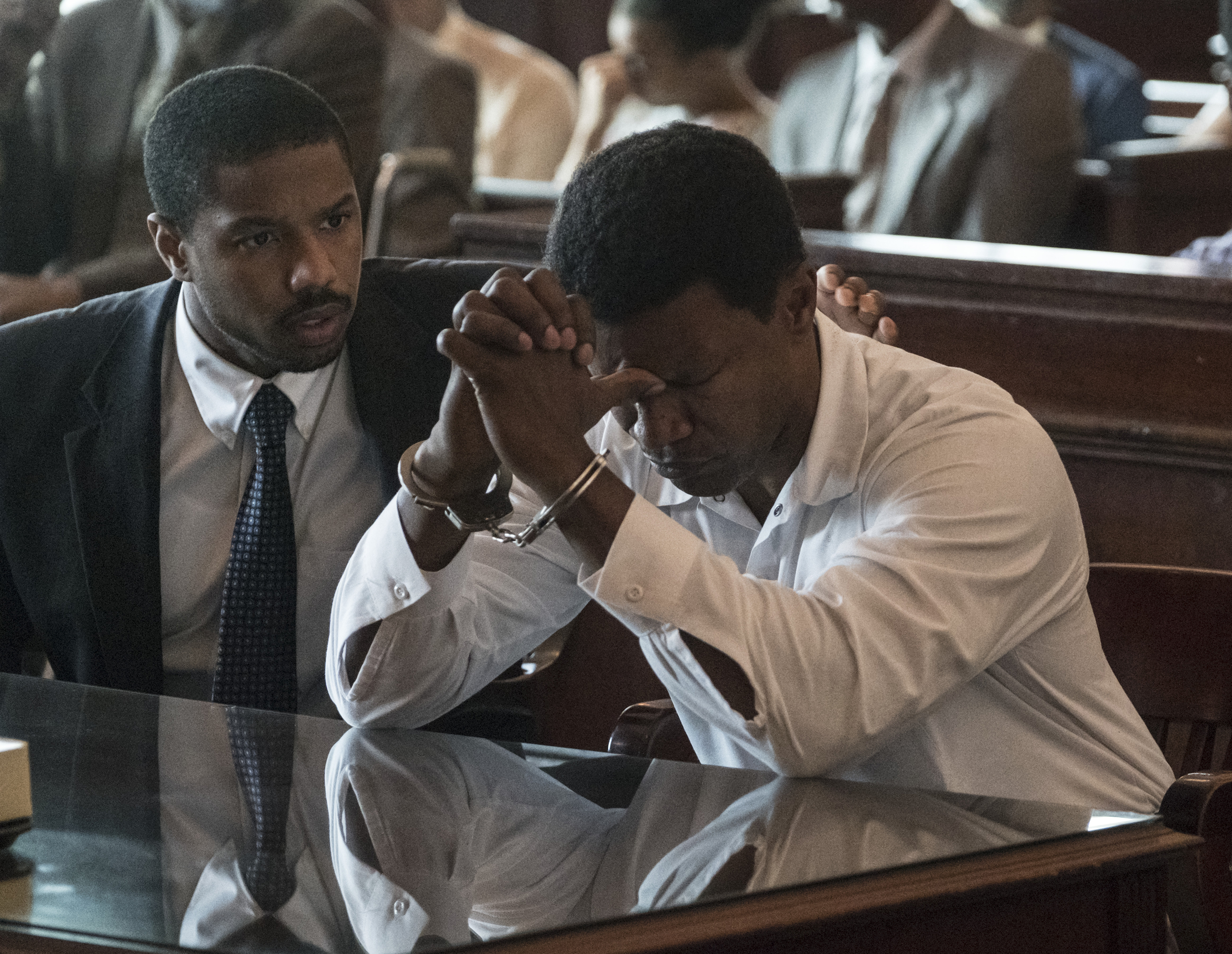
MICHAEL B. JORDAN as Bryan Stevenson and JAMIE FOXX as Walter McMillian in Warner Bros. Pictures drama, JUST MERCY, a Warner Bros. Pictures release.© 2019 WARNER BROS. ENTERTAINMENT INC. / Jake Giles Netter
MICHAEL B. JORDAN as Bryan Stevenson and JAMIE FOXX as Walter McMillian in Warner Bros. Pictures drama, JUST MERCY, a Warner Bros. Pictures release.

I’m a product of a community where people were marginalized, poor, excluded. We had to learn to believe things we hadn’t seen, and my faith reinforced that. People don’t like when they are forced to confront things that aren’t pleasant, that are unhappy. But we have to do that. And I actually think people of faith have a critical role at that. We understand that if we want to get to a better place, if we want redemption, if we want restoration, that there has to be confession, there has to be repentance. We cannot be afraid to acknowledge wrongdoing, mistakes we’ve made—we understand that personally. We seem to understand it in our places of worship, but we don’t seem to see much evidence of that in the political and the cultural social spaces. And I just think that has to change.

But I am standing on the shoulders of people who have done so much more with so much less. In Montgomery, there’s a whole history of people courageously fighting the things that need to be fought. The generation before me would put on their Sunday best and go into a space where they knew they would likely be battered and bloodied and bruised, but they went anyway. And with that history in my head and that knowledge, I could feel like I’ve got to do the things that have to be done. And it’s part of what struggle requires.

Part of what I saw manifested in the movie is you seeing value in people who sometimes don’t see it in themselves, and having the conviction to fight for them even when they seem to not have that same conviction because the system has so thoroughly beat them down.

What has defined my work over the last 35 years is this belief that each of us is more than the worst thing we’ve ever done. I genuinely believe that no one is just their worst act. If you tell a lie, you’re not just a liar; or if you take something, you’re not just a thief—even if you’ve killed someone, you’re not just a killer. And justice requires that we know the other things that you are.

It’s easy to expect the worst part of you and just stay in that place, because it takes work and faith and hope and belief and love to transcend some of the difficult and painful things we do to one another. I think that’s what we’re called to do. And in that respect, the work can be both ministry and advocacy at the same time. I want the same things for me that I want for my client; I want the opportunity to be forgiven if I say the wrong thing or do the wrong thing. I can’t expect that for myself if I’m not going to give it to other people. That has shaped my work. I don’t want to see anybody burdened with the lie that their life doesn’t matter, that they’re beyond hope and beyond redemption or beyond any purpose. I don’t believe that for anyone. Part of what my work is about is trying to illuminate that path so that we can both see it.

How has the death penalty driven your work, especially after it was resuscitated on the federal level last year?

I think that the threshold question when it comes to the death penalty isn’t “Do people deserve to die for the crimes they’ve committed?” I think the threshold question is, “Do we deserve to kill?” If you have a system that treats you better if you’re rich and guilty; if you have a system defined by error, that’s made a lot of mistakes, that’s very unreliable; if you have a system compromised by bias against the poor or people of color, then I don’t think you deserve to kill. The long history of racial violence in this country ought to be disqualifying of a state that perpetrated genocide against native people, that tolerated enslavement for two centuries, that allowed lawlessness and terrorism and mob violence and lynching to define the first half of the 20th century. But that kind of history, that we would even want to use legal violence and as a measure or expression of our commitment to justice, seems very turned around. So for me, it’s very easy to stand with the condemned and to argue for something better—something that goes beyond the illogic of killing people to show that killing is wrong.

As a Harvard Law School graduate who had many opportunities coming out of law school, can you talk a little bit about how your faith informed your vocation?

I never had met a lawyer until I got to Harvard Law School. I didn’t really understand what I wanted to do. And when I met people on death row who were literally dying for legal assistance. When I heard a condemned man sing about higher ground as we have in the film, everything just came together for me.

My great-grandparents were enslaved. My grandmother survived lynching and terrorism. My parents were humiliated every day by Jim Crow laws that were designed to denigrate. And yet they had enough faith, they had enough hope, to love one another and to create another generation. And I want to honor that hope and that love and employ that same faith to believe that we can create something better for the people who come after. I do think there’s something better waiting for us in this country. I do think there’s something that feels more like freedom than inequality of justice. But to get there we’re going to have to talk more honestly, we’re going to have to work harder, we’re going to have to do the difficult things that are sometimes required to love mercy and to do justice and to walk humbly with God.

What do you hope this movie leaves the church wrestling with?

I hope it causes us to talk more about this need for redemption and grace to everyone. We can’t be believers and be so hopeless about people who fall down. Life without parole is a hopeless sentence; and, we impose that sentence upon people who are drug addicted and drug dependent, people who have made poor choices around money. There has to be more hopefulness in the way we think about any person's ability to recover, to be redeemed. Then the second thing is that we need to see people of faith in spaces where there’s a lot of despair and anguish, where there’s a lot of trauma and abuse. I can’t think of any place where that is more evident than in our jails and prisons.

I want to see people of faith get reengaged. The Gospels talk about not only feeding the hungry and clothing the naked and providing shelter to the homeless, but also about going into the jails and prisons and standing with the accused. And we haven’t done that in a way that I think we should be. And I hope it still inspires a conversation that leads us into that place.

Dominique DuBois Gilliard is the director of racial righteousness and reconciliation for the Evangelical Covenant Church, and is the author of Rethinking Incarceration: Advocating for Justice That Restores, which won a 2018 Book of the Year Award for InterVarsity Press.

News

Amid Abuse Scandals, Legal Challenges Test Clergy Reporting Exemptions

Implications for church leaders loom as Montana reverses $35M judgment and other states continue tightening reporting laws.

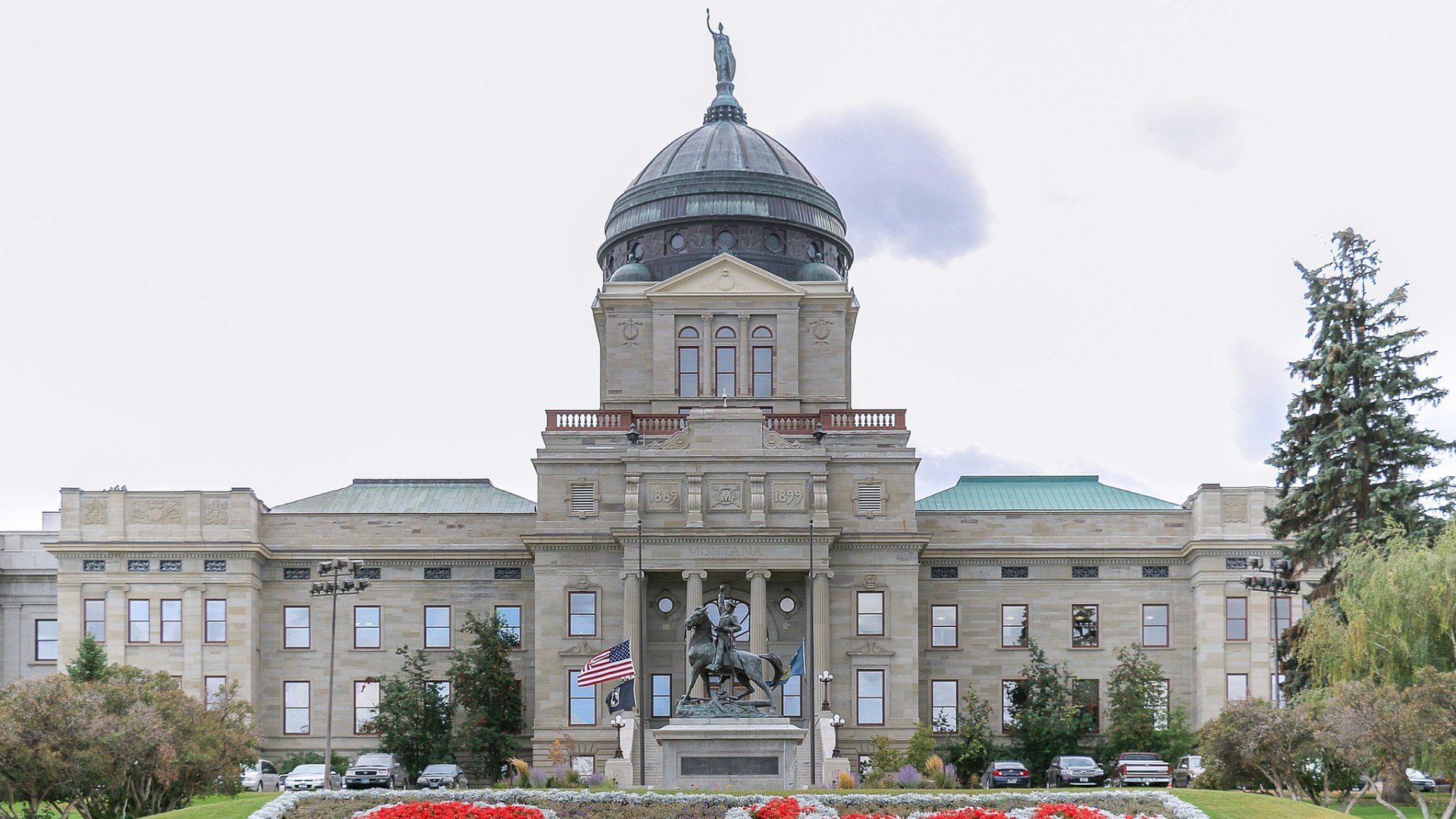
Montana State Capitol in Helena

Montana State Capitol in Helena

Christianity Today January 10, 2020
Martin Kraft / Wikimedia Commons

The Montana Supreme Court this week unanimously reversed a $35 million judgment against the Jehovah’s Witnesses for not reporting sexual abuse to authorities, saying church representatives fell within a clergy exception found in the state’s mandatory child abuse reporting law.

Montana law requires officials, including clergy, to report child abuse to state authorities when there is reasonable cause for suspicion. However, the state’s law exempts clergy from reporting when the actual or suspected abuse is discovered in the course of a confidential conversation—such as confession—that is protected by the clergy-penitent privilege.

The high court said in its 7–0 decision that the Jehovah’s Witnesses fall under the exception in this case, which involves a woman who had been abused as a child in the mid-2000s. The congregation handled the allegations internally in accordance with church practices.

The ruling overturns a 2018 jury verdict awarding compensatory and punitive damages to the woman, who accused the church’s national organization of ordering Montana clergy members not to report her abuse to authorities. Jehovah’s Witnesses officials testified “its process for addressing these reports is strictly confidential, notwithstanding the involvement of numerous church clergy and congregants,” Justice Beth Baker wrote in the opinion, issued Wednesday.

“Clergy are not required to report known or suspected child abuse if the knowledge results from a congregation member’s confidential communication or confession and if the person making the statement does not consent to disclosure,” Justice Baker said.

Despite the recent Montana ruling, some states continue moving to expand reporting obligations in the wake of recent national sex abuse scandals, including those revealed through the 2018 grand jury report detailing abuse cover-ups in Catholic dioceses across Pennsylvania and last year’s Houston Chronicle investigation uncovering abuse in the Southern Baptist Convention.

In more than half the country—26 states—clergy are specifically named among those who are legally required to report actual or reasonably suspected cases of child abuse, according to Mandatory Child Abuse Reporting Laws, a resource by Church Law & Tax (a fellow CT publication). All but four of those states provide an exemption for the clergy-penitent privilege like Montana does.

In 15 other states, all adults are considered mandatory reporters, which makes clergy members included by default; over half (8) provide an exemption via the clergy-penitent privilege.

Historically, abuse-reporting laws are a fairly recent phenomenon. Child abuse was not a widely held public concern in the US until the early 1960s. The first mandatory reporting laws applied to doctors and nurses, and then were expanded over the years. Many states also broadened the definitions of abuse (most notably to include sexual abuse) and stiffened penalties (usually a criminal misdemeanor or felony charge carrying a small fine and/or brief jail sentence) for those who fail to fulfill their duty.

Clergy have been among the professions commonly added to the laws of many states throughout recent decades, as have school principals, teachers, daycare operators, and childcare workers.

The recent attention toward abuse in the church represents another wave of awareness and legal review. Illinois, for instance, adopted new changes effective January 1, 2020. Among them: expanded reporting obligations for clergy members (though some exceptions tied to the clergy-penitent privilege still remain) and obligatory annual training for all mandatory reporters.

Church leaders and clergy members must be familiar with these state provisions and make certain they are ready to comply, said attorney and Church Law & Tax senior editor Richard Hammar. Whenever uncertainty arises about whether to report, he said, “Resolve any and all doubts in favor of reporting.”

All states recognize “permissive reporting,” meaning anyone—including clergy—can make a good-faith report, even if the law does not compel them to do so.

Matthew Branaugh is editor of content and business development for Christianity Today’s Church Law & Tax. With reporting by Matt Volz of the Associated Press.

News

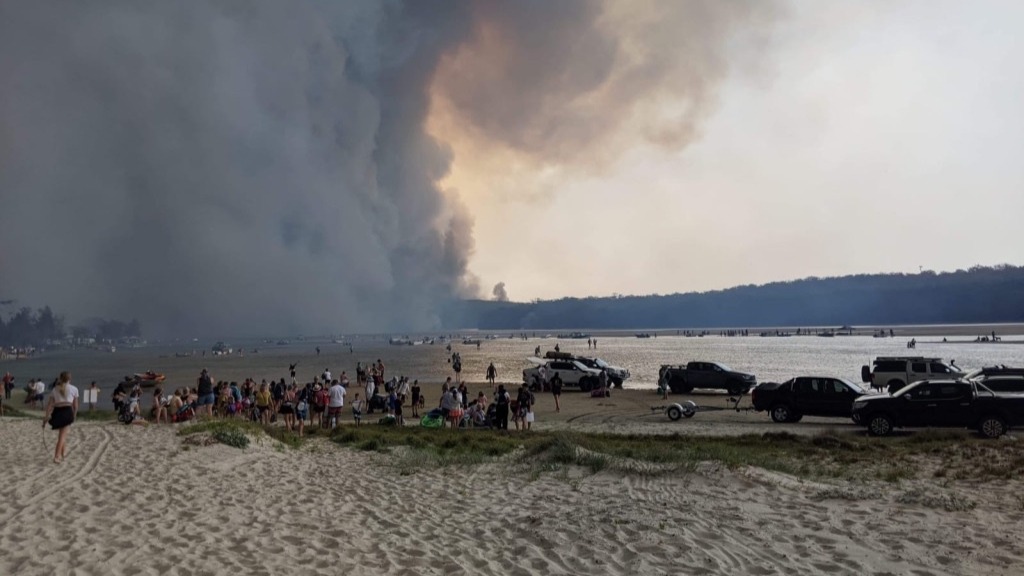
Australia Fires Lead to Canceled Mission Trips, Church Climate Change Conversations

Scripture Union evacuates beach teams, Hillsong raises money, and A Rocha explores the biblical response to the blaze.

Christianity Today January 10, 2020
Scripture Union

Every summer, hundreds of young Australians devote two weeks to running Christian programs for families and youth on the beaches of New South Wales and Victoria.

But cataclysmic fires in southeastern Australia have interrupted the efforts of Scripture Union teams in the nation’s most populous states.

Scripture Union has served in the Victoria beach town of Mallacoota for more than 30 years. But when teams showed up to the vacation town this year, the winds changed and the fires began immediately threatening Mallacoota.

As the blazes inched closer, leader Chris Mulherin and his team, along with hundreds of locals and tourists were evacuated to a movie theater were they spent hours in the hot building listening to sirens roar and gas bottles explode outside.

“Part of the sense of wanting to stay was the commitment to the local youth who had been through this extraordinarily difficult experience,” said Mulherin. “Some of them had lost their homes. Others hadn’t. Most of the [tourists] were actually evacuated so they moved on or were going to move on but the locals obviously were still around and so there was this sense that we didn’t really want to leave them.”

One night later, Mulherin and his team opened up a space for young people—locals and tourists alike—to come and process their experience. Then, the students headed back to Melbourne on a boat shortly after Victoria’s premier designated the area as a state of disaster, with Mulherin by helicopter a few days later.

Meanwhile, Scripture Union evacuated eight teams serving on the south coast of New South Wales, Australia’s most populous state.

The Australian bushfires have torched more than 24 million acres and spread across all six states. A New York Times article described the scale as “an area almost as large as West Virginia, more than triple the area destroyed by the 2018 fires in California and six times the size of the 2019 fires in Amazonia.” The fires have also killed at least 25 people and hundreds of millions of animals and destroyed thousands of buildings, including at least one church.

The Billy Graham Rapid Response Team announced this week that it would be deploying two groups of crisis-trained chaplains from the US, Canada, and the UK to Victoria and New South Wales. Nearly 40 chaplains have been traveling alongside Samaritan’s Purse since last fall as the organization has responded to the fires.

“God has been reminding me the beautiful words in Matthew’s Gospel: Come to Me all who are weary and burdened, and I will give you rest,'” said Steward Beveridge, who leads the ministry’s rapid response team in Australia and New Zealand. “When I have the opportunity to talk with people, there are tears and a moment of silence as they reflect on the words and take comfort in them.”

The board of directors of A Rocha Australia, part of an international Christian conservation group, acknowledged that the fires had affected them personally, through assisting the evacuated or working with other environmental groups.

“We are also pausing in prayer and reflection, to meditate on gospel truths, and to bear with others amidst our grief,” the board said in a statement. “And we are worshipping the Lord through creation care mission as we seek to be salt and light, in our own small way, to people who are in shock, angry, and despairing at the fires.”

A Rocha Australia also said it was building partnerships with Christian and non-Christian conservationists to aid with the recovery.

“We are looking for opportunities to engage Australian churches to see this disaster through a scriptural lens, in repentance and obedience, rather than simply as a political issue,” its board stated. “This is a challenge for Christians and churches in a nation where climate and environmental politics are so polarized, often being based upon political ideology rather than science, the Scriptures, and the new climate reality.”

More than half of Australian churchgoers (56%) believe that humans are largely responsible for climate change, according to the 2016 National Church Life Survey. The same number of churchgoers agree or strongly agree that they have a moral duty to do something about climate change, and nearly half (48%) said that Australia should immediately address climate change even if the steps were costly.

Among senior church leaders, about a quarter (27%) say that they often or sometimes preach on the environment or caring for the earth.

“The church needs to be speaking up and not shying away from it or just adhering to some of the traditional issues that certain sections of the church think is our main area of focus. The church needs to be focusing on climate change and creation care,” said Mick Pope, a professor of environmental mission at Missional University, in a piece from Eternity titled “Now Is the Perfect Time to Talk About Climate Change.”

Last month, Hillsong founder and senior pastor Brian Houston announced that the denomination was organizing a campaign that would support both short- and long-term recovery. Some of the funds raised would support firefighters, while other money would go to the Salvation Army, which was offering shelter, food, and water to those evacuated by the fires. He also said that the megachurch would work with network churches to support long-term help.

“As a church, we are committed to pray and believe God for drought-breaking rain to quench our dry and parched land,” he wrote. “We believe there is hope in Jesus, and in Him, unshakable promises on which we can stand firm on behalf of our nation.”

In a tweet he later deleted, Houston announced on Monday that the church had raised more than half a million Australian dollars. On Friday, in another later-deleted tweet, Houston announced the church had raised more than one million Australian dollars.

Back in Mallacoota, bed and breakfast owner and Christian David Jeffrey became an international face of the crisis after telling his story of escaping an approaching line of fire to BBC News and SkyNews.

Jeffrey was among several in his community who had resisted evacuating, deciding instead to defend his home. He said that he specifically asked God to change the direction of the wind as the 60-foot-high wall of fire traveled nearly 60 miles an hour in his direction.

“I prayed, ‘Lord if you don’t push this [fire] back now, we need [wind] from the east.’ As soon as I said that, it started blowing from the east a little bit. Then I got louder and [the wind] got stronger. Then I got louder again and it got stronger again,” Jeffrey told Eternity News.

After he began praying, Jeffrey said that he felt the fire change.

“I heard God say to me, ‘pray.’ I started off with a pathetic little prayer. … Then within me, this faith rose up and said ‘who are you praying to?’ And I thought, ‘Yes! You’re the God of the Bible. Nothing’s impossible with you!’ ”

News

Scam Lures Speakers to Fake UK Church Conferences

Hundreds of American Christian leaders have been invited to Anglican events—then asked to pay up.

Christianity Today January 10, 2020
Illustration by Mallory Rentsch / Nagesh Badu / Kari Shea / Aaron Burden / Rodrigo Santos / Unsplash

Late last year, writer Jonathan Merritt was offered the keynote spot at a church conference in Scotland. The cathedral provost emailed him, saying, “we received the Lords direction to invite you to speak in this event.” He detailed the tradition of annual lectures at St. Andrew’s in Aberdeen—this year’s theme “carefully chosen by the Lords’ inspiration due to the backdrop of the present situation in the United Kingdom”—and offered to pay Merritt a speaking fee and cover his travel expenses.

It took a few more email exchanges before Merritt and his assistant realized that these messages weren’t really from Provost Isaac Poobalan at all—typos and clunky language began to tip them off—and that the supposedly 600-person conference scheduled to take place at the church later this month wasn’t even happening.

“I almost flew to the UK in 2 weeks for a FAKE event!” the author of Learning to Speak God from Scratch tweeted last week. “In Nov 2019, someone impersonated a real religious leader to invite me to speak. I thankfully caught it last min, but some creepy European out there wants a Jonathan Merritt flesh-coat baaaadly, and I’m not even kidding.”

This email scheme has become the “Nigerian prince” offer of the Christian speaking circuit, with hundreds of US Christian leaders invited to events at UK churches by scammers who hope to collect hundreds of dollars in visa fees ahead of the purported conferences.

The real administrator at St. Andrew’s, Lynda Johnston, says at least 30 Americans targeted by the scam have contacted the cathedral, including a number of “very interesting and potentially well-off individuals.” The church had to put up a notice on its website saying, “no such conference happening here at the Cathedral, and no emails were sent by Provost Poobalan.”

Over the past year, invitations have been sent out for a conference called “Big Things: How to start small” under the guise of more than a dozen unsuspecting Anglican churches. Some version of the scam dates back to at least 2012. Several Christians—including Michael Wear, Carlos Whittaker, Philip Nation, Larry Crudup, and Megan Alexander—replied to Merritt to say they’d also received similar invites.

According to Johnston, the emails coming from a Gmail account set up in Poobalan’s name (not an official church account) originated from an IP address in Nairobi, Kenya. The messages use real names and addresses of UK churches and leaders, often with a Bible verse in the email signature.

Alexander, an Inside Edition correspondent and Christian author, this week received a second identical invitation to an upcoming “Big Things” conference, just with the names and location changed to another parish. She told CT she had initially been interested in the Aberdeen event since its theme happened to line up with her book Faith in the Spotlight, but her speaking agent confirmed it was a fraud after contacting the church directly.

“The scam is not immediately obvious in that it does not request money or (ask) you to click on any links,” said Adam Kelk, operations manager for St. Botolph’s Church in Boston, England, which has been named as the location for the conference twice, including a current iteration of the scheme mentioning a March 2020 event. “We have been informed that upon replying the scammers then send out a second email which requests money to cover expenses/visas, etc. The emails have been sent mainly to people who are in America, hence the request for expenses.”

Many Christian personalities at all levels—from first-time authors to celebrities like Tim Tebow and Sadie Robertson—speak at conferences and events as a way to spread their messages and earn income. (One major agency, Premiere Speakers Bureau, lists more than 200 Christian speakers across many fields, with fees starting at a few thousand dollars.) It’s not unusual for a church they’ve never heard of to reach out with a speaking opportunity. With the “Big Things” scam, most were contacted through forms on their websites or through their speaking agents.

Joy Eggrichs Reed, founder of Punchline Speakers, said the agency and several of its clients were invited to the same conference as Merritt and Alexander. Reed warns speakers to watch out for when event coordinators “fail to answer the simple questions sent in response,” as it could be a sign of a scam.

“In our case it was asking which speakers they were interested in, discussions of budget, and logistics,” she said. “They just continued to reply with what felt like auto-responses filled with somewhat nonsensical theological sentences that seemed to be done in Google translate: Sending out the invitation to you is by virtue of Gods bearing plus human recommendation, We need you to use your wealth of experience to sensitize the congregation.”

Luckily, most who expressed interest in the fake conferences stopped short of paying to go. Author Anna LeBaron—who wrote The Polygamist’s Daughter: A Memoir and shared her testimony in CT in 2017—was on board with the Big Things conference “scheduled” for September 2019 at St. Luke’s Church in West Norwood, London, until she received a request to wire-transfer the charges for her work permit.

“This is when my assistant and I began to feel that something wasn't quite right,” she said.

Patrick Schwerdtfeger posted back in 2012 about the “UK Work Permit Church Scam for Speakers,” warning that he had paid over $1,000 in a wire transfer after exchanging over 50 emails with scammers posing as leaders at an evangelical church in Wales.

In recent months, commenters have visited Schwerdtfeger’s blog to report further scam emails sent out last year, claiming to be from multiple churches in London, Manchester, Cardiff, Norwich, and Worcestershire, in addition to St. Andrew’s in Aberdeen.

While the church is not actually hosting a conference in mid-January, St. Andrew’s still hopes Americans come visit (no shady wire transfers needed), since the cathedral holds a special connection with the States. The church is the site of the 1784 consecration of the first American Episcopal bishop, Samuel Seabury. Seabury wrote “Free Thoughts on the Proceedings of the Continental Congress” and is featured as a character in the Hamilton musical (see “Farmer Refuted”). In his honor, St. Andrew’s historic sanctuary displays a stained glass with an angel carrying the “stars and stripes,” said Johnston.

Books
Review

Can We See God from Einstein’s Tower?

The great scientist’s grand theories can take us to dizzying heights, but there are realms they cannot reach.

Christianity Today January 9, 2020
Illustration by Mallory Rentsch / Source Images: Bain News Service / WikiMedia Commons / Robson Hatsukami Morgan / Unsplash

When I was a grad student in Germany, I remember visiting the city of Ulm. Two particular, commingled sights come to mind: first, pausing at the marker for Albert Einstein’s birth in 1879 (before his family moved to Munich six weeks later); and second, ascending the dizzying heights of the 530-foot cathedral tower. The combination strikes me as instructive: Most of us see in Einstein a mind that seemed to unlock the deepest mysteries of the universe. He sought a “theory of everything.” And many have sought to ascend with him into higher realms of insight, through many tiring steps.

A Theory of Everything (That Matters): A Brief Guide to Einstein, Relativity, and His Surprising Thoughts on God

Can Einstein bring us closer to God’s view of the world? Oxford University’s Alister McGrath takes up this question in his book, A Theory of Everything (That Matters): A Brief Guide to Einstein, Relativity, and His Surprising Thoughts on God. McGrath—who holds advanced degrees in theology, intellectual history, and molecular biophysics—is a leading light in the dialogue of faith and science.

McGrath does a remarkable job of explaining Einstein’s rigorous and intricate theories. I was particularly struck by his elaboration of the four papers Einstein wrote as a Swiss patent clerk during the miracle year of 1905, including papers setting out the theory of special relativity and describing the “photoelectric effect,” which led both to the development of quantum theory—that light is both a wave and a particle, or, in Einstein’s words, “packets of waves” —and a 1921 Nobel Prize. McGrath, by the way, expertly explains the politics behind the Nobel committee’s decisions, shedding light on why Einstein didn’t receive a prize for his “greatest intellectual achievement—the theory of general relativity.”

Einstein’s theory puzzled many contemporary scientists, and it wasn’t until May 1919 that observations of an eclipse by the great English scientist Sir Arthur Eddington (and others) offered confirmation. As I write, the 100th anniversary of this event has received a tremendous amount of attention. Even then, as McGrath explains, many declared it “a ‘new scientific revolution’ that had ‘overthrown’ [Isaac] Newton.” Despite the media sensation, however, Einstein’s discoveries were more a “natural completion” of Newton’s theories than a decisive scientific break, as Einstein later noted and McGrath is careful to highlight.

The Path of Intuition

What are the theological implications of the theory of general relativity? As the science writer Timothy Ferris wrote of George Lemaître, the Belgian Catholic priest and scientist who confirmed the theory mathematically, “the universe might have begun as an infinitely small pinpoint—a ‘singularity,’ in mathematical terms—at time zero, ‘a day when space was infinitely curved and all matter and all energy was concentrated into a single quantum of energy.’” This expanding cone of the universe would have a starting point, commonly known as the Big Bang.

But how does this match up with the Christian belief that God created the world ex nihilo (or “out of nothing”)? As both Lemaître and McGrath (in other places) have advised the faithful, it doesn’t make for a precise fit. Believers need to avoid making extravagant theological claims about the Big Bang, even if there are some parallels between Einstein’s physics and the doctrine of creation.

I found myself drawn to how Einstein brought it all together in his 1934 book Mein Weltbild, translated into English as The World as I See It. Arguing that the supreme task of the physicist is to search for general elementary laws that can be woven together to give a comprehensive “picture of the world” (Weltbild), Einstein notes that “there is no logical path to those laws.” Rather, they arise through the “intuition, testing on a sympathetic understanding of experience.”

And this concept isn’t incidental to Einstein’s work. He often knew intuitively and imaginatively before he could offer proof. McGrath suggests this is most likely the situation with his theory of special relativity.

In the second part of the book, McGrath turns from describing Einstein’s theories to portraying the scientist as a “big picture” thinker who made “distinctive use of religion,” which for him entailed a sense of deep mystery in the world—but no personal God involved in human affairs. In a 1954 letter, Einstein commented that “the Bible is a collection of honourable, but still primitive legends which are nevertheless pretty childish.”

Einstein pondered the God of beautiful mathematical equations. McGrath expertly describes this way of thinking, in which “the eternal mystery of the world is its comprehensibility,” as Einstein wrote in his 1954 book Ideas and Opinions. As McGrath makes clear, when Einstein declared that “science without religion is blind, and religion without science is lame,” it certainly wasn’t a veiled admission of atheism, as Richard Dawkins has opined. Nor, however, was it an endorsement of Christian belief.

Information and Elevation

Toward the end of his book, McGrath addresses the relationship between “objects” and “subjects,” pointing out that physics, among the sciences, is focused most predominantly on describing the objective world of nature rather than our subjective experience of it. But as human beings, of course, we long for more than abstract knowledge about the workings of nature, which can’t come close to satisfying our need for meaning.

Which leads to the central question: Will today’s readers judge it worth the effort to follow along with insights into the laws of physics that Einstein presented over a century ago—and that scientists are still trying to grasp more fully? It bears mentioning that McGrath uses well over half of his 184 pages just to summarize Einstein’s scientific discoveries. In the end, the book seemed to offer more information than elevation. How much does it really matter whether I know the ins and outs of why light bends because of gravity, or that time dilates? Will that change my life as a follower of Jesus?

As C. S. Lewis once remarked (in a sentence that McGrath quotes elsewhere), “I believe in Christianity as I believe that the sun has risen: not only because I see it, but because by it I see everything else.” We see all of life more beautifully and meaningfully through our faith in Jesus and his gospel. What, then, can Einstein add?

Ultimately, McGrath believes that Christianity has a bigger picture of the world than Einstein can offer, which allows him to set Christian faith in conversation with the natural sciences more generally. McGrath draws in Sir Thomas Browne’s “two books” analogy, the Belgic Confession, and John Calvin, concluding that Christians can “set Einstein’s reading of the ‘book of Nature’ alongside [their] own reading of the ‘book of Scripture.’”

In the final paragraph of the book, he sums things up like this: “I do not suggest that Christianity alone provides a way of seeing things that allows us to hold together these objective and subjective worlds: that would be arrogant and inaccurate. Yet I cannot overlook the fact that it does hold them together and allows them to be seen as a part of a greater whole, rather than disconnected realms of thought.”

As I worked my way through A Theory of Everything (That Matters), ascending the steps of the intellectual tower erected by Einstein and his many pathbreaking discoveries, I was stunned by the breadth of knowledge on display. McGrath’s command of the facts is truly encyclopedic, and his grasp of Einstein’s theories is firm. Yet I’m doubtful that one can climb Einstein’s tower all the way to the celestial realm. Getting there requires other sources of illumination.

Greg Cootsona is a lecturer in comparative religion and humanities at Chico State University, a co-director of the Science for the Church ministry, and the author of Negotiating Science and Religion in America: Past, Present, and Future (Routledge).

Apple PodcastsDown ArrowDown ArrowDown Arrowarrow_left_altLeft ArrowLeft ArrowRight ArrowRight ArrowRight Arrowarrow_up_altUp ArrowUp ArrowAvailable at Amazoncaret-downCloseCloseEmailEmailExpandExpandExternalExternalFacebookfacebook-squareGiftGiftGooglegoogleGoogle KeephamburgerInstagraminstagram-squareLinkLinklinkedin-squareListenListenListenChristianity TodayCT Creative Studio Logologo_orgMegaphoneMenuMenupausePinterestPlayPlayPocketPodcastRSSRSSSaveSaveSaveSearchSearchsearchSpotifyStitcherTelegramTable of ContentsTable of Contentstwitter-squareWhatsAppXYouTubeYouTube