

News

Scholar Arrested for Allegedly Stealing Ancient Bible Texts from Oxford

Dirk Obbink accused of selling papyrus fragments to Hobby Lobby and California collector.

Brent Royal-Gordon / WikiMedia Commons

Brent Royal-Gordon / WikiMedia Commons

Christianity Today April 22, 2020

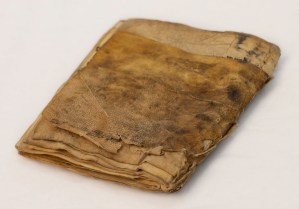
An Oxford professor has been arrested on allegations of stealing and selling as many as 120 ancient pieces of papyrus, including a fragment of the Gospel of Mark once believed to be the oldest New Testament text ever discovered.

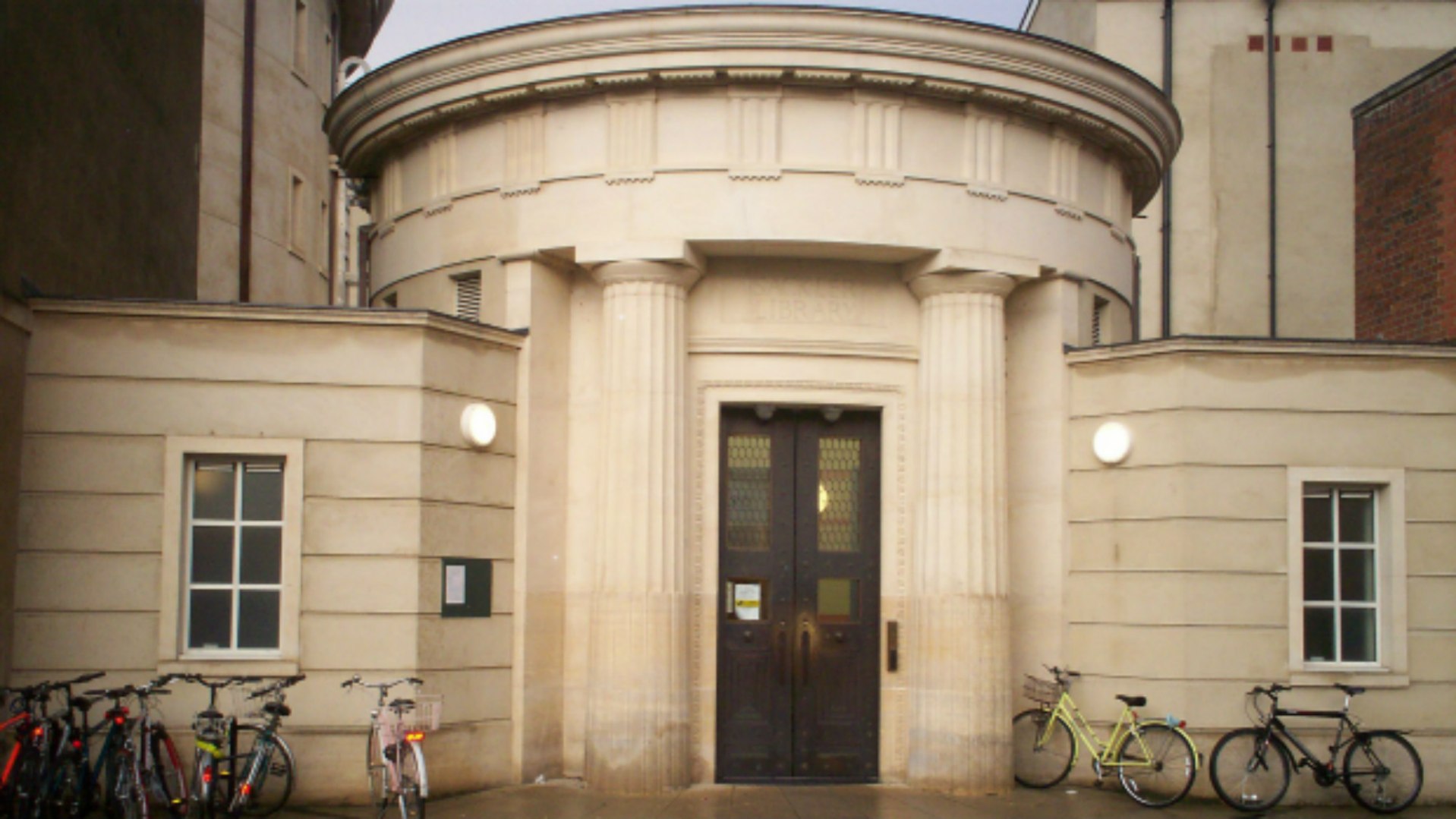
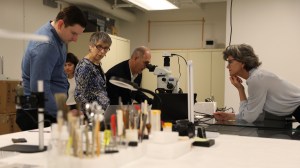
Dirk Obbink, professor of papyrology and Greek literature at Christ Church Oxford, was arrested on March 2. News of the arrest broke last week in the student newspaper The Oxford Blue. Obbink allegedly took the fragments from the Egypt Exploration Society’s collection of about 500,000 artifacts discovered in the ancient city of Oxyrynchus. The collection is housed at Oxford’s Sackler Library, and Obbink was one of three scholars charged with overseeing it until he was removed under a cloud of suspicion in 2016.

Obbink has denied the allegations in an official statement and said the evidence against him was “fabricated in a malicious attempt to harm my reputation and career.”

The evidence is convincing, however, to some who’ve worked closely with Obbink.

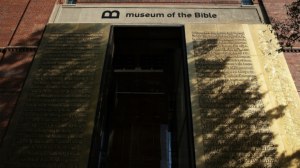
“It’s difficult seeing this ending well for Dirk,” said Jerry Pattengale, a professor at Indiana Wesleyan University and one of the founding scholars of the Museum of the Bible. “It’s sad to think that such a gifted mind might have an abbreviated contribution to the field of Greek papyrology.”

Obbink, originally from Nebraska, went to Oxford in the late 1990s and became director of a project to digitize ancient papyri. The Oxyrynchus collection is a massive trove of documents, including many biblical passages, uncovered in the ruins of a Greek city in Egypt in the 1880s. Much like the Dead Sea Scrolls, the fragments have given modern scholars a broad window into the ancient world and affirmed the reliability of biblical manuscripts.

Obbink became one of the trio of editors responsible with publishing the Oxyrynchus Papyri and overseeing the scholars who were given access to the collection. He was awarded a MacArthur Fellowship—known as the “genius grant”—in 2001 for his skill in rescuing and interpreting ancient manuscripts.

Report of major discovery

Obbink attracted the attention of some evangelical scholars in 2011 when he informally shared news about a fragment of Mark’s Gospel found in the collection. Obbink told Pattengale and Scott Carroll, two scholars who were working with the Museum of the Bible at the time, that the fragment dated to the late first century. The manuscript included a bit of the text of Jesus’ baptism, where John the Baptist tells the crowd, “I baptize you with water, but he will baptize you with the Holy Spirit” (Mark 1:8).

According to Obbink, the words might have been copied down within 30 years of the date of the original biblical manuscript. There are no known biblical manuscripts from earlier than the second century, so this was a major discovery. (The fragment is now believed to date to the second or third century.)

Carroll passed the news to Daniel Wallace, executive director of the Center for the Study of New Testament Manuscripts, and Wallace mentioned the purported discovery in a public debate with Bart Ehrmann, a religious studies professor at the University of North Carolina at Chapel Hill, in February 2012.

The news created a buzz but wasn’t followed by any additional information. There was no academic paper substantiating the claims. A number of scholars who said they had seen the fragment told other scholars at the time that they were not allowed to talk about it because of non-disclosure agreements. Questions about the Gospel discovery went unanswered.

Alleged antiquities sales

At about the same time, Obbink reportedly took 13 bits of papyrus and sold them to Hobby Lobby. The sale did not include the Mark fragment but did include parts of Genesis, Psalms, and Romans, according to the Egypt Exploration Society (EES).

Steve Green, the president of Hobby Lobby, was buying thousands of artifacts for the Museum of the Bible, which he launched in 2017. He ultimately ended up with a collection of about 60,000 objects, including about 17,000 tablets, seals, and fragments that were likely looted from Iraq and Egypt; 16 pieces of the Dead Sea Scrolls that were later discovered to be forgeries; and 13 bits of papyrus that were improperly taken from an Oxford library. (Green has recently apologized, and the Museum of the Bible in Washington, DC, is in the process of returning all the stolen artifacts and developing an exhibit on antiquities forgery.)

Then in 2013, Obbink allegedly sold Hobby Lobby four more fragments from the gospels of Matthew, Mark, Luke, and John, each from “Egypt Circa 0100 AD,” according to the purchase agreement that appears to be signed by Obbink. The amount paid for the fragments is unknown, though Pattengale called it a “considerable sum.”

The purchase agreement stipulated that the physical documents wouldn’t be transferred to Hobby Lobby for four years but would stay with Obbink for research. During the period, news that the Museum of the Bible owned the exciting new discovery of a possible first-century fragment of the gospel of Mark prompted EES to clarify that the papyrus was not for sale and had never been for sale. Then the Museum of the Bible produced the purchase agreement, and an investigation began.

Internal investigation

EES launched a systematic check of the collection, to see what else might have been stolen. They found that not only were more than 100 fragments missing, someone had removed the catalogue cards and the photograph recording the items location in the collection.

Seven were found in California, in the private collection of Andrew Stimmer, chairman of Hope Partners International, an evangelical ministry serving children in Costa Rica, Kenya, and India. To date, it is not clear how Stimmer got the texts, which included bits of Exodus, Ecclesiastes, and 1 Corinthians. He has agreed to return them to Oxford.
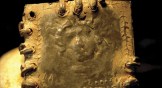
Obbink was not reappointed to his editorial position in 2016. In June 2019, EES blocked Obbink from even accessing the collection, and in October, Obbink was suspended from Oxford. The next month, local police received a report that as many as 120 artifacts were stolen from the Oxyrynchus Collection at the Sackler Library. The police investigation is ongoing.

It is not known how much the stolen antiquities are worth. Carl Graves, director of EES, said he doesn’t think of the objects in those terms.

“They are testament to Egypt’s early Christian heritage and are early evidence of biblical Scripture,” he told the Guardian. “We don’t value them monetarily but they are priceless and irreplaceable.”

Money corrupts

According to Pattengale, however, the money the Green family spent acquiring artifacts for the Museum of the Bible caused a number of people to seem to go crazy. “We were approached by dealers … in the oddest of ways,” he wrote in CT.

“After speaking at Liberty University, I went to shake a fellow’s hand at the end of the greeting line. Instead, he pulled out a paper tube from beneath his trench coat and tried to show me a Megillah (Esther scroll) he wanted to sell. … One fellow kept calling about a buried boxcar of antiquities in Texas, another claiming ownership of something from Jesus’ birth stable, and yet another with plaster casts of the first-century tomb in Jerusalem.”

Obbink may have also been motivated by the possibility of the money. But unlike most people, had access to half a million antiquities.

Christopher Rollston, professor of Semitic languages and literatures at George Washington University, said money has done a lot of damage to the study of biblical antiquities.

“The antiquities market is a blight on the field,” Rollston said. “It is corrosive and destructive, and scholars, museums, and the public must have nothing to do with it. Those who do, do so at their peril, as this tragic story demonstrates in spades.”


Ideas

The God of Small Things

President & CEO

No concern is too little for his loving care.

Christianity Today April 21, 2020
Illustration by Mallory Rentsch / Source Images: saemilee / Getty Images

The following is the latest in a series of daily meditations amid the pandemic. For today’s musical pairing, try Anastasiya Petryshak’s performance of Schubert’s “Ave Maria.” All songs for this series have been gathered into a Spotify playlist.

“Then the word of the Lord came to me: ‘The hands of Zerubbabel have laid the foundation of this temple; his hands will also complete it. Then you will know that the Lord Almighty has sent me to you. Who dares despise the day of small things, since the seven eyes of the Lord that range throughout the earth will rejoice when they see the chosen capstone in the hand of Zerubbabel?’”Zechariah 4:8–10

“Therefore I tell you, do not worry about your life, what you will eat or drink; or about your body, what you will wear. Is not life more than food, and the body more than clothes? Look at the birds of the air; they do not reap or store away in barns, and yet your heavenly Father feeds them. … See how the flowers of the field grow. They do not labor or spin. Yet I tell you that not even Solomon in all his splendor was dressed like one of these. If that is how God clothes the grass of the field, which is here today and tomorrow is throw into the fire, will he not much more clothe you—you of little faith?”Matthew 6:25–26, 28–30

Meditation 20. 2,544,769 confirmed cases, 175,621 deaths globally.

It was midnight when I made my way into the center of the Old City of Jerusalem. The clouds were low and impenetrable. Golden light flooded the Western Wall Plaza, which was filled with Jews in all manner of dress chanting and singing in lament. It was a day of mourning, written into the Jewish calendar. Surrounded by the intensity of their cries and weeping, beneath the mount where the temple and the Holy of Holies once stood, it felt as though I stood at the beating heart of the universe.

I wonder how it felt to the Israelites when they returned from their exile and found their city and their temple in ruins. When they began to rebuild, when they set the foundation, it must have seemed so paltry and miniscule compared to the temple that was remembered in the collective consciousness of their people. Some were glad to see a beginning made, but others groaned that the beginning was too modest. Do not “despise the day of small things,” God tells the prophet Zechariah. Unless you place the first stone, you cannot place the last.

The prophet heard right. Zerubbabel restored the temple. It stood for nearly six centuries, expanded by the Hasmoneans and most famously by Herod the Great. By the time Jesus taught the Sermon on the Mount in the hills over the Sea of Galilee, it was one of the most renowned structures in the entire world.

Do not be anxious over your food or over your clothing, Jesus taught upon that hillside. God cares about these things for you. He cares about the birds of the air and the lilies of the field. How much more will he care about your needs, even those that seem small and insignificant in the grand scheme?

Two thousand years later, we may find ourselves wondering whether God still cares for the flowers and the birds. As we confront a public health crisis unlike anything we have seen in a century, and we receive news of extraordinary need from Tokyo to Italy, London to New York, we may wonder about the little things in our lives. Will my parents grow ill? Will my friend find a job? Will my children fall behind in school?

But we worship a God whose eye is on the sparrow. We worship a God who chose to enter human history in the form of an infant. Who cared for the blind man, and the bleeding woman, and the paralytic. Who had compassion for the anxieties of his disciples. Who, even from the cross, asked Mary and John to take care of one another (John 19:26–27).

He is a God of small things too. Or rather, he is a God for whom nothing is small, when it matters to his children.

Help us, O Lord, to exercise that particular expression of faith of believing you care about even the most minute matters. They matter to you when they matter to us.

Help us also to have faith that even the small things can become great things in time. Even the most monumental works are modest at first. May we find those small beginnings now, where we can build stone upon stone until we have constructed something that will endure to your glory for generations. Amen.

Sign up for CT Direct and receive these daily meditations—written specifically for those struggling through the coronavirus pandemic—delivered to your inbox daily.

How Christianity Today Formed a Minister to Surfers, Astronauts, and Rodeo Clowns

Vic Pentz pastored to an eclectic group of people, with a little help from a magazine.

How Christianity Today Formed a Minister to Surfers, Astronauts, and Rodeo Clowns
Photo Courtesy of Vic Pentz

Serve in ministry for nearly 50 years and you’re bound to have some good stories. For Vic Pentz this included a stint as a chaplain to astronaut flight crews for NASA and to the world’s largest rodeo, the Houston Livestock Show and Rodeo.

In his NASA gig, Pentz led devotions and prayed with astronauts hours before their space shuttle launched at Cape Canaveral.

While less intimate, the rodeo was just as invigorating. Appearing before crowds of 50,000, Pentz would pray for the event and end with a grand conclusion: “In the Name of Him who knew all about what it means to be a cowboy–who was born in a stable, who rode an unbroken colt into the city of Jerusalem, and who one day will separate the sheep from the goats, even your Son. Amen.” The crowd would explode with shouts of “Yeehaw!”

Pentz’s most colorful ministry stories come from Texas, but he wouldn’t have been in ministry at all if it weren’t for an independent, evangelical church in Riverside, California with a big neon sign that read, “Jesus is the light of the world.” Pentz and his siblings grew up in this church and in a household where children tithed their allowances, memorized Bible verses, earned gold pins for Sunday school attendance, and practiced Bible sword drills.

Pentz even became a Christian through a flannel graph.

“Mrs. Manderville showed us a flannel graph with three hearts—black, red and white,” said Pentz. “I let my black heart be washed by the red blood of Jesus so I might receive his gift of a white heart. Jesus came to live in this new white heart and became my forever friend.”

After high school, Pentz considered a number of Christian schools, but ultimately chose Pomona College, a liberal arts college in Southern California. As a student in the 60s, the realities of the Vietnam War, the Civil Rights movement, and the Sexual Revolution intellectually challenged his faith. For answers, Pentz turned to two ministries for guidance.

“Amidst the chaos were two pivotal influences—my InterVarsity group and Christianity Today magazine,” he said. “With InterVarsity I found a community of Christian students to study and pray with through the tumultuous craziness of 60’s life. In the pages of Christianity Today I found something just as important: a God who was a match for Philosophy 101 and thoughtful Christian answers for going toe to toe with Freud, Marx and Darwin.”

After graduating, Pentz felt a call into ministry and attended Princeton Theological Seminary for a year. After struggling with whether he was “cut out” to be a pastor, he left and took an internship working as an evangelistic beach minister among surfers in San Diego. The internship—and potentially the Pacific Ocean—reassured Vic of his call to pastoral ministry. He finished his degree in 1974 and worked in full-time ministry until retiring in 2016.

Throughout his four-plus decades in ministry, Pentz worked with young people, planted churches and served as senior pastor. He ministered in vastly different geological locations, including California, Washington State, Texas, and Georgia. His final pastoral call was as the senior pastor of Peachtree Presbyterian Church in Atlanta, the largest congregation in the Presbyterian Church (USA).

“Someone has said that the key to success in a vocation is to find something you love to do so much that you would pay to do it, and go find someone who’ll pay you to do it,” said Pentz. “I discovered that I really do love doing what pastors do. God gave me that incredible gift.”

Pentz’s fondness of Christianity Today has continued from when he first subscribed as a college student. He feels as though he “grew up” with the magazine.

“I remember in the 1980s looking forward to the monthly black cassette tapes in the early days of Preaching Today and–wonder of wonders–having a few of my own sermons featured along the way,” said Pentz. “A compulsive sermon planner, in pre-digital days, I used to literally go through and clip and file articles from virtually every issue of CT in a file cabinet with manila folders from Apathy—Zacchaeus. One year, I ordered subscriptions for all my elders delivered to the church and put in their boxes.”

Vic believes Christianity Today is continuing to ask the right questions, listen well and keep its finger on the pulse of today’s generation. He looks to Christianity Today for an engaging reflection on today’s issues, always in the evangelical tradition and from a solid Biblical perspective.

“Karl Barth was famously quoted as saying the Christian should hold the Bible in one hand and the newspaper in the other,” recalled Pentz. “In that image, CT would be on my desk in the middle.”

Pentz and his wife Becky became Christianity Today Sustaining Partners in 2019.

“Supporting CT is one small way to say thank you all for the many blessings of the ministry in my life,” he said. “Like me, every generation of Sunday School kids need a way for their heads to catch up with their hearts. Christianity Today has done that for countless thousands of us over the years. I want to keep alive for the next generation of evangelicals the best of what I’ve known in mine.”

Caitlin Edwards is marketing & communications strategist at Christianity Today.

Theology

Why Married Women Need More Male Friends

Christlikeness, not social distancing, is key to male-female contact in the church.

Christianity Today April 21, 2020
Illustration by Mallory Rentsch / Source Images: Ridofranz / We Are / Westend61 / Getty Images / Ben Parker / Jeff Tumale / Unsplash

If I’m being totally honest, I probably would not have written a book were it not for two friends, Dan and Stanford. After church one Sunday, Dan listened as I muddled through some thoughts for an upcoming retreat I was co-teaching with Stanford. “That would make a great book topic,” he said. I dismissed his encouragement with a laugh. But months later, when asked by a publisher if I had any book ideas, his words came back to me.

Dan is one of a number of men over the years who have been friends, allies, and encouragers to me. I’m not alone in this experience. Emily Hunter McGowan, a lecturer at Wheaton College, recently tweeted her acknowledgment to two men who played pivotal roles in her life by naming gifts they saw in her and encouraging her to develop them. Like me, many other women chimed in with similar stories of significant men in their lives. And, like me, many of these women are married.

The idea that married women should have relationships with men they’re not married to raises alarm bells for many, and with good cause. Sexual indiscretions regularly make headlines. Pastors and other leaders now have to contend with the threat of polyamory. And a devastating number of marriages are shaken and shattered by affairs. Naturally enough, we feel an urgent inclination to batten down the marital hatches and protect husband-wife relationships.

In church circles especially, men and women have practiced social distancing of a sort for many years. We lean on the oft-debated “Billy Graham Rule.” We give awkward side hugs. And more often than not, we outright avoid each other. My marriage of 16 years is precious, so wouldn’t it be better to cut off all relationships with other men? After all, Paul advises us to “[make] no provision for the flesh” (Rom. 13:14, ESV) and “stay away from every kind of evil” (1 Thess. 5:22).

However, I am increasingly persuaded that Paul’s words about the rules on food and Sabbath also apply to man-made (or woman-made!) rules about married people avoiding the opposite gender: “Such regulations indeed have an appearance of wisdom … but they lack any value in restraining sensual indulgence” (Col. 2:23). Colossians is clear that if we are to put our sinful natures to death, we don’t need more caution tape so much as more Christlikeness. Sexual infidelity ultimately results from a lack of character, not a lack of constraints. After all, the safest dog in the neighborhood is not the one on the shortest leash but the one with the most discipline.

“Between legalism and license lies the messier space of wisdom and cultivation of virtue,” writes Tish Harrison Warren in “It’s Not Billy Graham Rule or Bust.” “It is in that space where we—as individuals and in relationships—flourish. People need meaningful relationships with members of the opposite sex, and they need them to be safe, honoring, and full of integrity.”

What’s more, to suggest married people should cut off relationships with the opposite sex fundamentally misunderstands the nature of Christian relationships. On our wedding day, I promised myself to my husband alone, “forsaking all others” in the language of our vows. However, that forsaking applied only to the taking of other husbands and sexual partners. It did not mean forsaking relationships with any and all men.

As a disciple of Christ, I am called to love, serve, help, encourage, and partner with other Christians—not just the “unforsaken” half of the population in the women’s ministry but also the male half. And even though my husband promised himself to me alone—forsaking all other spouses and sexual partners—he is still called for Jesus’ sake to love, serve, help, encourage, and partner with both men and women.

The New Testament makes this calling clear. Men and women who are adopted by God the Father become brothers and sisters to one another in the family of God. The Epistles emphasize this conviction in their consistent address of believers as adelphoi: brothers and sisters in the family of God. (See for example, 1 Thessalonians 1:4, 2:1, and 2:9 as three of 15 references in that letter alone.)

This language is not just metaphorical, as in verses where believers are described as branches to Jesus’ vine or living stones in the temple. The familial language of the gospel is ontological. It describes a new reality of our being. “See what great love the Father has lavished on us, that we should be called children of God! And that is what we are!” enthused the Apostle John (1 John 3:1, emphasis added).

What this means, then, is that as a daughter of God, I’m called to see the men around me at church not as risks I ward off but as relatives I welcome. My goal is not so much to be friendly but to be familial, and this remains true regardless of my marital status. For in the body of Christ, do we not all need one another? If the eye cannot say to the hand, “I don’t need you,” (1 Cor. 12:21), then how can being married mean that I say to half the members of Christ’s body, “I don’t need you?” I cannot. I need my sisters and my brothers in Christ, and they need me.

Cultivating healthy relationships between men and women within the family of God is something God calls us to as his beloved children. Of course, this requires wisdom, character, self-control, and the accountability of community. We are fallen and fallible and should not be glib about these or any other temptations. Yet God has called us to live as the family he has made us to be, which means that as a married woman, I must consider how to cultivate healthy, holy, and wholly appropriate community with the brothers God has given me.

Especially in our current crisis, as we rethink how to do church and how to serve our communities, we need each other more than ever. We cannot isolate along gender lines.

Someday soon, when this pandemic is over, I will worship with Dan and Stanford, my brothers in Christ. I will worship and serve alongside other men, too, some as acquaintances but others as true friends. All of us in the global church will get to worship and serve together again. And when we do, it will be wonderfully familiar and familial.

Bronwyn Lea is the author of Beyond Awkward Side Hugs: Living as Christian Brothers and Sisters in a Sex-Crazed World (Thomas Nelson, April 2020). She lives with her family in Northern California and serves on the pastoral staff of her local church. Find her on Facebook, Instagram, and Twitter.

Ideas

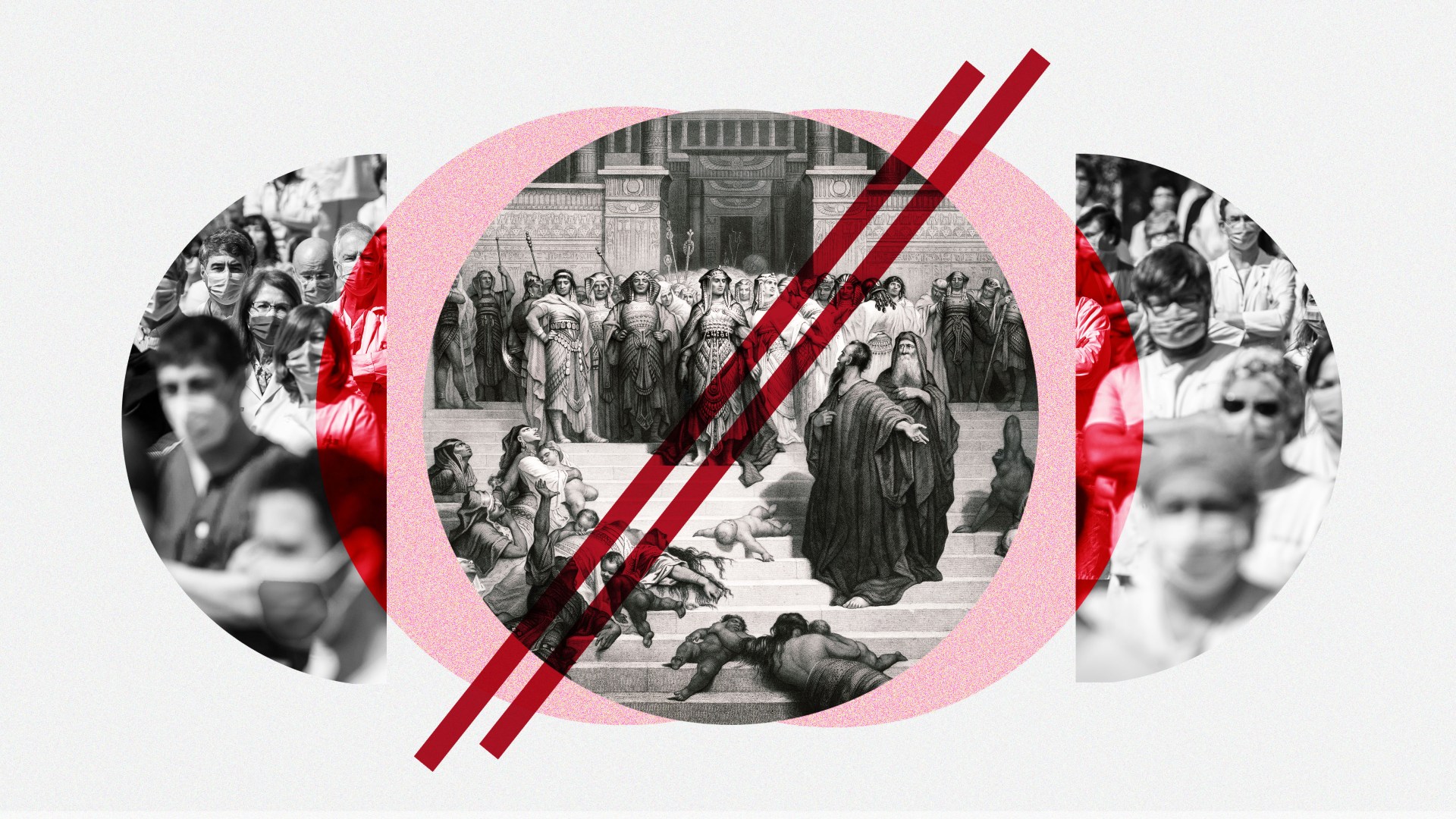
COVID-19 Is Not God’s Judgment

How we can know God isn’t acting now as he acted against Pharaoh.

Christianity Today April 21, 2020
Illustration by Mallory Rentsch / Source Images: Keith Lance / Getty Images / Manu Fernandez / AP Images

A prominent church where I live put up a billboard that drew citywide attention: “Is the coronavirus a judgment from God?” This is the most common question I’ve been asked since the pandemic began.

It’s easy to quote the Bible in support of such positions, from plagues in Egypt to the destruction of Jerusalem to the Book of Revelation’s prediction that the world will be judged with “pestilence.”

However, these are not those days. We can know this for two reasons.

First, biblical judgments through disease are supernatural in origin.

When God sent “boils” on Egypt, they broke out instantly “on man and beast” throughout the land. The “pestilence” of Revelation will come by one of the “four horsemen of the apocalypse,” not a wet market in Wuhan.

Everything scientists can tell us about COVID-19 is that the virus evolved from other viruses. It is natural, not supernatural. God did not cause this virus or the pandemic it has created. Like other natural diseases and disasters, it is a consequence of living in a fallen world.

Second, biblical judgments are against specific sins and sinners.

From Pharaoh’s obstinacy to Miriam’s racial prejudice to Herod’s prideful idolatry, divine judgments of the past and future come to those who refuse his word and will. Throughout Scripture and history, God deals with us as gently as he can or as harshly as he must.

No specific sins caused this virus. Nor are those who are afflicted with it more sinful than the rest of us. God loves the Chinese people just as much as he loves Italians, Koreans, and Americans. He loves the elderly and those with preexisting conditions just as much as he loves the young and the healthy.

One fact this pandemic emphasizes is that we are all part of one race—the human race. And we are all in this together.

While God did not cause this pandemic, neither has he left us to face it alone.

He is with health care workers as they risk their lives to care for patients. He is with grocery workers and delivery drivers as they serve those who can stay safely at home because of their sacrifice. He is with those who are now unemployed and those who would shelter at home if they had one.

He is with patients who suffer and families who grieve. As Jesus wept for Lazarus, so he weeps with us and for us.

And God is doing more than hurting with us—he is redeeming this tragedy in amazing ways.

We’re seeing an outpouring of financial generosity unprecedented in my lifetime. We’re watching churches and agencies that would never have cooperated two months ago working together to save lives. Millions of people around the world are sacrificing their incomes by staying home to protect people they don't know.

In the season of Passover, Jews around the world were thanking God for their deliverance from Egypt. When Ramadan begins next week, Muslims around the world will thank God for the Qur'an. Christians recently observed Good Friday and celebrated Easter as we thanked God for our Savior.

Our monotheistic faiths differ in foundational ways, but we share this belief in common: God is with us. As a song I learned in my childhood reminds us: He didn’t bring us this far to leave us.

Jim Denison is the founder of the Denison Forum.

Speaking Out is Christianity Today’s guest opinion column and (unlike an editorial) does not necessarily represent the opinion of the publication.

Theology

Prayer and Science Have Sparred Before, But It’s a False Dichotomy

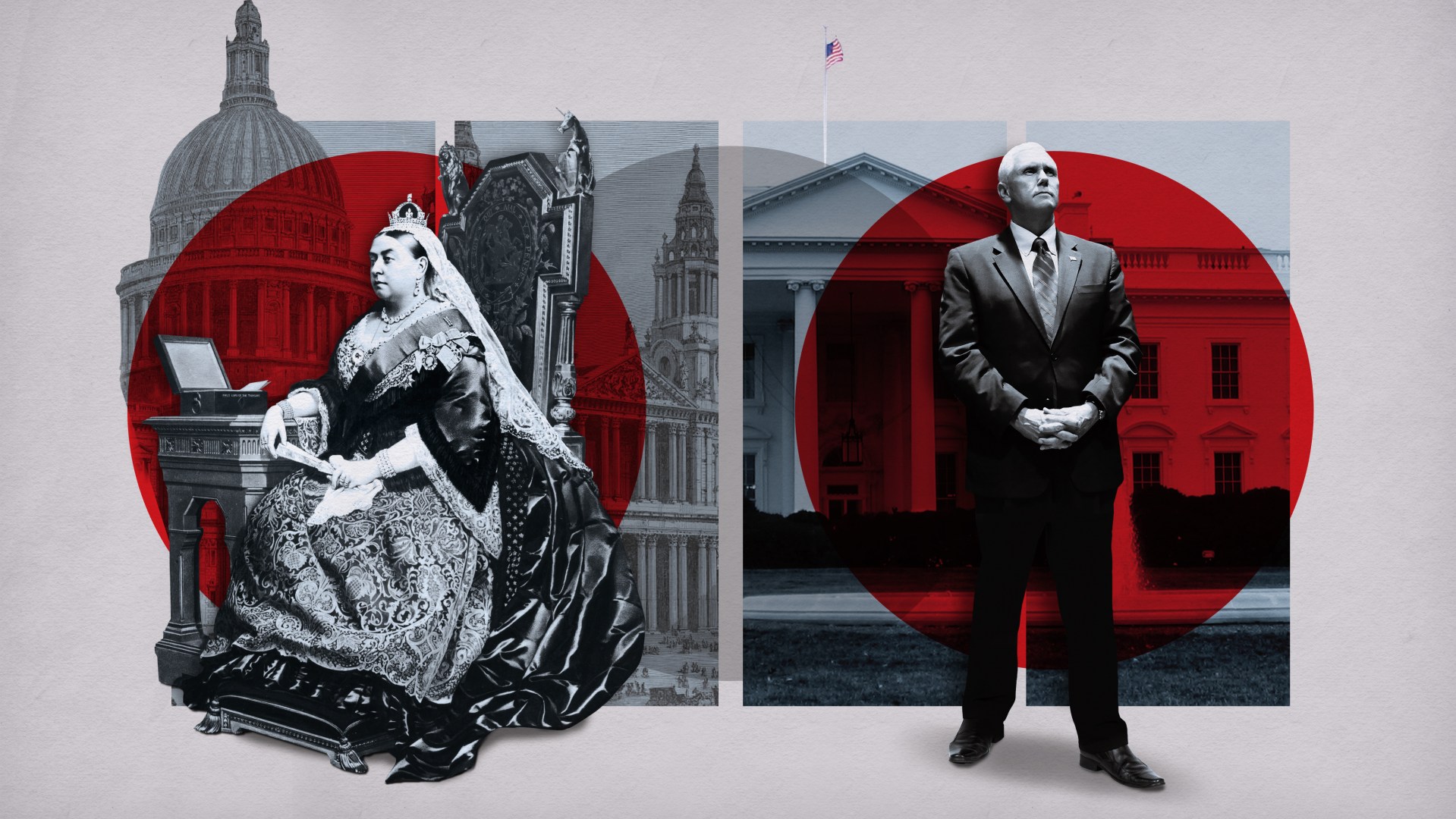
How Mike Pence and Queen Victoria both started intellectual debates over these avenues of healing.

Christianity Today April 21, 2020
Illustration by Rick Szuecs / Source images: Spencer Platt / Staff / Hulton Archive / Stringer / Getty / Cornell University Library / Юкатан / Public domain

Last month, Thomas Chatterton Williams, a contributing writer for The New York Times Magazine and Harper’s Magazine, tweeted an image of Vice President Mike Pence and the members of the Coronavirus Task Force praying in the White House. The simple photograph, originally uploaded to the White House Flickr account on Feb. 26, shows Pence sitting in a chair and bowing in prayer as at least 15 others in the room also pray. Williams seemed to be deeply troubled by the scene. “Mike Pence and his coronavirus emergency team praying for a solution,” he wrote. “We are so screwed.”

The tweet quickly garnered thousands of retweets. Initial criticism was mostly regarding the alleged lack of physicians or medical doctors in the photo. Others noted the few if any public health or policy experts. But ultimately the tweet devolved into a heated debate on social media about science, religion, and the efficacy of prayer. Astrophysicist and science educator Neil deGrasse Tyson, for instance, tweeted that the coronavirus crisis requires science, “not magical thinking.” Angela Rassmussen, a virologist at Columbia University, also criticized the prayer. “I have yet to attend a scientific meeting that begins in prayer,” she wrote.

These are just some examples of recent “prayer shaming,” a term describing the ridicule toward people who offer their “thoughts and prayers” for victims of tragedies. But they are also part of an old debate about the conflict between religion and science. A similar controversy raged on both sides of the Atlantic during the second half of the 19th century.

In the fall of 1871, the prince of Wales, Albert Edward, fell gravely ill from typhoid fever. The crown pleaded with British clergy to pray for the prince. They did, and amazingly the prince survived. Queen Victoria called for a service of thanksgiving at Westminster Abbey, inviting all clergymen but none of the leading figures of Victorian science.

This enraged the prominent Victorian physicist John Tyndall. Earlier, Tyndall had entered into debate with Oxford theologian James B. Mozley, who defended the evidential value of miracles in his 1865 Bampton Lectures, which were published in 1867. According to Mozley, the “laws of nature” should not undermine belief in miracles, for science rested on the accumulation of empirical evidence and was thus descriptive rather than prescriptive. The principle of induction was useful in gathering information but could not give us a definitive understanding of the natural world.

Tyndall responded to Mozley’s sermons by defending the principle of induction, arguing that it was the backbone of modern science. He maintained that nature had no gaps and that all apparent holes in our knowledge would eventually be filled. Looking at the history of science, he argued that before the scientific method was adopted, “unbridled imagination” caused “keen jurists and cultivated men” to commit atrocious deeds. Science had advanced because its theories and claims could be empirically tested.

After Queen Victoria’s slight, Tyndall published an article in 1872 titled “The ‘Prayer for the Sick’: Hints towards a Serious Attempt to Estimate Its Value.” He proposed an experiment suggested by Henry Thompson, a prominent British surgeon. “I propose to examine,” he wrote, “a means of demonstrating, in some tangible form, the efficacy of prayer.” One hospital ward should be set aside for patients suffering from diseases with known mortality rates, and should for three to five years be made the object of special prayers but not medical treatment. Supervised by “first rate physicians and surgeons,” the progress of these patients would be compared to the progress of patients who had not been prayed for but had been treated medically. Tyndall believed the experiment would demonstrate the superiority of the “scientific” method over spiritual healing.

Tyndall’s “prayer-gauge debate,” as it was called, incensed the religious community. Many theologians argued that Tyndall misunderstood not only the nature of God but also the true nature of prayer.

Some Christians were all too willing to accept the challenge, though—to downplay prayer. For them, the controversy served as a call to reinterpret prayer for a scientific age. These more theologically liberal thinkers strove to bring Christianity into alignment with modern thought. Liberal-leaning clergy supported Tyndall’s exclusion of the divine from the physical world and called on believers to rethink prayer as merely therapeutic in nature.

But the debate is actually much older than the 19th century. The prayer-gauge controversy reframed an older debate over miracles between Protestant and Catholics. The Protestant Reformation powerfully upended traditional understandings of miracles and prayer. According to Martin Luther, for instance, ecclesiastical miracles were “lying wonders” and “tom foolery.” John Calvin explained that one should not expect to see miracles in his day, for “we are not forging some new gospel, but are retaining that very gospel whose truth all the miracles that Jesus Christ and his disciples ever wrought serve to confirm.” In other words, the age of miracles was over. With the Incarnation, God no longer needed to intervene in nature. All alleged miracles were superstitions or diabolical perversions.

But if God no longer intervenes in the physical world, what becomes of prayer? Here, Protestant writers made a distinction between miracles as such and acts of providence. Miracles were dramatic and immediate. But in his providence, God acted through the natural order. The beauty, harmony, and order of nature testified to the power, wisdom, and goodness of God. Law governed the natural world, and God neither broke nor altered these laws.

But this focus on what came to be called “natural revelation” came with a cost. It ultimately helped transform godly natural philosophy (i.e., science) to naturalistic modern science and thus brought about the perception that science and religion are at war. Indeed, Tyndall and others had appropriated the Protestant critique against Roman Catholics and used it against all claims of the miraculous.

Perceptions of conflict between science and religion are one of the unintended consequences of the Protestant Reformation. While we cannot possibly settle the debate here, the history of theology offers us a more nuanced view of both how God works in creation and the nature of prayer, which I think are especially relevant in such a time as this.

Drawing on development over several centuries by theologians as they grappled with the Bible and their experience of the created world, some Christian thinkers have concluded that God’s usual way of acting in creation is concursus—that is, acting through and alongside the processes of creation that were all made through the Son. As the Heidelberg Catechism puts it:

God’s providence is His almighty and ever present power, whereby, as with His hand, He still upholds heaven and earth and all creatures, and so governs them that leaf and blade, rain and drought, fruitful and barren years, food and drink, health and sickness, riches and poverty, indeed, all things, come not by chance, but by His fatherly hand.

This view is at once more biblical and Christological than the sort of semi-deism that many 19th-century liberal theologians proposed. The Christian faith is not simply a set of personal values or spiritual preferences, but a claim about reality. As Paul put it in his letter to the church in Colossae, Christ is the one in, and through, and for whom all things were created (Col. 1:15–17). We live in a cosmos ordered and sustained by God and destined to be perfected according to his good purpose. All things, whether quarks, cells, organisms, stars, or galaxies, were made and are continuously sustained by God.

When it comes to explaining miracles (and divine answers to prayer), this view calls for multiple layers of explanation—scientific but also theological, among others—to fully capture the richness of God’s activity in creation. Scientific investigation helps us understand some of the “how” of God’s ways of working in and through creation, and the Bible and theology help us understand some of the “why” of God’s intentionality in creation.

In 1919, German theologian Friedrich Heiler defined prayer in six categories—asking for deliverance from misfortune and danger, liturgical or ritualistic prayers, and contemplative prayers, among others. But Heiler felt the highest form of prayer is speaking directly to God without formula or meditation. This is what he called “prophetic prayer,” following after the biblical prophets, in which no limitations are placed on method, location, or liturgical ranking. Prophetic prayer involves importunity, passionate pleading, lament, and even wrestling with God. As biblical scholar N. T. Wright recently observed in a Time magazine op-ed on the pandemic, lament does not always bring answers. But that is not the point. We lament because God also laments with us.

Prophetic prayer is both a gift and a task. Indeed, the whole ministry of Jesus exemplified the prayers of a prophet (Matt. 21:11, 46; Luke 7:16). In fact, a view of creation that affirms Christ’s role in creating and sustaining all things compels us to think about the world’s current meaning and structure, with clear ethical implications. What is creation telling us? While creation is no doubt good, it is also currently an embattled place. All creation is groaning (Rom. 8:22). It has been subjected to disorder. Knowing that Christ responded by intervening in creation to heal the sick, befriend those on the margins, and more, Christians are called to follow his example. Thus, prophetic prayer should be a call to action.

Prayer empowers us to work in the world for God’s glory. We pray not only for personal blessing but for the extension of God’s kingdom. The work of Christ through us does not extricate us from a damned world—it seeks to redeem it. We come before God as finite creatures who do not fully understand, who need the mind of Christ, the wisdom of God, and who rely on the Holy Spirit’s power. We are not in control. We’ve made remarkable scientific and technological advances, but a microscopic organism has unleashed a torrent of disruptions, closing cities and even entire countries. To pray in this time is what people of faith have always done when they face trials and tribulations—pray for wisdom and courage, acknowledging that God is ultimately in control, and that his grace is sufficient, made perfect in our weakness.

James C. Ungureanu is an intellectual historian with a particular interest in the history of Christian thought. He is currently historian in residence at the George L. Mosse Program in History at the University of Wisconsin–Madison. He is author of Science, Religion, and the Protestant Tradition: Retracing the History of Conflict (University of Pittsburgh Press).

Reply All

Responses to our March issue.

Source: Constantine Johnny / Moment / Getty

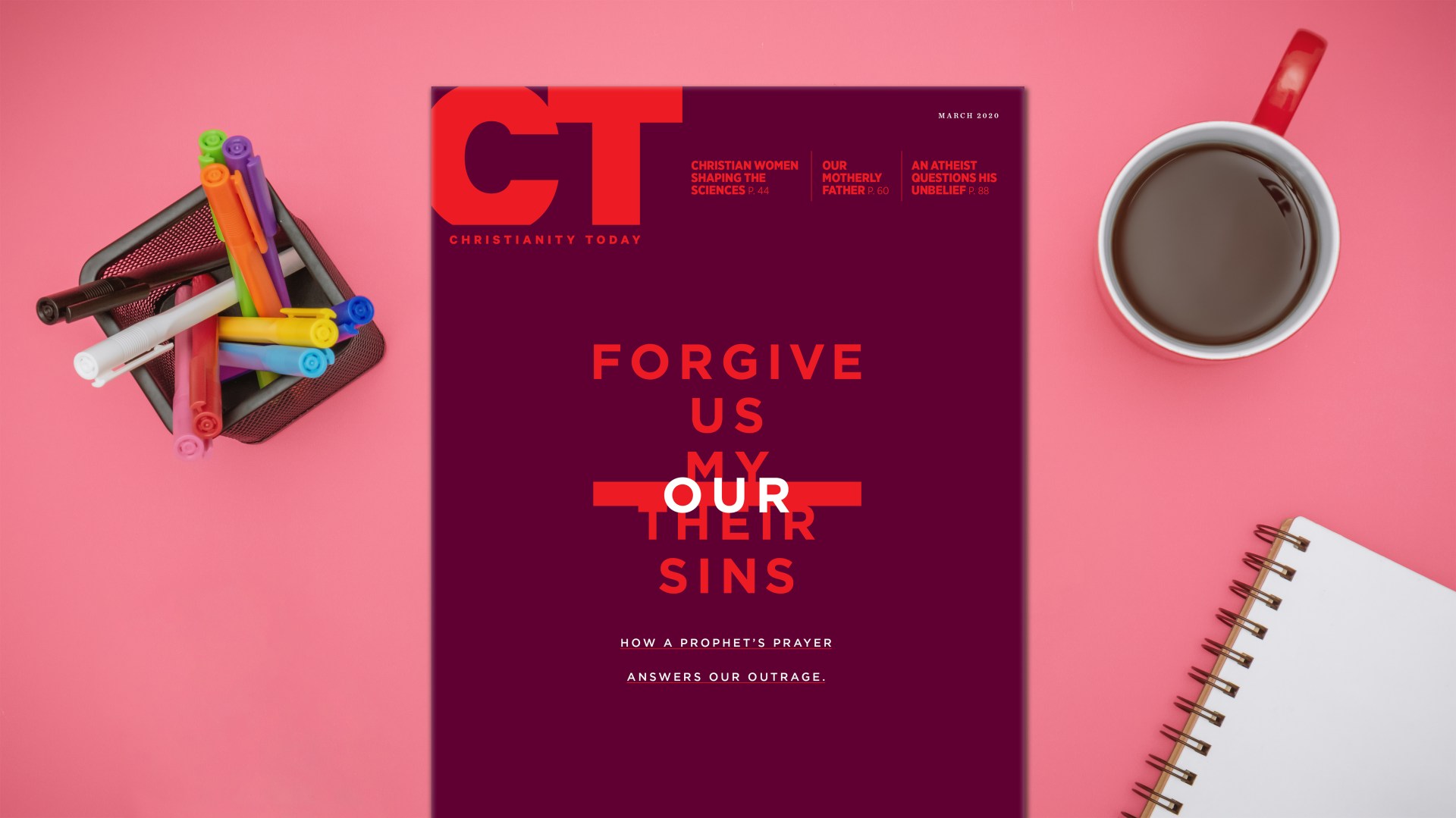
Forgive Us Our Sins (And Theirs, Too)

After the editorial against Trump, I was all set to drop my subscription to CT as an expression of my strong protest. Now, I just finished reading, cover to cover, the March 2020 CT and thought, “How can I, a sinner, condemn all the hard work of all those on the staff at CT who are doing their best to inspire, teach, and minster to us readers, when Jesus has forgiven my mistakes?”

Regis Hanna Newfoundland, PA

Since I discovered Daniel’s prayer in Chapter 9 about 60 years ago, it has been one of my favorite prayers in Scripture. The article was outstanding. But my real response is this: People, including Christians, are so judgmental. I can’t stand judgmental people … which, of course, makes me one. “Who will deliver me from this body of death? Thanks be to God through Jesus Christ our Lord! So then, I myself serve the law of God with my mind, but with my flesh I serve the law of sin” (Rom. 7:24–25).

Rev. Ken McGarvey Loudon, TN

Us Vs. Us

In our work consulting churches, we have seen a growing increase of disrespect among believers. The influence from our world is subtle and divisive. Thank you for your delicate and thoughtful words.

Kent Hunter Corunna, IN

Why German Evangelicals Are Praising God in English

It should be pointed out that most evangelical/charismatic churches still sing in German, with maybe one or two English-lyric songs included in the worship lineup. Hannah Fischer’s assertion that she finds it “awkward … to be a Christian here. … and I could never praise God like that in my language,” is not the case for most young Germans who do worship and praise God in their mother tongue.

Paul Clark Lindau, Germany

If your church is an international, urban, hipster church, singing in English is self-evident. But I also understand that many of the older generation, who don’t speak English, are excluded from worship. Just imagine if you would be stopped singing God’s praise in your mother tongue and would have to sing in German or French for the rest of your life.

Sabine Müller (Facebook)

Perhaps if I belonged to a majority culture, I would willingly embrace putting aside my language in order to worship more “freely” in English. But globalization tends to obliterate the unique characteristics of churches in other cultures as succeeding generations embrace American Christianity as normative and set aside their language and customs. Someone who speaks and worships in an endangered language as I do (Western Armenian) must confront this onslaught on a daily basis. What if your aim is to equip your church to reach your own community in its own language, and all anyone wants to do is worship in English?

Nishan Bakalian Beirut, Lebanon

Despite a Murder and Visa Denials, Christians Persevere in Turkey

Jung’s statement of forgiving her husband’s murderer brought tears to my eyes. How Christians are responding is truly amazing!

Warren Larson Vancouver, British Columbia, Canada

Twelve Women in Science You Should Know

As a new subscriber to CT, I have been pleased to discover topics and articles beyond my expectations. Particularly so with the this one. My own daughter holds a PhD in high-energy particle physics, and I am always impressed and amazed by the women of science that encompass that community. Rebecca Randall presented these women of faith and knowledge exceptionally well.

Jan Kennedy Lithopolis, OH

Why Do Fewer Christian Women Work in Science?

Women remain uniquely equipped and overwhelmingly inclined to fill the role of bearing and nurturing the next generation. It is obvious why most women opt for careers that are more flexible and less demanding. Boys are the ones in trouble. They are less likely to finish school or to complete college. They are more inclined to abuse substances and to be incarcerated. Let’s stop demanding contrived 50/50 gender parity in all occupations. Why not celebrate the fact that women have the freedom to choose careers based on inclination rather than emulation of men?

Jennifer L. Edminster Colbert, WA

Democratic Christians Weigh Their Primary Concerns

It’s about time to push right-wing (or right-leaning), mainly Republican Christians to realize there is more than a single “Christian” viewpoint or set of priorities politically.

Howard Pepper Escondido, CA

I Assumed Science Had All the Answers. Then I Started Asking Inconvenient Questions.

Wow. The gospel is so powerful, so compelling … we must not grow weary in presenting it, even to the confident (by all appearances) skeptic.

@JeffTaylor1964

Corrections: In March’s magazine, part of the Jewish Shema was omitted in “The Most Important Thing” on page 30. It includes, “Hear, O Israel: The Lord our God, the Lord is one.”

Also, some text from the beginning of “The Democratic Christians’ Primary Concerns” on page 55 was duplicated at the top of page 56.

Ideas

Now Is the Time to Think About Nuclear Weapons

Pope Francis condemns deterrence and the New START Treaty is set to expire. Where should Protestants stand?

Christianity Today April 21, 2020
Illustration by Mallory Rentsch / Source Images: Kevin Laminto / Unsplash / Wikimedia Commons

Christians need to reexamine the issue of nuclear weapons. Most of us probably haven’t thought about it recently. With everything else going on, it’s not top of mind. But now is the time to reconsider seriously the moral challenge of nuclear weapons in the modern world.

Pope Benedict raised the issue in 2006. Pope Francis raised it again in 2017 with a condemnation of the threat of nuclear deterrence. Many Christians—including previous popes—have said that in the moral calculations of war, threatening to use these weapons in order to stop other people from using them was justified. Now the Roman Catholic Church disagrees, and Pope Francis says a threat “is to be firmly condemned.”

There is also renewed debate over a comprehensive ban on all nuclear weapons. Eighty-one countries have signed on to the Treaty on the Prohibition of Nuclear Weapons, sometimes called the Ban Treaty. A debate about it was set to take place in New York City this month, but it has been delayed one year due to concerns about COVID-19.

At the same time, the New START Treaty between the US and Russia is set to expire. This treaty—the descendant of the agreement first proposed by President Ronald Reagan and signed by President George H. W. Bush—has continued important historic efforts to put real restraints on nuclear weapons. If it sunsets in February 2021, there will be no constraints at all on nuclear weapons for the first time in half a century. President Donald Trump and President Vladimir Putin can extend the treaty for five years, but so far it’s not clear that they will, although the ball appears to be in Trump’s court.

These three things should compel Christians to take up the moral challenge of nuclear weapons. It’s time for Christians, particularly in America, to think deeply about our stance on the issue.

How Christians have thought about nukes

Protestants have never had one view on nuclear weapons. Perhaps the most incisive moral thinkers from the mainline churches were Paul Tillich and Reinhold Niebuhr. Their observation of war and the Holocaust, combined with their beliefs about the reality of sin and evil, led them to argue that nuclear weapons were necessary. Nuclear deterrence was acceptable, they said, at least in the current global conditions. Their view was never unanimous, though.

Evangelicals have been espcially divided. They are “the great undecided group,” according to a National Association of Evangelicals (NAE) report in 1983.

The NAE, however, has advocated for nuclear nonproliferation treaties, and Christianity Today has long argued for a “carefully phased negotiation process—ultimately to encompass all nations, and aiming first at the reduction and then at the repudiation of all weapons.”

The Catholic Church, in contrast, can speak with an official voice and has a great body of thought on the moral questions of war. Back in the fifth century, Augustine of Hippo formulated the theory of “Just War,” which was further developed by Thomas Aquinas in the 13th century. The official teaching says a war is just if it is under the auspices of a proper authority and has a just purpose. Peace must be a central motive, even during violence. The theology allows for the prohibitions of particular weapons. There was a papal proclamation against crossbows in medieval times, for example.

Most Catholic thinkers have not opposed nuclear weapons in and of themselves, though. In 1982, Pope John Paul II said that nuclear deterrence is “morally acceptable,” provided it is a provisional measure “on the way to progressive disarmament.” The current pope has said the conditions that would make nuclear weapons morally acceptable are no longer being met. Pope Francis condemned nuclear weapons unilaterally, saying “the threat of their use, as well as their very possession, is to be firmly condemned.” He reiterated this statement in a visit to Hiroshima and Nagasaki in 2019.

This creates a dilemma for devout Catholics in the armed forces or who are associated with national defense in the private sector. Can they continue in good conscience?

Protestants appear to have paid little attention to this dramatic change in Catholic thinking, but we would do well to think about this moral challenge to nuclear weapons.

New push for a new treaty

The second challenge to rethink nuclear weapons and nuclear deterrence comes from the new treaty proposing a comprehensive prohibition on all nuclear weapons and their delivery systems. A group of 122 countries put forward the Treaty on the Prohibition of Nuclear Weapons at the United Nations in 2017. It now has about 81 signatures and 36 ratifications and would go into effect, for parties to the treaty, when it has been ratified by 50 countries. Of course, it would place no legal obligations on nations that have not signed on to the treaty.

Treaty advocates have generally not used religious or overtly moral arguments in its justification. Rather, they have appealed to “Humanitarian Law” and the Geneva Conventions of 1949 and 1977. The conventions say that military responses must be proportional and should make every effort to distinguish between combatants and non-combatants. Both are difficult to impossible with nuclear weapons.

The treaty’s advocates have also pointed out that under some scenarios, nuclear war could produce a “nuclear winter,” resulting in a decrease in temperatures that could have a devastating effect on world agriculture.

There are some strong objections to the ban treaty, though. It lacks definitions, elimination procedures, and any regimen for verification. It is also strongly opposed by states that actually possess nuclear weapons, so it is difficult to see how it will have any real impact.

The New START Treaty, on the other hand, has placed constraints on nuclear weapons and continues the work of its predecessor agreements that resulted in significant reductions. There are still about 15,000 nuclear weapons in the world, though, which is a lot. An extension of this treaty is top priority for the arms control community and has been backed by some Christian groups, including the NAE.

Starting proposals for Christians to support

These discussions ought to push us to think about the morality of nuclear weapons and defense policy. Sincere Christians will differ on how to deal with all these high-stakes dilemmas. Perhaps agreement could be found on certain modest near-term policies and actions.

I want to propose five points of agreement as a starting place. Christians should:

  • Support the extension of the New START Treaty while seeking more ambitious measures to succeed it.
  • Press for substantial reductions in the numbers of nuclear weapons—especially in the US and Russia.
  • Ask presidential and congressional candidates where they stand on nuclear weapons and have them explain what realistic plans they have for dealing with proliferation.
  • Support nonproliferation efforts to prevent the further spread of nuclear weapons to additional countries or non-state actors.
  • Support efforts to resolve serious regional issues that involve nuclear weapons—in particular, issues in the Middle East, South Asia, and the Korean Peninsula.

There will be no sudden leap to a world free of nuclear weapons. Nor does the current status quo seem sustainable. It’s up to us, then, to do something. With the moral challenge of the pope’s statements, the push for the ban treaty, and the deadline for extending New START, Christians should take this moment to engage the problem of nuclear weapons, to think seriously about what can be done.

Edward Ifft is a distinguished visiting fellow at the Hoover Institution, Stanford University. A retired State Department official, he has more than 40 years of experience negotiating and implementing nuclear arms control agreements.

"Speaking Out" is Christianity Today's guest opinion column and (unlike an editorial) does not necessarily represent the opinion of the publication.

Theology

Surviving COVID-19 in Spain Changed My Faith

Six lessons for churches from the president of the Spanish Evangelical Alliance.

Christianity Today April 21, 2020
Illustration by Mallory Rentsch / Source Images: Courtesy of Iglesia Buenas Noticias Lugo / Wikimedia Commons/ De an Sun / Unsplash

Spain is going through the worst crisis we can remember since our country became a modern democracy 40 years ago. The new coronavirus has killed more than 21,000 people and infected at least 200,000.

Our evangelical congregations have not been spared in this pandemic, and I am among those who were hospitalized with COVID-19.

I pastor a church of 350 people in a small city on the Atlantic coast. I also serve as a national leader of my denomination and as the president of the Spanish Evangelical Alliance. But I was stopped in my tracks after I was infected.

After 21 days of fighting the disease both at home and in the hospital, I received a medical discharge. I was thankful and full of joy; I was also very conscious that others, even younger and healthier than me, had lost their lives.

As a country, we are still suffering as we walk toward an uncertain future. In my own family, people are still fighting the virus—including my wife and my mother-in-law. But here are six lessons based on our experience in Spain so far of striving to love God and neighbor well amid a pandemic.

1. Let’s remember we are not invincible.

The first conclusion is for those who, like me, are in Christian leadership. The obvious lesson as I was recovering was to remember that I am not superhuman. As pastors, we live in the same world as everyone else, with the same conflicts and risks. We are vulnerable—and this is precisely what qualifies us for leadership.

The leadership by those who seem alien to suffering will never produce disciples but only admirers. My time of suffering and fighting against the illness has reminded me once again that the Father already sent a Savior—and it is not me.

Falling ill also showed me afresh the importance of belonging to a community. As people learned about my infection, there was an immediate reaction of prayer in my local church, in churches across Spain, and even in other parts of the world. Friends and people I hadn’t met before sent messages of support and prayers of faith and love. All of these were doses of encouragement in my most difficult hours.

In those days, I was able to confirm the truth of the Word that we are a body—one body. We have a common faith and we are a family. All this is not something abstract on paper or a theory we will see someday in the future, but a palpable reality now. This is what sustains those of us who are suffering.

2. Let’s reexamine our own lives.

When you are involved in a church that is growing in numbers, with social projects, church planting, etc., unexpected illness comes as a sudden, unwanted pause to many things.

Initially it is a shock, and later come the phases of anger, bargaining, and, finally, acceptance. Illness leads to a personal process that, if everything goes well, can last for hours or days.

At the beginning, I had doubts about the purpose of my suffering through COVID-19. But after I accepted my situation, I gained two insights.

The first was how God has cared for and still cares about me. In the days when I was severely ill, I had to consider death a possible reality. How would I evaluate my life? In the area of ministry and profession, I was at peace; I had done what I had been able to in the time God had given me. But sorrow appeared as I thought of my children. Would I be able to see how they reach their own dreams and goals? Even so, there was the quiet peace of knowing that God would care for my wife and my sons if I died.

The second was identifying with the pain of so many people who are going through the same suffering. It is invaluable what illness can bring to your soul if you are ready to let God expand your heart in the process. I firmly believe that God is powerful enough to heal me, just as he was powerful enough to save me. And I do not believe illness is a punishment sent by God. But as I waited in faith for his healing—directly or through medical means—I could better understand that others were suffering as well. I could sympathize with them, and I realized that God continued to be Lord, no matter what was going to happen to me.

3. Let’s not toy with triumphalist theologies.

If my platform can be used for something, I hope it is at least to ask our Christian brothers and sisters in the Americas to learn from our mistakes in Europe. Sadly the United States is already living the reality of this pandemic, and I hope our beloved countries in Latin America keep and broaden the measures that have been put in place.

We saw the crisis in China and we said, “This is in China; it is far away,” and we did not prepare. Then it was in Italy and we said, “It is in Italy; it will not come to Spain.” In fact, some soccer fans even traveled to the worst infected area of the neighboring nation to attend a Champions League game. (The competition was later suspended and is now irrelevant.)

Days later, COVID-19 landed in Madrid, and those of us who live in other parts of Spain once again said, “That is in the capital; we are safe,” and we were not prudent. Finally it arrived in our city and among our own families. We were slow to react, and we paid the consequences. Please, learn from our mistakes and take this pandemic very seriously.

Churches have a fundamental role to play in responding with wisdom to this crisis. The problem we are witnessing is a weak theology that teaches caution conflicts with faith—a triumphalist theology that claims we are immune to the virus because of our faith. From this flows ideas such as Christians not having to obey the guidelines of the authorities because God will protect us. This is a gross mistake, and it will have disastrous consequences. The pastors who preach these things will have to give an account to God and to men for their teachings.

4. Let’s accompany those who mourn.

In Spain, we have seen hundreds of health care centers overwhelmed with what medical and military personnel describe as an “environment of war.” Christian doctors and nurses told us about how they cried as they arrived home after long working days. There have not been enough staff, not enough protective equipment, not enough ICU beds, and more. And they are aware of the severe emotional impact this pandemic will have on our society in the years to come.

In our churches, we have also had to hastily say final goodbyes to many believers. Most of those who have gone to glory in the past few weeks were parents and grandparents of a generation that fought to build our evangelical communities. Many died alone in a hospital room, saying goodbye to their loved ones by phone. Although we have a shared hope that goes beyond death, the way they left us still leaves wounds.

We have to re-learn to accompany people in their process of mourning, Christians and otherwise. The health authorities are asking families to authorize the incineration of their relatives. A phone call gives instructions about how to pick up the ashes and the death report. It is as if the victims of COVID-19 have suddenly just disappeared from our lives.

Many who were not allowed to be with their loved ones in their final moments will have to deal with feelings of guilt and anger. Tens of thousands will never see the body of their loved ones, not even the coffin. Families will not be able to fit their loss—the absence—into concrete form.

How do we express mourning without a funeral rite or a ceremony? We have to equip people to express grief at a distance. Our evangelical alliance is already working on a guide to mourning in these strange times.

5. Let’s return to the essentials, starting with community.

Activities that bring people together in physical spaces have been banned across Europe, and there is not a clear timeline for when governments will allow worship places to resume their activities.

This tests our way of being the church. Churches that already had a good structure for small groups will better preserve a sense of community—as well as pastoral care and mission work—in this time of crisis. And, of course, the technologies and communication systems available on the internet are a blessing.

But Christian leaders have to use this crisis to rethink church from a communal point of view. The center is not the worship service, or the Sunday gathering, but Christ. Once this crisis ends, it will be important to return to a cellular structure for church that emphasizes personal commitment and puts an end to the religious consumerism of recent decades.

The priorities that emerge now are clear. First, in the words of Galatians 6:10, we need to “do good to all people, especially to those who belong to the family of believers.” We need to be very watchful to make sure that no brother or sister suffers financially, emotionally, or socially. After that, we should also broaden this concern to the neighborhoods and cities we live in.

This is also a time to maintain our pastoral work in every area, including the care of children, youth, marriages, and our common worship. In our local church, we celebrated Easter Sunday at a distance with #santacenaibnlugo: All of us took part in the Lord’s Supper from our homes and shared photos using that hashtag.

We have always preached that a church is not a building or a place but a people. COVID-19 will be the crucible to test this assertion, our theology, and our church structures.

6. Let’s be alive and active churches, more than ever before.

We live in a broken world in need of Christians who accept the call to be light and salt. This is how, through our witness, many will be able to give glory to God.

Allow me to end with an example of the church I lead. Ours is not a very big congregation, and we are in a rural city of about 100,000 inhabitants. We could think that we are weak and small in the face of this pandemic. And the crisis has also considerably reduced the financial income of our church.

Nevertheless, we have been able to increase our social aid to alleviate the effects of the crisis among neighboring families. We try to apply Mathew 5:16, which says, “Let your light shine before others, that they may see your good deeds and glorify your Father in heaven.”

In our case, this has meant developing an action plan with three facets. The first is emergency help, providing financial assistance to the most vulnerable families. The second is a food distribution program. We deliver 3 tons of fresh produce every 15 days and will deliver 72 tons of nonperishable food in the days to come. Thanks to our network built over the past few years, we are now reaching 900 families—or about 3,000 people—with this help.

The third is a new line of ministry we’ve started relating to health supplies. This is possible thanks to nine members of our local church who sew hospital gowns, shoe covers, and caps. They do it with a raw material that is easy to find: plastic bags.

We have already given some of these to health centers and nursing homes, where they were much needed. The reaction in the local media has been significant from the beginning, and that has led to an increase in the number of orders. Medical staff and nurses have expressed their gratitude and congratulations for the quality of the work. We expect to make more than 2,000 each of gowns, caps, and shoe covers in the coming weeks.

We will end this program when resources promised by the government arrive to these places. But meanwhile, we will continue serving our community.

It is true that we are confined—but the Holy Spirit is not confined. And as Christians, we continue to be part of the life of society around us amid this crisis. It is time to show that “the church is alive and active.” This motto of our church will keep our members focused in the weeks to come. I pray it can inspire yours also.

Marcos Zapata is pastor of Iglesia Buenas Noticias (Good News Church) in Lugo, Spain, and serves as president of the Spanish Evangelical Alliance.

Editor’s note: Want to read or share this article in Spanish, Portuguese, French, Italian, Chinese (Simplified or Traditional), Korean, or Indonesian? Now you can!

For translations of other select CT coronavirus articles, click here and look for the yellow links.

News

Texas Man Dreams of Tallest Cross

Six have claimed US title in last 30 years.

Source: Jon Paciaroni / Moment / Getty

Rick Milby has visions of a cross 230 feet tall. It will rise up higher than the nearby Abundant Life Fellowship Church, where Milby was the pastor for more than 30 years. If the church had a steeple, it would rise higher than that too. It will rise above the nearby houses, trees, and factories on the flat Texas landscape, visible from the cars speeding by on Interstate 37. It will rise so high up off the coast of the Gulf of Mexico that airplanes will have to fly around it.

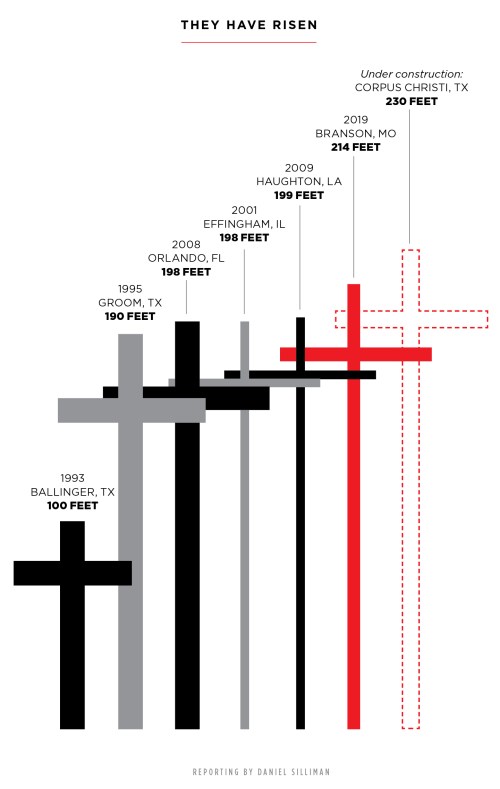
The Corpus Christi cross was supposed to be finished this summer, before funding delays set back the completion date. When it’s finished, though, it will be the seventh structure to claim the title of “tallest cross in America” in the past 30 years.

Milby thinks it’s pretty obvious why someone would want to build the tallest cross in the country. “We’re hoping to convert people and encourage Christians,” Milby told Christianity Today. “People will come from all around to see it, and we’ll baptize them that day.”

Also, things have a way of escalating. Milby’s cross, for example, wasn’t first conceived as the largest in the country. It was just gong to be a large cross.

He was taking the church staff on a retreat in Galveston, and they drove by a cross. The idea grabbed Milby and, after the retreat, the church staff looked into the possibility of constructing their own. They found they’d have to get special permission from the Federal Aviation Administration.

They wrote to request a variance and were told they could receive permission for a cross up to 230 feet. That was 40 feet taller than the “Titanic Texas Tribute” cross in Groom, Texas, and 32 feet taller than the Effingham, Illinois, cross that Roadside America calls “America’s largest cross.” It was 16 feet taller than the cross in Branson, Missouri, which was still under construction at the time.

The group started planning for the tallest cross they could build, and wound up planning for the tallest in the country. “We just felt that was God opening that door,” Milby said. “We’re going to do it.”

The ministry—now independent from the church—acquired an acre and a quarter of land and started raising money. Then the project grew in other ways.

“People keep bringing up things,” Milby said, “and we keep saying yes.”

Current plans include a life-size replica of the Garden of Gethsemane and the tomb where Christ was laid after his crucifixion. There will be a baptismal pool and a place to pray. Organizers considered building a wedding venue but nixed the idea so they wouldn’t have to host same-sex marriage services. Milby thinks the final plans will involve a life-size nativity scene with a sound system playing hymns.

The 71-year-old former pastor doesn’t know when the project might be finished, but he’s laid the foundation with 870 tons of concrete. He’s raised about $250,000, and he has the schematics for the cross, made out of five sections of steel. He can see how it will stand when it’s done: a 230 feet witness to the saving power of the death of Jesus and a claim to the title of tallest cross in America.

Apple PodcastsDown ArrowDown ArrowDown Arrowarrow_left_altLeft ArrowLeft ArrowRight ArrowRight ArrowRight Arrowarrow_up_altUp ArrowUp ArrowAvailable at Amazoncaret-downCloseCloseEmailEmailExpandExpandExternalExternalFacebookfacebook-squareGiftGiftGooglegoogleGoogle KeephamburgerInstagraminstagram-squareLinkLinklinkedin-squareListenListenListenChristianity TodayCT Creative Studio Logologo_orgMegaphoneMenuMenupausePinterestPlayPlayPocketPodcastRSSRSSSaveSaveSaveSearchSearchsearchSpotifyStitcherTelegramTable of ContentsTable of Contentstwitter-squareWhatsAppXYouTubeYouTube