









News

Big CT Stories of 2024

Ten of our most-read articles this year.

CT Top Stories
Christianity Today December 20, 2024
Illustration by Christianity Today

How do you sum up an entire year? Here at CT, we’re taking a stab at it by revisiting our most-read pieces from 2024.

Readership, of course, is only one measure of an article’s import, success, and value. If you browse our other end-of-year listicles, you’ll find we’re also curating stories by genre (like book reviews), medium (like essays from our print magazine), topic (like archeological discoveries, a perennial favorite), location (like stories from Asia and Latin America), and other criteria.

But readership is telling, too, particularly when the readers in question are those of Christianity Today: Our most-trafficked articles each year offer a snapshot of the interests, hopes, and fears of evangelicals in America and around the world. Below, presented in order of publication, find ten of our most-read articles of 2024. 

Thanks for reading Christianity Today in 2024. If you’re not already a subscriber, check out our membership options here.
Church Life

CT’s Most Memorable Print Pieces from 2024

We hope these articles will delight you anew—whether you thumb through your stack of CT print magazines or revisit each online.

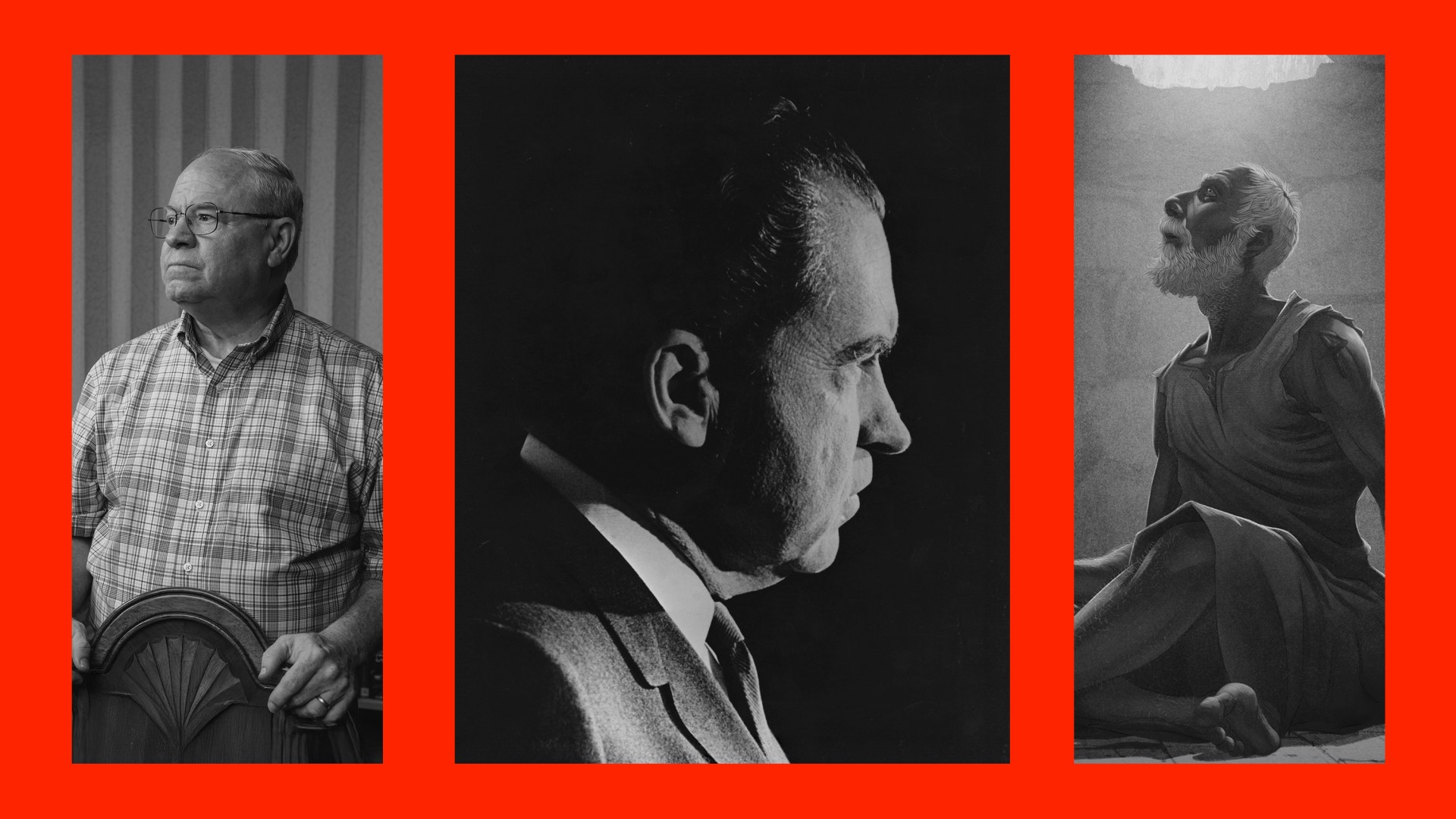
Top print stories featuring a photo of president Richard Nixon, a pastor-lawyer named Keith Boyette, and an illustration of Paul, the Apostle
Christianity Today December 20, 2024
Illustration by Christianity Today

There’s something unmistakable about cracking open the spine of a new book or getting a whiff of that library-stack smell. Sitting with printed words invites readers to slow down—to savor and delight in ideas, reporting, arguments, and well-wrought turns of phrase. While digital information snowballs, the printed page invites us into a curated conversation through both content and form.

In our print pieces at Christianity Today, we’re always on the lookout for fantastic writing that is full of rich theological content, in-depth reporting, and carefully argued ideas—all in service to Christ and his kingdom.

The 10 pieces below (presented in order of publication) are ones our editors labored over and lingered over. We hope these articles will delight you anew—whether you thumb through your stack of CT print magazines or revisit each online.

We’d love for you to read more thoughtful CT articles this coming year. Subscribe now to Christianity Today.

Ideas

Christianity Today Stories You May Have Missed in 2024

From an elder in space to reflections on doubt, friendship, and miscarriage.

Top stories you missed featuring a man passing out hymnals, a woman in front of Chinatown, and an astronaut
Christianity Today December 20, 2024
Illustration by Christianity Today

Some of the stories we publish at Christianity Today are “clicky.” They’re news reports about well-known people or organizations. They’re opinion pieces with provocative titles. They’re movie reviews of the year’s biggest films.

But some of our most compelling, important, and inspiring stories are not clicky. They are reported from lesser-known places—lesser-known, at least, for a segment of our Western audience. They make nuanced arguments that aren’t easily captured in headlines. They have wonderful details and sharp sentences. But you won’t know that until after you click.

Here are 15 of those kinds of stories from this year. You’ll find Kenyan Christians eating fish and playing hymns and learning Chinese to evangelize their neighbors. You’ll learn about the ministries trying to stop exploitative cyberscamming around the world. You’ll be encouraged by an important birthday call from the International Space Station.

You’ll read reflections on doubt and scarcity and fracture and repair. And you’ll encounter some of those sharp sentences. Some of my favorites, from the final essay on this list: “I reached for my Bible and ran my fingers over the puckered pages. To whom else could I go? The Lord has the words of eternal life, and I’m a complete sucker for him.”

Thanks for reading Christianity Today in 2024. If you’re not already a subscriber, check out our membership options here.

News

Praise and Persecution: 15 stories of Latin America in 2024

News about Christian music and the difficult relationship between some governments and the church were covered in CT’s most-read articles about the continent.

15 Latin America stories featuring a man walking through a flood, men holding a flag, and a immigrant woman
Christianity Today December 20, 2024
Illustration by Christianity Today

What is it like to live in a country where celebrations like Christmas and Holy Week have been abolished by law?

This is the reality in Uruguay, a nation of 10 million people, often regarded as the most secularized country in the Americas. Just north of Uruguay, Brazil offers a contrasting landscape—evangelicals are on the rise, and Christian music ranks among the most-streamed genres on digital platforms.  

Contrasts and inequalities define Latin America, a theme reflected in this selection of 15 of the most-read reports about the region published by CT over the year.

Thank you for reading stories by Christianity Today’s global team in 2024. We regularly translate our work into more than half a dozen languages. Learn more here.

News

Christianity Today’s Top News Stories of 2024

From pastors ministering among gang violence in Haiti to polarization in American pews, we rank the biggest developments over the past year.

Top news stories featuring campaign signs, a political gathering, and a church gathering
Christianity Today December 20, 2024
Illustration by Christianty Today

We could tell by the calendar that 2024 was going to be a big year. We had a US presidential election, the Olympic Games, the launch of a new denomination, and a total solar eclipse. But plenty of the year’s top stories surprised us: a record-breaking hurricane ripping through Georgia and the Carolinas, a spurt of pastor scandals involving big names in Dallas, and bleak investigative reports involving some of the biggest denominations in the world. 

The news team looked back at stories on megachurches and Methodists, athletes and assassination attempts, Haitian gangs and Gazan families, and ranked the developments we saw as the most significant for evangelicals and the church. 

12. Violence in Haiti

Haitian pastors minister amid the escalating gang violence, deaths, civil unrest, and displacements that have uprooted their country. The evangelical president of Kenya deployed police and prayer to help.

11. Total Solar Eclipse

Christians came together to witness a total eclipse and celebrate this weird wonder of creation. Churches in the path of totality hosted scores of events—some with moon pies decorated with the promise of John 8:12, “Whoever follows me will never walk in darkness.” While the blacked-out sun turned some believers’ thoughts to apocalyptic portents, other Christians drew lessons about the light shining in the darkness

10. Israel-Hamas War

The war in Gaza stretched into a second year, and evangelicals in the region struggled to be peacemakers amid the devastation. Many Israelis and Palestinians didn’t want to hear messages of peace, and those who preached peace couldn’t agree on what peace should mean in Israel. But Bible scholars worked to model good conversations. And Christians worked to find ways to love their neighbors—displaced Palestinians, displaced Israelis, and people on the border of Israel and Lebanon.

9. Federal Investigation of the SBC

The Department of Justice issued its first indictment in a years-long inquiry into abuse response within the Southern Baptist Convention (SBC), charging a former Southwestern Seminary professor with misleading investigators. The SBC is selling its Nashville headquarters after spending $12 million in legal fees related to its own abuse investigation.

8. Hurricane Helene 

Hurricane Helene devastated the Southeastern United States in September, hitting the mountains of Western North Carolina particularly hard. Christian disaster organizations like Samaritan’s Purse that normally work overseas responded to what they saw as an unprecedented sweep of destruction in the area. When Asheville, North Carolina, had no clean water for weeks and weeks after the storm, Christian clean-water organizations brought in tanks of drinking water, technical expertise for wells, and treatment systems for public schools to reopen. 

7. Summer Olympic Games

The Paris Olympics were a ratings success, drawing massive viewership compared to the previous summer Olympics. CT highlighted 28 Christian athletes from all over the world to watch at the games (including an interview with gold-medalist wrestler Kyle Snyder). Some highlights from the games included the Fijian Olympic team singing hymns together, a Brazilian skateboarder using sign language to share John 14:6, and a German shot-putter singing a gospel song after winning gold. 

6. Church of England Scandals

The Church of England was roiled by evangelical abuse scandals. An independent investigation found that more than a dozen ministers knew for decades that an evangelical lay leader violently beat boys at a school and summer camp, but they failed to report it to authorities. Justin Welby, already dealing with controversy over statements about same-sex relationships, became the first Anglican archbishop to resign. In a separate case, an 81-year-old evangelical priest was charged with eight counts of indecent assault.

5. Legal Issues Around Abortion and IVF

Two years after the reversal of Roe v. Wade, Americans continued to see the legal landscape shift around abortion and assisted reproduction. Florida, South Dakota, and Nebraska became the first states to vote against statewide protections for abortion. Alabama ruled that embryos stored for in vitro fertilization count as children under the law, based on its constitutional protections for the unborn.

4. The Founding of the Global Methodist Church

Hundreds gathered in Costa Rica this year to found a new denomination with prayers, tears, and debates about dancing bishops. The Global Methodist Church gives traditionalists a fresh start, thanks in part to Keith Boyette, the pastor-lawyer who helped them find their way out of the United Methodist Church. The new denomination appears to be part of a surge of interest in Wesleyan renewal. As one seminary professor noted, “Wesley is fire now.

3. Megachurch Scandals in Dallas

The sudden resignation of pastor and best-selling author Tony Evans from his megachurch was the beginning of a summer of at least eight megachurch pastor resignations in the Dallas–Fort Worth area. Robert Morris, the founder of Gateway Church, one of the largest megachurches in the country, resigned in June after a report alleging he abused a 12-year-old in the 1980s. The resignations were largely over sex scandals and affected at least 50,000 churchgoers. 

2. Attempted Assassinations of Donald Trump

The 2024 US election was upended by a number of twists and turns, including two assassination attempts directed at Donald Trump. During the first attempt, at a rally in Butler, Pennsylvania, a bullet grazed the candidate’s ear. Trump would later say he believed God protected him, a belief some of his supporters also expressed. The shooting resulted in multiple injuries and the death of one rally goer, Corey Comperatore. The campaign returned to Butler less than three months later for a rally, which provoked locals to pray for his protection.

1. Polarization and Anger Around the 2024 Election

The United States reelected Donald J. Trump to the presidency. His path to victory again ran through the church, though he also expanded his support among multiple demographics. The election was a polarizing one, and Christian poll workers faced increased vitriol. Christian groups addressed polarization head-on through hard conversations, and counselors brought attention to a growing number of Christians struggling with rage and anger

Books

Christianity Today’s 10 Most Read Book Reviews of 2024

Analyzing the appeal of John Mark Comer and Jordan Peterson—and much more from the year in books.

Top Book Reviews of 2024 featuring a woman reading, Canadian professor Jordan Peterson, and a wedding cake topper, a couple over a pie chart.
Christianity Today December 20, 2024
Illustration by Christianity Today

Here are our most popular book reviews of 2024, ranked in reverse order of what our online audience read most.

Thanks for reading Christianity Today in 2024. If you’re not already a subscriber, check out our membership options here.

Church Life

Christianity Today’s Reader-Favorite Testimonies of 2024

The most widely read conversion stories of the year.

Christianity Today’s Reader-Favorite Testimonies of 2024 featuring 3 portraits.
Christianity Today December 20, 2024
Illustration by Christianity Today

Sharing testimonies—from the highly dramatic to the quietly convicting—is an important part of what we do at Christianity Today. Below are the top testimonies of 2024, from both our print magazine and online exclusives, ranked in reverse order of what readers loved most.

View our full Testimonies archive here.

Not a member yet? Subscribe today for more stories like these.

News

12 Christian Leaders Who Died in 2024

Remembering Tony Campolo, Jürgen Moltmann, Paul Pressler, and others.

Portraits of Christian leaders who have died in 2024
Christianity Today December 20, 2024
Illustration by Christianity Today

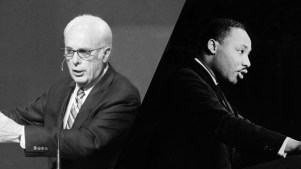
Christians are called to “contend for the faith” (Jude 3:3). But what that looks like—how believers apply that call to their own context and historical moment—can vary a great deal.

A number of the leaders whose passings we witnessed in 2024 spent their lives calling evangelicals to contend. Some wanted evangelicals to contend with poverty (Tony Campolo); some, with racism (Bill Pannell); some, liberals (Beverly LaHaye). Others focused their life’s work on worship, theology, and the interpretation of Scripture.

These obituaries offered us opportunities to assess their contentions—and our own. The truth is, each of us will contend, one way or another. We are all living out our answers to the question of what we think that looks like.

In alphabetical order, here are a dozen Christian leaders who died in 2024:

Thanks for reading Christianity Today in 2024. If you’re not already a subscriber, check out our membership options here.

News

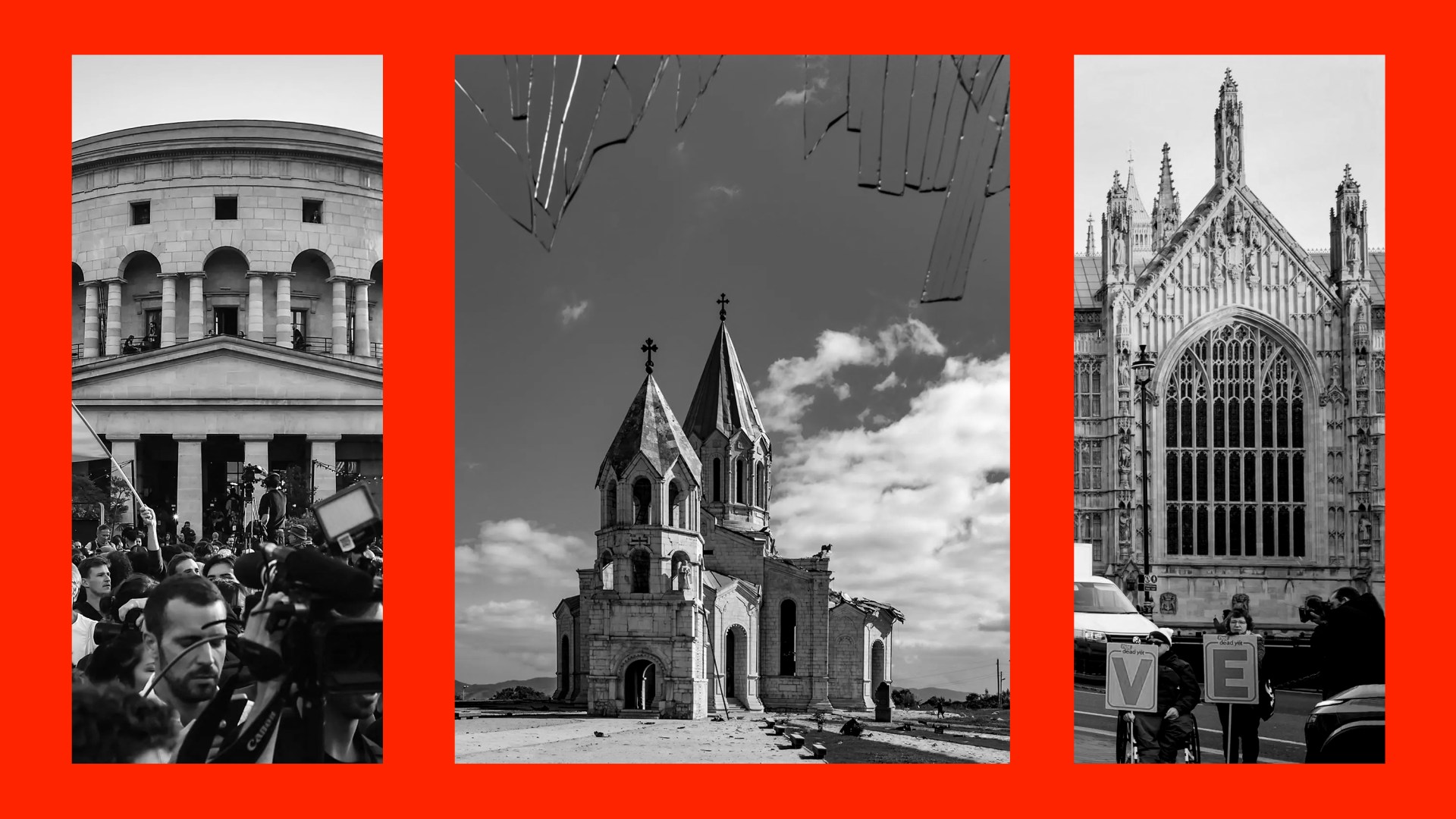
10 Stories about the European Church in 2024

Jürgen Moltmann passes, Russia restricts Ukrainian churches, and church planters strategize about how to start congregations on a continent that thinks it doesn’t need God.

Stories of the European church
Christianity Today December 20, 2024
Illustration by Christianity Today

How do you start a congregation in Liechtenstein? It’s very wealthy, and the father and son team trying to get a church going there say only about 10 percent of the population visits a house of worship on a weekly basis. (Read more in the article from Ken Chitwood below.)

Across the continent, Christian leaders are grappling with the challenge of trying to reach a population that often finds religion irrelevant. Here’s a look at how pastors, theologians, and laypeople attempted to live out their faith and stay the course this past year.

Thank you for reading stories by Christianity Today’s global team in 2024. We regularly translate our work into more than half a dozen languages. Learn more here.

Culture

All I Want for Christmas Is … a ‘Nosferatu’ Remake?

The vampire movie might not be as irrelevant (or irreverent) as you think.

Lily-Rose Depp stars as Ellen Hutter in director Robert Eggers’ NOSFERATU, a Focus Features release.

Lily-Rose Depp stars as Ellen Hutter in Nosferatu.

Christianity Today December 20, 2024
© Copyright 2006 - 2024 MediaMax Online

This Christmas Day, amid the usual holiday trappings, a Nosferatu remake will arrive in movie theaters. Whatever combination of iconoclastic provocation and marketing savvy led A24 to schedule a vampire film’s release for December 25, this bit of counterprogramming may offer an opportunity.

A century ago, the famous exemplar of German expressionism handed audiences an unapologetically Christological ending. Will this new version, created by filmmaker Robert Eggers, do the same?

The monsters inhabiting our horror stories are never irrelevant to human experience. Frankenstein’s pieced-together, reanimated giant and those Godzilla-scale creatures awakened by nuclear detonations signal apprehensions about the excesses of scientific inquiry and experimentation. Werewolves and zombies register fear of contagious disease and death.

Modern vampires bear the weight of the latter threat, too, but combine the possibility of a premature demise with either hope of resurrection (as one of the undead) or a chance at passionate romance with a beautiful (albeit ice-cold and deathly-pale) lover.

If centuries of vampire lore signal any truth about the human condition, it’s this: The unknown and the dangerous exercise unwonted power over our desires.

These days, those desiring to spin a vampire yarn can choose between multiple—let’s say four—narrative paradigms that have coalesced since this particular monster made his way into the English language two centuries ago. These templates differ according to the roles given to faith and each protagonist’s ability to resist the enticements of their bloodsucking admirer.

The same dark and stormy night in 1816 on which Mary Shelley conceived Frankenstein, John Polidori lifted these creepy immortals from the pages of ancient Greco-Roman texts and Eastern European folk tales and planted them squarely in the gothic Romance novel. In The Vampyre (1819), the “deadly hue” of Lord Ruthven’s colorless skin and his “dead grey eye” fail to scare off the “virtuous wife and innocent daughter” who cannot gainsay, elude, or overpower his seductive spells. This monster is malevolence incarnate, a specter of unrepentant, unstoppable wickedness. Such a story rejects the psalmist’s promise that evil will be destroyed (Ps. 37:9) and allows no opportunity to flee temptation (James 4:7). Knowledge is impotent, and faith wholly absent.

Robert Eggers’s own The Witch (2015) constitutes a modern counterpart: Its powerful killers bathe in blood to restore their youth, float in the air during spell casting, and utterly destroy a Christian family whose faith crumbles one tragedy at a time.

J. S. Le Fanu’s Carmilla (1872) retains the mesmerizing power of the vampire, who awakens both ambiguous repulsion and even stronger attraction. This time, however, rescue arrives in the form of human ingenuity. The knowledgeable Baron Vordenburg saves the day by uncovering the entombed murderer and adroitly applying stake to chest and axe to neck. Though Le Fanu makes clear that the vampire cannot bear the sound of praying, no invocations, crosses, or eucharistic wafers play a role in Carmilla’s defeat.

Marvel’s vampire-hunting Blade, who once headlined a film trilogy and will reappear on screens before long, provides a modern example of this type; he dismisses crosses and holy water as utterly worthless.

A third variant, codified by Bram Stoker’s Dracula (1897), actualizes faith by granting surprising agency to the titular vampire’s prime target. Mina is “one of God’s women,” her fiancé attests, “fashioned by His own hand to show us men and other women that there is a heaven where we can enter, and that its light can be here on earth.” Mina veers from precedent by showing no interest in Dracula when he materializes in her bedroom; love for God and her husband protect her heart. Though the vampire begins her transformation by forcing her to consume his blood, her prayer, “God grant that we may be guided aright,” is finally realized when the men kill the vampire with the help of clues Mina herself collected.

The final, more recent archetype adds conflicted, remorseful vampires to the mix, soulful parasites whose inner torment pairs well with chiseled jawlines and piercing eyes. Any romantic interest they show is passionately reciprocated by their would-be prey. Joss Whedon’s Buffy and Angel series popularized this strain of narrative with help from Anne Rice’s books, and have since spawned Twilight, Underworld, The Vampire Diaries, and a host of similar ilk.

In realizing his childhood dream to remake Nosferatu, then, filmmaker Robert Eggers has many options. Filmmakers often play fast and loose with source material, so Eggers need not toe the line drawn by F. W. Murnau—who himself took liberties when (illegally) adopting Nosferatu from Stoker’s Dracula in 1922. Murnau’s film turned the Mina character, renamed Ellen, into the central hero by allowing her to sacrifice herself to save others, a Christlike “sacrifice of her own bloode” that provides the only means of delivering her town from the vampire’s bloodlust.

The same character (now named Lucy) does the same in Werner Herzog’s 1979 remake of Nosferatu, using a cross to ward off the demon until she learns that only the death of a “pure-hearted woman” can end Dracula’s reign. Unfortunately for the world, her valiant sacrifice does not save anyone. In a twist that recalls evil’s inevitable victory in Polidori’s original, Lucy’s infected husband becomes the new lord of darkness.

The trailer for Eggers’s film sketches the outline of a female protagonist eager to embrace the dark lord who sails through her window on the night wind, a protagonist who later complains to her husband that “you could never please me as he could.” These clips could sum up the entirety of the tale or subtly mislead.

Perhaps Eggers will turn our protagonist into a sad victim of her own lust. Or, maybe, she’ll become an adulteress whose passionate devotion somehow humanizes the fiend. She could even prove herself a mastermind who defeats Dracula by playing mind games better than he. 

There’s one more possibility we can discuss with other viewers—whether Eggers realizes it or not. If our hero recognizes her need for the divine and, like Stoker’s Mina, prays “with all the strength of my sad and humble soul,” perhaps the film’s release date will not prove quite so irreverent.

Paul Marchbanks is a professor of English at California Polytechnic State University. His YouTube channel is “Digging in the Dirt,” where he discussed Nosferatu after its release.

addApple PodcastsDown ArrowDown ArrowDown Arrowarrow_left_altLeft ArrowLeft ArrowRight ArrowRight ArrowRight Arrowarrow_up_altUp ArrowUp ArrowAvailable at Amazoncaret-downCloseCloseellipseEmailEmailExpandExpandExternalExternalFacebookfacebook-squarefolderGiftGiftGooglegoogleGoogle KeephamburgerInstagraminstagram-squareLinkLinklinkedin-squareListenListenListenChristianity TodayCT Creative Studio Logologo_orgMegaphoneMenuMenupausePinterestPlayPlayPocketPodcastprintremoveRSSRSSSaveSavesaveSearchSearchsearchSpotifyStitcherTelegramTable of ContentsTable of Contentstwitter-squareWhatsAppXYouTubeYouTube