News

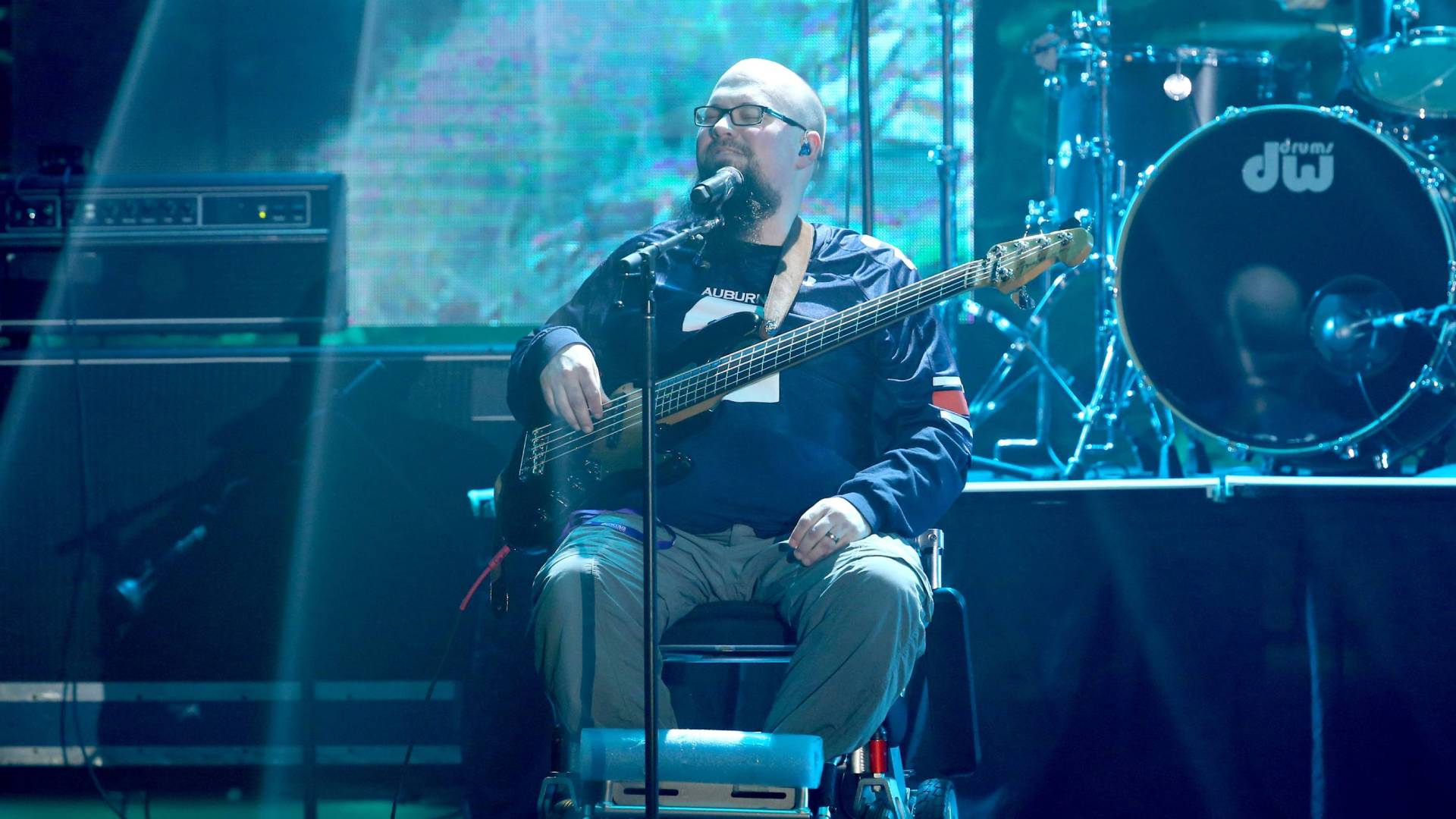
Big Daddy Weave Bassist Jay Weaver Dies at 42

Weaver, who lost both his legs in 2016, spoke and sung of God’s faithfulness during two decades of health struggles.

Christianity Today January 4, 2022
Terry Wyatt / Getty Images for Dove Awards

Fans have prayed for years for Big Daddy Weave bassist Jay Weaver as he endured chronic health conditions and multiple hospitalizations.

This week, his brother and the band’s frontman Mike Weaver announced that “those prayers for healing can turn into prayers for thanksgiving now that Jay is in God’s presence.” Jay died Sunday after contracting COVID-19. He was 42.

“The Lord used him in such a mighty way on the road for so many years,” Mike Weaver said in a video clip. “Anyone who came in contact with him knows how real his faith in Jesus was. I believe that even though COVID may have taken his last breath, Jesus was right there to catch him.”

Big Daddy Weave topped Christian charts and earned spots as K-LOVE fan favorites with songs like “Every Time I Breathe” and “Redeemed.”

The band’s 2019 album, When the Light Comes, emerged out of Jay Weaver’s health struggles. He had diabetes and a weakened immune system, which led to the amputation of both feet due to infection in 2016.

Over the years, Jay Weaver shared his testimony of near-death experiences as his conditions worsened as well as the self-doubt he had to face after his legs had been amputated.

“It’s a fairly lonely bed to lay in—until the Lord is remembered,” he said in a 2017 interview. “I’m lying in this hospital bed by myself, but the Lord is the best I know of anybody to come down and get in our junk with us, and that’s exactly what he did.”

Fans lifted Weaver up in prayer and read updates through the band’s social media as he underwent surgeries and treatment. At shows and events, where Weaver appeared in a wheelchair or in prosthetics, he said people often came up to say they had prayed for him.

Weaver had to pause from touring with the band to due to his health; he spent time in intensive care over the summer and had been hospitalized in December with COVID-19.

His favorite part of going on tour was seeing the band’s music minister to people. “It gives us something to look forward to … the expectation of God doing something in the hearts of people and physically seeing it with our own eyes,” Weaver said.

Chris Tomlin, who toured with Big Daddy Weave, called Weaver “a great light and a true heart for Jesus.” Steven Curtis Chapman wrote that his “smile, kindness, generosity and life reflected the light of Jesus in a beautiful way! So thankful that I got to know him this side of Heaven.”

Big Daddy Weave formed in 1998 at the University of Mobile in Alabama. Two years ago, the band was featured in a TBN reality series, where they discussed their spiritual journeys, the demands of touring, and the emotional heaviness around Jay Weaver’s amputation and health struggles.

“Praise God that he is the God of a million and one chances,” he remarked. “All I can say is today, I’ll put my best fake foot forward.”

Weaver leaves behind his wife, Emily, and three children.

When Mike Weaver broke the news of Jay’s death on Sunday he said he was sorry to share it but also “excited to celebrate where he is right now.”

In “The Only Name (Yours Will Be),” Big Daddy Weave sings:

When I wake up in the Land of Glory With the saints I will tell my story There will be one name that I proclaim Yours will be The only name that matters to me The only one whose favor I seek The only name that matters to me


News

Conservation Group Tries One More Thing to Preserve an African Woodland: Prayer

A Rocha Kenya cites WhatsApp intercession group as key to saving habitat for owls, shrews, and other endangered creatures.

Christianity Today January 4, 2022
John Mwacharo

The Dakatcha Woodland is home to Africa’s tiniest owl; a long-legged shrew with golden fur found nowhere else on earth; and weaver birds so rare it took Kenyan ornithologist Colin Jackson 13 years to track down their breeding grounds.

The East African habitat, which stretch over about 465,000 acres north of the coastal town of Malindi, Kenya, are under constant threat from climate change, expanding farms, and charcoal production.

“We’re fighting against a huge wave of destruction,” Jackson, who is also head of A Rocha Kenya, told CT.

There are only so many things you can do to save a forest. You can lobby for environmental laws. Buy land and place it in a trust. Raise money. Raise awareness. Promote scientific research on the importance of the habitat for biodiversity.

And, according to Jackson, you can pray.

“There have been times when things have looked pretty desperate and yet we’ve managed to break through and things have improved,” he said.

A Rocha Kenya, the local branch of the international network of environmental organizations with Christian ethos, has set up a “wall of prayer” to protect the Dakatcha Woodland and other key sites. It consists of a WhatsApp group of about 80 or so Christian conservationists around the world that A Rocha Kenya can call on for intercession when faced with a crisis.

Many people are skeptical of the power of prayer, and there is an especially fierce criticism of those who invoke “thoughts and prayers” as a way not to take action on pressing social issues. But Christians who care about the environment have been increasingly turning to intercession as a spiritual tool commensurate with great need.

Believers from Asia, Europe, and North America gathered monthly ahead of the United Nations climate change conference in Scotland to intercede for the governments negotiating emissions targets. At the conference, Christian observers prayed for “a godly outcome.”

And the Christian conservation group in Kenya is organizing believers who will pray for the protection of the forest that is home to many rare creatures.

The combination of the spiritual and the practical in conservation is not something new in Kenya. Many of Jackson’s colleagues either are Christians or have a Christian background. Government meetings in the area often open and close with prayer.

But some conservationists are sharply critical of the approach—and opposed to any effort to care for the environment that puts an emphasis on Christian convictions.

Mordecai Ogada, executive director of Kenyan nonprofit Conservation Solutions Afrika, told CT that the model of conservation currently practiced in Kenya “is steeped in racial bias and the dominance of ‘whiteness.’” Instead of attempting to decolonize, it draws its traditions and ideas from people like Theodore Roosevelt, the US president who was a noted conservationist, and John Muir, the Scottish American naturalist and “father of the National Parks.”

“In African societies, spirituality is closely tied to stewardship of the environment, but this African spirituality has always been vilified by missionaries and Christianity,” Ogada said. “The Christian basis for conservation instantly excludes those who do not subscribe to the Christian faith.”

But as a researcher at the University of Manitoba’s Natural Resources Institute Joanne Moyer spent 11 months looking at the role of religious organizations in sustainable development and environmental protection in Kenya, and that’s not what she saw.

“While A Rocha was one of the more overtly Christian of the organizations I studied, in terms of integrating prayer, Bible study, and worship in the regular rhythms of their organizational life, I would describe their approach toward non-Christians to be respectfully invitational,” said Moyer, who is now an associate professor of environmental studies and geography at The King’s University, Alberta. “There was an atheist volunteer while I was there, and she was never pressured to attend any of the overtly Christian activities. I think I asked her about how she felt working there as a non-Christian, and she said it was just fine.”

Moyer also believes the religious approach to conservationism may connect with Kenyans more than the Western academic and scientific environmental and conservationist programs.

“Faith-based groups like A Rocha could connect with local people in a language they understood,” she said. “An uneducated farmer might not understand things like biodiversity, habitat, endangered species, and their role in the larger ecosystem. But most Kenyans are Christian, and A Rocha could articulate a fairly simple and straightforward faith-based conservation message that I think made sense to people and resonated with them in a way that made them more motivated to respond.”

That has been Jackson’s experience. He first started connecting with the local community in Dakatcha during his quest to locate the nesting site of a small black-and-yellow bird called the Clarke’s weaver, found only there and in Arabuko-Sokoke, a forest reserve to the south of Malindi.

Like the Sokoke scops owls, the weavers are endangered due to deforestation, and their nesting habits were unknown to science until 2013 when Jackson and colleagues discovered a breeding colony in a wetland in Dakatcha. In a scientific paper published in Scopus, they described the colony, which was filled with hundreds of Clarke’s weavers building ball-shaped nests from sedge fibers and filling the air with their buzzing and sizzling calls.

During the surveys for the nesting site, Jackson and his team had discovered most people they met were church members. The churches became the conservation group’s gateway into the community.

Today, A Rocha is also helping train some of Dakatcha’s farmers in methods that protect the forest, while also promoting soil health, boosting crop yields, and minimizing water usage. Through the churches it is able to give biblical teaching on why God cares about the earth and all things in it—including the farms people work, the birds they see and hear, the air they breathe, and the water they drink.

But while Jackson agrees that faith-based arguments for protecting trees, owls, and shrews are effective, he also has a most straightforward reason to prioritize prayer at A Rocha. He’s a Christian, and Christians are supposed to pray.

“God is sovereign, and he works his purposes out,” he said. “But we do know that God loves us to talk to him and to bring our requests to him and he does answer prayer.”

He also believes that prayer is powerful.

Seven years ago, for example, Jackson and his colleagues saw large yellow earth-moving equipment arrive at Arabuko-Sokoke, a coastal forest that is home to not only many elephants and buffalo but also overlooked rarities like the golden-rumped sengi, a shrew that’s found only there and in Dakatcha. A US-based oil firm, CAMAC Energy, wanted to cut lines through Arabuko-Sokoke to carry out seismic surveys. This would involve planting and detonating explosives.

CAMAC Energy (later known as Erin Energy Corporation) insisted the seismic survey would not harm the forest and that it always complied with environmental regulations. But A Rocha, other conservation groups, and locals were alarmed at what looked to them like impending devastation.

Jackson and his colleagues were spurred into action, working with communities on the ground and other conservation groups and activists. And, as with all their work, they also turned to prayer.

Within weeks, the company had shelved its plans for exploration. CAMAC Energy’s statement at the time said that the decision to not go ahead with the surveys inside the forest was “in keeping with our tradition of involving and listening to all stakeholders.”

Jackson and the other people praying for the situation were pretty sure they knew the real reason.

“We felt very much that God really answered that prayer,” Jackson said.

Pressed on whether he could be sure the prayer partners on WhatsApp were really the key to the decision made in a corporate boardroom in Houston, Texas, Jackson just said, “That’s one of the million-dollar questions.”

A missionaries’ kid who earned a doctorate in ornithology after starting a branch of the conservationist organization at home, Jackson is happy to point to another answered prayer: funds. A Rocha Kenya recently received a grant of $1 million to purchase and protect land within the Dakatcha.

“I completely see that as an answer to prayer,” Jackson said. “I see that as God’s hand at work.”

One key area the group hopes to secure is a patch of forest where the Sokoke scops owl breeds. This 17-centimeter-high bird of prey—Africa’s smallest owl—is listed as endangered by the International Union for Conservation of Nature.

The breeding ground is currently threatened by encroaching pineapple farms and increased charcoal burning. Indirectly, Jackson said, the problem is climate change.

Although places like the Dakatcha Woodlands are considered semi-arid, 30 years ago farmers could plant crops like maize in mid-March and rely on regular soaking rainfall over the next three months. Now the rains come late. A severe drought in recent months has made things much worse.

“People are not getting the crops that they need. That is what forces them into cutting trees and burning charcoal,” Jackson said.

With the money from the grant, A Rocha is negotiating with some of those farmers to buy land, talking to them about the Christian reasons to protect the owls and their habitat, and praying that people might be moved to see the forest as something they should protect instead of consume.

Jackson says for conservation projects to be successful, people’s hearts will have to change.

“They need to get right with God and understand their God-given relationship with creation, which is to tend it and care for it,” he said. “If we get that right, and we’re in a healed relationship with God, then there’s a far greater chance for creation to be protected.”

For that, he believes, the best tool is prayer.

News

On Ukraine-Russia Border, Evangelicals Endure as Invasion Looms

(UPDATED) Baptists and Pentecostals in both nations assess activism, unity, and reregistration in the Donbas region’s occupied Luhansk and Donetsk.

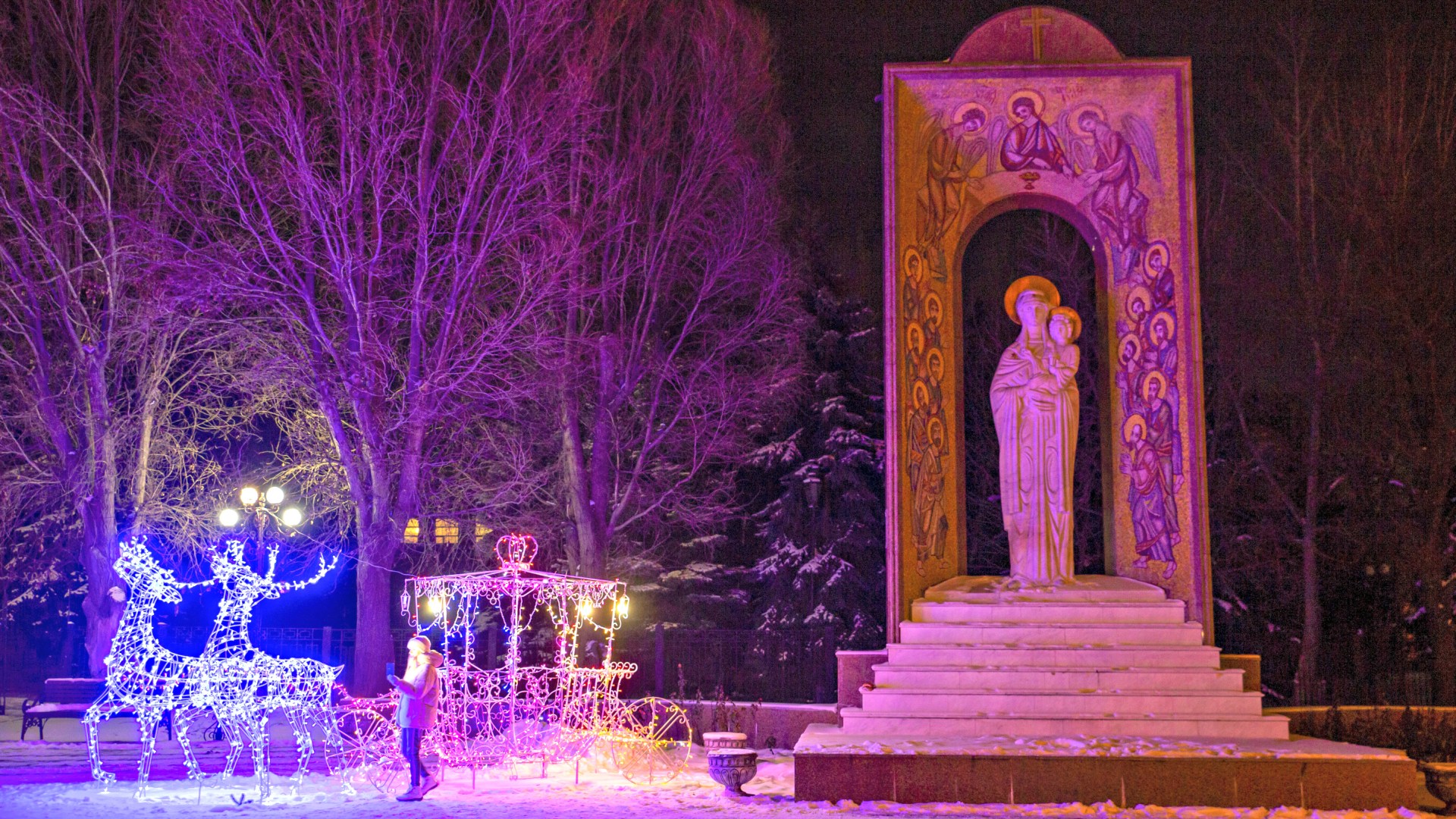
A Christmas light installation in Luhansk, Ukraine, by a monument to the 2000th anniversary of the Nativity of Christ, on December 24, 2021.

A Christmas light installation in Luhansk, Ukraine, by a monument to the 2000th anniversary of the Nativity of Christ, on December 24, 2021.

Christianity Today January 4, 2022
Alexander Reka / TASS / Getty Images

Ukraine celebrates Christmas twice, honoring both the Eastern and Western church calendars. Yet this season, Pentecostals spent the week leading up to December 25 in prayer and fasting while Baptists did the same from Christmas Day to New Year’s Day.

The reason: tens of thousands of Russian troops amassed on the border, threatening a full invasion.

“Prayer is our spiritual weapon,” said Igor Bandura, vice president of the Baptist Union of Ukraine, of the group petitions to the Prince of Peace. “God can undo what the politicians are planning.”

Russian-backed separatists have held control of the Donbas region of southeastern Ukraine since 2014. This past November, the European Evangelical Alliance (EEA) declared Donbas “the area of Europe where the church suffers the most.” In total the conflict has killed over 14,000 people and displaced 2 million of the region’s 5 million people.

This past Friday, US President Joe Biden warned Russian President Vladimir Putin that any further invasion of Ukraine would result in “a heavy price to pay”; Putin replied that any new sanctions would trigger a complete breakdown in relations. On Monday, Biden told Ukrainian President Volodymyr Zelensky that the US and its allies would “respond decisively” to Russian aggression; Zelensky signaled appreciation for the “unwavering support.”

Trying to help years ago from the Russian side, Vitaly Vlasenko was labeled a spy.

Traveling 650 miles south from Moscow to Luhansk, Ukraine, at his own expense, the now–general secretary of the Russian Evangelical Alliance (REA) waded into a war zone.

By 2018, separtist leaders in Donbas had crafted laws to re-register churches, ostensibly under the principle of freedom of conscience and assembly. But two years prior, authorities in Luhansk declared Baptists and Pentecostals a security threat. Pastors had been murdered; churches were seized.

“Our brothers in Christ in Ukraine are crying out: ‘Why don’t you pressure Russia to stop this aggression?’” said Vlasenko. “We tell them we are a small minority with no standing and no clear information, and officially Russia is not a part of this conflict.”

It does not go over well, he admits. Relations between evangelicals in the neighboring nations have become strained, and some assumed the worst of his December 2018 trip to speak with rebel authorities about the registration process.

Only the KGB-connected could get access, Vlasenko heard.

In reality, Vlasenko said the visit was arranged through prior connections with the Russian Orthodox Church metropolitan in Luhansk. Your church received registration, the REA leader told his Orthodox counterpart; where is our Christian solidarity?

Without registration, churches were disconnected from the gas and electricity grid. All remaining evangelical churches were operating illegally, but some still had use of their facilities. But now it was winter, and cold.

The metropolitan agreed the situation was wrong and facilitated contact with the religious affairs official. Vlasenko was told registration would be given to all who completed procedures. He passed on the information to Ukrainian colleagues. But today, he said, relations are at a standstill.

“I understand they are in a difficult situation,” Vlasenko said. “Most churches have their headquarters in Kyiv, so how can they accept registration and explain this to their brothers in the [Ukrainian] capital?”

But Donbas churches face a choice: Continue to suffer, or continue in ministry. Vlasenko stays neutral, as he cannot advise them as a Russian.

Religious freedom problems in Donbas listed by the EEA include:

• Many churches are illegal and cannot meet, especially evangelical and Ukrainian Orthodox ones. Whole denominations are classed as extremist with no justification.

• Much Christian literature is banned, including the Russian Synodal translation of the Bible. Church buildings have been seized by force; the Christian University of Donetsk is occupied by soldiers.

• The registration system for faith communities is totally unfair. Churches have found their applications rejected or have been liquidated later for supposedly being extremist.

To date, only a few evangelical churches have been “legalized” in Luhansk. Bandura said the registration process is designed to be impossible. But in occupied Donetsk, the other half of the Donbas region and also operating under its own rebel laws and leadership, there has been more flexibility.

Luhansk officially designated the Baptist Union as a terrorist group, Bandura said, so the church there is underground. Overall in Donbas, only half of about 100 churches are still functional. Procedures are underway with the rebel authorities in Donetsk to unite three separate Baptist groups under one umbrella, in order to secure registration.

“If this is how you can preserve your churches and ministries, we are not against it,” Bandura said. “We do not encourage or recommend anything—and assume any arrangement is temporary.”

Other groups in Donetsk still find the requirements to be cumbersome. But Yuriy Kulakevych, foreign affairs director of the Ukrainian Pentecostal Church, thinks things may be moving forward.

“Russia likes to show it keeps to international standards of freedom of religion,” he said. “But for now, we are illegal, told to sit down and keep quiet.”

The situation is different in Crimea, he said, which in 2014 was also seized by Russian-backed separatists. Russia conducted a referendum on annexation soon after and formally—though illegally under international law—incorporated the Black Sea peninsula into its territory.

Pentecostals acquiesced to the new reality.

“We saw it as then the best possible means to survive,” said Kulakevych. “And Russian Pentecostal leadership are all Ukrainian missionaries from 30 years ago; we know them.”

But not all relations are good. What he called the second-largest Pentecostal group in Russia is headed by a leader “100 percent committed to the Kremlin agenda in Ukraine.”

Even within his own network, relations were difficult. Kulakevych spoke of Ukrainian Pentecostal frustration in 2014 and onward, when Russian counterparts failed to protest against their suffering. But later, they learned that as citizens, Russian evangelicals suffer even more.

In August, Russia declared Ukraine’s New Generation Pentecostal groups “undesirable,” effectively banning them from the country. And in October, regulations took effect to demand all foreign-trained clergy and missionaries take an official course on church-state relations and recertify their ministry.

The outrage has been felt in Ukraine, and Kulakevych has pleaded on behalf of his Russian brethren.

“I have to calm down our hotheads [in Ukraine], who demand [Russian evangelicals] speak out against Putin,” he said. “We are not in their shoes, and do not understand the risks they take for the gospel.”

Bandura reached a similar understanding two years ago, when the Baptist Union of Russia came to Ukraine. Disturbed by years of quiet acquiescence, coupled with prominent examples of public anti-Ukrainian sentiment, the Russian and Ukrainian Baptist leaders held face-to-face meetings that helped heal relationships, Bandura said. After two days of closed-door sessions with no public statements, the issues between them were solved.

“We understand the religious freedom situation in Russia is terrible and don’t expect them to speak out bravely for us,” Bandura said. “It is enough if they keep silent.”

Vlasenko, however, wants to speak—carefully. He believes in the independence of Ukraine. He wants evangelicals in both countries to communicate to their national leaders that war is not the answer to political problems. And as a pastor he believes he must pursue peace—and reconciliation.

But Russia is unnerved also. If Ukraine joins NATO, ballistic missiles could be minutes from Moscow. It is good for peace, said Vlasenko, that Russia can build natural gas pipelines to Europe. And he has spoken to Crimeans—they wanted annexation, he says, and Ukraine would never have permitted a referendum.

As for the aggression in Donbas, the popular understanding among locals was that Ukraine’s 2014 revolution installed a nationalistic government that wanted to kick out—even kill—Russian-speakers in their historic region.

“Maybe it was true, or maybe it was propaganda,” Vlasenko said. “But Russia denies they are fighting, and I cannot prove otherwise without official evidence.”

But still: “Obviously the weapons come from somewhere; you cannot buy a tank at a store.”

The situation, however, is straightforward for Ukrainians.

“Ukraine has always irritated Russia,” said Oleksandr Turchynov, former interim president of Ukraine and a lay preacher in his Baptist church in Kyiv [full interview below]. “Democracy, and even our very existence, is a threat to Putin’s regime.”

Kyiv was the ancient heart of medieval Rus, long before the modern Russian nation. Putin has written a 5,000-word essay on the “historical unity” of the two nations, which he often combines with Belarus under the concept of “one Russia.”

Turchynov, currently coordinator of Ukraine’s Conservative Movement (known as Sobor) uniting faith-based nonprofit organizations, is not pleased with the negotiation style of European nations that are trying to “reconcile” Russia and Ukraine as if they are equally at fault in this conflict. He sees Putin as using natural gas to win leverage and divide the continent. Yet the key ally of former president Petro Poroshenko said he is eager for Ukraine to join NATO and strengthen conservative values within the liberal European Union.

But Turchynov’s ultimate hope is elsewhere.

“The Lord will ruin all the wrongdoings of the evil one,” he said. “Truth is with us, and thus God is with us. And where God is, the victory is also.”

Even Christmas gets mixed up in the politics. Evangelicals largely celebrate both December 25—made an official Ukrainian holiday two years ago—and the Orthodox date of January 7. But while the metropolitan of the recently autocephalous (independent) Ukrainian Orthodox Church has announced his hope to unite all Christians under the Western calendar within 10 years, he is playing it slow to recruit parishes still loyal to the Moscow patriarch.

Cyril Hovorun, a Ukrainian priest in the Russian Orthodox Church, faults his patriarch in Moscow for aligning religion to the interests of the state. But he warns Ukrainian Christians also of the danger of nationalism. A “third way” is necessary, he said, for the church to support civil society and civic values: transparency, justice, and solidarity.

Can his evangelical brethren find at least the latter?

“We all say we are part of the kingdom of God together,” Vlasenko said. “But when it comes to politics, we immediately divide again.”

(Conducted prior to Biden’s phone calls with Putin and Zelensky)

CT: How do you interpret Russian President Vladimir Putin’s intentions on the border, and how likely is a full invasion?

Turchynov: It is rather difficult to interpret, and it is even more difficult to treat him as someone whose actions can be explained with ordinary civilized values.

One aspect involves political and economic interests, such as the Nord Stream 2 gas pipeline. At the same time, Putin is raising the stakes as a tactic, issuing ultimatums. His approach serves to further polarization and undermines both NATO and the European Union (EU) concerning the expansion of membership.

It is kind of a game, growing worse for everyone. But if the West and Ukraine were to consolidate their actions, Putin wouldn’t be able to prevail. Full-scale invasion is an extremely dangerous project—mainly for Putin himself. But he is capable of making inadequate decisions.

CT: How have discussions with US President Joe Biden changed the situation, if at all? How do you view the response from the West?

Turchynov: One of Putin’s purposes was a glorious moment of triumph by sitting with President Biden as equals at the table of negotiations. But sometimes it is necessary to talk to a terrorist, to distract him from his acts of terror.

Some Ukrainians wanted to hear a different response from the White House, for example by setting a specific date for NATO membership. Others were expecting to receive defense systems from the Pentagon, to make attacking Ukraine extremely challenging. Perhaps even to host Western military forces in Ukraine.

When it comes to Europe, politically informed Ukrainians understand that the EU consists of many countries with different interests. There are friends of the Kremlin and there are friends of Ukraine. EU reaction by default cannot be instant; it is always an ongoing compromise.

For example, the reaction of Great Britain unquestionably inspires with its strictness and consistency. But when Germany and France sit at the table of negotiations with an agenda to “reconcile” Russia and Ukraine, it gives the impression as if Russia and Ukraine bear an equal level of responsibility. This benefits the Russian Federation that has attacked us.

And while Ukraine has many friends in Eastern Europe and the Baltic countries, these voices are rarely listened to.

CT: Do you favor membership for Ukraine in the EU and NATO? Can this be done while keeping peace and good relations with Russia?

Turchynov: Ukraine has always irritated Russia. Putin often questions Ukraine’s statehood, and unfortunately, many Americans know very little about our history, erroneously calling the whole Soviet Union “Russia.” This contributes to the propaganda that we became independent only 30 years ago. In reality, the medieval rulers of Kyiv were the ones who founded Moscow.

Democracy, and even the very existence of Ukraine, is a threat to Putin’s regime. We are a part of Europe, and our place is in the EU and NATO. In addition, Ukrainian membership would enhance the continent’s conservative values.

CT: How have the Conservative Movement and Ukrainian evangelicals responded to the conflict with Russia?

Turchynov: We always come alongside at the place of greatest need. There are many evangelicals among the volunteers since the very beginning of the war. The Conservative Movement (known as Sobor) draws together highly active citizens, including elected and appointed officials who have a share in key government decisions.

Our deep-rooted Christian values define what we do and how we do it. At the same time, we need to understand that the occupied territories are under full control of the Russian Federation, and thus our impact is extremely limited.

CT: What percentage of evangelicals are of Russian-speaking background? Do they have a different viewpoint toward Donbas?

Turchynov: This clash of worldviews is not an issue of linguistics. Many patriots in the Ukrainian army speak Russian on a daily basis. Dividing us by language is part of the Kremlin’s propaganda, which unfortunately has had some success.

CT: What is your opinion about churches in Crimea and Donbas re-registering with the rebel authorities?

Turchynov: Refusal to undergo this process means becoming an underground church. Not everyone is ready to function this way and risk their lives. The church needs to exist in these occupied areas as well. Even so, humanitarian aid and the maintenance of fellowship is possible with the mediation of pastors who remain there.

CT: This conflict takes place over Christmas. Is there a message in the holiday?

Turchynov: Christmas always brings hope for peace and victory. The Lord will ruin all the wrongdoings of the evil one. Truth is with us, and thus God is with us. And where God is, the victory is there also.

Interview with Oleksandr Turchynov, coordinator of Ukraine’s Conservative Movement:

News

Died: Frank Barker Jr., PCA Founder with Passion for Evangelism

He personally led more than 10,000 to Christ and grew Briarwood Presbyterian from a storefront to a megachurch.

Christianity Today January 3, 2022
Briarwood Presbyterian Church / edits by Rick Szuecs

Frank Barker Jr., the founding pastor of one of the flagship congregations of the Presbyterian Church in America (PCA), died on December 27. He would have turned 90 this month.

Barker started Briarwood Presbyterian Church in a storefront in a Birmingham suburb and grew it to a congregation of more than 4,000 by the time he retired in 1999, making it one of Alabama’s first megachurches and a strong example of the PCA’s commitment to evangelism.

“He both modeled and motivated the PCA to be passionately committed to the Great Commission, the basic work of evangelism, and discipleship,” Harry Reeder, who succeeded Barker at Briarwood, told byFaith, the PCA’s denominational magazine. “He was an excellent example of being a true churchman with a kingdom heart.”

According to Barker’s daughter Peggy Barker Townes, he personally led about 10,000 people to Christ and discipled countless more in Birmingham, around Alabama, and across the Southeast. Notable people who studied the Bible with Barker include Alabama Republican Party chairman Bill Amistead and Auburn Tigers placekicker-turned-evangelist John “Rat” Riley.

“If you meet a Christian in Birmingham who is 60 or older,” Campus Outreach pastor Olan Stubbs told The Gospel Coalition in 2018, “and you ask them how they came to Christ, I’d bet my money that at some point they’ll mention Frank Barker.”

‘The wages of sin is death’

Barker was born in Birmingham on January 31, 1932. By his account, he went wild in high school, continued his raucous living at Auburn University, and partied his way into the US Navy, where he trained to be a jet pilot.

He was occasionally scared straight by close brushes with death. Once, according to a story he frequently retold, he fell asleep at the wheel of a car while doing 60 mph between Birmingham and Pensacola, Florida. He swerved off the road and crashed. When he got out of his car, he saw a sign nailed to a pine tree: “The wages of sin is death.”

“That got my attention,” Barker said. “I started trying to straighten up.”

During one of his attempts to turn from parties to the straight and narrow, Barker decided to become a minister. He believed the extra effort would help him earn God’s forgiveness. He enrolled in Columbia Theological Seminary, a Presbyterian school near Atlanta, and started working at a Presbyterian church.

After a difficult first year in ministry, though, Barker wondered if he was even really a Christian. He asked an Air Force chaplain whom he knew how he could be sure, and heard—for the first time—that he couldn’t earn his salvation.

“That’s wrong,” Barker said to the chaplain. “God’s not going to just give this thing away!”

Finally convinced that God did, in fact, “just give this thing away,” the young minister accepted Jesus’ free gift.

“I had totally missed that salvation was about grace,” he later said. “I surrendered my will and transferred my trust from me to Christ. When I did that, life began to change dramatically.”

Emphasis on evangelism

In 1960, the Presbyterian Church US, commonly known as the Southern Presbyterian Church, asked Barker to start a congregation in Vestavia Hills, Alabama. The new suburb only had about 4,000 people at the time, but it grew more than 200 percent over the next decade as Birmingham became a center for the struggle over civil rights and white people fled the city.

Briarwood Presbyterian grew with the suburbs, expanding from one store to three and then leaving its shopping center with plans for the construction of a hilltop church that ultimately cost $32 million.

Barker was not renowned for his preaching, but the church continued to draw crowds, and he emphasized the importance of evangelism.

“Every Wednesday night we would have evangelism training, and then go out and call on people,” he told TGC. “I’d like to just settle in and read a book. But the Bible tells us to reach out to others, so I had to discipline myself to do that.”

At the time, conservative Presbyterians concerned about the liberal forces in the denomination were opposed to churches getting involved in politics. They argued that the church’s mission of “winning people to Jesus Christ” was fatally compromised by “overemphasis on social, economic, and political matters”—in particular the agitation over racial segregation.

Paul G. Settle, considered the first member of the PCA, listed “Compromise of the Spiritual Mission of the Church” as the first concern of conservative Presbyterians, followed by “Union with non-Reformed Bodies.”

Segregation academy

Barker, allied with the conservatives, avoided involvement in the civil rights movement. He did not make any public statements when white supremacists bombed a Black church and did not join the “Birmingham Campaign,” when Martin Luther King Jr. led protests in the city.

Briarwood did, however, start a whites-only school in 1965.

The school officially changed its policy to allow Black students to apply for admission in 1970 after the Internal Revenue Service threatened to revoke the tax-exempt status of what were called “segregation academies.” That year the school doubled in size, growing from 210 students to about 500. All of the students were white, and a spokesman for an association of Christian schools told a local newspaper that about half the parents switching from public to private were vocal about their opposition to racial integration.

Today, Briarwood Christian School is considered one of the best elementary schools in the Birmingham area. More than 90 percent of the students are white. The denomination formally repented of its historic support for segregation in 2016.

Tensions between conservatives and liberals in the Southern Presbyterian Church continued to grow as liberal leaders sought reunification with the Northern Presbyterians, who issued a new confession in 1967 calling Christians to the work of reconciliation, including racial reconciliation. Conservatives were also concerned about weakening commitments to the Westminster Confession and catechisms and denominational requirements that ordained ministers affirm the doctrines of Christ’s virgin birth, his bodily resurrection, and the Trinity.

“By 1968, practically every doctrine held precious by God’s people had been denied, rejected, ridiculed, or at least called into question in the denomination’s official publications, pronouncements, policies, or programs,” Settle wrote in an official PCA history.

Founding the PCA

When conservatives gathered in Macon, Georgia, the next year to write “a new statement of purpose” that “stressed the defense of the Reformed faith and Presbyterian polity at all costs,” Barker was one of the key speakers.

Four years later, when representatives from 260 congregations decided to break away and form a new conservative Presbyterian denomination, they gathered at Briarwood. Barker presided over the First General Assembly of what was then called the National Presbyterian Church, served on the missions committee and the constitution committee, and led the gathered elders in worship.

In the following years, Barker always charged young PCA pastors to place a high priority on evangelism.

“He gave me some strong marching orders: ‘Don’t ever let a year in the life of your church go by that you are not personally equipping the people of your church to share their faith,’” said Randy Pope, who founded a PCA church in the Atlanta suburbs in 1977. “It is the greatest advice I could have ever received.”

In 1986, Barker was elected moderator of the PCA’s 14th General Assembly. He beat two other candidates for the job, and his victory was seen at the time as a signal of the denomination’s commitment to evangelism, missions, and church planting.

Church involved in politics

Briarwood did eventually get involved in politics. Under Barker’s leadership, the church organized protests in front of a Birmingham abortion clinic in 1989 and joined a group of churches publishing a full-page ad calling on state legislators to support pro-life legislation.

In 1992, when George H. W. Bush was running for reelection, Briarwood invited Vice President Dan Quayle to speak at the church on a Sunday morning. Barker praised Quayle, who was fighting at the time to keep his place on the Republican ticket, and gave him a Bible during the worship service.

Perhaps the church’s biggest political push during Barker’s 39 years in the pulpit came in the late 1990s, when Alabama considered launching a state lottery. Briarwood opposed the legalization of gambling, and the elders gave $75,000 from the church’s operating budget to the anti-lotto lobbying effort.

‘What God has done through our church’

For Barker, though, the most important work of the church remained evangelism. He measured the success of the church by the energy and effort it put into outreach and missions. When he retired in 1999, Briarwood had more than 4,000 members and the church endowed a chair of evangelism and missions at Westminster Theological Seminary.

“It has been amazing to see what God has done through our church and the PCA,” Barker said a few years before his death. “He has greatly blessed our stepping out in faith. Our denomination has had a real heart for missionaries and church planting, which is a great way for multiplying the Lord’s work.”

Barker is survived by his wife, Barbara; children Anita, Frank, and Peggy; 14 grandchildren; and nine great-grandchildren. He was buried at Alabama National Cemetery on January 3, and his memorial service is planned at Briarwood Presbyterian Church on January 8.

News

Bible Translators Add 400 Sign Languages to To-Do List

First finished Scripture for deaf people prompts attention to global need.

Christianity Today January 3, 2022
Photo screenshot used with permission from Deaf Missions

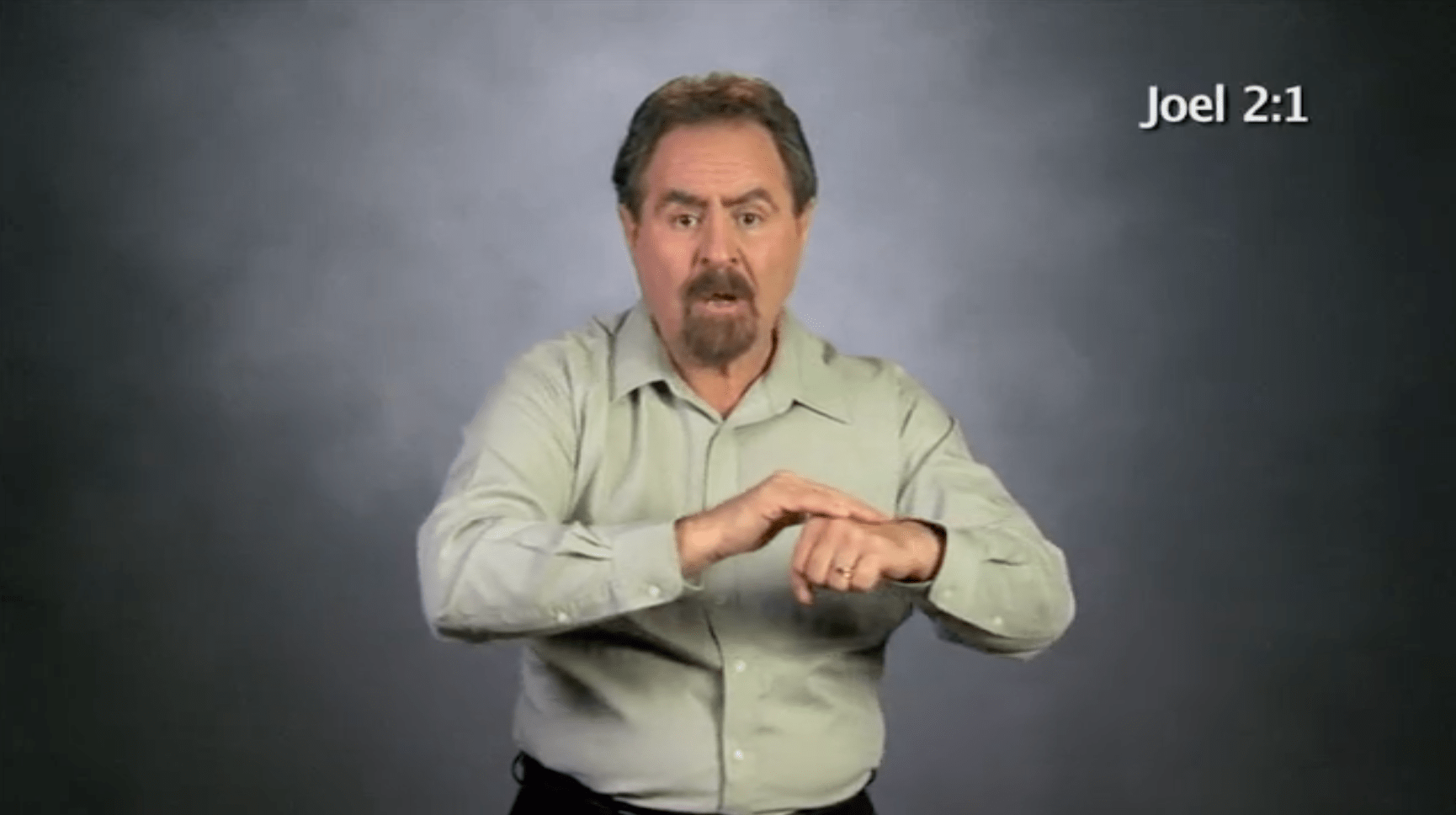
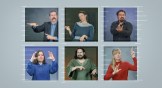
The completion of the first sign language Bible translated from the original languages prompted cheers and celebrations in the fall of 2020.

It took nearly four decades for more than 50 translators to finish the American Sign Language Version (ASLV), and the project started by Deaf Missions received crucial support from the Deaf Bible Society, DOOR International, Deaf Harbor, the American Bible Society, Wycliffe Bible Translators, Seed Company, and Pioneer Bible Translators.

But for the deaf, it’s one down, more than 400 to go.

“Still only one sign language of the over 400 has a complete Bible,” said J. R. Bucklew, the founder and former president of the Deaf Bible Society, who now works as director of major gifts at Pioneer Bible Translators. “And still, no other sign language outside of the American Sign Language has a full New Testament. There’s a lot of work ahead of us.”

Bucklew doesn’t diminish the significance of the completion of the ASLV. As a hearing person born to deaf parents, he sees the translation as a major historic event. And as an advocate for sign language Bible translation, he sees the ASLV as the “great accelerator” that is helping build the momentum necessary for the translation work that remains to be done.

IllumiNations, an alliance of 11 Bible translation organizations, has set a goal of rendering Scripture in every known language by 2033. There are, according to the group, about 7,000 known languages in the world, and roughly more than half have little or no Bible. While people may access Scripture by learning English, Spanish, or a dominant trade language, the evangelical organizations believe everyone should have equal access in their “heart language.”

Including sign language.

Many hearing people think sign language is only an alternate rendering of vocabulary—similar to how Braille reproduces written text in a code of raised dots. Sign language, however, has its own vocabulary and its own grammar, and linguists consider it a distinct language.

The leadership of illumiNations has added more than 400 sign languages to its list of thousands needed Bible translations, despite already facing the challenge of meeting that 2033 goal.

If sign languages were left off that list, the translation alliance would have missed a lot of deaf people throughout the world. No good data is available on how many people know each of the hundreds of sign languages. But reportedly, more than half a million each sign in Indo-Pakistani, Indonesian, Russian, Brazilian, and Spanish, and more than 100,000 use another half-dozen sign languages.

The ASLV Bible made the entirety of Scripture accessible to the 3.5 million people for whom ASLV is their heart language. Translator Jose Abenchuchan does not need to look far to understand the impact of his work. On a shelf in his home, he keeps a copy of the Bible his deaf mother used before she died.

The cover is missing, from extensive use. The pages inside are marked with the copious notes she made as she struggled to understand written English.

“I cherish it because it helps me remember the fight my mom had,” Abenchuchan, who is also deaf, signed to CT through an interpreter. “And that’s why I’m involved in Bible translation now.”

Abenchuchan started working on the ASLV in 1995 and stayed through to the completion, helping with more than 30 books of the Bible. He currently works as the coordinator of deaf field projects for Pioneer.

“You couldn't ask the Spanish people to read an English Bible, right? It would be like reading a foreign language,” he signed. “That’s why the ASLV was so significant, because it’s in our heart language. And it’s changed so many lives.”

IllumiNations describes the lack of Scripture as “Bible poverty.” Erle Deira, director of partnerships at American Bible Society, says that’s a good way to think about it.

To understand the significance of the ASLV, Deira said, “you have to create an image of standing in front of a river, and on the other side of the river, you have all the food that a population would need to nourish itself and live well. But there is no bridge to cross that river.”

Building a bridge won’t be easy, though. The first problem is money. Translating the ASLV—which required video production, in addition to humans who knew the biblical languages well enough to translate them—cost about $195 per verse. The project would have taken an additional 13 years without support from all the Bible societies, translation organizations, and Christian groups coming alongside Deaf Missions.

Translating 400 more sign language Bibles could cost an estimated $350 million, Bucklew said. Christian groups like Passion have already started raising money for the work.

Another challenge is finding the multilingual deaf people who can translate the Scripture from the original languages or from American Sign Language. Many deaf people are denied any education and only a fraction of those who receive an education are taught sign language. This is partly due to the fact that hearing parents don’t know how critical sign language can be to a deaf child and worry the skill will separate them from society.

Tanya Polstra, executive director of Silent Blessings Deaf Ministries, said she understands that concern. Most hearing adults don’t know a deaf person, and if they do, the first one they met was their own child. About 90 percent of deaf people are born to hearing parents.

“God has chosen that family to learn about deaf culture and language so that we can all come together to be a body of Christ, not to be separated,” Polstra, who has been deaf since age three, signed through an interpreter.

Sign language Bibles may encourage more people to teach deaf children to sign, and Polstra hopes it will also help deaf people embrace their identity in Christ.

Some deaf people, she said, have been hesitant to turn to the ASLV Bible or the kinds of resources that Silent Blessings Deaf Ministries offers.

“Because they haven’t owned their identity yet,” she said. “Right now, they’re still questioning, ‘Why am I deaf? Why am I suffering in this world?’ Their struggle to be involved in the church, the neglect—maybe they’re wanting to be involved in the church, and people say no because they can’t communicate. So, they associate God as a hearing God.”

There may be many other challenges as well, but the time to start meeting them is now, Bucklew said.

He is encouraged, though, that it’s no longer just deaf ministries working on the project. There is a lot of support, and Bible translation agencies and societies are now including sign languages when they strategize to give the whole world Scripture.

Deaf ministries are increasingly cooperating, and more deaf leaders are emerging within the Bible translation movement and becoming part of the problem-solving processes, according to Bucklew.

He’s hesitant to project precise dates, but Bucklew expects the next two completed translations will be for Colombian and Japanese sign languages.

That will be three down, more than 400 to go.

But Christians are laying aside “logos and egos,” Bucklew said, and the translations are underway.

“Through a bunch of imperfect people and imperfect institutions,” he said, “a holy God is doing a perfect work.”

News

Finnish Bishop and Politician Face Trial for LGBT Statements

For the country’s diverse Lutherans, the case tests the resolve to speak up, the boundaries of tolerance, and Christians’ ability to communicate.

Christianity Today January 3, 2022
International Lutheran Council

Some Finnish Lutheran leaders, their families, and a few politicians gathered under a tent in August 2021 for the elevation of Juhana Pohjola to bishop of the Evangelical Lutheran Mission Diocese of Finland (ELMDF).

The canvas protected them from the summer sun, but as they celebrated Pohjola’s investiture, they worried about facing a different kind of heat. Pohjola, 49, and one of his guests, politician Päivi Räsänen, 62, are facing criminal charges. According to the nation’s top prosecutor, the two people are accused of violating the equality and dignity of LGBT people.

Though Finland has legal protections for free speech and the free exercise of religion, Prosecutor General Raija Toiviainen says Räsänen and Pohjola’s actions are criminal incitement against a minority group—hate speech.

According to the prosecutor, Räsänen has fueled intolerance and contempt of LGBT people three times: in comments she made on a nationally syndicated talk show on Finnish state-supported radio; in a 2019 tweet where she quoted Romans 1:24–27 to criticize the Evangelical Lutheran Church of Finland (ELCF)—one of Finland’s two national churches—for its affiliation with Helsinki Pride; and in a 23-page booklet that Räsänen wrote titled Male and Female He Created Them.

Pohjola is being charged for publishing Räsänen’s booklet, which argues against same-sex marriage, contrasts LGBT identities with the Christian notion of what it means to be human, and describes same-sex attraction possibly as being inherently sinful and possibly the result of a “negative developmental disorder.” It was released in 2004 by Luther Foundation Finland, the legal entity behind the ELMDF.

The bishop is not too worried for himself, but he does worry about the long-term impact if the courts rule that Räsänen’s quoting Romans and publishing a book about the Bible and sexuality are considered criminal incitement.

“I do not so much fear the outcome of the court case,” he told CT, “but the strong signal it gives to many: to be silent. I fear self-censorship and intimidation.”

The trial, due to begin on January 24, has stirred strong feelings in Finland. More than 70 percent of Finns support same-sex marriage, which has been legal in the country since 2017, and many see defending the dignity of LGBT people as the critical civil rights issue of the day.

This is even true in the state church, which does not allow same-sex marriages. Around two-thirds of Finland’s 5.5 million inhabitants belong to the ELCF, and according to a recent study, 54 percent of them agree that “the church should also marry couples of the same sex.”

Despite the ELCF’s position on marriage, a small group of pastors broke away from the national church in the early 2000s, in part because of the growing acceptance of LGBT people, as well as other issues such as the ordination of women. These churches later organized as the ELMDF, which became a separate body in 2013.

“I confess the God given dignity, value and human rights of those who identify themselves as homosexuals but at the same time call homosexual acts sinful and in discordance with the created order and the will of God as found in the Bible,” Pohjola said. “We are all called to live according the good order of creation. According to the Christian view sexual life is meant to be in the confines of marriage between one man and one woman.”

Räsänen has consistently voiced opinions in keeping with the ELMDF’s position on same-sex marriage, principally that the Bible teaches that marriage is between a man and a woman and that “homosexual acts” are “sin and shame.” As former chairperson of Finland’s Christian Democrats and former Minister of the Interior from 2011 to 2015, Räsänen led the opposition against the passage of a law recognizing same-sex marriage in Finland.

She knew that position was unpopular with many, but Räsänen was shocked to find out she was facing criminal charges.

“Being criminally charged for voicing my deeply held beliefs in a country that has such deep roots in freedom of speech and religion feels unreal,” she told CT. “I do not see I would have in any way defamed homosexuals whose human dignity and human rights I have constantly said to respect and defend.”

The case has also caught international attention, stirring strong support for Pohjola’s and Räsänen’s right to free speech and religious freedom.

The International Lutheran Council (ILC), the global association of confessional Lutherans, released a signed statement in June entitled “A Protest and Call for Free Religious Speech in Finland.” Fearing the case will be appealed and end up in the European Court of Human Rights, the ILC objected to “the unjust treatment” of Pohjola and Räsänen and warned the case portends a slippery slope that may lead to the curtailing of other fundamental rights, religious and otherwise.

“Faith must remain free,” the statement said. “Indeed, if government oversteps its bounds and encroaches on religious freedom and religious speech, what other rights shall it take away?”

A recent open letter addressed to the Finnish prosecutor and signed by more than 227,000 supporters further argues that “punishing individuals such as Räsänen sets a very dangerous precedence apart from the fact that it shuts down honest, open public dialogue” and “effectively makes following Jesus a criminal act.”

Pohjola also sees this as a matter of faith. “For me this is not primarily a legal issue,” he said. “The gospel of Jesus Christ is at stake.”

ELCF-affiliated theologians have for the most part resisted the argument that the prosecution is essentially about theology and the state deciding that some theological ideas are unacceptable in Finland. Niko Huttunen, for example, a theologian with the ELCF’s Church Research Center, said the case is really about whether LGBT people are adequately protected from intolerance in Finland.

Huttunen believes that Räsänen’s reading of the Bible is “hermeneutically näive,” and he wonders how educated Christian leaders in the ELMDF—such as Pohjola—can uncritically accept a politician’s interpretation of Scripture.

But he hurries to add, “My aim is not to say how Räsänen must or must not read the Bible. Räsänen is being prosecuted for inciting hate towards homosexuals, one of the minorities which are seen to be in need of a special protection under Finnish law.”

According to a press release from the Office of the Prosecutor General, Räsänen's statements are more than offensive; they actually endanger people and are “likely to cause intolerance, contempt and hatred towards homosexuals.” Thus, the prosecutor concluded, Räsänen’s statements “violate the equality and dignity of homosexuals and thus transcend freedom of speech and religion.”

Sakris Kupila, chair of the Finnish LGBT rights group Seta, said the January trial is mainly important as a kind of test case.

While Kupila believes Finland has seen a lot of progress toward protecting minorities in recent years, the prosecution of a politician and a bishop will show how far the country has really come.

“We want the justice system to do its work in peace,” Kupila said. “This has been compromised by the international campaign.”

According to Kupila, international information about the case has often been permeated with false claims and filled with “homophobic and hostile” messages. He said the pressure could convince other prosecutors in the future that protecting the dignity of LGBT people is not worth it, and they will decide not to enforce the law.

Some Lutherans in Finland who hold to traditional Christian teachings on homosexuality nonetheless are uneasy with the international campaign to defend Räsänen and Pohjola.

Samuli Siikavirta, the 36-year-old pastor of an ELMDF congregation Pohjola founded in Helsinki, said some conservative Christians are apprehensive about the use of the term “persecution.”

“This is opposition to the freedom to be a Christian and to teach according to holy writ,” he said. “However, it makes me a bit uneasy to say that we are being persecuted.”

Siikavirta said the real challenge for Christians in the ELMDF and other conservative traditions will not be facing fines or even possible imprisonment. The real challenge will be figuring out how to teach Christianity to a culture that finds it so strange.

“It’s very clear from this case that people are estranged from Christian terminology,” he said. “We are not trying to conform law to our beliefs, but now, even basic Christian language sounds a lot more hateful than it would if people understood the context.”

Christians will need to become much more skilled at communication.

“The church has a gift to offer the world,” he said, “but we can’t assume people will understand it.”

Books

Kids Bible Stories Get the Kickstarter Treatment

The bespoke ‘Book of Belonging’ aims to highlight more women from Scripture and spur imaginations with unique illustrations.

Christianity Today January 3, 2022
Courtesy of Mariko Clark

At the center of publishing trends toward more aesthetically beautiful Bibles and more theologically rich children’s books lies The Book of Belonging.

A Kickstarter venture by writer Mariko Clark and illustrator Rachel Eleanor, the project was inspired by Clark’s six-year-old daughter, who noticed the lack of female characters featured in her children’s Bible and asked, “Does God love boys more than girls?”

Among the best-selling children’s story Bibles on Amazon, 7 percent of the stories featured a female main character, 19 percent mentioned a woman, and only 23 percent depicted a woman in the illustrations, according to Clark’s analysis.

I know I’m not the only parent resolving these issues with homemade curriculum, Mariko Clark thought to herself. What if I just created the book I’m already creating?

The Book of Belonging, scheduled to release in 2023, is a story Bible for “modern and mindful kids.” It will feature imaginative retellings of 30 scriptural accounts—selected to feature more women than typical children’s Bibles—and unique, whimsical illustrations designed to depict a fuller cast of characters from biblical history.

“I think how the images I make will affect people’s beliefs and values,” said Eleanor, who drew the scenes in teal, gold, and orange hues. “Gaps in our perspective later grow into conscious and unconscious beliefs. … We might say we believe everyone is included, but do we show it?”

Scripture includes males and females from the beginning (Gen. 1:27), and Christians celebrate female figures like Deborah, Miriam, Esther, Mary, and Dorcas—in addition to the women involved in the gospel stories. Even when Bible stories focus on men, illustrators can take the opportunity to include women in the scenes; modern biblical scholarship and the stories themselves point to a historical context that includes women. (How many times do we see Noah building the ark without his wife?)

“I want my girls to know that when it comes to God’s table, they’ve always got a seat. And I want my son to know that if he ever looks around a table and doesn’t see a seat for his sisters, he’d better pull up a chair,” Clark said.

To launch The Book of Belonging, Clark and Eleanor chose to self-publish to maintain their creative vision and artfully design a book to last for generations. They used Kickstarter, a crowdfunding platform, to resource the work. To their surprise, they raised 40 percent of their funding goal on the first day of the campaign and overall raised almost $95,000, more than $21,000 over their target.

They’ve sold supporters on quality and details: The book will be printed in small batches, hardbound with a green linen and gold-foil cover.

“One of the reasons I’m excited about The Book of Belonging is because I share a passionate vision for freeing Scripture from some of the limiting expressions to which it has been confined,” said Adam Lewis Greene, who crowdfunded over $1.4 million to create Bibliotheca, a library of the biblical text, separated into volumes and free of all numbers and notes.

“Mariko saw that the most widely available Bible storybooks … can leave kids with the impression that God isn’t all that interested in those who aren’t patriarchs or kings. She’s bringing something into existence that rightly challenges that tendency.”

The crowdfunding trend can be the right option for unique projects and creators who value the freedom to decide the details.

“Kickstarter works for a particular quantity with high production value,” said Shannon Marchese, publisher at Tommy Nelson. “But there are other things to consider for a project to reach a larger market.”

The creators of The Book of Belonging said they are now talking to several publishers about future partnership. But for the first release , they are undertaking much of the process on their own. For example, it’s up to Clark, who hosts a devotional podcast, to research and consult with other theological perspectives in the writing process.

“I use a nerdy mishmash of commentaries and textbooks and secular historical sources and podcasts,” she said. “Plus, I’ve met incredible pastors, priests, rabbis, researchers, theologians, and historians. I track down everything they recommend to me.”

Publishing houses often have their own biblical experts to review materials, even down to the details of the illustrations, according to Michelle Freeman, publisher at B&H Kids.

The Book of Belonging focuses on three themes: naming (who does God say he is and what does that say about you?), wonder (promptings to help readers imagine for themselves), and contemplation (moments to experience God through silence in various forms).

One chapter follows “five fearless sisters,” telling the story of the five daughters of Zelophehad—Mahlah, Noah, Hoglah, Milkah, and Tirzah—from Numbers and Joshua. When Zelophehad died, the book’s telling goes, “they knew that even without boys in their family, God was still with them.” A “wonder moment” in a sidebar prompts readers to imagine what it was like for Moses to hear from God about the sisters.

The setup is designed to give “more freedom to explore and question, allowing kids to discover a connection to their Creator.”

The book also wants to convey the message that everyone belongs, through “diverse stories and illustrations, including lots of women, men with feelings and people of color.”

The need for more diversity in Christian children’s books has been a conversation across the industry in recent years.

“I feel like there is a trend to include all types of skin, ethnicities, males and females in Christian children’s books,” mom and book reviewer Bailey T. Hurley said. “I also think the illustrations have become more historically accurate to biblical characters than the very white pictures I grew up on.”

Freeman at B&H noted that a lack of diversity among creators (authors, editors, and illustrators) had historically led publishing teams to assume their readership looked exactly like them.

“I am grateful we are now holding our products and ourselves to a higher standard,” she said. “Our team is actively pursuing ways to connect with [Black, indigenous, and people of color] authors and illustrators and provide industry opportunities where once there were walls.”

Publishers are expanding their offerings for children, as CT reported this month, and new books are more likely to depict kids of color as well as discuss diversity from a biblical perspective. Author Dorena Williamson appreciates being able to work with Black editors who understand cultural considerations. “I have seen some increase in inclusion and diversity in children's books, especially in the Christian market. … We (still) have a way to go.”

Those interested in The Book of Belonging can be added to the waiting list for future printings; its first run will go to Kickstarter supporters in 2023.

Theology

Ten Prayers for the New Year

This past year was filled with trials and troubles for many. Let’s start this next one on our knees.

Christianity Today December 29, 2021
Annie Otzen / Getty

1. A prayer for a fresh start:

Lord, thank you for another year of life and all that you provided for us last year. We lay before you all the disappointments and unfinished work, and we ask for your mercy, peace, and joy as we look to the year ahead. May we delight in the gift of your presence as we discern the journey you have for us in this new year.

2. A prayer for our habits:

Lord, we confess that we spend much of our day thoughtlessly consuming the things around us. Our habits often lack intention and cause us to live distracted, self-focused lives. Would you bring to our attention the unhealthy ways we spend our time, energy, thoughts, talents, and money? Show us old habits to turn away from and new habits to practice. Shape us by your Spirit into more merciful people who love you and neighbor with greater intention.

3. A prayer for relational healing:

Lord, there are many ways we fall short in our relationships. We failed to carry each other’s burdens, we harbored offenses, and we judged each other’s motives. Help us to confess our sins against each other. Help us to forgive and seek forgiveness. May your Spirit heal wounds and bring unity to fractured relationships—that we might love one another as you love us.

4. A prayer for the weary:

Lord, the last few years have been filled with sickness, death, job loss, isolation, anxiety, fear, and division. We are weary. In our weariness, we confess our cynicism and our skepticism and we ask for your renewal. Give us eyes to see the kingdom life Christ has promised—and fill us with a hope that allows us to live each day with soberness, generosity, and joy.

5. A prayer for the lonely:

Lord, you are the father of the fatherless, and you place the lonely in families. This year, help us join you in that work. Give us eyes to see those around us who may feel alone. Help us to notice the orphans, single parents, the elderly, the incarcerated, the homeless, and the refugees in our midst. Expand our capacity to be hospitable to those who desire belonging and family.

6. A prayer for those suffering:

Lord, bring to mind those in our lives who are suffering, and help us to be faithful in prayer for and service to them. We also ask that you strengthen your servants, scattered around the world, to be the hands and feet of Jesus—especially in places where war, violence, famine, and sickness are devastating families and communities.

7. A prayer for our neighbors:

Lord, help us to notice our neighbors more this year. May we learn the names of those who live next door to us, the people who serve us coffee and gas each week, and the families we run into at the park. Remind us to be a source of blessing, even in the most ordinary and simple ways, as we learn to abide in your love and extend it toward our neighbors.

8. A prayer for our work:

Lord, you have placed Christians in every industry and city. Help us to steward our work this year—not only for our families, but also for the flourishing of others. Allow us to be a restorative presence in our places of work. Align our organizations to reflect your creativity, goodness, and justice. Help us to act righteously and generously to those whose work is often marginalized by society.

9. A prayer for Christian community:

Lord, help us not to be consumers in our local churches, or to think transactionally about our fellow brothers and sisters in the faith. Instead, show us how to nurture true Christian community in our lives this year. Give us the initiative and insight to know how to cultivate a greater love for God’s people. Help us to share our lives with one another in such a way that the people we meet are ultimately drawn closer to you.

10. A prayer for our hands and feet:

Lord, bless our hands to serve you more faithfully in the year to come. Guide our feet to walk in your steps, imitating the example you set for us during your time on earth. Help us to follow and obey you. Empower us by your Spirit to love one another in consistent and creative ways.

Dennae is the co-director for The Crete Collective, Surge Network, and City to City North America. She serves at Roosevelt Community Church in Downtown Phoenix, Arizona. Dennae and her husband Vermon have 5 children.

There’s No Such Thing as Time Management

Maybe productivity doesn’t matter to God in the frantic ways I’ve imagined.

Christianity Today December 29, 2021
Illustration by Mallory Rentsch / Source Images: Stas / Unsplash / Patrick Strattner / Getty

I used to be a lifetime reader of time management books. After the world shut down in March 2020, I got out of my pajamas to meet the challenge of an open schedule. I believed every article telling me that this was the propitious moment for cleaning out my closets, for organizing my pantry, for culling my photos.

And early in the pandemic, I loved my newly organized garage; I was glad to have tackled the towers of paperwork I usually avoided. Productivity is, of course, a modern source of existential consolation. A good day is the day you get things done.

But this new year, I won’t be hunting for a better planner. Nor will I be searching for the best new productivity app. For the first time, I will suffer no illusions this January that a new technique or a better consumer product will help tame the wild beast of time.

Time management is illusory. Though time might be money, as Benjamin Franklin famously said, we cannot grow our portfolio. Sure, we can try to maximize the yield of the minutes, but as the pandemic continues to teach us, tomorrow is never guaranteed. Rather, we must steward our attention.

Despite all my renewed productivity efforts early in the pandemic, I never managed to silence the beating bass of my anxious heart. I had plenty of time, productive time—and still suffered time-anxiety.

As a Christian, I know time matters to God, but I’m beginning to think it matters less to him in the frantic ways I’ve imagined. It’s certainly true we’ve only recently conceived of time as measurable and instrumental, as something to be used or wasted, saved or spent. But even before the invention of the clock—in the medieval monastery—human beings have long been time-anxious creatures.

As David Rooney writes in About Time, a few years after the first sundial was installed in Rome in 263 B.C., a character in a play exclaimed, “The gods damn that man who first discovered the hours, and—yes, who first set up a sundial here, who’s smashed the day into bits for poor me!”

Time management can’t solve the crisis of mortality, this foreboding sense that the days and the years prove short. To be sure, I’ve developed some helpful skills from the many time management books I’ve read: planning ahead, breaking down larger projects into smaller tasks, ruthlessly eliminating the nonessential. But as Melissa Gregg argues in Counterproductive, it’s probably also true that I could have read one good time management book, given how few new ideas have been proposed since the early 20th century.

What seems far more important than disciplines of time management are disciplines of attention management. The minutes are not ours to multiply. We receive them as a gift. What we can do, however, is cultivate the ability to inhabit those minutes with attention, or undiluted unfragmented presence. Simone Weil noticed the gains of attention in her spiritual life, when she began repeating the Lord’s prayer in Greek every day. Whenever her attention wandered, she started over again. “It was during one of these recitations that … Christ himself came down and took possession of me.”

Many have noted we live in an attentional economy, which is to say that what is most valuable today are the seconds, the minutes we linger online—time that is sold to someone for profit. When Facebook went public in 2012, for example, they did not have a clearly articulated plan for generating revenue, but they knew that they owned the world’s time.

Matthew Crawford notes in The World Beyond Your Head that one challenge in modern life is that our attention is not always ours to direct. We sit in an airport, stand in the line at the grocery, browse the daily headlines—and someone is there to blare their aggressively loud bullhorn, begging us to buy, subscribe, believe. Attention is a contested resource, and like a city without walls, it will be overrun unless we build walls and post sentries and fortify it against attack.

The conditions today make it hard to attend, especially with a smartphone buzzing in our pocket. But just as time-anxiety is old, so too is the fight for attention. It was attention the apostle Paul admonished the Philippians to cultivate: “[W]hatever is true, whatever is honorable, whatever is just, whatever is pure, whatever is lovely, whatever is commendable, if there is any excellence, if there is anything worthy of praise, think about these things” (Phil. 4:8, ESV, emphasis added).

Paul was saying: Your attention is valuable. Develop it for the good. When Paul instructed the Corinthians to “take every thought captive” (2 Cor 10:5), I don’t think Paul believed that attention was merely a rational faculty. I think he was more broadly gesturing toward the moral exercise of attention of loving the good and habituating ourselves toward it: “What you have learned and received and heard and seen in me—practice these things” (Phil 4:9).

Crawford argues that attention requires submission, which seems like a peculiarly Christian understanding. He knows the word is jarring, given that autonomy is often considered the highest good in modern life. Attention requires “submission to things that have their own intractable ways,” he writes, “whether the thing be a musical instrument, a garden, or the building of a bridge.” For Crawford, attention is never self-enclosed. It is not self-gaze. It is a form of devotion to the other. Attention requires not simply that we look up (from our phones) but that we look out—beyond ourselves.

I’ve become more interested in projects today that are preoccupied with the cultivation of attention—books like Justin Whitmel Earley’s The Common Rule, which our church small group is reading together. Earley’s book isn’t devoted to the management of time. Instead, it suggests regular rhythms—in time—that call us into submission to our Creator, the one to whom all time belongs: daily habits like kneeling prayer and digital ascetism and weekly habits like Sabbath and fasting.

This framework—of habits and a governing rule of life—is monastic. It’s an attention project. It’s not simply an individual exercise, however; it’s a communal one. Which begs the question of what churches can do to help their congregants cultivate the faculty of attention. In my own church context, I’d love for us to become less reliant on phones for operational business on Sunday mornings, making it possible, especially for those involved, to leave them at home, or at least silenced and effectively ignored. I’d love to see us corporately endeavor to think more carefully about our digital habits and practices throughout the week—because attention seems like an analog skill.

I think attention is what Brother Lawrence learned to practice in the monastery kitchen, as he washed plates. He didn’t concern himself with time and its elapsing, but rather considered that all time was valuable insofar as it was inhabited with devoted attention:

The time of business does not with me differ from the time of prayer; and in the noise and clatter of my kitchen, while several persons are at the same time calling for different things, I possess God in as great tranquility as if I were upon my knees at the blessed sacrament.

Time management marketing preys on existential dread: that life is short, that we are mortal. Its tips and tricks might help us manage some of the unwieldly aspects of contemporary life and work, but it will not teach us how to, as Brother Lawrence said, “do all things for the love of God.” For that, we will need practice in attention.

Jen Pollock Michel is a writer, podcast host, and speaker based in Toronto. She’s the author of four books and is working on a fifth: In Good Time: 8 Habits for Reimagining Productivity, Resisting Hurry, and Practicing Peace (Baker Books, 2022).

Top 10 CT News Stories of the Year

From CRT clashes to abuse investigations, we rank the most significant evangelical headlines of 2021.

Christianity Today December 29, 2021

Some of the biggest topics of 2020—the coronavirus, racial justice, Donald Trump, and Ravi Zacharias—continued to make news this year. See which new developments show up on our list of important stories for evangelicals in 2021.

10. Myanmar Coup

The Christian minority in Myanmar rallied in prayer and protest after a coup in February, which has spurred ongoing military violence, including attacks that have destroyed churches and killed pastors, as the country longs for peace.

9. Josh Duggar’s Conviction

Fifteen years after he molested younger girls as a teenager, Josh Duggar was convicted of downloading and possessing material depicting the sexual abuse of children. Christian advocates, including in conservative homeschooling circles, see the case as reflecting larger concerns around how their communities address sexual abuse.

8. Climate Change Activism Around COP26

The United Nations put out a dire summary of the science on climate change—dedicated to an evangelical—and Christians prayed, worked, came together, and walked to Glasgow, Scotland, to pressure the world’s governments to reduce the use of carbon fuels.

7. Reckoning Over Donald Trump’s Defeat

Even though Donald Trump lost the presidential election back in 2020, a prolonged challenge to the results—leading to the January 6 mob at the Capitol—had lingering effects among evangelicals, with some pastors combatting conspiracy theories in their congregations and charismatic prophets questioning the basis for their claims favoring reelection.

6. Abortion Case Before Supreme Court

Evangelicals are awaiting a major turning point in the pro-life movement, as the Supreme Court appears poised to uphold a 15-week abortion ban in Mississippi in a historic case that threatens the future of Roe v. Wade. The court heard arguments in Dobbs v. Jackson Women’s Health Organization in December, months after new abortion restrictions went in place in Texas, effectively banning abortion after six weeks.

5. Critical Race Theory

Approaches to racial diversity and racial justice became a firing rod dividing ministries and churches, with fights over the alleged influence of “critical race theory” emerging within the Southern Baptist Convention, Cru, David Platt’s McLean Bible Church, Bethlehem Baptist Church, and other areas of evangelicalism.

4. COVID-19 Religious Freedom Claims

Christians cited First Amendment freedoms as they challenged additional restrictions on worship during the pandemic, with John MacArthur’s Grace Community Church in California and Mark Dever’s Capitol Hill Baptist in DC winning legal settlements. Some Christian individuals and institutions also pushed back against vaccine requirements, mask mandates, and other COVID-19 precautions, citing religious freedom and personal convictions.

3. Southern Baptist Convention Abuse Investigation

The SBC Executive Committee (EC) engaged in a protracted fight before agreeing to turn over privileged documents in a major abuse investigation, a dispute that led its president Ronnie Floyd and more than 10 members to leave the EC. The investigation was approved at the SBC annual meeting last June, following leaked information—suggesting the EC mishandled reports of abuse—that came out weeks after Russell Moore and Beth Moore each announced they were leaving the denomination.

2. RZIM investigation and fallout

An independent investigation confirmed allegations that apologist Ravi Zacharias sexually abused women. The fallout started immediately, with books pulled from distribution and an announcement that Ravi Zacharias International Ministries (RZIM) would change its name and purpose. It continues with high-profile departures and a donor lawsuit in federal court, as other ministries try to learn from RZIM’s mistakes.

1. Afghanistan

Twenty years after the terrorist attacks of 9/11, pastors in New York City were still ministering to the needs of those who rushed toward the towers. The US withdrew from the “forever war” in Afghanistan, raising dire questions about those left behind, the future of humanitarian work in the country, and America’s willingness to accept Afghan refugees.

Check out the rest of our 2021 year-end lists here.

Apple PodcastsDown ArrowDown ArrowDown Arrowarrow_left_altLeft ArrowLeft ArrowRight ArrowRight ArrowRight Arrowarrow_up_altUp ArrowUp ArrowAvailable at Amazoncaret-downCloseCloseEmailEmailExpandExpandExternalExternalFacebookfacebook-squareGiftGiftGooglegoogleGoogle KeephamburgerInstagraminstagram-squareLinkLinklinkedin-squareListenListenListenChristianity TodayCT Creative Studio Logologo_orgMegaphoneMenuMenupausePinterestPlayPlayPocketPodcastRSSRSSSaveSaveSaveSearchSearchsearchSpotifyStitcherTelegramTable of ContentsTable of Contentstwitter-squareWhatsAppXYouTubeYouTube