Theology

It’s Not Enough to Preach Racial Justice. We Need to Champion Policy Change.

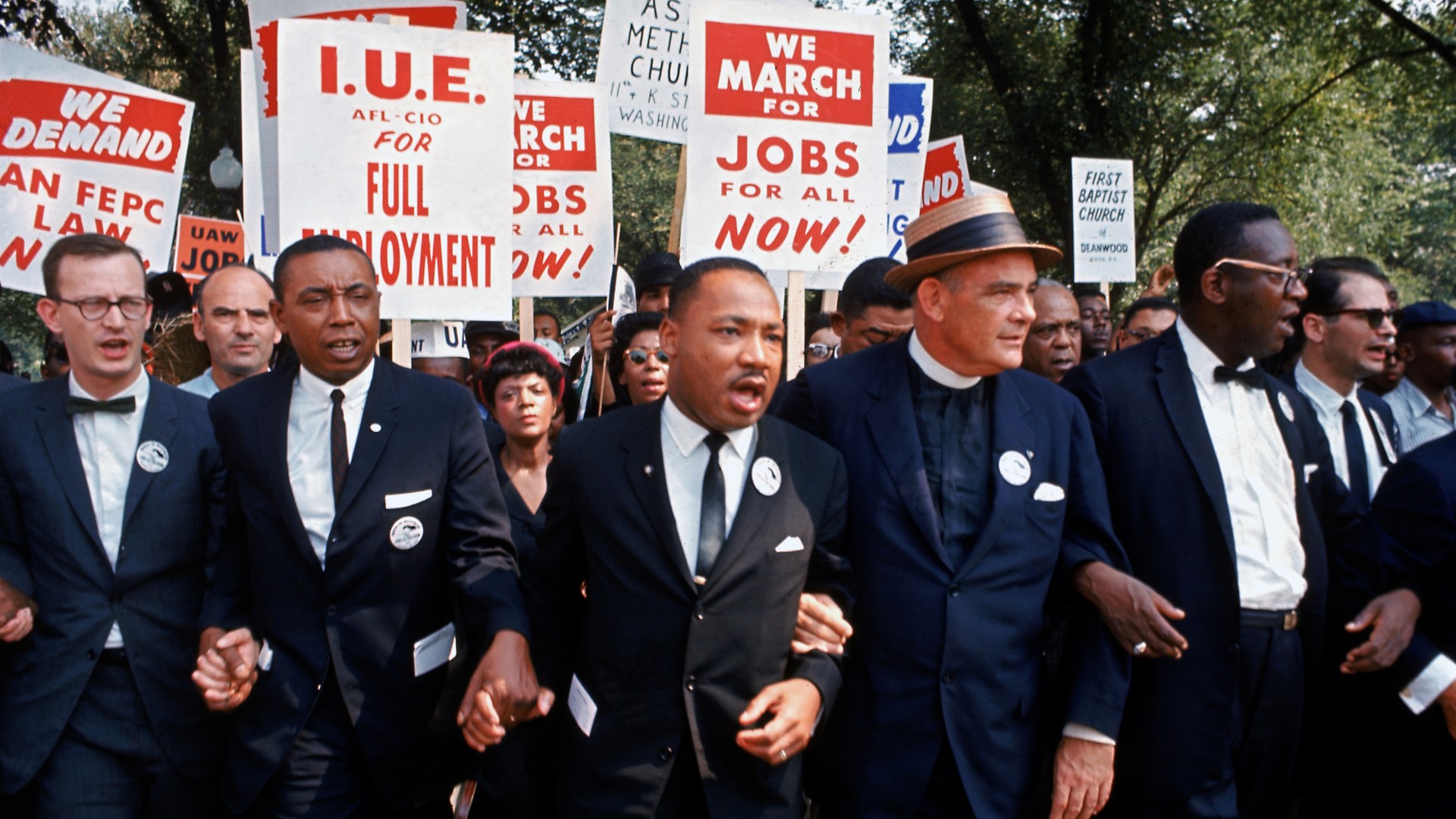
The legacy of Martin Luther King Jr. reminds us to push past tweetable quotes and ‘big talk’ to practice true Christlike love.

Christianity Today January 17, 2021
Robert W. Kelley / Getty Images

For a black boy growing up in Alabama trying to make sense of himself in a hostile world, Martin Luther King Jr. was my hero. Alongside a startingly pale Jesus, a picture of Martin hung beside photographs of my family. I knew Martin by sight. I could recognize the tenor of his voice.

The mental architecture of my young black imagination was formed by grainy videos of mass church meetings and marches and by the hymns and spirituals that threatened to shake the United States to its foundations. I knew about Selma, Birmingham, and Montgomery before I could find them on a map of my state. I do not remember not remembering Martin.

By contrast, the King that I see online on Martin Luther King Jr. Day is a stranger to me. This beloved figure is in part the construction of a society that never fully loved him or the cause he represented. King died an unpopular man. In 1968, the year of his death, 75 percent of Americans disapproved of his views and activities. That was up from 50 percent in 1963.

Today, his approval rating nears 90 percent. Some might suggest that with hindsight, Americans have come to appreciate King in a way that was impossible during the racist era in which he lived. But things are not that simple. If social media is any indication, a large portion of America still hasn’t wrestled with the King of 1968. A USA Today study of the most tweeted MLK lines are startling in their vagueness:

“The time is always right to do what is right.”

“Darkness cannot drive out darkness; only light can do that. Hate cannot drive out hate; only love can do that.”

“Injustice anywhere is a threat to justice everywhere.”

These were not the quotes that stuck to my ribs as a kid. I remember King talking about the need for black people to develop a sense of “somebodiness” that pushed back on the negative portrayals of blackness. I remember reading about the need to reach into the depths of our own souls and write our own emancipation proclamation.

To be for black people in a world of antiblackness, to declare us beautiful when the world said that we were ugly, was a shout of defiance. To call us children of God when we were deemed sons of Ham was part of a long tradition of revolutionary but God-honoring exegesis. To declare that our history of slavery was not a source of shame for us but a story of triumph over impossible odds was a way of rewriting the American story and putting the disinherited peoples of the world on center stage.

As the American public today reckons with enduring racism, it costs very little to be notionally against injustice in the abstract. The audacity of King and the civil rights movement is not lauded. It remains terrifying to the status quo. Many approve of King because, despite the holiday, they know little about his thought.

King was never popular, but what exactly led to his drop in popularity as the 1960s wore on? Two main reasons: He continued to be a truth teller about racism, and he focused on the economic enfranchisement of black Americans. With both, he pushed past big, easy-to-like notions of justice to advocate instead for particular change and particular policies.

Despite the gains of the civil rights movement, King maintained that America remained structurally racist. “The majority of white Americans consider themselves sincerely committed to justice for the Negro,” he said. “They believe that American society is essentially hospitable to fair play and steady growth toward a middle-class Utopia embodying racial harmony. But unfortunately this is a fantasy of self-deception and comfortable vanity.”

With those words, King highlighted a tendency that still persists today: the temptation to set the standards for black flourishing by past mistreatment of African Americans. When compared to the Jim Crow era of the 1920s, 1968 may have seemed like a utopia. But King had the audacity to judge America by objective standards of justice, not by previous terror.

We see the same criticism levied at black leaders now. We are told that America is better than it was in the 1960s, and therefore African Americans should not complain. Ironically, the same America that King was criticized for being unsatisfied with is the basis for modern pushback on the desire for a more just society. If remembering King means anything, it involves a sanctified dissatisfaction with the status quo.

The King of 1968 also pushed white America to move beyond protesting our dehumanization to actually assisting with the construction of a black life. He wrote:

White America was ready to demand that the Negro should be spared the lash of brutality and coarse degradation, but it had never been truly committed to helping him out of poverty, exploitation or all forms of discrimination. The outraged white citizen had been sincere when he snatched the whips from the Southern sheriffs and forbade them more cruelties.

But when this was to a degree accomplished, the emotions that had momentarily inflamed him melted away. White Americans left the Negro on the ground and in devastating numbers walked off with the aggressor.

Those words will not be tweeted or Instagrammed today, but they are troublingly relevant. This last year, the nation surged in outrage at the deaths of George Floyd, Breonna Taylor, Ahmaud Arbery, and others. But it was the sensational nature of these deaths that troubled the country. When it came time to wrestle with the concrete reforms needed to bring change, much of America moved on to other things.

Even now, there has been no sustained national conversation about policy change in light of this summer’s tragedies. Today, as in King’s time, justice is at the mercy of the shifting emotions of an often-apathetic majority.

As the civil rights movement progressed, King’s vision moved the problem of economic injustice to the center stage. The last march that he led was not about integration. It was not about the ability to sit at a lunch counter or ride a bus. It was not about the right to drink from the same water fountain or use the same restroom as white Americans.

Of course, King continued to care passionately about these things from one end of his ministry to the other. But what brought Martin to Memphis was the fight for fair wages and employee safety. He was murdered while in the midst of an economic protest.

His last march supported 1,300 black sanitation workers who were not receiving a living wage and were being forced to labor under unsafe conditions. That project was a part of a larger shift in focus that marked the last years of King’s life. He moved from the violent but also cosmetic forms of injustice to the concrete injustice of economic disempowerment. He knew that it was one thing to say African Americans did not deserve the fire hose. It was another thing altogether to demand a fair wage and explicit policies that provided a path toward economic flourishing.

That was the King the public disdained—the one who fought for economic transformation. The King who had a 75 percent disapproval rating was the King who had the courage to speak plainly about the racism that he saw. It was the King who pushed for specific changes in public policy and corporate practice.

But it was also this King who made space for hope. His hope for the future did not arise from a failure to see or acknowledge racism and white supremacy. His last book names and explores white supremacy at length. What made King special was an unshakeable faith, rooted in his belief in God’s purposes, that racism did not have to be the final sentence in the book of the American story. He believed that “the value in pulling racism out of its obscurity and stripping it of its rationalizations lies in the confidence that it can be changed.”

As pastors, teachers, and Christian leaders who participate in America’s public square, we don’t remember King rightly by pulling a few disconnected words about justice out of context and plastering them all over social media. We remember him rightly by taking an honest assessment of ourselves as a country. This involves both lauding the progress and looking toward the future. And it involves a robust commitment to understanding the link between injustice and economic disenfranchisement.

King didn’t see his economic advocacy as a move toward partisanship. He saw it as the most Christian of activities, a manifestation of love for neighbor. His truth telling was not a mere venting of frustrations. He was doing work similar to the biblical prophets of old. He was holding up a mirror to American culture so that it could see what it had become in light of God’s vision for a just society.

When we pretend we can live above the fray and not get into the rough and tumble of people’s lived experiences, we are becoming less Christian. We are squandering our chance to be witnesses to what is possible. And we are forfeiting our God-given right to dream.

We are blessed that Martin never did.

Esau McCaulley is a priest in the Anglican Church in North America, an assistant professor of New Testament at Wheaton College, and the author of Reading While Black: African American Biblical Interpretation as an Exercise in Hope.
News

March for Life Plans Disrupted by DC Security Concerns

The annual event is asking participants to “stay home” for the first time since Roe v. Wade.

Christianity Today January 15, 2021
Alex Wong / Getty Images

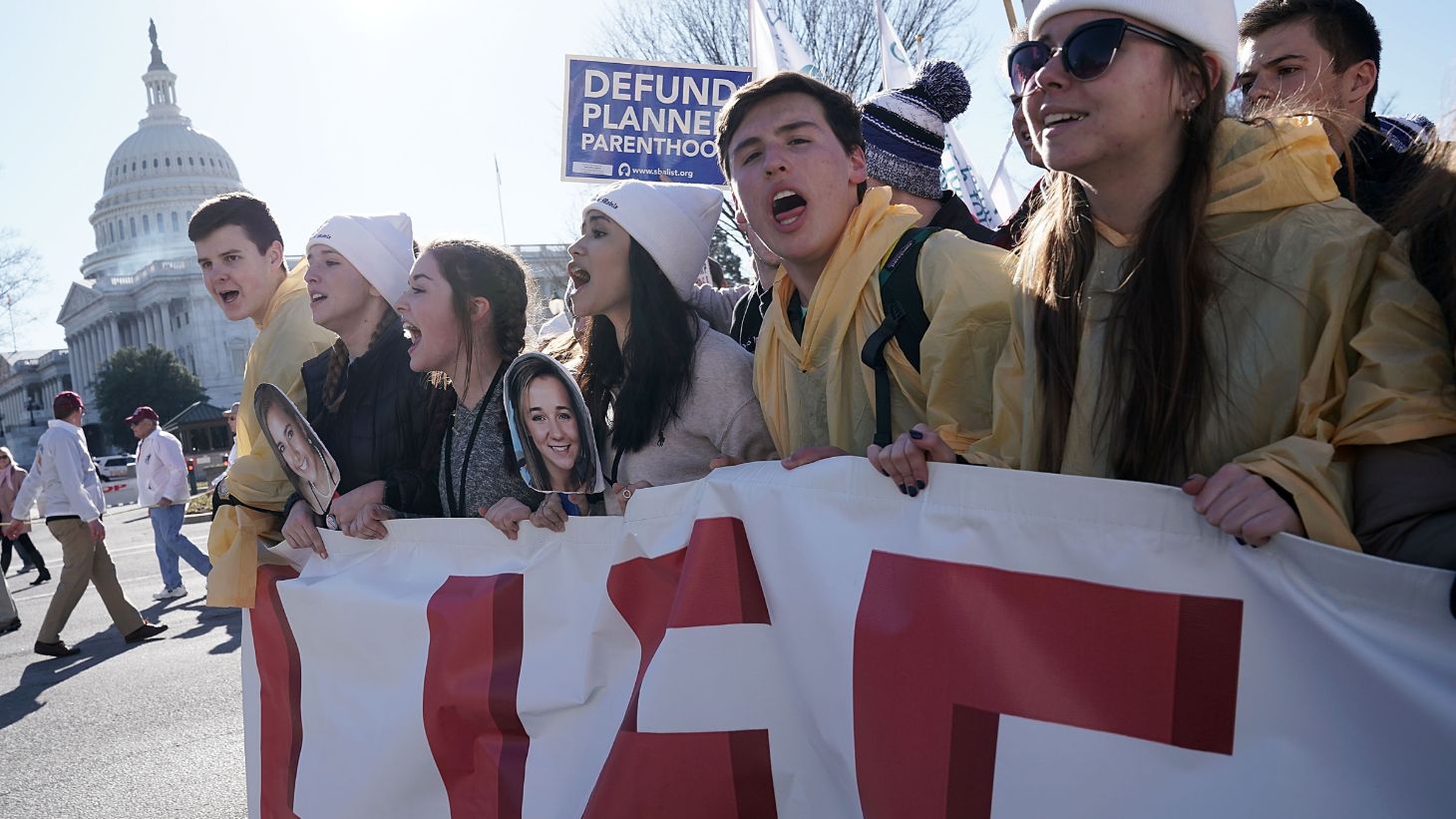
The National March for Life, the biggest pro-life rally in the country, has asked hundreds of thousands of supporters to stay home for the January 29 event, citing the pandemic and security concerns around the Capitol.

It’s the first January since the 1973 Roe v. Wade decision that pro-lifers won’t be gathering in DC to march to the Supreme Court to signal their opposition to abortion. In 2016, the march went on despite DC shutting down before a blizzard that brought nearly two feet of snow.

March for Life organizers shared the change in plans on Friday, inviting participants to a virtual event instead. The National Park Service had announced that the National Mall will be closed through at least January 21, the day after the inauguration, and DC is also under a state of emergency until then.

“The protection of all of those who participate in the annual March, as well as the many law enforcement personnel and others who work tirelessly each year to ensure a safe and peaceful event, is a top priority of the March for Life,” said March for Life president Jeanne Mancini.

While Catholics traditionally took the lead in organizing and attending the rally, the Protestant cohort has grown over the years, including the addition of a corresponding Evangelicals for Life conference five years ago. This year’s speaker lineup included prominent evangelical leaders Jim Daly, Focus on the Family president, and J. D. Greear, the first Southern Baptist president to address the event.

Organizers plan to have a small group of Christian leaders still march in-person to represent the larger group that typically descends on DC for the march, Mancini’s announcement said. As of Friday, Daly was still planning on attending the event in person, according to a Focus on the Family spokesperson. Tim Tebow is scheduled to offer a keynote at a virtual gala following the march.

Attendance was already expected to be down at the event due to the coronavirus. Organizers had planned to require face masks, display signs about social distancing, and urge those with symptoms not to come.

Some state and local marches—including in Arkansas, Hawaii, and Oregon—recently opted to cancel or postpone this year’s in-person gatherings due to “political unrest and the continuing COVID-19 pandemic.”

Ideas

Only Biblical Peacemaking Resolves Racial and Political Injustice

Contributor

No other group is better situated to bring healing to this land than the church.

Christianity Today January 15, 2021
Illustration by Rick Szuecs / Source images: Jacobs Stock Photography Ltd / Getty / twenty20photos / ThemeFire / Envato

Faith, race, and politics were front and center in Georgia’s US Senate runoff. Raphael Warnock, the current pastor of Martin Luther King Jr.’s home church, won a historic election, during which his sermons and social activism were called into question. White evangelicals were appalled by Warnock’s pulpit rebukes of police brutality and militarism. Senator Marsha Blackburn tweeted a snippet of a sermon and said, “Warnock’s radical, anti-American views are disqualifying” and that he should withdraw from the race. Conversely, while many black Christians wouldn’t defend his pro-choice platform (among other secular progressive stances), a lot of us certainly agreed with the assertion that the Bible has something to say about racial injustice. In his book Reading While Black, Esau McCaulley says the “call for individual and societal transformation” is the mainstream black ecclesial tradition. Consequently, the election highlighted the sociopolitical divide between white evangelicals and the black church.

These two groups share the Great Commission but couldn’t be further apart socially. The American church may never agree on partisan affiliation, but what must we agree on in regard to racial justice? The Bible doesn’t make burrowing further into our ideological nests or putting our faith in politicians an option (John 13:34–35). Biblically speaking, what should be our tone and actions when it comes to race and politics?

In 2020, the pandemic forced Americans to distance ourselves physically. Our politics, identities, and worldviews forced us further apart too. We watch the same occurrences and walk away not only with different opinions, but with a different set of facts. And yet, through social media, we’ve bridged our divides just enough to antagonize one another. We make an extra effort to remind those who voted differently that they’re never right and they’re responsible for every wrong. As a new Pew Research Center study revealed, we see little common ground or common cause—even when faced by a deadly virus that does not discriminate.

Not satisfied with giving up on each other, America’s ideological tribes are resolved to punish each other at every intersection. Winning isn’t enough. We must rob every semblance of joy and worth. Even some Christians, abandoning the virtue of charity, choose to believe everything the other side does is meant to harm, deceive, or control them. Civil dialogue and political compromise are left to the naïve. But in this time of great division and belligerence, the church must choose the opposite reaction. We must be peacemakers, especially when it comes to race and politics. But what exactly is peace, and how do we make it?

Some assume peacemaking requires inactivity or silence in the face of disorder and injustice. But true peace is not passive quiet or the absence of action or the silence of indifference. Biblical peace is shalom, meaning completeness, well-being, and right relationship with God and each other. Silence or inaction amid grave partiality and inequality is not peace. When we mute the poor or rob the victim of voice, we deny peace. Gaslighting or shushing the suffering perverts the wholeness and fulfillment Christianity demands.

If black people would just stop talking about America’s past and move on there would be peace. But that confuses peace with personal comfort.

Others suggest that if black people would just stop talking about America’s past and move on there would be peace. But that confuses peace with personal comfort. There have always been those who found comfort amid injustice or whose comfort was built on injustice. The slaveholder who slept cozily on cotton sheets and tithed with his ill-gotten gains was in no rush to have his rest disturbed by the abolitionist’s prophetic witness. Peace defined by such a comfort is of no value in the economy of God.

Neither the warmonger nor the pious bystander is a peacemaker. Those too heavenly or high-minded to soil their ceremonial garb by touching common ground and advocating for their neighbors aren’t peacemakers. Moreover, those who exploit prayer as a copout to neglect the issues God has placed in their sphere of influence aren’t peacemakers either. Their silence condones a conflicted state of affairs and makes them keepers of a riotous status quo.

Peacemakers will engage the conflicts necessary to achieve racial justice, but they won’t be carried away by the moment. In the tensest times, they’ll watch their words, acknowledge their opponent’s human dignity, and guard their hearts from tribalism. They’ll address today’s bleak situation with tenacity and moral imagination, rather than cynicism. This means peacemakers will seek out approaches that transcend the inadequate options offered by ideological conservatives and progressives. They won’t run from reality, but they’ll attempt to reach higher ground rather than settling for the base terrain immediately available.

If majority Christians sincerely want to be peacemakers, they need to reckon with America’s history, realize with humility how it continues to harm people of color, and reform. Due to historical misdeeds and resource inequities, the majority church bears a larger peacemaking burden here, but all of us are obligated. Peacemaking takes work to bring about the harmony a Christian understanding of peace entails (Eph. 4:3).

Acknowledging America’s racial divide, recognizing its historical causes, detailing its present consequences, and demanding justice isn’t divisive. Racism is divisive and responsible for a great number of our society’s ills, but creating storylines where it’s the cause of every problem blinds us to other sins that afflict us. We should be cautious of talking about race in a way that’s more aimed at inflicting pain than persuading. Sometimes speaking the truth about racial injustice with blunt rhetorical force is necessary to drive the point home. But in many cases, being artful, strategic, and shrewd is more productive. Seasoning piercing words with salt often takes more effort but opens the door to peacemaking.

Christians can’t be peacemakers in this polarized age by committing sins of omission. We must unify around the authority of Scripture, which compels us to make peace by dismantling iniquity and treating each other with dignity. We can be bold and passionate when we pursue justice, and we won’t all express ourselves the same way. However, we can’t be vengeful or resigned to permanently separating ourselves from other believers, no matter who they voted for.

Unfortunately, not everyone will have the will or fortitude to endure the sacrifices that come with peacemaking. The unwilling—those more worried about race theories than actual racism—can no longer be allowed to hamper the process. Placating Christians who have no intention of earnestly addressing race or who are too prideful to be corrected is a dead end. Similarly, those who embrace secular theories on race without a solid biblical critique will also stunt peacemaking. In our pain, some of us have run from orthodoxy into the arms of secular prescriptions. Those voices cannot lead this journey toward renewal. Peacemakers must combine orthodoxy and orthopraxy, biblical conviction and social action.

No other group is better situated to bring healing to this land than the church. There are Bible-believing Christians on both sides of the political spectrum, and outside of politics we have a lot in common. We’re stuck with one another for good. We need each other. It’s time to set our partisan hang-ups aside, make peace, and do justice.

Justin E. Giboney is an attorney, political strategist, president of the AND Campaign, and coauthor of Compassion (&) Conviction: The AND Campaign’s Guide to Faithful Civic Engagement.

Books
Review

Herman Bavinck’s Balancing Act, and Ours

As a new biography shows, the Dutch Reformed theologian was adept at navigating perennial tensions of Christ and culture.

Christianity Today January 15, 2021
WikiMedia Commons / Mitchell Luo / Unsplash

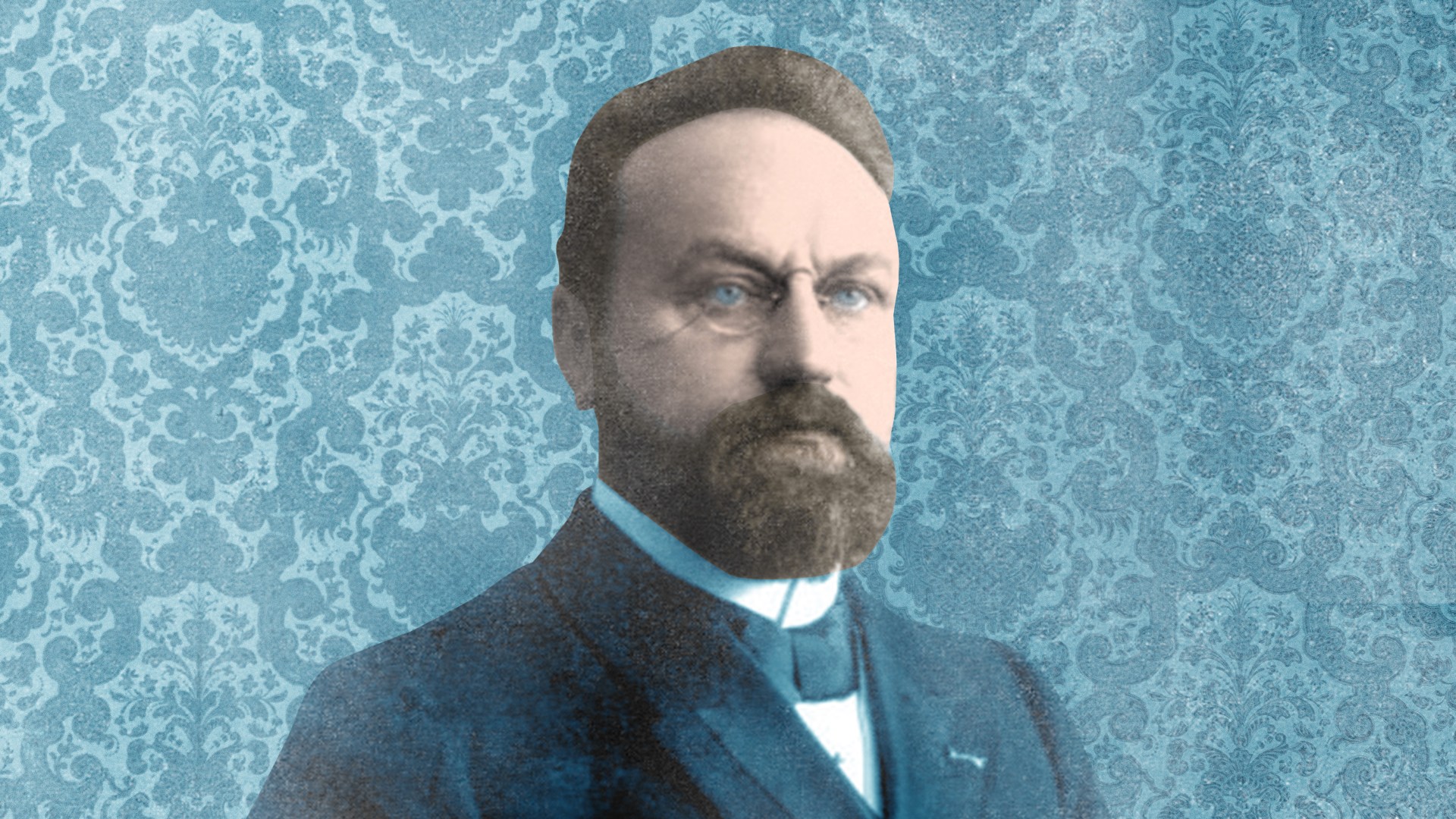
Who is Herman Bavinck, and why should contemporary Christians care about him? James Eglinton’s penetrating new study, Bavinck: A Critical Biography, goes a long way toward answering these questions.

Bavinck: A Critical Biography

Bavinck: A Critical Biography

Baker Academic

480 pages

$17.99

Eglinton, who teaches Reformed theology at the University of Edinburgh, has produced a magisterial work that figures to become the leading biography of the great Dutch Reformed theologian (1854–1921). Along with Abraham Kuyper, Bavinck was an important figure in the neo-Calvinist movement in the Netherlands in the late-19th and early-20th centuries. A theological giant in his own right, Bavinck has received increased attention in the English-speaking world, especially following the translation of his four-volume Reformed Dogmatics, but is still too little known (especially outside the Dogmatics).

Eglinton’s biography provides a welcome correction, surpassing previous accounts of Bavinck’s work in several ways. It is impressively researched, drawing from a wide array of unpublished and frequently overlooked material. Related to this, it provides generally better-informed interpretations of Bavinck’s life and thought, identifying reasons to depart from previous scholarship on a variety of issues. It is also well written and clearly organized, guiding the reader through varied subjects without a sense of wasted space or meandering.

The book’s great theme is that Bavinck, as a theologian, was both orthodox and modern. In the introduction, Eglinton sets up the biography as an extension of his earlier book, Trinity and Organism, which had argued against the tendency to separate these two aspects of Bavinck’s thought. Rejecting what he terms the “two Bavincks” approach (or the “Jekyll and Hyde” Bavinck), Eglinton aims to portray his subject as a man of unified theological vision—a man who was thoroughly immersed in the concerns of the modern world without leaving off the orthodox commitments of his Dutch Reformed heritage.

Holiness and Activism

Eglinton effectively shows how Bavinck aspired to meet the challenges of modernity with neither retreat nor compromise. For me, the fact that Bavinck navigated this tension in an earlier and different phase of modernity (a century ago and in Europe) makes him an especially interesting thinker to engage. Bavinck had a pious upbringing, with his father serving as a pastor in the “Seceder” church (the Christian Reformed Church) that had separated from the state church (the Dutch Reformed Church). It is endearing to read the earnest prayers recorded throughout his youthful journals or to observe how Bavinck came to love his flock even while struggling during his year in pastoral ministry.

At the same time, throughout his theological career he found himself increasingly drawn into engagement with the concerns of the modern world, particularly around the turn of the 20th century. While he never rejected his Seceder background, his circles and interests kept expanding. In his final decades he devoted considerable energy to engaging Nietzsche, World War I, and female suffrage. This tension between unchanging theology and ever-changing culture, as well as between distinctness from the world and engagement with the world, is a challenge that has marked evangelicalism from its outset and continues to the present moment. Exploring how Bavinck balanced these concerns is instructive and inspiring.

Consider, for instance, how expansive Bavinck’s social and cultural vision was, together with that of Kuyper and the neo-Calvinists more generally. Bavinck was active in politics and served as a Dutch parliamentarian for several years. He had global interests and warned of the dangers of colonialism. He frequently spoke and wrote about education policy. After World War I, he spent a great deal of energy addressing the dangers of war. In his later years, Bavinck was an ardent advocate for female suffrage and for valuing the role of women in society. He spoke often to women’s societies around the Netherlands. Earlier he had called upon the Free University of Amsterdam to admit women as theological students.

During his visit to America, Bavinck became deeply concerned about racism, warning about its future consequences. He studied and wrote on all kinds of subjects, especially psychology. (He even wrote about topics like art, travel, and raising teenagers.) He believed the church had a responsibility to care for the poor, and like the English church leader John Stott, he insisted that the gospel included a social dimension, over and against others in the Seceder church who defined it mainly in terms of personal sin and salvation.

What is striking from these facts is how far Bavinck was from being a fundamentalist, despite standing squarely within a relatively conservative theological framework. Bavinck was eloquent in his criticisms of the modernist theology he had experienced as a student at Leiden and elsewhere. Opposing the assumption that Christianity had to be modernized to have a future, Bavinck countered (in Eglinton’s words) that “to have a future, modern culture had to be Christianized.” Thus, for Bavinck, holistic societal engagement was not a departure from his Reformed heritage but its proper expression. In particular, he was sympathetic to Kuyper’s vision of Calvinism as a social force, a dynamic power that must work itself into every layer of society.

All told, Bavinck described his theological outlook as a balancing act that sought to maintain both holiness and activism. When leaving the Seceder school in Kampen to teach at the Free University of Amsterdam in 1902, Bavinck described two different poles within the church of his upbringing: one that emphasized personal holiness and another that emphasized engagement in the world:

There was the idea that we need to leave the world to its own fate, but precisely because I come from the circles that I do, I felt obliged to seek out an education at a university, because that church was in great danger of losing its catholicity in order to hold on to holiness of life. And then the thought arose in me: Is it possible to reconcile these? … My goal is to hold tightly to both, and not to let go of either.

This reference to catholicity brings up another intriguing quality of Bavinck’s Calvinism: namely, its generous posture to non-Calvinists. He was as deeply committed to the Reformed heritage as nearly anyone; it was Bavinck who wrote the foreword to B. B. Warfield’s Calvin as a Theologian and Calvinism Today, a book that ended with the line, “Calvinism is nothing more, and nothing less, than the hope of the world.”

At the same time, Bavinck was not sectarian: He described the spirit of his Calvinism as “cosmopolitan,” and he was dismayed at the failure of various Seceder churches to unite. In response to the threat of Nietzsche, he spoke of a “theistic coalition,” seeking to make Christianity itself, not Calvinism, visible to the culture. Eglinton notes comparisons drawn between Bavinck’s 1906 essay “The Essence of Christianity” and C. S. Lewis’ Mere Christianity a century later, stating that “Bavinck was now balancing an increasingly specific neo-Calvinism in the revised Reformed Dogmatics and a generalized notion of Christianity in the public domain.” Later, he observes that from the time Bavinck delivered the Stone Lectures at Princeton in 1908, he held these two goals equally in view: “For every book on neo-Calvinism, it seems, a Mere Christianity would also be needed.”

A Multifaceted Legacy

Bavinck’s legacy for contemporary Christians is thus rich and multifaceted. To speak personally, before reading this book I had appreciated and used Bavinck mainly for his theological stature. He was an intellect of nearly unparalleled range, one of the theological titans of the modern era—comparable to Karl Barth, perhaps, but less theologically erratic (from my perspective). From Eglinton’s biography I now have a greater sense of Bavinck the man and his broader relevance to the perennial tensions of Christ and culture.

My simple remark to contemporary Christians navigating that tension is this: Bavinck is both more theologically profound and more socially aware than most of us. On both fronts, and especially on the challenge of holding them together, we would do well to learn from his efforts.

Gavin Ortlund is senior pastor of First Baptist Church of Ojai, California. He is the author of Finding the Right Hills to Die On: The Case for Theological Triage.

Culture

‘Soul’ and the Purpose-Driven Generation

Disney Pixar’s latest film reminds us that life is meaningful beyond achieving our goals or saving the world.

Christianity Today January 15, 2021
© 2020 Disney/Pixar. All Rights Reserved.

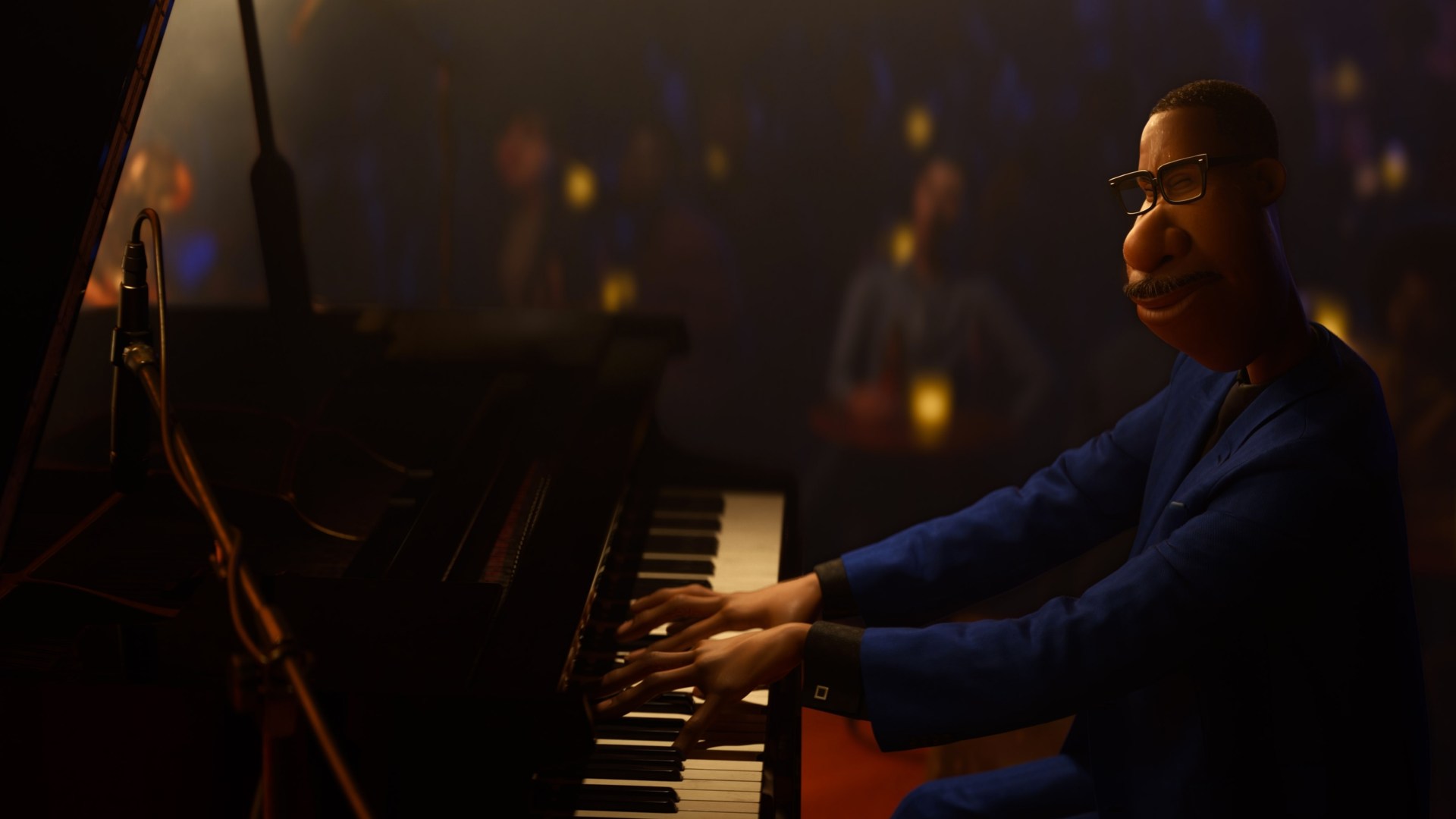
Joe Gardner has always felt like he was “born to play” jazz piano. When he fulfills his dream of playing with famous saxophonist Dorothea Williams, he asks her, “So, what happens next?” She responds: “We come back tomorrow night and do it all again.” Despondently, Joe confesses, “I’ve been waiting on this day for my entire life. I thought I’d feel different.”

Disney Pixar’s Soul offers a surprisingly heady philosophical message to a distressed generation that is trying to find purpose through meaningful work. The film’s main insight is something Christians already know: There’s more to life than our accomplishments. In fact, this realization is what inspired the film’s concept, according to director Pete Docter. After completing the popular Pixar film Inside Out, he was left wondering what was next. “I realized that as wonderful as these projects are, there’s more to living than a singular passion,” Docter said. “Sometimes the small insignificant things are what it’s really about.”

Docter’s message is embodied in the character of Joe Gardner (Jamie Foxx), a part-time music teacher who has greater aspirations to perform professionally as a jazz pianist. His whole life is encumbered with reaching this one goal, but when he finally gets his break with Dorothea Williams (Angela Bassett), Joe takes an unfortunate fall that nearly destroys his dream—casting him into the afterlife.

The afterlife consists of two parts: the Great Before and the Great Beyond. Joe finds himself in the Great Before—a place where new souls find their personalities and their “spark”—activities or experiences that captivate the imagination. There, he meets a disembodied soul named 22 (Tina Fey). She has no interest in life on earth or what seems to give life meaning, from work to sports to knowledge. For 22, life is purposeless if there isn’t one magnificently wondrous reason for living. The two set out on a mission to find 22’s “spark.”

In recent decades, young adult Christians have set out on similar expeditions for a “spark,” searching for that one big thing to accomplish for our faith. We too are subjected to feelings of purposelessness if we aren’t becoming or doing grandiose things “for the sake of the gospel” (1 Cor. 9:23). Popular books like Rick Warren’s The Purpose Driven Life (2002), John Piper’s Don’t Waste Your Life (2003), and Alex and Brett Harris’s Do Hard Things (2008) challenged us to live missionally and jump out of our comfort zones to accomplish great things. But they were inadequate guides for the mundane parts of life. As many millennials found themselves working a 9-to-5 to keep food on the table and the lights on, some asked themselves whether their routine lives testified in any grand way about the gospel of Jesus Christ.

Such questions are compounded in a loaded year of a pandemic, ongoing racial and social injustice, and political strife unlike our generation has seen. Our souls have been conditioned to do something so extraordinarily impressive and effectual that a year of quarantining, distancing, and being still feels like a betrayal to our Christian witness. But when we apply a capitalistic “can do-ism” to our work for God, we are in danger of denying the very grace we claim we depend on.

Searching for meaning in our abilities and dreams rather than a humble reliance on Christ can leave us falling prey to the idolatrous spell of self-worship. The results of such an exchange can prove detrimental to our physical, mental, and spiritual health.

Joe Gardner witnesses firsthand the consequences of idolizing our life’s purpose. While attempting to return to his body on earth, sailing along the Astral Plane (a mental construct between the physical and spiritual planes), he observes “lost souls” aimlessly searching for something. Moonwind (Graham Norton), a member of the Mystics Without Borders is “devoted to helping the lost souls of Earth find their way.” He explains to Joe that these souls are individuals who at one time or another found themselves “in the zone,” blissfully given to the excellency and enjoyments of their craft. But at some point, they were unable to “let go of their own anxieties and obsessions, leaving them lost and disconnected from life,” and became unrecognizable and empty versions of themselves.

Our work and aspirations can never fulfill us in the ways we were designed to be fulfilled. Author Cleo Wade recently echoed the message of Soul, encouraging anyone susceptible to this subtle idolatry to “let go of trying to identify yourself by one idea or goal. Instead, commit yourself to bringing purpose and passion into each conversation, workspace and home space you are a part of.”

The Christian, however, takes it a step further. We commit ourselves to bringing the passion of Christ into every area of our mundane lives. In doing so, we experience what it means to be alive and be human in ways God designed us to be. “If we bear in mind that our daily doings can ‘aim our love and desire toward God,’ our labor ceases being drudgery,” wrote Jamie Hughes.

When we’re living big lives, sprinting from task to task while focusing on nothing in particular, tea is little more than a shot of caffeine. But if we’re in tune with God and living at the slower pace required for worship, teatime takes on added dimensions, becoming a “wonder of hot water and dried leaves” that provides sanctuary.

Jesus exemplified this for us. Jesus “came to show us how to be human,” said pastor Zach Lambert. “How to love God and our neighbor. How to depend on the Spirit and see its fruit manifest in our lives. How to care for the hurting and needy among us. How to fight for justice and against oppression.”

But for someone who’s constantly seeking to find meaning in the next big thing for her life, everything will continually feel meaningless. We can miss out on the life God has put before us. Like Joe, we too can overstress the idea we were “born to do” something. But the truth is that we weren’t born to do anything but abide in Christ. We live in Jesus (Acts 17:28). It’s possible we define our worth by our purpose and subsequently blind ourselves to the greatest blessings and wonder of being defined by our identity in Christ (Col. 3:3–4).

Hopefully, 2020 reminded us to appreciate the wonderful gift of abiding. And if not , Soul prompts us to devalue the ceaseless chase of a singular purpose and find meaning in ordinary life, because God is the one who provides the meaning for us.

Timothy Thomas is a high school teacher and contributor for Christ and Pop Culture.

News

Houston Megachurch Pastor Sentenced to Prison Over $3.5M Fraud Scheme

Church leaders believe entrepreneurial pastor Kirbyjon Caldwell already accounted for the wrong by apologizing and repaying investors.

Kirbyjon Caldwell

Kirbyjon Caldwell

Christianity Today January 14, 2021
David J. Phillip / AP

A Houston megachurch has sided with its longtime pastor, Kirbyjon Caldwell, and expressed disappointment in a recent sentence that will send him behind bars for six years for his role in a fraudulent investment scheme.

After Wednesday’s sentencing in federal court in Shreveport, Louisiana, the leaders of Windsor United Methodist Church defended Caldwell, who has served the church for 38 years but gave up his title as senior pastor when he pled guilty in the faulty Chinese bonds case last year.

“We’re very disappointed that Caldwell’s contributions to society and his extraordinary efforts to make every victim whole resulted in [this] sentence,” said Floyd J. LeBlanc, chairman of the church’s personnel committee. “We look to God because we believe God has a final answer in everything.”

Caldwell, a spiritual adviser to President George W. Bush, was known for his entrepreneurship and philanthropy. Through the predominantly African American church and his own projects, he invested millions into community development and job creation in southwest Houston.

The fraudulent scheme, which totaled $3.5 millions of bonds targeting elderly investors, has led to him and his Louisiana-based investment adviser being charged with conspiracy to commit wire fraud; both pleaded guilty.

In a video on behalf of the church staff, LeBlanc blamed the adviser and emphasized that Caldwell was also a victim in the scheme, having first invested in the Chinese bonds himself. The church believes that his generosity and desire to pay back victims had already accounted for the wrong he’d done.

UM News reported that before his sentencing, the 67-year-old pastor told the judge, “This experience has brought me to the valley of disgrace and dishonor. I’m ashamed of my actions.”

Caldwell said he has repaid his victims more than $4 million, including over $1 million prior to the 2018 indictment.

According to UM News, Caldwell’s lawyers “pleaded for him to be confined to his home, rather than going to prison, citing his ongoing treatment for prostate cancer, as well his hypertension and the threat COVID-19 poses for those incarcerated with underlying conditions.” The judge deferred his report date to June.

The 16,000-member church is currently led by pastor Suzette Caldwell, Kirbyjon’s wife. Both have been outspoken and involved in ministry throughout the pandemic, including each preaching the last two weekends.

United Methodist Bishop Scott Jones offered his prayers in a statement after sentencing and acknowledged the pastor’s “sincere expression of remorse.”

The church’s statement concluded by saying, “The Lord will see our Church Family through this season. Let’s continue to have faith and pray together. Be encouraged by Psalm 30:5, which promises that joy will follow sorrow.”

News

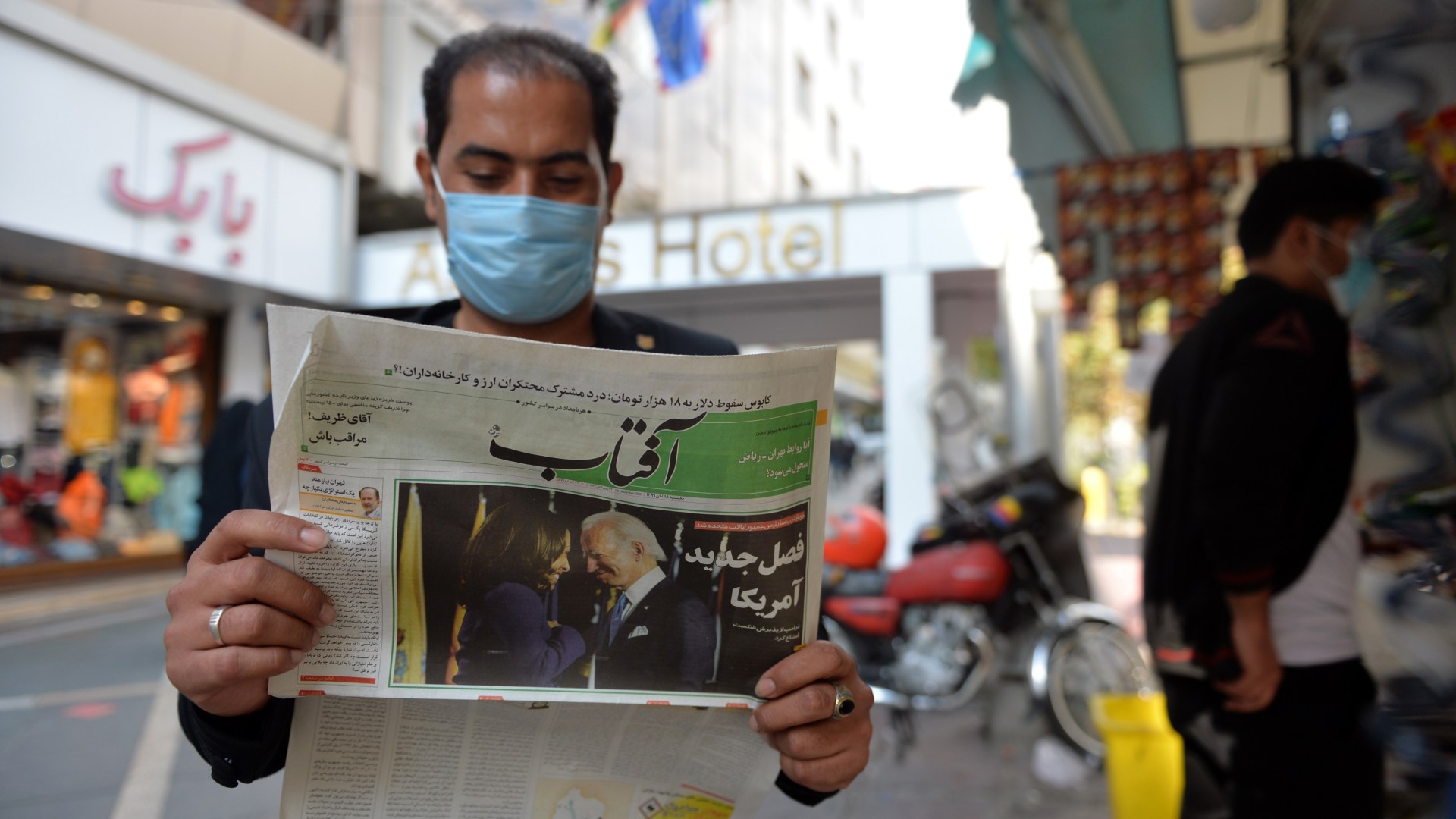
Trump and Biden Disagree on Sanctions. So Do Evangelicals Outside the US.

Longstanding foreign policy tool impacts national economies. But evangelicals from US to Syria and Iran differ on who deserves blame.

Christianity Today January 14, 2021
Anadolu Agency / Getty Images

If President-elect Joe Biden makes good on his campaign rhetoric, his sanctions policy will meet the approval of the World Evangelical Alliance (WEA).

Back in April, as even the strongest nations reeled from COVID-19, then-candidate Biden petitioned the Trump administration for sanctions relief on the hardest-hit nations—including Iran and Syria.

“In times of global crisis, America should lead,” he said.

“We should be the first to offer help to people who are hurting or in danger. That’s who we are. That’s who we’ve always been.”

In September, the WEA joined Caritas, the World Council of Churches, and others to similarly petition the United Nations’s Human Rights Council.

“We are deeply concerned about the negative economic, social, and humanitarian consequences of unilateral sanctions,” read their statement, ostensibly singling out the United States and its European allies.

“It is a legal and moral imperative to allow humanitarian aid to reach those in need, without delay or impediment.”

One month later at the UN, China led 26 nations—including sanctions-hit Cuba, North Korea, Iran, Russia, Syria, and Venezuela—to assert that the economic impact impedes pandemic response and undermines the right to health.

This is “disinformation,” said Johnnie Moore, appointed by President Donald Trump to serve on the independent, bipartisan US Commission on International Religious Freedom (USCIRF).

He called the WEA statement “almost indefensible.”

“Sanctions against countries that imperil their citizens and the world is good policy,” Moore said. “It has proven to be an effective alternative to save lives, alongside diplomatic channels to coerce long-term positive behavior.”

Western nations had already issued fact sheets to undermine China’s claim.

Detailing food, medical, and humanitarian exemptions, the US and European Union (EU) demonstrated that sanctions target regimes and their supporters, not the general population.

Christian Solidarity International, however, cited a Lancet study that found sanctions were among the biggest causes of sufferings in Syria. And it examined the “dense, legalistic detail” in the EU’s explainer, noting that exemptions required negotiation with all 27 member nations.

Representatives of the Syriac Orthodox, Greek Melkite, Armenian evangelical, and Presbyterian churches in Syria have all called for relief.

“Sanctions don’t succeed in overthrowing anti-Western regimes,” said Joseph Kassab, secretary general of the Supreme Council of the Evangelical Community in Syria and Lebanon, citing Saddam Hussein in Iraq and Hugo Chavez in Venezuela, among others.

“These examples prove that sanctions are a joke for regimes, and misery for civilians.”

Fuel costs have increased 50 percent in Syria, he said, and bread lines have formed throughout the country. And testing for COVID-19 is only available in Damascus.

First leveled against Syria in 2011, US sanctions responded to President Bashar al-Assad’s violence against peaceful protests. Four years later, the US associated them with UN resolution 2254, to compel a political transition. There has been little progress toward the stated goal.

Last June, the US increased pressure with the Caesar Act—secondary sanctions against outside parties cooperating with the regime. It paralyzed Syria’s banking and construction sectors.

Confessing the internal roots of the ongoing war, Kassab sees also the manipulation of regional and international powers. There are natural gas and oil interests at stake, amid bids to normalize with Israel. Until the US and Russia work out an agreement, the people are made to suffer.

“Unfortunately, we still need to wait,” said Kassab.

“Yet with hope, trusting that God is the Lord of heaven and earth.”

Wissam al-Saliby, the Geneva-based advocacy officer for the WEA, took his responsibility seriously. He reached out to both evangelical and secular aid organizations working in Syria, and conferred with Christian ministries working with Iranians.

And he also reviewed WEA history.

“We are not against sanctions as such, in order to put an end to gross violations of human rights, war crimes, and crimes against humanity,” Saliby said, recalling a 2007 statement in favor of unilateral US sanctions on Sudan.

“But how can anyone support these sanctions, when the exemptions are not working?”

Large organizations may be able to decipher the legal steps necessary, he said. But churches and smaller Christian aid groups do not have the resources to do so.

Caritas, a large Catholic charity, led the statement to the UN due to its ministry difficulties. The “chilling effect” of sanctions makes banks unwilling to work with almost any activity in Syria.

Kassab added that even when humanitarian channels are engaged, money is legally transferred at the official rate of exchange, not its true market value. As an example, the funds raised to rebuild the two-story Presbyterian church in Aleppo, destroyed in the war, were only sufficient for the ground floor.

The complications also spill over the border, Saliby said. Foreign banks have refused transfers to Lebanon when told the money will be used by churches in Syria. And resident Syrians involved in church-based refugee work have been denied opening a Lebanese bank account.

Instead of blanket sanctions, many human rights advocates have championed an individual approach. In 2016, the US Congress passed the Global Magnitsky Human Rights Accountability Act, allowing targeted sanctions against violating officials and institutions in order to avoid impact on the general population.

For example, Hong Kong official Carrie Lam, implementer of the security law placing the island democracy deeper under the control of China’s mainland government, is now reduced to cash transactions. She publicly complained how her US status as a “specially designated national” has forced her out of the banking system entirely.

China, Iran, and others “cynically tried to exploit the pandemic,” said Moore. And given that China and Russia have veto power at the UN, he said the WEA makes a mistake to encourage the US to “outsource” its human rights policy to the review of such serial abusers.

“We are not America,” said Saliby. “We are a global body that listens to our constituency all over the world.

“Our role is to see the church be missional—especially in service to the poor and suffering.”

But independent of the WEA, Saliby is also a Lebanese citizen.

Designed also to punish corruption, Magnitsky sanctions were recently applied with mixed reaction in his home country.

Hezbollah, a Shiite militia and political party designated a terrorist entity by the US government, had long been subject to US sanctions. But in November, Magnitsky sanctions were applied to Hezbollah ally Gebran Bassil, head of Lebanon’s largest Christian party.

As a government minister, the US said Bassil steered contracts to favored individuals. But his designation “builds on” previous counterterrorism sanctions.

Alberto Fernandez, president of the US-funded Middle East Broadcasting Networks, lauded the move as it expanded American pressure against more than one entity. Bassil previously played a “double game” with America, seeking support for Lebanon’s Christians while siding politically with Iran-backed Hezbollah.

But others were concerned by American politics.

“When all you have is one arrow, you run into problems,” said Edward Gabriel, president of the American Task Force for Lebanon.

“Sanctions will not scare Hezbollah away. They are part of the Lebanese fabric, and must be dealt with deftly.”

Saliby noted that all Lebanese politicians are understood to be corrupt. But if the US is going to specifically accuse only certain individuals, it plays into the accusations of political interference.

Gabriel agreed.

“This seems like an attack on [one Lebanese political alliance]; will there be sanctioning of [the other]?” he said.

“And if you won’t prove it publicly, don’t do it.”

Similarly, diaspora-based Iranian Christian leaders were torn.

“There is no doubt the sanctions will impact average Iranian citizens negatively,” said Mike Ansari, president of Heart4Iran Ministries. “But many Iranians who contact our TV channel identify poverty as a result of the Iranian regime’s systematic corruption and plundering.”

He expressed “surprise,” however, that some callers welcome the sanctions, hoping it will bring down the government.

So far, Ansari said, the result is to drive Iran further into the embrace of China.

For Hormoz Shariat, president of Iran Alive Ministries, Iranians have nowhere else to go.

President Barack Obama unfroze billions of dollars in Iranian assets to secure a nuclear deal. But that money was spent on corruption and foreign proxies, Shariat said, not on the people. And now that Trump’s renewed sanctions are crippling the government, the US should not let up.

“Life cannot get much worse than it is,” Shariat said. “And if the sanctions are removed, it will only help the government survive, and oppress its people longer.”

But traditional sanctions theory does not hold, he said.

Sanctions do not change regime behavior. They do not drive the people to revolt.

What Shariat hopes for instead is government infighting. As resources dry up, his gut feeling is that the vaunted Revolutionary Guard will overthrow the ruling mullahs—and install a secular system.

“I believe the days of the Islamic government are numbered,” he said. “The change will be sudden, and we Christians must be ready.”

While this may be in line with Trump’s policy goals, Biden’s use of sanctions remains to be seen. The president-elect has many foreign policy concerns—and different constituencies to please.

Will WEA-aligned evangelicals be one of them? Or USCIRF’s Moore?

“My peacemaking friends [in the WEA] ought to have signed on to exactly the opposite statement,” Moore said, expecting Biden will keep existing sanctions in place.

“They should encourage countries to partner together to use sanctions as a tool to avoid war, within the vision of a more just and peaceful world.”

Saliby, however, does his best to balance—but with conviction.

“In any given conflict, we bridge between evangelicals with different views, and it is a privilege to play this role,” he said.

“But what is certain is the grave humanitarian consequences of sanctions, especially in a time of a global pandemic.”

Church Life

God Called Me to Encourage Fellow Black Students in White Coats

CCCU Young Alumni Award winner discusses how diversity in medicine improves care for the most vulnerable.

Christianity Today January 14, 2021
Portrait: Courtesy of CCCU / Source Images: National Cancer Institute / Edits by Mallory Rentsch

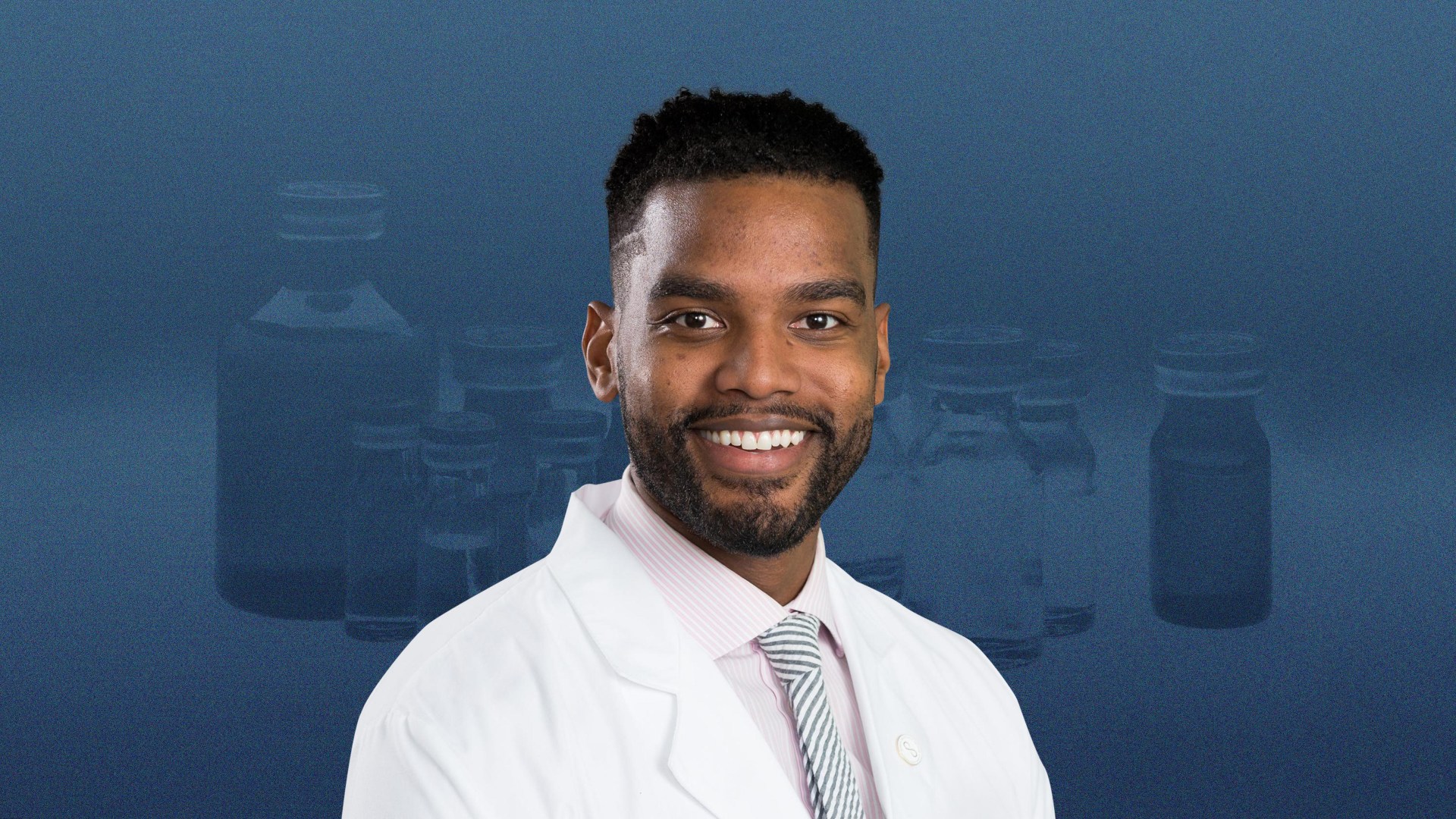
Thirty-year-old medical student Emmanuel McNeely considers his life goal and God-given calling to work toward gender and racial diversity in medicine.

“That way we can help eliminate health disparities and really improve health outcomes for all races,” said McNeely, a 2012 graduate of Palm Beach Atlantic University currently pursuing his doctorate in medicine at the Florida Atlantic University’s Charles E. Schmidt College of Medicine.

As an African American med student planning to specialize in orthopedic surgery, McNeely believes his career ambitions are a direct result of a surgeon who took the time to mentor him. He has co-founded The Dr. M.D. Project to provide more minority students with guidance in the field. The project earned McNeely the 2021 Young Alumni Award from the Council for Christian Colleges & Universities (CCCU).

McNeely, “embodies the whole-person love and care that Jesus himself models for us in Scripture,” said CCCU president Shirley Hoogstra. “The global pandemic has highlighted just how important it is for us to have medical professionals like Emmanuel who are committed both to serving and training up the next generation of leaders within underrepresented communities.”

Study after study has detailed the health disparities between black and white patients in the United States, with black Americans suffering from diseases like diabetes, hypertension, and heart disease at higher rates while receiving lesser care.

Researchers have found that black patients seen by black doctors have better health outcomes, but only around 5 percent of active physicians are black, according to a 2018 survey by the Association of American Medical Colleges.

A Chicago native, McNeely’s life changed at age 19 when he shadowed his mentor—Dr. Edgar D. Staren at the Cancer Treatment Centers of America—doing a gallbladder removal. He left the operating room with the boost of confidence knowing Staren believed in him and wanting to become a surgeon too.

“I felt empowered. I thought, ‘He’s patient. He believes in my abilities, and he’s taking the time to actually teach me,’” he said. “That was a defining moment.”

Through the challenges of pursuing a career in medicine and the weight of the current racial tensions, McNeely said his identity in Christ has given him the confidence to move forward and hope for progress.

As part of The Dr. M.D. Project, which he runs with his wife, Sa’Rah, McNeely hosts workshops featuring his own insights and expert speakers such as human resource managers, African American surgeons, and department heads. He also facilitates a virtual professor mentorship by connecting students with mentors in their desired professions.

“Sa’Rah and I had overcome so many hurdles and learned as we went,” he said. “That was really the driving force for us creating The Dr. M.D. Project—to give guidance, encouragement, and also instruction on how to really get over obstacles, get over adversity, and pursue your dreams.”

The couple also belongs to All Nations Worship Assembly in Baltimore, where Emmanuel McNeely plays drums in the worship band and hosted a virtual comedy show during the pandemic. “The Bible says a merry heart does good like a medicine,” he said.

McNeely, who is slated to receive the CCCU award at a ceremony in March, recently spoke to CT about the work of The Dr. M.D. Project and how Christ led him to pursue more equitable medical care for all people.

Share a little about your passion for the intersection of faith and calling.

I was once asked in a medical school interview how I foresaw my faith hindering my future practice of medicine. They looked at my resume and saw that I was very involved in church. That really struck me because I recognized that faith can be looked down upon for someone wanting to serve in a field of medicine.

I grew up with two parents who were very involved in the church, and we were really big on showing the love of Christ by shining our light so that others could see it. For me, faith meant more for me to actually show the love of Christ. In medical school, they teach us that African Americans have predispositions to diseases that other people don’t necessarily have. Therefore, to love our neighbor is to provide them the best care.

Tell us about your story and how you came to Christ. Obviously, you grew up in church, but is there a particular time when you went from “lost” to “found”?

My story starts at about six years old. That’s right about when I really understood that Jesus died for me, that someone loved me enough to die for me, and because of that, I’ll have eternal life. But I will say that high school is when I really came into finding my identity in Christ. A lot of people recognized me as being different. I played on the football team, and they’d say, “Hey, preacher boy! You have to pray before the game!” I had no clue how they knew I was a Christian, but that’s when I got a good understanding that you shine your light. You don’t have to preach at people. God will peek through, and that light will shine in a dark place, and he’ll get the glory from it.

What drew you into medicine, even what specifically drew you to surgical medicine?

I knew I liked chemistry. I was thinking about some kind of career in medicine. I got that opportunity to shadow Dr. Edgar D. Staren after I got a job at Cancer Treatment Centers of America. [I realized] there was something about caring for someone who is at their lowest state. I worked as a chemotherapy technician and I made chemotherapy, but it wasn’t until I actually shadowed Dr. Staren and went into the operating room when I saw that I could take someone from their lowest state and, after the surgery, bring them back to a [better] place. It really made me think about Christ and how he takes us from a broken place and puts us back together again. He’s the Great Physician.

Share your thoughts on this year’s collision between the medical world, with the pandemic, and the rise of racial tensions. How do you fit into all of this, how does your mission fit into this, and how does The Dr. M.D. Project fit into this?

The blessing about getting to the point where we are, though we have a long way to go, is that Sa’Rah and myself are afforded a platform. We’re afforded a seat at the table during this pandemic. I’ve been invited to rooms to speak about what was going on in the media with George Floyd and all the protests. It’s a really unique opportunity to be at the table and to speak for the community.

Everyone should be represented within medicine, and if minorities, specifically black patients, are vulnerable to certain diseases, you better believe we need them represented at the table. We need black physicians, and we need minority physicians. For me, 2020 has really amplified the need for more black physicians—male and female—to be at the table.

I was able to actually work with The Johns Hopkins Hospital on their “Stand With You” video, and I was blessed to be featured on the news to speak about racial tensions and the video. [2020] really highlighted the need for black physicians. It also highlighted the need for gender and racial harmony. In a white coat, I can be a hero.

If you had an audience of students in front of you right now, what would be the first thing you’d say to encourage them?

The first thing I would tell them is that it’s possible. You don’t need to compare yourself to others or question your ability. But what you do need to do is to find a mentor—someone who’s doing exactly what you want to do—and to learn from them. Get guidance and instruction. My last piece of advice would be to never quit. Let your passion drive the pursuit of your dream. If you’re passionate and you’re willing to work hard enough, you can accomplish anything.

For all the students out there, can you share about the importance of study?

I believe studying is important because it enhances critical thinking. As a future physician, we are taught in medical school how to think critically and how to be detectives. We rule in diagnoses, and we rule out diagnoses. Someone presents to you and you have to identify a whole list of potential causes for their current condition. I believe studying is so important because it allows you to really enhance your critical thinking skills.

I really live by “study to show yourself approved” (2 Tim. 2:15, Modern English Version) and “whatever you do, work at it with all your heart, as working for the Lord, not for human masters” (Col. 3:23). If I’m studying, I do it as an offering to God. If I’m learning, I’m doing it for that patient that I’m going to be taking care of late at night, and they’re there alone and need a fully faithful, energetic, confident, and competent surgeon to take care of them at their most vulnerable state.

What was it like to study at a Christian college and to be a part of a Christian academic community?

At any college, Christian or not, the students are under immense stress. They’re trying to identify who they are. They’re trying to figure out their next step. For me, Palm Beach Atlantic University was beautiful, because I incorporated faith in my pursuits—I had a reason for why I was studying. When I felt depressed, I leaned on the Lord. I would go to chapel, and our campus pastor would be preaching on motivation. I would go in empty, and I would return filled. Then I would go right across the street to the library, and I’d sit there fueled and impassioned because there was purpose to my studying.

I really believe faith-based learning gives a purpose; it gives you a why. A lot of students are asking, Why am I doing this? I know what I want to do, but why? Christian education is so important because it defines your why. We do everything unto the Lord for his glory, and he allows us to do great things for his glory.

Rachel Kang is a writer and the creator of Indelible Ink Writers. Her first book, on creativity as calling, is due out in 2022.

News

Most Evangelical Trump Voters Didn’t Turn on Mike Pence

While Trump extremists set the vice president up as a traitor, most believers stood by his decision to confirm the election.

Christianity Today January 13, 2021
Megan Varner / Getty Images

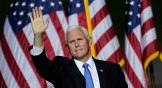
At a farewell gathering last Friday, outgoing Vice President Mike Pence recalled the Bible reference his chief of staff texted him after he certified Joe Biden’s victory, The Washington Post reported. It was 2 Timothy 4:7: “I have fought the good fight, I have finished the race, I have kept the faith.”

Pence was pushed into the political spotlight during the tense final weeks of the presidential term, as he refused President Donald Trump’s demands that he use his position to fight the election results and then refused Democrats’ demands that he invoke the 25th Amendment to remove Trump from office.

But Christian political scientists say recent events won’t do much to separate Pence’s legacy from Trump’s contentious shadow. MAGA loyalists will side with the president over him, and evangelicals who respected Pence’s character from the beginning see his conscience on display as he broke from the president’s campaign to discredit the election.

Pence was welcomed on to Trump’s presidential ticket back in 2016 largely for his faith. One of the most outspoken evangelicals ever elected vice president, he was framed as the kind of moral, dependable politician Republican Christians could trust—before Trump built up his own evangelical networks and ties.

Though the VP spent most of the past four years working in the background and standing by the president, that dynamic has shifted in recent weeks. Pence has taken a place in the political spotlight and opposed to Trump, who said his vice president “didn’t have the courage” to reject the congressional confirmation of the election, though Pence insisted he did not have constitutional authority to do so.

For evangelicals who backed Trump, “I think that actually many within this community were more stung by Trump’s open criticism of Pence than by what Pence chose to do in his refraining from exercising a questionable power,” said Scott Waller, politics professor at Biola University.

“Pence was a faithful supporter of the president and his policies. To throw him under the bus, as he did in the waning hours of his presidency, probably diminished Trump’s reputation among evangelicals much more than anything Mike Pence has done in the last two weeks.”

After legal challenges to vote counts failed in several states, the president and the “Stop the Steal” crowds repeatedly called on Pence to overturn the election and keep the hope of a last-ditch Trump victory alive. Ahead of the Capitol breach last Wednesday, rioters chanted “Hang Mike Pence” and erected a wooden gallows on the lawn. The morning after, with Biden’s win official, people calling Pence “Judas” trended on Twitter.

Some conservative Christians have risen to defend Pence from the extreme attacks.

https://twitter.com/DavidBrodyCBN/status/1347010383463198722

David Brody, a Christian Broadcast Network commentator and Trump supporter, also spoke up on his behalf on Twitter, saying he deserved to be treated better for his longtime loyalty to the president.

Rick Santorum, a Catholic Republican, called Pence “the indispensable leader America needed.” Focus on the Family president Jim Daly applauded the vide president for “doing what’s right.”

https://twitter.com/DalyFocus/status/1346992043285909507

Most evangelical leaders’ political statements have been focused more on the president, though.

“This is a complicated political environment. I did not hear many evangelicals who support Trump defending Pence,” said Mark Caleb Smith, political scientist at Cedarville University. “I also believe that most of the criticism of Pence probably came from non-evangelicals. At that moment, evangelical support for or against Trump was a more defining political characteristic than support for or against Pence. I suspect this is true for most voters, including evangelicals.”

It’s approval levels for the president that define Americans’ views of an administration, even more so with a leader as attention-grabbing as Trump. Though Pence offered some evangelical reassurance in the beginning, “support for President Trump grew among evangelicals regardless of Vice President Pence’s presence,” Smith noted.

Through his closest spiritual mentor, Paula White-Cain, Trump developed his own relationships with televangelists, pastors, and ministry leaders. In the 2020 campaign, white evangelical enthusiasm grew, as a majority told pollsters they were casting their ballots for Trump, and not just against his opponent.

Franklin Graham said the Capitol violence wouldn’t deter evangelicals from supporting Trump, whom he has urged to meet with the incoming president and vice president to ensure a peaceful transition of power. But the evangelical ministry leader saved higher praise for Pence, saying, “Our nation has been blessed to have this man serve as Vice President for four years. I thank God for him and for his character, integrity, and wisdom.”

Texas pastor Bob Roberts—who had criticized the administration’s policies around immigration, refugees, and Muslims—thanked the VP for his stand. “As a brother in Christ know that thousands if not millions of us are praying for your continued wisdom, endurance, courage & leadership,” he tweeted.

A majority of Americans (68%) as well as a majority of evangelicals (60%) agree with the vice president’s decision not to interfere with the certification process, according to a Politico/Morning Consult poll.

“I doubt Pence’s decision to abide by his constitutionally prescribed duties altered his standing among many evangelicals. They either liked him from the start, or they were ambivalent until he turned on Trump,” said Daniel Bennett, political science department chair at John Brown University.

Pence was raised Catholic and became born-again at a Christian music festival in college; he and his family attended an Evangelical Free church in Indiana, where he advocated for pro-life policies and religious freedom. Pence continued to reach out to evangelicals and champion their causes—speaking at events like the March for Life and the Southern Baptist Convention annual meeting.

“Other than George W. Bush, Pence is the most outspoken evangelical Republican to ever serve on a presidential ticket,” Bennett said. “But his legacy will always be tied to Trump, for better or for worse.”

Both leaders saw their favorability ratings drop following the election and the president’s ongoing fight to claim victory, including among evangelicals.

Throughout his political career, Pence has quoted 2 Chronicles 7:14, a verse that has become a mantra among Trump supporters: “If my people, who are called by my name, will humble themselves and pray and seek my face and turn from their wicked ways, then I will hear from heaven, and I will forgive their sin and will heal their land.” It was the most-searched verse around the 2016 election and jumped to the third most-searched verse on Bible Gateway last year.

But it was a version of the familiar lines from Ecclesiastes he quoted in a letter sent Tuesday to House Speaker Nancy Pelosi, stating that he would not evoke the 25th Amendment to remove the president from office.

“The Bible says that ‘for everything there is a season, and a time for every purpose under heaven … a time to heal … and a time to build up,’” Pence wrote. “In the midst of the global pandemic, economic hardship for millions of Americans, and the tragic events of January 6, now is the time for us to come together, now is the time to heal.”

News

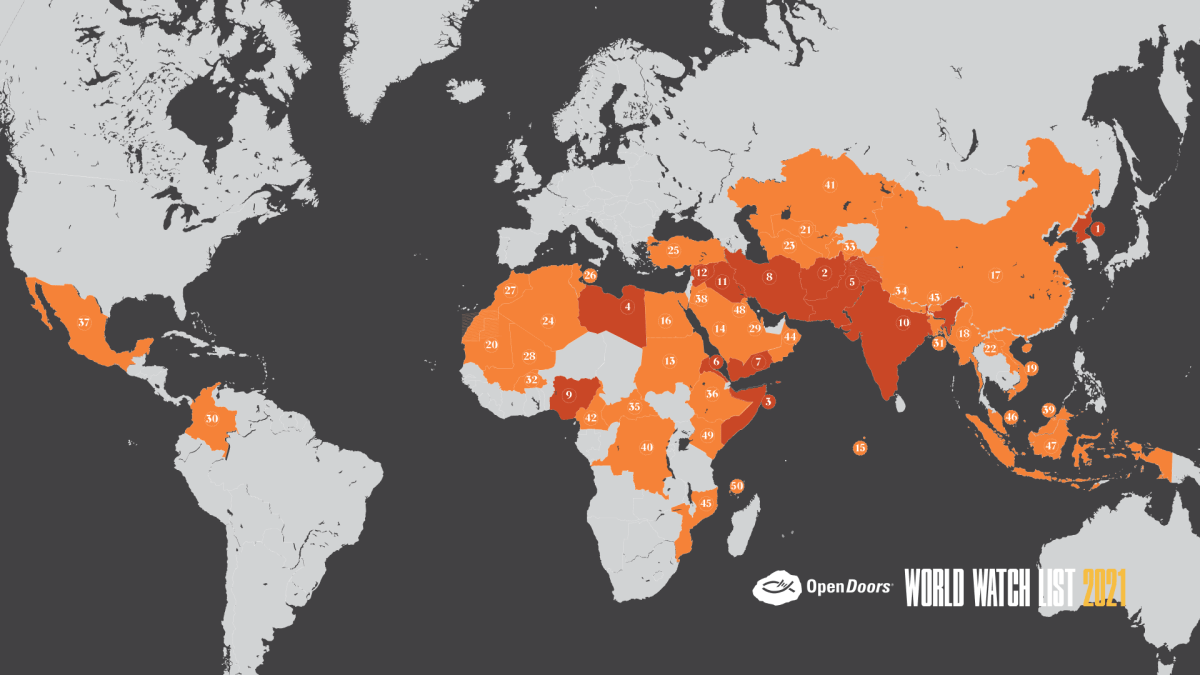
The 50 Countries Where It’s Most Dangerous to Follow Jesus in 2021

Latest report on Christian persecution finds 3 in 4 martyrs are in Nigeria, ranked among 10 worst persecutors for first time.

Christianity Today January 13, 2021
Illustration by Mallory Rentsch / Source Image: Benne Ochs / Getty Images

Editor’s note: Open Doors has now released the 2023 World Watch List of Christian persecution.

Every day, 13 Christians worldwide are killed because of their faith.

Every day, 12 churches or Christian buildings are attacked.

And every day, 12 Christians are unjustly arrested or imprisoned, and another 5 are abducted.

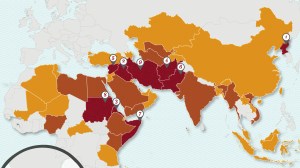
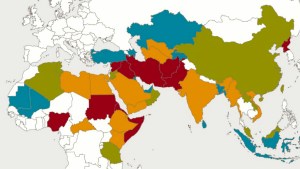
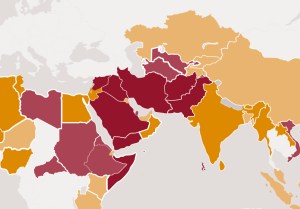
So reports the 2021 World Watch List (WWL), the latest annual accounting from Open Doors of the top 50 countries where Christians are the most persecuted for following Jesus.

“You might think the [list] is all about oppression. … But the [list] is really all about resilience,” stated David Curry, president and CEO of Open Doors USA, introducing the report released today.

“The numbers of God’s people who are suffering should mean the Church is dying—that Christians are keeping quiet, losing their faith, and turning away from one another,” he stated. “But that’s not what’s happening. Instead, in living color, we see the words of God recorded in the prophet Isaiah: ‘I will make a way in the wilderness and rivers in the desert’” (Isa. 43:19, ESV).

The listed nations contain 309 million Christians living in places with very high or extreme levels of persecution, up from 260 million in last year’s list.

Another 31 million could be added from the 24 nations that fall just outside the top 50—such as Cuba, Sri Lanka, and the United Arab Emirates (UAE)—for a ratio of 1 in 8 Christians worldwide facing persecution. This includes 1 in 6 believers in Africa and 2 out of 5 in Asia.

Last year, 45 nations scored high enough to register “very high” persecution levels on Open Doors’s 84-question matrix. This year, for the first time in 29 years of tracking, all 50 qualified—as did 4 more nations that fell just outside the cutoff.

Open Doors identified three main trends driving last year’s increase:

  • “COVID-19 acted as a catalyst for religious persecution through relief discrimination, forced conversion, and as justification for increasing surveillance and censorship.”
  • “Extremist attacks opportunistically spread further throughout Sub-Saharan Africa, from Nigeria and Cameroon to Burkina Faso, Mali, and beyond.”
  • “Chinese censorship systems continue to propagate and spread to emerging surveillance states.”

Open Doors has monitored Christian persecution worldwide since 1992. North Korea has ranked No. 1 for 20 years, since 2002 when the watch list began.

The 2021 version tracks the time period from November 1, 2019 to October 31, 2020, and is compiled from grassroots reports by Open Doors workers in more than 60 countries.

“We are not just talking to religious leaders,” said Curry, at the livestream launch of this year’s list. “We’re hearing firsthand from those experiencing persecution, and we only report what we can document.”

The purpose of the annual WWL rankings—which have chronicled how North Korea now has competition as persecution gets worse and worse—is to guide prayers and to aim for more effective anger while showing persecuted believers that they are not forgotten.

Where are Christians most persecuted today?

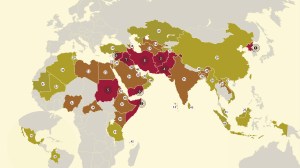
This year the top 10 worst persecutors are relatively unchanged. After North Korea is Afghanistan, followed by Somalia, Libya, Pakistan, Eritrea, Yemen, Iran, Nigeria, and India.

Nigeria entered the top 10 for the first time, after maxing out Open Doors’s metric for violence. The nation, with Africa’s largest Christian population, ranks No. 9 overall but is second behind only Pakistan in terms of violence, and ranks No. 1 in the number of Christians killed for reasons related to their faith.

Sudan left the top 10 for the first time in six years, after abolishing the death penalty for apostasy and guaranteeing—on paper at least—freedom of religion in its new constitution after three decades of Islamic law. Yet it remains No. 13 on the list, as Open Doors researchers noted Christians from Muslim backgrounds still face attacks, ostracization, and discrimination from their families and communities, while Christian women face sexual violence.

(This switch among the top 10 echoes the decision of the US State Department in December to add Nigeria and remove Sudan from its Countries of Particular Concern list, which names and shames governments which have “engaged in or tolerated systematic, ongoing, and egregious violations of religious freedom.”)


1. North Korea
2. Afghanistan
3. Somalia
4. Libya
5. Pakistan
6. Eritrea
7. Yemen
8. Iran
9. Nigeria
10. India

India remains in the top 10 for the third year in a row because it “continues to see an increase in violence against religious minorities due to government-sanctioned Hindu extremism.”

Meanwhile, China joined the top 20 for the first time in a decade, due to “ongoing and increasing surveillance and censorship of Christians and other religious minorities.”

Of the top 50 nations:

  • 12 have “extreme” levels of persecution and 38 have “very high” levels. Another 4 nations outside the top 50 also qualify as “very high”: Cuba, Sri Lanka, United Arab Emirates, and Niger.
  • 19 are in Africa (6 in North Africa), 14 are in Asia, 10 are in the Middle East, 5 are in Central Asia, and 2 are in Latin America.
  • 34 have Islam as a main religion, 4 have Buddhism, 2 have Hinduism, 1 has atheism, 1 has agnosticism—and 10 have Christianity.

The 2021 list added four new countries: Mexico (No. 37), Democratic Republic of Congo (No. 40), Mozambique (No. 45), and Comoros (No. 50).

Mozambique rose 21 spots (up from No. 66) “due to extremist Islamic violence in the northern province of Cabo Delgado.” The Democratic Republic of Congo rose 17 spots (up from No. 57) “mainly due to attacks on Christians by the Islamist group ADF.” Mexico rose 15 spots (up from No. 52) due to rising violence and discrimination against Christians from drug traffickers, gangs, and indigenous communities.

Four countries dropped off the list: Sri Lanka (formerly No. 30), Russia (formerly No. 46), United Arab Emirates (formerly No. 47), and Niger (formerly No. 50).


1. Pakistan
2. Nigeria
3. Democratic Republic of Congo
4. Mozambique
5. Cameroon
6. Central African Republic
7. India
8. Mali
9. South Sudan
10. Ethiopia

Open Doors reporting period: November 2019 to October 2020

Other big changes in rankings: Colombia rose 11 spots from No. 41 to No. 30 due to violence from guerrillas, criminal groups, and indigenous communities and growing secular intolerance. Turkey rose 11 spots from No. 36 to No. 25 due to an increase in violence against Christians. And Bangladesh rose seven spots from No. 38 to No. 31 due to attacks on Christian converts among its Rohingya refugees.

However, other types of persecution can outweigh violence [as explained below]. For example, the Central African Republic fell 10 spots from No. 25 to No. 35, yet violence against Christians there remains extreme. And Kenya fell six spots from No. 43 to No. 49 though attacks there “increased significantly.”

Meanwhile, South Sudan ranks among the top 10 most violent nations tracked by Open Doors (at No. 9), yet doesn’t even make the top 50 watch list (at No. 69).

For the list’s 25th anniversary in 2017, Open Doors released an analysis of persecution trends over the past quarter-century. The top 10 nations over the 25-year span were: North Korea, Saudi Arabia, Iran, Somalia, Afghanistan, Maldives, Yemen, Sudan, Vietnam, and China.

Five countries appear on both the 25-year and 2021 top 10 lists—a concerning sign of the stability of persecution, noted Open Doors.

How are Christians persecuted in these countries?

Open Doors tracks persecution across six categories—including both social and governmental pressure on individuals, families, and congregations—and has a special focus on women.

But when violence is isolated as a category, the top 10 persecutors shift dramatically—only Pakistan, Nigeria, and India remain. In fact, 20 nations are now deadlier for Christians than North Korea.

Worldwide registered martyrdoms rose to 4,761 in the 2021 report, up 60 percent from the 2,983 tallied the year before and surpassing the 4,305 deaths noted in the 2019 report. (Open Doors is known for favoring a more conservative estimate than other groups, who often tally martyrdoms at 100,000 a year.)


1. Nigeria: 3,530
2. Democratic Republic of Congo: 460
3. Pakistan: 307
4. Mozambique: 100*
5. Cameroon: 53
6. Burkina Faso: 38
7. [name withheld]: 36
8. Central African Republic: 35
9. Mali: 33
10. [name withheld]: 20

*Estimate | Open Doors reporting period: November 2019 to October 2020

Nine in 10 Christians killed for their faith were in Africa, the rest in Asia. Nigeria led the world with 3,530 martyrs confirmed by Open Doors for its 2021 list.

During the launch event, Curry interviewed Afordia, a Nigerian Christian health care worker whose husband was executed by Boko Haram. After cutting off communication networks in the couple’s village, the extremists rounded up the men and asked each one if they were a Muslim or an infidel.

“‘No, I am not an infidel or a Muslim, I am a Christian,’ my husband told them,” she said. “Then he knelt down on the side of the road, and prayed.”

Abduction of Christians rose to 1,710, up 63 percent from the 1,052 tallied the year before, the first time the category was tracked by Open Doors. Nigeria tops the list, with 990.

Pakistan led the world in forced marriages, a new category tracked last year, with about 1,000 Christians married to non-Christians against their will. Asia accounted for 72 percent of the forced marriages tallied by Open Doors, with Africa—led by Nigeria—the remaining 28 percent.


1. China: 3,088
2. Nigeria: 270
3. Angola: 100*
4. Democratic Republic of Congo: 100*
5. Ethiopia: 100*
6. Rwanda: 100*
7. Bangladesh: 90
8. India: 76
9. Pakistan: 68
10. Mexico: 61

*Estimate | Open Doors reporting period: November 2019 to October 2020

China arrested, jailed, or detained without charge 1,147 Christians for faith-related reasons, out of a total of 4,277 worldwide. This tally by Open Doors rose from 3,711 last year and 3,150 in 2019.

Meanwhile, attacks and forced closures of churches numbered 4,488 worldwide, with the vast majority recorded in China, followed by Nigeria. In last year’s report, the tally had skyrocketed from 1,847 to 9,488, with China accounting for 5,576 alone.

Open Doors cautioned that in several nations, the above violations are very difficult to document precisely. In these cases, round numbers are presented, always leaning towards conservative estimates.

Its research is certified and audited by the International Institute for Religious Freedom, a World Evangelical Alliance-backed network based in Germany.

Why are Christians persecuted in these countries?

The main motivation varies by country, and better understanding the differences can help Christians in other nations pray and advocate more effectively for their beleaguered brothers and sisters in Christ.

For example, though Afghanistan is the world’s No. 2 worst persecutor and an officially Muslim nation, the main motivation of persecution there—according to Open Doors research—is not Islamic extremism but ethnic antagonism, or what the report calls “clan oppression.”

Open Doors categorizes the primary sources of Christian persecution into eight groups:

Islamic oppression (29 countries): This is the main source of persecution that Christians face in more than half of the watchlist countries, including 5 of the 12 where Christian face “extreme” levels: Libya (No. 4), Pakistan (No. 5), Yemen (No. 7), Iran (No. 8), and Syria (No. 12). Most of the 29 are officially Muslim nations or have Muslim majorities; however, 7 actually have Christian majorities: Nigeria (No. 9), Central African Republic (No. 35), Ethiopia (No. 36), Democratic Republic of Congo (No. 40), Cameroon (No. 42), Mozambique (No. 45), and Kenya (No. 49).

Clan oppression (6 countries): This is the main source of persecution that Christians face in Afghanistan (No. 2), Somalia (No. 3), Laos (No. 22), Qatar (No 29), Nepal (No. 34), and Oman (No. 44).

Dictatorial paranoia (5 countries): This is the main source of persecution that Christians face in five countries, mostly in Central Asia with Muslim majorities: Uzbekistan (No. 21), Turkmenistan (No. 23), Tajikistan (No. 33), Brunei (No. 39), and Kazakhstan (No. 41).

Religious nationalism (3 countries): This is the main source of persecution that Christians face in three Asian nations. Christians are primarily targeted by Hindu nationalists in India (No. 10), and by Buddhist nationalists in Myanmar (No. 18) and Bhutan (No. 43).

Communist and post-communist oppression (3 countries): This is the main source of persecution that Christians face in three countries, all in Asia: North Korea (No. 1), China (No. 17), and Vietnam (No. 19).

Christian denominational protectionism (2 countries): This is the main source of persecution that Christians face in Eritrea (No. 6) and Ethiopia (No. 36).

Organized crime and corruption (2 countries): This is the main source of persecution that Christians face in Colombia (No. 30) and Mexico (No. 37).

Secular intolerance (0 countries): Open Doors tracks this source of persecution faced by Christians, but it is not the main source in any of the 50 countries studied.

What are the main trends in the persecution of Christians?

Open Doors identified four new or continuing trends in why and how Christians were persecuted for their faith last year.

First, the pandemic offered a new avenue for persecution, as Open Doors documented discrimination against Christians receiving COVID-19 relief in Ethiopia, Malaysia, Nigeria, Vietnam, and the Middle East.

In India, where more than 100,000 Christians received aid from Open Doors partners, 80 percent reported being previously “dismissed from food distribution points. Some walked miles and hid their Christian identity to get food elsewhere,” noted researchers. Open Doors also collected reports of “Christians in rural areas being denied aid” in Myanmar, Nepal, Vietnam, Bangladesh, Pakistan, Central Asia, Malaysia, North Africa, Yemen, and Sudan. “Sometimes, this denial was at the hands of government officials, but more often, it was from village heads, committees or other local leaders.”

Open Doors noted:

“The global pandemic made persecution more obvious than ever—simply because so many people needed help. The clear discrimination and oppression suffered by Christians in 2020 must not be forgotten, even after the COVID-19 crisis fades into our collective memory.”

Public health lockdowns also increased the vulnerability of many believers. “Christians who abandon a majority faith to follow Christ know they risk losing all support from spouses, families, tribes, and communities, as well as local and national authorities,” noted researchers. “If they lose income due to COVID-19, they can’t fall back on customary networks for survival.” Meanwhile, church leaders from Egypt to Latin America told Open Doors that bans on church services caused donations to drop by about 40 percent, reducing their own income and the ability of their congregations to offer assistance to the wider community.

“We’ve been fighting a virus we cannot see with the naked eye,” said Curry. “Less known, but equally as viral, is the discrimination, isolation, and violence against Christians using COVID-19 as leverage and justification.”

The Open Doors report noted:

“Most converts from majority faiths said confinement due to a COVID-19 quarantine locked them in with those most antagonistic to their faith in Jesus. This especially affected minority women and children. For millions of Christians, work, education, and other outside interests provide a brief time of calm from regular persecution. So when the lockdowns occurred, it meant this respite was no longer available.”

“We have also received reports that the kidnapping, forcible conversion, and forced marriage of women and girls increased during the pandemic because of increased vulnerability. Additionally, places in Latin America that are vulnerable to drug gangs have become even more dangerous for Christians, since the pandemic has decreased the presence of official authorities who try to maintain order.”

Second, increasing video and digital surveillance of religious groups and improvements in and proliferation of surveillance technology was another key trend.

“China maintains it moved decisively to contain COVID-19 after the virus took flight in Wuhan,” noted Open Doors researchers. “But for its 97 million Christians, the cost in heavy restrictions—as surveillance reached into their homes, online and off-line interactions were tracked, and their faces were scanned into the Public Security database—is high.”

According to the report:

“Reports from counties in Henan and Jiangxi provinces say cameras with facial recognition software are now in all state-approved religious venues. Many of these cameras are reported to be installed next to standard CCTV cameras, but they link to the Public Security Bureau, meaning artificial intelligence can instantly connect with other government databases. The facial recognition software is linked to the ‘Social Credit System’ in China, which monitors the loyalty of citizens with regards to the tenets of communism.”

“China’s war on faith—a return to government as god—is back,” said Curry, who interviewed a Muslim Uighur about government “detainment centers” during the livestream. She warned against the export of these technologies.

Likewise in India, Open Doors researchers noted, “religious minorities fear contact-tracing apps will have ‘function creep’ and will be used to keep an eye on them and their movements.”

Third, the trend of “citizenship tied to faith” continued to spread. “In countries like India and Turkey, religious identity is increasingly tied to national identity—meaning, to be a ‘real’ Indian or a good Turk, you must be a Hindu or a Muslim, respectively,” noted researchers. “This is often implicitly—if not explicitly— encouraged by the ruling government.”

Open Doors noted:

“Amidst a surge of Hindu nationalism, Indian Christians are constantly pressured by strident propaganda. The message ‘to be Indian, you must be Hindu’ means mobs continue to attack and harass Christians, as well as Muslims. The belief that Christians are not truly Indian means widespread discrimination and persecution is often conducted with impunity. India also continues to block the flow of foreign funds to many Christian-run hospitals, schools and church organizations, all under the guise of protecting the Indian national identity.”

“In Turkey, the Turkish government has also assumed the role of nationalist protector of Islam. The Hagia Sophia was originally a cathedral and then a mosque, until modern Turkey decided it should be a museum. But in July 2020, the Turkish president persuaded a court to make it a mosque again, strengthening Turkish nationalism. … Turkish influence and nationalist aims extend beyond its borders, most notably in its backing of Azerbaijan in its conflict with Armenia.”

Fourth, attacks by mostly Muslim extremists increased despite lockdowns to contain the coronavirus. “In much of the world, violence against Christians actually decreased during the COVID-19 pandemic,” noted researchers, but Christians in sub-Saharan Africa “faced up to 30 percent higher levels of violence than the previous year.”

Open Doors noted:

“Several hundred mostly Christian villages in Nigeria were either occupied or ransacked by armed Hausa-Fulani Muslim militant herdsmen; sometimes, fields and crops were destroyed as well. Boko Haram—and splinter group Islamic State of West Africa Province , an ISIS affiliate— continue to plague Nigeria and northern Cameroon.”

“In the Sahel region just south of the Sahara Desert, Islamic extremism is fuelled by injustice and poverty. These extremist groups exploit governmental failures, and armed jihadists spread propaganda, push recruitment and conduct regular attacks. This year, some groups pledged to wage war against ‘infidels’ like Christians—they claim ‘Allah punishes us all’ with the pandemic because of the infidels.”

“In Burkina Faso, until recently known for its inter-religious harmony between Muslims and Christians, 1 million people—1 in 20 of the population—are displaced (and millions more are hungry) as a result of drought and violence. Last year, Burkina Faso dramatically entered the [WWL] for the first time. This year, Islamic extremists continue to target churches (14 killed in one attack, 24 in another).”

How does the WWL compare to other top reports on religious persecution?

Open Doors believes it is reasonable to call Christianity the world’s most severely persecuted religion. At the same time, it notes there is no comparable documentation for the world’s Muslim population.

Other assessments of religious freedom worldwide corroborate many of Open Doors’s findings. For example, the latest Pew Research Center analysis of governmental and societal hostilities toward religion found that Christians were harassed in 145 countries in 2018, more than any other religious group. Muslims were harassed in 139 countries, followed by Jews in 88 countries.

When examining only hostility by governments, Muslims were harassed in 126 countries and Christians in 124 countries, according to Pew. When examining only hostility within society, Christians were harassed in 104 countries and Muslims in 103 countries.

All nations of the world are monitored by Open Doors researchers and field staff, but in-depth attention is given to 100 nations and special focus on the 74 which record “high” levels of persecution (scores of more than 40 on Open Doors’s 100-point scale).

Sam Brownback, US ambassador-at-large for international religious freedom, commended the World Watch List.

“The day will come when people are able to practice their faith freely, and governments will protect this right,” he said during the livestream. “This day is getting nearer, and Open Doors helps with this effort.”

Correction: In its first release of the report, Open Doors miscategorized the primary source of persecution in Colombia (No. 30) as “clan oppression.” The correct primary source is “organized crime and corruption.”

Editor’s note: CT offers this report in Spanish, Portuguese, French, Chinese, Korean, Indonesian, Russian, Arabic, Catalan, and Galician as part of CT Global’s 350+ translations.

Did we miss a language you’d like to read or share this in? Contact us and suggest a translation here.

Map of the 50 countries where persecution of Christians is worst.

The 2021 World Watch List rankings:

Apple PodcastsDown ArrowDown ArrowDown Arrowarrow_left_altLeft ArrowLeft ArrowRight ArrowRight ArrowRight Arrowarrow_up_altUp ArrowUp ArrowAvailable at Amazoncaret-downCloseCloseEmailEmailExpandExpandExternalExternalFacebookfacebook-squareGiftGiftGooglegoogleGoogle KeephamburgerInstagraminstagram-squareLinkLinklinkedin-squareListenListenListenChristianity TodayCT Creative Studio Logologo_orgMegaphoneMenuMenupausePinterestPlayPlayPocketPodcastRSSRSSSaveSaveSaveSearchSearchsearchSpotifyStitcherTelegramTable of ContentsTable of Contentstwitter-squareWhatsAppXYouTubeYouTube