Theology

How Doctors and Scientists Apply Faith on the Front Lines

Six medical professionals share their spiritual practices in the midst of a pandemic.

Christianity Today April 29, 2020
Illustration by Mallory Rentsch / Source Images: Courtesy of Justin Denholm / Emanuele Negri / Biologos / Lim Poh lian / Lionel Tarassenko / Photo of Julia Wattacheril by Rebecca Lock / Unsplash

In the past few months, scientists and doctors across the globe became public figures as people have sought the latest knowledge gained in the fight against COVID-19, and many of them are Christians. In the US, this is particularly true of those in the medical field. Sociologists Elaine Howard Ecklund and Christopher Scheitle reported in a 2017 book that when you look at those working at scientific jobs in the United States, such as doctors or nurses (and others), 65 percent identify as Christians, and 24 percent as evangelicals. While the percentage of Christian scientists at elite research institutions is smaller, they are an active bunch and many apply their research out of a sense of service.

CT reached out to a handful of these scientists and doctors to ask them how they’re staying grounded. We contacted people doing research on treatments or vaccines, improving patient care, or contributing to public health responses, some of whom are also working in hospital wards. While we could not include all of the responses we received, we talked to scientists in the US, the UK, Italy, Singapore, and Australia. We asked them how they’re coping and how they’re praying amid this crisis. Many shared anecdotes, Scripture, or prayer requests. They practice faith in a variety of ways, and though they practice medicine in labs and hospitals against different geographic and cultural landscapes, they’re united both in purpose and in spirit.

Francis Collins

Career field: physician and geneticist

Works in: Washington, DC, as director of the US National Institutes of Health.

Focused on: Collins oversees biomedical research in the United States, which is now aiming to develop treatments and a vaccine to control the coronavirus. He receives probably four or five interesting ideas every day, he said, which makes it a challenge to figure out which ones to prioritize. The NIH also manages a hospital that runs clinical trials, now including COVID-19 research. Prior to his NIH appointment, Collins led the team that first mapped the human genome.

How he’s praying: Collins views his calling as a public servant to be a Christian one, where he can wield the tools of science to alleviate suffering. “I pray every morning that I will find a path forward to do that with God’s help. I’m fond of Joshua and the verse in the first chapter: ‘Be strong and courageous.’ I need that. Sometimes I get discouraged and down,” he said. Collins described the grief he’s been feeling, saying, “I’m trying to figure out how to turn that into something, increased self-knowledge as well as actions.”

Collins prays for health workers, who are afraid to go home, and for researchers, who are working night and day to come up with solutions.

Emanuele Negri

Career field: physician

Works in: Reggio Emilia, a city in northern Italy, as director of a semi-intensive care unit at a local hospital.

Focused on: Negri cares for COVID-19 patients on noninvasive ventilation. His semi-intensive care unit will be adaptable to care needs as the pandemic plays out, he said. His colleagues assume coronavirus infections will go on for several months, though they plan to reorganize the hospital for the next phase as case numbers slope downward following the peak. As a team, they are exploring the hypothesis that patients experiencing lung inflammation may suffer from an amplified immune response called a “cytokine storm,” which they with are targeting in trials with several clinical drugs.

How he’s sharing his faith: Because of all the protective gear worn by medical professionals, Negri’s COVID-19 patients cannot necessarily hear him speak, but they don’t have to in order to experience the gospel. “It’s not a time of witness by word,” he said. “People around me will observe my behavior.”

He shared a letter from one of his hospital’s first patients: “I personally felt a miracle in the sense that the Lord put me in the hands of these professionals who can do their job well and which, in the end, allowed me to embrace my loved ones. I will never forget those sweet eyes hidden behind those plastic barriers. When I can get out of the house again I will meet many people, maybe even some of those who saved my life, but unfortunately I will never be able to recognize these people. I will not know who they are, but my thoughts will go to them forever. To them I will owe the most precious good: life. And to all of them I say THANK YOU.”

“Jesus had ‘sweet eyes’” (Matt. 9:37), said Negri. “It’s almost impossible to speak to my patients now, but they need our sweet eyes. We need to pray to show empathy.”

Julia Wattacheril

Expertise: physician scientist

Works in: New York City at a university hospital as director of the Nonalcoholic Fatty Liver Disease Program.

Focused on: In addition to maintaining outpatient care via telemedicine, Wattacheril was “redeployed” to work ICU triage overnight, helping make decisions about patients who worsen and need a higher level of care. Within her specialty, she and her group are collecting data to better understand how COVID-19 affects transplant patients, as well as the effects of therapeutics currently being tried. She’s hoping to repurpose an algorithm that might help identify at-risk patients so providers can suitably prioritize needs for recovery.

How she’s holding onto hope: Wattacheril described how she became discouraged recently, as she hoped for changes in leadership—such as a new tone of messaging, more emotional intelligence, and a readiness to comfort others in pain. “I prayed my anger and yelled at God on my roof. Later that day I was reminded—through John 15 about Jesus as the vine and we as the branches—that my job was to abide in Christ. I was too concerned with the fruit and anxious and distrustful of what God was doing.” That reminder helped her remember her purpose, and “hope came online quickly after that,” she said.

Wattacheril also talked about processing grief, saying she uses practices she developed several years ago after experiencing grief. She stays “anchored in prayer,” either by herself or with others. She meditates, seated or on walks, and listens to music or sermons. Also, “I have a beautiful community aligned to help and rally and remind me of what I tend to forget about myself as well as my well-worn Scripture verses with decades of history,” she said.

Lionel Tarassenko

Career field: electrical engineer

Works in: the UK at the University of Oxford’s Institute of Biomedical Engineering.

Focused on: Tarassenko works with colleagues on developing new patient monitoring techniques, from sensors to machine learning for data analysis. Now, he’s shifted these tools toward the fight against COVID-19. He described three ways the technology has been adapted: (1) the remote management of high-risk pregnant women, with the aim of preventing infection; (2) the triage of suspected COVID-19 patients in “primary care hubs” using video camera technology and (3) real-time monitoring, using wearables, of patients with COVID-19 being treated in isolation wards.

How he applies faith at work: “I am very mindful of the parable of talents and the need to put these talents to the use that God would want me to,” he said.

“I am also very conscious that our world is not limited to what we can see or perceive with our scientific instruments,” he said, quoting Hebrews 11:3: “By faith we understand that the universe was formed at God’s command, so that what is seen was not made out of what was visible.”

Justin Denholm

Career field: infectious diseases physician, epidemiologist

Works in: Melbourne, Australia, as medical director of the Victorian Tuberculosis Program at a research hospital.

Focused on: At his hospital, Denholm runs a screening clinic for people suspected of having COVID-19. He also manages patients over the phone so that they can avoid coming into the hospital and calls people to give them coronavirus test results. While he’s very busy with these tasks, he’s also conducting a clinical trial, which is testing a range of drugs for a planned 2,500 patients hospitalized with COVID-19.

How he’s feeling: “To be honest, at this point I’m pretty tired and find it hard to pray. I take some comfort in thinking that God is with us in everything, whether in illness or in working hard to relieve it,” he said. Denholm hopes that Christians around the world will support each other while physically distanced. “The support of communities is critical for all of us right now, and I’m grateful for all the ways that groups are finding to care for each other, and especially the most vulnerable,” he said.

Lim Poh Lian

Career field: infectious disease physician, also specializing in public health

Works in: Singapore at the National Center for Infectious Diseases.

Focused on: Lim moved to Singapore from Seattle, Washington, out of a sense of calling to serve Christ in Asia, ironically arriving months before SARS hit the country in 2003. Ever since, she’s been involved with outbreaks in WHO and UN advisory groups and task forces.

During the COVID-19 pandemic, she’s been working on the front lines with patients. “I love direct patient care,” she said. “I also help develop clinical, public health, and research protocols.” Her role at WHO focuses on mass gatherings risk assessment.

How her faith impacts her work: “I see my outbreak work as ministry,” said Lim, explaining how her work fulfills the greatest commandment to love God (Matt. 22:37)—by thinking clearly and strategically in outbreak control issues, caring compassionately for patients, and pointing people to trust in God. “Faith in Christ gives me courage and an anchor of rationality,” she said. “God has given us, not a spirit of fear but of love, power, and a sound mind—which he expects us to use!”


Editor’s note: Want to read or share in French? Now you can!

For translations of other select CT coronavirus articles, click here and look for the yellow links.

Ideas

The Last Enemy

President & CEO

How confident are we that we will find one another on the far side of the veil?

Christianity Today April 28, 2020
Illustration by Mallory Rentsch / Source Images: saemilee / Getty Images

The following is the latest in a series of daily meditations amid the pandemic. For today’s musical pairing, “Song for Athene” by Sir John Tavener. All songs for this series have been gathered into a Spotify playlist.

“But Christ has indeed been raised from the dead, the firstfruits of those who have fallen asleep. For since death came through a man, the resurrection of the dead comes also through a man. For as in Adam all die, so in Christ all will be made alive. … The last enemy to be destroyed is death.1 Corinthians 15:20–22, 26

“Listen, I tell you a mystery: We will not all sleep, but we will all be changed—in a flash, in the twinkling of an eye, at the last trumpet. For the trumpet will sound, the dead will be raised imperishable, and we will all be changed. For the perishable must clothe itself with the imperishable, and the mortal with immortality. When the perishable has been clothed with the imperishable, and the mortal with immortality, then the saying that is written will come true: ‘Death has been swallowed up in victory.’”1 Corinthians 15:51–54

Meditation 24. 3,094,829 confirmed cases, 215,461 deaths globally.

In the days preceding my grandfather’s death, he was wholly unresponsive. A heart attack and a belated resuscitation had left his brain without oxygen for an extended time. Though we were told he was no longer really there, we brought him home and the family kept watch by his bedside. The silence was leavened with hymns and prayers.

Death, for my grandfather, did not come like a violent plunge. It was more like his soul was water on the shore and it slowly receded into the sand. The beating of his heart, the pulsing of his blood, the rise and fall of his chest all grew gentler until they were almost imperceptible.

Then, in the last possible moment, his eyes opened. His arms rose off the bed and extended toward the ceiling, toward the skies, toward the heavens. Stunned, the family whispered encouragement. “It’s okay to go,” they said. His arms fell. And he was gone.

Mortality is much on our minds these days. Here in the United States, we have surpassed a million confirmed cases of the novel coronavirus. It began on the far side of the planet and has left a ruin of death and devastation wherever it has gone. More Americans have died from the disease than from the entire Vietnam War.

Grandfathers and grandmothers. Brothers and sisters. Parents and children and grandchildren. Friends and colleagues. Countless Americans are grieving their loss, and countless more are grieving overseas. How many will lose people they love before the virus is defeated?

When we lose a loved one, our souls strain against the veil. We come to the end of ourselves and our powers to see. We may wonder whether we will ever really see them again. How confident are we, really, that we will find one another again on the far side of the veil?

We do not, if we are honest with ourselves, really know what happens to the souls of the dead. Not, at least, in the same sense we know the names of our children or the number of rooms in our home. But that does not mean we cannot be confident. Trust can be stronger than knowledge when it is rooted in the being of God.

The Scriptures, the Old Testament and the New, are clear that God stands against death. God “will swallow up death forever” (Isa. 25:8). “I will deliver this people from the power of the grave,” God declares, “I will redeem them from death” (Hosea 13:14). Men and women are resurrected in both testaments. Jesus grieved death—and overcame it. The victory of God is the defeat of death.

We trust that we will be united with God when we depart this earthly life because we believe in his promises. This is the purpose of our being, and the promise of our redemption. And when we are united with God, we trust we will be restored into fellowship with our loved ones who are also united with him.

We trust these things not because we see through the veil but because we see the character of God. We have seen and have proved that he is true to his promises. Our confidence that we will see our loved ones again is not rooted in such a paltry thing as human knowledge. It’s rooted in what is changeless and unshakable: the character and the goodness of God.

I am more confident in the love of God than I am in my own existence. I am convinced that the love of God fills and moves and draws all things unto itself.

We mourn, O Lord, those who have lost their lives. It is good and right to mourn them. But we do not mourn as a people without hope. We trust, O Lord, that the souls of our loved ones will know their way into your embrace as a bird knows its nest in the branches. We trust, O Lord, that when we climb the ladder of the stars, we will find you there. Thank you for your love that binds all things together, even broken and lonely things, in order to bring them back to one another and make them whole together.

Sign up for CT Direct and receive these daily meditations—written specifically for those struggling through the coronavirus pandemic—delivered to your inbox daily.

News

Report: ‘Tremendous Progress’ Ahead for Religious Freedom Worldwide

USCIRF chair Tony Perkins gives CT a behind-the-scenes look at today’s annual report on “systematic, ongoing, and egregious” violations.

Partial cover of USCIRF's 2020 report on international religious freedom.

Partial cover of USCIRF's 2020 report on international religious freedom.

Christianity Today April 28, 2020
USCIRF

A new report aims to “unflinchingly criticize the records of US allies and adversaries alike” on religious freedom.

And there’s a lot to report, with more headlines each month confirming the Pew Research Center’s 10-year analysis that government restrictions and social hostilities involving religion have reached record levels worldwide.

Today’s 21st annual report by the US Commission on International Religious Freedom (USCIRF) identifies significant problems in 29 countries—but sees “an upward trajectory overall.”

“Our awareness is going to grow greater, and the problem will appear more pronounced,” USCIRF chair Tony Perkins told CT. “But as we continue to work on it, I think we will see tremendous progress in the next few years if we stay the present course.”

Created as an independent, bipartisan federal commission by the 1998 International Religious Freedom Act, USCIRF casts a wider net than the US State Department, which annually designates Countries of Particular Concern (CPC) for such nations’ violations of religious freedom, or places them on a Special Watch List (SWL) if less severe.

Last December, Secretary of State Mike Pompeo announced CPC status for Burma, China, Eritrea, Iran, North Korea, Pakistan, Saudi Arabia, Tajikistan, and Turkmenistan.

USCIRF now recommends adding India, Nigeria, Russia, Syria, and Vietnam.

And where the State Department put only Cuba, Nicaragua, Sudan, and Uzbekistan on the watch list, USCIRF recommends also including Afghanistan, Algeria, Azerbaijan, Bahrain, Central African Republic, Egypt, Indonesia, Iraq, Kazakhstan, Malaysia, and Turkey.

USCIRF’s mandate is to provide oversight and advice to the State Department. Aiming to make its recommendations more easily accessible to policymakers, this year’s report limits country chapters to two pages each and adopts the same evaluative criteria as the State Department.

To qualify, a nation must engage in or tolerate “systematic, ongoing, and egregious” violations of religious freedom. CPC status requires all three descriptors, while SWL status requires two.

In previous reports, USCIRF used a “Tier Two” category requiring only one qualifier. As a result, Laos is no longer listed.

Following 11 commission field visits, 5 hearings, and 19 other published reports, USCIRF’S 2020 annual report calls attention to religious freedom violations against all faiths, including:

  • 1.8 million Muslims in Chinese concentration camps
  • 171 Eritrean Christians arrested while gathering for worship
  • 50,000 Christians held in North Korean prison camps
  • 260 incidents of religious freedom violations in Cuba
  • 489 raids conducted against homes of Jehovah’s Witnesses in Russia
  • 910,000 Rohingya Muslim refugees in Bangladesh
  • 1 million Muslim residents excluded from the National Register of Citizens in India
  • 37 Shi’a Muslim protesters executed in Saudi Arabia
  • 5,000 Baptist calendars burned by authorities in Turkmenistan

Perkins spoke with CT about how nations move up (e.g., India and Nigeria) or down (e.g. Sudan and Uzbekistan) between lists, why the State Department doesn’t accept all of USCIRF’s recommendations (but should), and whether he has hope for the future with violations at “a historical high in modern times.”

Tony PerkinsUSCIRF
Tony Perkins

Roughly how many countries are on your studied list?

The ones that are listed are the ones that we look at. There has been discussion if we should add Venezuela. There have been a couple of others we have considered.

Examining “Country X,” how do you evaluate if and where it belongs on your lists?

First, we begin with the statutory definition of a Country of Particular Concern (CPC). Our mandate is to identify countries with systematic, ongoing, and egregious violations of religious freedom—whether it engages in or tolerates such behavior.

One thing to be cautious of is that we don’t rank countries. It is not a comparison. Country X and Country Y may both be CPC-listed, but be miles apart on the egregious nature of their violations. We look at each country separately.

It is based upon reporting that we can validate and verify; visits that we make to these countries; and hearings we hold with expert witnesses to come in and testify. It is a combination of factors, and quite frankly it is subjective.

We try to make it as objective as possible, but it is hard to quantify some things—though we do so to the degree we can.

What happens if you disagree about the designations?

The nine commissioners go through every country we look at. We may add a country, but by and large it has been the same countries for a number of years. We look at the evidence and have discussions. While there is vigorous discussion, there is generally very little disagreement or debate. The evidence is quite compelling.

With nine people of different political, religious, and ethnic backgrounds, there are different views and options. By the statute that created us, those who disagree can present dissenting views at the end of each chapter. This happens, but not that much. There is an amazing amount of unity on the commission in how we view these countries.

Have you had any 5-4 votes about certain countries?

No. And with great confidence I can say we have not had any votes along partisan lines. Maybe the closest we had was three dissenting votes this year, about one country.

Concerning Nigeria and Syria, non-state actors have an outsized role in religious freedom violations. How do you determine if this should sanction the government?

In Nigeria, you have Boko Haram and Fulani herdsmen engaged in attacks. Back to our definition, the government doesn’t have to engage in it, they can also tolerate it. If they tolerate it without providing evidence to suggest they are doing what they can to stop it, then they bear responsibility. That is the case in Nigeria.

Two years ago, President [Donald] Trump met with President [Muhammadu] Buhari and told him, “Look, you have to protect these citizens—these Christians—who are being attacked.” For six months, [Buhari] did, and we saw a decrease. But then it went back to the old ways of just ignoring it, and the intensity of the attacks escalated.

Syria is a bit like Afghanistan, which is on the SWL. You’ve got the Taliban, and other parties, and in their case with the government it is a combination of will and means. They don’t really have control of their country, and Syria is in a similar situation.

But we want to draw attention to Syria, because of the northeast region which still—though not as much because of Turkey—[holds] a lot of promise for the region with a self-governing entity that respected religious freedom and showed how it would work. You had people of different religious backgrounds working together in the same government. A lot of what is happening there is still driving the concern for Syria.

Nigeria qualifies because its government could do more, and it is not?

We look at religious freedom, and this issue alone. We try not to take into consideration other geopolitical factors. We don’t look at the US relationship with a country, or how our designation will affect this. We look at allies and foes alike. But we also look from a historical standpoint: What happens if we ignore religious intolerance and persecution?

We want to draw attention to Nigeria. It is the largest country in the African continent. We already see refugees fleeing from there. It could easily get out of hand and become a major problem.

Some people want to ignore the religious aspect, and say it is an issue of climate change and limited resources: the herdsmen with their cattle and their conflict with farmers. There is some element [of truth] to this. But you cannot ignore the religious component for a nation so evenly divided on religious background.

The Central African Republic was downgraded to SWL status following its peace treaty, even though militia attacks continue. Burkina Faso has suffered greatly from militia and Islamist groups that have been severe with their attacks on other religious communities. How did you sort through these issues to put one group here and another one there?

Burkina Faso is another country we have been looking at, I should have mentioned them. Partially because there was not enough verifiable information as we were looking at them. We have our resources, we have our sources, and we have to verify the information we have. I’m not saying it isn’t valid, but we have to make sure we get it right when we make our recommendations. The ramp-up time on some of these countries is a little longer when they are new to us.

What led you to upgrade India to CPC status?

A lot of evidence. That situation is steadily trending in a negative direction. The world’s quote-unquote largest democracy. We’ve not been able to get into the country. They will not allow us in. But we have enough people there.

We had a hearing not specifically about India, but of those nations that are denying citizenship. India is very much involved in this, passing legislation that effects a large portion of Muslims that for all practical purposes should be considered citizens, but are denied that. There is a growing trend that suggests India is moving pretty rapidly in the wrong direction.

You included Russia and Vietnam last year for CPC designation, but the State Department did not include them on its list. How do you understand why?

This is not new; it has long been the case. We focus on one issue and one issue alone—religious freedom—and you can argue this is a luxury. The State Department has to look through a multitude of angles. I appreciate that and understand that. But it is not what we are called to do. We give them our best recommendation based on what we know, and they take this into the mix and make their decision.

You note in your report that the International Religious Freedom Act requires the executive branch to take action, acknowledging that waivers are often issued. Why would following the law be better policy than behind-the-scenes negotiation, to solve problems?

Part of it is so that it can become a negotiating gambit in their discussions with particular countries. For example, Saudi Arabia has been on our list, partly because of their textbooks. We have been told for years that they are in a process of revision, and boy has it been a long process.

They should take a cue from Sudan, which jumped in on this with both feet and are revamping the curriculum for the whole country, and they don’t have any money compared to Saudi Arabia.

We keep raising the issue, and for various reasons the State Department keeps issuing waivers. We just keep putting it back before them. We’ve seen some progress from Saudi Arabia in some areas—and this is just one country to use as an example.

One area of improvement for the [Trump] administration has been its use of sanctions against those who violate religious freedom. Since the Global Magnitsky Act was established in 2017, prior to this year I think there were 8 people sanctioned. I think this year alone there have been 8 more. They are beginning to use the tools they have much more aggressively.

Sudan and Uzbekistan have been downgraded in your recommendations. There has been progress made, but how does this fit into the criteria of “systematic, ongoing, and egregious”?

I’m most familiar with Sudan, I was just there in February with the prime minister [Abdalla Hamdok]. I’m frankly impressed with what they are trying to do.

Shortly after the transitional government went into place, they repealed the public order law used to apply Islamic law to oppress women. They have disbanded what were called “church councils” used to take church property. They have told us repeatedly that they are working to repeal the apostasy and blasphemy laws. That would be such a significant step for a country that is predominantly Muslim, and still wants to operate with Islam as a foundation of the government.

We think they should be on the SWL because they are still in this transition process—not out of the woods yet, so to speak. But it is quite impressive what they have been able to do.

Sudan, Uzbekistan, and other nations have been eager to engage us to try to get to a good place on religious freedom. This is in large part because this present administration has put a high priority on religious freedom. Word is circulating around the world, so many countries want to improve their standing.

What other countries might you mention?

Egypt is one. We’re seeing progress and positive trends there. The challenge is still the outlying rural areas where, in my view, the rule of law is fragile. I was there for the opening of the cathedral and mosque outside of Cairo. No question this is the direction they’re going; but they still have a ways to go.

Bahrain has been engaged with us; they are working to move in this direction. I have been to the United Arab Emirates; they are trying to be an influencer in the Middle East.

Turkey is a country that has not been engaging the Trump administration on the issue of religious freedom. What is keeping it from a CPC designation?

This is one there was discussion about. We’re watching it very closely. It is hard to say, but if the current negative trends were to accelerate, they could find themselves on the CPC list.

Is the condition of religious freedom in the world getting better or worse? Where do you see hope for the future?

I am reluctant to say better or worse. Or are we getting more focused, so we see the problems more clearly? The awareness is growing, and therefore it seems more pronounced.

I would say it is certainly at a historical high in modern times. Is it getting better? I think we are seeing pockets of progress. I am very hopeful for Sudan, that it can provide a way forward for other countries that have been under tyrannical Islamist regimes.

Northeast Syria provided great promise. I was very hopeful for what was happening there, and it was done without outside intervention. They were thrust together because of ISIS, and learned to work together for survival. But now with Turkey moving into the area, I don’t know what the outcome will be.

There are pockets of encouraging developments. More people are talking about it. We have hosted two ministerials to advance religious freedom. Twenty-seven countries have joined the International Religious Freedom Alliance. More is being done than has been done in a long time.

Our awareness is going to grow greater, and the problem will appear more pronounced. But as we continue to work on it, I think we will see tremendous progress in the next few years if we stay the present course.

News

Beyond Cedarville: Why Do Pastors Keep Getting Rehired After Abuse?

Victims’ advocates caution institutions against plans to “restore” fallen leaders.

Christianity Today April 28, 2020
Jeremy Mikkola / Flickr

Update (May 1): Cedarville University president Thomas White has been placed on administration leave by the school’s board of trustees. A week after Anthony Moore was fired by White over “additional information related to [his] past,” the board announced it will commission an independent investigation of Moore and an audit of his hiring.

———

Another case of a leader with an abusive past moving from one evangelical institution to another has intensified scrutiny on Christian hiring practices and responses to abuse.

In ministry contexts, the desire to keep fallen leaders out of positions where they might again abuse their authority is sometimes met with another perspective—a hope that a redemptive and forgiving God would allow people to be restored to leadership. Both victims’ advocates and community members worry that administrators weighing those considerations at Cedarville University made the wrong call.

In 2017, Cedarville welcomed Anthony Moore six months after he was fired from the lead pastor position of The Village Church’s Fort Worth campus. President Thomas White wrote that he offered to shepherd Moore through a five-year plan of restoration at the conservative Baptist school while he taught theology, helped coach basketball, and served as a special advisor on diversity.

CT spoke with four current and former Cedarville professors who said they knew Moore had made a “mistake” related to same-sex attraction and technology, based on White’s introduction and Moore’s own telling. Some assumed pornography or an online relationship. They had no idea that he had reportedly filmed a subordinate at his previous church in the shower. The revelation, detailed by multiple bloggers and journalists who focus on abuse in the church including Todd Wilhelm and Julie Roys, led to Moore’s firing on Thursday.

“At no point was I given enough information by Moore to assume sexual abuse or manipulation was involved, and I believe this to be true of my colleagues,” said one faculty member, who spoke under a condition of anonymity because he remains employed at the school.

Prior to becoming the president of Cedarville in 2013, White knew Moore from Southwestern Baptist Theological Seminary. When White served as vice president at the seminary (under the leadership of former Cedarville trustee Paige Patterson), Moore was a grad student and later the director of student life.

When White hired Moore at Cedarville, there were conditions. White wrote in in a blog post published Thursday that accountability measures included regular counseling, monitoring software on his home computer, and no meeting alone with students. He added, however, that while he knew about the incidents of secret surveillance footage that led Moore to be removed from the pulpit, he had only learned about the extent of his abuse the day before.

“Instead of at most two videos, I heard there were at least five videos. Instead of this being over a short period of time, I heard that these were taken over a period of at least five months,” White wrote. “If I had known these items at the beginning, I would not have attempted the plan for restoration. After verifying this new information with the victim, I took the action that I had to take and ended Anthony Moore’s employment at Cedarville.”

The Village Church confirmed in a statement to CT that while the church kept aspects of Moore’s story confidential from the congregation at the direction of the victim, “we did thoroughly inform Cedarville University about all of the known details of Anthony’s offense and reiterated clearly that we did not believe he was fit for ministry of any kind.”

The church’s public announcement in January 2017, shared at all services, indicated Moore had been removed “because of grievous, immoral actions against an adult church member” and that leaders believed “he was unfit for ministry of any kind.”

Risk and restoration

The Cedarville community learned about the timeline and specifics of Moore’s abuse from bloggers. Many are disappointed, frustrated, and angry that they were not informed in greater detail by the Cedarville administration, which introduced their former colleague as a brother in Christ who had “sinned,” urging faculty and staff to extend grace to him. More than 900 people, including alumni and former staff, have signed an online petition calling for White to be removed as president.

White apologized on Monday for hiring Moore, saying his decision was made without all the information and was primarily motivated by James 5:19, which calls on Christians to help those who wander from the truth turn from the error of their ways.

Beyond the decision to terminate a leader over sexual abuse, there’s more attention toward how organizations communicate what happened and how they vet their staff in their first place.

Around a third of Christians believe that there are “many more” abusive leaders still in ministry, and churches that fail to disclose the nature of a pastor’s abuse or leaders who give their friends a pass in the hiring process are seen as perpetuating the problem.

Boz Tchividjian, the executive director of GRACE (Godly Response to Abuse in the Christian Environment), said, “The bigger question that all of us should be asking in all of this is: How many other abusive church leaders are serving now in churches, under the radar screen, and maybe even going through a ‘restoration process’ that nobody in that congregation knows about?”

It’s impossible to quantify, but experts fear the loose structure of evangelical institutions in the US has made it easy for leaders fired for misconduct to return to ministry. Some just start their own congregations. Others get rehired through personal contacts.

Church leaders often rely on mutual connections in hiring and tend to assume the best of fellow ministers, according to William Vanderbloemen, who runs a top pastor search firm. (Vanderbloemen declined to comment on the Cedarville case but instead addressed the larger issue of hiring based on personal ties.)

In the hiring process, “running toward a known entity” can feel safe, but it can also backfire—leading search committees to be less thorough with their reference calls and background checks, and even ignoring “red card” behavior, he said. Vanderbloemen’s agency has seen demand grow in the past decade, as fewer churches and ministries have denominational oversight to serve as an objective third-party during a hiring process.

While there are some exceptions, like ministries especially designed to rehabilitate pastors, Vanderbloemen generally advises, “Don’t hire a project.”

Cedarville’s vice president for marketing and communications, Janice Supplee, said the school maintains a thorough hiring process that includes reference checks and background checks. “While we sought to be restorative, documenting and putting accountability measures in place, the information provided to us when the restoration plan was developed and approved was incomplete,” she said in a written response to CT.

Supplee said Cedarville is committed to learning from this situation and that White and other campus leaders will be undergoing victim awareness training this summer.

Concern for victims

Advocates for abuse victims believe “restorative” hiring practices are a risky proposition that, at best, communicate a disregard for victims and the abuse they endured and, at worst, put the community at risk.

“Leaders and institutions need to know the truth about perpetrators. Recidivism for abuse perpetrators is unfortunately high, and most perpetrators have many victims in their lifetime,” said Justin Holcomb, an Episcopal minister and the author (with his wife, Lindsey) of three books on sexual abuse. “Restoring leaders who abuse back in positions of trust and leaders is foolish, likely perpetuates more abuse, irresponsible, and puts other people in jeopardy.”

White stated that no incidents were reported by Cedarville students during Moore’s tenure, but he will be recommending the board of trustees “hire an outside, independent agency to confirm that nothing inappropriate occurred on our campus.”

Tchividjian and Holcomb, who is also a board member for GRACE, urge institutional leaders to rethink the idea that all fallen leaders deserve to return to ministry. While forgiveness can be extended to them—by God and by the community—their past actions can still have lasting consequences that can render them unfit for positions of authority in ministry.

Todd Wilhelm, whose blog first highlighted Moore’s background at The Village Church a week and a half ago, told CT he was surprised by how quickly Moore was fired but also concerned that White hired him in the first place.

“White surely knows the high responsibility that comes with being a teacher of young, future leaders of the church,” he said. “This is not a sacred right but a privilege, and if one displays the serious lack of moral character which Anthony Moore admitted to at The Village Church, he has forfeited his privilege to serve as a Christian pastor or teacher. There should be loving restoration to the faith, but not the ministry.”

Signs are beginning to indicate that institutions are improving their responses in the wake of #MeToo and #ChurchToo revelations that showed just how damaging and long-lasting patterns of abuse can be. But experts continue to call for greater due diligence.

Vanderbloemen repeats the business advice to “hire slowly, fire quickly,” and more churches have protocols in place to respond immediately to incidents of abuse. But what happens after an abusive leader is fired is also important.

Tchividjian said churches shouldn’t leave people guessing over what sort of “sin” or “moral failure” led to a pastor’s termination. Being specific allows members to weigh for themselves the severity of the offensive and what response they might need to take while also empowering any other victims in the congregation to come forward with similar issues.

“Intentional vagueness only aggravates an already troubling and dangerous situation,” he said. “When you aren’t specific, it fosters stories and narratives that oftentimes don’t have any factual basis, and it doesn’t help anybody.”

Even when victims remain unnamed—and they often do—institutions can honor them by recognizing the severity of the abuse they suffered and not minimize it as a hurdle in their perpetrator’s ministry career or spiritual journey.

“Although I can’t speak for the person who was victimized by Anthony Moore, I’ve spoken with other victims who have been similarly violated and humiliated who expressed their distress when the person who abused them was platformed by others,” said Wade Mullen, a writer and expert on evangelical responses to abuse crises.

“So often the victim is forgotten when organizations find themselves responding to an exposure of abuse,” he wrote by email. “The leadership and the perpetrator are centered as they focus on what’s happening to them when they ought to stop and ask, ‘What’s happened to those most profoundly impacted by this—the victim(s)—and what can we do to make things right for them?’”

Books

Churches: Put Down That Spiritual Gifts Quiz

What the local body misses when it focuses on personality analyses and congregational surveys.

Christianity Today April 28, 2020
Illustration by Mallory Rentsch / Source Images: Didier Descouens / WikiMedia Commons / SDI Productions / Tim Robberts / Getty Images

One of my favorite church events has always been the post-church potluck lunch. COVID-19 may have paused our monthly parade of 9-by-13 pans, but I dream of the day when we’ll all be back together in the church basement with our favorite recipes.

As a kid perusing the potluck banquet, I always went for the cookies. As an adult, I try to make wiser choices. I pass up the kielbasa to leave room for some salad, and I take a generous spoonful from otherwise-untouched pans so that no one feels bad. But no matter how carefully I make my selections, the offerings themselves aren’t always balanced. Some weeks, in mysterious synchronicity, everyone shows up with a pasta dish. Other weeks, we all resolve to be healthier, and vegetables take over space usually reserved for desserts.

The composition of spiritual gifts in the local church can look a lot like a meal in the fellowship hall. Sometimes, the church has an abundance of preachers and teachers. Other times, it has no one to fill in when the Bible study leader is sick. Sometimes, the church has plenty of people to cook and clean for the elderly. Other times, it struggles to find any. A church may have dozens of ministry organizers to every one person who can make the coffee, or 15 nursery volunteers to every one who wants to do evangelism. And in many churches, it can feel like a few people have all the gifts, and the rest of us barely have one.

For a generation of Christians versed in personality inventories and enneagram numbers, this environment can feel disorienting and even disappointing. Shouldn’t the gifts and graces in the church be more evenly distributed? Shouldn’t we be able to categorize the gifts in our midst? And shouldn’t our local body contain them all?

After decades of watching these questions play out in my local church and elsewhere, I think it might be time to put down the congregational surveys and spiritual gifts quizzes and learn to enjoy the feast the Spirit spreads for us.

In the New Testament, we find five different lists (Rom. 12:6–8; 1 Cor. 12:8–10, 28–30; Eph. 4:11; 1 Peter 4:7–11) that altogether name dozens of spiritual gifts. Some of the gifts are familiar—evangelism, faith, acts of mercy, teaching. Some are puzzling—what, for example, is the difference between “a message of wisdom” and “a message of knowledge” (1 Cor. 12:8)?

The interplay of the lists only adds to our head scratching. Several of the gifts are repeated in more than one list, while others appear in only one place. Even the two lists in 1 Corinthians—which we might expect to shed some clarifying light—include both repetitions and distinctions.

As I’ve spent time studying these parts of Scripture, one thing seems clear to me. Our attempts to rigidly classify and neatly identify a precise list of spiritual gifts will end in frustration. And that’s exactly the way it should be. Paul and Peter don’t encourage us to chart the gifts in our congregation or even to spend much time worrying about which ones we possess as individuals. In a sense, they want us to put down the gifts quiz—or at least to think and talk about it way less often.

That’s because an overly tidy approach to spiritual gifts misses this ultimate point: The Spirit gives precisely the right gifts in precisely the right measure at precisely the right moment to precisely the right people for the good of the local church. “All these [gifts],” writes Paul, “are the work of one and the same Spirit, and he distributes them to each one, just as he determines” (1 Cor. 12:11).

We see this idea echoed once again in verse 18. Comparing the church to a body, Paul writes, “But in fact, God has placed the parts in the body, every one of them, just as he wanted them to be.”

A few verses later, Paul plainly dismisses any suggestion that some people or gifts are more essential to the body’s well-being than others: “The eye cannot say to the hand, ‘I don’t need you!’ and the head cannot say to the feet, ‘I don’t need you!’ On the contrary, those parts of the body that seem to be weaker are indispensable” (1 Cor. 12: 21–22). Again, he asserts, “God has put the body together” (v. 24, emphasis added).

This simple truth shapes our theology of gifts in three distinct ways. First, it gives us confidence: Our specific gifts have an essential, God-appointed place. Second, it humbles us: Our specific gifts are only one part of the body, and we need other people with their unique gifts (Rom. 12:3).

Finally, this truth should increase our love for the local church. The gifts displayed by believers in our local body are exactly what our loving God knows we need. Their gifts are his gift to us. And however cobbled together they might seem, those people and those gifts are placed there with purpose.

Of course, the church is tasked with recognizing and utilizing congregants’ gifts, and the enneagram and other analysis tools can be useful toward that end. But ultimately, God’s desire is to see us look less toward ourselves and more toward the Spirit’s work in our gathered midst. He wants us to set aside our own ideas of what a balanced church looks like, grab a plate, and come enjoy the feast.

Megan Hill is the author of three books, including A Place to Belong: Learning to Love the Local Church (Crossway, May 2020). She serves as an editor for The Gospel Coalition and lives in Massachusetts where she belongs to West Springfield Covenant Community Church.

Theology

‘We Don’t Know What to Do, But Our Eyes Are on You.’

Twelve transformational words for leading in unprecedented times.

Christianity Today April 28, 2020
Illustration by Mallory Rentsch / Source Images: Kirill Balobanov / Unsplash

We don’t know what to do, but our eyes are on you.2 Chron. 20:12

When the Old Testament king Jehoshaphat received word that three armies had conspired together and were coming against him in one massive assault, he made a decisive and unconventional leadership move.

Every leader around the globe is in a similar predicament.

Faced with the three-pronged advance of a global health pandemic, a world economy that’s come to a screeching halt, and the personal crisis of anxiety and fear—what can we learn from this ancient leader that’s applicable today?

The odds weren’t good for Jehoshaphat, and, honestly, they aren’t that great for a lot of families and businesses right now.

Deep down, most leaders who have weathered brutal storms know that we’ll get through it. We always do. We will endure the carnage and emerge from the depths to grow and prosper again. But that’s going to take time—a long time. Right now, we’re in the valley of the shadow of death.

So how do we lead through these dark hours?

Let’s look closely at the path Jehoshaphat chose.

First, he called the people to seek God. The King prayed this transformational twelve-word prayer—We don’t know what to do, but our eyes are on you.

We don’t all have the liberty to corporately call our people to seek God. But every leader does have the opportunity to privately seek heaven’s help before leading others into the fray.

By nature, leaders are confident, skilled, and battle tested. So often we roll out of bed and start leading the charge. It’s easy to wake up, survey the landscape, and immediately focus on solving problems, creating opportunities, and marshalling the troops.

Yet, ultimately, any leader is only as durable as the humility that undergirds them—the humility that drives them to first seek help from the Lord.

The hallmark of every great leader is the ability to lead oneself. This means facing your limitations and leaning on your Maker. We lead best by allowing God to lead us.

Some object: “You can’t be humble in my line of work. You can never show weakness or people will run right over you!”

Humility doesn’t equate to weakness. Rather, it’s where we find our strength. Or better yet, humility is the place we access God’s supply.

Hurricane-forced winds require exceptional leadership—leadership that begins with this plea: God, I don’t know what to do. But my eyes are on you.

It’s not always prudent to lead a shareholder call or staff meeting with this confession. People are looking for stability in their leaders and are counting on us to project confidence in worst-case scenarios like we face today. But that doesn’t hinder us from privately staying tethered to the reality that we are completely dependent on God. (It doesn’t hurt to say it every once in a while to our closest team leaders, either).

This posture of humility is essential because it positions us for supernatural assistance.

A word came to the king and a battle plan was set in motion. Jehoshaphat was told, “You will not have to fight this battle. Take up your positions, stand firm and see the deliverance the Lord will give you. Do not be afraid; do not be discouraged. Go out to face them tomorrow, and the Lord will be with you” (2 Chron. 20:17).

God isn’t asking you to over-spiritualize your situation: “Hey guys, we’re just going to trust God with our enterprise and see what happens! Sit back and relax.”

No way.

Check out all the active verbs: Take up your position. Stand firm. Look. Go out. Face them.

Yet, as you go, keep the oxygen of God’s supernatural supply flowing with your every breath. In his Spirit power you can find the power to do what Jehoshaphat did next.

He set out. He stood up. He spoke. (v.20)

Set out in faith that God is with you.Stand up on the Rock of Ages.Speak with authority because God will not fail.

Then Jehoshaphat did one final thing before heading into the battle—he praised God. The king thanked God in advance for the victory God had promised.

With God’s help, Jehoshaphat and his army experienced God’s deliverance in the battle. In the same way, God is going to deliver you.

Dear God, I lift my eyes to You. Please disrupt my false sense of control and my overblown confidence in my own abilities. I humbly bow and ask for your supernatural strength, wisdom and courage so I can endure these days and lead myself and others with faith for the future. My daily prayer will be: I don’t know what to do, but my eyes are on you. Lead me and use me as an agent for your glory. In Jesus name, Amen.

Louie Giglio is pastor of Passion City Church and the founder of the Passion movement, which exists to call a generation to leverage their lives for the fame of Jesus.

Editor’s note: Want to read or share in Portuguese or Indonesian? Now you can!

For translations of other select CT coronavirus articles, click here and look for the yellow links.

Ideas

This Is Your Soul on Zoom

President & CEO

Many technologies we cursed months ago for driving us apart we now bless for holding us together.

Christianity Today April 27, 2020
Illustration by Mallory Rentsch / Source Images: saemilee / Getty Images

The following is the latest in a series of daily meditations amid the pandemic. For today’s musical pairing, we suggest “Sunshine (Adagio in D Minor)” from the film Sunlight. All songs for this series have been gathered into a Spotify playlist.

“Then Moses said to the Israelites, ‘See, the Lord has chosen Bezalel son of Uri, the son of Hur, of the tribe of Judah, and he has filled him with the Spirit of God, with wisdom, with understanding, with knowledge and with all kinds of skills—to make artistic designs for work in gold, silver and bronze, to cut and set stones, to work in wood and to engage in all kinds of artistic crafts. And he has given both him and Oholiab son of Ahisamak, of the tribe of Dan, the ability to teach others. He has filled them with skill to do all kinds of work as engravers, designers, embroiderers in blue, purple and scarlet yarn and fine linen, and weavers—all of them skilled workers and designers.’”Exodus 35:30–35

Meditation 23. 3,029,452 confirmed cases, 210,374 deaths globally.

Most of the summers during my childhood in California included backpacking in Yosemite National Park with my family or with the men from my church. We found ourselves at the feet of majestic waterfalls, on peaks in Tuolumne Meadows that stole our breath, or atop Half Dome or El Capitan when shooting stars were falling from the sky. Our souls were transported and we were moved to magnify God.

We tend to think differently of the artifacts of technology. We do not hold up our mobile phones, gaze at a supercomputer, or contemplate a PET scanner and find ourselves moved to sing praises.

In this pandemic, when so much of our experience of the world is mediated through technology, perhaps we need to shift our mindset. Many of the same technologies we cursed months ago for driving us apart we now bless for holding us together. Families keep close through social media and mobile apps. Schools convene over e-learning platforms. Small-group Bible studies pray and praise over Zoom. The church that streams together stays together.

There are reasons for caution when it comes to the uses of technology. The glowing screen can so captivate our attention that we have little left for matters of the soul. The constant consumption of entertainment can dull the deeper senses and atrophy the musculature of the spirit. Technologies can serve in so many ways for trafficking sin or delivering death or impoverishing our years of the full height and depth of life.

And yet, technology is a tool, and God himself gave us the gifts to devise it. The same technology that delivers depravity can also carry the gospel. The technology that lays cities to waste also empowers the world. The technology that broadcasts hatred and ignorance can also encourage love and coordinate its actions. The church has made use of countless technologies to spread the word of God, to heal the sick, and to serve the poor. Should we not give thanks for these things?

Monastic practices filled the lives of monks and nuns with habitual reminders of the lordship and love of God. The cross above the doorway. The ringing of the bell in the chapel. The daily offices serve many times a day as a sort of rhythmic remembrance to practice the presence of God.

What if technology could serve as such a habitual reminder for us? What if it could harness our attention and redirect it to, if not the author of these technologies, the one who is the author of the authors?

We were created in the image of a Creator. We were made to be makers. We were charged to make the order of the world more abundant and beautiful and hospitable to life.

After all, is it more remarkable that God made a mountain or that God made beings with the freedom, intelligence, and creativity to craft technologies that can connect every continent, heal all manner of disease, and feed the world? If we marvel at the inventiveness of the inventor, surely we can marvel at the creativity of the Creator who created the inventor?

If our hours are to be filled with these technologies, O Lord, let them carry our thoughts toward you. Let us thank you now for breathing intelligence and ingenuity into your children, giving them dreams and visions and talents, so we might use these technologies to maintain our fellowship and continue the work you give us to do. And when at last we have tests and treatments and vaccines, may we thank not only the technologists behind them but the Creator behind the technologists who filled them with such immaculate skill.

Sign up for CT Direct and receive these daily meditations—written specifically for those struggling through the coronavirus pandemic—delivered to your inbox daily.

Pastors

Shepherding in Life’s Parentheses

I found holy purpose in the interruptions to my work.

Portrait by Joel Kimmell

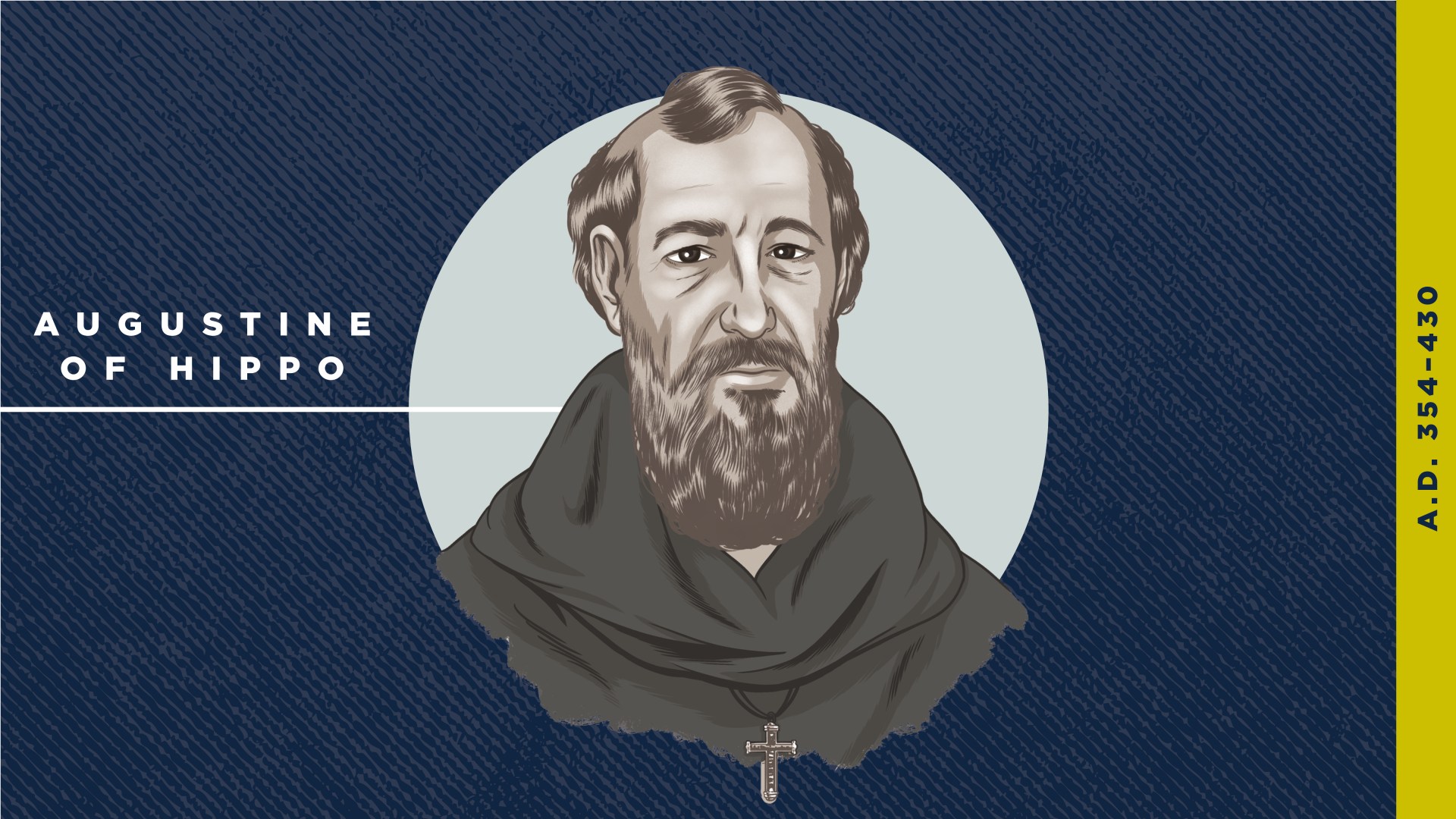
I am annoyed because of the demands which are thrust on me to write, arriving unannounced from here, there and everywhere. They interrupt and hold up all the other things we have so neatly lined up in order. They never seem to stop and can’t be put aside.— Augustine of Hippo, from a letter to Possidius

About halfway through my second year of seminary, I found myself deep in the throes of a major research paper. I don’t remember exactly what the paper was about, but I am sure it was a matter of some great exegetical and theological import. At the time, I was also meaningfully involved in the shepherding ministry of our local church, so it was no surprise when I received an urgent call asking for my help.

A young husband (let’s call him Jack) wanted me to intervene after a tense confrontation between him and his new wife (we’ll call her Kate). This conflict had been simmering for some time. It included challenges related to mental health and suicidal tendencies, which I was far from comfortable with or capable of addressing.

When the call came, I am ashamed to say, my gut response was, No, not now! It was not that I did not want to attend to the need per se, nor that I could not spare a few minutes. Rather, it was because I knew the crisis would need much more than a few minutes—it would throw my plans for the day into shambles.

Despite my frustration, I agreed to come over. As I walked into their apartment, I saw food that had been thrown against the wall in anger during their fight. Jack sat alone on the couch with no sign of Kate. Compassion and adrenaline immediately kicked in. I did the only wise thing I could do: I picked up a towel, began cleaning the walls, and listened to Jack explain what had happened.

Many phone calls followed—to the pastoral staff of our church, to friends who might know Kate’s whereabouts, and to local authorities. Eventually, through the Lord’s goodness and provision, we located her. We met with her and persuaded her and Jack to seek further help. By evening’s end—or was it early morning the following day?—I found myself in the mental health wing of the local hospital speaking with nurses and doctors. After arranging things with the hospital staff, I slumped down in the waiting room to watch the end of Ratatouille on cable television, my seminary paper no closer to completion than when I’d gotten the call from Jack.

As I have reflected on that episode in the years since, one thing that has continually pressed upon my conscience is my initial heart response: No, not now! Without trying to impute every manner of sinfulness and selfishness to my immediate reaction, I now see that there were a number of foolish impulses present then that I am prayerfully seeking to grow out of today. But it took an encounter with Augustine of Hippo to recognize those impulses for what they were and to articulate their disordered nature.

Lessons from Augustine

In the epilogue to the second edition of Augustine of Hippo (2000), Peter Brown discusses primary source material from Augustine’s life that was discovered after Brown first published his biography of the church father in 1967. When Brown was first writing, the limited evidence available on Augustine’s later life led Brown to characterize him as a tired old man—burnt out, rigid, and crotchety.

In the 1970s and 1980s, with the discovery and publication of 29 of Augustine’s personal letters from roughly the final decade of his life, new light was shed on the venerable African theologian, which allows us to set his other writings from that time into a proper context. According to Brown,

[Augustine’s] letters are marked by an inspired fussiness, and by a heroic lack of measure when it came to the care of endangered souls. There is nothing “burnt out” in the seventy-year-old man who would spend the time to interview a young girl terrorized by slave-traders and who would go out of his way (as part of an effort to encourage the father to accept Christian baptism) to ask to see the school exercises . . . of a teenage boy. The letters make plain that the old Augustine was prepared to give his unstinting attention to any problem that might trouble the faithful, no matter how busy he was, no matter how trivial or how ill-framed the problem seemed to be, and no matter how remote from Hippo, or how eccentric, its proponents were.

These newly discovered letters reveal a man who was, in Brown’s words, “characterized by constant quiet acts of self-sacrifice as Augustine lent his pen, again and again, to the defence of the Church, at the expense of intellectual projects that engaged him more deeply.”

I first read Brown’s biography about a decade ago, a few years out of seminary and just prior to accepting my first full-time pastoral position in a local church. The book was a gift of divine providence preparing me for my calling and helping me understand the significance of my inclination toward No, not now! Augustine, as revealed in these late-in-life letters, has challenged and inspired my pastoral labors. With God’s help, I hope my ministry will resemble Augustine’s in three important ways.

Global Significance, Local Priorities

First, Augustine challenges me to root my priorities in the local church. Before reading Brown’s biography, I viewed Augustine primarily as a theological giant whose writings were the most significant aspect of his service to the church. But the letters from Augustine’s later life reveal that his writings were only one element of a much broader devotion to the church. Despite how busy he was with other projects, his habit in later years was to give his attention quickly and particularly to the interruptions of mundane and local needs, even if he approached them with “a constant sigh of resignation,” as Brown writes.

Encountering this Augustine has been crucial in shaping my pastoral imagination. Here was a theologically incisive leader of the global church who also attended to the ordinary needs of a specific time and place. He did his best not to pit his writing for the wider public against, for example, aiding a young woman in his community who was harassed by slave traders. In fact, it seems that attentiveness to immediate and concrete needs was his first priority. Augustine apparently took the warning of Proverbs 17:24 to heart: “A fool’s eyes wander to the ends of the earth.” Augustine’s eyes remained fixed on the people and needs before him, and for that reason, arguably, he had something worth saying to those in different places and times.

Developing theological acumen, tackling global needs, and laboring to change the world are all high and holy work. For that reason, these aspirations can beguile us into thinking that local and pressing needs are distractions from what’s really important. I was blinded at first to the true importance of Jack and Kate’s on-the-ground crisis because I had an “important” paper to write. But the pastor’s chief calling is always, first, to speak the truth in love to a specific brother or sister, to serve neighbors and neighborhoods, and to minister for the good of a particular place.

Augustine’s life has been a lodestar in my calling to be a faithful pastor-theologian, even as it has also served as a rebuke when I buy into the lie that the needs of my local body are distractions from the “real” theological labor of sermon preparation, programmed catechesis, personal reading and research, conferences, and writing.

Self-Sacrifice and Ministry

The second lesson I have taken from Augustine’s life has to do with the self-sacrificial nature of the call to shepherd God’s church. For Augustine, theological reflection and writing were not isolated explorations of intellectual niceties; they were expressions of love and service to the church, troubled as it often has been. Since the universal church is always visible as local congregations, the needs of the hour occasionally forced Augustine to lay aside personal writing projects and plans, many of which “engaged him more deeply.”

A constant theme of the final third of Brown’s biography is Augustine’s writing of The City of God. As important as that book was to Augustine, he found himself again and again having to halt work on it to attend to other urgent needs. In a letter to a friend, Augustine revealed his irritation at the sacrifices he had to make: “I am annoyed because of the demands which are thrust on me to write, arriving unannounced from here, there and everywhere. They interrupt and hold up all the other things we have so neatly lined up in order. They never seem to stop and can’t be put aside.”

I can’t help but chuckle as I imagine Augustine fretting over constant interruptions to the plans he’d “so neatly lined up in order.” It’s an oddly comforting thought because I can empathize! At my best, my plans for a day (or week or season) are established for the good of others and the glory of Christ. Their disruption is no light matter. Similarly, Augustine didn’t shrug off interruptions with a glib “No problem!” or a superficial appeal to providence. Neither did he ignore the interruptions, attend to them half-heartedly, or minimize their importance relative to his plans. In self-sacrificial love, he gave his whole attention and energy to ministry needs as God set them before him.

This convicts and challenges me. Part of my inclination to ignore interruptions—in fact to perceive them as “interruptions” in the first place—is based on an implicit belief that the church is in the service of my agendas rather than that my calling is service to the local church, whatever its specific needs may be.

Augustine’s writing involved self-sacrifice. But he was given his writing abilities in the first place because he was called to shepherd the flock God had entrusted to him and to use his gifts to serve and defend where he was needed. Thus, he turned aside from personal plans (which surely were meant to serve God’s people) in order to address immediate needs.

Fuel for Theology

Self-sacrificial love is not only a pastoral calling. It is pastoral and theological fuel. Our commitment to meet the needs in front of us can inspire Christlike wisdom of enduring and universal value. That is the third lesson I learned from Augustine.

I doubt Augustine’s famous theological writings could have existed without his mundane local labors. The only theological reflection worth attending to in all times and places is that which has proven itself valuable in a particular time and place. What if faithful service and genuine attentiveness to our local church drives any voice we might have for the global church? If so, then even though Augustine felt hindered from writing The City of God by the many pressing needs of his flock, and even though they seemed at that time to be mere interruptions, they may have actually fueled much of his thought.

That has certainly proven to be the case with my own pastoral labors. As the credits to Ratatouille began to roll in the hospital waiting room many years ago, two things dawned on me. First, in that single day, I had learned much about society and pastoral practice (calling local authorities, communicating with hospital staff), ecclesiology (seeing a pastoral leadership team work together), and shepherding in marital conflict. Second, I was spurred to learn still more: to press into questions of mental health and spiritual formation that I hadn’t known to ask until that day, to read further on the topic, and to pursue more help from pastoral counseling classes than I would otherwise have sought.

As a college-and-20s pastor, I have found that practical engagements with the young adults in my local church have stirred up as much robust theological reflection on the nature of technology and the challenge of technological culture as any seminary course I have taken. I have asked, and have been asked, more profound questions about the theology of marriage and sexuality in an hour of premarital counseling with a young couple than I have discovered in days of pouring over theological texts.

None of this is to deny the value of time spent reading, writing, and studying. But for the pastor, supposed “distractions” from the work of theology, insofar as they are for the sake of the local church, are not really distractions at all. Because of them, I have become a better listener, a better inquirer, a better thinker, a better theologian, a better counselor, a better preacher and teacher—a better pastor. We may have to make some sacrifices for the sake of local church ministry, but God will more than repay them for our good and for the good of the church. That conviction has helped me, with the testimony of Augustine’s life at hand, to receive ministry “interruptions” willingly, with humility and hope.

Daniel J. Brendsel is pastor of college and 20s life and corporate worship at Grace Church of DuPage in Warrenville, Illinois.

Like this article? There’s more in our special issue on 9 Time-Tested Mantras for Ministry: Sage Advice for Pastors, from the Early Church to the Modern Age.

Pastors

Preach a Double-Edged Sermon

The message you prepare for your congregation is also meant for you.

Portrait by Joel Kimmel

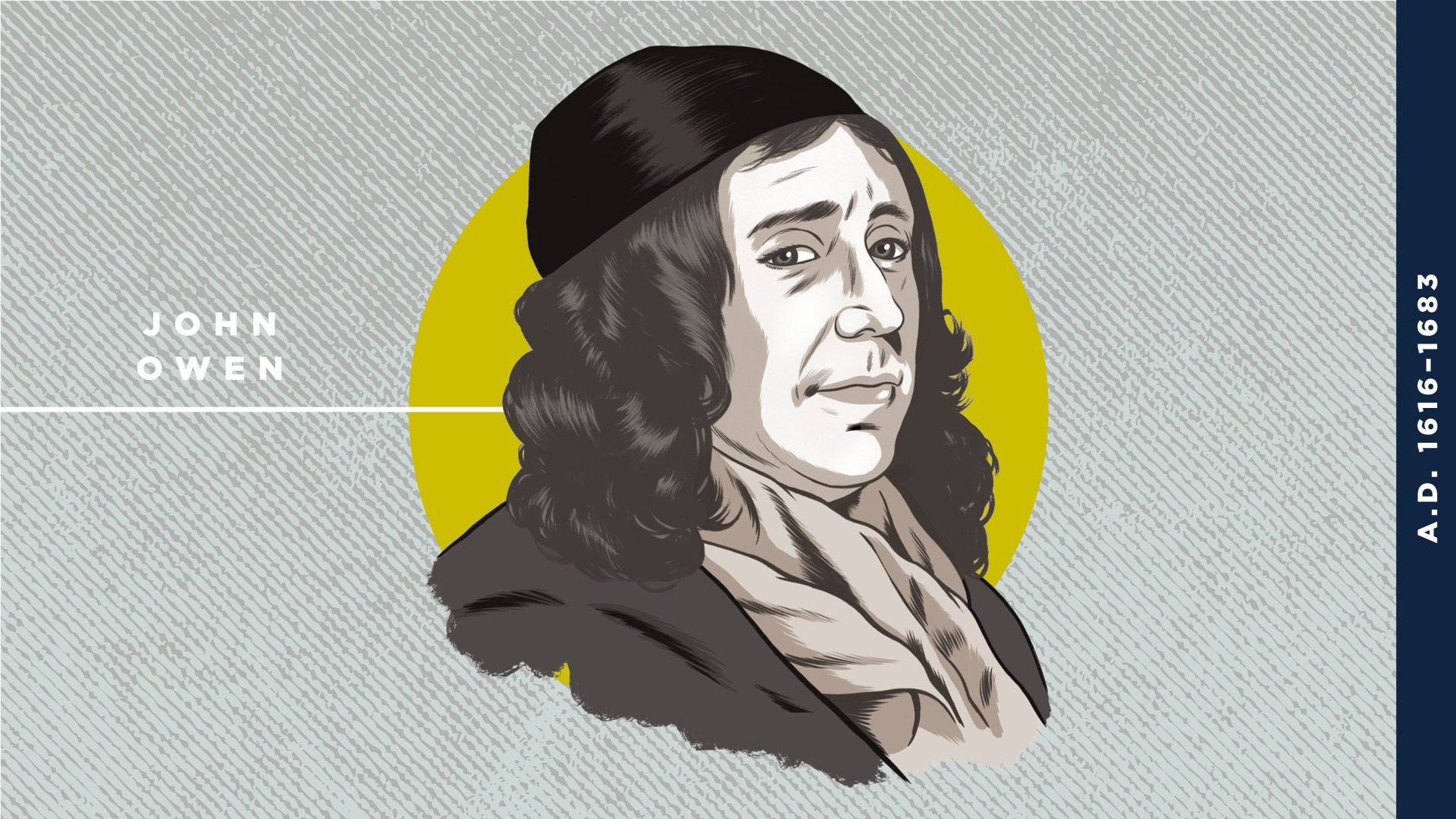
A man preacheth that sermon only well unto others which preacheth itself in his own soul. And he that doth not feed on and thrive in the digestion of the food which he provides for others will scarce make it savoury unto them; yea, he knows not but that the food he hath provided may be poison, unless he have really tasted of it himself. If the word doth not dwell with power in us, it will not pass with power from us.— John Owen, from The True Nature of a Gospel Church and Its Government

When I graduated from seminary, I braced myself for the worst. I had heard my fair share of ministry horror stories, but, to my surprise, ministry in my first pastorate was a joy. Eager to apply all I had learned, I was busy and active in the church: teaching Sunday school, orchestrating Awana, reforming the church’s finances, and so on.

But the real surprise came not at potlucks, men’s breakfasts, or other church activities; it came in the quiet recesses of my study. As I prepared sermon after sermon, I began to notice that my messages moved beyond people’s heads and penetrated their hearts most often when those messages had first taken root within my own soul. My congregation could tell the difference, and, in time, so could I.

I began to learn from experience that an accurate or well-researched sermon was a long way off from a sermon I had wrestled with, wept over, and carried into the pulpit like a fire that could not be put out. I first had to do the internal work of preaching my sermon to myself before I preached it to my people. It was 17th-century Puritan John Owen who first said, “A man preacheth that sermon only well unto others which preacheth itself in his own soul.” Owen was an influential leader in his time, writing theological texts, serving as Oliver Cromwell’s personal chaplain, and delivering sermons before the British Parliament. But Owen not only preached on England’s national stage; he also pastored local congregations.

Owen is a model to preachers today for many reasons: his gifted rhetoric, his insight into the biblical text, and his ability to move from theological mountaintops to the common terrain of the average Christian. But what sets him apart as an influence in my own ministry is his recognition that his first duty as a pastor was to feed his flock the Word—and to do so, he first had to feed himself.

The importance of preaching the Word to oneself was a topic Owen returned to frequently. In an ordination sermon called “The Duty of a Pastor,” he preached from Jeremiah 3:15: “And I will give you pastors according to mine heart, which shall feed you with knowledge and understanding” (KJV). With all his emphasis on the importance of feeding the flock through proclaiming the Scriptures, Owen stressed the absolute impossibility of this task if pastors do not begin with themselves. Owen observed, “We must labour ourselves to have a thorough knowledge of these mysteries, or we shall be useless to a great part of the church.”

If we enter the pulpit without our souls first having been transformed by the very gospel we intend to share, we will not help our congregations. In fact, we may do harm to those we intend to serve. Owen went so far as to compare messages that hadn’t moved the preacher to “poison,” for unless a pastor “finds the power of it in his own heart, he cannot have any ground of confidence that it will have power in the hearts of others.”

I admit, this is easier said than done. Not every sermon will feel like a fire that cannot be put out. Not every sermon will come from the heart or at least feel like it’s from the heart. I am the first to confess that some Sundays the Word of God hasn’t penetrated my heart as I intended. Perhaps it’s sin. Perhaps it’s distraction. Or perhaps it’s just plain fatigue.

Further, your sermons will not always affect your people in the same way they have affected you. Perhaps that’s due to the people’s sin. Perhaps they are distracted. Or perhaps they, too, are fatigued.

Owen’s prescription for this pastoral reality is not a quick-fix pill; it is a routine, a habit of ministry life. It is the internal work that happens far away from the external actions of ministry: church events, committee meetings, upfront teaching, and leadership. It is a habit that takes time, practice, and, most of all, the grace and power of the Holy Spirit working in and through the Word in our lives over the long haul. Just as nothing aids a Christian’s growth like a lifetime of formation under the preached Word, so too nothing can be substituted for a lifetime of exhortation to one’s own soul.

To truly receive this exhortation week in and week out, we preachers must intentionally become receivers. We must choose to listen attentively and patiently to the Word and the Spirit. Owen knew that, which is why he finished his ordination sermon by reminding his new ordinand that prayer is the pastor’s best friend. Every pastor is to cultivate what Owen calls a “spirit of prayer.”

But the prayer that fills the pastor’s study during sermon preparation is not for the pastor alone. Rather, Owen taught, the pastor is to pray for the congregation. “The more we pray for our people,” said Owen, “the better shall we be instructed what to preach to them.” How right Owen is. As I look back on my years in pastoral ministry, the sermons that flew off the runway with the greatest conviction were those paved with prayers not only for myself but especially for my people.

Pastor, preach the sermon before the sermon. Preach to yourself. Prayerfully receive the instruction and conviction that comes from the Word of God. Then preach to your people. And perhaps, over a lifetime of ministry, your people will be transformed alongside you.

Matthew Barrett is associate professor of Christian theology at Midwestern Baptist Theological Seminary, executive editor of Credo Magazine, and host of Credo Podcast. His most recent book is None Greater: The Undomesticated Attributes of God(Baker Books).

Like this article? There’s more in our special issue on 9 Time-Tested Mantras for Ministry: Sage Advice for Pastors, from the Early Church to the Modern Age.

Pastors

Pastoring People Who Cause You Pain

Pastor and author Jared C. Wilson shares what America’s first ordained African American taught him about facing hardship in ministry.

Portrait by Joel Kimmel

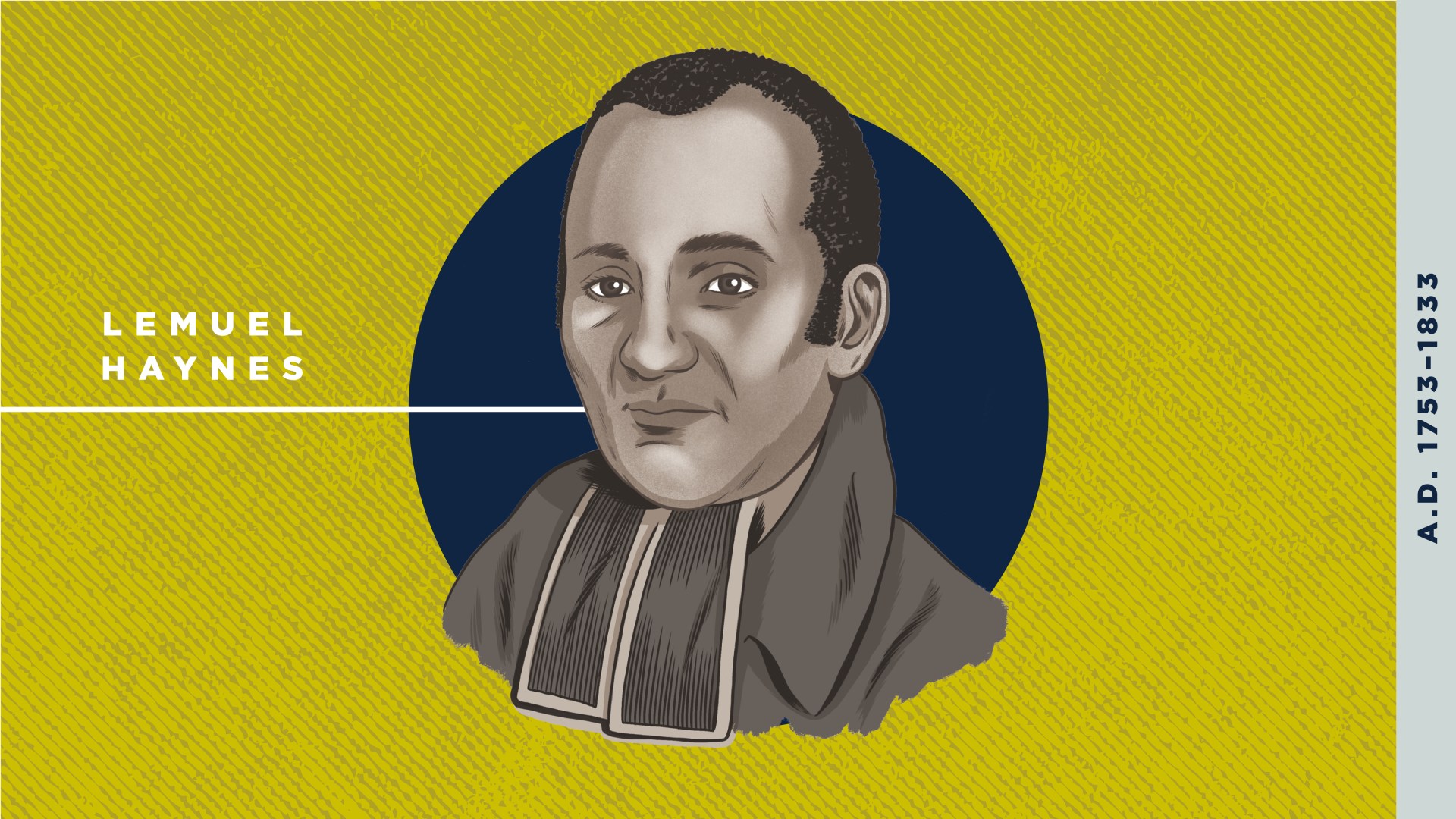
When the professed friends of God forsake the ministers of Christ, it is attended with circumstances peculiarly aggravating. The sweet counsel and communion they have taken together are now interrupted—mutual confidence destroyed—the parties exposed to peculiar temptations, which renders it difficult to retain that forgiving spirit manifested by the holy apostle when all men forsook him: “I pray God that it may not be laid to their charge.”— Lemuel Haynes, from “The Suffering, Support, and Reward of Faithful Ministers”

Lemuel Haynes is a historical figure you may not have heard about but should have. By any standard, his life was remarkable. Haynes, who was born in 1753, was an indentured servant as a child, a veteran of the American Revolution, and the first black man in the United States to be ordained to ministry. Known for his keen mind and quick wit, Haynes was a powerful preacher and abolitionist, drawing on his Calvinist theology to argue that God had a sovereign plan to end slavery and integrate the races. Haynes’s life was anything but easy, and his ministry at a church he had led for 30 years ended with him being forced out. We talked to preacher and author Jared C. Wilson about how Haynes’s legacy has inspired him—and taught him to view ministry hardships in the light of eternity.

I have to admit I didn’t know who Haynes was until I read an article about him recently. How did you encounter him?

When I was pastoring in Vermont, I did some research into the history of the area, and I stumbled across him. Haynes wasn’t from Vermont, but he spent 30 years pastoring a church in West Rutland. I was about five miles down the road from where he preached. So I was just looking into the church history of Vermont, and he’s a towering figure in that state. But when I started reading up on him, I thought he should be better known in American church history. He’s the first African American ordained by a religious body in America and the first black pastor of a mostly white congregation. That’s rare today. It was unheard of then.

You wrote, “I had a friend who once said ‘fall in love with a dead guy.’ Haynes is my guy.” Why do you feel this special affinity for Haynes?

One reason is his faithful pastorate. He was a devotee of the theology of Jonathan Edwards, so he was in that American Puritan tradition. He was heavily influenced by the revivals; he cites Edwards and George Whitefield in his final sermon to the congregation in West Rutland. So he has that theology, and he was just a faithful shepherd. The first substantive biography of him, by Timothy Mather Cooley, is full of wonderful anecdotes, vignettes of things Haynes did and said. He was so funny; he had the wit of a Spurgeon. I loved that he was a political-minded guy but kept that out of his pulpit preaching. His theology was very rich. He preached like Edwards, points within points. And unlike Edwards, who has the specter of slavery hanging over him, there’s no asterisk after Haynes’s name. People thought well of him. His family loved him. He doesn’t require doing any triage on his character.

Yet his life was not devoid of controversy. He had some conflict at the West Parish Church of Rutland, Vermont. Can you set the context for Haynes’s final sermon to that congregation?

We don’t know exactly what led to his resignation/dismissal. The reasons he was forced out aren’t entirely clear. Publicly he attributed it to sort of outliving his usefulness. There were some discipline issues with members of his congregation, and there was a long conflict he had with one deacon. One historian cites changing political tastes. So there was a sense that his style of ministry and his politics weren’t in fashion anymore. It’s also likely racism played a role. He alluded privately to some friends that racism played a part in his ouster. But he didn’t mention that in his sermon.

What are some of the most poignant things Haynes said in the sermon?

He preached it in May 1818, but it wasn’t published until years after, so it was likely modified slightly. Half of it is a straightforward exposition of Acts 20:24, where Paul talks about finishing his course. He uses that to talk about what a faithful minister is like. The title of the sermon was “The Suffering, Support, and Reward of Faithful Ministers.” He said that to be a pastor is to engage in suffering and conflict. Roughly half of it is him applying that to his own ministry and giving a farewell exhortation. It’s as close to a mic drop sermon as you could get.

I’ve read Edwards’s last sermon at Northampton, and if he was hurt—and he had to be—he didn’t show it. But Haynes is different. He mentions that his dismissal is not because of his unfaithfulness but because of others who caused him harm. It’s as good a model as any of a pastor addressing hurts and conflicts in a public way without being vindictive. He cares about their souls—for example, he says, “That man that does not appreciate the worth of souls, and is not greatly affected with their dangerous situation, is not qualified for the sacred office”—and points them to grace and the promise of heaven.

He basically says all of this will get sorted out on the Last Day. And he says things like, “Those of you who were found drowsy in my preaching will be fully awake.” It’s really great. But he doesn’t sound like a bitter man. It reads as someone who was willing to confidently address the circumstances without fear and point them to eternity.

Let’s talk about how his example has helped you. How have you had to pastor people who caused you pain?

Often people mistreat you or cause conflict, but they won’t come directly to you. You hear that they’re saying things. The pastoral impulse is to get underneath that. Often it has nothing to do with you. It’s about something else. So I would try to get below the surface to see if I could address the real issue. But there are times when it’s harder because someone has sinned against you—and they won’t repent of it. At one place I pastored, it was made even more difficult because we hadn’t gotten around to codifying church discipline. I inherited an old set of bylaws. So there were people we had issues with, and I had no way of calling them to account. There were people I had to endure and pray their hearts would turn. That was difficult. I felt I’d done all I could do. I had to not let their demeanor affect how I thought of the entire church.

I have to remind myself that doing faithful ministry will often arouse conflict. But I have to remember that I’m not there for the PR. I’m not trying to please the constituency. My primary audience is the Lord. Toward the end of his final sermon to the West Rutland congregation, Haynes said, “The cause in which ministers of Christ are engaged may well excite them to persevering faithfulness and fidelity in their work. ’Tis that dear interest for which all things were created, and the cause of the ever blessed God in three persons; for which the glorious Redeemer shed his precious blood, and is now pleading.” If I’m going to be faithful to Scripture and its implications for our lives, that’s going to be polarizing. I can’t have my emotions ruled by others.

The most hurtful thing for me wasn’t the people who didn’t like me; it was the people who didn’t support me. They were passive. I’m trying to think charitably of them. But that’s the hardest thing—the passive majority, including fellow leaders who were protecting themselves. In private they were very supportive, but then they’d be in a meeting where I was getting beat up, and they just sat on their hands. That was more hurtful than anything.

Is there a point when a pastor has to say, “Enough is enough”?

Yes. Trying to draw a hard line is probably a matter of discontent and pastoral intuition. You have to consider the impact on your family. You also have to remember that caring for the people who hurt you involves correcting. It’s not right to adopt a martyr complex and say, “It’s all okay.” In a sense, you’re allowing them to sin.

Almost all of my regrets from my last pastorate involved waiting too long and not being decisive or confrontational enough. At one annual meeting, people were lashing out and inventing things. They were trying to see which thing would cut me open. Normally I try to answer questions winsomely and gently. Or I am just silent. But finally someone said something like “People are hurt and not being heard.”

As I sat there, I thought about the gossip and anonymous criticisms I’d been enduring for months. I thought about the way certain women who’d been my wife’s friends had stopped talking to her without explanation, even when asked. I thought about the woman who’d been manipulating people against my wife. I’d had enough. I asked for the microphone and said, “Everyone here has been heard but me.”

I said, “My family has been very hurt by people in this church. If you want to talk about people being hurt and not heard, count me in that number.” Looking back years later, I wonder if I should have done that sooner. I think that could have headed off some things. It didn’t really make a difference among those who’d turned against me; if anything it probably emboldened them. And it took me several years to decide if I’d done the right thing, but I’ve decided I did. At some point, letting people run all over you isn’t noble. It gives people freedom to sin.

On my last Sunday at this particular church, I encountered someone who had caused me and my wife so much pain. I had done all I could do to appeal to them. I’d met with them with another elder, but they just continued their campaign against me. I was never firm with them. I allowed them to treat me like dirt. My last Sunday, we had a going away thing. They came up and said, “We wish you well.” I said, “I don’t believe you.” They needed to hear they’d caused me great pain. I feel like they wanted to wash their hands of it and pretend they hadn’t treated me poorly, and I didn’t want to play that game. There comes a time when you have to say, “Enough is enough.” Not in a vindictive way. But if you care about the souls of the people, even of those who are hurting you, you need to tell them to stop sinning.

It’s always difficult to know when to do that. You have to ask the diagnostic question: Am I primarily serving the Lord or people? Often those coincide, and that’s great. But sometimes if you preach or lead a certain way, it will cause problems. And I don’t mean in terms of being a bully or domineering or taking advantage of people. Obviously that’s wrong, and people should object to that! But there’s this strange thing that happens in churches where people spiritualize their disagreements and disappointments. Pastors have to decide at some point if they are going to do the right thing or the popular thing, the thing that protects themselves. That’s when you figure out if you’re a pastor or just an employee. If you fear God, you won’t be as worried about how it will come across if you prioritize your family or take your vacation days or have healthy boundaries. But those things will get tested.

How have Haynes’s actions and words impacted your understanding of ministry?

They’ve certainly reinforced the scale of eternity. They have reminded me of the supernaturality of Christian faith, and, by extension, Christian ministry. Everything Haynes preached carried this grand sense of God’s glory and the gravity of eternity. Every waking moment is compared to or contrasted with the Final Day. I’m also reminded to live and minster in such a way that, when I have to give an account of my life, I won’t be ashamed. In the end, after all of the hurt or injustice, the Lord will sort it all. He reminds me of faithfulness through all the ups and downs. But the biggest impact is the reminder of how ministry deals with the economy of eternity, which we have to keep in sight, even with the concerns of our immediate context.

Drew Dyck is a contributing editor to CT Pastors and the author of Your Future Self Will Thank You: Secrets to Self-Control from the Bible and Brain Science (Moody, 2019).

Like this article? There’s more in our special issue on 9 Time-Tested Mantras for Ministry: Sage Advice for Pastors, from the Early Church to the Modern Age.

Apple PodcastsDown ArrowDown ArrowDown Arrowarrow_left_altLeft ArrowLeft ArrowRight ArrowRight ArrowRight Arrowarrow_up_altUp ArrowUp ArrowAvailable at Amazoncaret-downCloseCloseEmailEmailExpandExpandExternalExternalFacebookfacebook-squareGiftGiftGooglegoogleGoogle KeephamburgerInstagraminstagram-squareLinkLinklinkedin-squareListenListenListenChristianity TodayCT Creative Studio Logologo_orgMegaphoneMenuMenupausePinterestPlayPlayPocketPodcastRSSRSSSaveSaveSaveSearchSearchsearchSpotifyStitcherTelegramTable of ContentsTable of Contentstwitter-squareWhatsAppXYouTubeYouTube