Pastors

US Megachurches Are Getting Bigger and Thinking Smaller

Church growth has corresponded with a huge jump in multisite locations and deeper engagement in small groups.

CT Pastors November 19, 2020
Courtesy of Abundant Life

Megachurches have gotten so big over the years that they’ve outgrown their sanctuaries.

The average megachurch in the United States had 4,100 regular attendees (before the pandemic) and seating for 1,200. That’s because, unlike in earlier days, most now spread services across multiple sites and locations over a weekend, according to a new report by the Hartford Institute for Religion Research and the Evangelical Council for Financial Accountability (ECFA).

“The 20-year trend to become multisite … has continued to explode,” the researchers wrote in the report, a 2020 survey of 582 megachurches, defined as Protestant churches with regular attendance of 2,000 or more.

Multisite megachurches tripled between 2000 and 2020, now with 70 percent of megachurches operating as multisite and another 10 percent considering it.

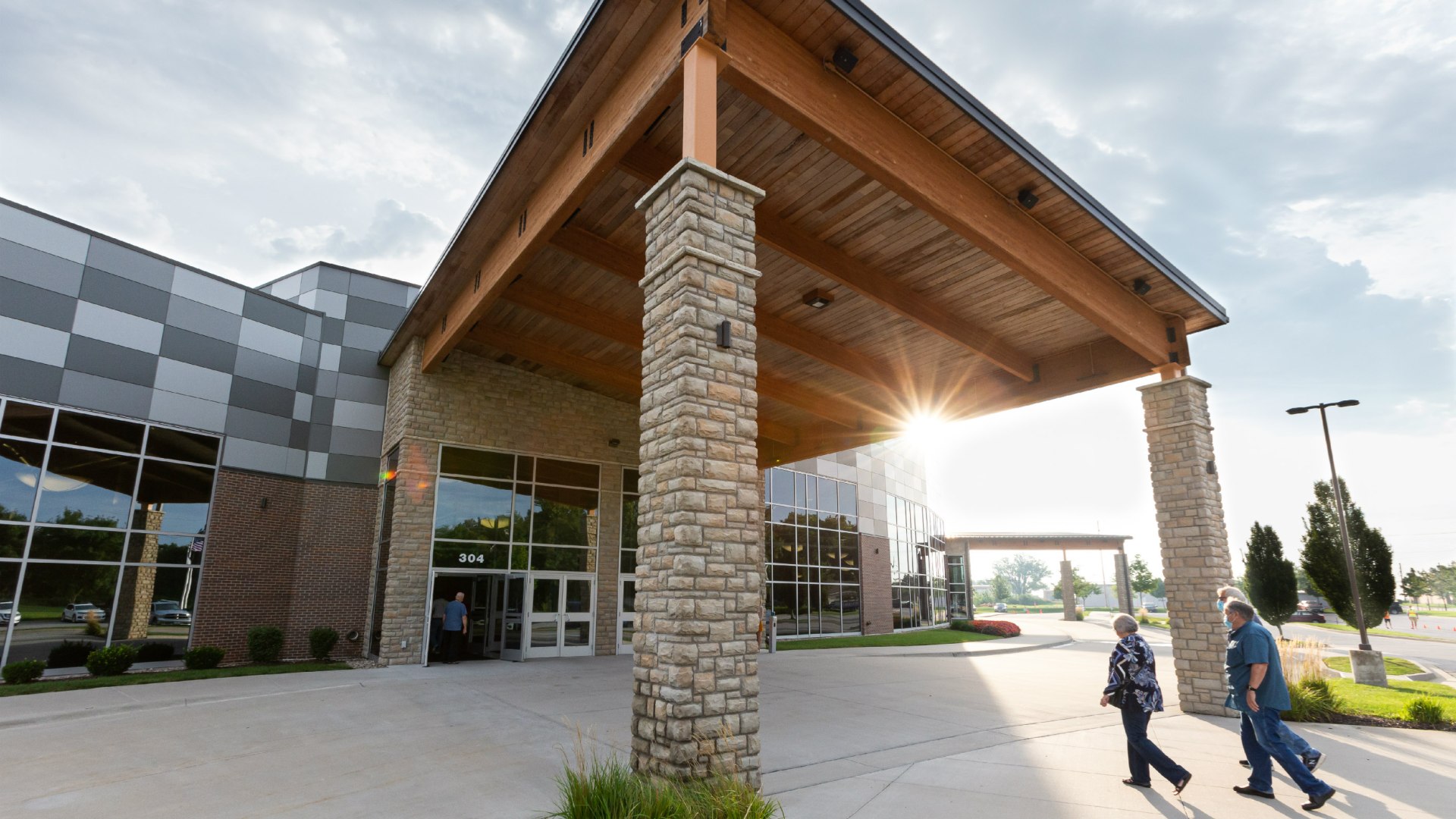
Pastor Phil Hopper leads a multisite church called Abundant Life in Lee’s Summit, Missouri, a suburb-turned-city outside Kansas City. The multisite trend may be new, but to him it’s actually a return to an ancient strategy.

“We have to get back to that early paradigm of church ministry,” the pastor said. “The ‘win’ has to be ‘Wow, we just sent 500 people from here somewhere else to launch something brand new.’ … That’s what made early Christianity a move of God that swept through the ancient world.”

As megachurches continue to grow, logistically they have to add services or locations to accommodate new attendees. “You can’t keep building a bigger building every time you run out of seats,” said Hopper, whose congregation drew 7,000 attendees across two locations before the pandemic.

The average US megachurch, according to the Hartford study, has 7.6 services a weekend, compared to 5.5 just five years ago.

“Multiplying” to launch a new location, Hopper said, is sort of a shot at immortality for churches—at least logistically speaking. The Sunday that Abundant Life sent 500 people to plant their second location in Blue Springs, another Kansas City suburb, those congregants’ seats were still taken at the main campus—just by new people.

“Each organization goes through seven life cycles, from startup to eventually decline and death,” Hopper said. “Churches are no different. … Multisite is a way to interrupt that process.”

https://datawrapper.dwcdn.net/XXsDO

Abundant Life is planning to launch a third site in 2022, having purchased a new building for the location prior to the COVID pandemic.

Hartford Institute researchers conducted their 2020 survey before the US coronavirus shutdowns began in March. They acknowledged the effects on church life of the virus and lockdowns won’t be fully understood for some time. But the country’s largest churches are generally in a better financial position than smaller congregations to weather the crisis.

In fact, one trend that contributes to the “multisite boom”—megachurches adopting and merging with smaller, struggling churches—may well increase due to the pandemic.

“One pattern is already clear: larger churches are providing much of the thought leadership for how to spiritually navigate the crisis,” researchers wrote.

Multistrategy

Abundant Life’s satellite church in Blue Springs streams Pastor Hopper’s sermon every week. That second location has its own staff, including a campus pastor.

“If you have multiple locations but each location is hearing a different message from a different messenger, you really don’t have one church in multiple locations,” Hopper said. "You have multiple churches all with the same name.”

Not everyone agrees. Scott Thumma, who directs the Hartford Institute and co-authored the report with ECFA’s Warren Bird, said this year’s survey didn’t ask how multisite megachurches specifically approach preaching.

“There are many models for how it’s done,” Thumma said, including one sermon being simulcast into multiple locations, a senior pastor driving to different locations for multiple services, or satellite churches having their own teaching pastors. “As long as all the locations are seen by the church as a single church, then they are a multisite megachurch for our purposes.”

Pastor Brad Bell leads The Well Community Church in Fresno, California. The Well first branched into multiple sites in 2007, but Bell says not all the sites they launched are still up and running. He said simulcasting sermons from a pastor across the city into a different church was part of the problem.

“We launched a couple of campuses regionally with shepherd leaders, thinking, ‘He doesn’t have to be a leader; he doesn’t have to teach,’” Bell said. “But the magnetism of a video-teaching multisite campus is not a draw without a strong visionary leader.”

The three sites under The Well’s umbrella—meaning they share things like doctrinal statements, logos and graphics, kids’ ministry curricula, etc.—each have their own teaching pastor. They total around 5,700 weekly attendees.

Though Abundant Life does it differently, Pastor Hopper acknowledges that the same logistics that prompt churches to multiply—too many bodies for not enough seats—can create ministry difficulties. “Most human beings don ’t want to be just a face in the crowd forever,” he said. “We don ’t want to be so large that we can ’t shepherd people. … In the end, we can ’t shepherd people if they ’re not in a [small] group.”

That’s something his church and The Well have in common: Both pastors said as they grow and multiply, dividing into small groups has become a more critical part of their ministries. And most fellow megachurch pastors would agree.

Small Groups, Not Dinner Parties

In 2020, 90 percent of megachurches consider small groups as “central to their strategy of Christian nurture and spiritual formation,” compared to 50 percent 20 years ago.

The study also found that small-group attendance within megachurches is on the rise and that a larger participation in small groups correlates to other positive trends such as the growth of the church overall, the church’s involvement in community service projects, and church members’ confidence in their ability to “incorporate newcomers into the congregation.”
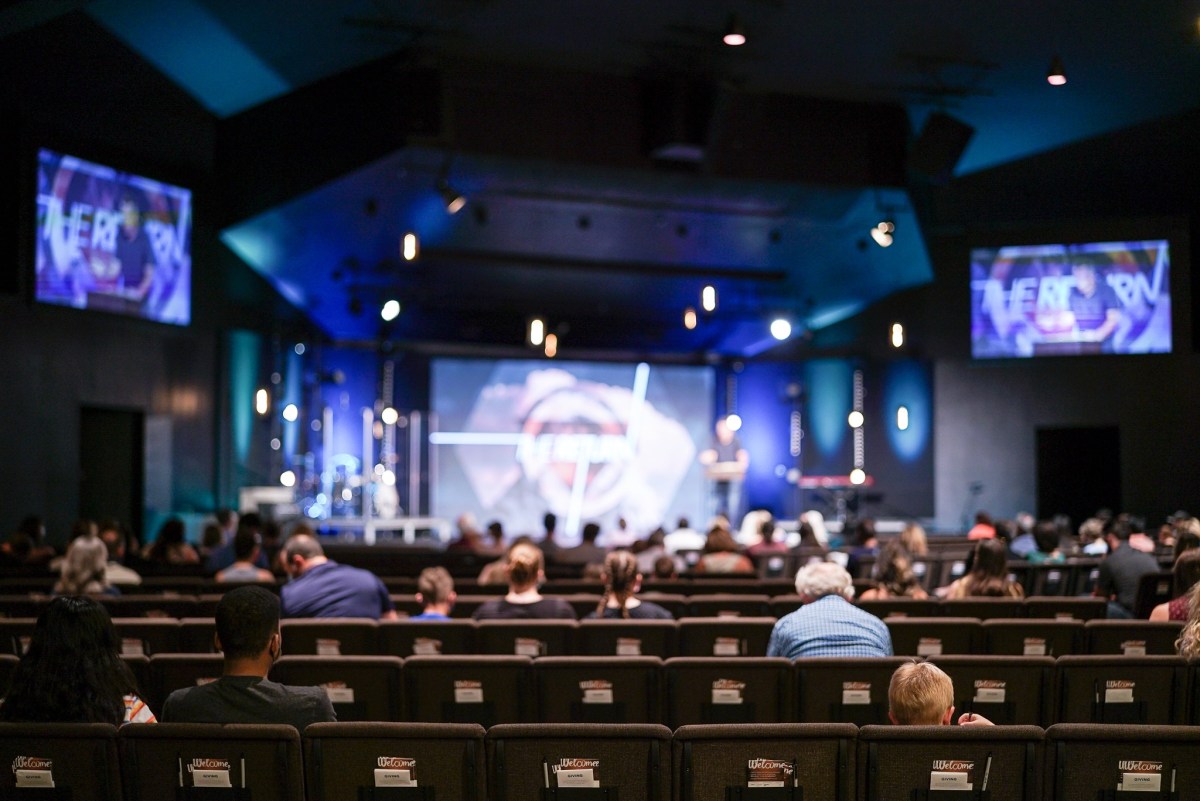
Courtesy of The Well Community Church

“Spiritual formation doesn’t happen in the auditorium; it happens in the living room,” said Brad Bell, who is focusing his doctoral dissertation on building small groups.

Bell said he wants The Well’s small groups to focus not just on having a “dinner-six”—a three-couple dinner party that doesn’t do much else—but on practicing spiritual disciplines together.

“We have more higher-educated Christians in our churches who are living lives that do not reflect what they know,” he said. “What does it look like for a Life Group (The Well’s name for a small group) to practice simplicity or fasting? Or silence and solitude and prayer?”

Bell said every small group leader will be specifically trained and ultimately evaluated not just on building honest friendships but on pursuing spiritual formation.

Hopper said Abundant Life starts encouraging people to join small groups the moment they walk through the door. “We say … you don’t have to choose between a large church and a small church,” Hopper said. “We’re telling people that [the small group] is where small church happens.”

If small groups had become mission critical for megachurches before the pandemic, they’re especially important now, with few packing large auditoriums for worship. Hopper said small groups may be singularly responsible for keeping some of Abundant Life’s members active in church during the two months they did not meet in person.

At The Well in Fresno, Bell started streaming sermons on Instagram Live during the eight months the church was shut down. He was surprised to find that a couple in their early 90s were among those consistently tuning in each week to watch.

If they’ve been believers for a while, they’ve probably lived through several life cycles and trends of the American evangelical church but are still game for what their megachurch is doing in 2020. “They are faithfully logging on and commenting,” Bell said. “How awesome is that?”

News

No Pandemic Pause in Persecution, Says Poland Ministerial

Third annual conference to promote international religious freedom, held virtually, highlights how governments have exploited COVID-19.

The podium at last year's religious freedom ministerial stage in DC. This year's IRF conference was virtually hosted by Poland.

The podium at last year's religious freedom ministerial stage in DC. This year's IRF conference was virtually hosted by Poland.

Christianity Today November 18, 2020
Ralph Alswang / US State Department

The cause of international religious freedom has gone more international.

Amid the COVID-19 pandemic, the third Ministerial to Advance Freedom of Religion or Belief was hosted this week outside the United States for the first time—in Poland.

Next year it will take place in Brazil.

Launched in 2018 by the US State Department, the ministerial brings together the world’s top diplomats to ensure religious freedom remains an integral focus of international foreign policy.

The focus is necessary: 80 percent of the world’s population lives in nations that restrict religious freedom, according to the Pew Research Center.

And the pandemic has only increased persecution.

“Malign actors have tried to use COVID-19 to restrict religious freedom,” said Sam Brownback, US ambassador-at-large for international religious freedom.

“The need to expand religious freedoms and protect religious minorities has become a global priority.”

The novel coronavirus took center stage at the two-day conference, hosted virtually by the Polish Ministry of Foreign Affairs.

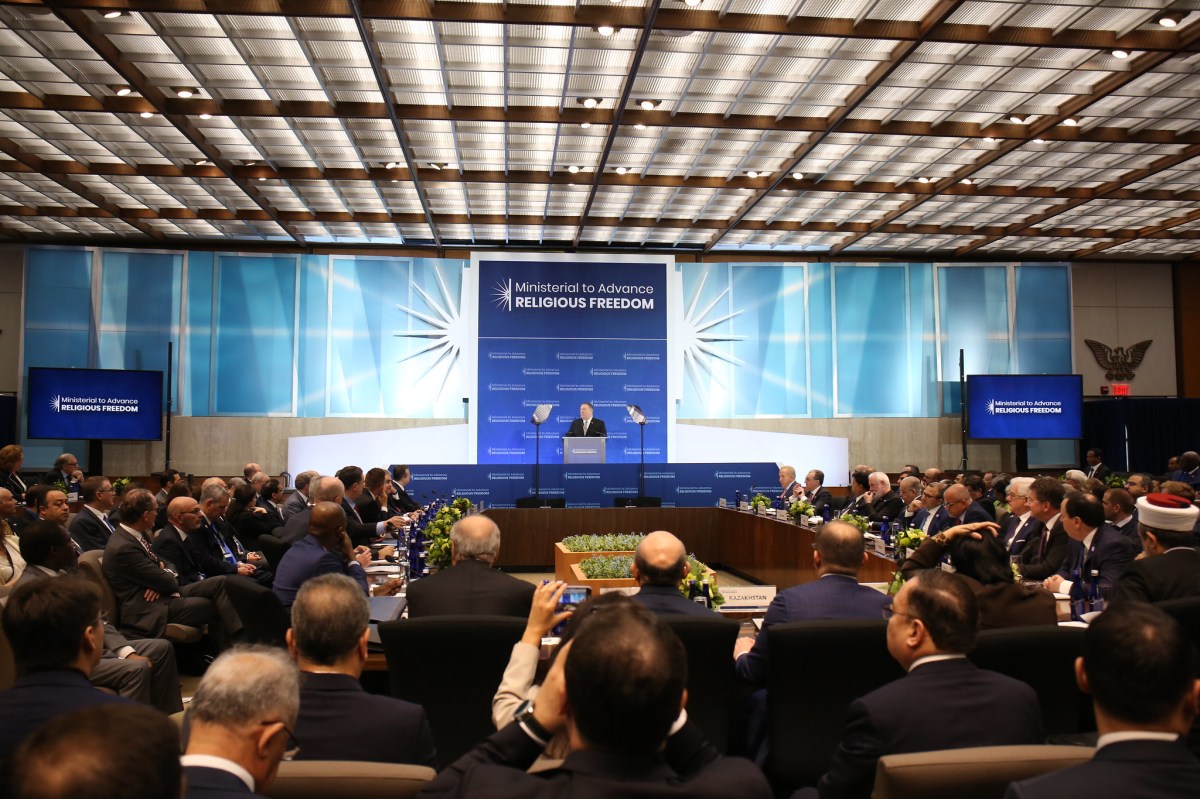
The 2019 Ministerial to Advance Religious Freedom drew about 1,000 delegates to Washington. This year's event was hosted online by Poland due to the pandemic.
The 2019 Ministerial to Advance Religious Freedom drew about 1,000 delegates to Washington. This year’s event was hosted online by Poland due to the pandemic.

Gayle Manchin, chair of the US Commission on International Religious Freedom (USCIRF), said restrictions on religion began as early as March.

She cited several examples:

  • In Sri Lanka, authorities ignored Muslim objections to cremation, despite health assurances there could be no transmission from a cadaver.
  • In South Korea, the government moved against the Shincheonji Church of Jesus sect after it became the center of the nation’s initial outbreak.
  • In Iran, despite a widespread release of prisoners that included some Christians, officials transferred Sufi Muslim prisoners into wards with known cases of COVID-19.
  • Saudi Arabia restricted movement in its Shiite-majority eastern Qatif region, wary of early widespread infection in Iran.
  • In Pakistan, COVID-19 became known as the “Shiite virus,” while Hindus and Christians were discriminated against in aid distribution.
  • Turkey was highlighted as an egregious example of worldwide scapegoating of Jews, blamed for the deliberate creation and ongoing spread of COVID-19.

“Some countries will not act unless they are named and shamed, and unless we are relentless,” said David Harris, executive director of the American Jewish Committee.

“Our job is to outlast our adversaries by at least one day.”

The problem is not only outside the United States. Orthodox Jews require the presence of 10 people to pray, and have faced restrictions in their religious rights, he said. And the latest FBI hate crime report found that Jews suffered 60 percent of all religiously motivated crimes in 2019.

Paradoxically, the pandemic offers a great antidote to religious prejudice—one that should be “shouted from the rooftops,” Harris said.

The couple that developed the Pfizer vaccine are Muslim Turkish immigrants to Germany. And the chief medical officer behind the Moderna vaccine is an Israeli Jew.

“We want to believe that our prayers will protect us,” Harris said.

“But we are sitting ducks, and we need each other’s help and support.”

The relief requires a global response, said Ahmed Shaheed, UN special rapporteur on freedom of religion or belief. He highlighted that one of his three coronavirus-related statements called out the surge in antisemitic conspiracy theories.

He also reminded officials of the Universal Declaration of Human Rights and of the International Covenant of Civil and Political Rights.

These demand the utmost in collaboration and communication.

“In times of emergency, restrictions on the public expression of faith must be the least possible, and impose no discrimination,” Shaheed said.

“Governments must ensure that religious communities can flourish.”

In the United States, the verdict is mixed.

According to the 2020 Becket Religious Freedom Index, released yesterday, “people of faith” divided evenly when asked if the American government treated religious congregations fairly. About a third answered Yes and a third answered No (34% each). Republicans leaned toward No (29% vs. 43%) and Democrats leaned toward Yes (45% vs. 22%).

About three-quarters said religion is important for social stability (78%). And 1 in 5 gave higher priority to reopening houses of worship over businesses, another 1 in 5 said the reverse, and the remainder said the priority should be equal.

Statistics like these bode well for continued domestic support for international religious freedom. Brownback noted that the reauthorization and expansion of his ambassador position was signed into law by President Barack Obama, and that House Speaker Nancy Pelosi attended the second ministerial.

A secondary focus of the Poland gathering was the relationship between religious freedom and security. Experts cited statistics that demonstrate a positive causal relationship, contrary to the authoritarian impulse to limit religious activity.

Brownback also announced a new focus of the American government would be on the misuse of technology to oppress religious minorities, such as in China with its Muslim Uighur community.

“If the Chinese were not at war with faith, they would have … a more satisfied citizenry,” he said. “The answer to terrorism is not locking people up. It’s religious freedom.”

But in the three years since the ministerials began, Brownback cited several encouraging signs.

Sudan has repealed its blasphemy law, and Australia will lead the charge on encouraging more nations to follow.

Religious sites are being protected in Crimea and Georgia conflict zones, he said, calling on Azerbaijan to do the same in Nagorno-Karabakh.

And the International Religious Freedom Alliance, launched at the 2019 ministerial, has grown to 32 member nations.

Last year, Brownback called for civil society to organize regional religious freedom roundtables, and 30 have since been conducted. The primary weekly initiative in Washington has had 800 participants from around the world. Sudan held its first official roundtable last month.

It is now a global movement, he celebrated.

“The chains of those who are persecuted have started to rub against our skin,” Brownback said.

“We feel it—and have started to push back.”

Ideas

‘First Freedom’ vs. Article 18: Will Biden Demote Religious Freedom in US Foreign Policy?

The president-elect can integrate it into a pragmatic human rights agenda without repudiating Trump’s legacy.

President Donald Trump delivers remarks at a US event on religious freedom at the United Nations in September 2019.

President Donald Trump delivers remarks at a US event on religious freedom at the United Nations in September 2019.

Christianity Today November 17, 2020
Ron Przysucha / US State Department

This week as Poland hosts the third Ministerial to Advance Religious Freedom—the latest in a series of high-profile summits initiated by the Trump administration—many observers are wondering what a Biden presidency will mean for the United States’ promotion of religious freedom abroad.

For the past four years, religious liberty has enjoyed pride of place in President Donald Trump’s domestic and foreign policy agenda. The president and many senior officials routinely addressed the issue—including before the United Nations—and elevated it within executive agencies. At a November 10 press conference, Secretary of State Mike Pompeo said, “I’m especially proud that we’ve made religious freedom a top priority in US foreign policy, for the first time in our nation’s history.”

But there has also been serious concern that all this attention was driven mostly by domestic partisan agendas and was negated by the president’s perceived hostility toward Muslims and his disregard for the norms of liberal democracy. Whatever the impulse and impact, many critics maintain that the Trump administration’s focus on religious freedom has simply been disproportionate—to the detriment of other human rights.

As the team of President-Elect Joe Biden assumes power, they will enter an ongoing contest between two rival conceptions of how religious freedom relates to other human rights. We can call these views “First Freedom” and “Article 18.”

Those in the First Freedom camp speak of religious freedom as the foundational right, highlighting that it is the first freedom mentioned in the First Amendment. Their primary reference point is the legal history of the United States.

For those who espouse the Article 18 view, their primary reference point is the United Nations. Both the Universal Declaration of Human Rights and the International Covenant on Civil and Political Rights enshrine the right to “freedom of thought, conscience, and religion” in their 18th articles. This placement suggests that religious freedom is part of a large web of interconnected, mutually reinforcing rights.

The First Freedom view has been ascendant within the Trump administration and has had a tangible impact. The State Department moved its religious freedom office out of the human rights bureau, its home since 1998, and made it a standalone office reporting to an undersecretary. The administration launched the series of ministerial conferences on religious freedom and a new intergovernmental alliance on religious freedom—not on any other human right or on human rights in general.

Pompeo has routinely declared religious liberty the “first freedom.” The Commission on Unalienable Rights, which Pompeo assembled, added considerable intellectual heft for this view. The commission’s final report argued, “Foremost among the unalienable rights that government is established to secure, from the founders’ point of view, are property rights and religious liberty.”

With the transition to the Biden administration, the Article 18 view will become ascendant. In keeping with the rhetoric of previous Democratic administrations, the Biden team is likely to argue that there is no hierarchy of human rights. No first freedom, just many equally important freedoms.

In practice, however, a de facto hierarchy is hard to avoid. Every administration has priorities. And if the vocal rejection of the Commission on Unalienable Rights by a chorus of human rights scholars and organizations is any indication, there will be strong pressure on the Biden administration to downgrade the current focus on religious freedom and to elevate the rights of greatest concern to social progressives.

In May 2020, Amnesty International lamented that Pompeo had “consistently supported the prioritization of freedom of religion or belief over all other rights.” In its 15-page submission to the Commission on Unalienable Rights, Amnesty expressed “concerns that the Department of State is aiming to utilize the advice and recommendations of this Commission to discriminate against, and undermine human rights protections for, women and LGBTI people.”

Like so much else in American public life, the very term religious freedom elicits a sharp partisan reaction. Trump and his administration have intensified that polarization. In light of how important religious freedom is for good governance and human flourishing at home and abroad, I’m hopeful that Biden and his administration will chart a more irenic course.

To foster common ground on religious freedom promotion, the Biden team should move beyond the Commission on Unalienable Rights and the ensuing rebuttals. Instead, they can draw inspiration from an excellent new policy report on religion and governance—A Time to Heal, A Time to Build—from the Brookings Institution.

The Brookings report applauds and critiques elements of both Left and Right and maintains that “a measure of openness on both sides might help us find new ways to respect the rights of all of us.” The report was drafted by two center-left scholars—a Baptist and a Catholic—with input from experts across the religious and ideological spectrum, including many prominent evangelicals such as Galen Carey, Stanley Carlson-Thies, John Inazu, Greg Jao, Russell Moore, Gabriel Salguero, Knox Thames, Michael Wear, Pete Wehner, and Jenny Yang. With this diversity of belief and opinion, the report embodies the sort of fair-minded and capacious approach it recommends to the next administration.

The authors of the Brookings report point to a way forward that addresses the First Freedom camp’s concern for robust religious freedom advocacy and the Article 18 camp’s concern for a more equitable promotion of all human rights. The US’s promotion of religious freedom abroad is more likely to be effective, they posit, if it is integrated into a larger human rights agenda because it will thus be less likely to be dismissed as selective, sectarian, or threatening to other rights.

This pragmatic arrangement won’t resolve underlying philosophical differences. But if the Biden administration embraces this synthesis as a baseline to build upon, it can help to replace polarization with partnership in promoting religious freedom abroad. Doing so would be good for the United States and for the world.

Judd Birdsall is director of the Cambridge Initiative on Religion and International Studies within the Centre for Geopolitics at Cambridge University. He previously served at the US State Department in the Office of International Religious Freedom and on the Policy Planning Staff.

Speaking Out is Christianity Today’s guest opinion column and (unlike an editorial) does not necessarily represent the opinion of the magazine.

News

Charities Adapt to Save Christmas from COVID-19

Nonprofits are offering churches more ways to give during a season with fewer in-person gatherings.

Christianity Today November 17, 2020
Courtesy of Samaritan’s Purse

Just as Christians are reimagining what celebrating, worshiping, and shopping will look like this Christmas amid coronavirus restrictions, they may also have to change how they give.

As seasonal activities get downsized, canceled, or moved online, Americans will miss out on some of their traditional opportunities to contribute to charities that rely on presents or cash donated in person during the holidays.

Top Christmas charities like Operation Christmas Child, Prison Fellowship’s Angel Tree, and the Salvation Army’s Red Kettle campaign are adapting to provide socially distanced avenues to donate in person while expanding their online giving options. During a year when vulnerable populations have suffered economic downturns and the anxiety of the pandemic, this is not the time to let their outreach slip.

The Samaritan’s Purse project Operation Christmas Child, which distributes shoeboxes of gifts to needy children in 100 countries, typically relies on collections at churches, some of which aren’t gathering due to the coronavirus.

This week is national collection week for the red and green shoeboxes. While 4,000 drive-through, no-touch collection sites remain, Operation Christmas Child has seen a record number give online: 190,000 boxes were donated online this year, a more than seven-fold increase over 25,000 last year.

On the Operation Christmas Child website, donors can select the sex and age of their recipient, pick items to fill their shoebox, and pay $25 to cover the gifts and shipping. The operation partners with ministries overseas to distribute the boxes.

“For the children of the world, the need for boxes this year is greater than ever,” Samaritan’s Purse president Franklin Graham told CT. “With our partners in third-world countries, they are excited because so much of the ministry has been curtailed for them this year, and now this is the opportunity to get back to work again … seeing people get saved and children blessed.”

The pandemic has disrupted the giving patterns many nonprofits count on each year. According to an Evangelical Council of Financial Accountability (ECFA) survey, about a third of nonprofits in relief and development and international missions were pessimistic or uncertain about donations this fall, while a two-thirds majority were optimistic. Rescue missions were among the most confident, with 77 percent indicating a positive outlook.

“Overall, we’ve tracked an encouraging resiliency in Christ-centered nonprofits as they’ve pressed forward in mission, made a degree of financial adjustments, and seen God’s provision in fueling their ministries,” said ECFA president Michael Martin, noting that 68 percent of nonprofits said this year’s giving matched or exceeded 2019 so far.

With demand for shelter and meals up dramatically at Salvation Army centers nationwide, leaders fear it cannot rely on holiday foot traffic and spare change to cover it all—especially when stores are closing and many aren’t taking cash right now.

“It became apparent that we had no choice but to rethink our fundraising, specifically our annual Christmas campaign, because our commitment to help others will never be in doubt,” wrote national commander Kenneth G. Hodder. “We read in Philippians 4:19, ‘And my God will meet all your needs according to the riches of his glory in Christ Jesus.’”

In addition to masking up its remaining bell-ringers, the Christian church and charity has added digital donation options through Apple Pay, Google Pay, or text (“KETTLE” to 91999), and Alexa users can donate over their Amazon device. The Salvation Army also moved its fundraising season up to September this year in hopes of offsetting the fundraising challenge.

Similar to the Operation Christmas Child shoeboxes, Prison Fellowship has been flexible with its annual Angel Tree program, which last year involved 8,000 church partners sponsoring Christmas presents for 300,000 children with a parent in prison.

While incarceration cuts across demographics, many of these families have faced economic challenges in 2020 on top of COVID-19 policies keeping them from seeing their loved in prison, said Charles Rock, the program’s national director.

Participating churches typically reach out to the families—many times, children are staying with a grandmother or another relative—to hear more about what they want for Christmas and how the church can serve them. “Angel Tree is about relationship and connections,” said Rock. “It’s a really face-to-face personal ministry.”

But leaders knew back when the pandemic hit months ago that this year’s Angel Tree programs would have to be more innovative to keep families safe. Some churches are holding drive-through gift collections or have planned to deliver presents to families with socially distant drop-offs and Christmas caroling.

The ministry also launched a virtual version of its Angel Tree for churches that won’t be gathering in person and can’t display a tree for donors to pick out tags for each child. Through the online option, they can still choose which child to sponsor, but instead of buying and wrapping gifts, they’ll pay to cover gift packages for them including Walmart gift cards. Prison Fellowship expects around 50,000 to 60,000 kids to be served through the virtual Angel Tree this year.

But the adapted giving options still depend on people being willing to donate at Christmas. The national economic outlook has gotten darker as the US faces another wave of cases going into the holidays.

Half of pastors say the economy has hurt their congregation, and about a quarter have seen giving drop by more than 10 percent compared to last year, according to a LifeWay Research survey released last week.

But Southern Baptists are still setting a goal for a record-setting $175 million for its annual Lottie Moon Christmas Offering, which supports missionaries around the globe. Last year’s offering, which came in at $159.5 million, helped offset lost income due to the pandemic.

“Throughout our 175-year history, these sacrificial givers have looked beyond present hardship with hope and continued or even expanded their faithful giving in the toughest times,” said Chris Kennedy, the chief advancement office for the Southern Baptist Convention’s International Mission Board. “We fully believe they will maintain this generosity in our present circumstances.”

News

Christians Ready to Help COVID-19 Vaccine Go to Neediest First

Medical experts prep for ethical distribution, while some church leaders preach against misinformation.

Christianity Today November 17, 2020
Kevin Frayer / Getty Images

With outbreaks resurging around the world and—finally—a likely COVID-19 vaccine on the horizon, Christian leaders are advocating for fair distribution to protect the neediest people and places, not just the richest.

But even among those committed to sharing resources to stop the virus, different strategies have emerged around which countries and which vulnerable places and populations to prioritize. Christians in the medical field have a crucial role to play in these conversations around the ethics of distribution, while church partners have already begun to speak up about the importance of vaccination for public health.

Countries like the US and the UK have invested in hundreds of millions of vaccine doses from pharmaceutical companies in a race to develop viable candidates—enough to thoroughly cover their population and then some. Canada has purchased enough doses to cover its population five times, according to a new analysis by Duke University researchers.

But once a viable vaccine is ready, who gets to be first in line for the protection offered by inoculation? While Americans consider making the vaccine available to populations such as health care workers and the elderly first, the poorest countries could be waiting years before they’re able to distribute doses at all. Limits in manufacturing capacity and investment could mean some places won’t offer the vaccine until 2024, according to the analysis.

“There are definitely very many concerns” about inaccessibility, said Elizabeth Bukusi, a researcher and bioethicist in Kenya who participates in the global COVID-19 Clinical Research Coalition. “When you are a less-resourced country, you are even more concerned.”

Christians have historically partnered with health officials to treat diseases like polio, HIV, malaria, and Ebola. Though the coronavirus represents a more widespread global threat, similar challenges have emerged around prioritizing needy communities and distributing resources.

“What happened in the case of HIV is that the countries that needed it the most—sub-Saharan Africa—were the last to get treatment and access because they couldn’t afford it,” said Bukusi, worrying that “a country who has more cases gets less access than a place that doesn’t.”

In sub-Saharan Africa, cases haven’t been as high as initially predicted, but some presume the numbers are underreported due to low testing rates. However, projections are trending upward after being stable for a season, like much of the world.

In the global health landscape, Christians can make the case for leveling the playing field and ensuring more equitable access for all. “God’s way of looking at it is not based on power or financial muscle,” Bukusi said, quoting Galatians 3:28, that in Christ there is no Jew or Greek, no slave or free. “God looks at us from that view of all being the same.”

Though it does not plan to distribute the vaccine, World Vision is advocating for strategic administration of the vaccine to the world’s most vulnerable people as soon as supplies are available, said Dan Irvine, who manages World Vision’s institutional relationship with the World Health Organization (WHO), the Global Fund, and other international actors. It will play a support role, using its network of community workers to aid in messaging about the vaccine.

“At this point, the distribution needs firstly to be based on the protection of life,” said Irvine, senior director of health and nutrition. “Our Christian concept of the sanctity of life is one of our principal drivers.”

Differing Strategies on Distribution

This year, Christians have been challenged to love their neighbors while facing a pandemic both in their own neighborhoods and in faraway, needier places they aim to help and serve.

“If rich countries use all the available vaccine to protect only their own populations, they will be extending the life of the pandemic everywhere,” wrote John Wyatt, the president of the United Kingdom Christian Medical Fellowship.

Efforts to provide better access for low-income countries are already underway. A global collaboration of 184 countries called COVAX aims to pool financing to offset the cost of doses for the middle- and lower-income countries. Beyond that, COVAX is negotiating with its 80 higher-income partner countries to share some of their supply after a certain percentage of their populations are vaccinated.

Some wealthy nations have chosen to join, though the US has not. President Donald Trump’s administration has said it will allocate the first doses to the US population but could still send surplus vaccines to other countries through its partnerships (This May, Trump planned to avoid working with the WHO).

The aim of COVAX is to secure 2 billion doses for participating countries by the end of 2021—half of which would go to the 92 poorest countries.

The WHO suggests allocating each country enough doses to cover 3 percent of its population and then work up to 20 percent, which would roughly include health care workers, people over 65, and younger people with high-risk conditions.

Instead of prioritizing equal percentages for each country under COVAX, leaders could consider that among poor nations, the risks and burdens of the pandemic are not the same, said Jeff Barrows, senior vice president of bioethics and public policy for the Christian Medical and Dental Association.

Barrows likes a plan proposed by the US National Academy of the Sciences (NAS) that puts health care workers, those living in elderly care facilities, and adults with the highest health risks first, followed by educators, homeless adults, prisoners, and so on. It is more nebulous than a simple percentage and similar plans could be adapted for other countries, he said.

The US is considering the NAS recommendations and is likely to apply priorities based on data it has about each high-risk category in order to distribute vaccines to states, which can ultimately decide where to put the doses on the ground, according to a federal press briefing in October. But the federal allocation won’t explicitly address geographic hotspots for the virus.

Anthony Evans, president of a health equity lobbying group that represents 37 black Protestant denominations, wants African Americans and Latinos, as communities hit the hardest, to receive priority for the vaccine.

The Church as a Voice of Reason

But even a safe, effective vaccine does no good if people aren’t willing to take it. For the health of their communities, some Christians have spoken up to share accurate information about vaccination and curb conspiracy theories circulating on social media.

In Kenya, “some churches actually played a role in helping demystify the research concepts (of vaccine trials),” Bukusi said. “The church can definitely play a role by being a voice of reason. People don’t always trust government.”

In the US, the Christian Medical and Dental Association is hosting discussions at Dallas Theological Seminary that aim to educate on the vaccine and address ethical controversies, like distribution and fetal tissue use in development. (As CT previously reported, the Moderna and Pfizer vaccine candidates do not use fetal cells in their design or production. They’re made with genetic sequencing on computers, though they use fetal cell lines in lab testing.)

“The role of church leaders and pastors is to get a fairly good understanding of this,” said Barrows.

Baltimore pastor Terris King made plans to update his black Baptist congregation on the progress of a COVID-19 vaccine throughout the fall, knowing that members would trust him over messaging from the government or doctors.

“I think that the nexus … of religion and health care is one that has not been examined, utilized, and exhausted in the African American community,” he told the medical news site STAT. “I don’t think there has been enough attention to the importance of storytelling, and who those storytellers are, and the effectiveness of utilizing those storytellers to build a bridge between health care institutions and the community.”

The National Black Church Initiative is in the middle of its regular promotion of the seasonal flu vaccine, with many members opening their churches as vaccination sites. If a COVID-19 vaccine proves safe and effective, church leaders will also engage in messaging in their communities and are hoping for government partnerships to make it successful.

“We have very much focused on working with faith leaders because in many cases we know people will do something because their pastor … tells them to do it, when they won’t do it because their doctor … says to do it,” Jerome Adams, the US surgeon general, said at a press briefing in late October.

The federal government is also working with the Baptist Convention USA, Church of God in Christ, and the Nation Hispanic Pastors Association, among others, as well as beginning conversations with gospel musicians, such as CeCe Winans.

Once US needs are met, the Department of Health and Human Services said it will work with other countries or organizations, including faith-based ones, to distribute to places in need around the globe.

“When it comes to the vaccine, I’m not sure how the government plans to do this, but if we were asked to be involved, we would certainly do what we could to help,” said Franklin Graham, president of Samaritan’s Purse, which has offered medical training and resources to respond to COVID-19 in 30 countries and was previously a crucial part of the response to Ebola in Africa.

President-elect Joe Biden assembled a COVID-19 advisory board within days of winning the election, including Zeke Emmanuel, a former Obama administration advisor who published his take on ethical priorities for vaccine allocation. However, the incoming administration hasn’t said how it would approach equitable distribution.

News

Sony’s Pure Flix Acquisition Could Raise the Bar for Christian Movies

As a major Hollywood studio invests in on-demand inspirational content, the question becomes how they’ll approach the sprawling offerings targeting the Christian market.

Christianity Today November 17, 2020
Paras Griffin / Getty Images for Affirm Films

In a shakeup of the niche faith-based streaming market, Sony Pictures plans to acquire streaming service Pure Flix and its hundreds of thousands of subscribers committed to “clean entertainment” and “feel-good movies.”

Pure Flix, one of a half-dozen streaming platforms targeting Christian viewers, will be fully owned by Sony subsidiary Affirm Entertainment pending regulatory approval, the company announced last week.

Affirm already has a strong track record of what executives call “uplifting, inspirational content,” with popular titles aimed at Christian audiences: Miracles from Heaven starring Jennifer Garner, War Room from filmmaker brothers Alex and Stephen Kendrick, and The Star, an animated re-telling of the Nativity co-produced by DeVon Franklin and The Jim Henson Company.

Keith Le Goy, president of networks and distribution at Sony, said the acquisition allows Affirm to create and share more stories that are “both impactful and entertaining.”

Pure Flix CEO Michael Scott and chief content officer David A. R. White—who has starred in many Pure Flix releases himself—said they plan to stay on board, joining Affirm Entertainment after the deal is done to manage the service and help develop future programming. However, the independent studio Pure Flix Entertainment will remain a separate entity and retain its library of films—notably its God’s Not Dead trilogy, which collectively earned $96 million at the box office.

This move by a major studio reveals the value Hollywood places on reaching Christian consumers, particularly as most entertainment has been moving to in home and on demand.

“The shift to streaming has been a long time coming, with the pandemic accelerating it,” said Erik Lokkesmoe, president of Nashville-based Aspiration Entertainment. “But there’s not a clear path on how to find an audience. Most players in the market are still feeling their way up the staircase in the dark.”

With most theaters closed during COVID-19-related lockdowns, streaming has ruled the entertainment landscape. Sony’s announcement came on the same day Disney revealed that its Disney+ streaming service has attained more than 73 million global subscribers. Meanwhile, market leader Netflix has recently risen to 195 million subscribers worldwide.

By contrast, Pure Flix reported 350,000 subscribers last December, and has since stated their streaming service has seen a “40 percent increase in membership” this past spring. (Pure Flix and Sony Pictures did not respond to requests for comment.)

Despite current subscribers being a fraction of top streamers, one industry insider noted a relevant marketing adage: Riches are in the niches.

“As audiences fragment, we see tremendous opportunities,” said Lokkesmoe, distributes films and has promoted such hits as Won’t You Be My Neighbor?, The Peanut Butter Falcon, and Dark Waters to the faith market. “Streaming has become a great option. Families can enjoy many movies early, at a price point where it’s cheaper than movie theaters.”

Streaming video-on-demand services have disrupted Hollywood’s business model by bringing film production, funding, marketing, and distribution under one brand, accessible in home. Major players Netflix, Amazon Prime, Disney+, and HBO Max all reach somewhat different consumers. A parallel ecosystem of streaming competitors targeting Christian families, notably Minno, VidAngel, RightNowMedia, and Pure Flix, have attempted to replicate that model.

Yet major streamers have kept faith-driven consumers coming back with consistent releases. Disney+ catered to Christian audiences with recent inspirational film Clouds—given high marks from Christian outlets—while Netflix features a robust slate of faith titles like Sony’s Soul Surfer, The Young Messiah, and the new docuseries Voices of Fire.

“Today, more Christians are watching Netflix and Disney+ than any self-described ‘faith-based streaming service,’” said Lokkesmoe. “But there’s no better leader than Sony Affirm led by Rich Peluso to try to compete. They have the credibility and size to be taken seriously by everyone: trade publications, industry producers, and the audience.”

Sony’s acquisition of Pure Flix streaming marks the first major studio attempt to create a must-see destination for faith content. Its dozens of Christian-themed films, including the Kendrick Brothers’ conversion-oriented movies, will be merged with the Pure Flix library, which recently added season 1 of VidAngel’s acclaimed Gospel adaptation The Chosen. (Crowdfunded by over 20,000 backers who have raised $20 million to date, the production outshines other titles on the Pure Flix app.)

But the varied filmography of Sony’s Affirm label, helmed by executive vice president Peluso since its founding, encapsulates decades of hits and misses in reaching Christian consumers. It also shows how retaining talent has proven a challenge.

After several Sony blockbusters, including Heaven is for Real, which earned $101 million worldwide, producer DeVon Franklin decamped to rival studio Paramount. Affirm released the Erwin Brothers comedy Moms’ Night Out in 2014, but missed out on their $86 million windfall I Can Only Imagine, which released in 2018 through Lionsgate instead. That studio has since inked the filmmaker brothers to a multi-year deal.

With films targeting Christian audiences ranging from the evangelistic furor of God’s Not Dead to avant-garde faith-conscious films like Martin Scorsese’s Silence and Terrence Malick’s The Tree of Life, Sony will have to define the brand of the Pure Flix service and its expanded offerings.

“Figuring out what their faith film library is about will be a good challenge,” said Lokkesmoe. “Is it inspiring stories? Is it the good, true, and beautiful? Or is it an absence of sex, violence, and explicit language? Or just what appeals to conservative white evangelicals?”

With the skepticism of an insider, he added: “My fear is [their approach] may miss out on honest, authentic storytelling that wrestles with the dark, broken world we actually live in.”

Currently, for $12.99 a month, Pure Flix invites viewers to “have faith in their entertainment.” Its most-watched titles include The Chosen; The Case for Christ, about skeptical journalist-turned-biblical-apologist Lee Strobel; and Palau, a biopic on the famous evangelist.

Josh M. Shepherd covers culture, faith, and public policy issues for media outlets including The Stream and The Federalist.

Ideas

Evangelicals and Muslims: Not Brothers, But Best Friends

Why the World Evangelical Alliance is working hand in hand with Nahdlatul Ulama in an ambitious global initiative to counter religious extremism.

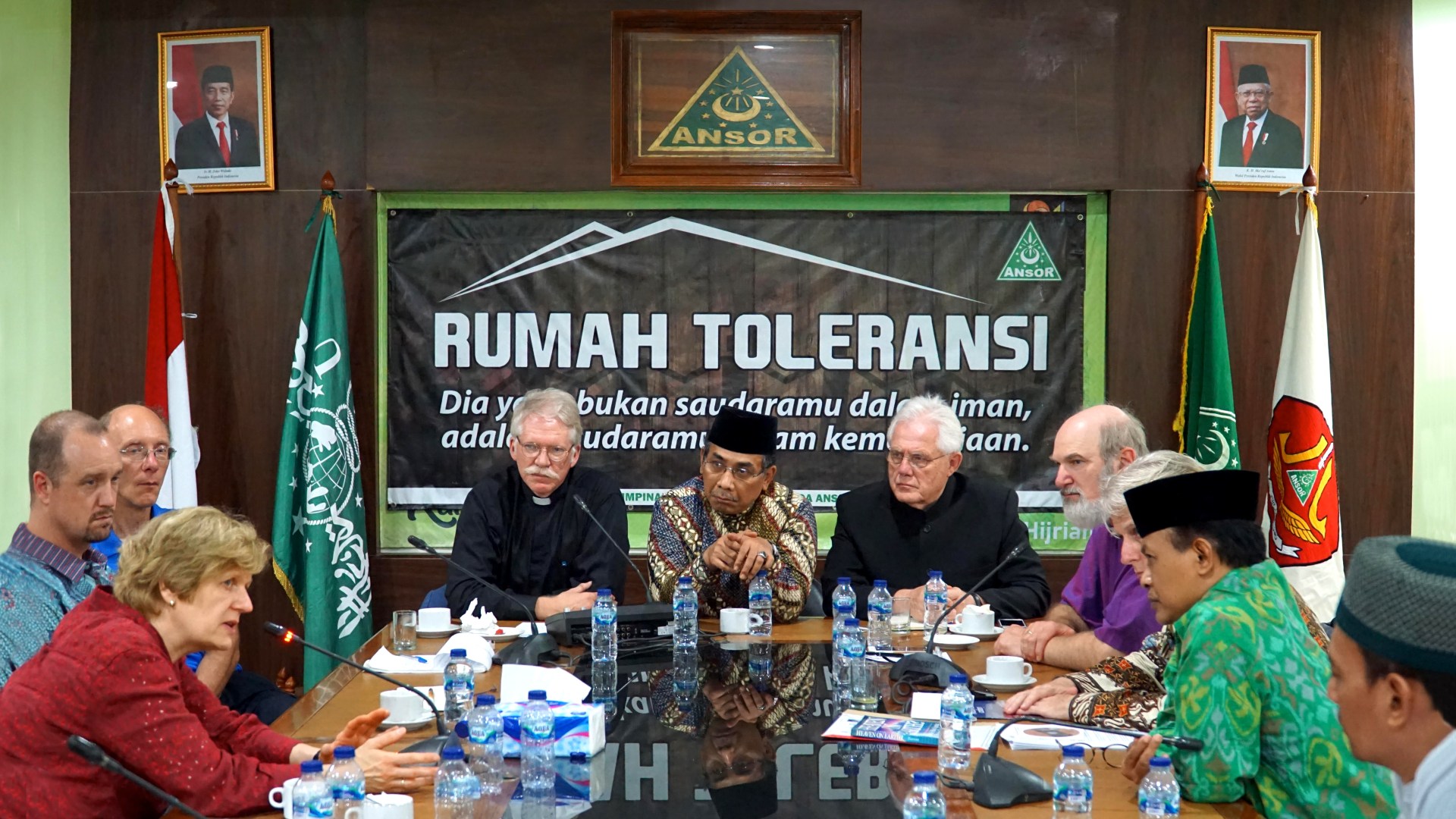
Leaders of the World Evangelical Alliance (WEA) and Nahdlatul Ulama (NU) meet for the first time in Jakarta, Indonesia, in November 2019.

Leaders of the World Evangelical Alliance (WEA) and Nahdlatul Ulama (NU) meet for the first time in Jakarta, Indonesia, in November 2019.

Christianity Today November 17, 2020
Courtesy of World Evangelical Alliance

Last November, when the General Assembly of the World Evangelical Alliance (WEA) took Sunday off for worship and relaxation near Jakarta, Indonesia, a group of top leaders did something different. We got in a van and traveled to the offices of an Indonesian Muslim youth organization.

There we spent several hours in stimulating conversation with a group of Muslim intellectuals. Afterwards, at dinner, we were joined by Indonesia’s ambassador to the United States.

Why would WEA leaders pay so much attention to a group of Indonesian Muslims? And why would our hosts and even a high government official be so interested in welcoming us? Two reasons.

First, both we and our Muslim counterparts are idealists. We share a vision of a world in which people are free to choose their religious belief without risking their lives.

And second, we think a high-level alliance between one of the world’s largest evangelical organizations and one of the world’s largest Muslim organizations can uniquely move humanity in that direction.

Not just any Muslims

Our conversation partners were not just any Muslims. The most prominent figure among our hosts was Yahya Cholil Staquf (Pak Yahya), who served 20 years ago as press secretary to Indonesian President Abdurrahman Wahid. Pak Yahya is now the general secretary of Nahdlatul Ulama (NU), a 94-year-old Muslim organization that claims 90 million adherents worldwide.

NU formed as a reaction to the rising influence of Wahhabism, the more puritanical version of Islam that had come to dominate what is now Saudi Arabia. Many Indonesian Islamic leaders received training in Saudi territory, so Wahhabi repression and persecution of more broad-minded Muslims had a direct effect on them.

Over decades of seeking to counter Islamic extremism in Indonesia, NU leaders realized that to achieve their goals, they had to directly challenge the radical versions of Arab Islam. As Pak Yahya puts it, “Whenever we defeat the threat in Indonesia, they get outside reinforcements.”

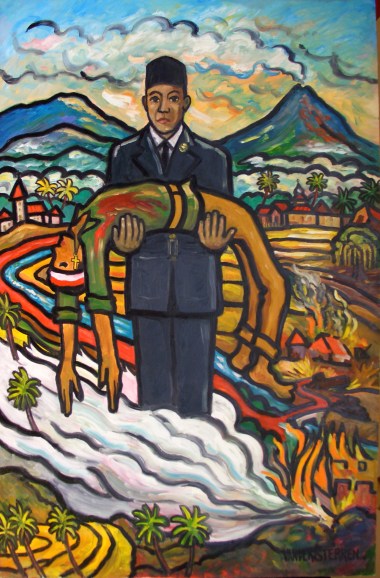
NU leaders explained to WEA leaders the meaning of a painting which embodies Muslim-Christian friendship by depicting Sukarno, the leader of Indonesia's fight for independence, holding the dead body of a fallen Christian comrade.
NU leaders explained to WEA leaders the meaning of a painting which embodies Muslim-Christian friendship by depicting Sukarno, the leader of Indonesia’s fight for independence, holding the dead body of a fallen Christian comrade.

Over the past five years, NU leaders have crafted a series of documents of great intellectual depth that challenge, from a well-established Muslim perspective, the tenets of Islamic extremism. They contend that from its founding up to the 15th century, Islam evolved to deal with constantly shifting cultural circumstances through ijtihad, or independent legal reasoning, but that the faith then became ossified and resistant to change.

This is why, as their 2018 Nusantara Manifesto states, “A wide discrepancy now exists between the structure of Islamic orthodoxy and the context of Muslims’ actual (lived) reality.” Specifically, Islamists in many countries are trying to restore a caliphate, exterminate “infidels”—including followers of less extreme versions of Islam—and impose sharia law on a globalized, pluralistic world.

"Sri Ayati's Legacy" embodies Muslim-Christian friendship by depicting Sukarno, the leader of Indonesia's fight for independence, holding the dead body of a fallen Christian comrade.
“Sri Ayati’s Legacy” embodies Muslim-Christian friendship by depicting Sukarno, the leader of Indonesia’s fight for independence, holding the dead body of a fallen Christian comrade.

In contrast, NU leaders’ vision of “Humanitarian Islam” proposes a clear distinction between eternal or universal religious norms and contingent, temporary norms. In their view, the obligation to show universal love and compassion is unchanging; the obligation to compel obedience to Islam by military force or to execute apostates is contingent and no longer relevant to the modern context. (It’s a parallel to Christians’ belief that the Ten Commandments are universal but Old Testament penal law no longer applies.)

If you’ve never heard of NU, you should read Christianity Today more closely. This magazine reported on Pak Yahya’s meeting with US Vice President Mike Pence in May 2018, after which Pence promptly tweeted a photo and the message, “Trump’s admin stands with NU in its fight for religious freedom and against jihad.”

Why we need Muslim partners

My route to this collaboration between the WEA and Humanitarian Islam began on a sad note. In April 2007, as I was preparing to teach a theology course for a school in Turkey, I received an email informing me that one of my students had been martyred in the “Malatya massacre” of three believers at a Christian publishing house.

In response to this tragedy, I sought to become more deeply involved in practical advocacy on behalf of Christians undergoing persecution (including helping to organize a historic 2015 conference in Albania). But I quickly realized that Christians have very little leverage to reshape the prevailing mindset of the Islamic world. Simply because we are not Muslims, our message is delegitimized—especially among those prone to radicalization—before we even open our mouths.

To make a practical difference for those living in Muslim-majority countries, we must join hands with Muslims who believe in religious tolerance and help them show their colleagues that adopting a posture of humanitarian respect for all people is in their best interest and not a betrayal of their faith.

My search for suitable co-advocates led me to NU. Other voices within Islam are also calling for peace and tolerance, but no one else has developed such a solid philosophical foundation that could undergird the global spread of a more peaceable form of Islam.

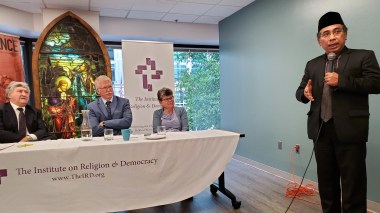
Pak Yahya (right) and Thomas K. Johnson (middle) speak at a July 2019 side event to the Second Ministerial in Support of Religious Freedom in Washington DC.

The benefit of our collaboration quickly became apparent in March when my colleague Thomas Schirrmacher, who will become the next WEA secretary general in a few months, was invited to The Gambia, a small west African nation that is about 95 percent Muslim but has a visible Christian minority. The possibility of writing sharia law into the country’s new constitution was causing alarm for both Christians and tolerant Muslims.

Schirrmacher found that some Muslim leaders in the Gambia had already heard about—and were favorably impressed by—the WEA’s alliance with Humanitarian Islam. The engagement demonstrated that Christians and peaceful Muslims, although they often have cultural differences and misunderstandings to overcome, can be more politically effective and more persuasive in many countries when they work together.

We also discovered that many Muslims who want to support peaceful coexistence struggle to articulate solid arguments for their case when confronted by radicals who insist that theirs is the pure version of Islam. That’s exactly where NU’s well-conceived foundation for a friendlier Islam can be helpful.

How evangelicals can partner with Muslims

Toward the end of our dinner with NU leaders in Jakarta, Brian Stiller, the WEA’s global ambassador, stood up and said he wanted to make a comment. Several of us laughed, because we knew what was coming. Brian has a consistent practice, in a very gracious manner, of reminding interfaith partners of what Christians believe and encouraging his friends to consider Jesus Christ’s claim to be Lord of all.

None of us on the WEA side overlooks that message. We all want our friends to know Christ. But in that case, why should we spend so much effort recommending a group of Muslims as a key ally in pursuing global peace and coexistence?

First, it is in our interest as reconcilers for Christ to promote and encourage all peacemakers. Our theology of common grace calls us to support anyone who seeks an end to religious violence, especially when they do so from a clear, principled philosophical foundation that acknowledges—much as the apostle Paul did in the first two chapters of Romans—the existence of a natural moral law to which all people are subject.

Some would say that Islam is inherently a religion of jihad and bloodshed. NU’s Humanitarian Islam movement proves otherwise. We have crucial religious differences, but these Muslims are seeking to enable people to live together in peace, and we should applaud them for doing so.

Beyond that, NU’s philosophy firmly endorses the right of all people, including Christians, to live out what they believe. If we care about the millions of Christians who live in restrictive environments—many of them in Muslim-majority countries—this goal should be at the top of our agenda.

Even relatively moderate Muslim nations, such as the United Arab Emirates, that permit expatriates working in-country to freely practice other faiths grant no similar freedom to their own citizens. By comparison, Indonesia is a breath of fresh air: an 87 percent Muslim nation where the Christian population is growing and where NU is okay with that. How can we not endorse such a stance?

The bold, admirable leaders of NU are not my spiritual brothers, but they have become close friends. They are also our most strategic allies on issues that are central to the flourishing of Christians and of humanitarian values globally.

Thomas K. Johnson is senior advisor to the World Evangelical Alliance’s Theological Commission and the WEA’s Special Envoy for Engaging Humanitarian Islam.

Speaking Out is Christianity Today’s guest opinion column and (unlike an editorial) does not necessarily represent the opinion of the magazine.

Editor’s note: CT offers select articles in Bahasa Indonesia, part of 300+ CT Global translations.

Ideas

A Plea to Save Artsakh’s Armenian Heritage

Head of the Armenian Apostolic Church details the “countless sacred spaces” in Nagorno-Karabakh at risk of becoming the “silent victims of conquest” by Azerbaijan.

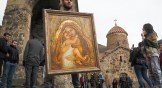
Dadivank

Dadivank

Christianity Today November 17, 2020
Hrair Hawk Katcherian

Editor’s note: CT’s complete coverage of Armenian Christians is here.

Armenian history is marked by the endurance of faith.

As members of the first Christian nation [301 A.D.], we have faced centuries of persecution and the risk of total annihilation at the hands of our hostile neighbors. Through our faith in Jesus Christ, we have seen the resurrection and revival of our people and the continuation of our sacred lineage, always remembering the utmost value of human life and doing our best to protect it.

But unfortunately, along the way, we have lost countless sacred places—churches and monasteries, cemeteries and monuments, sacred vessels and manuscripts—that have been the silent victims of conquest and war. They have disappeared from the map of human history, a lost piece of universal Christian heritage.

Today, one of the last remaining regions of our ancient culture is at risk of destruction. The land of Artsakh, known to the wider world as Nagorno-Karabakh, was at the center of a brutal war, an assault on its indigenous Armenian population. Our people have lived in this land for thousands of years, making it home to sacred sites and precious relics. According to our tradition, the 13th-century monastery of Gandzasar contains the head of St. John the Baptist. The Monastery of Dadivank contains the tomb of St. Dadi, a direct follower of St. Thaddeus, the apostle of Christ who was one of the founders of the Armenian Apostolic Church.

It was with the utmost pain in our hearts that we watched this land come under grave danger over the past six weeks. Thousands of people, soldiers and civilians, elderly and children, were lost as our heritage took a direct hit. On October 8, Azerbaijani missiles struck the Cathedral of the All Holy Savior in Shushi, twice in one day.

In the ceasefire that followed, a large part of the territory of Artsakh was handed over to Azerbaijan. This was the cost of preventing further loss of lives. With great courage and commitment, our soldiers did their best to protect their ancestral homes. But Azerbaijan, with its fierce arsenal of weapons and massive oil wealth, had the greater force. With the open support of Turkey and the involvement of Syrian mercenaries fighting on the frontlines, their assault was designed to overwhelm us.

With our communities and congregations now driven from the land, left behind are thousands of sacred monuments, a testament to our history and faith. What will happen to them next? I hope and pray that it will not be a tragic fate.

When I visited Baku ten years ago, within the framework of the Summit of World Religious Leaders, I went to visit what may be the last remaining Armenian church in the wider territory of Azerbaijan. Practically every trace of our culture had been removed from the building: the cross, bells, altar, baptistery, and frescoes were removed, and relics destroyed. There used to be many more ancient Armenian Christian sites across the country, but they were destroyed in the past several decades.

In the Dashkasan region of Azerbaijan, the Monastery of the Holy Translators, first constructed in the 4th century, lies in ruins.

After the region of Nakhichevan, historically home to a large Armenian community, was granted to Azerbaijan by the Soviet Union, the Armenian inhabitants were driven out and over 6,000 intricate cross stones were destroyed. A campaign of cultural genocide continued until 2002. All of this took place under the eyes of the civilized world, witnessed by researchers and photojournalists.

This cultural cleansing must not happen again.

During this war, we witnessed the hatred and the barbaric behavior of Azeri soldiers towards the civilian population of Artsakh, war crimes that have been documented in detail. We saw the vandalism towards our sacred monuments.

With that fresh in our memory, I have sincere doubts that the Azerbaijani authorities will protect Armenian Christian sites now under their control. Azerbaijan is solely responsible for preventing any form of vandalism or destruction of our church monuments, and for banning all attempts to deny our history or appropriate our culture.

I pray that the world will awaken to this call, standing up to protect this small piece of land and its significant contribution to universal human culture. My people fervently hope that institutions like UNESCO, Blue Shield International, and the Smithsonian Institution will play a role in maintaining our sacred sites in the condition they are today.

We call on the rest of the world to bear witness, to pray for peace and justice, and perhaps even to go see these churches themselves someday. (Many of them will be on display in a landmark virtual exhibit, soon to be hosted at the Museum of the Bible.) There are an estimated 4,000 historical monuments in the region of Nagorno-Karabakh; each of them has a powerful spiritual legacy to impart.

In these difficult days, I remember the enduring words of St. Paul in 2 Corinthians:

“We are hard pressed on every side, but not crushed; perplexed, but not in despair; persecuted, but not abandoned; struck down, but not destroyed.”

May we all live in peace and security. May the power of faith sustain all people and comfort those who are living through war and strife around the world.

And may the Holy Spirit of our Lord Jesus Christ inspire all people to express their highest level of kindness, compassion, and humanity to one another.

Catholicos Karekin II is head of the Armenian Apostolic Church.

Speaking Out is Christianity Today’s guest opinion column and (unlike an editorial) does not necessarily represent the opinion of the magazine.

News

‘Water on a Stone’: UN Expert on the Hard Work of Religious Freedom

Special Rapporteur Ahmed Shaheed on the impact of COVID-19 and Trump, the right to religious conversion, and implementing Muslim declarations.

Ahmed Shaheed, UN Special Rapporteur on Freedom of Religion or Belief

Ahmed Shaheed, UN Special Rapporteur on Freedom of Religion or Belief

Christianity Today November 16, 2020
United Nations

Religious freedom requires global consensus.

Despite the best efforts of the Trump administration to prioritize the issue in its foreign policy, the Pew Research Center highlights that government restrictions on religion have hit an all-time high worldwide.

In 1948, the Universal Declaration of Human Rights included clear language on religious freedom, including the right to change one’s religious affiliation. But it was not until 1981 that the UN issued its Declaration on the Elimination of All Forms of Intolerance and of Discrimination Based on Religion or Belief.

Declarations are of little value without accountability.

In 1986, the UN created the position of Special Rapporteur on Freedom of Religion or Belief (FoRB). And in 2006, it created a process called the Universal Periodic Review (UPR), in which nations report on their human rights development every 4.5 years and are required to address the recommendations of the global community.

Ahmed Shaheed, the current special rapporteur, was appointed in 2016 after serving six years as the UN human rights watchdog on Iran.

Formerly a foreign minister of the Maldives, Shaheed was declared an apostate from Islam in his home nation following his efforts to restore democracy and advance human rights.

Prior to this month’s third Ministerial to Advance Religious Freedom, CT interviewed Shaheed in April as COVID-19 upended the world about recent American efforts to advance international religious freedom (IRF), the balance involved with gender equality, and the best methods to secure the right to religious conversion in the Muslim world:

How has COVID-19 impacted global freedom of religion and belief?

The pandemic is unprecedented in how it is impacting everyone.

As special rapporteur, I have issued three statements so far. The first concerned the cremation of bodies of those who died from the virus—can it be made compulsory, and can relatives attend? Religious practices can be limited to some extent during a time of public health emergency, but I wanted to remind the authorities of their obligations under international law and to be respectful of religious and cultural beliefs within the law.

The second statement was on hate speech targeting minority Christians, Jews, and Muslims. They have been scapegoated and attacked with conspiracy theories claiming they are the ones who spread or even originated this virus. And besides scapegoating, in some cases they were denied access to health care facilities.

The third statement raised alarm specifically on anti-Semitism, which was spiking across the globe.

My statements also highlighted the role that faith-based communities can play at this critical time, in terms of virtual pastoral care and the preservation of community cohesion. And I have applauded how most religious leaders have responded to the humanitarian and socio-economic challenges we have witnessed.

Many American evangelicals have been supportive of the Trump administration’s advocacy for international religious freedom. From your perspective, has it created an atmosphere where there is greater worldwide respect and attention, or has it politicized the issue and been detrimental to the global cause?

I look at US policy in a comprehensive fashion, and not just the president’s remarks. The State Department’s IRF report—covering every nation in the world—and the work of the US Commission on International Religious Freedom (USCIRF) have played an invaluable role over the years.

I’m happy that the Trump administration launched the International Alliance for Religious Freedom and Belief (IRFA), which has over 30 member states. The declaration of principles invokes international human rights law. It is broadly inclusive, representing different religions, different cultures, and different regions of the world.

The State Department report calls out almost every nation in the world. Some states come under more criticism than others, but none can claim to be immune from US criticism. They have criticized Iran, Myanmar, China—they are not focused on a particular religion or region.

The US has raised the profile of religious freedom internationally, but the question is if it is done in a way that respects all human rights, and all nations, so that there is no perception of instrumentalizing religious freedom. But Ambassador at Large Sam Brownback recognizes this, and I have been broadly positive about the work carried out by his IRF office.

Tell us about the World Evangelical Alliance (WEA), and how they advocate for their community.

They are very active, very informative, very committed, and very inclusive. I’m very happy to work with them. As special rapporteur I am a one-man operation, and I rely on civil society to be the eyes and ears for my mandate and to help communicate with people on the ground. They add value to my work and increase my capacity.

How do religious liberty and gender equality work together, especially on LGBT issues?

Both communities must feel honored in their commitments. What I am suggesting is that when these two rights clash, religious freedom and nondiscrimination, we have to find a way to minimize it through co-respect.

The No. 1 priority for religious groups is freedom from coercion. It is a red line to compel someone to go against their faith commitments. On the other hand, we also cannot undermine someone’s claim to equality by excluding or marginalizing them. This is also a red line. Compromises are needed on a case-by-case basis.

When it comes to abortion, I recognize that this is a red line for many faith communities. The state cannot force an individual service provider to perform abortions. But the state also has an obligation to the women, for example in a life-saving situation, or to ensure autonomy over their bodies and have access to the highest attainable standard of health.

What is more difficult is when in some contexts people feel an obligation to make everyone behave as they do.

Does your compromise allow evangelical institutions fidelity in terms of conviction and behavior in terms of sexual orientation?

For beliefs, certainly.

If someone believes that the heterosexual family is the essential unit for society, we can respect that belief. People are entitled to adhere to whatever belief they hold to be true.

However, the manifestation of such beliefs cannot occur in ways that cause harm to others. It should be fine for the church or other religious authorities to speak about their views. But if such expression is designed to incite hatred, it is a different story.

In terms of practice, institutions are allowed to maintain their main ethos, to propagate it, and to hire people who will do that. However, such exemptions might not extend to all people employed by that institution. The test is if the particular job is essential to the ethos of the community. If not, a right to work matters, as does nondiscrimination in employment.

The state should allow the institution to protect its ethos, but how far the protection goes varies from jurisdiction to jurisdiction.

When you presented your vision at the beginning of your mandate, you tried to quantify your work. At that time, only 2.5 percent of recommendations submitted at the Universal Periodic Review concerned issues of freedom of religion or belief. Have you been able to measure the change during your mandate?

There hasn’t been much change.

The number of states who take up the issue has increased. But the actual proportion of recommendations has slightly declined to 2.4 percent over the past three years. That’s not good, and I’m not sure what more I can do on this.

My September 2021 report will be about implementation of the 1981 UN Declaration on the Elimination of All Forms of Intolerance and of Discrimination Based on Religion or Belief. I want to assess how well states have done over the past 40 years in implementing that declaration.

Many nations have excellent rhetoric on religious freedom, but where have nations actually begun to improve their record?

Human rights work is like dropping water on a stone. Given enough time, it will eventually break it down. We are up against huge odds, but we can make inroads.

In terms of laws changing, apart from Sudan [reported by CT here, here, and here], Uzbekistan, and Tunisia, there really hasn’t been that much success. There has been a move to ease or abolish blasphemy laws in the global North, including Ireland, Denmark, Malta, and Greece. But they have been tightened elsewhere, such as Nepal, India, and half of the Middle East.

On the positive side, my recommendation for states to adopt the International Holocaust Remembrance Alliance’s working definition on anti-Semitism has been accepted by many countries, including Sweden, Greece, and Uruguay.

Focusing on Iran, in its last UPR there were two other nations who for the first time specifically mentioned the term “Christian converts.” The international community is very concerned about human rights, but why does it not focus more on the issue of apostasy and other issues of freedom of religion and belief?

In my reporting on Iran, I consistently raised concern about this.

Iran says it tolerates the Christian communities who have been there for a long time, but it does not accept new communities. This approach amounts to a violation of human rights.

Around 90 percent of the time I work on a case, Iran takes a step back and something positive happens. Not everything is public, but when we push, it helps the person in question. I don’t mean they get released from prison, but they are afforded more safety.

Later on, when people have been released, they told me there was a change in behavior. Sometimes it was only temporary, but it did have an effect.

States may act as if they don’t really care what you say, but in fact they do. It begins an internal review. When the UN takes up a case, the people involved are better protected.

Some advocates believe that you can address other human rights, and not have to take on religious issues directly.

I don’t agree with this, but some say that rather than calling out the blasphemy law, they can achieve the same end by calling for more respect for freedom of expression.

Another example is with women’s rights, which are frequently brought up in the UPR. Many violations are connected to religion and culture, so advocates say this is a path of least resistance.

But in my view, some issues require a direct focus.

Anti-conversion and anti-blasphemy laws invoke religion either as the basis for those laws, or as an excuse for them. Without engaging with rights related to religious freedom, we cannot adequately address these issues.

Religious scholars in the Muslim world have produced very commendable documents about tolerance and combatting terrorism. But these documents have not yet been translated into law. How should the UN help nations continue to take steps to implement them, and eventually secure the right to religious conversion?

These declarations do reflect progress and an attempt to address challenges. But they have not been followed up with practical steps.

It is possible they were efforts in what can be called religious freedom diplomacy—aspirational, but with serious blocks against their application domestically.

While I welcome these initiatives, the method of developing them matters. The more inclusive they are, the better the chance they have in implementation.

The UN’s Faith for Rights initiative is one I often mention, and it is getting cited in important documents. The UN’s high commissioner for human rights has recommended it. I believe some Gulf institutions have been quoting it, and this is a good step.

But legal changes will likely only come much later.

First the public needs to understand what it means for everyone, and without that there will be pushback. To move forward, the legal community must also be engaged, along with parliamentarians and judges. National human rights institutions have to come on board. UNESCO could offer support through its work on education, for a long-term change in perspective.

But there is no quick fix.

Books
Review

Don’t Overstate the Rewards of Sexual Faithfulness. Don’t Understate Them Either.

The false promises of purity culture shouldn’t overshadow the true promises of God.

Christianity Today November 16, 2020
Tom Pumford / Unsplash

In his classic book Orthodoxy, G. K. Chesterton described the surprising, even subversive, nature of truth: “Whenever we feel there is something odd in Christian theology, we shall generally find that there is something odd in the truth.”

Talking Back to Purity Culture: Rediscovering Faithful Christian Sexuality

Talking Back to Purity Culture: Rediscovering Faithful Christian Sexuality

IVP

216 pages

$10.83

He gave the example of celibacy as an illustration: “It is true,” Chesterton wrote, “that the historic Church has at once emphasized celibacy and emphasized the family; has at once … been fiercely for having children and fiercely for not having children. It has kept them side by side like two strong colors, red and white. … [The Church] has always had a healthy hatred of pink.”

Chesterton’s words serve to frame the helpful approach of Rachel Joy Welcher in her recent book, Talking Back to Purity Culture: Rediscovering Faithful Christian Sexuality. Welcher registers substantial criticism against the evangelical movement that brought pledge cards, books, and rallies to sex-crazed American teenagers. But she does not deconstruct 2,000 years of orthodox teaching on Christian sexuality. Sexual purity matters, if not exactly in the way that purity culture defined it. “As with most earnest, human responses,” writes Welcher, “we didn’t get everything right.”

Good Intentions and Gross Errors

Welcher, a daughter of a pastor, was a high school student in 1997 when Joshua Harris’s book I Kissed Dating Goodbye “captured the attention of the evangelical world [and] inspired countless other books on dating and sexual purity,” she writes. She helpfully situates the movement in its context, reminding readers that purity culture grew up during a period of soaring rates of teenage pregnancy and STDs. Given the cultural conditions of the time (and what she calls the “age-old problem of immorality”), Welcher believes the church had ample reason to look for ways to affirm the good of marriage and the good of sex within it. “Practicing purity,” she writes, “is a form of worship.”

Unlike many other purity-culture critics—writers in the vein of Linda Kay Klein and Nadia Bolz-Weber—Welcher does not propose to replace historic understandings of sexual faithfulness. Extramarital sex is not an important act of “freedom” or an authentic expression of “love.” Sex is meant for the glory of God. “Beloved, do not be deceived by … the gospel of self,” Welcher warns in the tradition of the biblical prophets. She refuses to cry “peace” in the face of pending disaster. It is possible to sin sexually—and to suffer for that sin—and Welcher has every intention to teach her own children these truths.

What she refuses to tell them, however, is that “virginity makes them pure.”

However well-intentioned purity culture might have been, it was also guilty of gross errors. It made Christian purity a function of sexual history and behavior, not spiritual rebirth. It saddled women with the responsibility for male lust and failed the victims of sexual abuse. Further, it made unqualified promises of marriage, children, and great sex to everyone who pledged to wait.

Welcher’s story is particularly illuminating here, as she played by all of purity culture’s rules—and got burned. She saved her first kiss for the man who would become her husband, but the couple did not live happily ever after. In a few short years, her husband left the faith and left the marriage, leaving her to hold purity culture’s promissory notes at 30, without virginity to offer to another husband. Welcher realized that purity culture had promoted one temporary (albeit important) expression of sexual faithfulness (waiting to have sex until marriage) to the neglect of the more enduring call to lifelong sexual self-control, a call binding upon all Christians, married and unmarried, opposite- and same-sex attracted, young and old. “We are called,” writes Welcher, “to pursue purity until the day we die or Jesus returns, whichever comes first.”

This is one of Welcher’s most instructive critiques: that purity culture abstracted sexual purity from a larger discipleship conversation. It neglected to offer a “whole-person theology,” one teaching us to offer every square inch of our lives to God. If there is a better way forward, says Welcher, it’s by means of a more robust (and far more regular) conversation: one informed by Scripture and guided less by rules (although those matter). It’s a conversation that makes room for “for the young married couple in their twenties, the divorced father of three, [and] the same-sex attracted teen.”

The goal, she argues, is never “chaste Pharisees” but “imperfect disciples.”

‘Unblushing Promises of Reward’

I think Welcher has put her finger squarely on the problems of purity culture (many of which I haven’t had room to address here) and has rightly suggested that the conversation about sexual faithfulness is a conversation for everyone at every stage.

The faithful witness of the church today is as bold a counterpoint to our culture’s prevailing sexual ethic as it was in the earliest centuries of the church. Our sexual witness (or martyrdom, as the Greek word might also be translated) isn’t simply about waiting to have sex until marriage or even about affirming that marriage remains a covenant between one man and one woman. Our radical sexual “otherness” should be apparent as we honor our promises of marriage; as we invite the unmarried into our homes and families, making celibacy a far less lonely call; as we affirm the good of embodiment and refuse any disembodied form of sexual expression; even as we say, with Welcher, “Sex is not necessary for a full, God-honoring life.” There are numerous ways for the church to ask: How do we radically follow the narrow road of Christ, even if it chafes against our sexual desires and affronts the sexual commitments of our culture?

Importantly, the conversation about sexual purity requires us to speak faithfully about the nature of obedience—its real costs and real rewards. And if there is anywhere I might have pressed Welcher a bit further, it was here. Understandably, she wants to illumine the health-and-wealth nature of purity-culture teaching, which sings the siren song of the prosperity gospel. Many in the movement, including Welcher, understood the commitment to wait for true love as a kind of ironclad promise that true love was waiting for you. First comes love, then comes marriage, then comes a baby in a baby carriage! But these are not promises to make or keep in a broken, bruised world where husbands leave, where infertility persists, where disease and death hang like Damocles’s sword over every temporary happiness. We can’t hope for everything in this world.

“We have become accustomed to seeking satisfaction for every fleeting desire and long-term want on our terms,” Welcher warns. She’s right. And yet: We can’t moderate any of the good promised to God’s people in Scripture. To return to Chesterton, we’re warned against “the silent swerving from accuracy by an inch.” As C. S. Lewis explains in The Weight of Glory, Jesus often issued “unblushing promises of reward.” Christianity is not a grin-and-bear-it life, as if we’re always choosing the difficult in place of the satisfying; nor is it a mercenary affair, as if we should apologize for wanting the blessings Christianity offers. The losing of our lives for the sake of Christ is not ultimately loss. It’s gain. Somehow we have to grapple with what Christ means when he says to his people that while the thief comes to steal, kill, and destroy, he has come to give us abundant life (John 10:10).

This isn’t to say that there is no cost to following Christ, no real death to undergo. But it is to say that Christianity is more than masochism—that it could even, paradoxically, be the most self-interested commitment we ever make.

Jen Pollock Michel is the author of Surprised by Paradox: The Promise of “And” in an Either-Or World. She lives with her husband and their five children in Toronto.

Apple PodcastsDown ArrowDown ArrowDown Arrowarrow_left_altLeft ArrowLeft ArrowRight ArrowRight ArrowRight Arrowarrow_up_altUp ArrowUp ArrowAvailable at Amazoncaret-downCloseCloseEmailEmailExpandExpandExternalExternalFacebookfacebook-squareGiftGiftGooglegoogleGoogle KeephamburgerInstagraminstagram-squareLinkLinklinkedin-squareListenListenListenChristianity TodayCT Creative Studio Logologo_orgMegaphoneMenuMenupausePinterestPlayPlayPocketPodcastRSSRSSSaveSaveSaveSearchSearchsearchSpotifyStitcherTelegramTable of ContentsTable of Contentstwitter-squareWhatsAppXYouTubeYouTube